Pentagon procurement made a decision in 1964 that still sounds odd out loud: the wristwatch issued to ground troops should be thrown away rather than repaired. MIL-W-46374 asked for something accurate, disposable, and non-maintainable, a movement with as few as seven jewels in a case nobody was expected to open. Pilots were the exception, and the exception is the Benrus GG-W-113.
Written in 1967, GG-W-113 kept the austere look of the throwaway watch and then demanded more of everything underneath it: accuracy inside thirty seconds a day, a minimum of fifteen jewels (issued examples ran seventeen), shock resistance, antimagnetic and water resistant construction, tritium lume, a thirty-six hour power reserve, and hacking seconds. That last requirement was operational rather than decorative. Hacking means the seconds hand stops dead when the crown is pulled, which is how a flight synchronizes to a single time source before engines start. The specification was written for people who had to agree on the second, and it was issued to pilots and aircrew while the ground forces kept the disposable one.
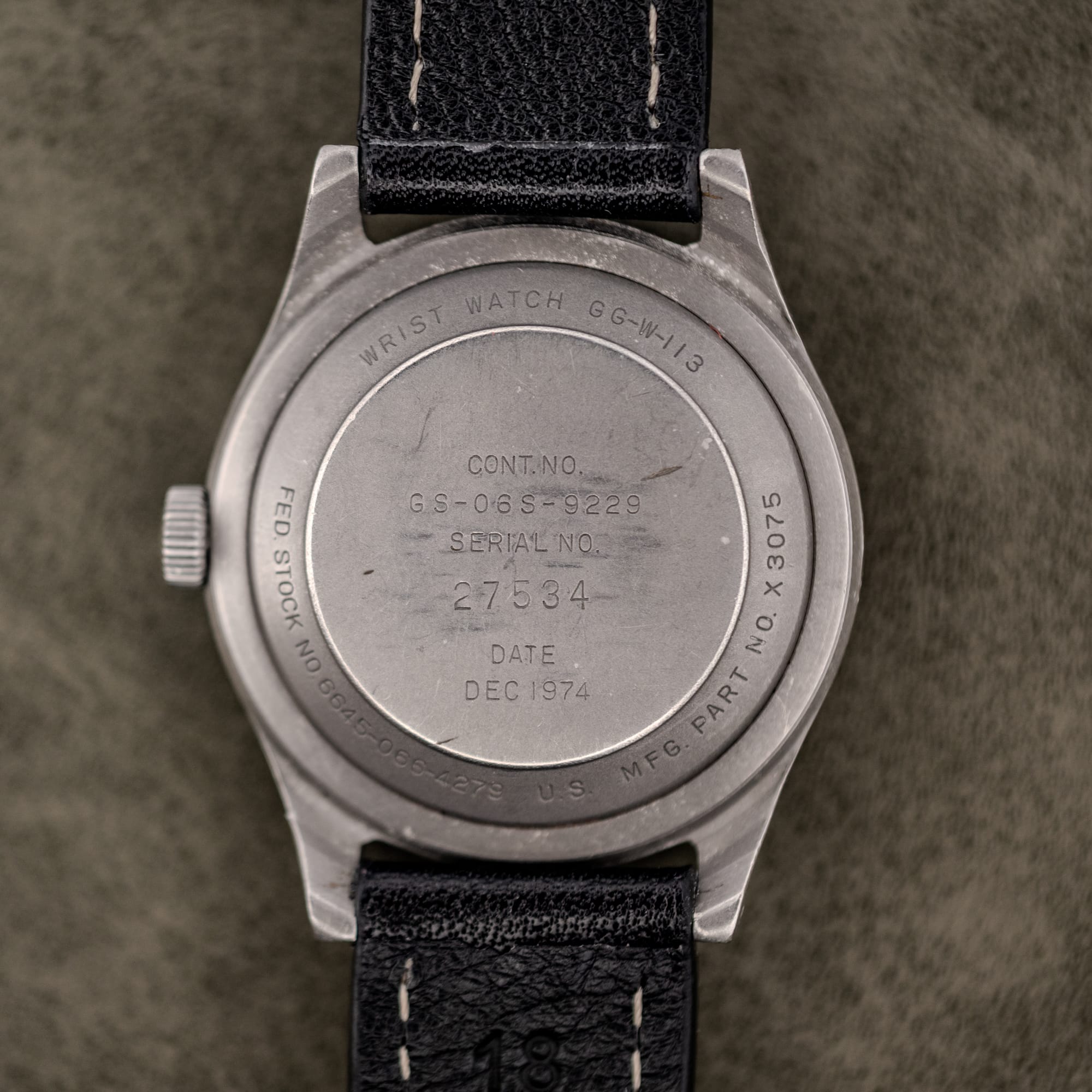
This Benrus GG-W-113 is that specification with its paperwork engraved into the back. The caseback carries the GG-W-113 designation, contract number GS-06S-9229, serial number 27534, and a date line reading DEC 1974. No maker’s name appears anywhere on the case or dial, which is correct rather than suspicious: these were built sterile, and the manufacturer is identified by part number instead. Ours reads MFG. PART NO. X 3075, and the X prefix is the documented Benrus convention, the tell that separates a Benrus case from a Hamilton one. The movement behind that contract is the seventeen jewel hand-wound ETA 2750, which Benrus catalogued as its caliber GY1L2.
December 1974 places this watch in the war’s final chapter rather than its combat years. American ground combat troops had been home since the spring of 1973, the Paris accords were nearly two years old, and Saigon would fall four months after this caseback was dated. Nothing here proves where this particular watch went, and we are not going to invent a history for it. What the engraving does prove is the standard it was built to, bought and dated while the war was still being fought.
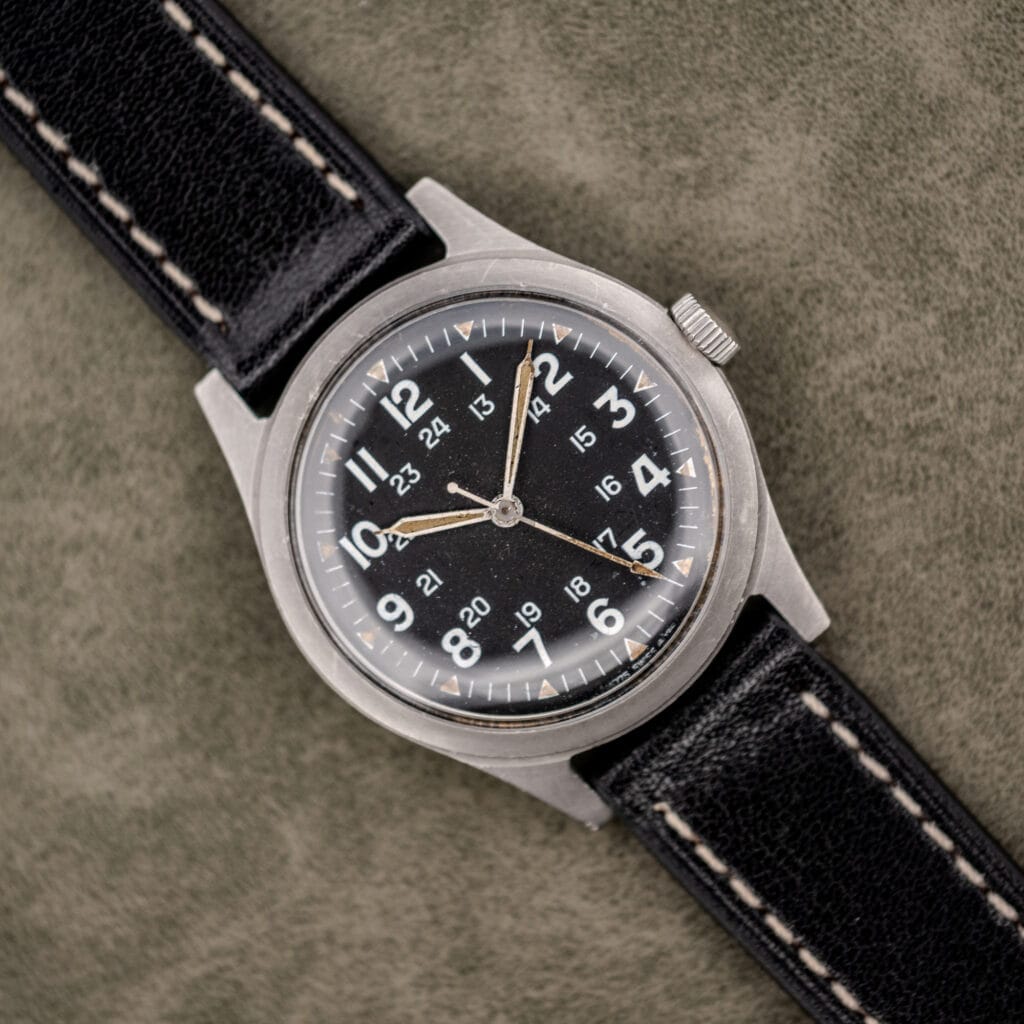
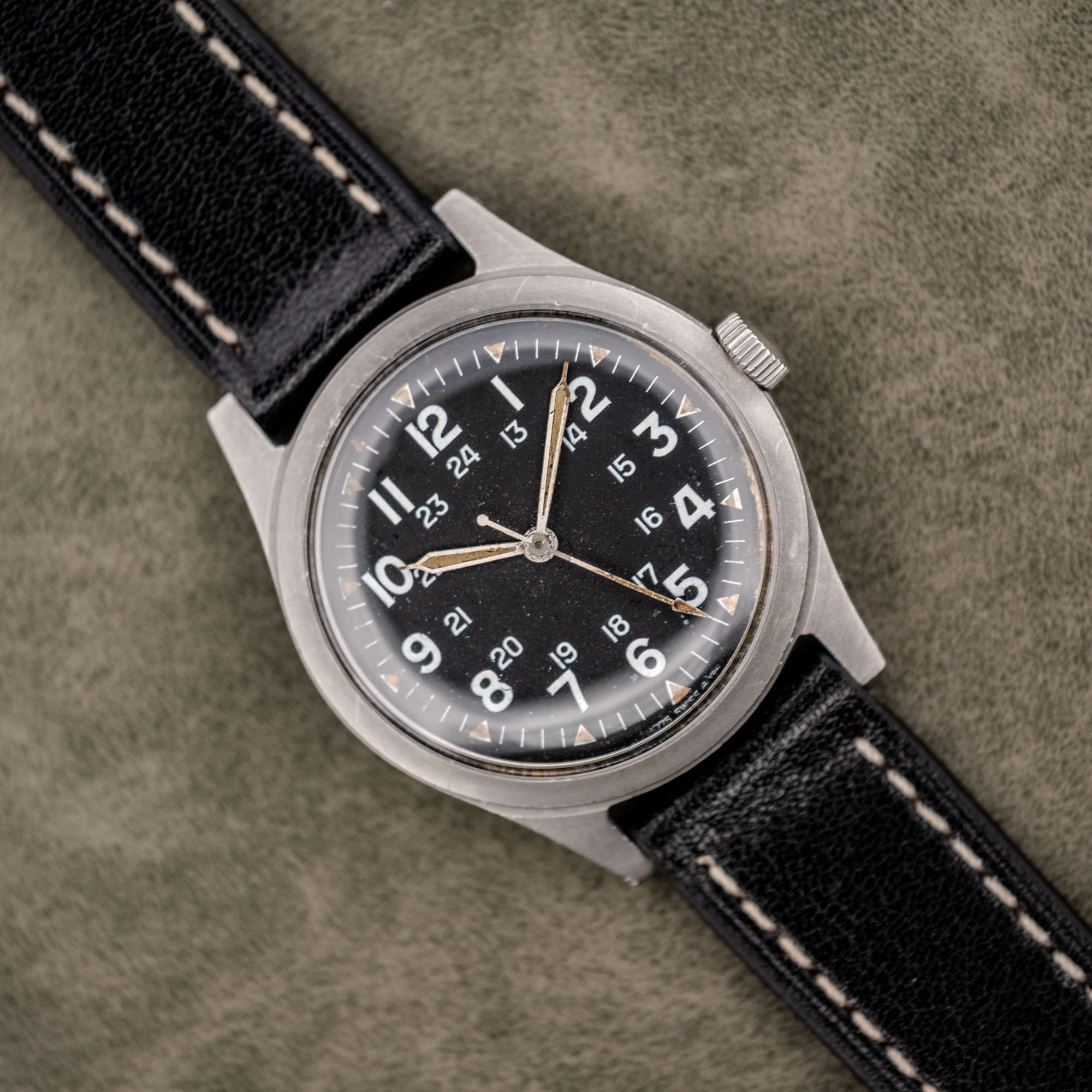
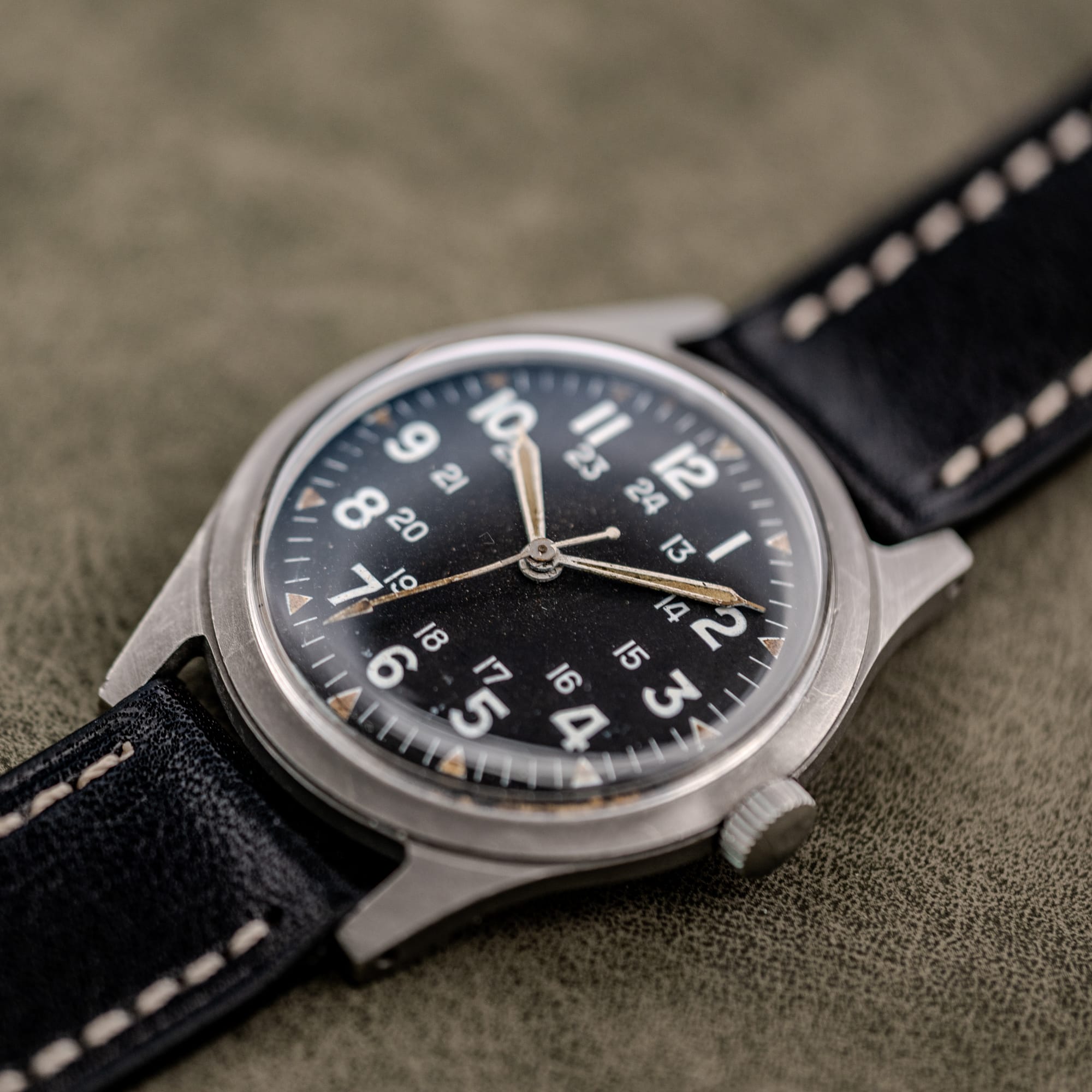
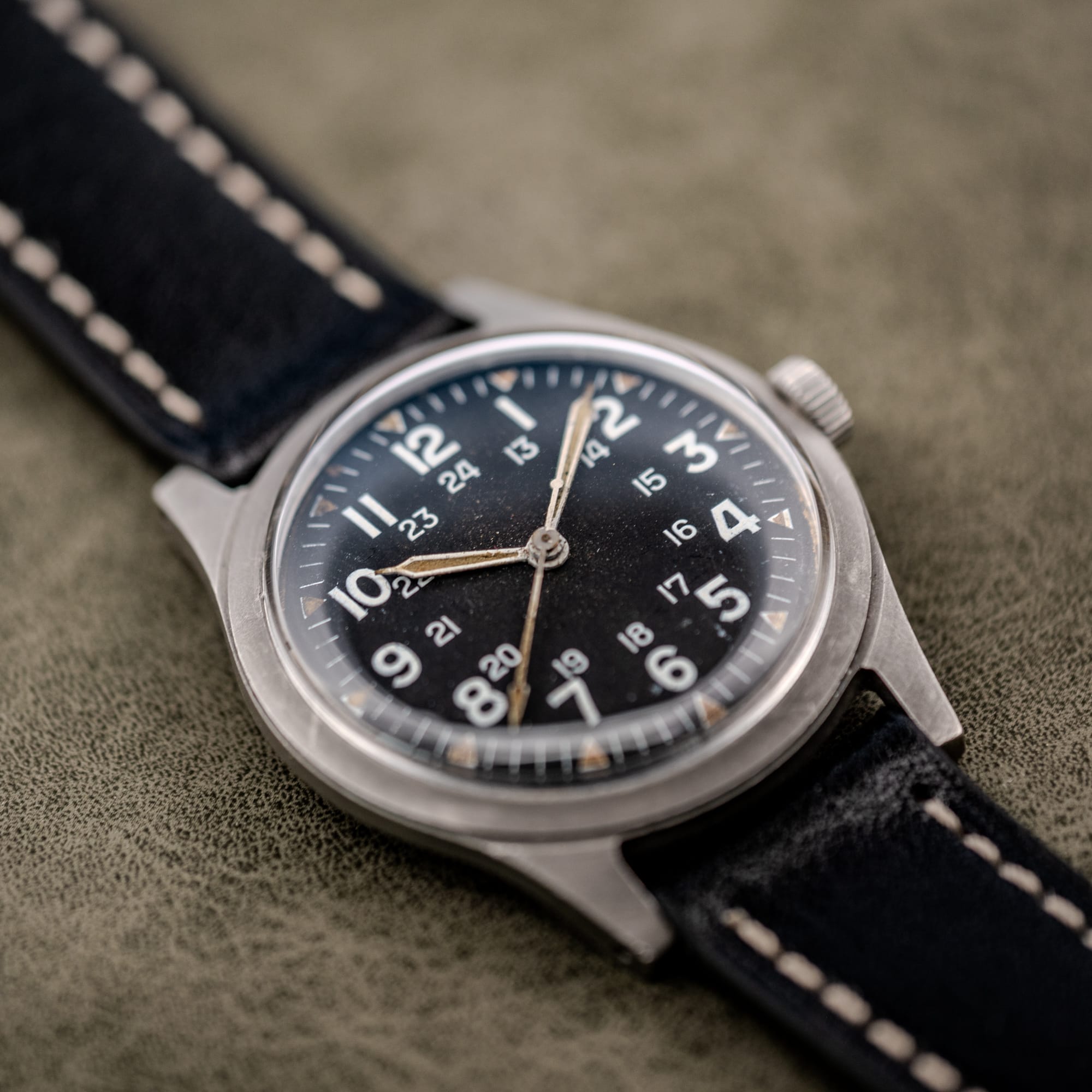
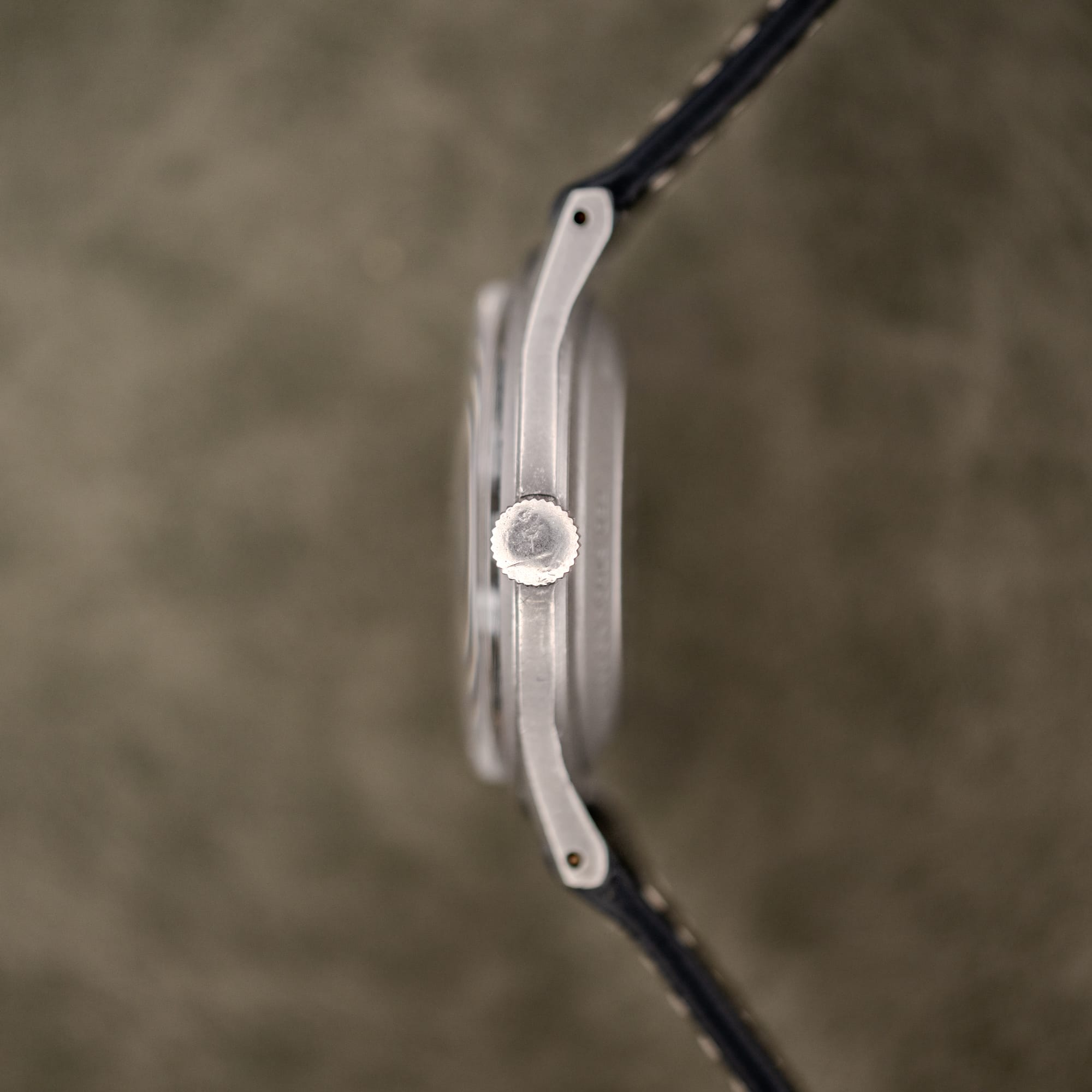
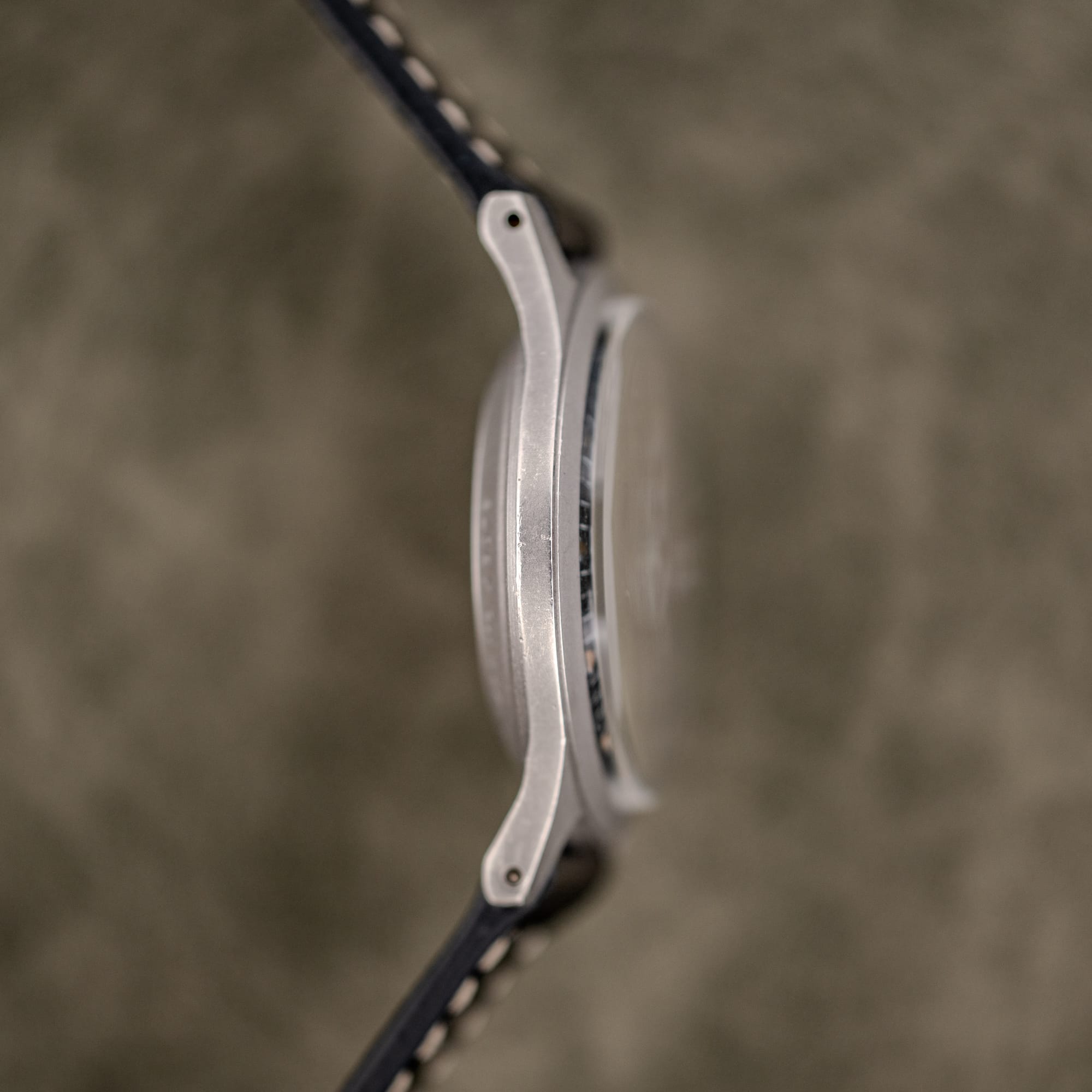
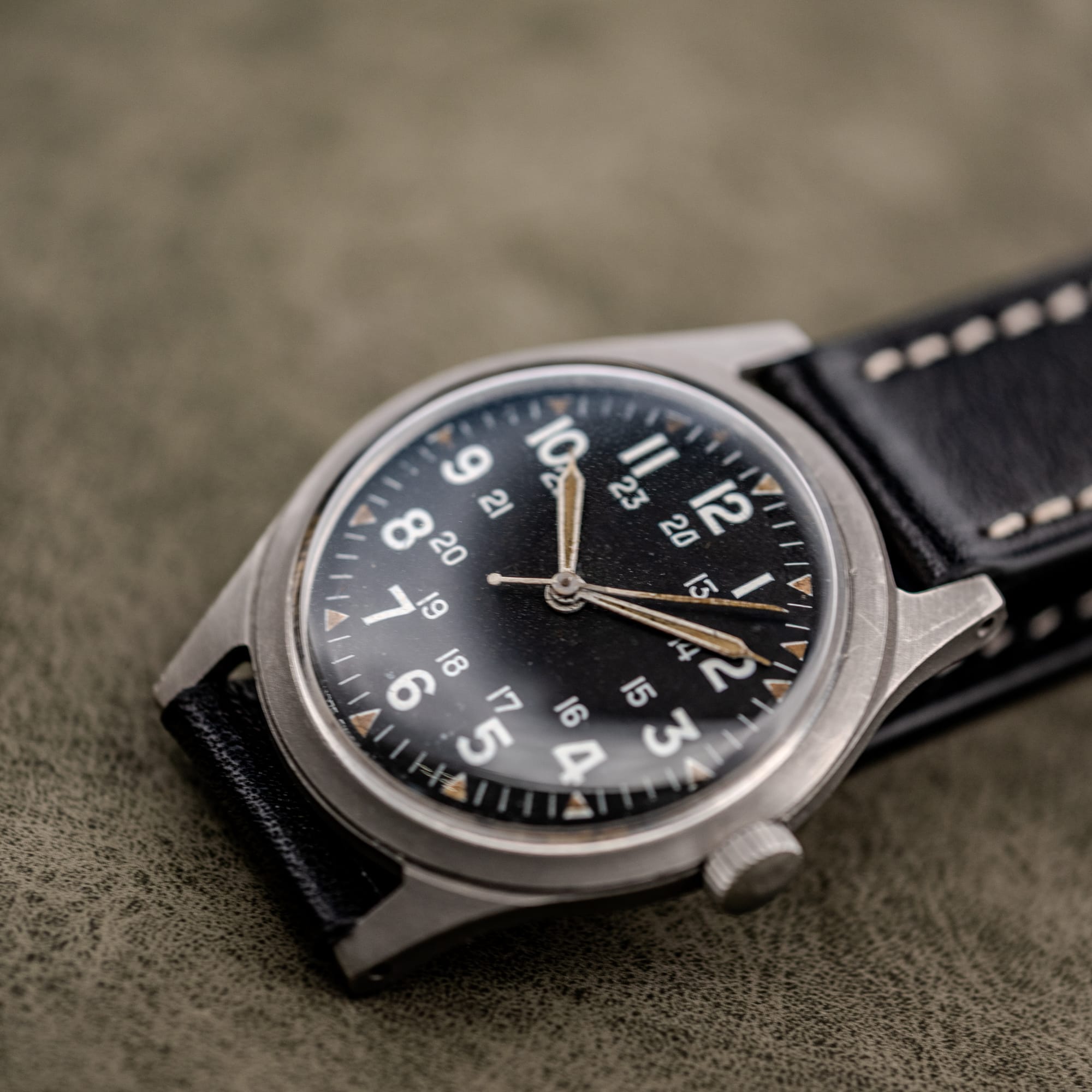
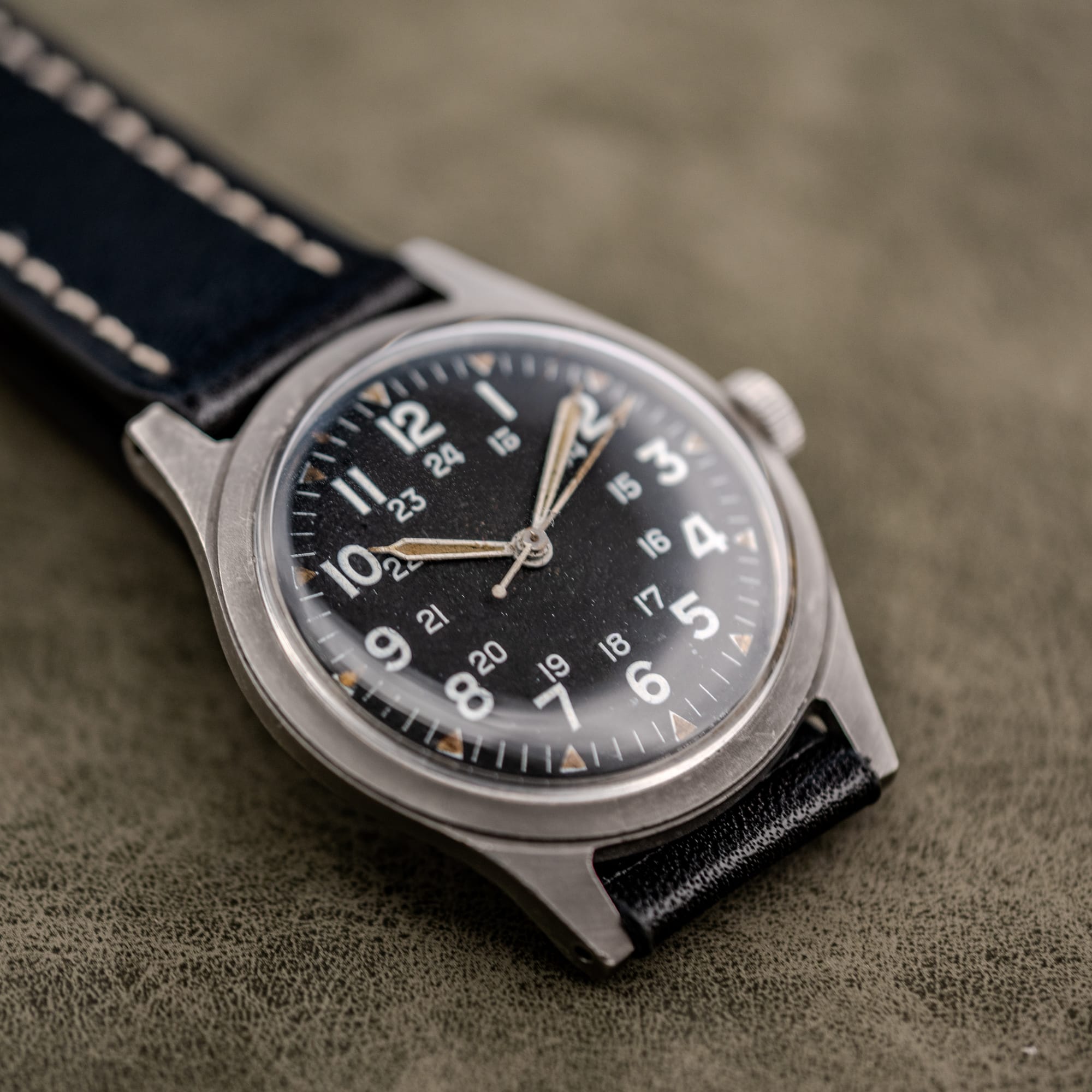
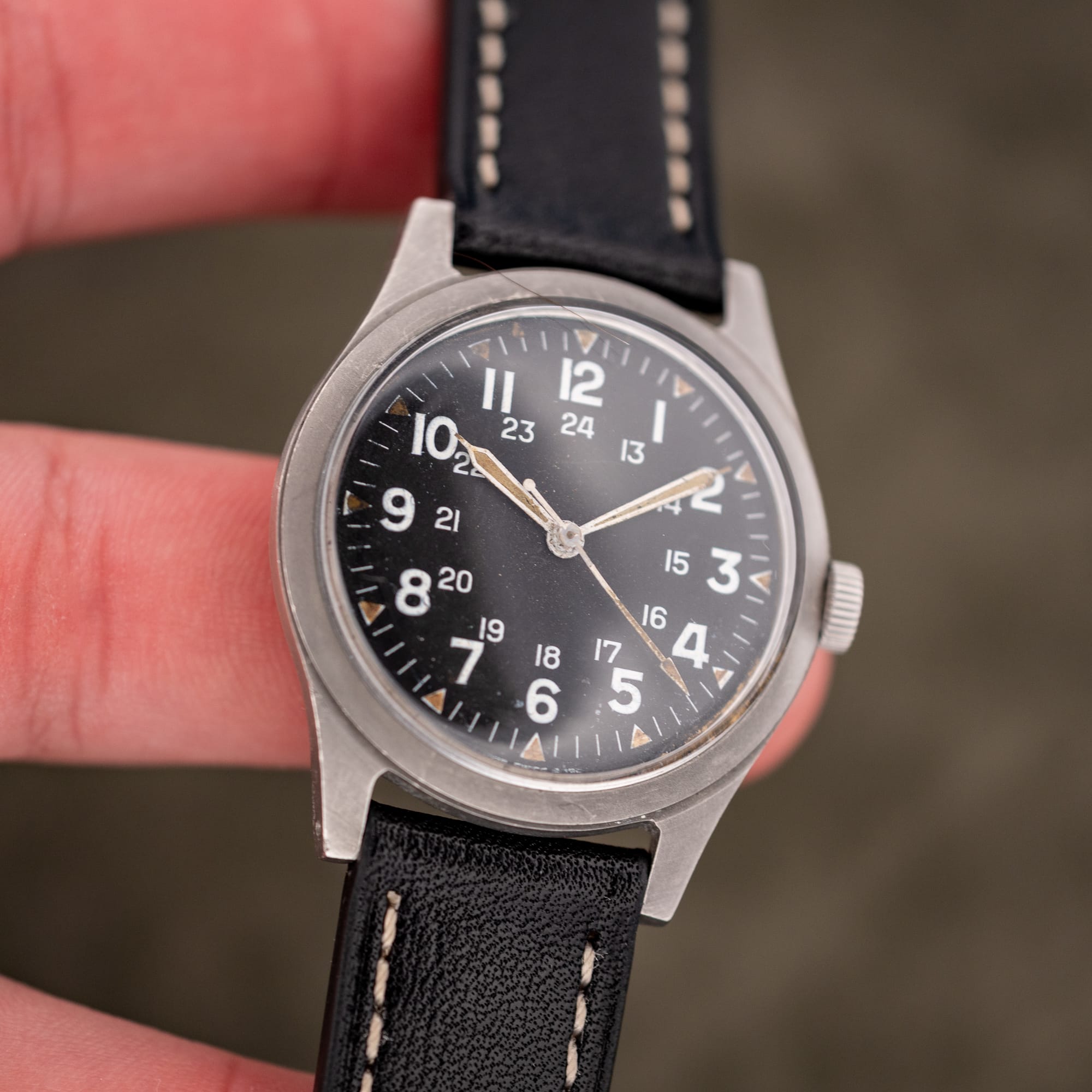
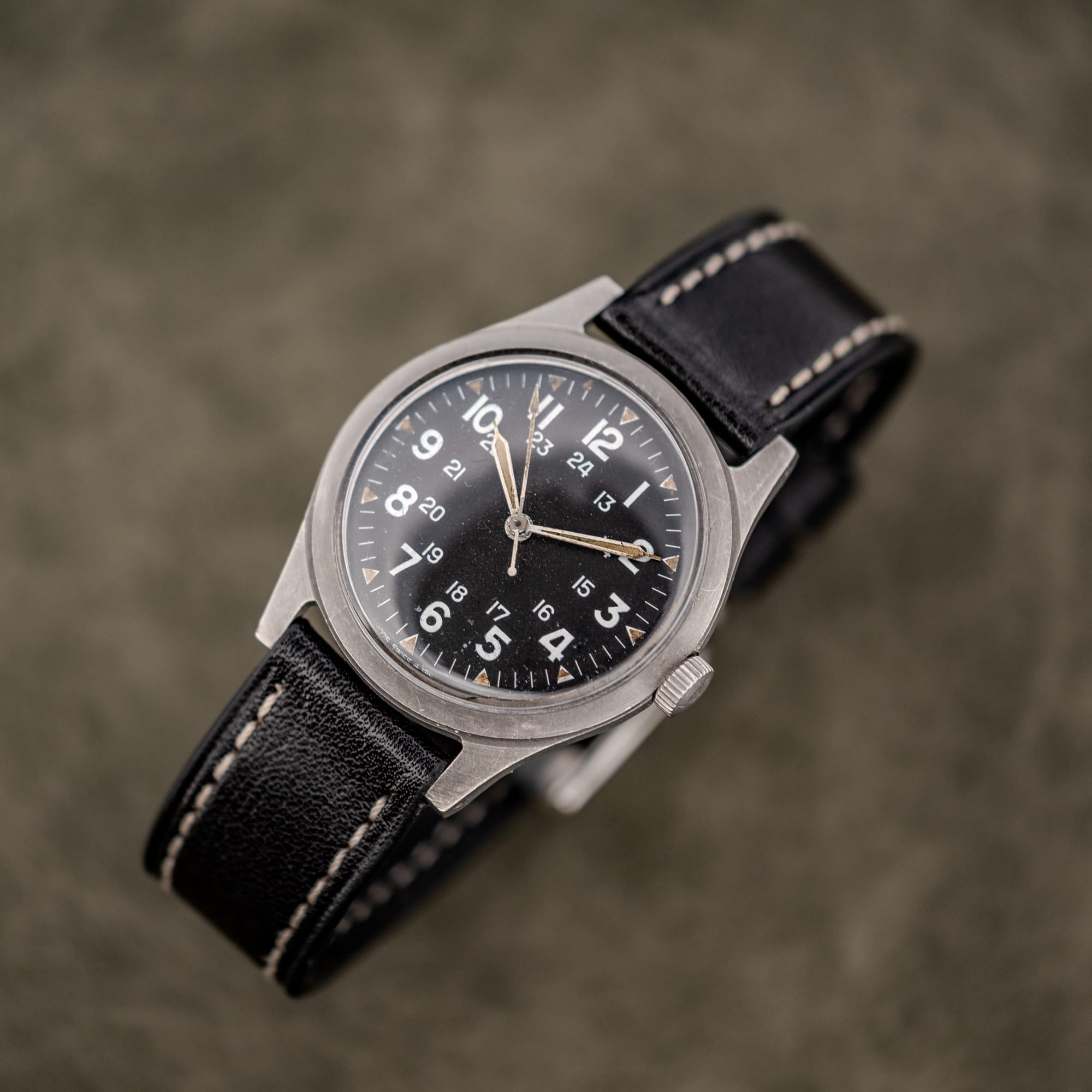
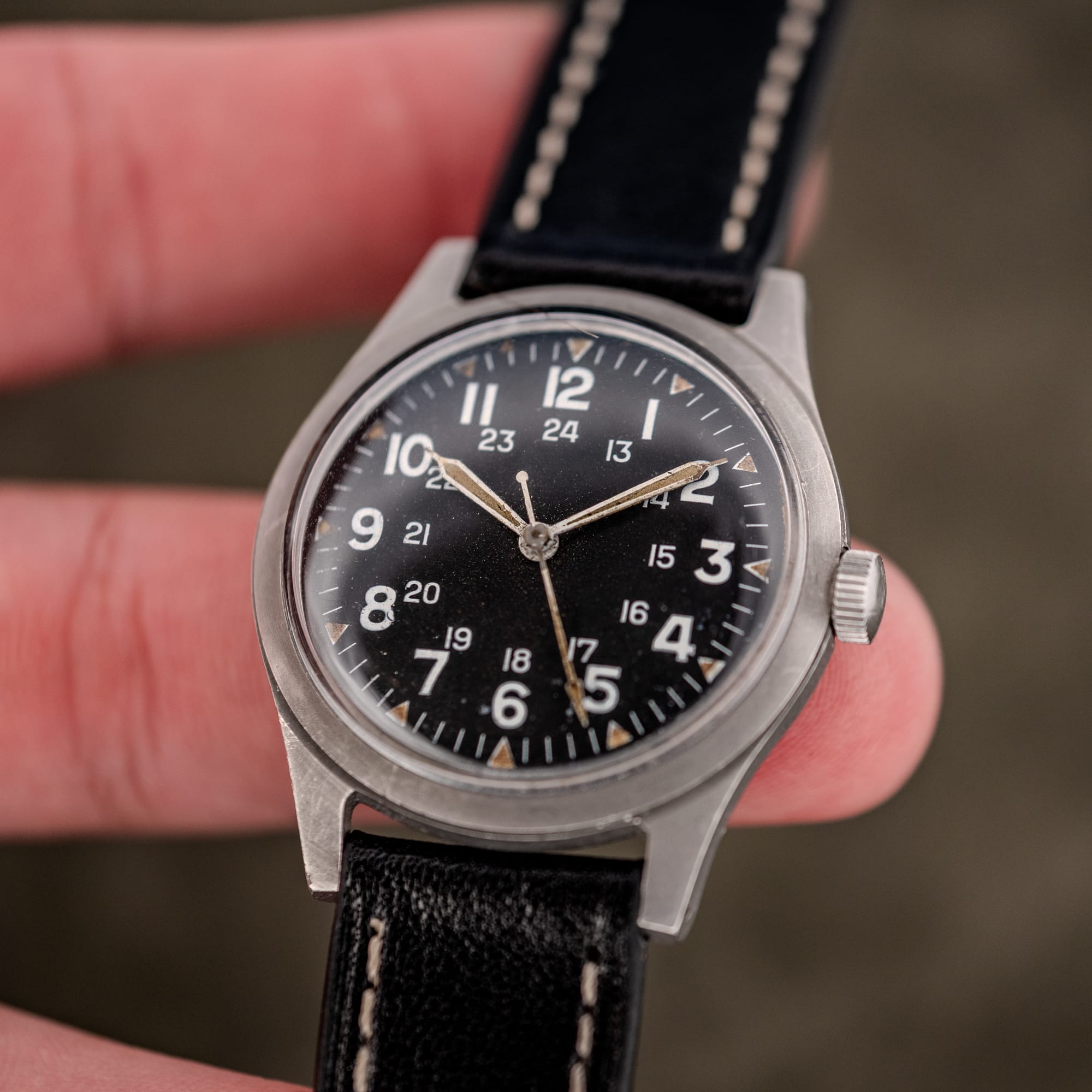
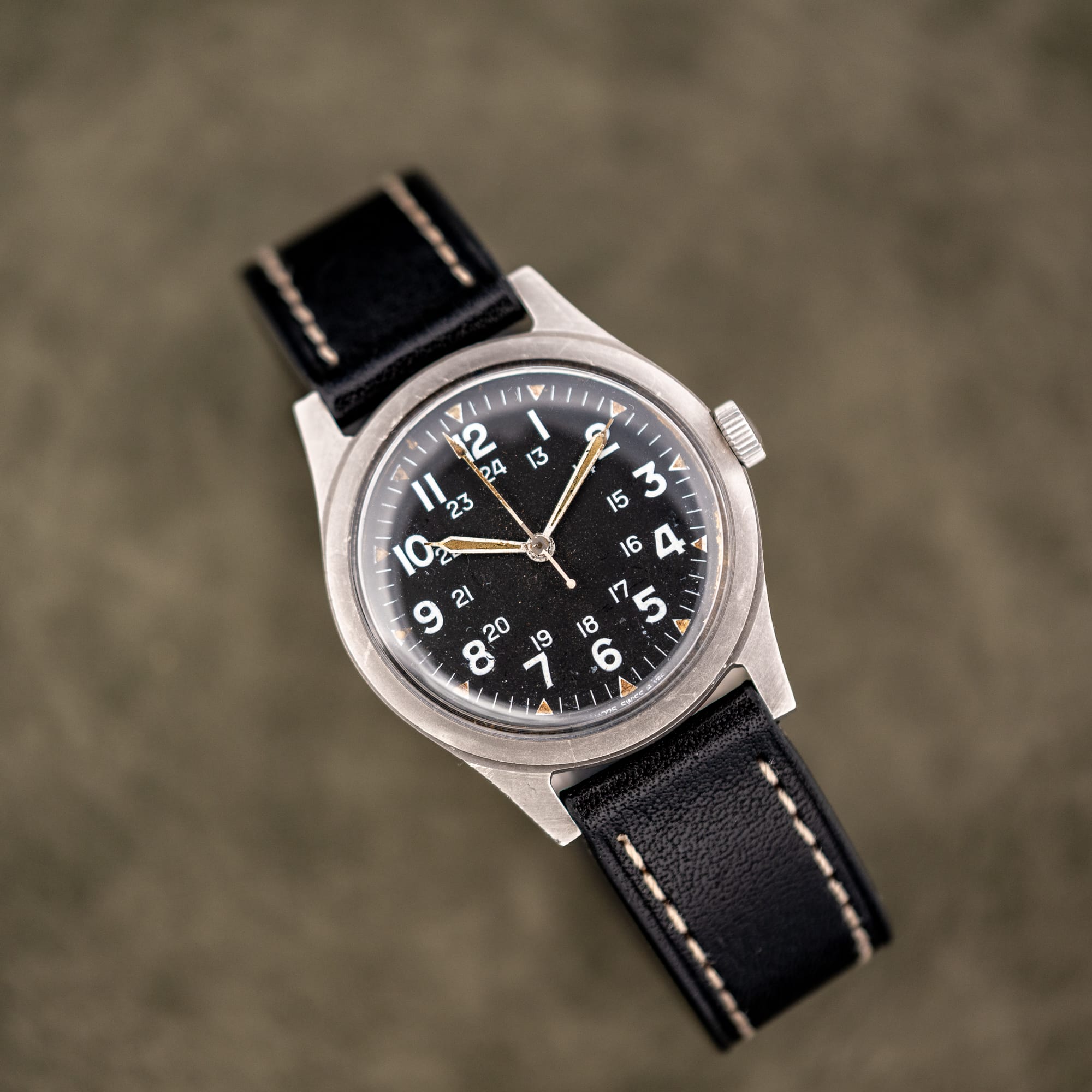
The watch has aged the way an honest tool should. Its 34 millimeter stainless case keeps the matte bead-blasted finish under five decades of micro-scratching, with brighter rubbed zones on the bezel edge and lug tops, a shallow ding in the mid-case band, and drilled lugs at both ends. The domed acrylic crystal has hazed and collected light surface marks. On the sterile black dial, fine pale speckling runs across the field and a soft tan bloom sits along the chapter ring between roughly four and eight o’clock, while the lume has gone every shade from cream to orange-brown, plot to plot, the hand lume cracked, a chip missing from the tip of the minute hand, and the sweep seconds worn thin. None of it has been touched up. The caseback engraving is still deep and crisp, which is the first thing we check on a military watch, because a polished-out back erases the only identity these watches were ever given.
Serviced in-house at OTTUHR and backed by our 2-year mechanical warranty, on a black leather strap with cream contrast stitching, a modern pairing rather than an issue band. Two American specifications, near identical from three feet away, and only one of them was written for someone who needed to know the exact second.