On 8 June 1973, Omar Bradley signed his last annual report as chairman of the Bulova Watch Company. He had held the job since 1958, after a career that made him a five-star General of the Army and the first chairman of the Joint Chiefs of Staff. The report going out over his signature carried a quiet piece of news. Bulova Park in Queens, opened twenty years earlier as the largest domestic plant for jeweled-lever balance-wheel watches, had stopped making them, and the last of that production went to Bulova’s plants in Switzerland. This Bulova day/date came back the other way.
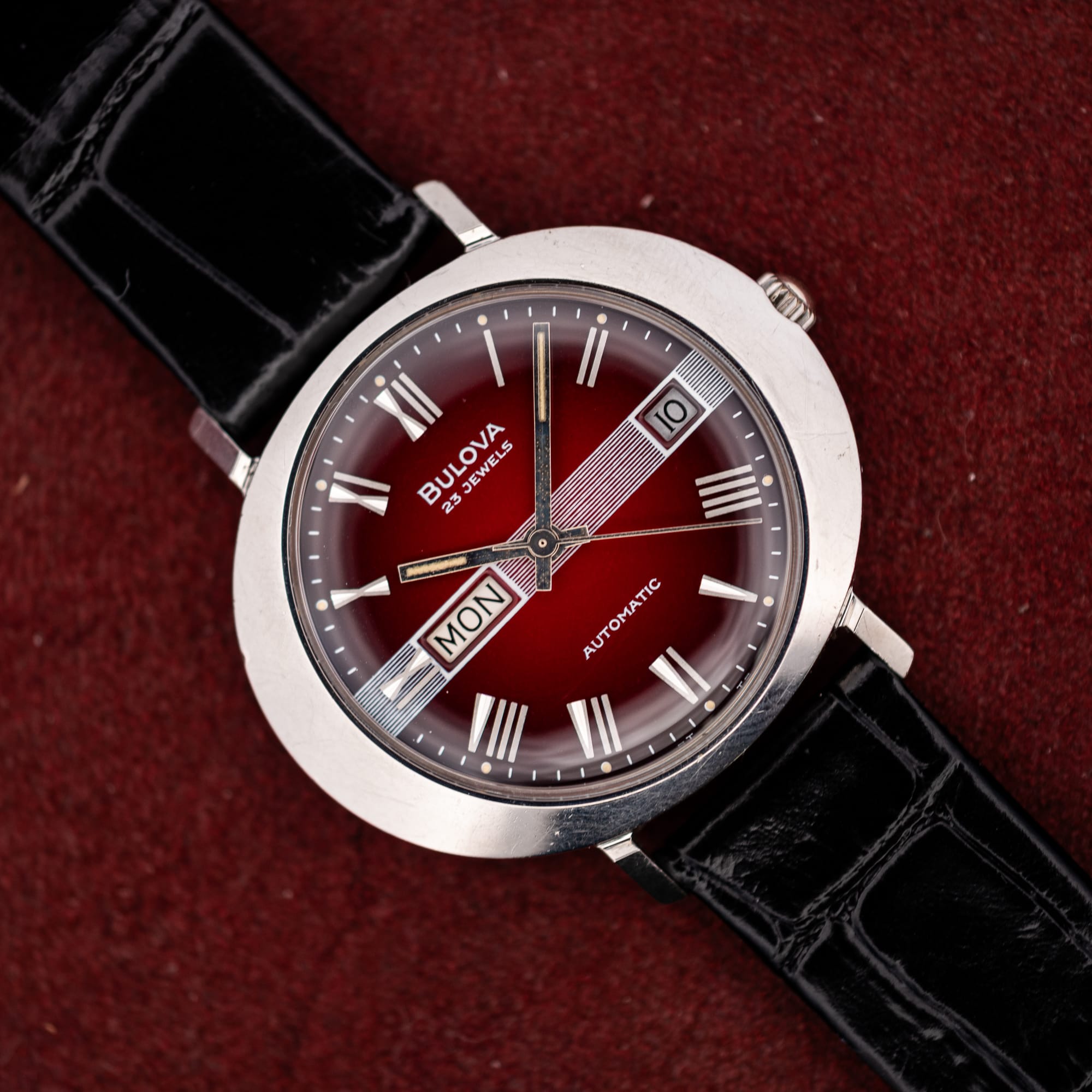
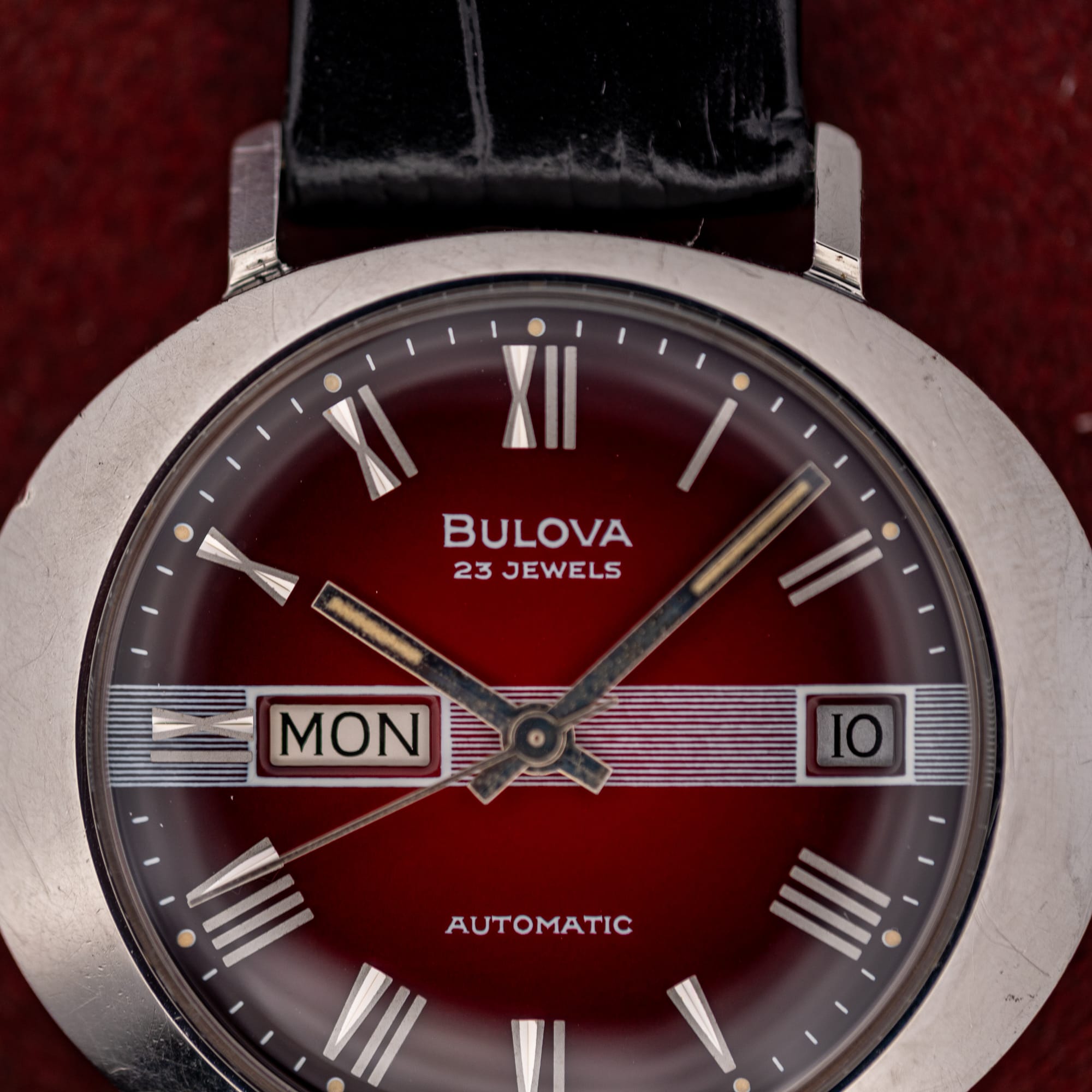
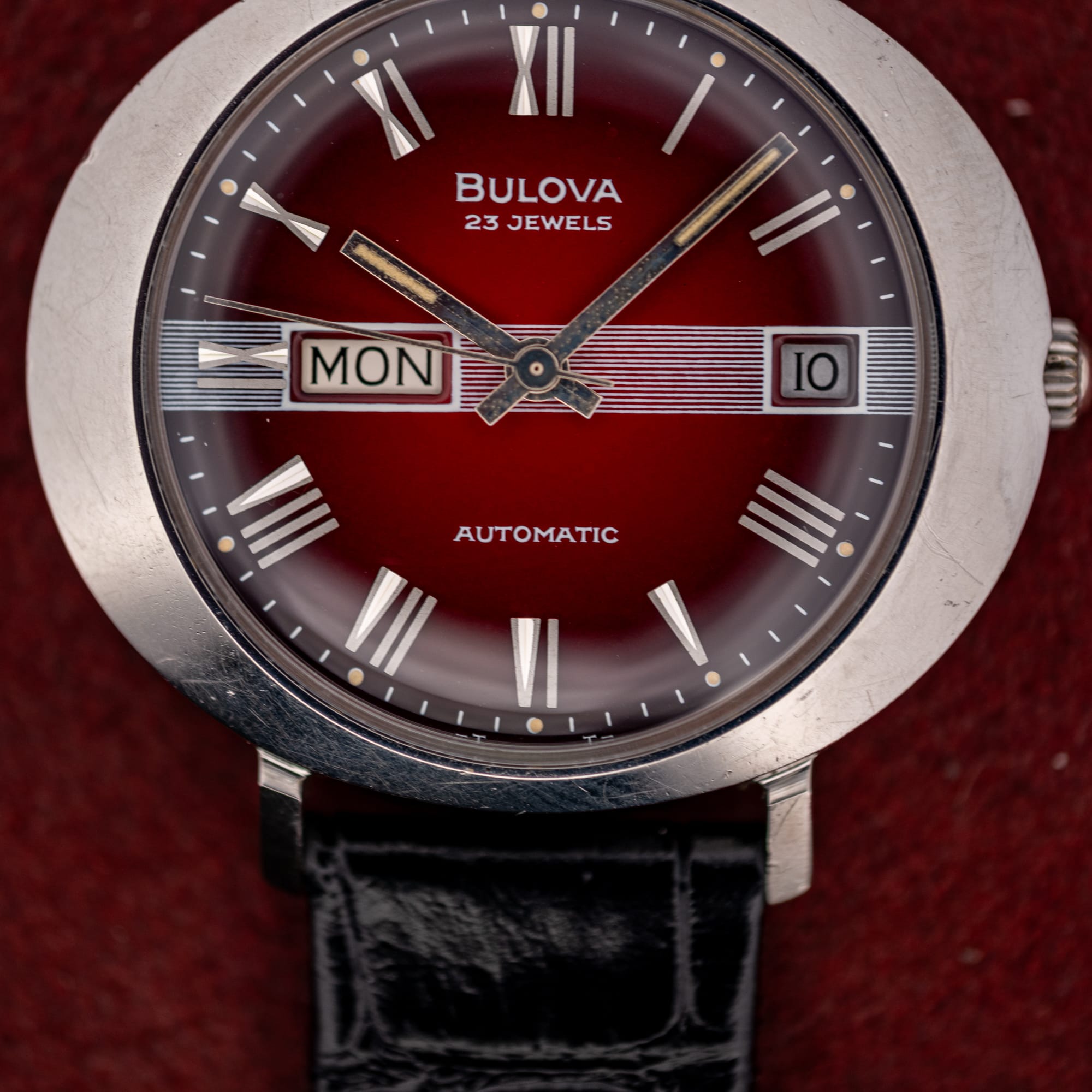
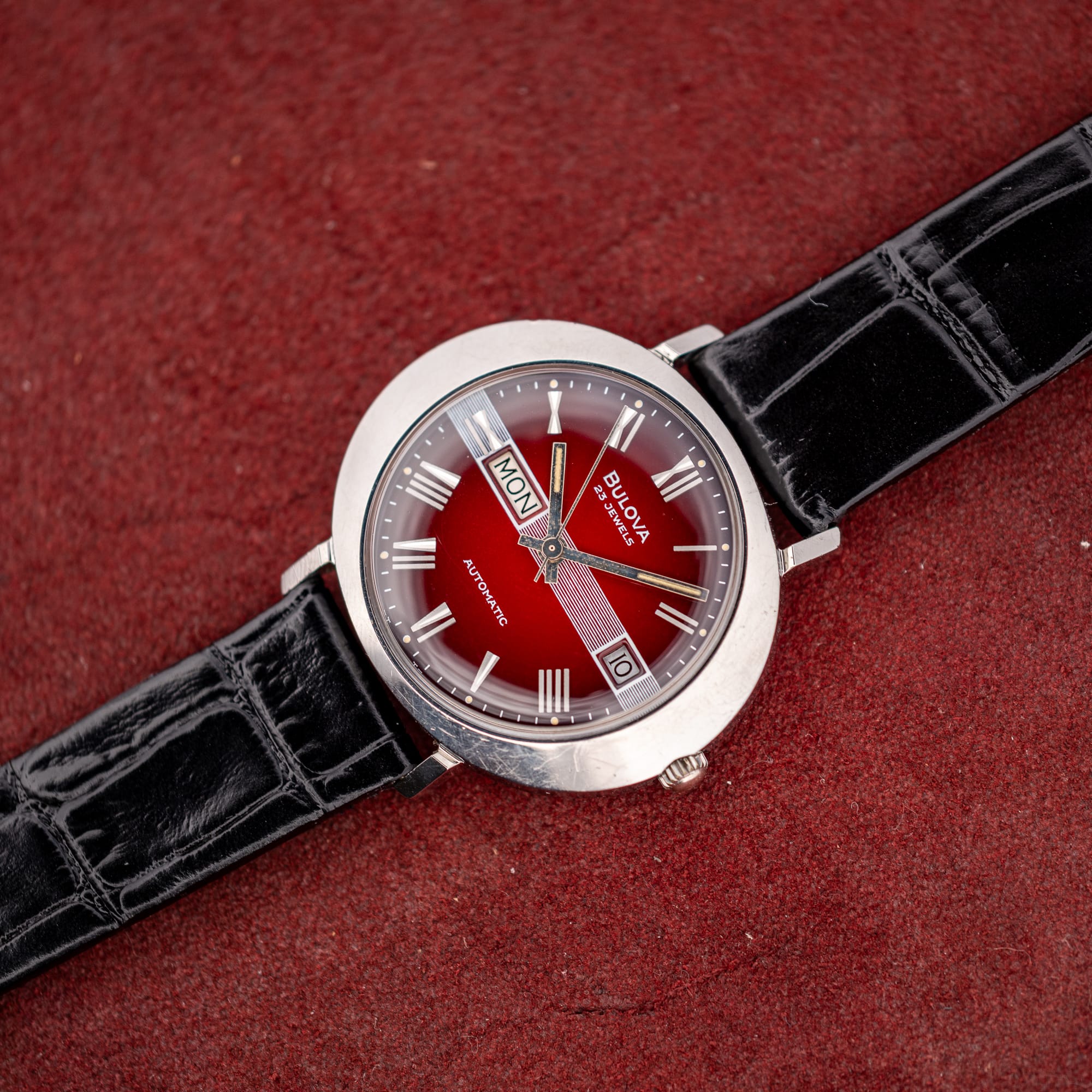
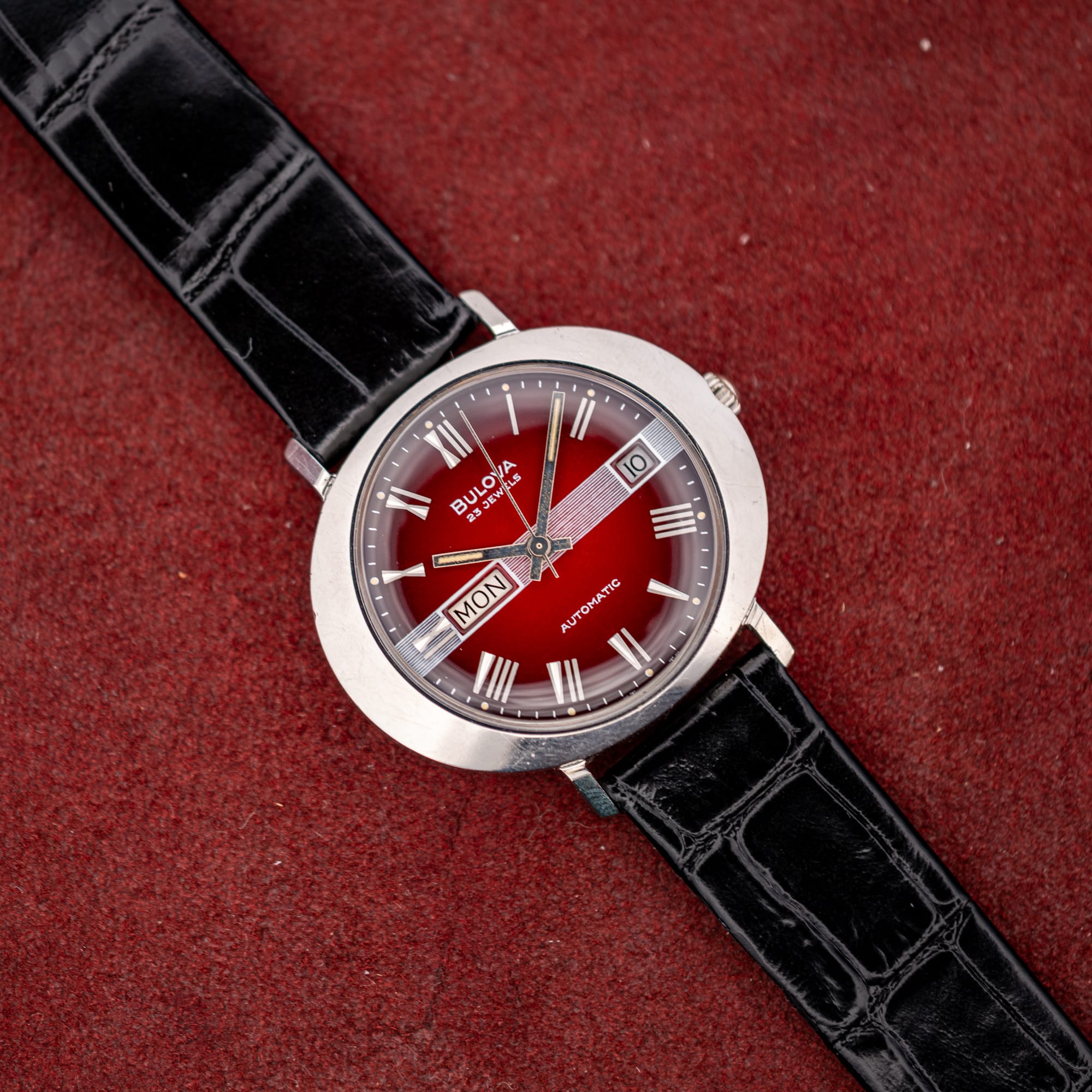
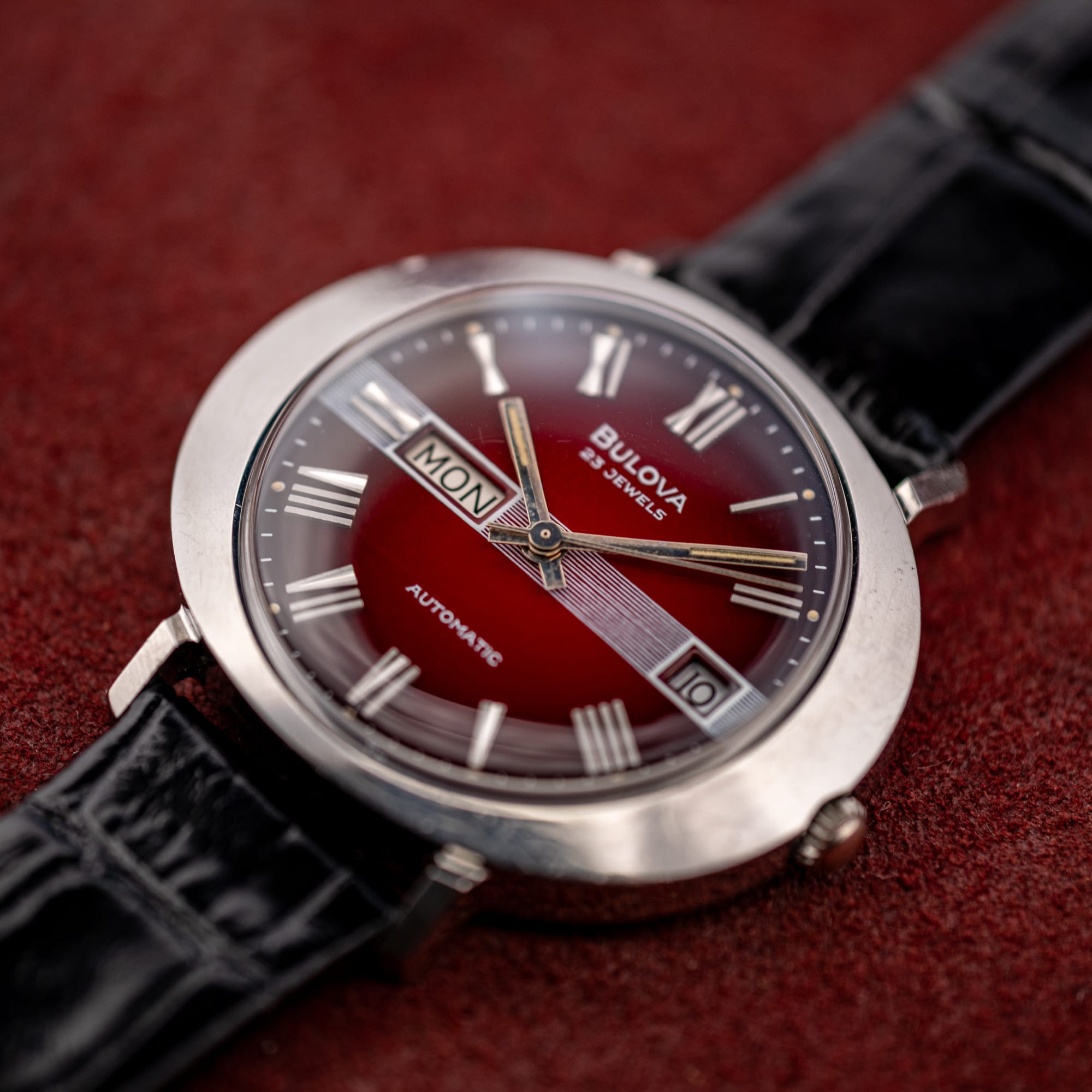
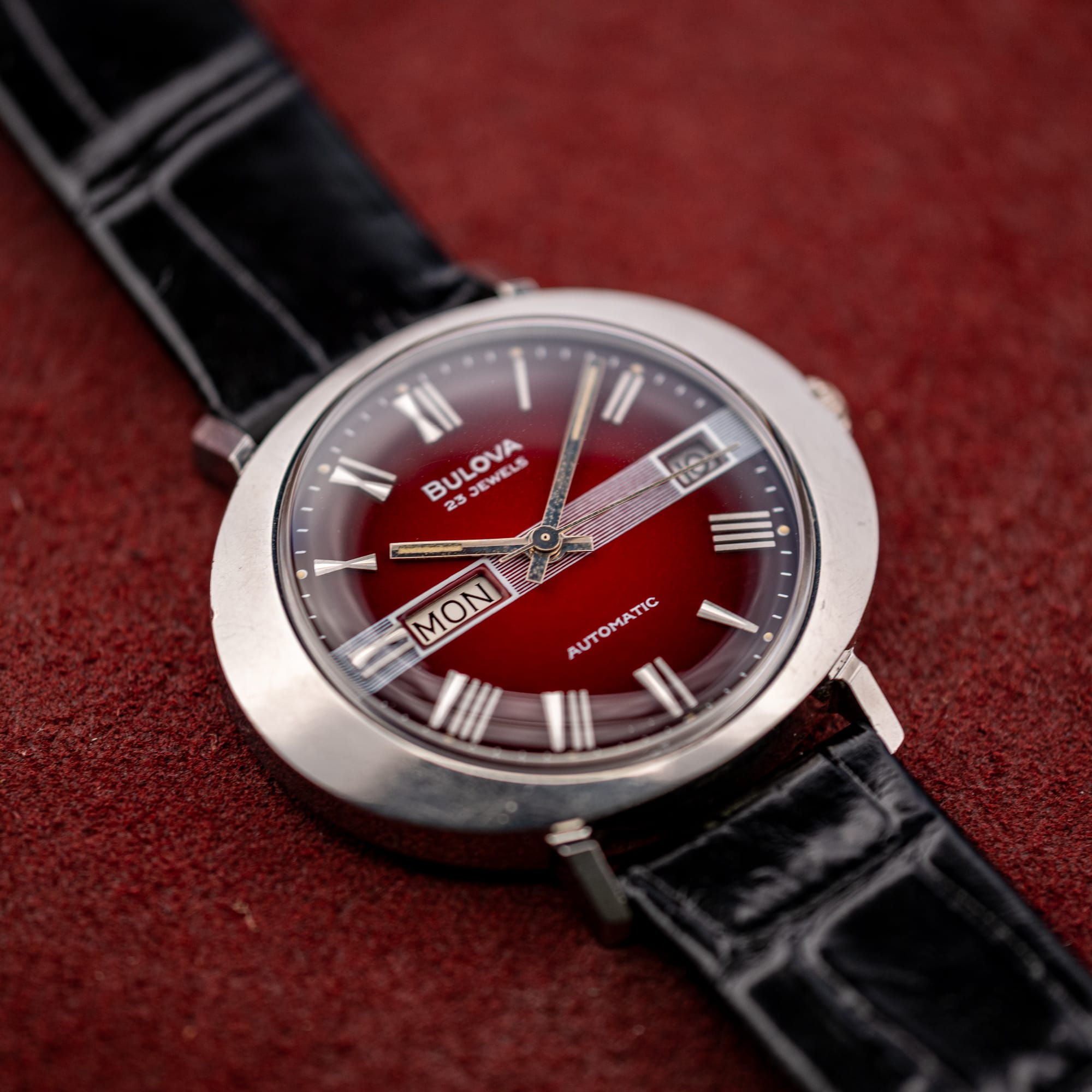
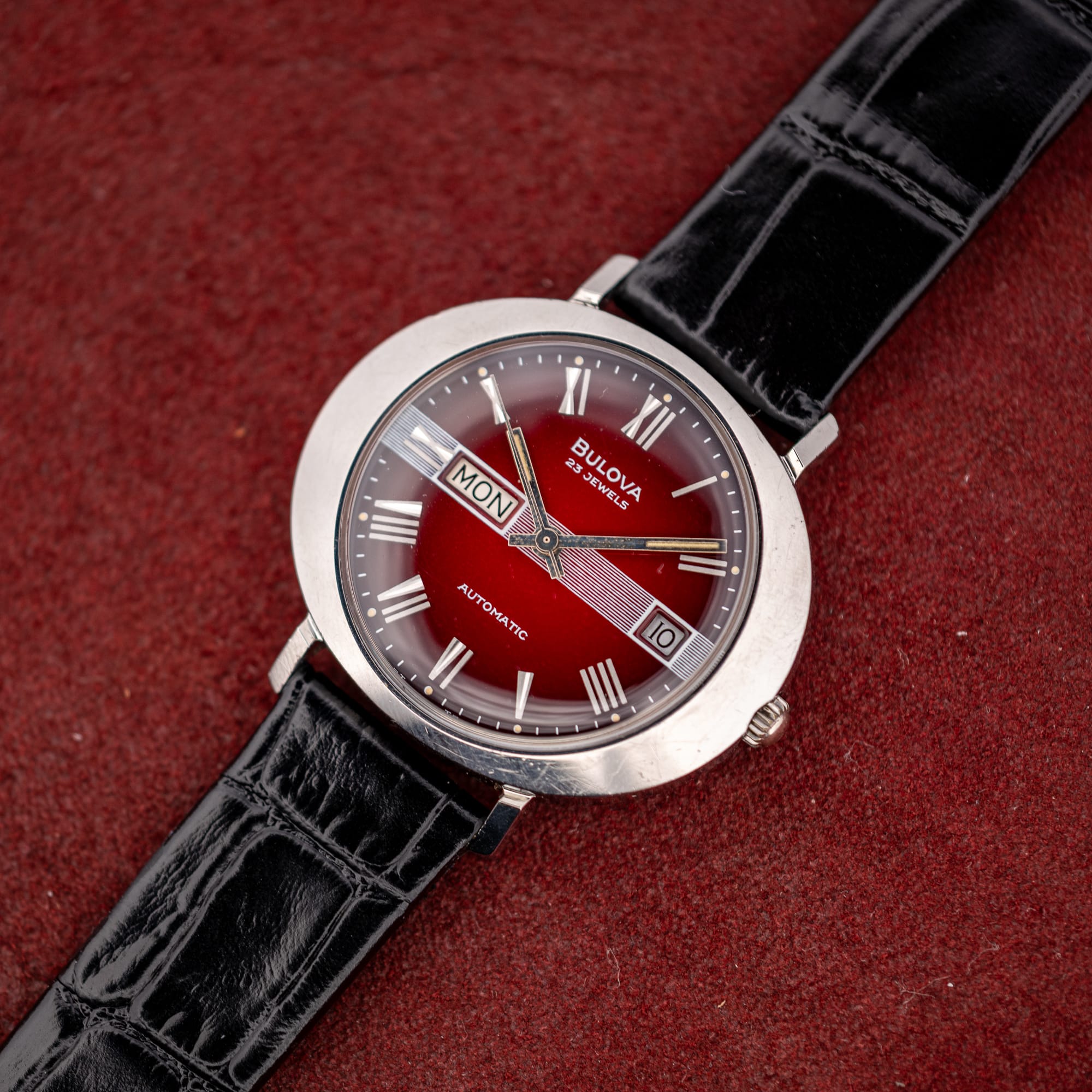
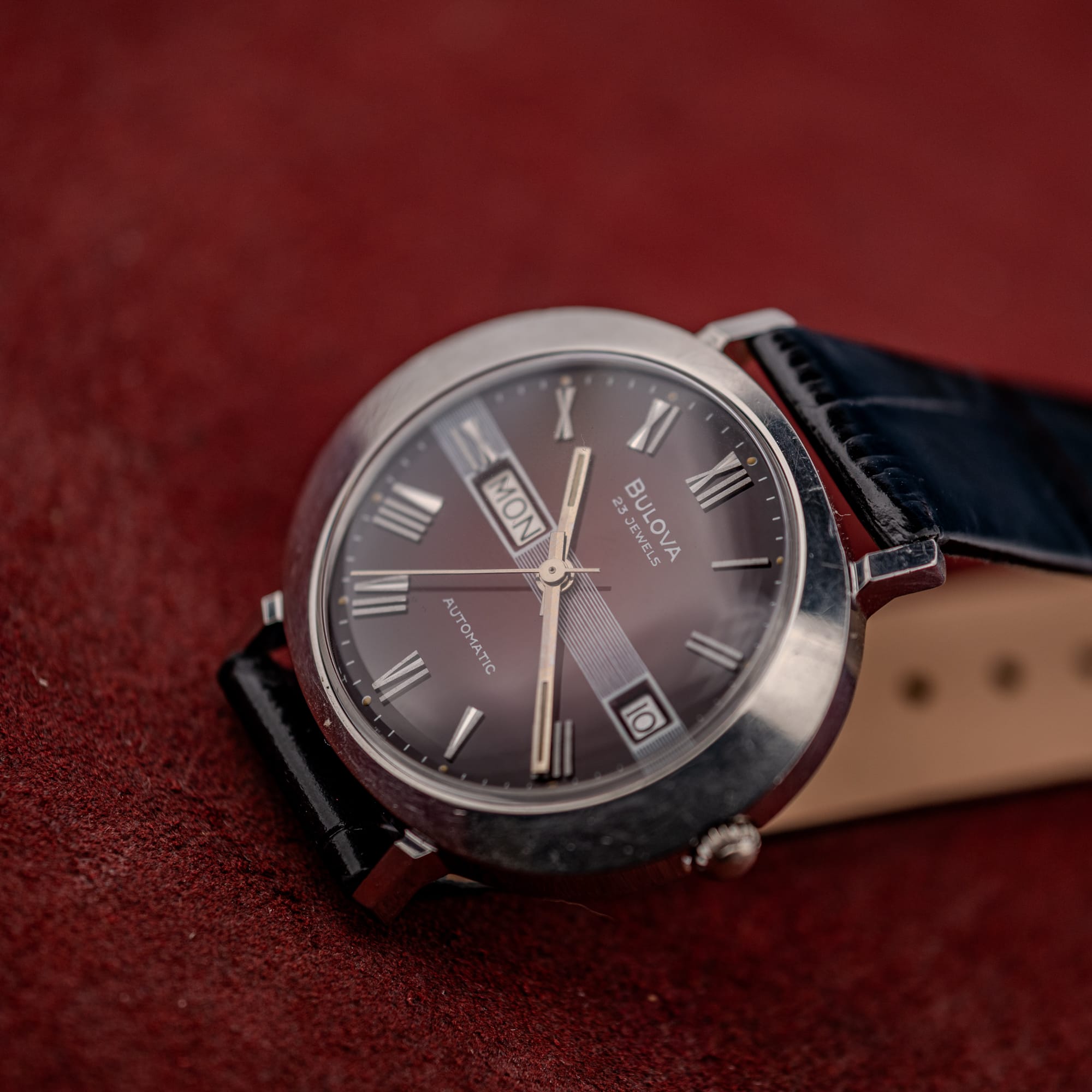
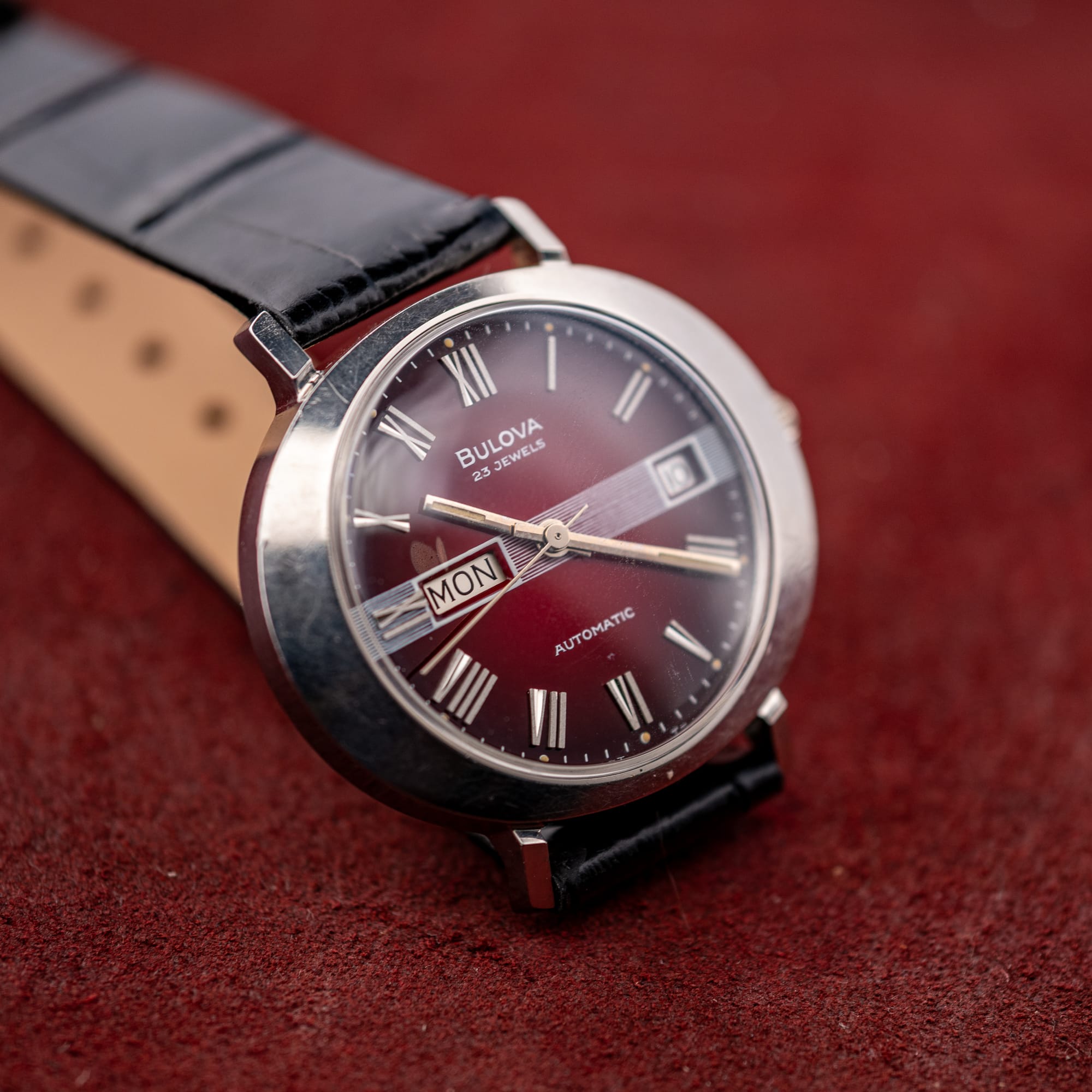
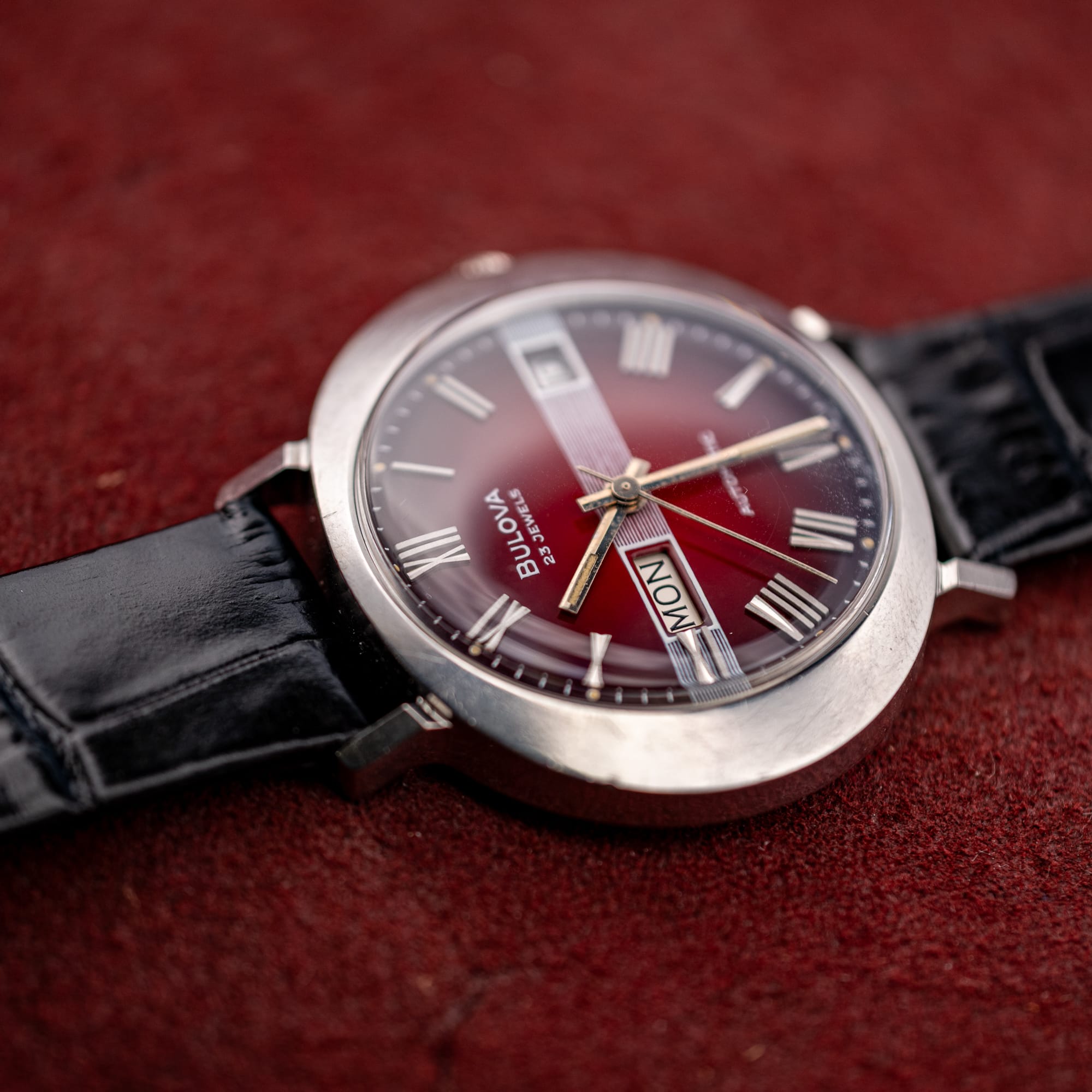
From then on the American factory built only electronics, the tuning-fork Accutron shown to the press in October 1960 and the Accuquartz put into New York jewelers’ windows in December 1971. The same report says what buyers were reaching for. Bulova told its shareholders that its Accutron calendar and day-and-date styles had shown unusual consumer popularity that year, and that the bestsellers in that line were no longer the cheapest models but the ones carrying the extra windows. Americans were paying up for the day of the week. At the mechanical end of the catalogue the answer was the President Collection, stainless day-dates Bulova advertised from sixty-five dollars, and the dealer line book its salesmen carried lists this one as model 11005-6W, the President “C”, at seventy-five: twenty-three jewels, stainless steel, automatic, sweep second, day and date, and a dial the catalogue puts in a single line. Two-tone burgundy dial with silver Roman numerals, white zone from 3 to 9, tritium dots and hour markers.
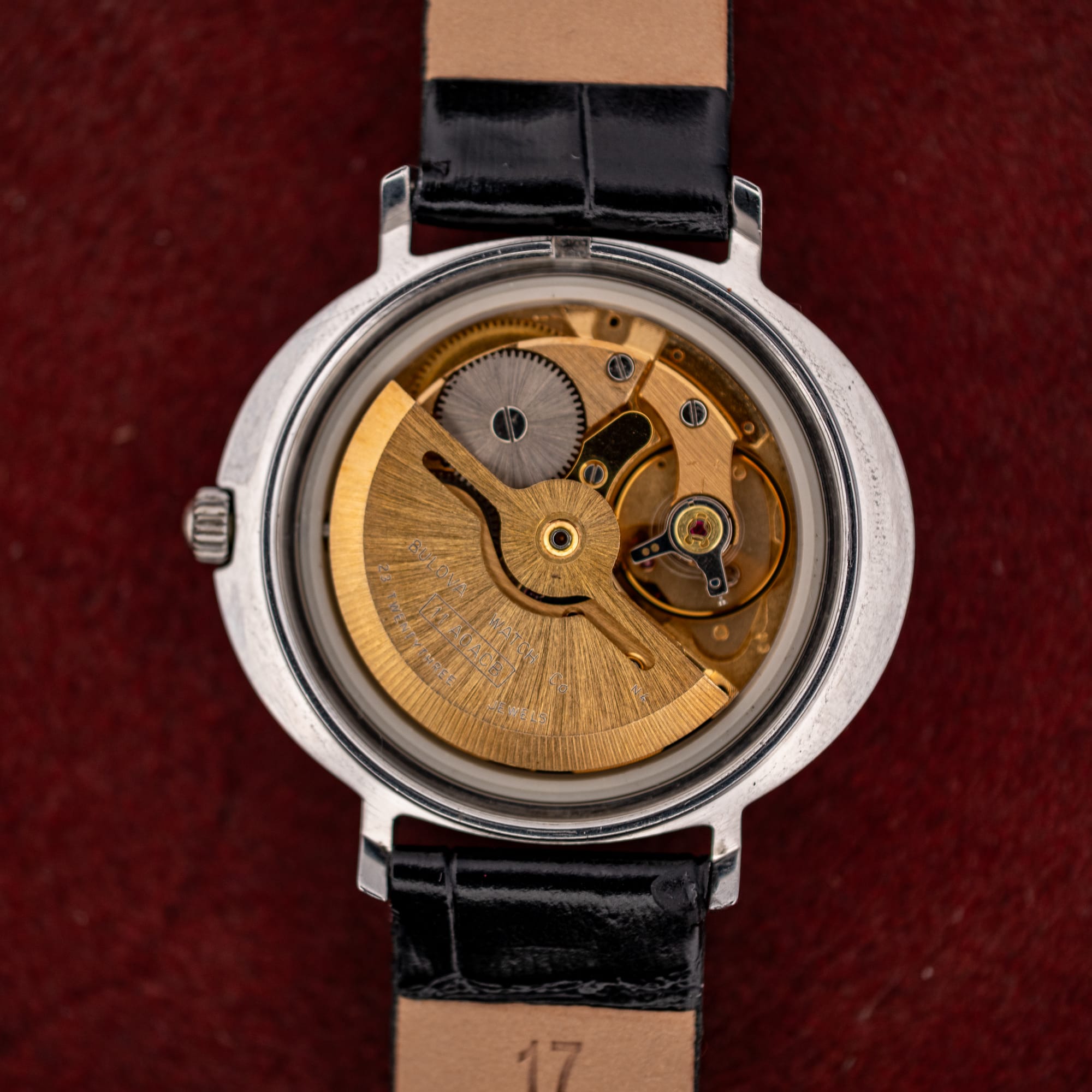
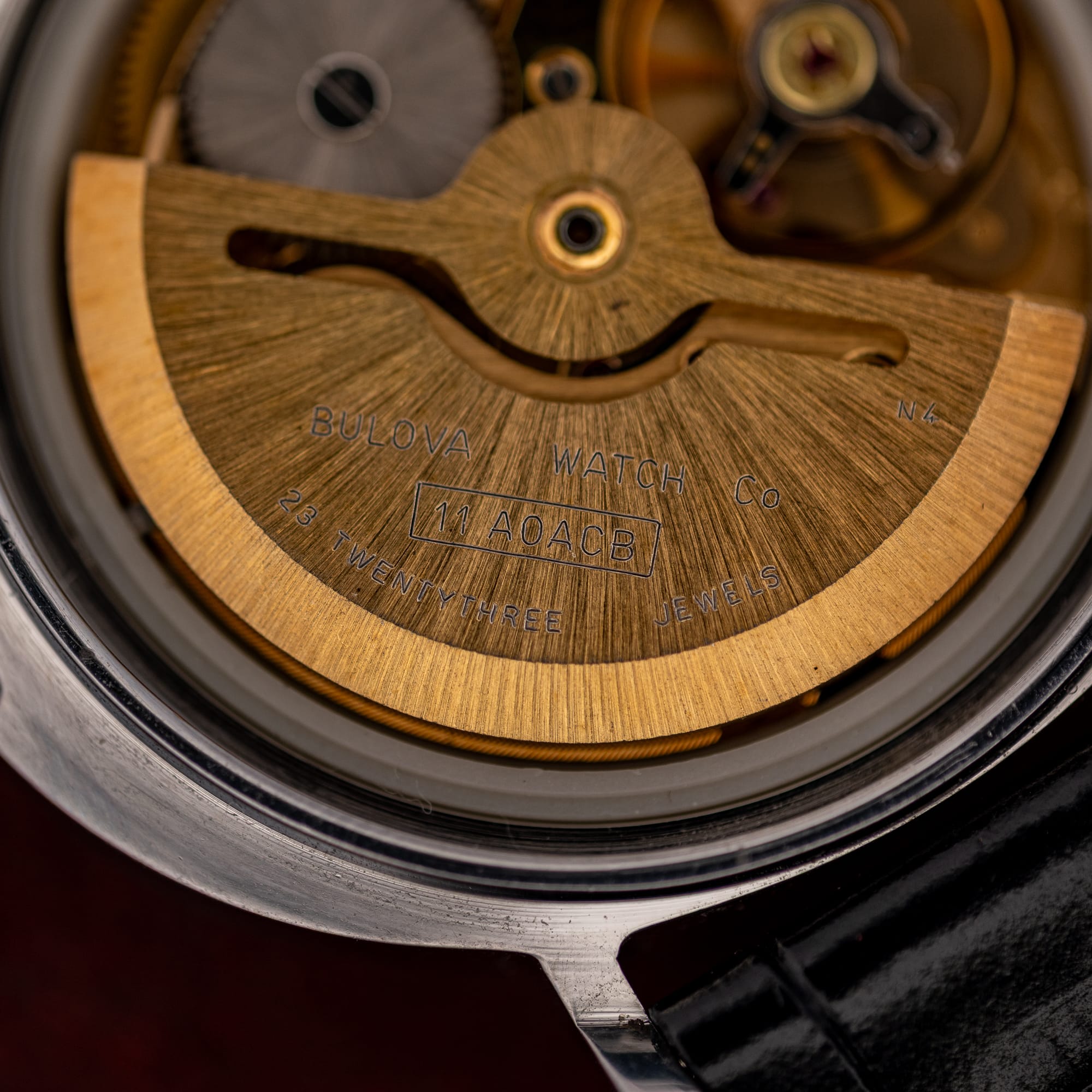
Every clause of that line is in front of us, and the one we would keep is the white zone from 3 to 9. That is Bulova’s own name for the band of fine parallel lines running straight across the dial through the pivot of the hands, with the day at nine and the date at three hung on either end of it rather than stacked together in one window. The movement is the caliber 11 AOACB, and Bulova wrote its codes to be read: eleven lignes across, the AO family, A for automatic, C for a center sweep second, B for date and day. The letters are the spec sheet. The company’s own technical sheet even prices that last letter, listing the automatic with a date at 4.50mm tall and the AOACB at 5.27mm.
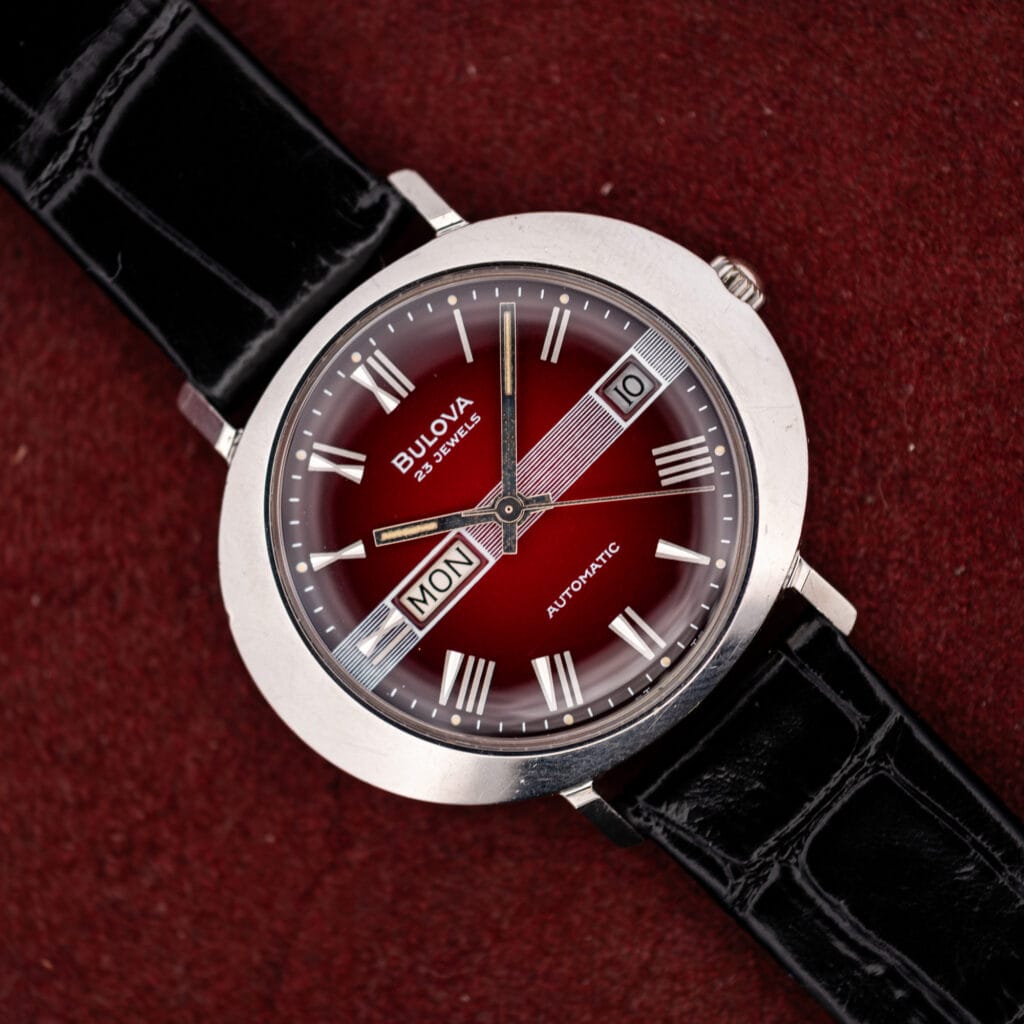
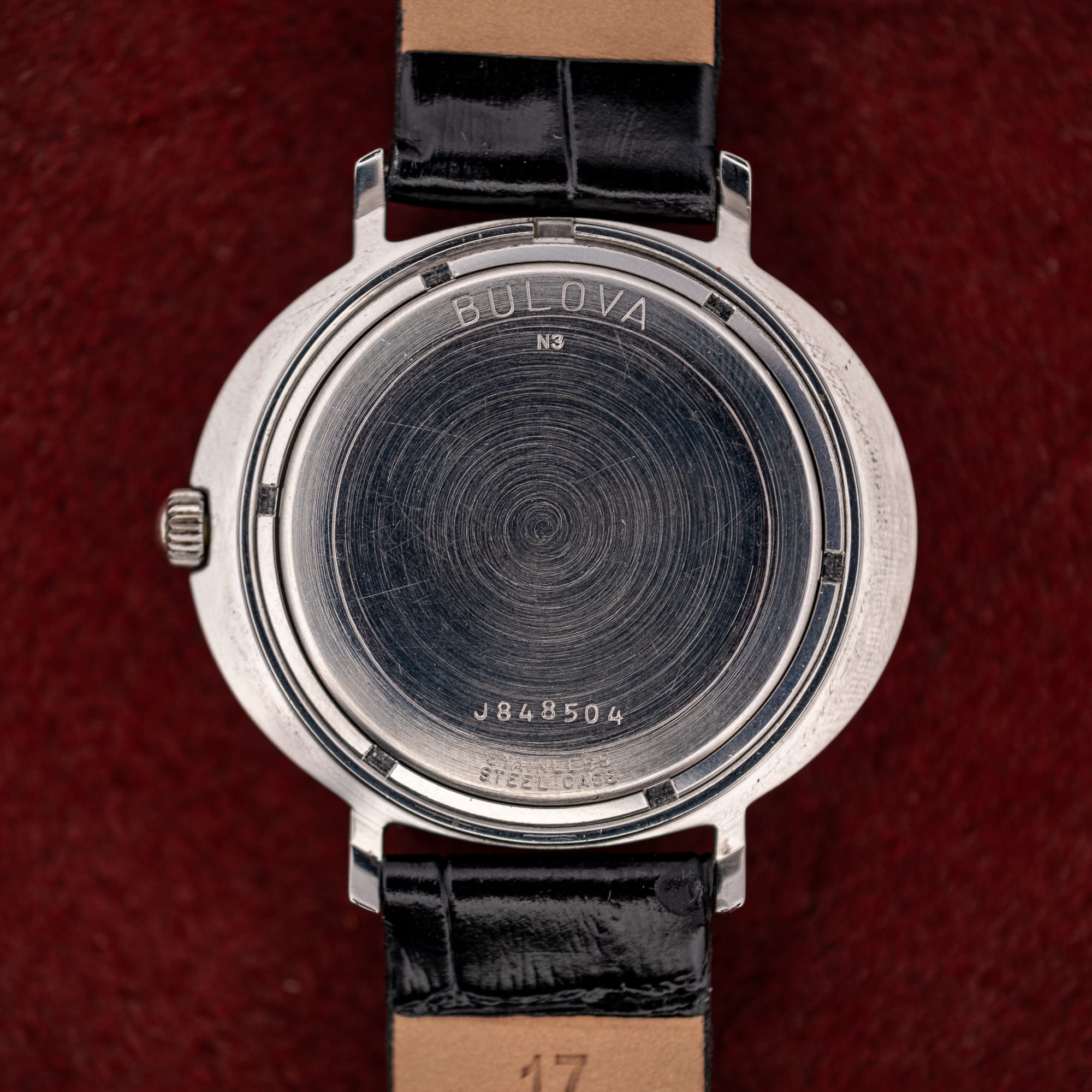
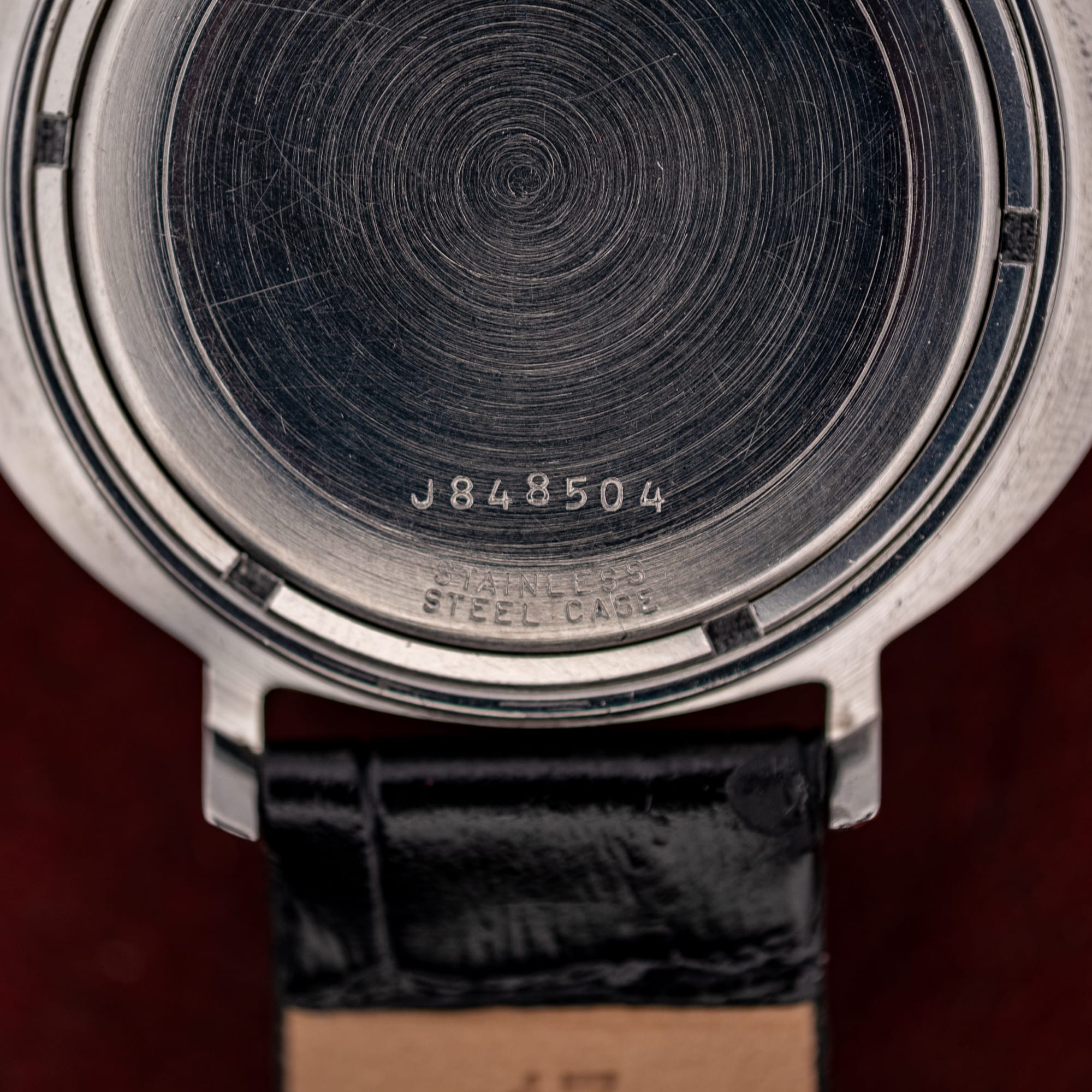
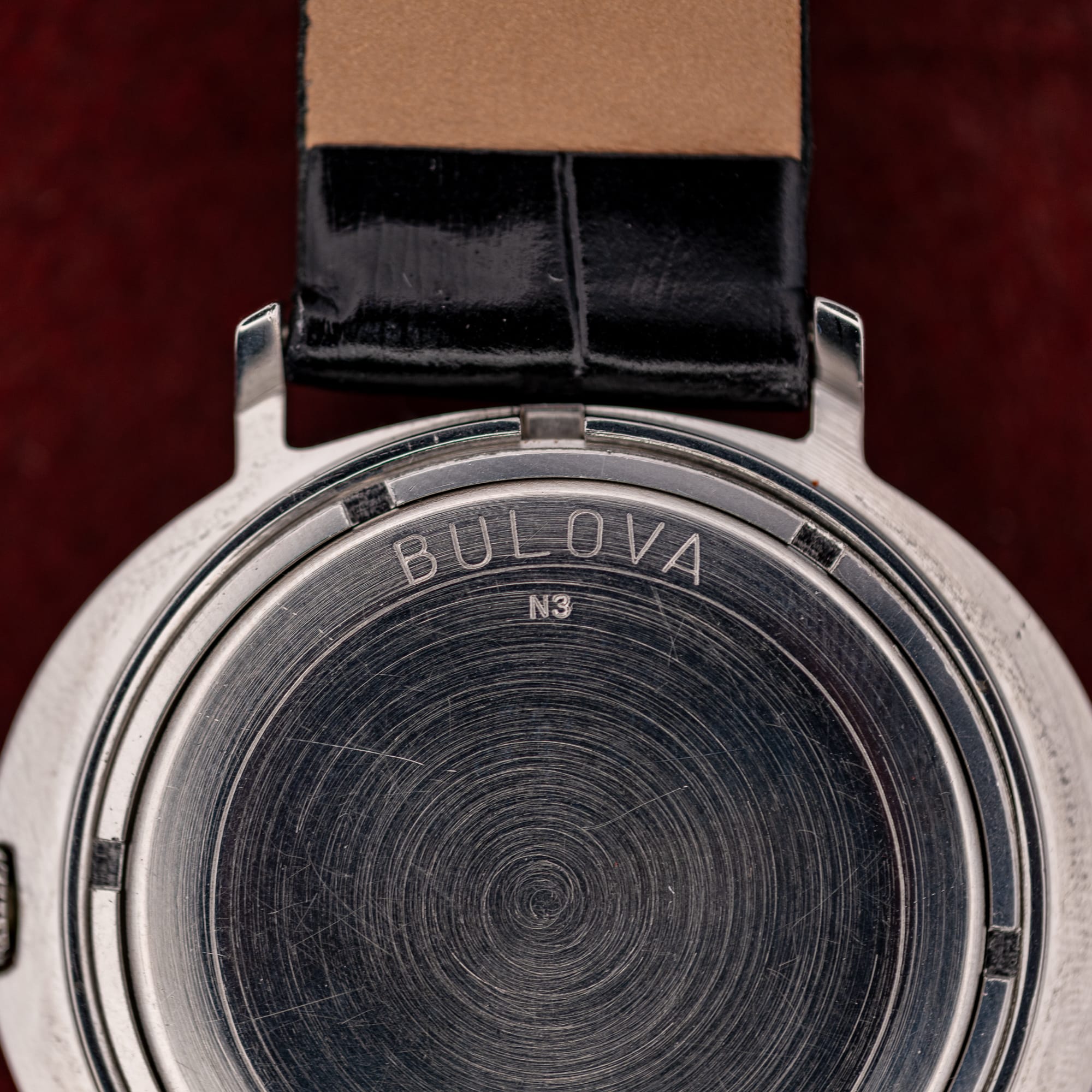
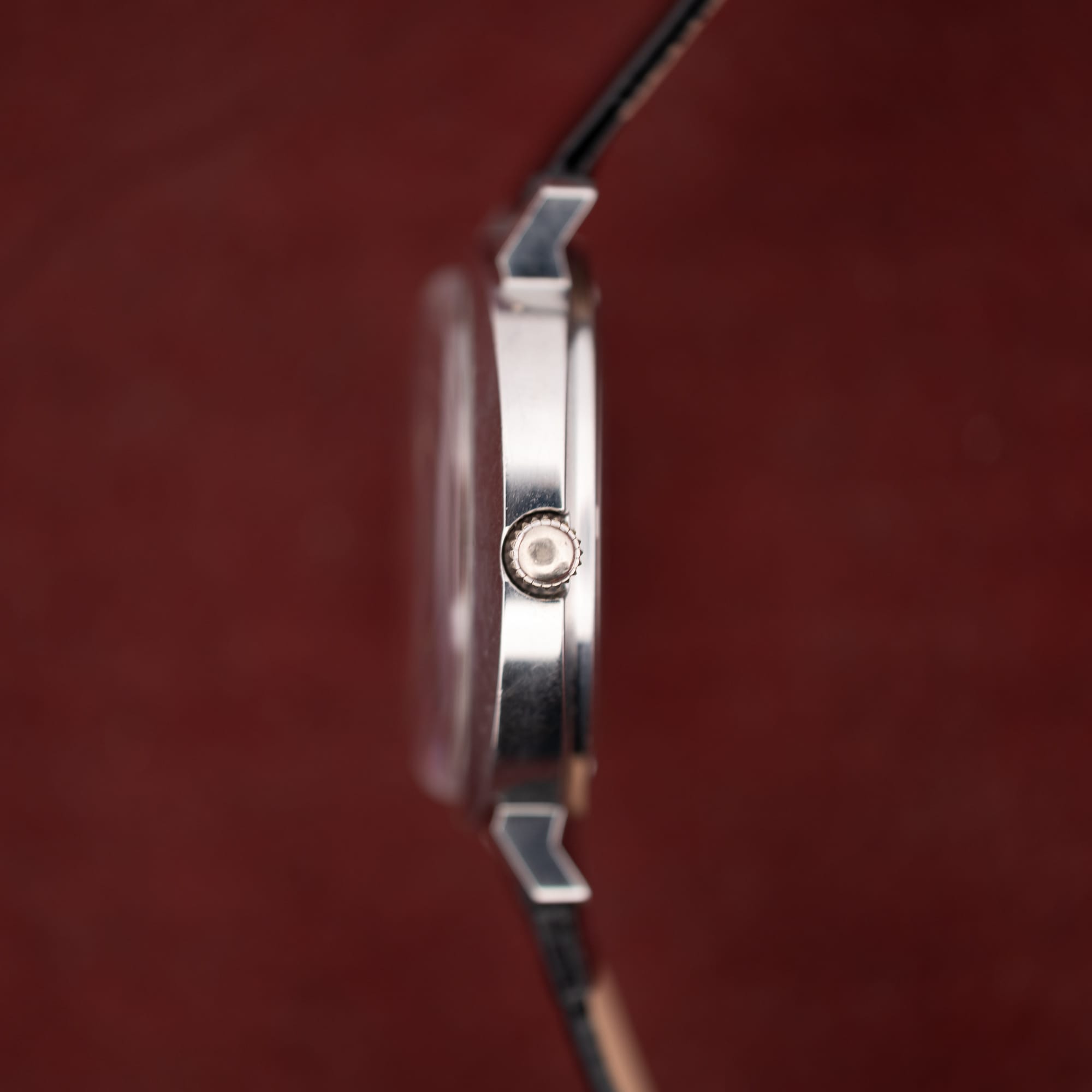
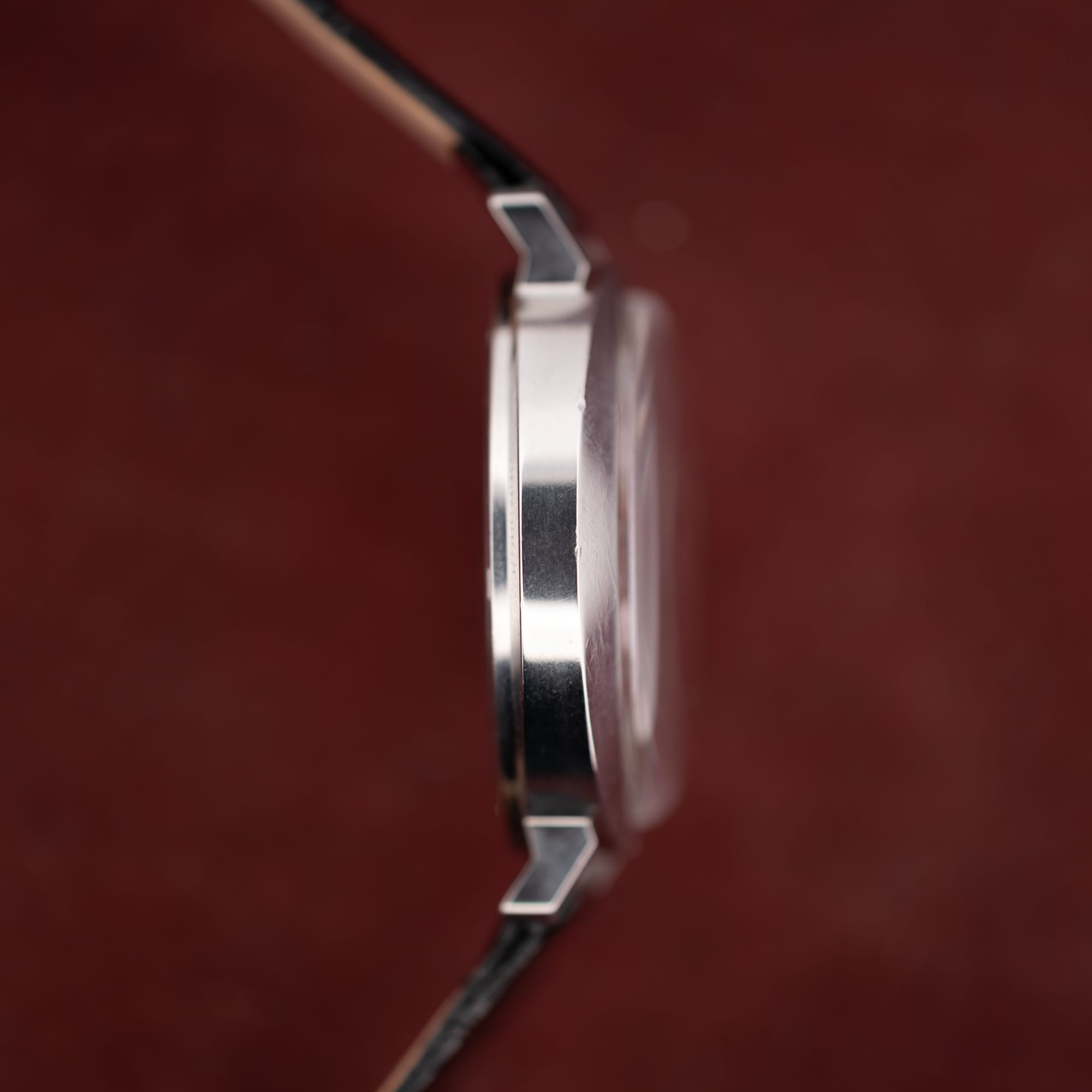
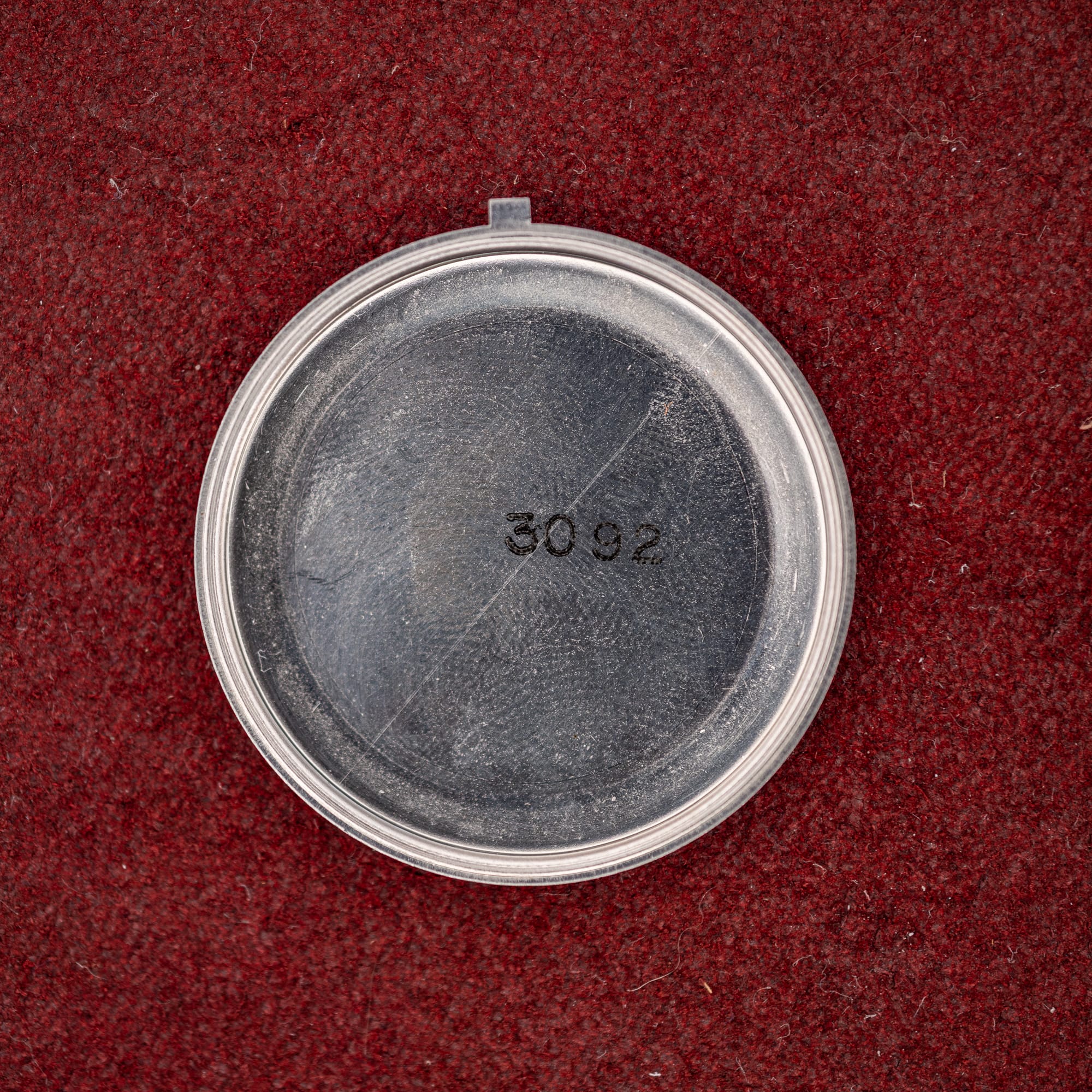
The case is 38.5mm across and 40mm lug to lug, a shallow stainless disc with a wide sloping rim and short faceted lugs that emerge from under it, set 17mm apart. The dial falls from a lit maroon at the center to near-black at the chapter ring, the applied Roman numerals standing bright against it, and the tritium dots have gone soft cream while the handset has picked up the fine dark speckling of half a century of wear. We had to take the back off to find the case number, 3092, stamped on the inside, which is where the T-3092 in the name comes from. The outside is coded N3, Bulova’s stamp for 1973, and the plate beneath the gilt rotor carries N4, so the watch dates itself twice, a year apart. The rotor, signed Bulova Watch Co, swings both ways at 21,600 beats an hour.
Serviced in-house at OTTUHR and backed by our 2-year mechanical warranty, on a black leather strap fitting wrists up to eight inches. Bradley left Bulova at eighty, in the year this case was stamped. Fifty-three years on, the white zone still reads at a glance.