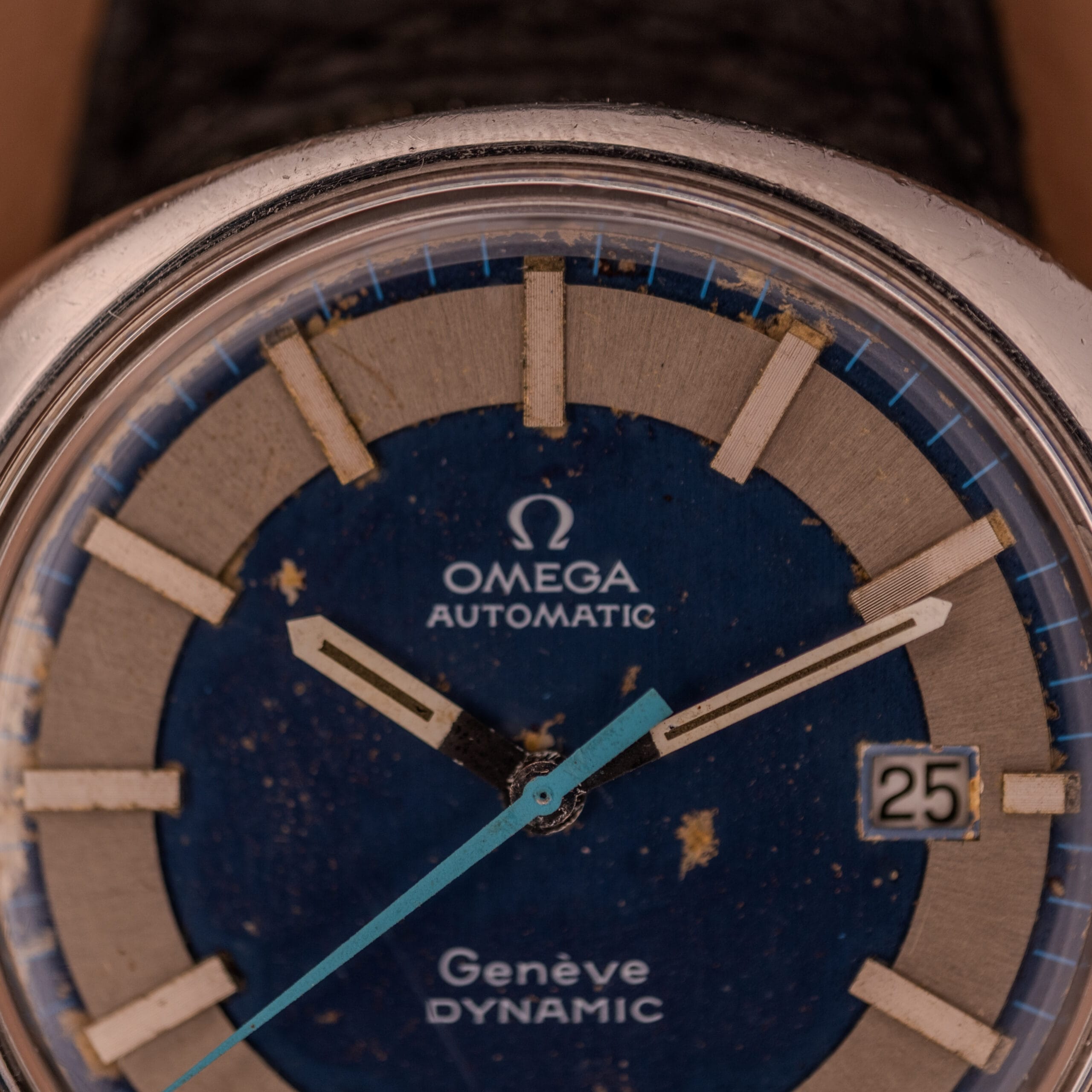
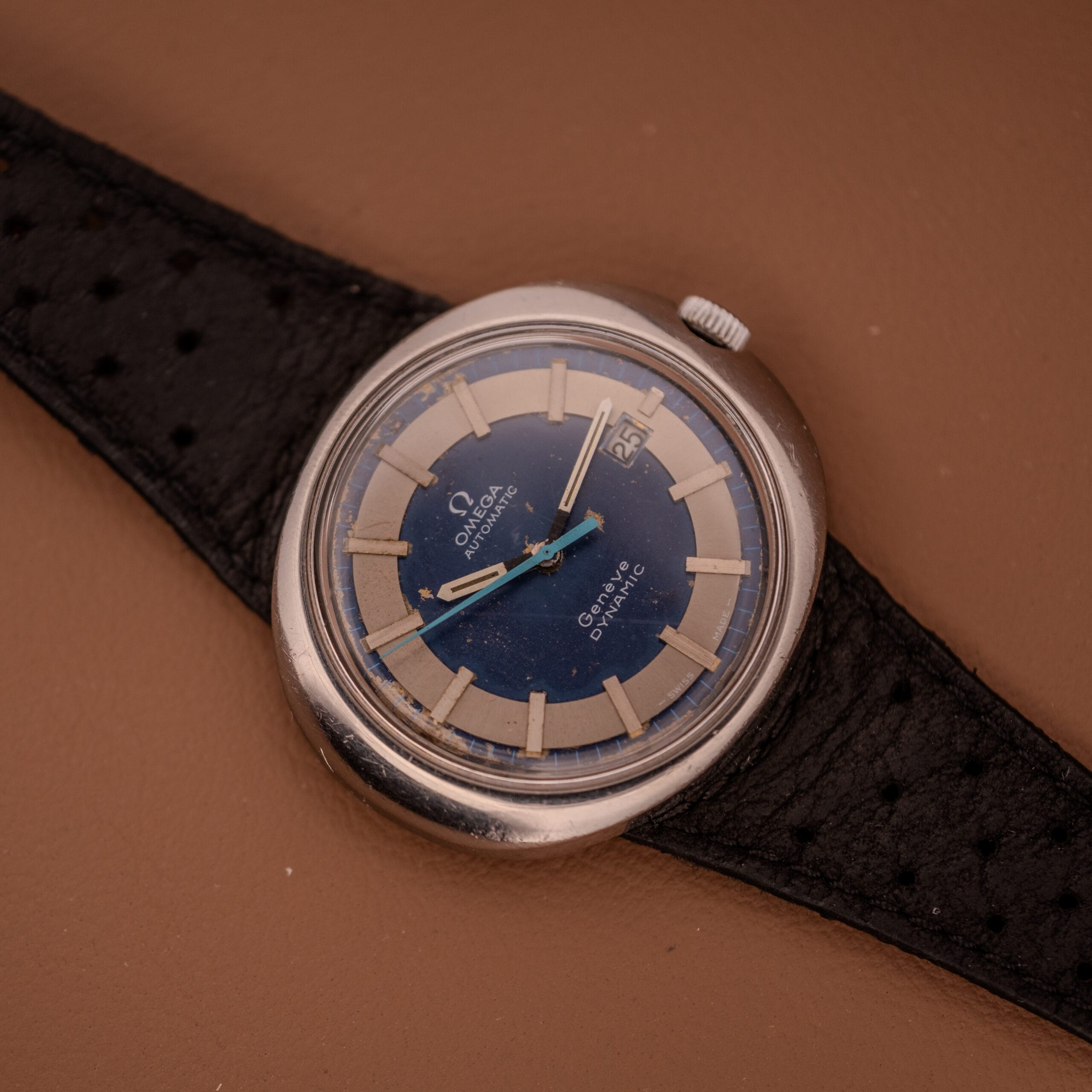
The first-generation Omega Dynamic is one of the most quietly confident design statements Omega put into the world in the late 1960s, and to us this Ref. 166.107 is exactly the kind of reference that rewards the collector who knows what to look for. The Omega Genève Dynamic was built around a brief that almost no other Swiss brand was willing to commit to in 1968: design the case, dial, and strap as a single integrated object, then engineer the movement to fit the case rather than the other way around.
Omega launched the Dynamic in late 1968 after a three-year development cycle, and the result was an immediate commercial hit. By 1972 the Dynamic line had moved more than one million units, which made it Omega’s single best-selling reference of the early 1970s and gave it a kind of cultural ubiquity in Europe that the Speedmaster had on the American side of the Atlantic. The 166.107 is the steel-cased, date-equipped automatic version of that first-generation Genève Dynamic, and it sits at the heart of what collectors mean when they talk about the original Dynamic shape.
Inside is the Omega Cal. 1481, a 17-jewel automatic from the Cal. 1480 family that Omega co-developed with Tissot during the period of intense cooperation between the two houses inside the SSIH group. The 1481 added the calendar complication to the base 1480 architecture and ran at a modern 19,800 vph, with a date jumper that gives the quick-set its characteristic crisp click. It is not a chronometer-grade caliber and it was never meant to be, but it is exactly the workhorse architecture that powered Omega’s mid-tier automatic line through the early 1970s, and well-serviced examples like this one will simply keep running.
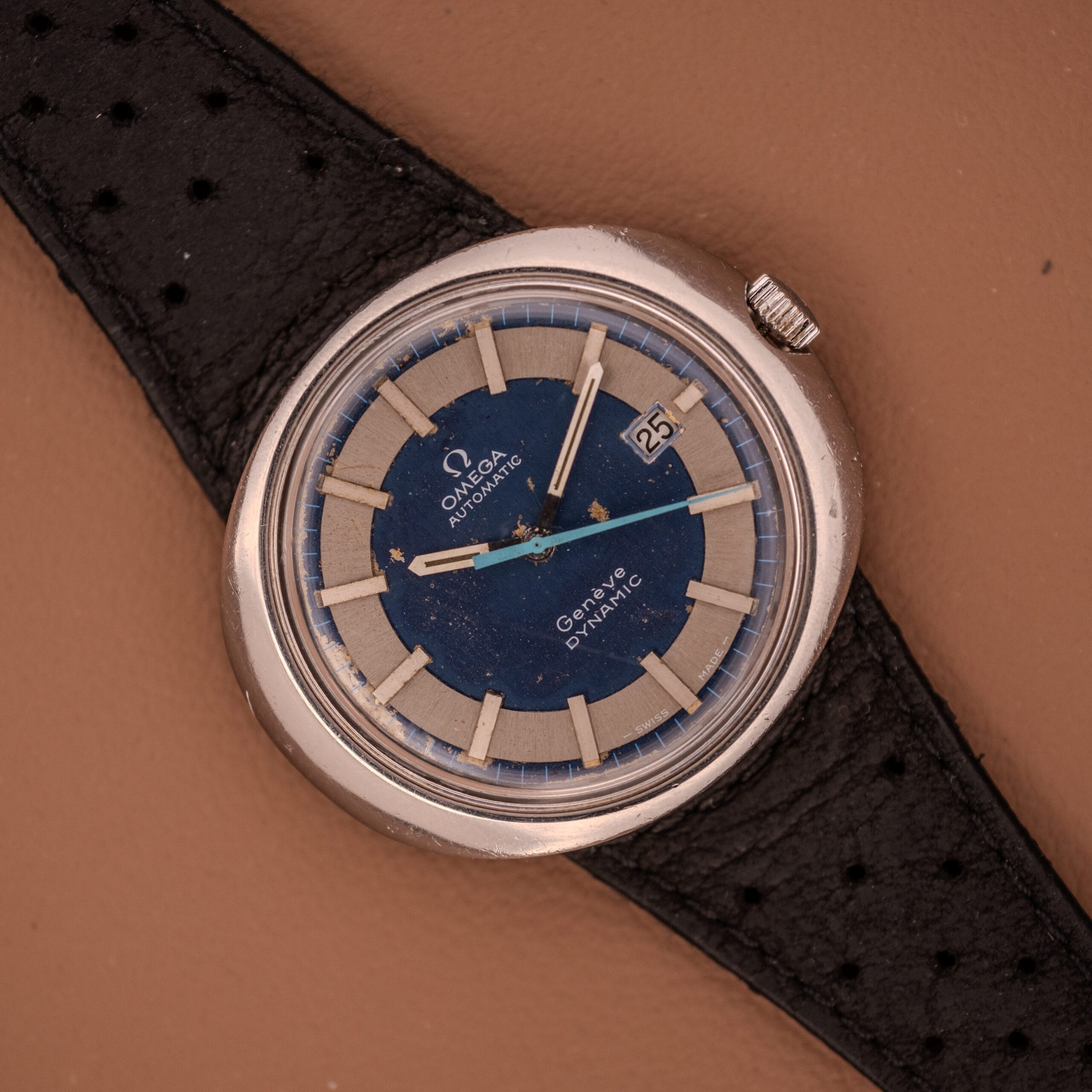
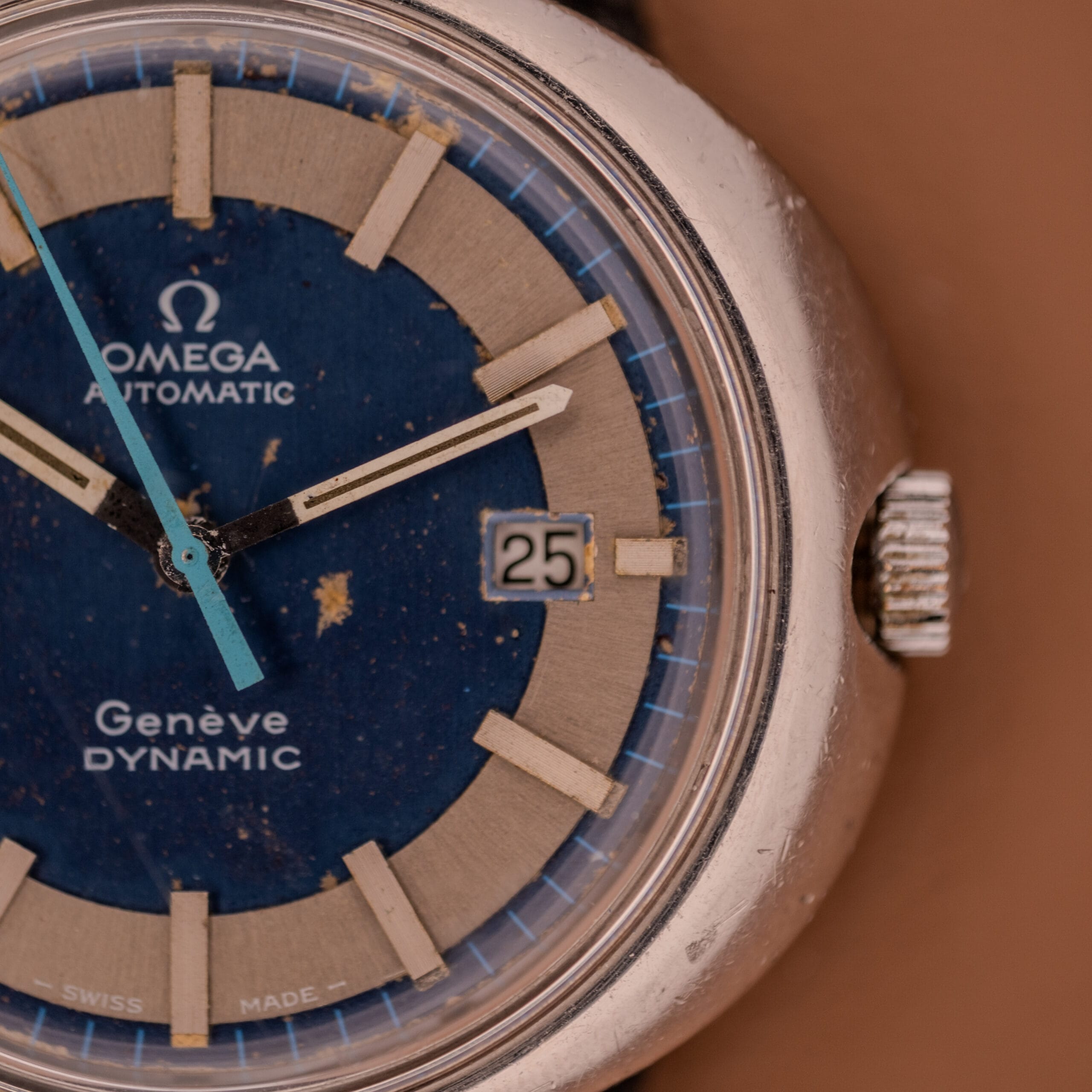
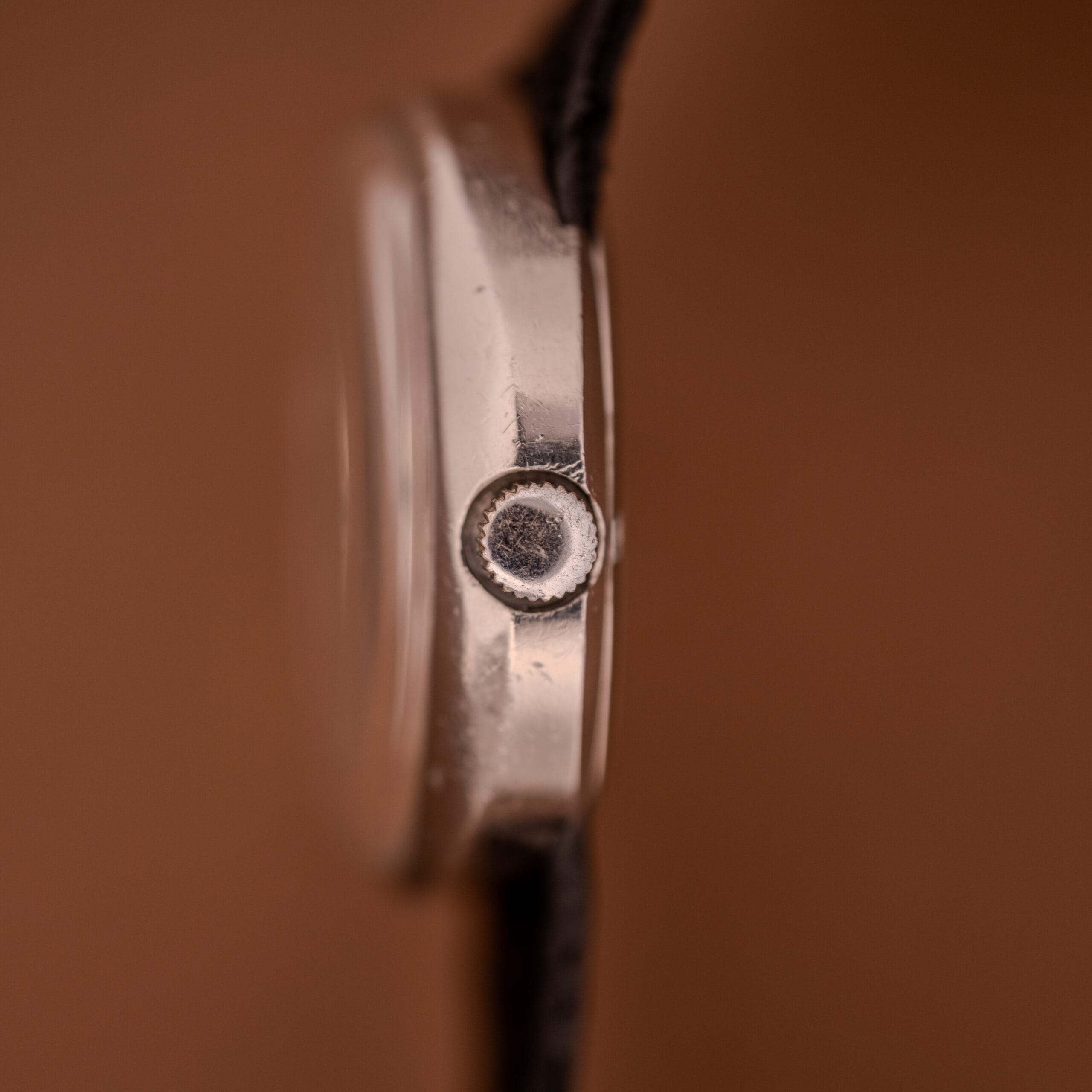
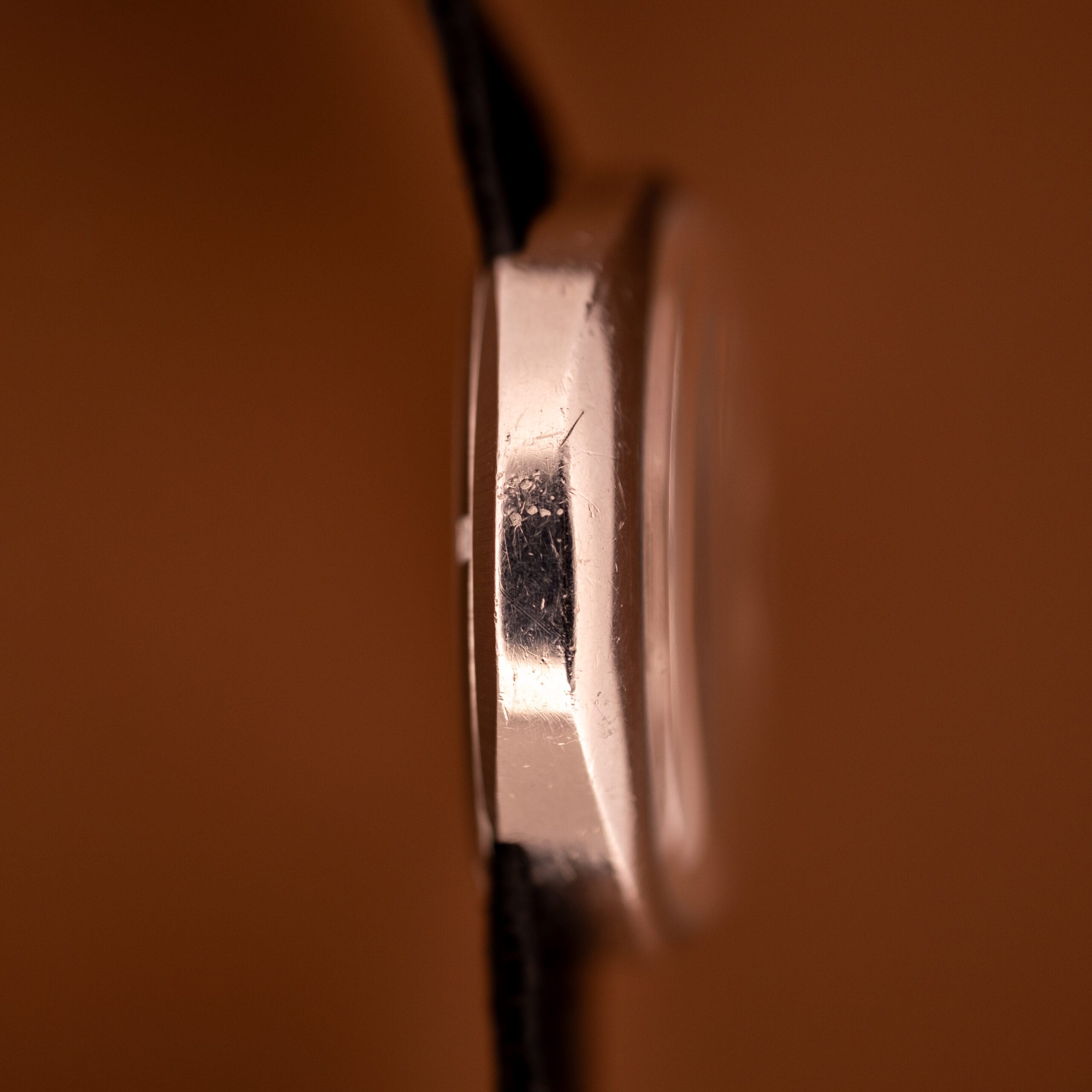
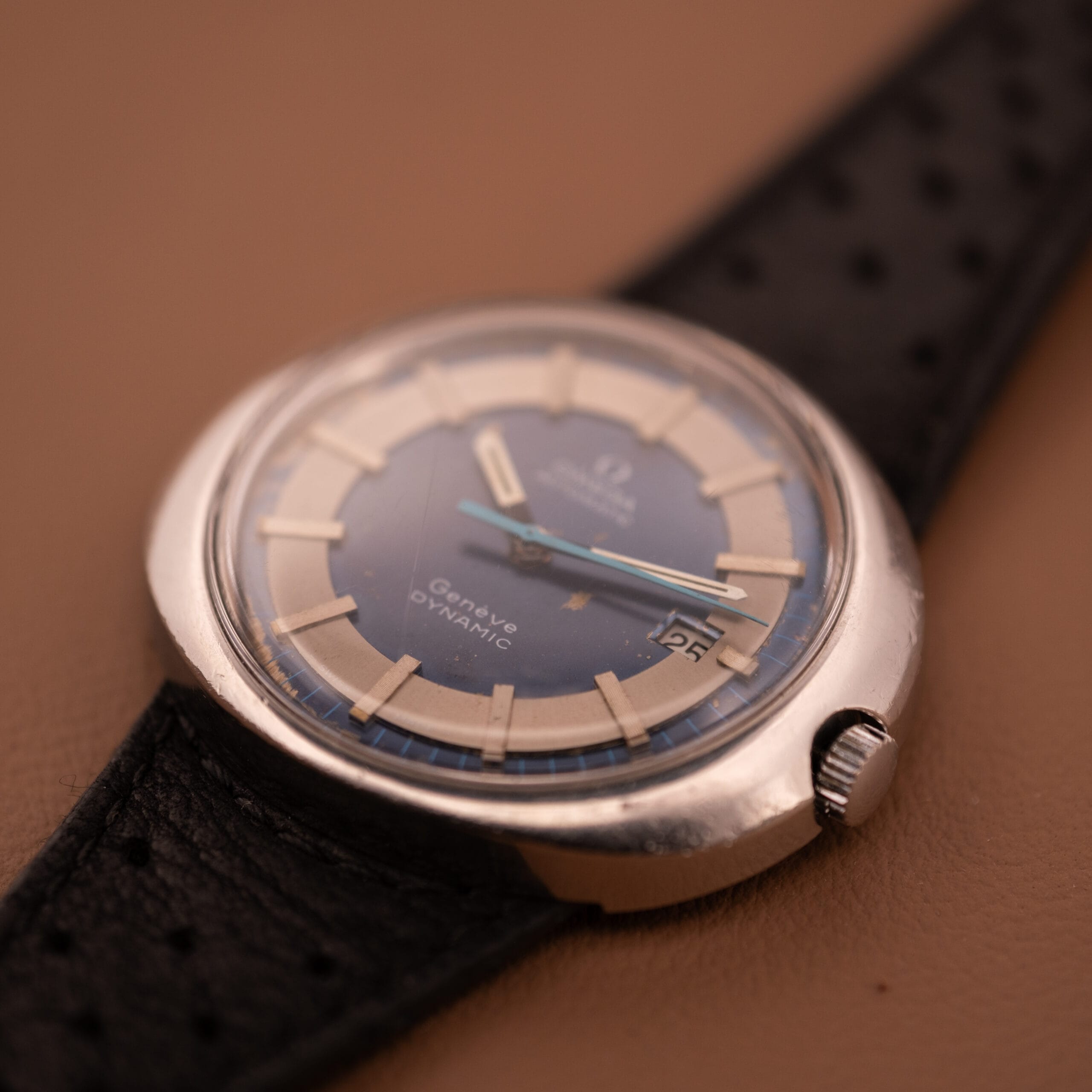
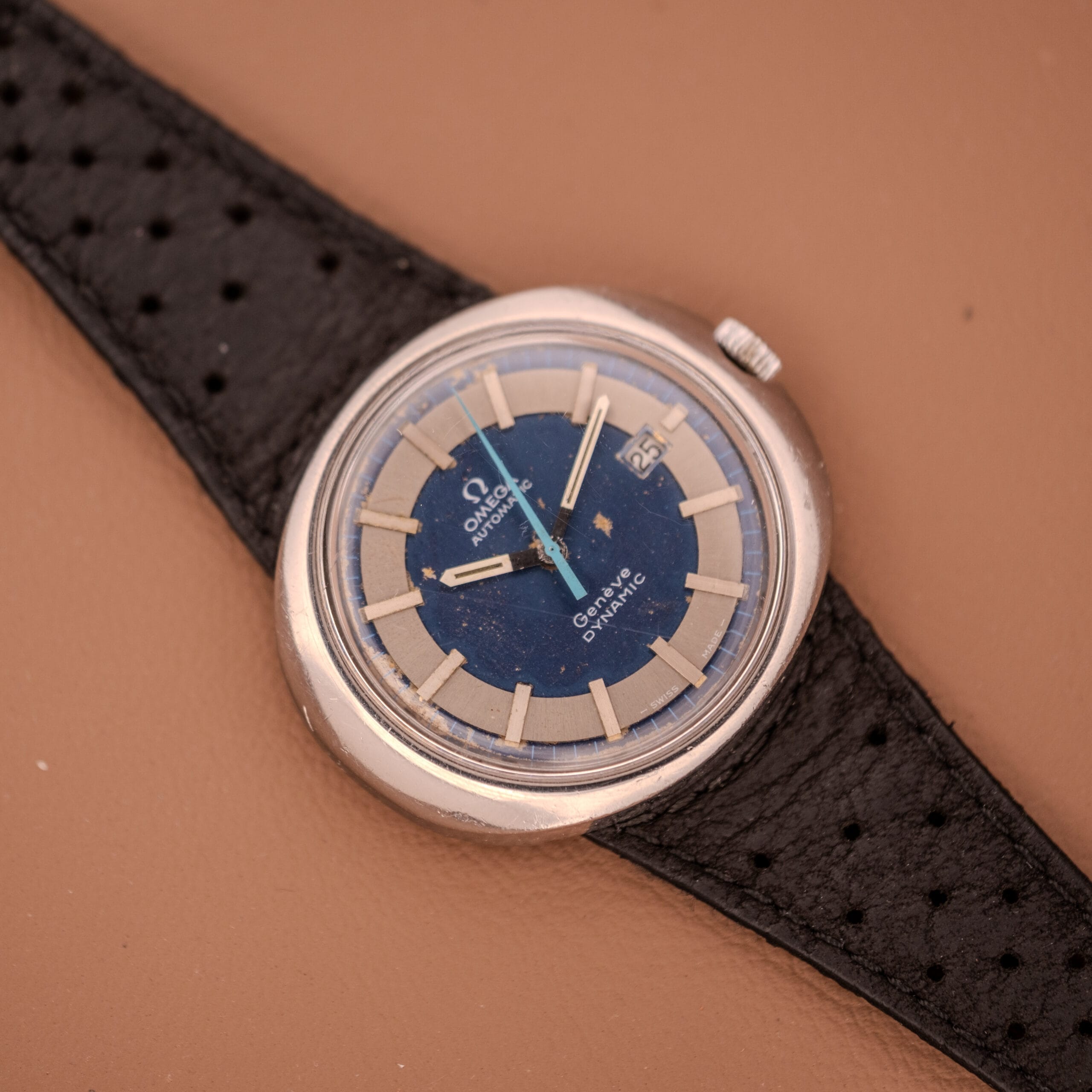
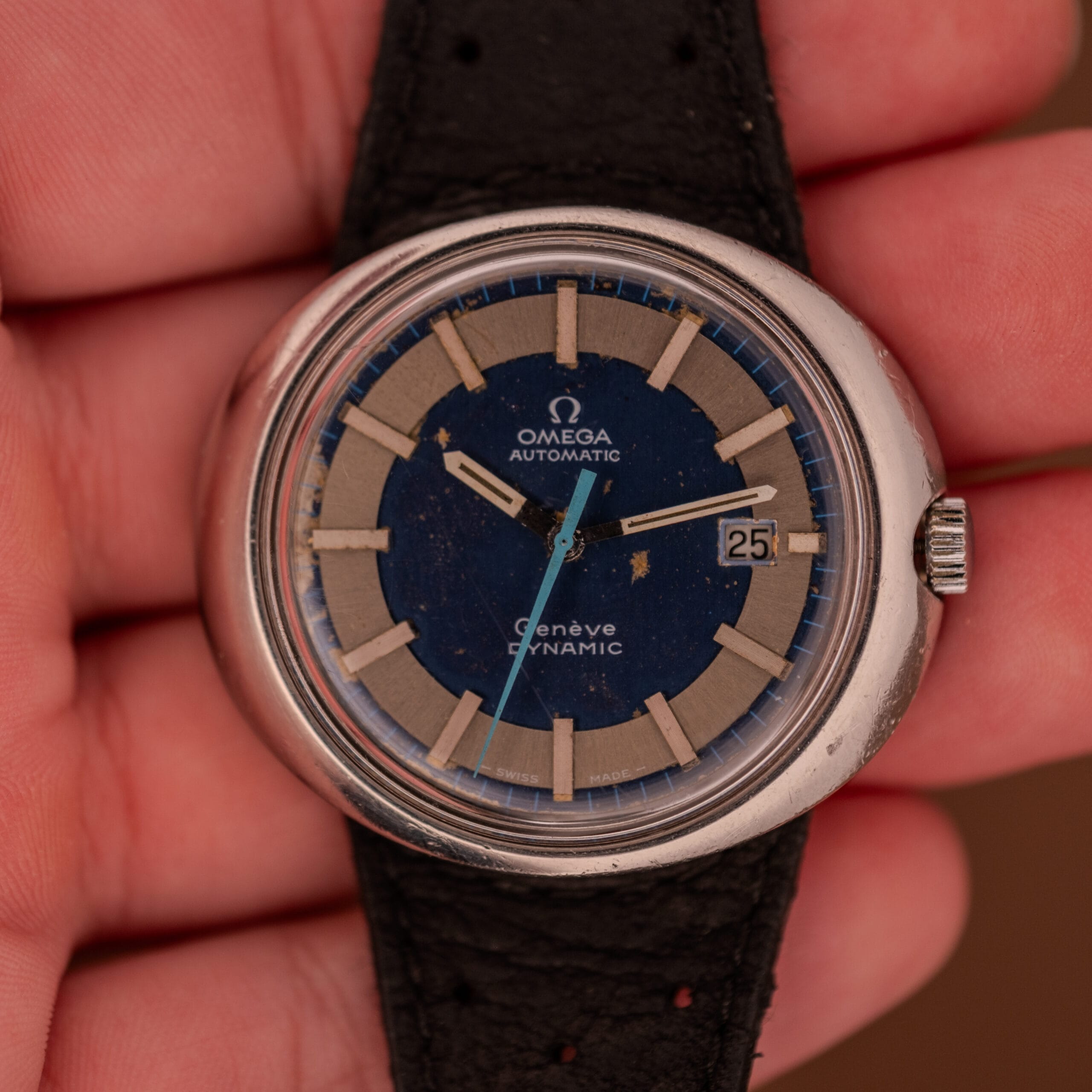
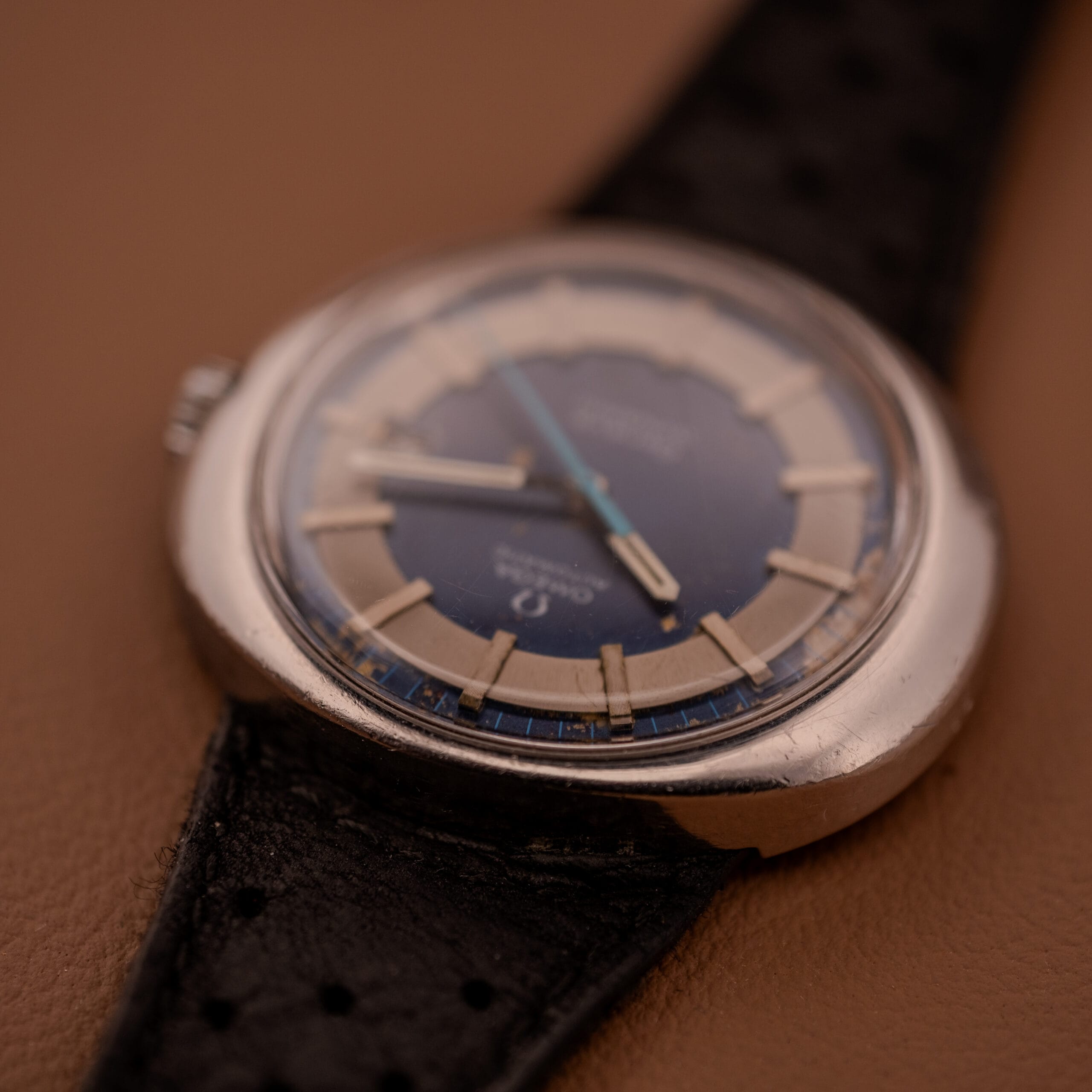
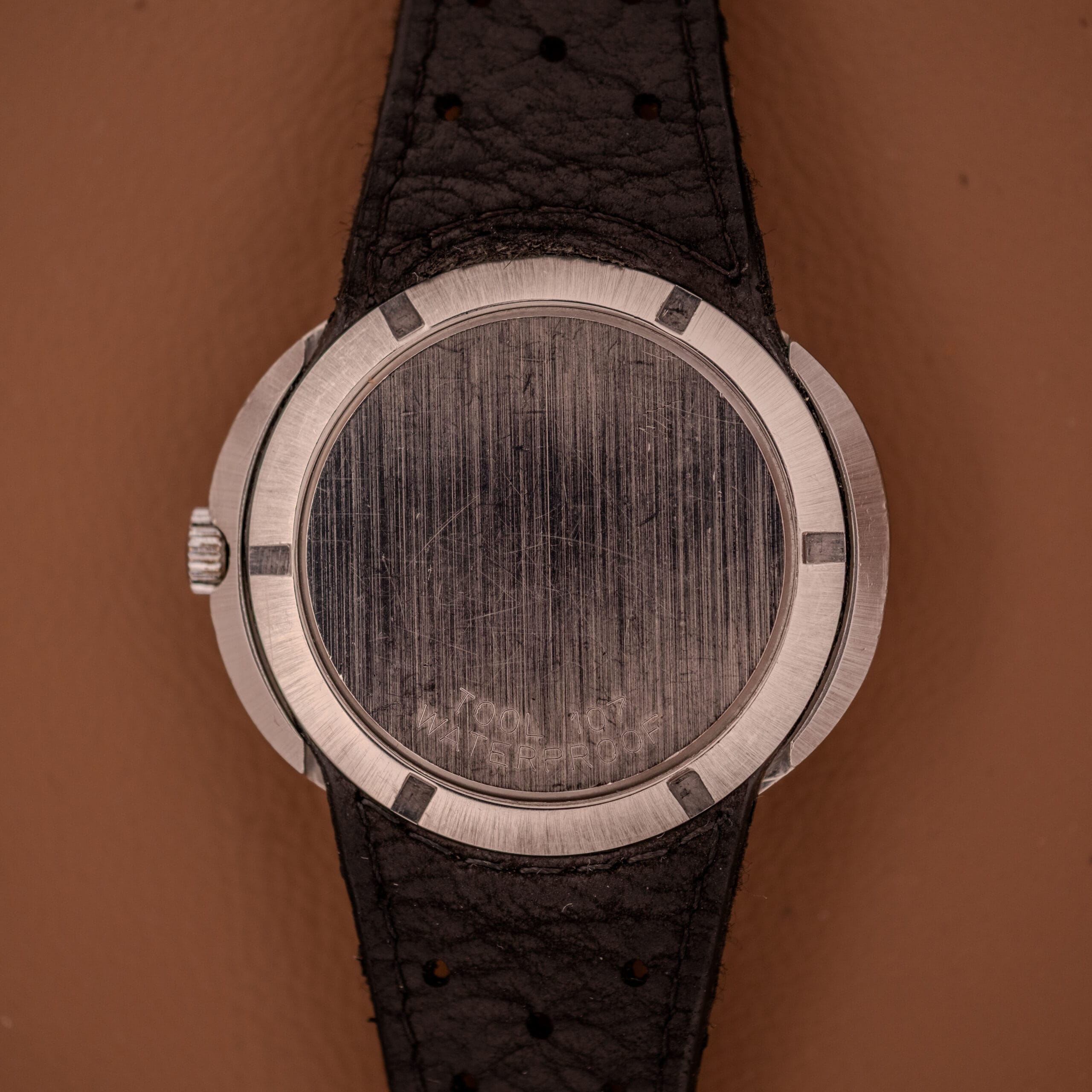
The case is the headline. Omega’s design office shaped the Dynamic around the geometry of the human wrist rather than the geometry of a movement blank, which is why it reads as a 41mm elliptical cushion in the photos but wears closer to a 36mm round watch on the wrist, thanks to a 36.3mm lug-to-lug that tucks the case footprint inside the wrist bones. The top surfaces are high-polished with the bezel-ring and outer flange brushed in contrast, and the snap-on caseback is the famous Omega monocoque-style back stamped “TOOL 107 / WATERPROOF” on its inner face, a reference to the dedicated Omega service tool required to open it. Light hairlines run across the polished flanks exactly where you would expect them on a fifty-year-old steel case, and the brushed caseback shows honest scuffing from decades on a wrist.
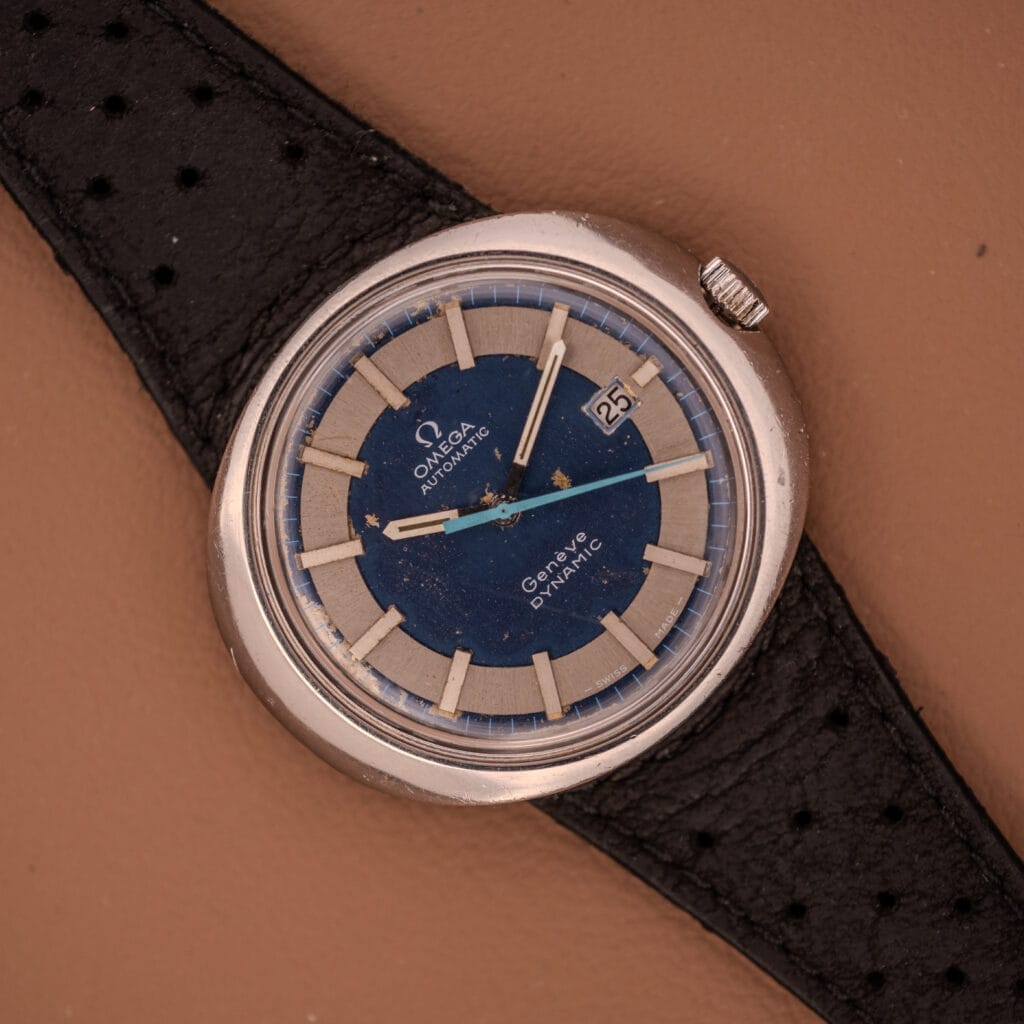
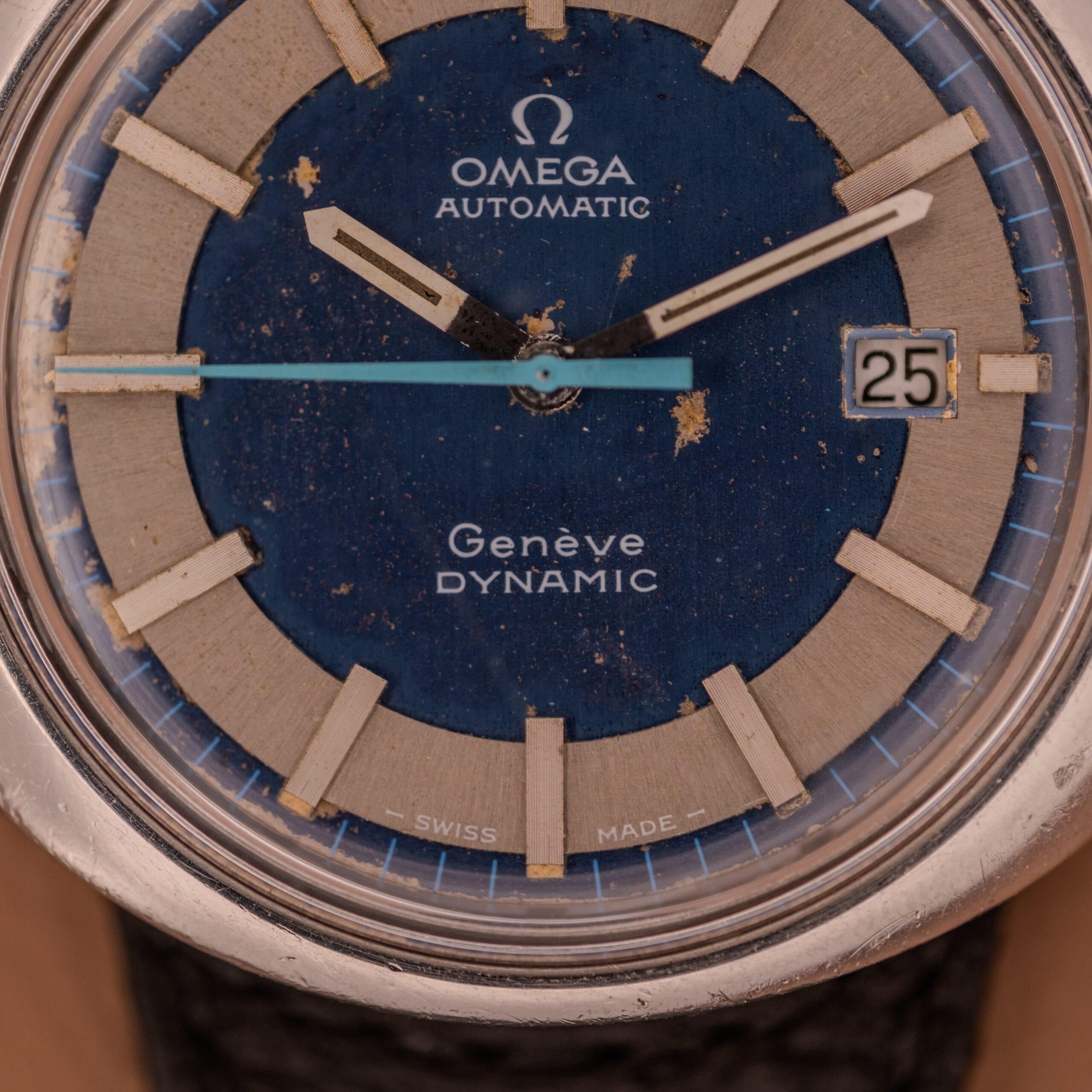
The dial is the other half of the story. Omega built the first-generation Dynamic around a true two-zone color-block layout, with a deep blue inner disc carrying the Omega applied logo, “Automatic” text, the date aperture at three, and the “Genève / DYNAMIC” signature at six, all ringed by a matte light-grey outer chapter that holds the applied silver baton indices. A blue printed minute track runs around the outer edge of the inner blue disc, and the seconds hand is finished in a wonderfully period light turquoise that reads as one of the most distinctly late-1960s details on the dial. The hour and minute hands are silver dauphine with lume tracks that have aged into a warm cream, and the applied batons have picked up a similarly handsome cream patina at the tips. The blue inner disc shows fine surface speckling under raking light, the kind of factory-original character that we would not trade for a refinished dial under any circumstances. “SWISS MADE” sits in printed text along the lower outer chapter.
It comes presented on a black leather rally-style strap in 18mm with the period-correct perforated holes and raised stitched edge, which is the exact strap silhouette Omega itself paired with steel Dynamics in the original retail catalogs. The integrated strap-ring mounting geometry of the Dynamic case means most modern straps will not fit cleanly, so the rally pairing here is both visually correct and practically considered. A black or dark navy alternative in the same rally cut would also work beautifully, and a perforated brown would push the watch toward a warmer 1970s register if that is your taste.
Serviced in-house at OTTUHR and backed by our 2-year mechanical warranty, this Omega Genève Dynamic is for the collector who values original 1960s case-and-dial integration over the safer round-case Geneve references, and who wants the first-generation 166.107 shape in honest, unpolished condition. To us, this is one of the most quietly characterful Omega designs of the entire decade, and a genuinely correct way into the vintage Dynamic conversation.