The Caliber 470 is the inflection point. In our opinion, this is the movement family that quietly ended one era of Omega and opened the next, and the Omega 14773-1 SC is one of the cleanest, least-celebrated stages to watch that transition happen on. The bumper automatics that preceded it had run their course. The 500-series rotor calibers that followed it would go on to define what most people now picture when they think of a vintage Omega. The 470 sat in between, doing the actual engineering work, and watches built around it tend to get filed away in the “honest dress” bin instead of being read for what they really are.
Omega’s automatic program had been built around the 28.10 family of bumper movements through the late 1940s and into the early 1950s. Those movements wound by impact, the rotor traveling a limited arc and slamming into spring buffers at each end, which is charming in person and slightly unrelenting in actual use. By the middle of the 1950s, the rest of Swiss watchmaking was already on full 360-degree rotor architecture, and Omega’s response was the Caliber 470 series and its close siblings (the 471, 491, 501, and 503), a clean-sheet redesign that gave the rotor a proper full sweep, raised winding efficiency dramatically, and thinned the case profile in the process.
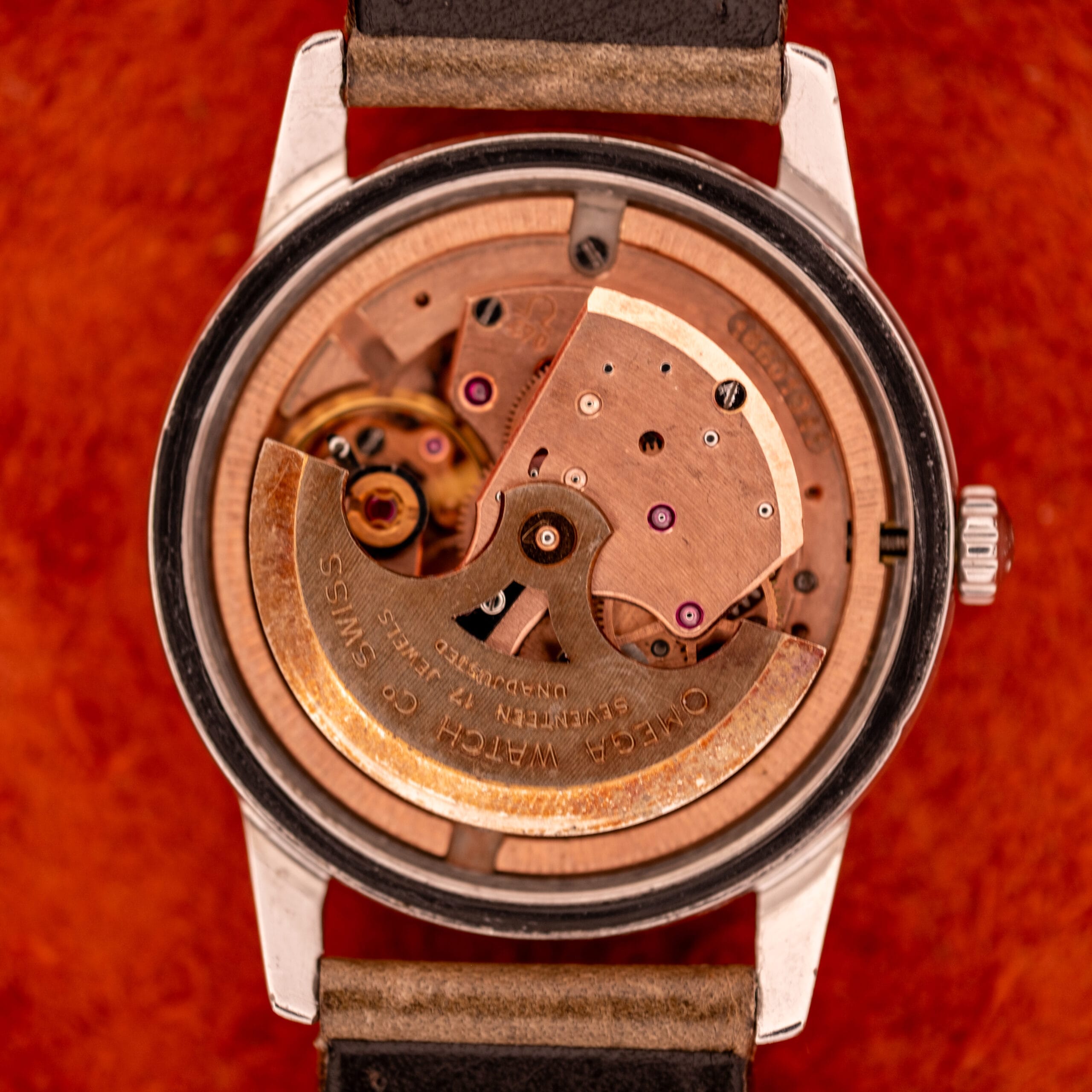
What the Caliber 470 is most known for, to collectors who pay attention to these transitions, is being the immediate ancestor of the 500-series movements that would carry Omega through the 1960s and remain widely regarded as some of the best mass-produced automatic calibers of the mid-century. The 470 runs at 19,800 vibrations per hour, carries 17 jewels, and ladders into a documented production window that lets us pin watches around it to the late 1950s with reasonable confidence. The rotor on this example is stamped “OMEGA WATCH CO SWISS SEVENTEEN 17 JEWELS UNADJUSTED” across its curve and has aged into a warm copper-rose tone that the dry plating of the period tends to develop over decades. The bridges underneath show clean gilt work and the train wheels turn with the unhurried regularity that a properly serviced 470 will give you.
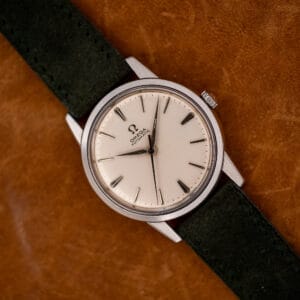
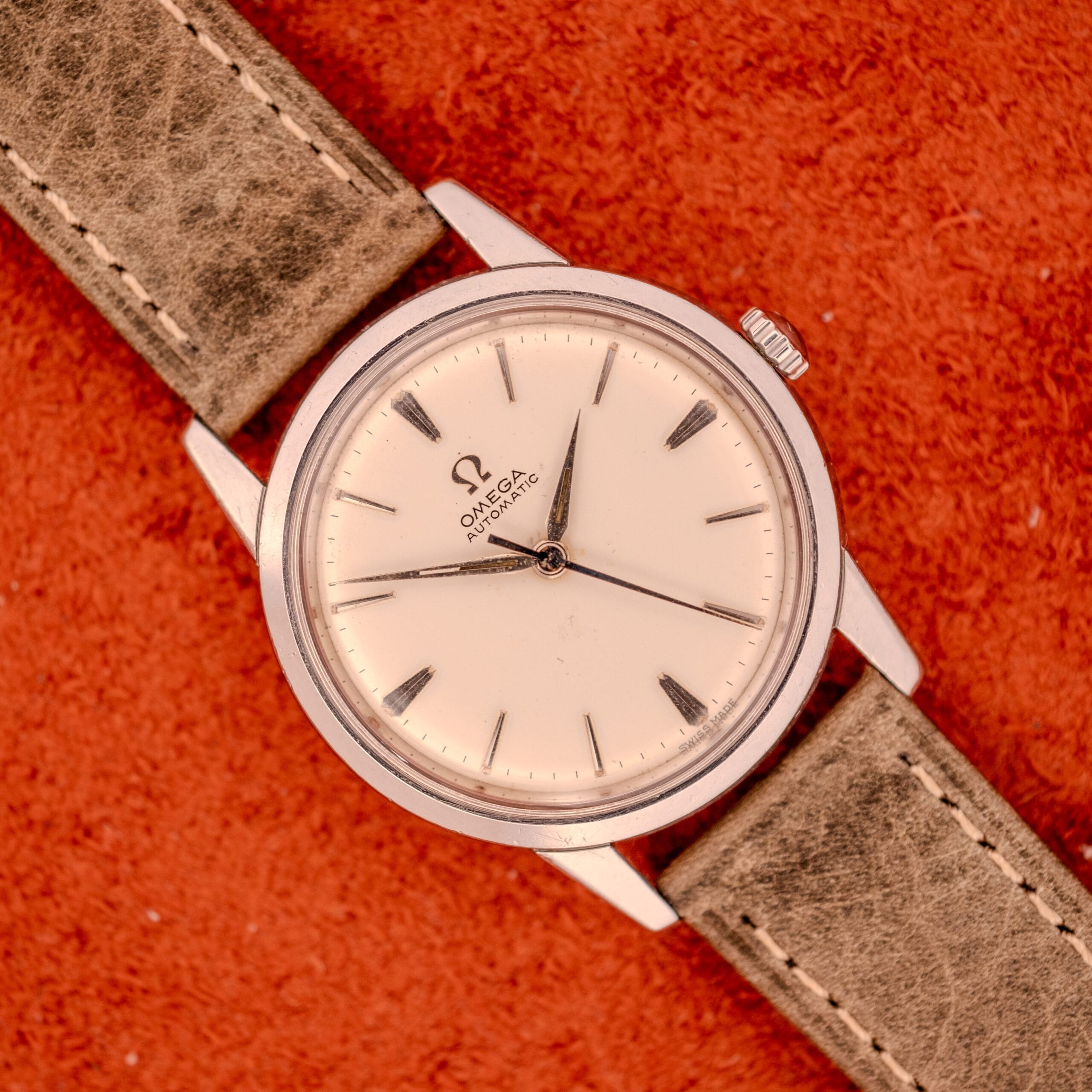
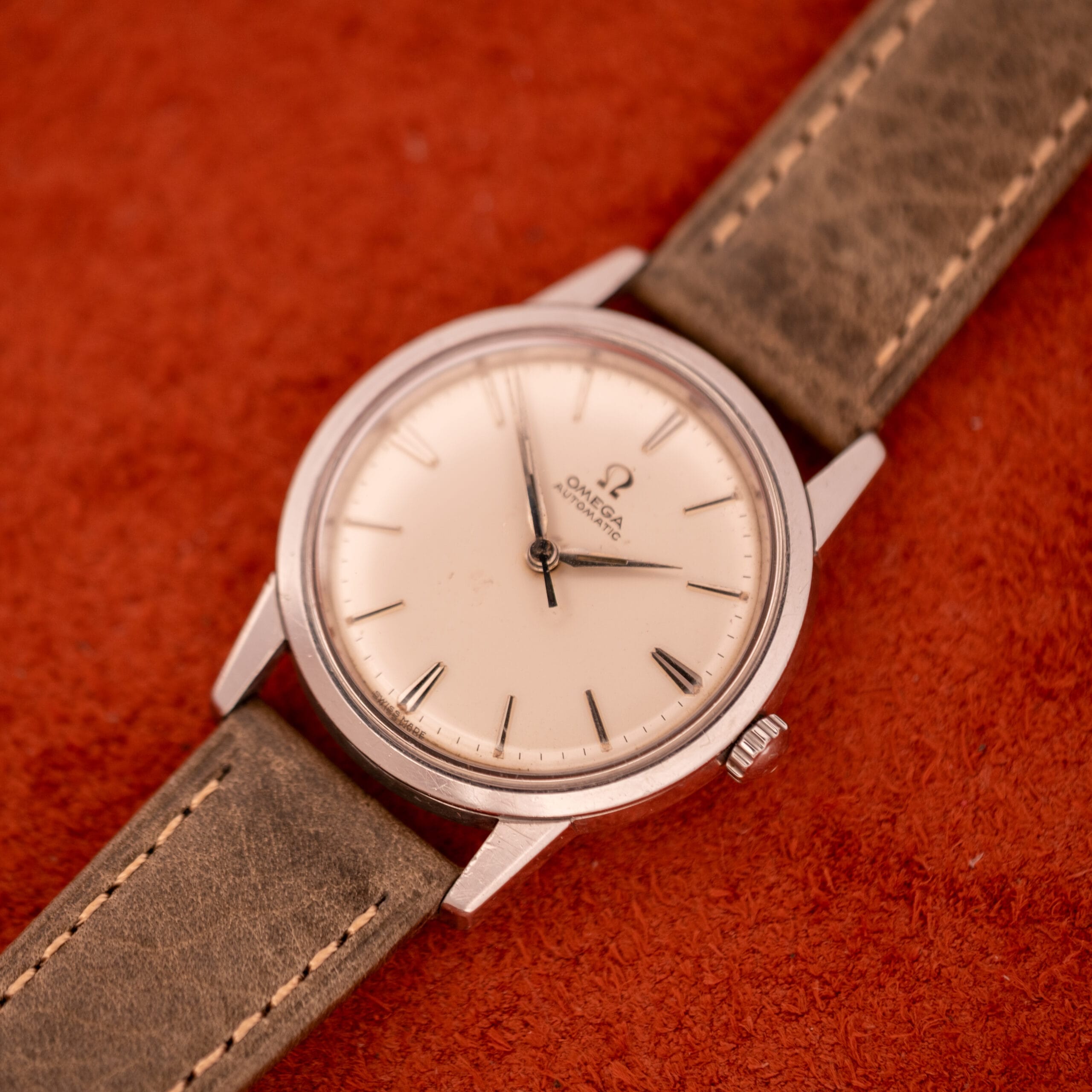
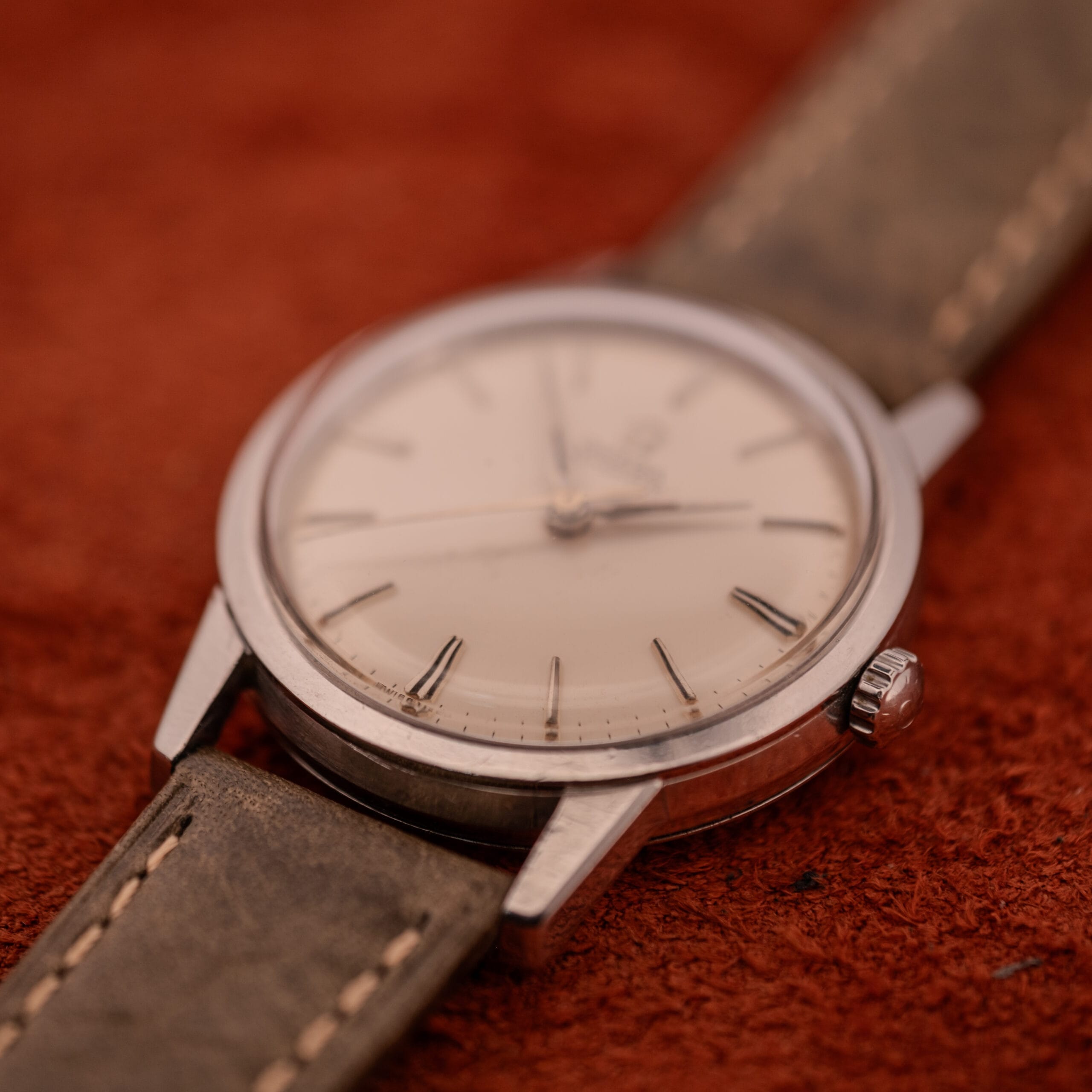
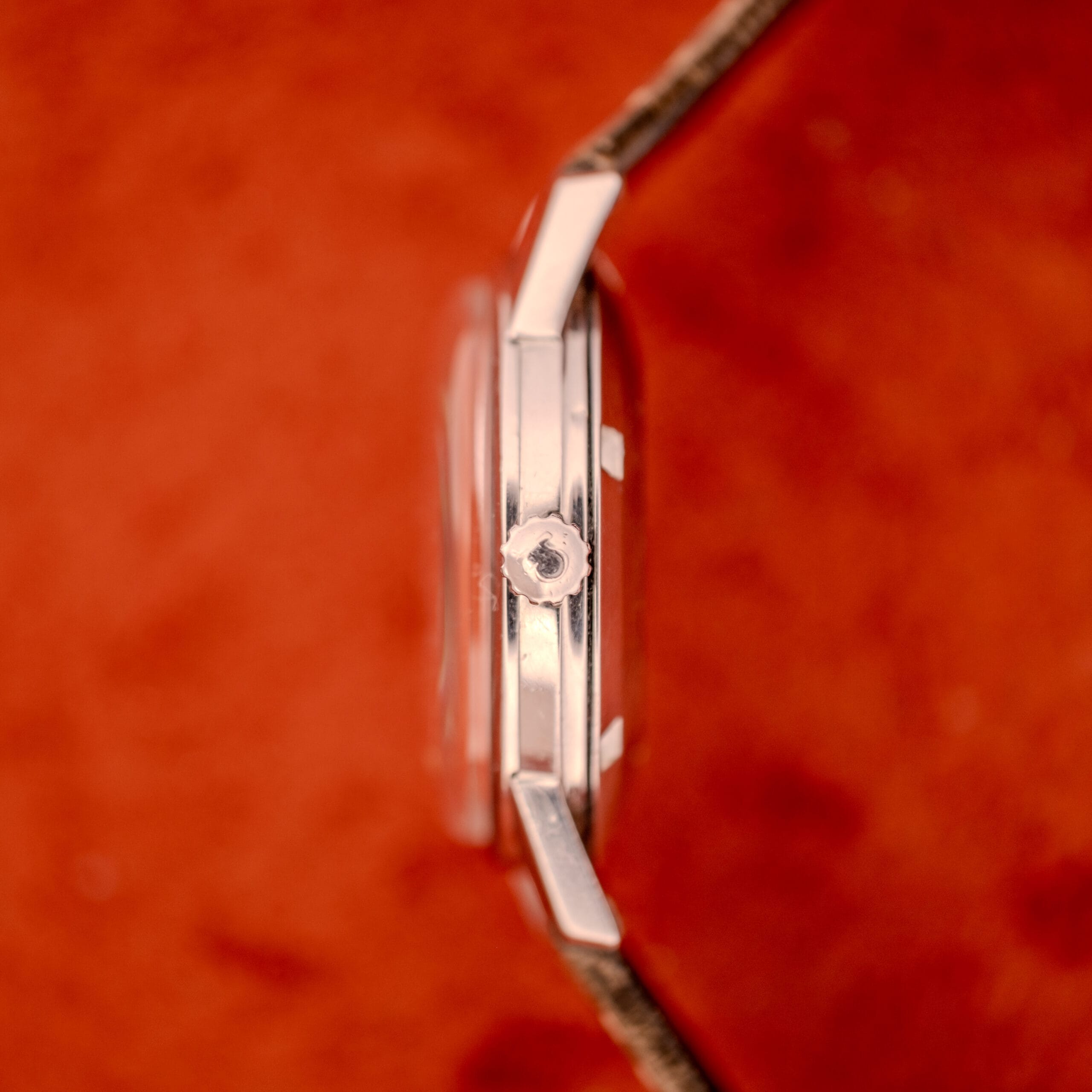
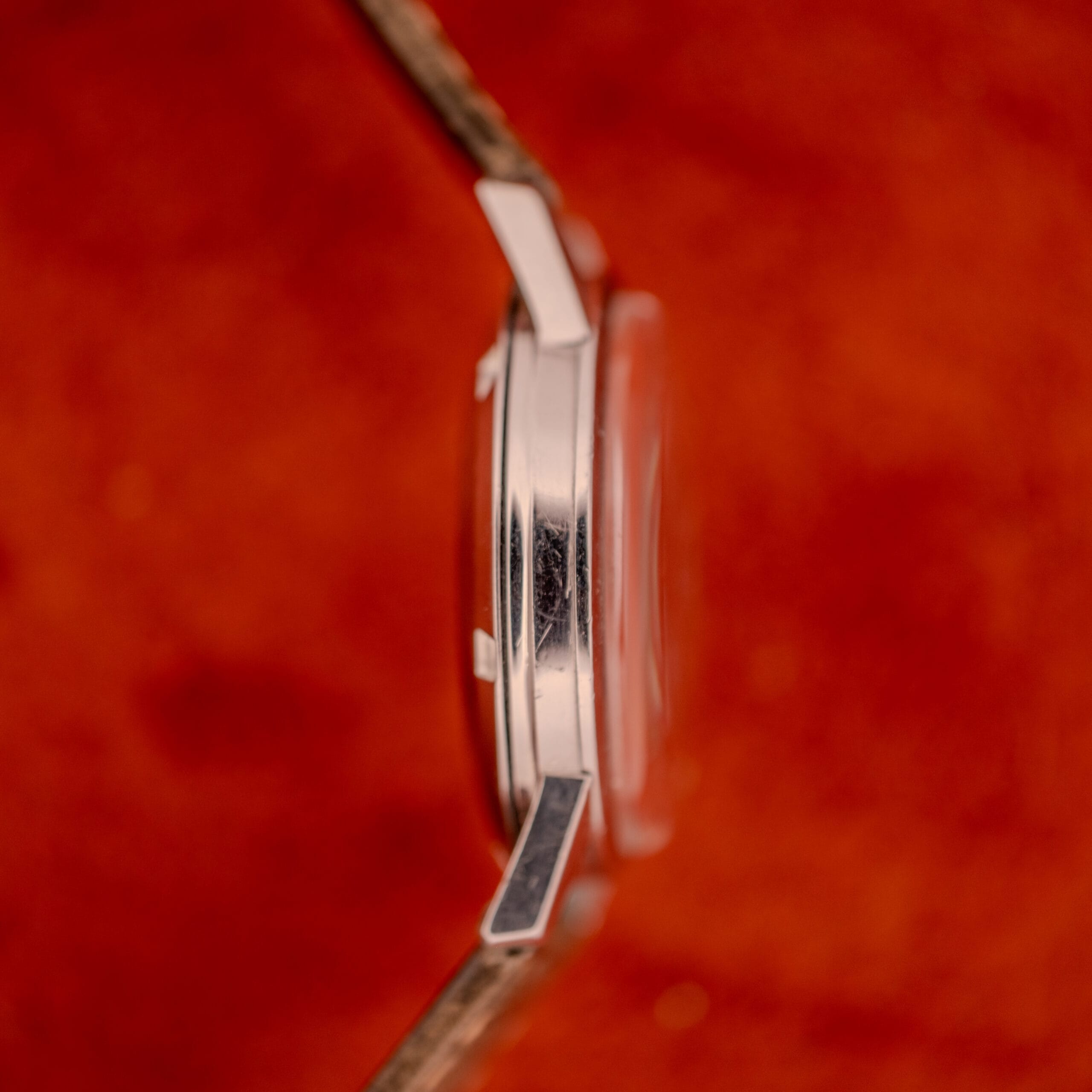
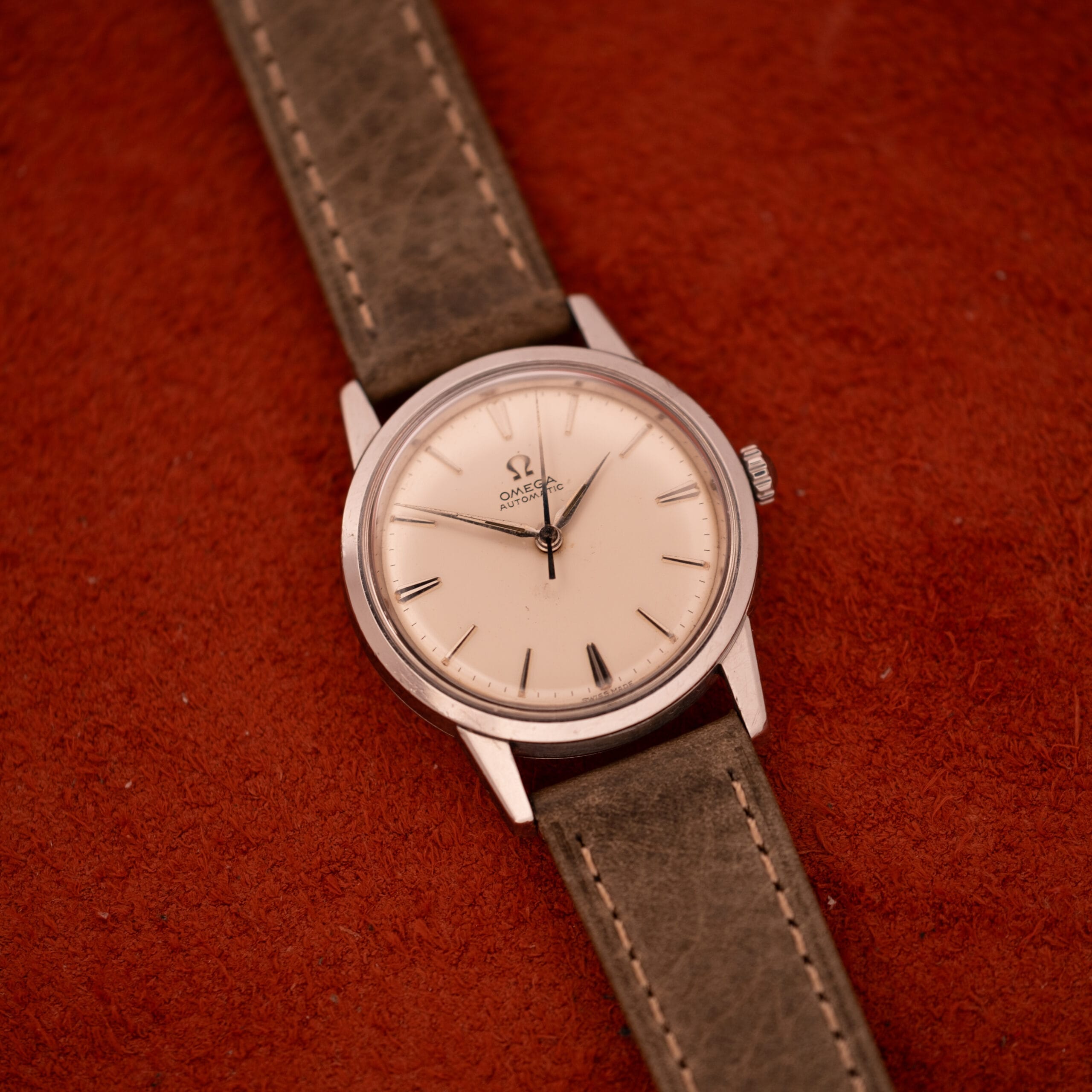
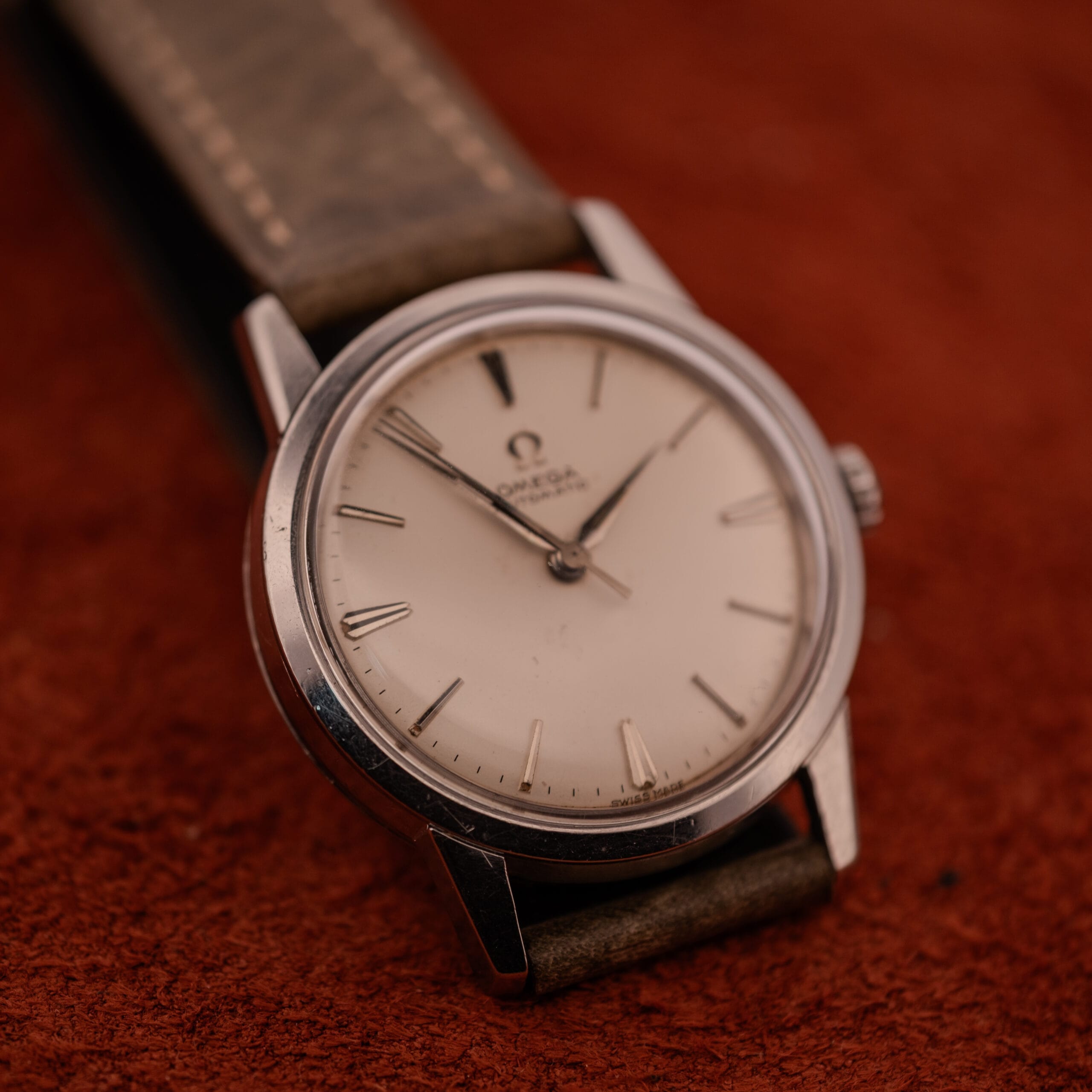
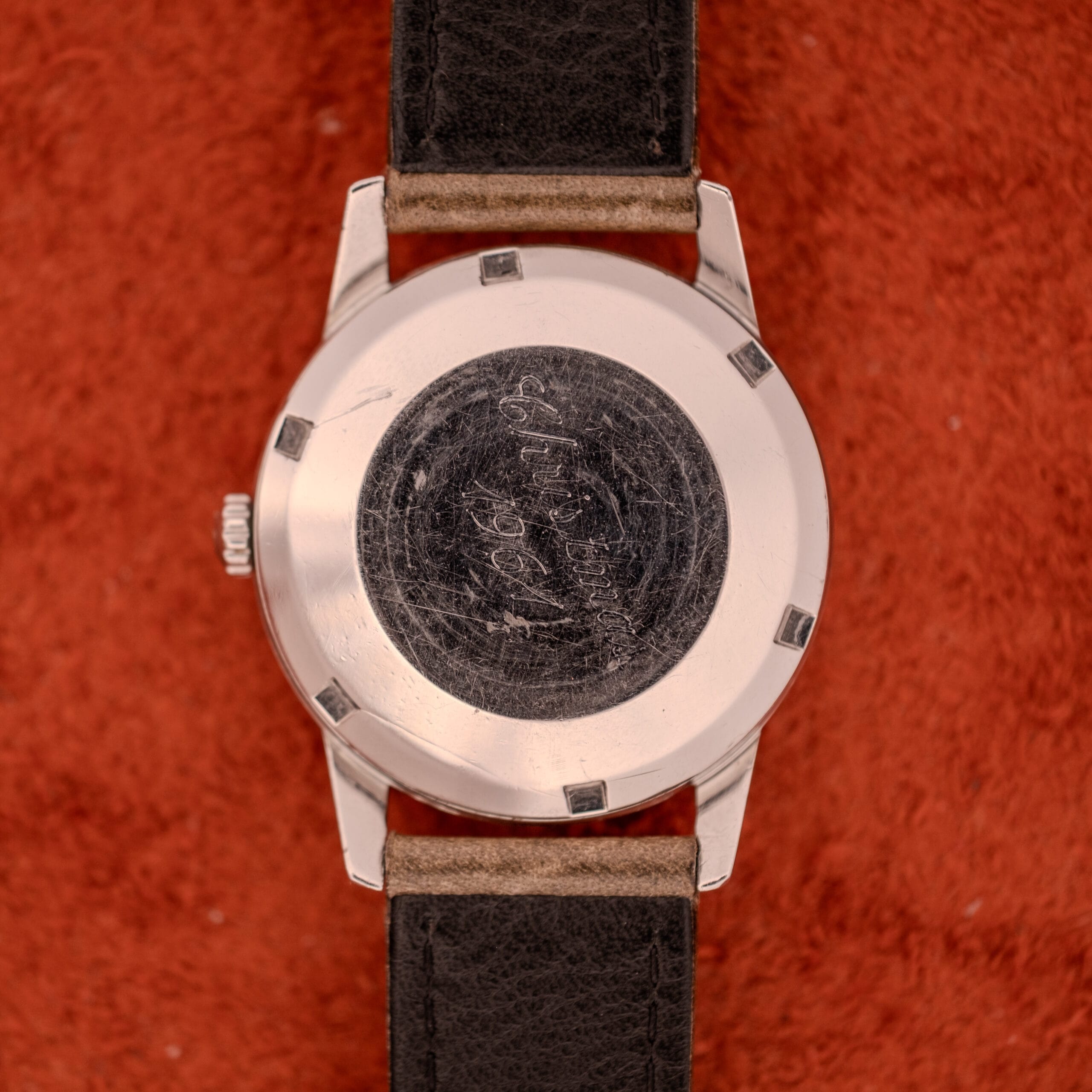
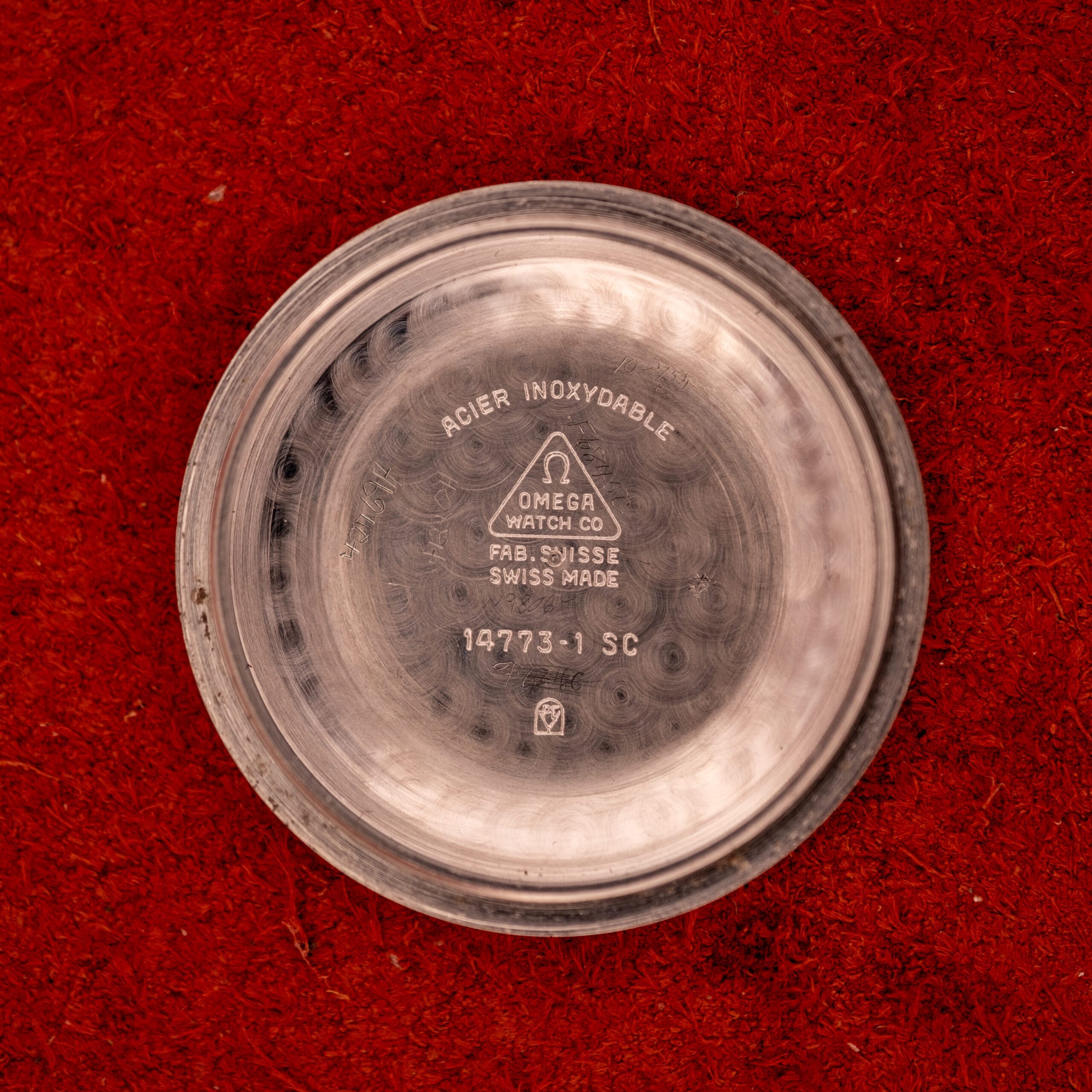
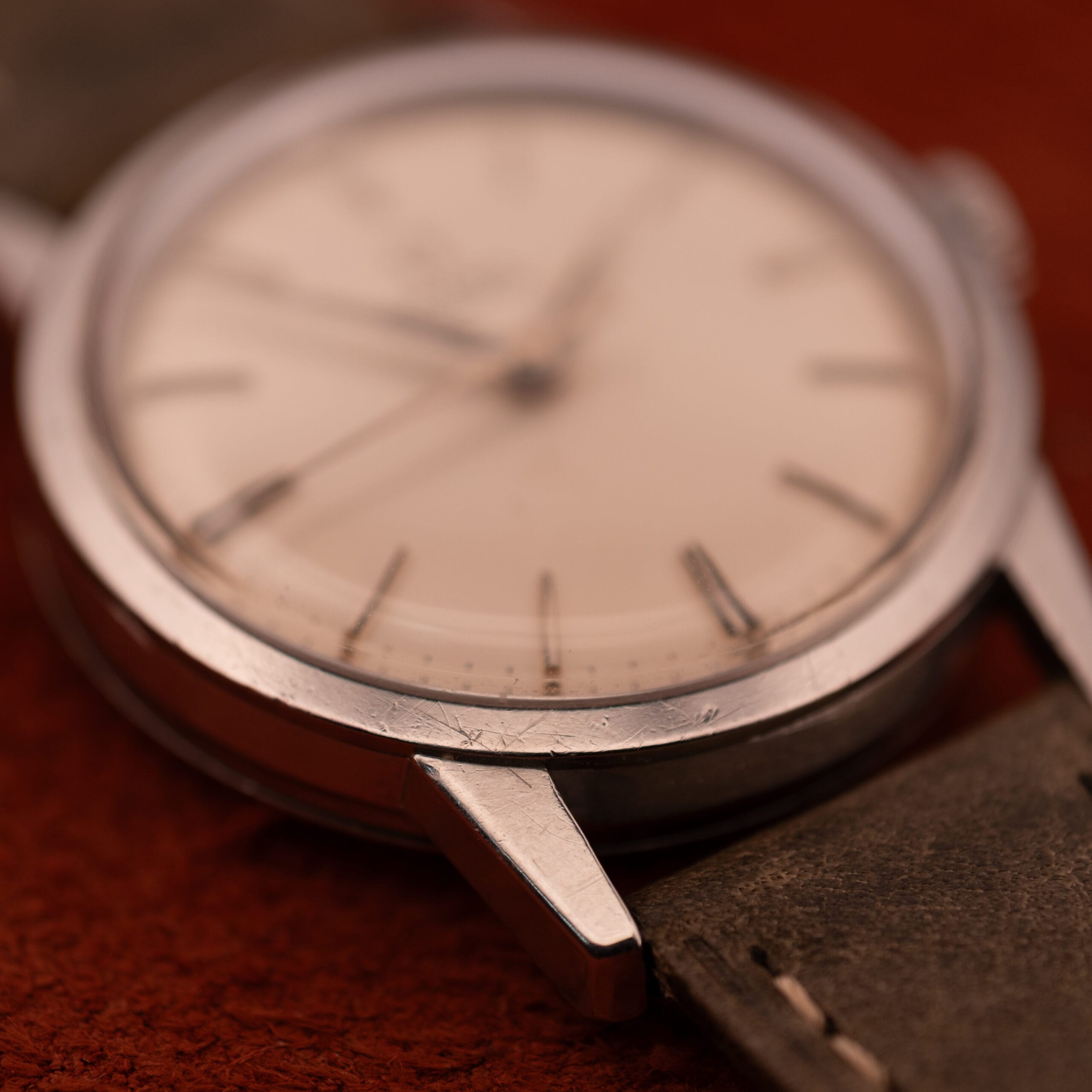
The stainless steel case is a study in restraint. Roughly 34mm across, 41mm lug to lug, 18mm between the lugs at the strap, with flat downturned lugs that taper to a bevelled edge and a smooth raised bezel that frames the crystal cleanly. The signed crown carries its Omega logo at the side and sits unprotected against the case in the way mid-century dress watches were supposed to. Pop the back and the inner cover gives up the verbatim stampings we want to see on a properly preserved Omega 14773 example: “ACIER INOXYDABLE” arcing across the top, the Omega triangle hallmark with “OMEGA WATCH CO” inside, “FAB. SUISSE”, “SWISS MADE”, and finally “14773-1 SC” running across the lower half. A small Swiss hallmark stamp closes the bottom edge. The outer caseback carries the honest surface scratches of a watch that lived a real wrist life, and in the center of those scratches there is a cursive personal engraving worn soft enough now that the full text resists clean reading, which is exactly appropriate for a watch that has been on someone’s wrist long enough to earn that kind of softening.
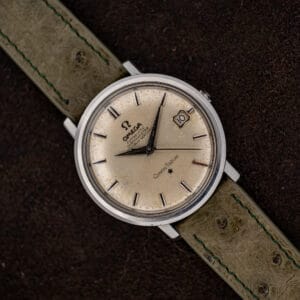
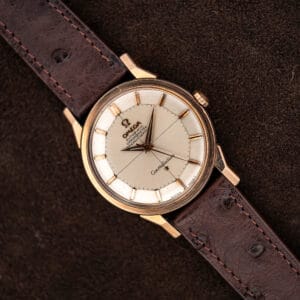
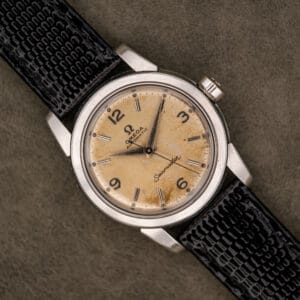
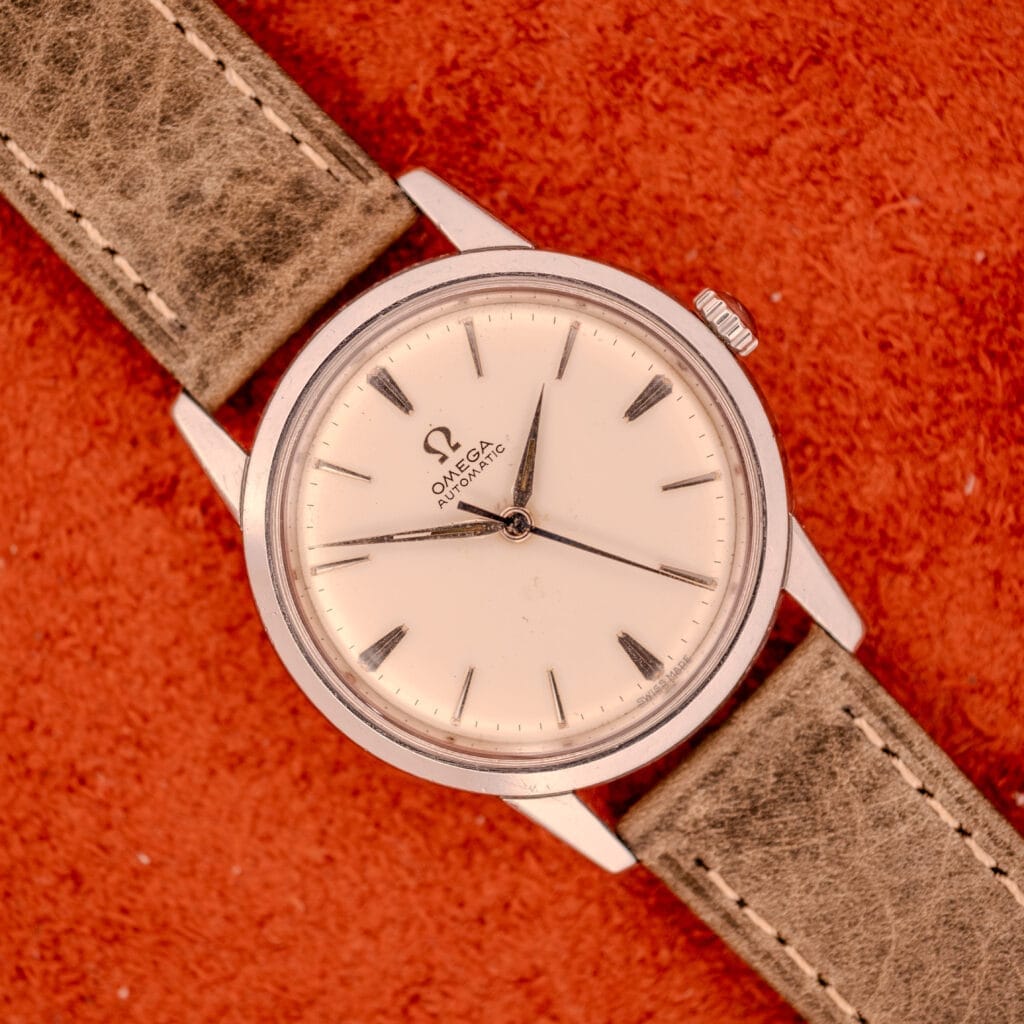
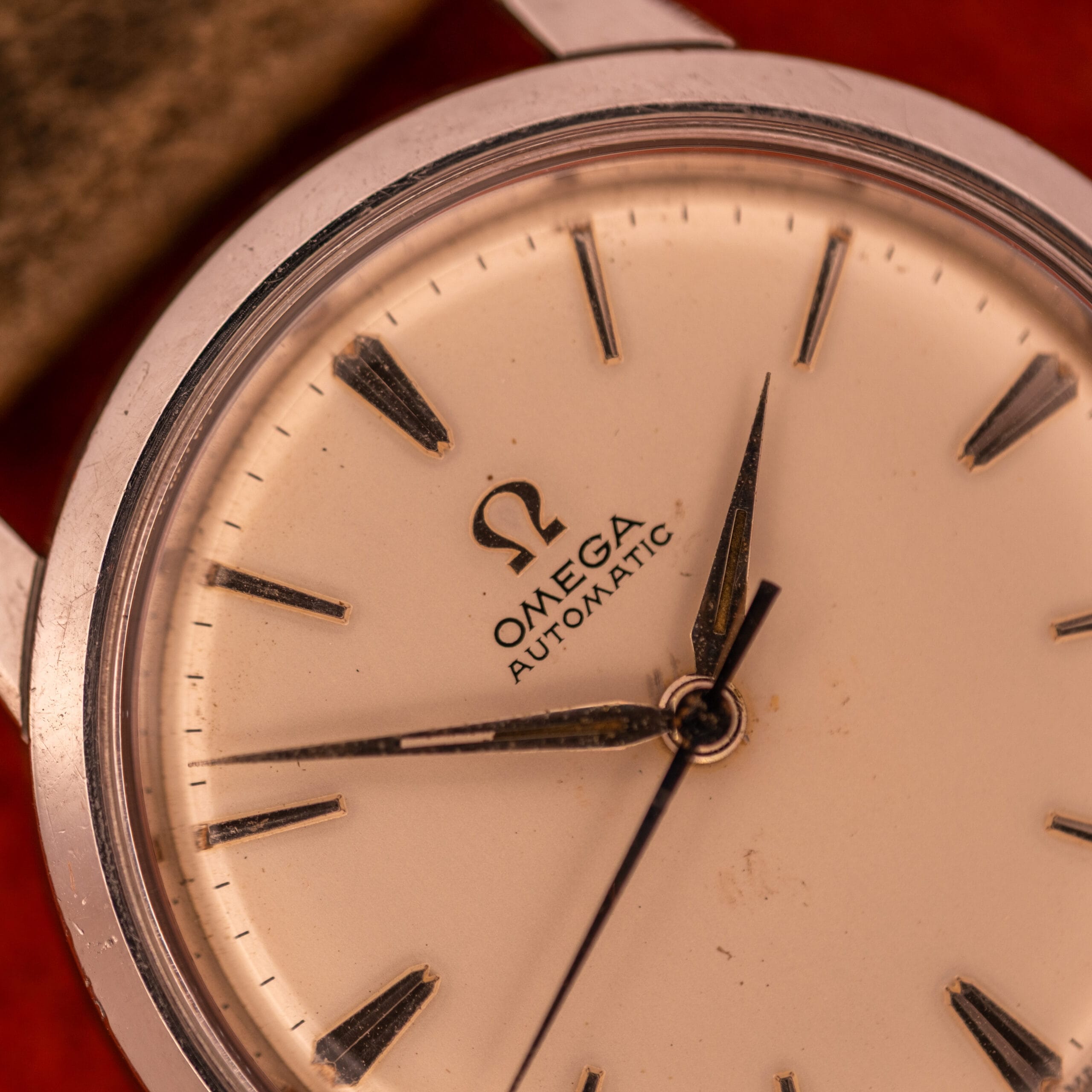
The dial is the quiet headline. The original surface has aged into a warm cream that holds tonal evenness across the face, with a scatter of light specking visible near the lower half that simply records the watch’s age. The applied steel baton hour markers each carry a dark vertical inlay running down their length, a two-tone faceted treatment that catches light from any angle and gives the dial more sculptural depth than a printed track ever could. The applied Omega Ω logo sits cleanly at twelve over the printed “OMEGA” and “AUTOMATIC” signatures in crisp black, and “SWISS MADE” closes the bottom of the dial track. The handset is the original dauphine pair, faceted and polished, with a thin straight sweep seconds threading through the center. There is no date window. There is no sub-second dial. There is nothing on this dial that wants to interrupt the symmetry, and that restraint is exactly what 1950s Omega purists have learned to read as the point.
We have paired it on a distressed grey leather strap with contrast cream stitching, which carries the same lived-in tonality as the case and the dial without competing with either of them. The strap finishes the watch as a period-correct mid-century daily dress piece, slim enough to slide under a cuff and casual enough to wear with a roll-neck on a Saturday.
Serviced in-house at OTTUHR and backed by our 2-year mechanical warranty. For the collector who values mechanical lineage over collector-grade flash, who reads a no-date cream dial as the actual point rather than as a missing feature, and who wants a watch that puts the Caliber 470 transition story honestly on the wrist, the Ref. 14773-1 SC is, to us, exactly the kind of mid-century Omega that the next generation of collectors is going to figure out is the smartest seat in the room.