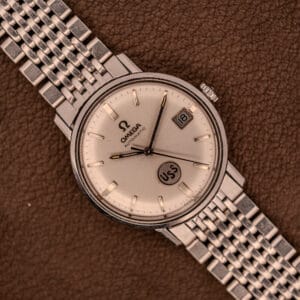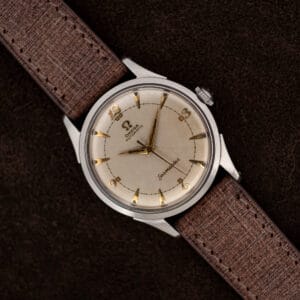
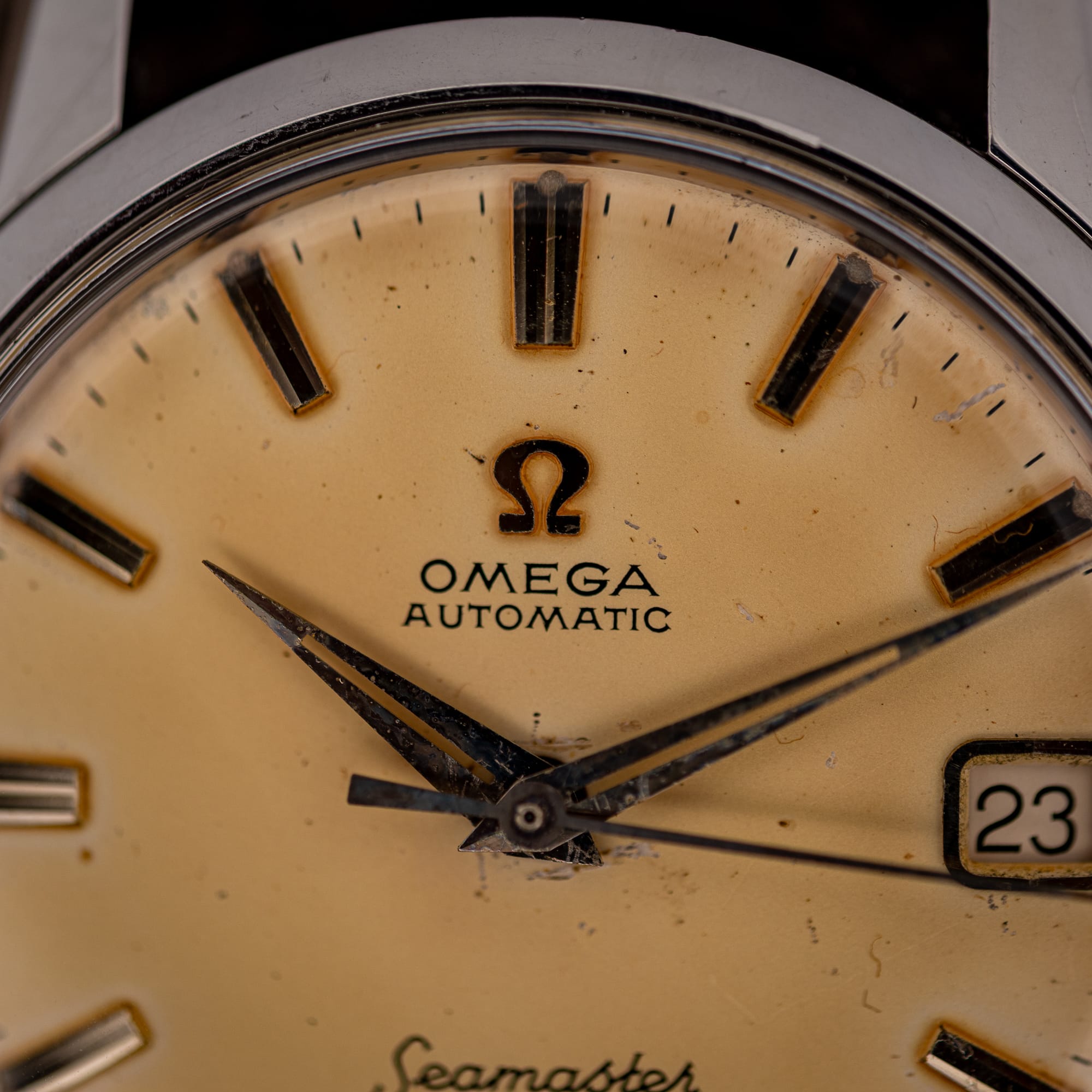
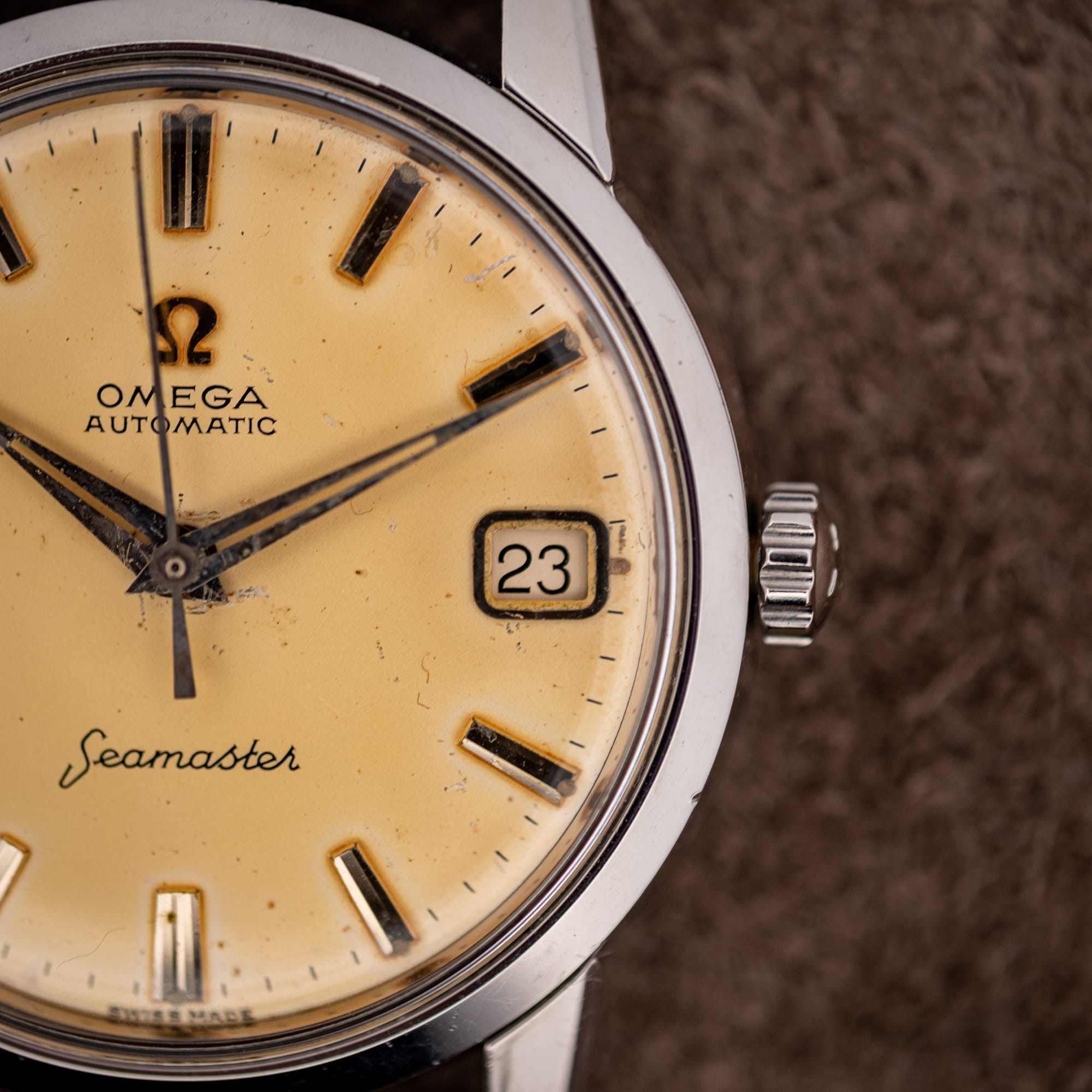
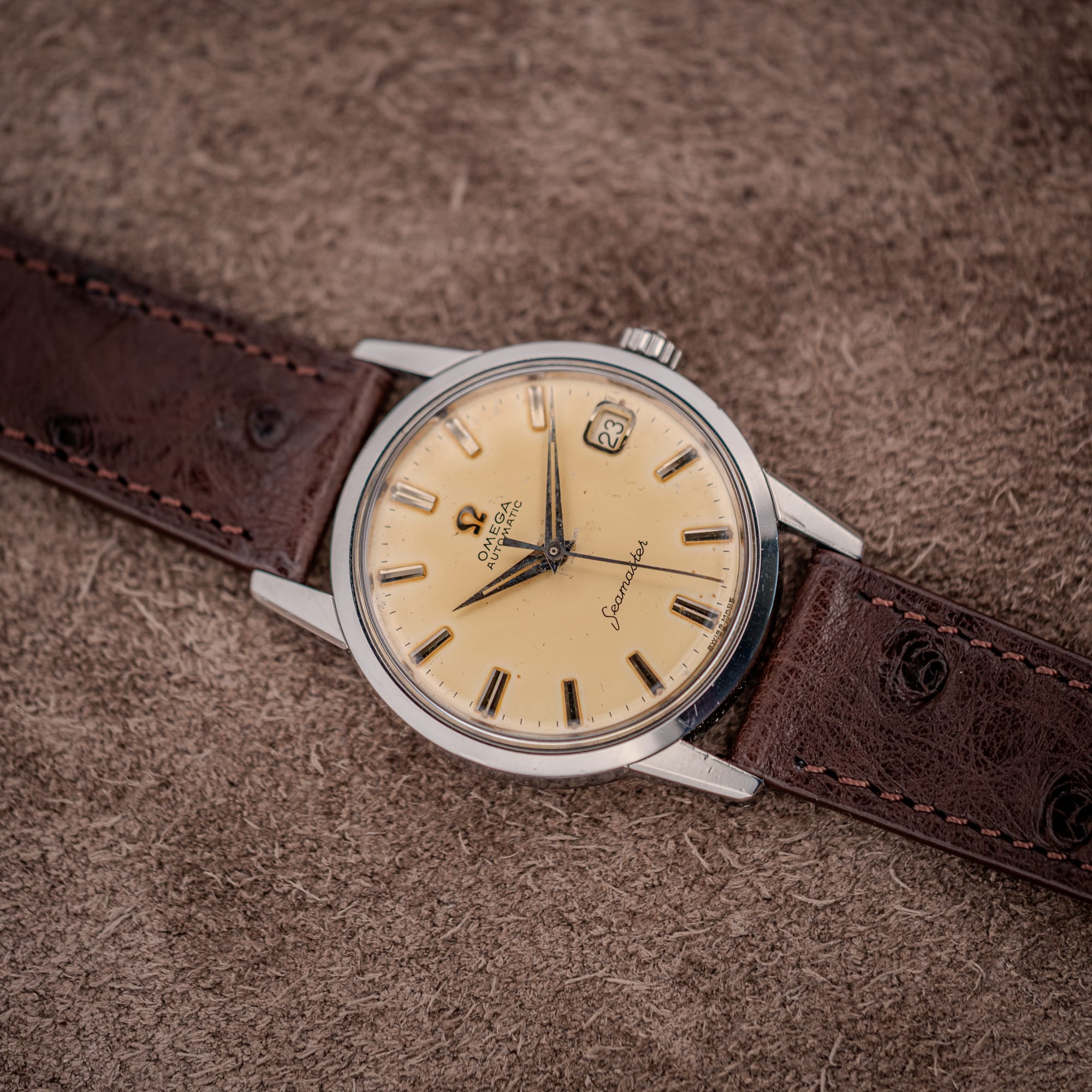
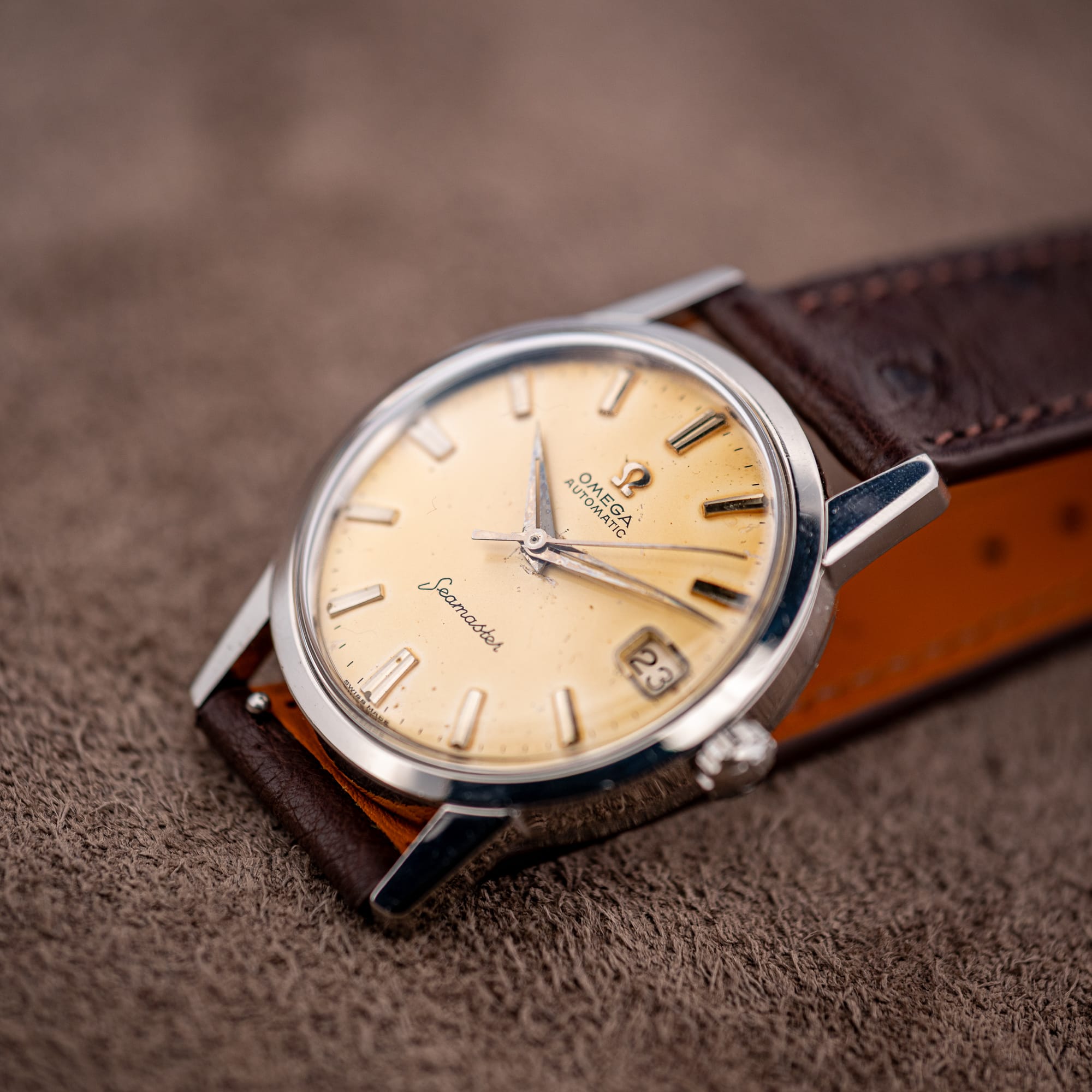
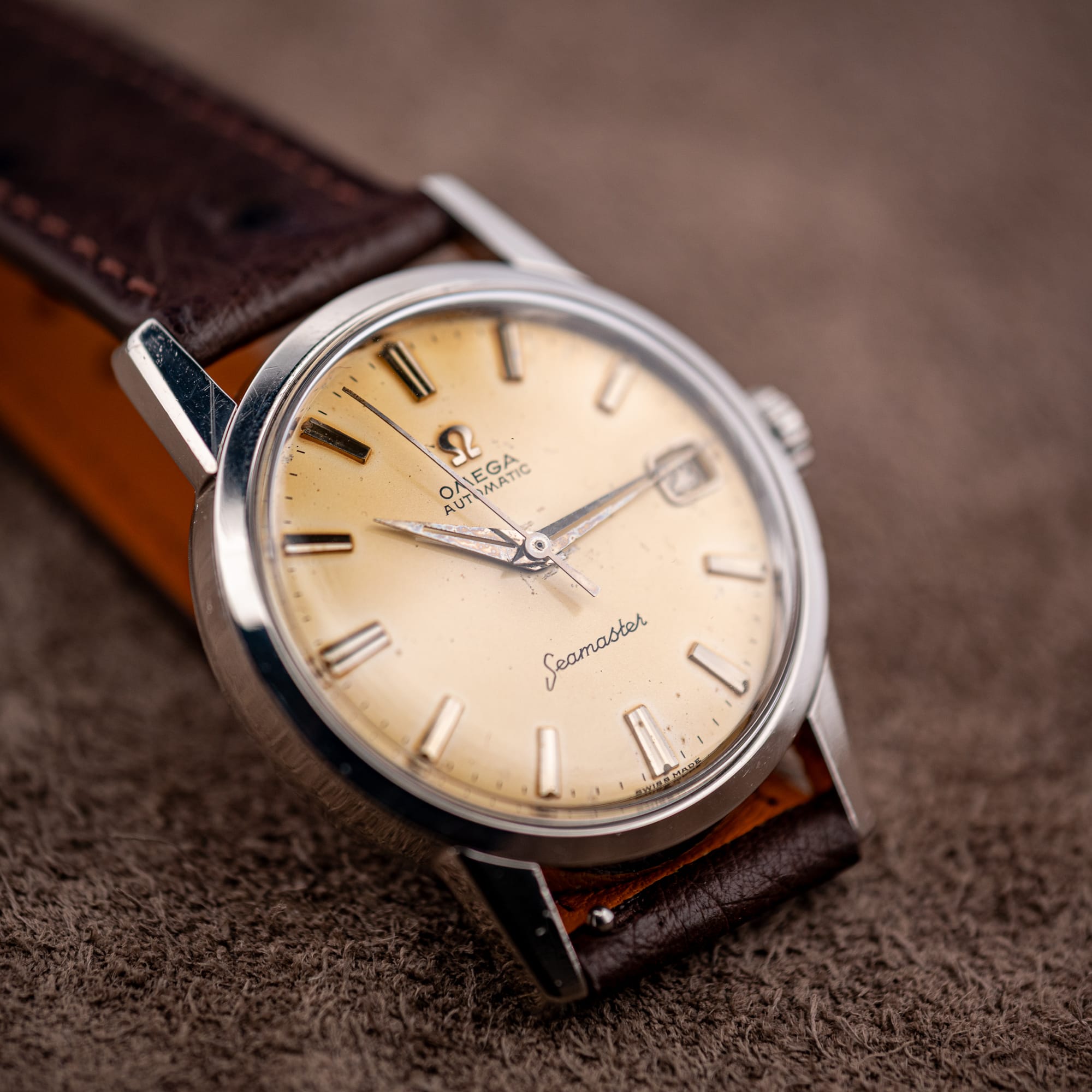
The little window at three o’clock has a birthday. It is not the one it usually gets credit for. On 31 January 1930 the La Chaux-de-Fonds firm Graef & Co filed a Swiss patent putting a wristwatch date aperture at three. Otto Graef was a German-born watchmaker who, two years earlier, had bought what remained of a collapsed Girard-Perregaux with his three sons. He sold the calendar under his own brand, Mimo, as the Mimo-Meter, and the patent was granted in August 1931. Thirty-two years after that filing, the window sits where Graef put it, at three o’clock on this Omega Seamaster 14760.
Rolex arrived in 1945 and got the credit, and to this day its own account claims only the first self-winding wrist chronometer to show the date in a window. That is a sentence doing fifteen years of quiet work. The aperture itself was never theirs.
By 1962 a date was ordinary equipment on a steel Omega automatic, which is how this one came to have one. Omega’s archive does not call the reference a Date, though. It calls it the Seamaster Calendar, from the years when a window showing the day of the month was still worth putting in the name. What Omega had not built yet was a way to set it. There is no quickset on the caliber 562. Moving the date means walking the hands forward past midnight, back to around nine, then forward past midnight again, once for every day the watch has fallen behind. Quickset reached the family later, on the 563 and the calibers beside it. Rolex did not get there until the 1970s.
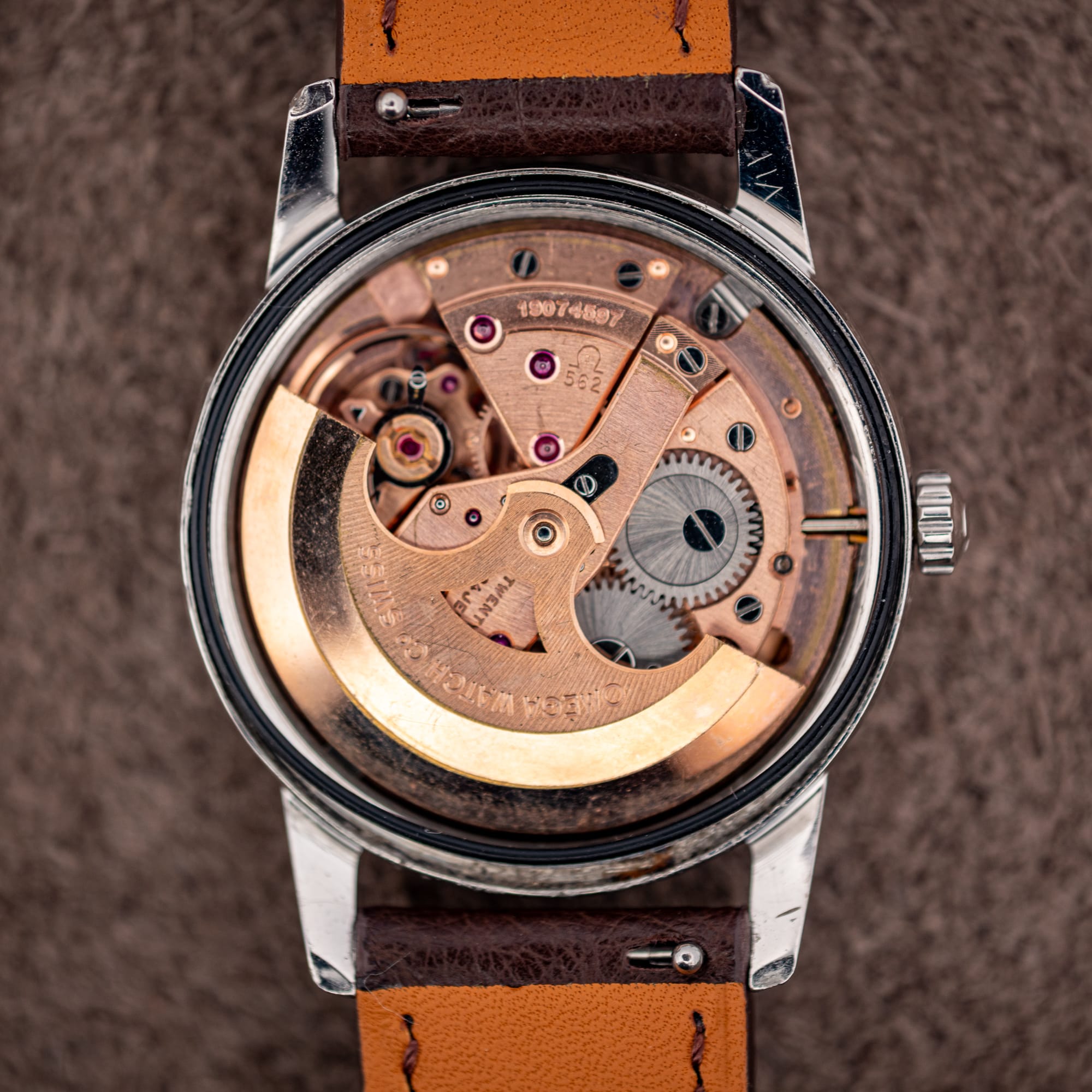
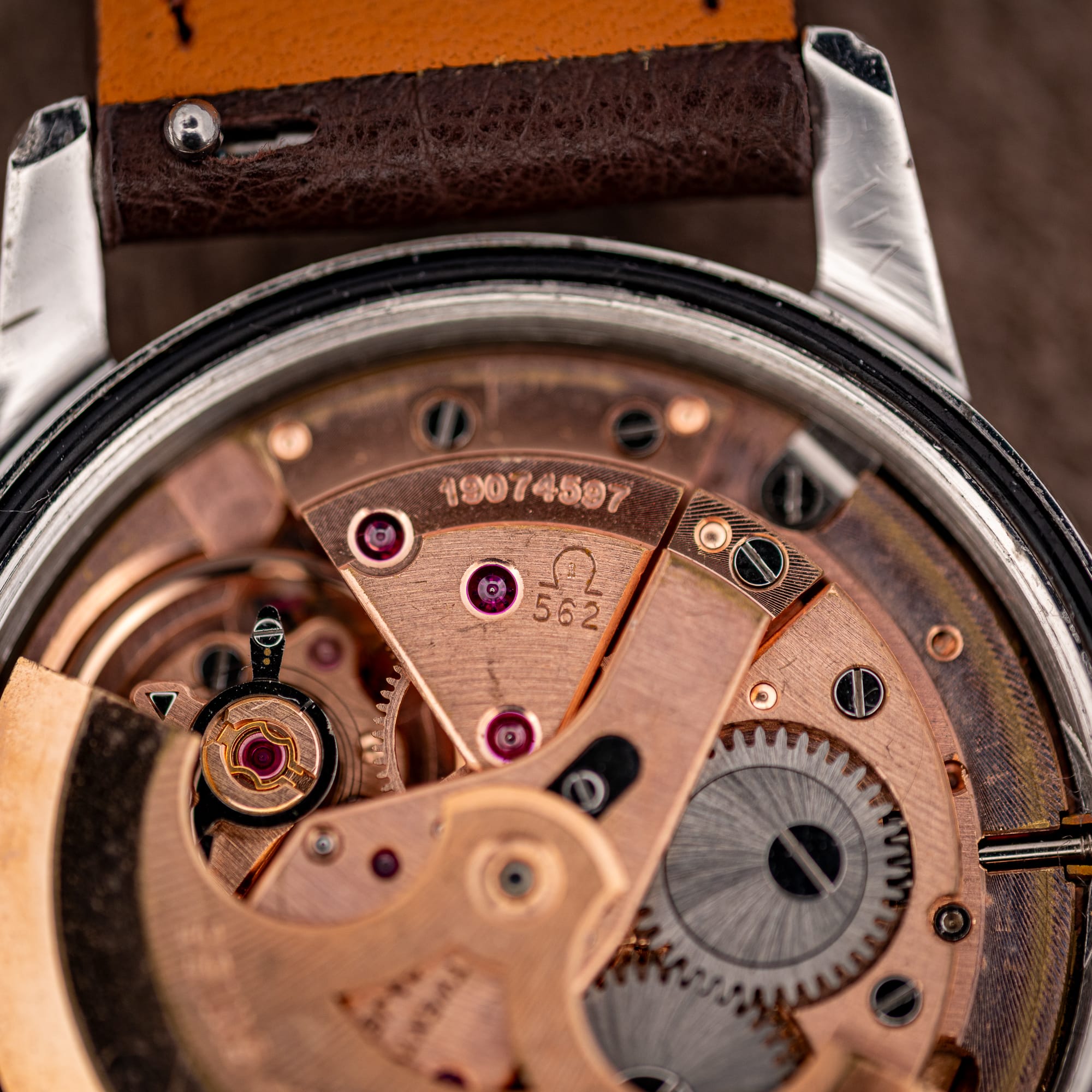
So the Omega Seamaster 14760 asks for something at least five times a year, since April, June, September and November run thirty days and February runs shorter still. The Seamaster sat below the Constellation in Omega’s order of things, and the Constellation is where the chronometer certificates went, so the 562 here is the standard-grade sibling of the certified 561: same architecture, twenty-four jewels, a full rotor winding both ways, 19,800 beats an hour, fifty hours in reserve. It was built to be put on in the morning without any thought at all, and to us that is the entire appeal of it.
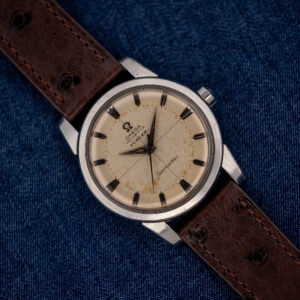
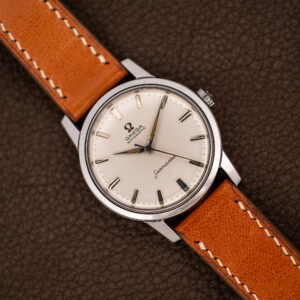
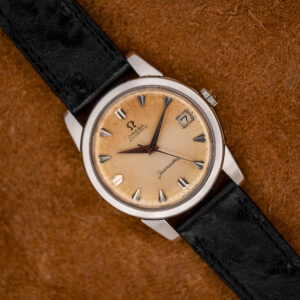
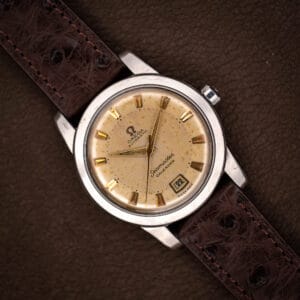
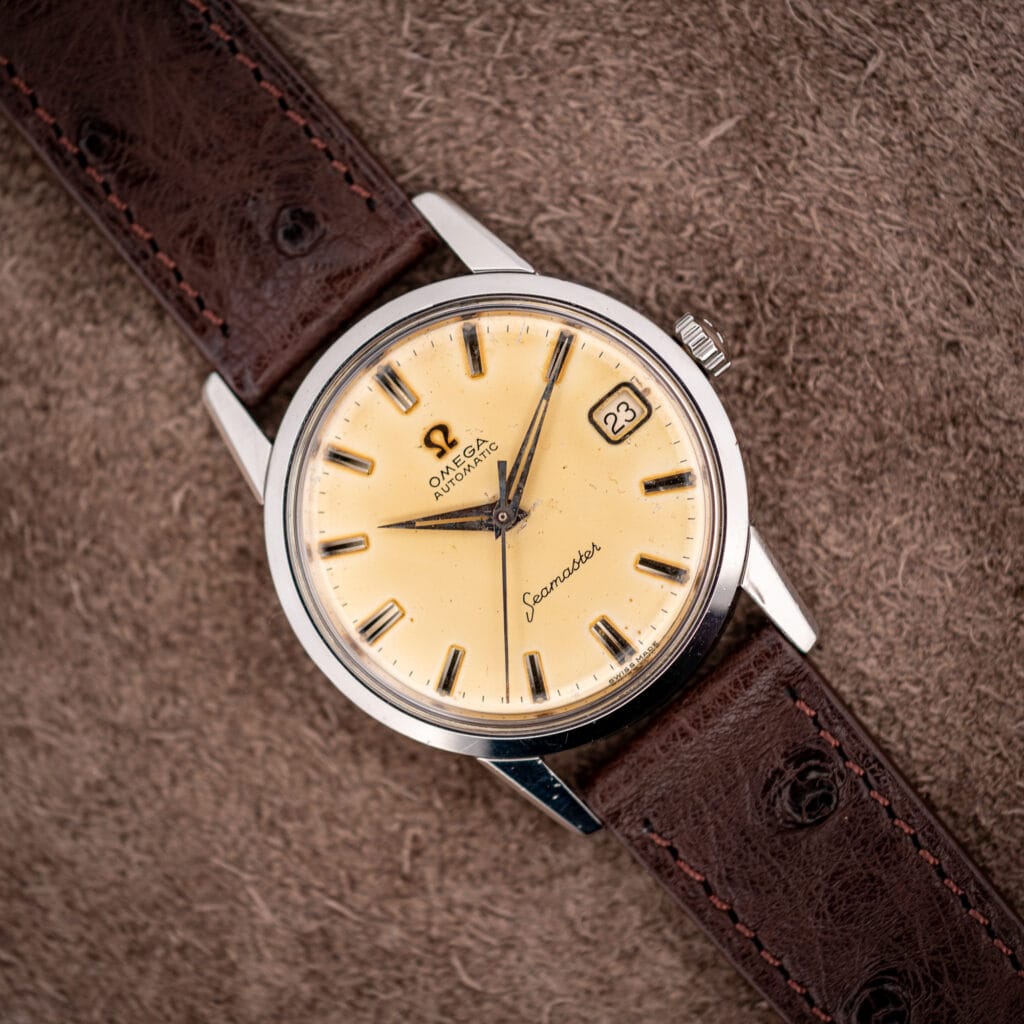
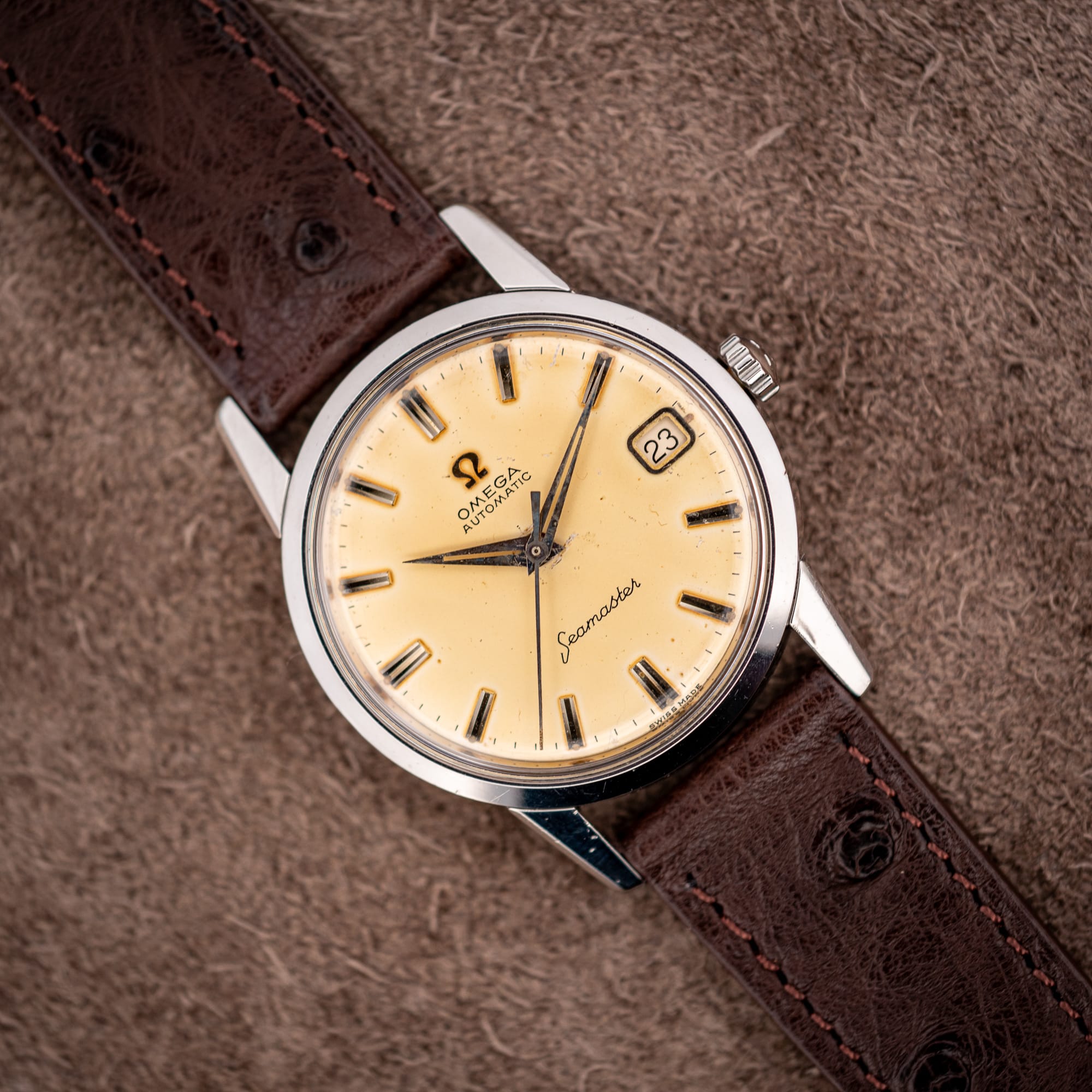
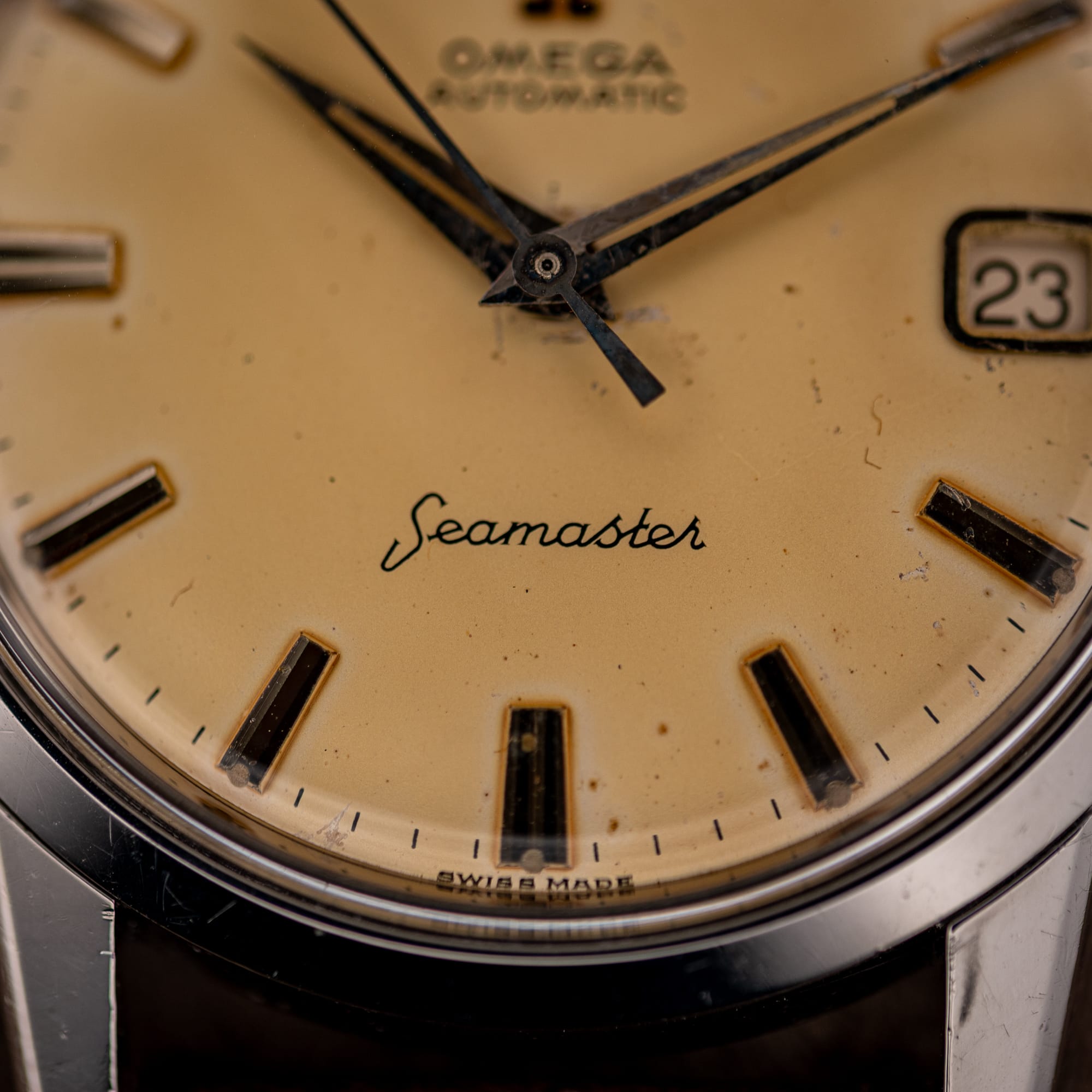
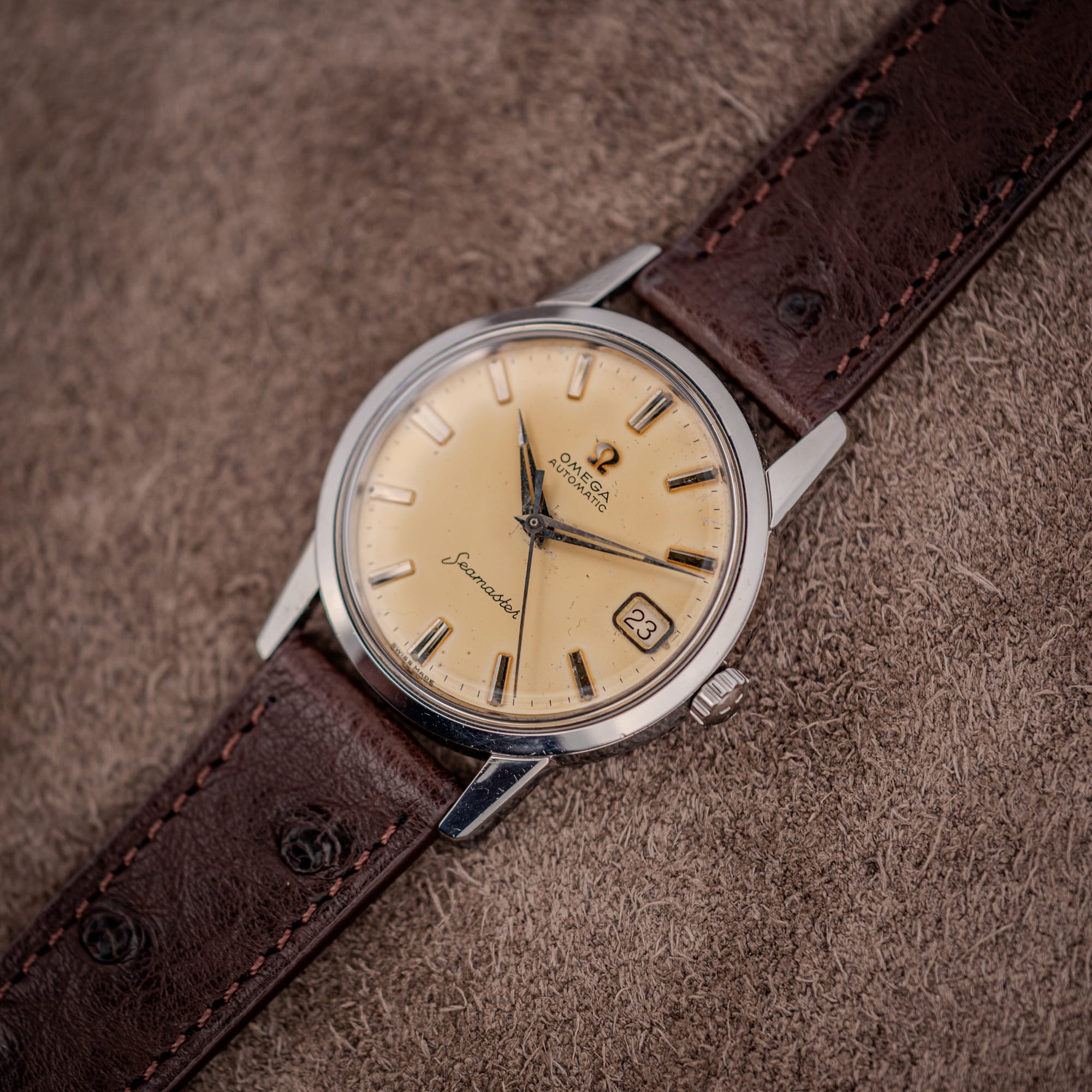
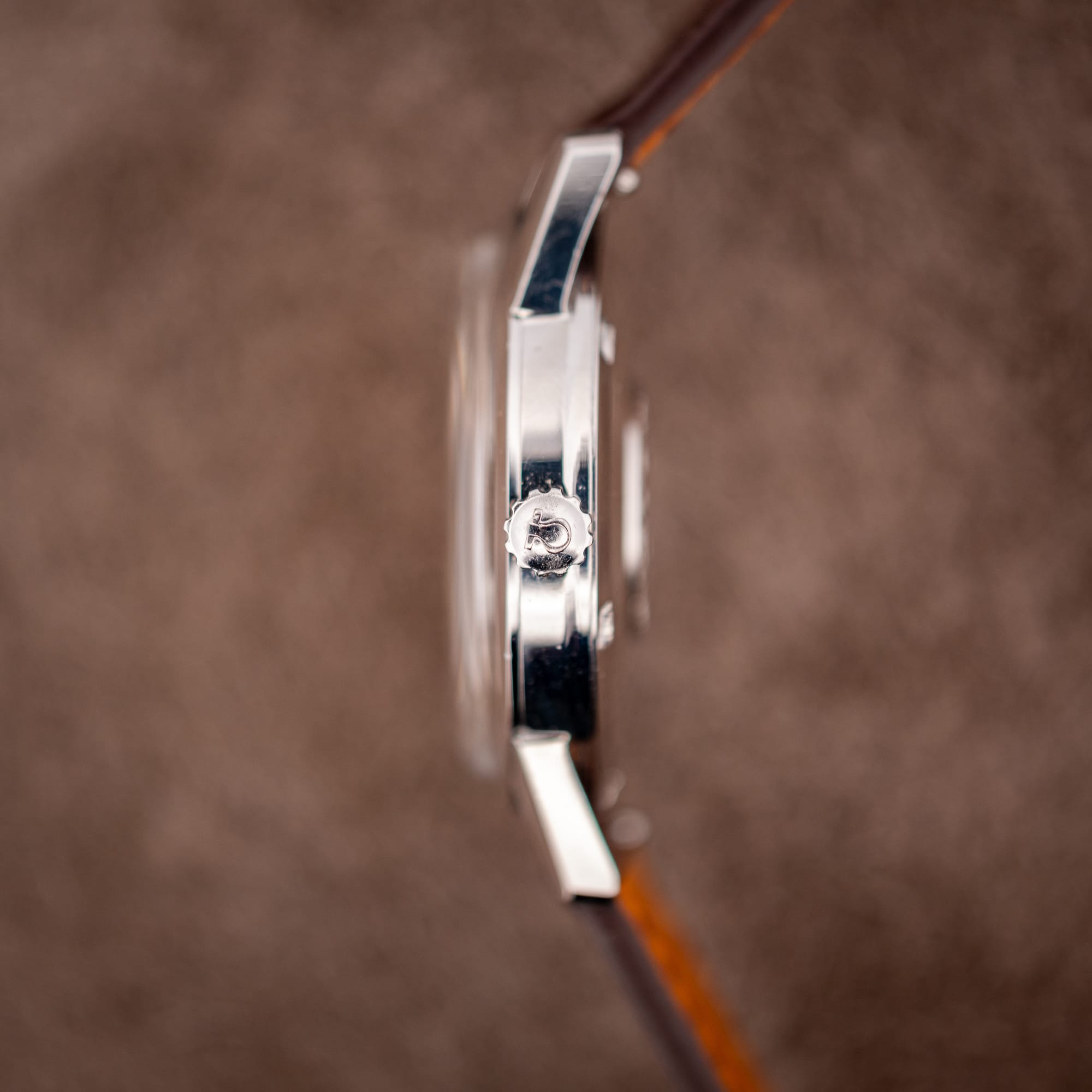
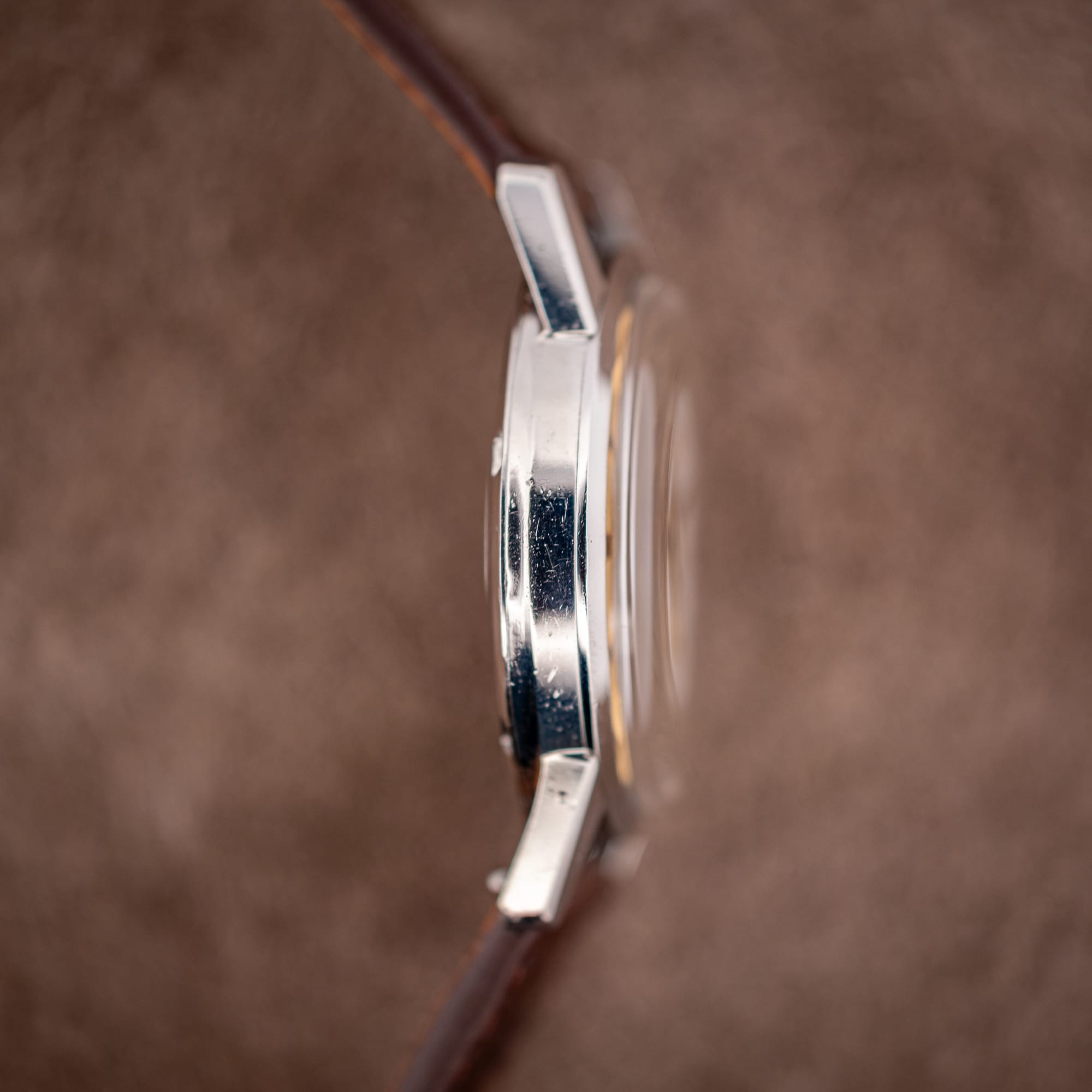
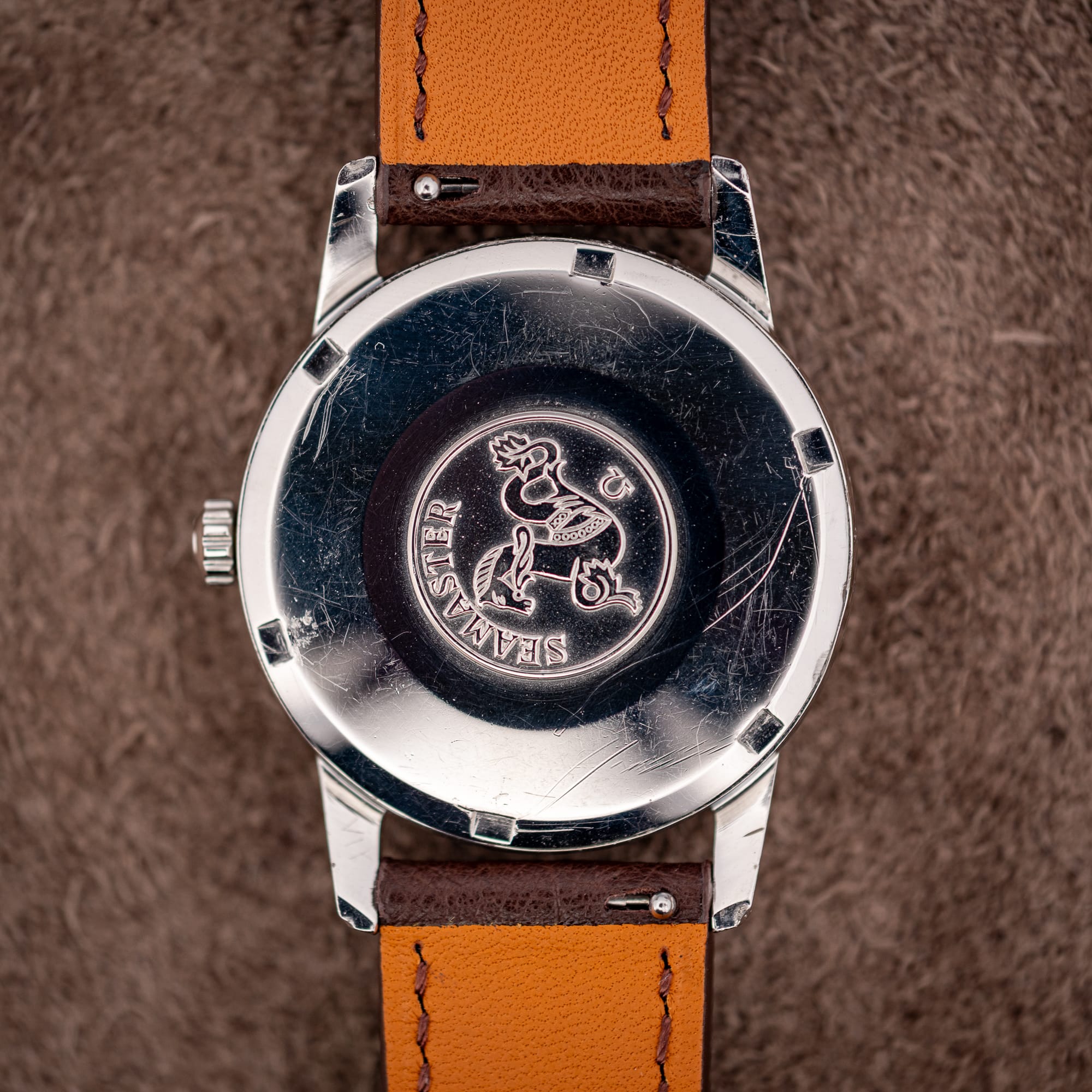
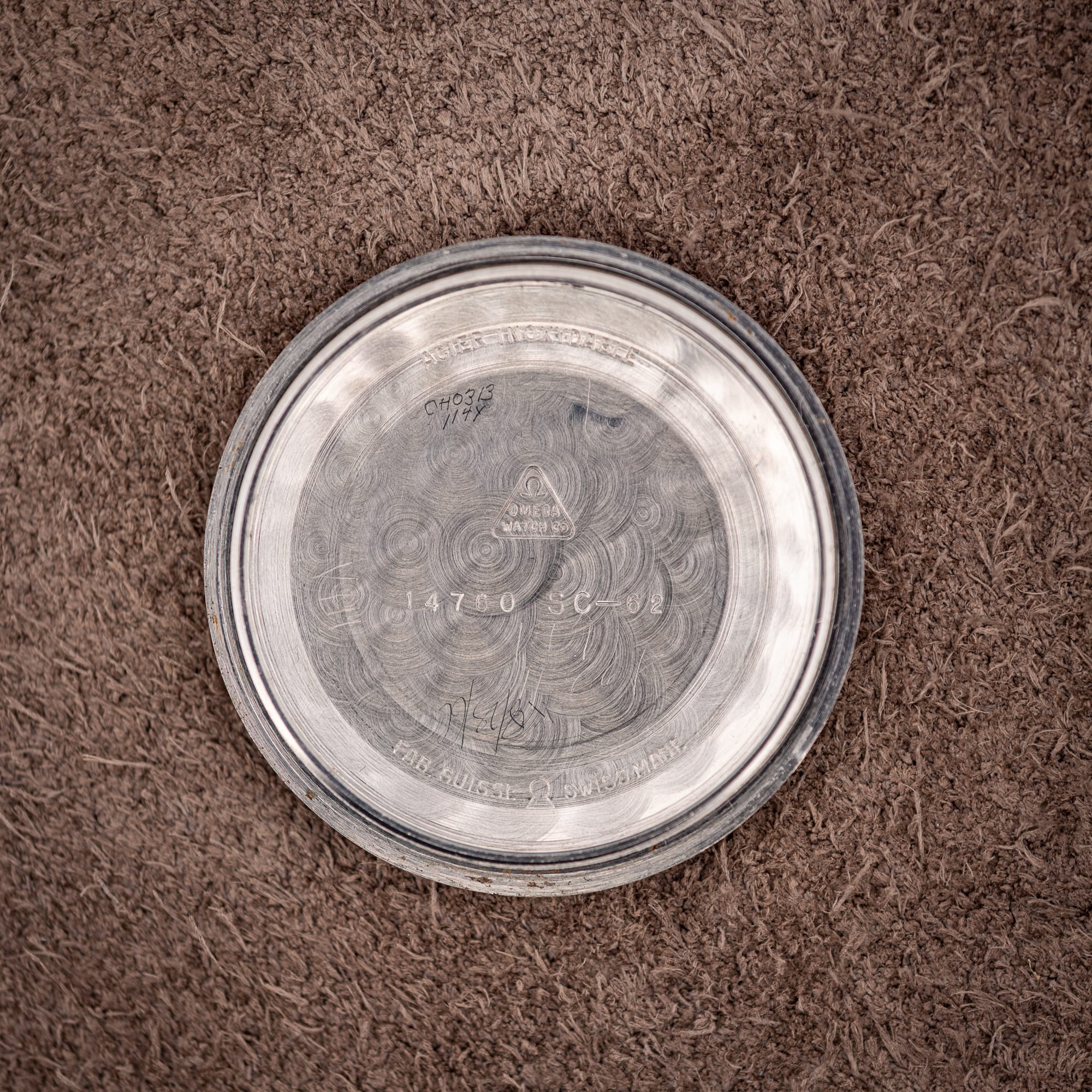
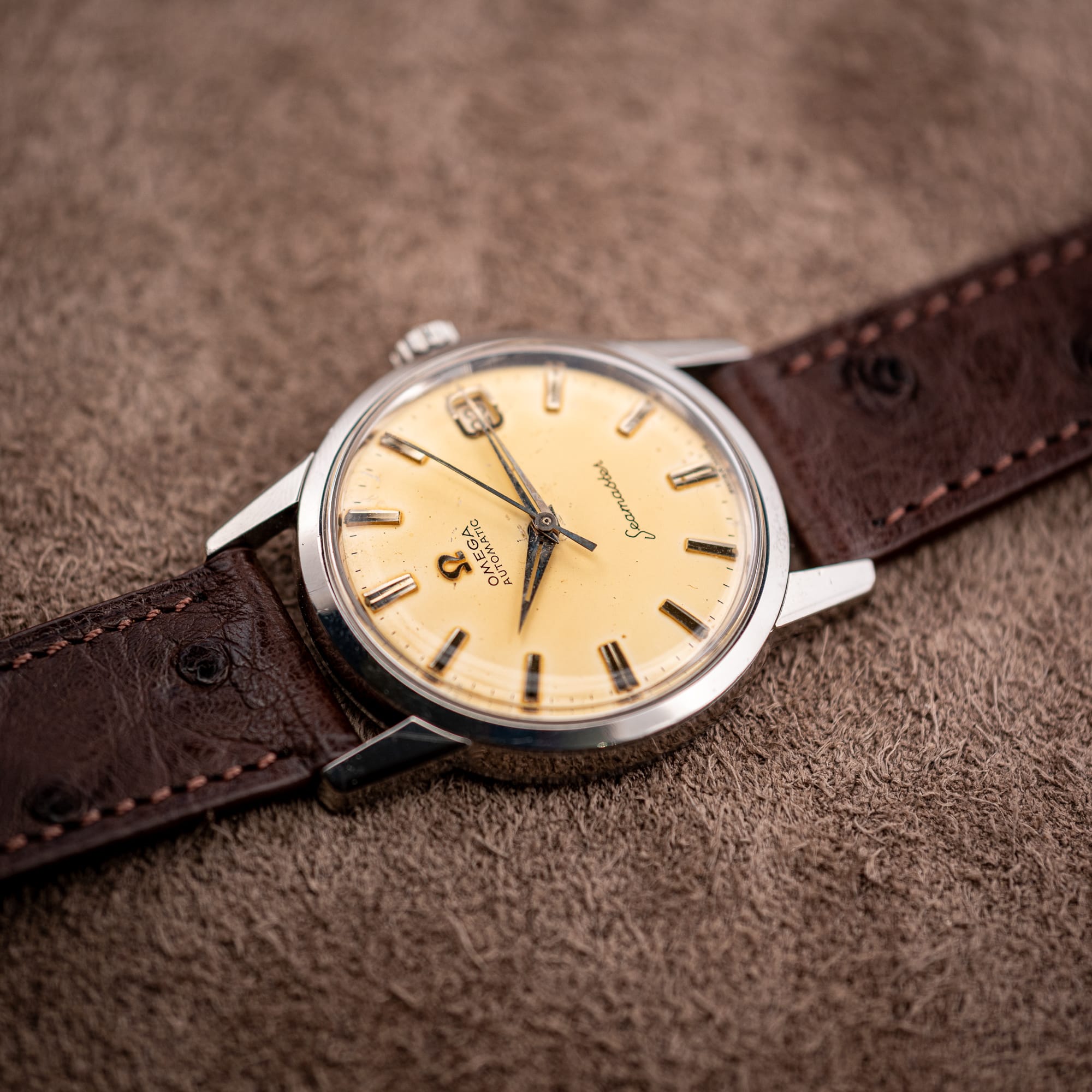
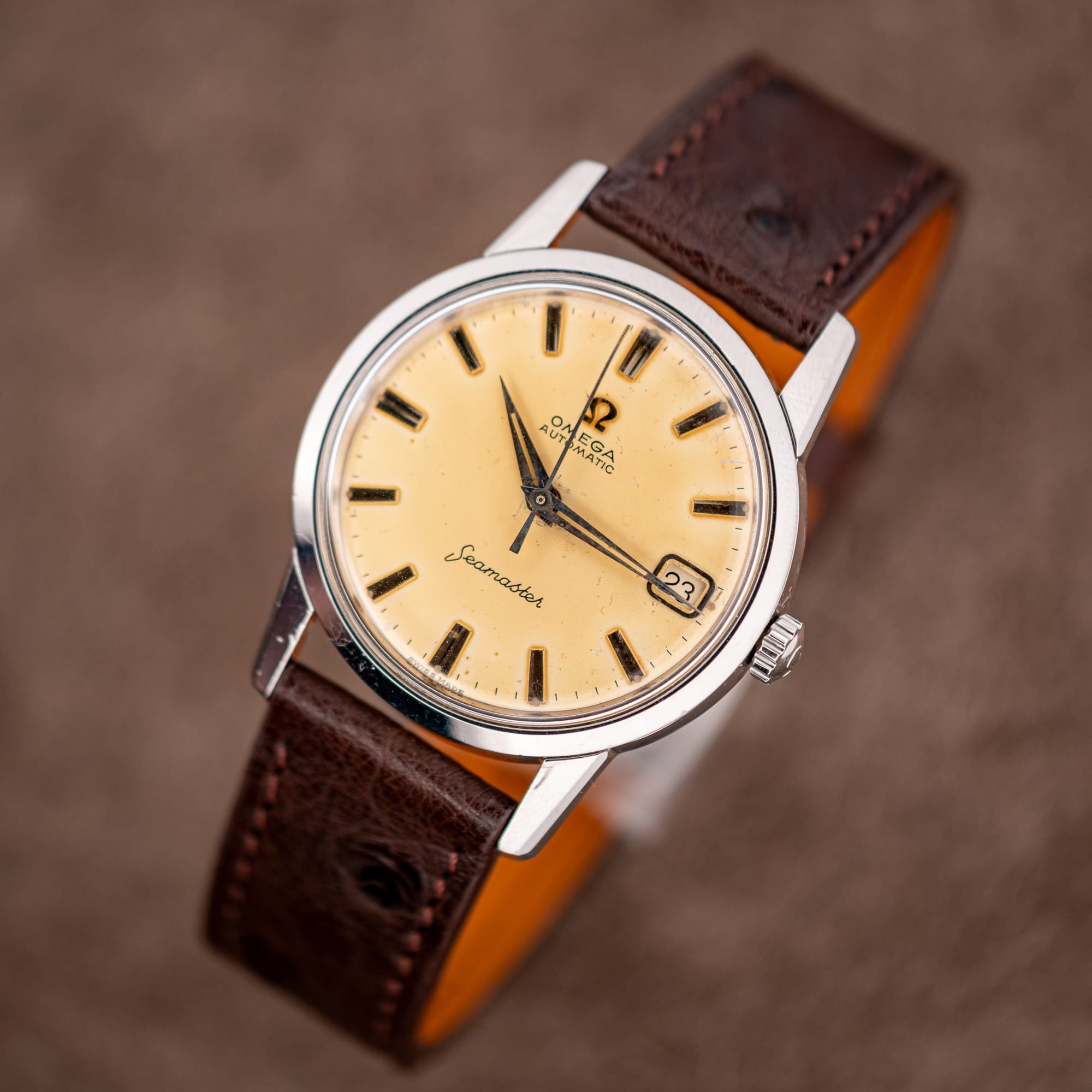
The example we have shows every sign of exactly that life. The eggshell dial has warmed evenly across its whole face rather than going blotchy in patches, the dauphine hands have settled into a soft pewter, and the hippocampus medallion still stands proud of a caseback carrying the fine hairlines of six decades of cuffs and doorframes. That caseback has not been buffed back into pretending otherwise. The case runs 34mm across, 42mm lug to lug and 18mm between the lugs, with a smooth bezel, tapered lugs and a screw-in back whose inner face is stamped 14760 SC-62, the SC for seconde centrale, the centre sweep seconds. The crown carries the Omega symbol, and the movement serial, 19074597, places the year at 1962.
We have paired it on a chocolate brown ostrich strap on an OTTUHR-signed buckle, fitting wrists up to 8 inches. Serviced in-house at OTTUHR and backed by our 2-year mechanical warranty. Thirty-two years separated Otto Graef’s patent from this watch. Sixty-four more separate it from the wrist it lands on next. The window still turns.