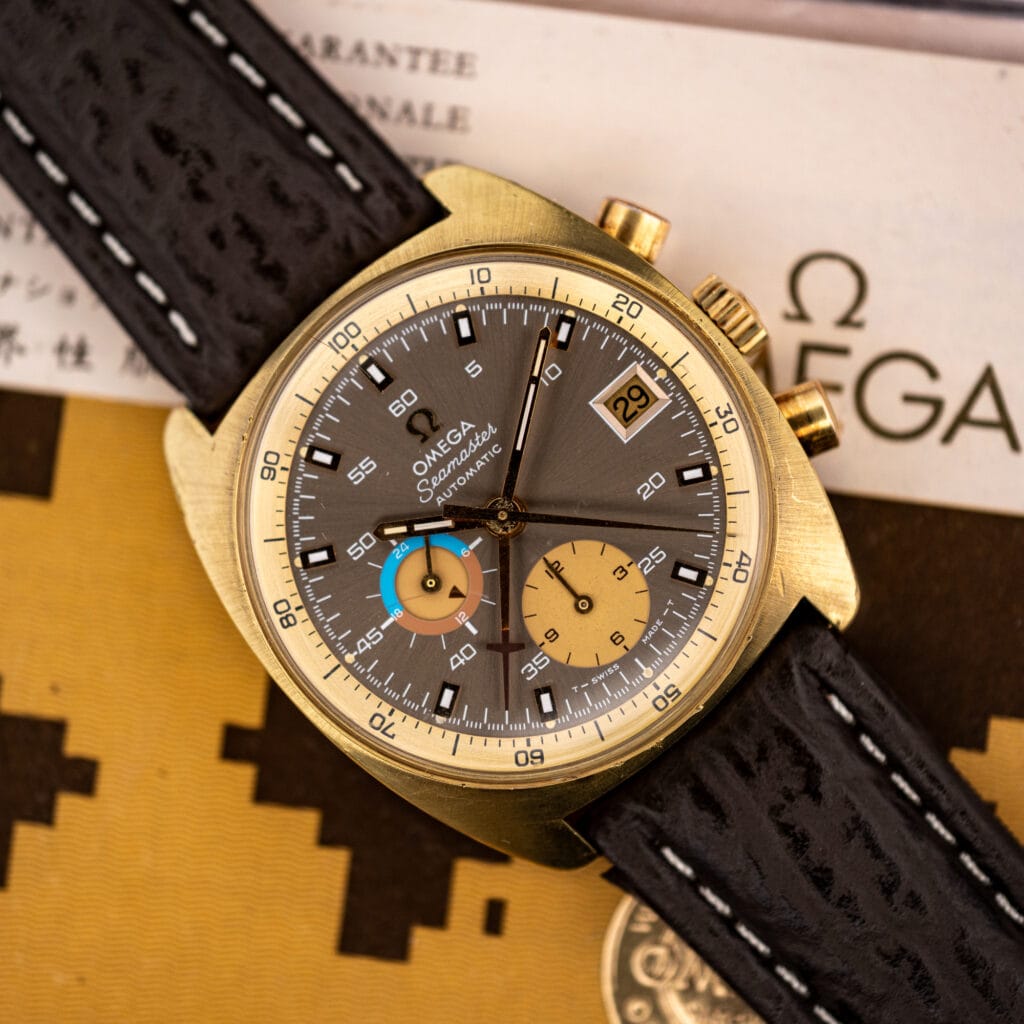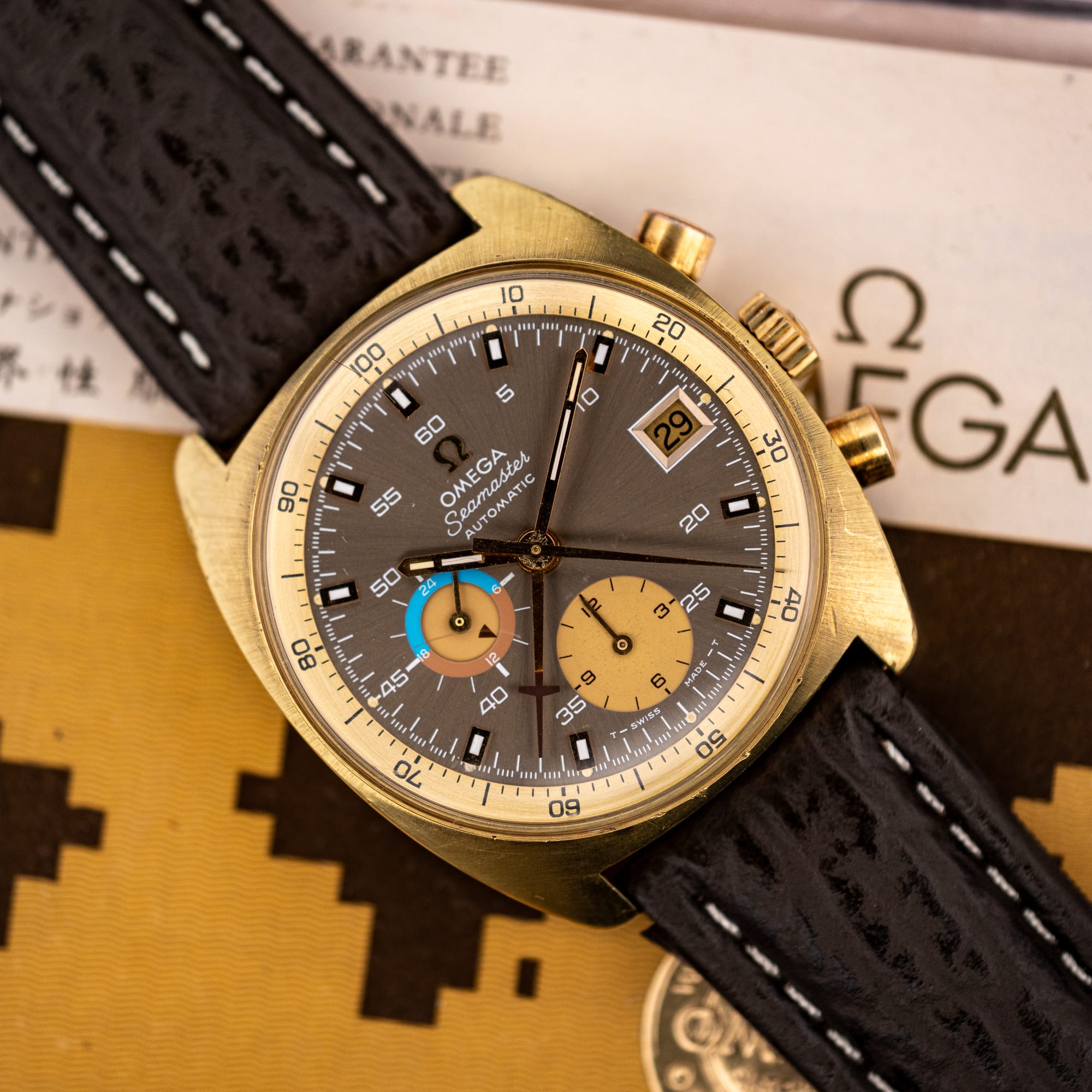
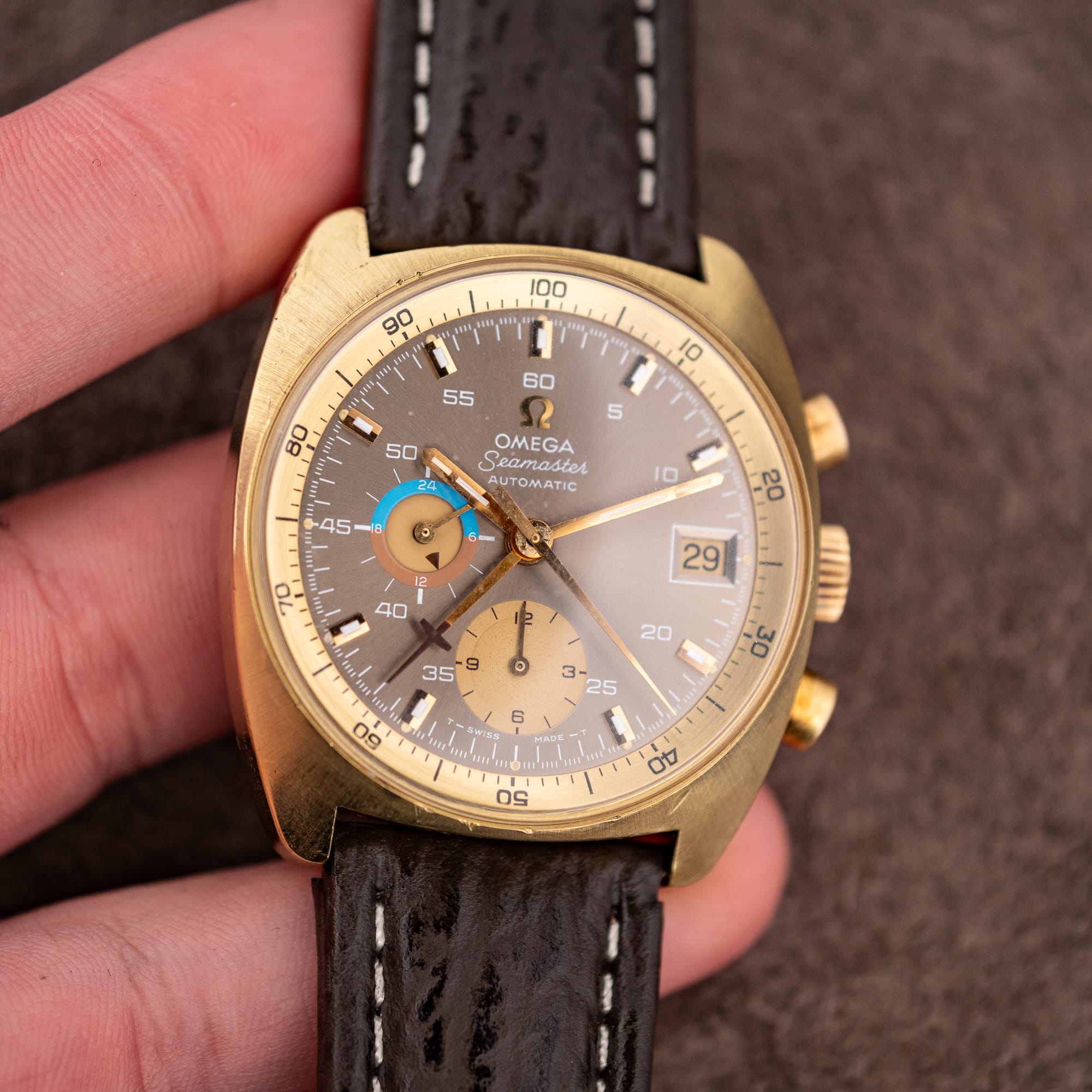
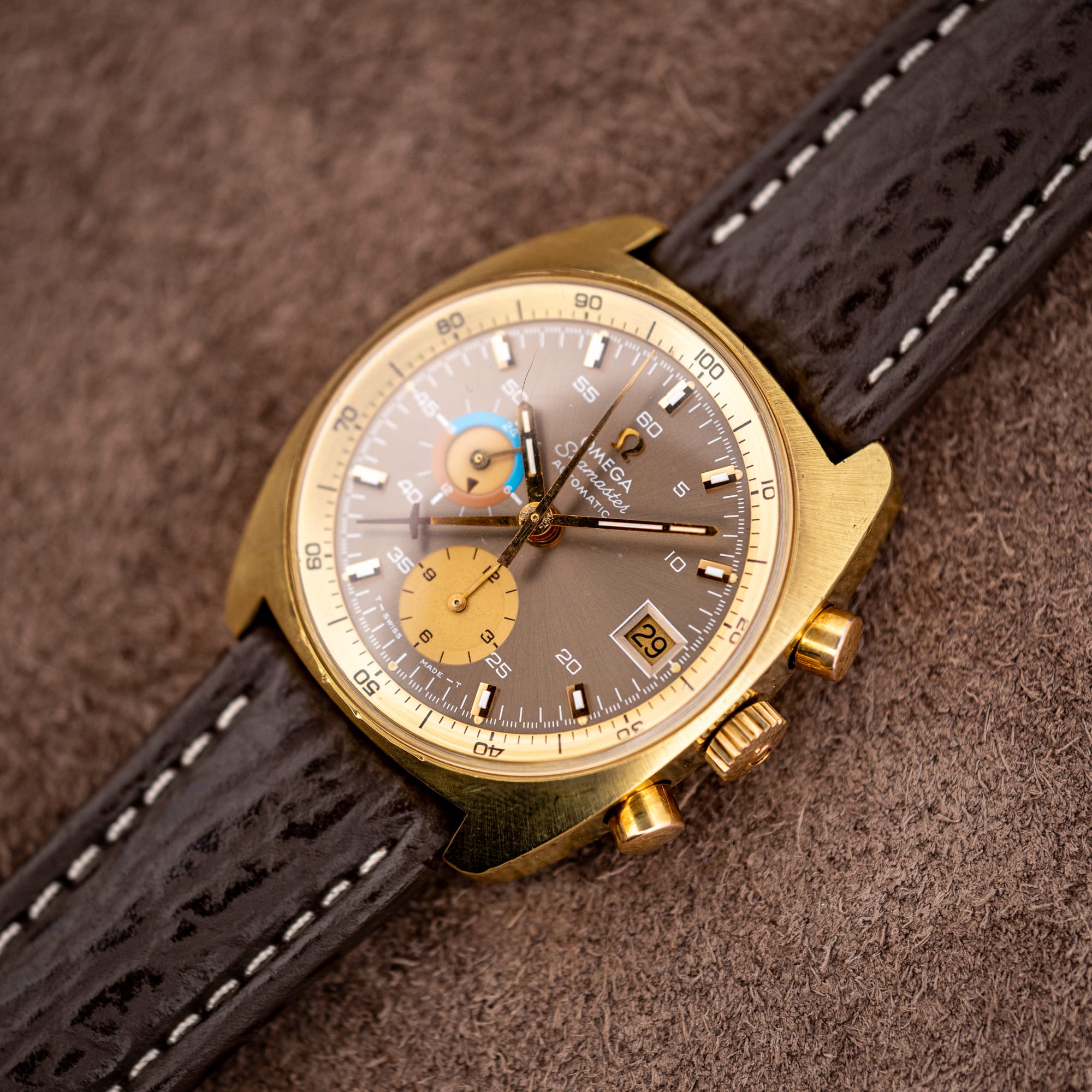
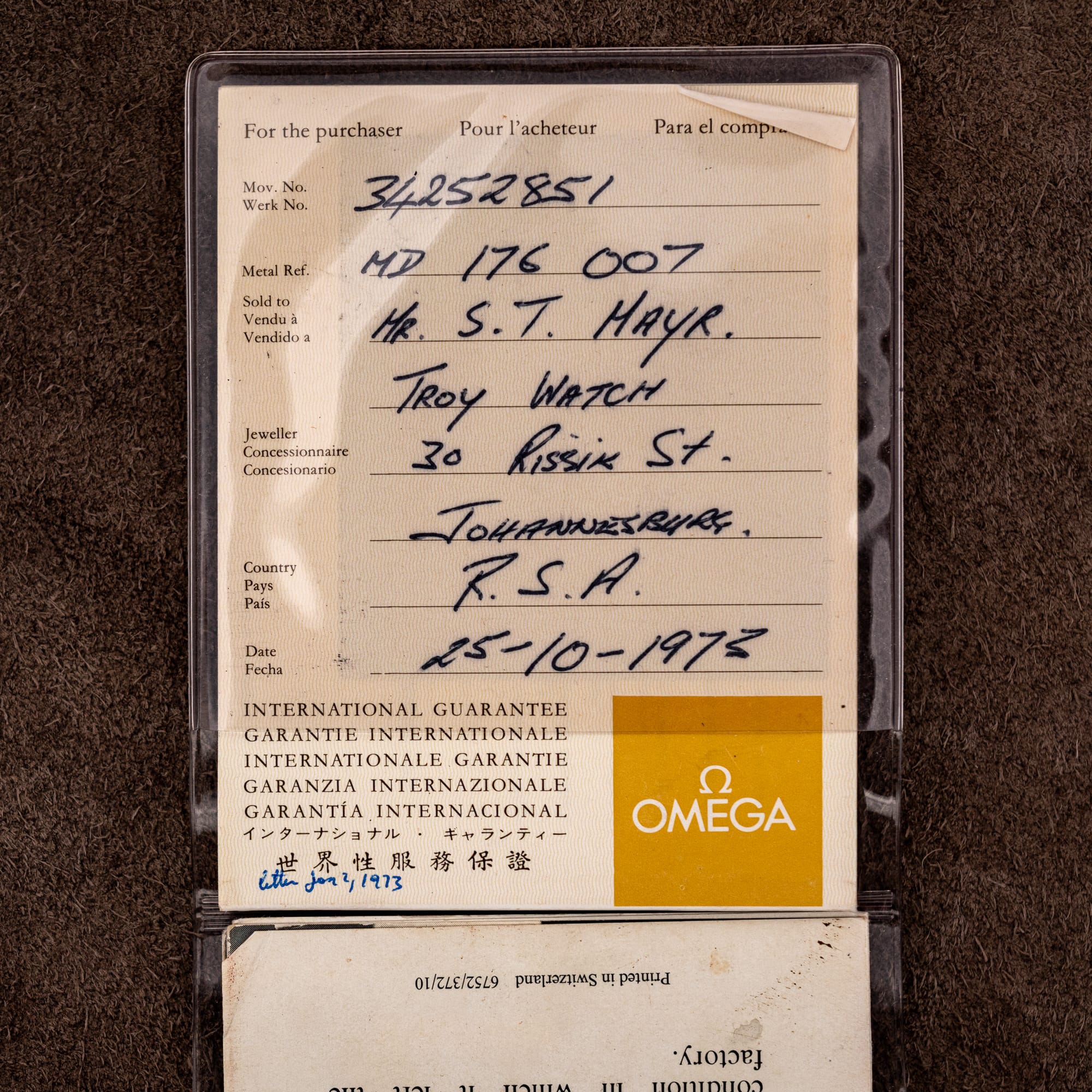
Johannesburg exists because of gold. Prospectors traced the Witwatersrand reef in 1886, nine farms were declared public diggings that September, and a mining camp on the highveld became a city inside a generation. Rissik Street is central Johannesburg’s main north-south artery, named for Johann Rissik, the Surveyor-General who is one of the two men the city itself is officially named after. On 25 October 1973 a jeweller at 30 Rissik Street wrote out a guarantee card for this Omega Seamaster chronograph 176.007 and sold it.
The timing was sharper than the buyer can have known. Gold had sat pegged at thirty-five dollars an ounce for a generation, the number the whole Bretton Woods arrangement rested on, until Nixon closed the gold window in 1971 and the peg came apart. On the day it changed hands the London afternoon fix was $100.10. Gold had roughly tripled since the peg broke, and in the country that mined about two thirds of the world’s supply, someone was buying a watch with a gold case.
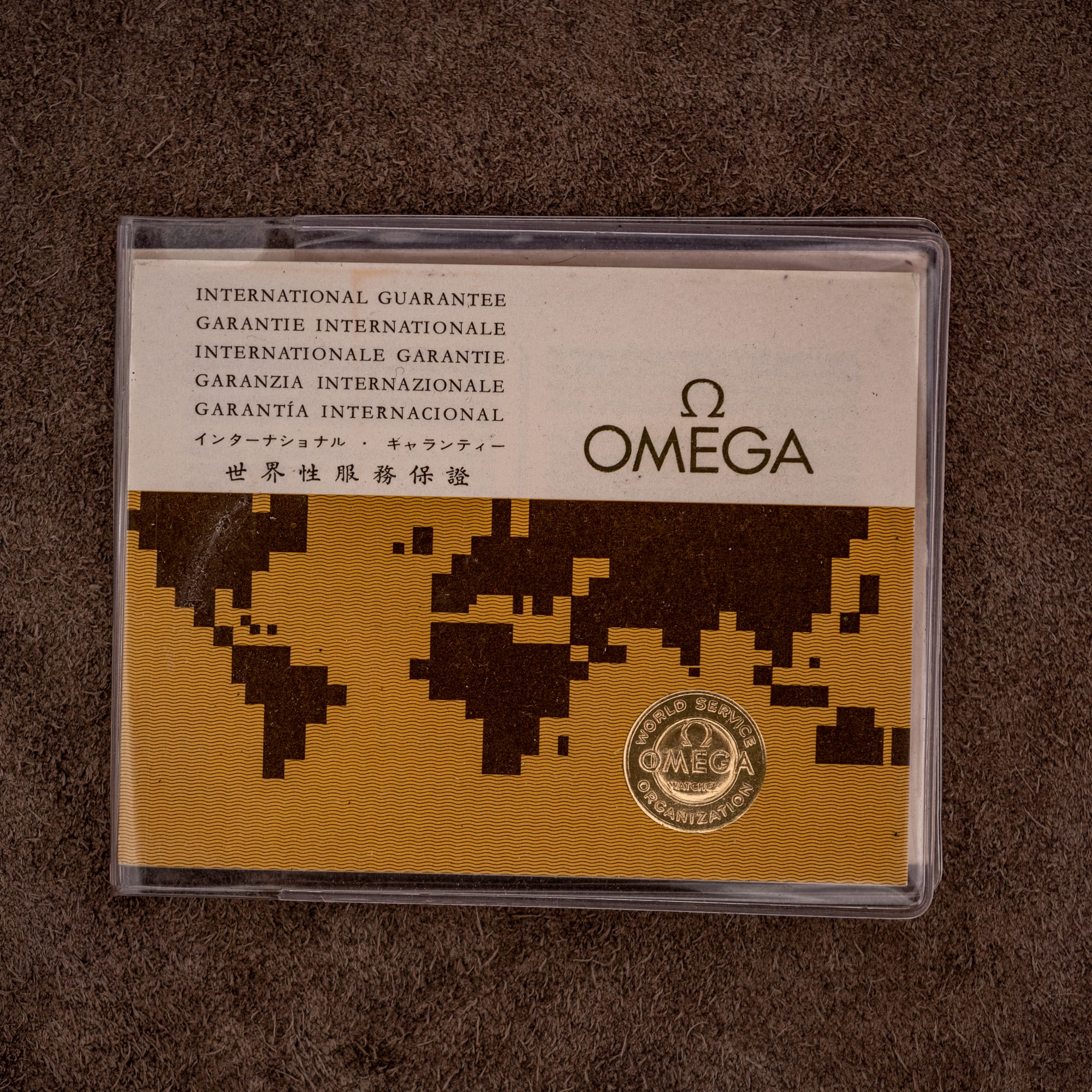
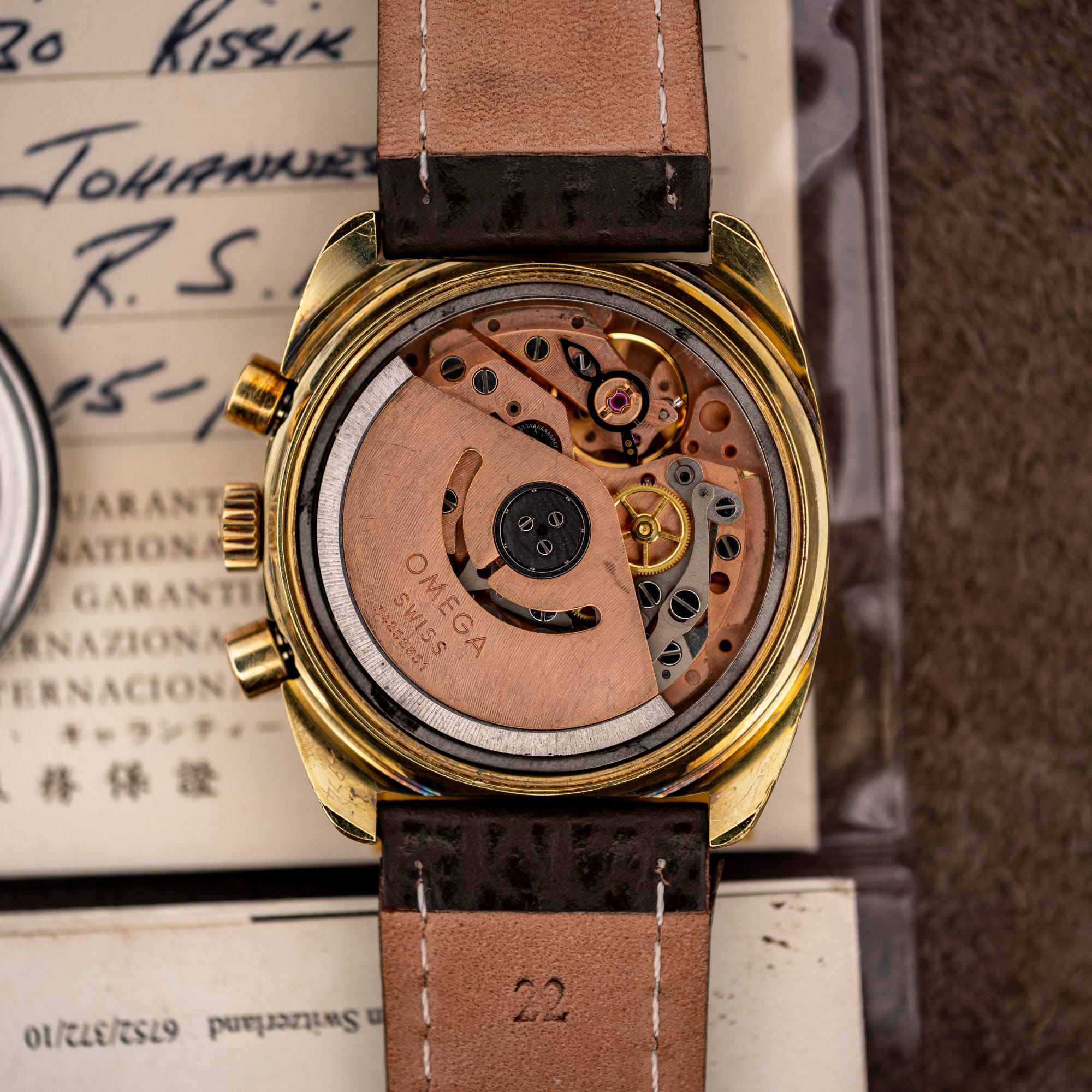
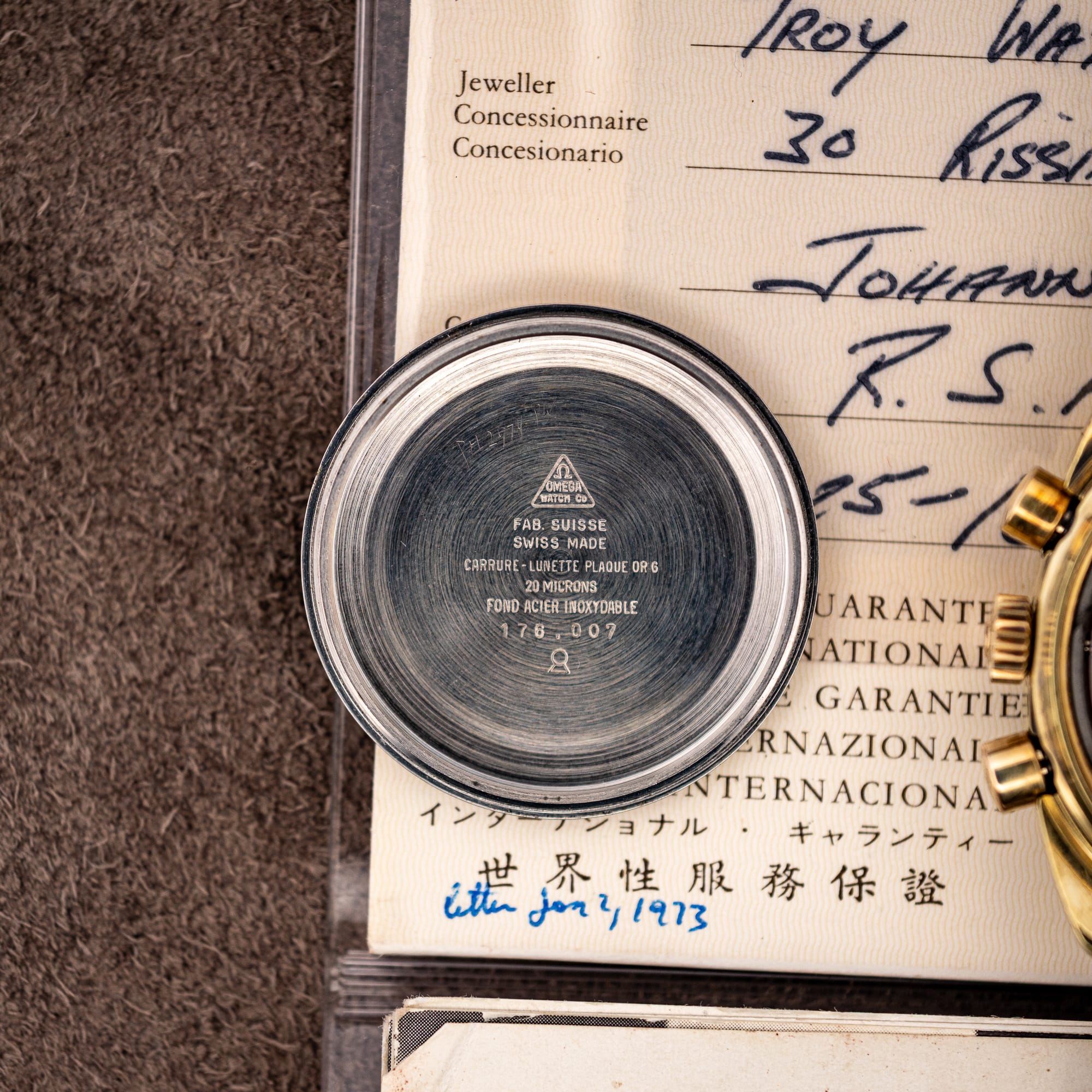
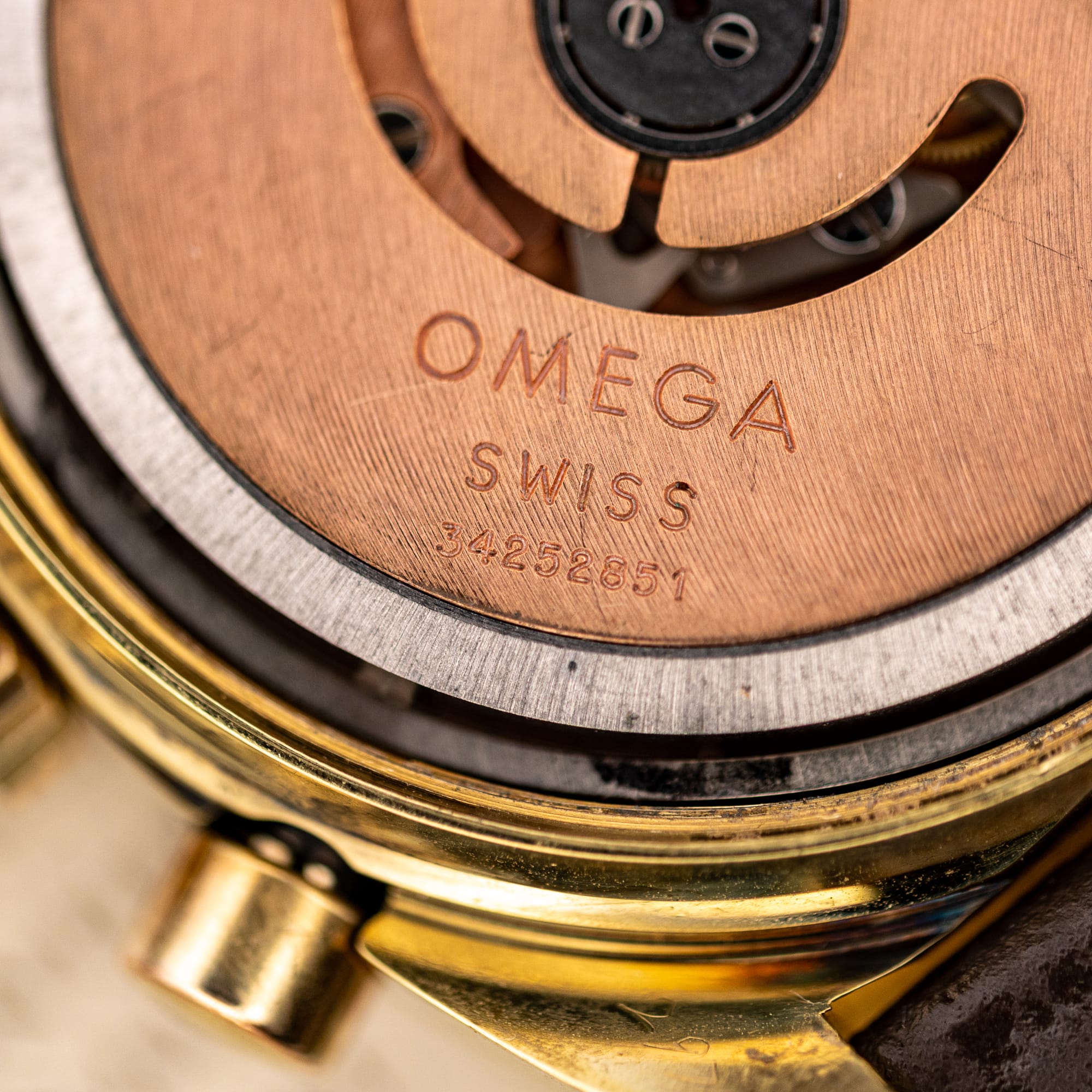
Papers are easy to claim. Guarantee cards travel separately from the watches they were issued for and can be reunited with the wrong ones, so we check rather than assume. This one holds. The retailer wrote 34252851 into the Mov. No. box, and the rotor turning inside this watch is stamped 34252851. Under Metal Ref. the card reads MD 176 007, MD being Omega’s own code for a gold-plated case. The set kept its outer guarantee wallet with the gold World Service Organization seal still fixed to the world map, along with Omega’s Automatic Chronographs instruction booklet.
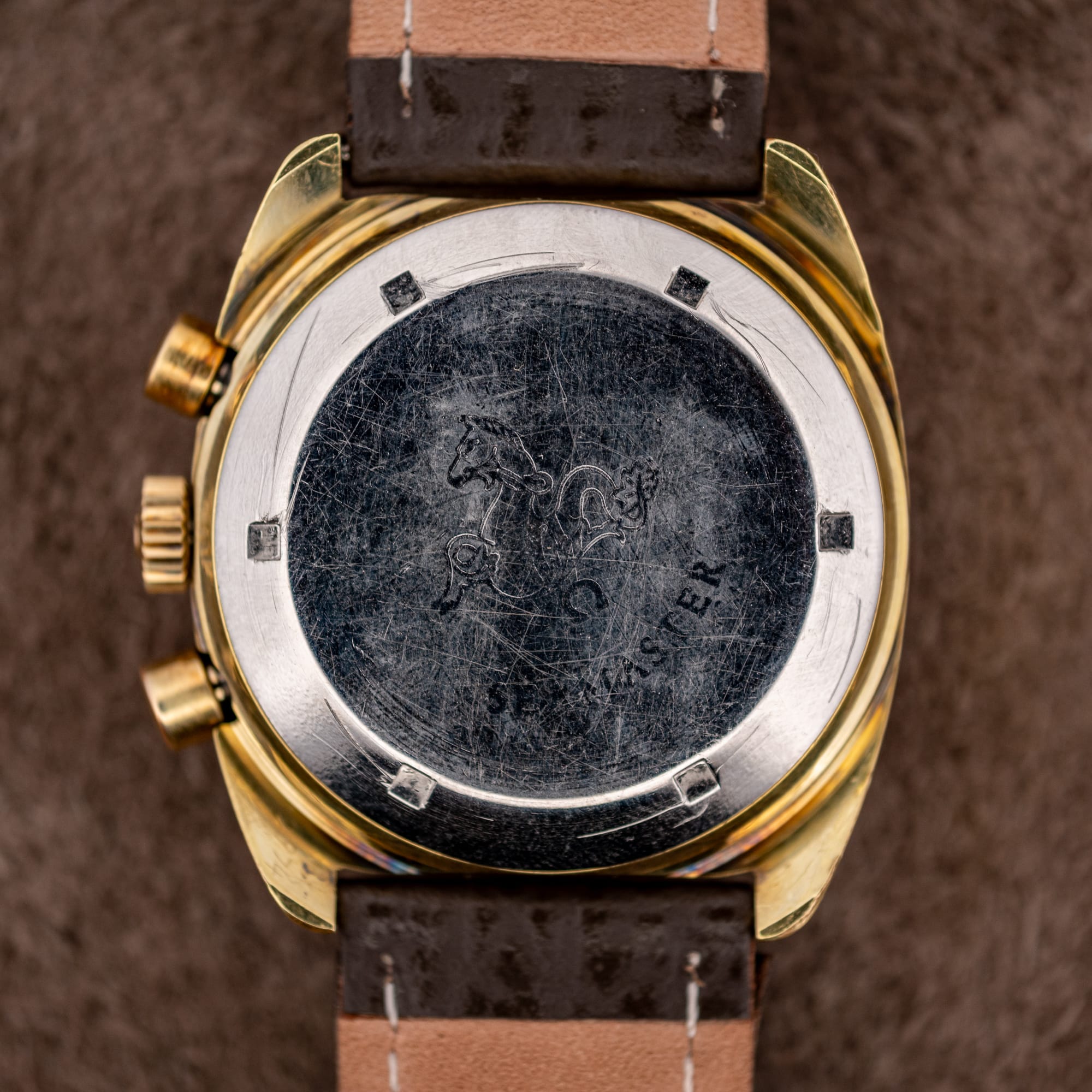
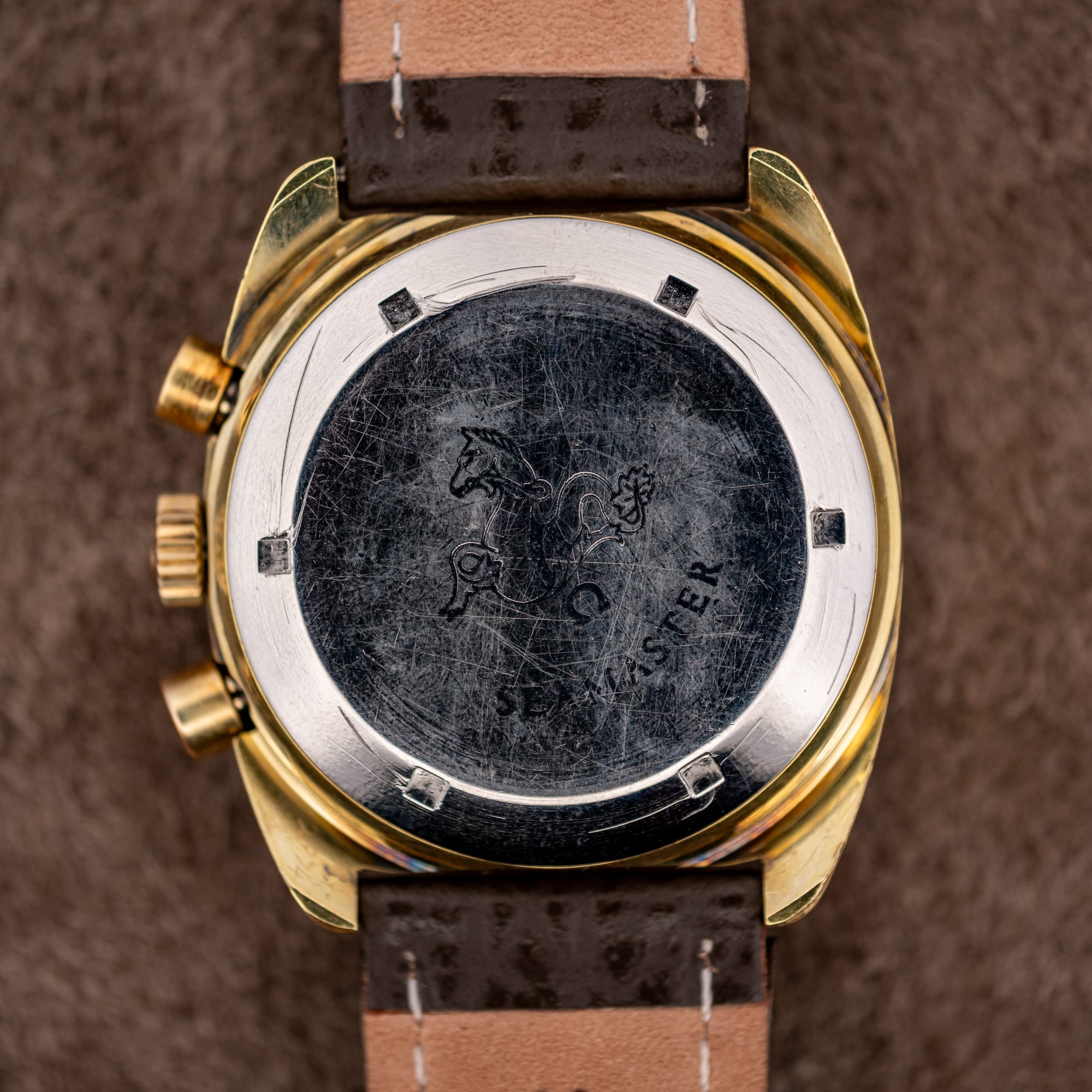
The inner caseback puts the rest plainly: CARRURE – LUNETTE PLAQUE OR G, 20 MICRONS, FOND ACIER INOXYDABLE. Gold over the case middle and bezel at twenty microns, stainless steel behind. That was Omega’s own standard of the period, and well above what modern plating usually runs. Omega built perhaps eight or nine thousand gold-plated 176.007s against roughly twenty thousand in steel, and a published serial survey found the gold-plated ones falling into four batches. This one falls in the first. Inside is the calibre 1040, the first self-winding chronograph Omega used, built on Lemania’s 1340 and separated from it by two additions Omega made: the day and night ring sharing the register at nine, and the date at three. The trade calls these cushion-cased references Jedi, though strict collectors reserve the name for the 145.024, which is why we keep ours in quotation marks.
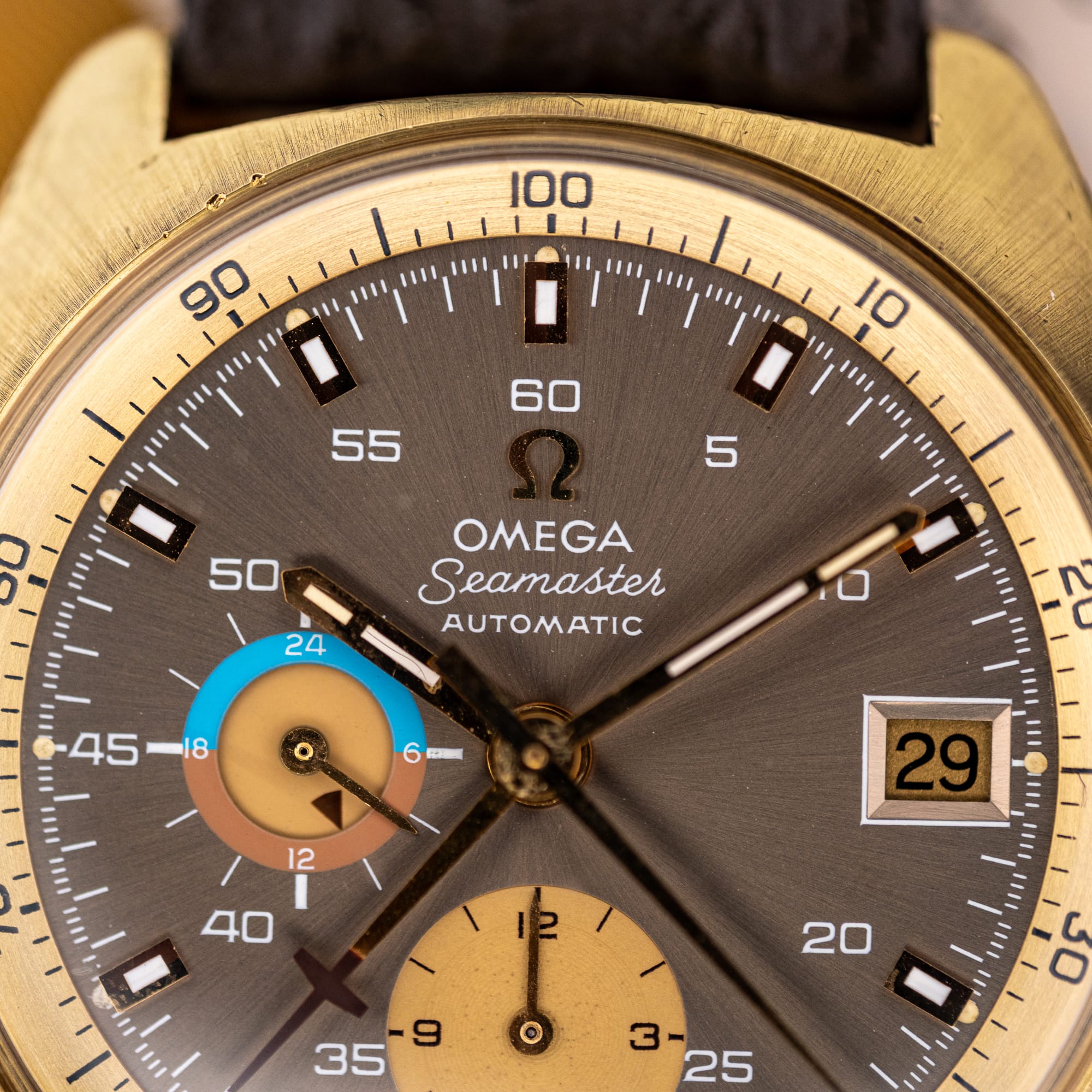
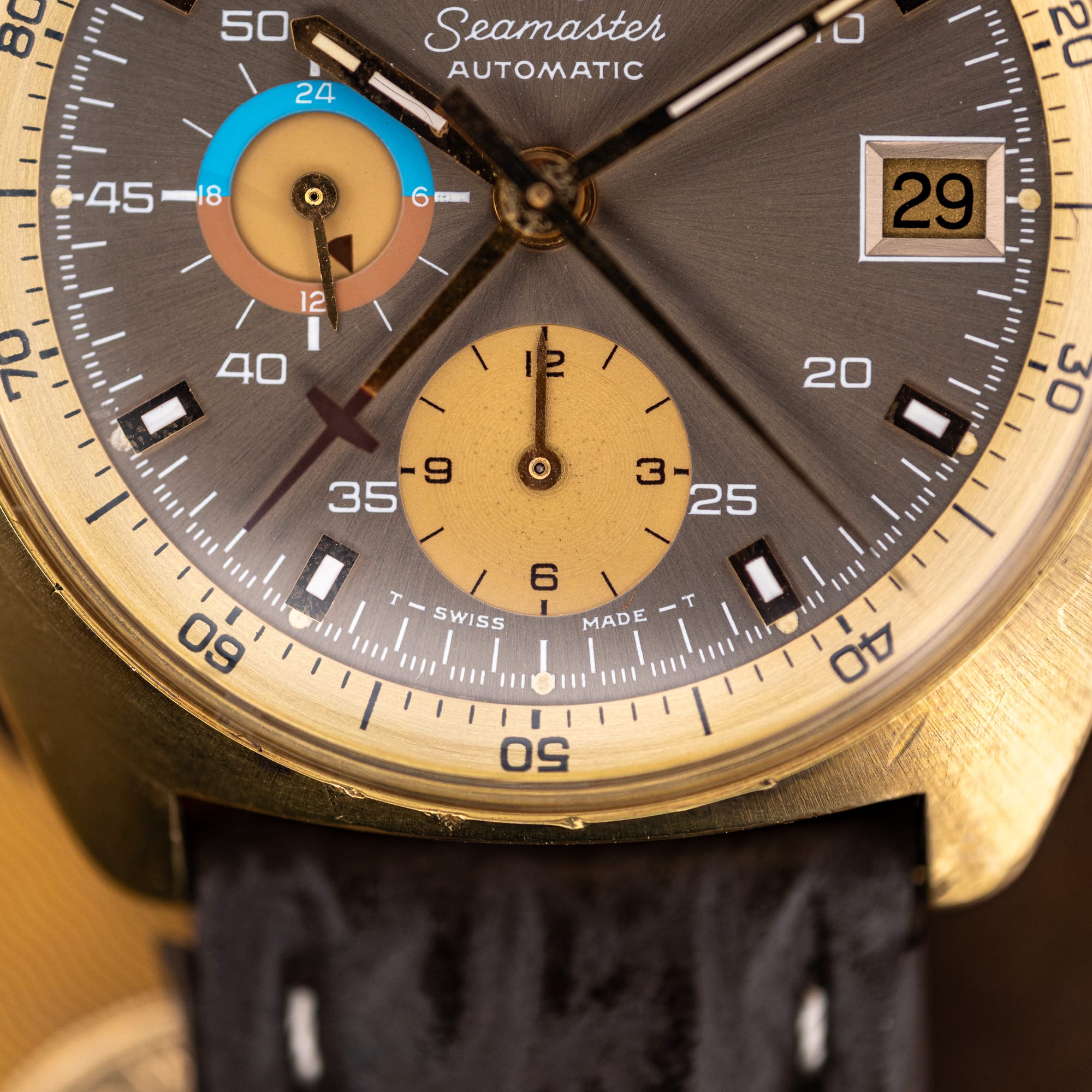
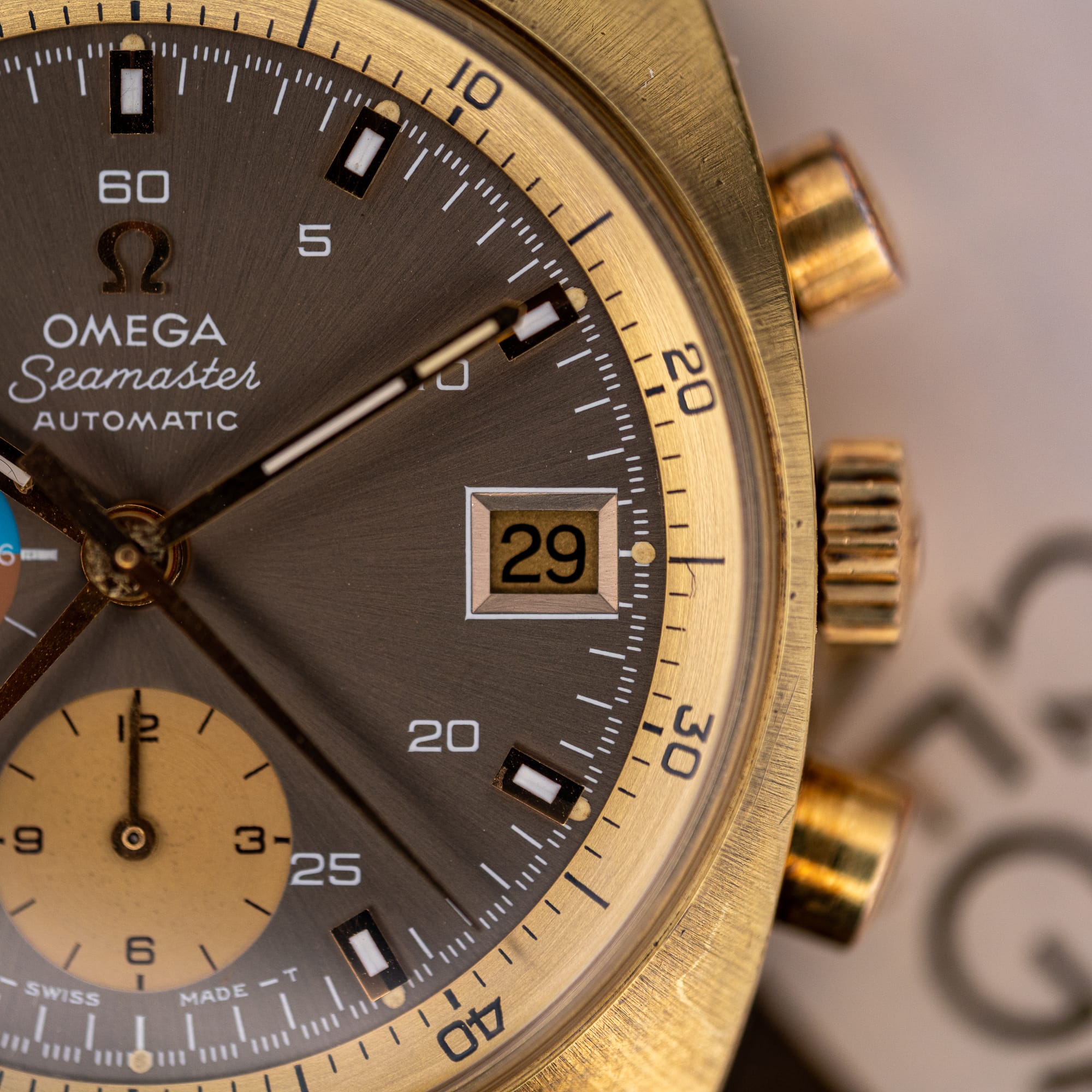
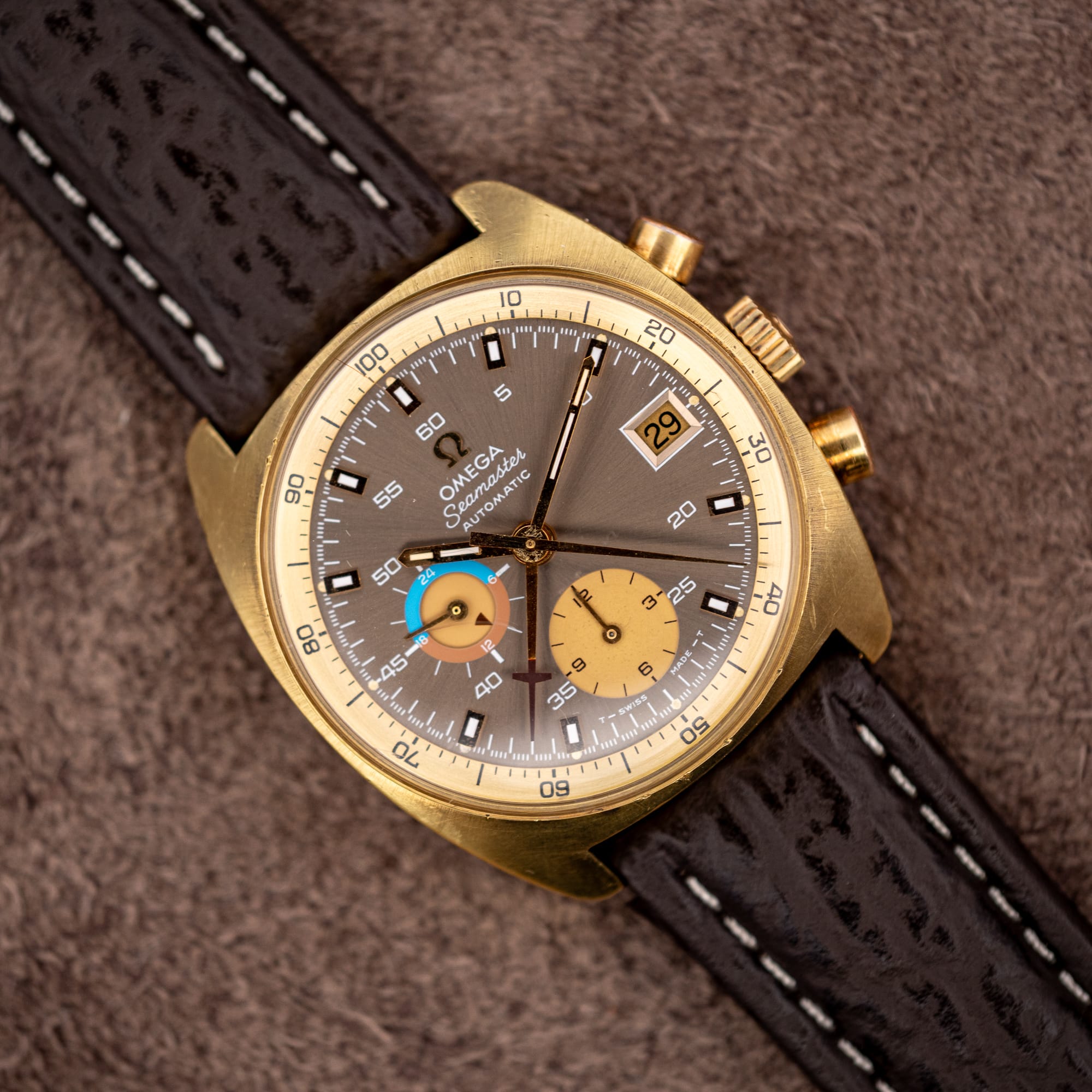
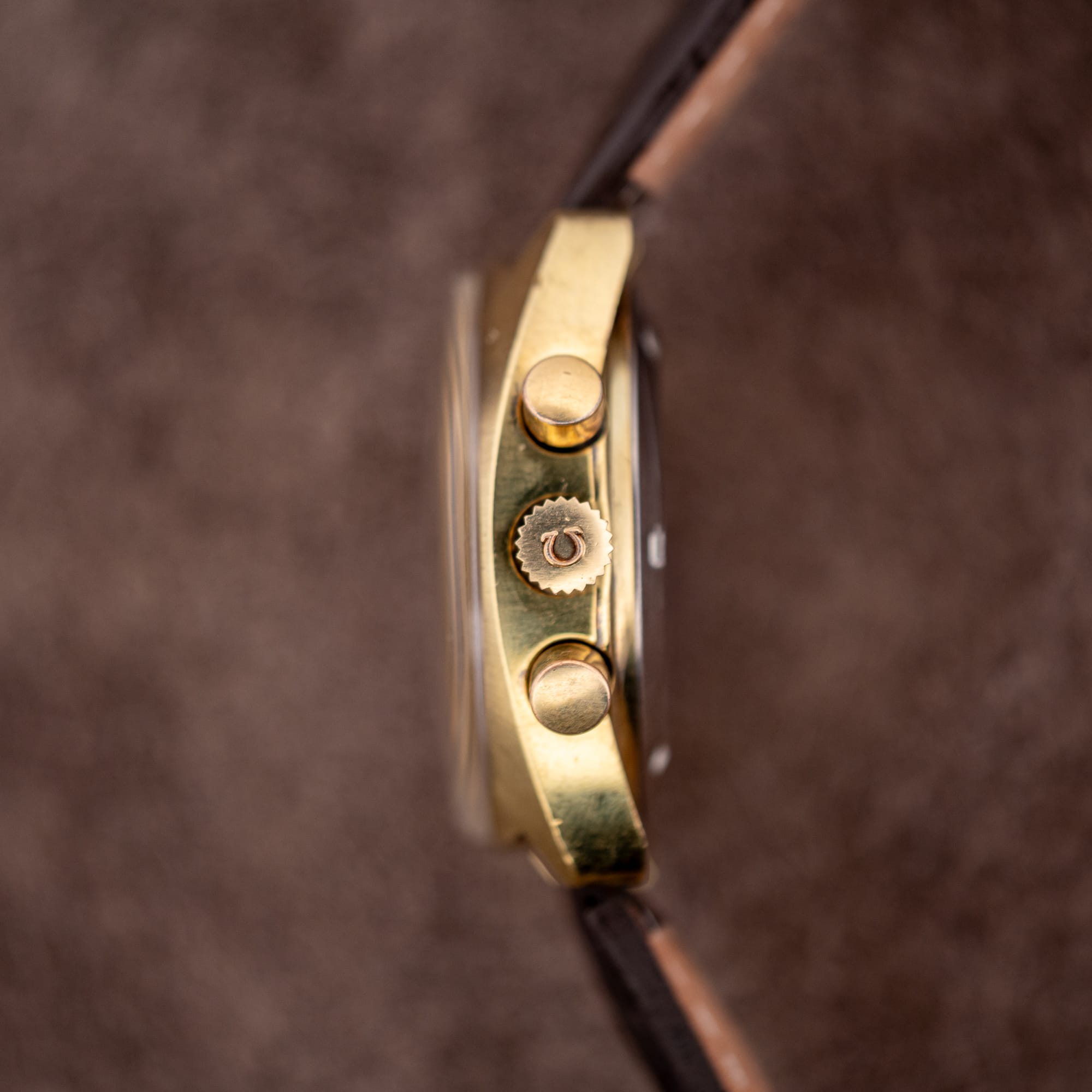
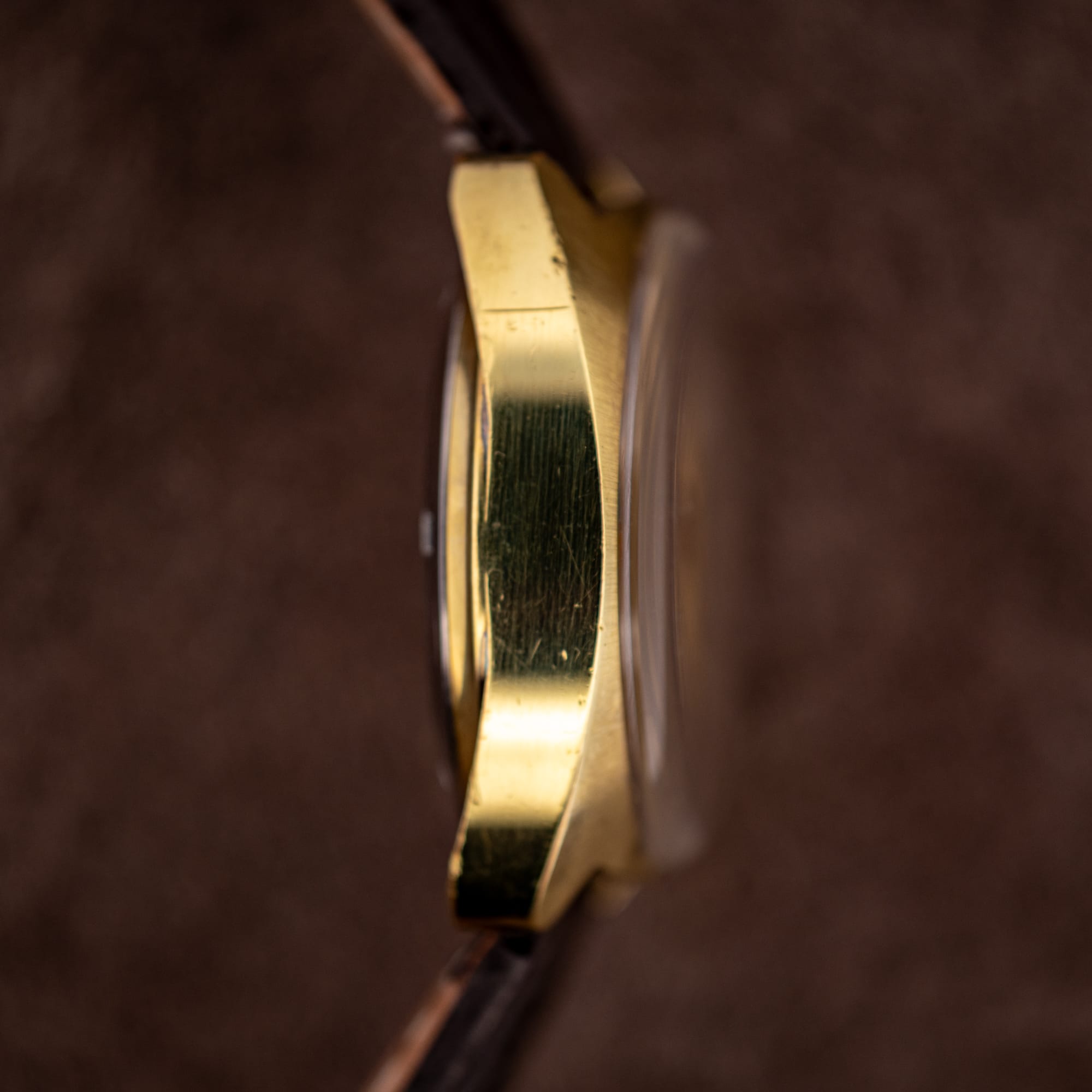
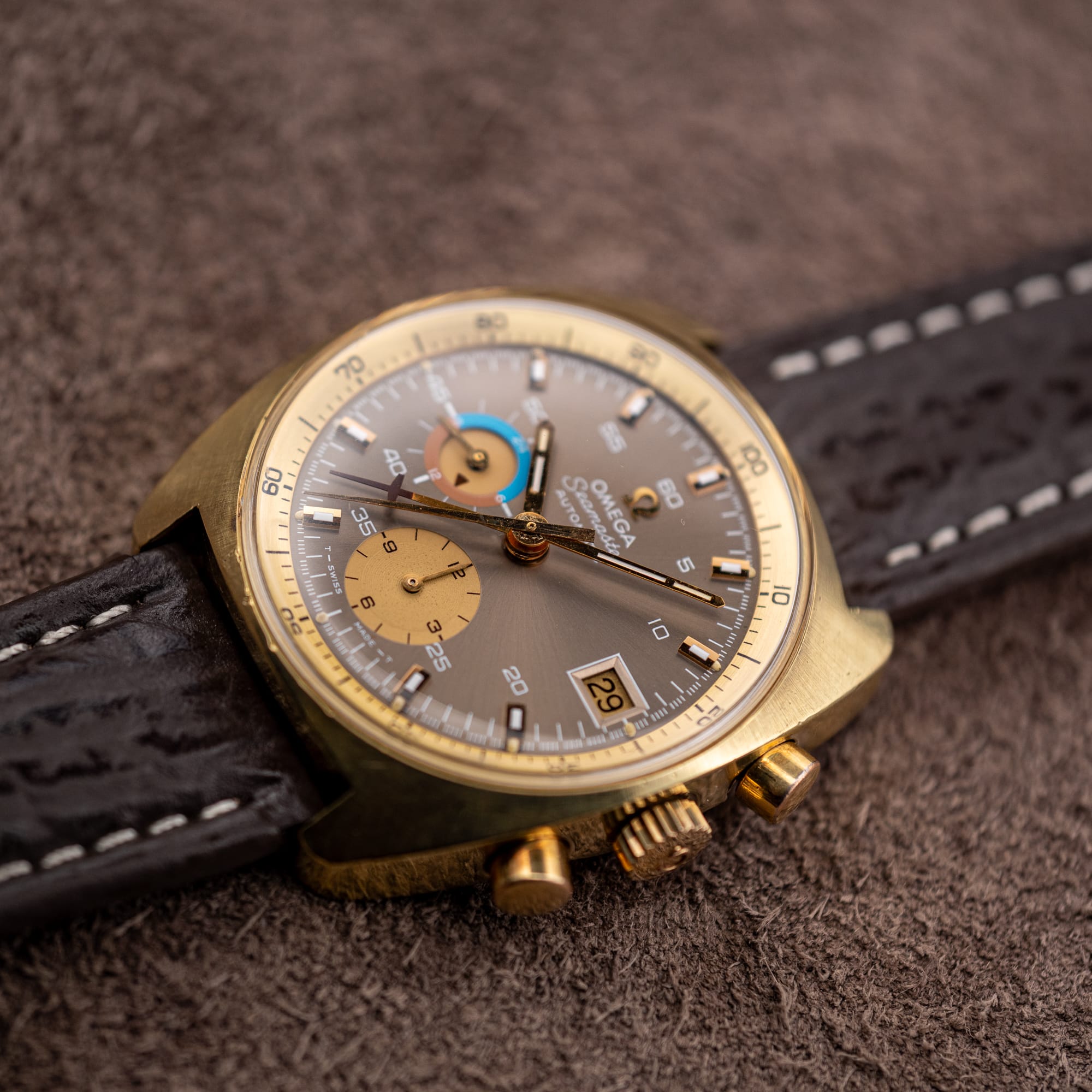
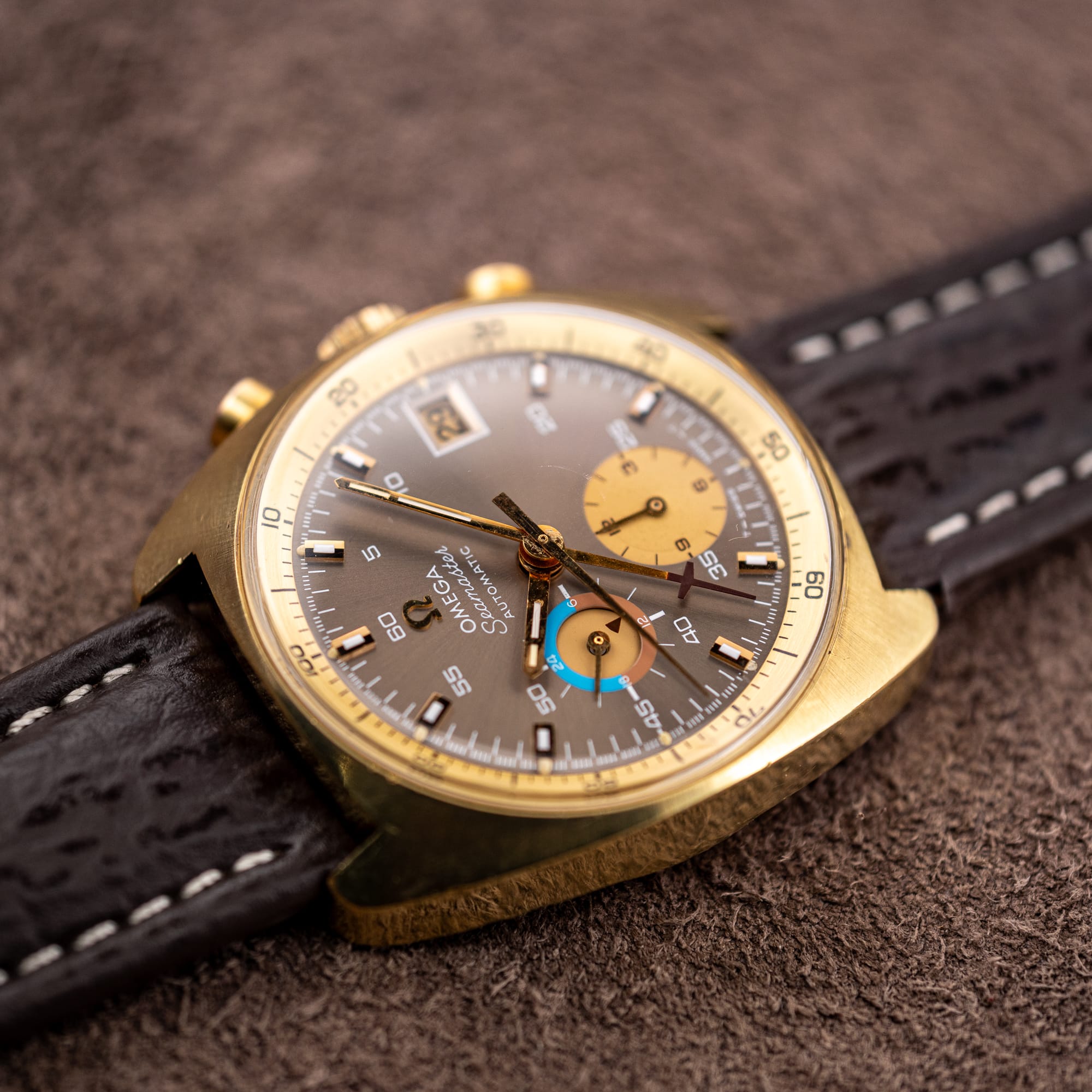
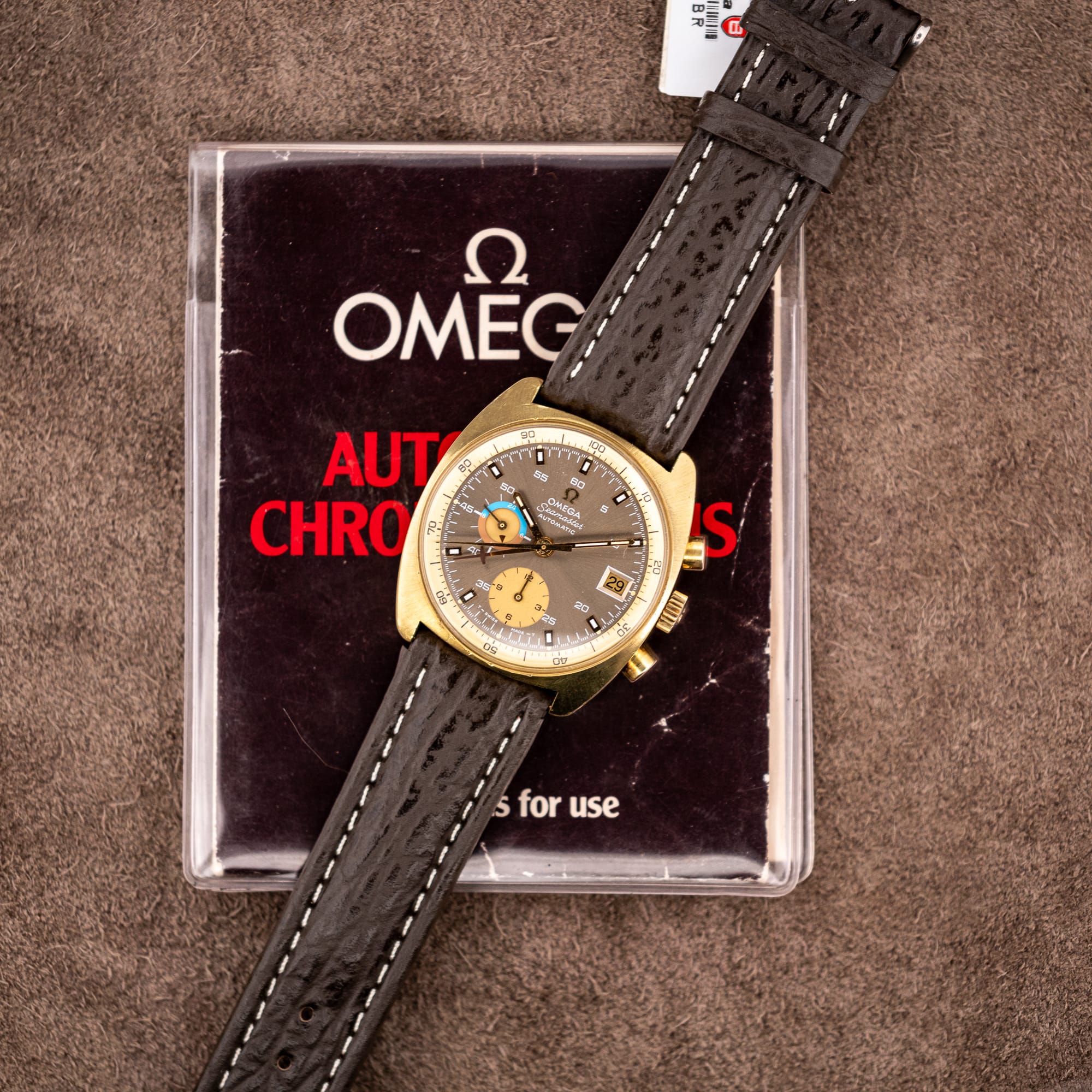
The cushion case runs 38.3mm across and 42mm lug to lug on 22mm lugs, tops brushed, flanks polished, the gold worn soft at the lug tips where a cuff worked at it for half a century. The steel back has gone to a dense haze of hairlines around an engraved hippocampus and an arced SEAMASTER. On the front the mocha dial keeps its sunburst and warms toward bronze as it turns: date at three in a stepped frame, running seconds and the day and night ring at nine with its upper half blue and its lower half salmon, a champagne twelve-hour totaliser at six, and a dark maroon cross-tipped hand carrying elapsed minutes across the whole dial rather than into a corner of it. Applied baton markers hold tritium gone to cream, and the foot of the dial still reads T SWISS MADE T.
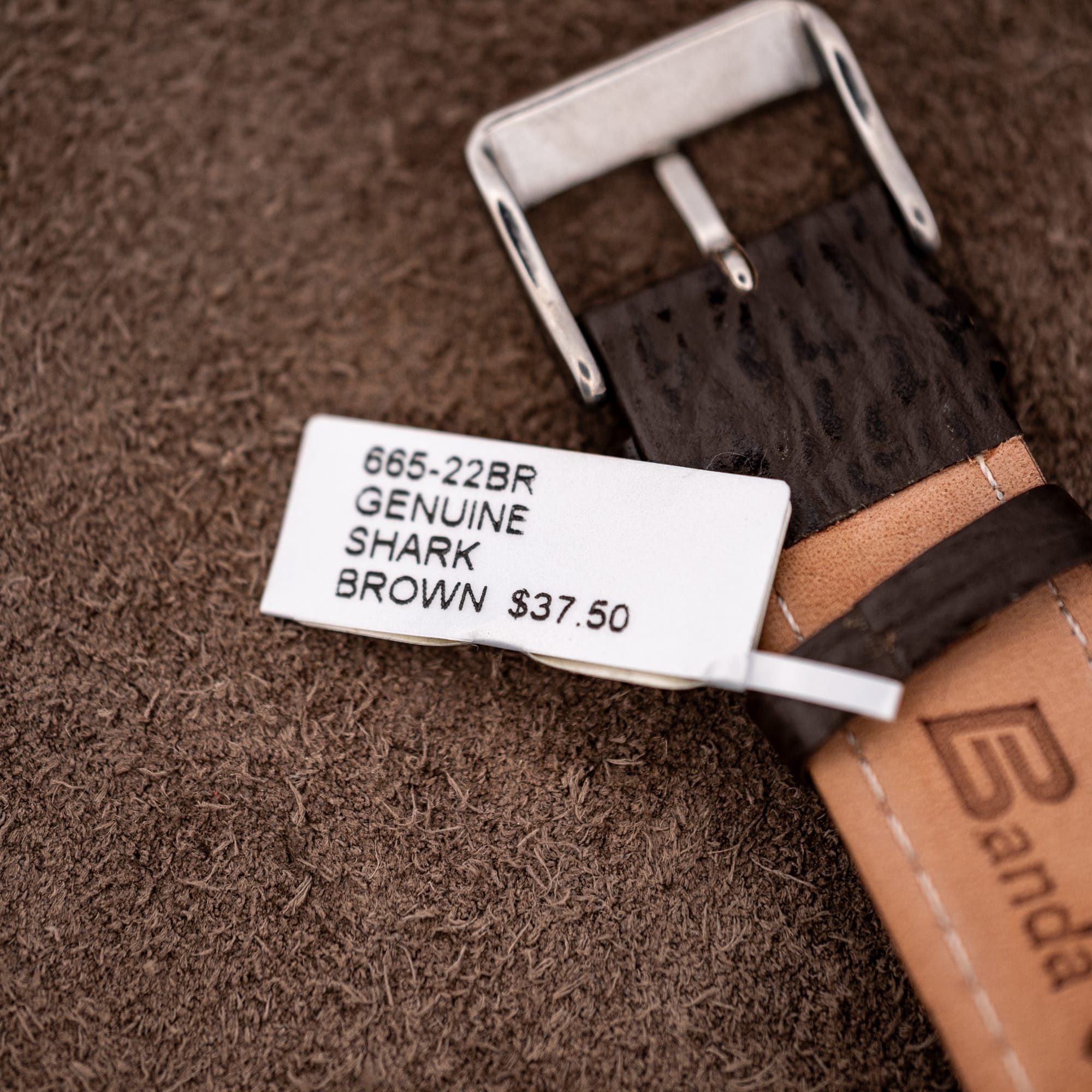
Serviced in-house at OTTUHR and backed by our 2-year mechanical warranty, on a brown shark skin strap with our buckle. It left a Johannesburg counter on a Thursday in October 1973, and it has been keeping that date ever since.