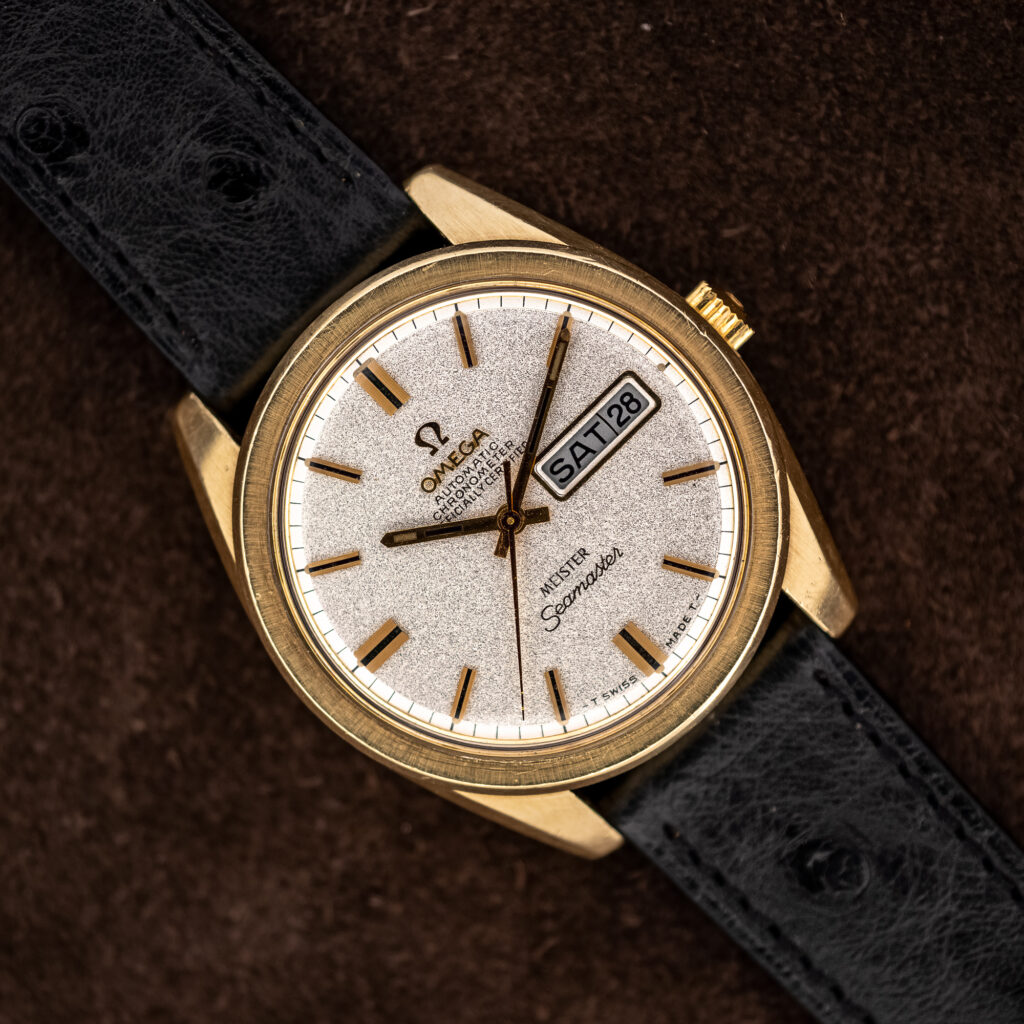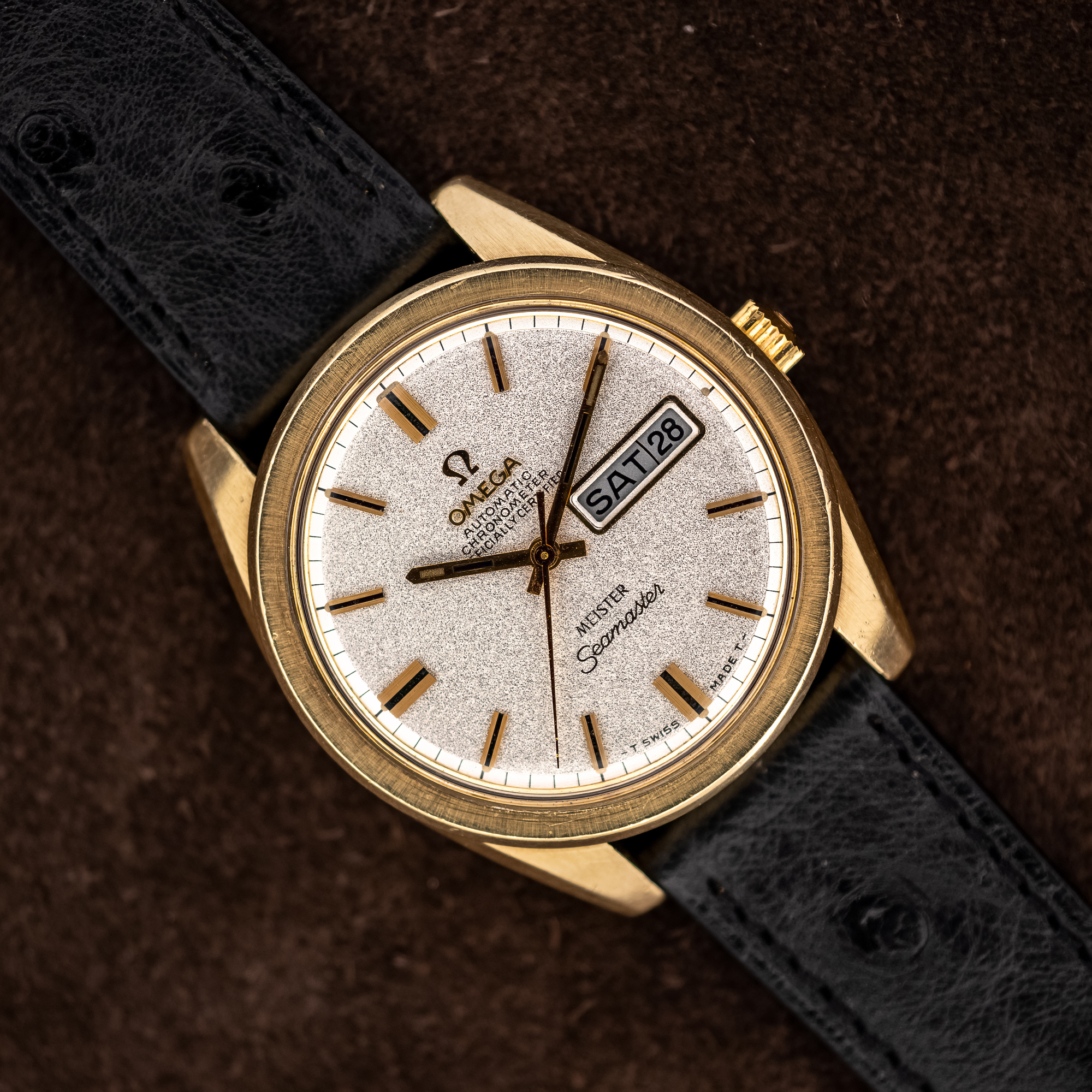
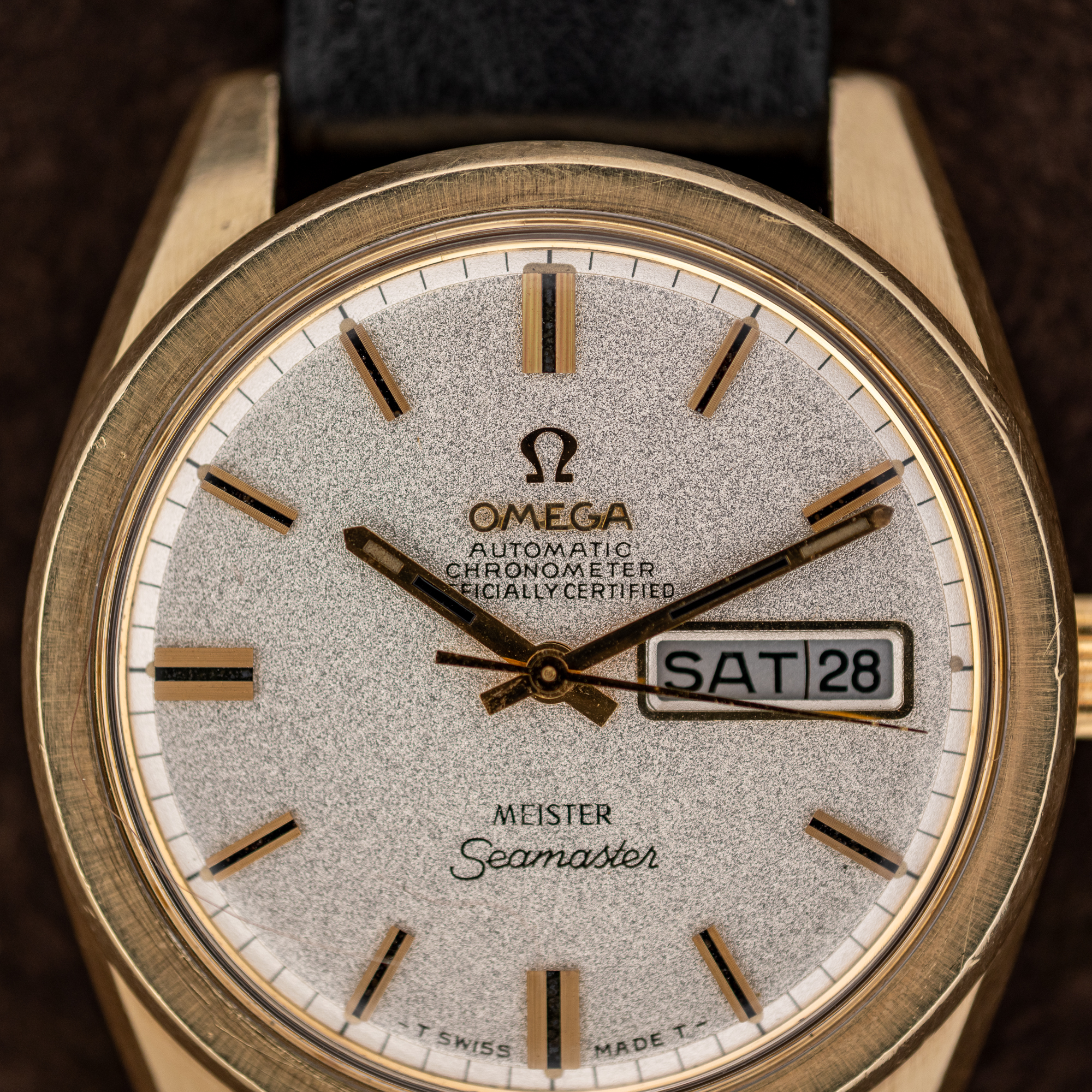
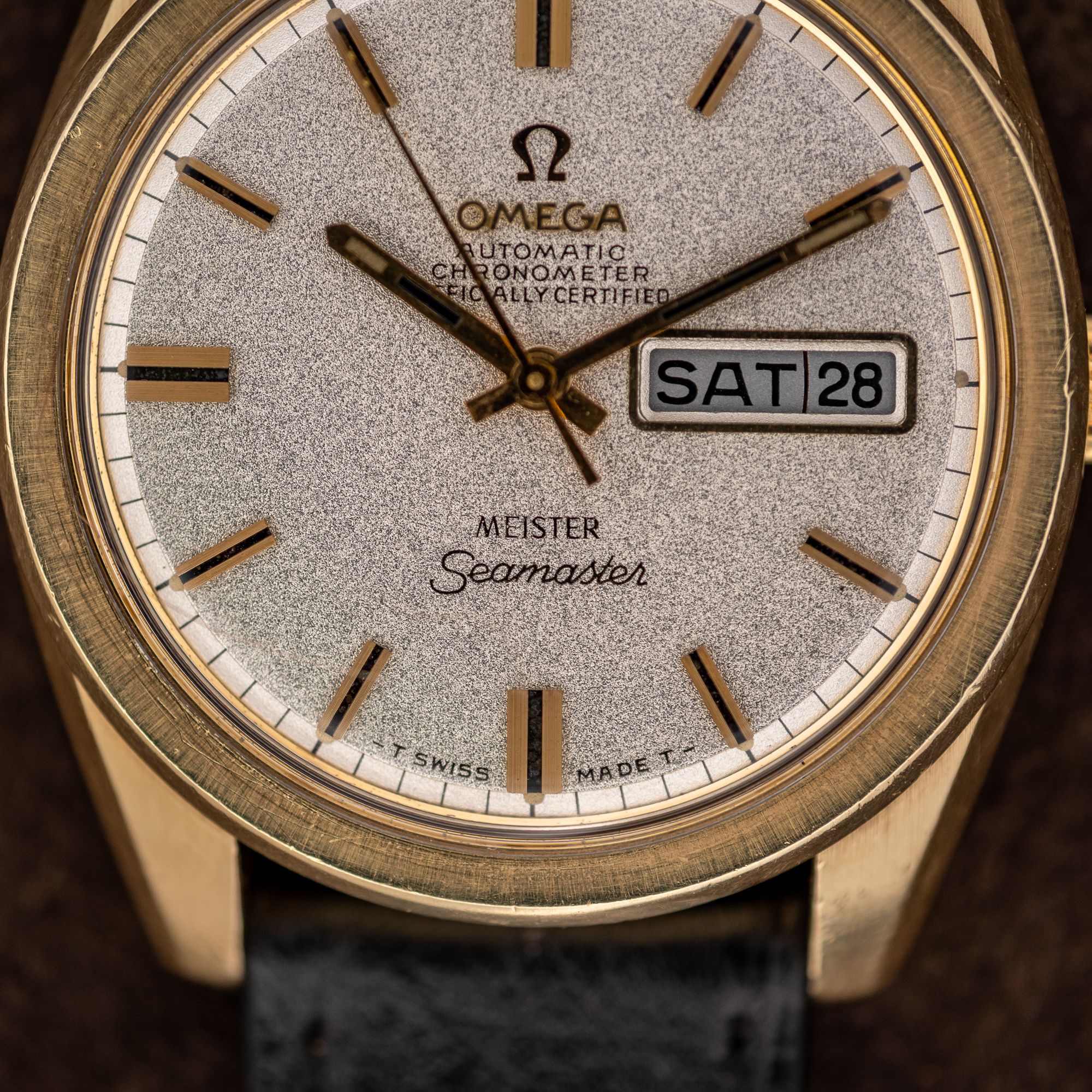
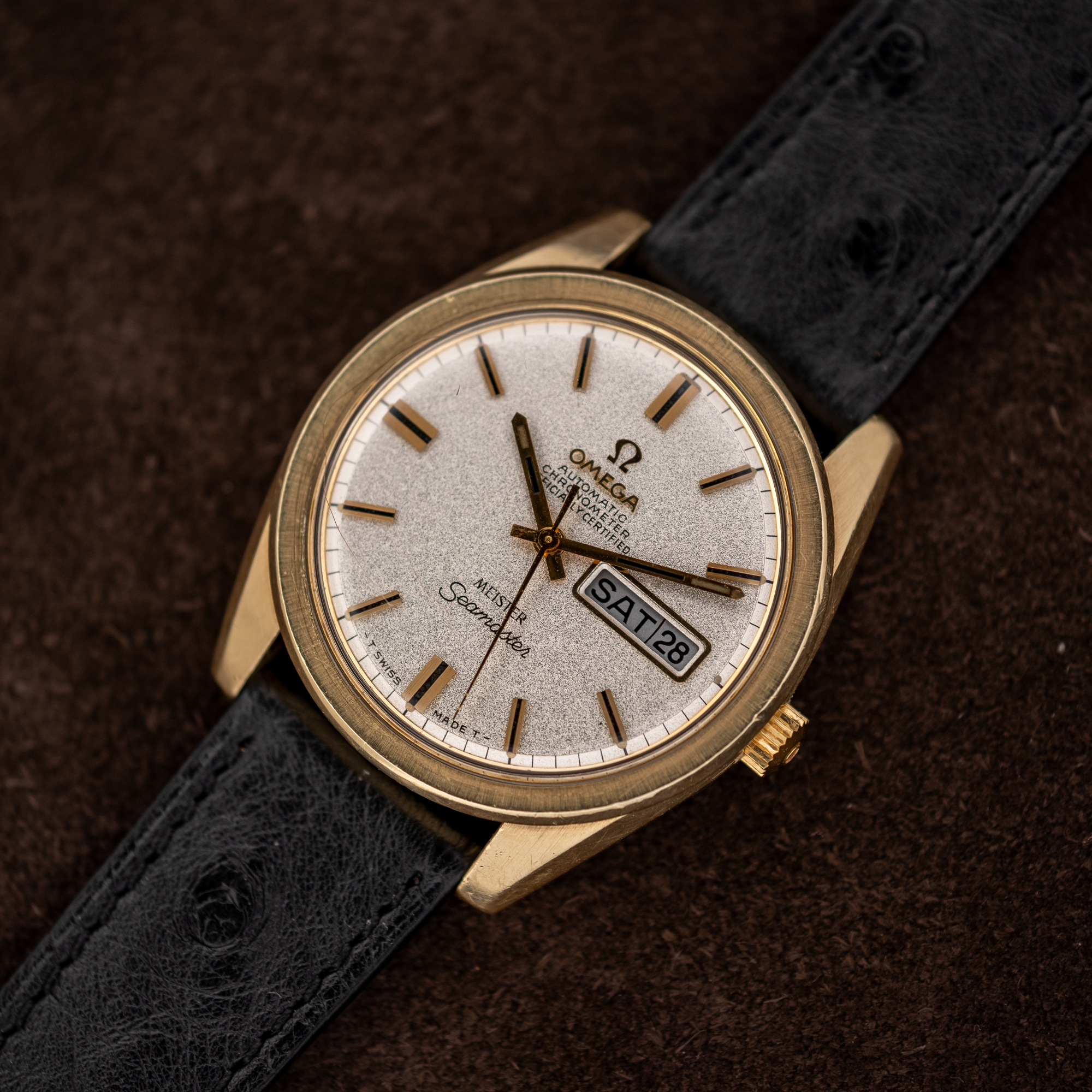
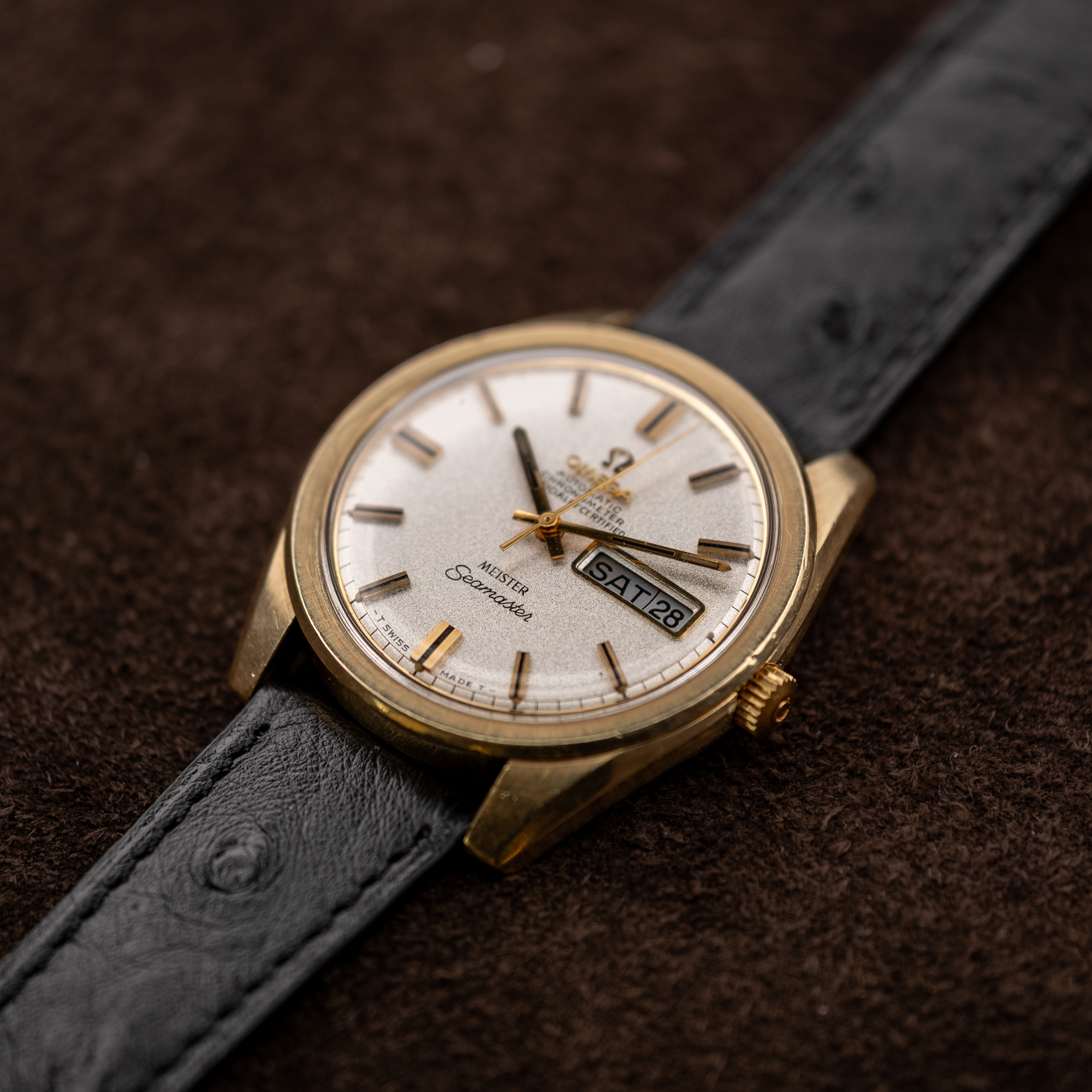
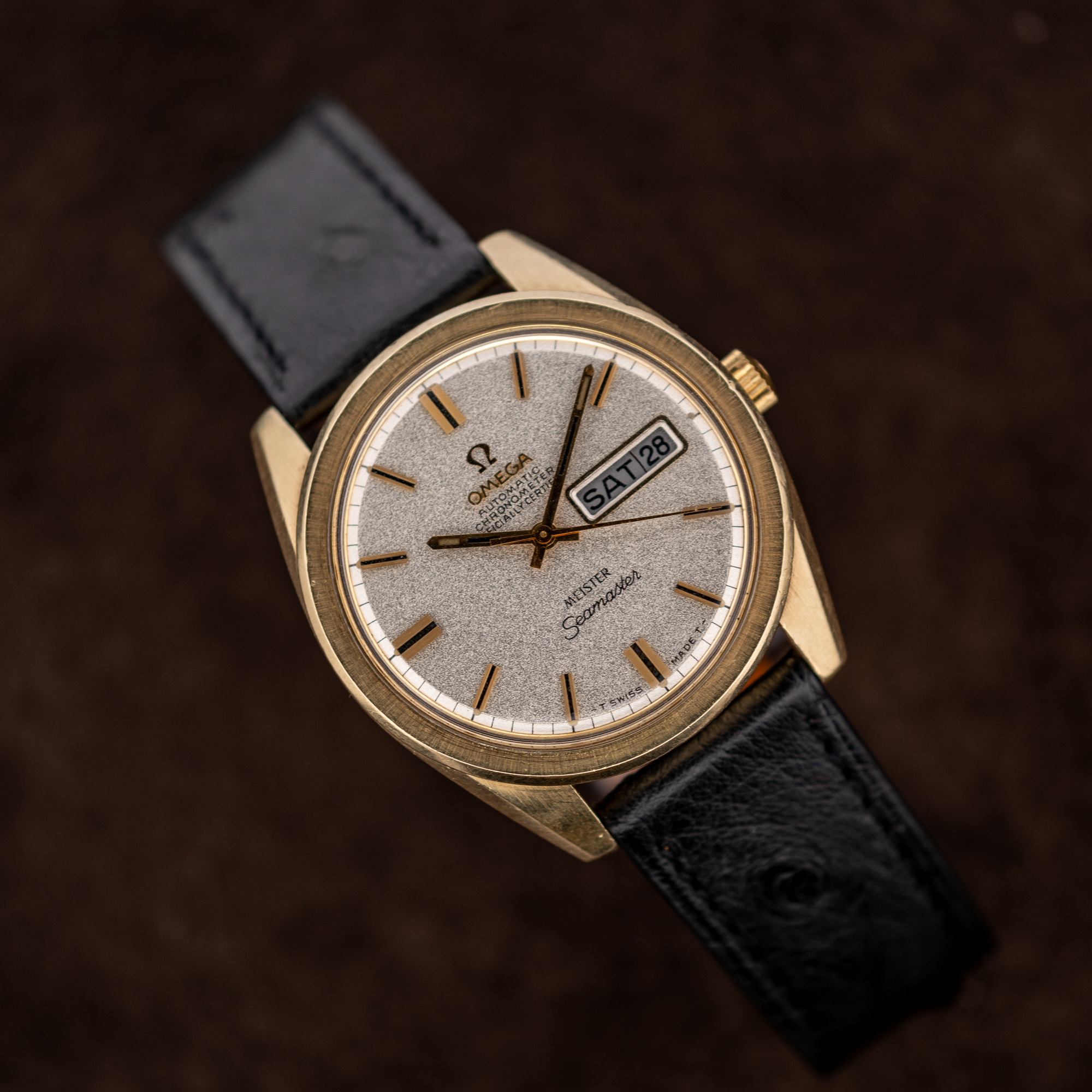
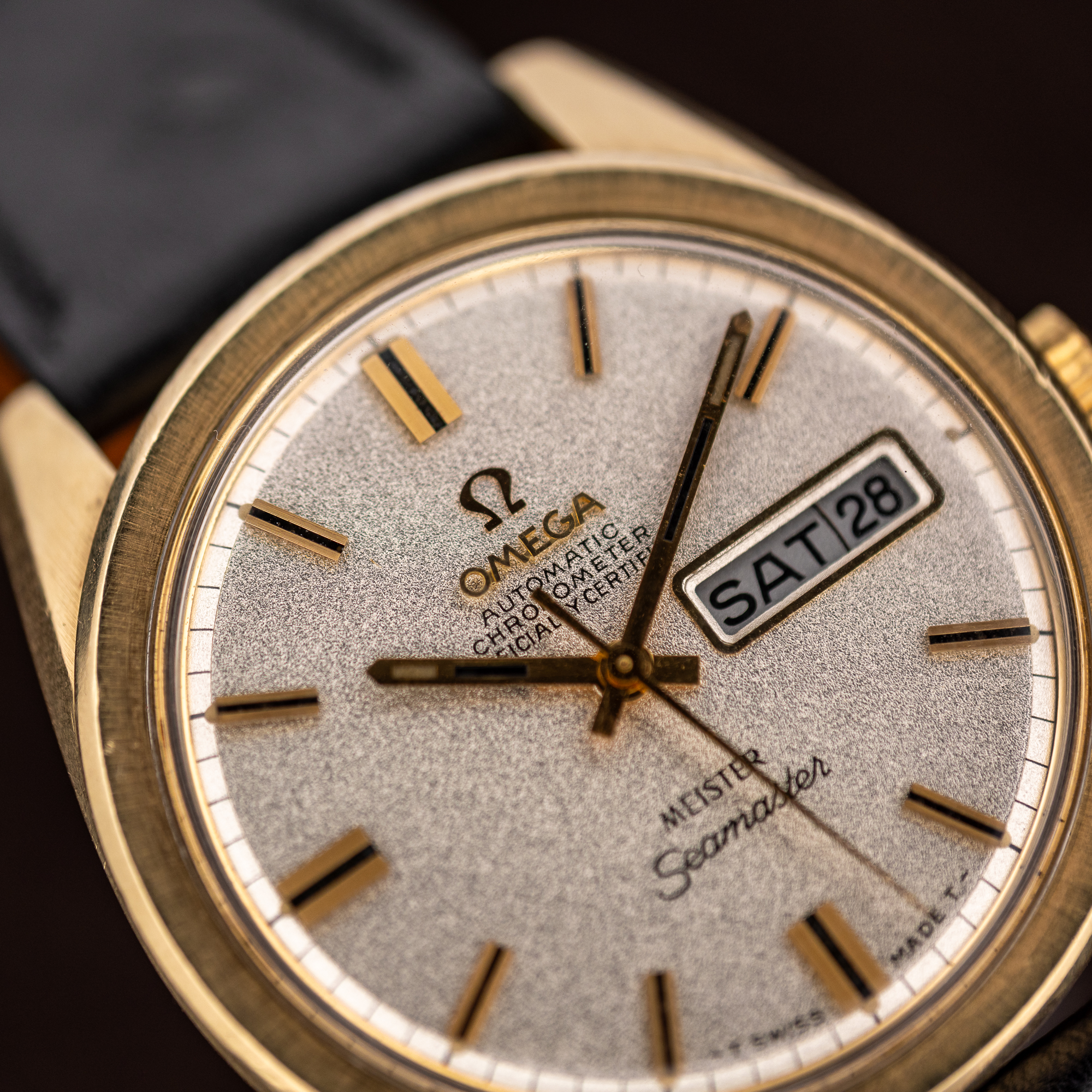
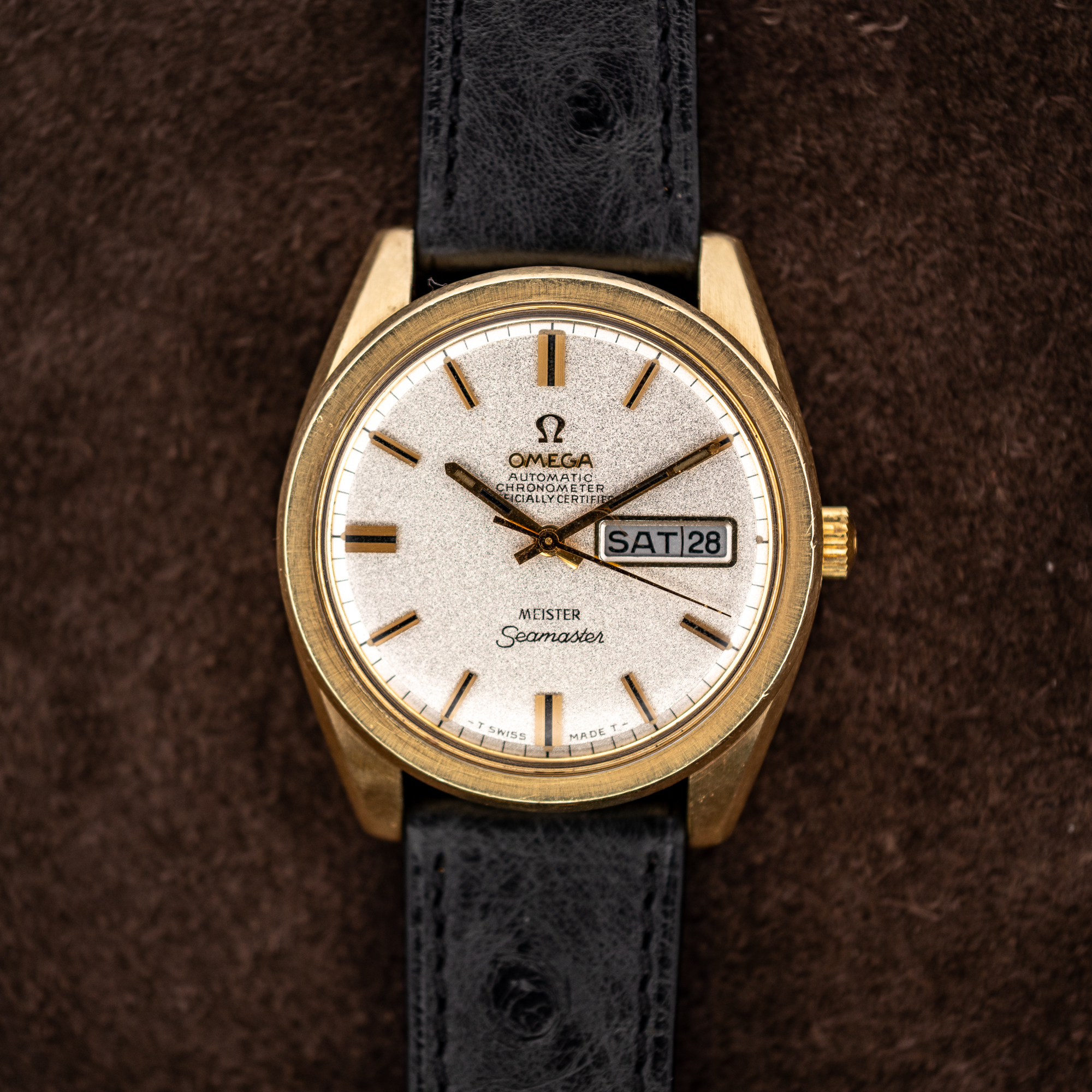
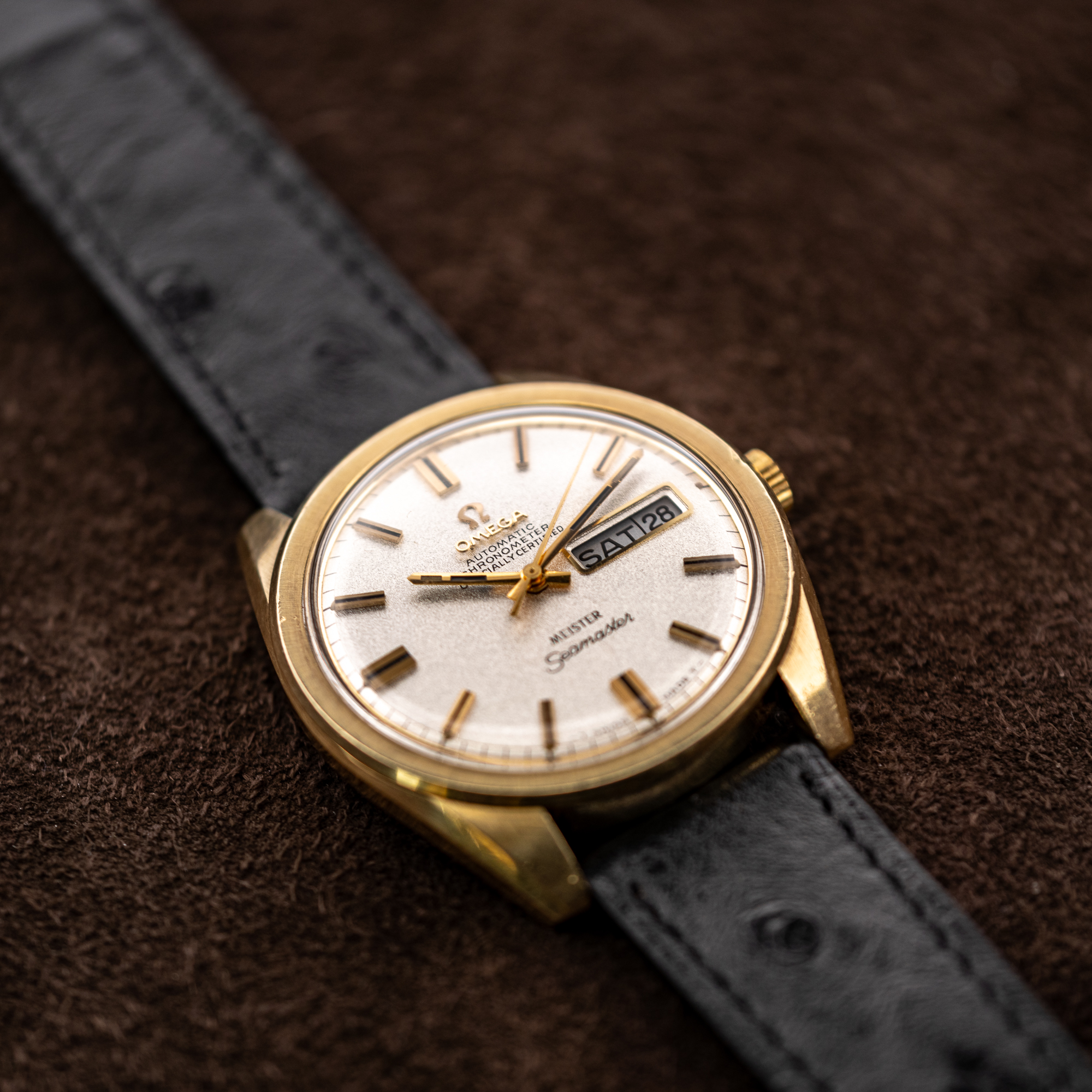

Read the dial of this Omega Seamaster 168.023 from the top down and you get the expected credentials: automatic, chronometer, officially certified. Then comes one more word, MEISTER. In German it means master, so it reads like a final promotion. It is a family name, and in Zurich a well-known one.
Emil Meister, a goldsmith, opened a shop for jewelry and silverware in Zurich in 1881. The business stayed in the family for four generations until it was sold in 2025, and many in the city still call it Meister Silber. It kept its own workshops for gold and silver, and watchmakers of its own. Putting a jeweler’s name on a maker’s dial was an established trade practice: it let a watchmaker reach buyers through a name they already trusted, and collectors now seek it out.
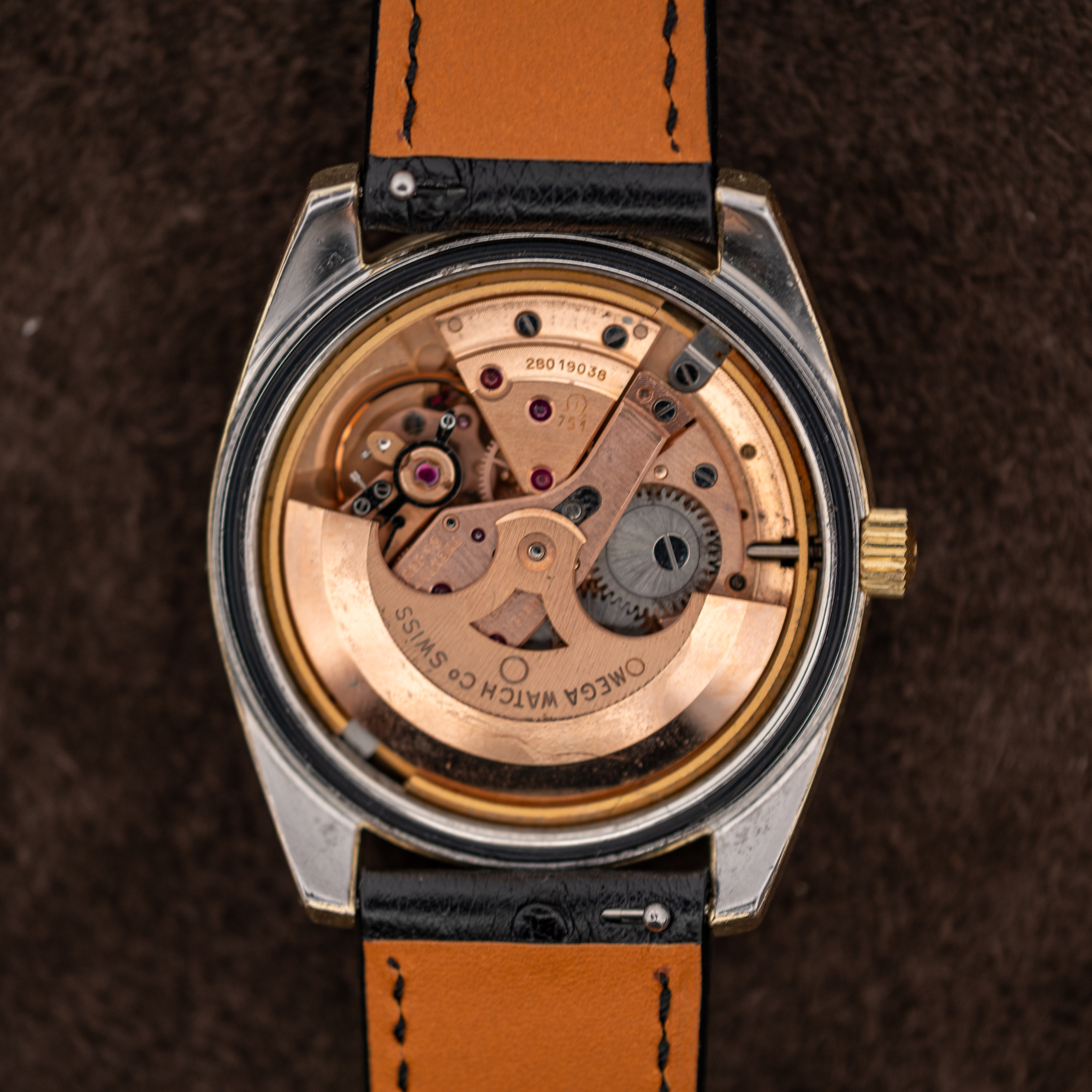
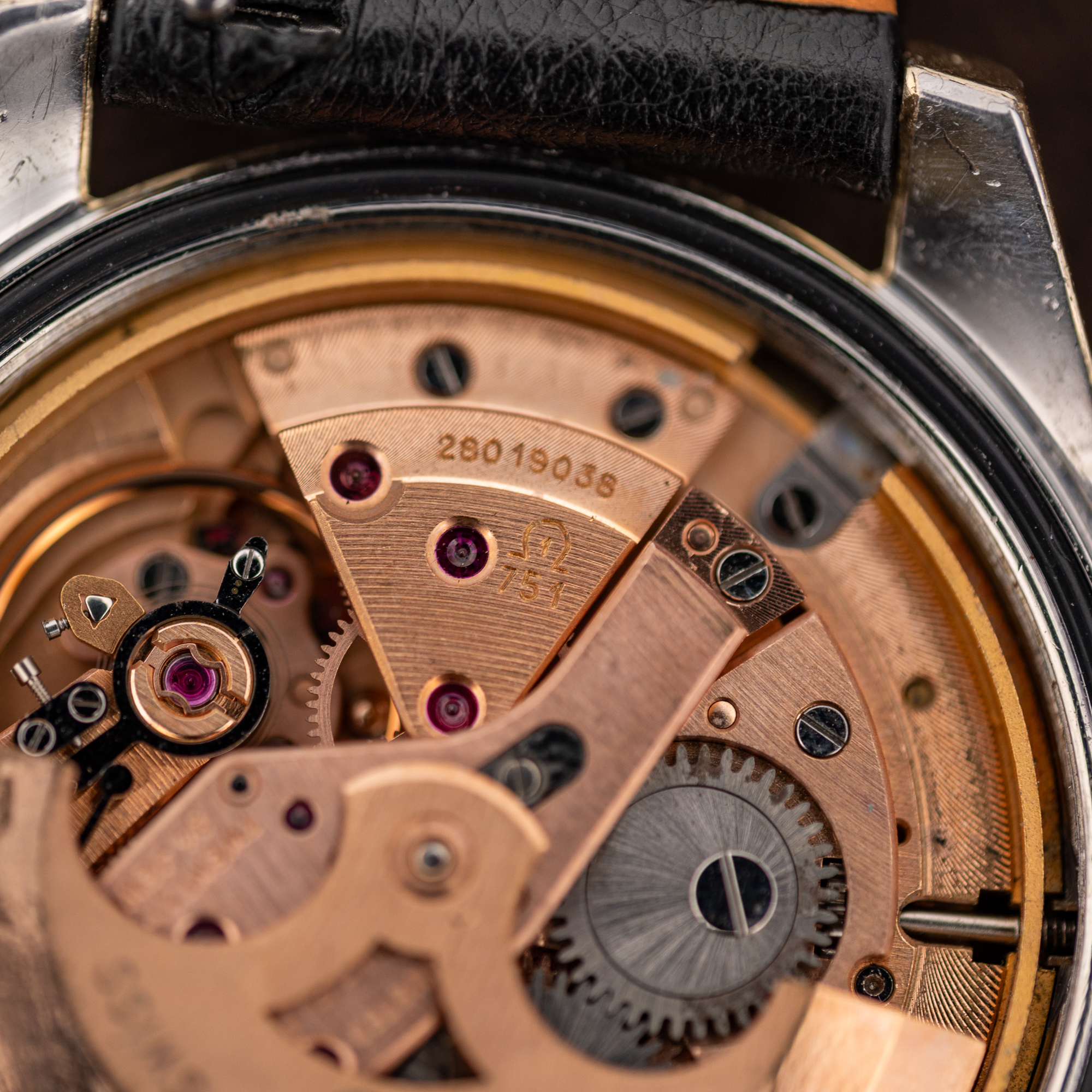
The words above that name deserve a second look as well. Omega built its Constellation line around chronometer certification from 1952. This Seamaster carries the same credential. Its movement is caliber 751, Omega’s late-1960s day-date automatic in its 24-jewel chronometer version; its siblings, the 750 and 752, were not chronometers.
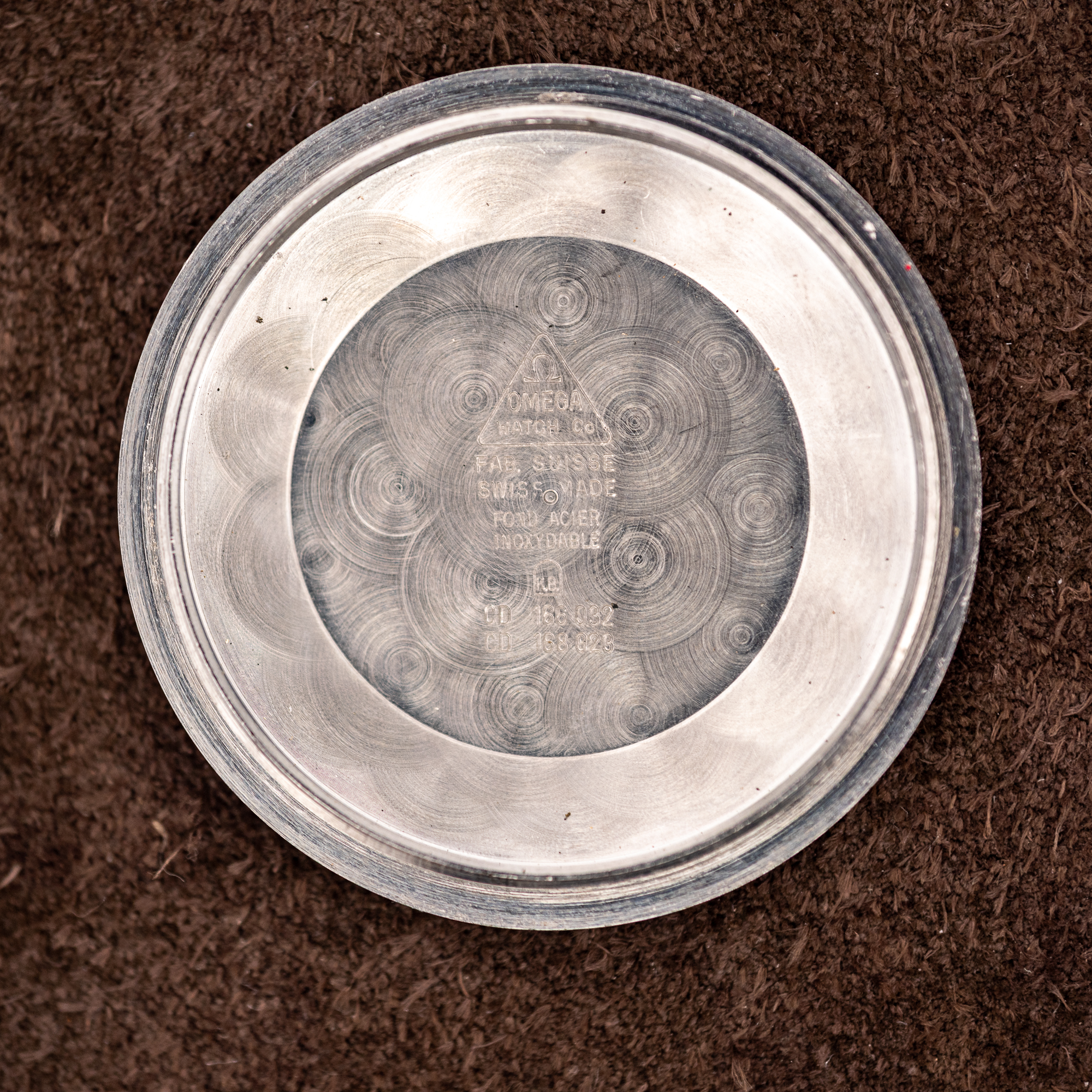
The inside of the caseback shows how fine that line was. It is stamped with two references, CD 166.032 and CD 168.023, because Omega used this case for both watches. The 166.032 took the uncertified 752. The 751 and the chronometer wording on the dial are what make this one the 168.023.
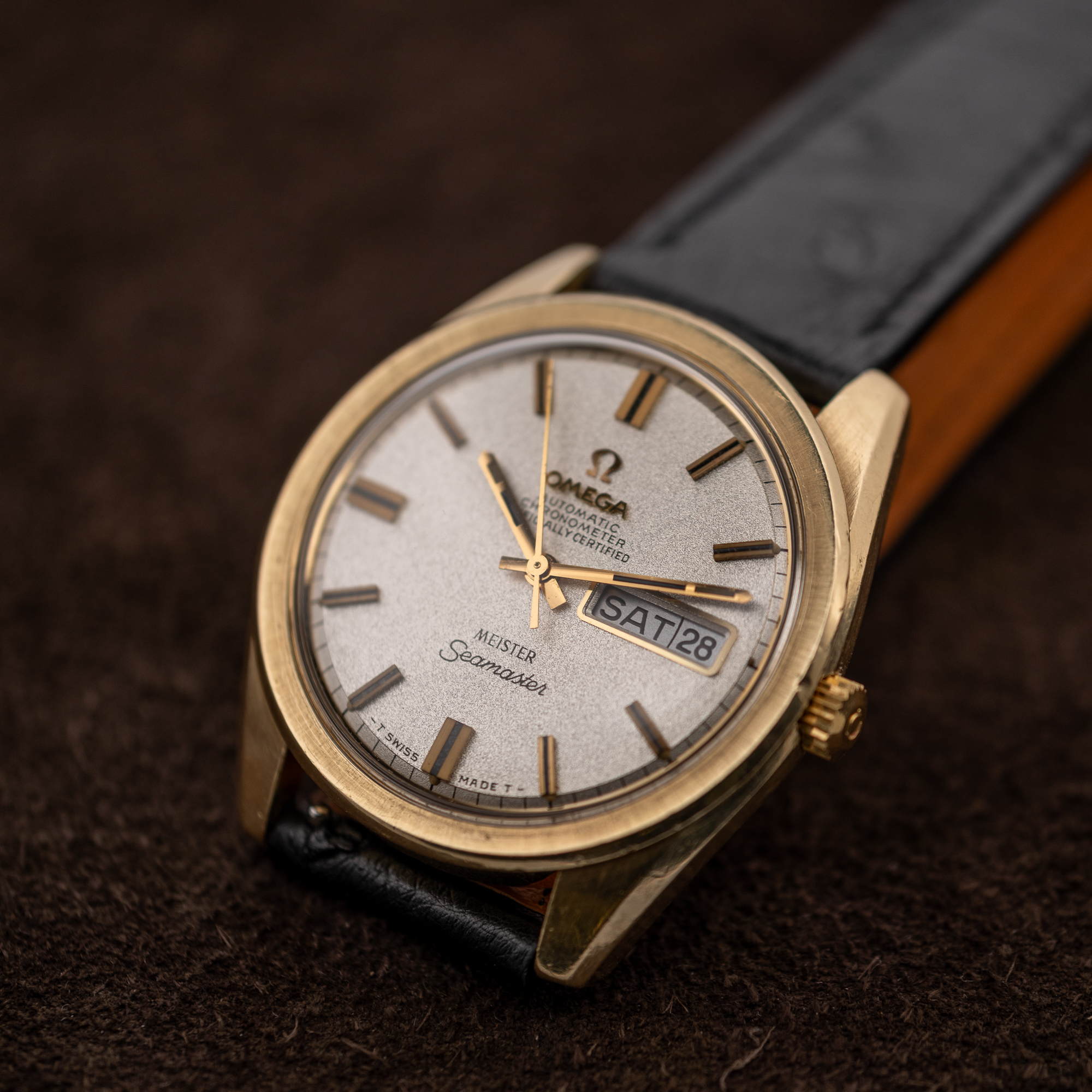
Day to day, the 751 is easy company. The day is spelled out beside the date in a framed window at three; in the photos it reads SAT 28. A pull and push of the crown moves the date forward one day at a time. The day follows the hands.
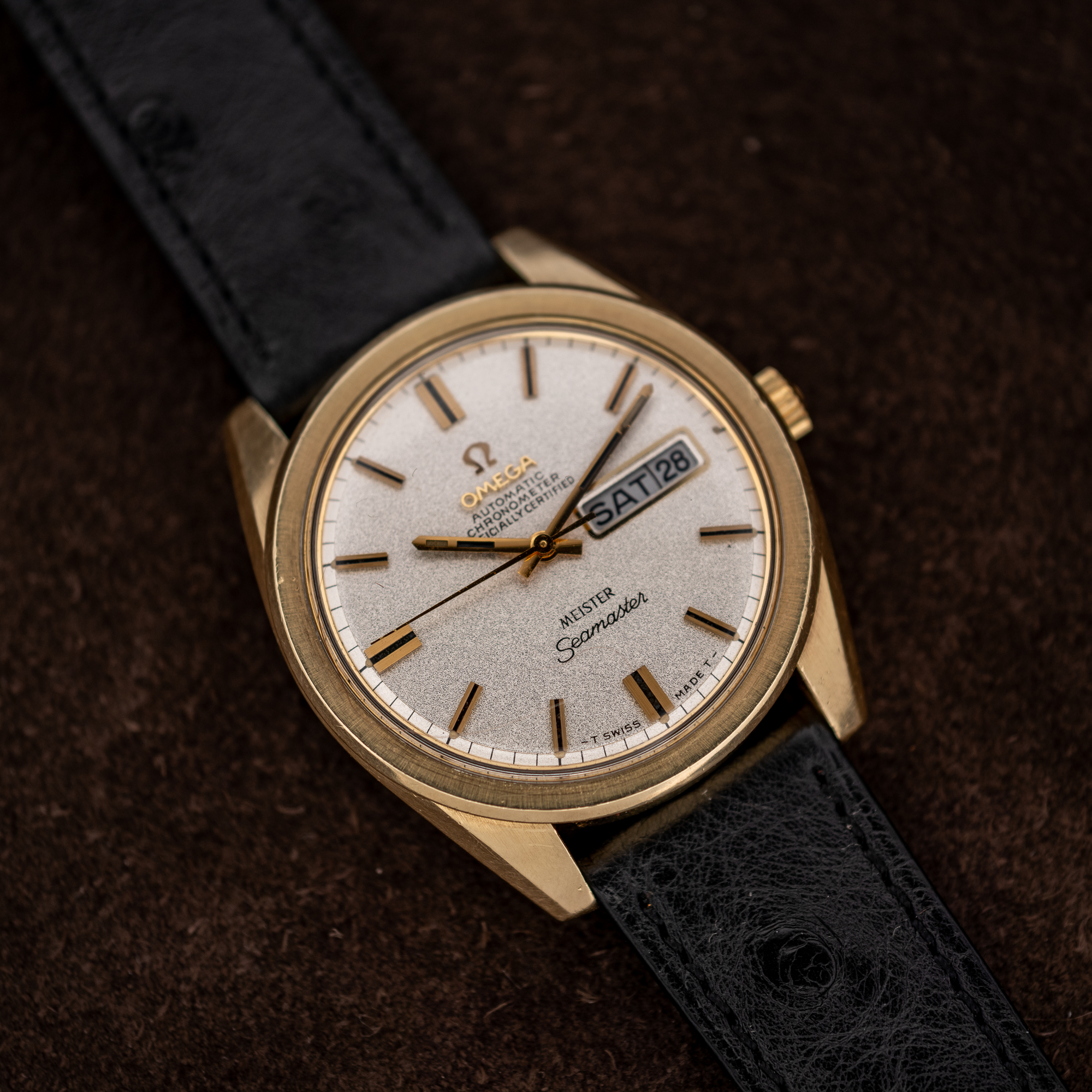
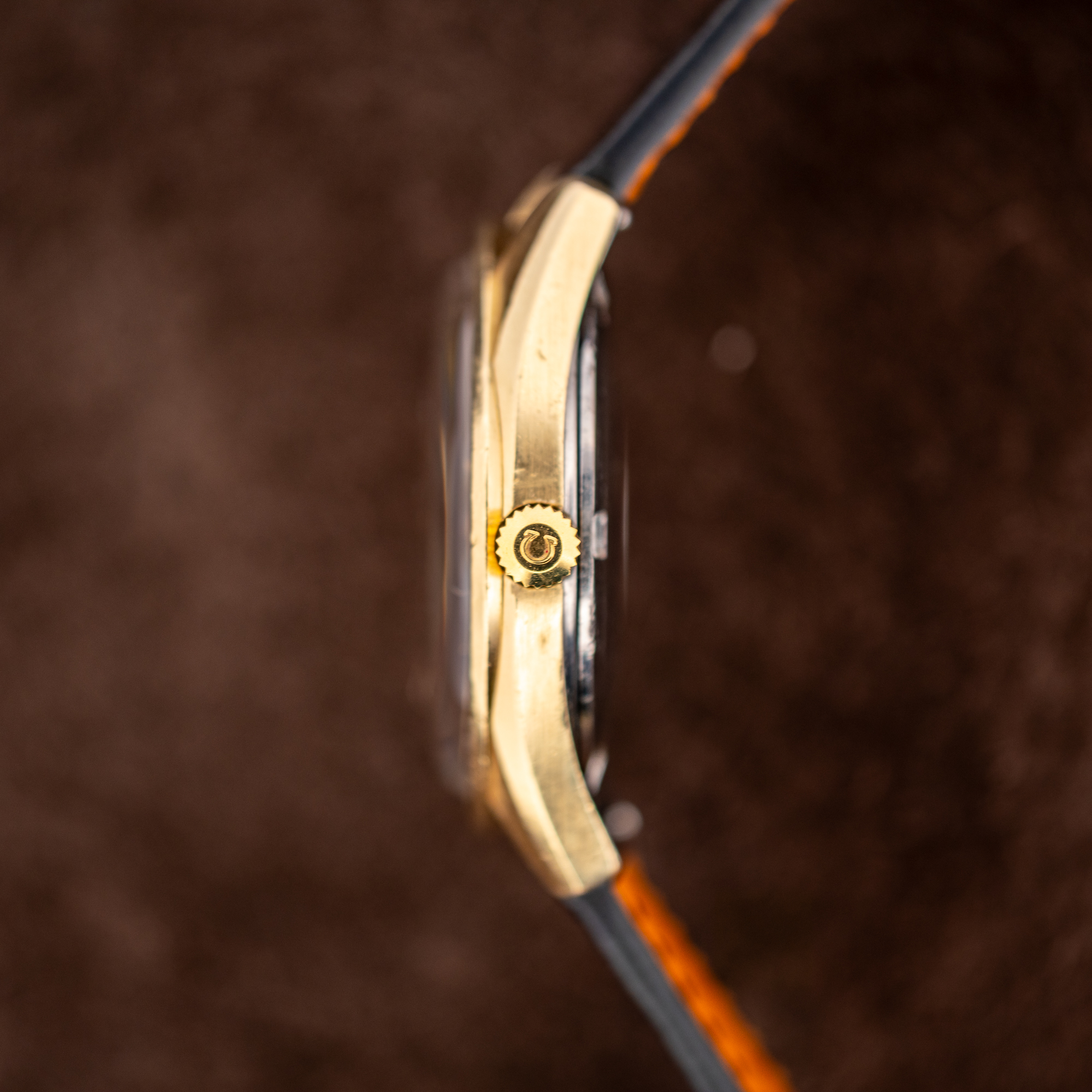
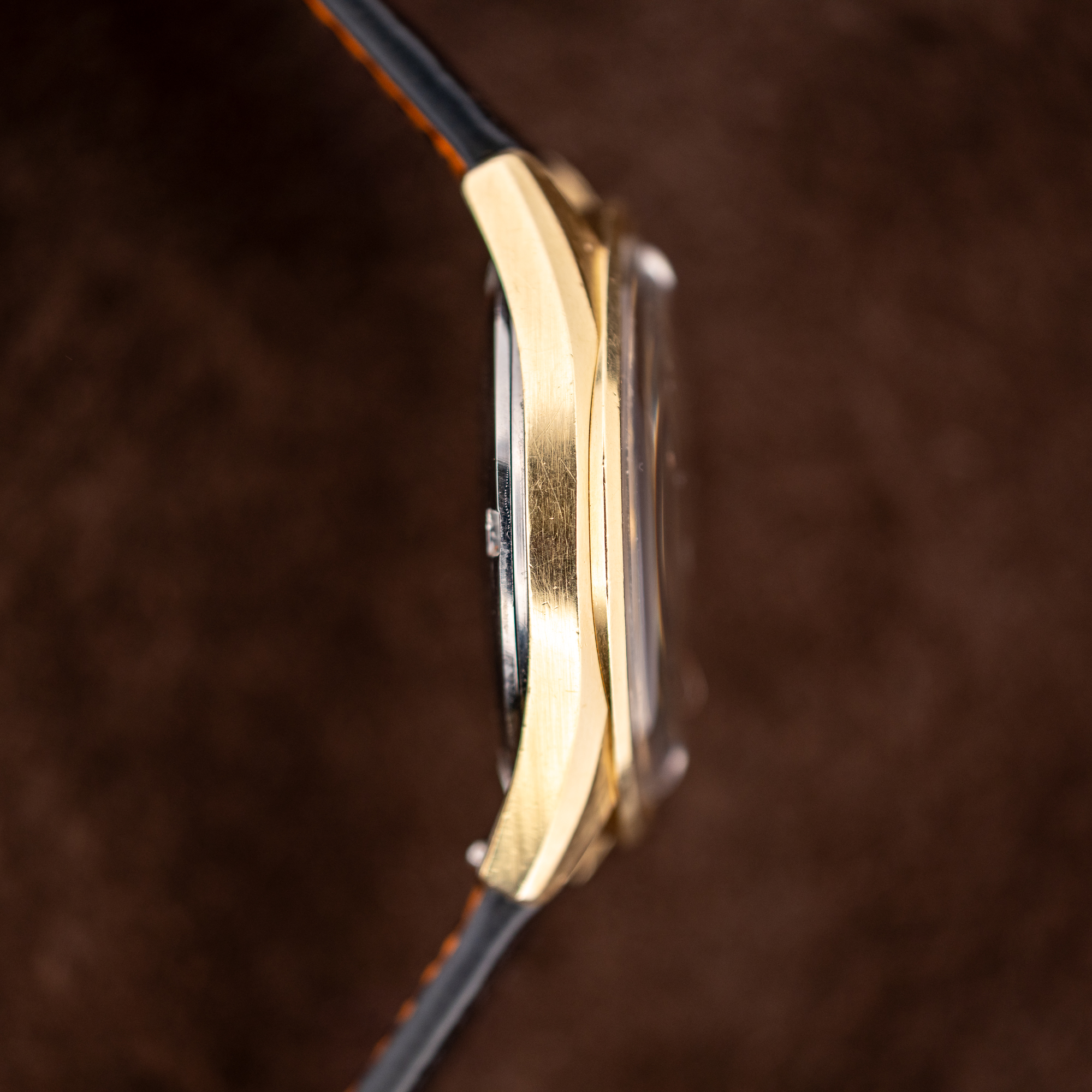
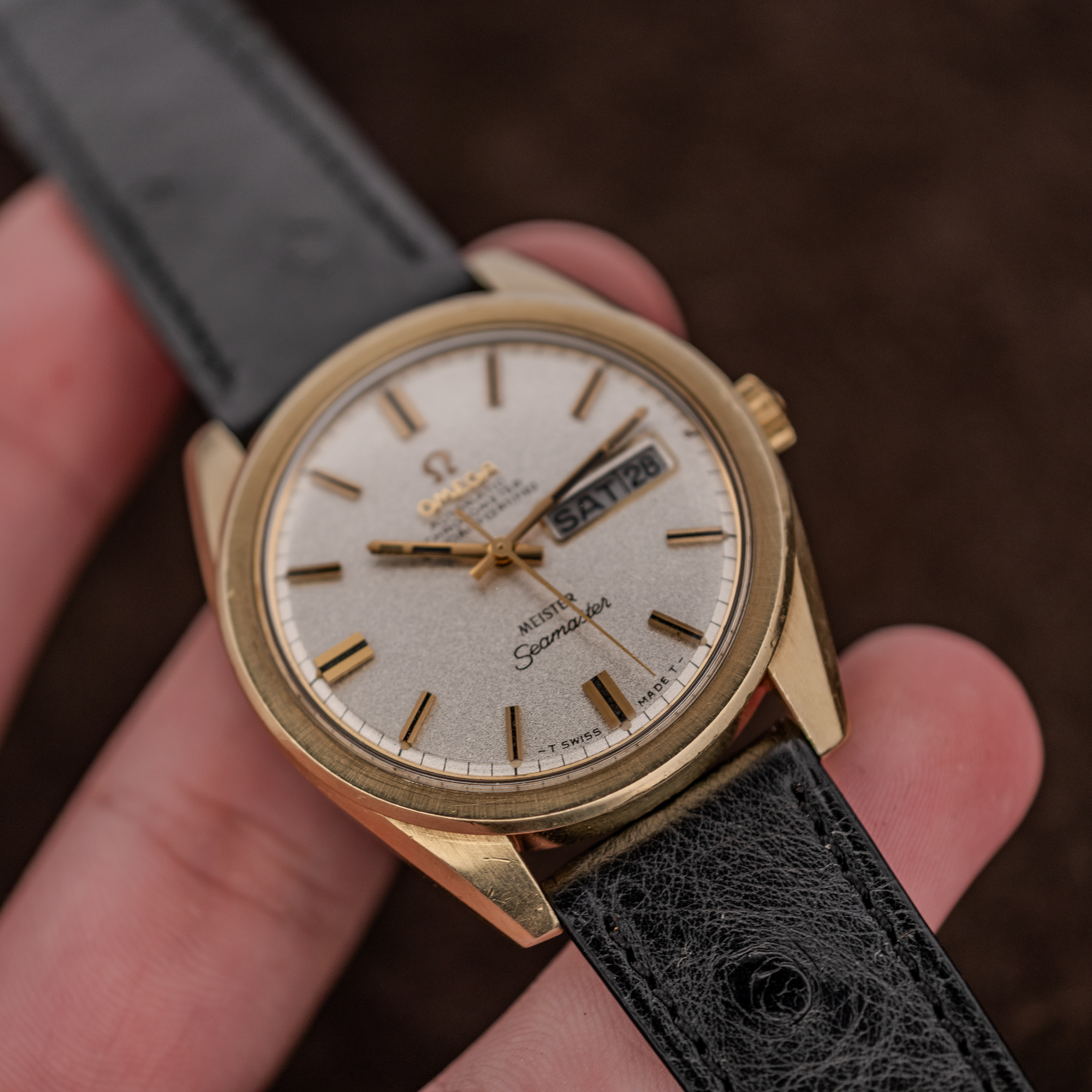
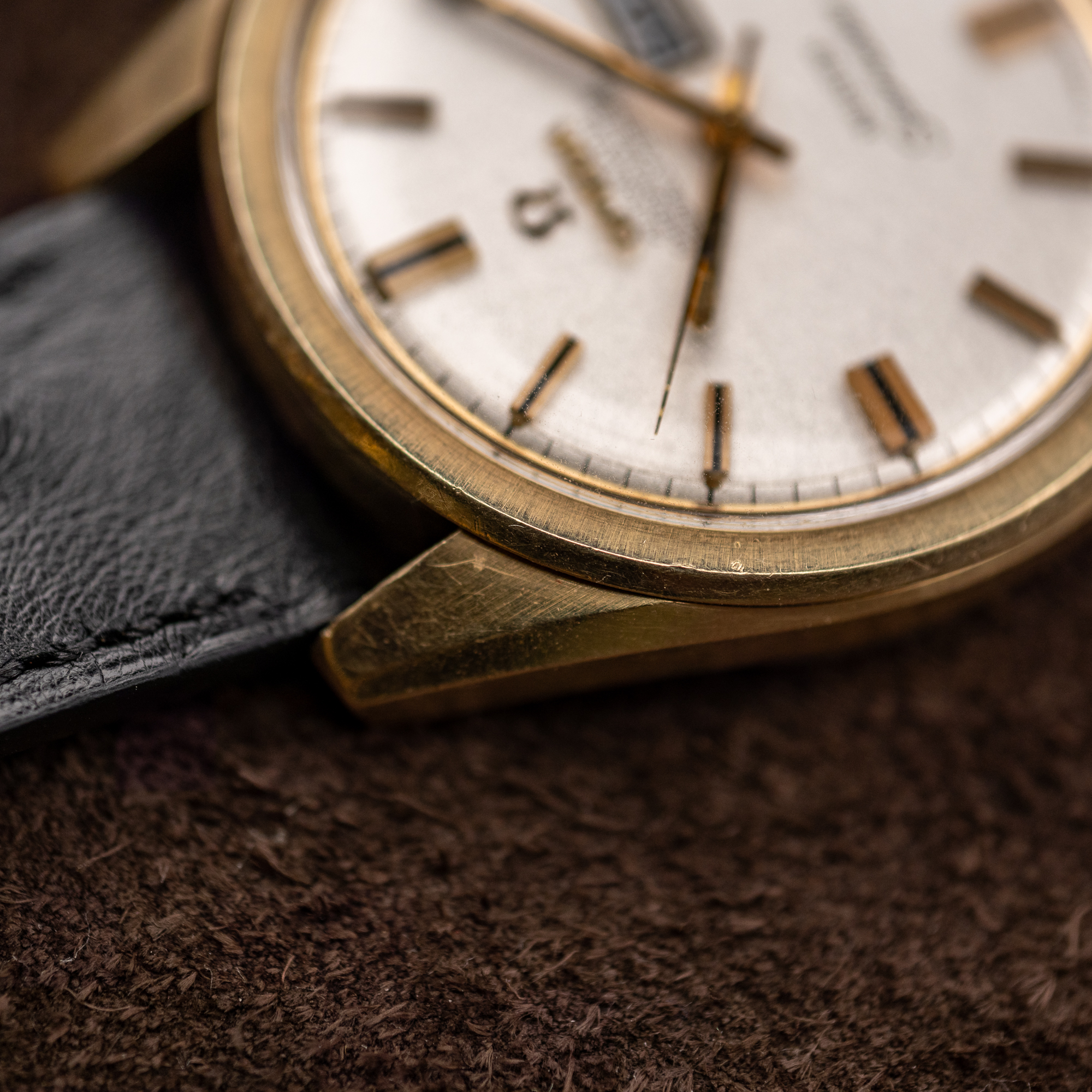
The case is 14k gold-capped: a thick shell of solid 14k gold over a stainless steel case, closed by a steel back stamped “FOND ACIER INOXYDABLE”. Omega used the construction widely in the 1950s and 1960s. The gold is many times thicker than plating, and from the front the watch looks like solid gold. It measures 36.5mm across and 42mm from lug to lug, with angular lugs.
Then there is the finish collectors call a sparkle dial. The champagne surface carries a fine texture that catches light as the wrist turns, set with applied baton markers with black inserts and a doubled marker at twelve. The bezel is textured too, not polished. We like that choice most: the gold stays warm rather than formal, and the bezel reads as part of the dial instead of a frame around it.