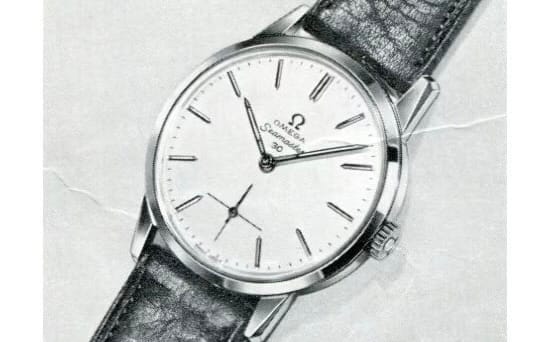
A silver Omega Seamaster 30 wristwatch with a white face and black leather strap rests on a light textured surface.
0

Seamaster 30

The Omega Seamaster 30 represents one of the most approachable and collectible entries within the broader Seamaster family. The designation "30" refers not to water resistance depth, but rather to the 30mm caliber movement housed within the case. Produced from 1962 to approximately the late 1970s, the model line is now discontinued, existing solely as a vintage offering in the secondary market. The Seamaster 30 was conceived as Omega's elegant, dress-centric companion to the sportier Seamaster 300, providing collectors and everyday wearers with a refined, time-only watch that emphasized simplicity and accessible Swiss watchmaking.
Continue reading
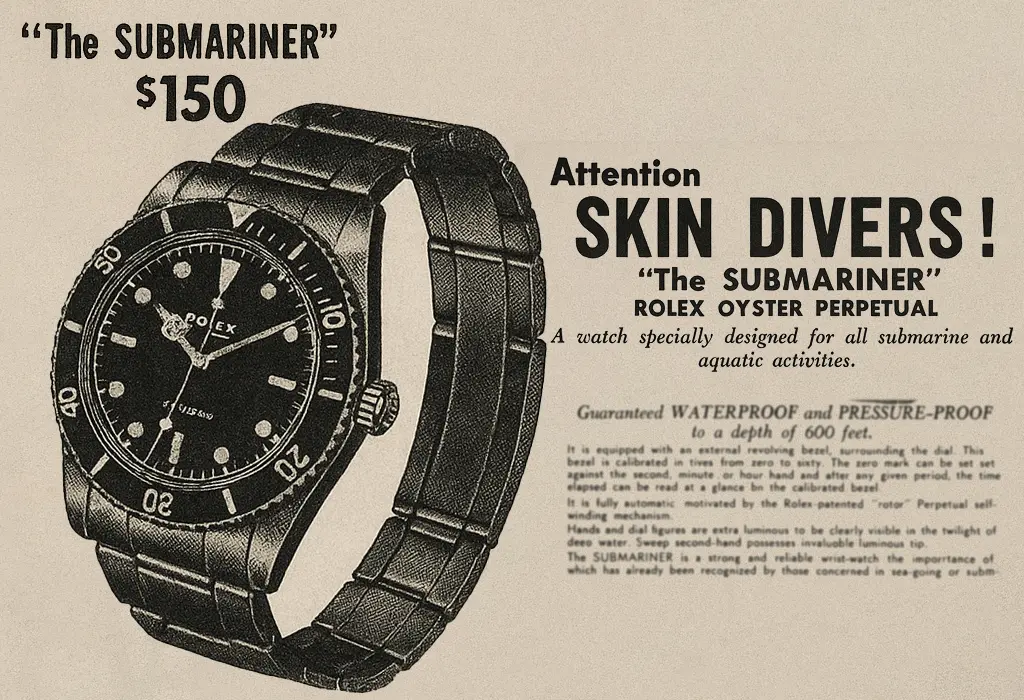
Vintage ad for the Rolex Submariner watch, priced at $150, designed for skin divers and aquatic activities.
0

Submariner

The Rolex Submariner represents one of the most iconic diving watches ever created, standing as a cornerstone of both the brand and the broader watchmaking industry. Production began in 1953 with the first public presentation at the Basel Watch Fair in 1954, and the model remains in continuous active production today, spanning over seven decades of horological history. The Submariner is not merely a tool watch but has evolved into a luxury sports watch that transcends its original diving purpose, becoming a cultural icon recognized worldwide.
Continue reading
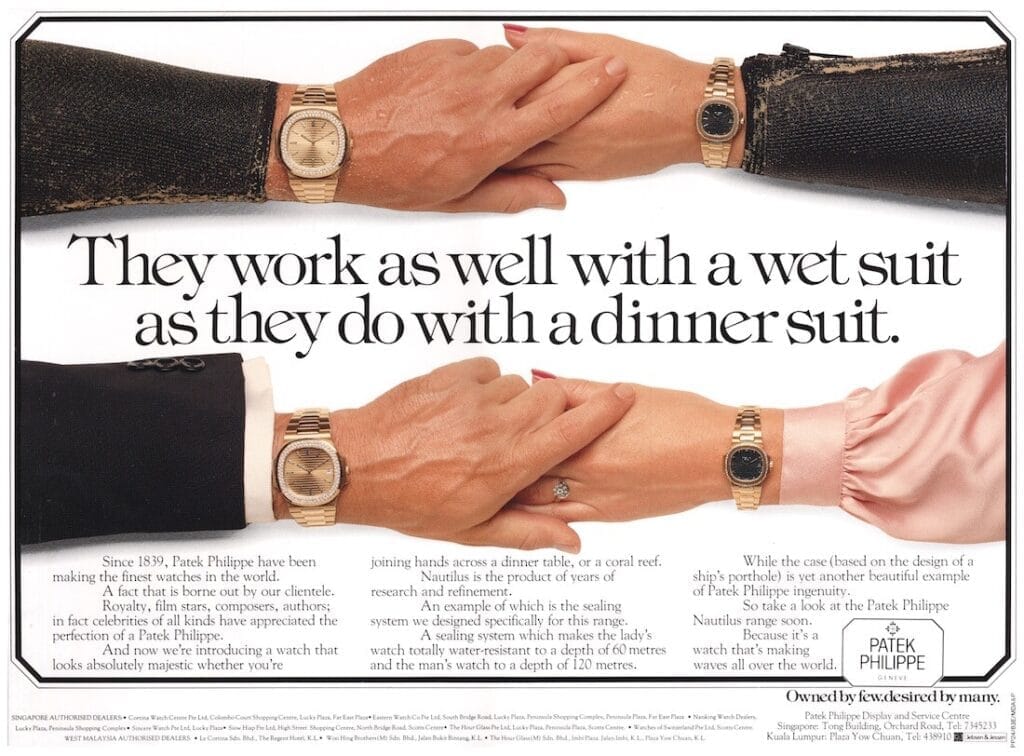
A man’s hand in a wetsuit and a woman’s hand in an evening dress, both adorned with Patek Philippe watches—his, the iconic Nautilus—touch wrists in an elegant meeting of worlds.
0

Nautilus

The Patek Philippe Nautilus stands as one of the most iconic sports watches in the world, bridging luxury and athletic capability since 1976. The model line remains active and continues to evolve with new references and complications introduced regularly. Born from a mandate to compete with the Audemars Piguet Royal Oak during the transformative 1970s, the Nautilus emerged as Patek Philippe's bold entry into the luxury sports watch category, a market segment the brand had previously avoided.
Continue reading
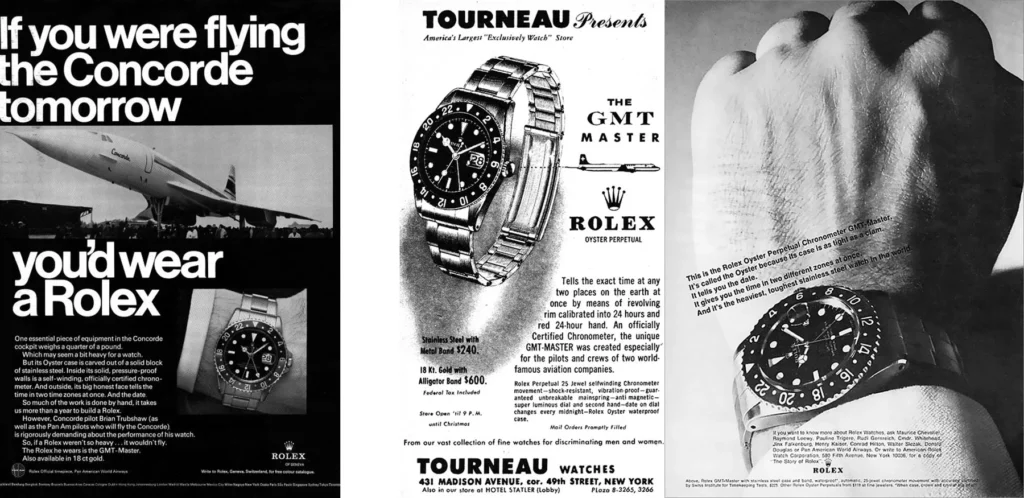
Three vintage black-and-white Rolex ads featuring aviation themes and close-ups of the iconic GMT-Master watches.
0

GMT-Master

In 1954, Rolex partnered with Pan American World Airways to create a revolutionary timepiece for airline pilots navigating long-haul international routes. The aviation industry was experiencing explosive growth in intercontinental travel, and pilots required a practical solution to track multiple time zones simultaneously without the cumbersome calculations previously necessary. This collaboration produced the first wristwatch to feature a dedicated 24-hour hand and rotating bezel with 24-hour scale, fundamentally changing how travelers managed global time.
Continue reading
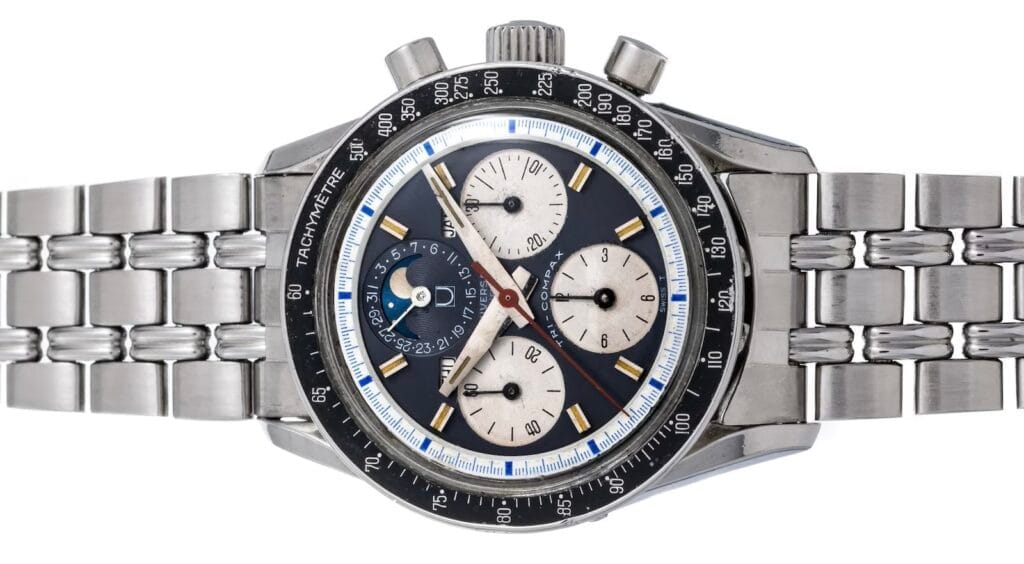
A stainless steel Tri-Compax chronograph wristwatch with a tachymeter bezel and three subdials on a linked metal band.
0

Tri-Compax

The Tri-Compax is Universal Genève's flagship triple-calendar chronograph wristwatch. Produced from 1944 through the late 20th century, this model line stands as one of the most significant achievements in mid-century horology. The watch takes its name from its three major complications: chronograph, full calendar (day, date, and month), and moonphase display. While production ceased during Universal Genève's decline in the 1980s and 1990s following the quartz crisis, the line has been honored in recent years through exclusive tribute pieces released by the revived brand.
Continue reading
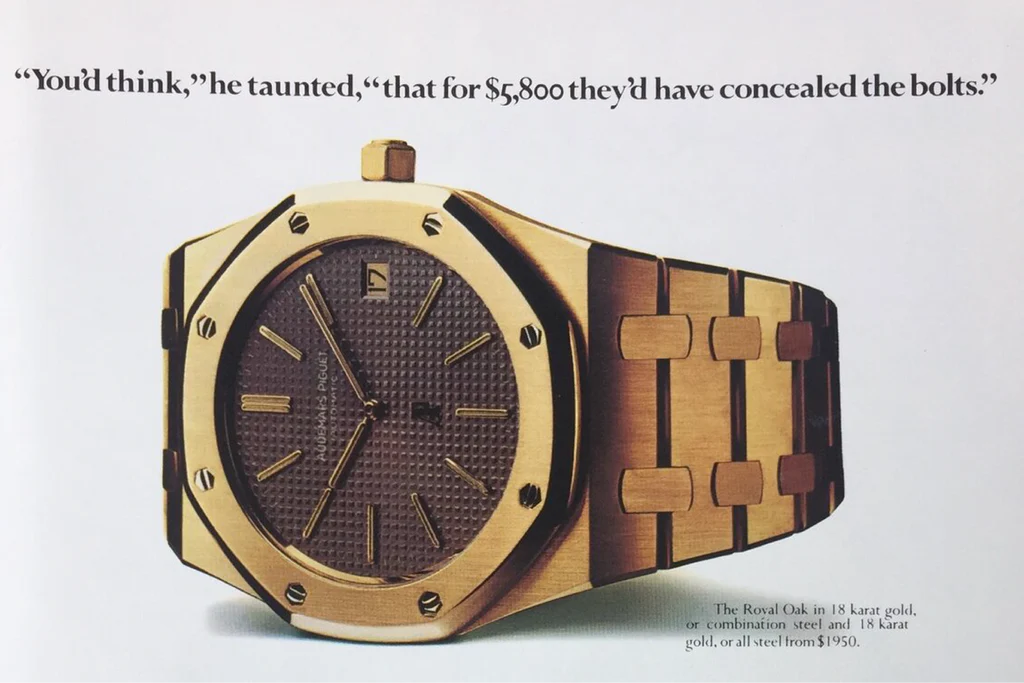
A gold Audemars Piguet Royal Oak watch is shown with a quote about its price and visible bolts.
0

Royal Oak

Audemars Piguet was founded in 1875 by two childhood friends, Jules Louis Audemars and Edward Auguste Piguet, in the Vallée de Joux region of Switzerland, a territory renowned for its horological expertise. The brand became officially registered under the trademark Audemars Piguet & Cie in 1881 and established itself immediately as a purveyor of high-complication watches, creating the first wristwatch minute-repeating movement in 1892 in collaboration with Louis Brandt. From its inception, the manufacture committed to in-house production across all components, a philosophy that distinguishes it to this day.
Continue reading
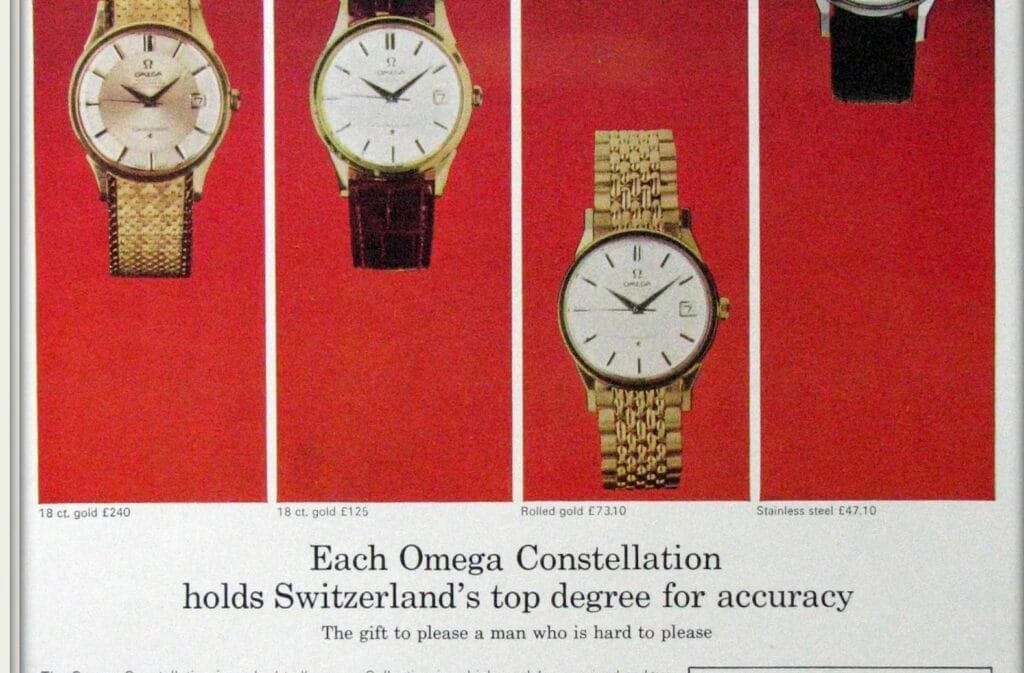
Four Omega Constellation wristwatches with different bands are elegantly displayed on a red background.
0

Constellation

The Omega Constellation traces its lineage to the 1948 Centenary, a limited production run of solid gold automatic chronometers created by Omega to commemorate 100 years of watchmaking. The success of this model inspired Omega to develop a broader collection, and the Constellation was officially introduced in 1952. Named for the constellation of eight stars adorning its caseback medallion, the collection was conceived as Omega's ultimate expression of luxury combined with chronometric precision.
Continue reading
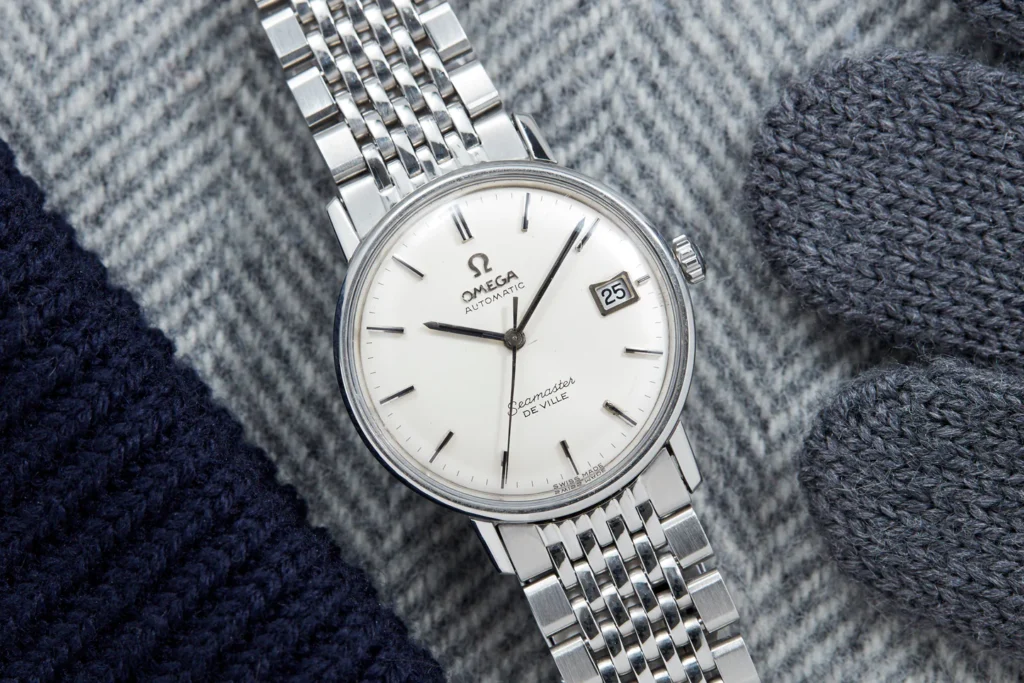
A silver Omega Seamaster Deville watch with a white face rests on gray and white striped fabric, beside elegant gray gloves.
0

Seamaster Deville

The Omega Seamaster DeVille represents a transitional designation in horological history, bridging the dressy heritage of the DeVille collection with the water-resistant credentials of the Seamaster family. Introduced in 1963 and discontinued in 1967, this model line occupied a unique position in Omega's catalog as watches bearing both names on their dials. The Seamaster DeVille was born from Omega's strategic recognition that the market demanded a refined dress watch with genuine water resistance, distinct from the purely utilitarian dive watch aesthetic that was rapidly becoming synonymous with the Seamaster name.
Continue reading
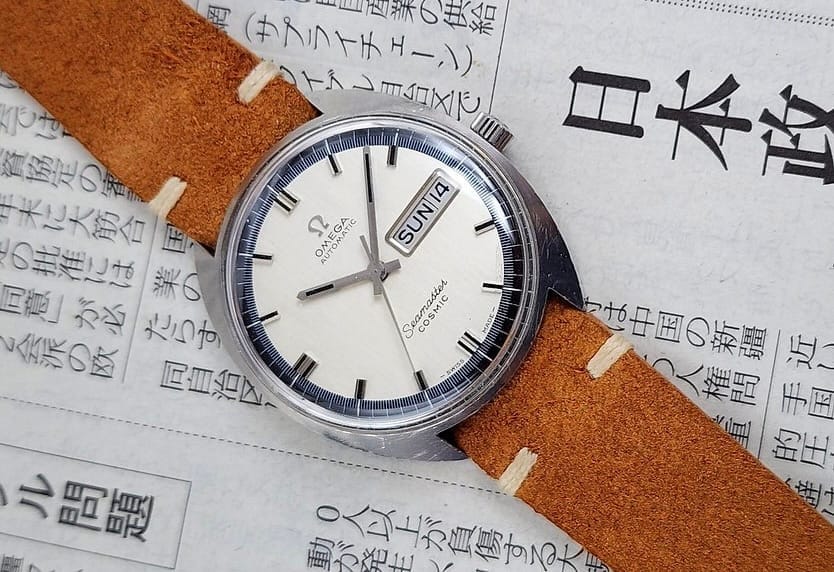
A wristwatch with a brown strap, likely an Omega Seamaster Cosmic, rests on a Japanese newspaper, displaying the time and day SUN 14.
0

Seamaster Cosmic

The Omega Seamaster Cosmic represents a bold departure from traditional watchmaking aesthetics, introduced in late 1966 and discontinued in 1980. Production began reaching retailers in earnest during 1967, with the original series continuing until the early 1970s before being succeeded by the Cosmic 2000 variant in 1972. The line was created to capitalize on the era's space race fervor and align Omega's aeronautical credentials with the Seamaster portfolio during a period when futurism dominated popular culture. This model served as Omega's aesthetic playground for experimentation with modern design language, targeting casual middle-class lifestyles with sporty dress watches that embraced geometric forms and forward-thinking construction.
Continue reading
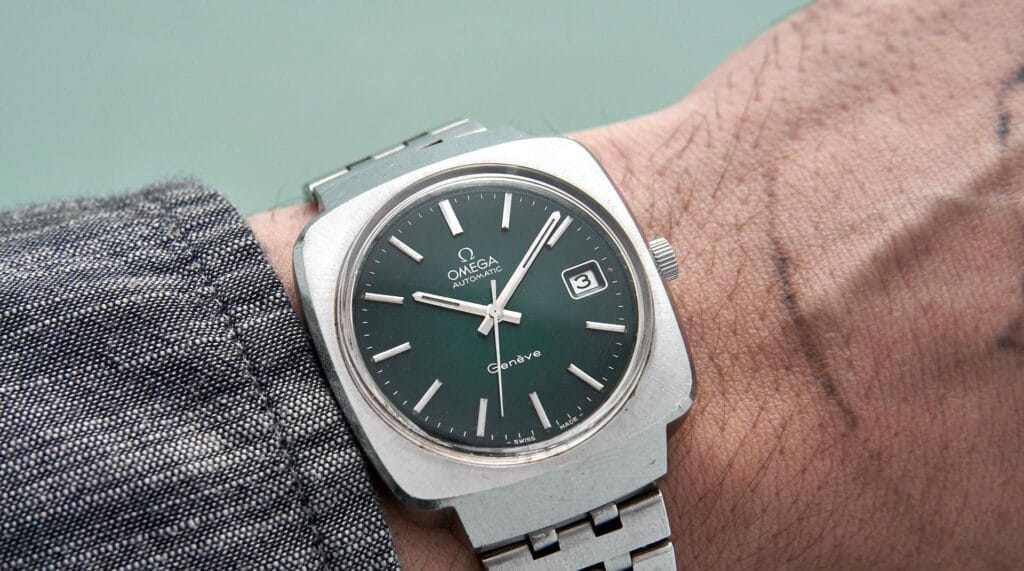
A silver Omega Genève wristwatch with a green dial is worn on a person’s left wrist.

Genève

The Omega Genève represents one of the brand's longest-running and most diverse dress watch collections, spanning from approximately 1952 through its official discontinuation in 1979. Production commenced during the early 1950s, with the earliest verifiable examples dating to 1954, though forum consensus suggests 1952 or 1953 as the inaugural year. The collection was created as a tribute to Omega's Geneva heritage and the brand's exceptional performance in observatory precision competitions, particularly honoring the 30-millimeter calibers that had earned numerous chronometric awards at observatories including Geneva. The name served dual purposes, evoking both the prestigious Swiss watchmaking capital and Omega's technical achievements in that city's demanding observatory trials.
Continue reading