

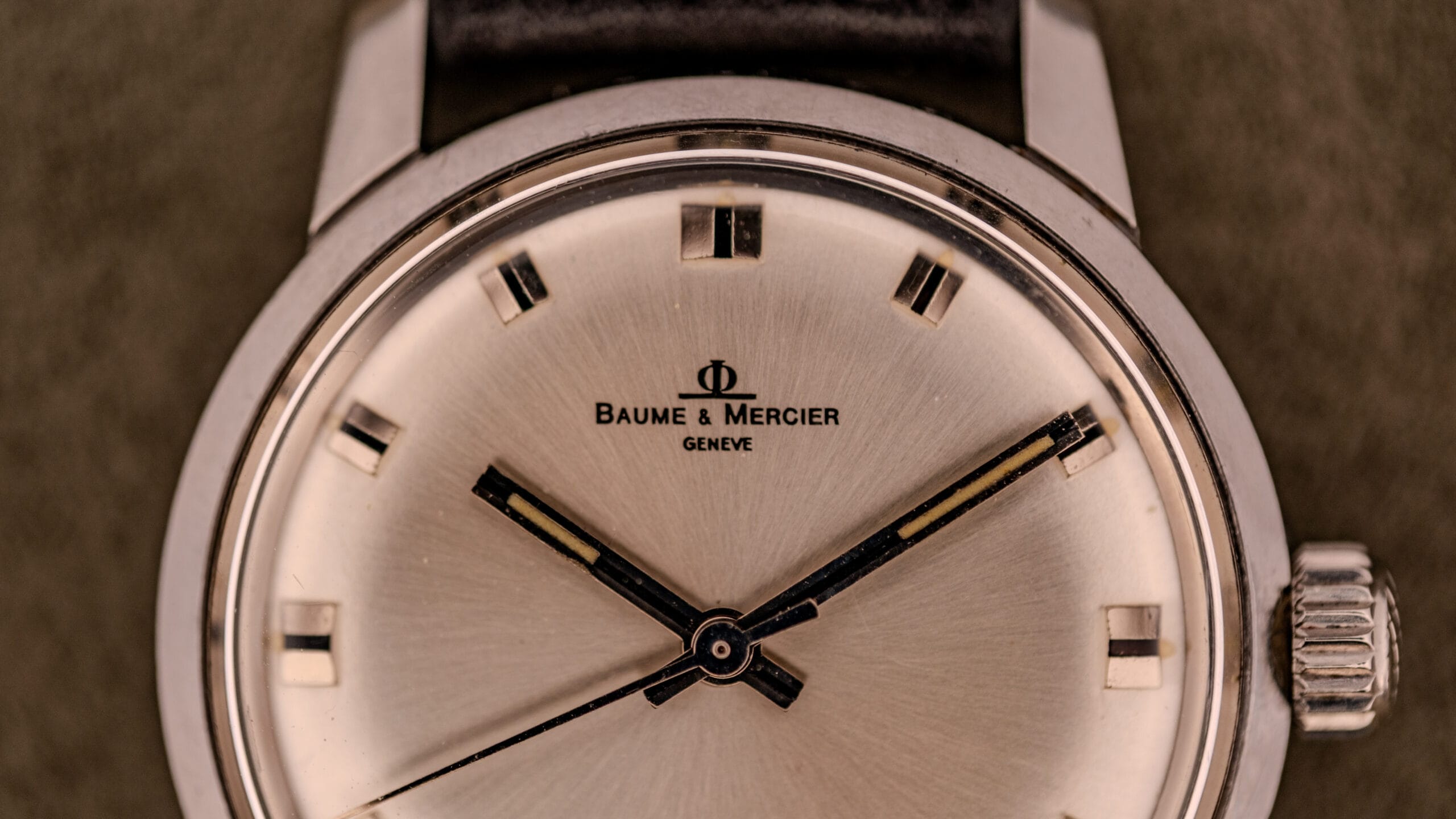
The Brand Nobody Argues About
In January 2026, Richemont announced it was selling Baume & Mercier to the Italian Damiani Group after 38 years of ownership. No purchase price was disclosed. The Vontobel analyst quoted in the Hodinkee coverage put it with characteristic dryness: “Exiting Baume & Mercier reinforces Richemont’s capital discipline and willingness to act on underperforming assets.”
That is a remarkable sentence to write about a house founded in 1830, older than Rolex by 75 years, older than Patek Philippe by 9, and holder of a Kew Observatory record that stood unbroken for a decade. It is also, in the cold commercial sense, accurate. Baume & Mercier spent most of the last forty years as the accessible wing of a Swiss luxury conglomerate whose attention and capital went elsewhere, and the market rendered its verdict accordingly. The watches are better than their collector reputation. The reputation reflects something structural that the product itself cannot fix.
This is a guide to a brand that has occupied, for longer than anyone would care to admit, the middle ground in Swiss watchmaking. Understanding why requires understanding the four distinct companies that have operated under Baume-adjacent names since 1830, the movements they actually produced, and the peculiar combination of technical competence and commercial timidity that has defined the house for most of its existence.
Baume & Mercier references currently in inventory →
The Founding, Properly Dated
The conventional founding date is 1830. The most rigorously sourced secondary study of the Baume family, David Boettcher’s research drawing on the company-published A Hundred Years of Time (1949), suggests that what opened in Les Bois in 1830 was a watchmaking comptoir under Louis Joseph Baume, and that the formal firm of Frères Baume, la Famille Louis Joseph was not registered until 1834. Boettcher’s blunt assessment of the 1830 claim: it “might be just a date plucked out of thin air” for anything that preceded the 1834 registration.
The four Baume brothers, chiefly Louis-Victor and Célestin, ran the business as établisseurs in the Jura tradition, subcontracting components to outworkers and assembling finished pieces. Around 1840 they adopted the Lépine caliber early, producing slimmer pocket watches than most of their Jura competitors could, which contributed materially to commercial growth.
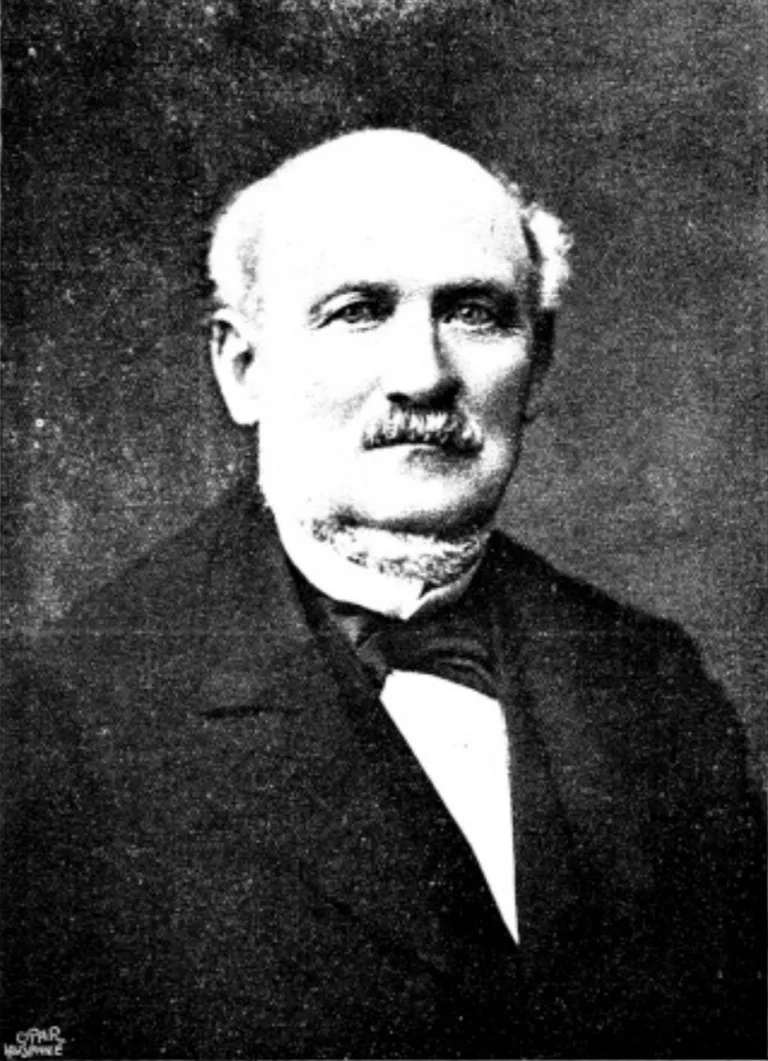
In 1844, Célestin Baume established a London operation that became Baume & Co. and eventually one of the most respected Swiss watch importers in the British Empire. From 1876, Baume & Co. served as exclusive British and Empire distributor for Longines. The London branch was a legally separate entity from the Swiss operation and operated independently under Célestin’s descendants.
This detail matters for what follows, because Baume & Mercier, the company that exists today, has no commercial continuity with that original Baume enterprise. Boettcher documents it explicitly: in 1918, William Baume left the family Swiss company and started a completely new firm in Geneva. The original Swiss company carried on as Baume, and Baume & Co. in London actively used British trademark law to keep Baume & Mercier out of the UK market until the mid-1960s.
The 1830 date on the dial is, at best, a claim of family lineage rather than corporate continuity.
The Kew Observatory Years
Whatever the founding paperwork says, the Baume name in the late 19th century was attached to serious precision watchmaking. The Kew Observatory in Teddington ran one of the most rigorous chronometry competitions of the era, and Baume watches competed at the top of its class.
In 1885, the first year of Baume participation, three watches placed in the top seven. In 1887, a Baume split-seconds minute-recording chronograph scored 85.1 marks and received the endorsement “especially good.” The benchmark result came in 1892, when pocket watch No. 103018, equipped with a single overcoil balance spring and tourbillon chronometer escapement, scored 91.9 out of 100 at Kew, setting a new record that beat the previous mark of 91.6 held by Stauffer & Son. The 91.9 record stood until 1902, when it was broken by H. Golay of London with a keyless going-barrel annular tourbillon at 92.7.
Boettcher, working from primary Kew records, attributes the submission to Alcide Baume, who was managing Swiss operations at the time. Watch No. 103018 is now held in the Baume & Mercier museum collection, and the company advertised the record as recently as 1900.
Beyond Kew, the Baume enterprise accumulated 10 Grand Prix awards and 7 gold medals at major international exhibitions between roughly 1860 and 1910, including the Paris Universal Exhibition of 1889 and the Chicago World’s Fair of 1893. The product range of the period included split-seconds chronographs, minute repeaters, perpetual calendars, and tourbillons.
This is the heritage that modern Baume & Mercier can, in theory, draw from. In practice, the brand rarely foregrounds it. Longines positions its chronometry record at every possible touchpoint. Patek Philippe emphasizes its 19th-century Kew results in brand communications. Baume & Mercier keeps the 1892 record watch in a museum and declines to make the comparison.
1918: The Split That Matters
On 22 November 1918, a Swiss trade notice recorded that William Adolphe Baume had set up as a sole trader under his own name at 2 Rue Céard, Geneva. A family dispute had led him to leave the La Chaux-de-Fonds factory he had managed since 1915.
On 18 March 1919, a second notice recorded the dissolution of that sole proprietorship and the formation of a new company: Baume & Tcherednitchenko dit Mercier. Paul Mercier, born Paul Tcherednitchenko, was the son of a Tsarist officer. Sources describe him as a polyglot who had previously managed the Haas watchmaking business in Geneva. The correct spelling of his birth surname, taken from the 1919 trade notice, is Tcherednitchenko. Most secondary sources render it Tchereditchenko, dropping the first N.
In 1919, the new firm received the Poinçon de Genève, the Geneva Seal established in 1886 for watches manufactured and finished within the Canton of Geneva. For a company less than a year old this was a meaningful credentialing achievement, signaling that William Baume and Paul Mercier were aiming for the upper tier of Geneva watchmaking rather than volume production.
The house aesthetic of the interwar period was consistent: extra-flat men’s watches, jeweled ladies’ pieces, Art Deco shaped cases. Movement sourcing was from external ébauche suppliers typical of Geneva production in that era.
William Baume retired in 1935. Paul Mercier retired in 1937. Ownership passed to a new proprietor identified in some sources as Constantin Gorski and in others as Ernesto Ponti. The discrepancy has not been resolved in any primary source I have been able to locate. Both names appear consistently enough in secondary literature that they cannot simply be dismissed as transcription errors for the same person.
The Piaget Era: Ultra-Thin Supremacy
By the early 1960s, Baume & Mercier was heavily dependent on the American and Italian markets. The Piaget family became involved in 1963 and had clear majority ownership by 1965, when the holding company PBM International was formed. The Phi (φ) symbol that still appears on dials and hands today was adopted in this period.
The commercial machinery behind the Piaget acquisition was Gerry Grinberg of the North American Watch Corporation, who also distributed Piaget and Corum in the United States. Under Grinberg, Baume & Mercier became Piaget’s accessible companion brand at American retailers including Tiffany & Co., sitting alongside Corum and Concord in the category that was beginning to be called accessible luxury.
The Piaget relationship fundamentally changed what Baume & Mercier could do with movements. The brand gained access to Piaget’s ultra-thin calibers, including:
The Piaget 12P, at 2.3mm total height, an automatic used in Piaget’s own Altiplano line. Baume & Mercier dress watches of the late 1960s through the 1980s using the 12P are some of the slimmest automatic wristwatches of the period.
The Piaget 9P and related hand-wound ultra-thin movements, used in the thinnest dress pieces.
The 1965 Baumatic automatic collection, not to be confused with the 2018 Baumatic caliber, drew on these Piaget resources. The brand’s 1965 claim of producing the thinnest self-winding wristwatch with date is documented and reflects the supply relationship rather than in-house manufacturing.
Outside the dress category, the 1970s and 1980s saw Baume & Mercier produce some of its most enduring designs. The Tronosonic line, launched around 1971, used ESA tuning fork movements, the 9162 and 9164 calibers, vibrating at 360 Hz. This put Baume & Mercier alongside Omega, Longines, Certina, and a small group of other manufacturers producing tuning fork watches as a transitional technology between traditional mechanical and quartz.
The most historically significant launch of the Piaget era, and arguably the brand’s most enduring design, was the Riviera of 1973. Designed by Jean-Claude Gueit, it featured a dodecagonal 12-sided bezel and an integrated steel bracelet. The Audemars Piguet Royal Oak had appeared in 1972, designed by Gérald Genta. The Patek Nautilus would not arrive until 1976. The Riviera sat between them, with a genuinely novel case geometry, and has never received the credit its design merits.
1988: Cartier, Vendôme, Richemont
On 26 April 1988, Cartier International, then led by Alain Perrin and majority-owned by the Rothmans group, acquired approximately 60% of both Baume & Mercier and Piaget. The Piaget family retained 40%. Perrin’s public positioning cast the acquisition as a complement: Cartier would provide marketing scale, Piaget would provide technical expertise, Baume & Mercier would provide distribution.
Through the 1993 formation of the Vendôme Luxury Group and Richemont’s 1997 acquisition of the remaining Vendôme stock, Baume & Mercier was absorbed into what became the dominant structure in luxury watchmaking alongside LVMH. Within Richemont, the brand occupied a specific and permanent position: entry-level luxury, the accessible introduction to Swiss prestige watchmaking, below Cartier, IWC, Jaeger-LeCoultre, Vacheron Constantin, and A. Lange & Söhne.
That positioning was, at minimum, commercially consistent. It was also, as it turned out, structurally fatal for collector perception.
Movements Under Richemont
The Richemont period defined Baume & Mercier’s modern movement identity, for better and worse. Most of the brand’s output relied on ETA and Sellita ébauches with brand-specific caliber designations and finishing. The pattern repeated across collections:
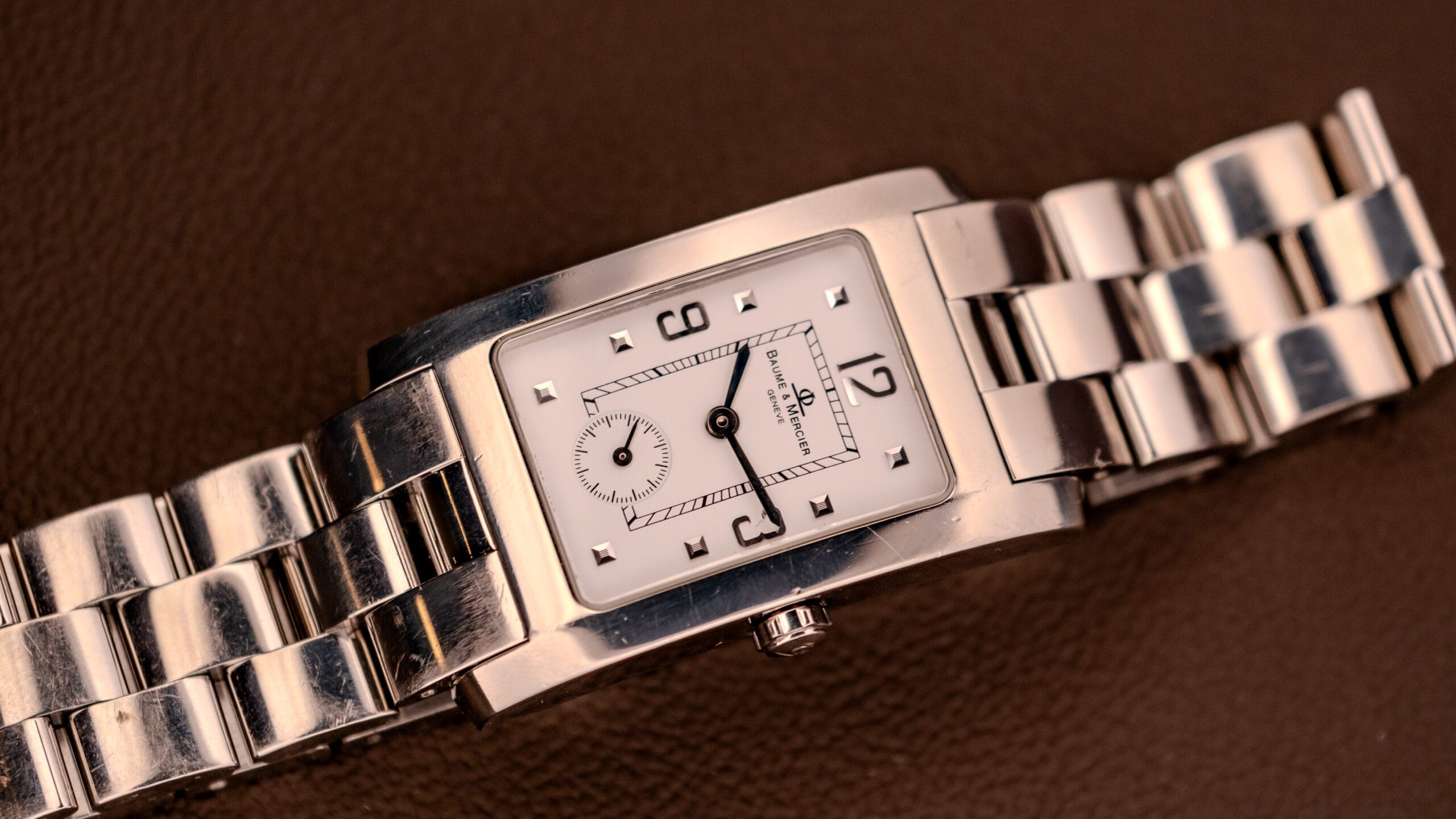
The Capeland Auto 39mm (reference BM11895) used the ETA 2895. The Capeland Chrono references 6858, 8062, and M0A08113 used the Valjoux 7750, which Baume & Mercier designated as caliber BM13750 with their own decoration. The Capeland Chrono 42mm references 10084, 10451, and 10452 used the column-wheel Valjoux 7753 and the modular ETA 2894-2. The Capeland Flyback reference 10006 used the La Joux-Perret 8147-2, a genuine flyback movement from a respected independent supplier. The Classima Executive (BM11892) ran on the ETA 2892-A2. The Hampton Auto 43mm used the ETA 2671, modified with a custom rotor.
Two references stand out for their movement sourcing. The Hampton Milleis used the Frédéric Piguet caliber 9640, an automatic with power reserve indicator, along with the slim FP 953. FP was later absorbed into Blancpain’s movement ecosystem, which gives these Hampton references a horological pedigree that survives the collapse of their parent supplier. The Capeland Flyback 10006 remains the most technically distinguished post-2010 Capeland reference, and it commands a meaningful premium in the secondary market for precisely that reason.
Richemont established ValFleurier, its internal movement manufacturer, in Buttes in the Val de Travers, growing progressively from the late 1990s. ValFleurier supplies Baume & Mercier, Montblanc, Panerai, and components to Piaget and IWC. A Blog to Watch directly called it “Richemont’s ETA.” ValFleurier also produces the P591 tourbillon used in some Baume & Mercier pieces, which is in fact derived from the IWC caliber 98900.
The Baumatic: The One Real Technical Story
At SIHH 2018, Baume & Mercier launched the Clifton Baumatic, powered by caliber BM12-1975A. Developed over more than five years with ValFleurier and Richemont’s Research and Innovation division, it was the brand’s first in-house-designated automatic manufacture movement and the first Richemont movement to combine a silicon balance spring and a silicon escapement in production.
The specifications were serious. A 120-hour power reserve. A frequency of 28,800 vph. Anti-magnetic resistance to 1,500 gauss, roughly 25 times the ISO standard. An accuracy rating of −4/+6 seconds per day with COSC-certified versions available. A launch price of CHF 2,300 to 2,900.
The silicon hairspring, called TwinSpir, used two layers of silicon at 45-degree alternating orientations bonded by a silicon dioxide layer that counteracted silicon’s temperature sensitivity. The silicon escape wheel and anchor, called PowerScape, were designed to minimize friction. The technical groundwork had been laid in 2017 with the Clifton Manual 1830, a 10-piece limited edition in red gold powered by the manually wound BM12-1975M, which was the first Richemont watch to incorporate a silicon balance spring.
The BM12 did not last long in production. The Centre Suisse d’Électronique et de Microtechnique (CSEM), which held European patent EP1422436B1 on the relevant silicon hairspring technology in partnership with a consortium of Rolex, Patek Philippe, the Swatch Group, and later Ulysse Nardin, filed a patent complaint. Baume & Mercier replaced the BM12 with the BM13-1975A in 2019, which retained the silicon escapement and the 120-hour power reserve but substituted a conventional non-silicon hairspring supplemented by a chrome magnetic shielding ring. The CSEM patent expired in 2022, which in principle opens the door to a future return to BM12-architecture movements.
SJX’s headline for the 2018 launch was direct: “Baume & Mercier Can Now Be Taken Seriously With The Baumatic.” Worn & Wound’s 2018 review of the 40mm reference 10436 called it a watch that “could legitimately sell for twice the asking price” and compared its finish to IWC Portofinos. The technical case for the brand, if there is one, rests on the Baumatic. Whether the Baumatic survives the Damiani transition, given that ValFleurier is a Richemont-owned facility, is one of the genuinely open questions raised by the January 2026 sale.
The Middle-Ground Problem
There is a word that appears unprompted across Baume & Mercier forum threads on Reddit, WatchCrunch, and Watchprosite. The word is meh. It appears in threads from 2017, 2022, 2024, and 2025, each thread asking essentially the same question: why does this brand not get more attention from collectors, given that the watches are objectively well-made?
The answers on those threads cluster around a consistent set of points. Design described as competent but derivative. No halo model to build desire around. Poor secondary market resale, with WatchPilot 2023 data putting Baume & Mercier at 19th of 25 brands surveyed for pre-owned listing volume. Distribution in airport duty-free and department stores that fights against any collector narrative. And the Baumatic’s “in-house” provenance disputed by technically literate collectors who know ValFleurier is a shared Richemont facility.
The most damaging WatchCrunch post on the subject recounted an authorized dealer steering a customer away from a Baume & Mercier piece because, the dealer said, the brand had started selling through lower-end stores and damaged its own reputation. An AD refusing to advocate for a brand in their own cabinet is a distribution failure with lasting image consequences.
The comparison that recurs in these threads is Longines. Ten years ago, collector discourse described Longines in almost identical language: bland, department store, no identity. Longines has since executed one of the more effective brand repositionings in recent Swiss watchmaking through disciplined Heritage revival, pricing restraint, and consistent messaging. Whether Damiani can do something similar with Baume & Mercier is unknown. What is known is that 38 years of Richemont stewardship did not produce it.
The honest accounting, pulling together the forum data, press coverage, and secondary market evidence, is this: Baume & Mercier is underrated as a product and correctly rated as a brand. The watches are meaningfully better than their collector reputation. The brand’s collector market position reflects genuine strategic failures in identity coherence, aspirational narrative, and community formation. The split, good watches against an incoherent brand, is the middle ground the house occupies, and it is harder to escape than simply making a worse product.
Where the Collector Opportunity Sits
Because the brand is underpriced structurally rather than for reasons related to the watches themselves, specific segments of Baume & Mercier output represent genuine value in the current market.
The 1940s Valjoux 22 and Valjoux 23 chronographs in step-case steel, typically 35mm, trade between $999 and $1,499 in serviced condition. These are authentic vintage Swiss chronographs with column-wheel movements from the most respected chronograph ébauche maker of the period, and they sit well below comparable Longines or Heuer pieces of the same vintage.
The Piaget-era ultra-thin dress watches, 1964 through 1985, in 14k or 18k yellow gold, typically 35 to 38mm, using the Piaget 12P or 9P, can be found between $600 and $1,800. The movements in these watches, considered on their own, are among the most accomplished ultra-thin calibers of the 20th century. The gold weight alone establishes a floor in many cases.
The early Riviera, Generations 1 and 2, from 1973 through 1984, trades between $800 and $2,200 depending on completeness and whether the case is unpolished. The no-name-on-dial Generation 1 examples, which did not yet carry the Riviera signature, are particularly sought. A 1973 Riviera and a 1972 Royal Oak occupy similar positions in the history of the integrated-bracelet sport watch. Their current market values differ by a factor of roughly 10 to 15.
The Tronosonic tuning fork references, 5107 and 5108 and variants, trade between $400 and $1,100 for average condition and up to $1,500 or more for clean examples with bracelets and papers. Tuning fork watch collecting is a specialized category, but interest is growing across Accutron, Longines Ultra-Quartz, and Piaget equivalents.
The Hampton Milleis with the Frédéric Piguet 9640, for rectangular-watch collectors, runs between $800 and $1,500 and carries a movement with a pedigree most of its price peers cannot match.
The modern Clifton Baumatic references, bought at typical gray-market discounts, run between $1,500 and $2,500 and are, on pure specification grounds, one of the better values in the sub-$3,000 mechanical market.
The Damiani Question
Closing expected summer 2026. Richemont will provide operational services for at least 12 months after closing. The Baumatic’s future depends on whether Damiani retains cost-effective access to ValFleurier production, which is not guaranteed. Italian market commentary has raised the possibility of a “leaner Baume & Mercier focused on the Italian market, in the same vein as Eberhard & Co.” If that is the direction, it will mean profitability in a defined geographic market rather than a global collector resurgence.
The more optimistic scenario involves an owner with the focus and discipline that Richemont, managing dozens of brands, was never in a position to apply. Damiani’s distribution strength in Italy, where Baume & Mercier has 325 retail points versus 130 in the United States, is real. Its Rocca multi-brand retail arm offers focused positioning. Whether any of that translates into collector heat is a question only the next decade will answer.
What the 2026 sale confirms is that the structural diagnosis has always been correct. Baume & Mercier is a brand whose product quality has, for a long time, exceeded its market positioning. The question has never been whether the watches are good. The question is whether the brand identity can become coherent enough to support the prices the watches actually deserve. Richemont concluded, after 38 years, that the answer within its portfolio was no. Damiani inherits the same problem in a different frame.
For now, the collector opportunity sits exactly where it has always sat: in specific vintage segments where horological content substantially exceeds current market pricing, and in a modern in-house movement whose future production is, as of this writing, genuinely uncertain.
Related posts
Watch Shapes: Which Vintage Case Shape Fits Your Style?
Case shape changes how a vintage watch wears more than diameter alone. Compare eight silhouettes and learn which one fits your wrist and style.
Vintage Dress Watches: How to Choose One You’ll Actually Wear
The best vintage dress watch is the one you will wear beyond weddings. Here is how to choose the right size, metal, dial, shape, and strap.
Vintage Watch Styles: A Visual Guide to Finding Yours
Most buyers pick a brand and stall. Here are nine vintage watch styles, shown with real watches from our archive, and the catch that comes with each one.
Vintage Tank Watches: A Buyer’s Guide to Rectangular Watches Beyond Cartier
Every Cartier Tank alternatives list is new watches imitating old ones. The originals still exist and cost less. A buyer's guide to vintage tank and rectangular watches: the brands, the prices, and what to check.
Service History Is the Wrong Question. Here’s the Right One.
Everyone says to ask for a vintage watch's service history. Most of it can't be verified, and a receipt proves a transaction, not a result. Here's what actually tells you a watch has been serviced, and the better question to ask.
LeCoultre vs. Jaeger-LeCoultre vs. Jaeger: What the Name on the Dial Means
Three names, one Swiss firm, and one watch that isn't what it looks like. What LeCoultre, Jaeger-LeCoultre, and plain Jaeger on a vintage dial really tell you.
Omega Seamaster 166.010 Buyer’s Guide: Prices, Variants, and What to Look For (2026)
Everything you need to buy an Omega Seamaster 166.010 in 2026: real market prices by condition tier, five dial variants explained, caliber 562 vs 565, original part numbers, and what to inspect before you commit.
Omega vs Rolex: The Vintage Buyer’s Verdict
Vintage Omega vs vintage Rolex: where the Rolex premium is worth paying, where Omega is the smarter buy, and how to dodge redials on both. A collector's verdict.
Movado Kingmatic: A Vintage Buyer’s Guide to References, Calibers, and Value
The Movado Kingmatic is one of the best values in vintage automatics. A buyer's guide to its references, in-house calibers, the Sub-Sea line, what to check, and what they actually sell for.
13 Vintage Watch Collecting Tips for Beginners (From 1,000+ Watches Sold)
Thirteen vintage watch collecting tips drawn from selling over 1,000 watches. What separates a smart first buy from an expensive lesson, with no sugar.
Vintage Wittnauer Chronograph Caliber Identification: Venus 188, Valjoux 7733/7734, Landeron 248
How to identify the movement inside any vintage Wittnauer chronograph: Venus 188, Valjoux 7733 and 7734, Landeron 248, and the house numbering system Wittnauer used to mark them.
How Water-Resistant Is a Vintage Watch, Actually? The Honest Answer.
Every dealer says never get a vintage watch wet. That advice is half-engineering and half-liability theater. Here is what is actually true about vintage water resistance, where water actually gets in, and when a 1965 diver is safer than a 2-year-old modern.