

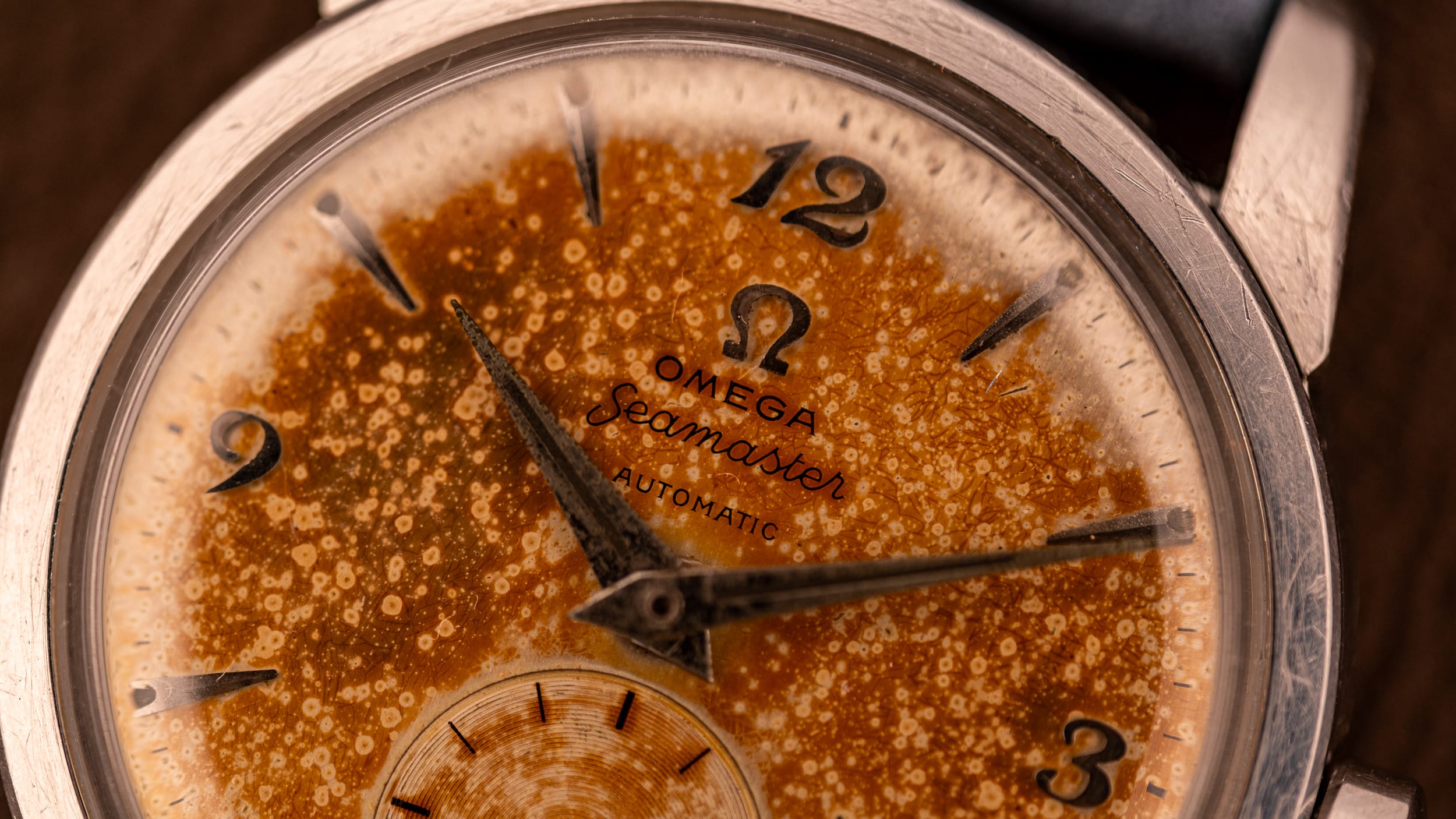
In October 2023, a Rolex Daytona reference 6263 with a Paul Newman tropical dial, one of fewer than twenty known examples of the so-called “Oyster Sotto” configuration, sold at Monaco Legends Auction for 1,796,000 euros. The hammer price was newsworthy on its own. The dial was the more interesting story. Across the cream-and-black face, the sub-registers had aged from their original black to a soft, uneven tobacco brown. Forty years earlier, that same browning would have been called damage. A Rolex service center in 1985 would have replaced the dial without asking. By 2018, it was the single feature that pushed the watch past two million dollars.
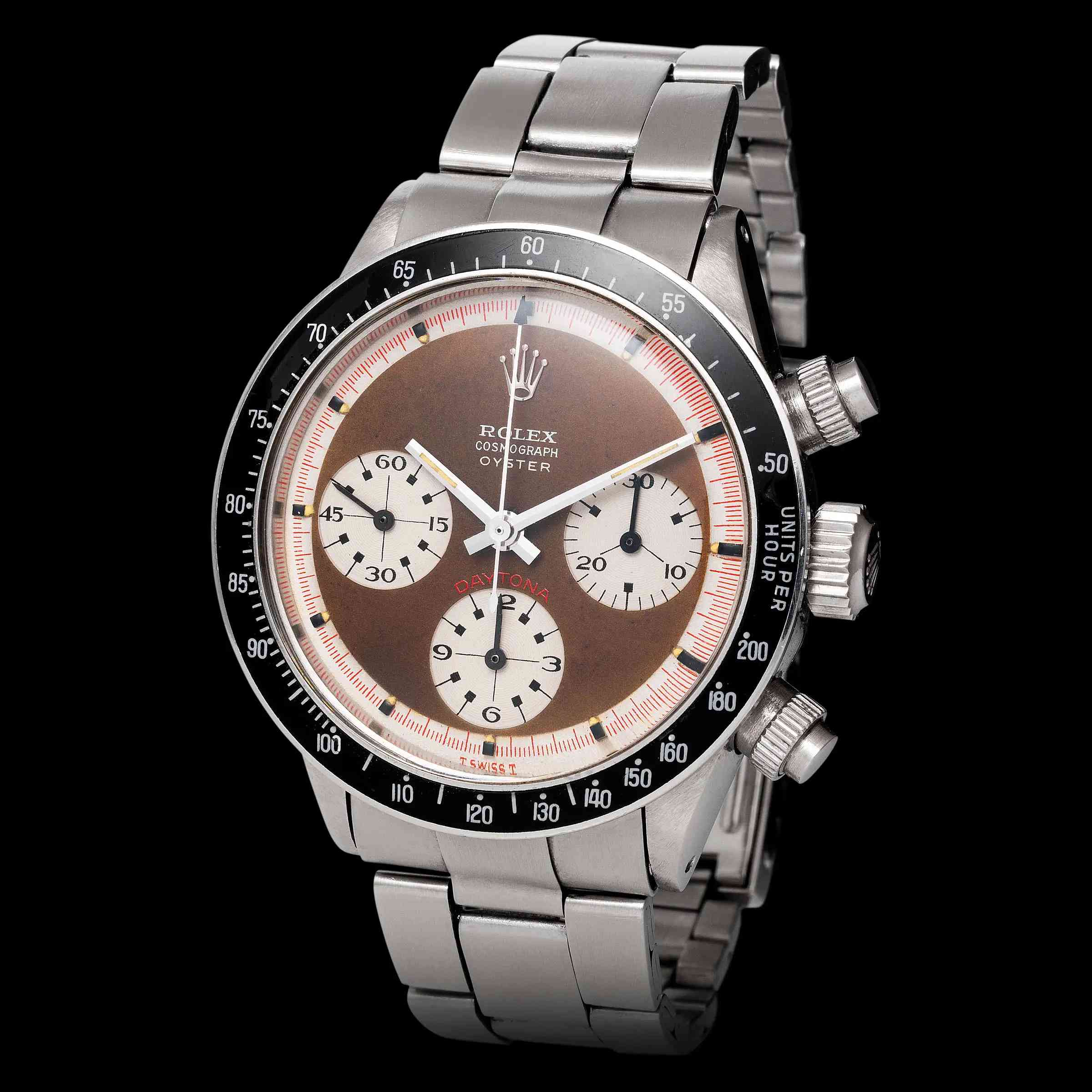
This is the tropical dial. It is one of the strangest stories in modern watch collecting, because the object did not change. The market changed. A manufacturing flaw that for decades was treated as depreciation eventually became, on certain references, the most expensive feature on the watch. How that happened, and how a buyer can tell the genuine article from the impressive number of fakes that now circulate, is worth understanding before considering the category.
What a Tropical Dial Actually Is
The term “tropical” describes a black or dark-blue vintage watch dial that has shifted, over decades, to some shade of brown. Chocolate, milk chocolate, root beer, tobacco, caramel, ginger, honey. Collectors have built a small vocabulary for the gradations because no two are quite alike.
The chemistry is more specific than the romantic name suggests. Most twentieth-century watch dials were finished with a clear protective lacquer applied over the painted base. The most documented culprit is a nitrocellulose-based varnish called Zapon, used by Rolex and a number of other manufacturers from roughly the late 1950s through the 1970s. Zapon performed well under most conditions. Under sustained ultraviolet exposure, with humidity cycling and temperature variation acting as accelerants, certain batches of the formulation began to degrade. The lacquer underwent a process called hydrolysis, in which moisture penetrated the polymer and broke down its binder. The pigments underneath, no longer fully sealed, began to oxidize.
The result was browning. Not uniform across all dials of a given reference, because dial behavior depended on the specific chemistry of the production batch and the environment the watch lived in. Some dials never tropicalized. Some went evenly to a warm tobacco. A few took on the irregular, mottled look that collectors call “stardust” or, when fine cracks appear in the lacquer surface, “spider.” On certain Daytona references, the silver sub-dial rings reacted with the Zapon to develop a separate kind of browning that became known, after the Antiquorum founder Osvaldo Patrizzi who first cataloged it, as the Patrizzi dial.
The point worth holding onto is that tropical dials are not aged. They are chemically altered. The transformation happened inside an unbroken layer of lacquer, which is why a true tropical dial still looks glossy and intact. A dial that browned because of water ingress, seal failure, or repeated cleaning is something different. The market has a less flattering term for those. They are not tropical. They are damaged.
From “Faded” to “Tropical”
For most of the second half of the twentieth century, a brown vintage dial was a problem. Through the 1980s and into the early 2000s, condition graders treated dial discoloration as a defect and priced watches accordingly. A faded Submariner sold for less than a black one. Service departments at Rolex, Omega, and Tudor routinely replaced original dials that had drifted from their factory color, and most owners considered that an upgrade. The phrase “tropical dial” did not yet exist as a market category.
The shift happened over roughly a decade, beginning in the mid-2000s. The terminology appears to have entered widespread use through specialist forums first, particularly Rolex Forums and the early HODINKEE coverage, and from there into dealer language. The semantic move was deliberate. “Faded” implied loss. “Tropical” implied origin, character, a watch that had lived a particular kind of life under a particular kind of sun. The new word reframed the same physical condition as an originality marker rather than a flaw.
The reframing accelerated when major auction houses adopted the language. By the mid-2010s, Christie’s, Sotheby’s, Phillips, and Bonhams were using “tropical” in lot descriptions as a positive feature, and the realized prices began to validate the language. A Phillips Hong Kong sale brought HK$327,600 for a tropical Submariner 5513 retailed by the Venezuelan house Serpico y Laino. A Phillips New York sale in 2021 realized $352,800 for a tropical-aged “MilSub” 5513/5517 with full military provenance. The Monaco Legends sale of the 6263 “Oyster Sotto” in 2023 confirmed the category at the top of the market.
The market then did what markets do. Demand created supply. Unscrupulous sellers began baking dials in ovens, lighting them with industrial UV lamps, and applying chemical treatments to manufacture the appearance of decades of patina in days. Forums began documenting the methods openly. By 2018, an active subculture of dial fakery had grown up around tropical premiums, and authentication tightened in response. The category survived the correction, but the floor of what counts as an authenticated tropical dial rose substantially.
The References That Defined the Category
Tropical dials occur across most major manufacturers of the period, but a handful of references are responsible for nearly all of the category’s market gravity.
Rolex Submariner Reference 5513
The 5513 is the most documented tropical Rolex. Produced from 1962 to 1989, it covered the full era of Zapon-coated matte and gloss dials, and the surviving population is large enough that the market has tiered itself by the quality of the browning. Even chocolate browning, with intact glossy lacquer and matching honey lume, sits at the top. Lighter caramel or tobacco shifts sit in the middle. Spotty or partial browning, the kind that suggests selective exposure rather than uniform aging, sits below. A clean non-tropical 5513 in 2026 trades roughly in the high four figures to mid five figures depending on dial generation and condition. Verified tropical examples have routinely cleared 1.5x to 3x that range at major auction houses. The early “meters first” gilt and gloss variants from 1962 to 1966 carry the highest premiums.
Rolex Daytona, Reference 6263 / 6241 / 16520
The Daytona is the most extreme case in tropical collecting because the exotic Paul Newman dial configuration interacts with patina differently than a standard black dial. The cream center panel can shift to a warm ivory, while the contrasting sub-registers and outer track brown unevenly. When the sub-dials of a panda configuration ginger toward mocha or tobacco while the white center stays bright, the contrast intensifies rather than fades. That visual effect is part of what drives the auction prices.
A separate phenomenon belongs to the modern-vintage Daytona reference 16520, produced from 1988 to 2000. The silver sub-dial rings on certain examples developed warm brown tones from a specific reaction between the Zapon varnish and the silver composition. The main black dial, the lume, and everything else stayed normal. Patrizzi cataloged these in the early 2000s, and the category that bears his name now trades in a defined range of roughly $17,000 to $49,000 depending on the depth and consistency of the browning.
Omega Speedmaster, References 105.003 and 145.012
Omega tropical Speedmasters represent the second pole of the market. The 105.003, produced from 1964 to 1968 and known to collectors as the “Ed White” after the astronaut who wore one during America’s first spacewalk, is the reference most associated with the category. The 145.012, produced from 1967 to 1968 and the last Speedmaster to use the Calibre 321 movement, follows closely behind. Both used glossy black Zapon-coated dials of the era’s vulnerable formulation.
aBlogtoWatch documented historic eBay sales data showing that during one early-2015 window, Speedmaster Professional tropical brown dials averaged a 334 percent premium over standard black dial examples. That figure has compressed since, as supply increased and authentication improved, but verified tropical 105.003 examples in strong condition continue to clear premium tiers at major dealers. Bulang and Sons, The Watch Collector, and other respected vintage houses regularly catalog them in the high four to low five figures, with truly exceptional examples reaching higher.
Heuer Autavia and Carrera
Heuer tropical chronographs are a smaller but well-documented sub-category. The OnTheDash and Heuer Price Guide archives tend to place tropical Autavia 1163 GMT examples at premiums of roughly 25 percent or more over comparable non-tropical examples, with the rare Carrera 2447SNT and 2447SND tropical variants commanding higher percentages because of underlying scarcity. The Heuer market behaves slightly differently from Rolex and Omega. The Heuer Price Guide has described tropical premiums on the brand as “fluid,” dependent on the specific shade and how cleanly the brown reads in person rather than in filtered photographs.
Tudor Submariner Snowflake
The Tudor 7016 and 9411 references with the distinctive snowflake hands and markers used the same Rolex-supplied dials in many production years. They tropicalized along the same chemical pathway and now command meaningful premiums of roughly 25 to 40 percent over standard examples. The Tudor tropical market is younger and less mature than the Rolex equivalent, which is part of why some collectors view it as an early-stage opportunity rather than a settled category.
The Outliers
A handful of other references appear regularly in tropical conversations. The Universal Genève Polerouter, the Rolex Explorer 1016, the early matte GMT-Master 1675, and the gilt-dial Submariner 6538 all developed tropical examples in numbers worth tracking. Patek Philippe tropical dials are vanishingly rare, which collectors generally attribute to superior dial manufacturing and storage by the brand’s typical owners rather than to any horological mystery.
Authentication: Where the Money Is Lost
A buyer who pays a tropical premium for a dial that is not actually tropical loses the premium and, frequently, the underlying value of the original watch. That is the practical case for understanding what authentic tropical browning looks like.
The most reliable indicator is the integrity of the lacquer. A genuine tropical dial is a dial whose chemistry shifted inside a still-intact protective film. The surface should be glossy, smooth, and continuous. No flaking, no blistering, no hairline cracks that suggest the seal failed. Where the lacquer has broken down completely, the brown is more likely to be moisture damage than the specific UV-and-varnish reaction that defines a tropical.
A second indicator is consistency. Natural tropical browning rarely arrives perfectly uniform across the dial, but it should make environmental sense. Edges typically read slightly darker than the center, because UV exposure concentrates at the dial periphery. The lume on the hour markers and on the hands should match. The bezel insert, if present, should show patina proportional to the dial. A dial that has gone deep chocolate while the bezel remains pristine raises an immediate question.
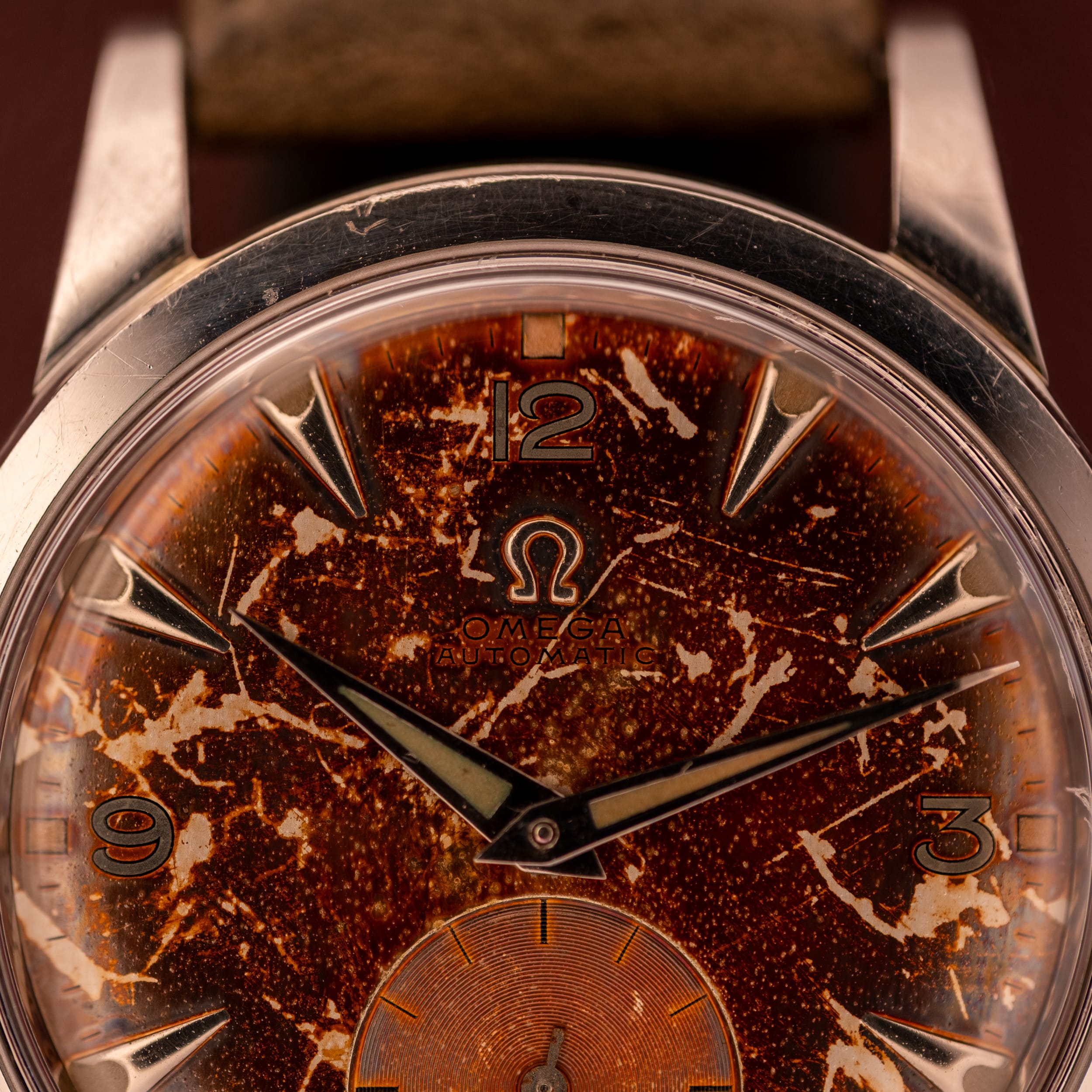
A third indicator is the printing. Tropical dials almost always show some softening of the printed text and indices, because the same UV exposure that browned the lacquer also faded the inks underneath. A dial that is heavily browned but whose printing remains crisp and bright is often a redial. The text was reprinted after the base was artificially aged, or the brown was applied around the original printing through masking. Both are common.
A fourth, and increasingly important, indicator is provenance. The tropical category has attracted enough capital to fund sophisticated forgery. Industrial UV exposure, oven baking, chemical bleaching, and professional re-lacquering can produce results that are difficult to distinguish from authentic patina in photographs. They are easier to distinguish in person, by someone who has handled enough verified examples to know what the genuine article feels like under glass. Photographs are not sufficient evidence at the prices these watches now command.
For an owner who suspects they have a tropical dial, the most consequential mistake is sending the watch to service before establishing the dial’s value. A standard movement service costs a few hundred dollars. A dial swap during that service can erase tens of thousands in collector value in the time it takes a watchmaker to reach for the parts drawer. Rolex service centers and most independent watchmakers will replace a “faded” dial as a matter of course unless explicitly told not to, and the original dial does not always come back with the watch.
What the Market Has Learned
Two things became clear after the speculative peak of 2018 to 2020 and the subsequent correction.
The first is that the category is durable. Tropical dial premiums did not disappear when the easy money left the market. They concentrated. The truly exceptional examples, those with documented provenance, intact lacquer, even patina, and matching components, held or grew their premiums. The marginal examples, the ones that depended on Instagram filters and forgiving lighting, lost most of theirs. The market matured rather than collapsed.
The second is that tropical collecting is, at its core, a story about authentication. The reason the category exists at the prices it commands is that authentic tropical dials cannot be reliably produced by anyone other than time. The same UV-driven hydrolysis that destroyed the lacquer on a Submariner from 1965 cannot be compressed into a weekend in a domestic oven. It can be approximated, but the approximations are detectable to a trained eye, and the detection methods have improved faster than the forgery techniques.
That is the structural thesis. The tropical dial premium is not a fashion. It is a payment for proof of age and proof of environment, on objects whose age and environment are difficult to fake. A collector who wants a tropical Submariner in 2026 is buying a specific kind of evidence, not a specific kind of color.
For a category that began as a manufacturing flaw, that is a remarkable outcome. The watches did not improve. The framing did. Forty years of black dials being replaced as defects produced the supply scarcity that the next generation of collectors then revalued as character. The tropical dial market is, in the end, a long footnote on a single observation: in vintage watch collecting, the original is always worth more than the perfect, and time eventually decides which is which.
If you are interested in vintage watches with honest, documented patina, browse our current collection at ottuhr.com/watches. Every dial is photographed, inspected, and described as it actually is, with no marketing language doing work that the watch itself cannot.
Related posts
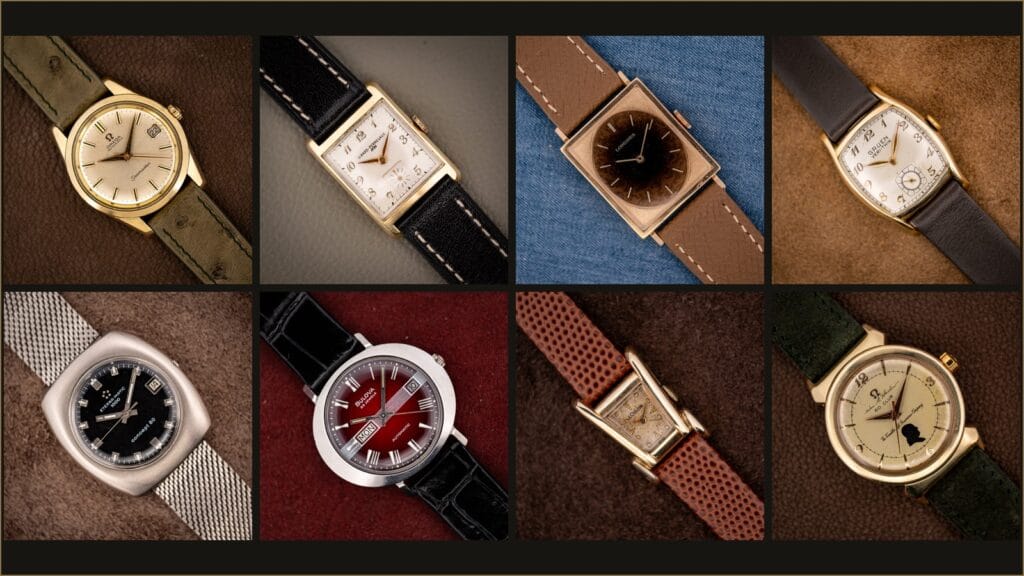
Watch Shapes: Which Vintage Case Shape Fits Your Style?
Case shape changes how a vintage watch wears more than diameter alone. Compare eight silhouettes and learn which one fits your wrist and style.
Vintage Dress Watches: How to Choose One You’ll Actually Wear
The best vintage dress watch is the one you will wear beyond weddings. Here is how to choose the right size, metal, dial, shape, and strap.
Vintage Watch Styles: A Visual Guide to Finding Yours
Most buyers pick a brand and stall. Here are nine vintage watch styles, shown with real watches from our archive, and the catch that comes with each one.
Vintage Tank Watches: A Buyer’s Guide to Rectangular Watches Beyond Cartier
Every Cartier Tank alternatives list is new watches imitating old ones. The originals still exist and cost less. A buyer's guide to vintage tank and rectangular watches: the brands, the prices, and what to check.
Service History Is the Wrong Question. Here’s the Right One.
Everyone says to ask for a vintage watch's service history. Most of it can't be verified, and a receipt proves a transaction, not a result. Here's what actually tells you a watch has been serviced, and the better question to ask.
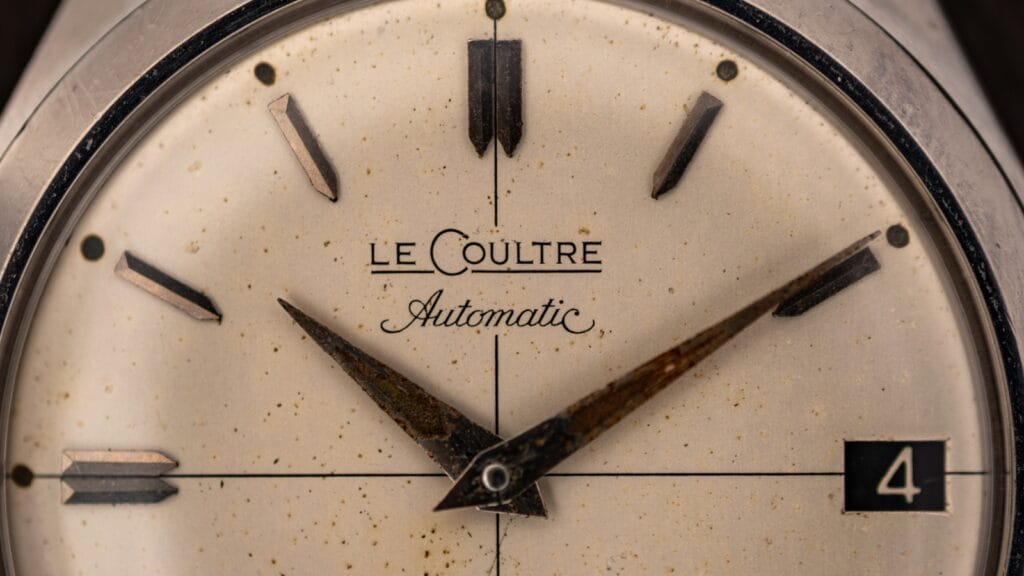
LeCoultre vs. Jaeger-LeCoultre vs. Jaeger: What the Name on the Dial Means
Three names, one Swiss firm, and one watch that isn't what it looks like. What LeCoultre, Jaeger-LeCoultre, and plain Jaeger on a vintage dial really tell you.
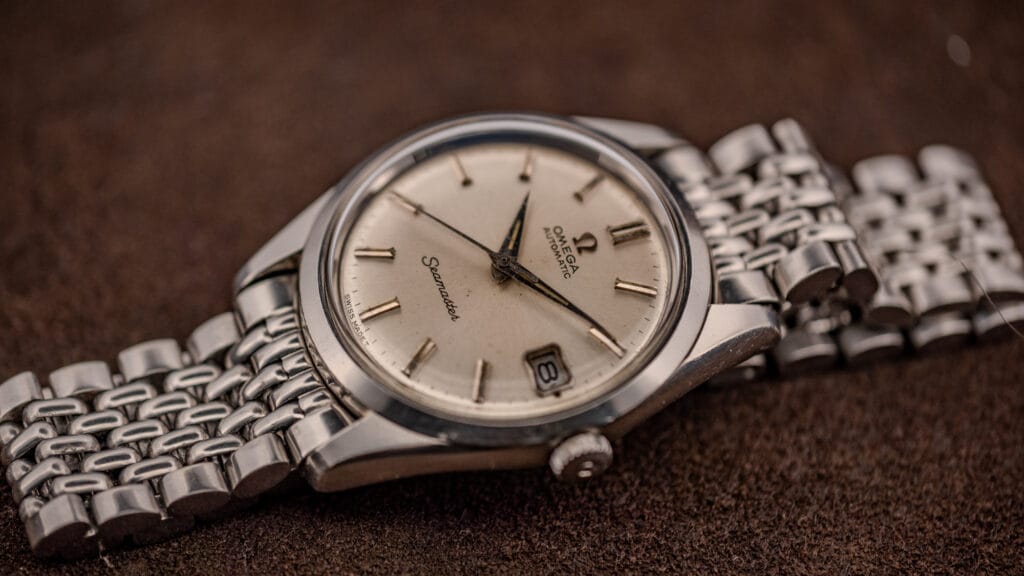
Omega Seamaster 166.010 Buyer’s Guide: Prices, Variants, and What to Look For (2026)
Everything you need to buy an Omega Seamaster 166.010 in 2026: real market prices by condition tier, five dial variants explained, caliber 562 vs 565, original part numbers, and what to inspect before you commit.
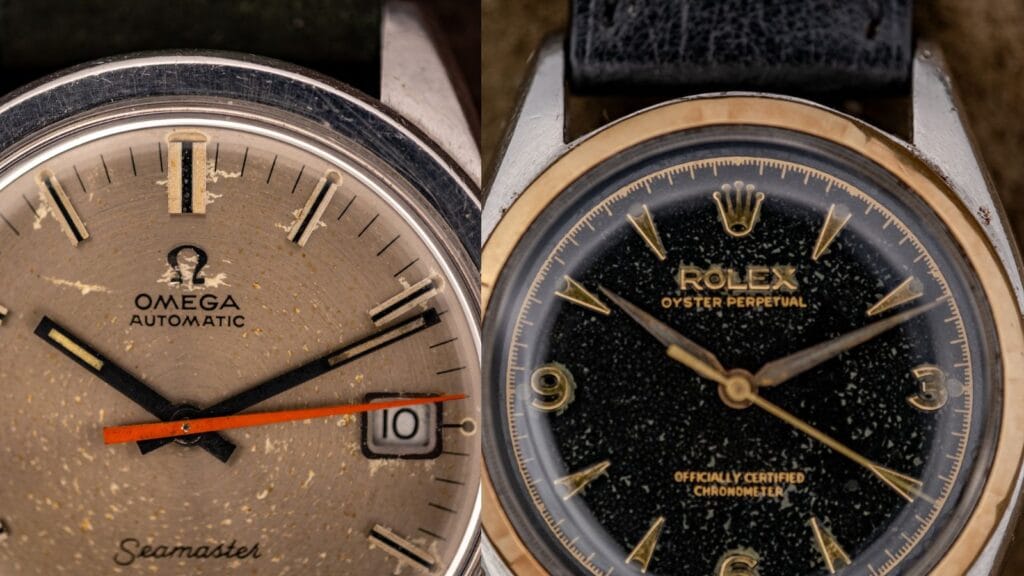
Omega vs Rolex: The Vintage Buyer’s Verdict
Vintage Omega vs vintage Rolex: where the Rolex premium is worth paying, where Omega is the smarter buy, and how to dodge redials on both. A collector's verdict.
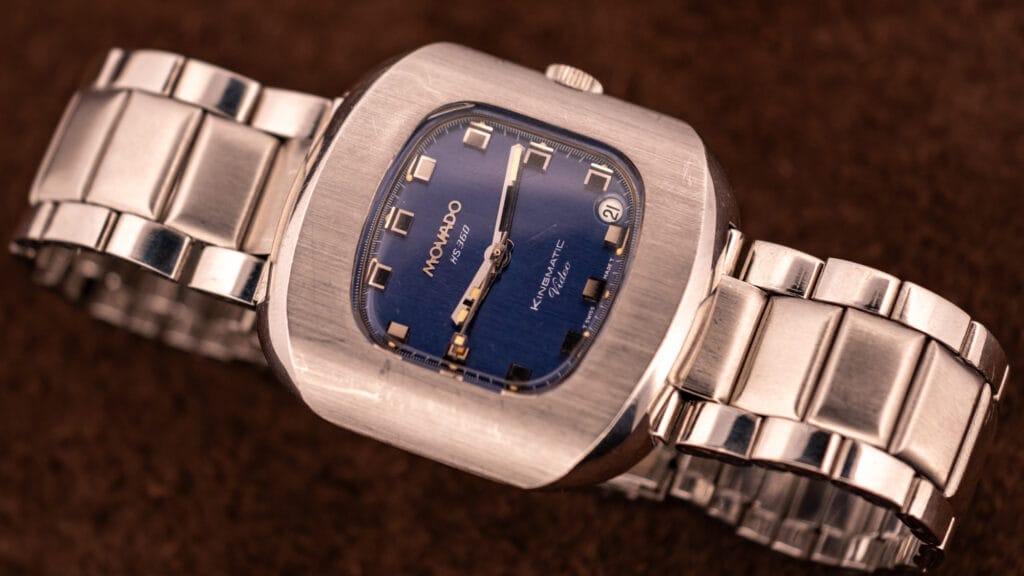
Movado Kingmatic: A Vintage Buyer’s Guide to References, Calibers, and Value
The Movado Kingmatic is one of the best values in vintage automatics. A buyer's guide to its references, in-house calibers, the Sub-Sea line, what to check, and what they actually sell for.
13 Vintage Watch Collecting Tips for Beginners (From 1,000+ Watches Sold)
Thirteen vintage watch collecting tips drawn from selling over 1,000 watches. What separates a smart first buy from an expensive lesson, with no sugar.
Vintage Wittnauer Chronograph Caliber Identification: Venus 188, Valjoux 7733/7734, Landeron 248
How to identify the movement inside any vintage Wittnauer chronograph: Venus 188, Valjoux 7733 and 7734, Landeron 248, and the house numbering system Wittnauer used to mark them.
How Water-Resistant Is a Vintage Watch, Actually? The Honest Answer.
Every dealer says never get a vintage watch wet. That advice is half-engineering and half-liability theater. Here is what is actually true about vintage water resistance, where water actually gets in, and when a 1965 diver is safer than a 2-year-old modern.