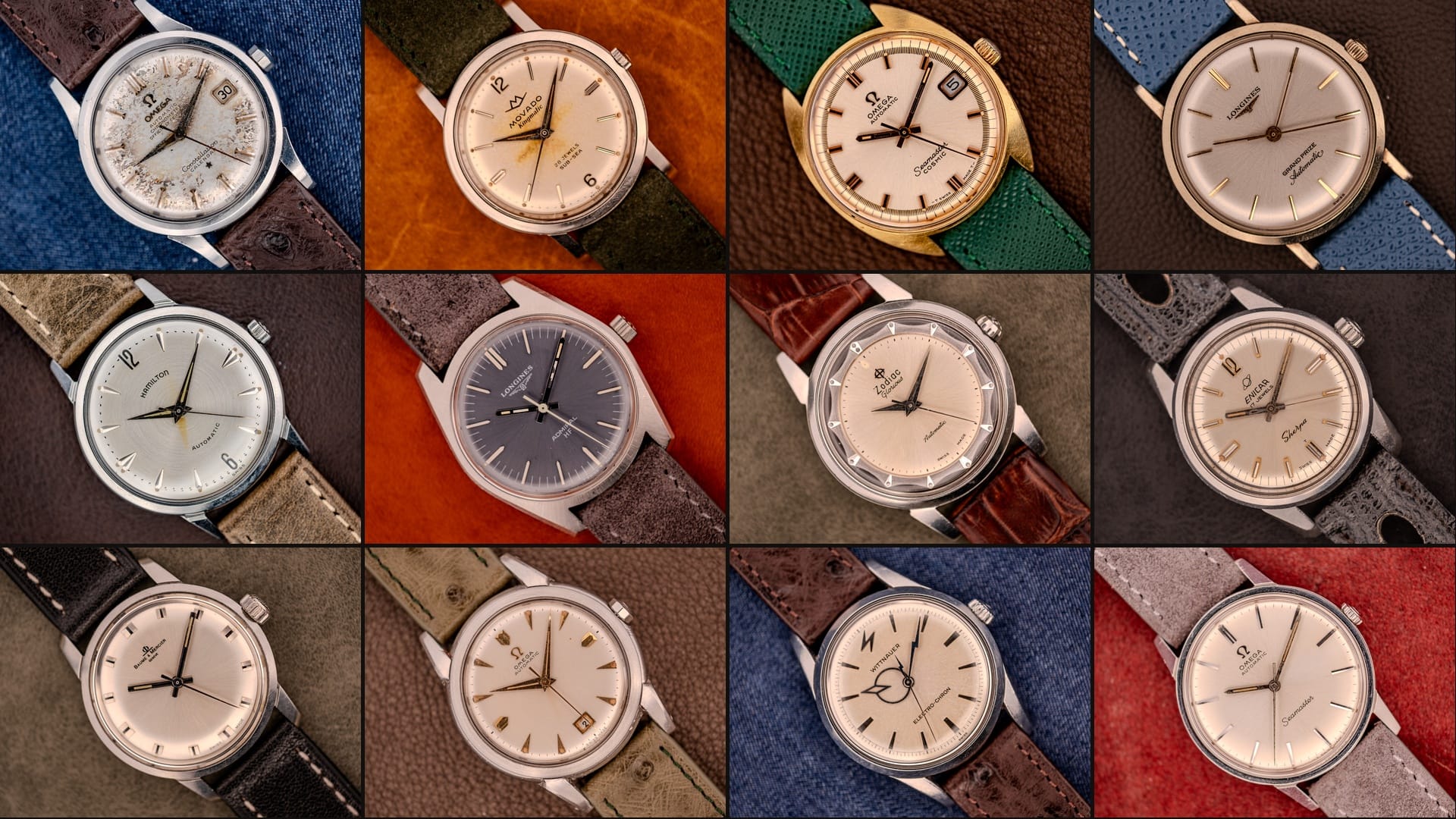
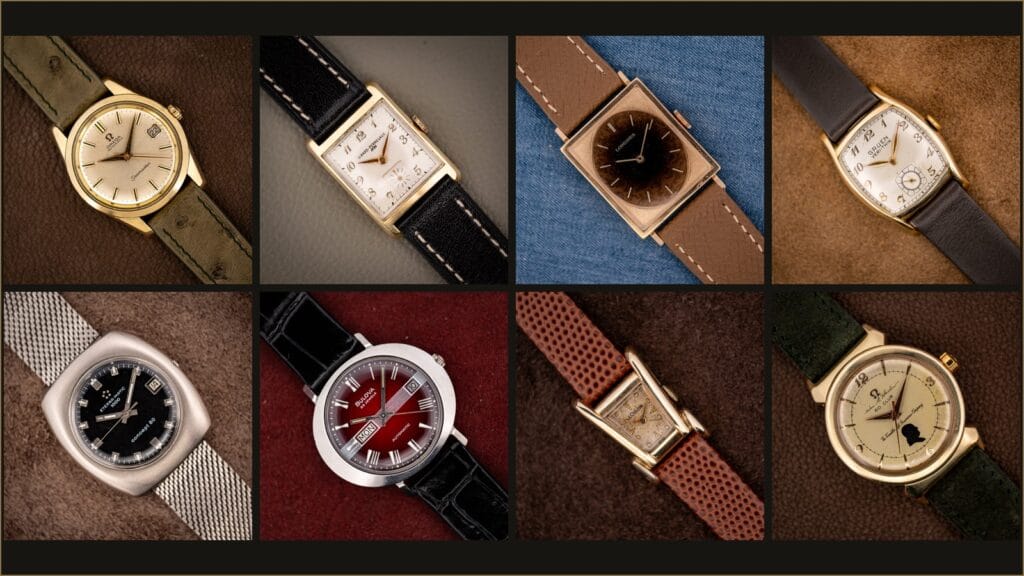
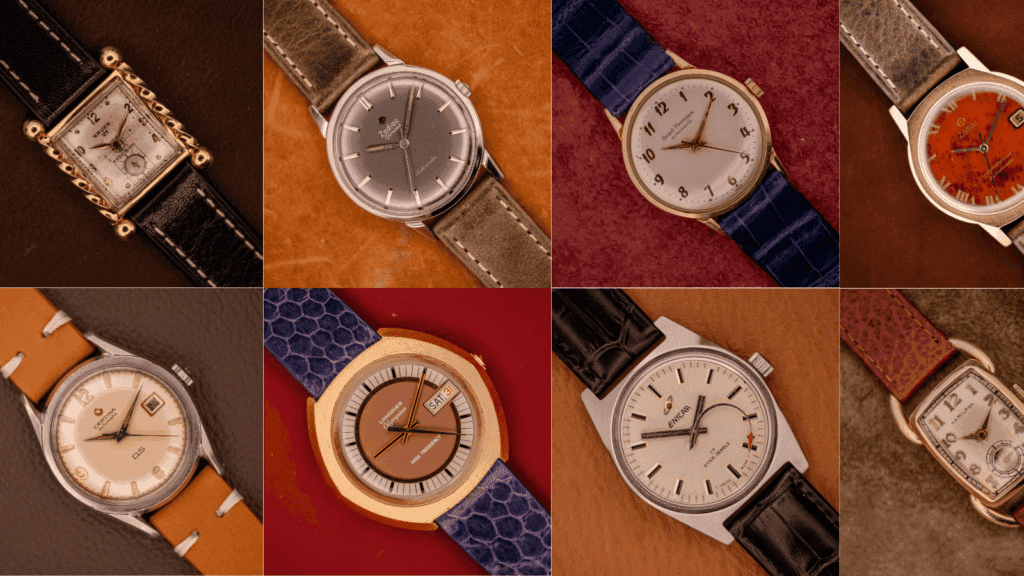
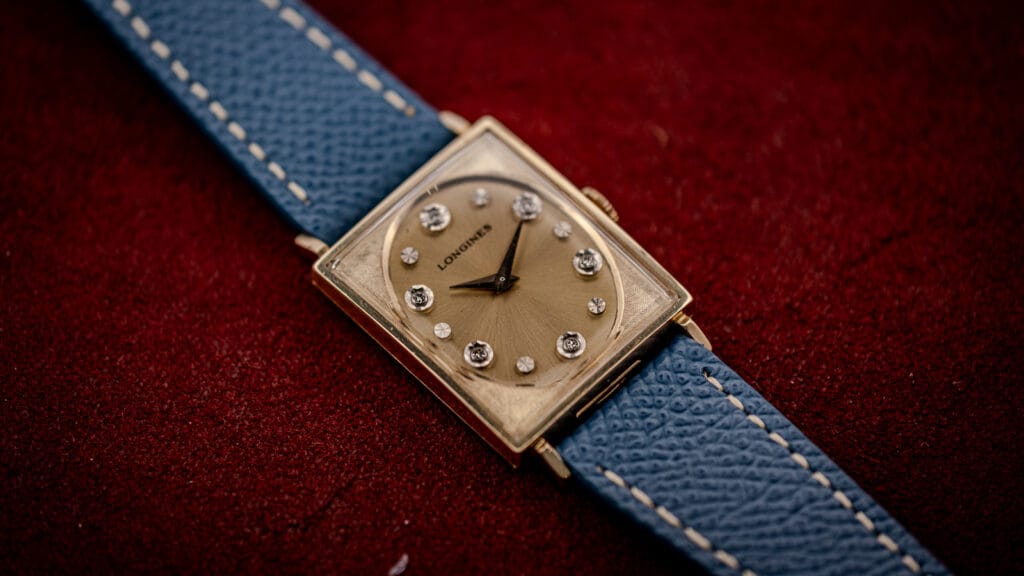
You found a watch. Maybe it was in a drawer at your grandfather’s house. Maybe you spotted it at an estate sale. Maybe someone handed it to you and said, “I think this is worth something.” Now you need answers: What is it? When was it made? Is it real? What’s it worth?
This guide walks you through the entire process, start to finish. I’ve been opening casebacks and identifying movements for years, and the method I use is the same whether the watch turns out to be a $200 Bulova or a $20,000 Omega. You read the physical evidence in order, triangulate across multiple data points, and let the watch tell you what it is.
No single marking, number, or feature is definitive on its own. Dials get swapped. Cases get replaced. Serial numbers get misread. The watches that fool people are the ones where somebody checked one thing and stopped looking. This guide teaches you to check everything.
What Makes a Watch “Vintage”?
There is no universal definition. Most dealers and auction houses use a practical threshold: a watch manufactured at least 25 to 30 years ago qualifies as vintage. Watches over 50 years old are sometimes called “antique,” though that term is more common in the pocket watch world. For the purposes of this guide, we are talking about mechanical and early quartz watches from roughly the 1920s through the 1990s.
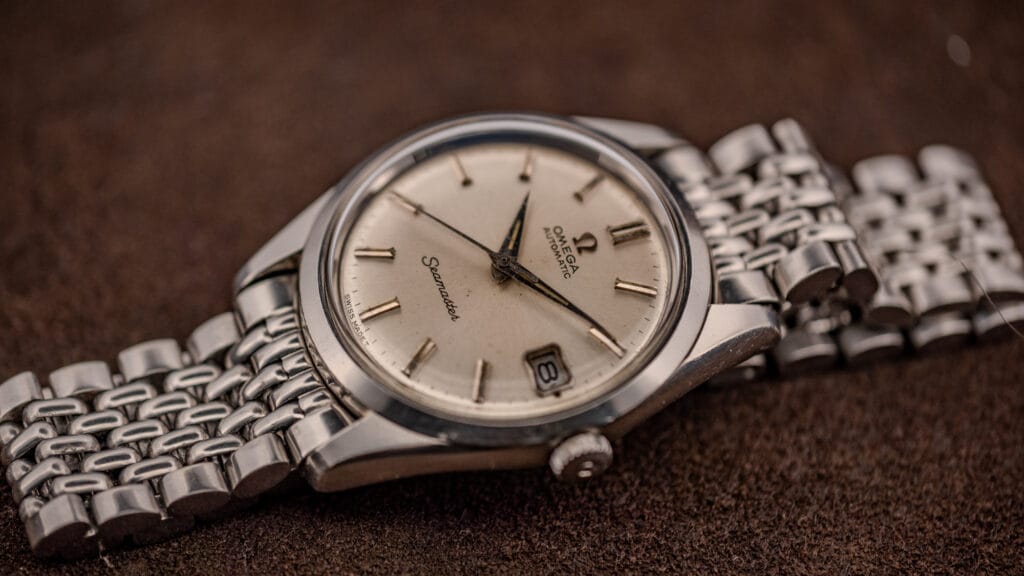
The reason the distinction matters is market positioning. A 1960s Omega Seamaster and a 2015 Omega Seamaster are fundamentally different collectibles with different value drivers, different authenticity concerns, and different buyer pools.
Step 1: Read the Dial First
The dial is the face of the watch, and it gives you more information at a glance than any other component. Before you touch anything, before you open the caseback, spend two minutes studying the dial.
Brand and Model Text
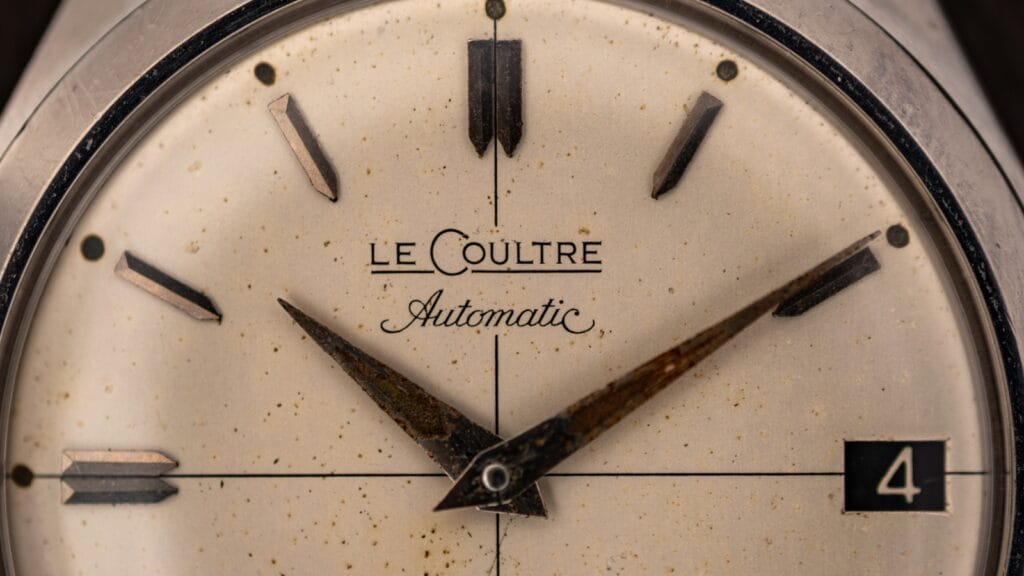
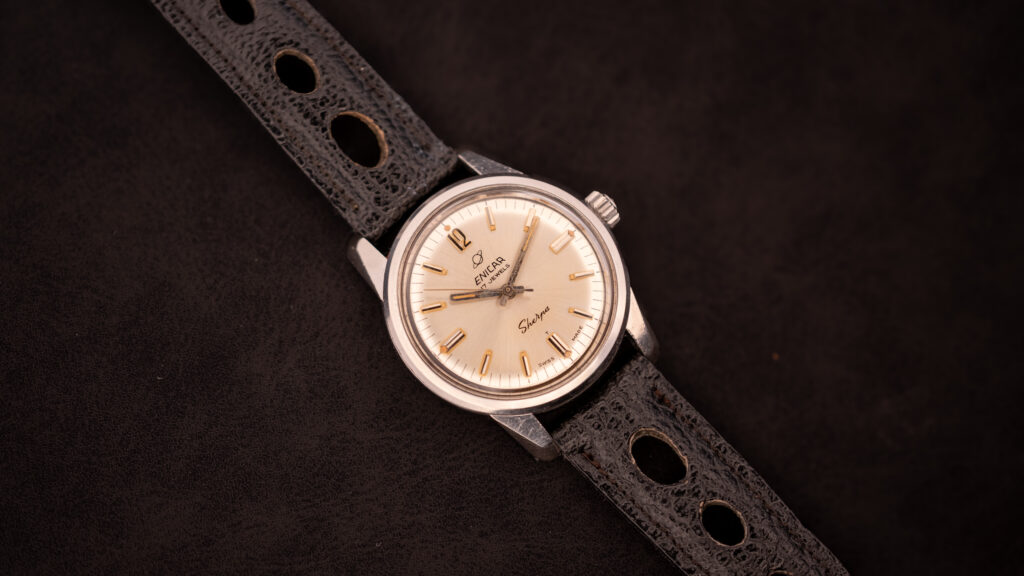
Look at the text printed or applied on the dial. The brand name typically sits just below 12 o’clock. Additional text (model name, “Automatic,” “Waterproof,” depth ratings) often appears above 6 o’clock or along the lower half of the dial. Write down every word you see, exactly as printed. Spelling, capitalization, and placement all matter for authentication later.
Luminous Material: Your Fastest Dating Tool
The luminescent material on the hour markers and hands is one of the most reliable ways to broadly date any vintage watch. Three eras correspond to three materials, and each leaves distinctive visual evidence.
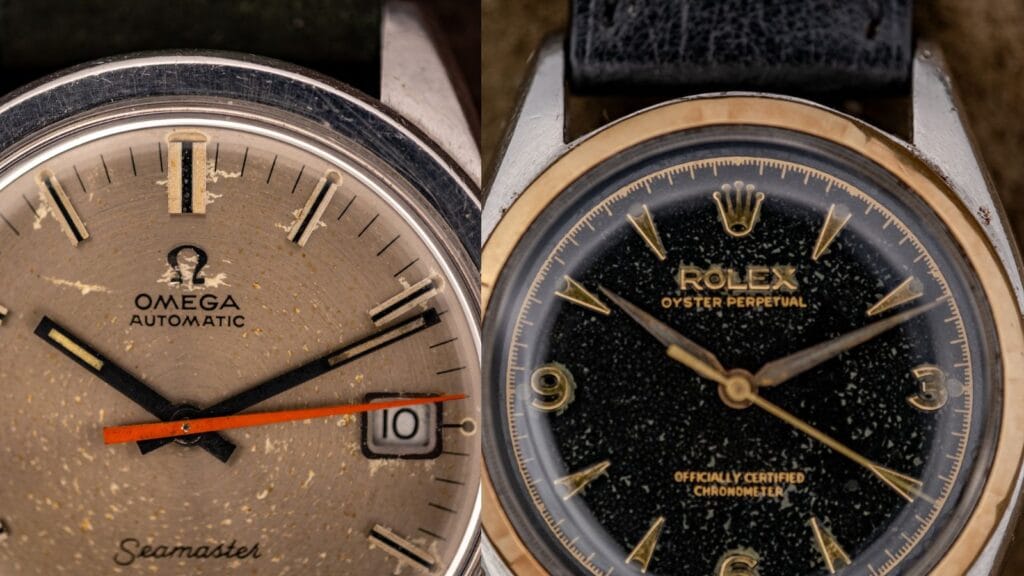
Radium (approximately 1910 to early 1960s): Radium-based lume ages to a distinctive orange-ochre or dark brown color with a porous, granular texture. It was banned in the United States in 1968. The critical identifier: radium-era dials carry no “T” markings anywhere. If you see brown, sand-textured lume plots and no tritium markings on the dial, the watch almost certainly predates 1963.
Tritium (approximately 1963 to 1998): Swiss law required tritium-bearing watches to be marked on the dial. Look near the 6 o’clock position for “T Swiss T,” “T Swiss Made T,” or “Swiss T<25.” Tritium has a half-life of roughly 12 years, so lume from this era no longer glows meaningfully. It ages to a creamy or yellowish patina. A 1970s watch with tritium markings and appropriately faded lume is exactly what you’d expect.
LumiNova and Super-LumiNova (approximately 1998 to present): Non-radioactive, photoluminescent. Charged by ambient light and glows blue-green. No “T” marking on the dial. If the lume on a claimed vintage watch is bright white or pale green and glows strongly in darkness, either the lume has been replaced or the watch is newer than advertised.
The consistency check: On an all-original watch, the lume on the hands and the lume on the dial indices should be the same compound at the same stage of aging. If the dial indices show aged, creamy tritium but the hands have bright white lume, somebody replaced the hands. That is a significant authenticity issue on collectible references.
Printed vs. Applied Markers
Printed (or painted) indices are flat, sitting within the dial surface itself. Applied indices are separate metal markers, often gold-filled or polished steel, physically attached to the dial. Applied markers became widespread from the 1950s onward as a sign of higher quality. This distinction helps narrow the era and quality tier of the watch.
Logo Details
Brand logos changed over the decades, and forgers often use the wrong era’s logo when refinishing dials. One well-known example: Omega’s applied logo from the 1950s through early 1970s features slightly upturned tips on the Ω symbol, a detail collectors call “happy feet.” After 1975, the logo became flatter and more angular. A “happy feet” logo on a watch claimed to be from 1980 is a red flag.
Turn the watch over. The caseback, the space between the lugs, and the inside of the caseback (once opened) carry critical identification data.
Finding Reference and Serial Numbers
The location of reference and serial numbers varies by brand. On a Rolex, the reference number is between the lugs at 12 o’clock and the serial number is at 6 o’clock (both require removing the bracelet on pre-2005 models). On an Omega, both numbers are typically on the movement or inside the caseback. On a Seiko, the caseback carries an 8-digit case number separated by a dash.
One of the most common beginner mistakes is confusing case serial numbers with movement serial numbers. On most vintage watches, the case and the movement were manufactured by separate companies. A number stamped on the outside of a caseback is almost always a case maker’s number. The number that matters for dating, the movement serial number, requires opening the watch.
Case Material Identification
Case markings tell you what the watch is made of.
Solid gold is marked with a karat stamp: 14K, 18K, or the European fineness equivalent (585, 750). Swiss gold watches carry official hallmarks from the Swiss Precious Metals Control system, in effect since 1882. An 18K Swiss gold case shows a Helvetia head; a 14K case shows a squirrel.
Gold-filled is a thick layer of gold bonded to a base metal core. American case makers stamped these with markings like “10K GF,” “14K GF,” or “14K Gold Filled,” often with a durability guarantee (“20-Year,” “25-Year”). The longer the guarantee, the thicker the gold layer.
Rolled gold plate (RGP) is a thinner gold layer than gold-filled, with shorter guarantee periods (typically 5 to 10 years). Marked “10K RGP” or “14K RGP.”
Stainless steel markings depend on origin. French-made or Swiss cases often read “Acier Inoxydable” or “Acier Inox.” “Fond Acier Inoxydable” means only the caseback is stainless; the rest of the case may be a different material. Stainless steel was not used in watch cases until the 1930s.
Important: there are no American hallmarks. Marks on American gold cases were applied by the manufacturer, not by an independent assay office. They are maker’s marks, not hallmarks in the legal sense. European hallmarks, particularly British assay marks with date letters, are independently verified and can date a case to a specific year.
Case Maker Marks
Inside the caseback, you may find the mark of the case manufacturer. Common American case makers include Keystone Watch Case Co. (whose “J. Boss” line is found in countless pocket watches), Wadsworth, Star Watch Case Co., and Illinois Watch Case Co. The British firm Dennison supplied cases to Omega, Longines, Rolex, and IWC, meaning a British-hallmarked Dennison case containing a Swiss movement is entirely normal.
Step 3: Dating by Case Shape
Case design followed cultural trends closely enough that the silhouette alone can place a watch within a decade.
Art Deco (1920s to 1940s): Geometric shapes, stepped or tiered lug profiles, rectangular and tonneau cases, wire lugs, hinged lugs, and decorative surface treatments. Arabic numeral dials. Black enamel accents.
Post-war sealed cases (1940s to 1950s): Round, conservative designs. Screw-down casebacks with tool marks instead of a friction-fit lip. The internal quality of movements from this era often peaked.
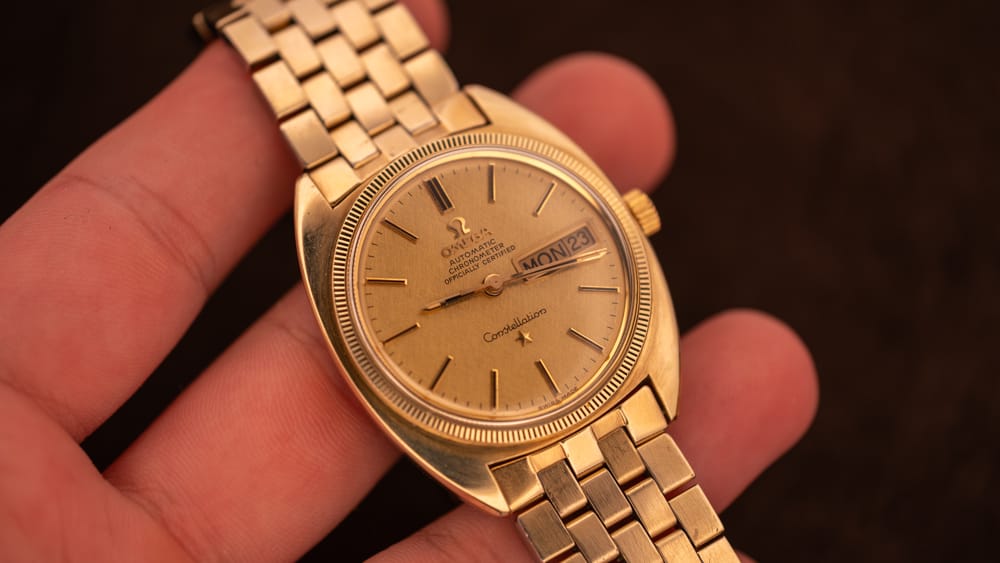
Thin dress watches (1950s to 1960s): Slim profiles, small faceted crowns, applied baton markers replacing Arabic numerals. The Omega Constellation pie-pan dial (1952 to 1970) is a defining design of this era.
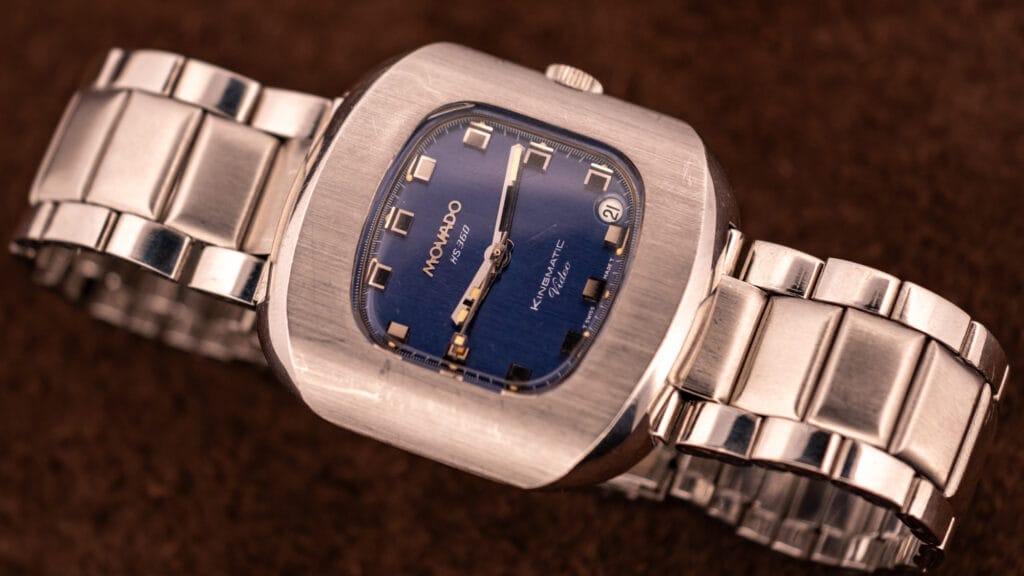
Cushion and TV cases (1970s): Square or rectangular cases with dramatically rounded corners. The cushion case captured roughly 25% of the watch market in the early 1970s. TV-shaped cases (rectangular with rounded sides resembling a television screen) were often paired with early quartz movements and were large for the era at 38 to 42mm.
Integrated bracelet designs (1970s): The Audemars Piguet Royal Oak (1972) and Patek Philippe Nautilus (1976), both designed by Gerald Genta, defined the luxury steel sports watch. If a watch has a seamless bracelet-to-case transition with no traditional lugs, it is almost certainly from the 1970s or later.
Step 4: Movement Identification
Opening the caseback and examining the movement is the most reliable identification step. Dials and cases can be swapped. The movement cannot lie in the same way.
Determining Movement Type
You can often tell the movement type without opening the case:
Manual wind: No rotor visible through a display caseback. Winding only through the crown. Common across all eras but especially dominant before 1950.
Bumper automatic: The rotor swings roughly 230 degrees and strikes spring-cushioned buffers at each end of its arc. You can feel a subtle “bump” when tilting the watch. Most common from the 1930s to early 1950s. Rolex never used bumper movements; their Oyster Perpetual (1931) used a full-rotor design.
Full-rotor automatic: After Rolex’s patent expired in 1948, the 360-degree rotor became industry standard. The rotor spins freely in both directions.
Tuning fork (Bulova Accutron): Introduced in 1960 with Caliber 214. Instead of a balance wheel, a small tuning fork oscillates at 360 Hz, producing a faint electrical hum. The seconds hand sweeps perfectly smoothly, unlike the stepping motion of quartz. Accutron Spaceview models expose the tuning fork through a skeleton dial.
Quartz: Battery-powered. The seconds hand moves in distinct one-second steps. Commercially introduced with the Seiko Astron in 1969.
Reading the Movement
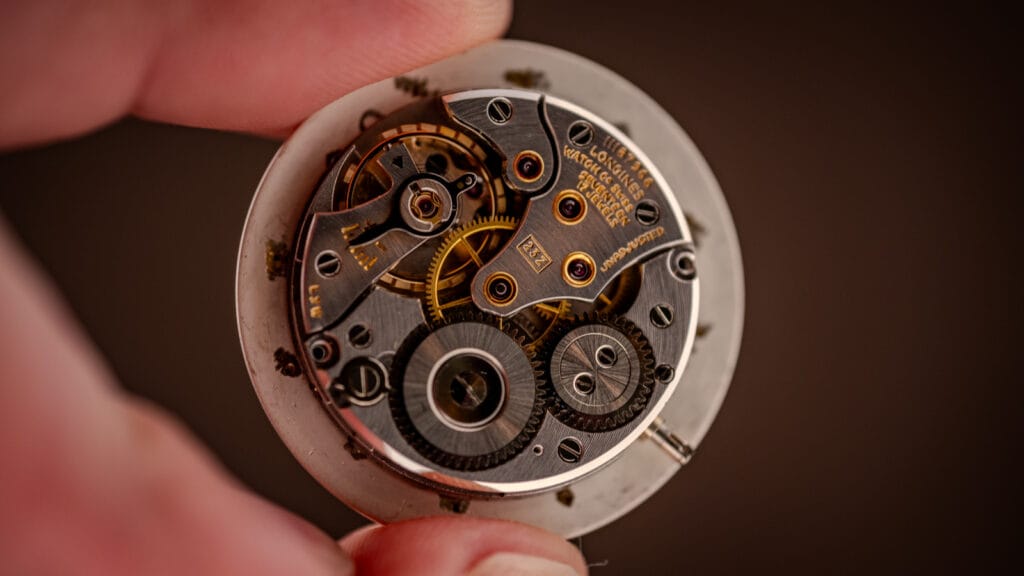
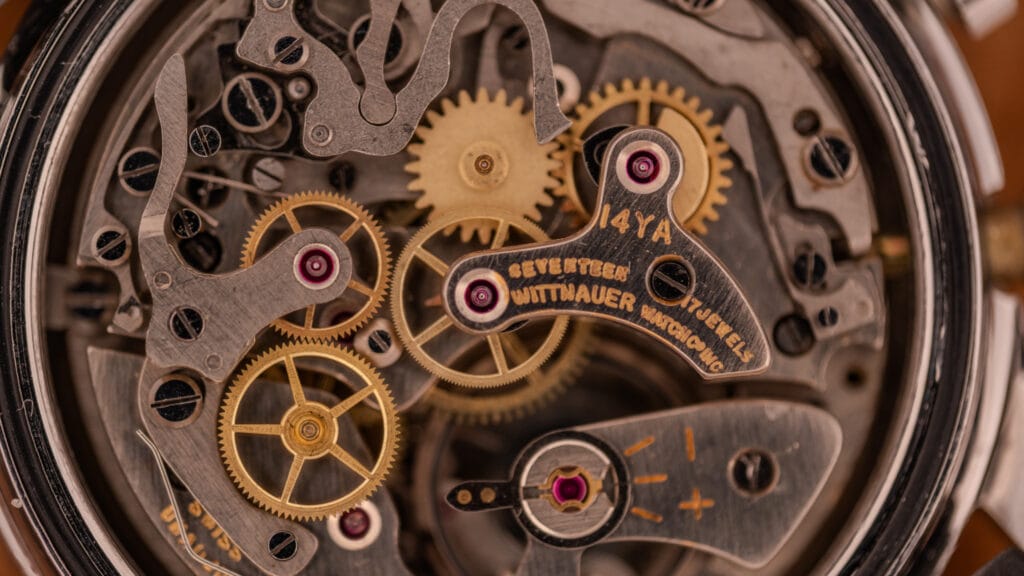
Once the caseback is open, look for the caliber number, typically stamped on the movement plate near the balance wheel or under the dial. The jewel count (“17 Jewels,” “21 Jewels”) is a rough quality indicator: 7 jewels is economy grade, 15 to 17 is standard, and 21-plus indicates a high-quality or chronometer-rated movement.
On American pocket watches and some early wristwatches, adjustment markings are valuable quality indicators. “Adjusted to 5 Positions” means the movement was regulated in five orientations at the factory. “Adjusted to Temperature” indicates a compensating balance wheel. These marks correlate directly to movement grade.
Movement Databases
If the movement is unmarked or unfamiliar, several online databases can help:
Ranfft.de covers more than 10,000 Swiss and European calibers. 17jewels.info has fewer entries but exceptional accuracy. Caliber Corner provides good photographs and active commentary. For American pocket watches, the Pocket Watch Database (pocketwatchdatabase.com) is the definitive resource, covering Elgin, Hamilton, Waltham, Illinois, and others with serial number lookups that return grade, model, jewel count, and estimated production date.
If the dial says one brand but the movement says another, that is not necessarily fraud. Many mid-century watches used ebauche (unfinished movement blanks) from suppliers like ETA, A. Schild, or Felsa, finished and signed by the selling brand. This was and remains standard practice.
Step 5: Serial Number Lookups
Once you have the movement serial number, you can usually date the watch to within one or two years using published serial-to-date tables. The key principle: always use the serial number from the movement, not the case.
For brands where we have not yet published dedicated guides, the Master Resource Directory at the end of this article lists the best free databases for each major brand.
Step 6: Authentication and Frankenwatch Detection
A “frankenwatch” is a watch assembled from components of different watches: a dial from one reference in the case of another, or a movement from a different year. The assembled watch appears coherent but is actually cobbled together from mismatched parts. Frankenwatches are common in the vintage market, and detecting them requires checking that every component “speaks the same language.”
The Consistency Test
Every component of an original watch should be consistent with the same reference, production era, and manufacturing origin:
Serial and reference number alignment. The reference number should correspond to known production records for the case, dial, and movement combination. Numbers that do not align with documented production indicate part swaps.
Aging consistency. Parts from different watches show different wear patterns, oxidation rates, and patina. A case showing 40 years of honest wear paired with a dial that looks brand new is suspicious.
Lume matching. As discussed above, the lume compound on hands and dial indices should match in material and aging. Mismatched lume is one of the most common tells.
Period-appropriate components. A crystal, crown, or bezel correct for a later generation of the same model but wrong for the stated production year indicates replacement.
Spotting Refinished Dials
A refinished (redialed) dial has been re-coated, repainted, or had its markers replaced. This reduces value by roughly 50% on most references, and renders some rare watches essentially unsellable to serious collectors.
Signs of refinishing include: an unnaturally perfect, high-gloss surface (original dials oxidize unevenly over decades); misaligned minute tracks, hour markers, or logos; incorrect era typography or logo style; glue deposits visible around applied markers under magnification; and the lume mismatch described above.
Step 7: Condition Grading
Condition is the most important variable in vintage watch valuation after brand and reference. Unlike modern watches, the vintage market uniquely prizes age-appropriate wear over cosmetic perfection.
The Four-Tier Framework
Mint / New Old Stock: Unworn or virtually unworn. All components original. No visible wear under magnification. Original crystal, crown, bracelet. Extremely rare for truly vintage pieces. Commands the highest premium.
Excellent: Light, honest wear consistent with careful ownership. All major components original. Dial clean with no significant damage. Case unpolished with original lug geometry intact. Crystal may show light scratches. Movement recently serviced or in running condition.
Good: Moderate wear from regular use. Dial may show light spotting or minor imperfections but is original. Case may show scratches or very light polishing. Crown may be a correct-era replacement. Movement functional. This is the most common condition tier for vintage watches in the secondary market.
Fair / Poor: Significant wear, damage, or missing components. Dial may be damaged, spotted, or refinished. Case heavily polished or dented. Movement may need service. Non-original parts present. Value is substantially reduced, sometimes to the point where the watch is worth its components rather than its identity.
What Matters Most
The dial accounts for 50 to 70% of a vintage watch’s value. A watch with a damaged or refinished dial is worth a fraction of the same reference with an original dial in clean condition. This is the single most important condition factor.
An over-polished case loses 20 to 30% of its value. Polishing removes metal, permanently eliminating the sharp bevels and lug geometry that define the watch’s original architecture. Two otherwise identical watches, one with an unpolished case and one buffed smooth, can differ by hundreds or thousands of dollars. At the extreme end, two identical Rolex 6062 references sold within two weeks of each other at different auction houses, one oxidized and unpolished, the other polished to a bright finish. The unpolished example brought over $540,000. The polished one sold for $62,500.
Surface scratches from honest wear have minimal impact. Often 5% or less. Serious collectors sometimes prefer them as evidence the case has not been polished.
Crystal condition is secondary. Original acrylic crystals with honest scratches are preferred over replaced sapphire units that are period-incorrect. A chipped crystal reduces value by roughly 10%. A shattered crystal requiring movement repair can cost up to 70%.
Step 8: Researching Market Value
Once you have identified the watch and graded its condition, you need comparable sales data. The key word is “comparable”: same reference, same approximate condition, same era, same configuration.
eBay Sold Listings
Navigate to eBay Advanced Search, enter specific search terms (reference number, brand, and model rather than just the brand name), and check “Sold Listings” under “Show Only.” Green prices are confirmed sales. Red prices are unsold listings. The gap between sold and unsold reveals the market’s ceiling.
Chrono24
Chrono24’s ChronoPulse index tracks 14 major brands across 140 models using over 600,000 real transactions. Their free valuation tool compares your watch against current and recent listings. The platform skews toward cleaner, more collectible examples, so prices tend to be higher than eBay but represent a more curated market.
Remember that asking prices are not sales prices. The gap between what sellers list and what buyers pay is often substantial.
Auction House Results
For high-value vintage watches, auction archives from Christie’s, Sotheby’s, Phillips, Antiquorum, and Heritage Auctions are invaluable. These represent the highest-quality, highest-interest examples and should be treated as a ceiling price for exceptional specimens, not an average market value. Buyer’s premiums of 15 to 25% on top of the hammer price mean the actual buyer cost is higher than the published result.
Dealer Pricing
Dealer asking prices include authentication, servicing, warranty, and risk overhead. Vintage watch dealers typically price 27 to 50% above their acquisition cost. If a dealer asks $20,000, they likely paid $10,000 to $15,000, and a comparable private transaction might land at $14,000 to $17,000. Use dealer prices as the upper bound of fair value, not the baseline.
What Adds Value, What Kills It
Certain attributes significantly move the needle on vintage watch pricing, up or down.
Value Multipliers
Military provenance with documented markings (MIL-SPEC codes, broad arrow stamps, military issue numbers) adds 10 to 30% or more for documented pieces. Undocumented claims add nothing.
Retailer-signed dials from prestigious retailers increase value substantially. Tiffany & Co. is the most powerful name, with Tiffany-signed Patek Philippe references commanding 20 to 100% premiums over unsigned equivalents. Other significant signatures include Cartier, Serpico y Laino, Turler, Gobbi, and Gubelin.
Tropical dials, where an original black dial has naturally discolored to brown or caramel through UV exposure, add 50 to 100% on applicable references. This applies primarily to mid-1950s through late 1960s Rolex, Omega, and some other brands. The discoloration must be natural and consistent. Artificially aged dials are worth nothing of the sort.
Original box and papers add a premium. Chrono24 data indicates watch-only (no box, no papers) sells for roughly 17% less than a full set. Papers are more valuable than boxes because papers are serialized to the specific watch.
Frankenwatches (mismatched components from different watches) lose 50 to 90% of value and are often unsellable to serious collectors.
Refinished dials reduce value by roughly 50%. Major auction houses will not accept watches with redialed surfaces at full estimate.
Case swaps (original movement in a replacement case) are a serious authenticity issue.
Aftermarket parts of any kind, from crowns to bezels to bracelets, reduce value to varying degrees.
Brand-Specific Quick Reference
Every brand handles serial numbers, reference numbers, and dating differently. Here is a condensed reference for the twelve brands most commonly found in estate drawers and at flea markets.
Omega
Serial numbers are on the movement or inside the caseback (vintage) or outside the caseback (post-1990). Seven to eight digits, dating from 1894. Reference number formats changed four times: pre-1962 letter-number codes, 1962 to 1988 three-part numeric (e.g., 165.003), and post-1989 structured alphanumeric. The most common vintage Omega you will encounter is a Seamaster from the 1950s to 1970s.
Serial number location changed in the mid-2000s: between the lugs at 6 o’clock (pre-2005), then also on the inner rehaut (2005 to 2008), then rehaut only (2008-plus). Rolex reset serial numbers in 1954 and switched to randomized serials around 2010. Interior caseback date codes (Roman numeral plus year) are often more reliable than serial tables for vintage dating. The most commonly found vintage Rolex is the Datejust.
Longines
Serial numbers appear on the movement (authoritative) and separately on the case (unreliable for dating). The Longines serial system runs continuously from serial 1 in 1867 and is one of the most complete in horology. Do not confuse the case serial with the movement serial; they are different numbers from different manufacturers.
American-era (1892 to 1969) serial numbers are on the movement plate. Post-1969 Hamilton movements are Swiss-made (ETA-based) with no Lancaster, PA markings. Hamilton named movements by grade number (e.g., 992B), not model name. For pocket watches, the Pocket Watch Database is the definitive resource.
Bulova
Bulova is unique: the primary identification tool is a two-character date code stamped on the outside of the caseback, not a traditional serial number. From 1950 to 2009, the code uses a letter for the decade (L = 1950s, M = 1960s, N = 1970s) followed by a digit for the year. L5 = 1955. M8 = 1968.
The serial number on the caseback encodes the production date directly. The first digit is the year within the decade, the second character indicates the month (1 through 9 for January through September, then O, N, D for October through December). The reference number format (e.g., 7S26-0020) encodes the caliber number as the first four digits.
Tissot
Serial numbers are on the movement and inside or outside the caseback. Tissot’s own records can sometimes be accessed through their customer service for authentication, though publicly available serial tables exist from third-party sources.
Wittnauer
Wittnauer served as the exclusive US distributor for Longines from the 1870s through the mid-20th century. Many vintage watches with “Wittnauer” on the dial contain Longines movements inside. If you open a Wittnauer caseback and find a movement marked “Longines,” use the Longines serial table to date it.
Gruen’s serial number system is unreliable. The most accurate dating method for Gruen wristwatches (1935 to 1957) is the Style Number stamped inside the caseback. Inside the caseback you will typically find two numbers: the caliber number and the style number. The style number can be matched to published tables that date the model’s introduction year. This technique was published in peer-reviewed horology journals and is significantly more reliable than the movement serial alone.
Benrus
Benrus is among the most difficult mid-century American brands to research because the company did not maintain comprehensive public production records. Dating is done by movement caliber identification and cross-referencing against vintage catalogs. The most collectible Benrus pieces are the Type I and Type II military watches, identifiable by their MIL-SPEC markings and monobloc case construction.
Elgin and Waltham
Both brands have exceptionally well-documented serial systems through the Pocket Watch Database. Elgin serial numbers cover 1867 to 1956. Waltham serial numbers cover the 1850s onward. In both cases, the serial number is on the movement, not the case. The case number, if present, is a case maker’s identifier and cannot be used for dating.
When to Get Professional Help
Professional appraisal makes sense in several situations: when seeking insurance coverage, settling an estate, when the watch is valuable enough to justify the cost, or when specific authentication is needed for a claimed attribute like military provenance or celebrity ownership.
Auction house evaluations are free and represent the most authoritative valuations for high-grade vintage watches. Antiquorum offers free watch appraisal within 48 hours from submitted photographs. Heritage Auctions offers a similar free online evaluation. Christie’s, Sotheby’s, and Phillips all provide consignment estimates, though they focus on watches with meaningful auction potential (typically $5,000 and above).
Certified appraisers through the American Society of Appraisers (ASA) or the Appraisers Association of America (AAA) typically charge $50 to $150 per hour or a flat fee of $150 to $500 per watch. Avoid any appraiser who charges a percentage of appraised value; that is an ethical conflict of interest.
Dealer evaluations are usually informal and free, though the implicit offer to purchase the watch at the evaluated price is part of the service. Getting evaluations from two or three dealers provides useful triangulation.
One important distinction: insurance appraisals value at replacement retail cost, which is higher than the watch’s actual resale (fair market) value. Know which type of valuation you need before you engage an appraiser.
Master Resource Directory
Brand
Best Free Resource
URL
Omega
Vintage Masters serial table
vintagemasters.eu
Rolex
Bob’s Watches serial chart
bobswatches.com/rolex-serial-numbers
Longines
Bob’s Watches / PM Time
bobswatches.com/longines
Hamilton
Pocket Watch Database
pocketwatchdatabase.com
Bulova
myBulova date codes + models
mybulova.com
Seiko
RetroSeiko decoder
retroseiko.co.uk
Tissot
Elite Timepieces table
elitetimepieces.com/tissotref.html
Wittnauer
Use Longines serial tables
pocketwatchrepair.com/histories/longines.php
Gruen
GruenWristwatches Style Number Tool
gruenwristwatches.com/new-dating-method-2.php
Benrus
Military ID: Worn & Wound
wornandwound.com
Elgin
Pocket Watch Database
pocketwatchdatabase.com
Waltham
Pocket Watch Database
pocketwatchdatabase.com
Movement identification databases:Ranfft.de (10,000-plus calibers), 17jewels.info (fewer entries, highest accuracy), Caliber Corner (good photos), Mikrolisk.de (trade names and brand-to-manufacturer identification).
Frequently Asked Questions
How do I identify a vintage watch by photo? AI-powered tools like Chrono24’s Watch Scanner, WatchSpace AI, and watchID.app can identify brands and models from photographs. They work reasonably well for common references from major brands but struggle with obscure models, private-label watches, and heavily customized pieces. Use them as a starting point, not a final answer.
What is the best app to identify a watch? The Chrono24 Watch Scanner is the most widely used, drawing on the platform’s massive database of listings. watchID.app has tested well in independent evaluations across multiple models. For serious identification work, visual AI tools should supplement, not replace, the physical inspection methods described in this guide.
Is my old watch worth anything? Almost certainly, though “worth anything” covers a wide range. A common 1960s Bulova dress watch in fair condition might bring $50 to $150. A clean 1960s Omega Seamaster in the same condition tier might bring $500 to $1,500. A 1960s Rolex Submariner in comparable condition is a different conversation entirely. Brand, reference, and condition are everything.
How can I tell if a vintage watch is authentic? Run the full consistency test described in Step 6: check serial and reference number alignment, aging consistency across all components, lume matching between dial and hands, and period-appropriate parts. No single test is definitive. Authentication is triangulation.
How old does a watch have to be to be considered vintage? Most dealers use 25 to 30 years as the practical threshold. There is no official standard.
Does servicing a vintage watch reduce its value? Proper servicing by a qualified watchmaker generally does not reduce value, provided original parts are preserved. However, servicing that replaces original components (dial, hands, crown, crystal) with modern service parts can significantly impact collectibility. Always communicate to your watchmaker that original parts should be retained and returned to you.
Most buyers pick a brand and stall. Here are nine vintage watch styles, shown with real watches from our archive, and the catch that comes with each one.
Every Cartier Tank alternatives list is new watches imitating old ones. The originals still exist and cost less. A buyer's guide to vintage tank and rectangular watches: the brands, the prices, and what to check.
Everyone says to ask for a vintage watch's service history. Most of it can't be verified, and a receipt proves a transaction, not a result. Here's what actually tells you a watch has been serviced, and the better question to ask.
Three names, one Swiss firm, and one watch that isn't what it looks like. What LeCoultre, Jaeger-LeCoultre, and plain Jaeger on a vintage dial really tell you.
Everything you need to buy an Omega Seamaster 166.010 in 2026: real market prices by condition tier, five dial variants explained, caliber 562 vs 565, original part numbers, and what to inspect before you commit.
Vintage Omega vs vintage Rolex: where the Rolex premium is worth paying, where Omega is the smarter buy, and how to dodge redials on both. A collector's verdict.
The Movado Kingmatic is one of the best values in vintage automatics. A buyer's guide to its references, in-house calibers, the Sub-Sea line, what to check, and what they actually sell for.
Thirteen vintage watch collecting tips drawn from selling over 1,000 watches. What separates a smart first buy from an expensive lesson, with no sugar.
How to identify the movement inside any vintage Wittnauer chronograph: Venus 188, Valjoux 7733 and 7734, Landeron 248, and the house numbering system Wittnauer used to mark them.
Every dealer says never get a vintage watch wet. That advice is half-engineering and half-liability theater. Here is what is actually true about vintage water resistance, where water actually gets in, and when a 1965 diver is safer than a 2-year-old modern.