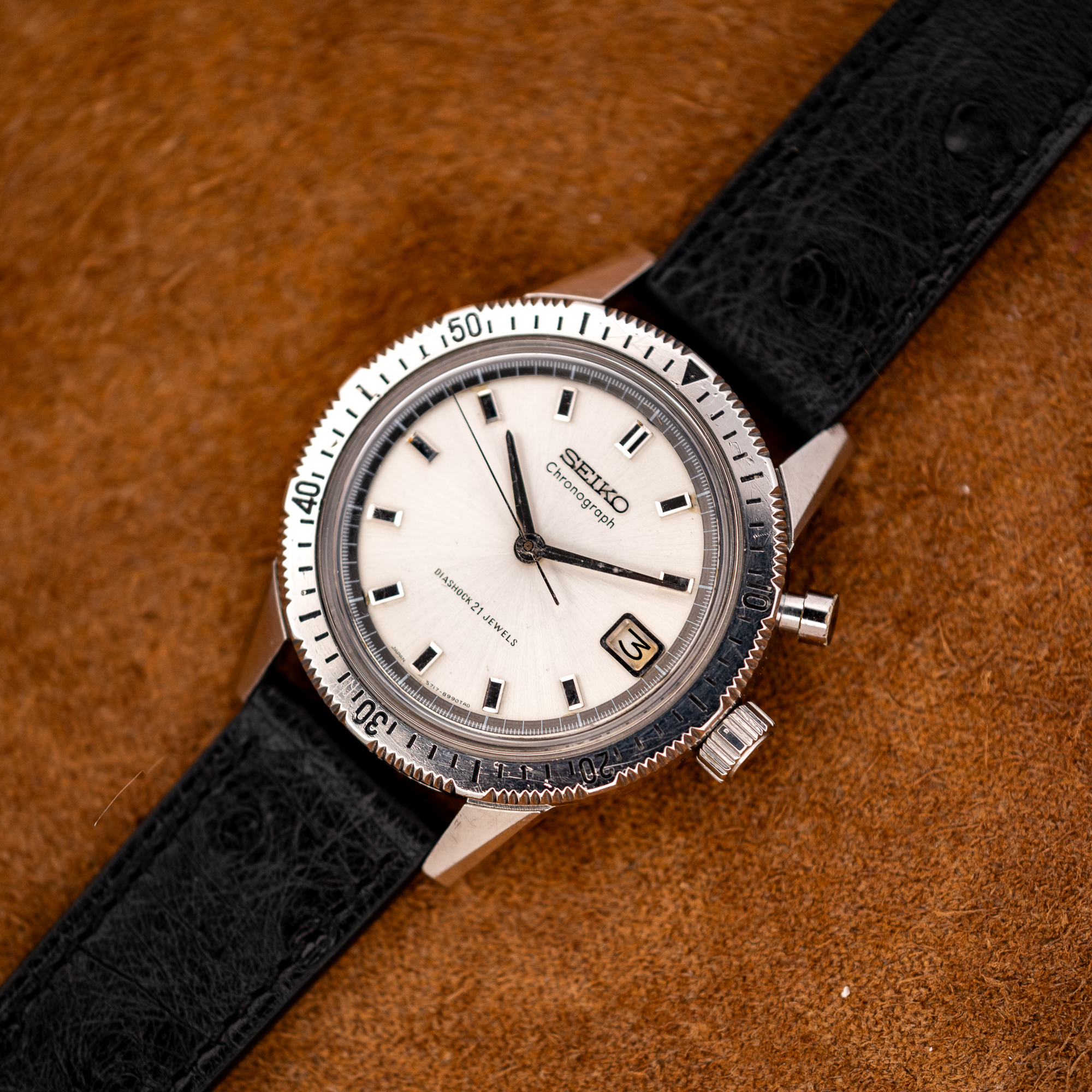
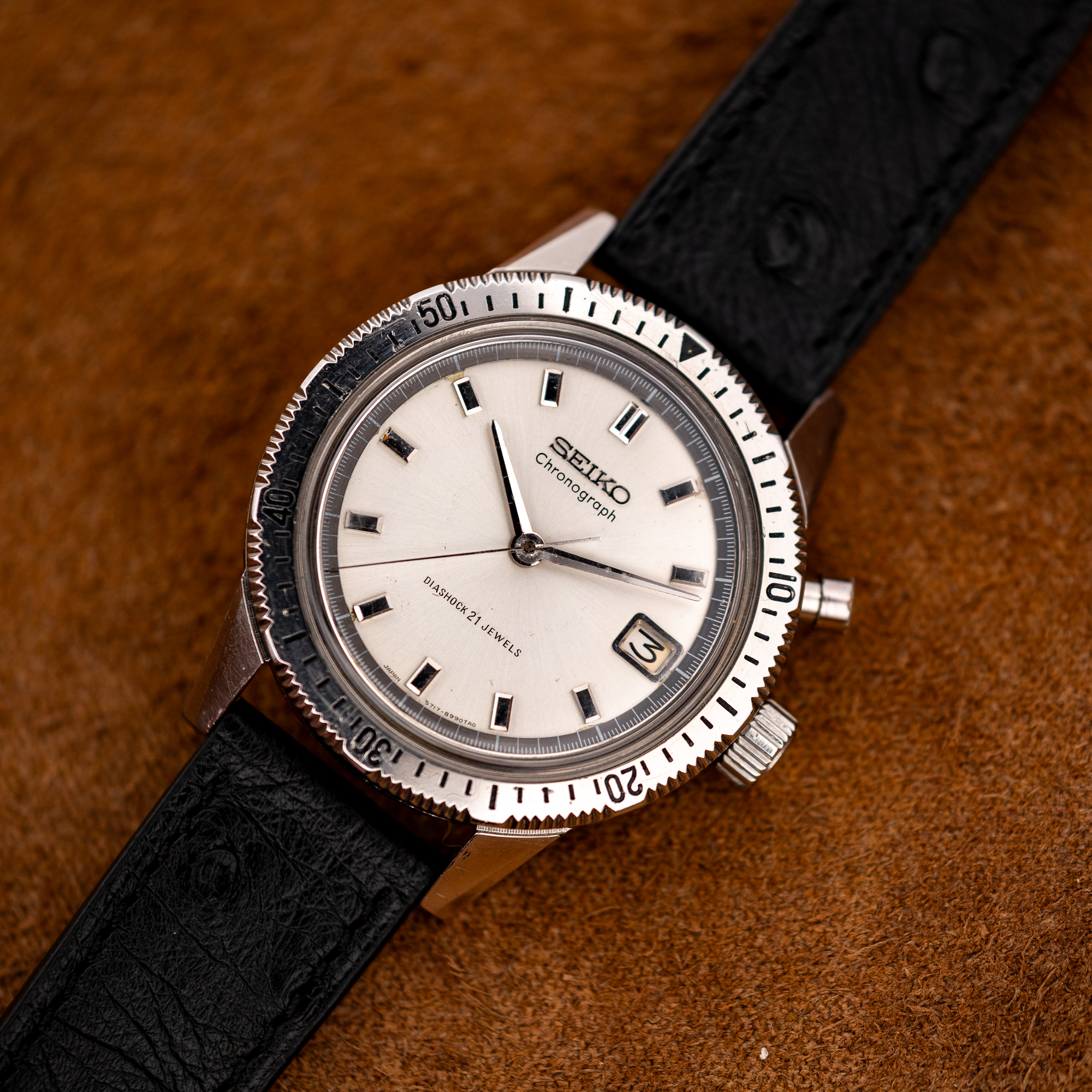
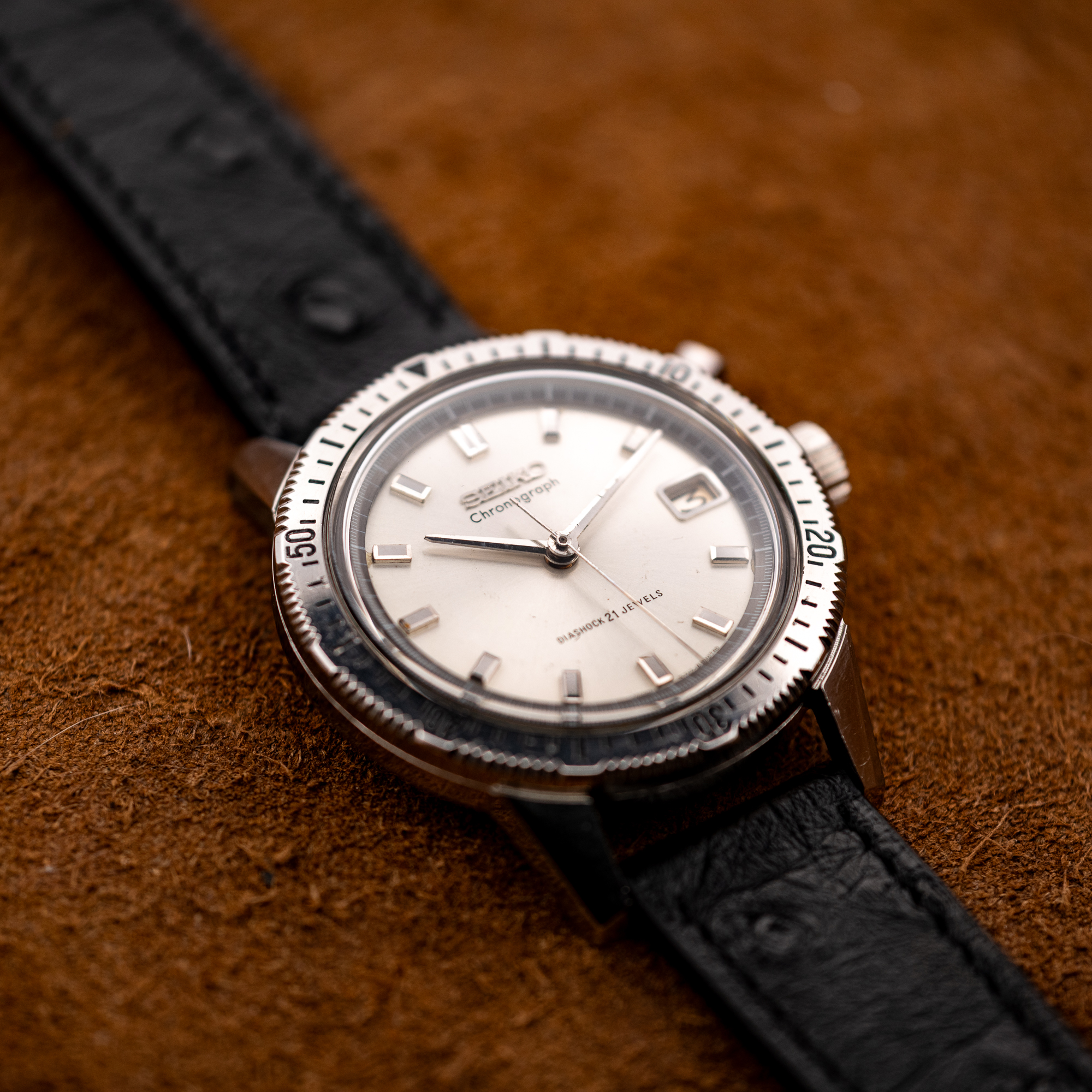
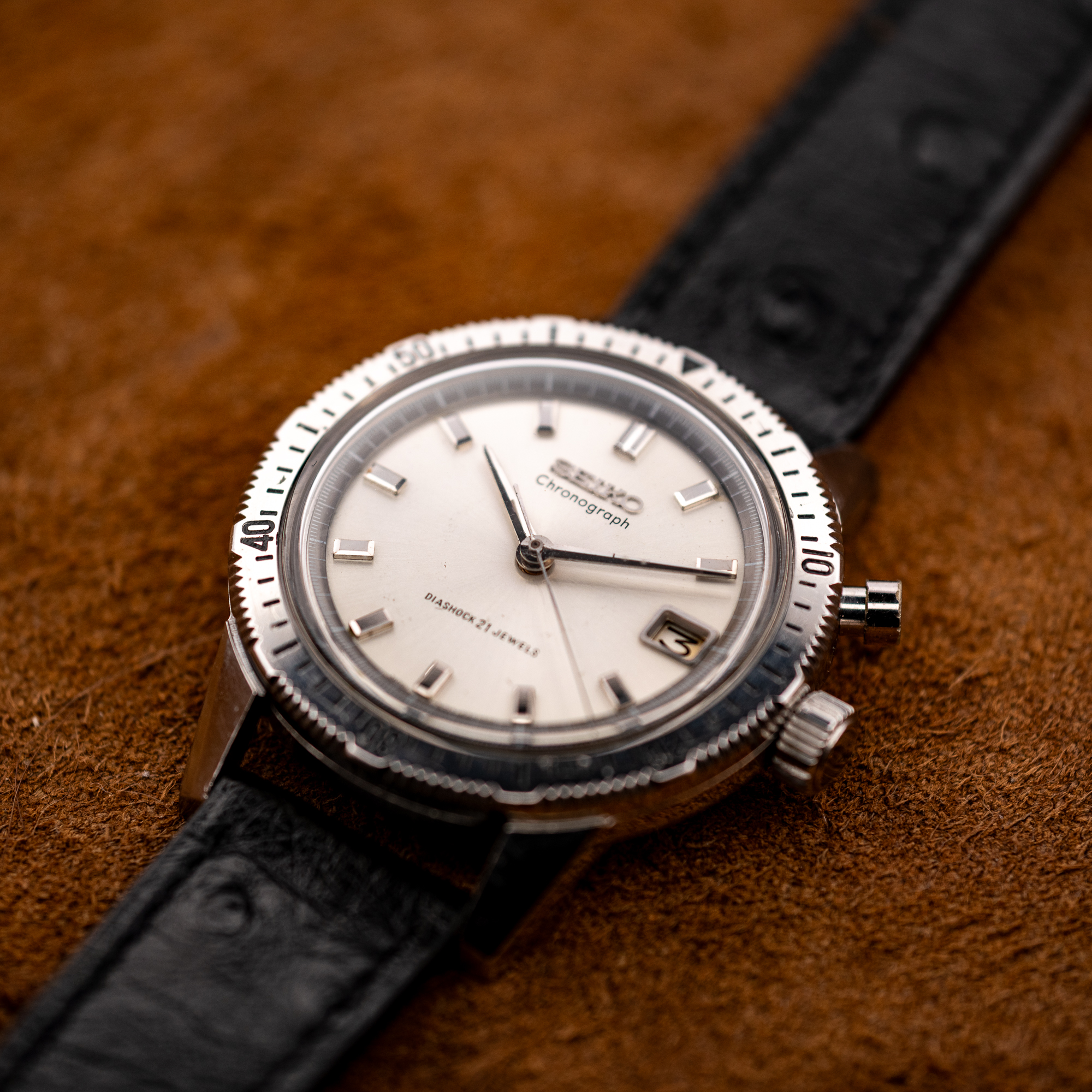

Tokyo hosted the Summer Olympics in October 1964, and Seiko was the official timekeeper, supplying 1,278 timing devices to the Games. That same year the company introduced the Crown Chronograph, the first wristwatch made in Japan with a stopwatch function. The Seiko 5717-8990 comes from that first chronograph family. Its caliber 5717 is the date-equipped partner of the 5719, and together they were Seiko’s first chronograph movements.
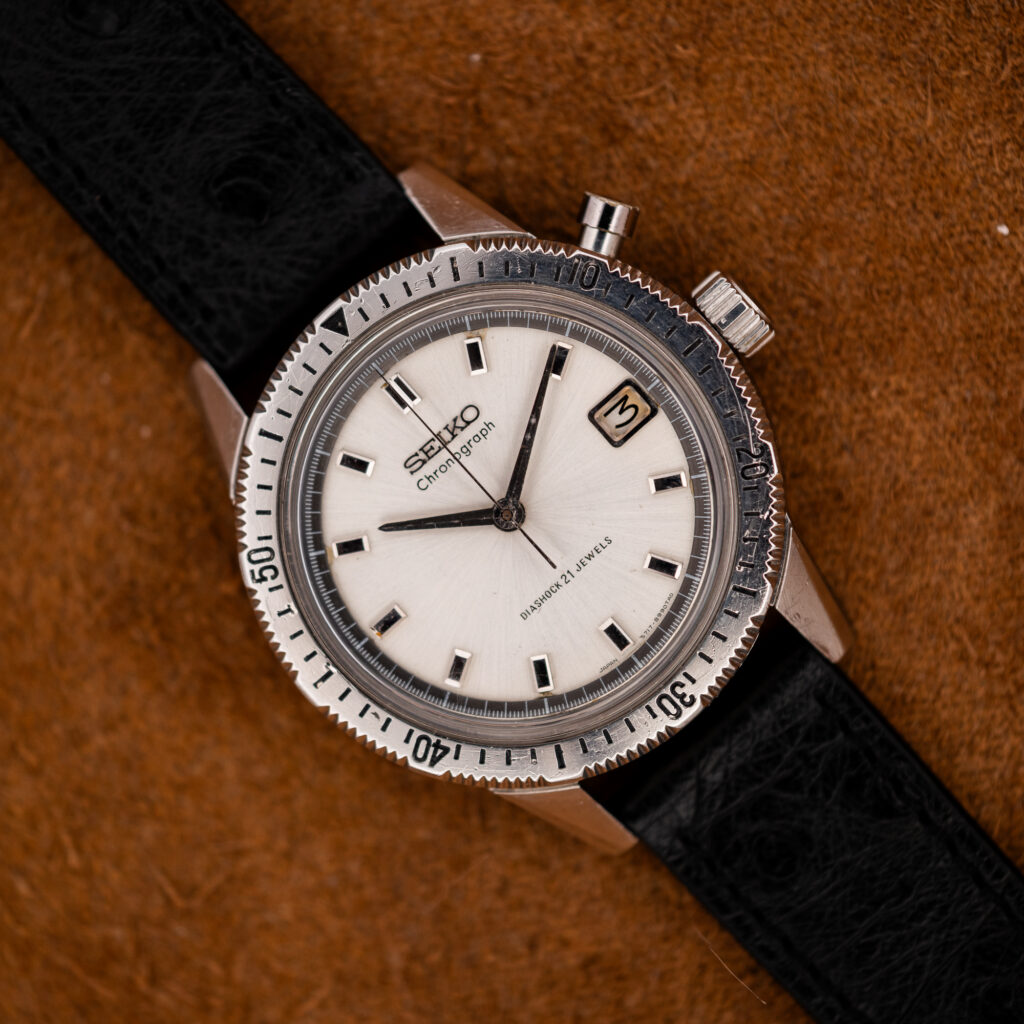
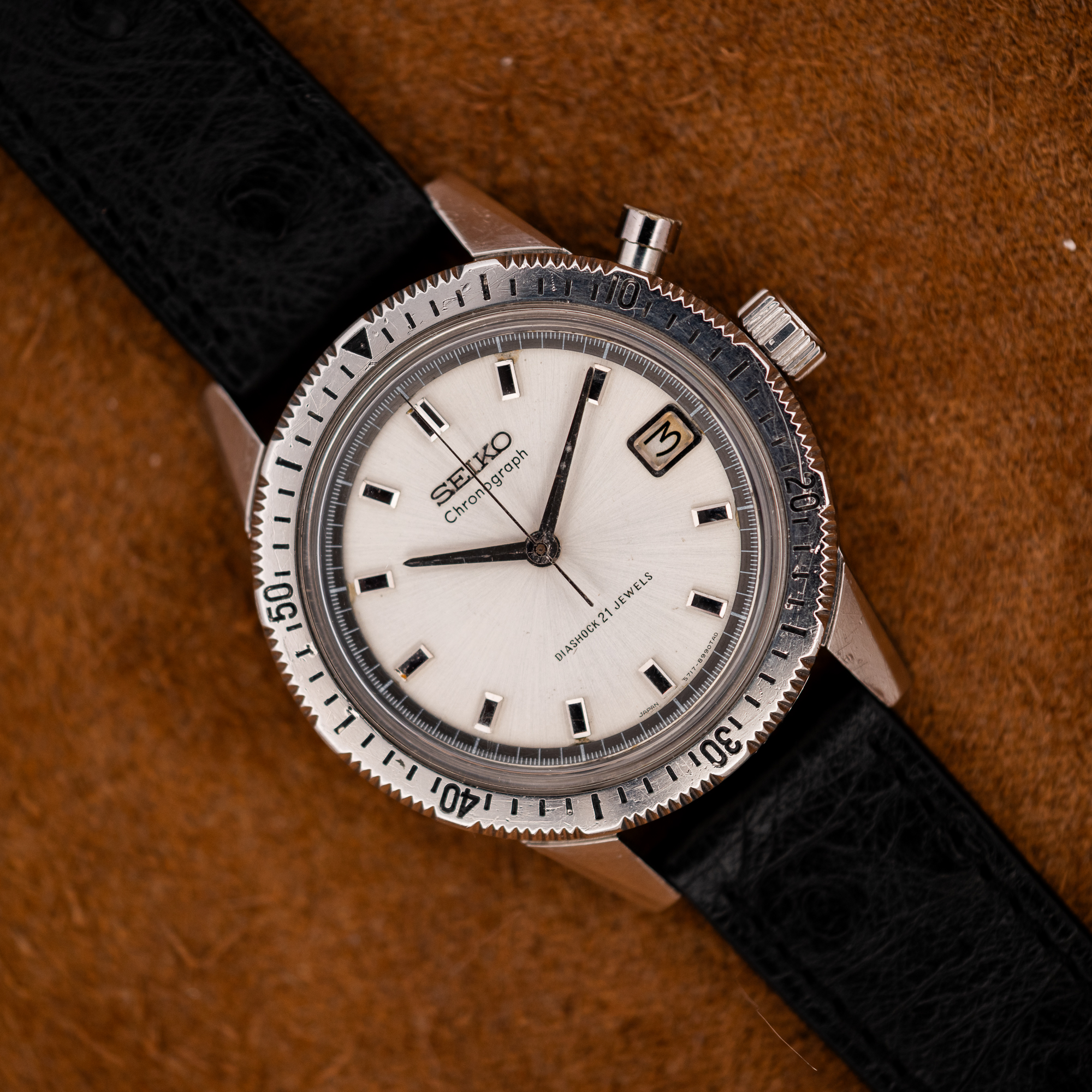
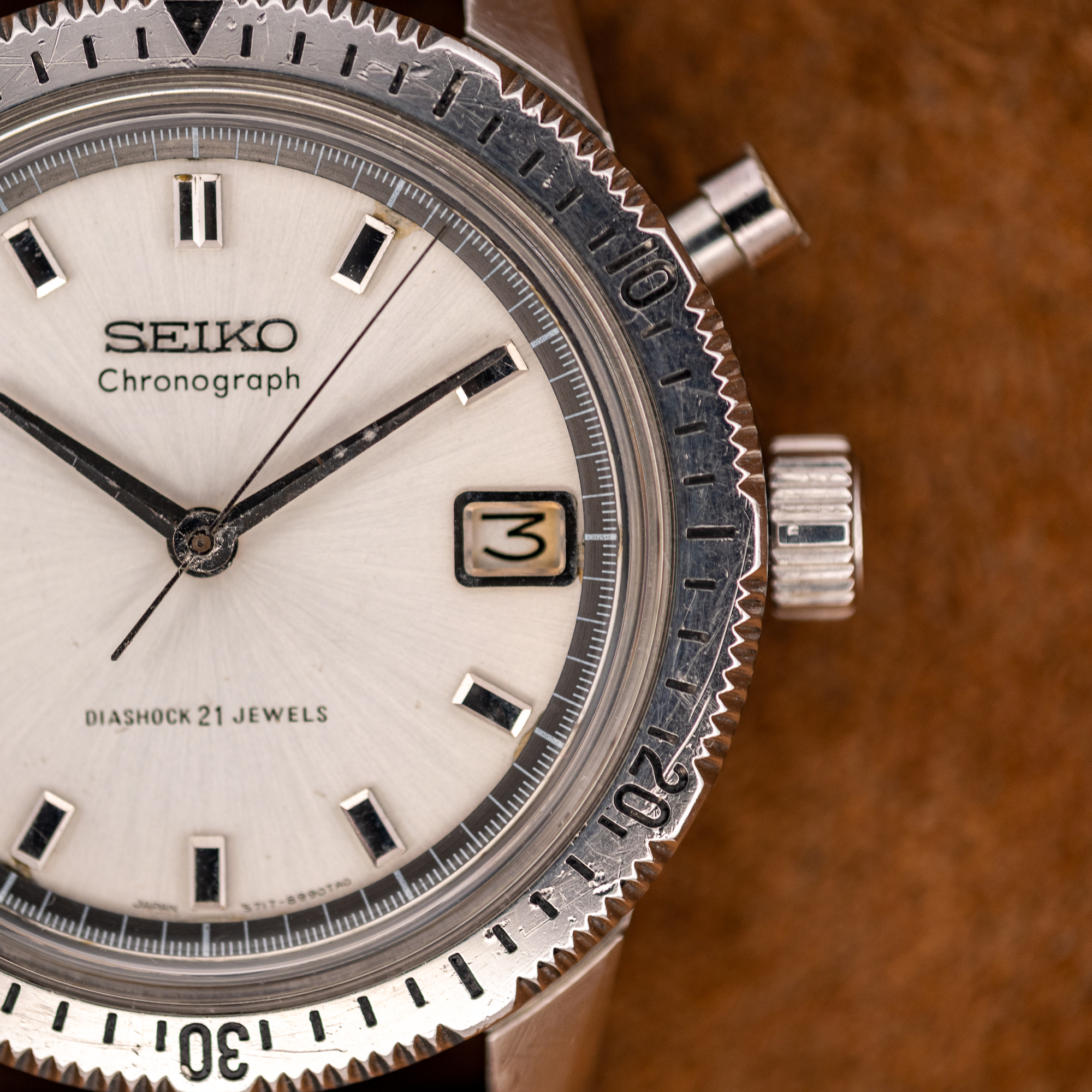
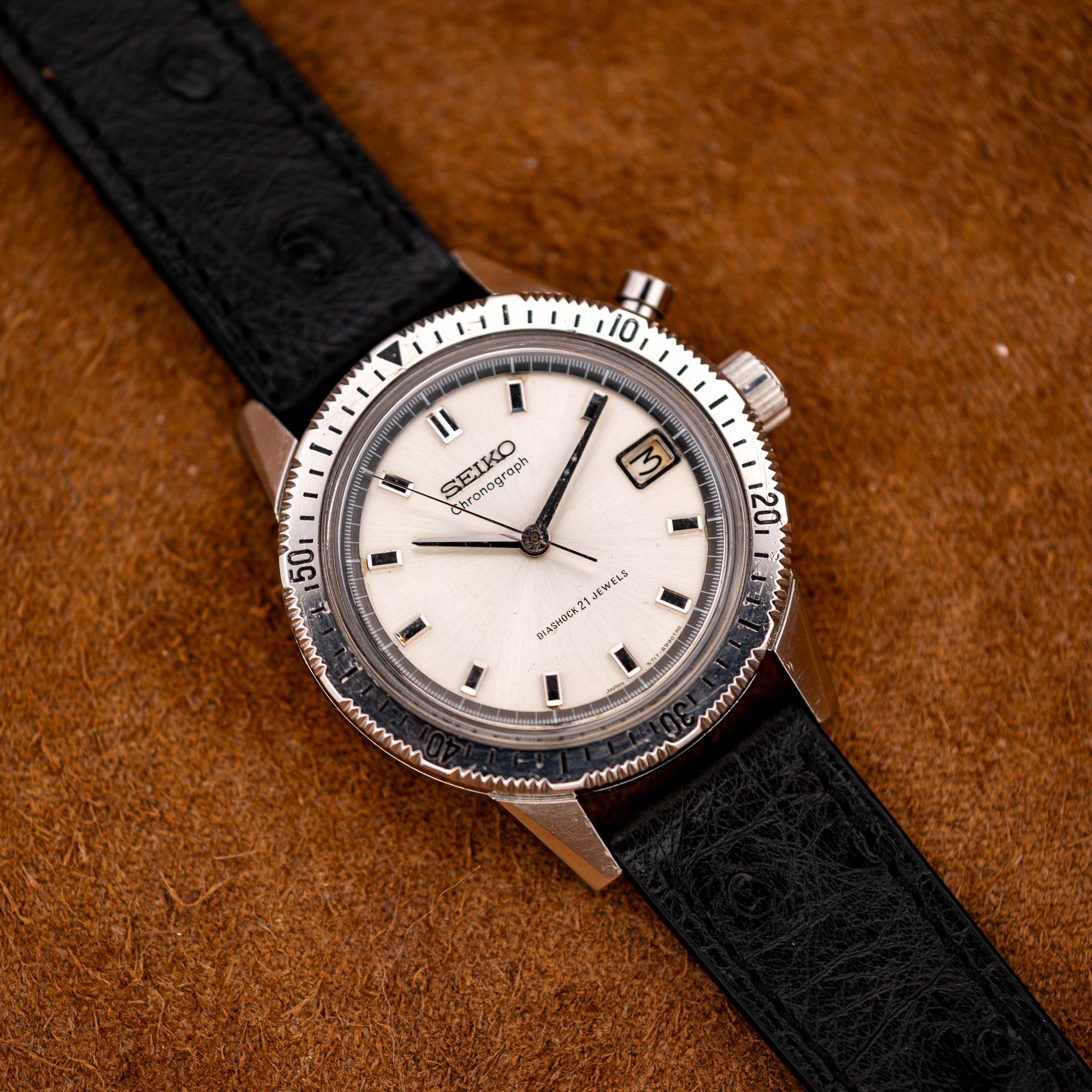
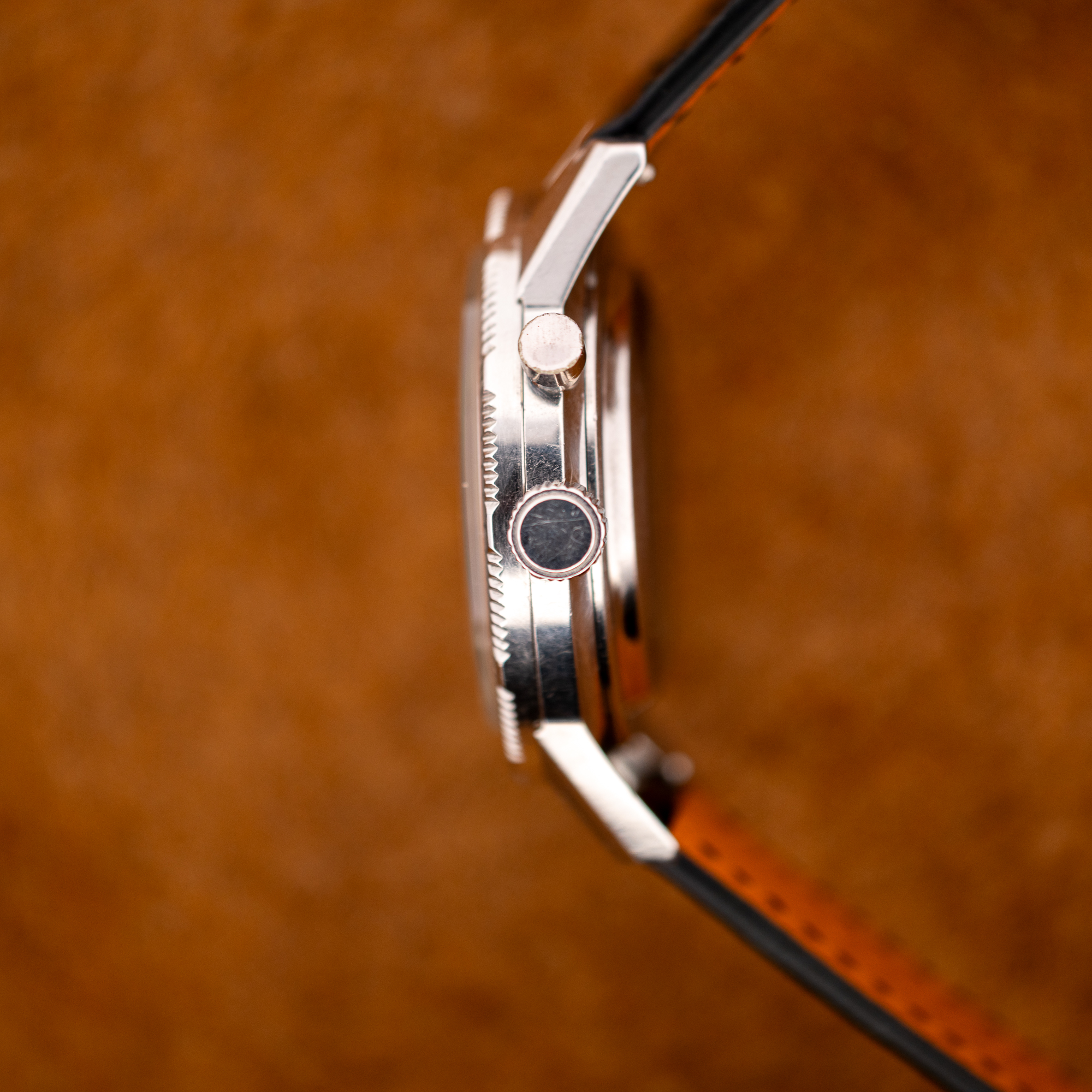
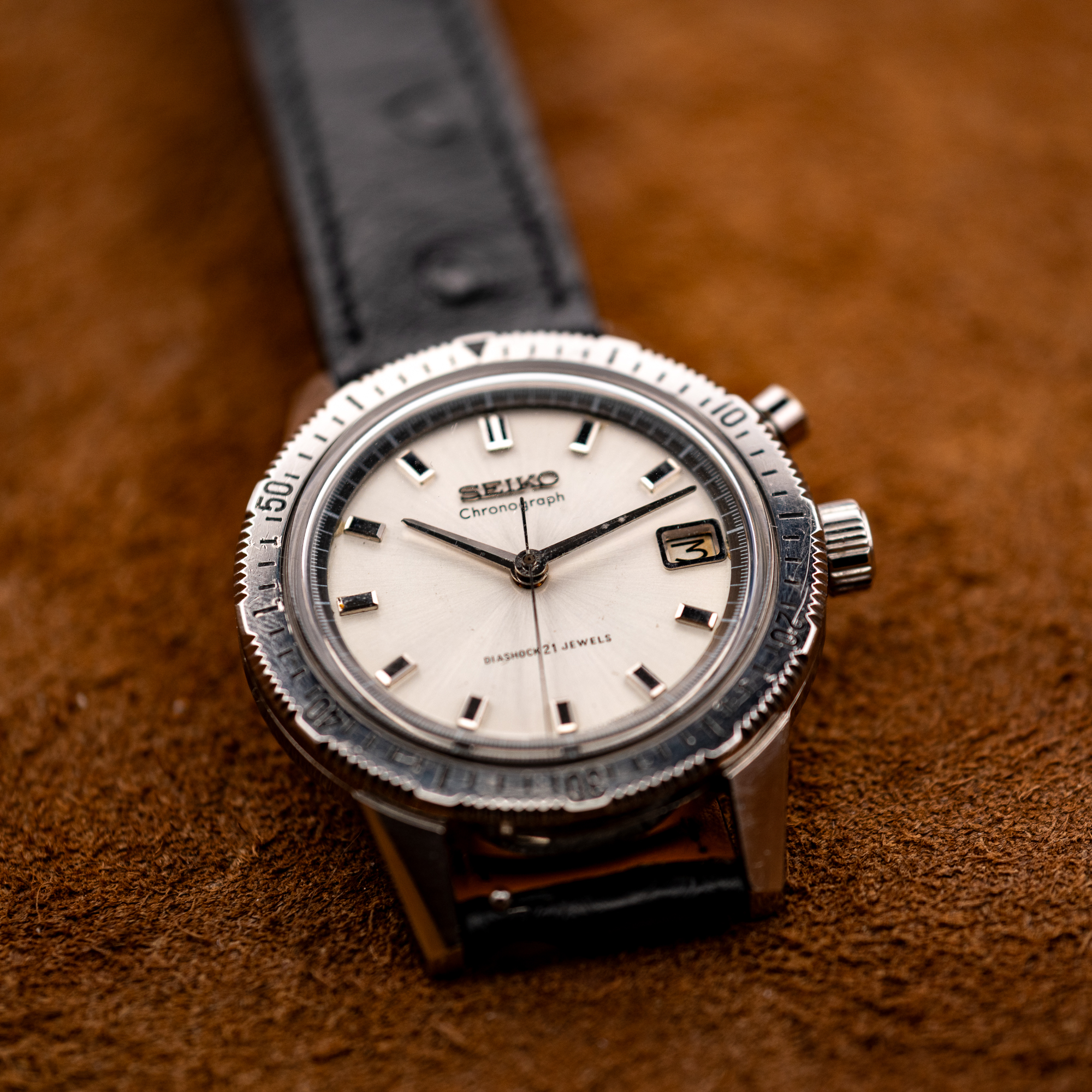
All of the timing runs through a single pusher at two o’clock, which handles start, stop and return alike. Seiko drew this watch as a measuring instrument, and nothing on the dial competes with the center hand. There is no minute counter at all. The numbered bezel does that work, keeping count of the elapsed minutes against the minute hand.
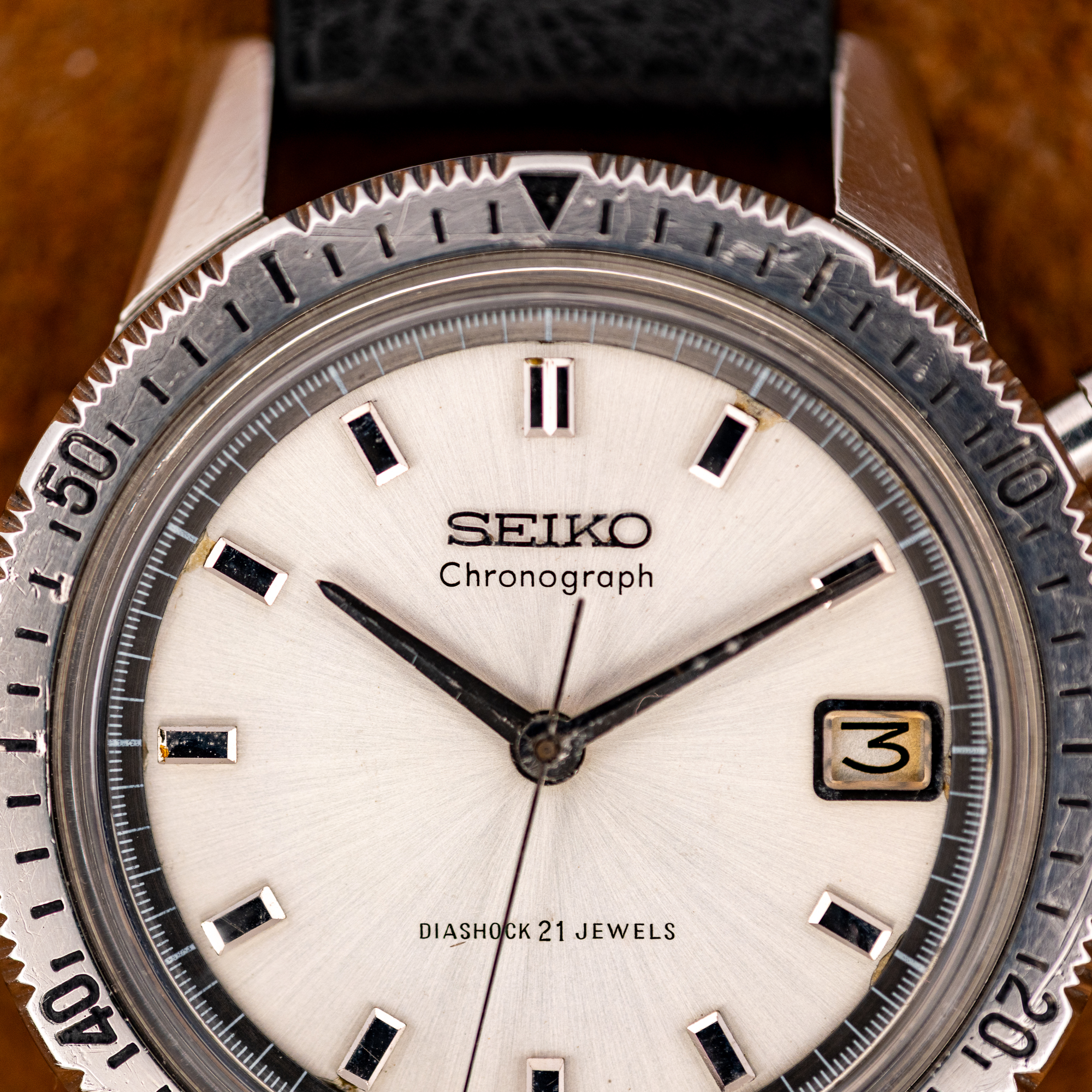
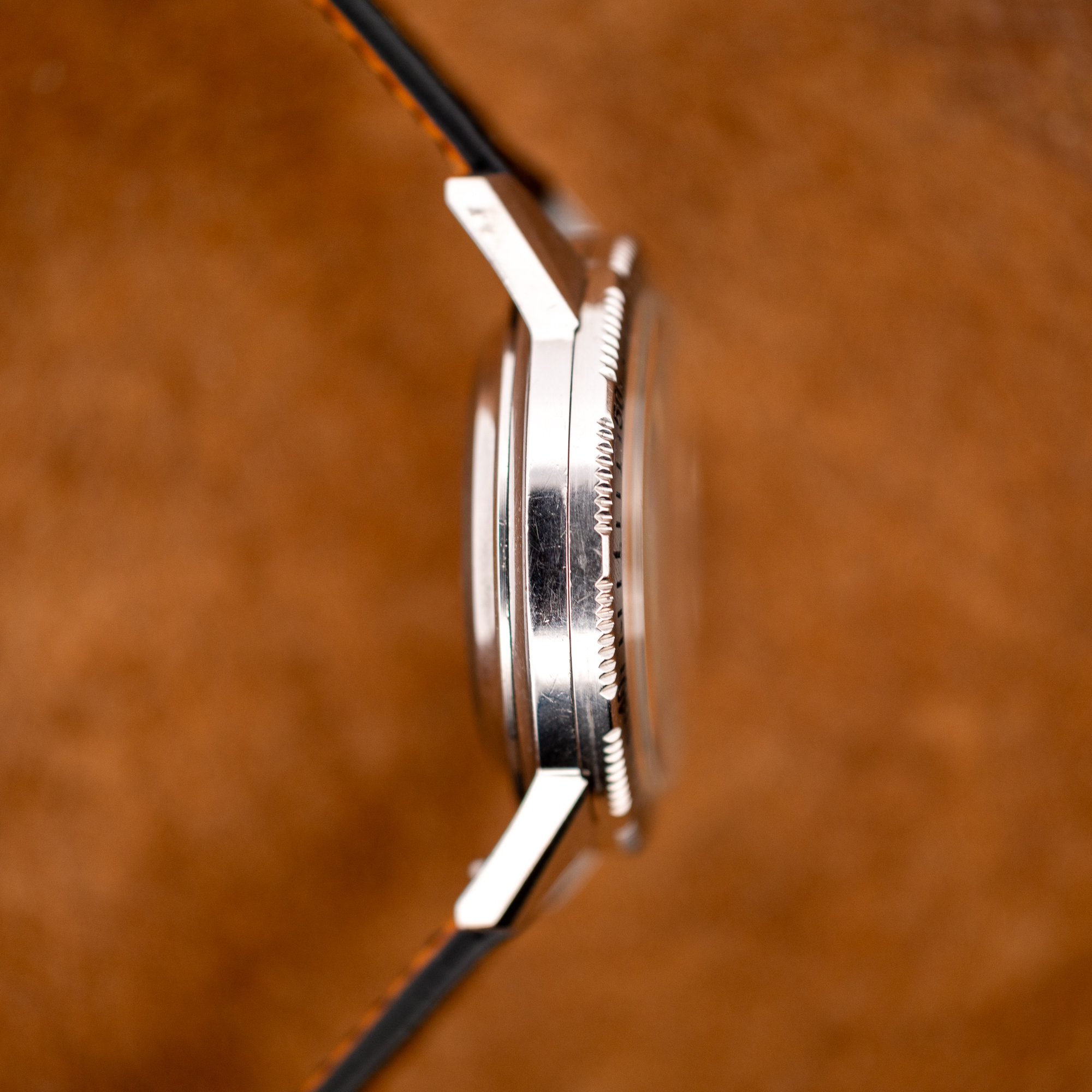
That bezel also marks a turn in the line. The first Crown Chronographs wore a black plastic ring, and Seiko switched to stainless steel from the second generation onward, so the toothed steel bezel here belongs to the later build. Under the dial, a column wheel sorts each press into start, stop or reset. Seiko chose it for smooth operation and durability, the two things a stopwatch button has to deliver for years.
The movement comes from a well-placed family. Both the 5717 and the 5719 grew out of the caliber 560, which Suwa Seikosha introduced in the Seiko Crown in 1959. The same base produced the 3180, the movement inside the first Grand Seiko of 1960. A one-button sports chronograph and the watch Seiko built as its flagship share their foundation.
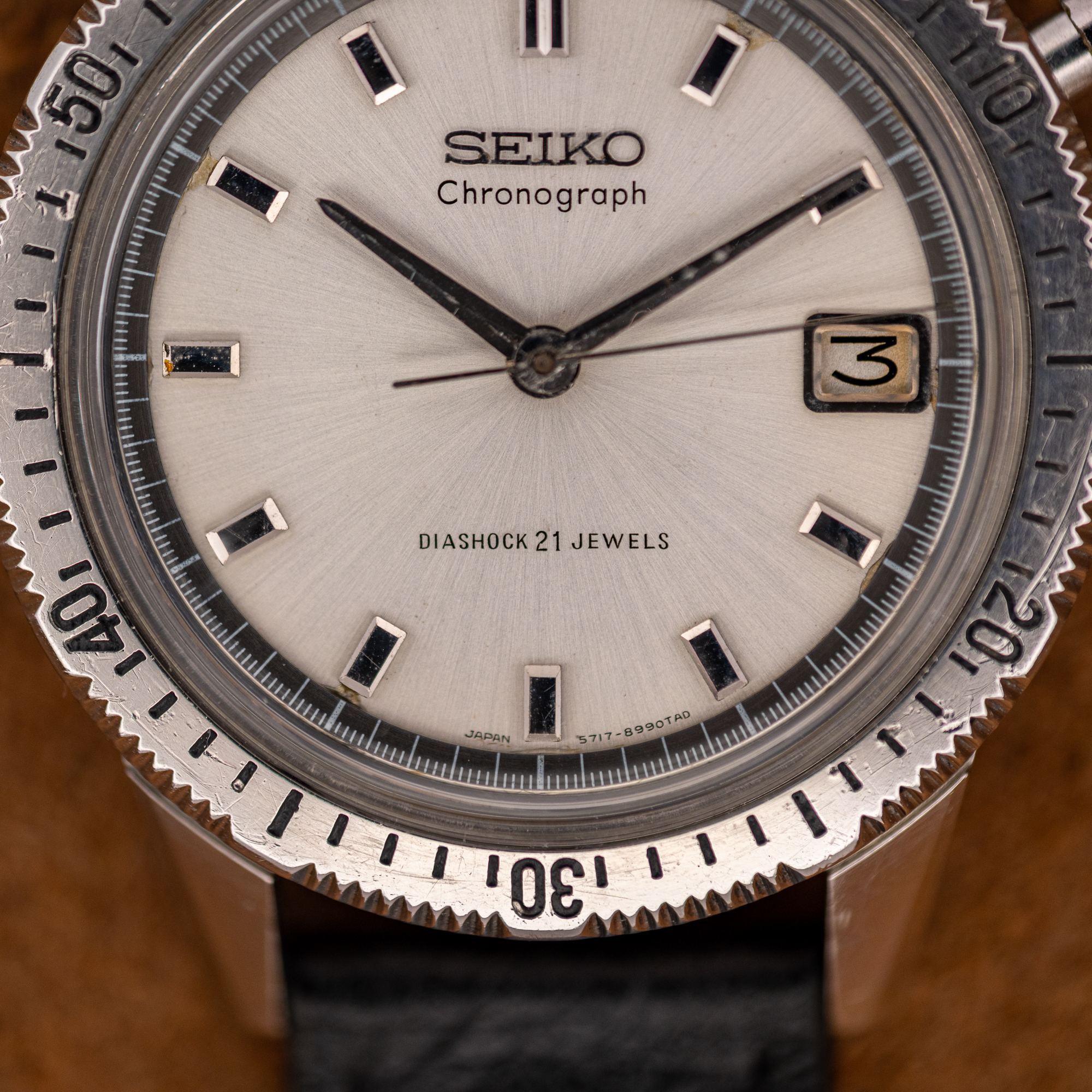
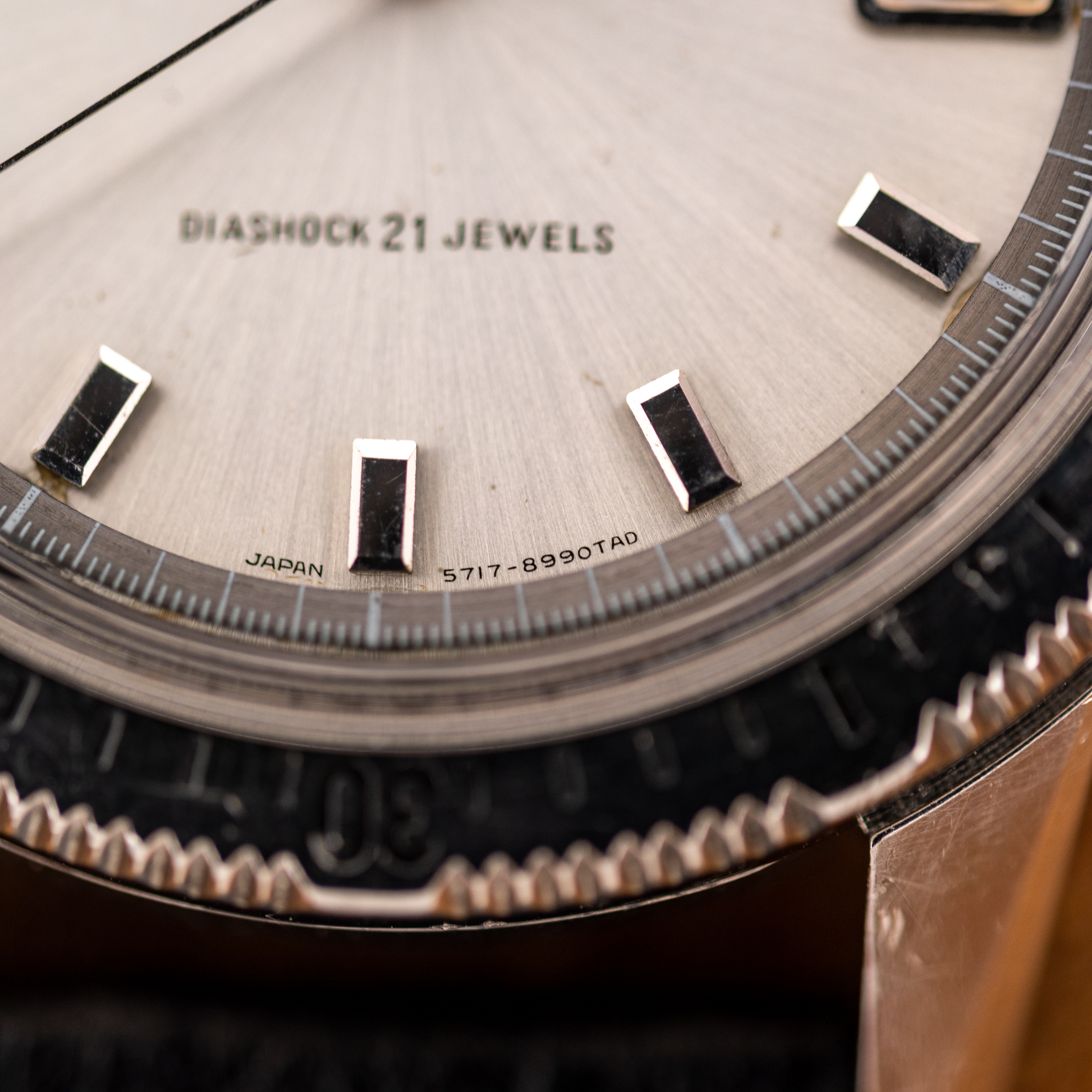
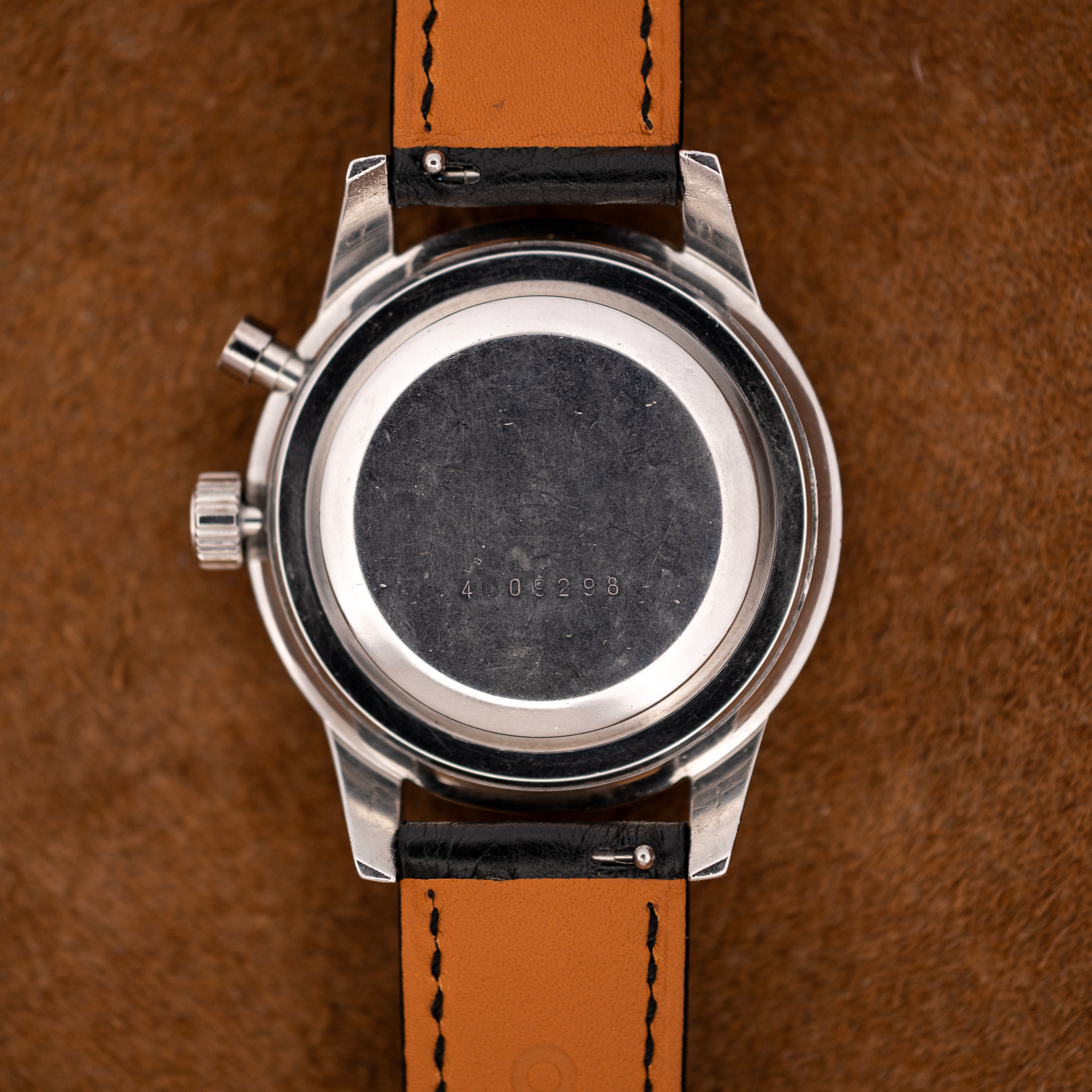
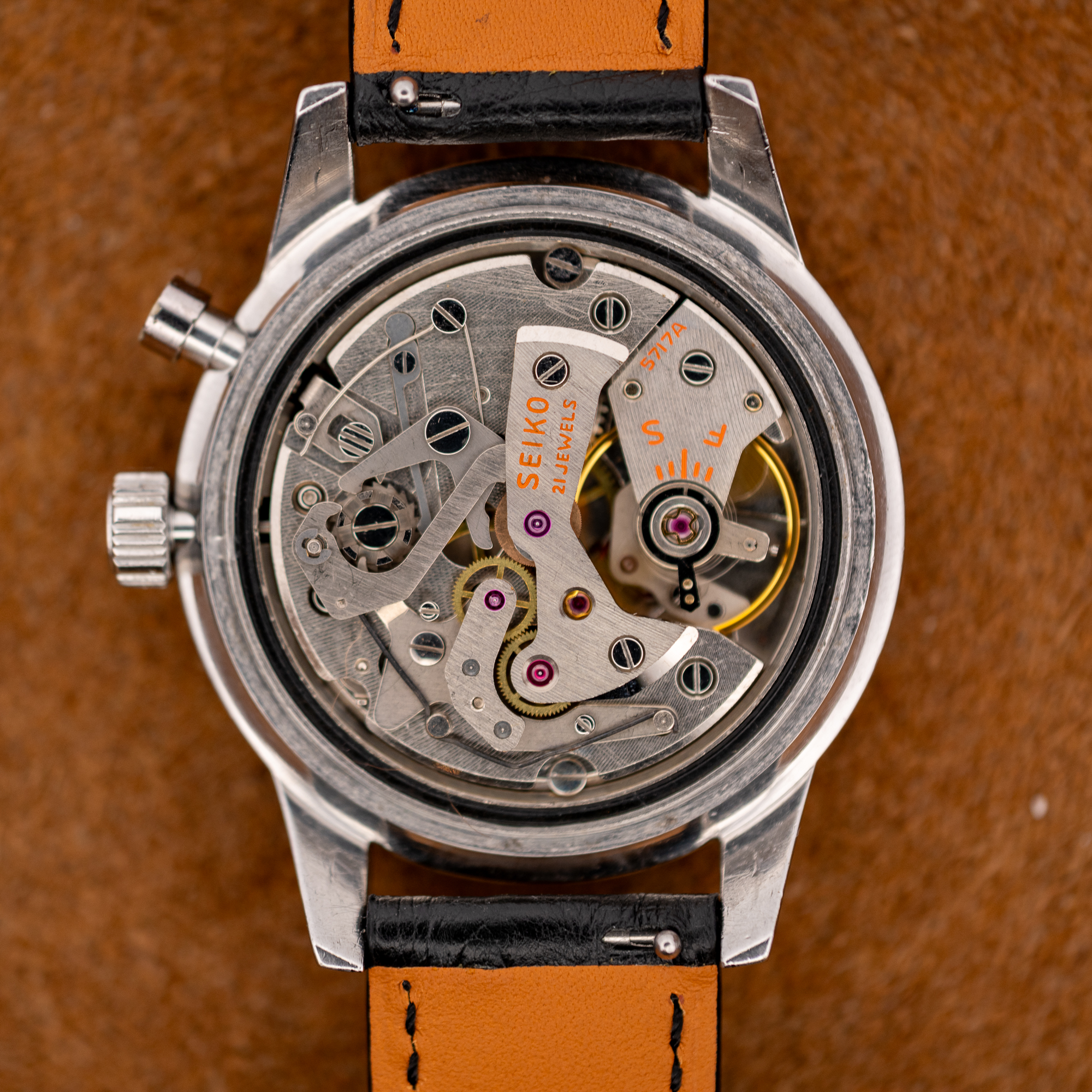
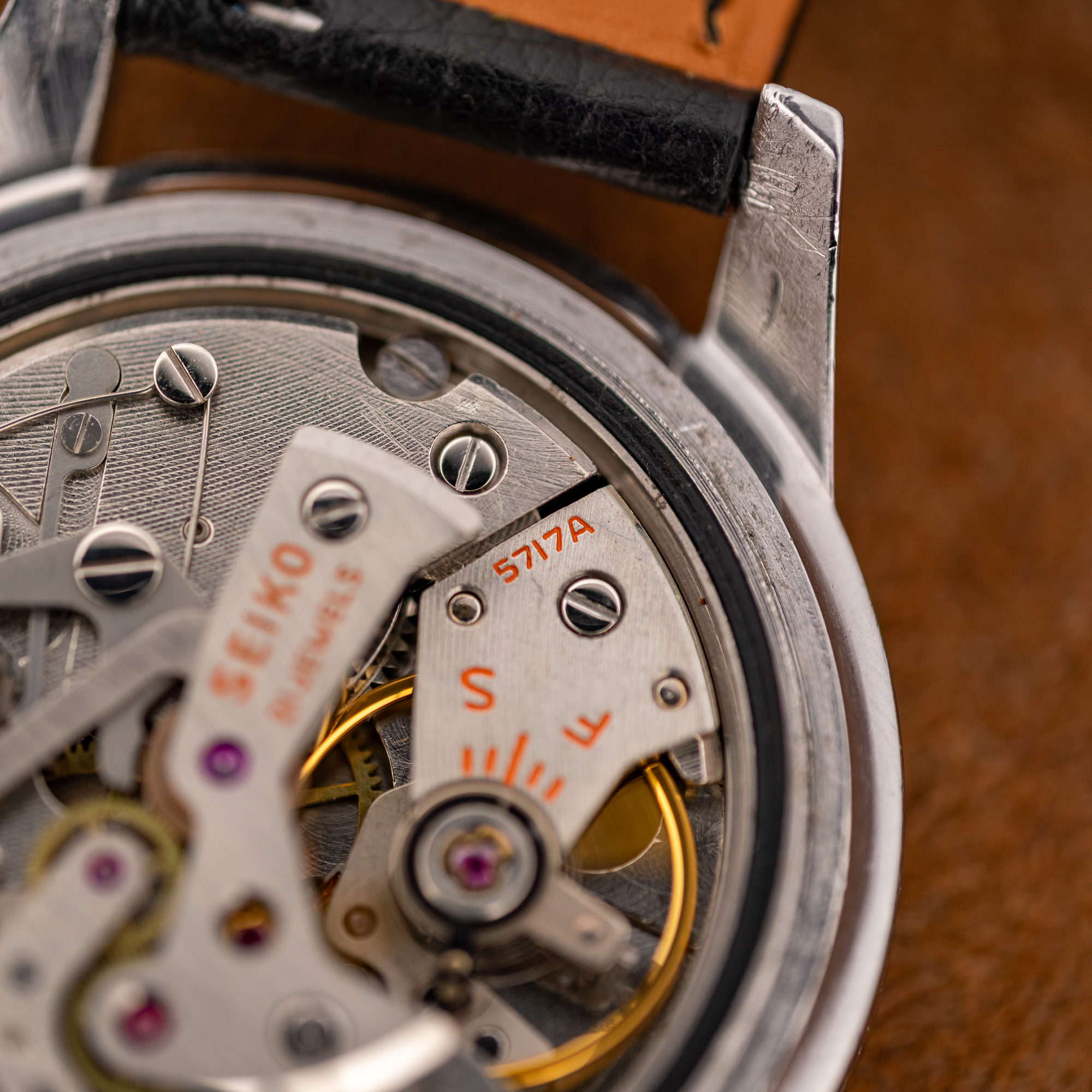
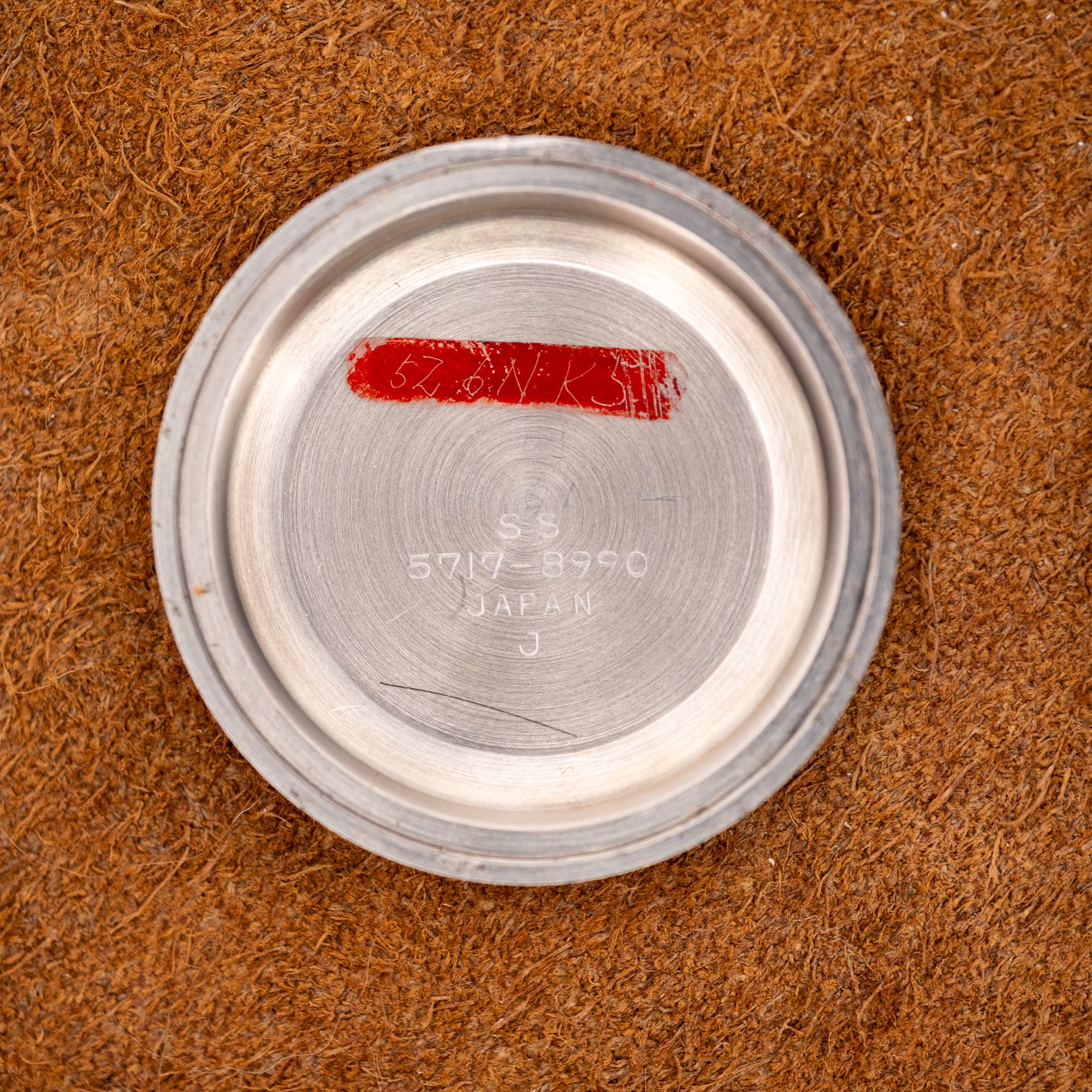
The dial keeps its words few. Besides SEIKO and Chronograph, it names DIASHOCK 21 JEWELS, Diashock being the shock protection Seiko introduced in 1956 to keep the balance safe from knocks. A date window takes the place of the three o’clock marker, and the edge of the dial carries the code 5717-8990T. The caseback is stamped on its inner face with the 5717-8990 reference and JAPAN, and the movement is signed 5717A.
The case measures 38mm across, compact for a chronograph, with a white dial, baton markers and a raised crystal. The bezel and case sides show scratches, the hands carry marks, and a few small spots sit near some markers and the date. Its strap is black ostrich. In 1969 Seiko moved on to its first automatic chronograph, the caliber 6139. This one stays hand-wound, with a turn of the crown to start the day and a single press to start the count.