Hamilton’s postwar catalog is full of case designs that surprise and delight, but every once in a while you encounter a model that makes you stop and wonder just how bold the designers in Lancaster were willing to get. The Lawton, introduced in 1953 and produced for just two years, is one of those watches. It was a short-lived model, which makes surviving examples all the more compelling, and its case design is, in our opinion, among the most ornate and distinctive that Hamilton ever put into production. Where many of Hamilton’s contemporaries were trending toward cleaner, more minimalist case shapes, the Lawton went in the opposite direction entirely, embracing a decorative, almost sculptural approach to case design that feels more aligned with the jewelry arts than conventional watchmaking. It is an acquired taste, to be sure, but for the collector who appreciates unrestrained mid-century American design, it is absolutely magnificent.
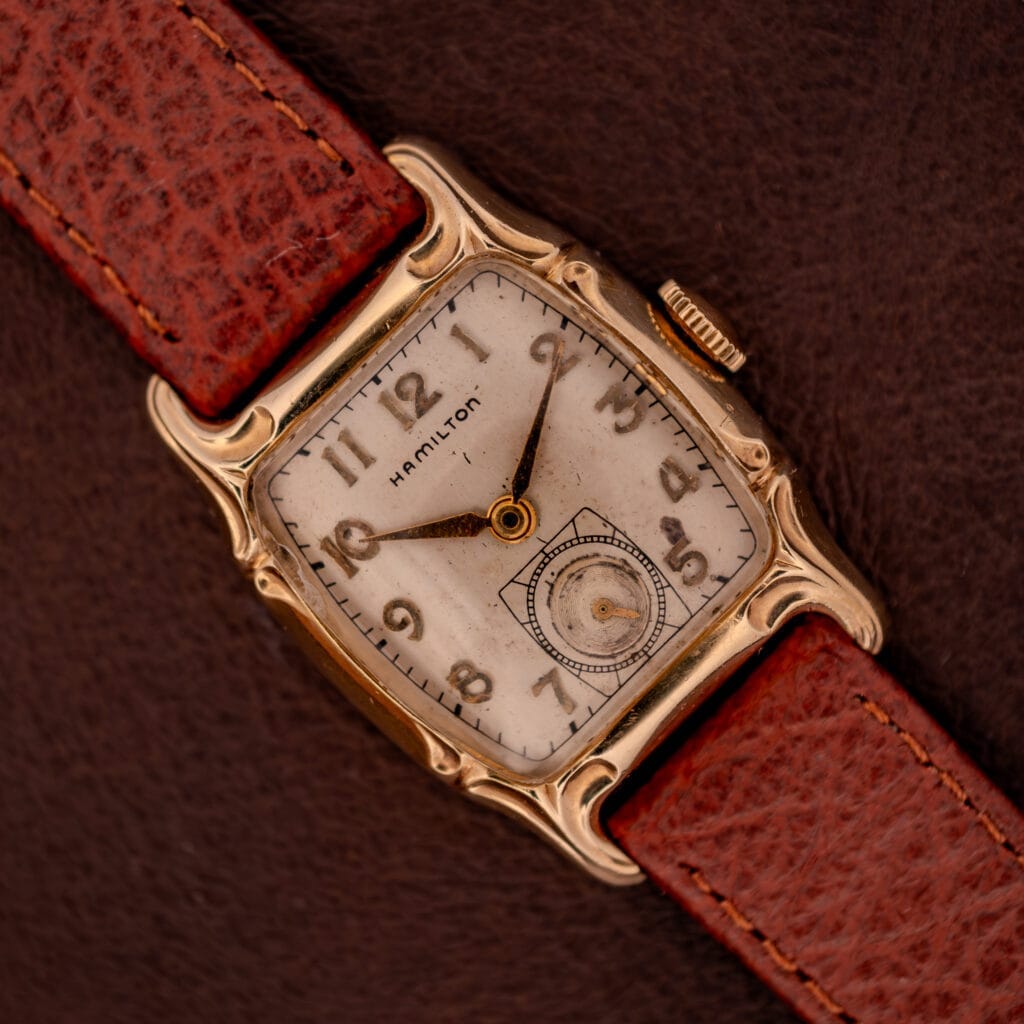
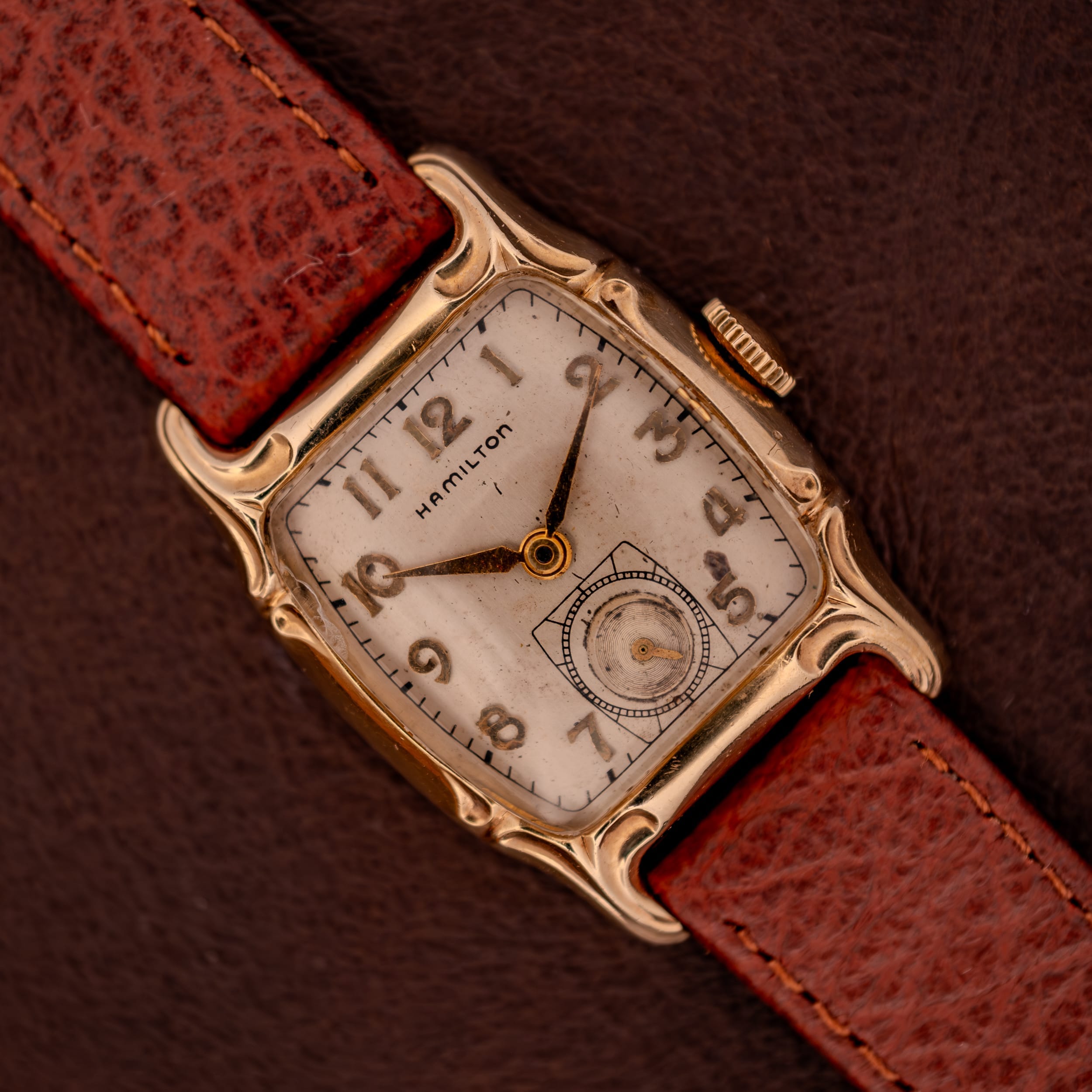
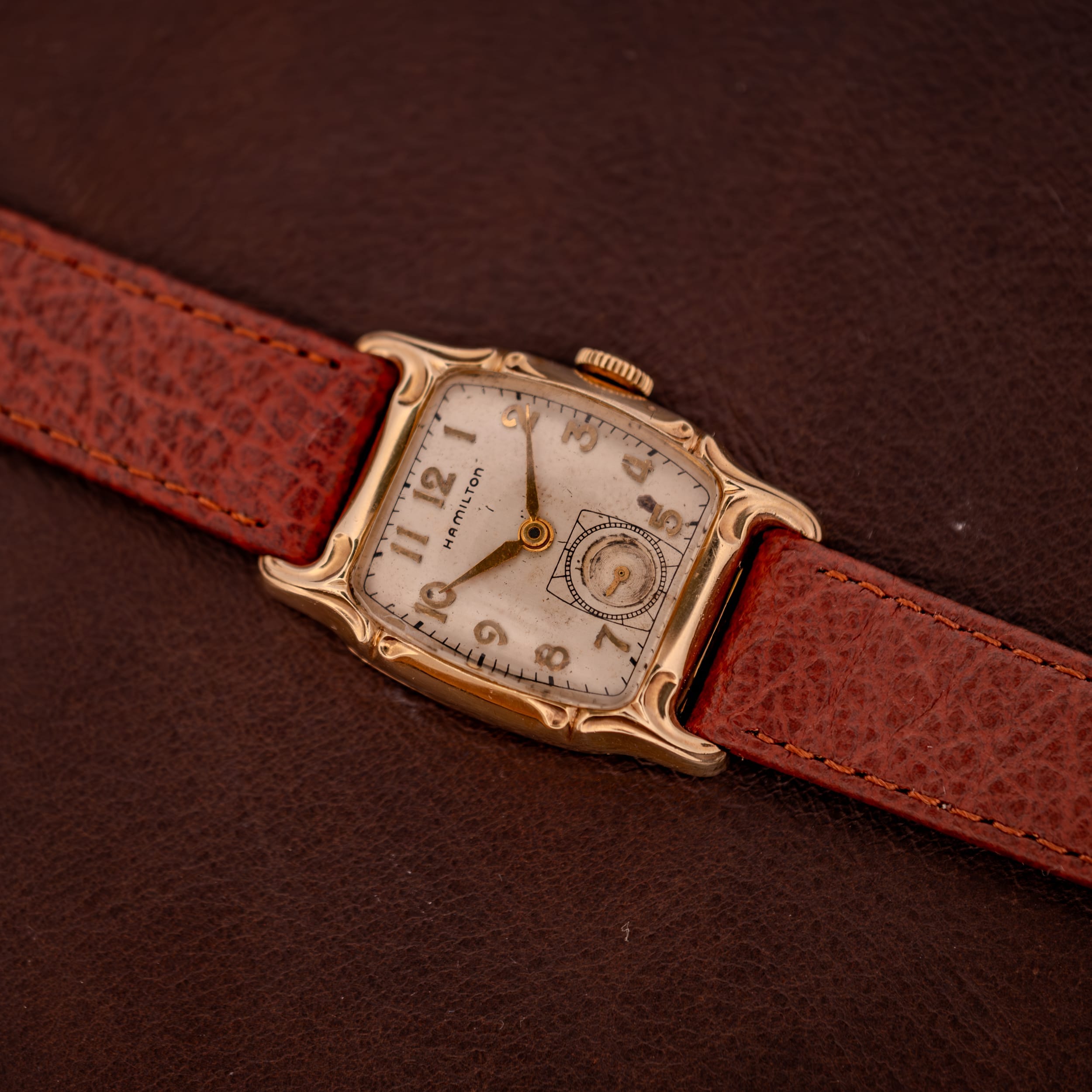
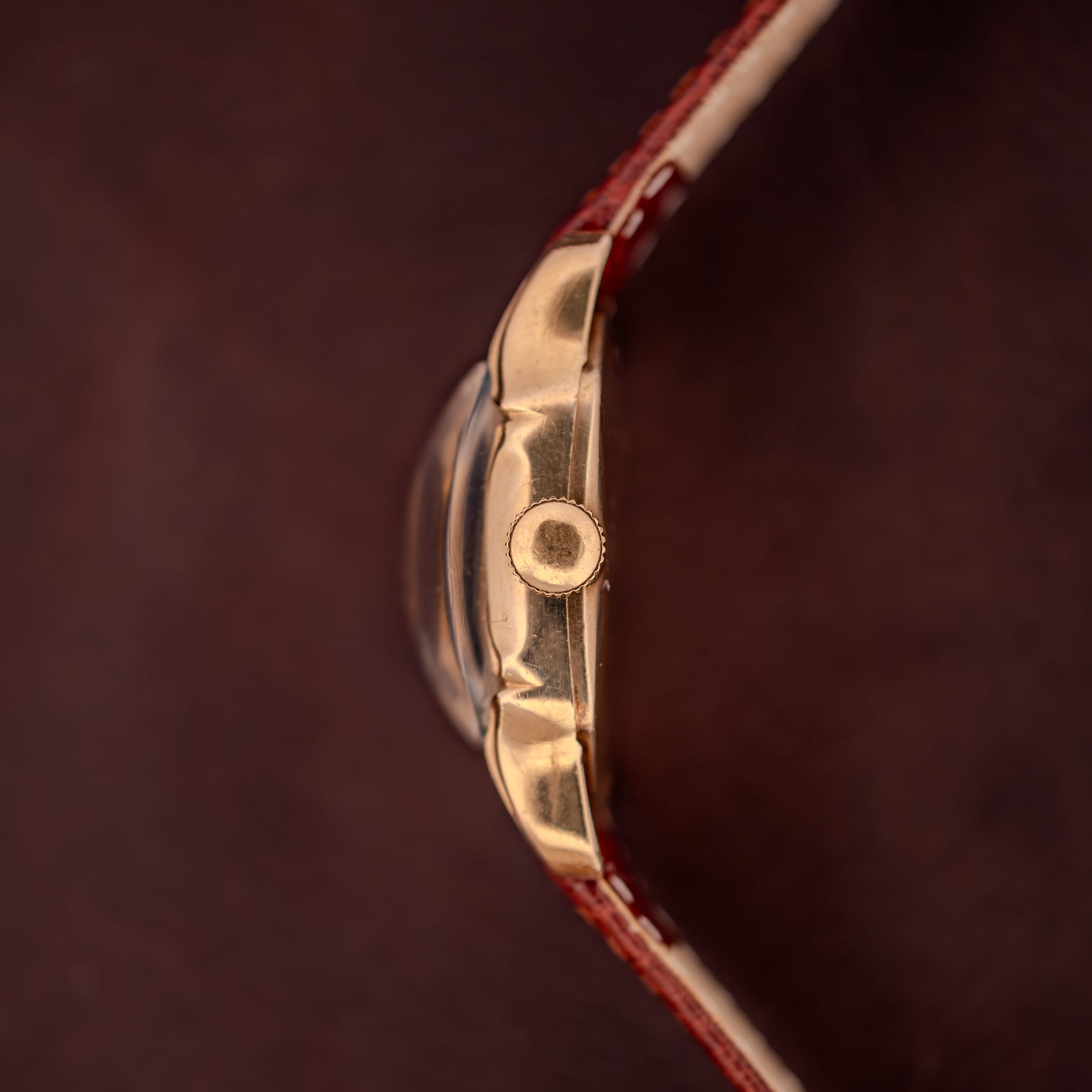
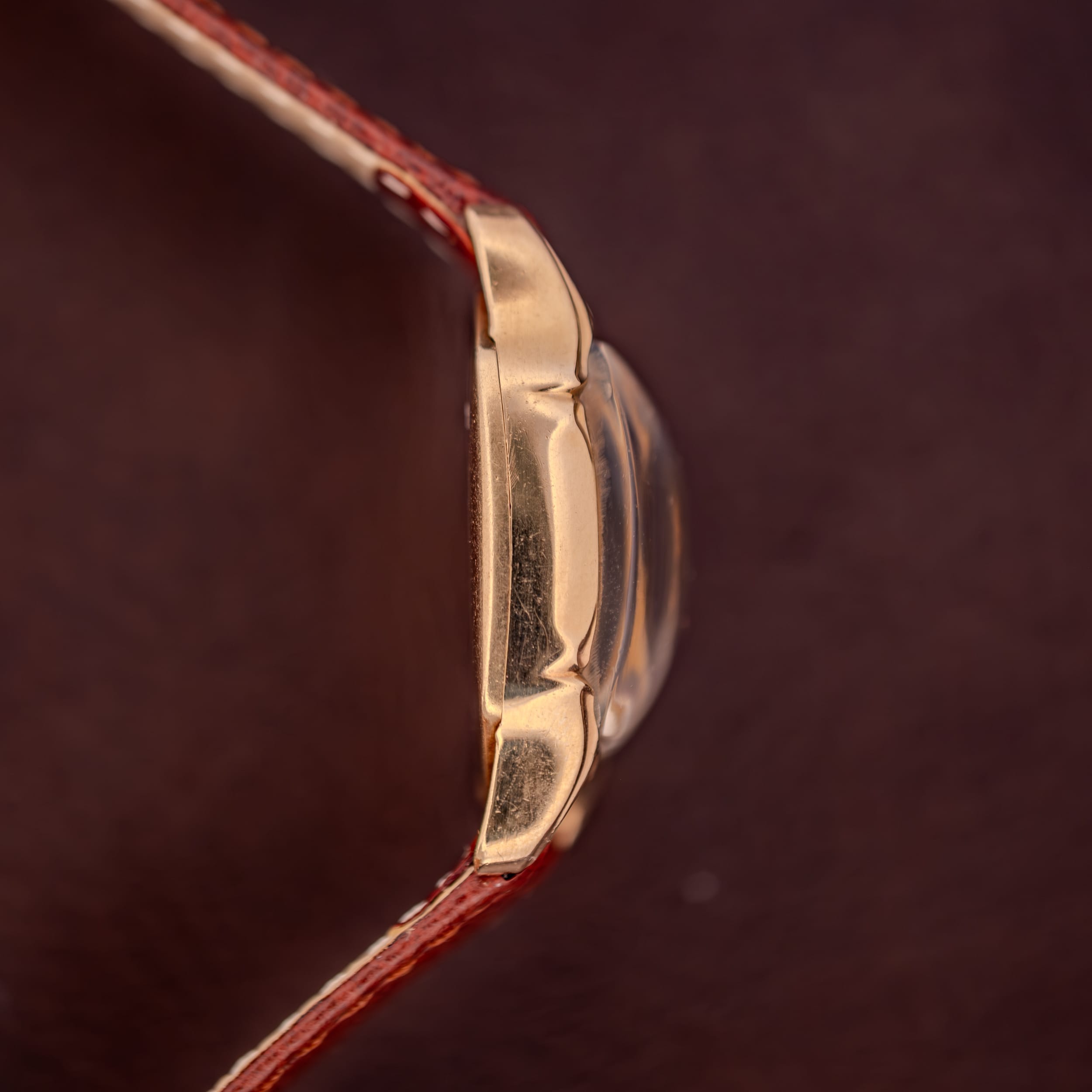
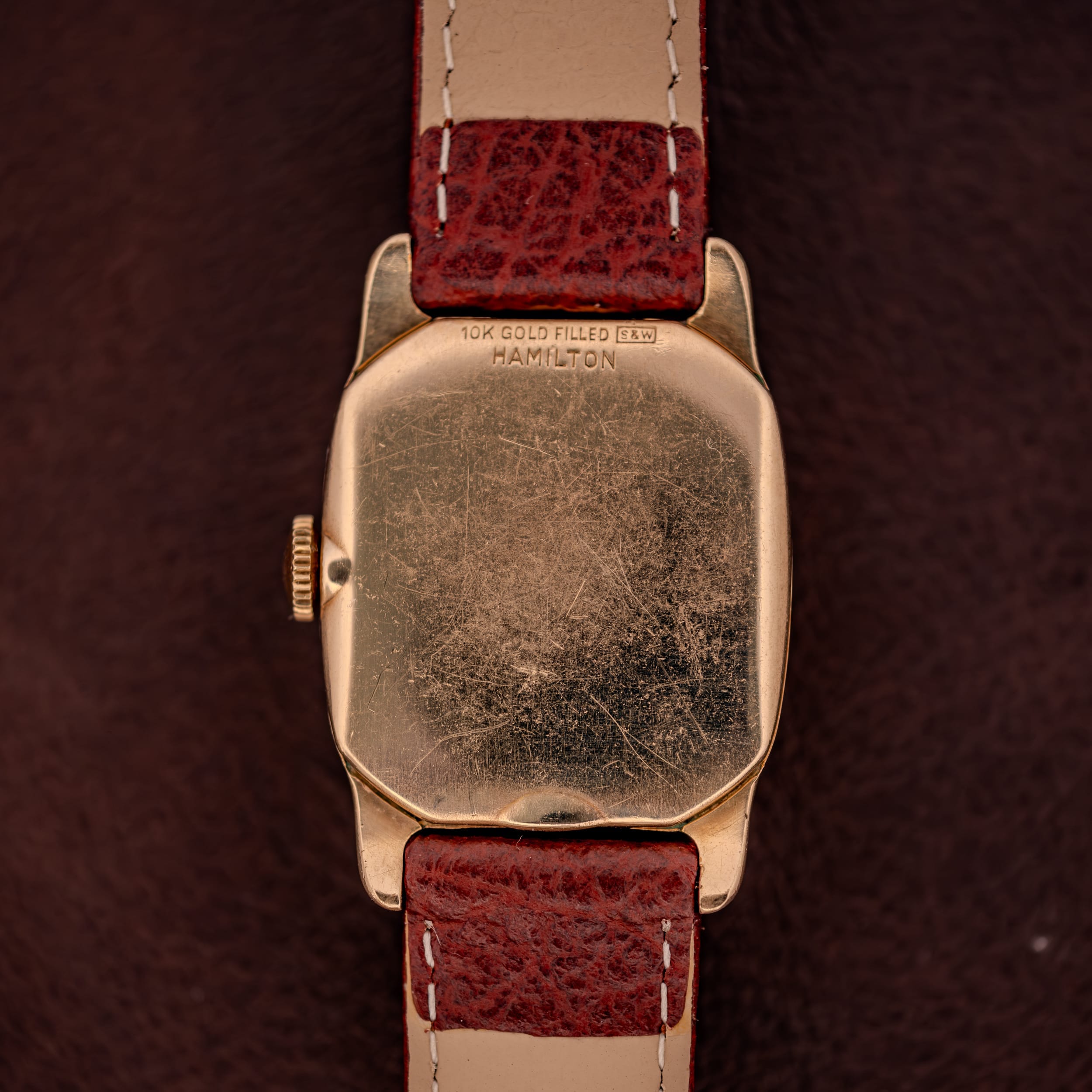
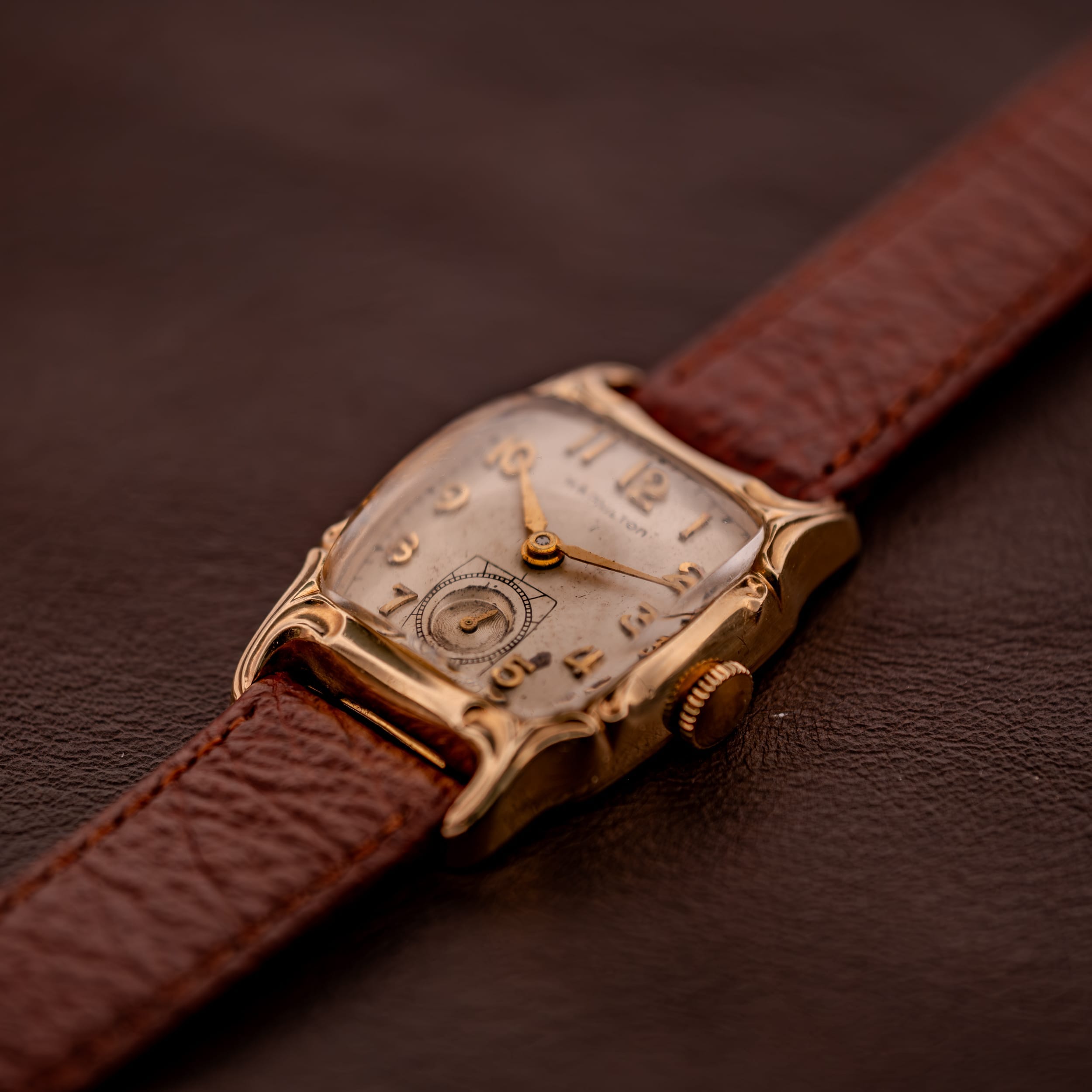
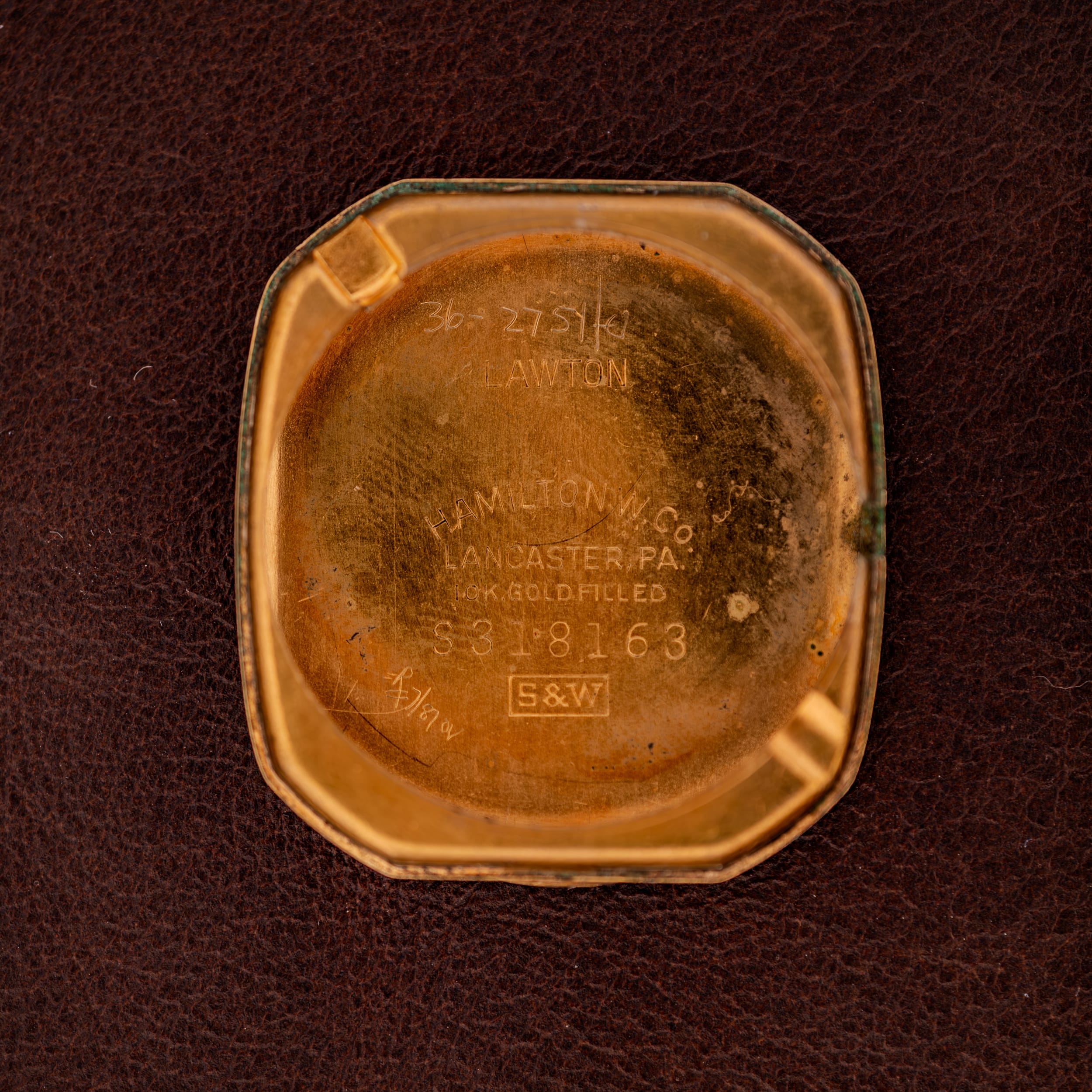
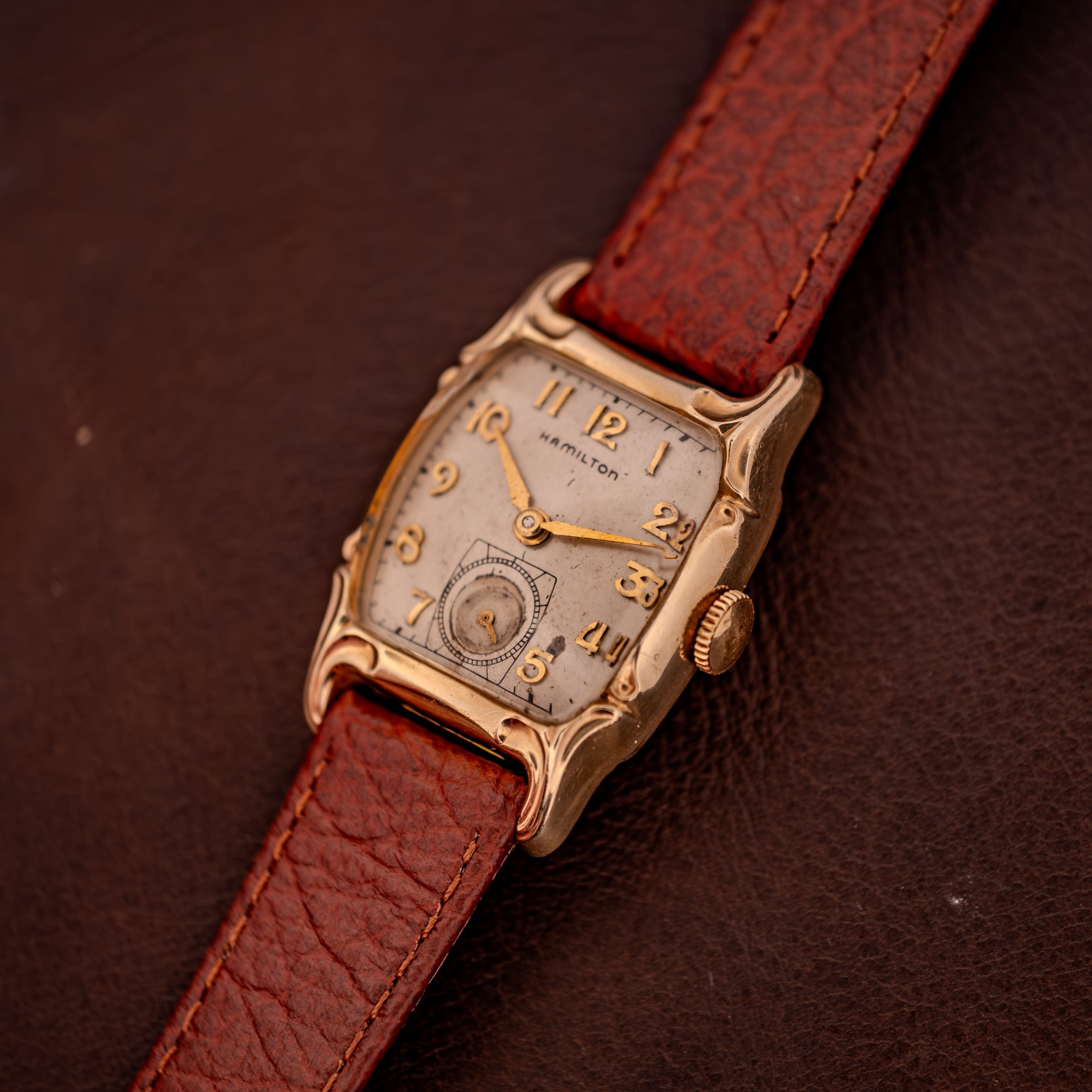
The case is the star here, and it deserves a close look. The cushion-shaped bezel is framed at each corner by richly molded, scrolled lug extensions that curl and flow with an organic, almost Art Nouveau-influenced sensibility. These are not simple straight lugs or even the fancier flared lugs you see on many Hamilton models of the period; they are genuinely sculptural, three-dimensional elements that give the watch a presence far beyond its compact dimensions. The 10K yellow gold filled construction carries a warm, rich tone that brings out every curve and contour of the design. The outer caseback is stamped “10K Gold Filled, S&W, Hamilton,” and the inner caseback confirms “Lawton, Hamilton W. Co., Lancaster, PA, 10K Gold Filled, S318163, S&W.”
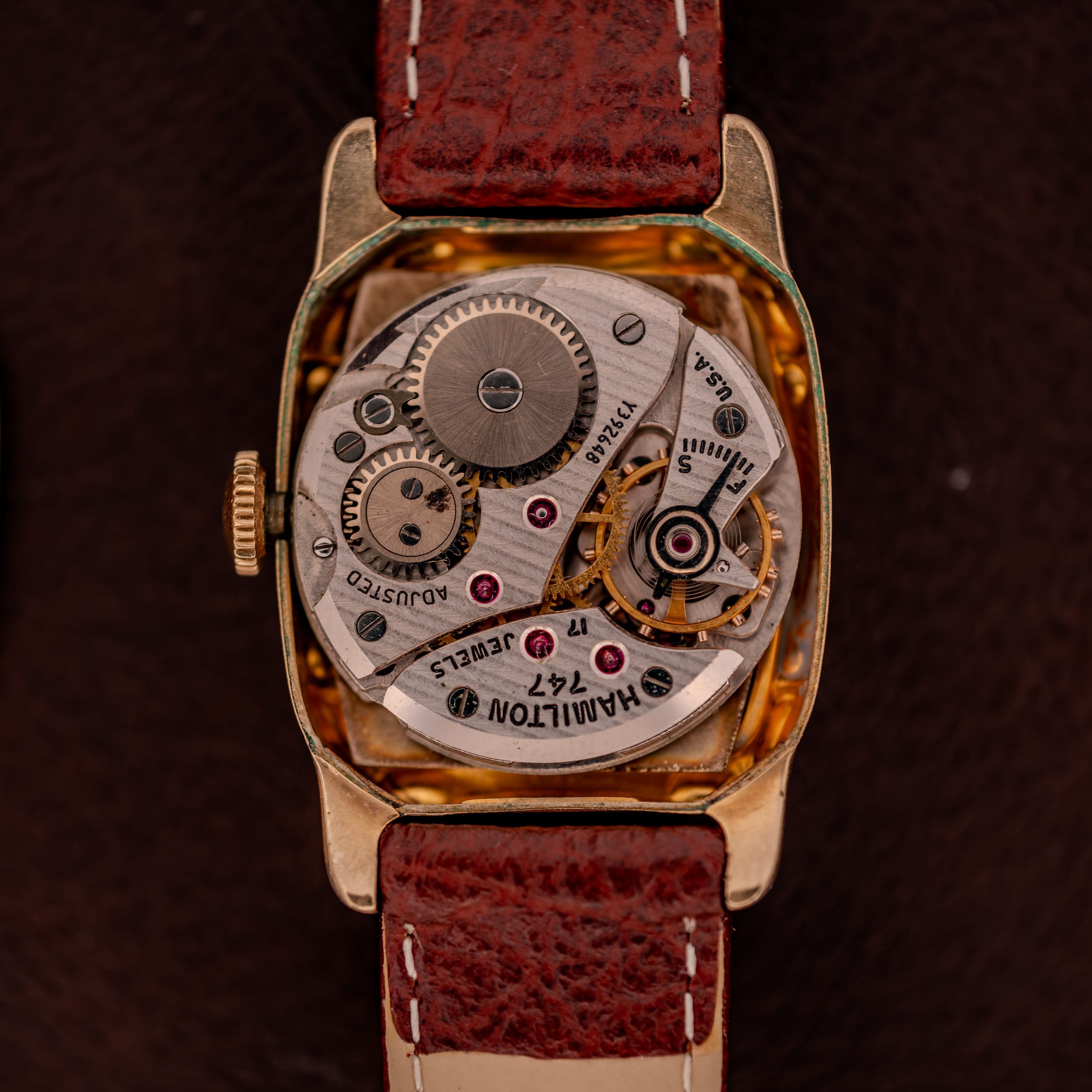
Powering the Lawton is Hamilton’s Caliber 747, a 17-jewel, American-made manual-wind movement. The 747 was one of Hamilton’s foundational 8/0 size calibers, introduced in the mid-1940s and used across a wide variety of their wristwatch models. Engraved “Hamilton 747, 17 Jewels, Adjusted, U.S.A.” with the serial number Y326448, it is a beautifully finished movement with Geneva striping on the bridges, visible ruby jewels, and a gilt gear train. The “Adjusted” designation confirms positional regulation, a hallmark of Hamilton’s commitment to accuracy in their Lancaster-produced calibers.
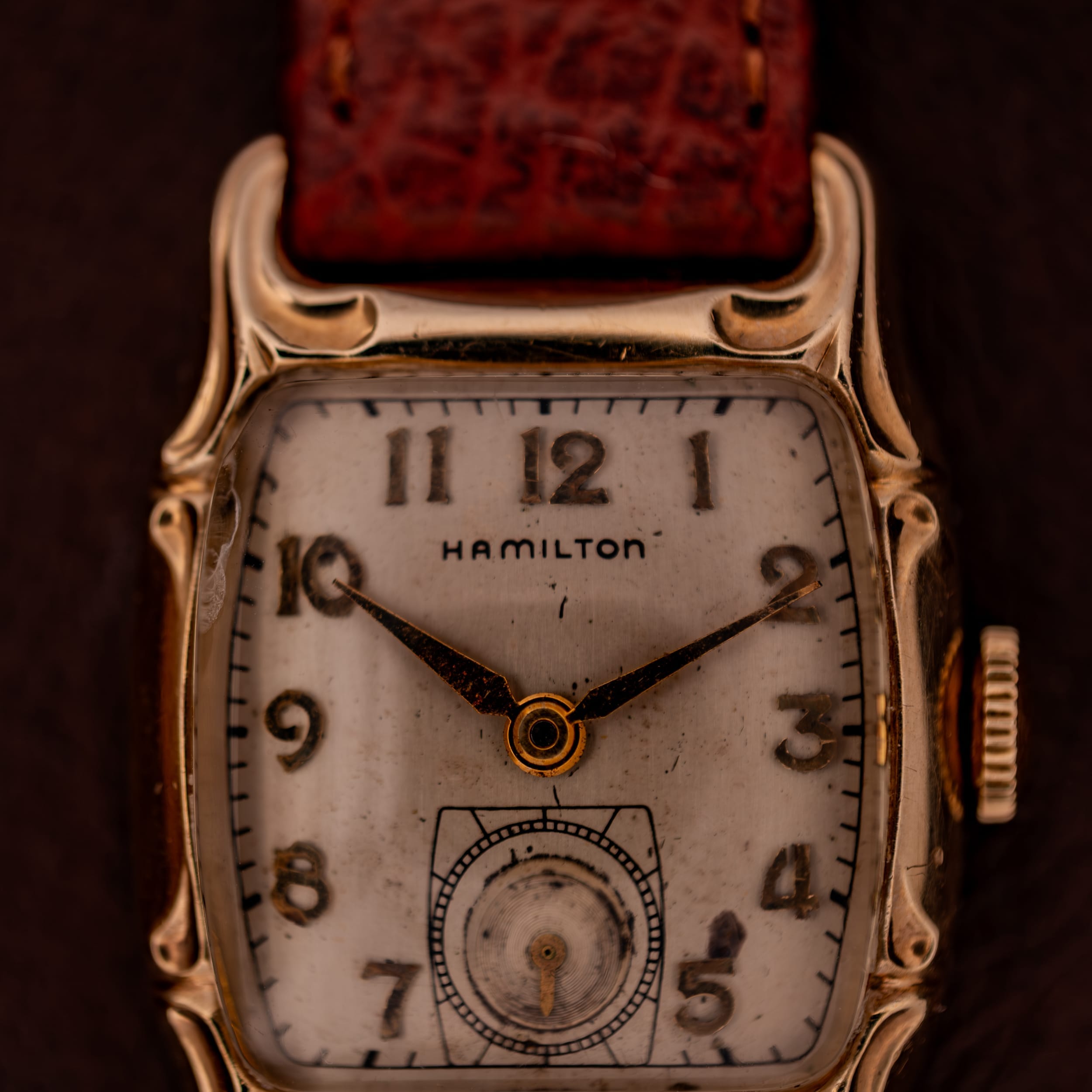
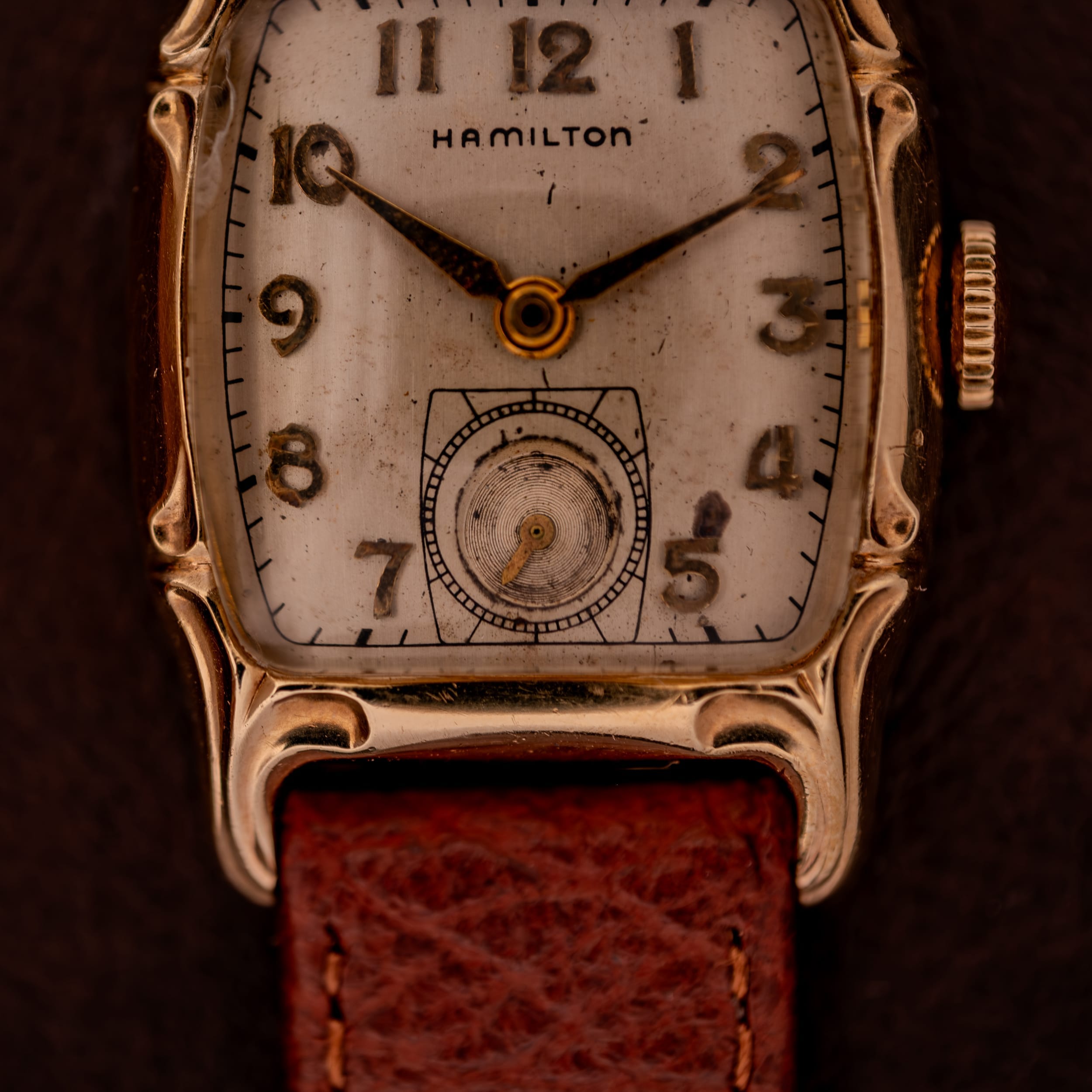
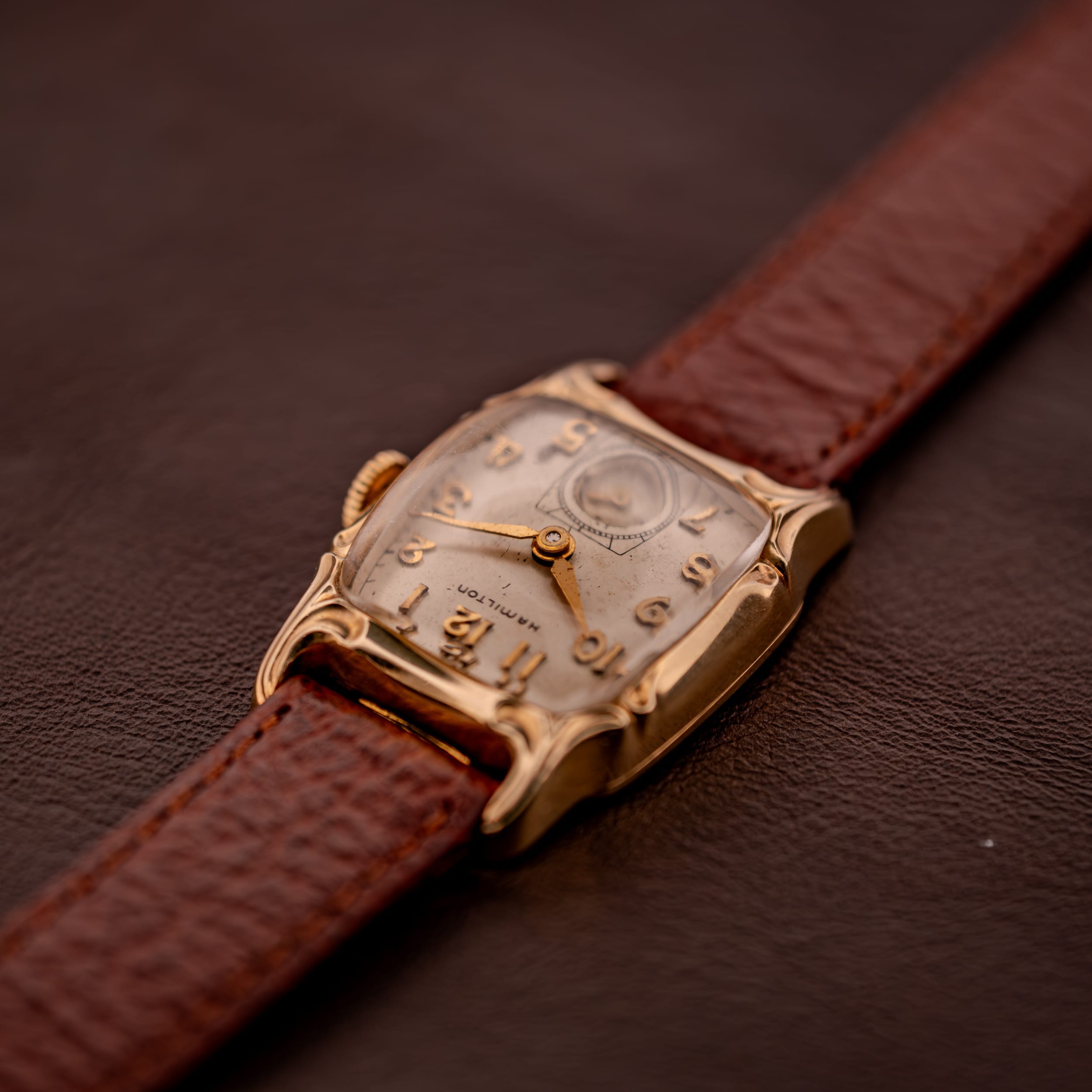
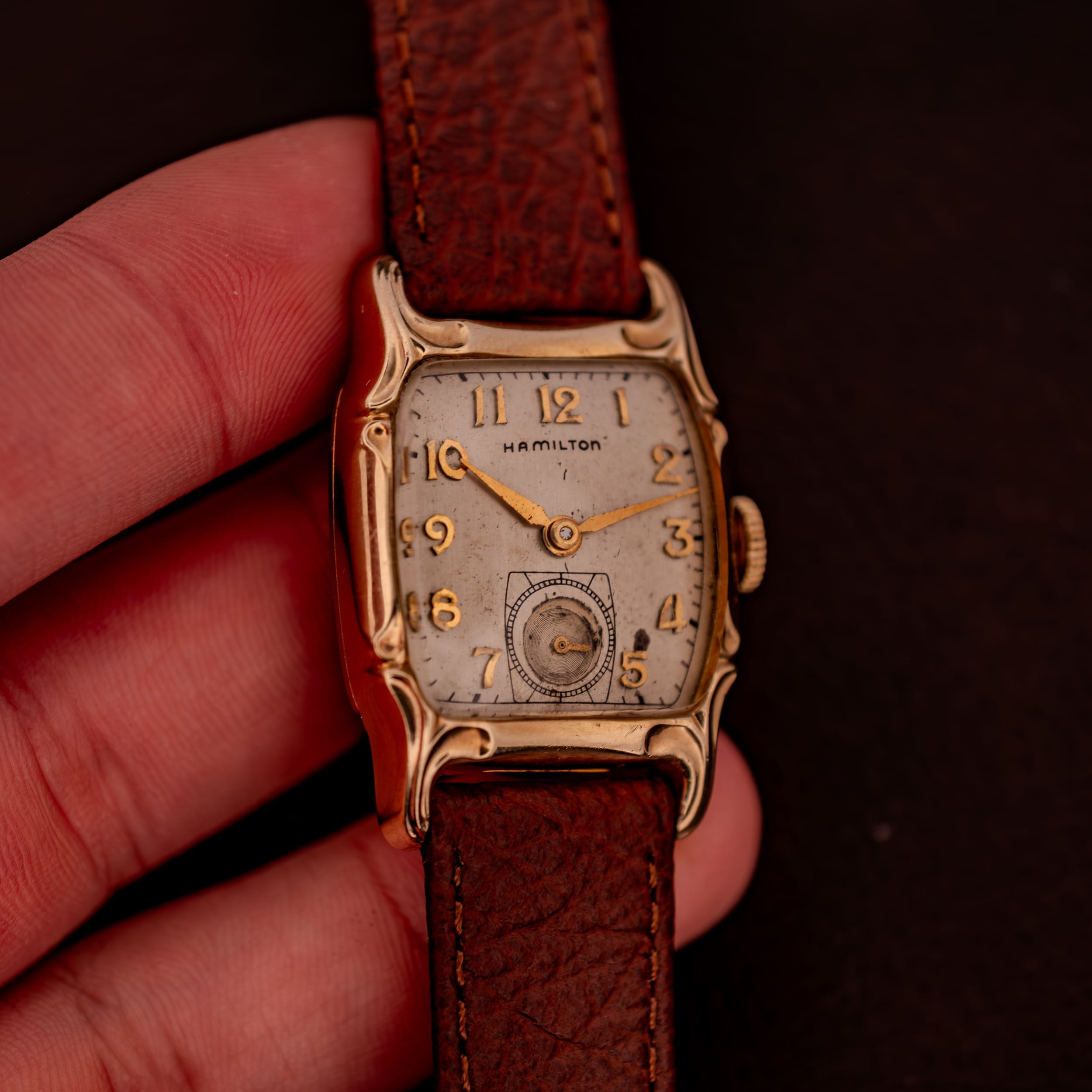
The dial on this example is in lovely, honest condition, showing the kind of warm, lived-in character that only decades of wear can produce. The full set of applied gold Arabic numerals encircles the dial in a classic, highly legible layout, and the Hamilton name is printed cleanly below twelve. The subsidiary seconds register at six features a decorative geometric frame with a hash-marked inner track, a charming period detail that adds visual depth to the lower half of the dial. The original gold lance-shaped hour and minute hands are present and correct, showing gentle, warm patina consistent with age. The dial surface itself carries honest aging with light marks and subtle toning that give it an authenticity and warmth that a refinished dial simply cannot replicate.
The Lawton occupies a very special niche in the Hamilton collector’s world. Its short two-year production run means examples are genuinely scarce, and its ornate case design sets it apart from the vast majority of mid-century Hamiltons. For the collector who values American-made horology, distinctive design, and the kind of watch that tells a story the moment it hits the wrist, this is a remarkable find. On the brown leather strap, those sculpted lugs frame the dial beautifully, and the overall effect is of a miniature work of postwar American decorative art, powered by one of Lancaster’s finest movements.