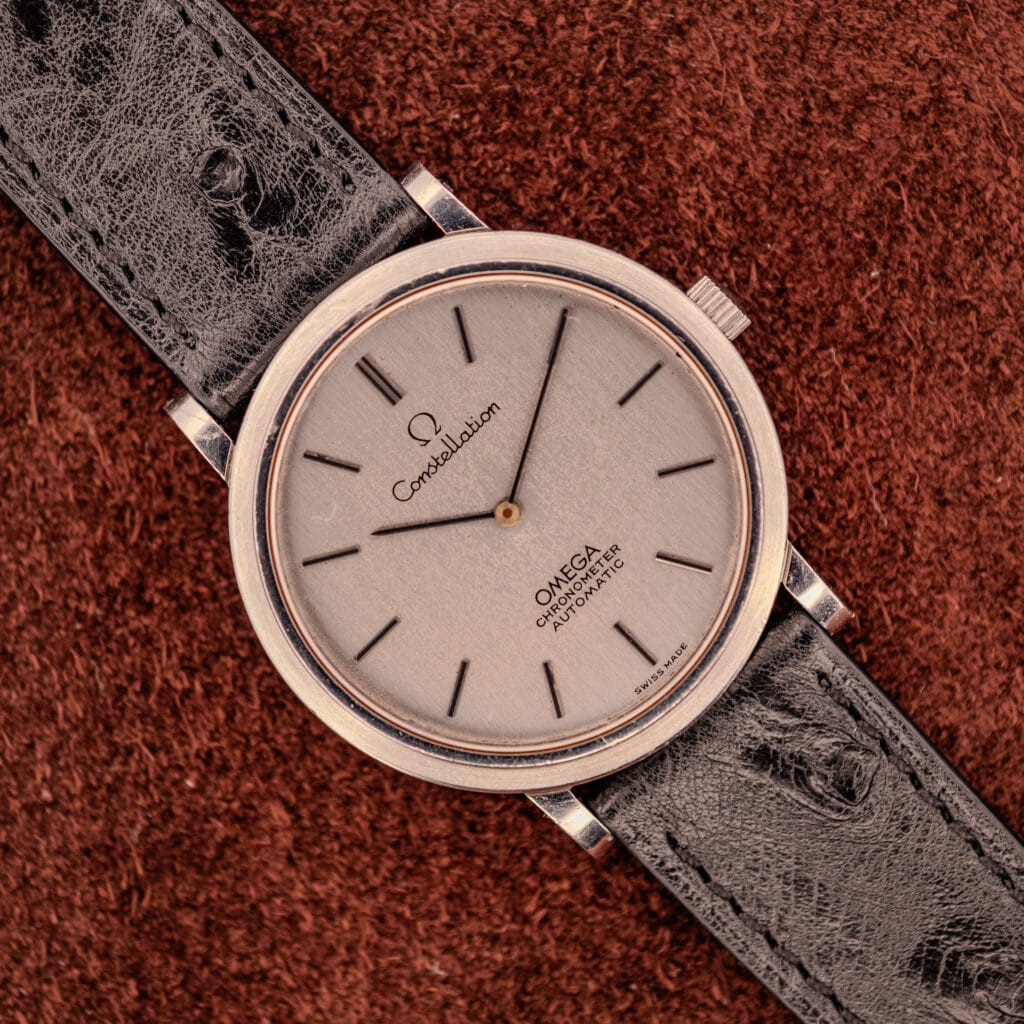
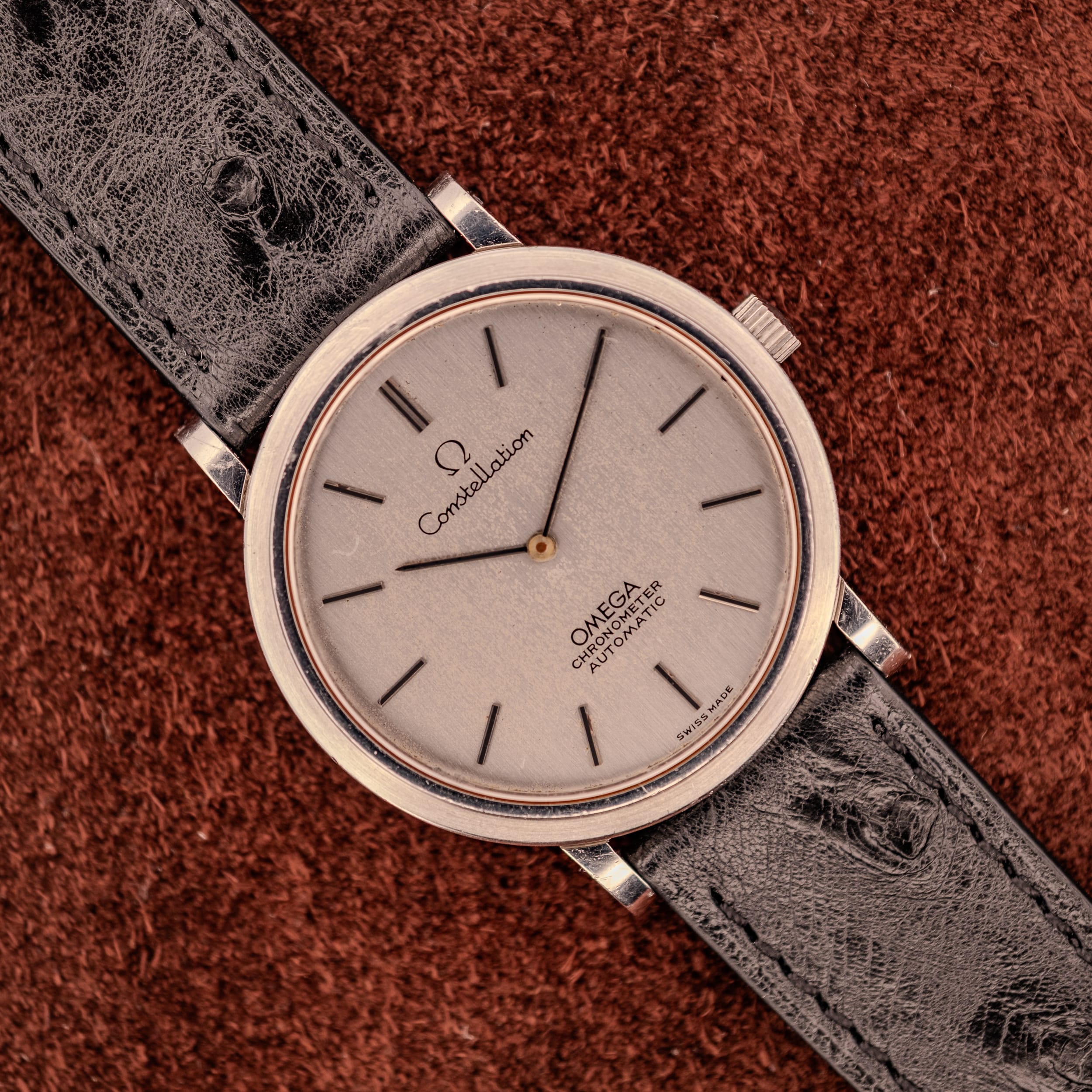
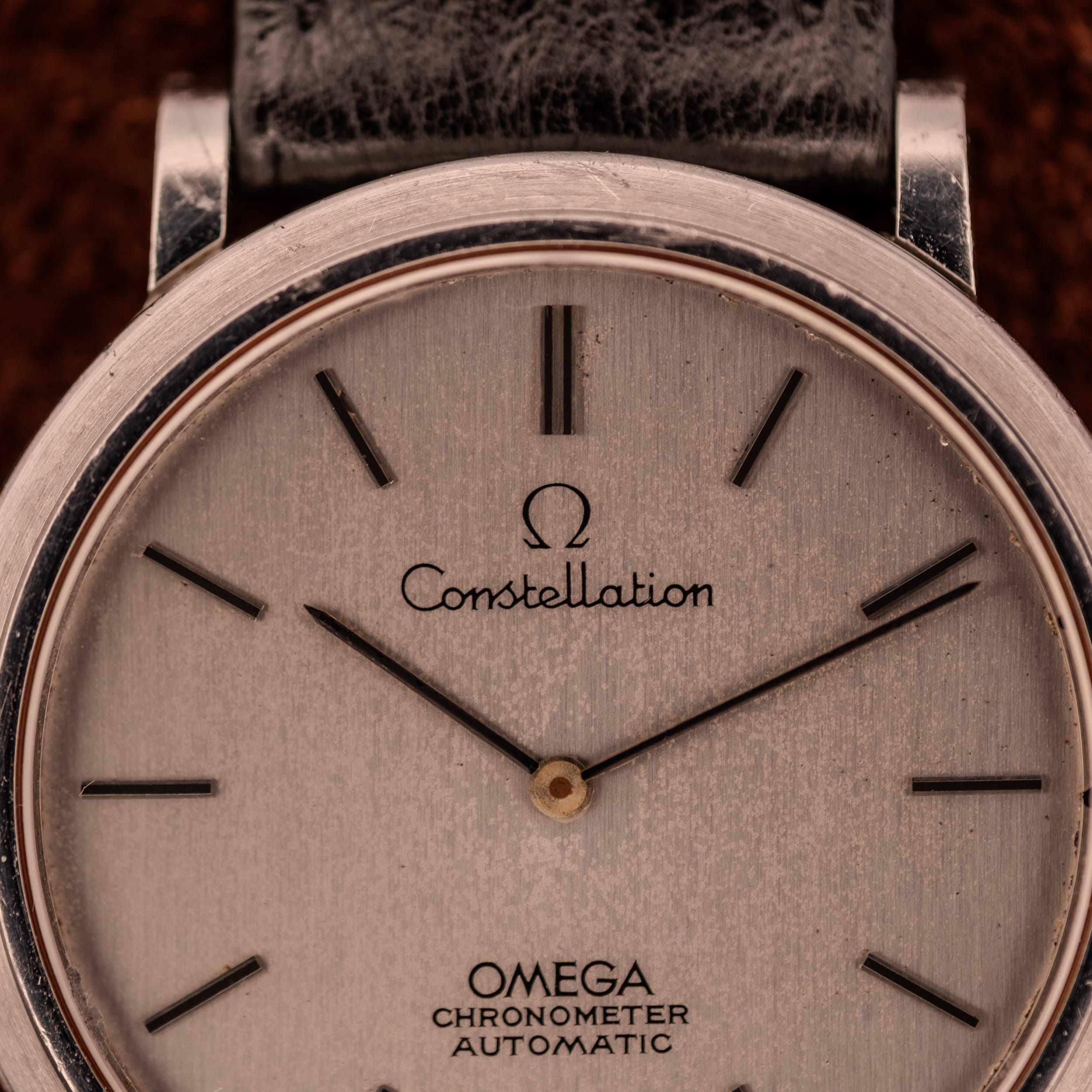
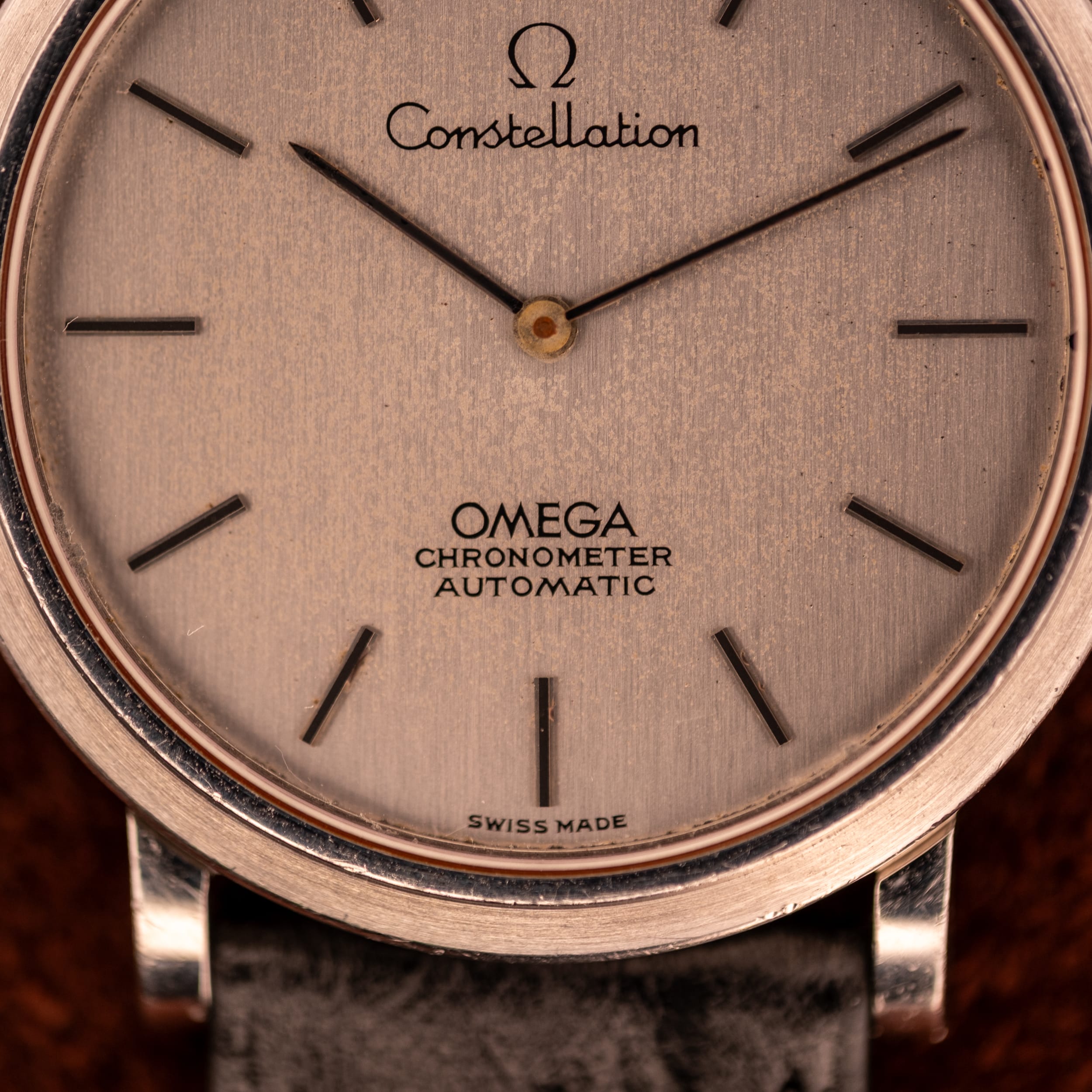
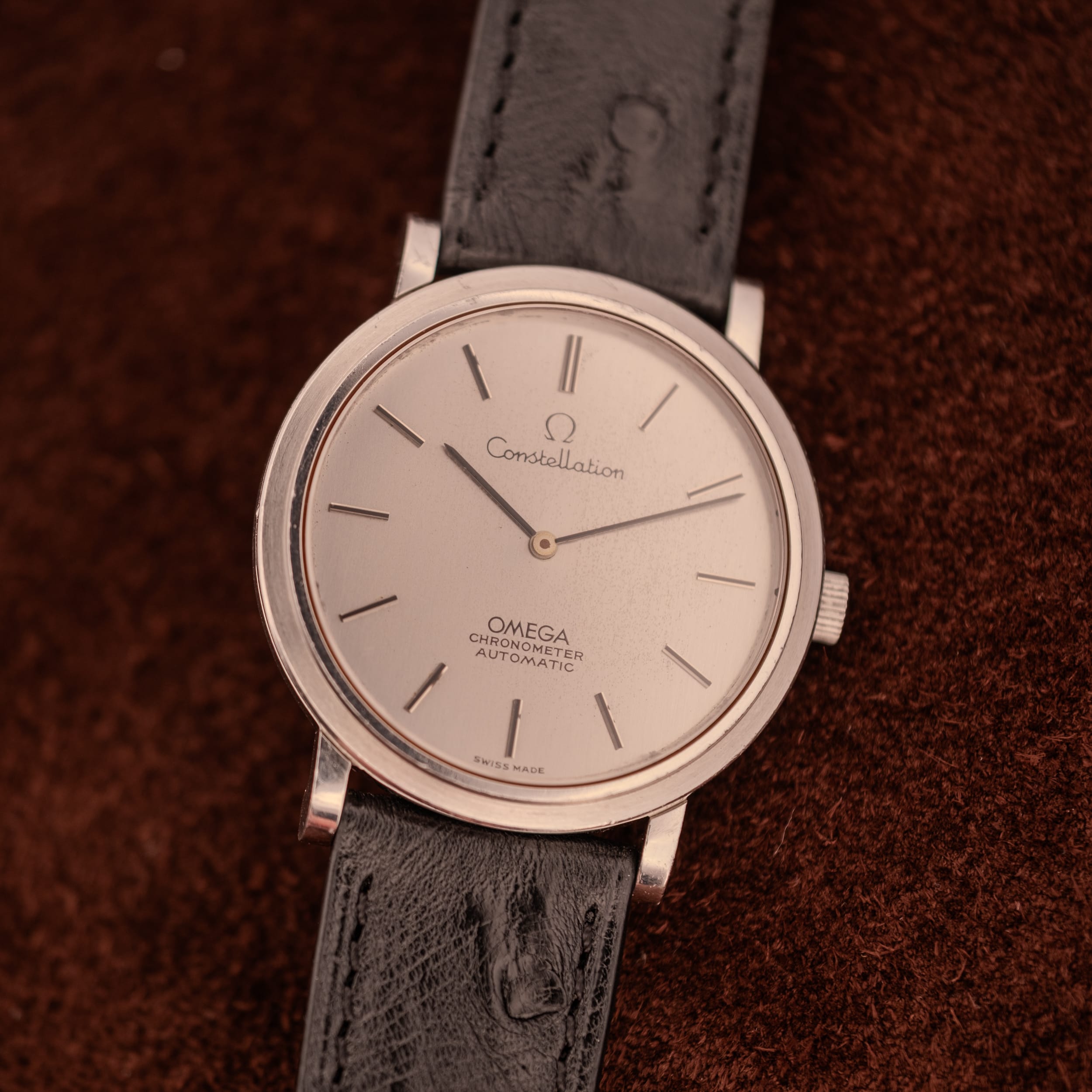
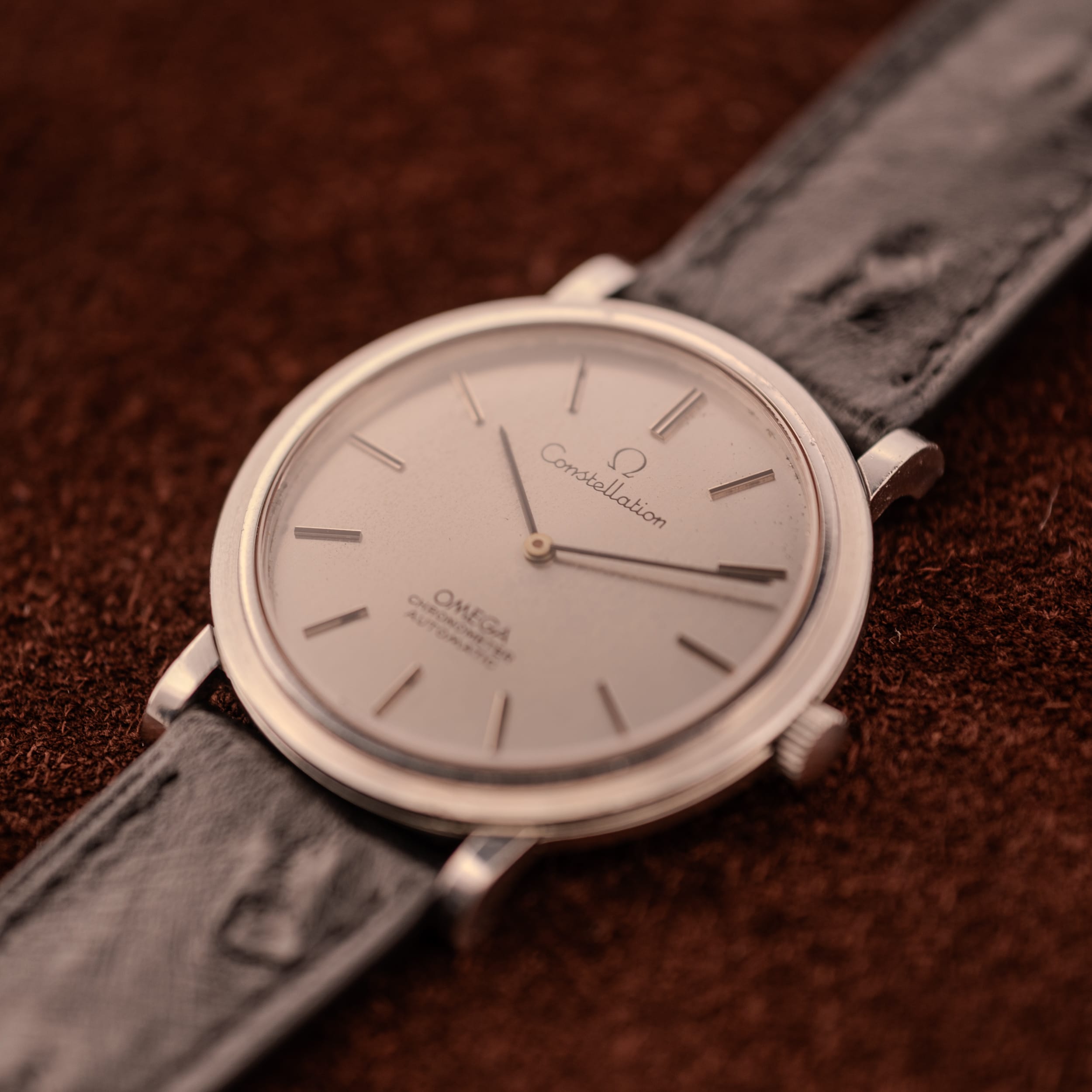
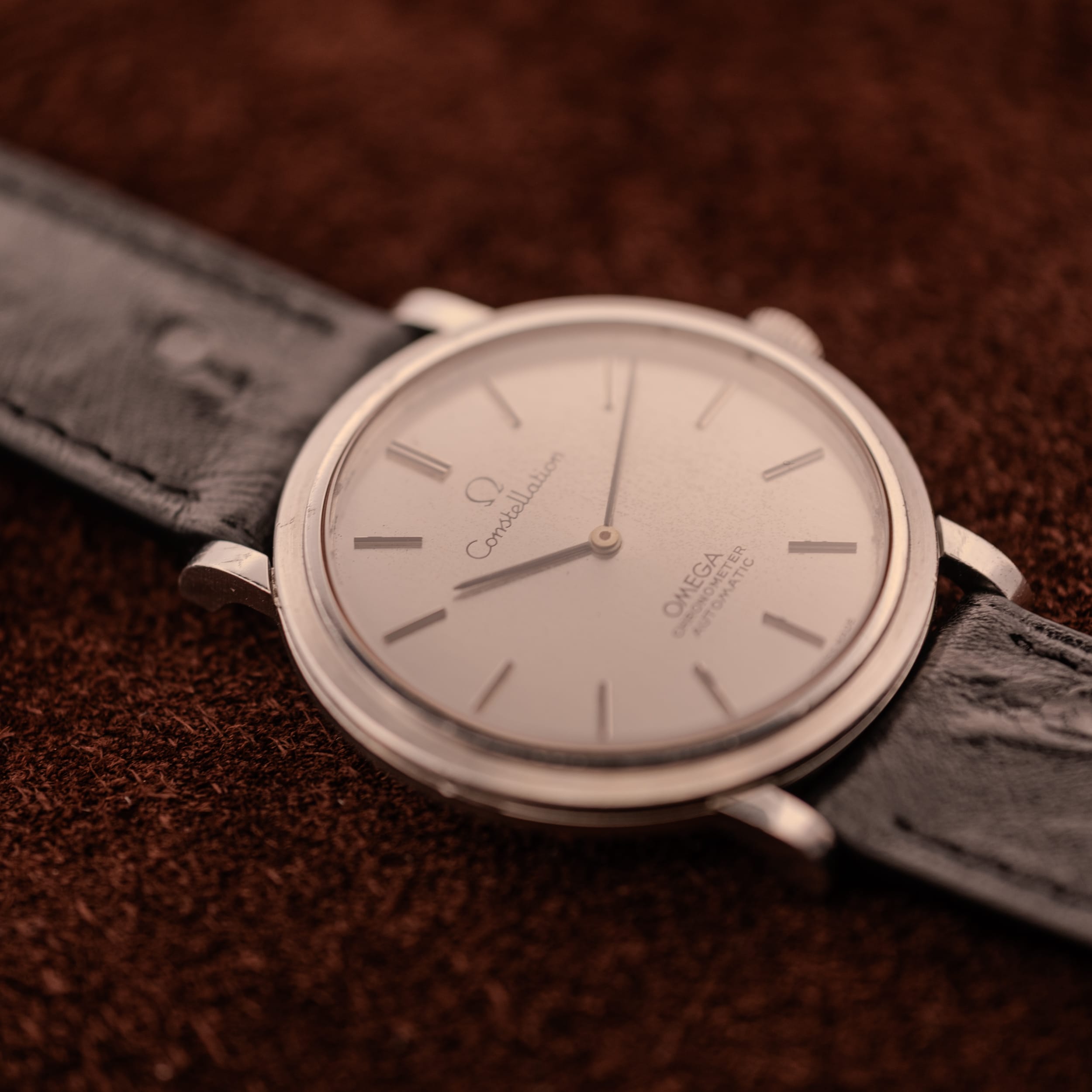
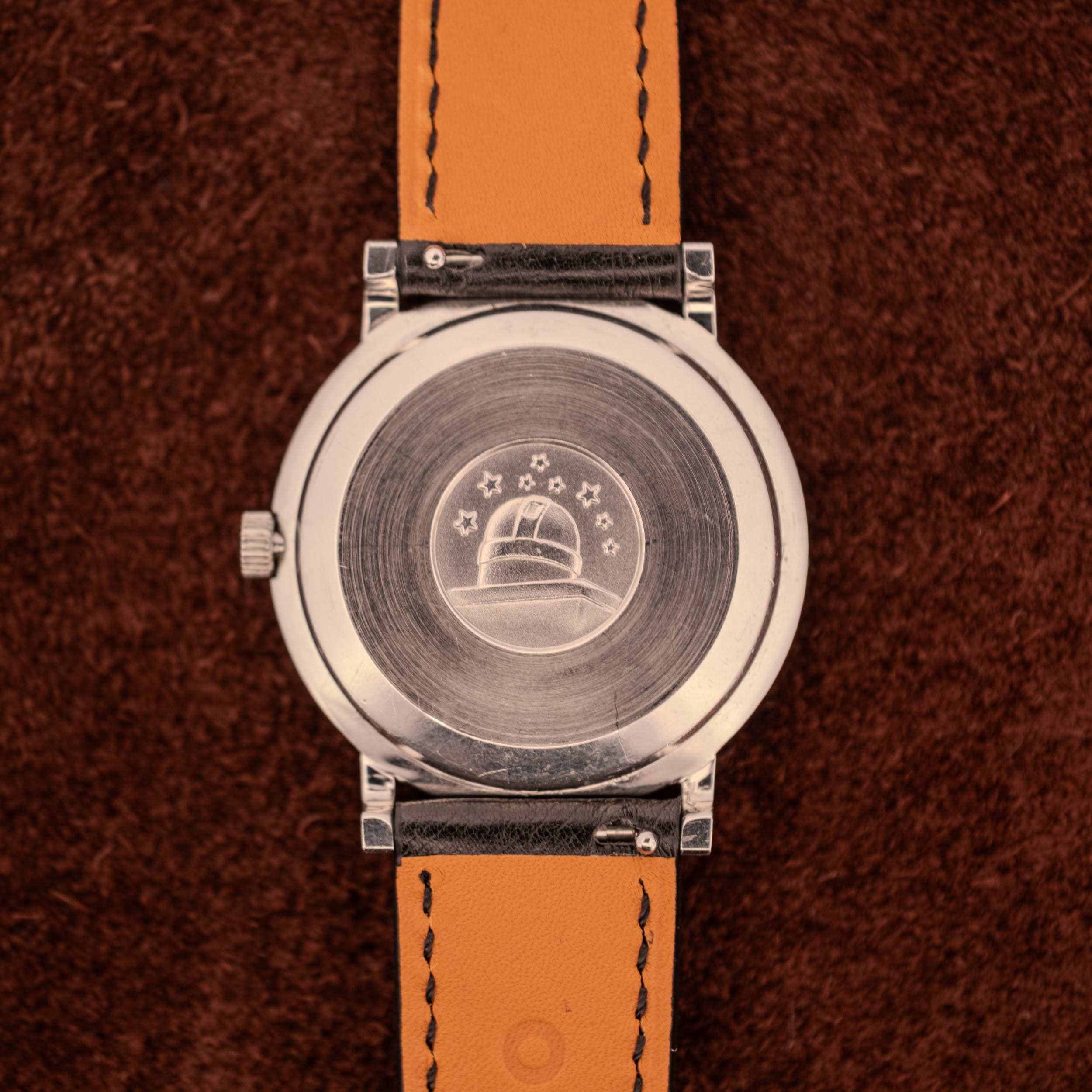
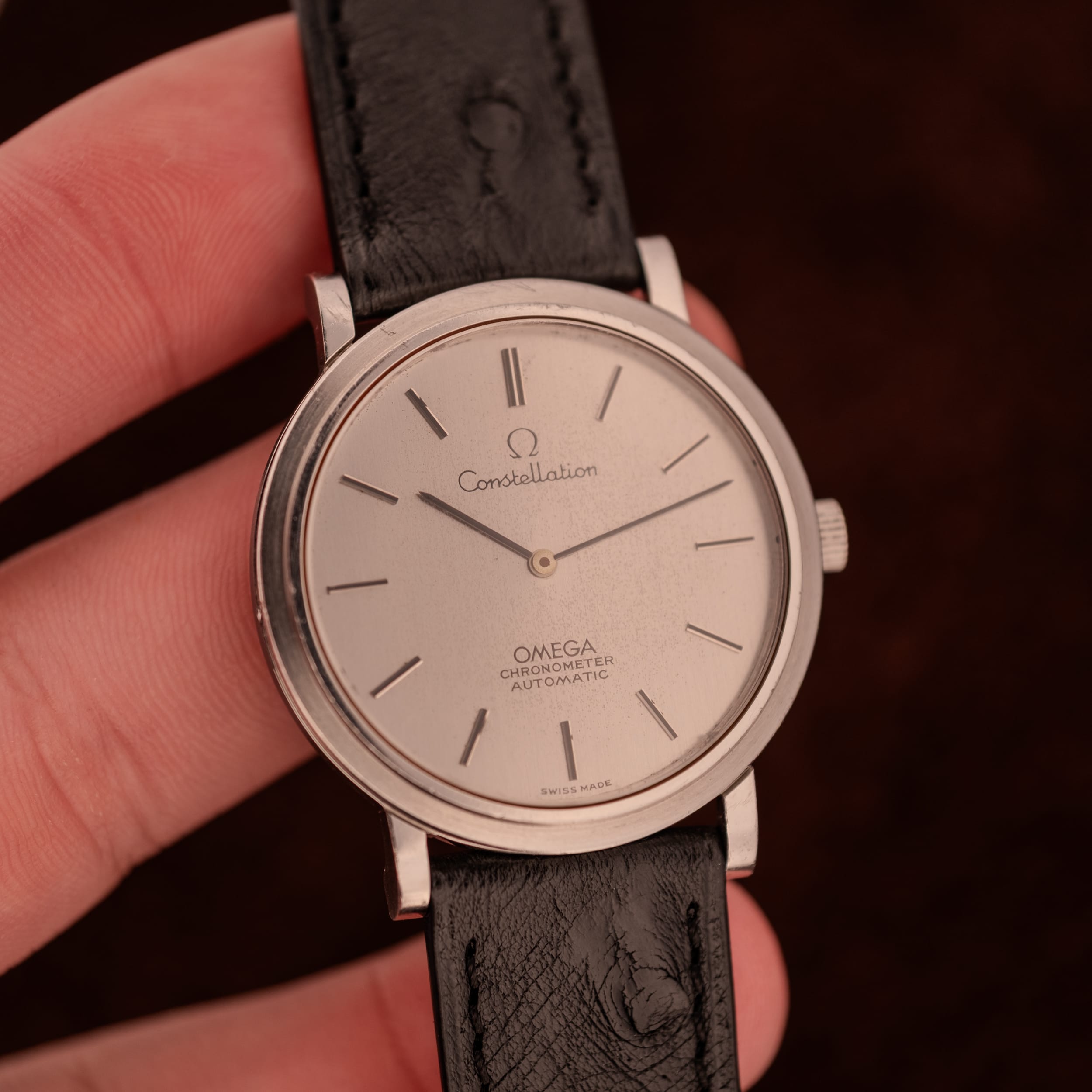
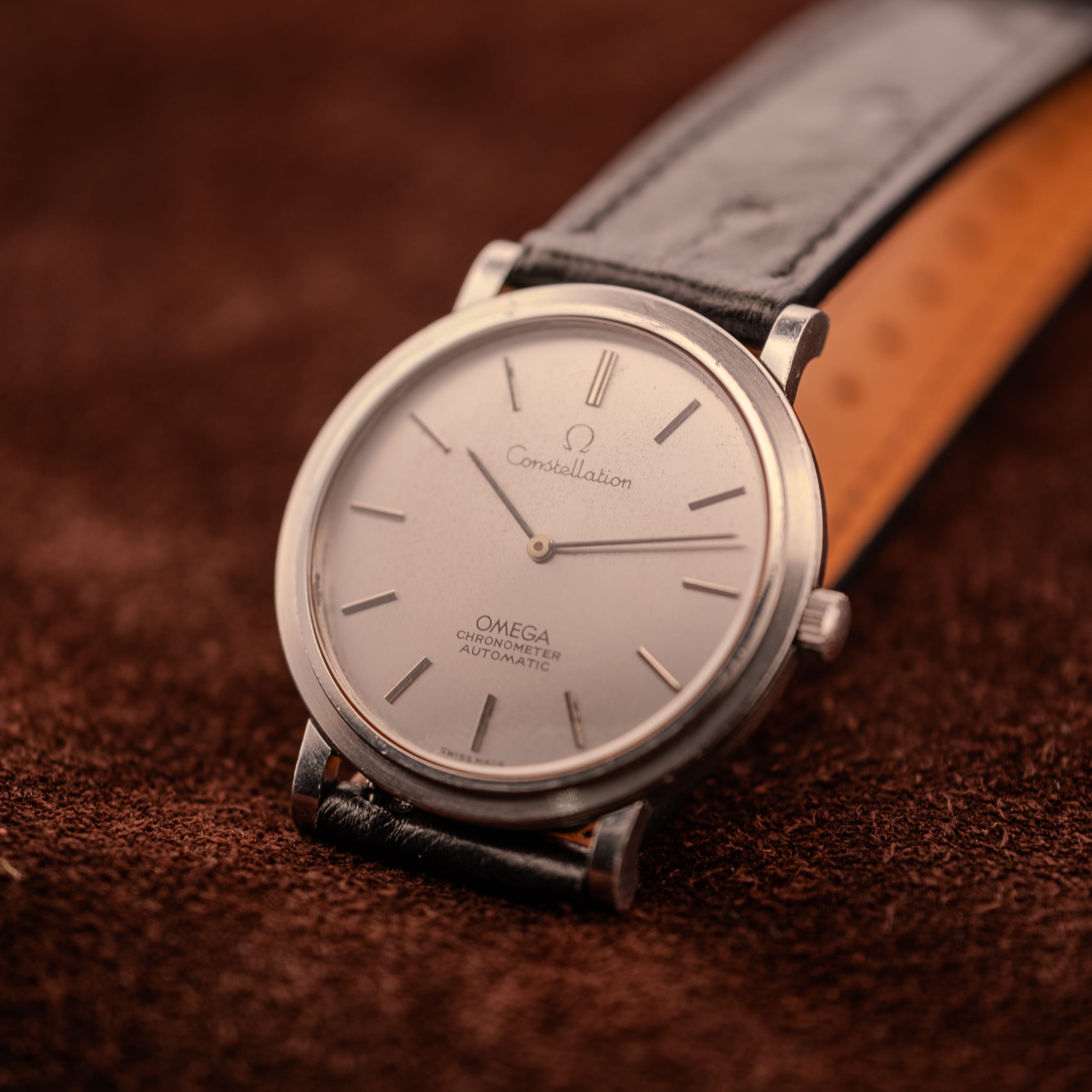
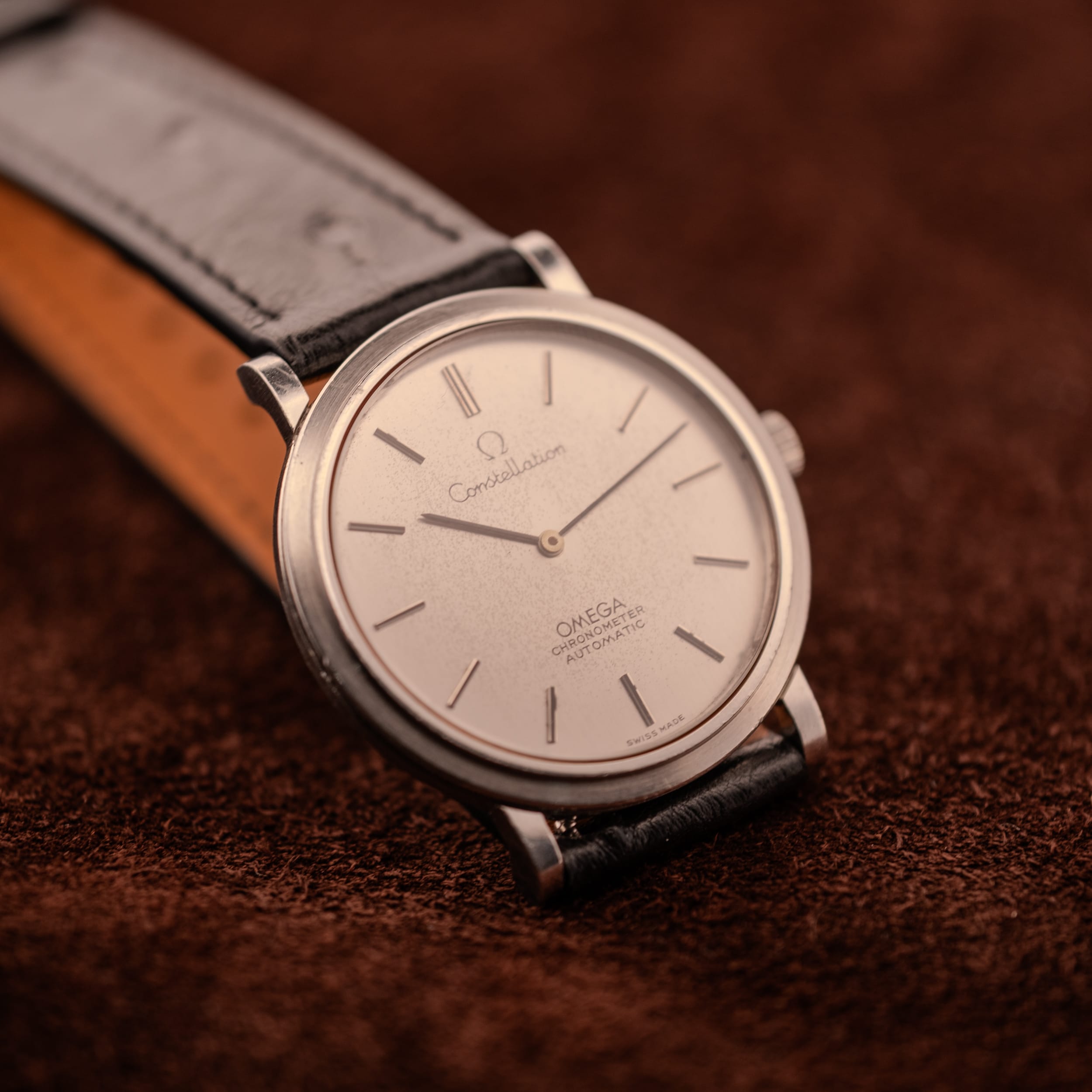
Where the 168.xxx Constellations of the 1960s wore their chronometer status with a decorated multifaceted bezel and a stepped pie-pan dial, the reference 157.0001 reads as a quieter Omega Constellation chronometer automatic, the same observatory-rated promise poured into a round dress case so slim it disappears under a cuff. The caliber 712 inside is Omega’s ultra-thin automatic chronometer, finished and rated to the same standard the brand was sending to Geneva Observatory in those years, and the dial keeps the catalogue clean: applied baton markers, a printed OMEGA CHRONOMETER AUTOMATIC designation in the lower half, and the Constellation observatory medallion on the screw-down back. To us, this is the Constellation for the collector who has already lived through the 60s headliners and wants something quieter to wear every day.
The Constellation line has carried chronometer rating since its 1952 launch, when Omega built the model around the official chronometer testing standards then administered through the Swiss observatories. By the time the 157.0001 reached the catalogue at the very end of the 1960s, the Constellation had been the brand’s chronometer flagship for the better part of two decades. Every Constellation that left Bienne carried a chronometer-rated movement, and the dial designation OMEGA CHRONOMETER AUTOMATIC printed on this watch is the same factory specification the brand stamped across the line throughout its production. The 157.0001 lives in the slim dress half of the catalogue alongside the louder Constellation C-shape and integrated-bracelet references of the same period, and to us it has aged into the quietest and most wearable of the bunch.
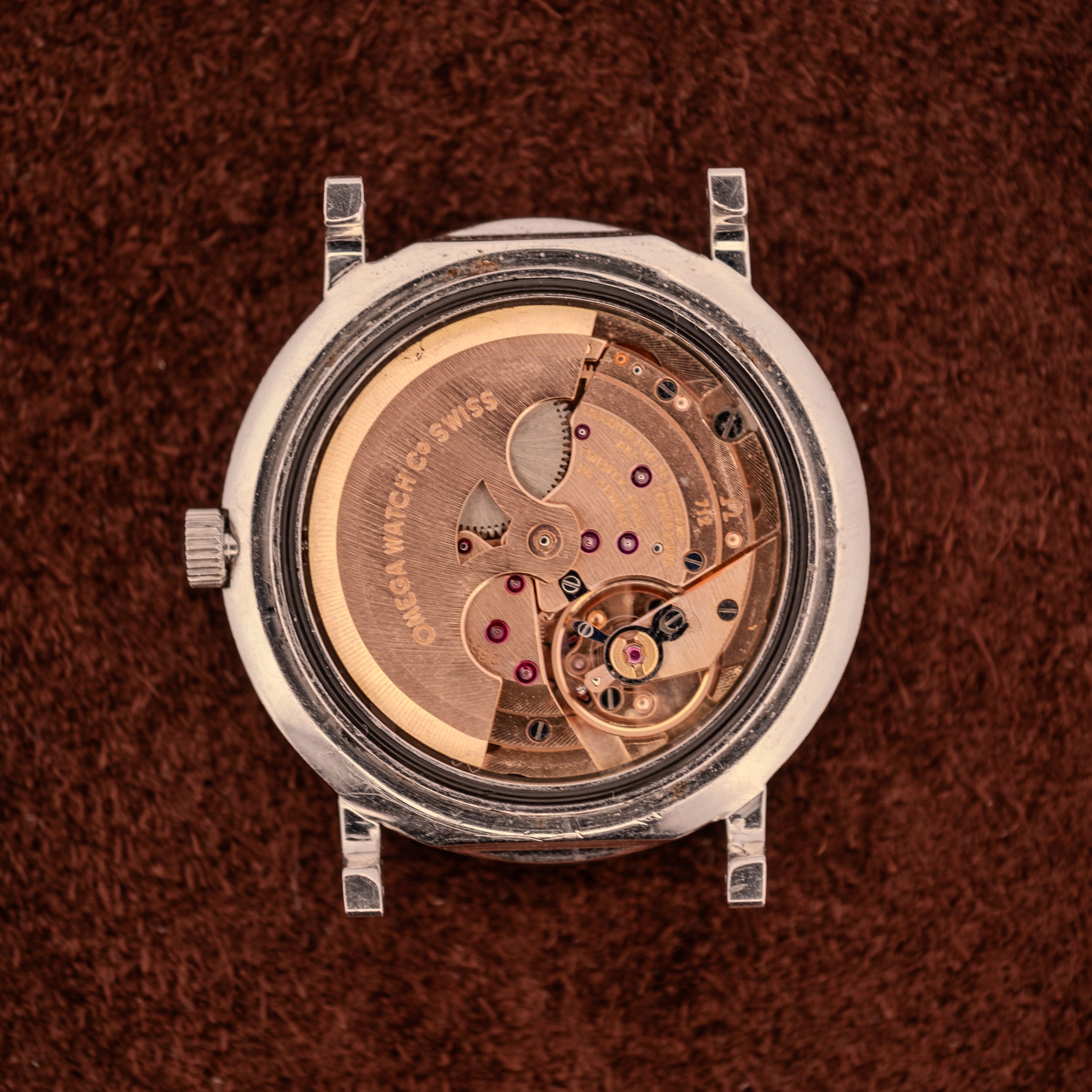
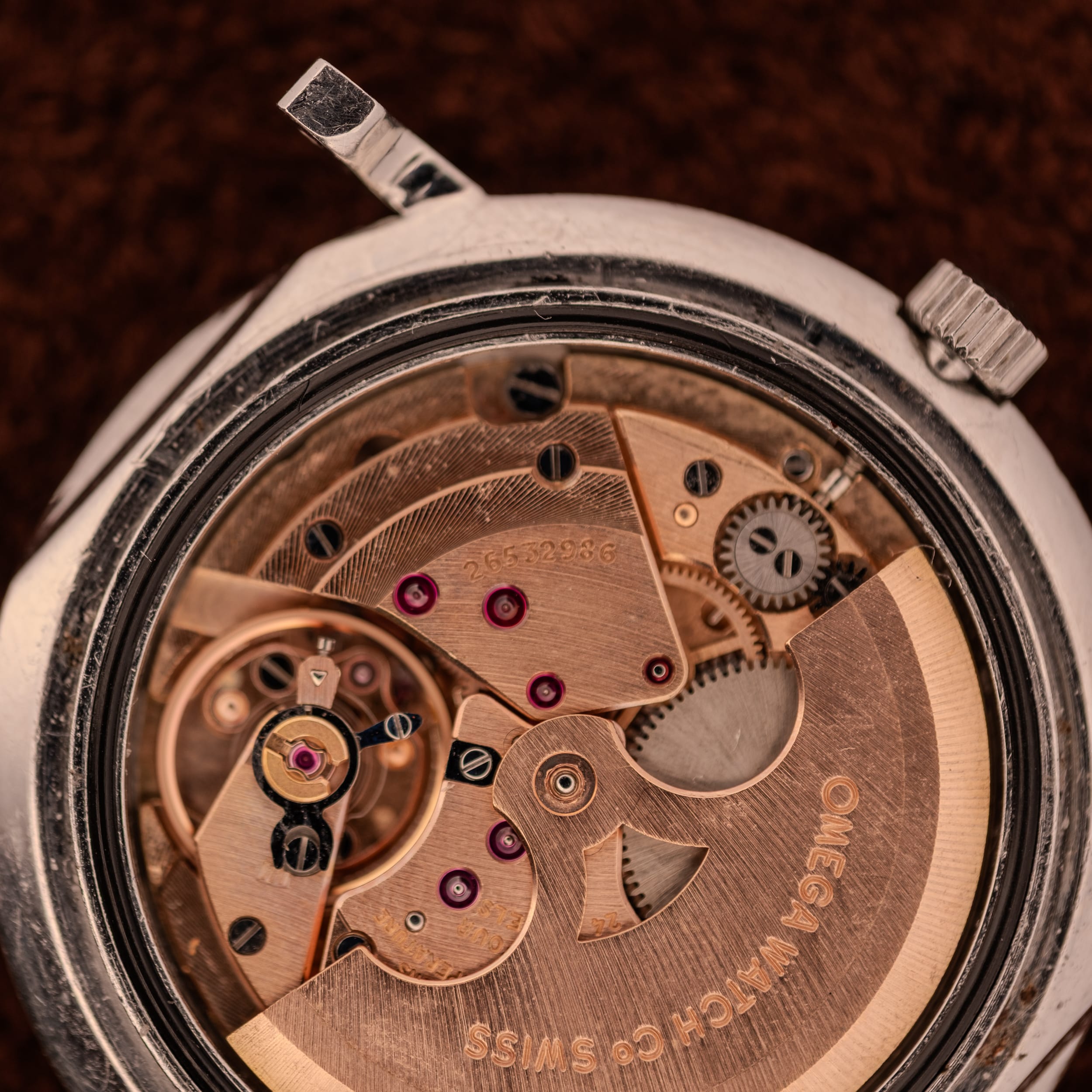
The caliber is the Omega 712, the brand’s slim automatic of the late 1960s and early 1970s designed specifically for the ultra-thin Constellation references the standard 56X and 75X families could not fit inside. Running at 19,800 vibrations per hour across twenty-four jewels with a full rotor wrapping a flattened movement architecture, the 712 was Omega’s answer to the broader Swiss push toward thinner dress watches in the period. The trade-off in any ultra-thin automatic is real and worth saying out loud: the slimmer movement plate gives up some of the robustness of the thicker workhorse calibers, and the period rotor and reverser design asks for clean oil rather than neglect. Our service photographs show the 712 with its copper-toned bridges, the Omega-signed rotor reading OMEGA WATCH Co SWISS along its outer edge, and the period brushed and perlage finishing across the train bridge exactly as Omega drew it. To us, the 712 is the movement that lets the case sit this thin, and the case sits this thin precisely because the 712 exists.
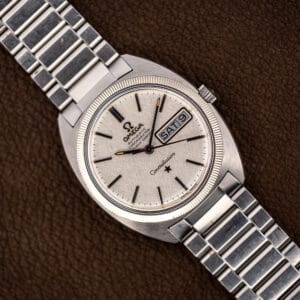
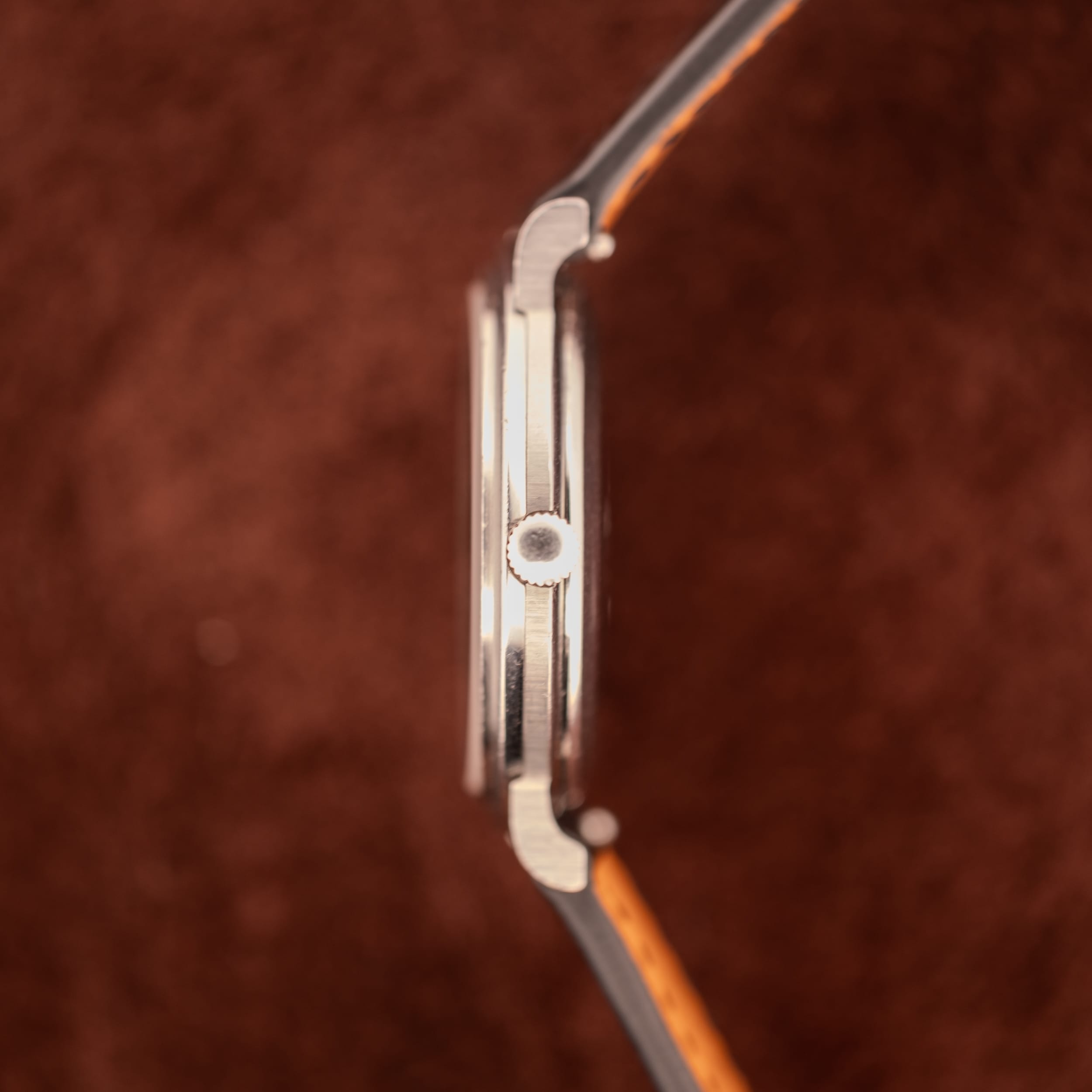
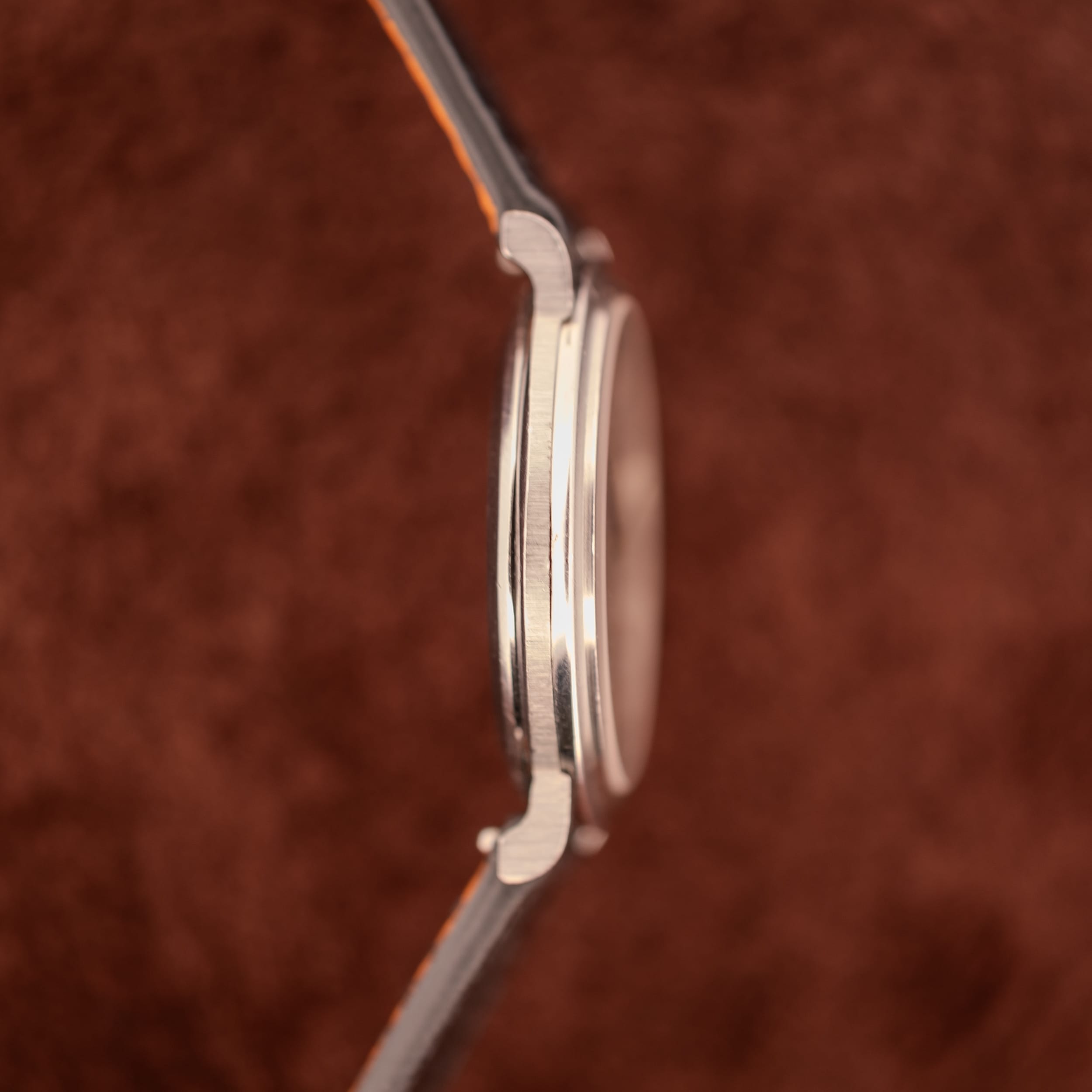
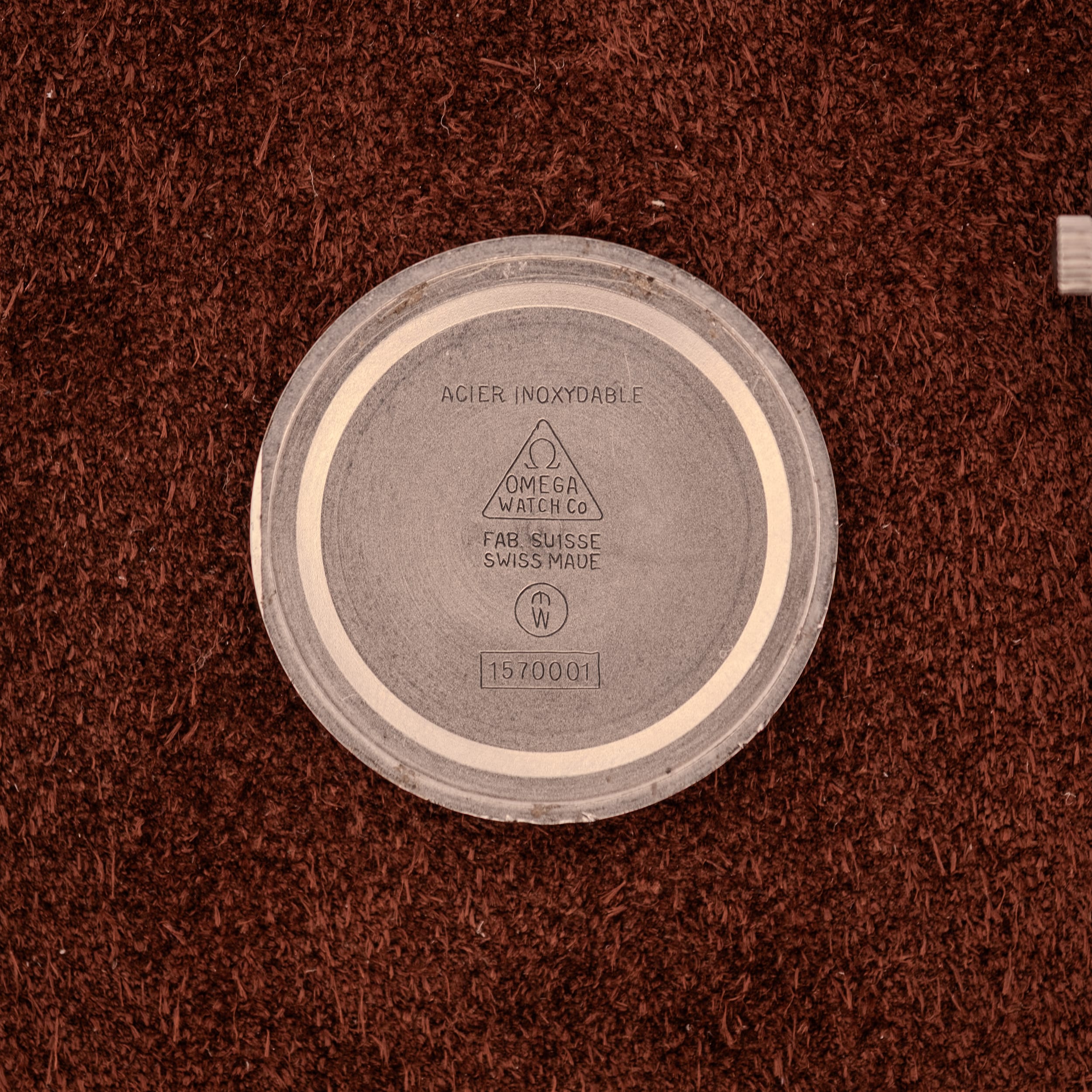
The case is a round stainless steel ultra-thin dress configuration measuring 34.4mm across with a 39mm lug-to-lug span and an 18mm lug width. The bezel is smooth and polished, transitioning into a fine brushed top surface across the lugs and into mirror-polished case flanks that show the genuinely slim profile in side view. Honest hairlines scatter across the lugs and the case sides record a watch that has been worn rather than locked away in a drawer. The outer caseback carries the embossed Constellation observatory medallion with the eight-star border, the factory motif that has identified the chronometer line on the back of every Constellation since the early 1950s. Open the back and the inner caseback is stamped ACIER INOXYDABLE along the top, the Omega Watch Co triangle in the centre, FAB SUISSE SWISS MADE below, the OW case-maker triangle along the lower edge, and the boxed reference 1570001 confirming the case identity exactly as it should. Ultra-thin cases of this era are part of the watch’s story rather than a flaw to apologise for, and this one wears the way Omega meant it to.
The dial is the original factory silver-brushed surface with a fine vertical brush finish that catches light evenly across the field. The applied Omega symbol sits above the cursive Constellation script at the upper half, and the printed OMEGA CHRONOMETER AUTOMATIC text reads cleanly in the lower half above the SWISS MADE designation at six. The applied baton hour markers ring the dial at every hour position with a small accent stroke through each marker, the period-correct double-baton style that Omega used across its early-1970s dress dials. The hands are the original slim baton-style steel set, matched factory pair, with no replacement and no reluming. The absence of T SWISS MADE T flanking the dial designation and the absence of luminous plots on the markers and hands is the period-correct configuration for a Constellation built without tritium, exactly what a slim dress chronometer of this era should read as. To us, an untouched factory silver dial on a 157.0001 in this state is the originality reassurance the reference lives or dies on.
We have paired the watch with one of our black ostrich leather straps and an OTTUHR signed buckle. The black ostrich reads as a deliberate dress counterweight to the brushed steel case and the silver dial, the texture giving the package a quiet formality that suits the slim Constellation character honestly. The 18mm lug width opens the watch up to a wide range of dress strap options should the next owner want to swap to lizard, alligator, or smooth calf for a different mood.
Serviced in-house at OTTUHR and backed by our 2-year mechanical warranty, this is the kind of early-1970s Omega Constellation we get genuinely excited about. Factory original dial, factory hands, intact case stampings, the boxed reference 1570001 stamped where it should be, and the slim caliber 712 running cleanly. For the collector who values originality over polish, who reads honest case wear as character rather than damage, and who wants a piece of early-1970s Swiss chronometer history with a real story attached, this is exactly the kind of quieter Constellation we love bringing in.