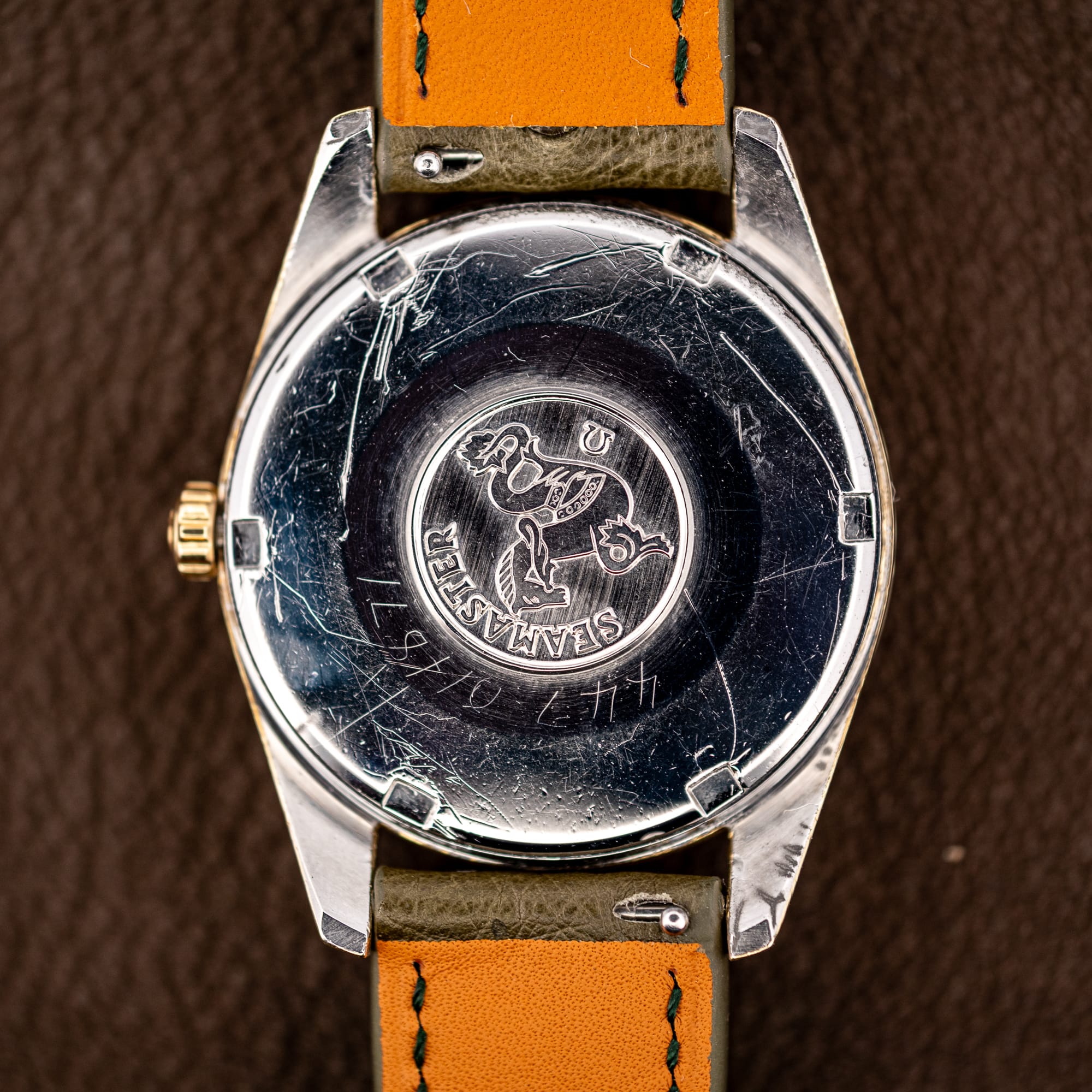
An engraver at Omega named Jean-Pierre Borle went to Venice and came home with a wristwatch emblem. Gondolas carry a small sculpted seahorse on each flank, and Borle took the idea back to Bienne. Omega credits him with the design and dates its arrival on Seamaster casebacks to 1957: a hippocampus in raised relief, horse in front and fish behind. The caseback of this Omega Seamaster 166.010 carries it.
The line that emblem marked was nine years old by then. Omega’s commercial director, Adolphe Vallat, had set the brief for a water-resistant automatic, and the case came from René Bannwart, a designer who later founded Corum. What made it work was unglamorous: a rubber O-ring seal in place of the lead gaskets it replaced. The Seamaster landed in 1948, Omega’s centenary year.
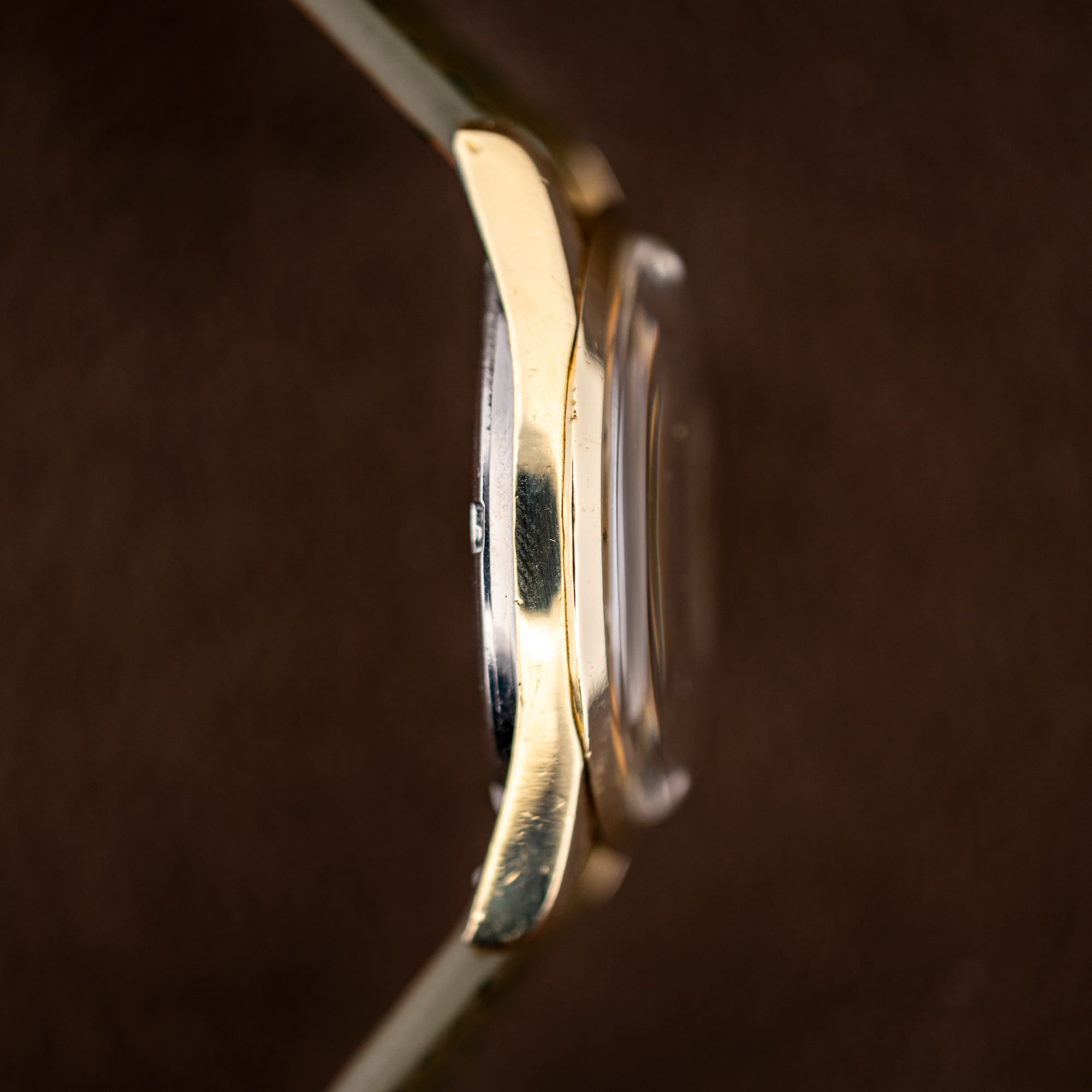
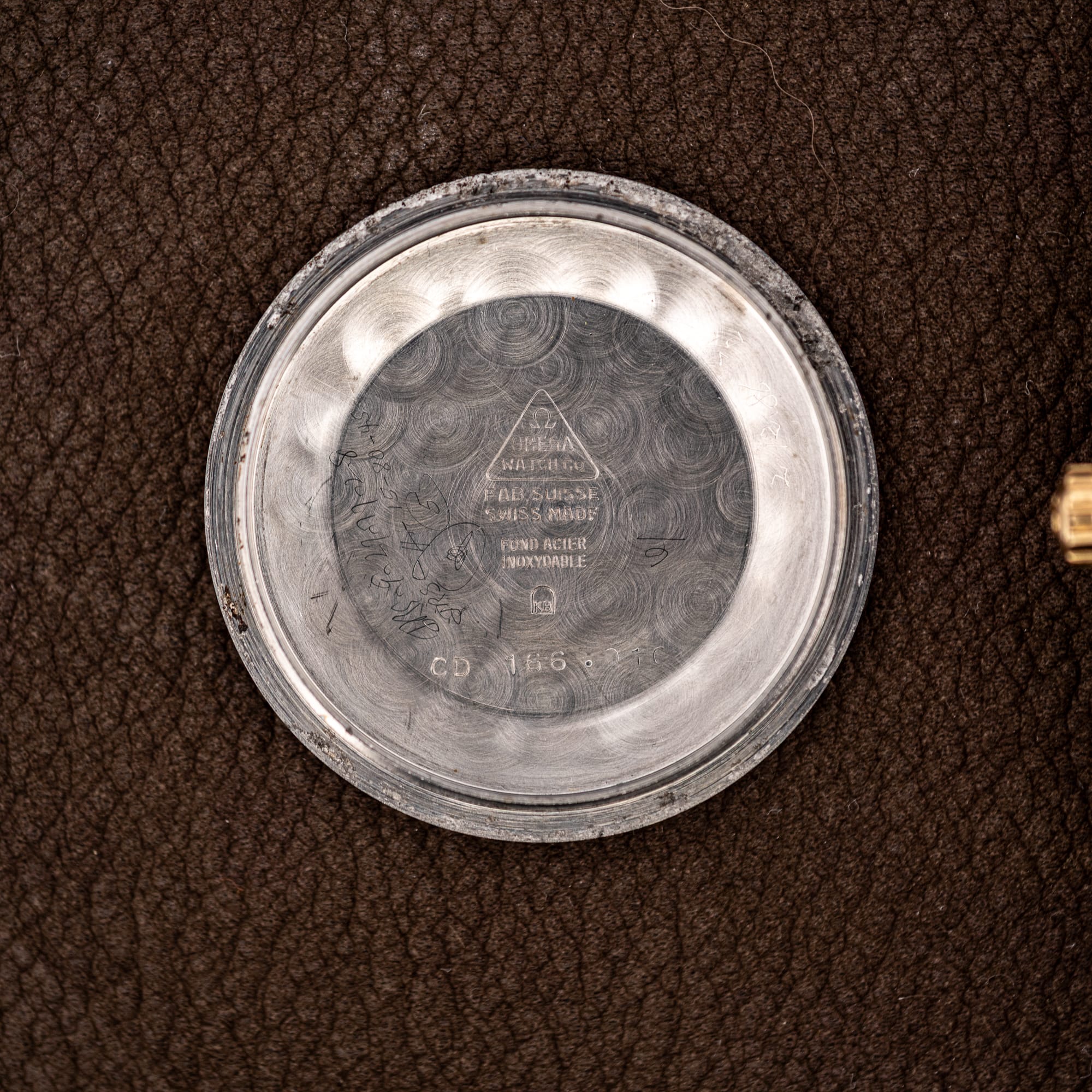
In 1962 Omega threw out its old case-numbering system and started over, which is why this reference exists in the form it does. The Omega Seamaster 166.010 arrived that year, with examples dated across the rest of the decade, offered in steel, in yellow gold cap and in pink, through two generations of movement. That breadth is what a mainstay looks like. The CD in front of the reference number is the part worth knowing: in Omega’s scheme it means neither plated nor filled but gold capped, roughly two hundred microns of 14k yellow gold bonded under heat and pressure onto a steel case, about ten times the gold a plated case carries. The back was left bare steel, and stamped to say so: FOND ACIER INOXYDABLE. Sixty years later the gold is still where Omega put it.
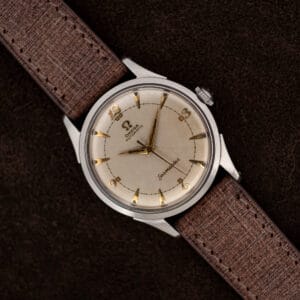
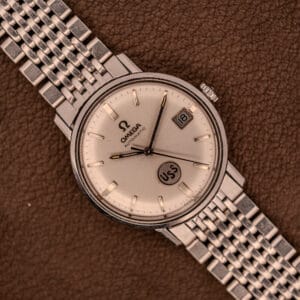
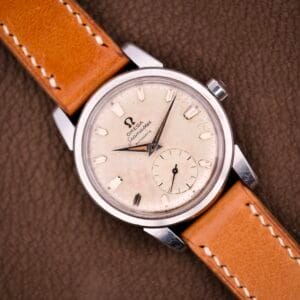
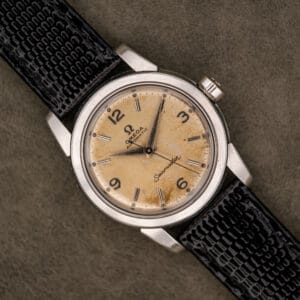
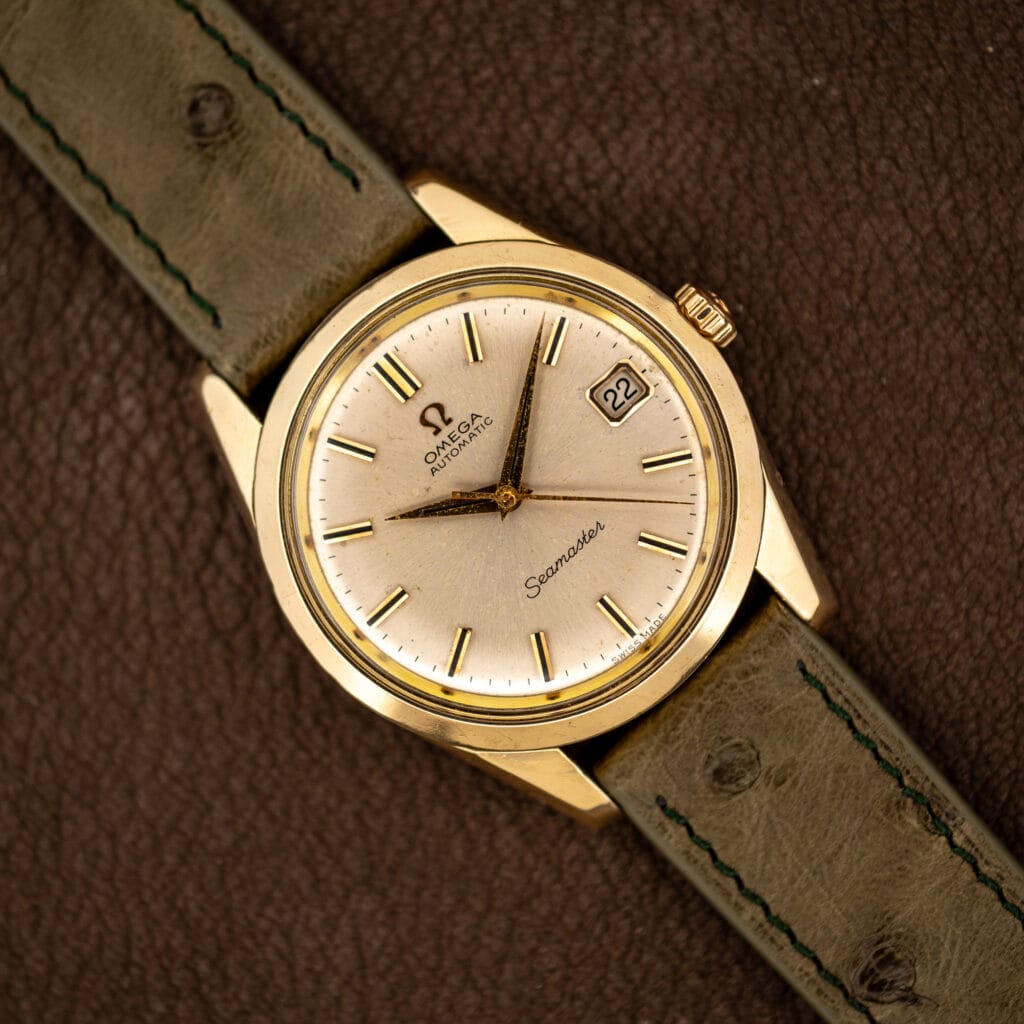
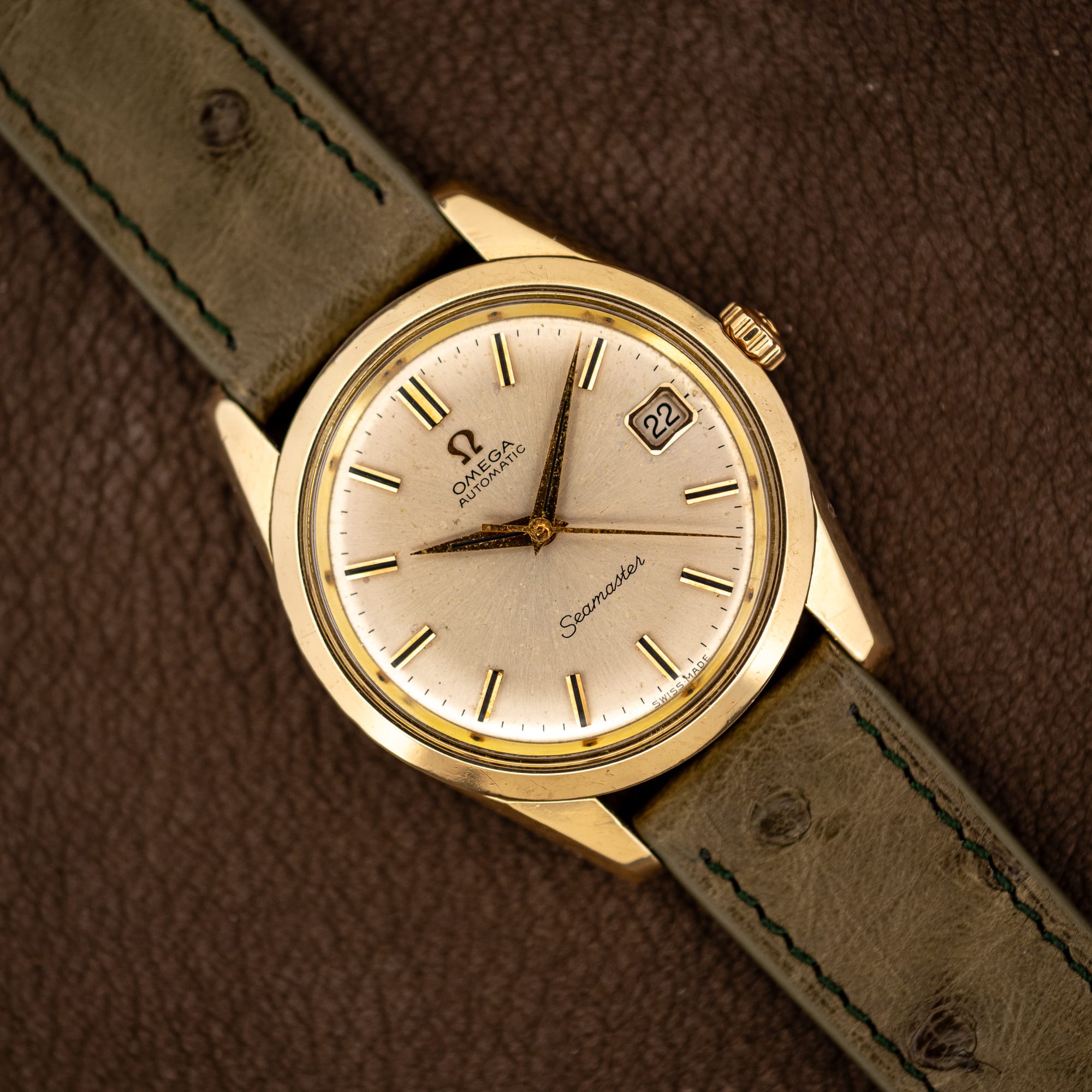
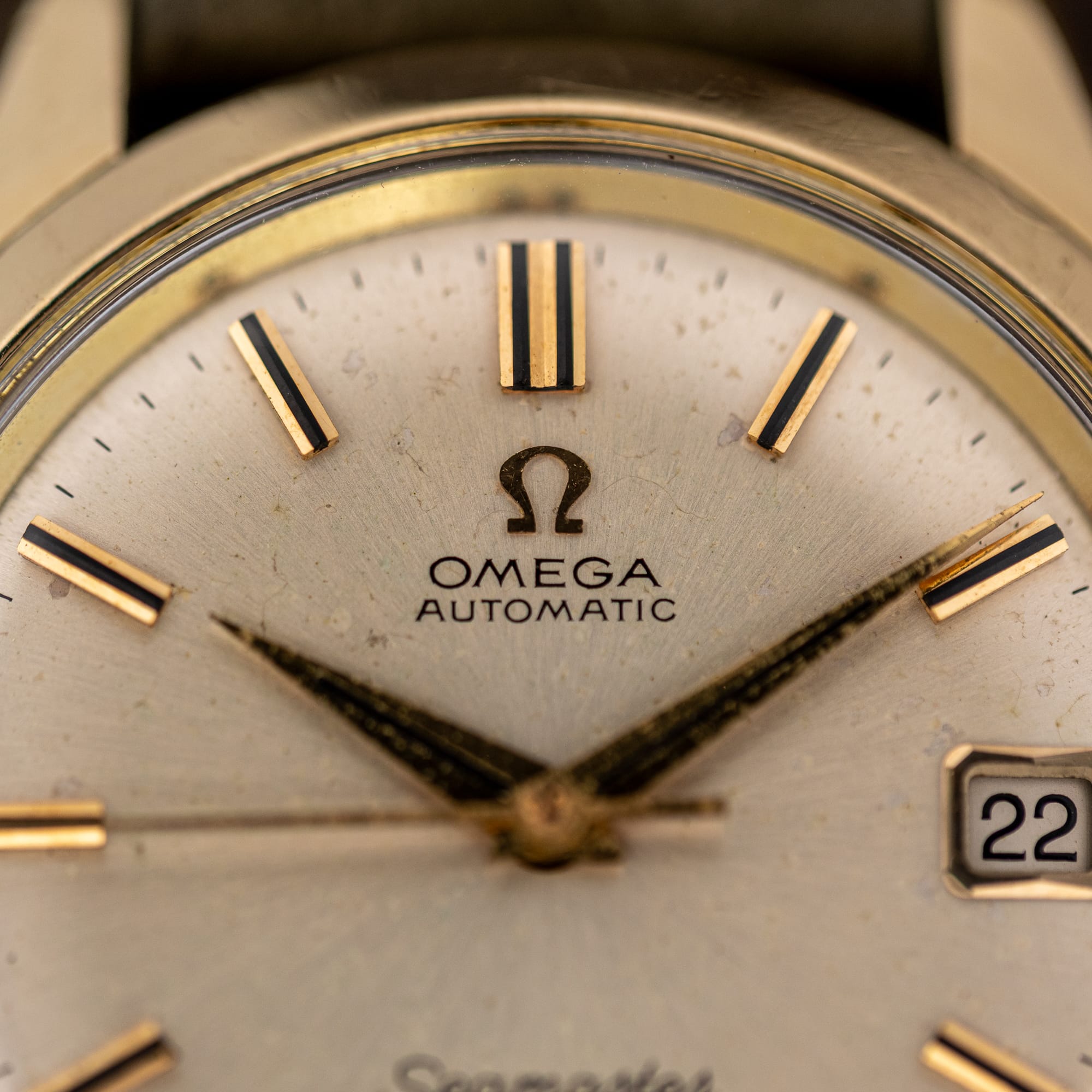
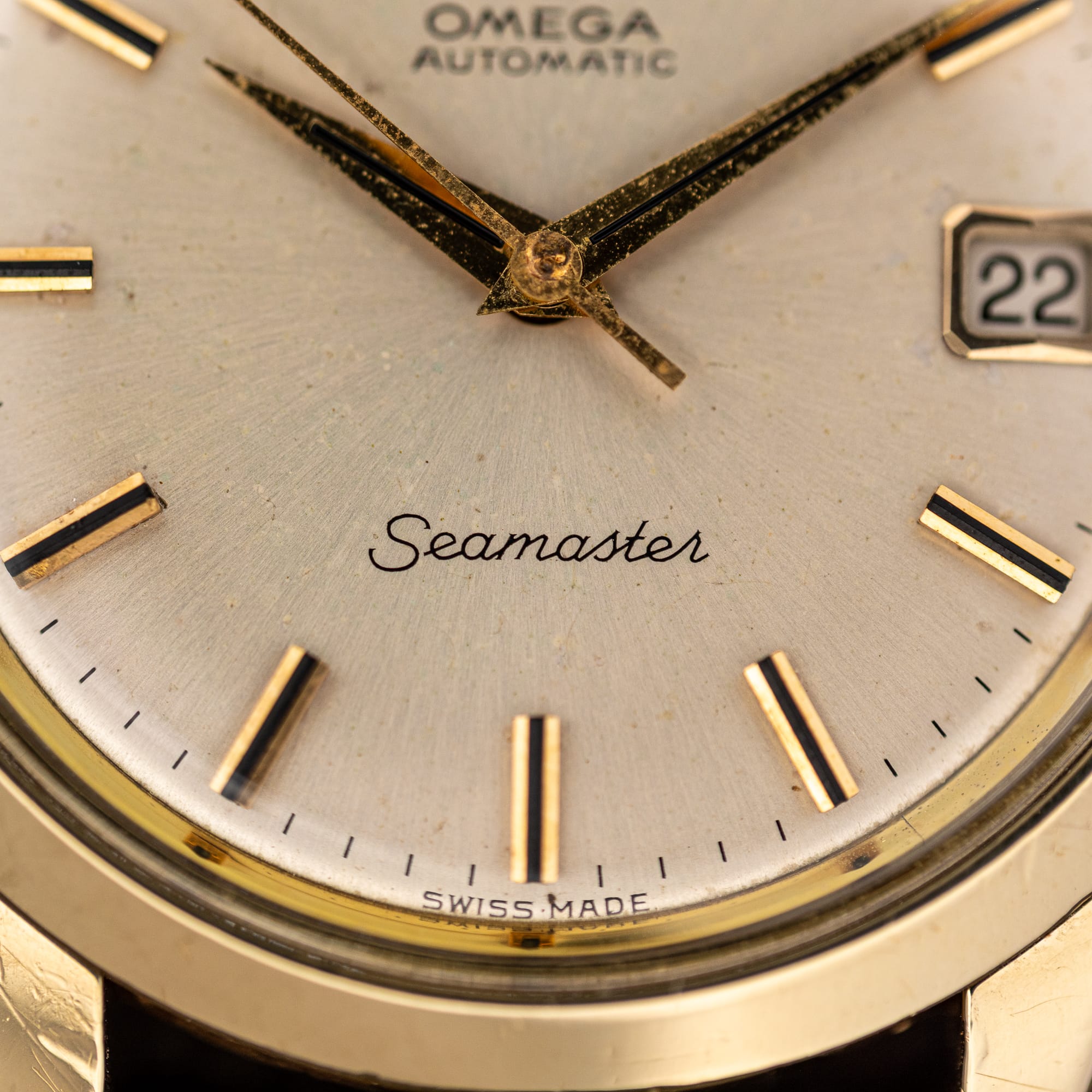
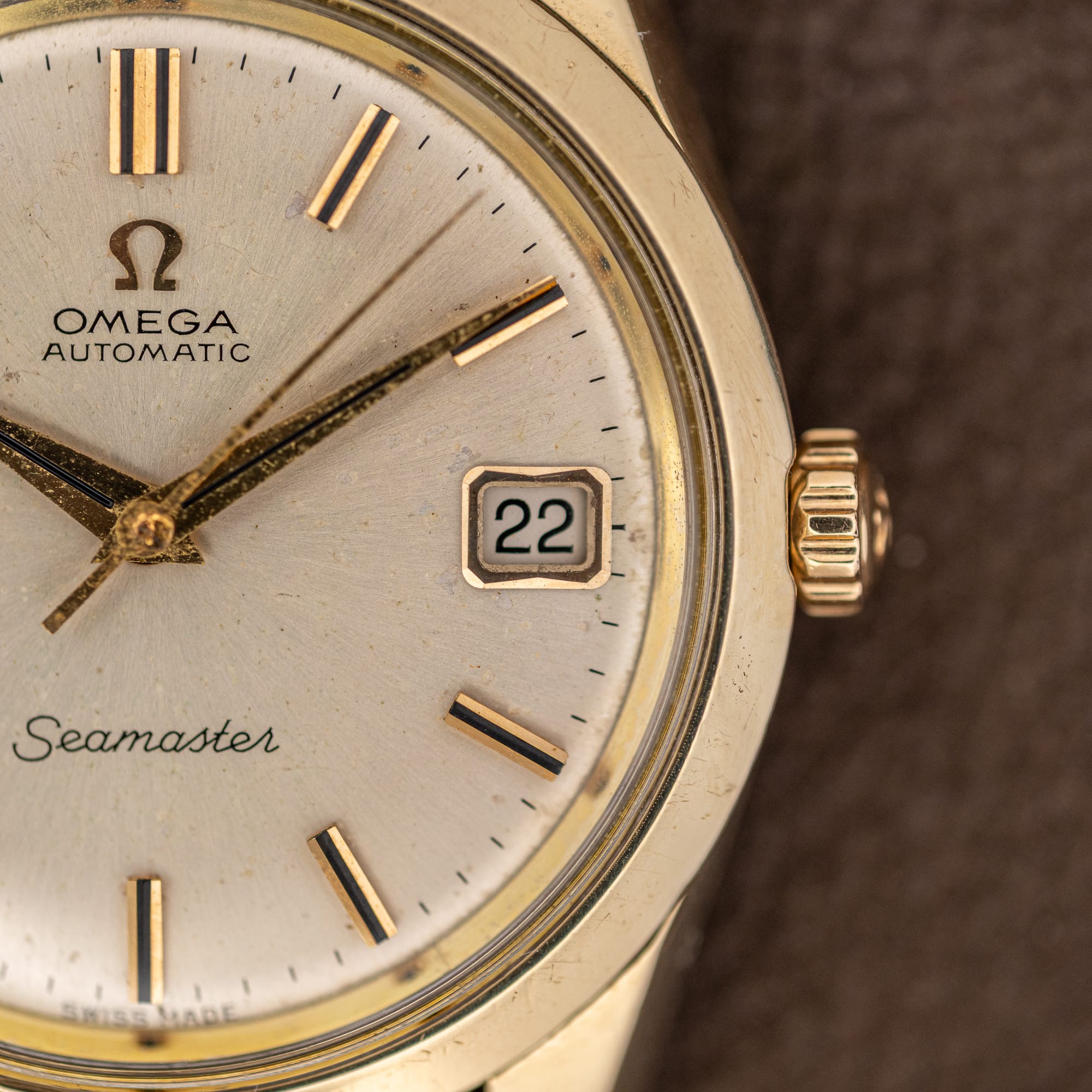
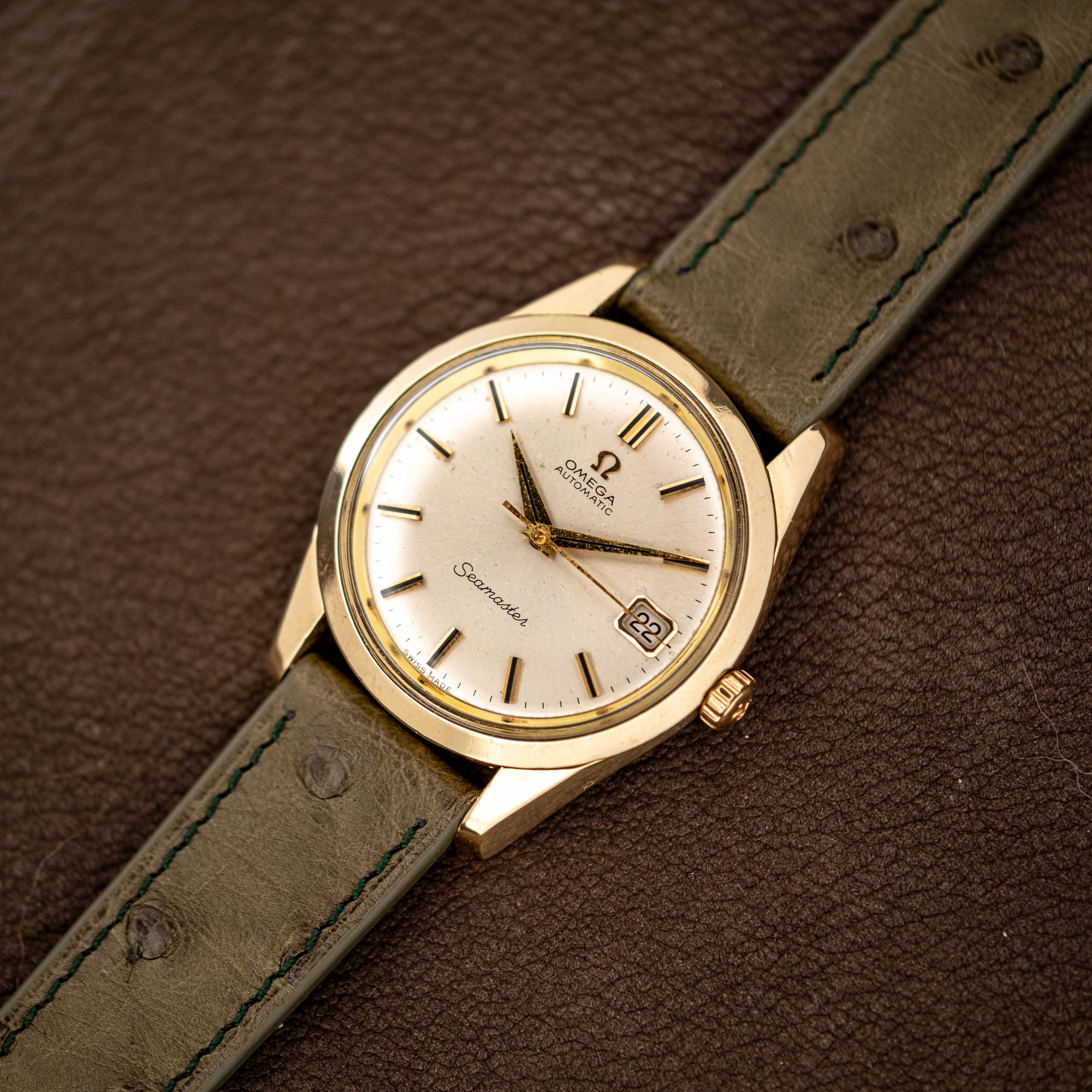
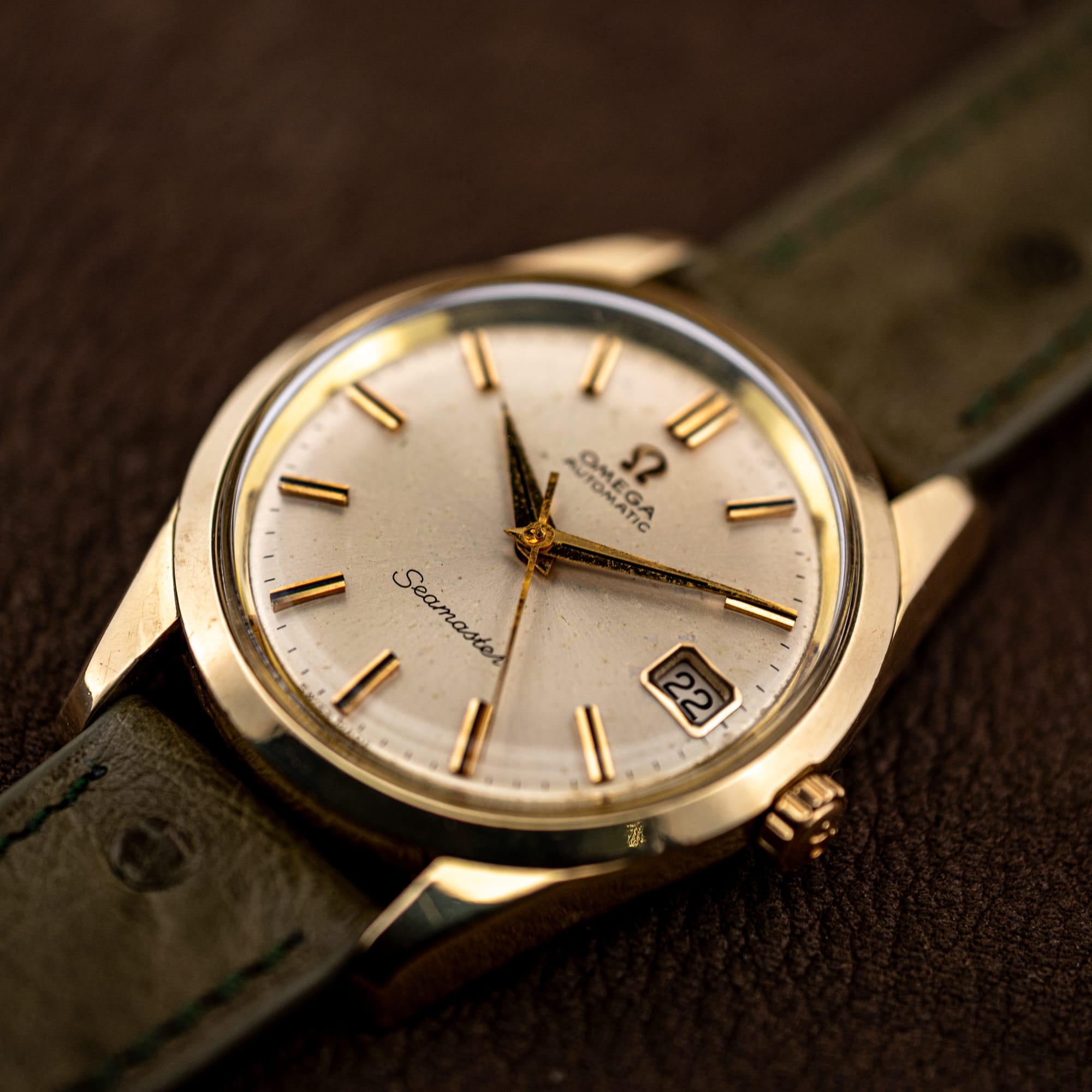
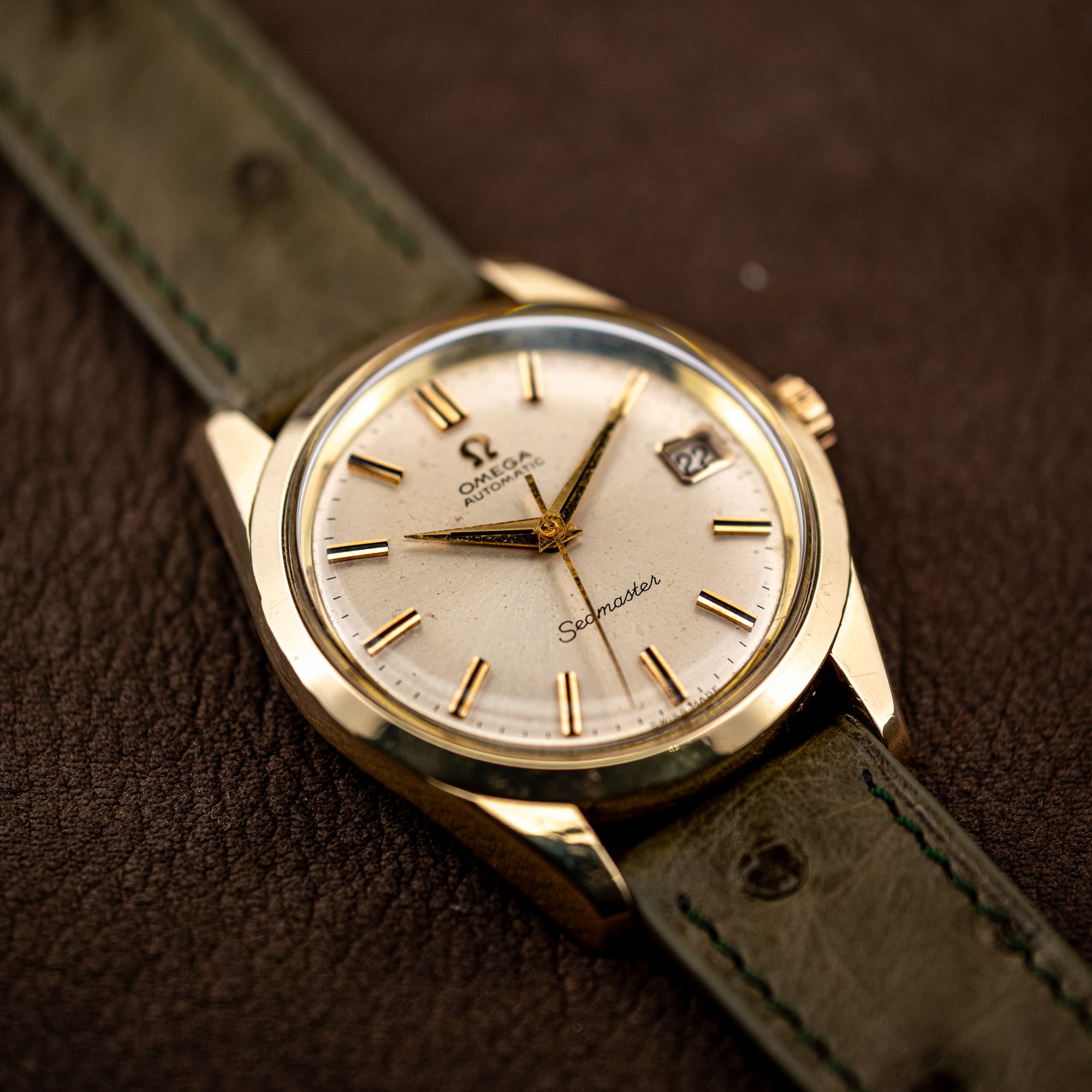
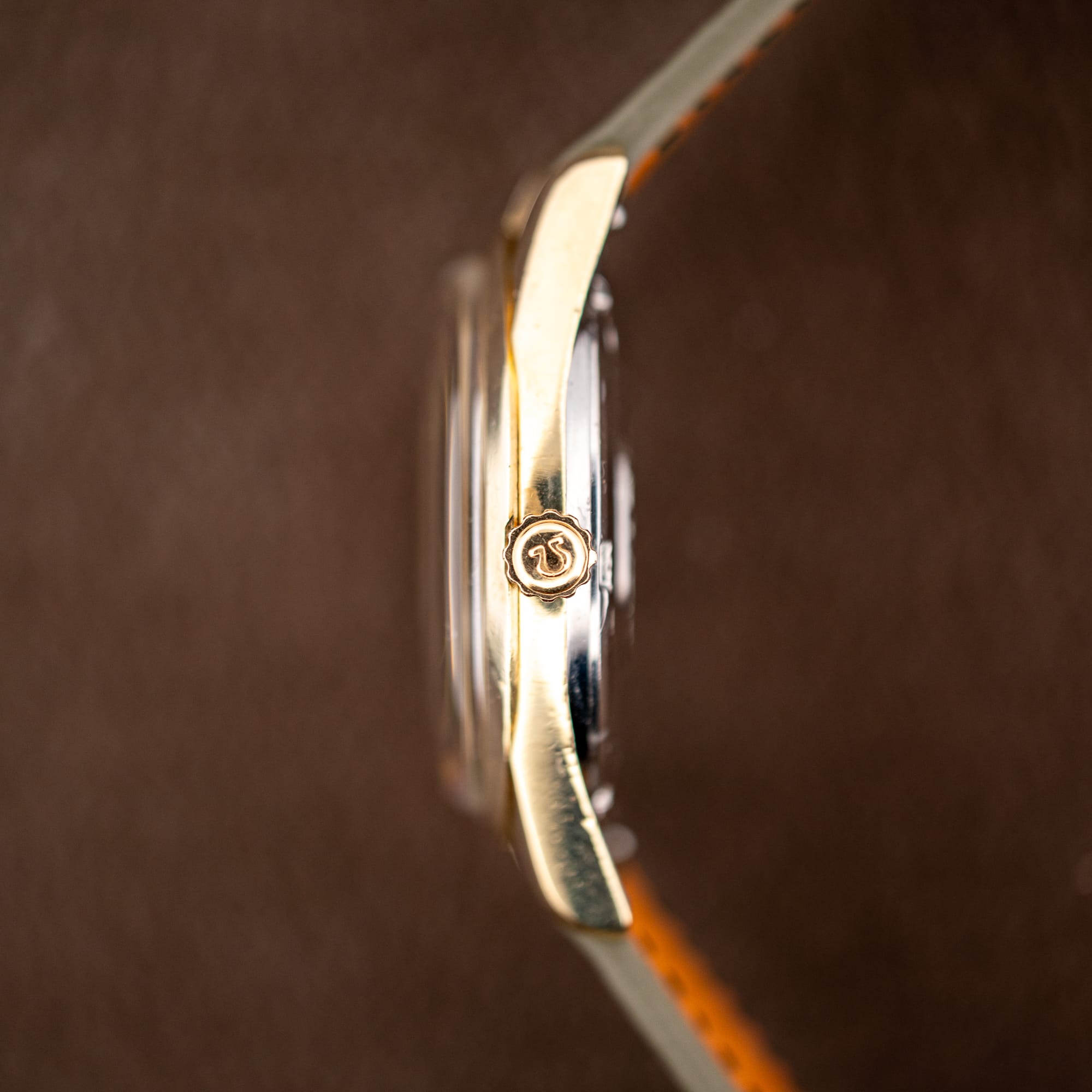
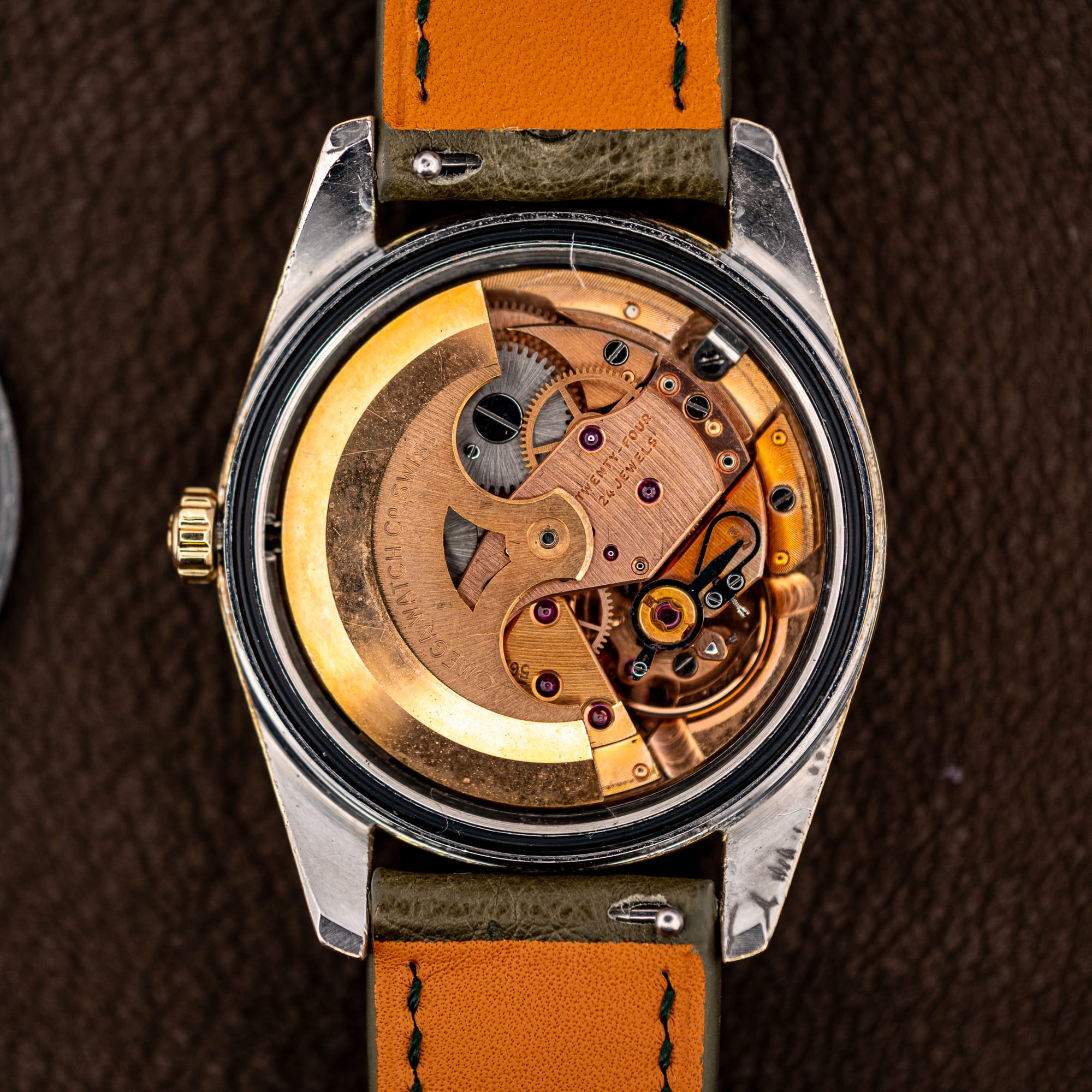
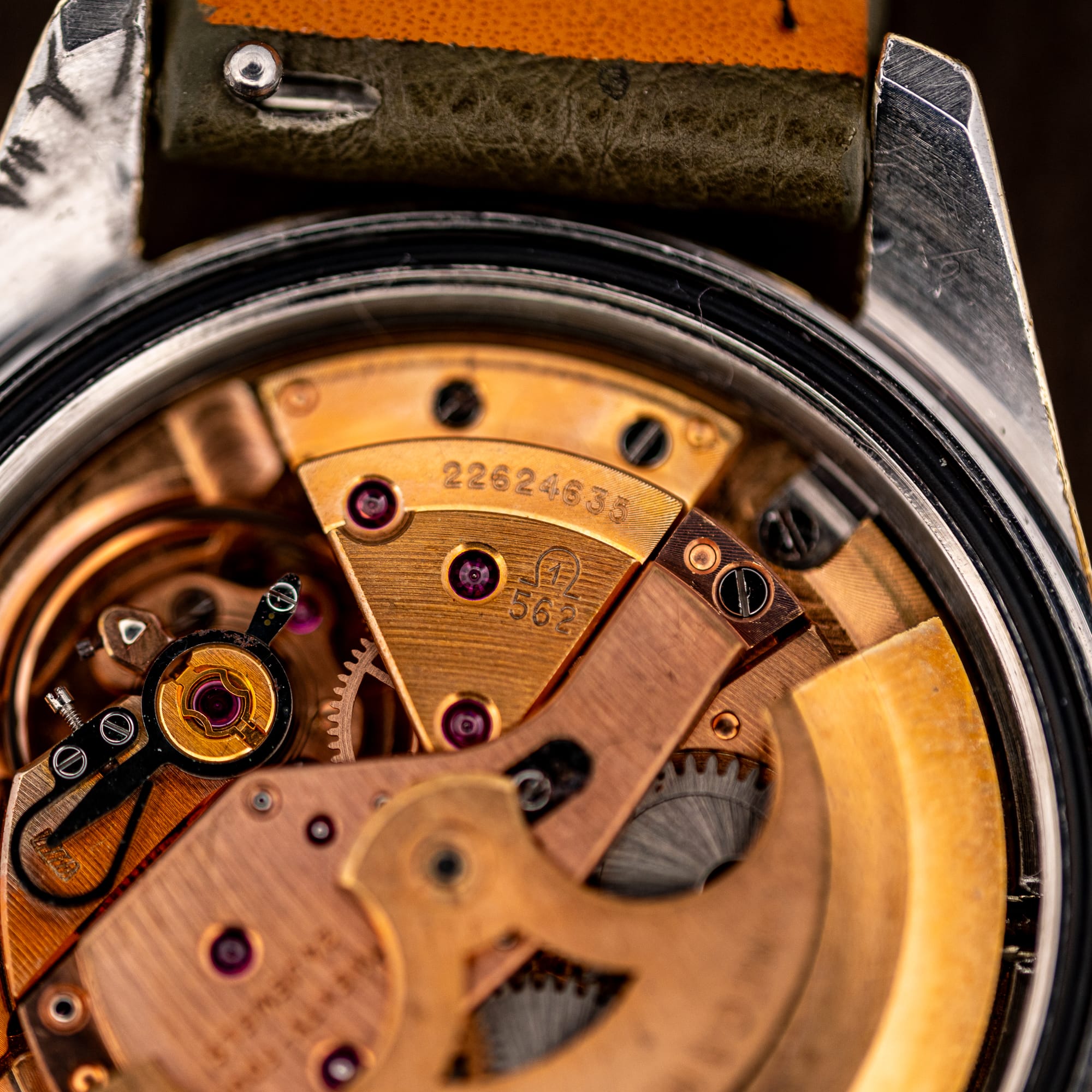
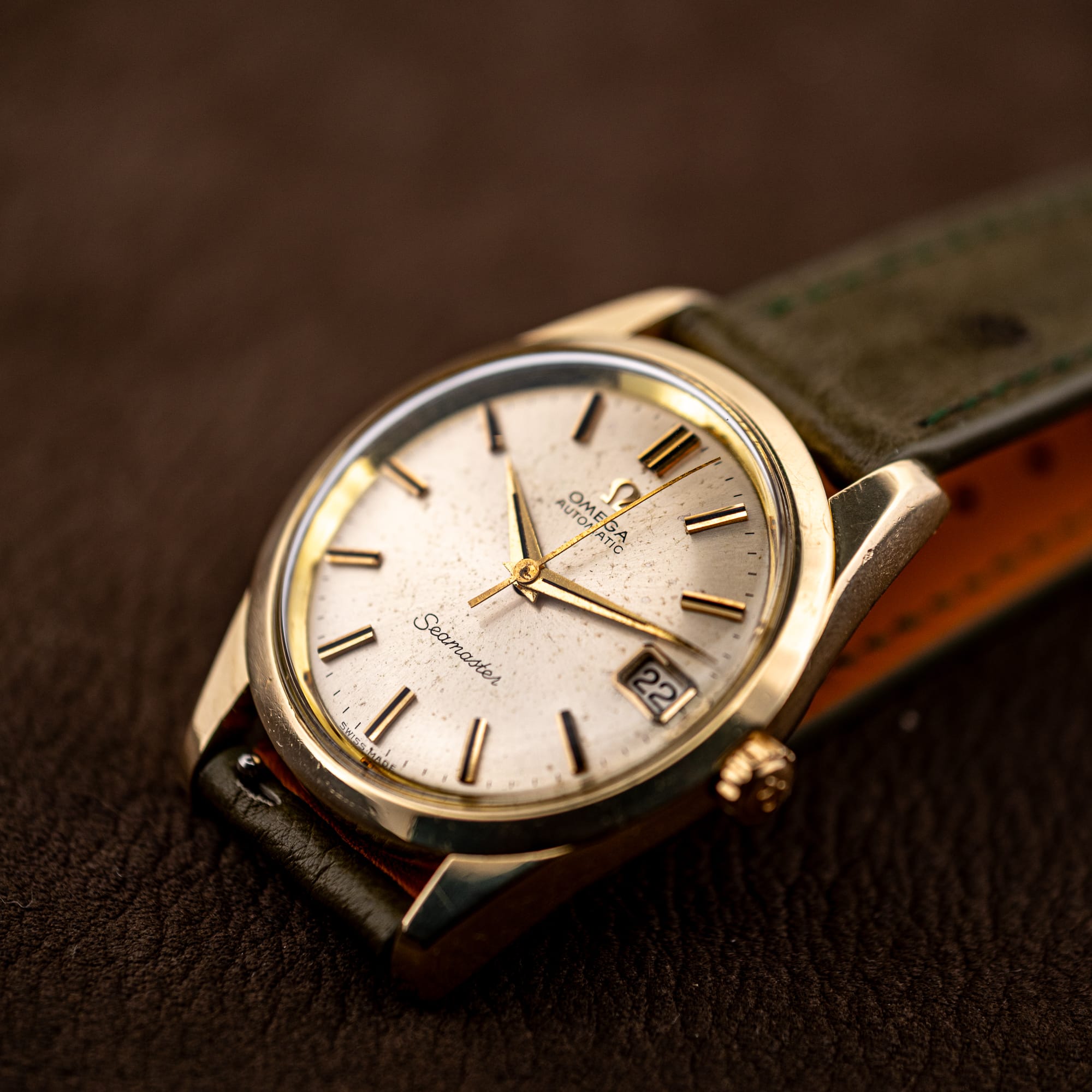
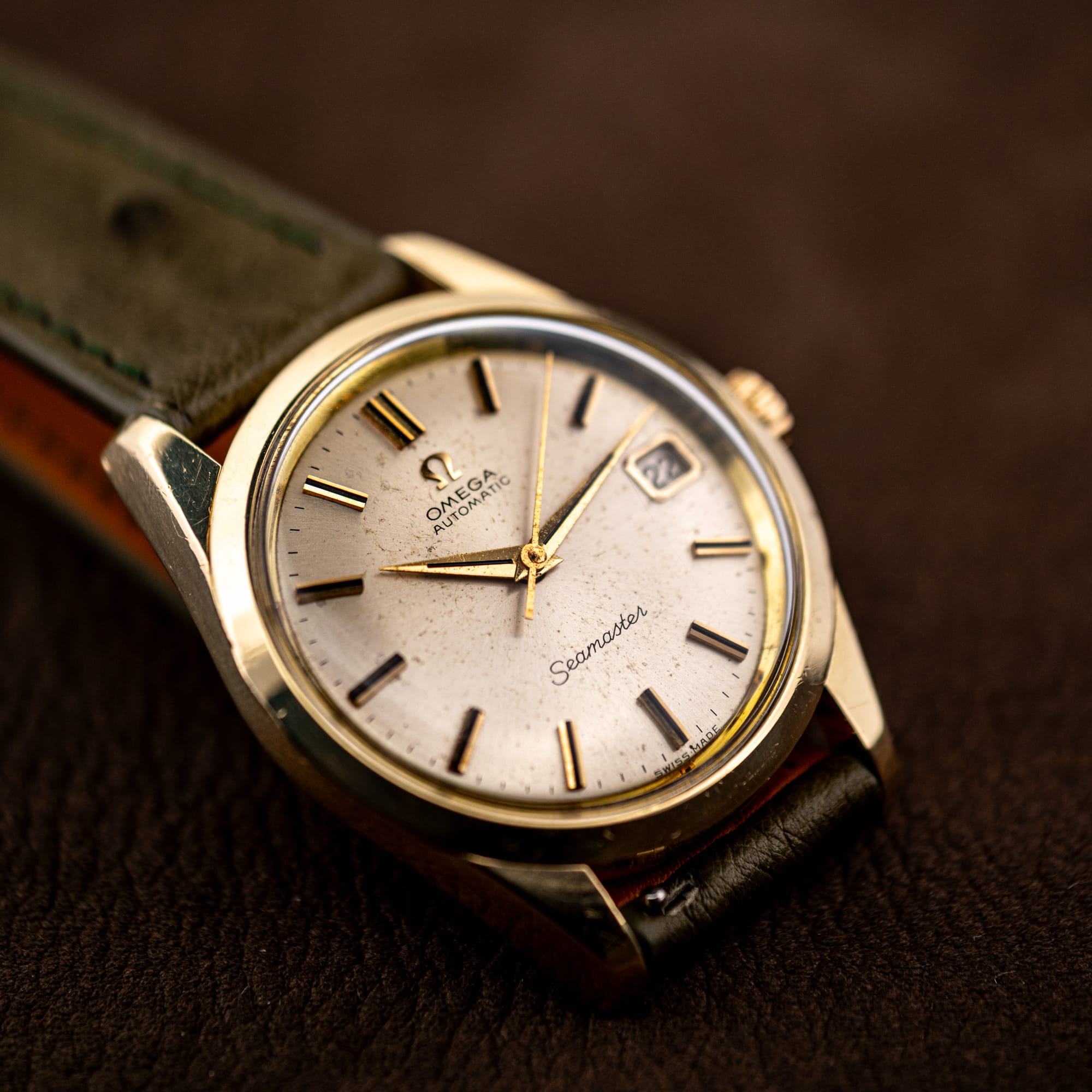
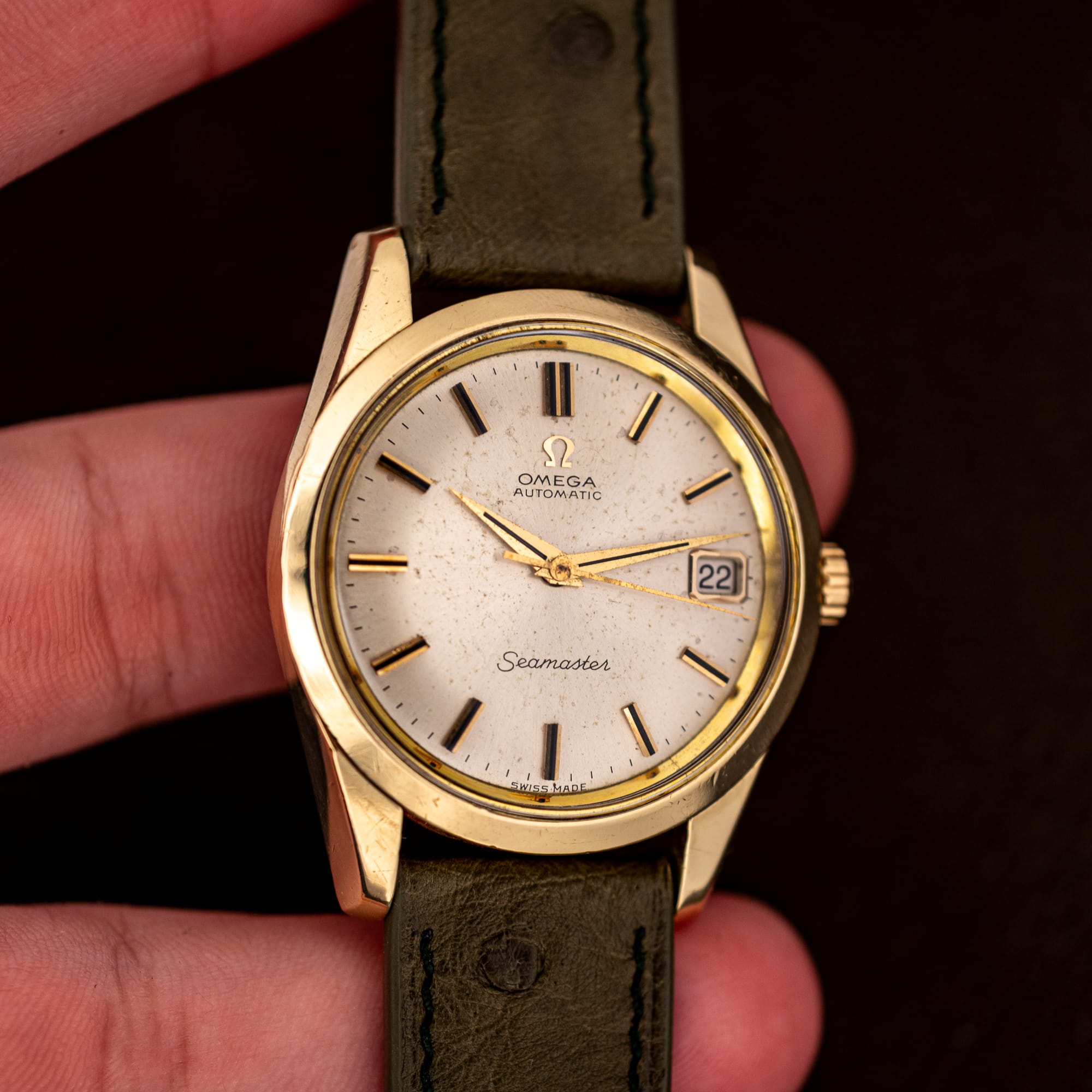
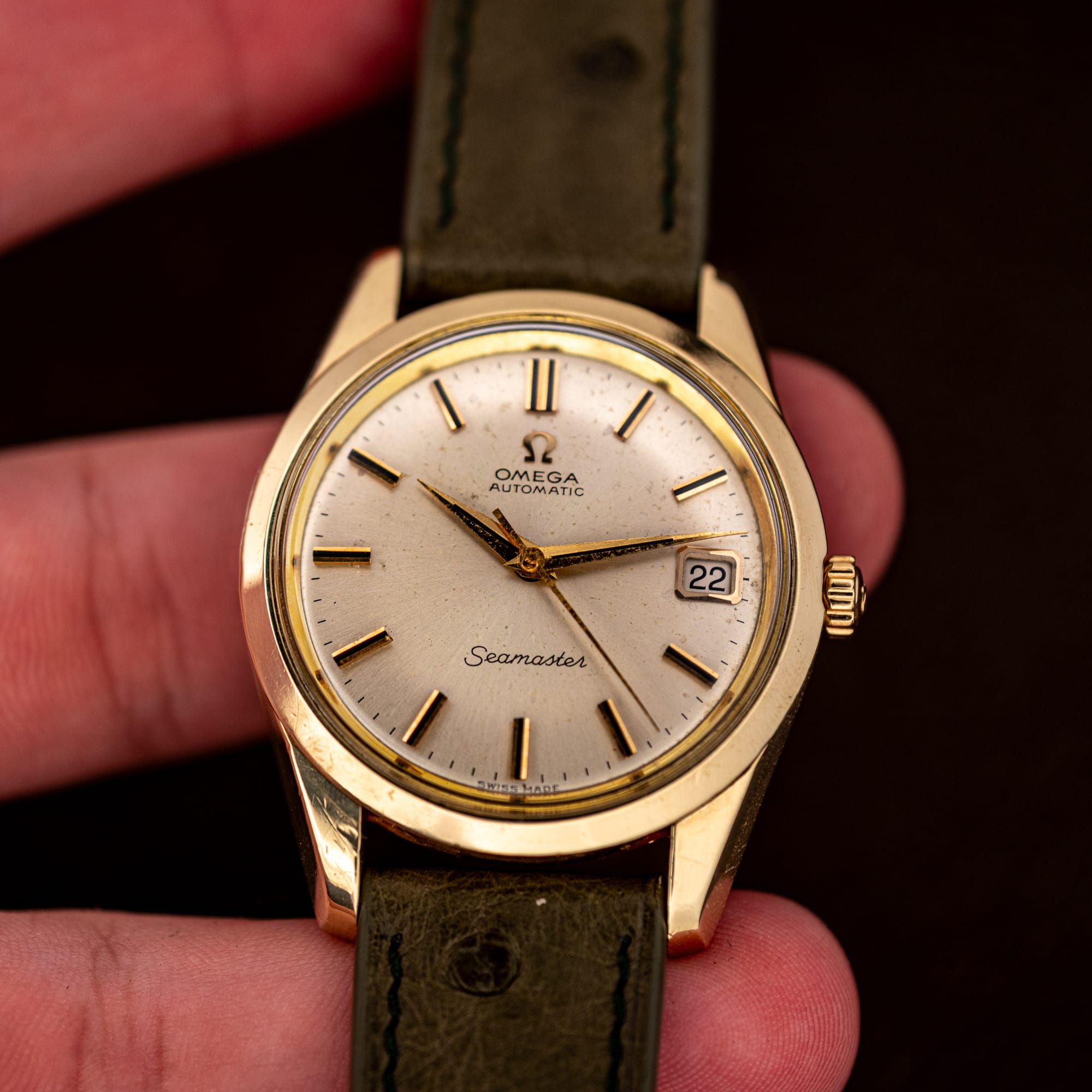
The case measures 35mm across and 43mm lug to lug, smooth bezel, fluted crown still carrying its Omega signature, domed crystal. The silver dial beneath is brushed to a sunburst and has spent its life picking up a fine speckle of foxing that reads warm rather than tired. Applied gold batons with black inlay mark the hours, doubled at twelve, and the gold dauphine hands have taken on their own dark flecking. A date sits at three in a faceted gold frame. Behind all of it is Omega’s caliber 562, twenty-four jewels and rose-gilt, serial 22624635, which places the watch in the middle of the 1960s. The 562 is the standard-grade automatic of its family, not the chronometer 561 that Omega put in Constellations, and to us it wears none the worse for the distinction. The case carries the small scuffs of something that was used.
Serviced in-house at OTTUHR and backed by our 2-year mechanical warranty, on an olive ostrich strap with our own buckle, sized to a wrist up to 8 inches. Gold over steel, a standard-grade movement, an emblem borrowed from a boat. None of it was showing off. All of it is still here.