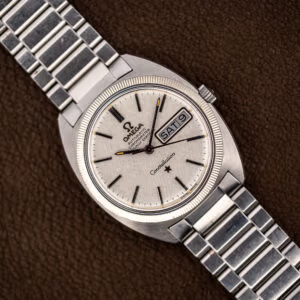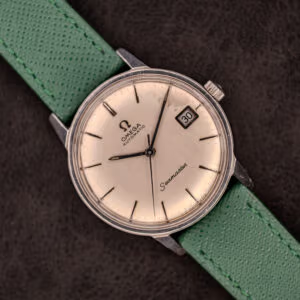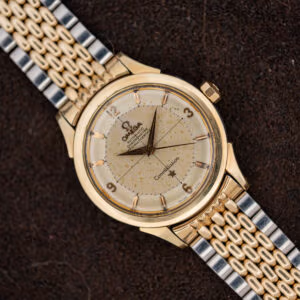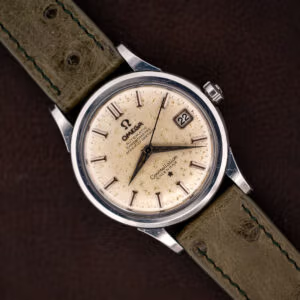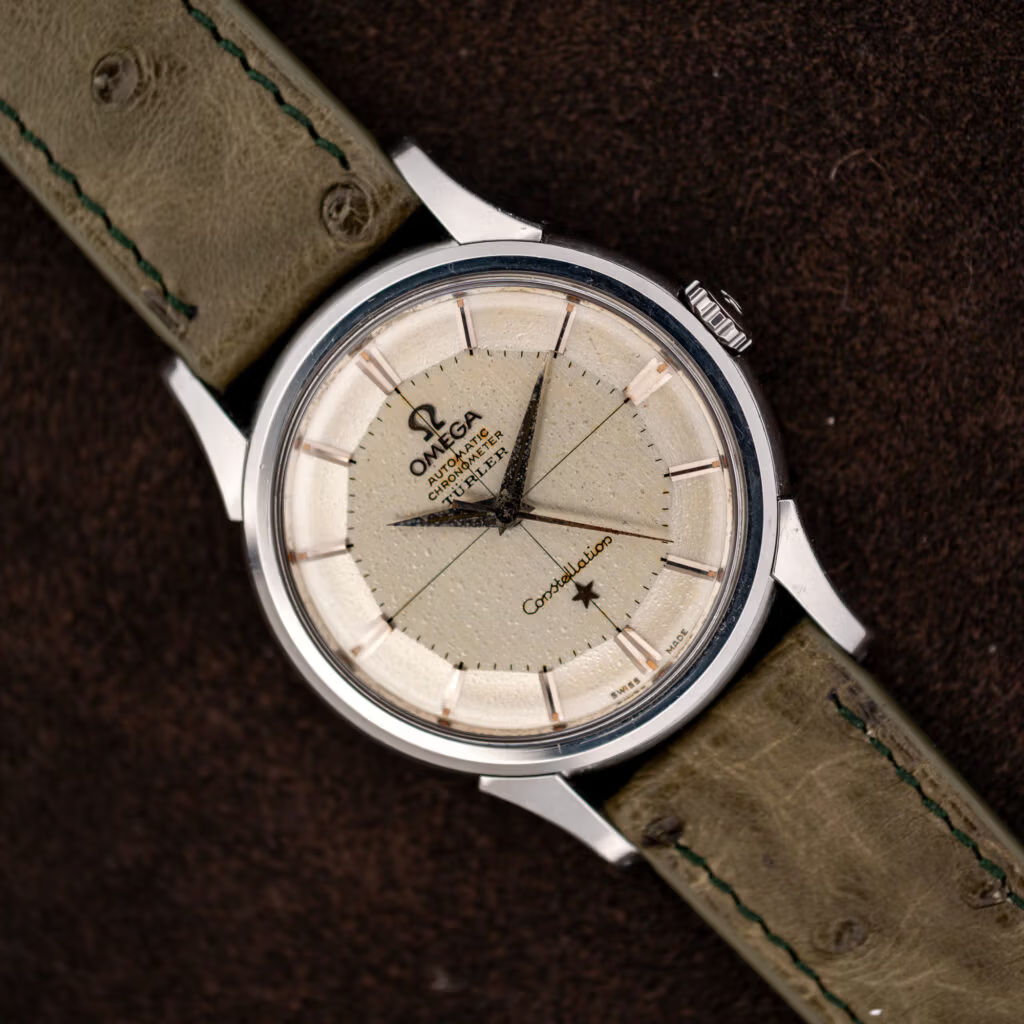
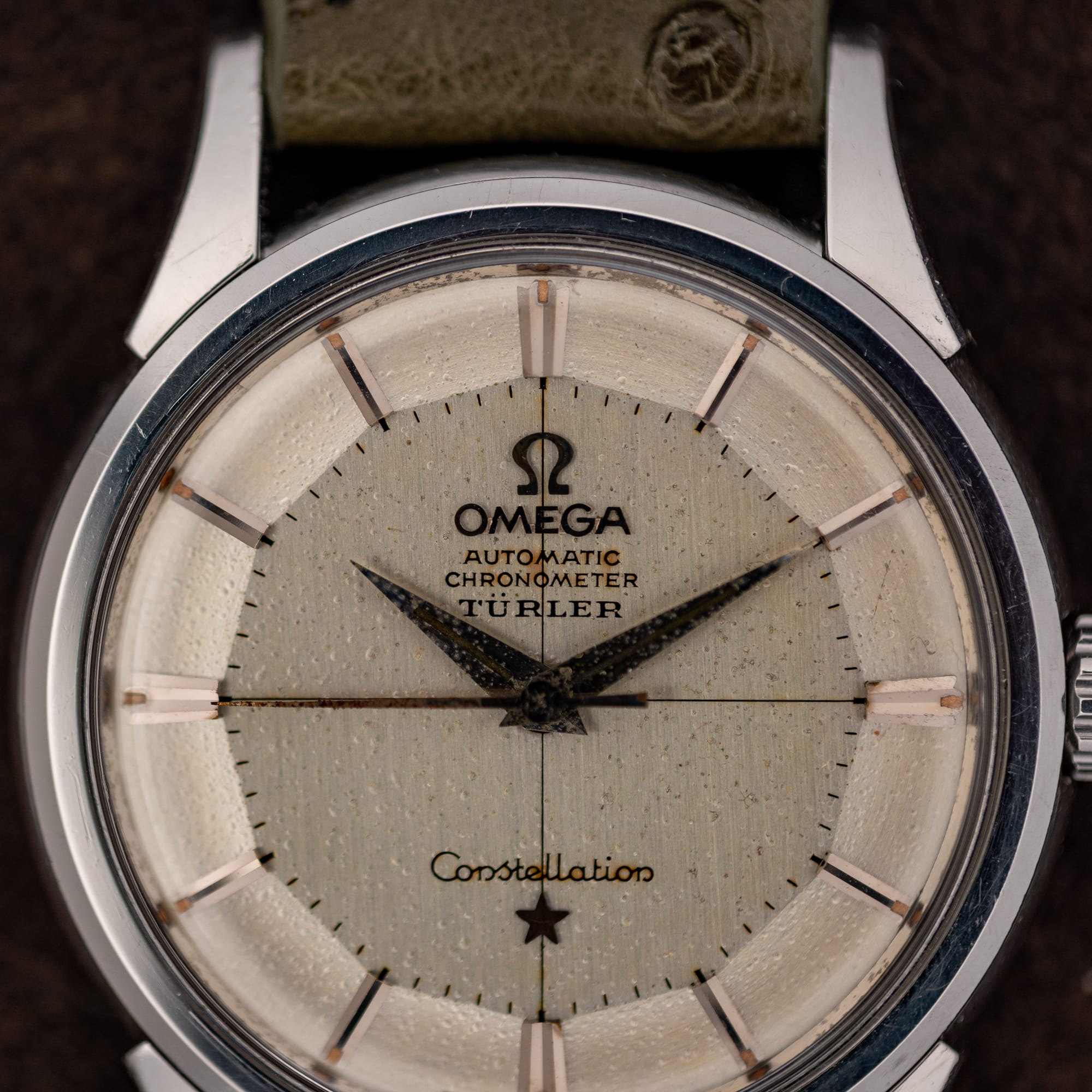
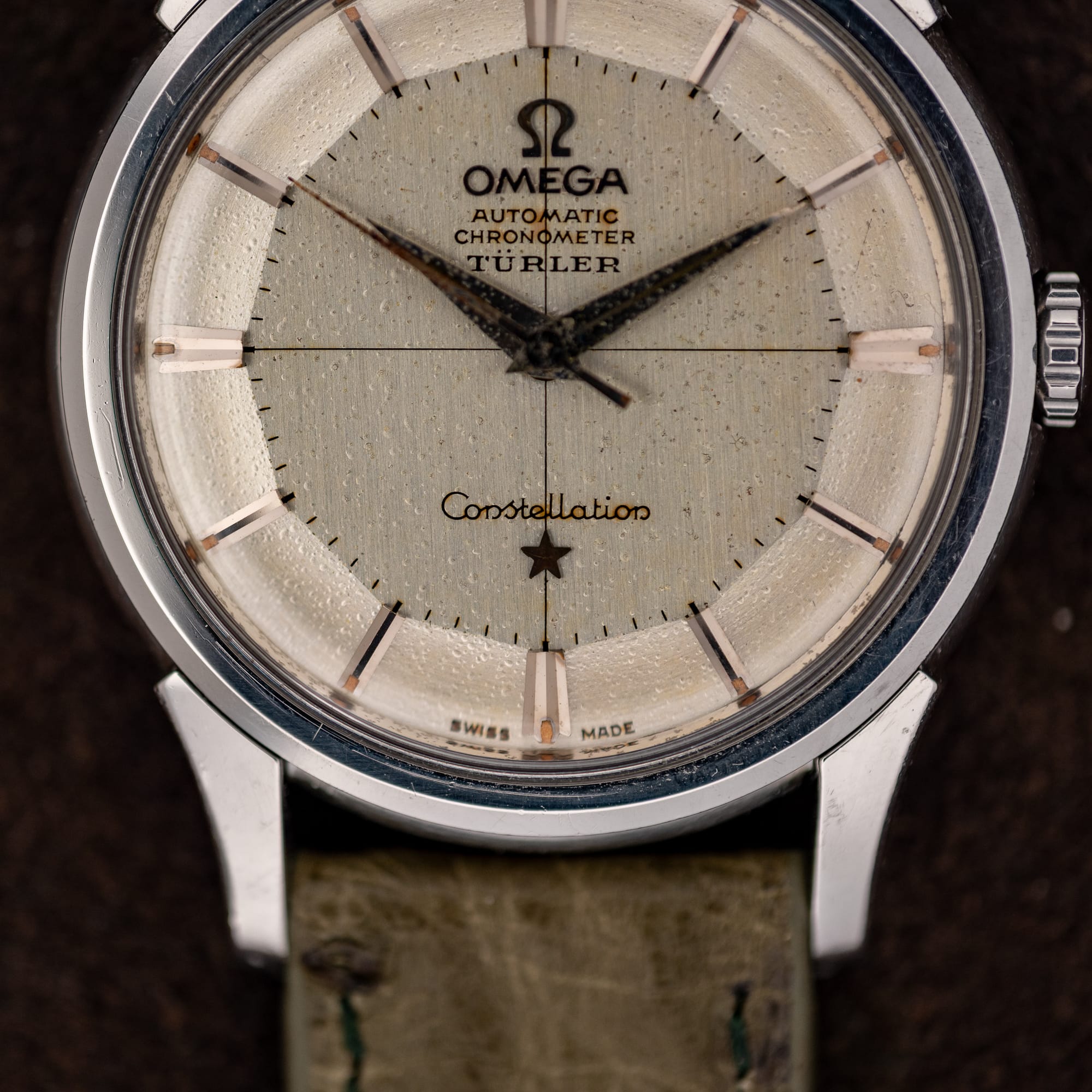
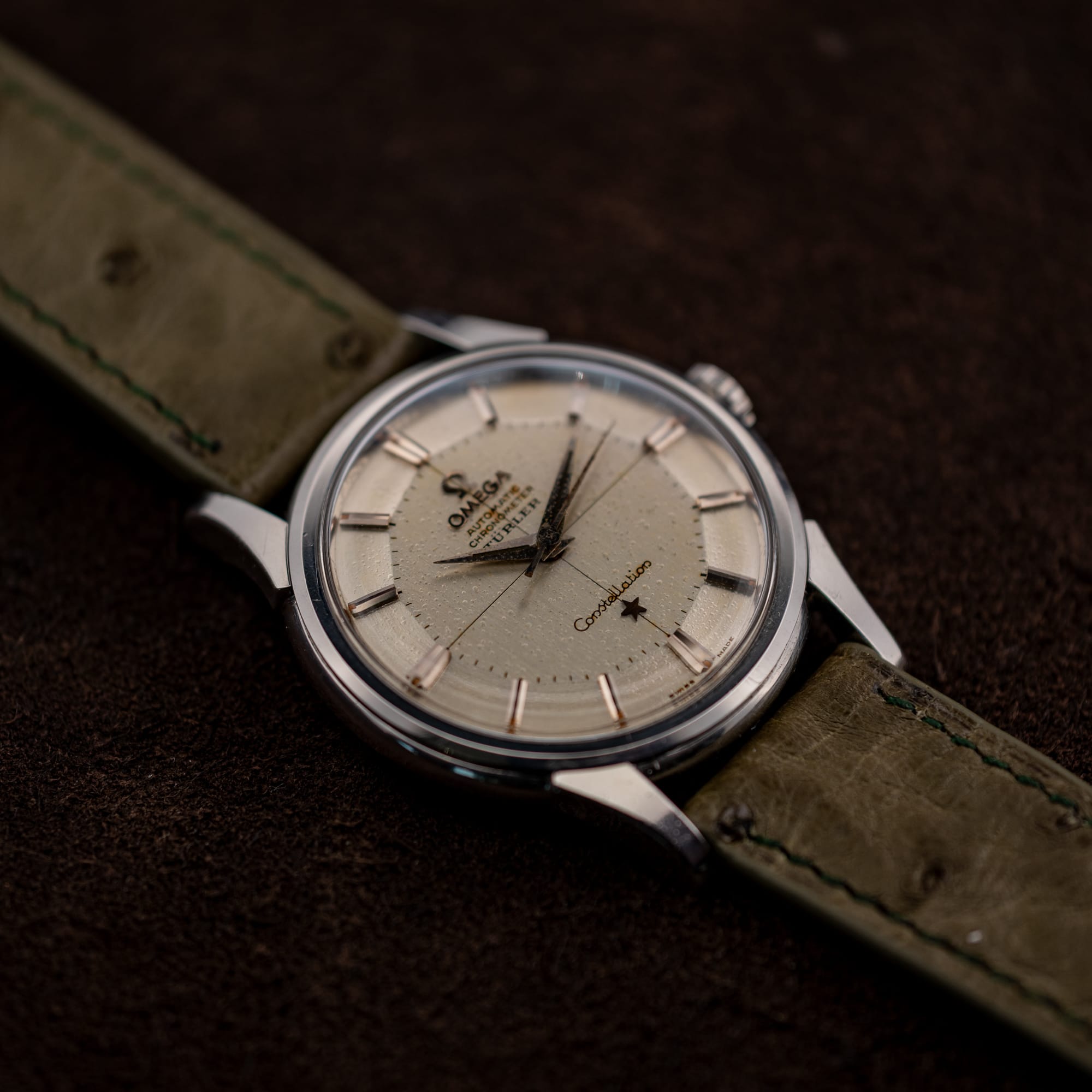
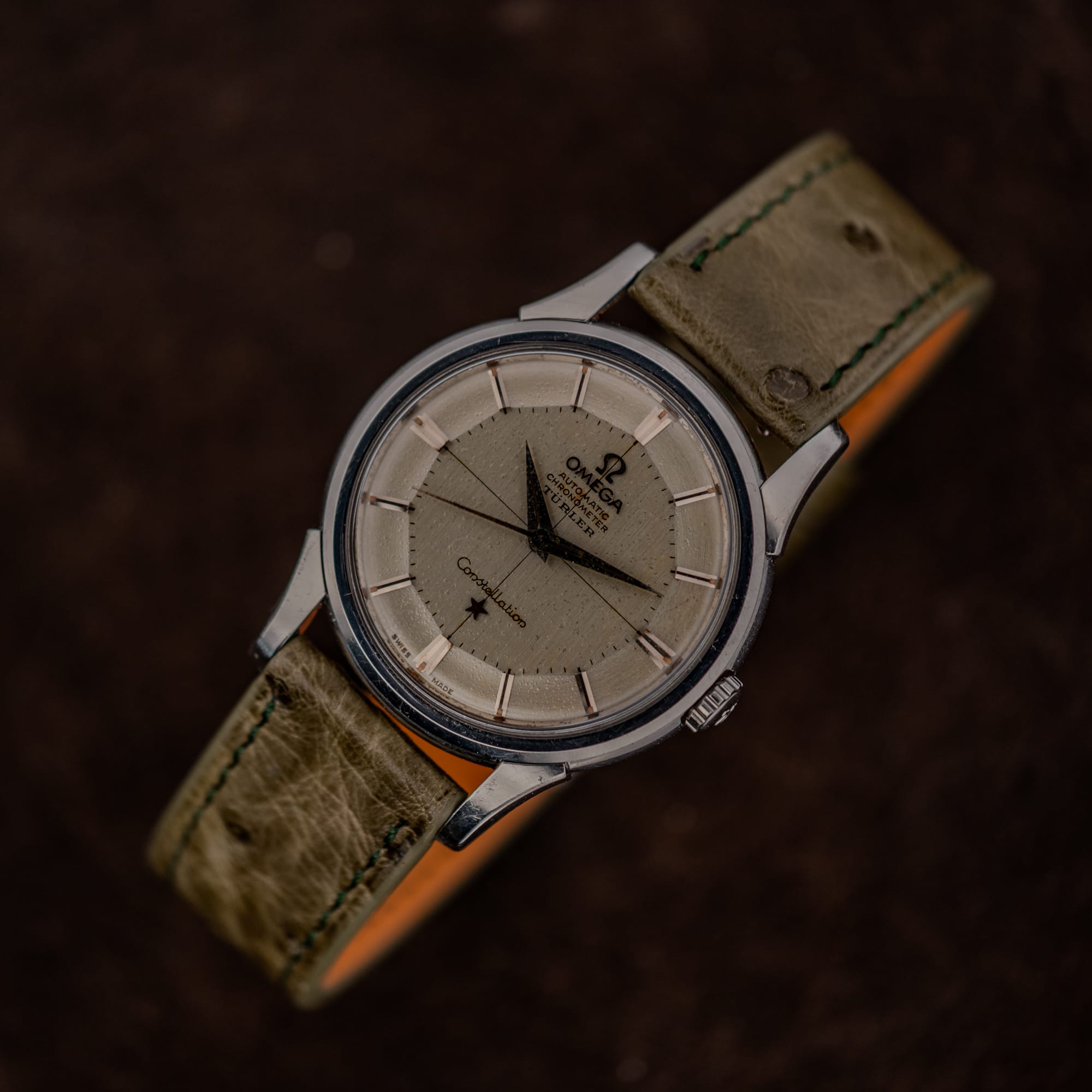
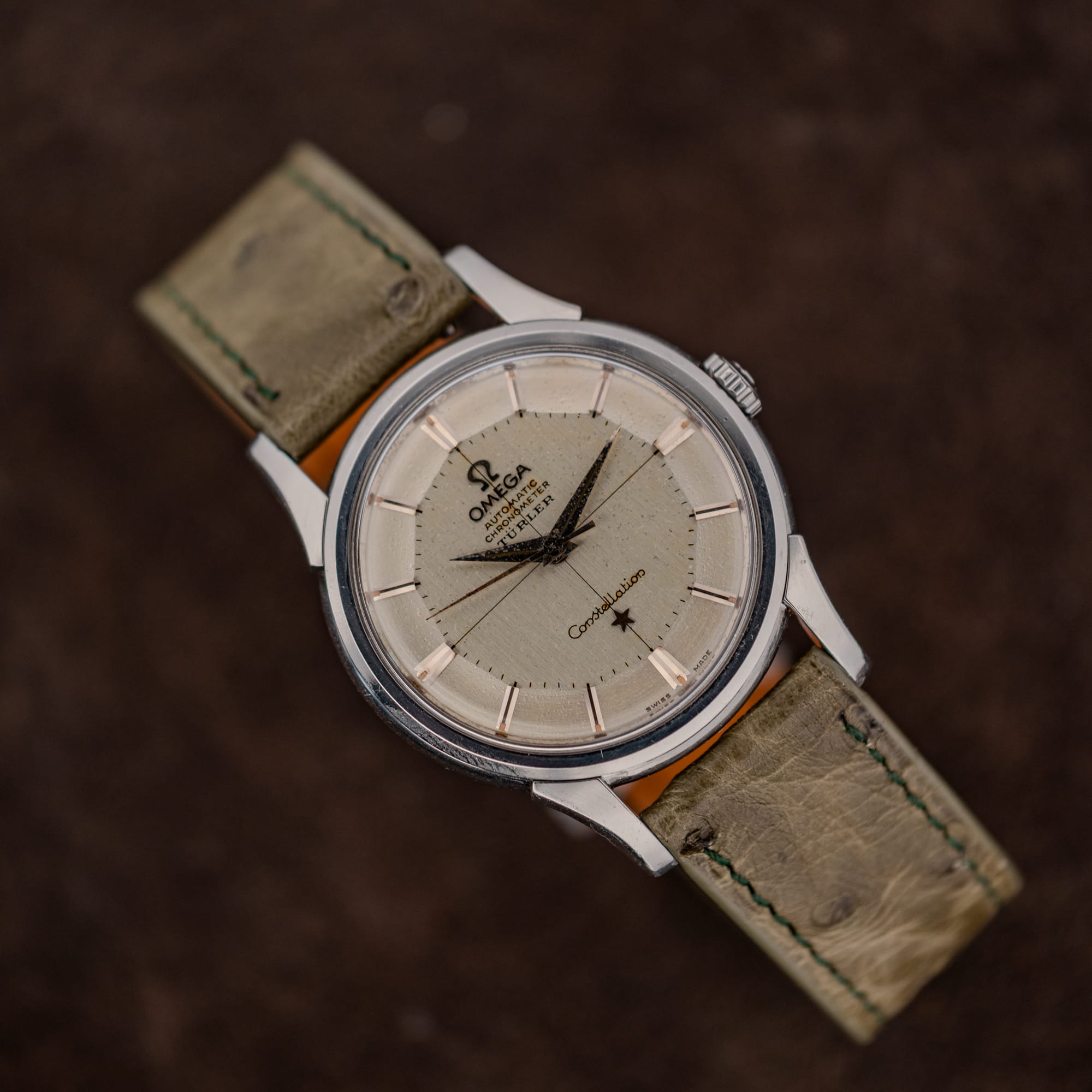
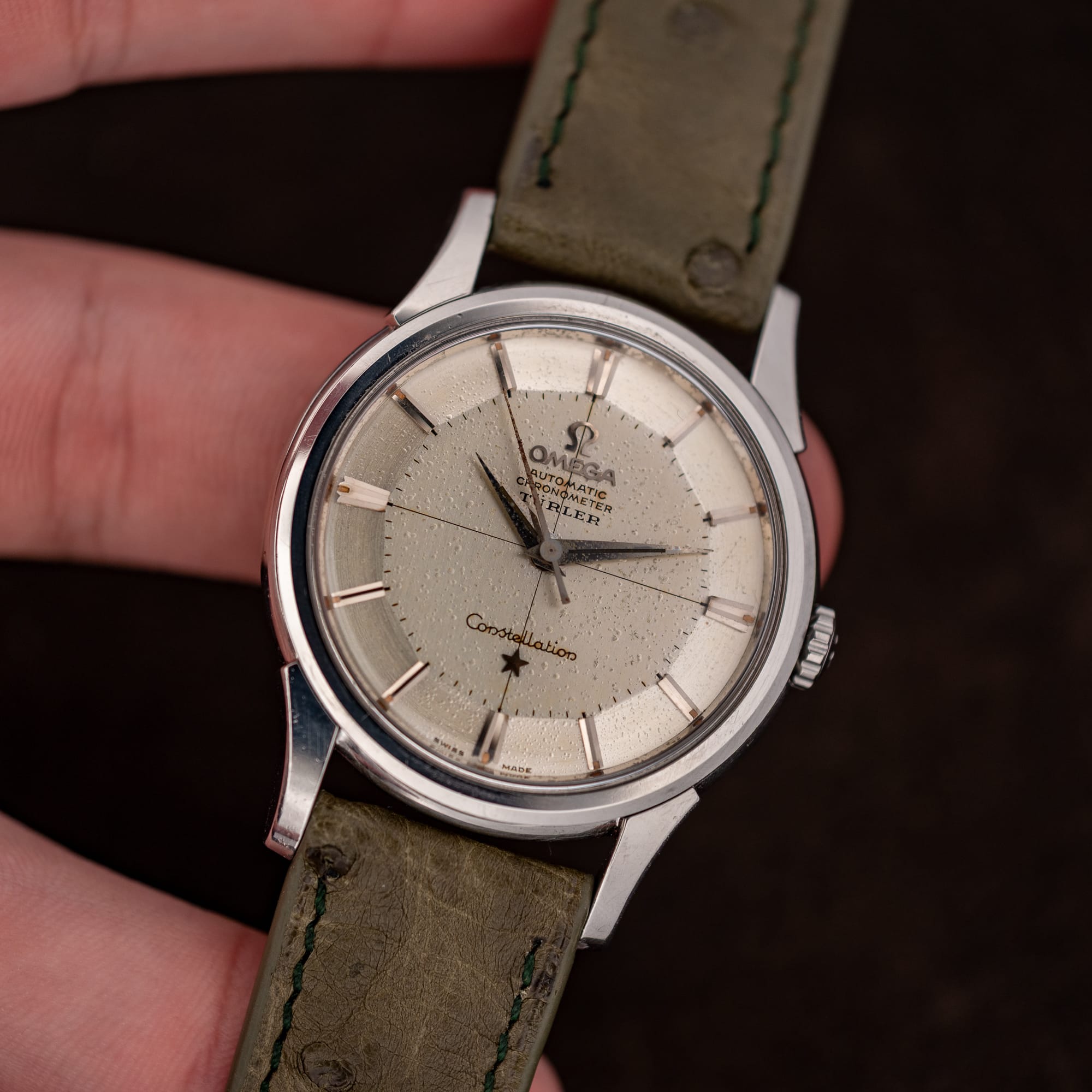
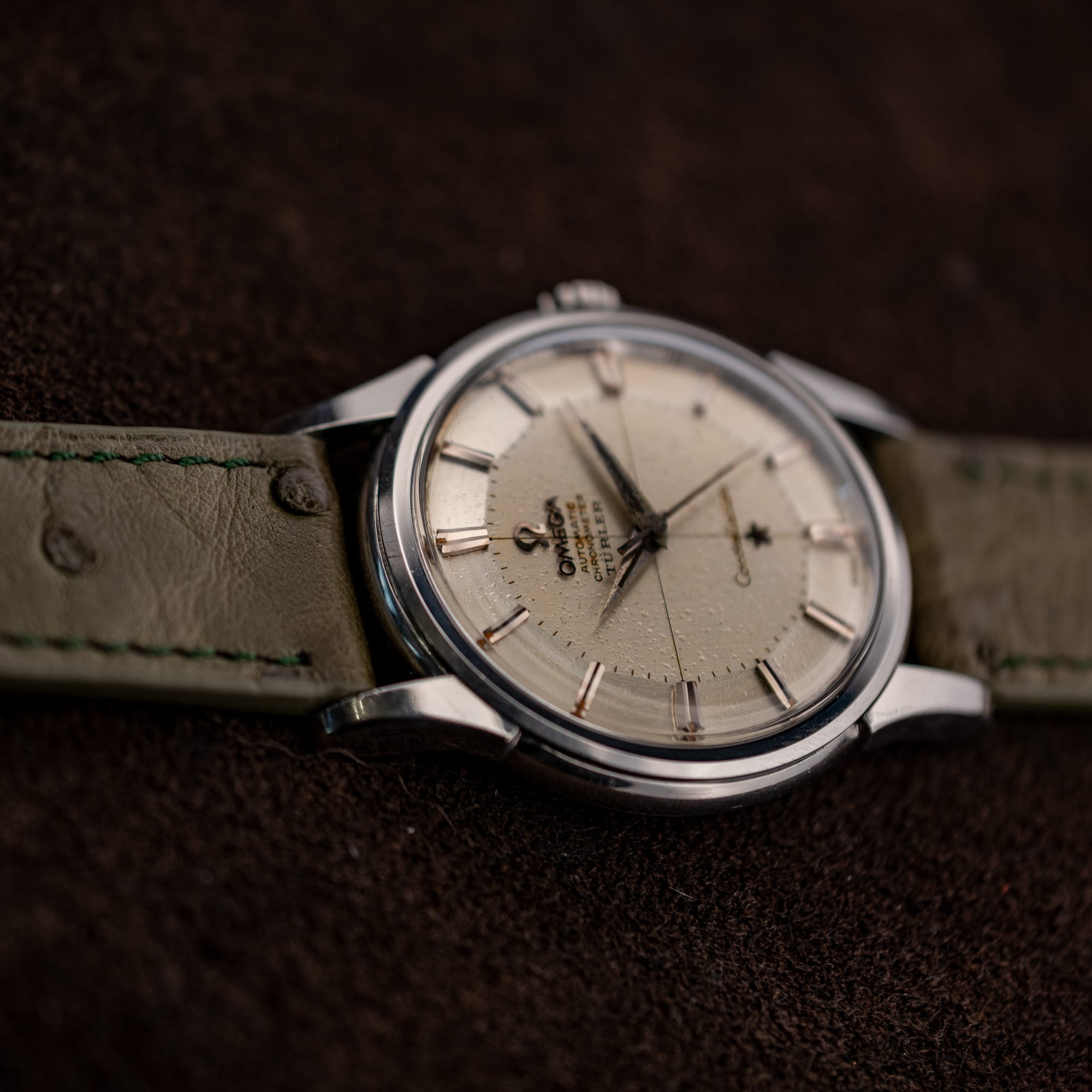

Bahnhofstrasse runs through Zurich to Paradeplatz, where the major Swiss banks keep their headquarters. Türler’s store stands on that street, and the house has been in Zurich since 1892, though the company itself started nine years earlier in Biel, incorporated at half past eight on the morning of the fifth of February 1883. The second name printed on this Omega Constellation 14381 dial is theirs, and it is the reason we bought the watch.
Retailer signatures were ordinary business once. A strong house could ask a manufacturer to set its name beneath the manufacturer’s own, and the manufacturer would agree, because in any given city the shop was frequently the more familiar name of the two. The practice ran through the 1950s and 1960s and has very nearly vanished since. What it left on dials like this one is a small printed record of where a watch was first sold, and to whom the buyer would have carried it back.
Türler was not merely a good address. In 1986 the firm went in with Ludwig Oechslin on an astronomical clock, Jörg Spöring spent nine years building it, and the finished thing was unveiled in 1995. It has been on display at the Musée International d’Horlogerie since 2018. That is the sort of jeweller whose name on a dial is worth something.
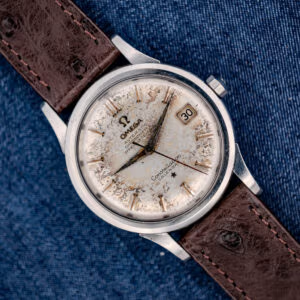
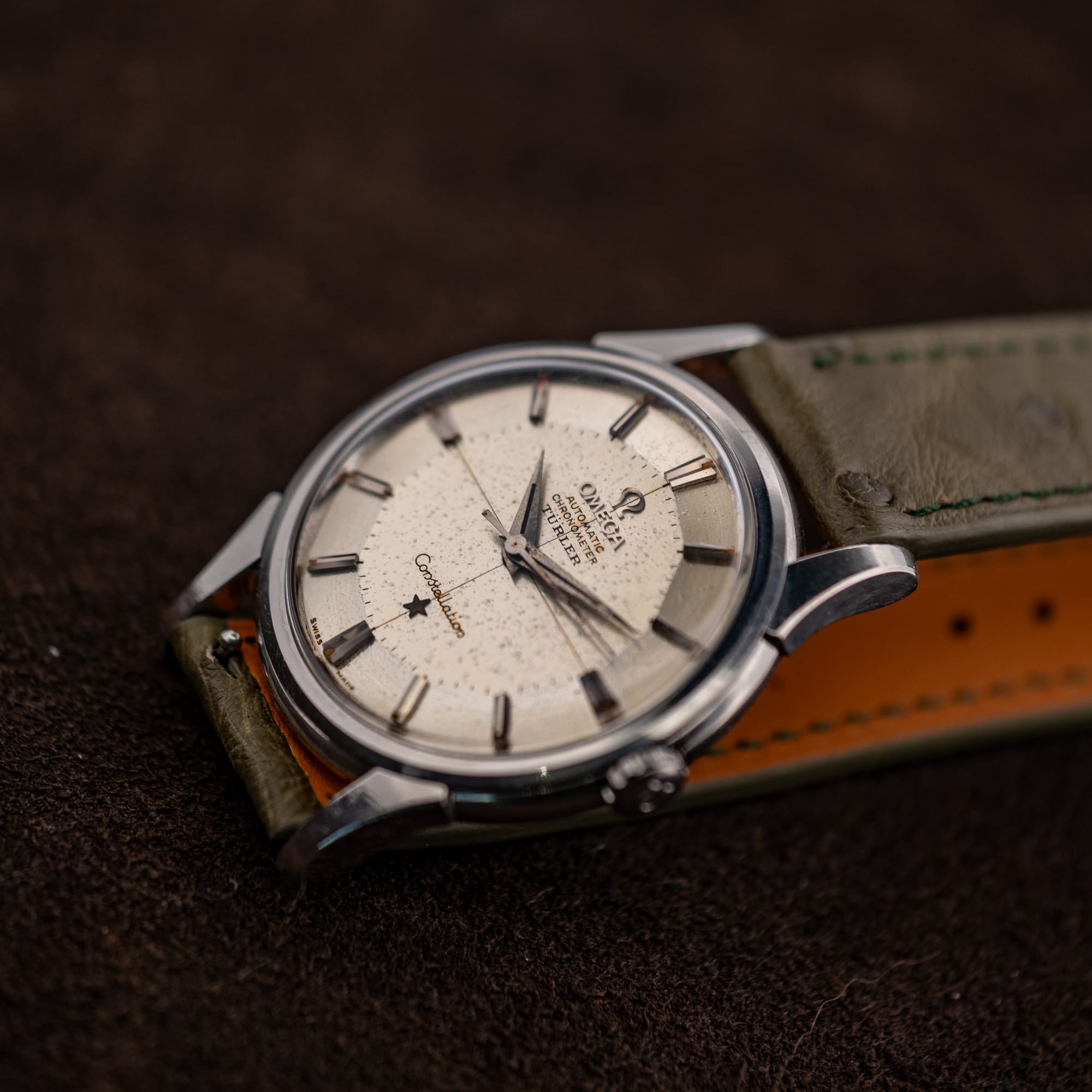
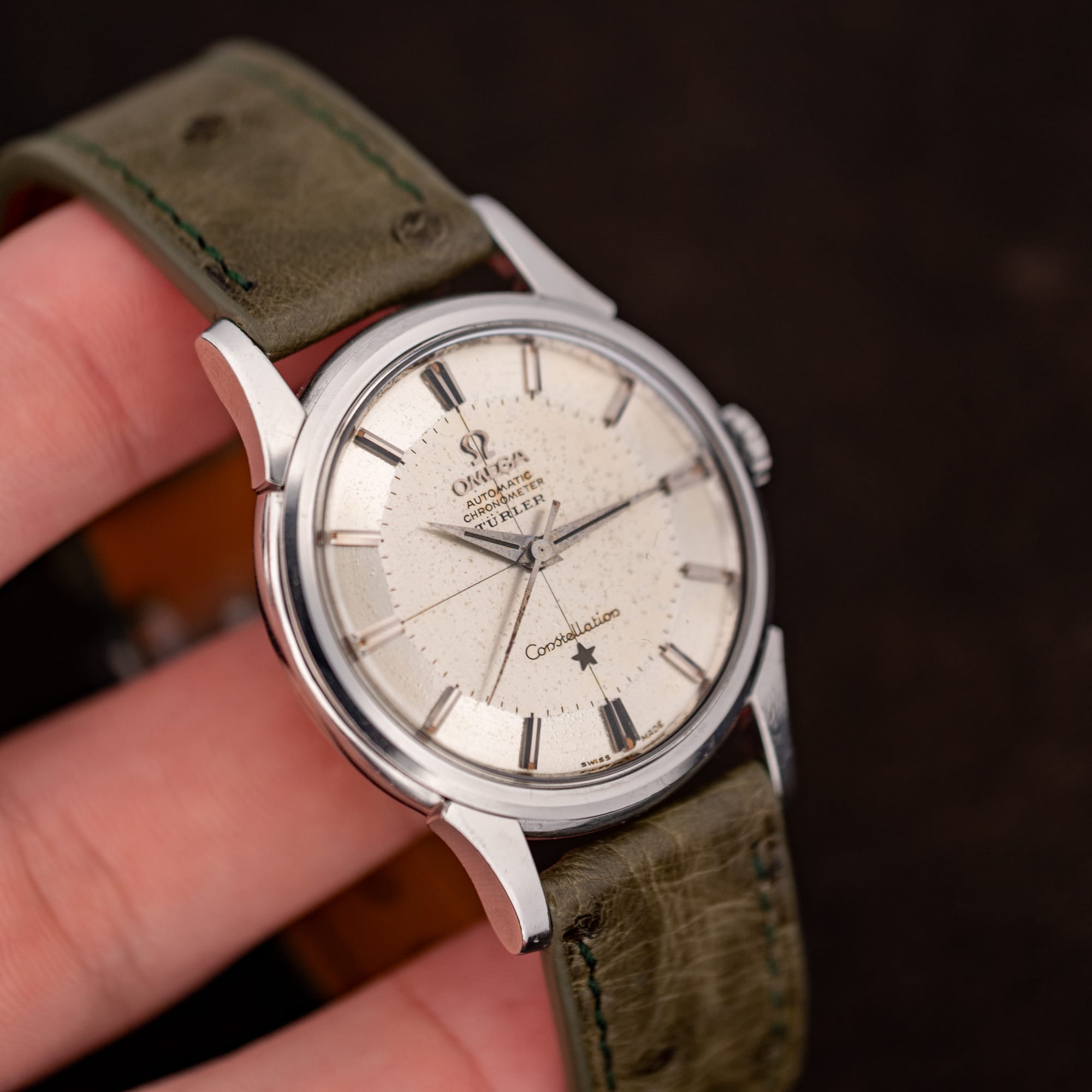
Worth confirming, too, because a retailer line is among the easier things to add to an old dial later. Collectors judge it on condition rather than wording: does the retailer’s print sit in the same state as the manufacturer’s? On the dial in front of us it does. TÜRLER sits between the chronometer line and the Constellation script, its printing as intact and as sharp as the OMEGA above it. Ink added recently to an old dial tends to read too bright and too clean against everything near it. This does not.
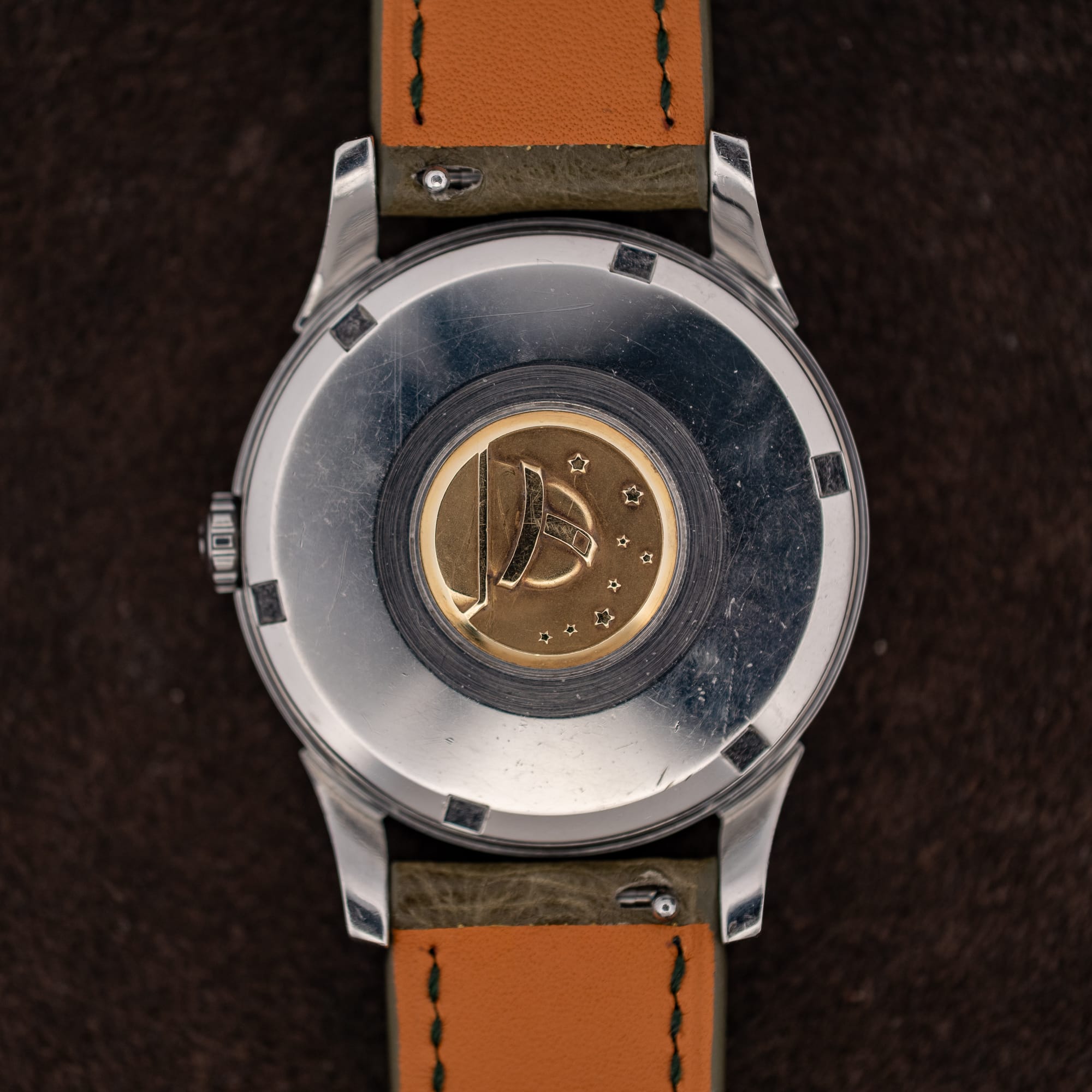
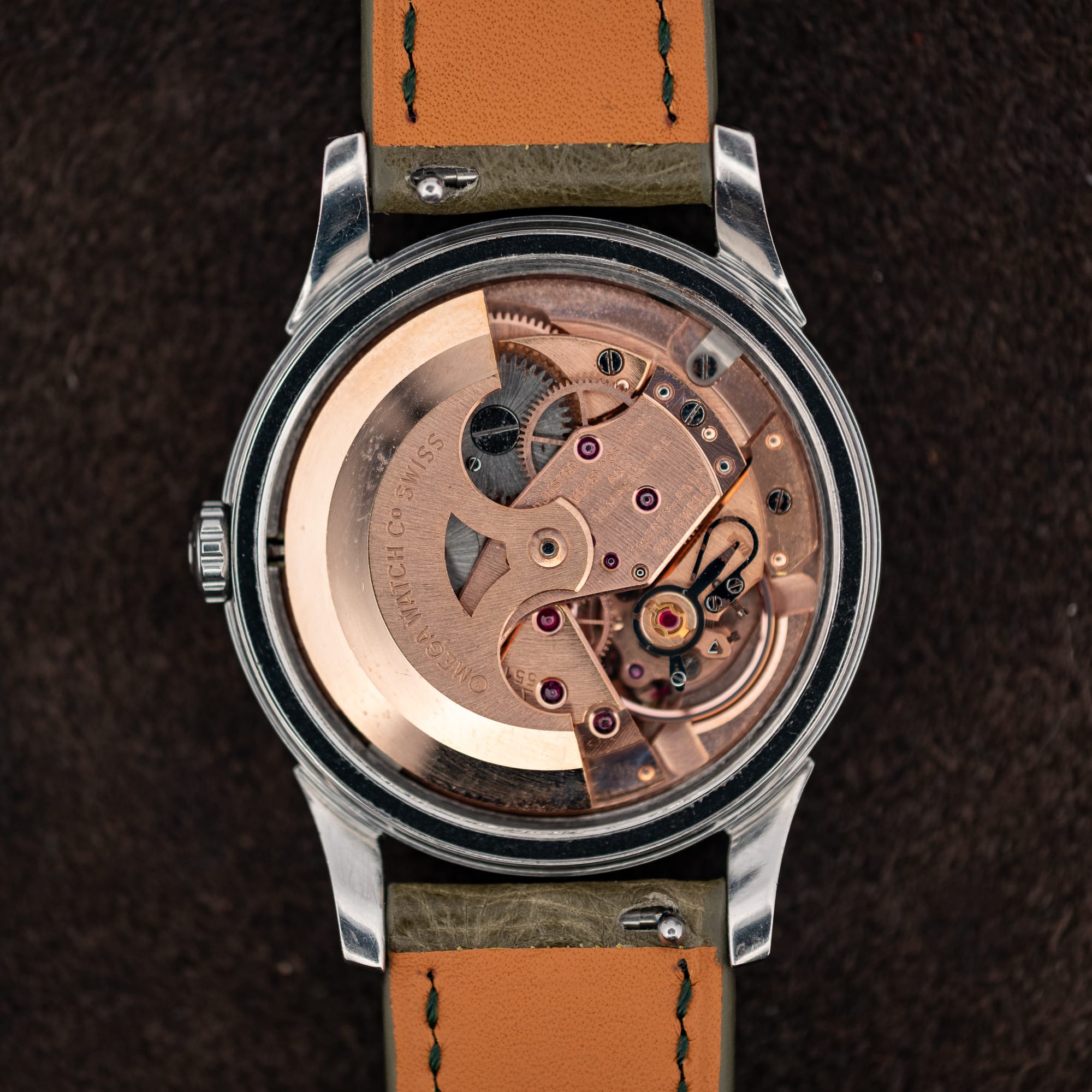
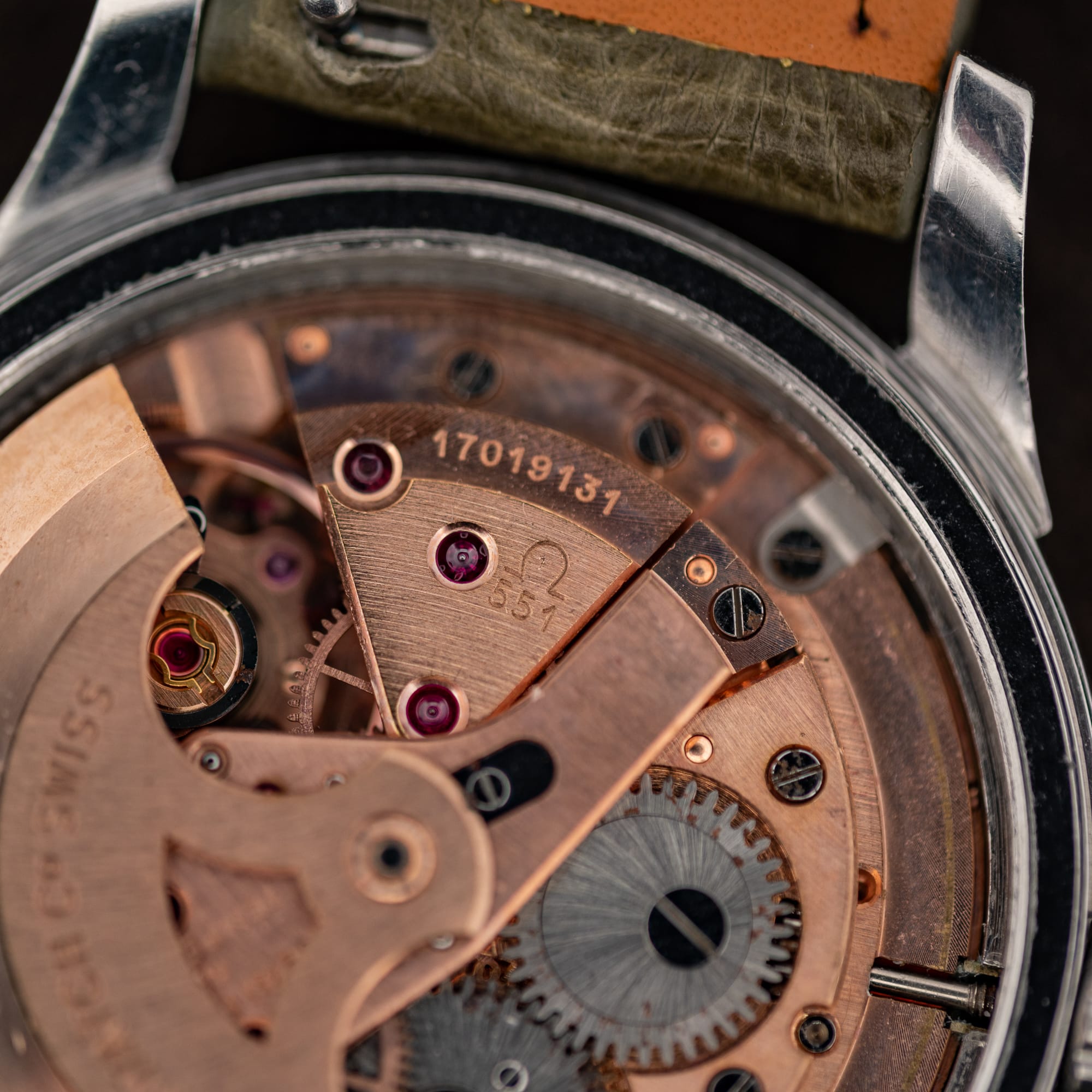
The Omega Constellation 14381 was built around calibre 551, twenty-four jewels running at 19,800 vibrations an hour, the chronometer-grade non-date member of Omega’s 550 family and the direct sibling of the 561 that carried a date. The dial states the grade without hedging, chronometer, officially certified, and the caseback wears the observatory medallion, gold-toned and worn thin. Serial 17019137 sits at the very bottom of the 17 million block, which the common tables split between 1959 and 1960.
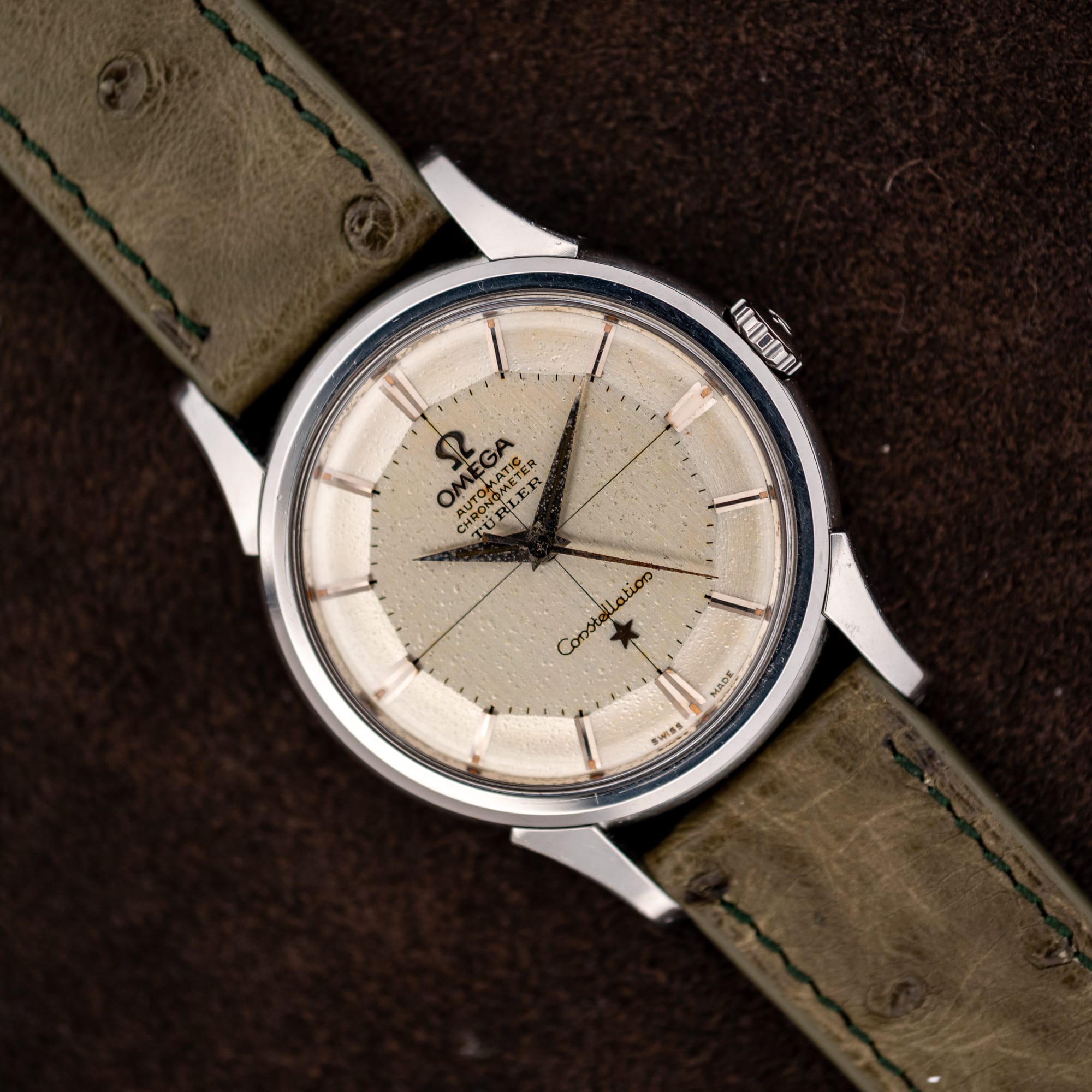
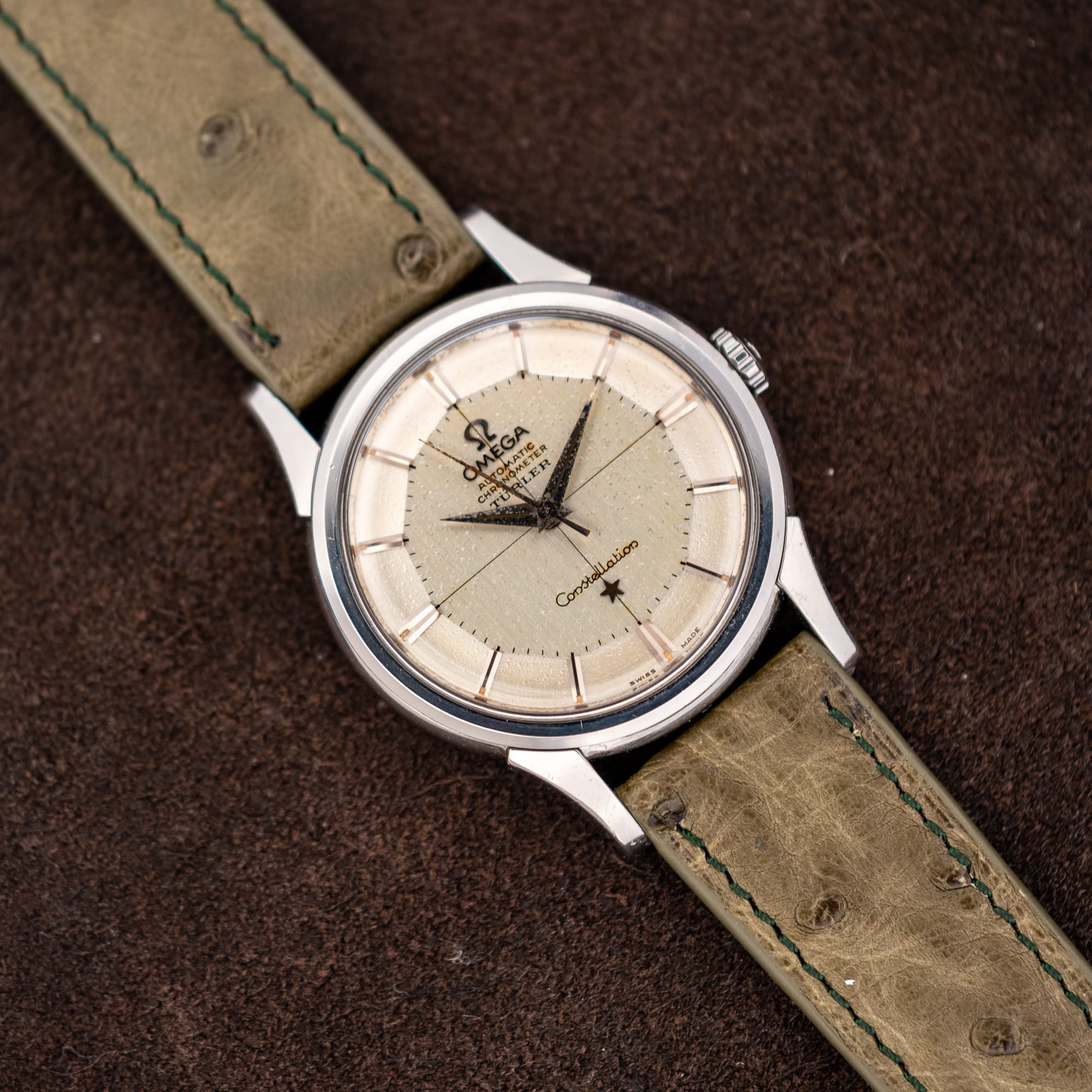
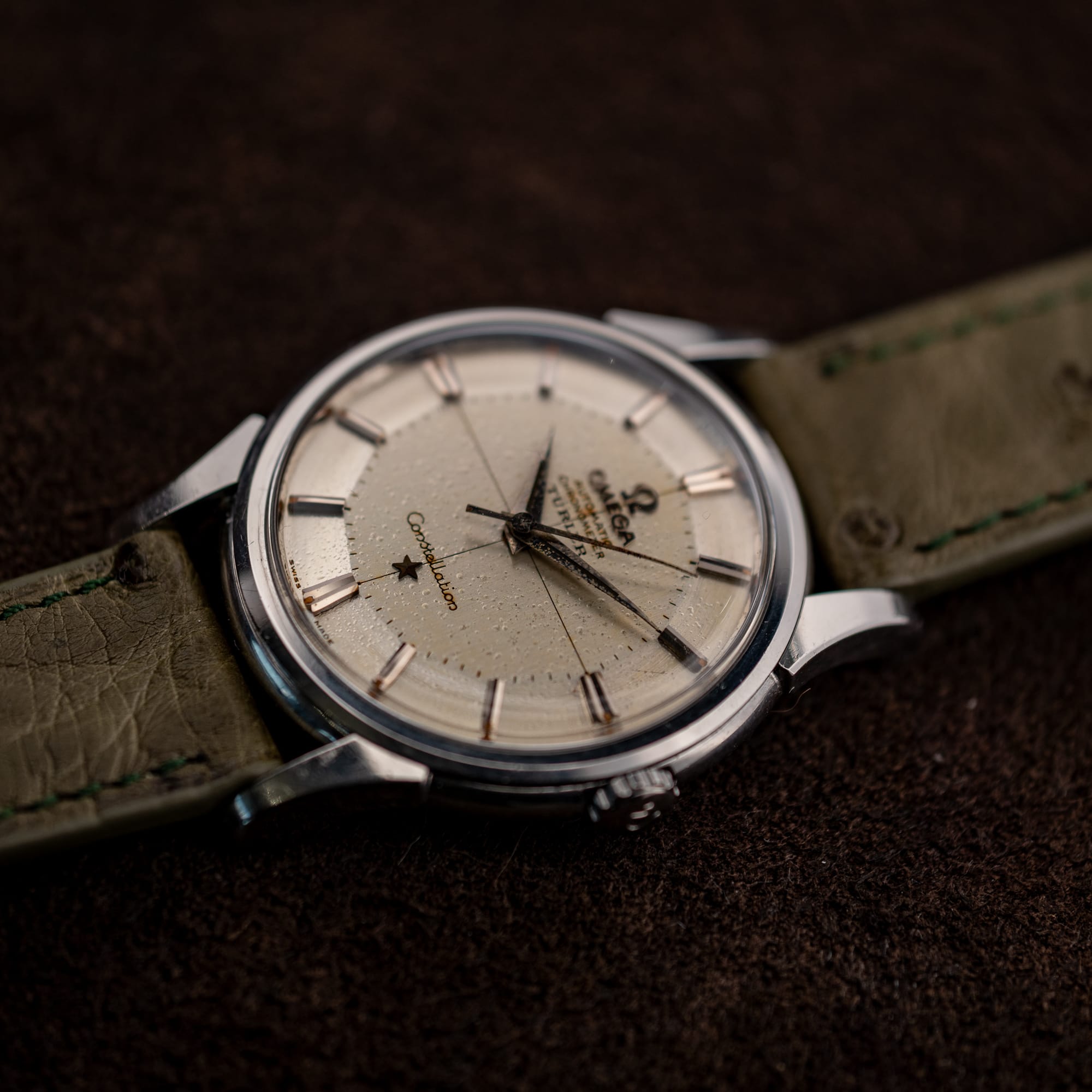
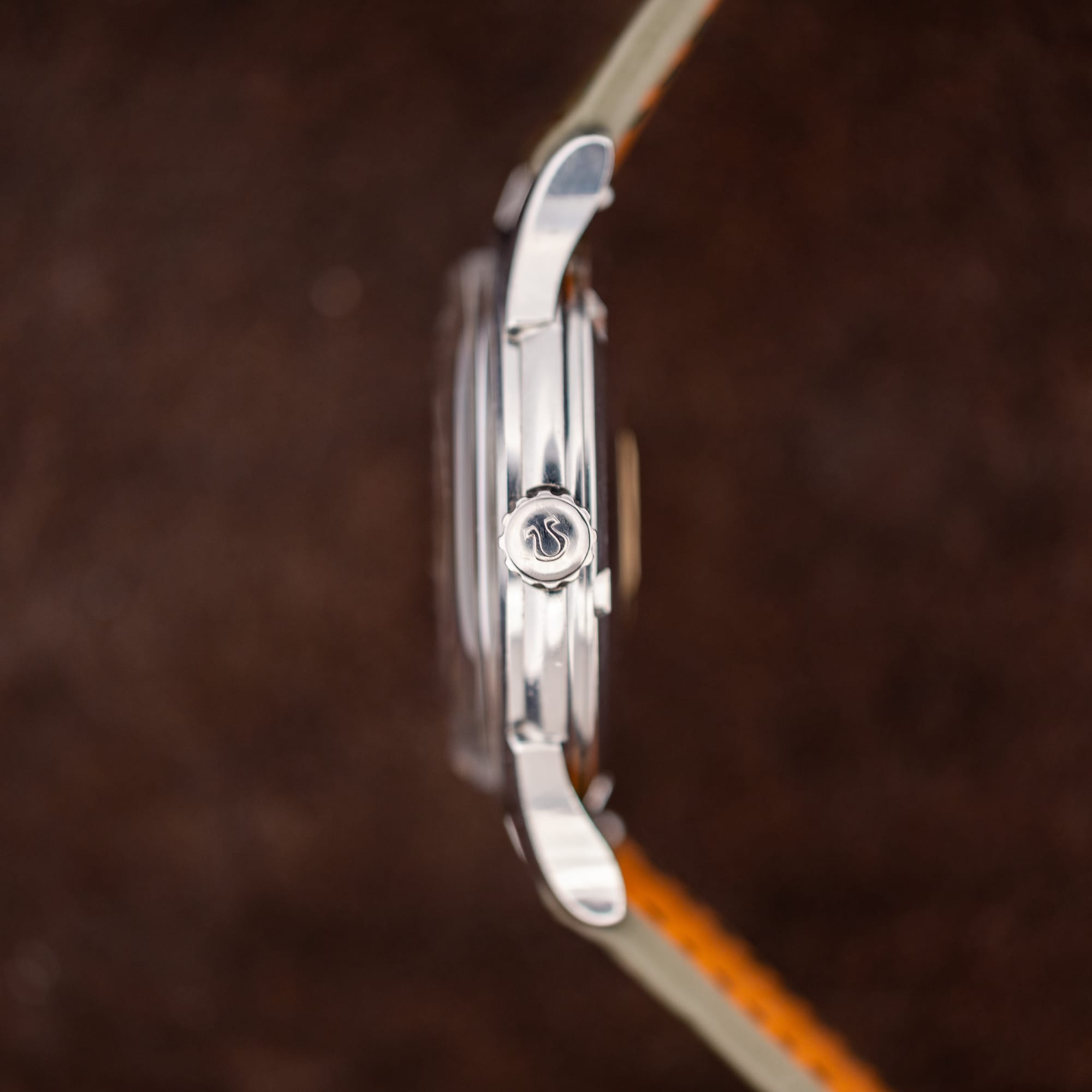
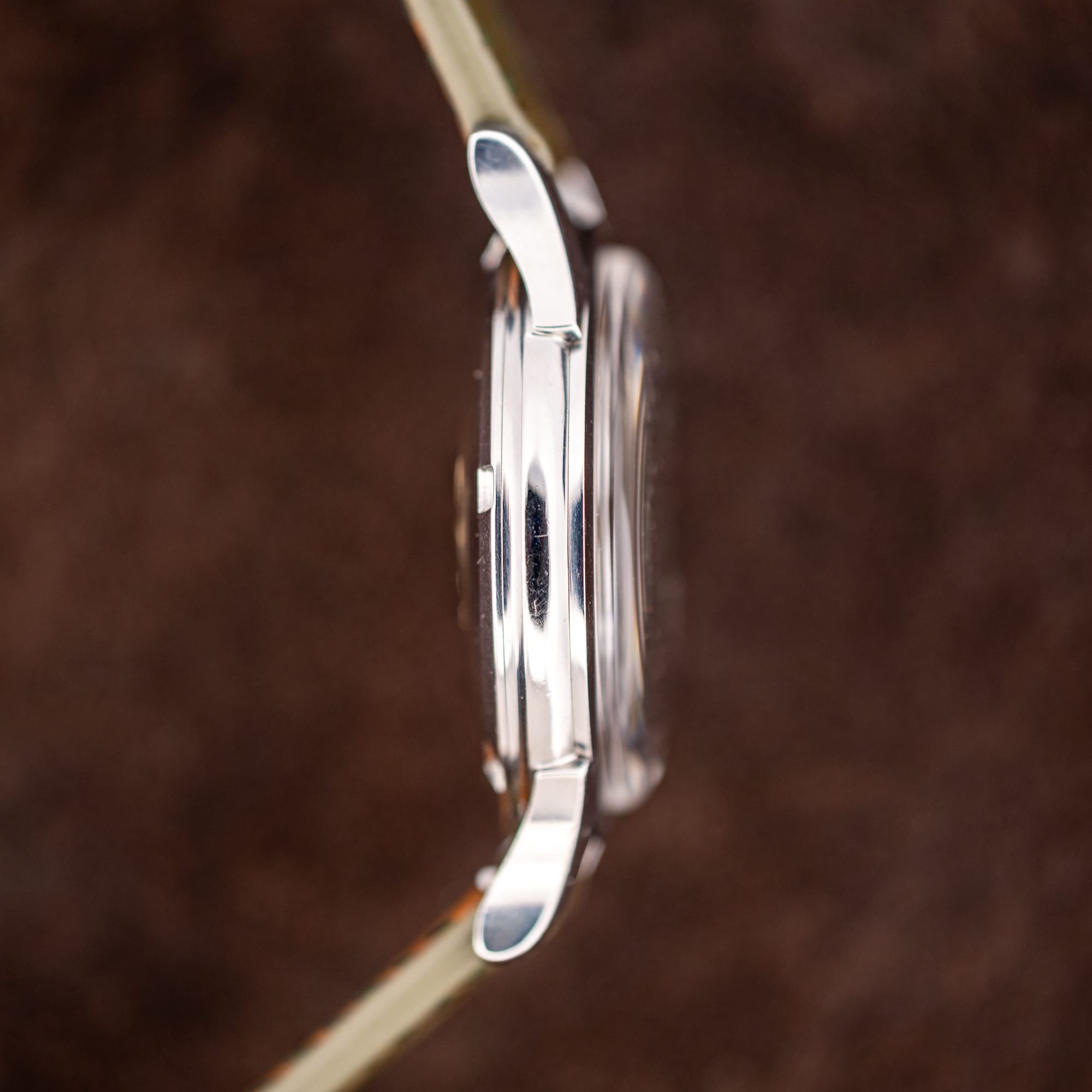
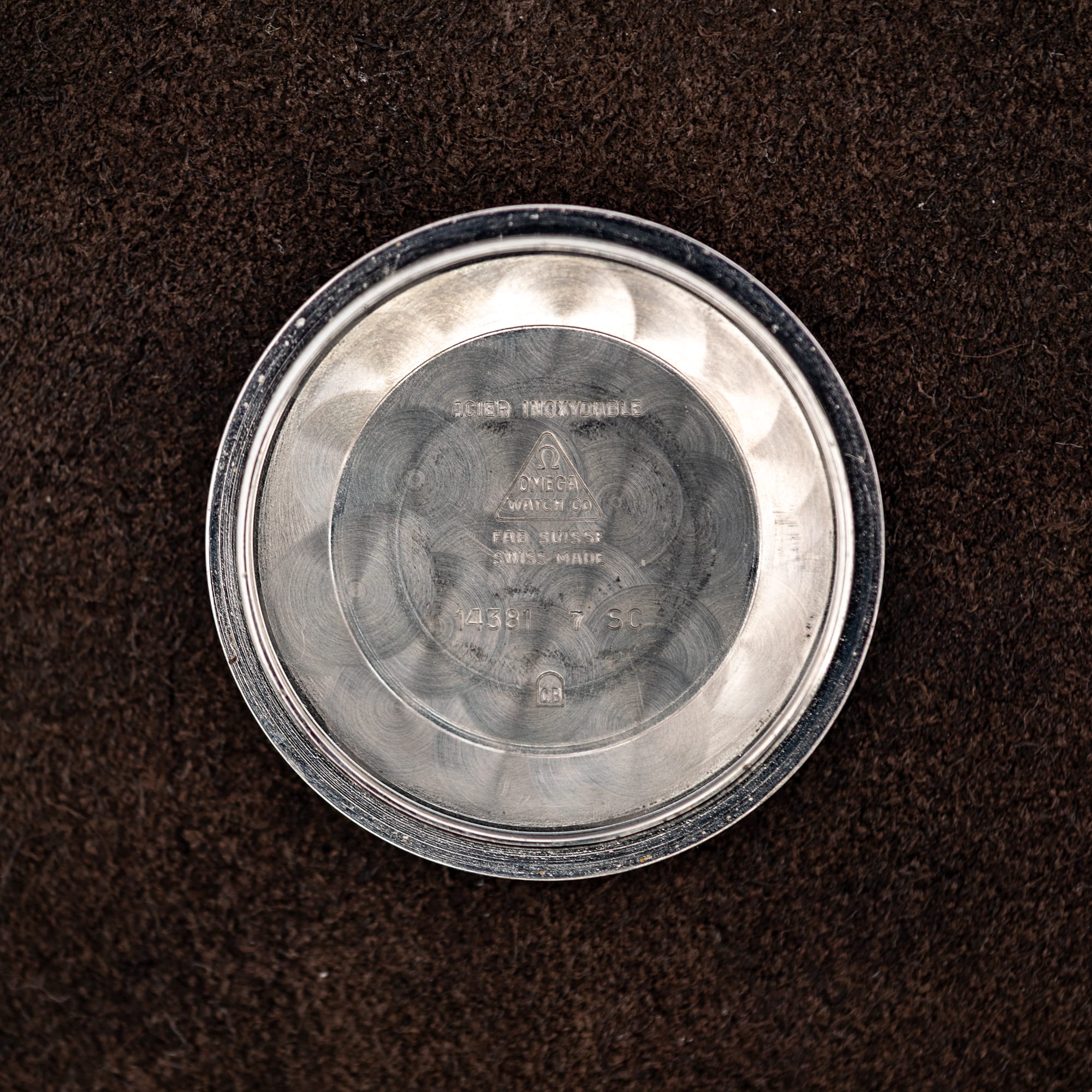
The dial deserves plain description. It is heavily speckled, spotting scattered dense across the centre and out through the pie-pan’s outer facets, an off-white field that has spent sixty-odd years working on itself. The dauphine hands have darkened and oxidised, worst at the centre stack, and the seconds hand has gone furthest. The acrylic crystal is scratched and hazy toward its edge. The case is 34.5mm across and 43.5mm lug to lug on 18mm lugs, stainless steel with sharply faceted lugs, polished flanks carrying fine hairlines, and a crown with a raised logo motif. Inside the caseback it is stamped 14381 7 SC. Beyond the service, we have refinished nothing.
Serviced in-house at OTTUHR and backed by our 2-year mechanical warranty, holding inside five seconds a day, on an olive ostrich strap with an OTTUHR buckle. The signature was a small piece of shop business, printed to say where the watch came from. It has aged better than the dial it was printed on.