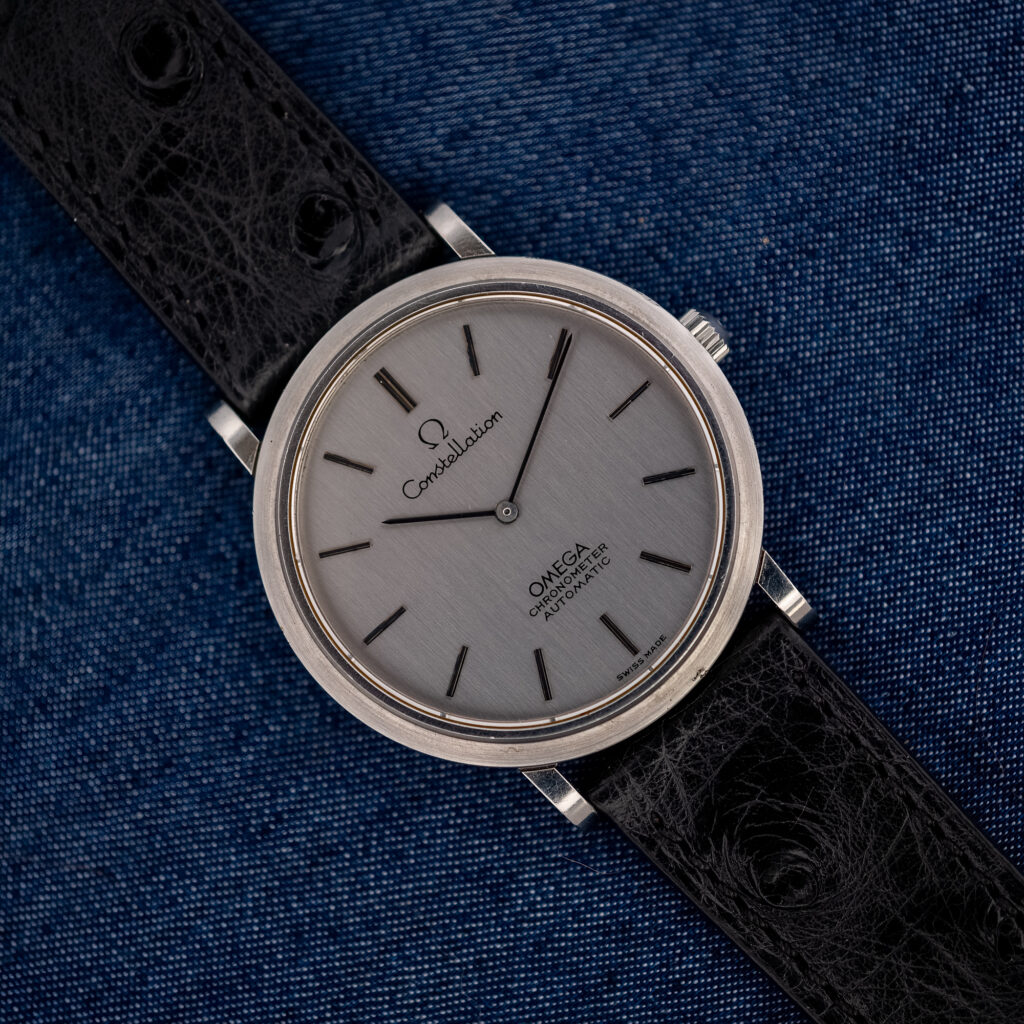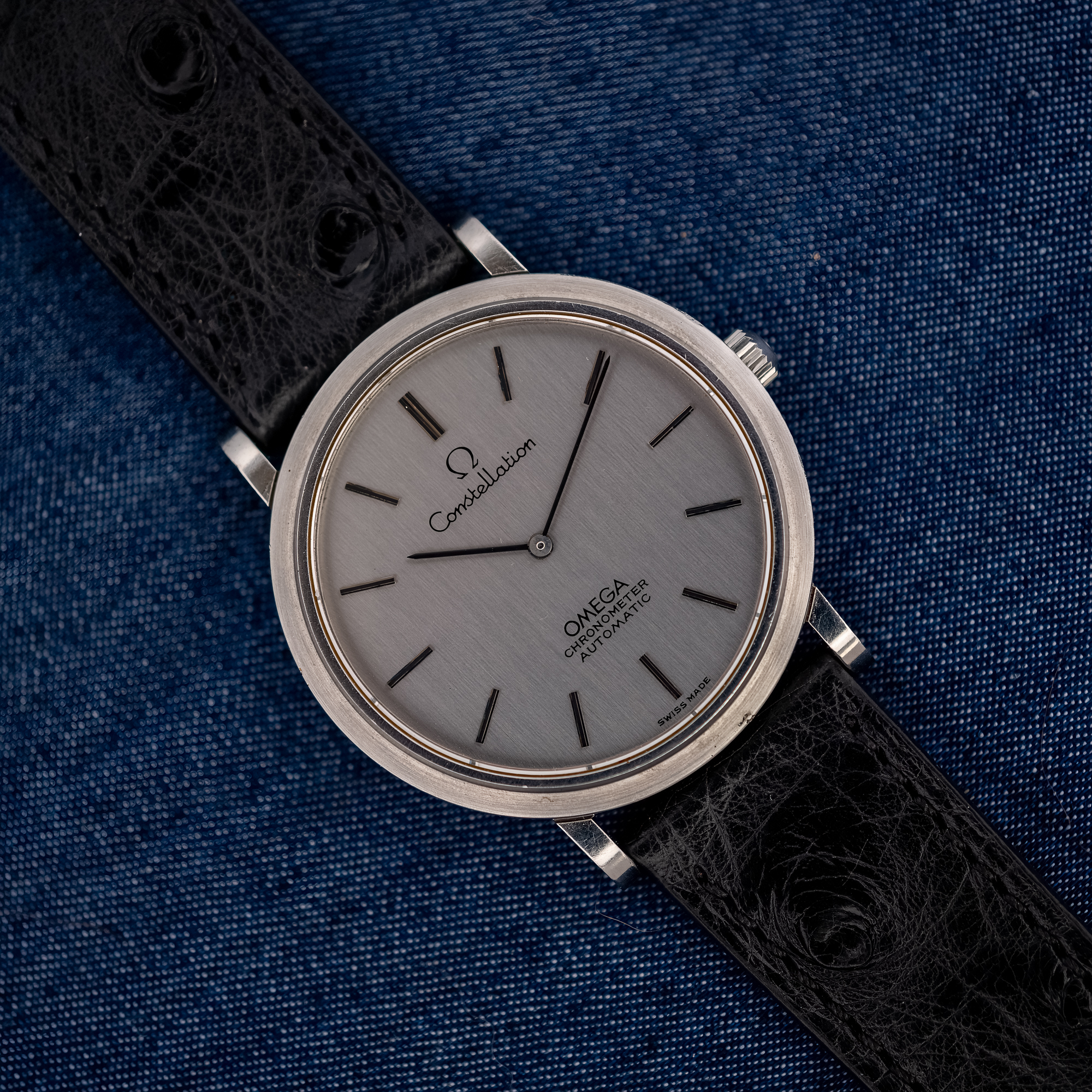
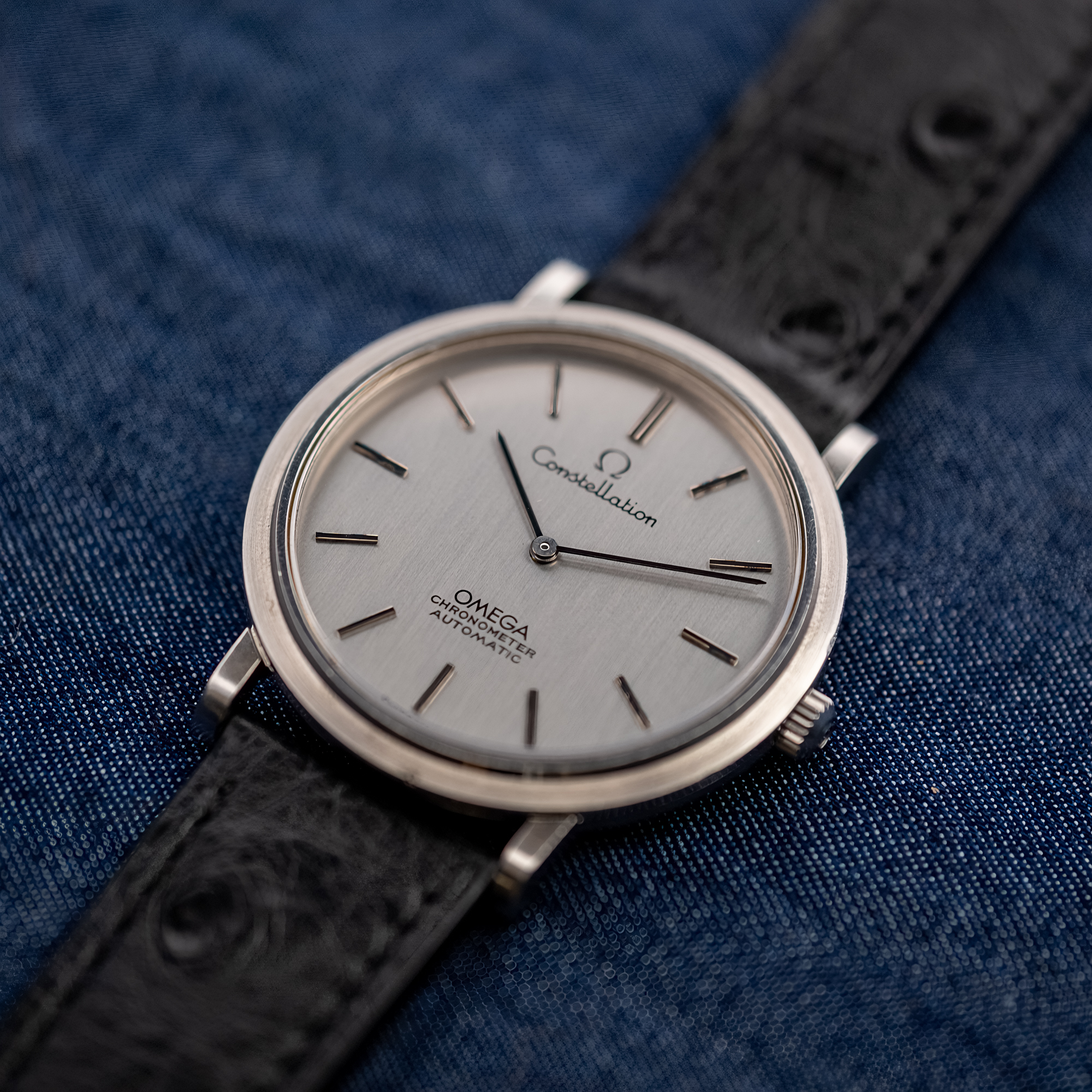
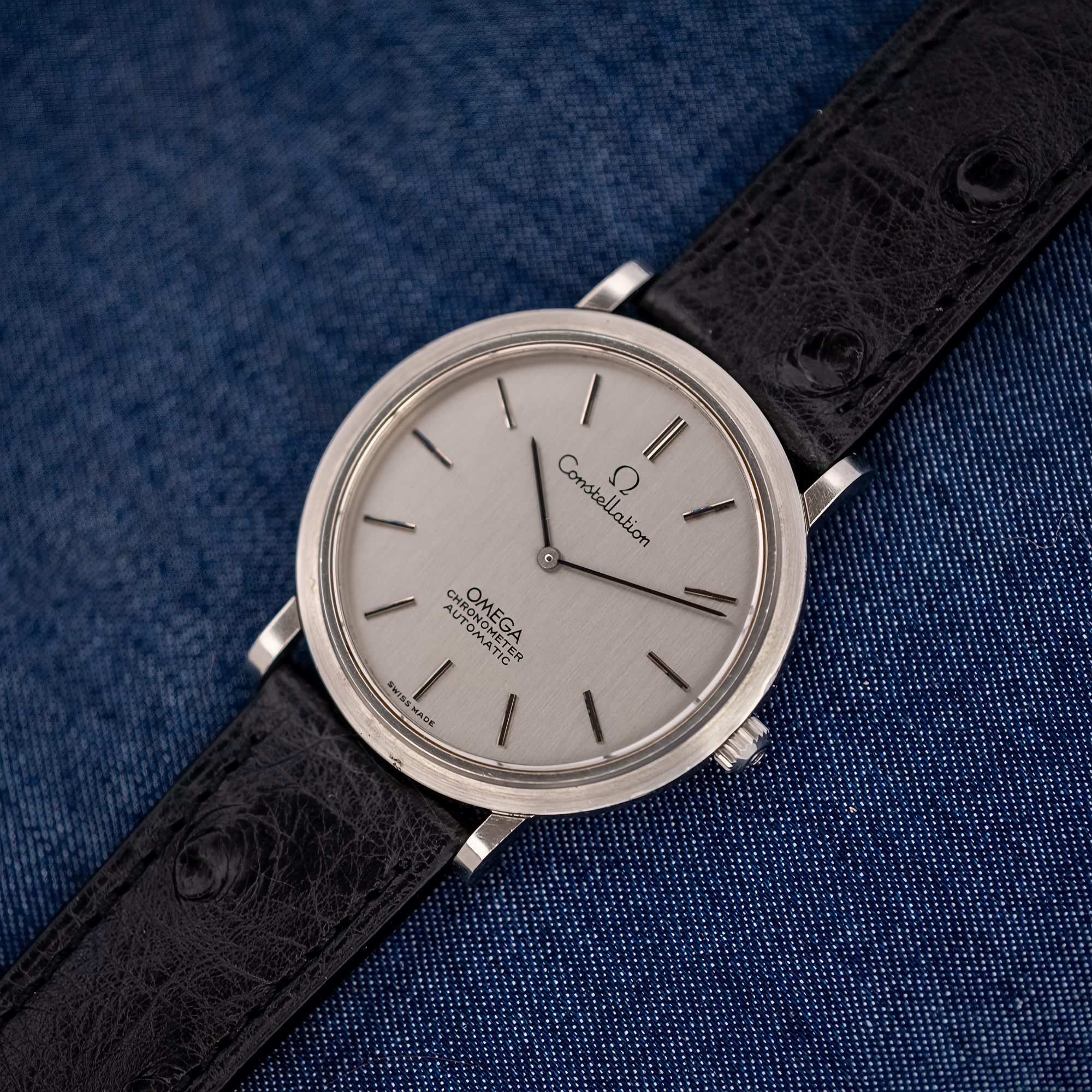
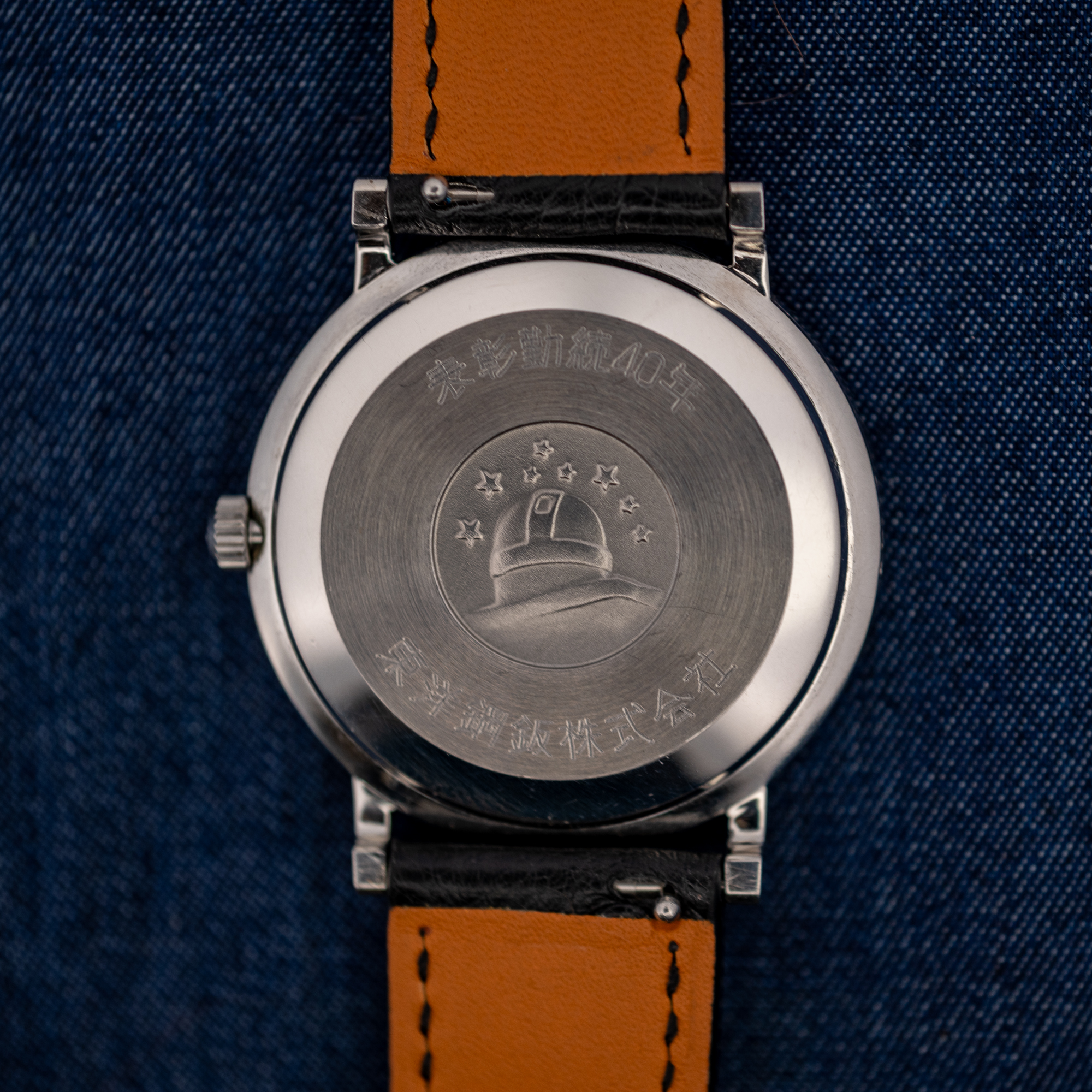
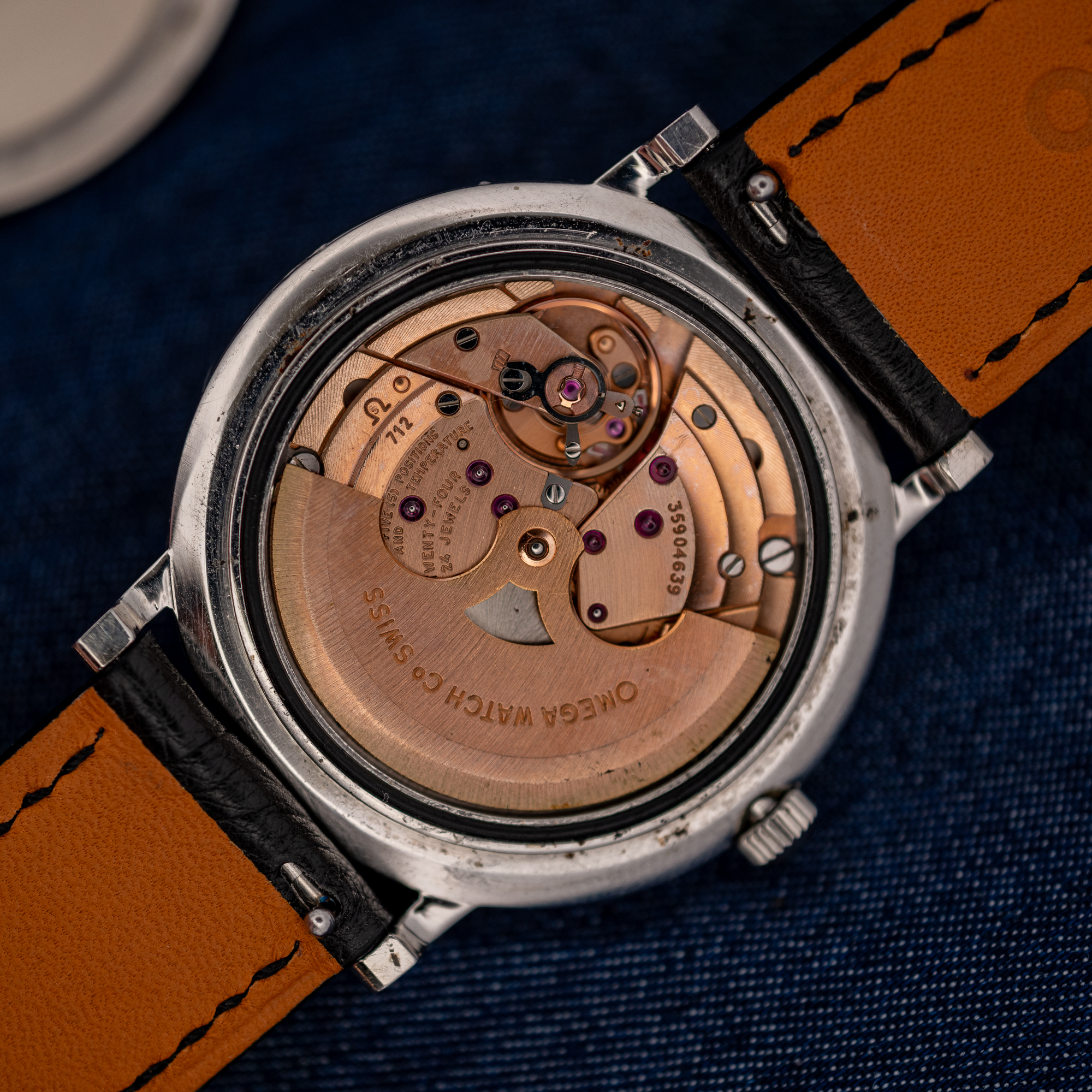
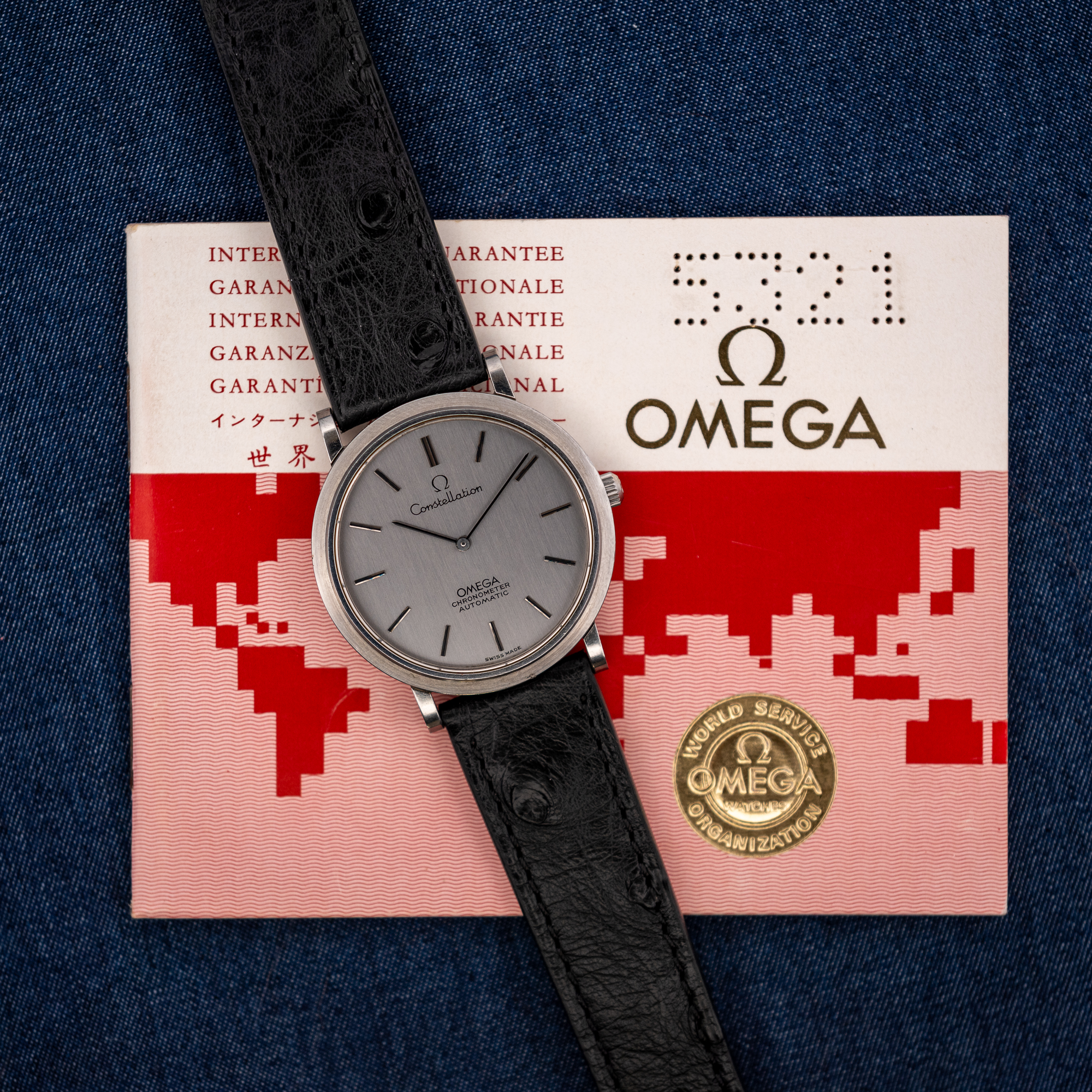
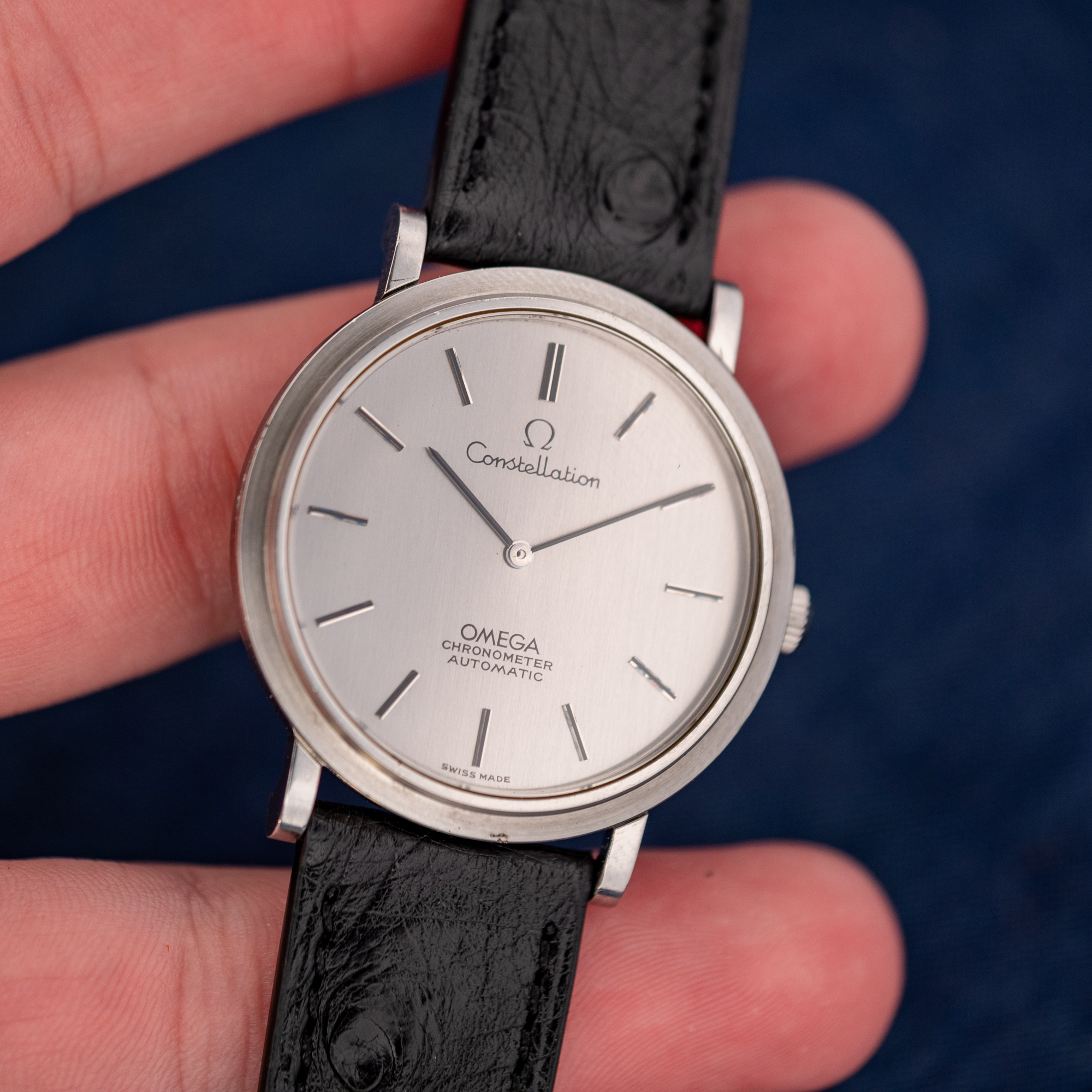
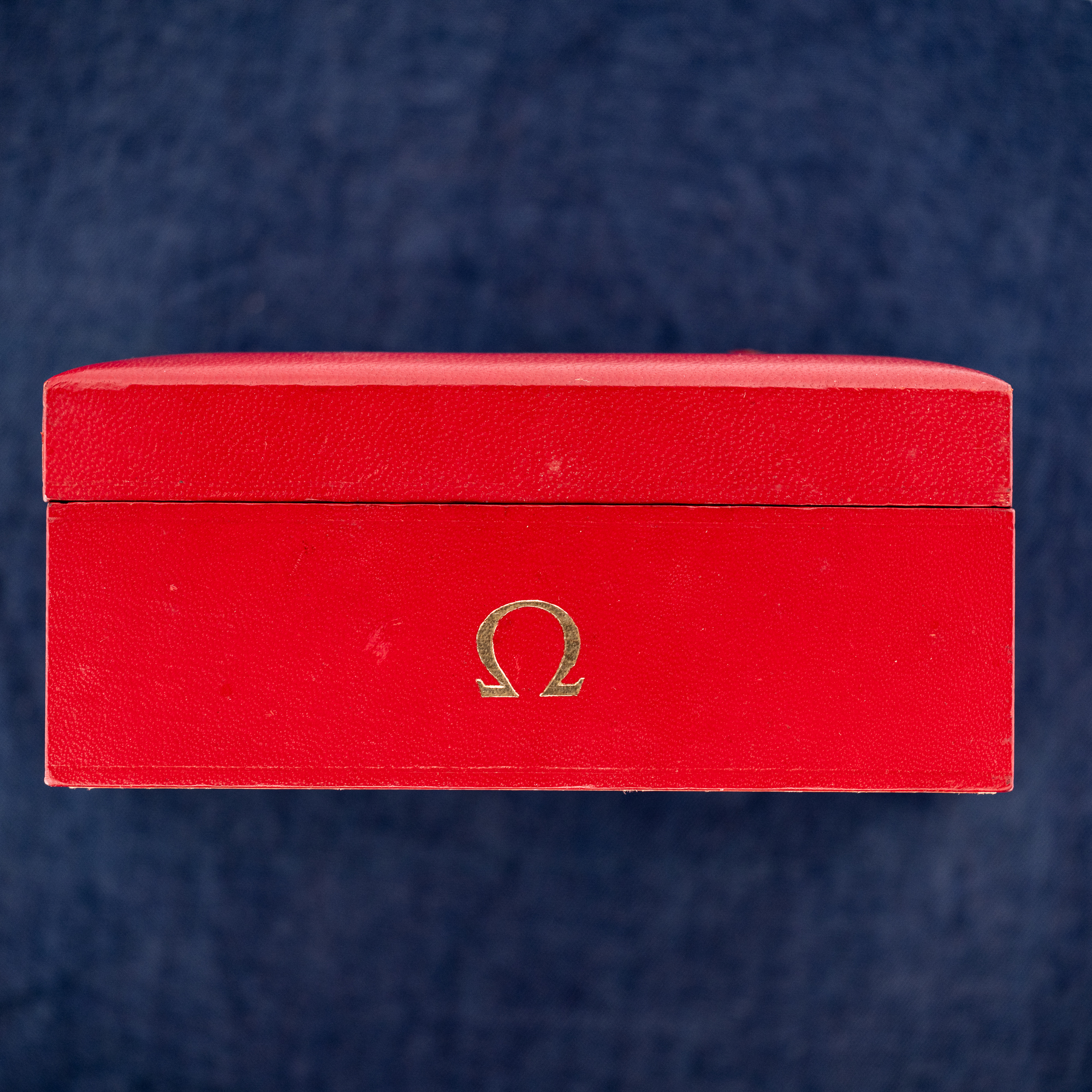
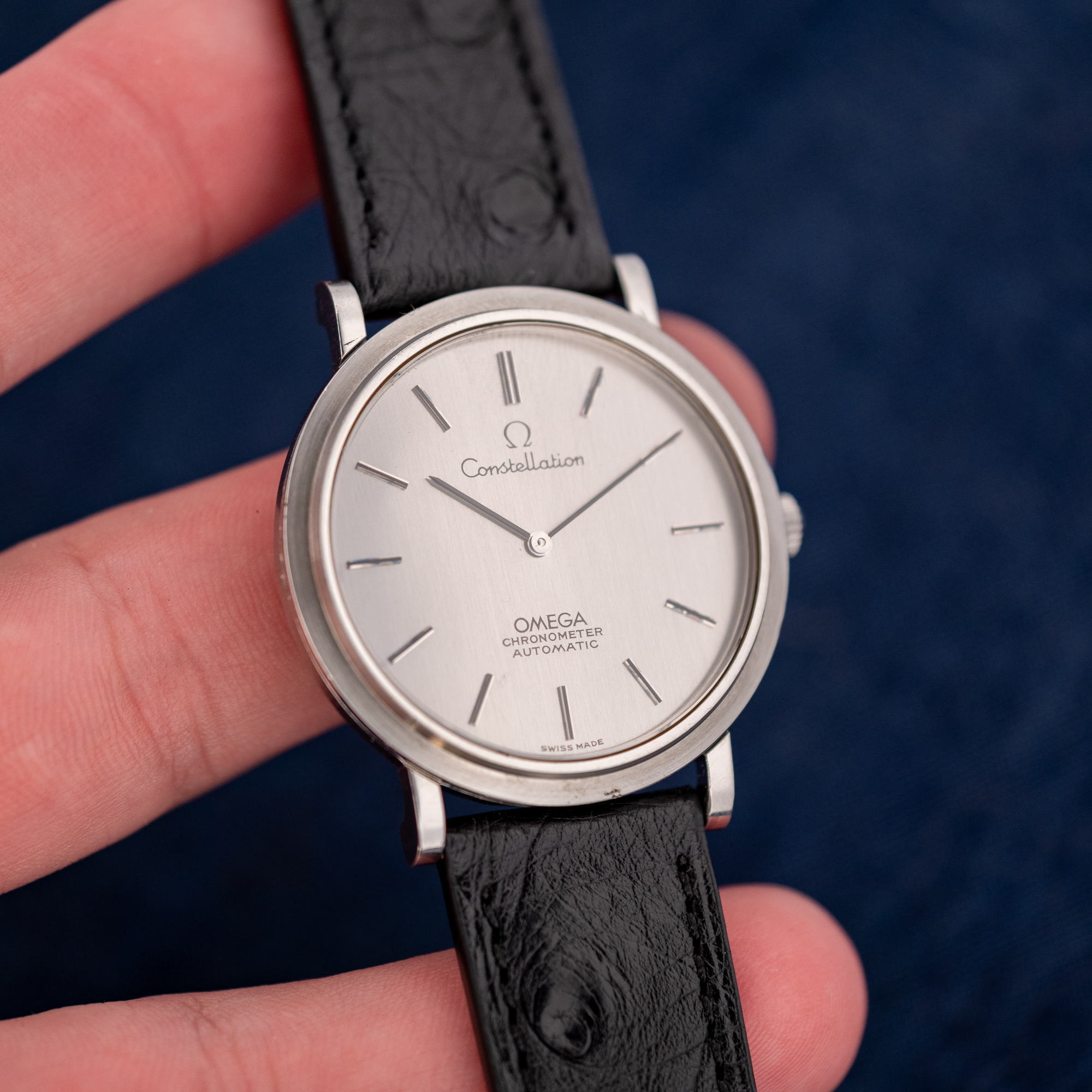

Around the observatory on the back of this Omega Constellation 157.0001 runs a line of Japanese: 永年勤続40年, forty years of continuous service. Taken character by character, 永年 means many years and 勤続 means unbroken service at one workplace, and the number needs no translation. A second line names the Japanese company that gave it.
The custom took root in the era of lifetime employment, when a worker joined one firm and stayed until retirement, and many Japanese companies still keep it. In the 1970s a wristwatch engraved with the employer’s name was a common way to mark the milestone, and secondhand watches from that decade still surface with these inscriptions. Some employers, banks among them, gave Omegas. Forty years earned this recipient a Constellation chronometer.
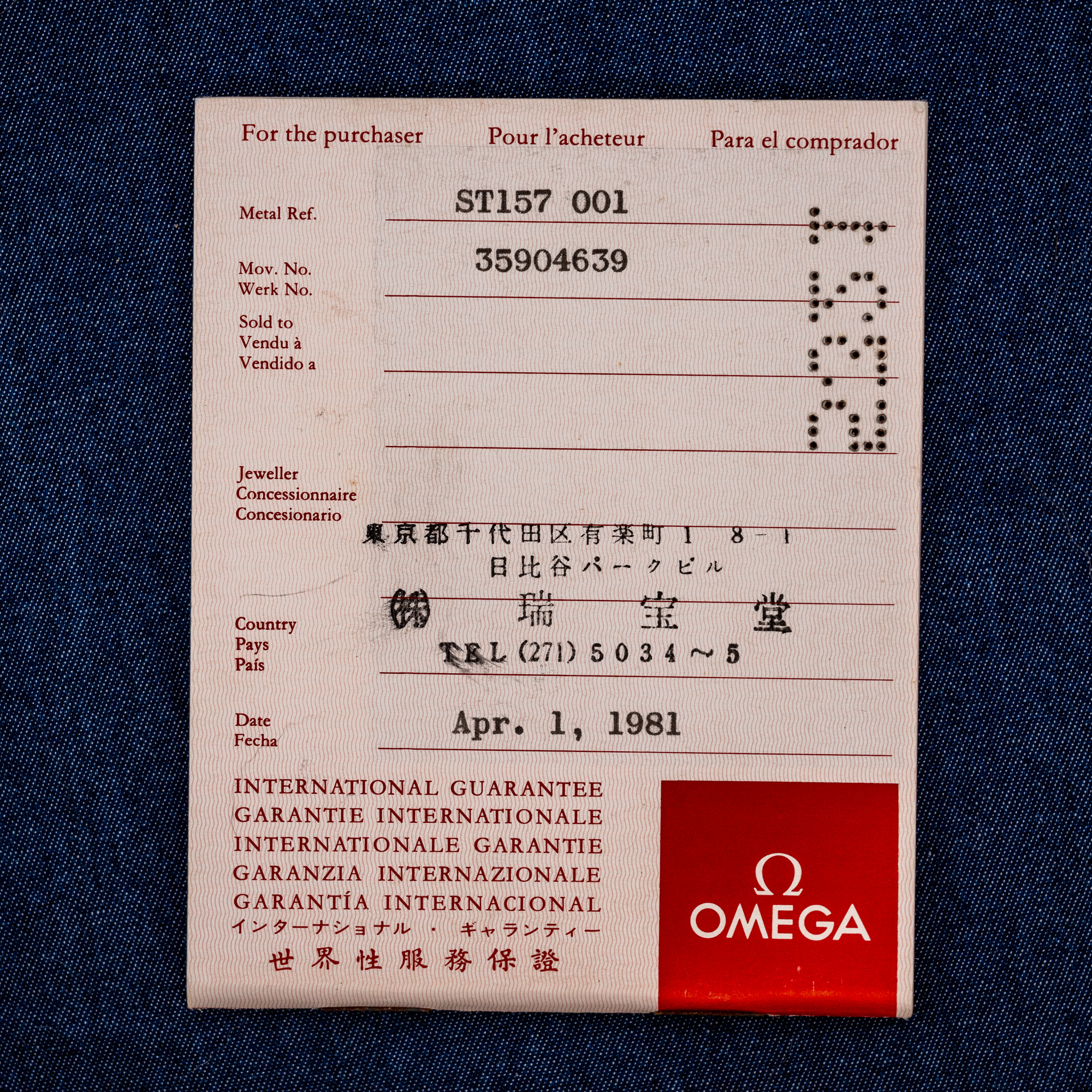
Imported watches were treated as luxuries in Japan at the time. Until 1989 their prices carried the commodity tax, a levy on luxury goods charged on Swiss watches at a double-digit rate, with gold and gem-set models in a higher bracket still. The tax ended only when Japan introduced its consumption tax that year. Tenshodo, the Ginza jeweler founded in 1879, became Omega’s import agent in 1952, and for its hundredth anniversary it issued a version of this same reference with its own name on the dial.
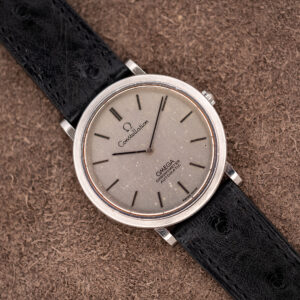
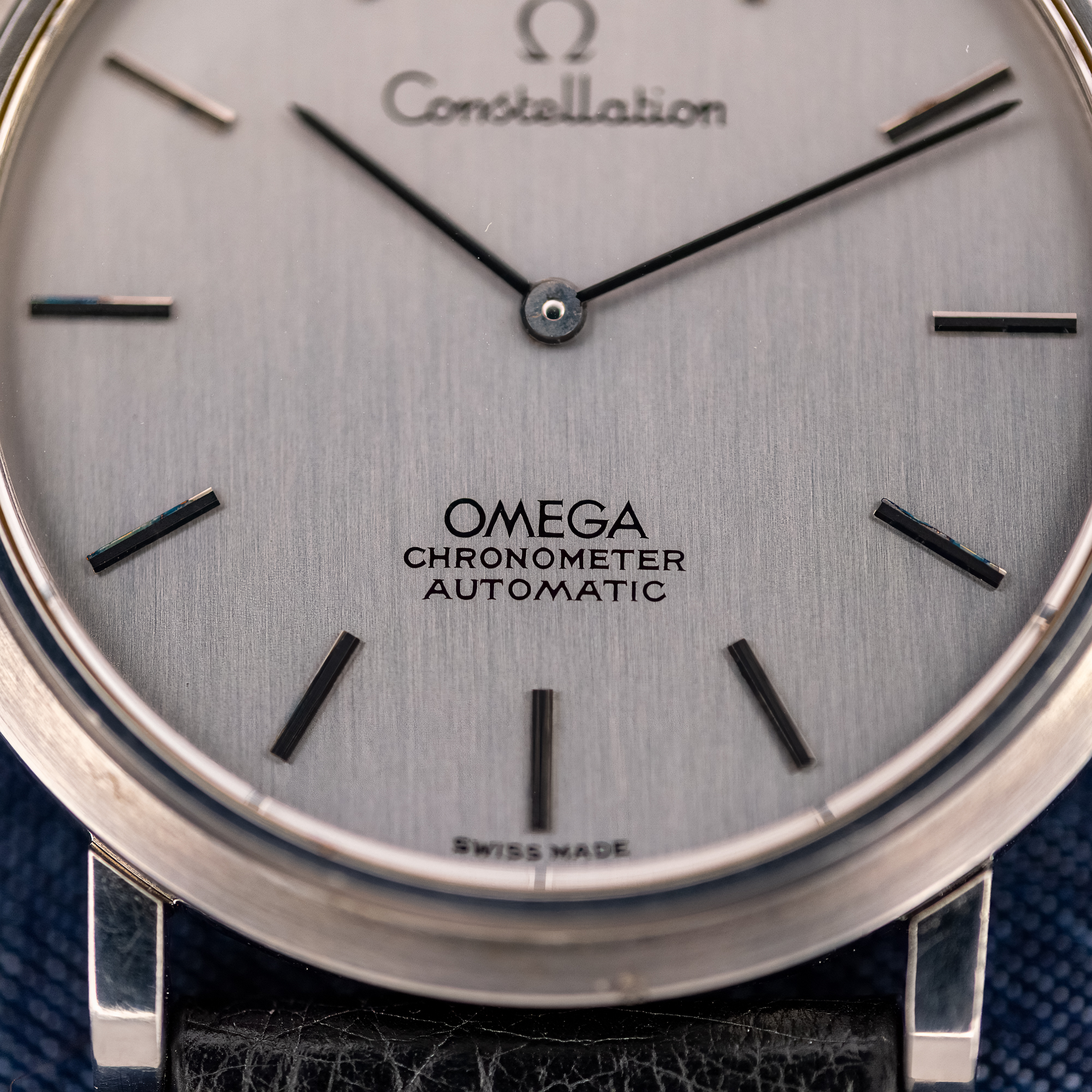
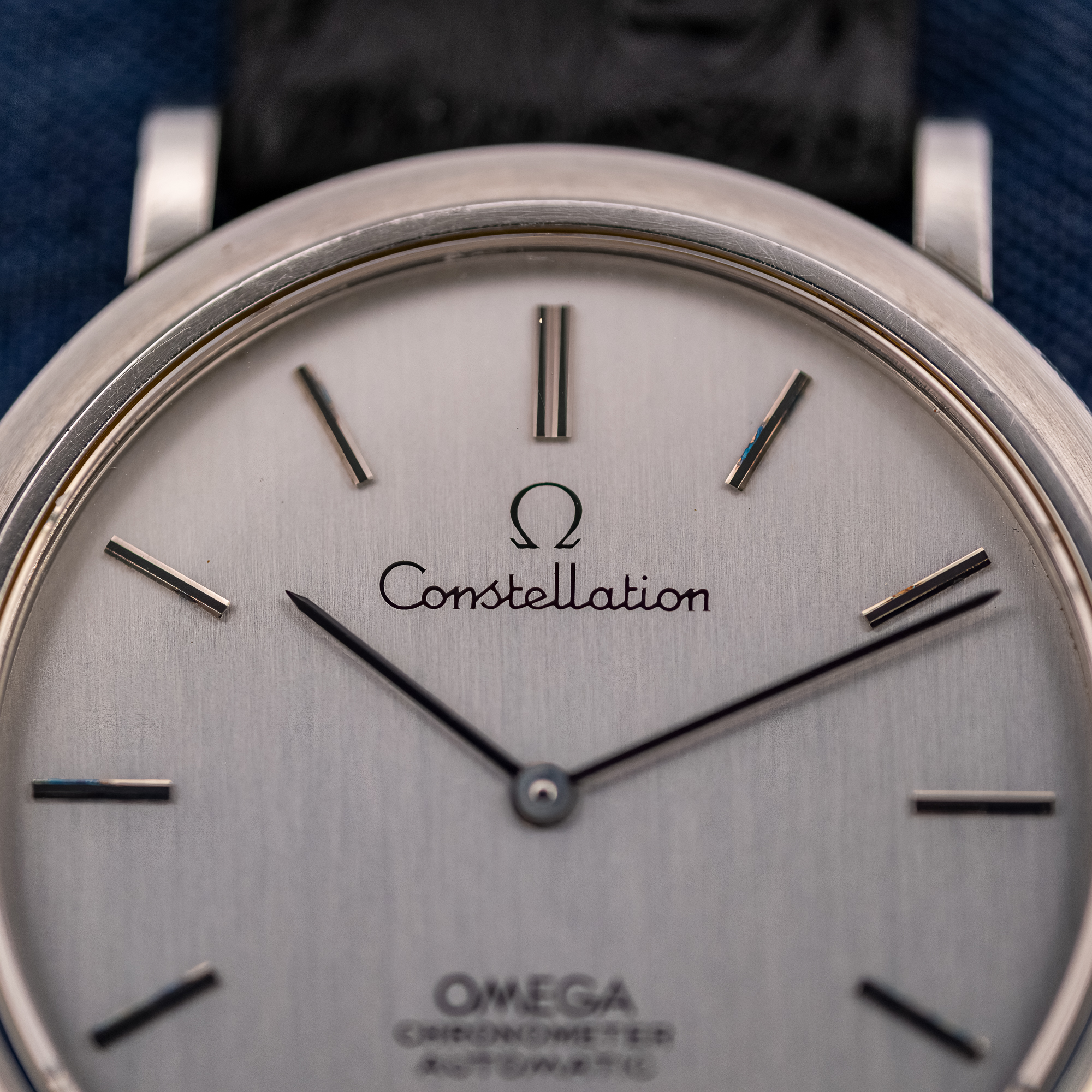
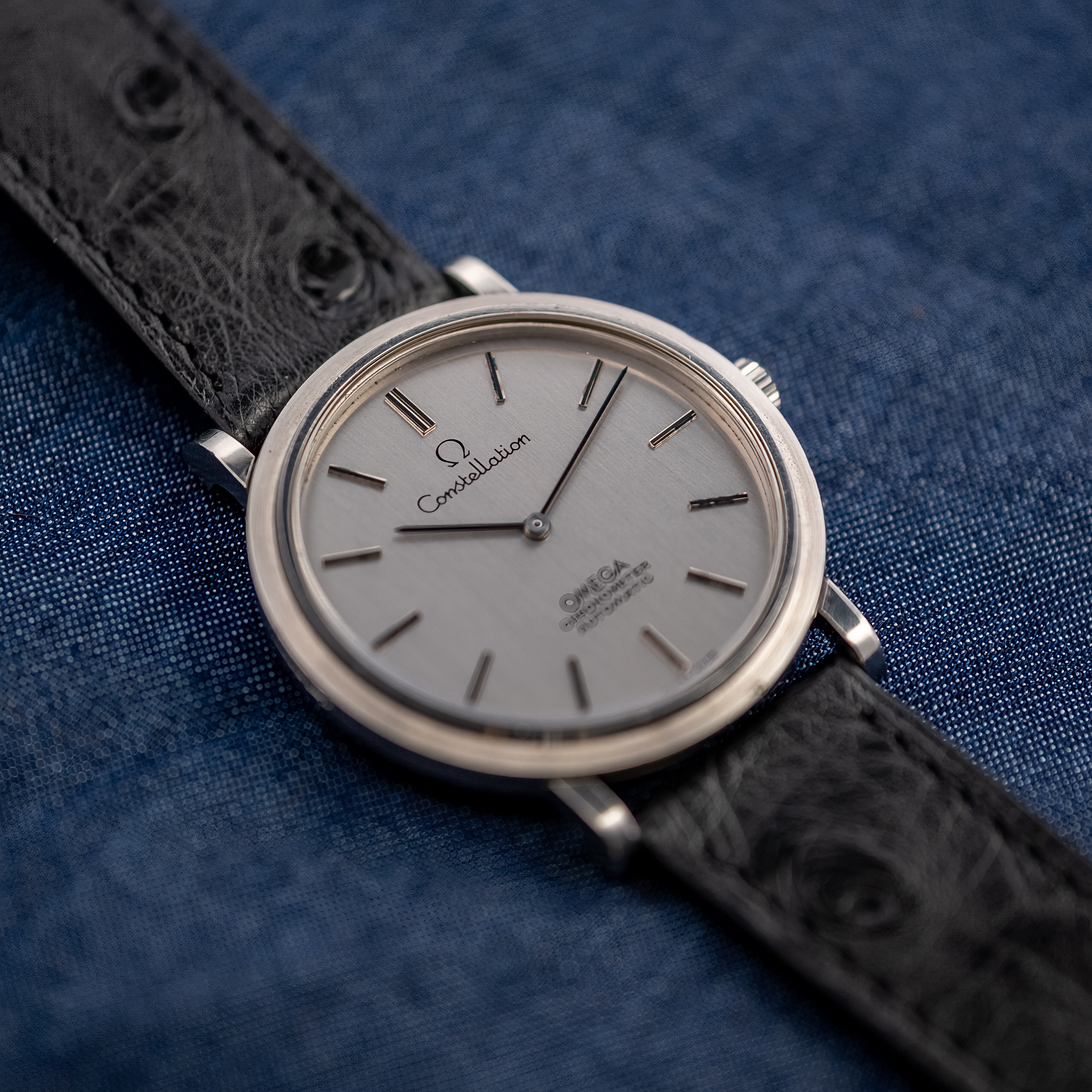
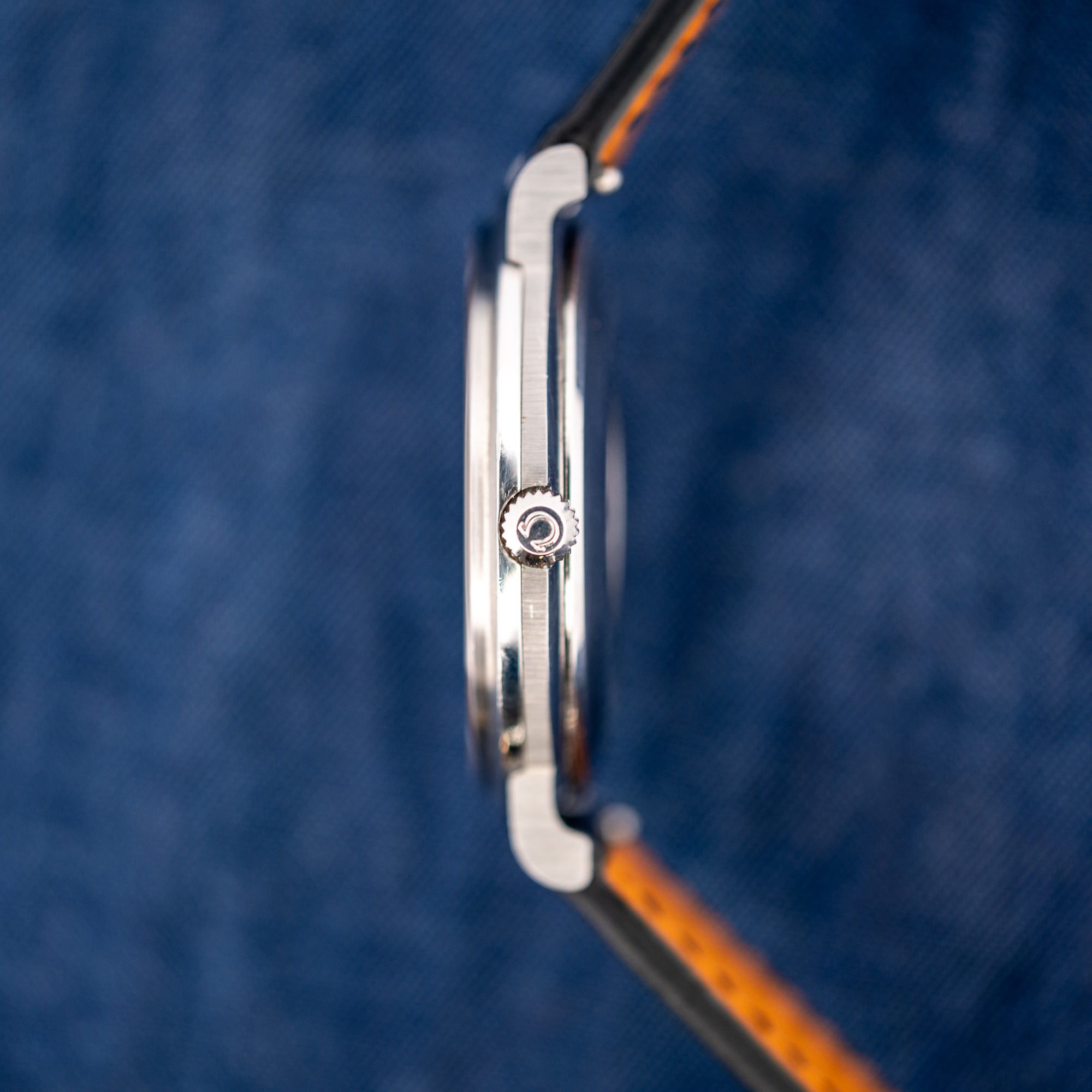
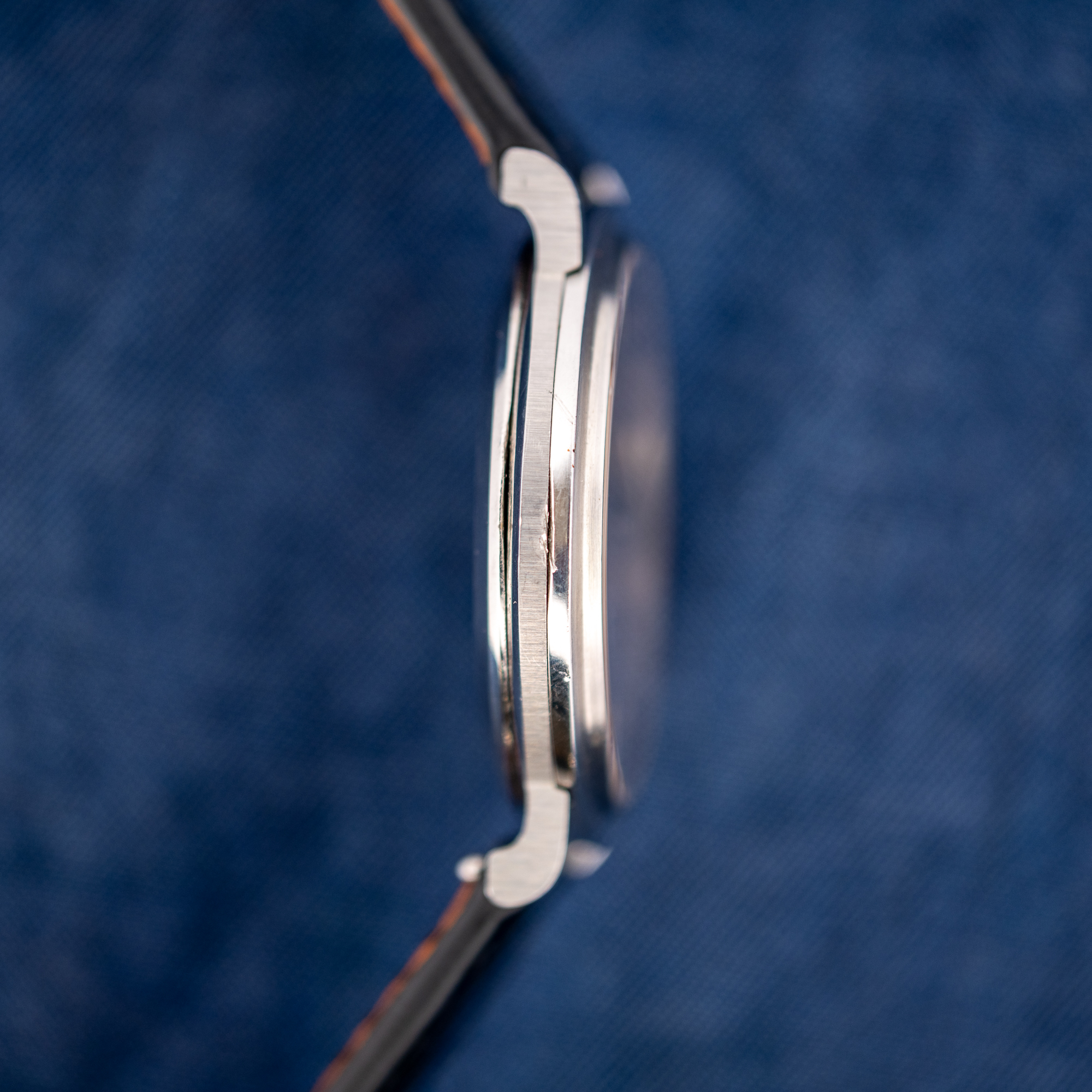
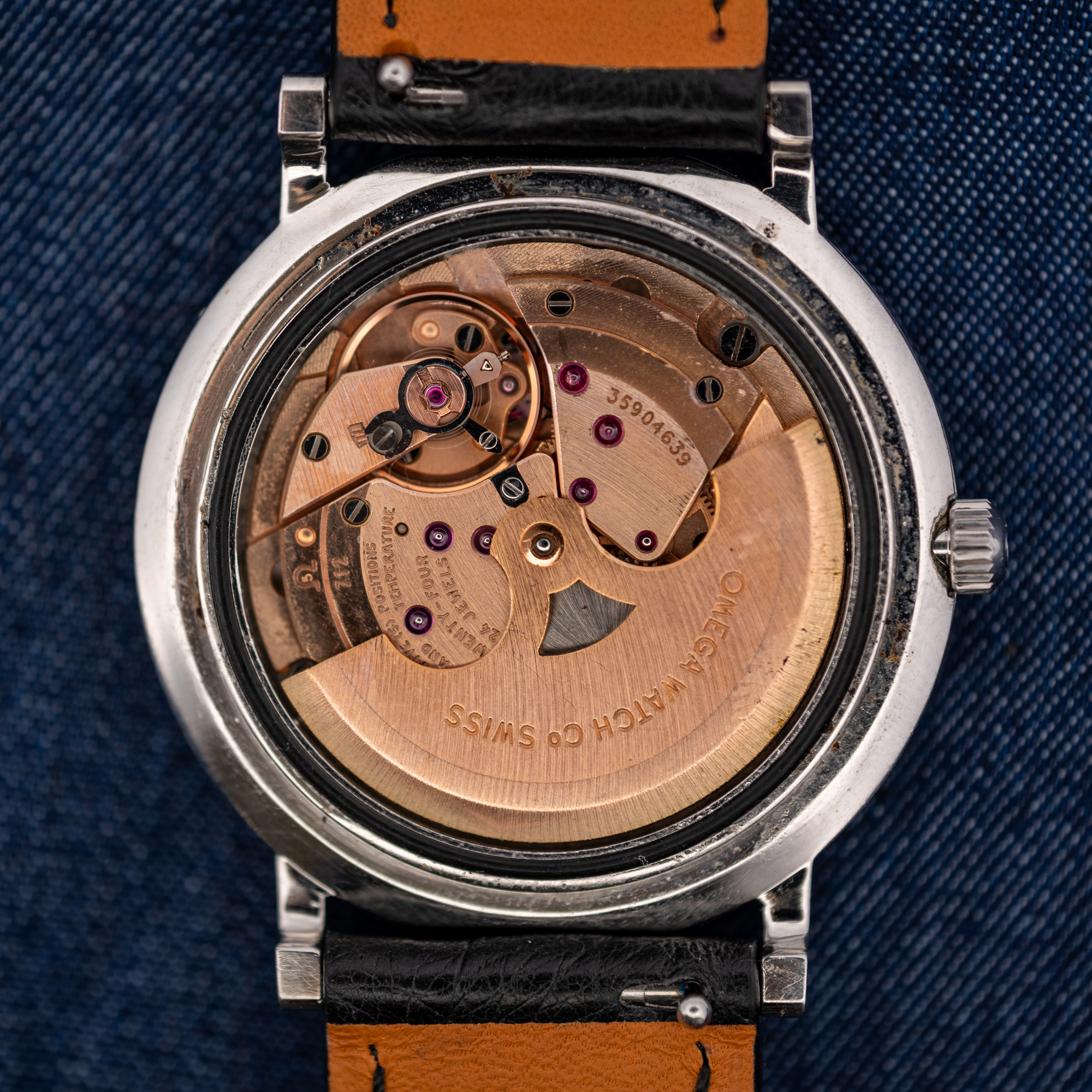
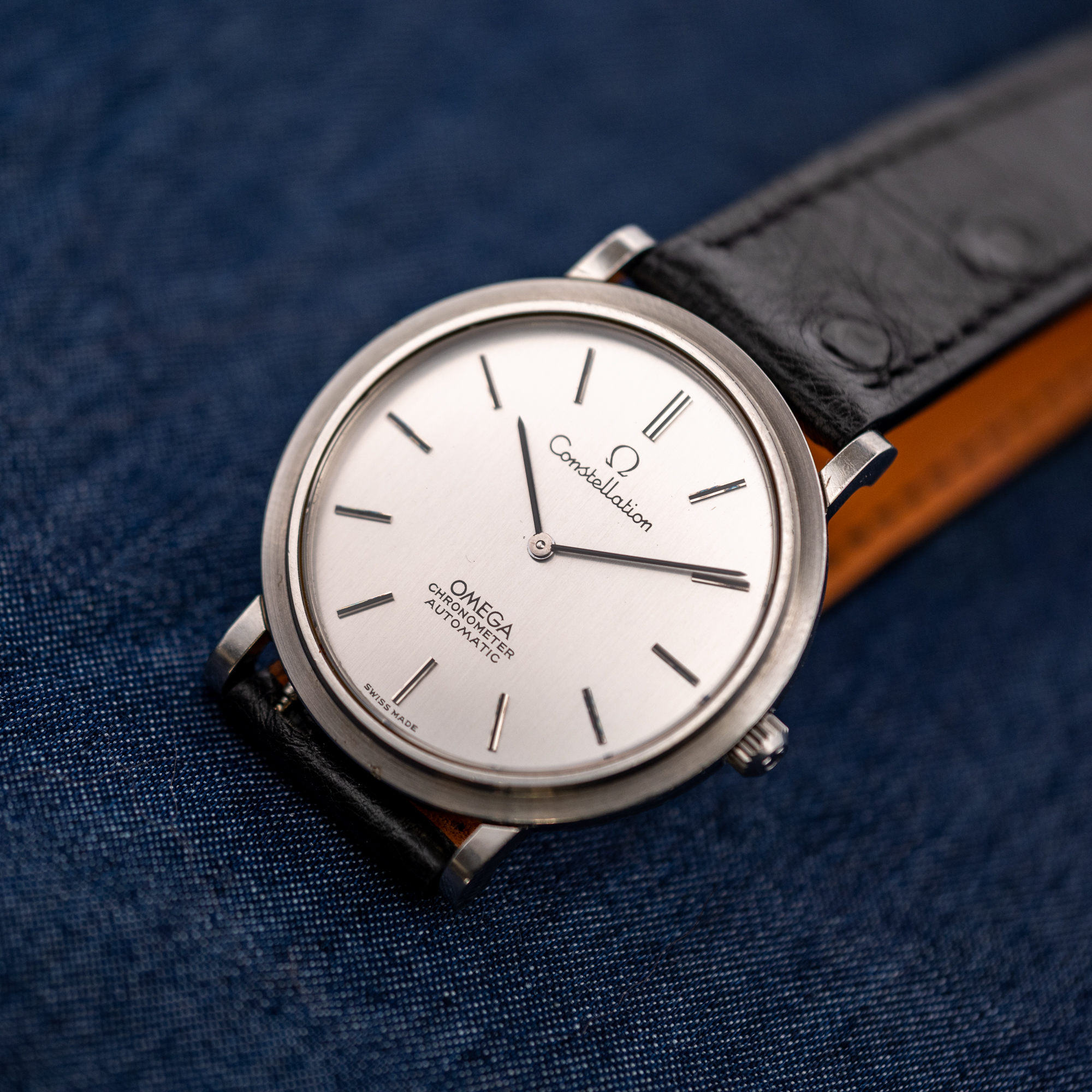
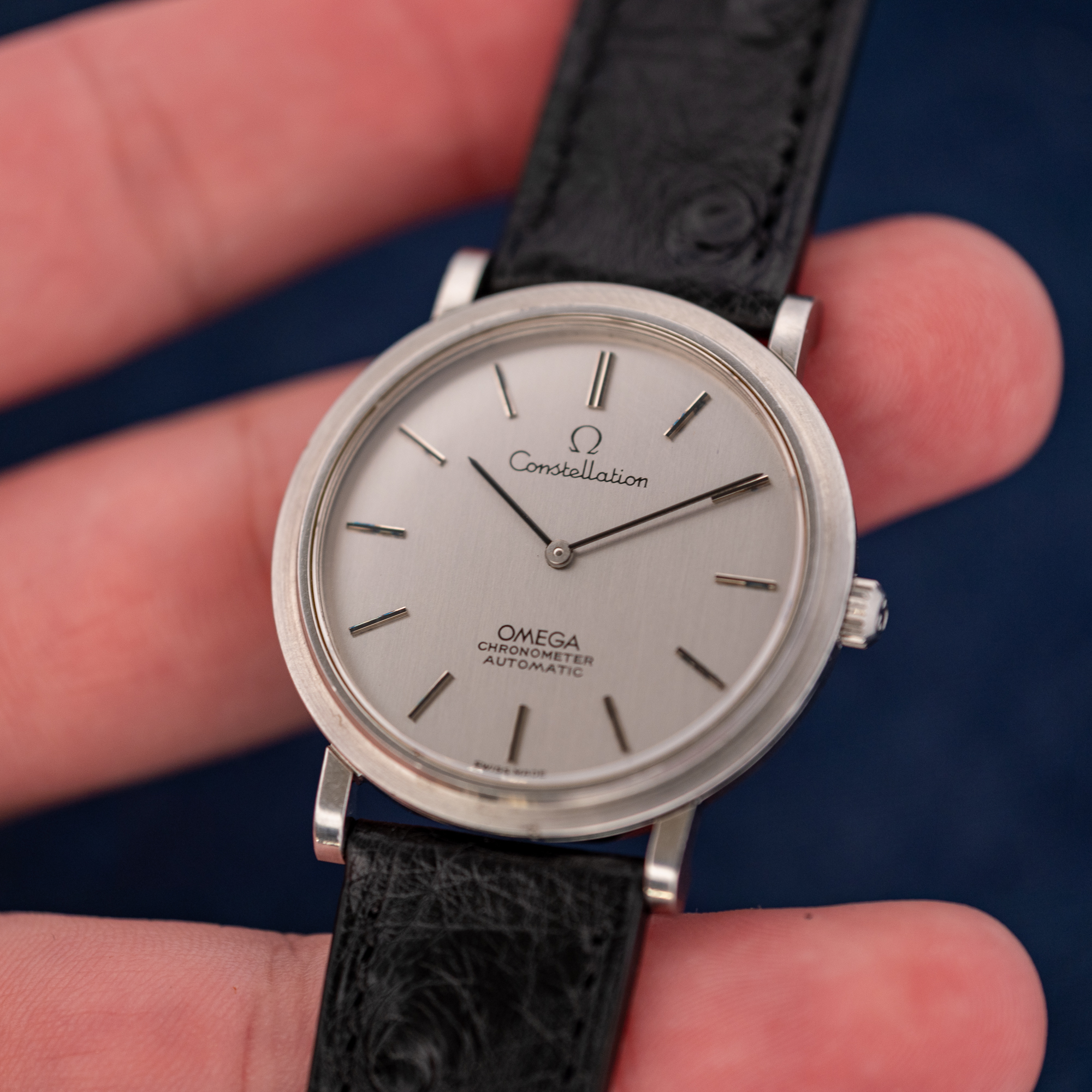
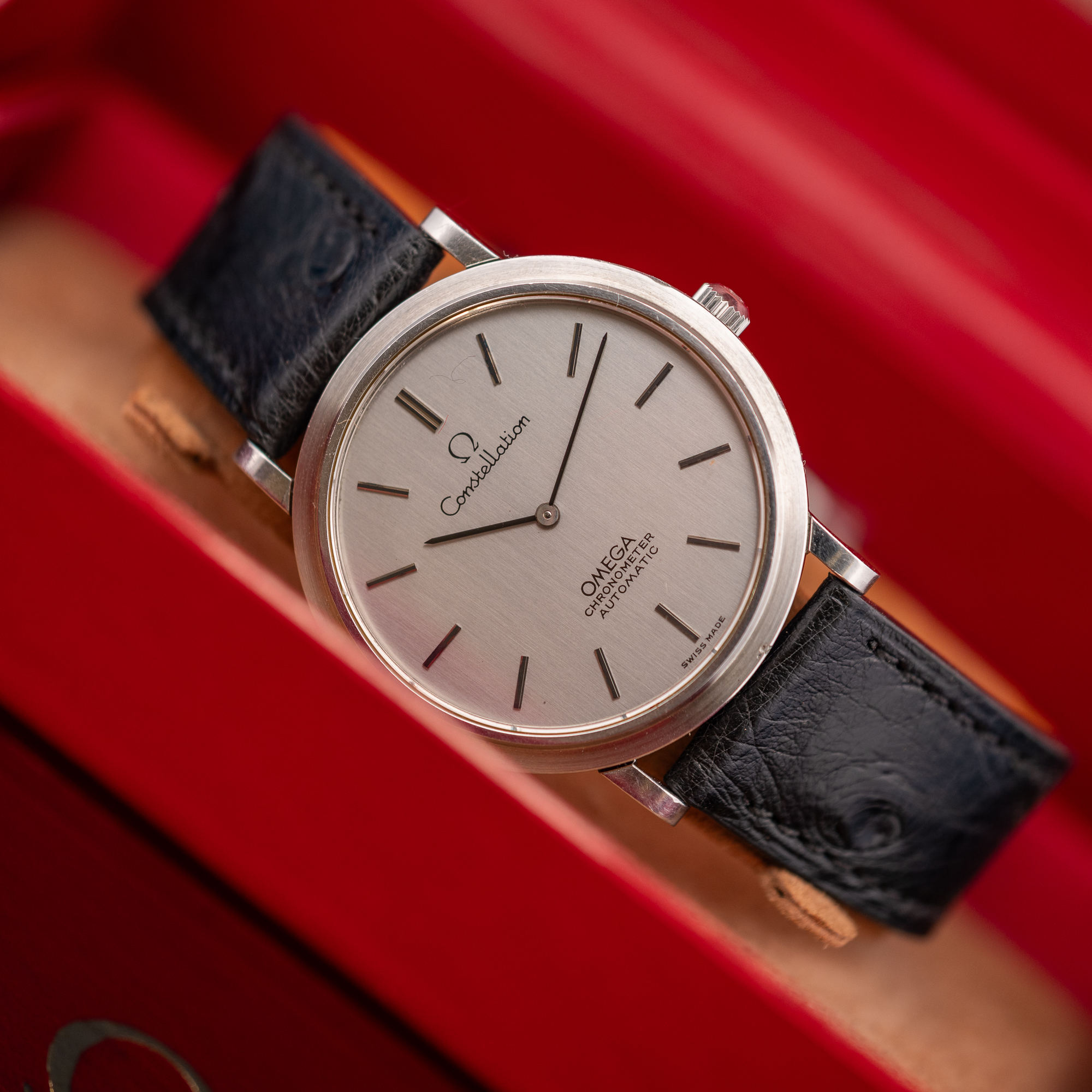
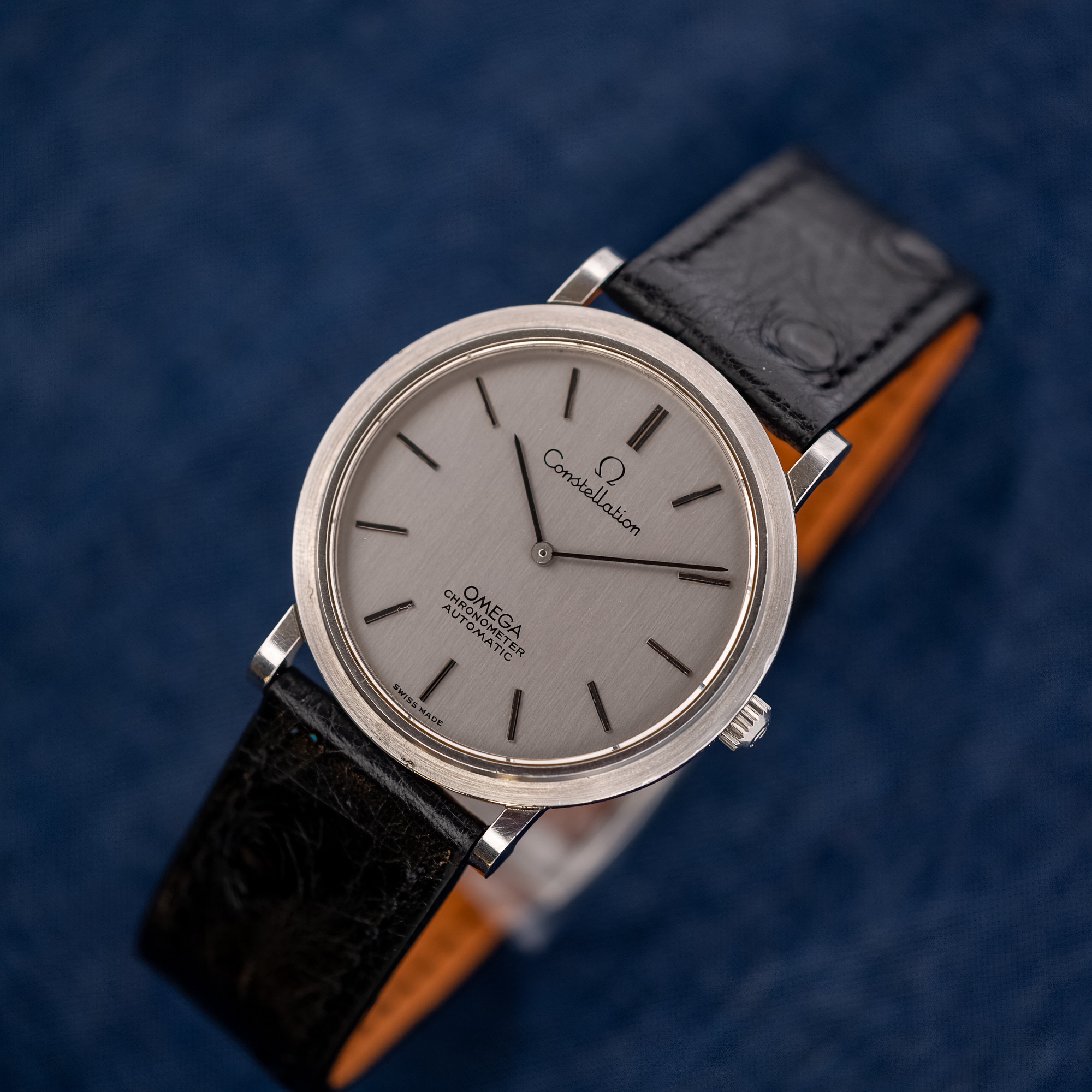
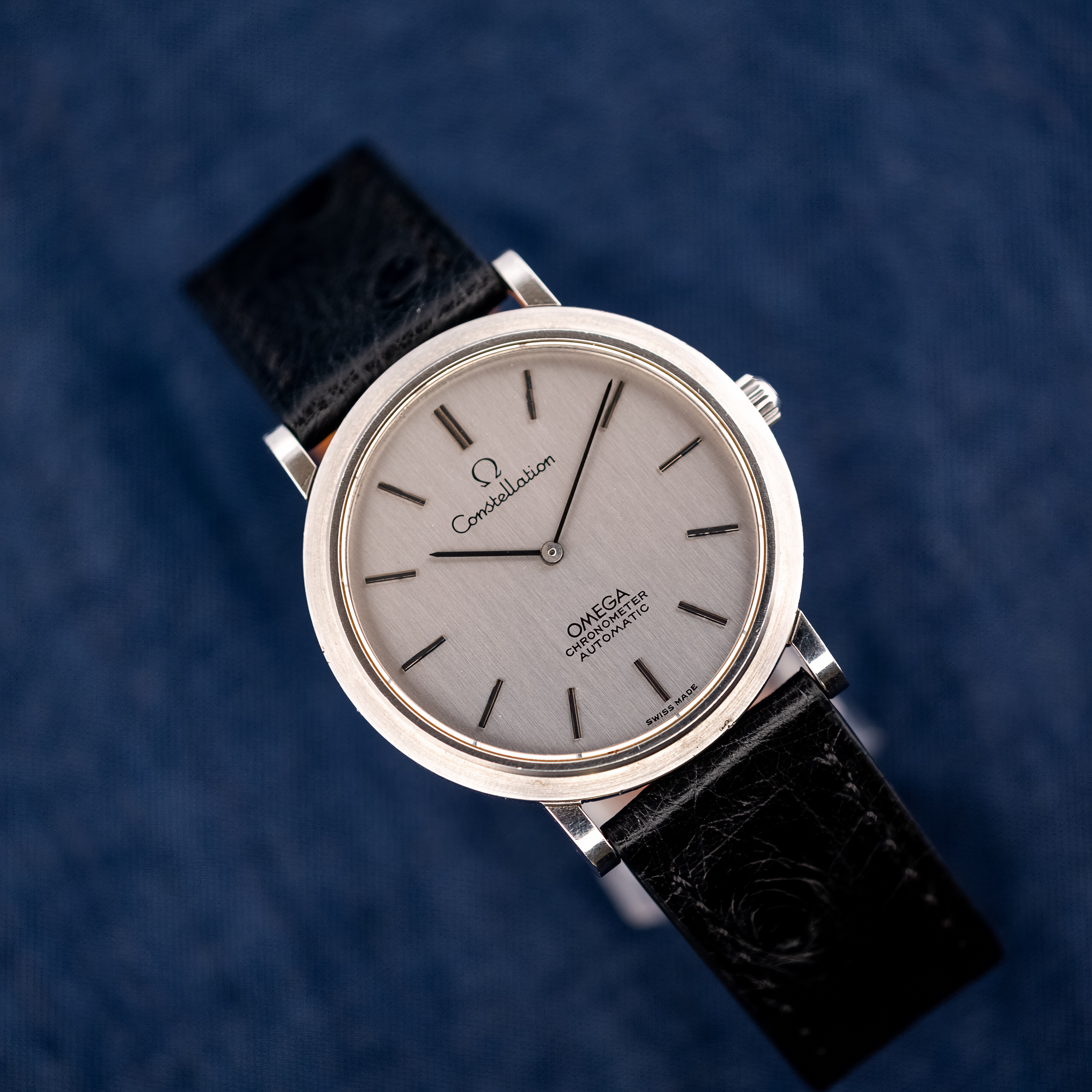
The award is a dress watch built around the 3 mm caliber 712. Formal watches of the period normally skipped the sweep seconds, so the evenly brushed silver dial carries just an hour hand, a minute hand, baton indexes with a double baton at twelve, and CHRONOMETER printed beneath the Omega name. Fine scratches and a few small nicks mark the case and bezel, and black ostrich leather supplies the strap.
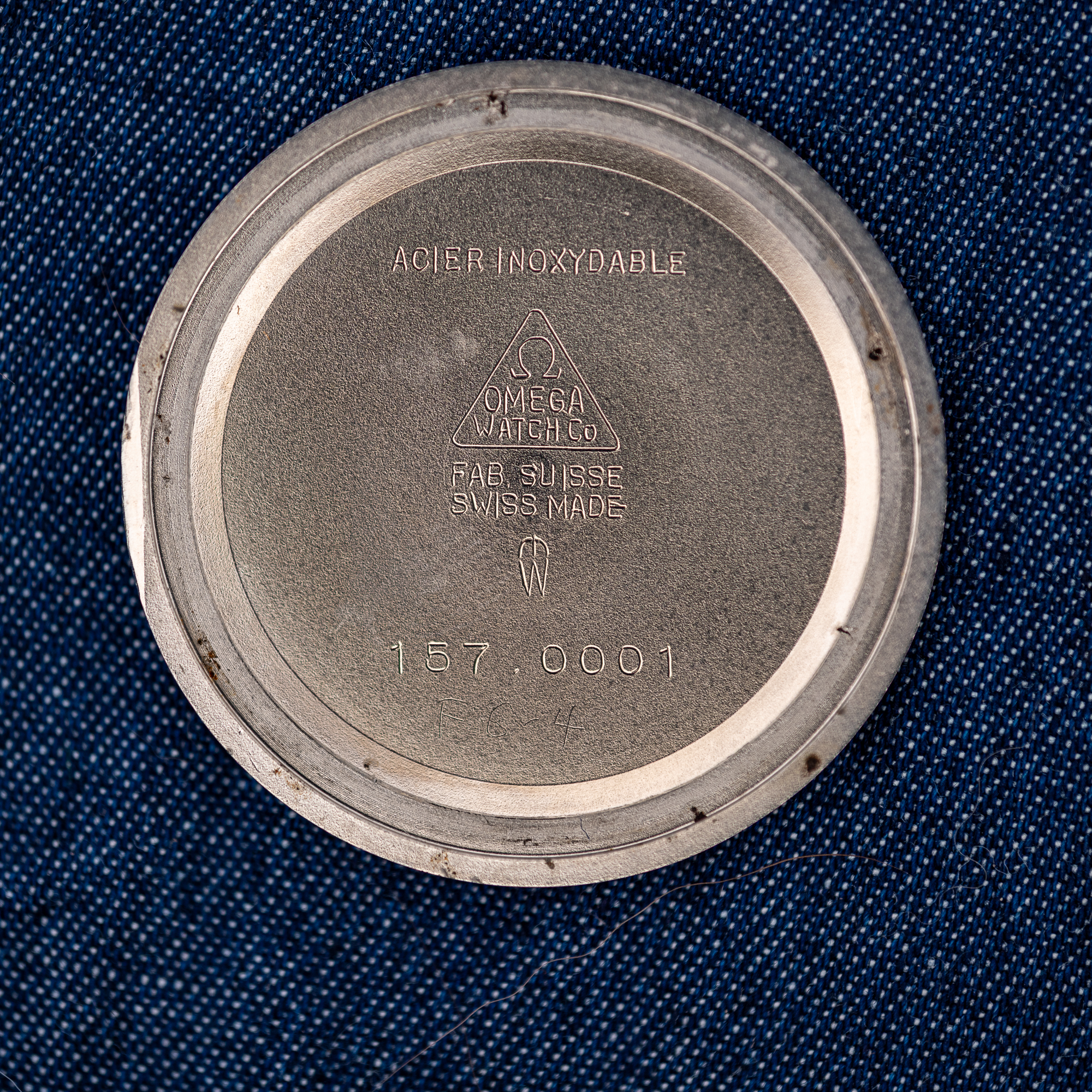
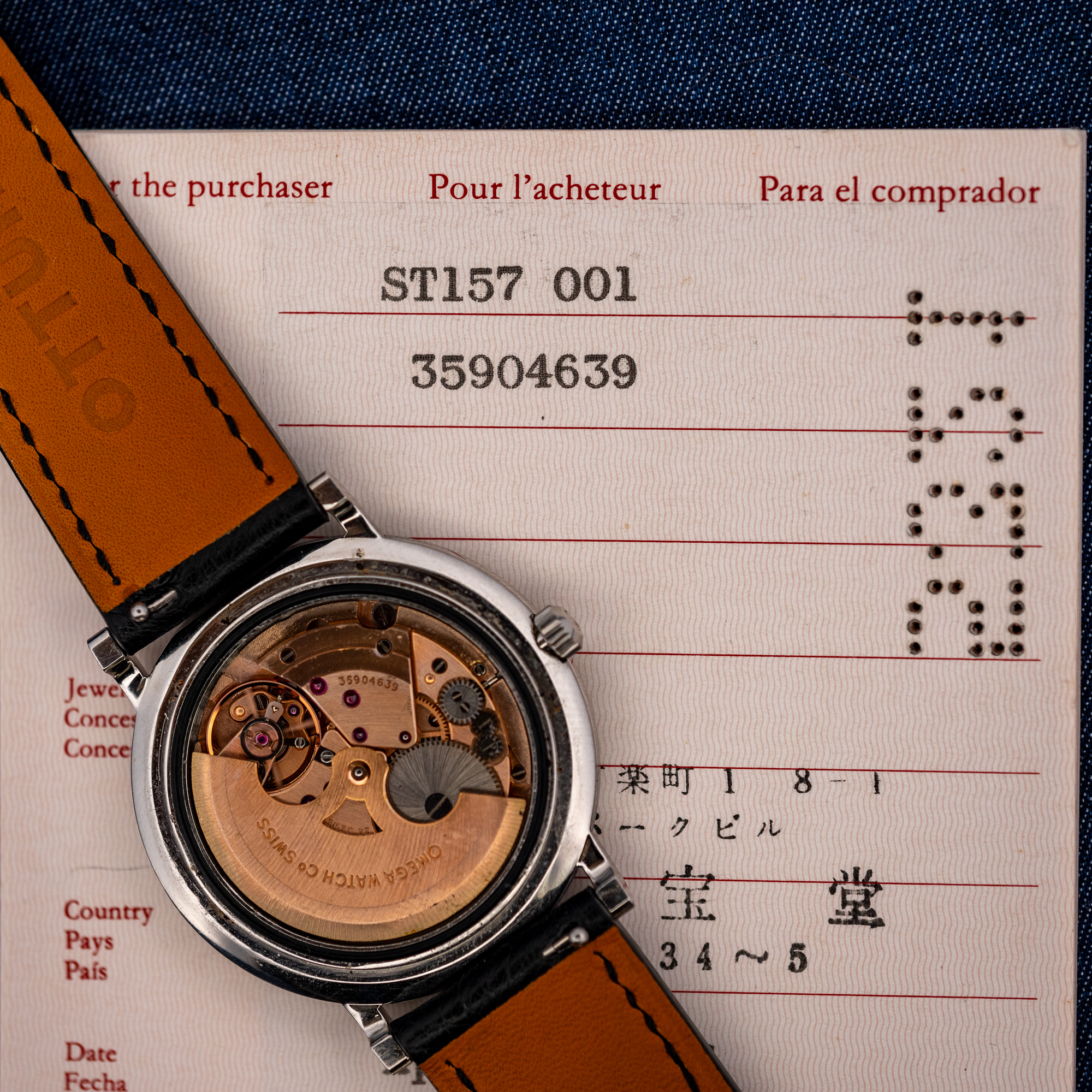
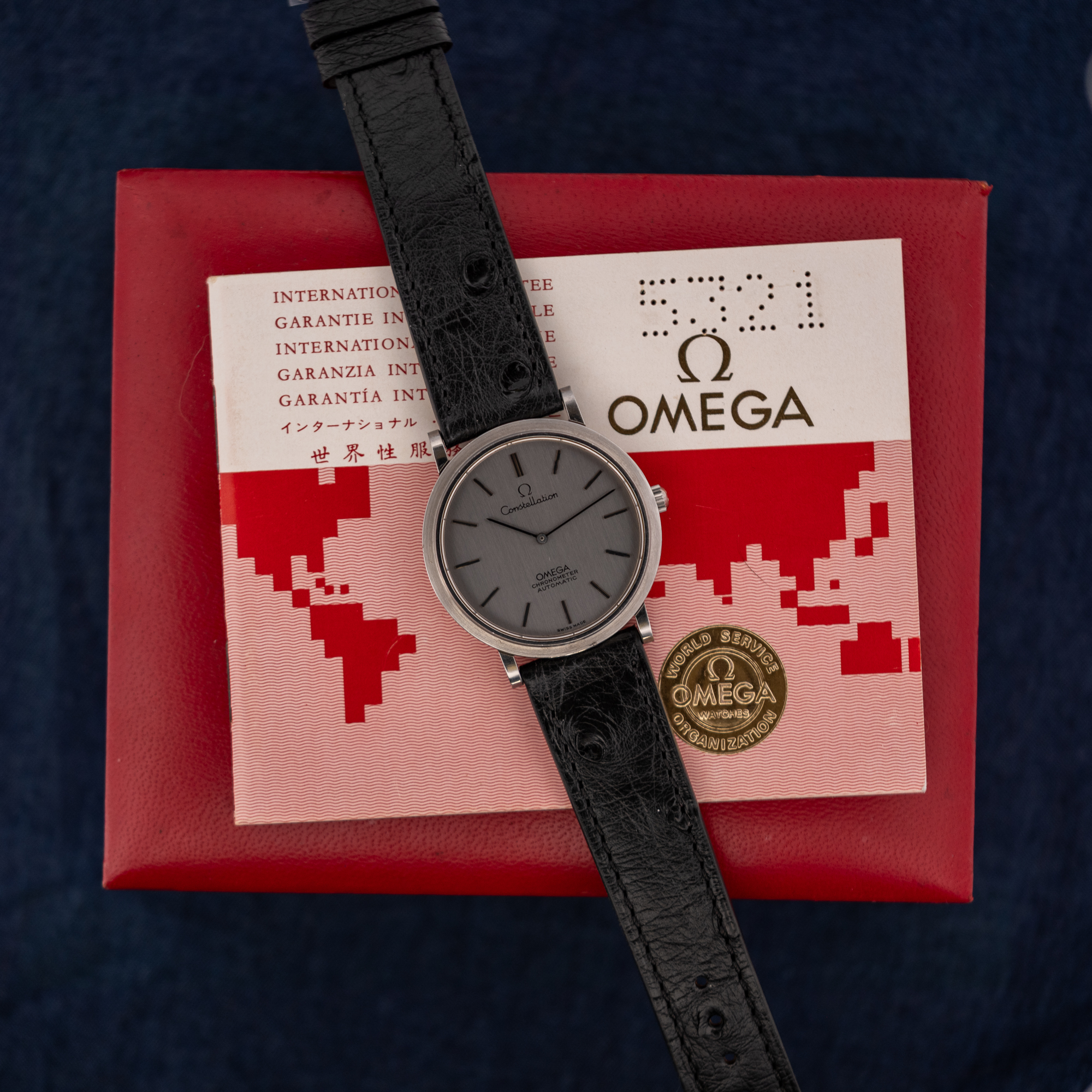
This watch comes with its Omega International Guarantee, filled in for reference ST157 001 and movement number 35904639, the same number stamped on the movement itself, beside a jeweler’s stamp in Japanese. Its printed headings address the purchaser in English, French and Spanish. That matching number ties the paper to this particular watch rather than to the reference in general. The paper and the movement also keep different calendars: the movement number belongs to Omega’s early-1970s range and dates its manufacture, while a guarantee records the sale. This one is dated Apr. 1, 1981.