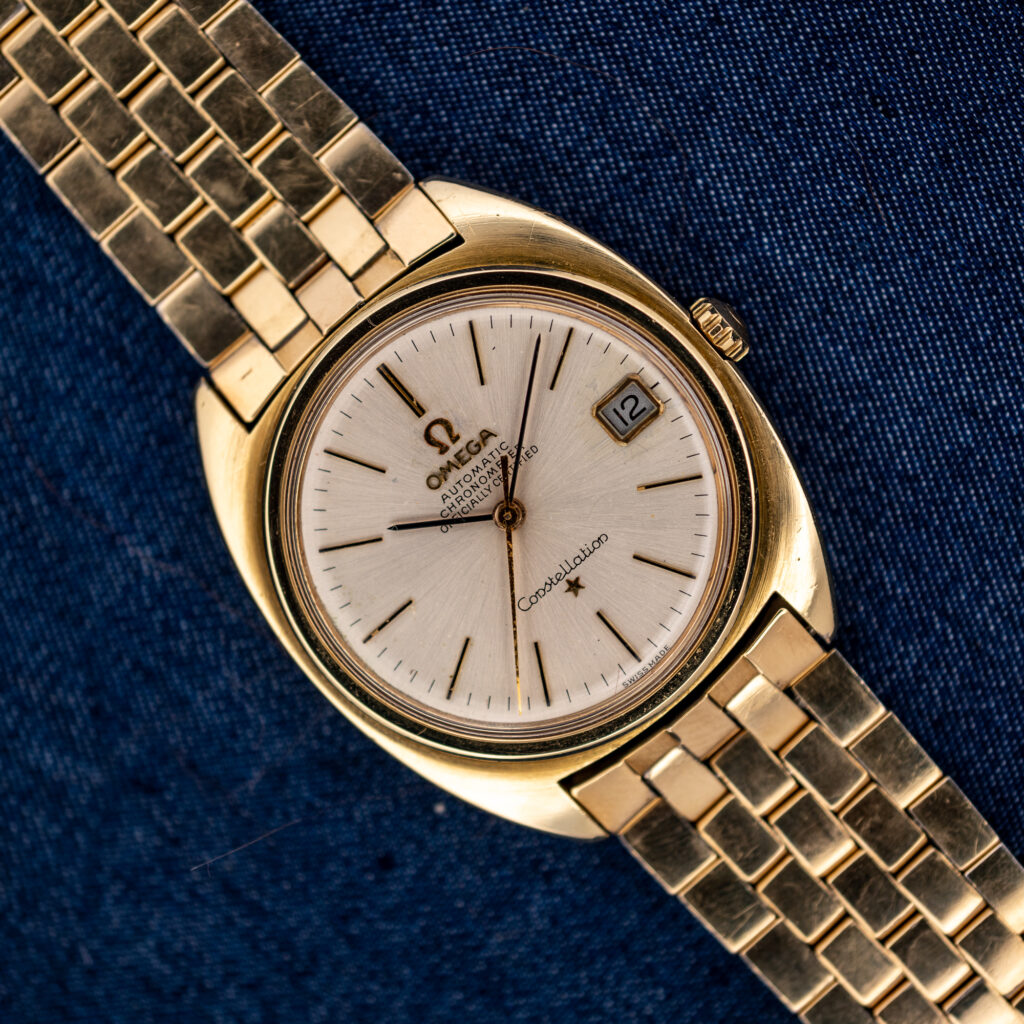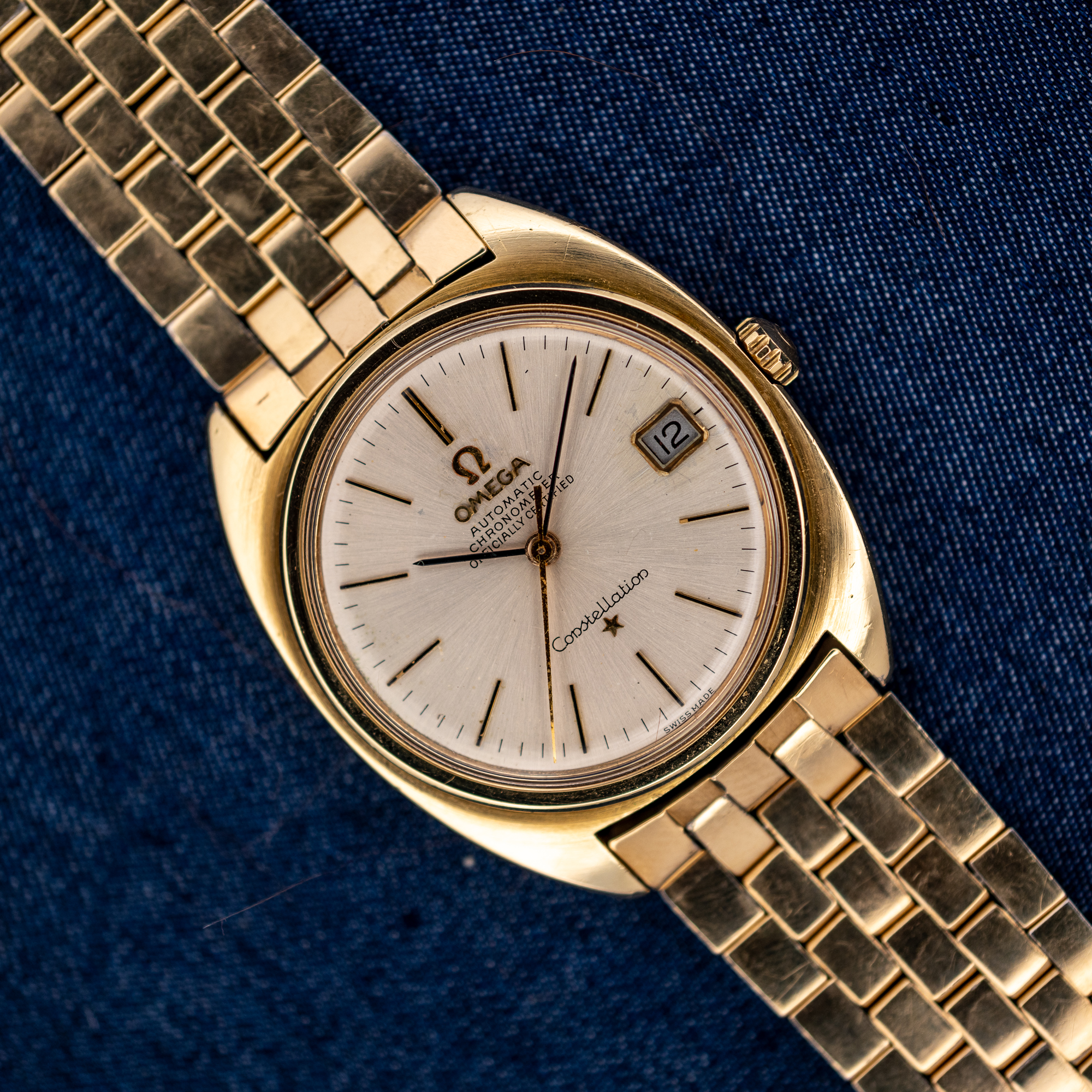
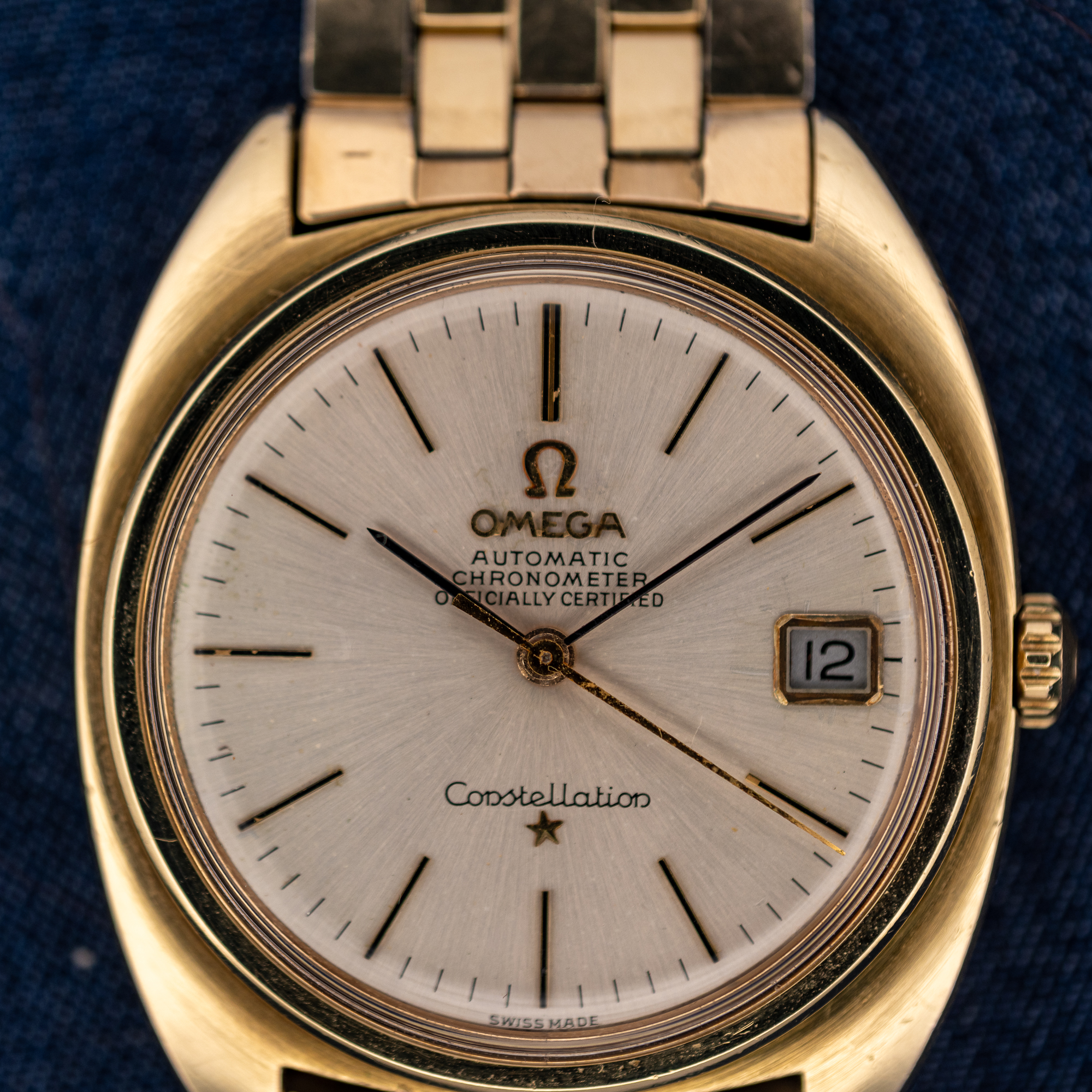
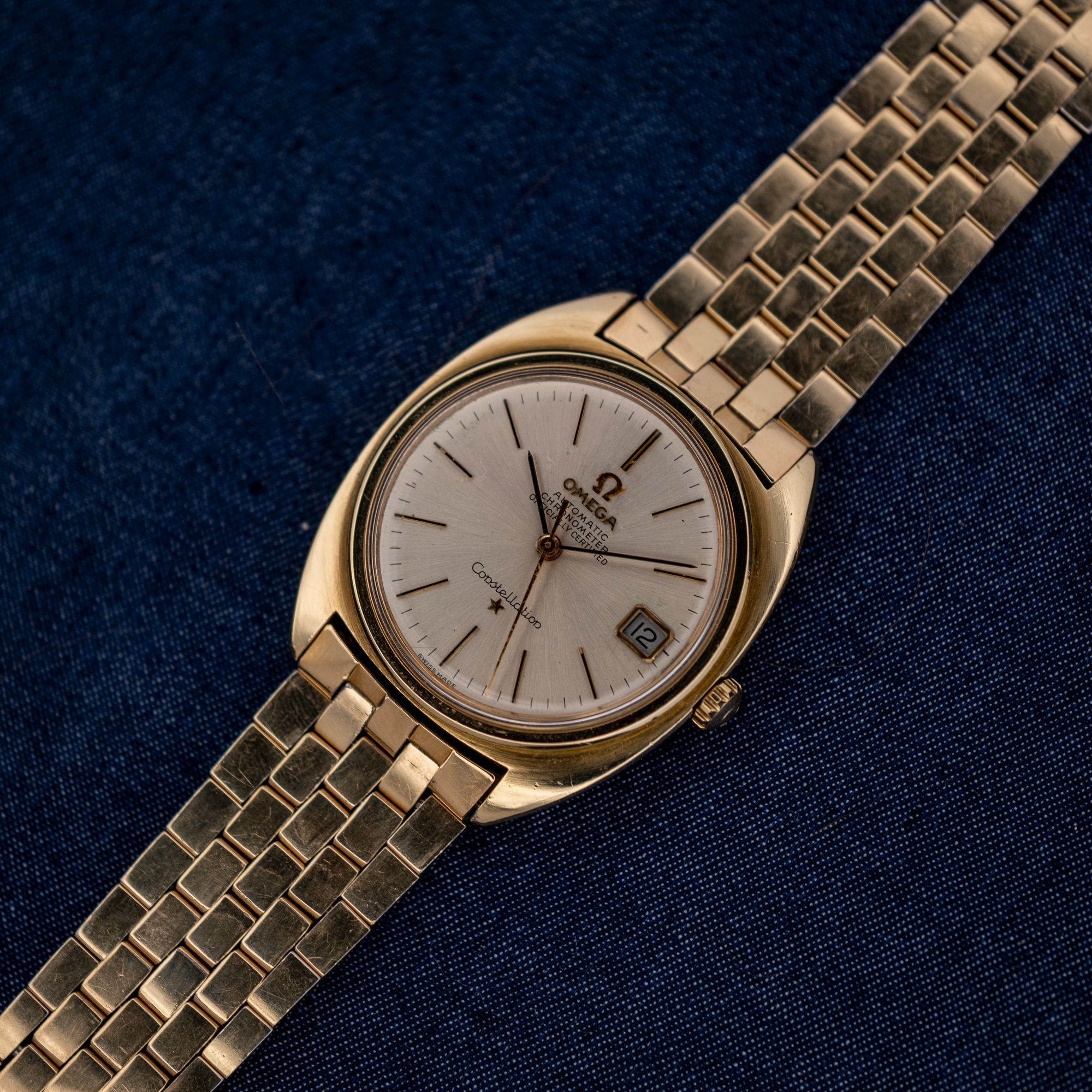
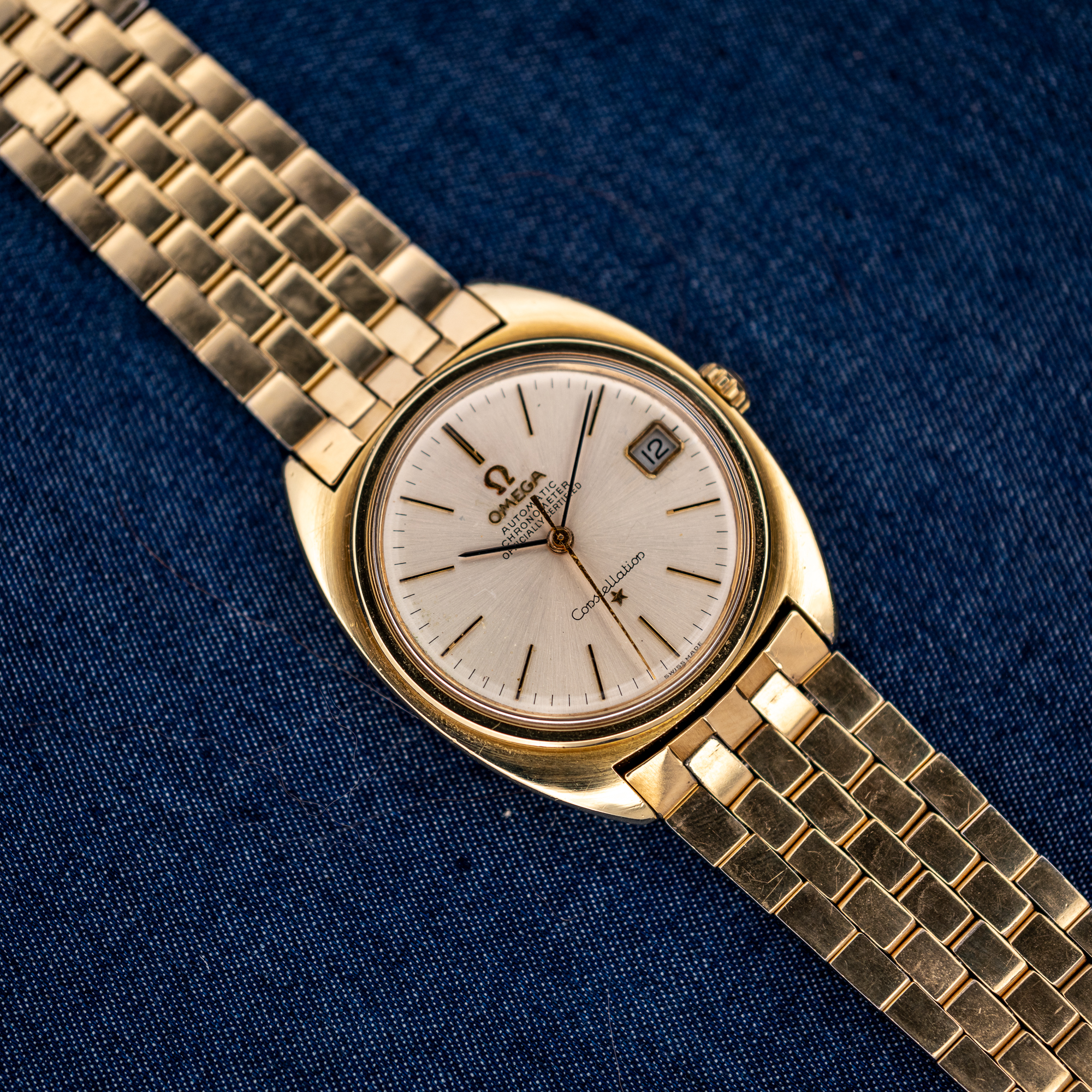
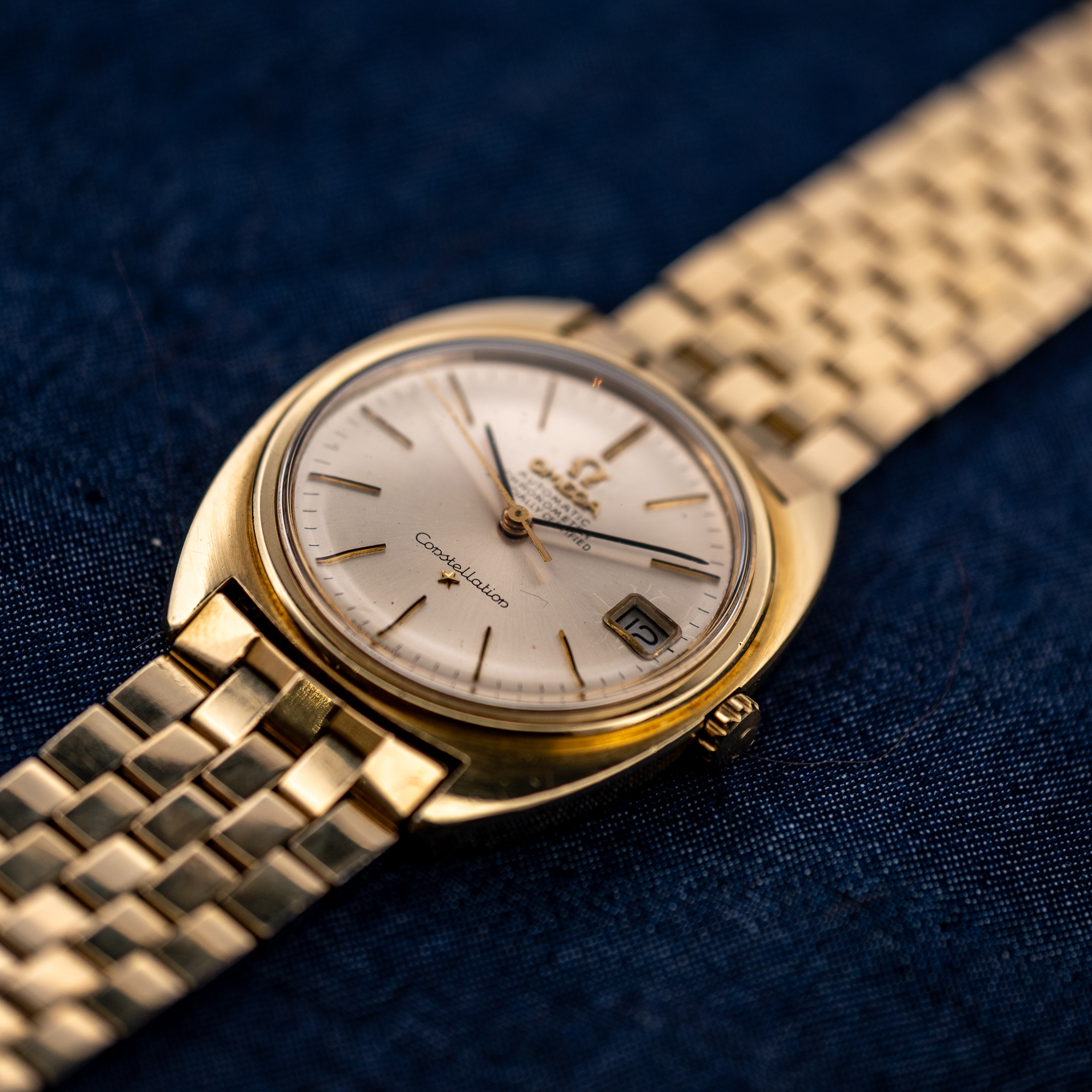
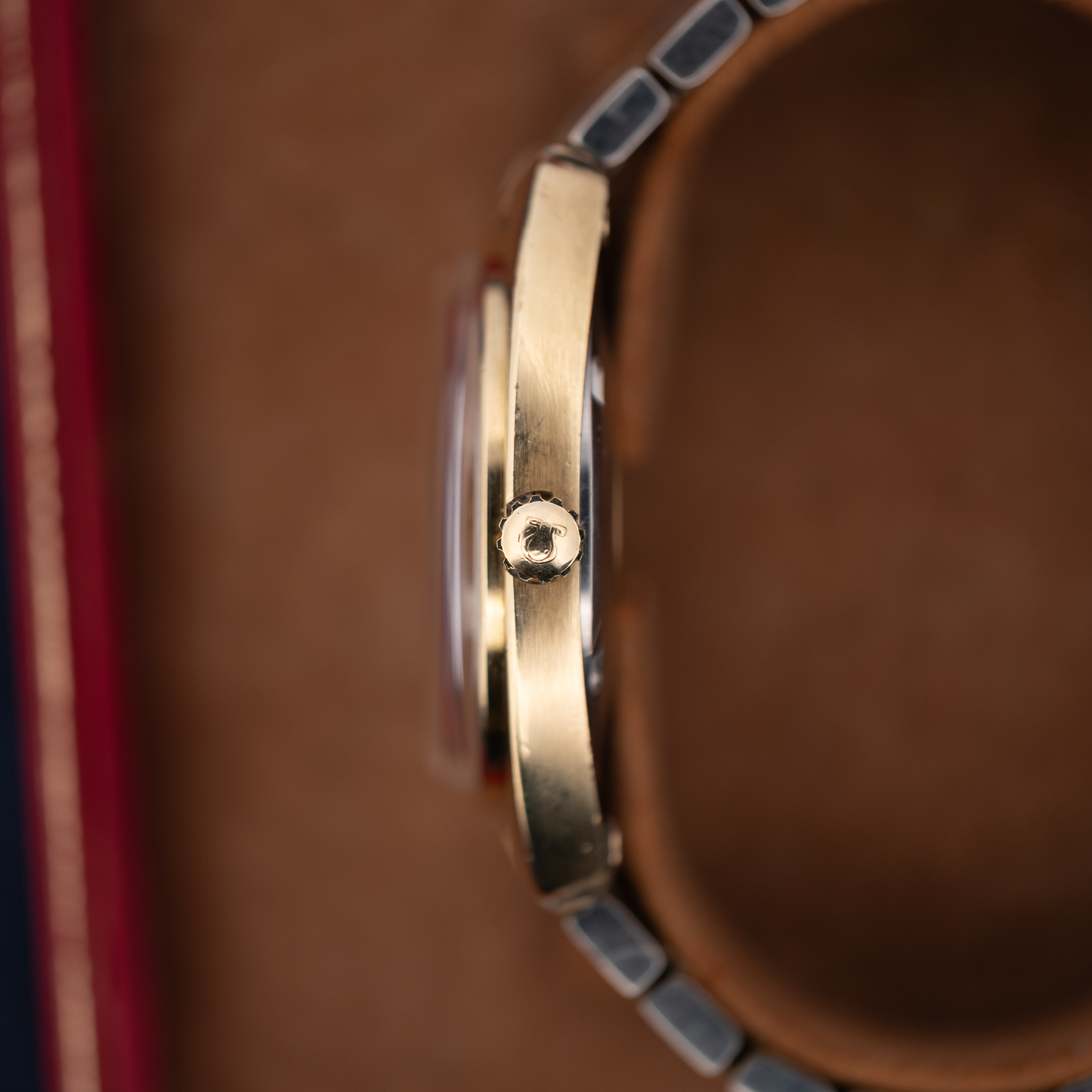
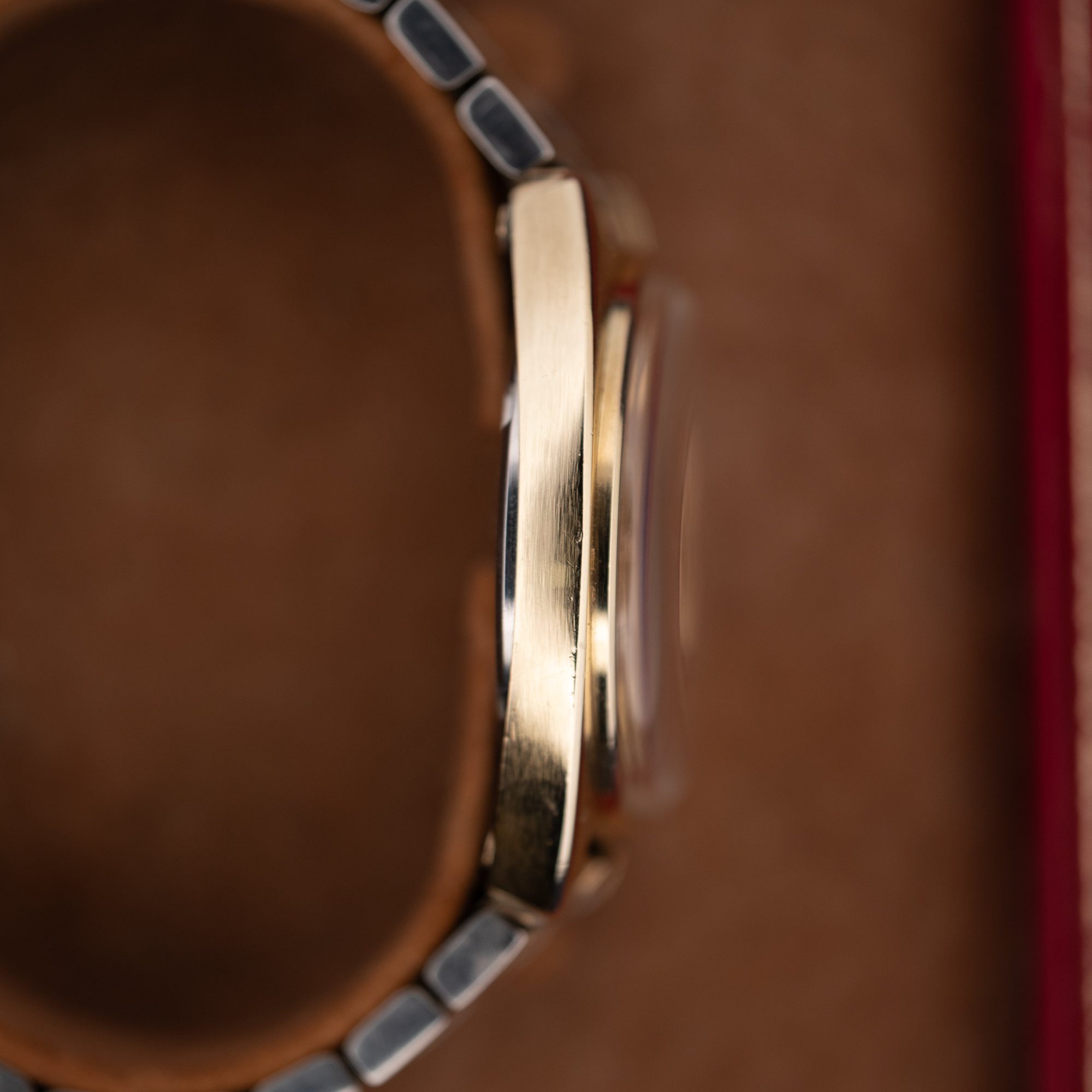



Seen from above, each flank of this case bows outward like a letter C, and the two curves sit back to back with the dial between them. Omega introduced the shape in 1964 as a clean break from the Constellation’s earlier look. The Omega Constellation 168.017 is the version that followed in 1966, built around caliber 564. Because the outline runs longer than it is wide, the 35mm case, 40.5mm from lug to lug, wears larger than its diameter suggests.
The case came from Gérald Genta. He had started out traveling Switzerland and selling designs for as little as 10 Swiss francs apiece, and he was still working freelance when Omega asked him in 1959 to rework the Constellation, its flagship range. The C-shape carries the line of the case straight into the lugs. The same hand later drew the Royal Oak, in production from 1972, but here the idea stays restrained: brushed shoulders, a slim smooth bezel and lugs that belong to the case rather than hang from it.
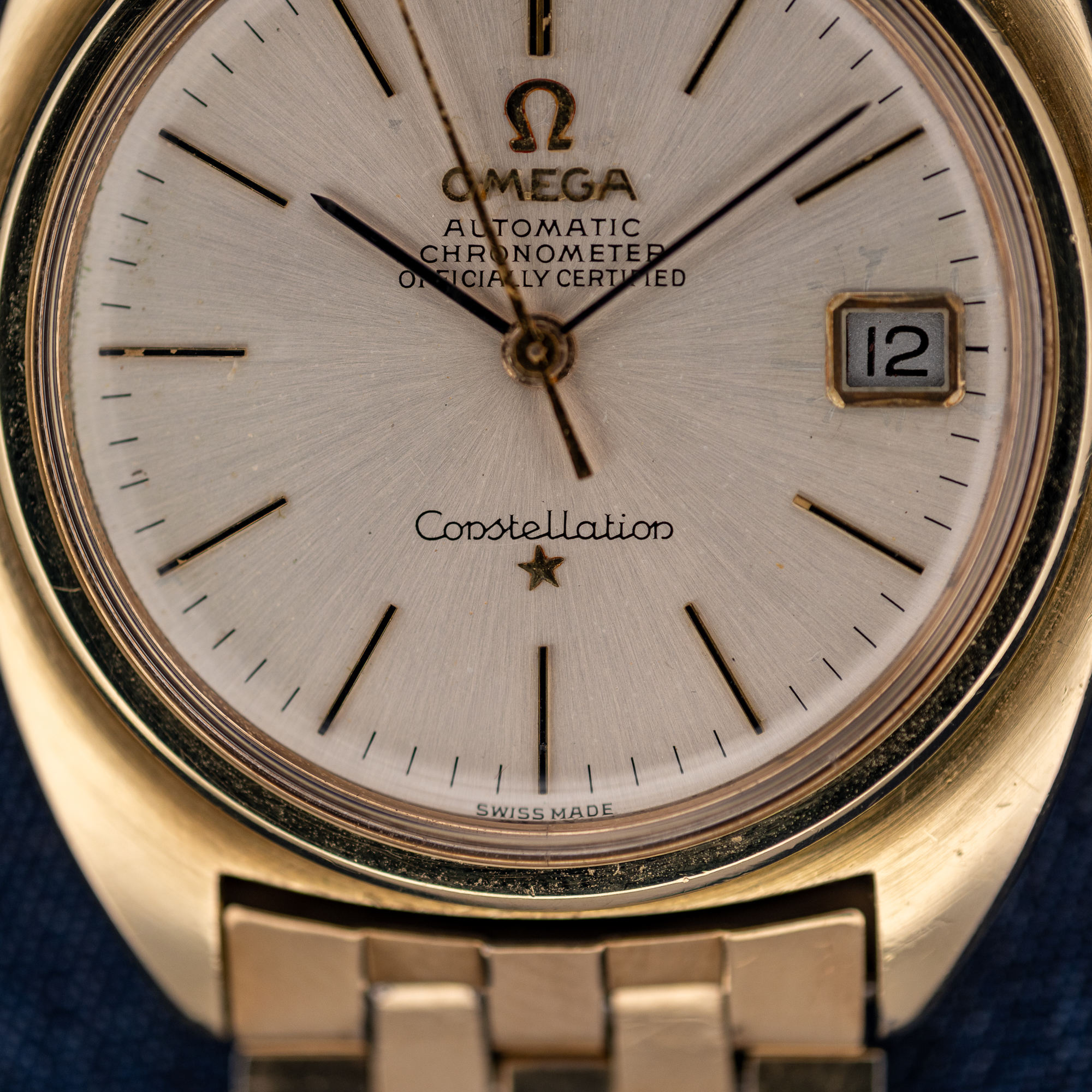
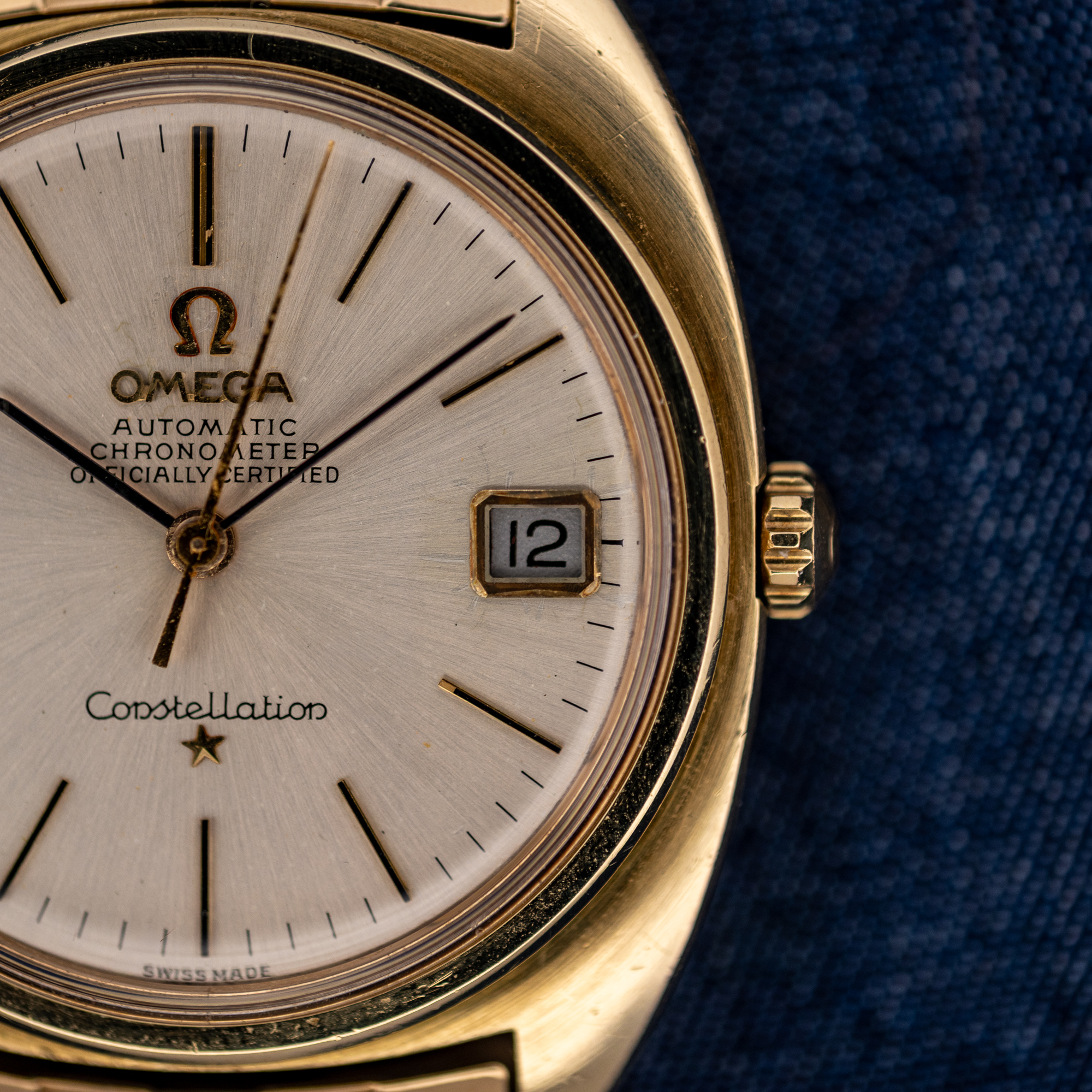
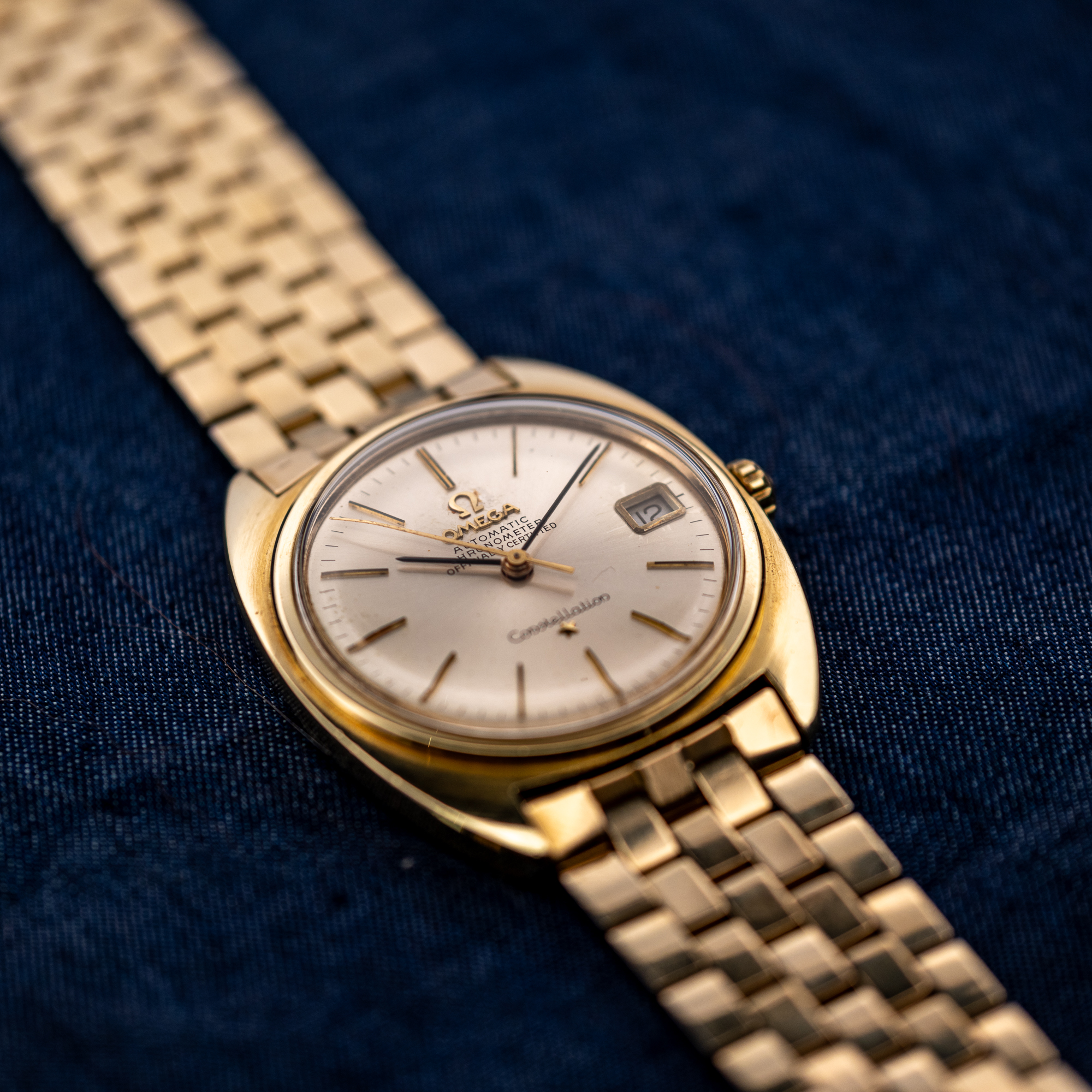
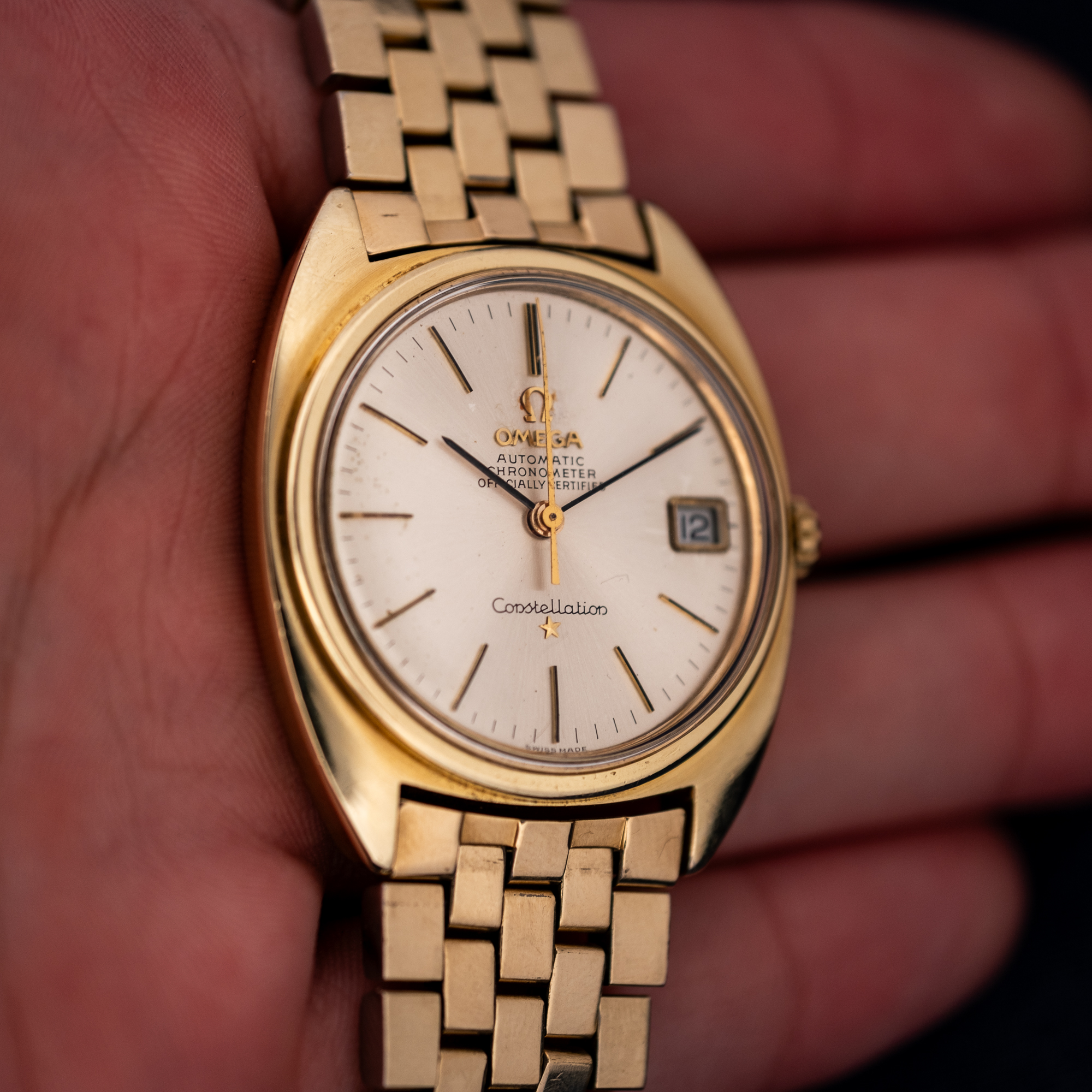
His thinking reaches the dial as well. Each slim baton marker carries a dark line down its center, an idea Genta brought to the Constellation, and narrow stick hands match them. A radial finish covers the silver dial, and the surface stays flat. At three o’clock the date sits in a beveled, framed window, the same frame Omega gave its Constellation date models of the period. A few small spots mark the dial, and the hands show some mottling.
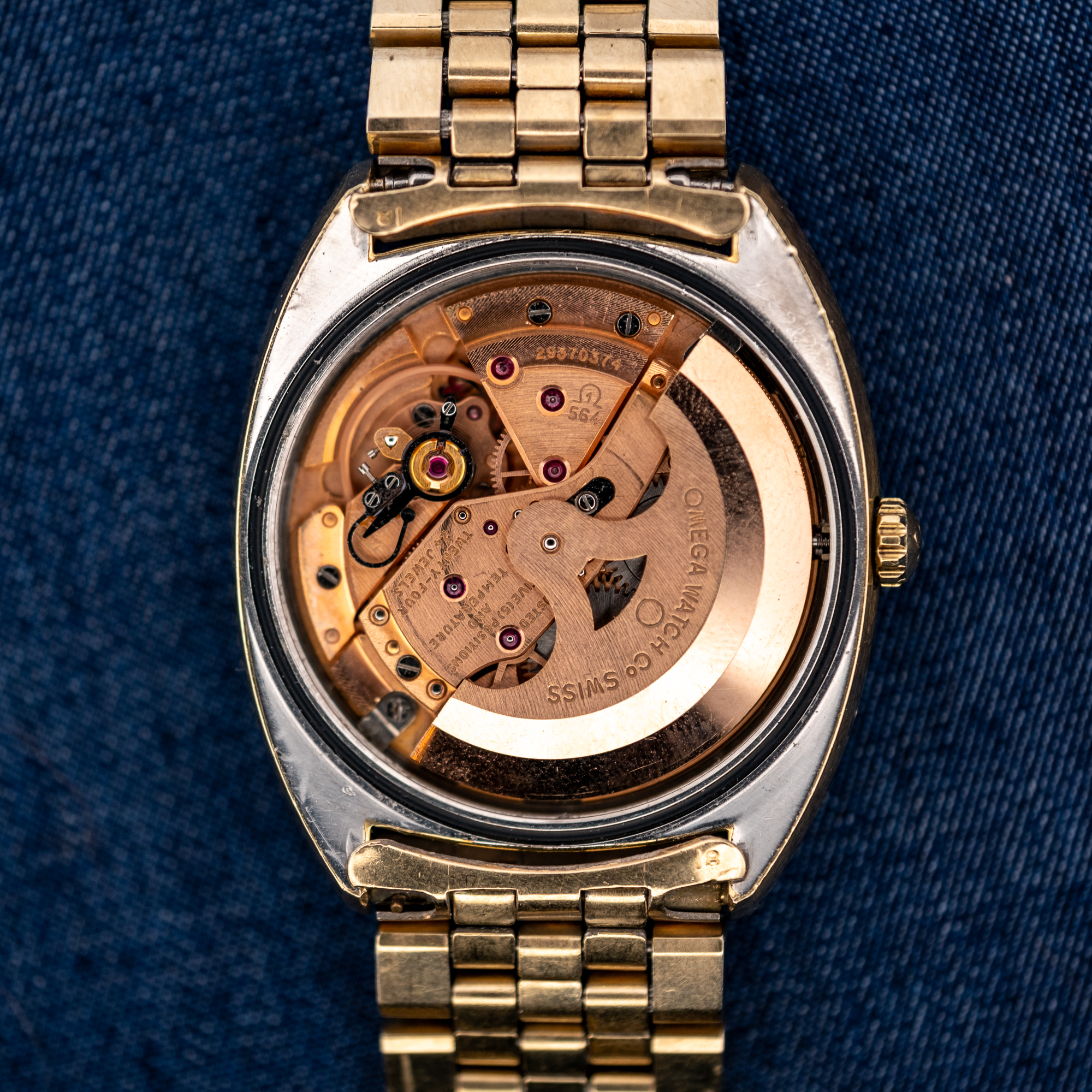
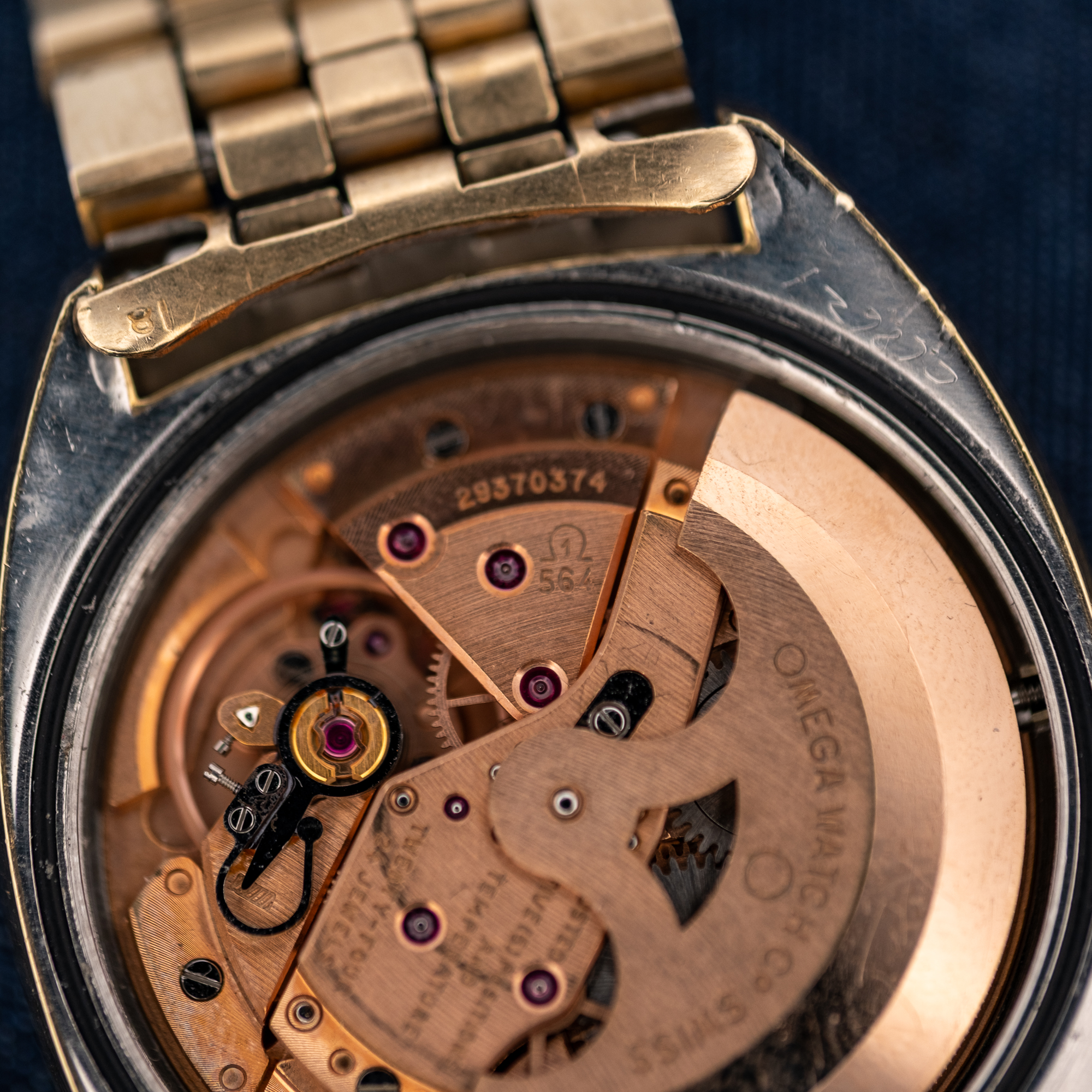
The movement is what sets the 168.017 apart from the 168.009 that preceded it. Both use 24-jewel automatic chronometer calibers, and the dial here carries the officially certified chronometer wording, but the earlier 561 could only change its date by moving the hands. The 564 gives that job to the crown: one pull to the second position and one push home, and the date advances a day. After a weekend off the wrist, the right date is a few tugs away rather than a slow crawl of the hands.
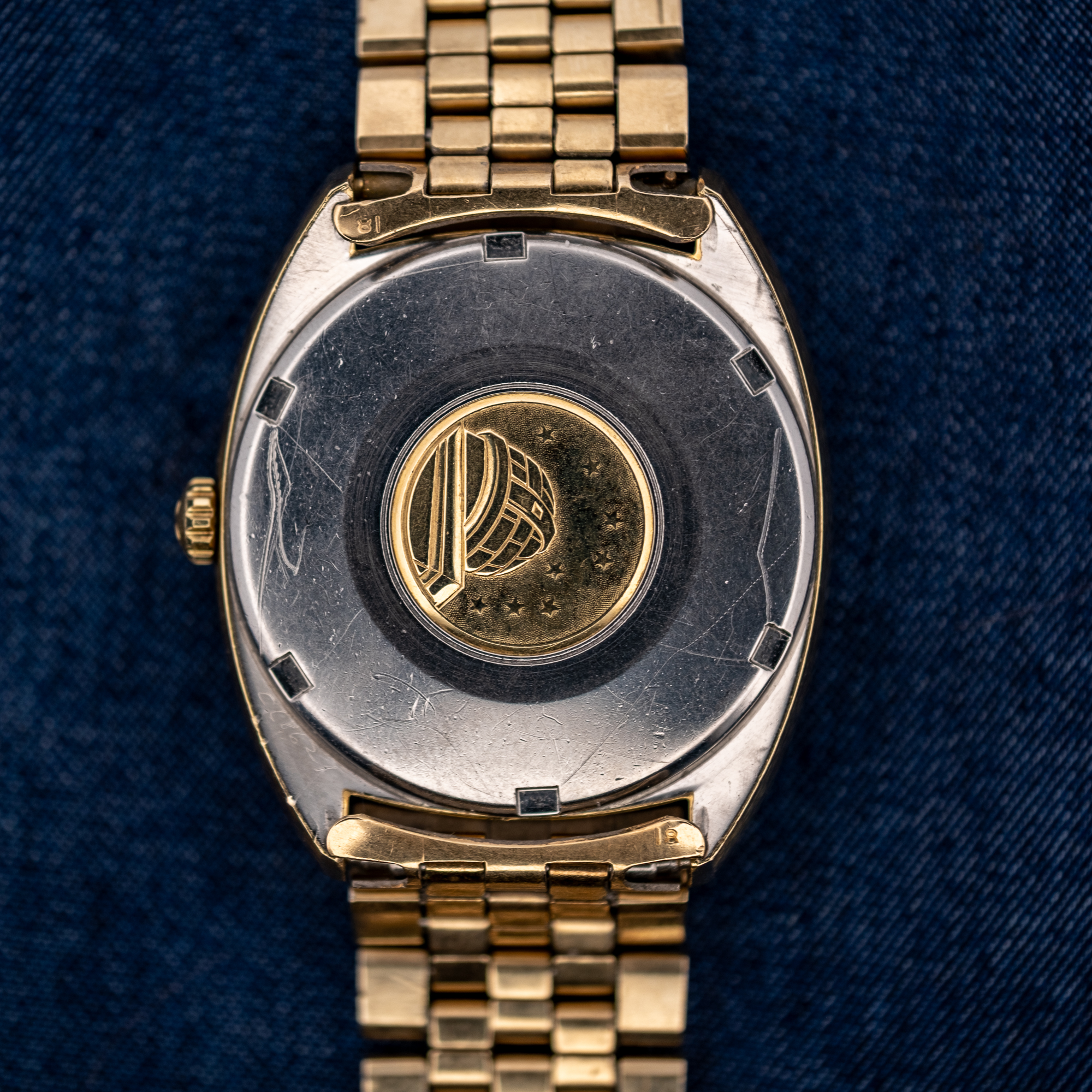
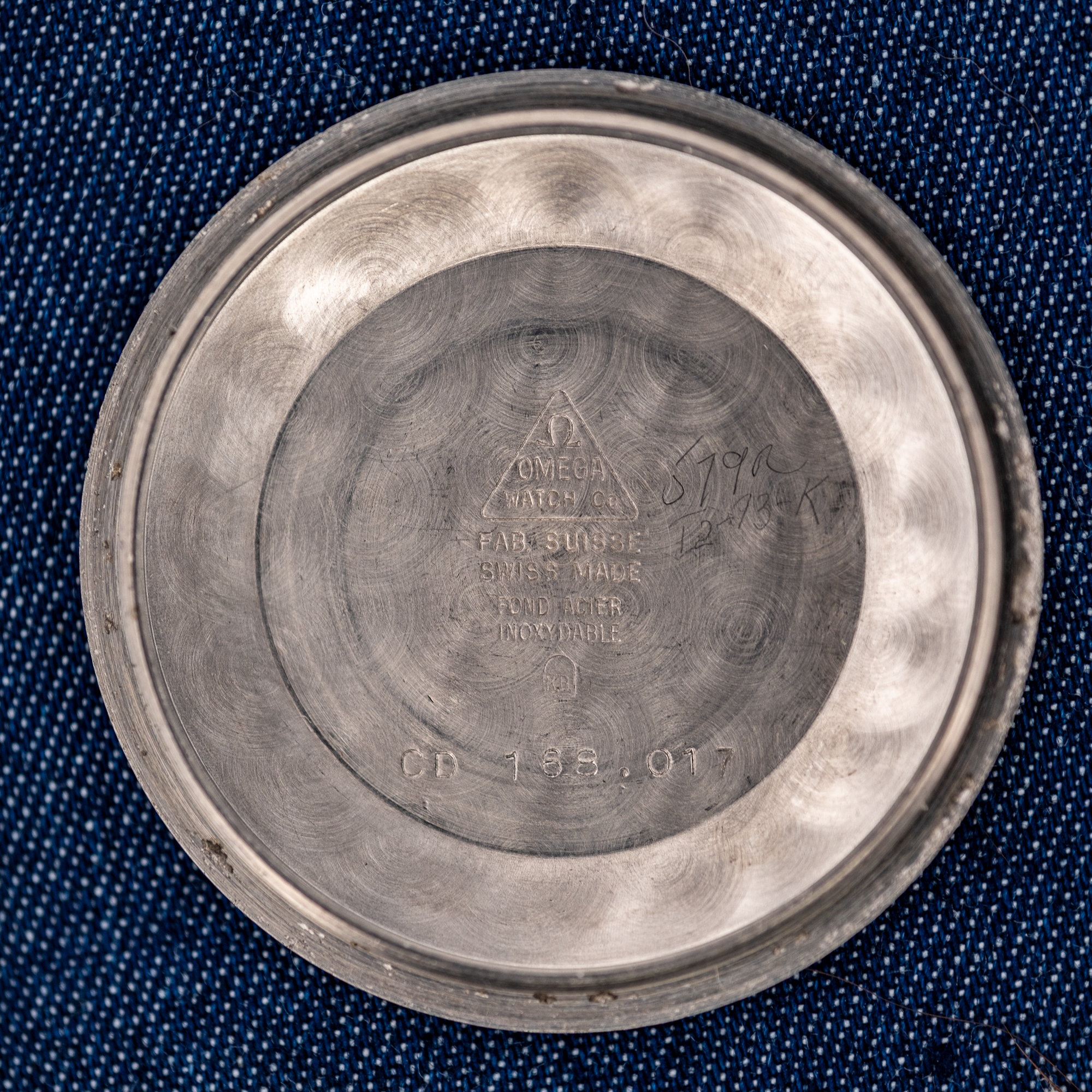
Inside the screw-down back, the reference is stamped CD 168.017. The CD is Omega’s code for a 14k yellow gold cap, a thick layer of 14k gold covering a stainless steel case and a different construction from plating. The same caseback reads “FOND ACIER INOXYDABLE”, French for stainless steel back, so steel sits against the wrist while the gold faces out. On the outside of that back is the Constellation medallion, where eight stars hang over an observatory.
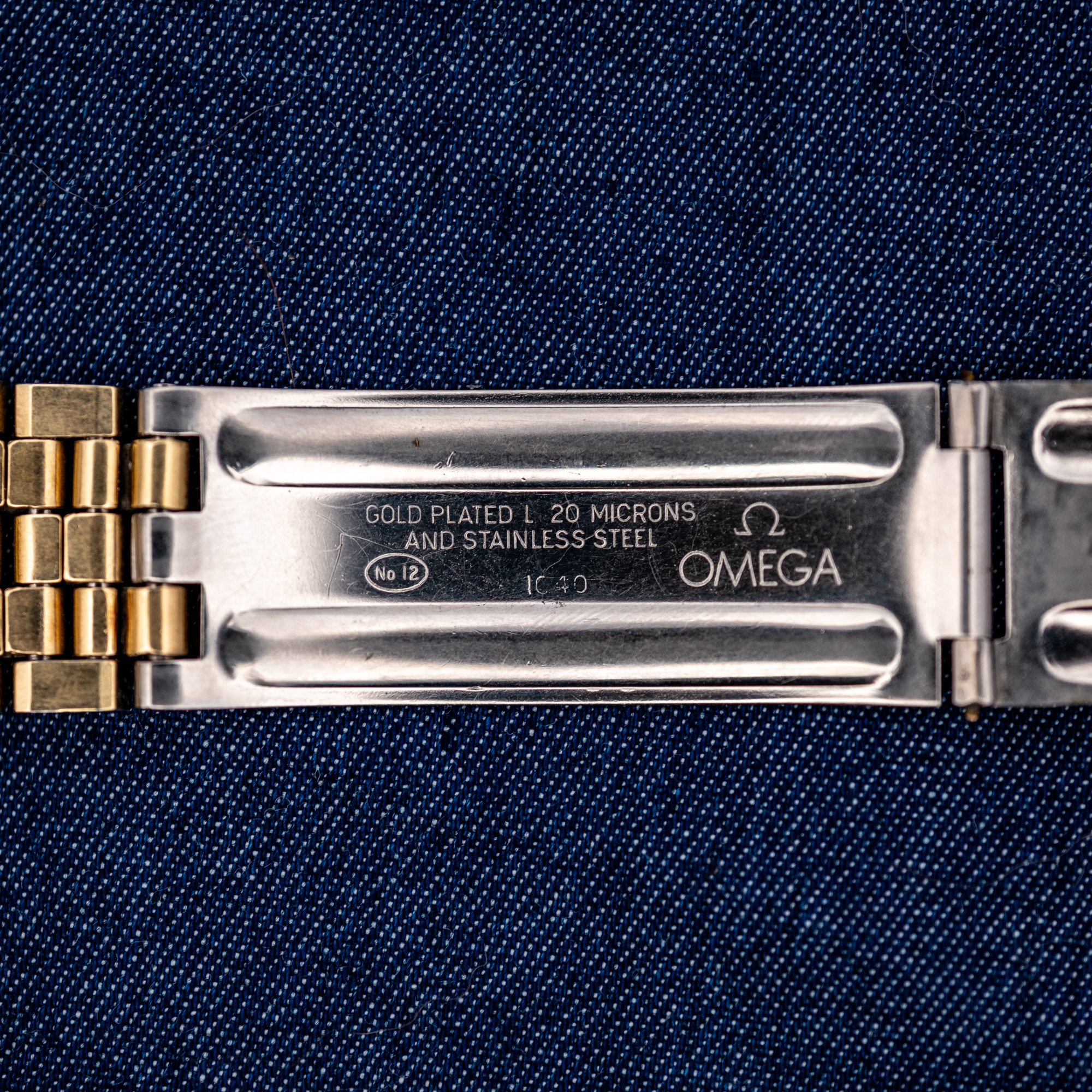
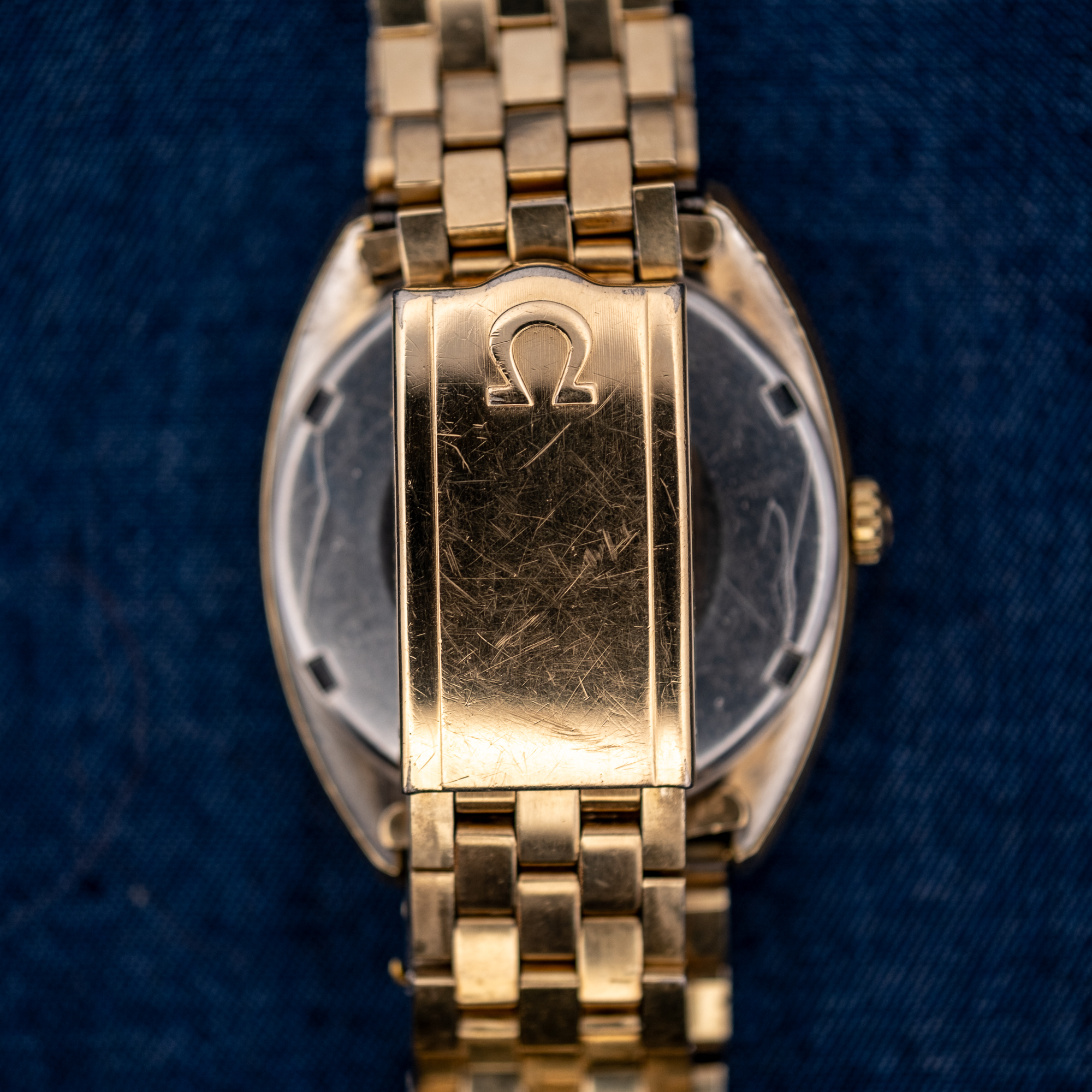
The folding clasp, like the caseback and links, carries fine scratches. Inside, it is signed with the Omega symbol and stamped 1040, the number of one of the two bracelets Omega specified for the 168.017. Collectors call the 1040 the brick, and one look at its rows of rectangular links explains the name.