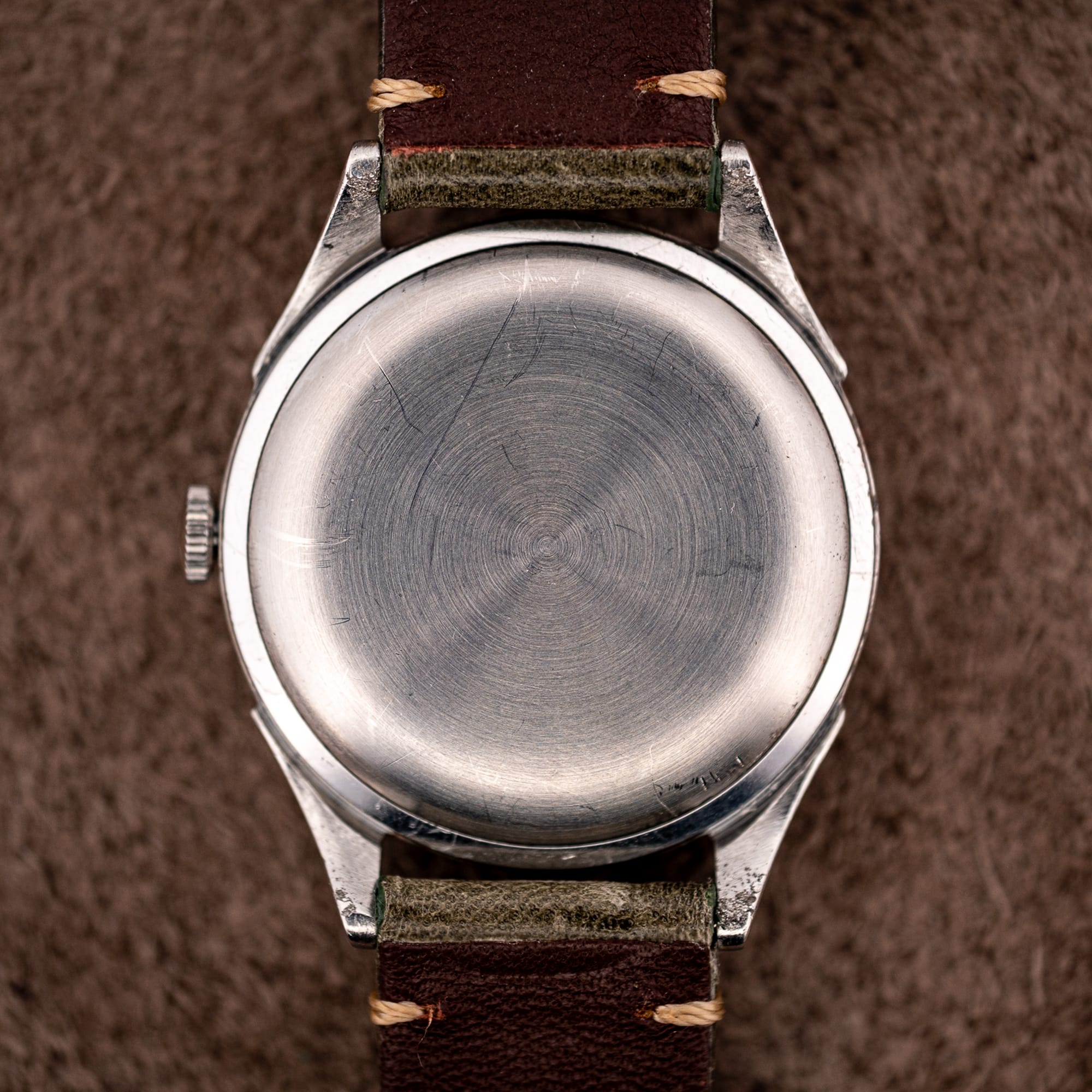
On January 9, 1947, an advertisement in the Indianapolis Times set out what a buyer could choose from and what each one cost. Banner, $29.75. Bulova, $37.50. Benrus, $45.00. De Luxe Elgin, $45.00. Then, at more than twice the Bulova: “Omega Automatic $90.00.” What the difference bought was an Omega automatic bumper, and in 1947 self-winding was still the expensive part of any counter.
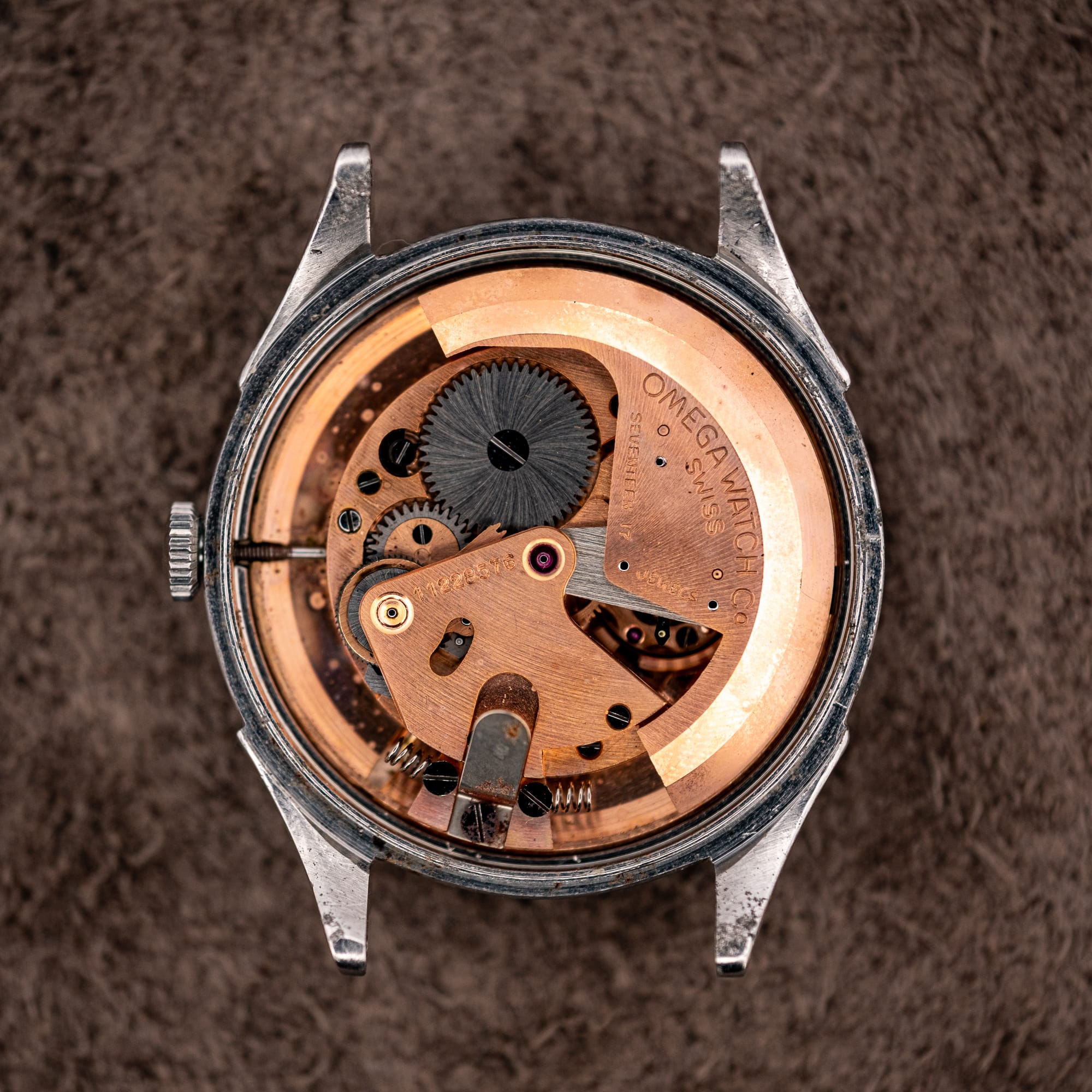
Omega had only had one to sell for about four years. In 1943 it put two automatic calibers into production at once, the 28.10 and the larger 30.10, near enough identical apart from diameter. Neither carried a rotor in the sense the word carries now. The weight traveled a short arc, struck a coiled spring at each end of its run, and rebounded, winding in one direction only and banking 42 hours. Watchmakers call the part a hammer. Everyone else called the watch a bumper, because that is what it did, softly and all day, against the underside of a cuff. Rolex had patented a full-circle rotor back in the early 1930s. Omega stayed with the hammer anyway, on the argument that it sat lower in the case, and by 1948 was advertising its automatic as the world’s thinnest self-winding watch.
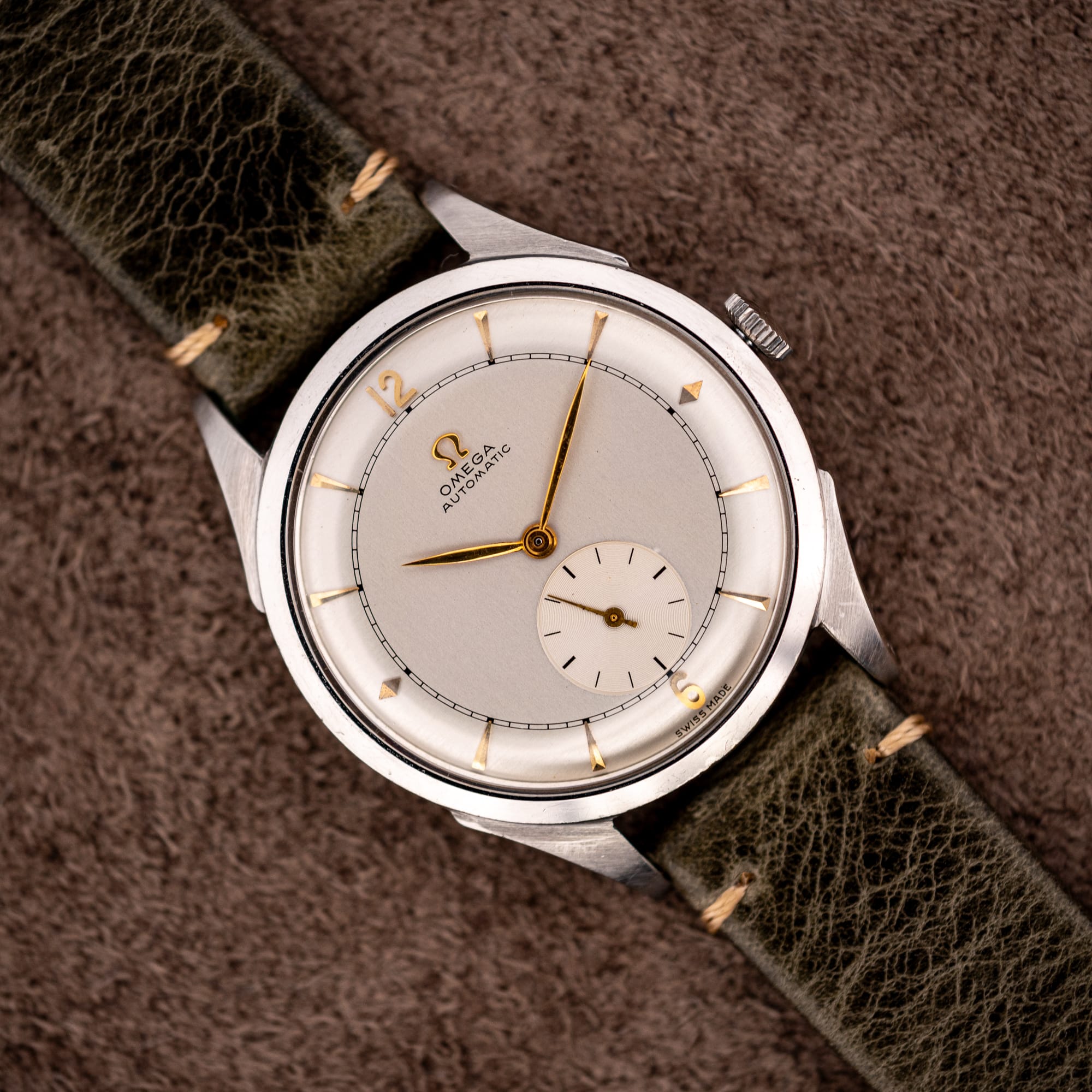
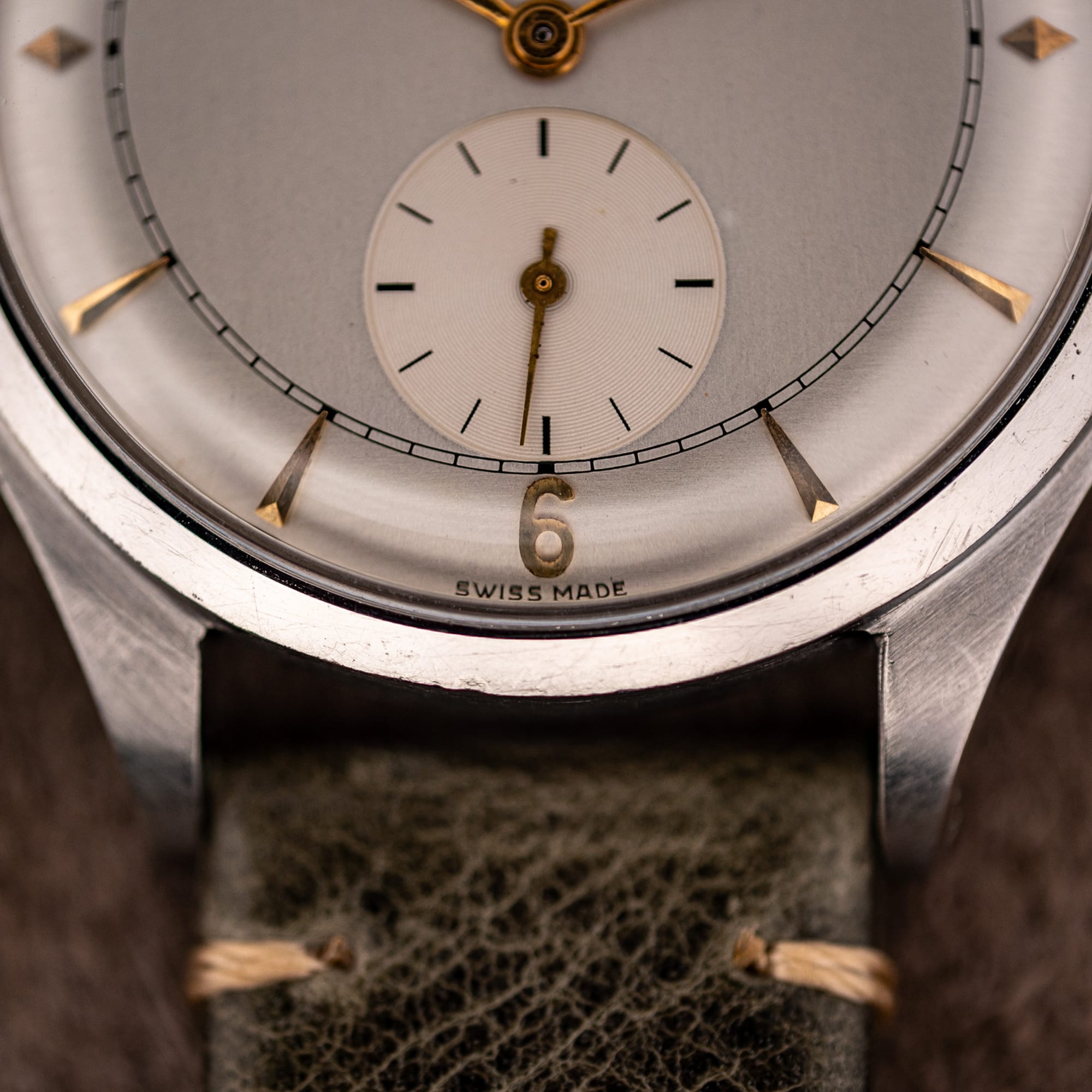
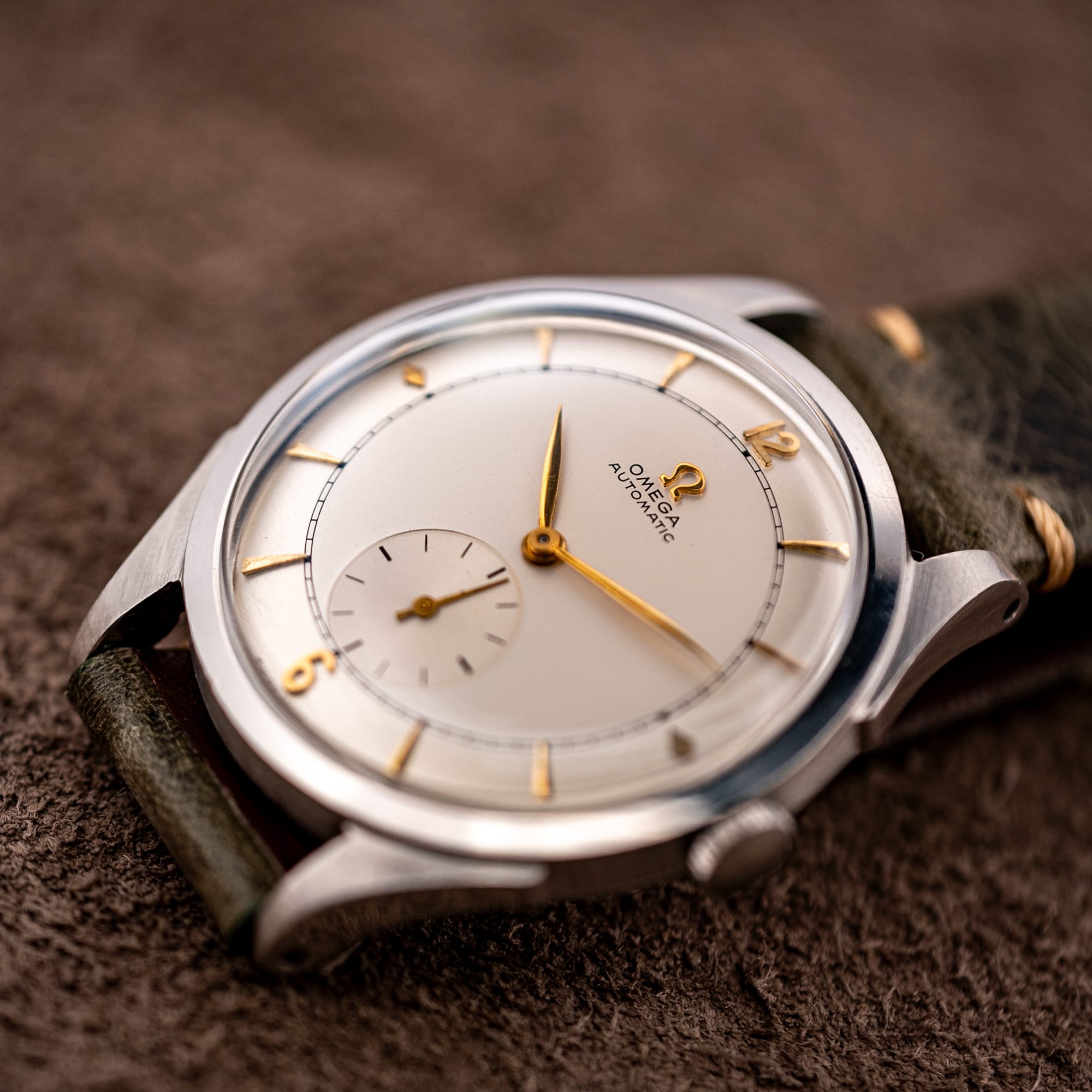
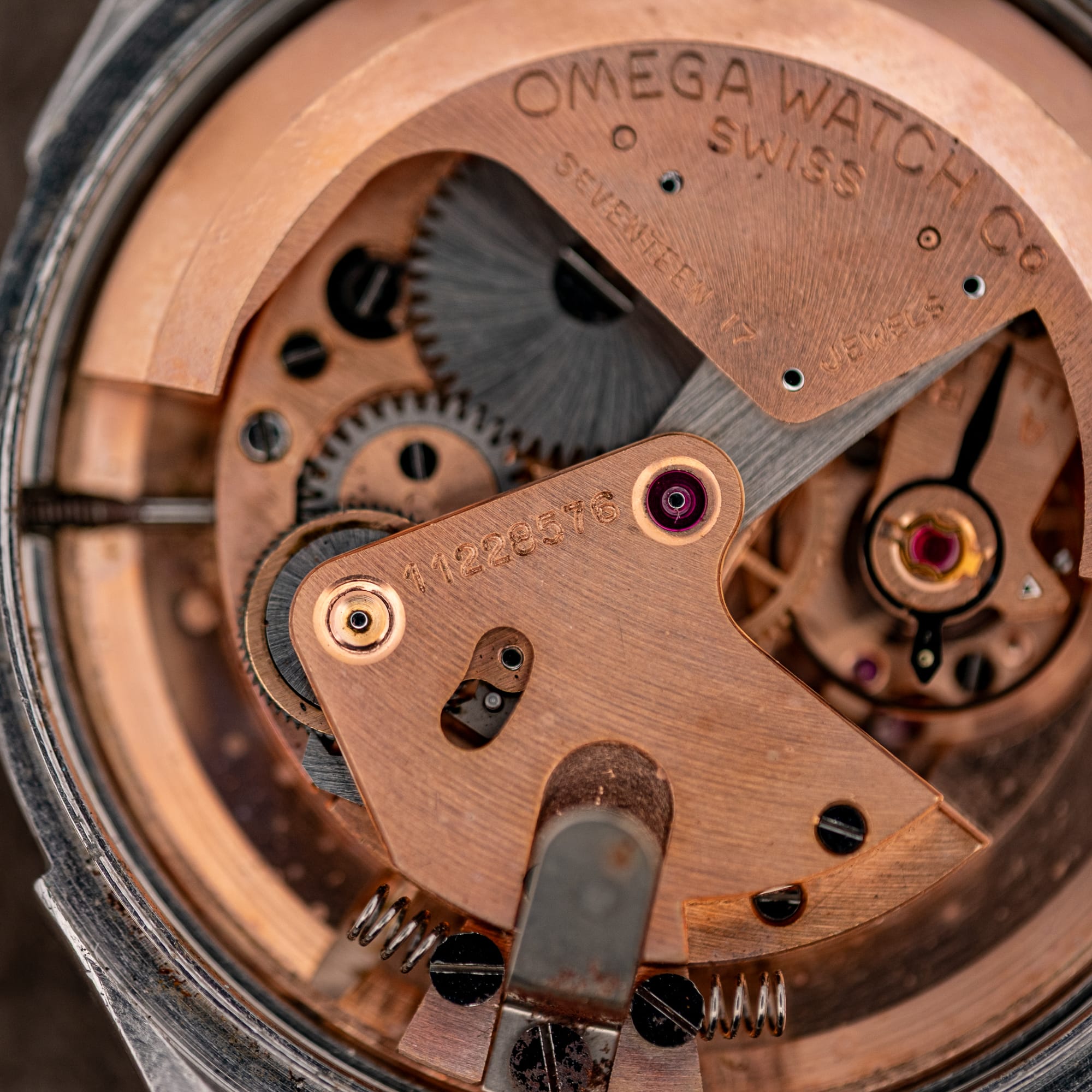
This Omega automatic bumper was built the same year as that advertisement. Its movement serial, 11228576, places production in 1947. Lift the back and we find the two coiled buffer springs sitting in the open at the foot of the plate, the pair the hammer beats against; Omega tucked them out of sight in the redesign that followed. Running its seconds in a small register at six rather than from the center makes this the 28.10 RA PC, the version renumbered caliber 340 when Omega moved to the three-digit system in 1949.
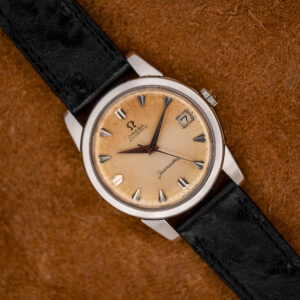
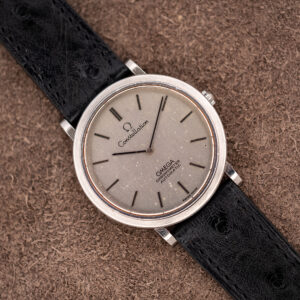
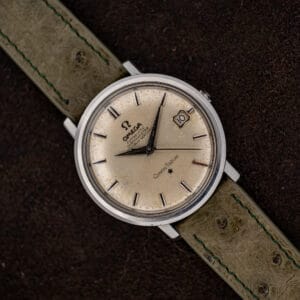
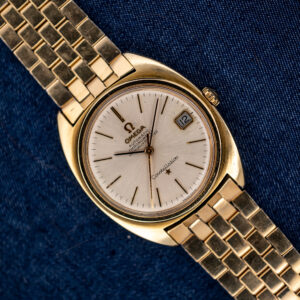
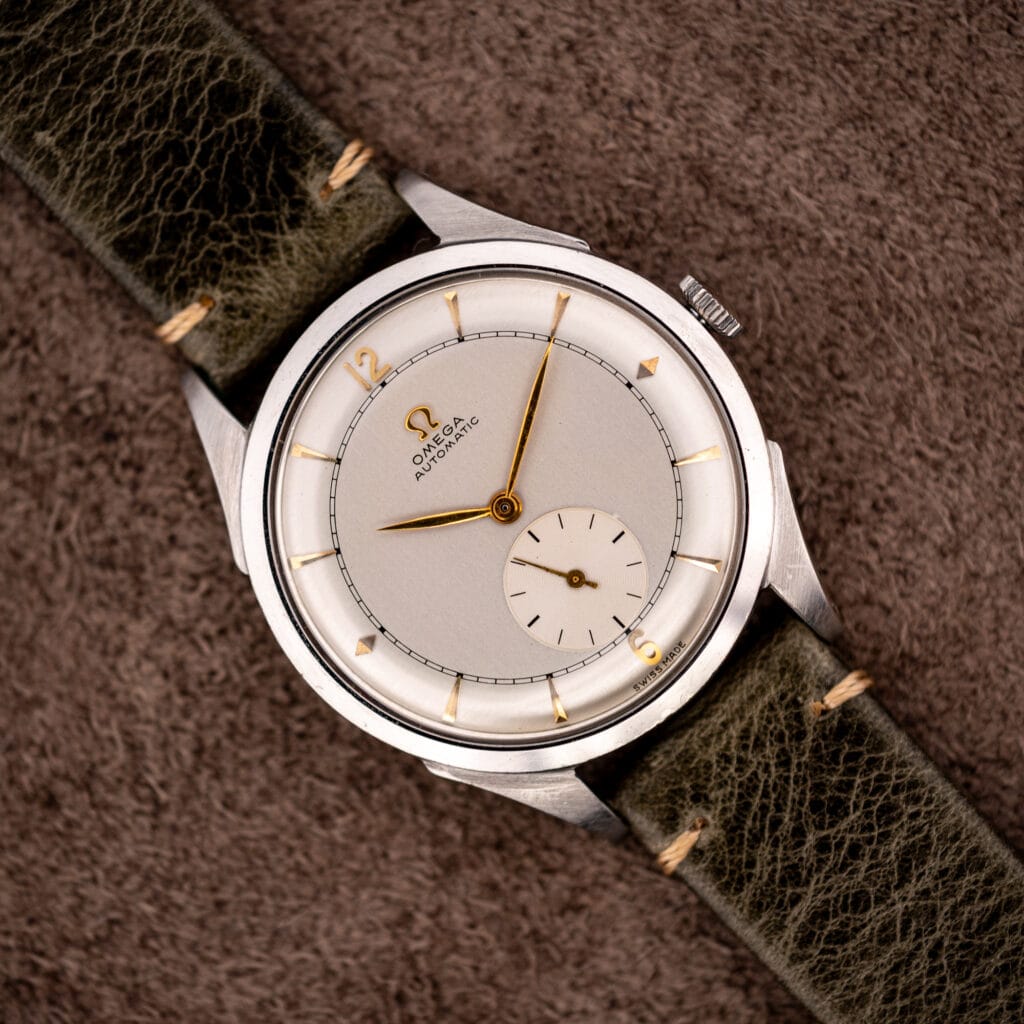
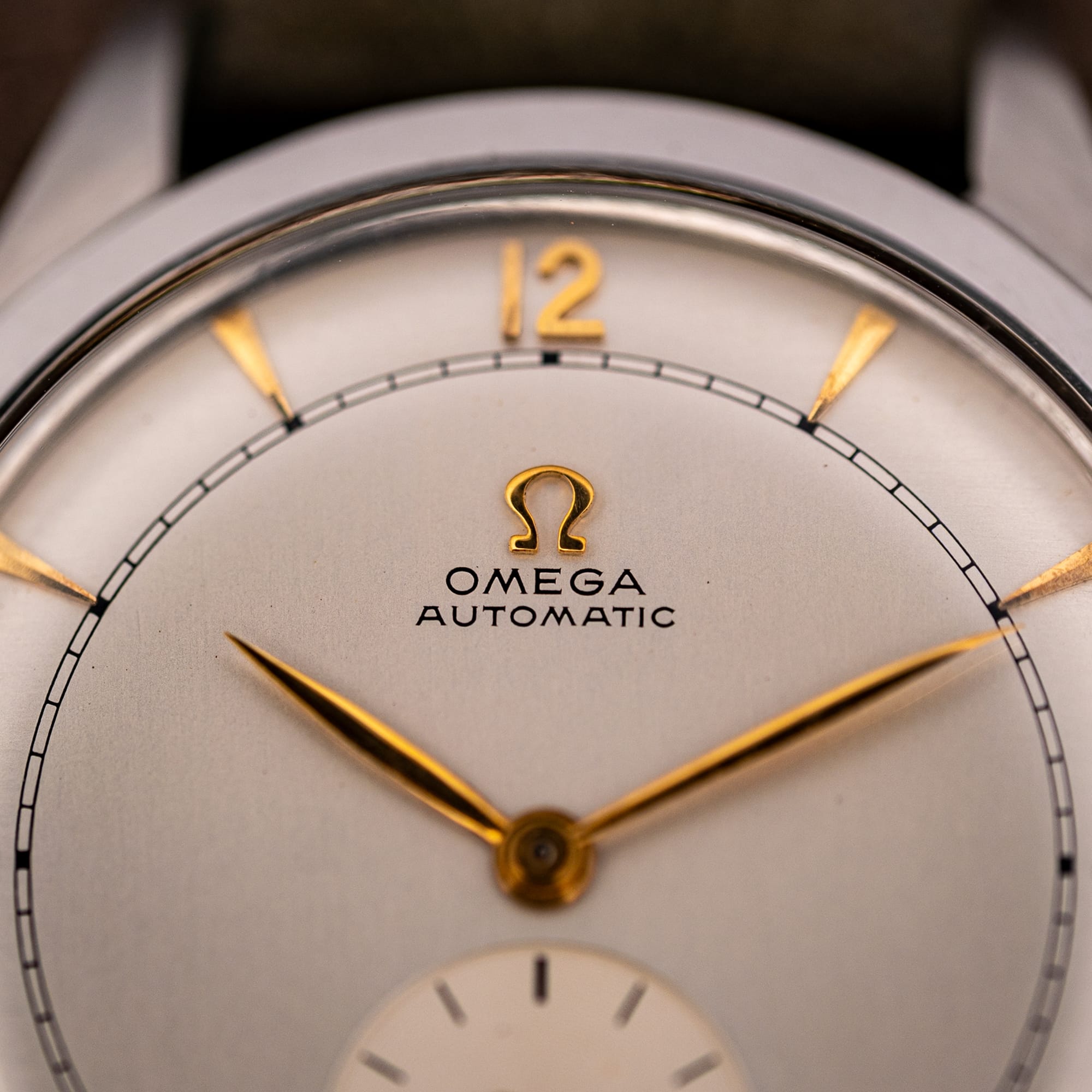
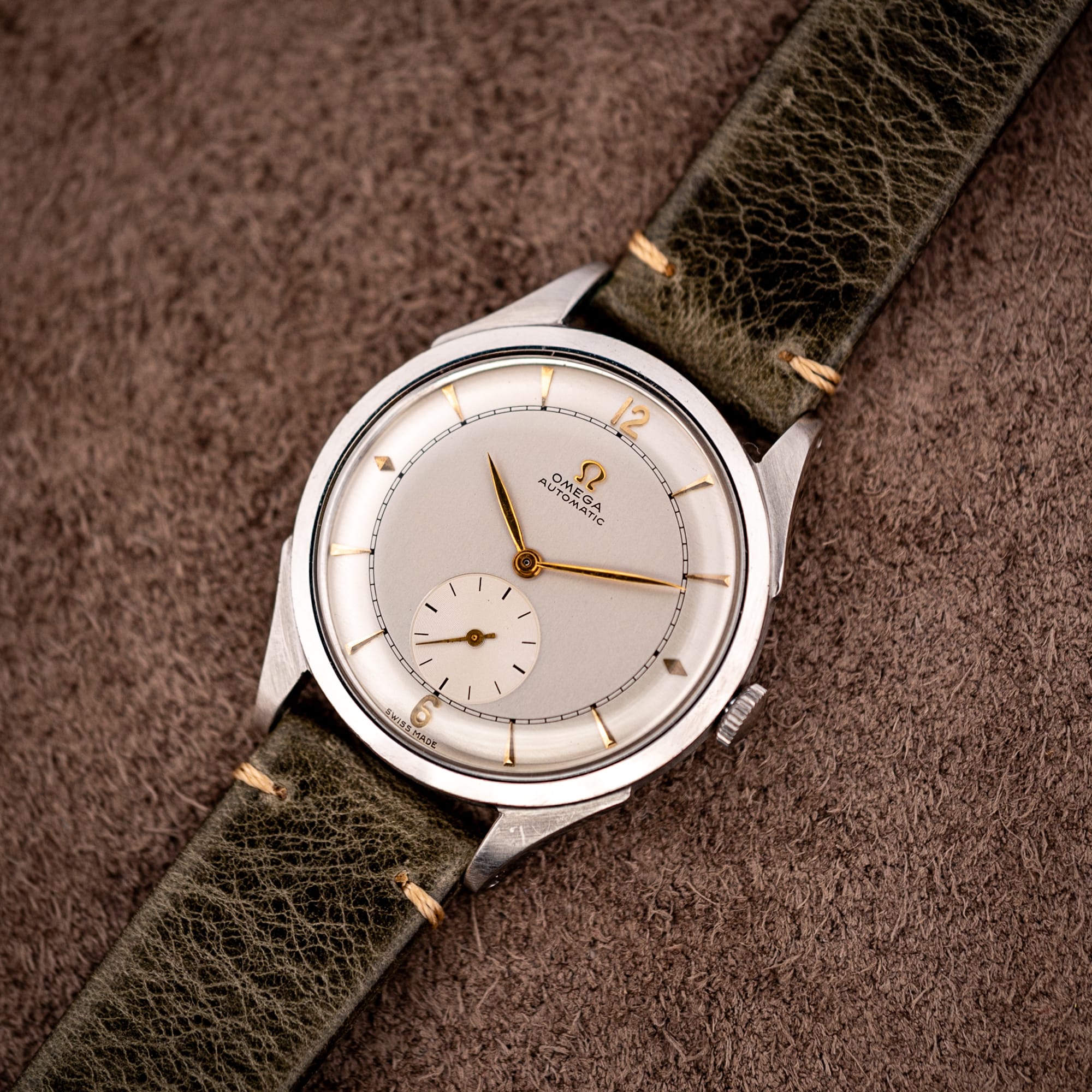
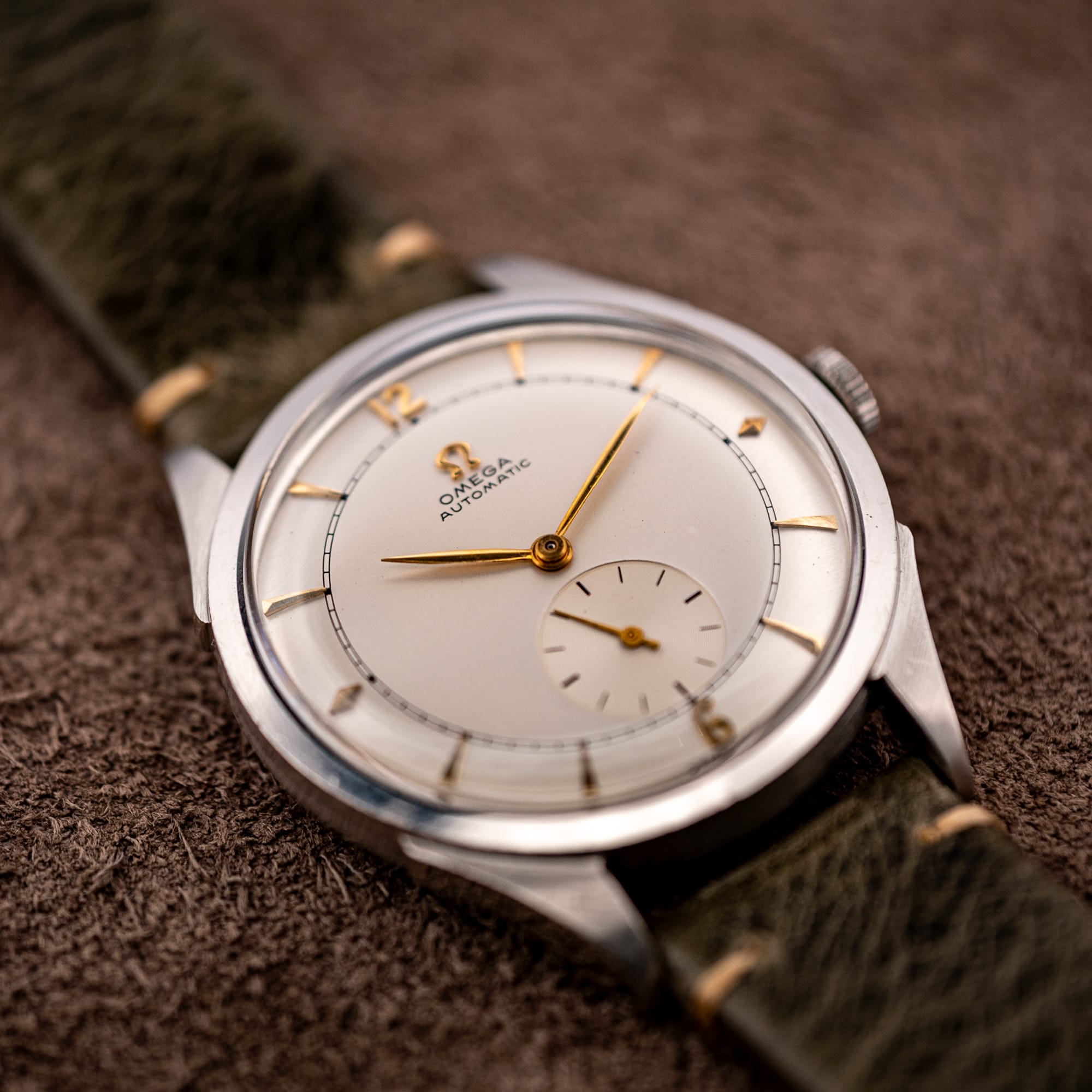
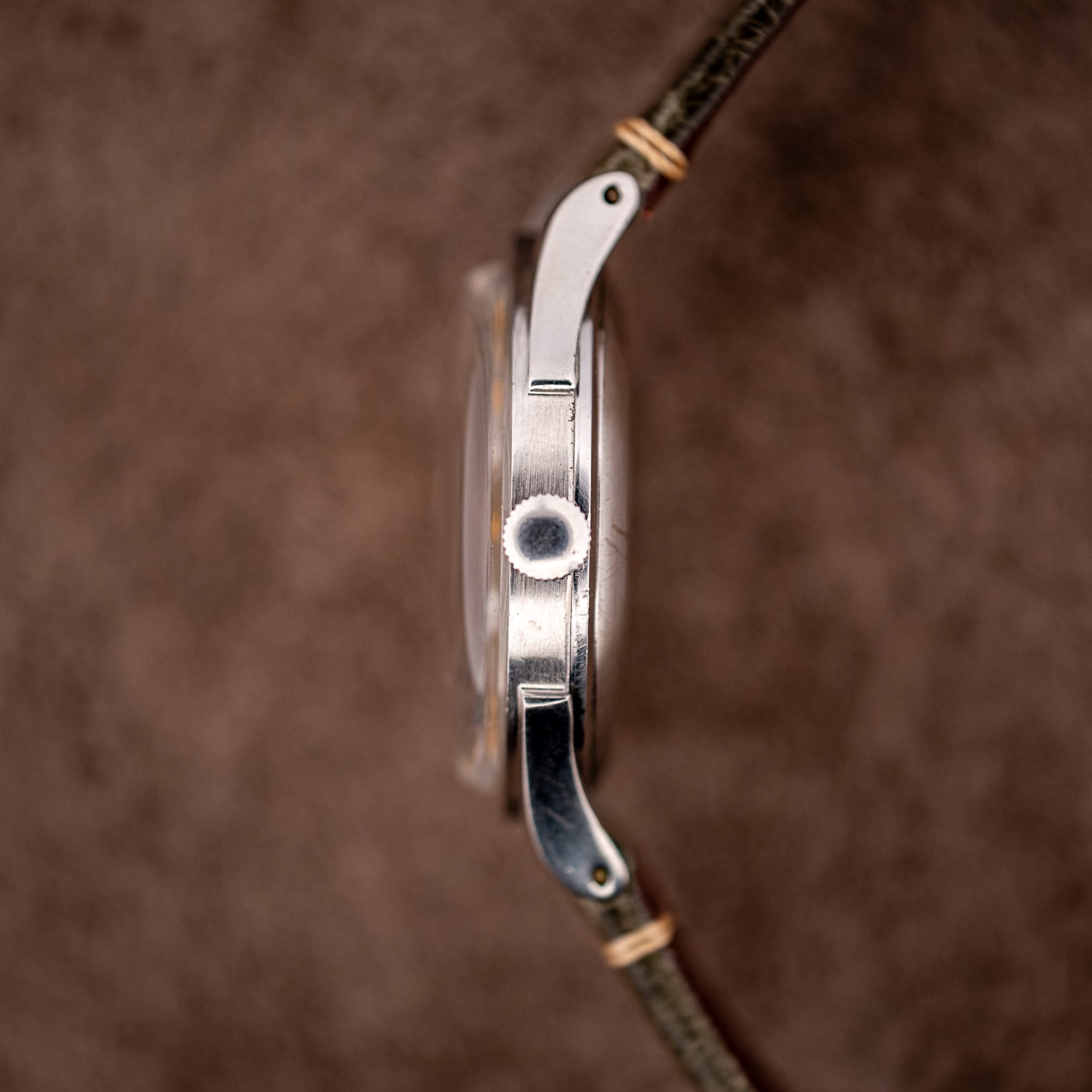
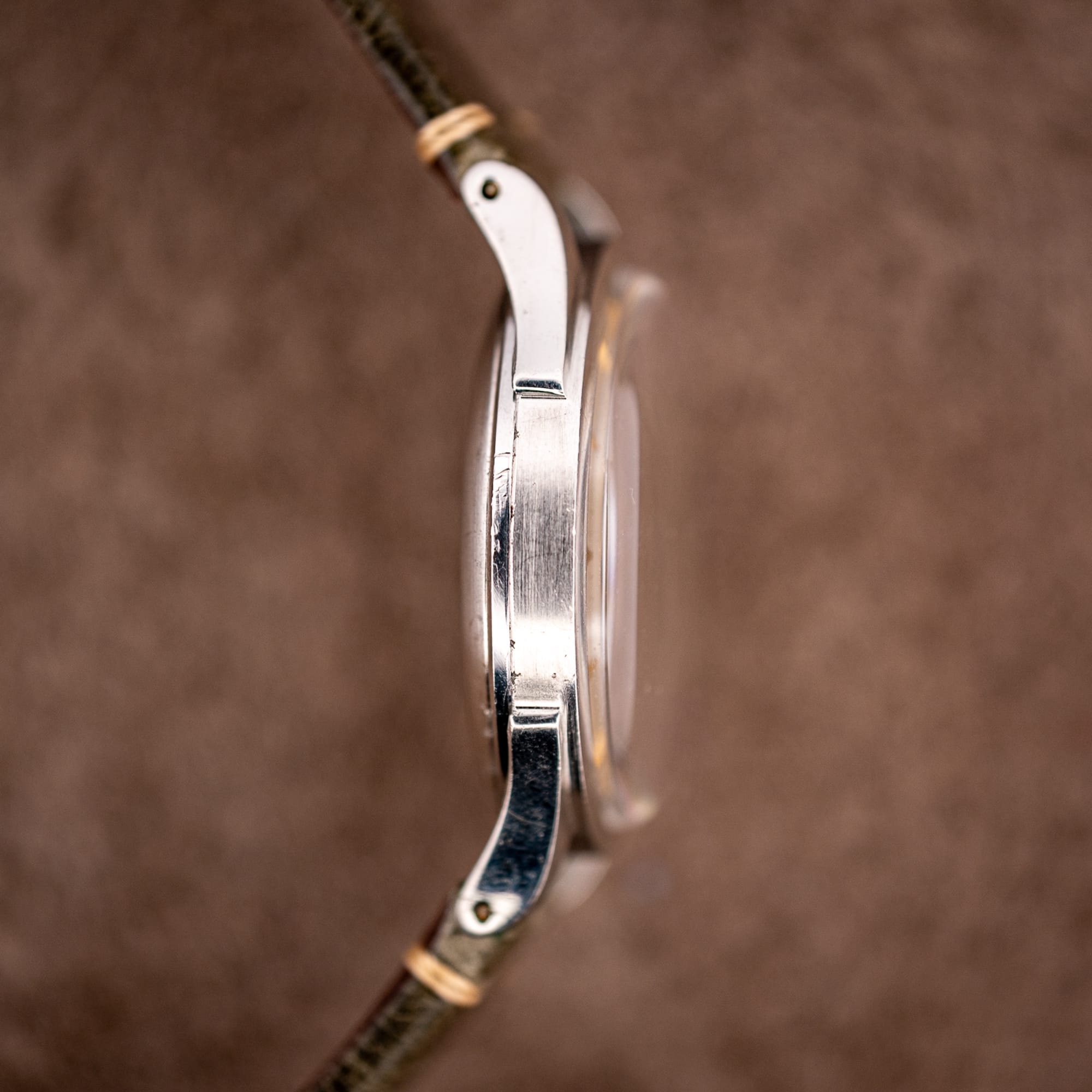
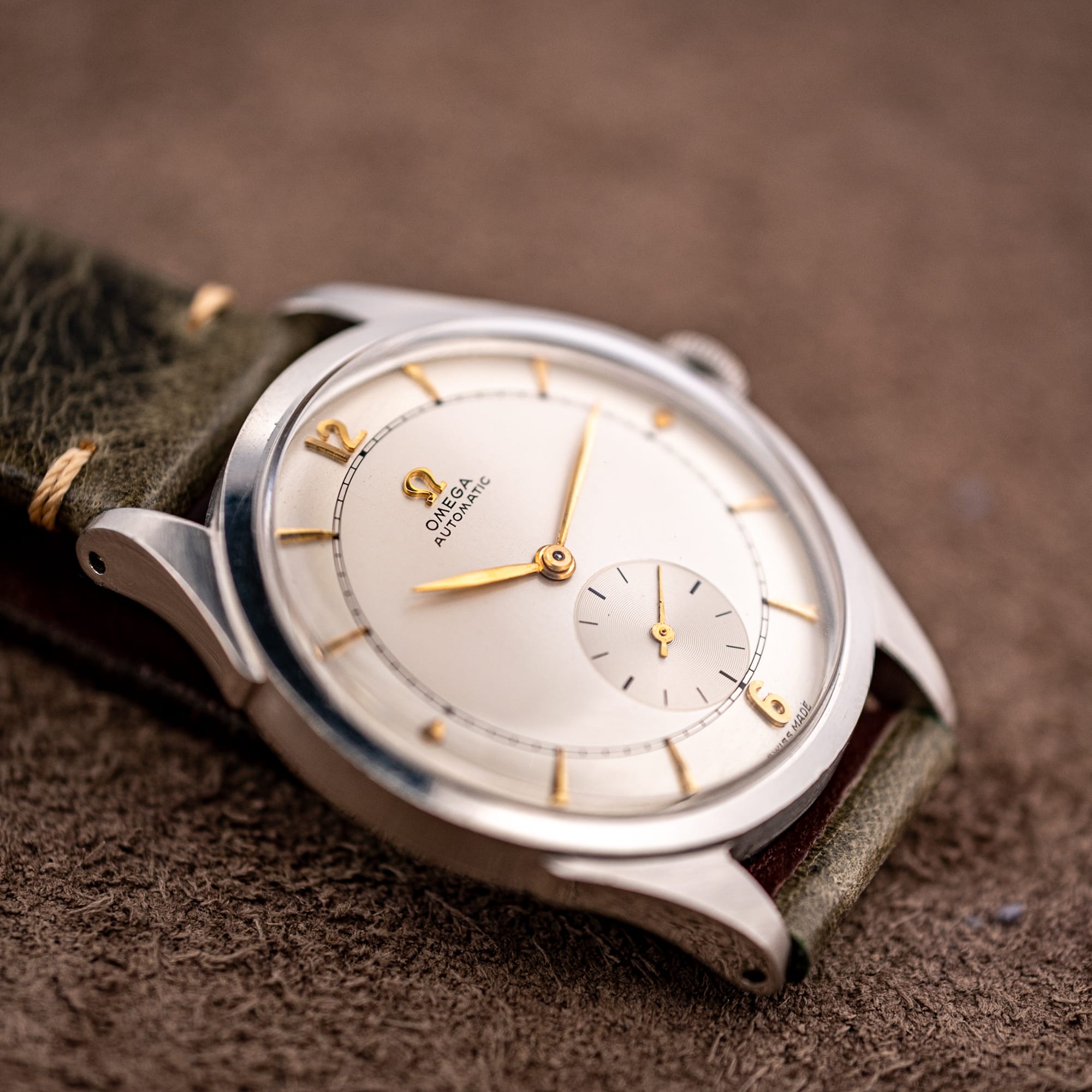
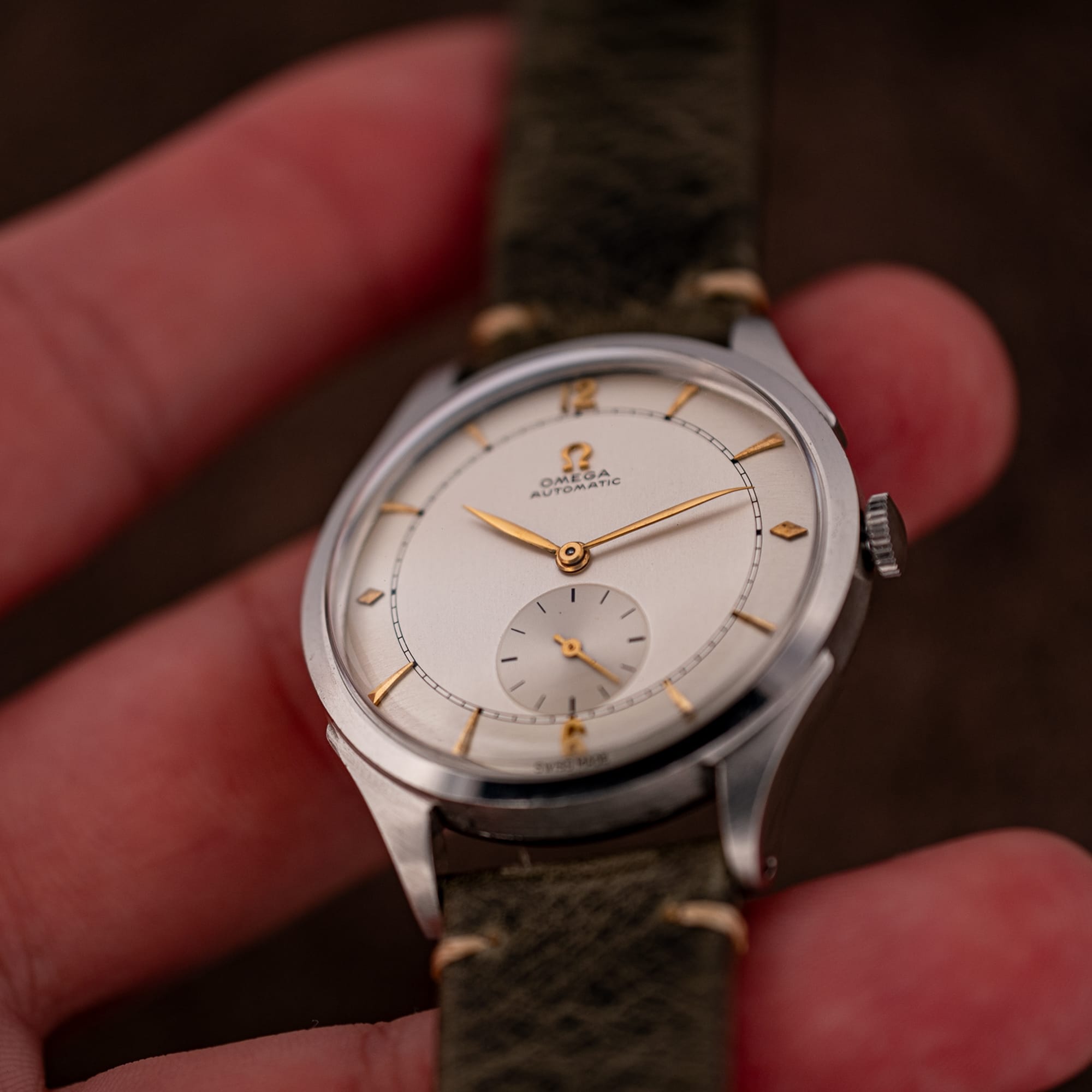
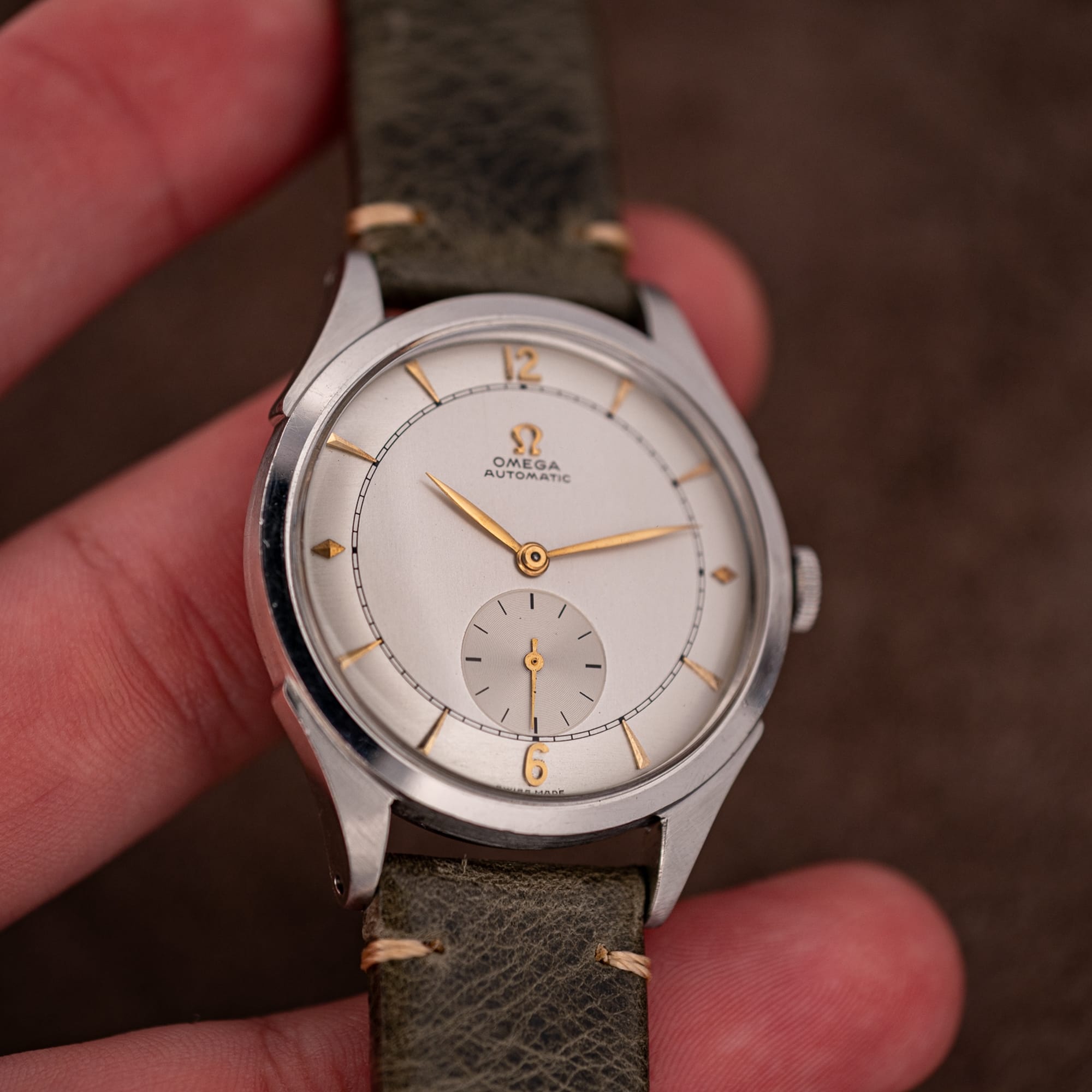
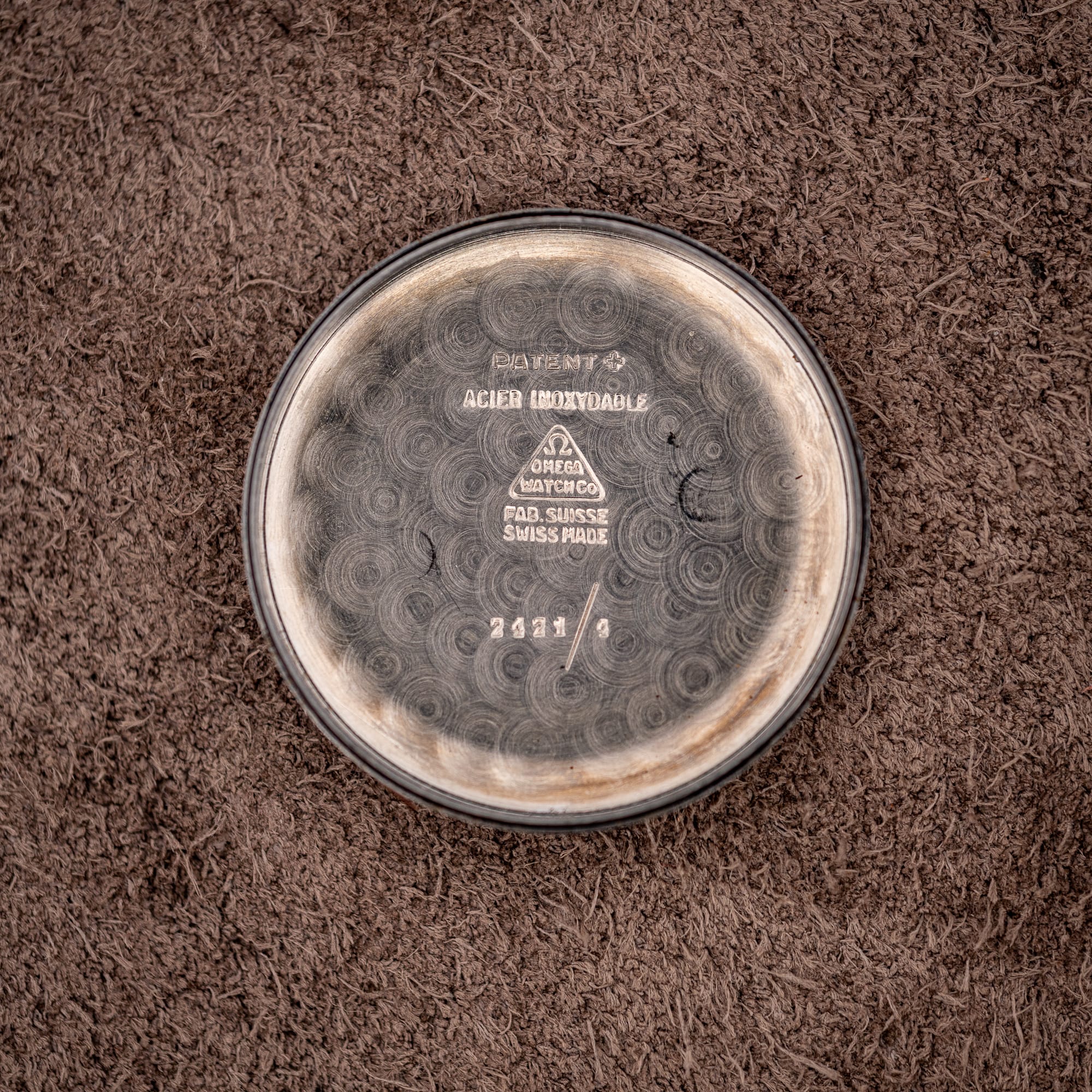
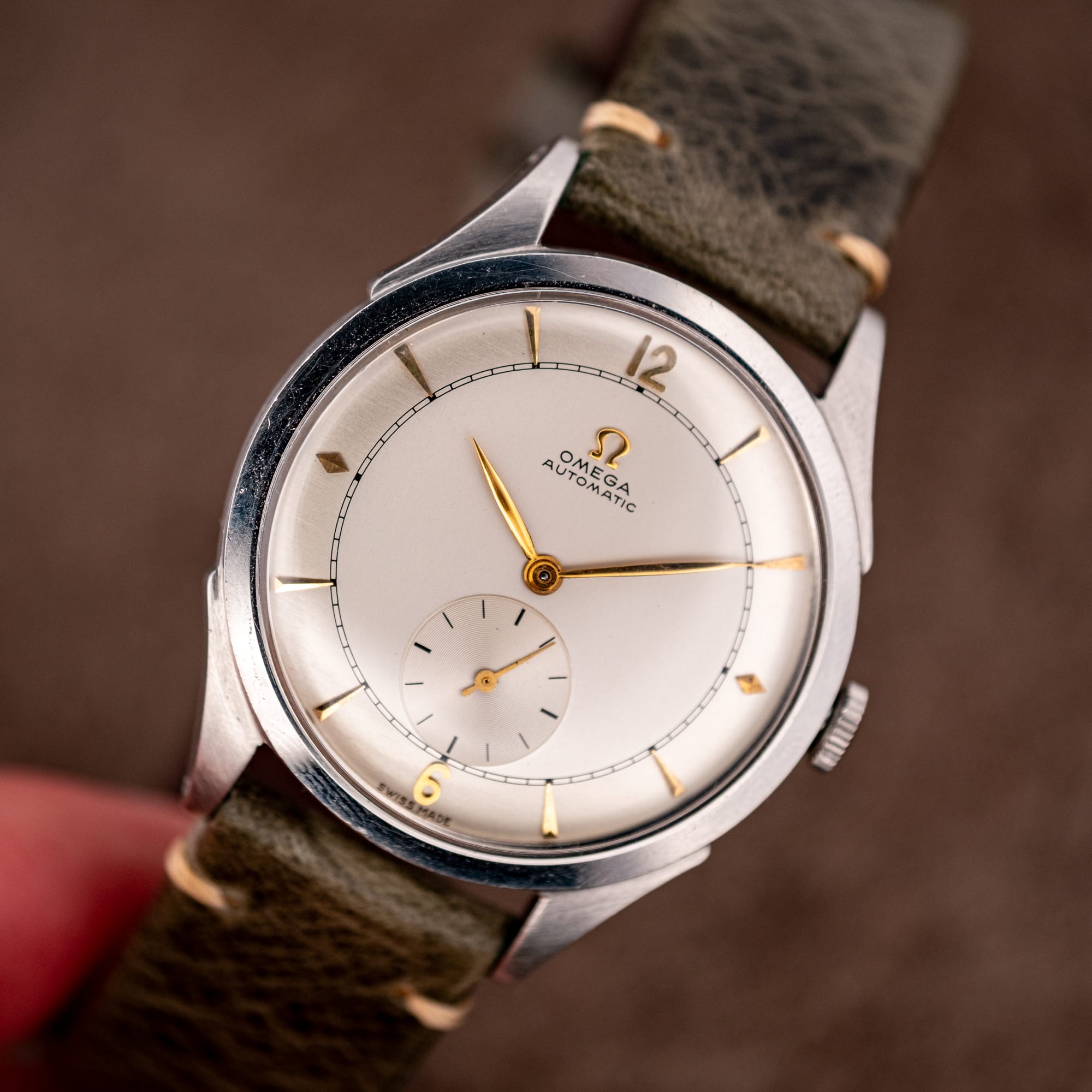
The case is stainless steel, 35mm across and 42.5mm lug to lug, with lugs that taper and sweep down hard over an 18mm gap. Inside the snap back we read PATENT, ACIER INOXYDABLE, the triangle logo, FAB. SUISSE, SWISS MADE, and the reference, 2421/4. The dial is worked in two silvered tones, an outer ring against a marginally warmer center, divided by a printed railroad track, with applied gold wedges at most hours, small gold lozenges at three and nine, gold Arabic numerals at twelve and six, and long faceted gold hands passing over a finely snailed seconds register. The case wears the hairlines and softened edges eight decades on a wrist will earn. The dial has stayed composed through all of it.
Serviced in-house at OTTUHR and backed by our 2-year mechanical warranty, fitted to an olive leather strap. Later automatics learned to do their work in silence. This one still announces itself, gently, every hour it runs.