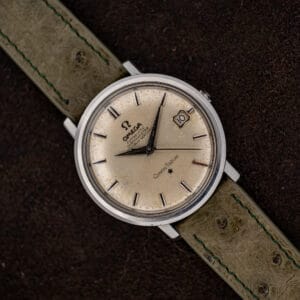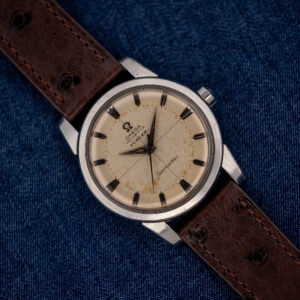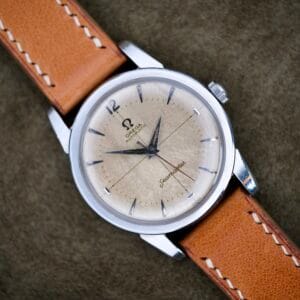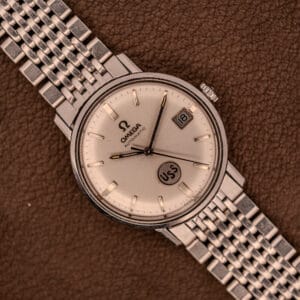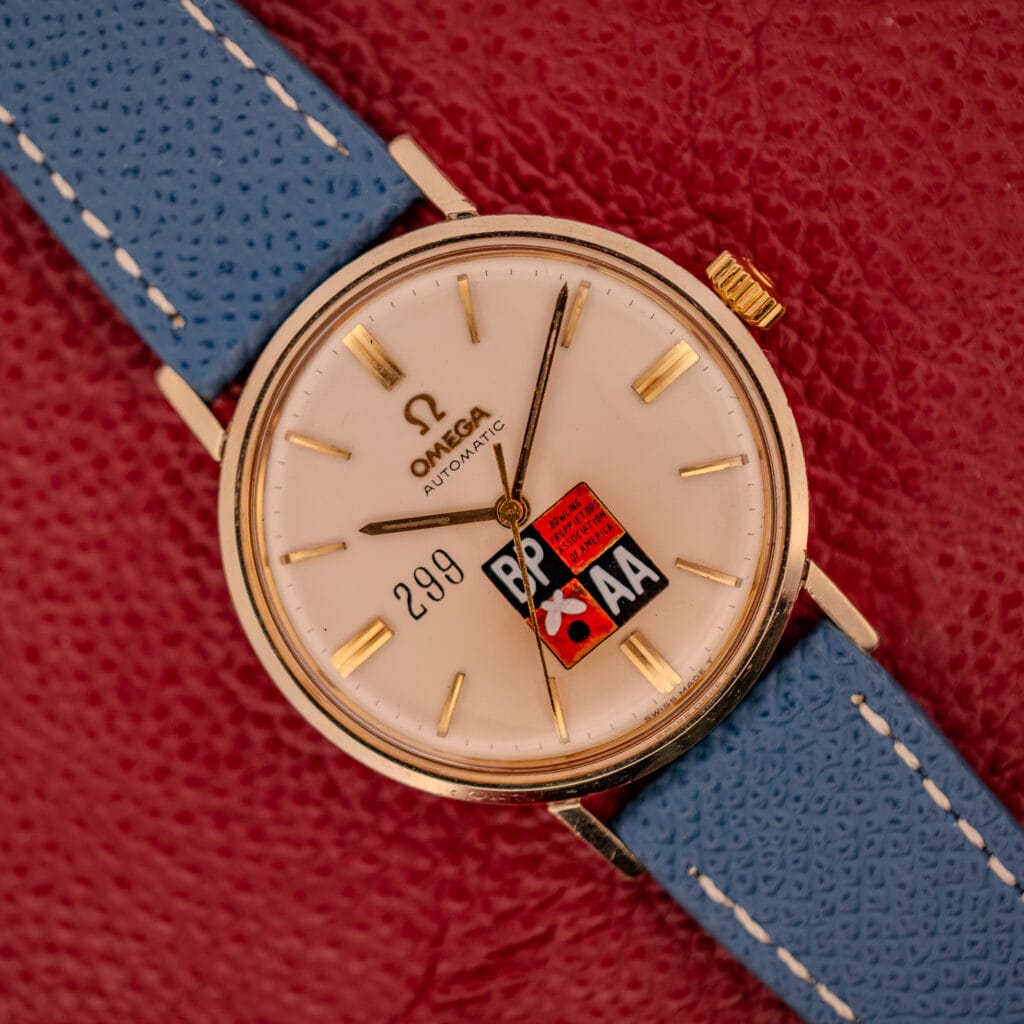
There is something quietly wonderful about an American presentation watch, that mid-century tradition of marking an achievement with something tactile and heirloom-grade rather than a plaque or a paper certificate. To us, this 1965 Omega is one of the most characterful examples we have come across in a long while, and the Omega Cal. 550 ticking inside the case is exactly the sort of workhorse Swiss automatic the moment called for.
Omega’s reach into the American market in the 1960s was nothing short of remarkable, and a meaningful slice of that reach came from the company’s willingness to lend its name and its movements to corporate and trade-organization presentation programs. Bowling, in 1965, was at or near the peak of its cultural moment in the United States. League play was a Tuesday-night civic ritual in nearly every town with a center, televised tournaments were a fixture of the sporting calendar, and the Bowling Proprietors Association of America, the BPAA, was the most influential trade body in the industry. Watches like this one were ordered by the BPAA to recognize extraordinary scoring achievements at the league and tournament level. A perfect 300 was the mark every bowler chased. A 299, one pin short of the perfect game, was in some ways the more poignant award, the score that lived in the memory of the league hall long after the night had ended.
The Omega Cal. 550 inside this case is one of the great quietly-respected automatics of the post-war era. Introduced in 1958 as the time-only foundation of Omega’s 55x family, the 550 ran at 19,800 vibrations per hour, used a full rotor wound through a reverser system that Omega had spent years refining, and was rated to within ten seconds a day in good order. The family branched out across a remarkable range of references, from Seamasters to Constellations to dress watches like this one, and it sat in production until the early 1970s when the 1010 family took over. Collectors who have spent time with the 550 tend to come back to the same handful of words: smooth, robust, characterful in that very particular Omega way. We feel the same way about it.
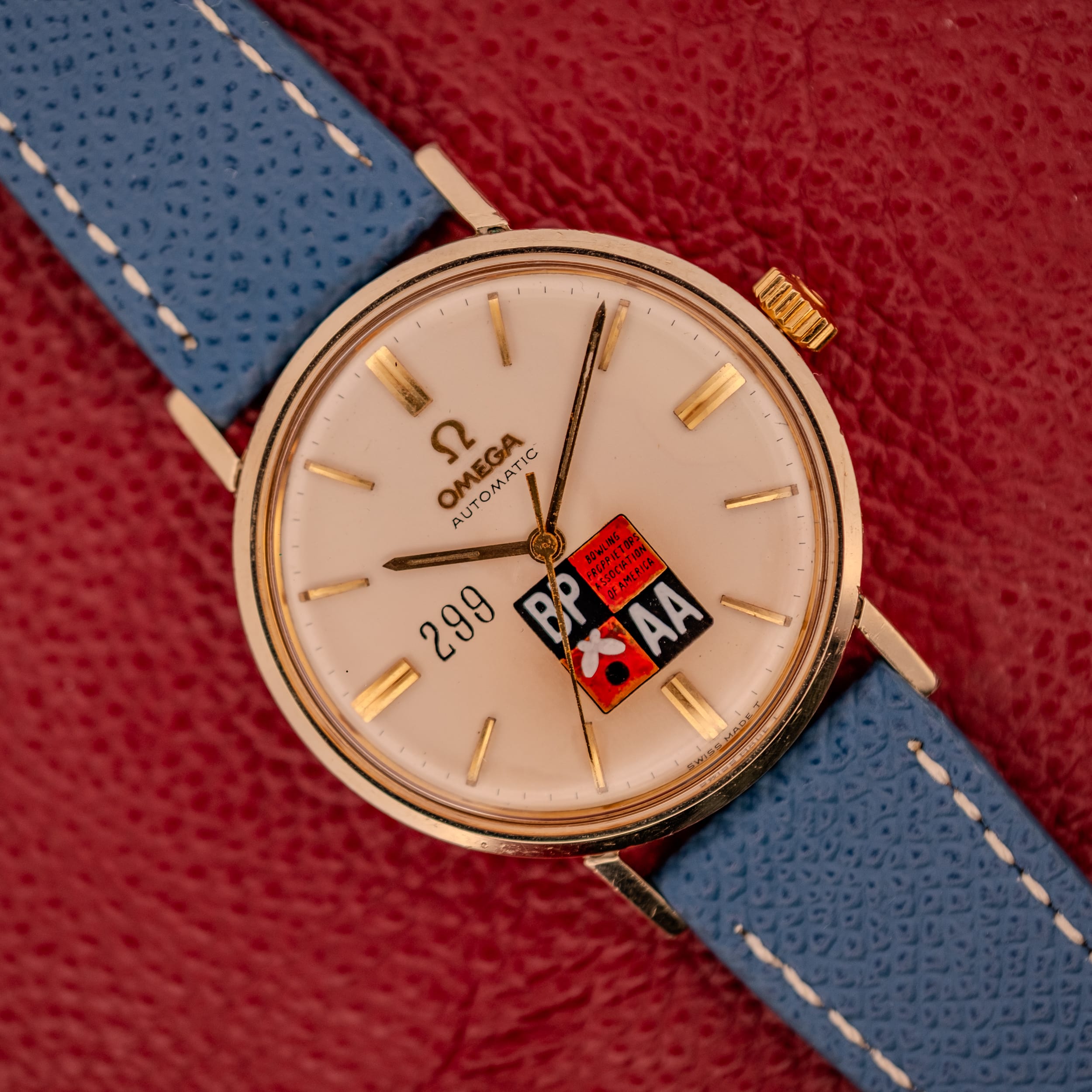
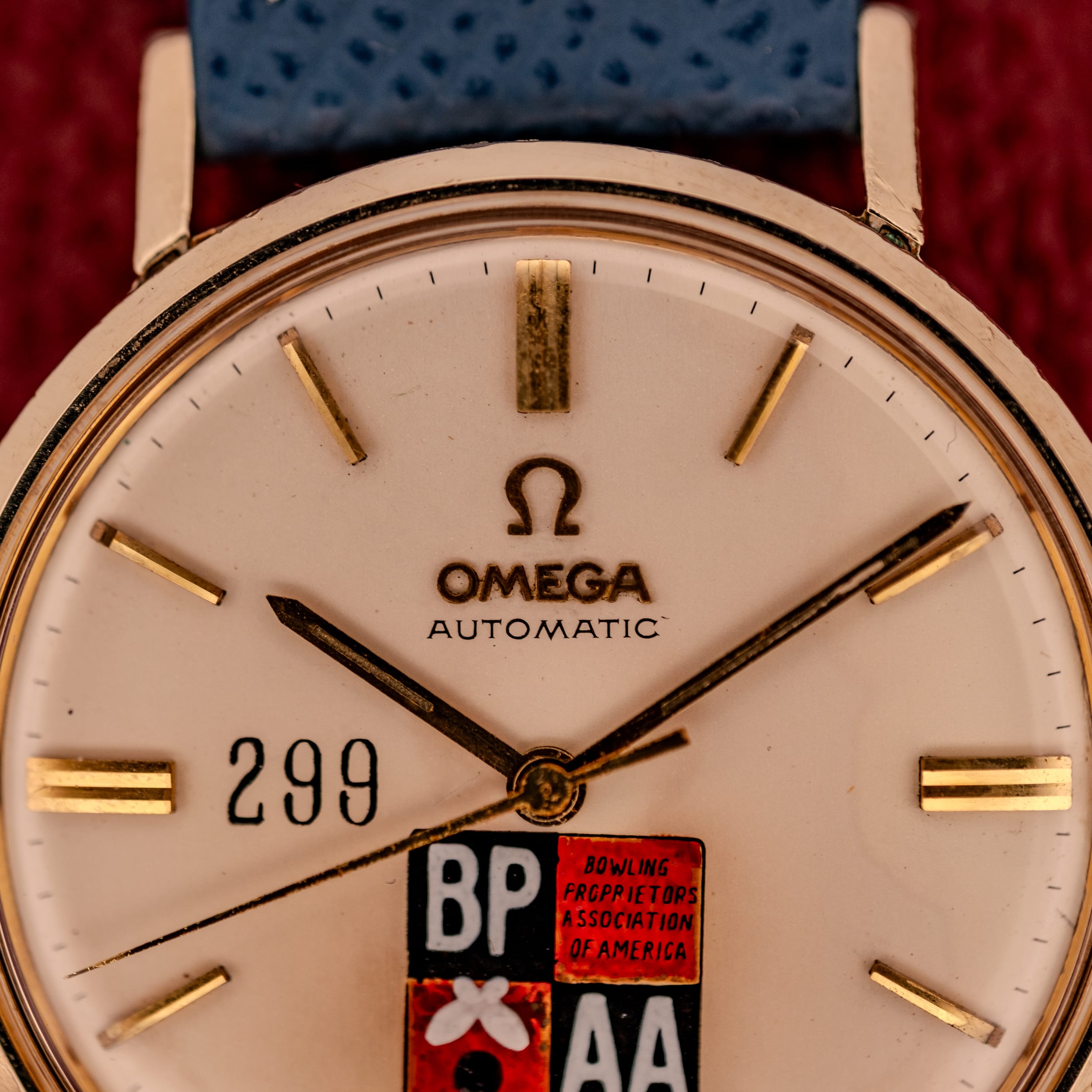
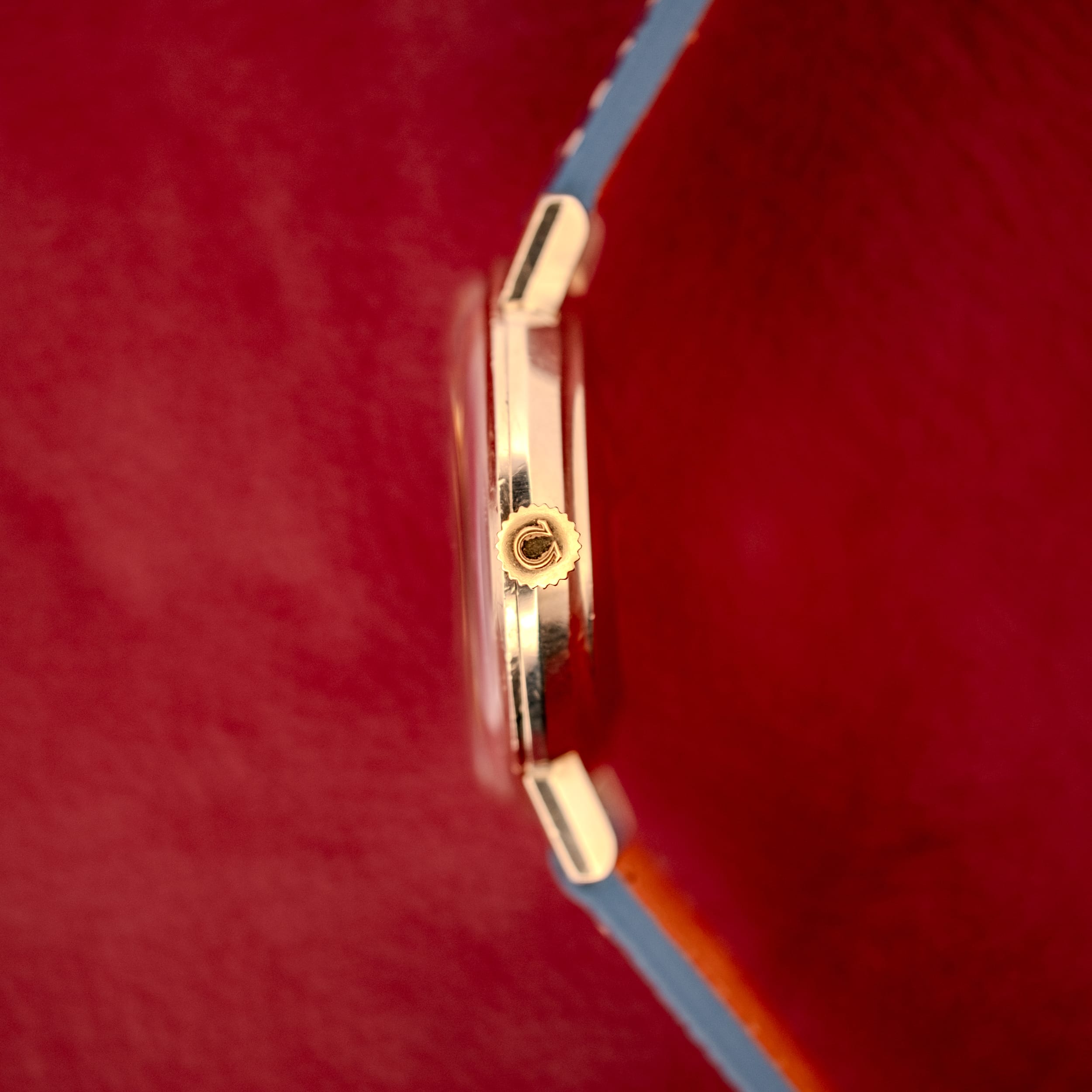
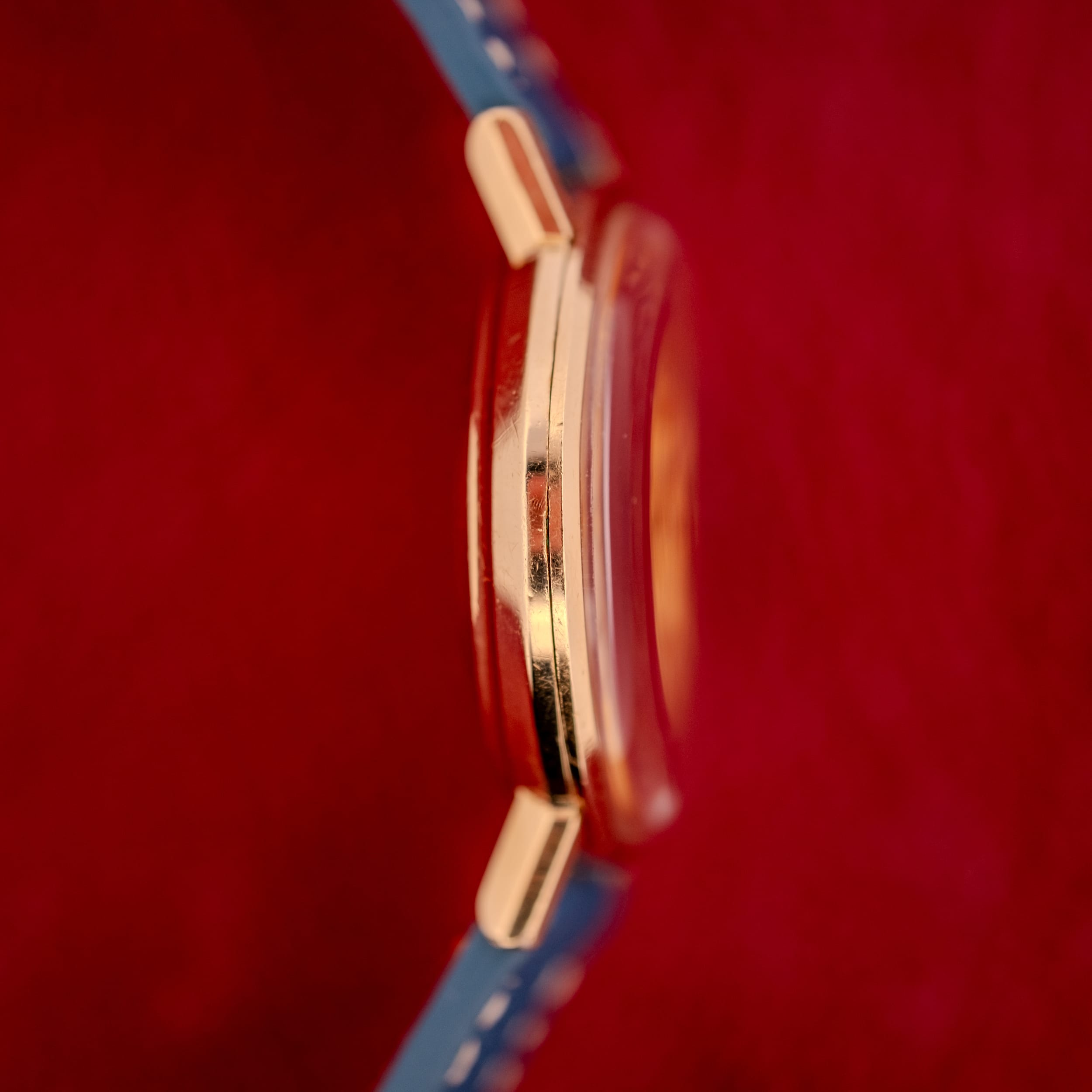
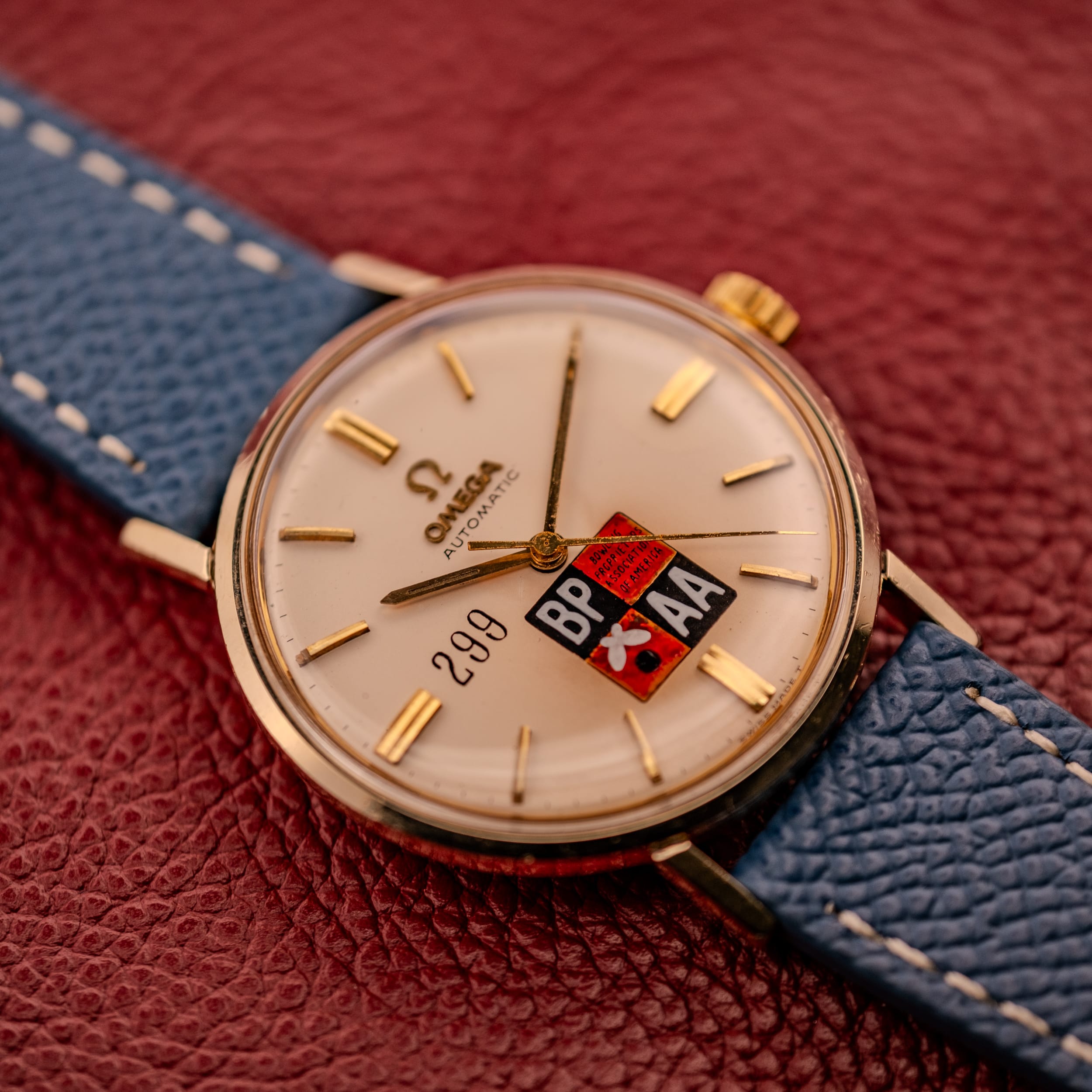
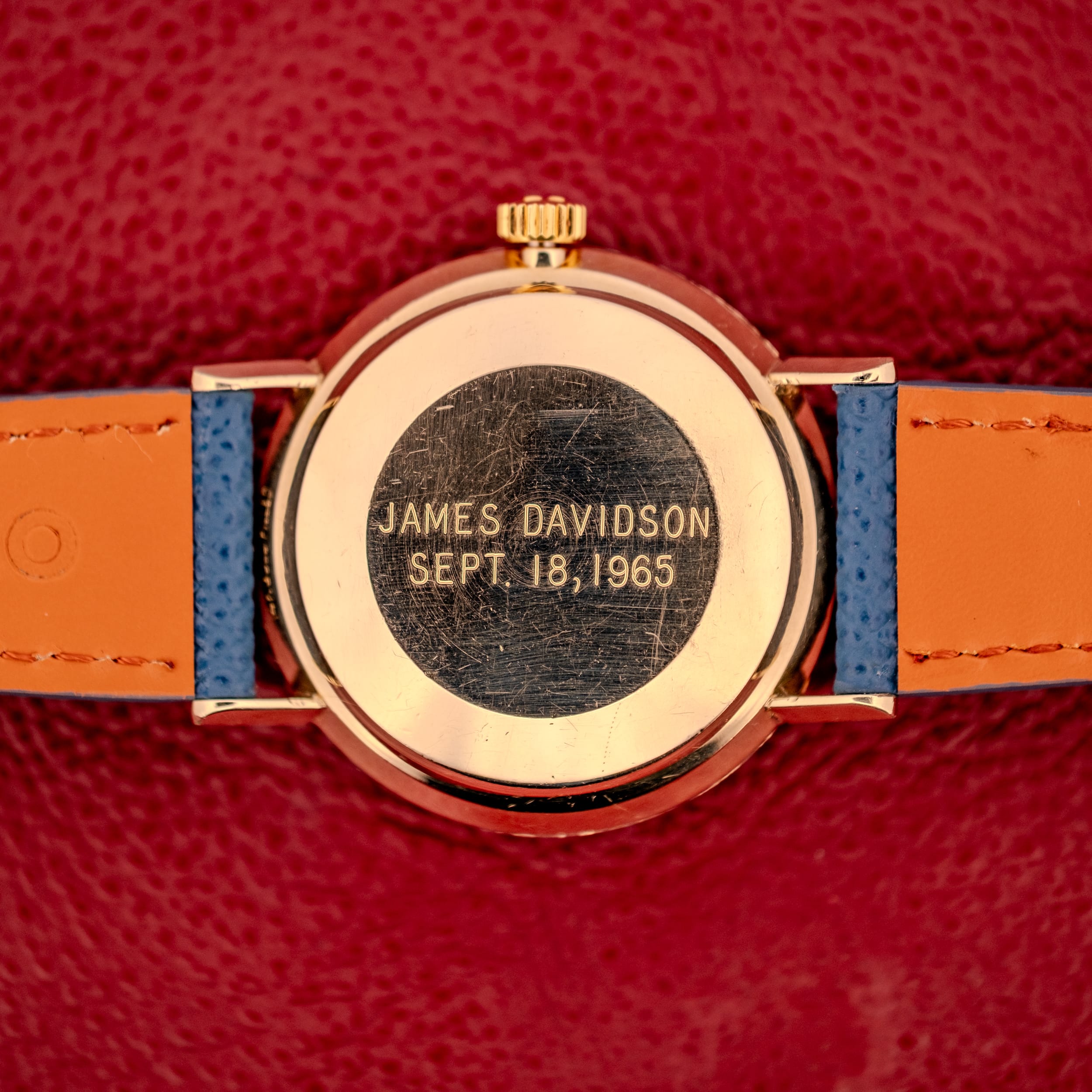
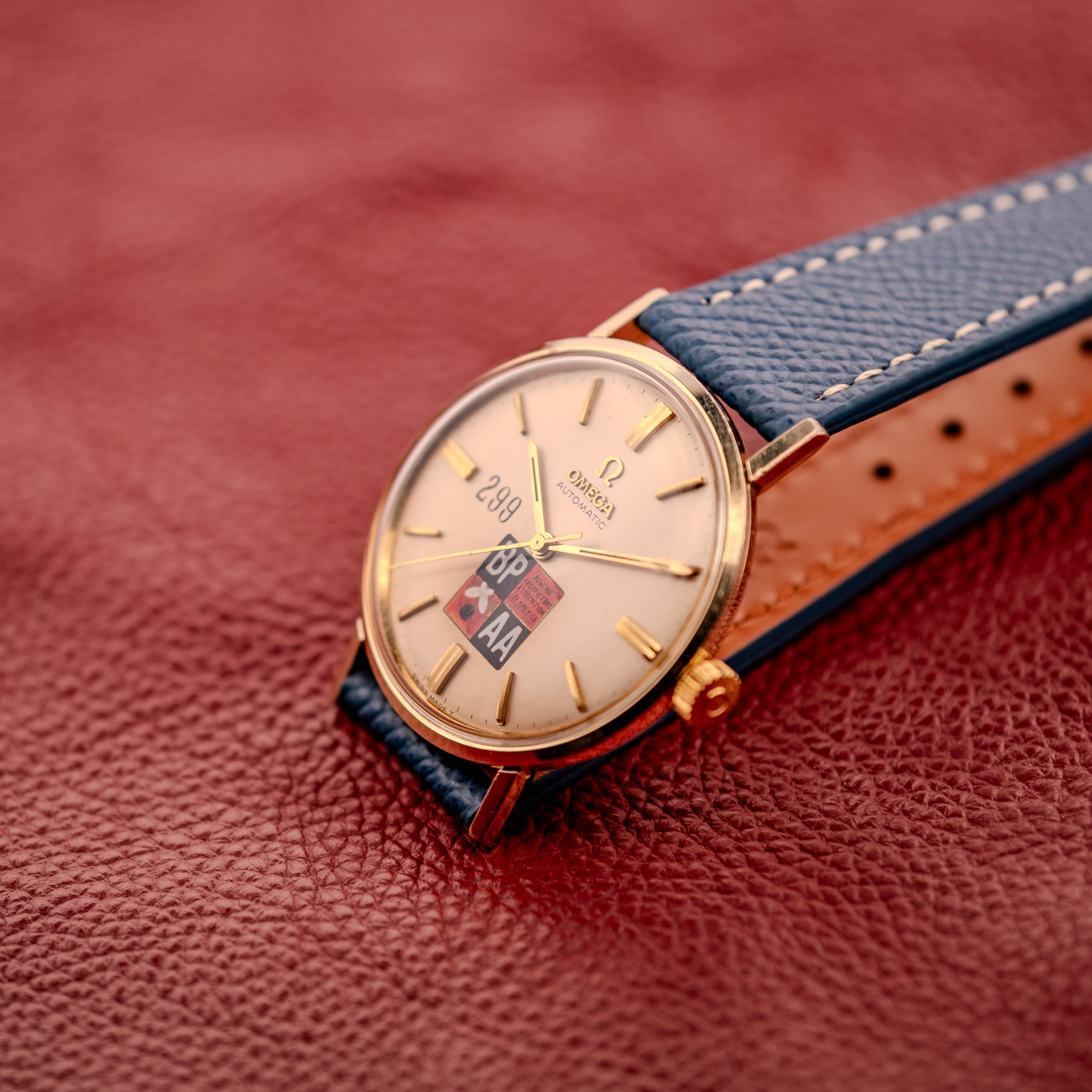
The case is a slim, classically proportioned round in 14k gold-filled construction, measuring 34mm across, 40.5mm lug-to-lug, and accepting an 18mm strap. The lugs are downturned and faceted, the bezel polished smooth, and the whole profile catches light against the warm tone of the dial in a way that photographs really do not do justice. The flanks and lug tops carry the honest, gentle wear of sixty years on a wrist, with shallow scuffs and softening of the brushed surfaces that read as character rather than damage. The original gold-toned crown remains in place and is signed with the Omega Ω logo, which the close-up confirms. The caseback shows the tool marks one expects on a watch that has been opened for service a few times across its life, and through the middle of that history the engraving has remained crisp and beautifully legible.
That engraving reads, in confident block capitals, JAMES DAVIDSON SEPT. 18, 1965. We do not know who James Davidson was, only that on the eighteenth of September 1965 he stood at a lane in some bowling center somewhere in America, rolled what should by every rule of the universe have been a perfect game, missed the last pin, and walked away with one of the most quietly handsome consolation prizes the watch industry has ever produced. The romance of that history is, in our opinion, the whole story of this watch.
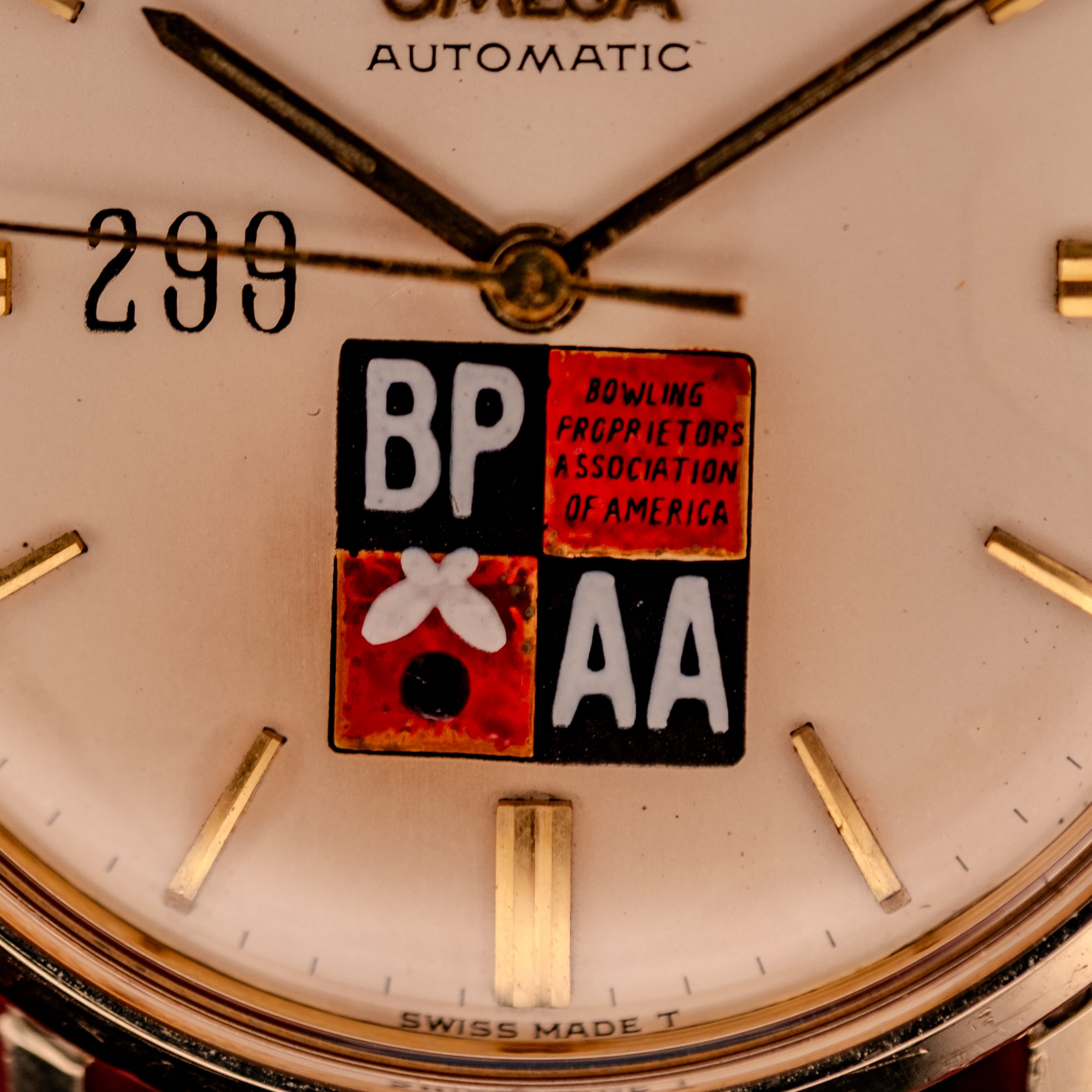
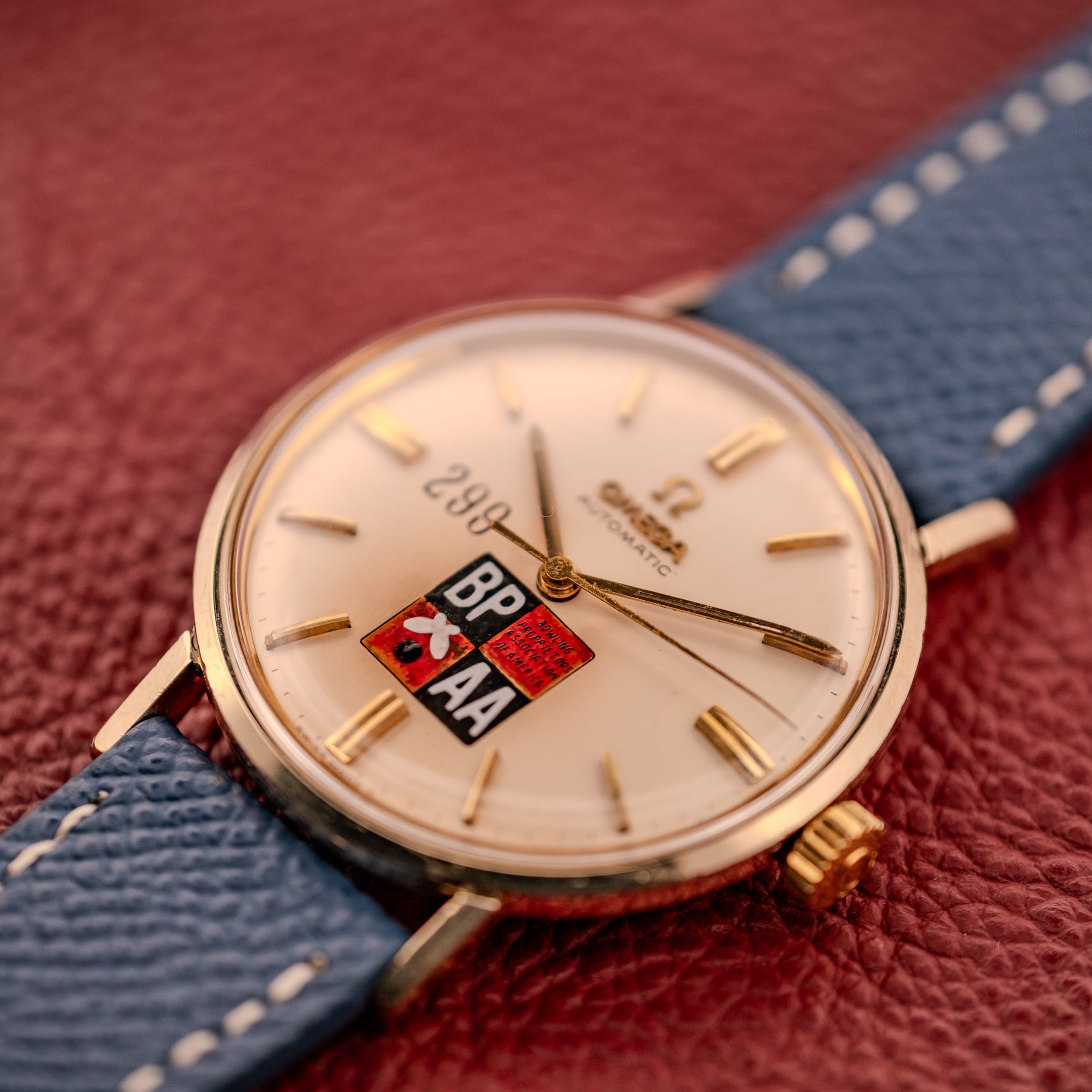
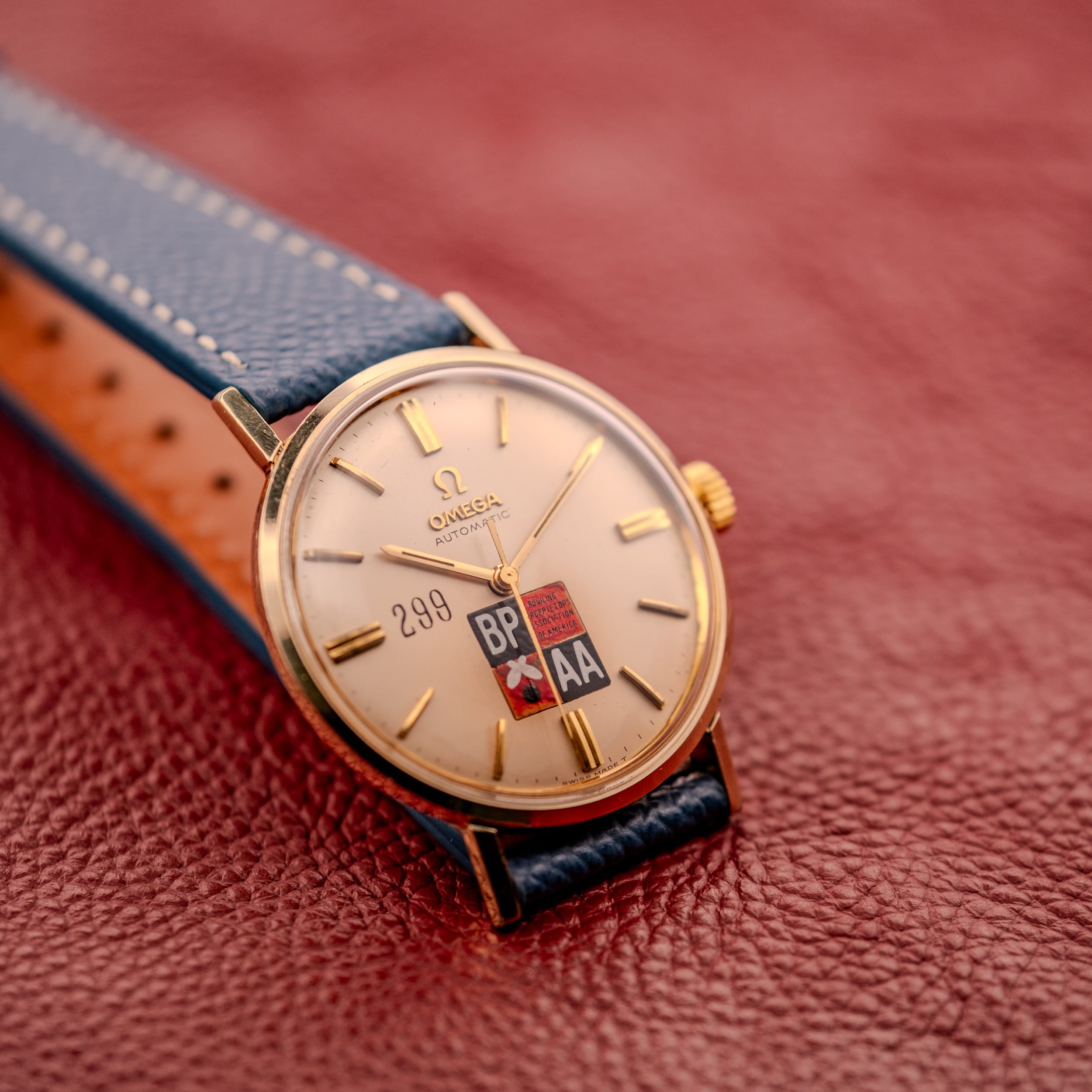
The dial is the headline. A cream surface in genuinely lovely condition, with applied gold baton hour markers radiating around the perimeter and the classic Omega applied logo above the printed OMEGA wordmark at 12. Below the wordmark sits the printed Automatic designation. At 9 o’clock, the figure 299 is hand-painted in a confident vintage script. At 3 o’clock, the BPAA fired enamel emblem is set into the dial in red, white, and black, complete with the bowling pin and ball motif at lower-left and the BOWLING PROPRIETORS ASSOCIATION OF AMERICA wordmark rendered in miniature at upper-right. Just above 6 o’clock the dial reads SWISS MADE T, the original tritium designation, with the lume itself long since aged into a quiet warm tone that matches the dial beautifully. The dauphine hour and minute hands and the lance-style seconds hand are gilt and have aged in sympathy with the markers.
We have paired it on one of our blue grained leather straps with white contrast stitching, fitted to an OTTUHR signed buckle and accommodating up to an 8.5 inch wrist. The blue against the warm gold case is a combination we have come to love on cream-dial dress watches, and on a piece commemorating American sporting achievement it carries an additional, slightly patriotic resonance we are not mad about. The strap is, of course, easily swapped for anything in your collection.
Serviced in-house at OTTUHR and backed by our 2-year mechanical warranty, this is for the collector who values story over status, for whom the personal histories carried by presentation watches feel more compelling than any chronometer certificate. The Omega Cal. 550 has its own quiet following, the BPAA dial is genuinely uncommon and beautifully made, and the James Davidson engraving anchors the whole piece to one specific Saturday night in September 1965. It is, to us, exactly the sort of watch that vintage collecting is really about.