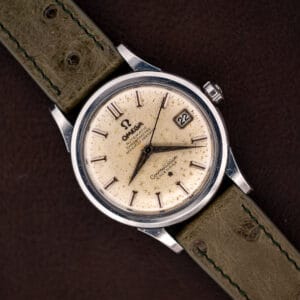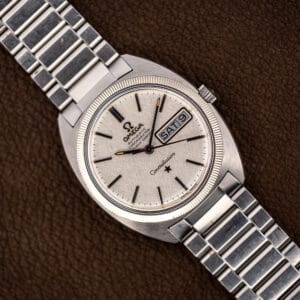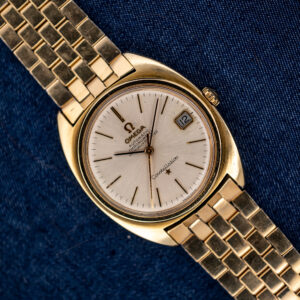
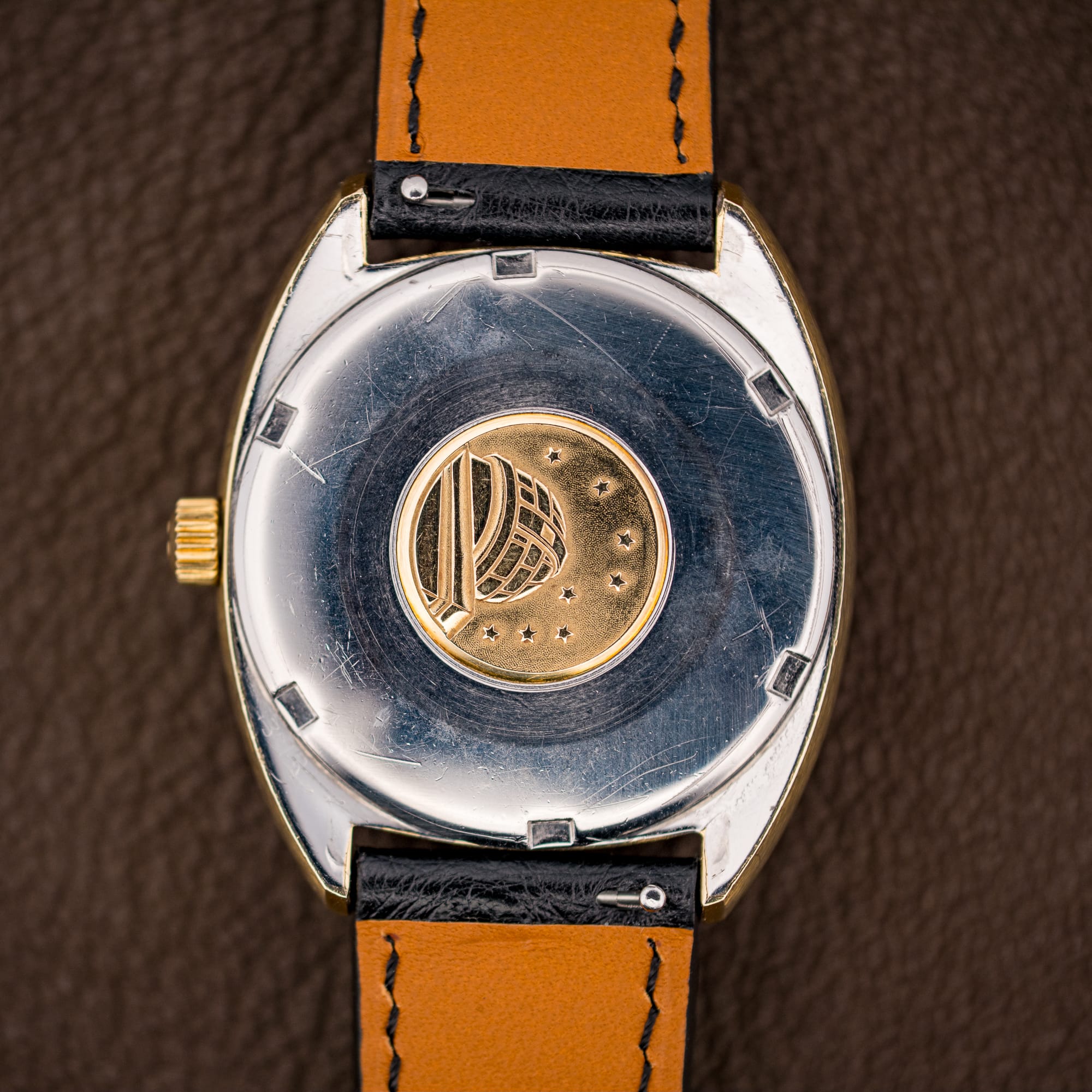
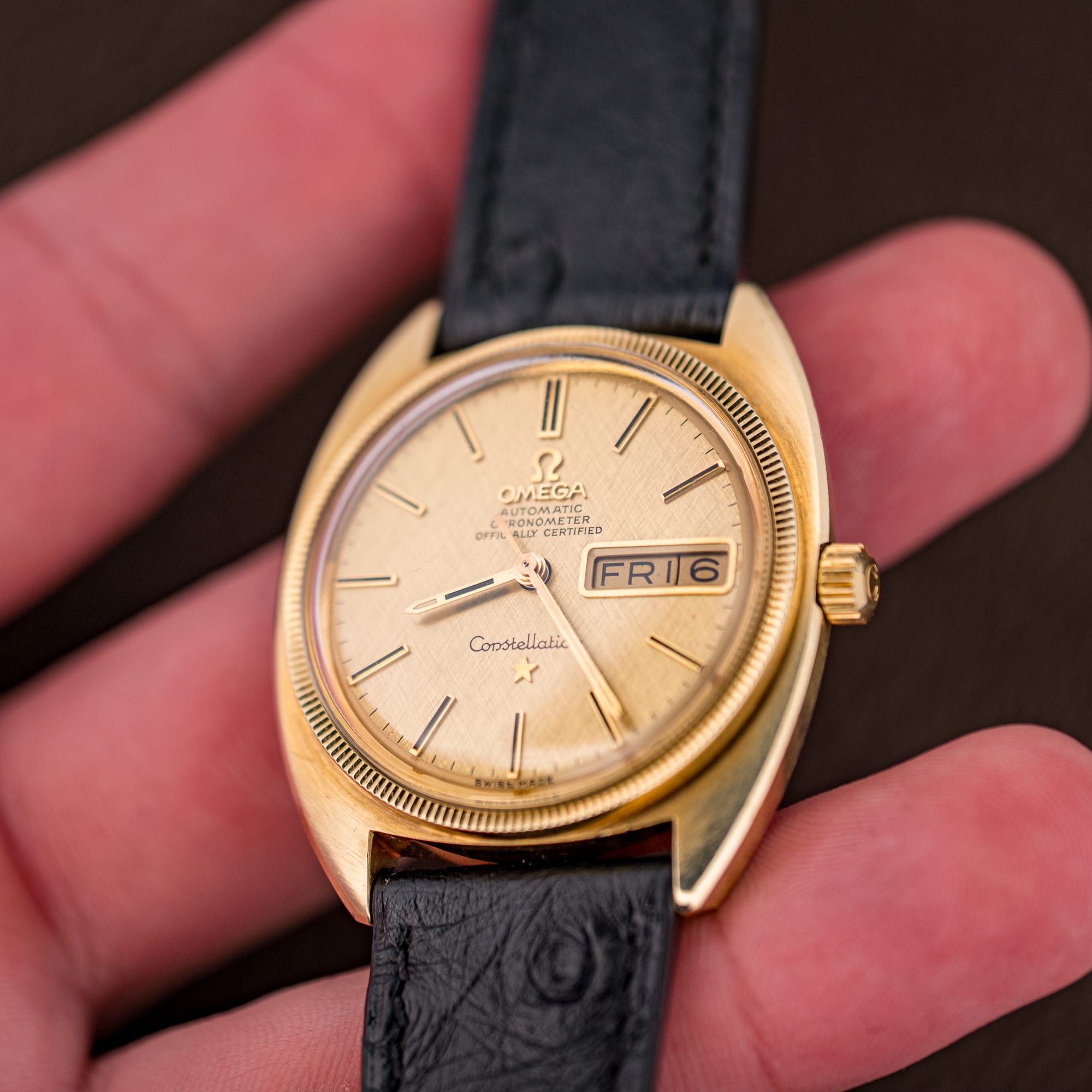
Turn this Omega Constellation over and the reason for its name sits stamped into the caseback: a small domed observatory beneath a spray of eight stars.
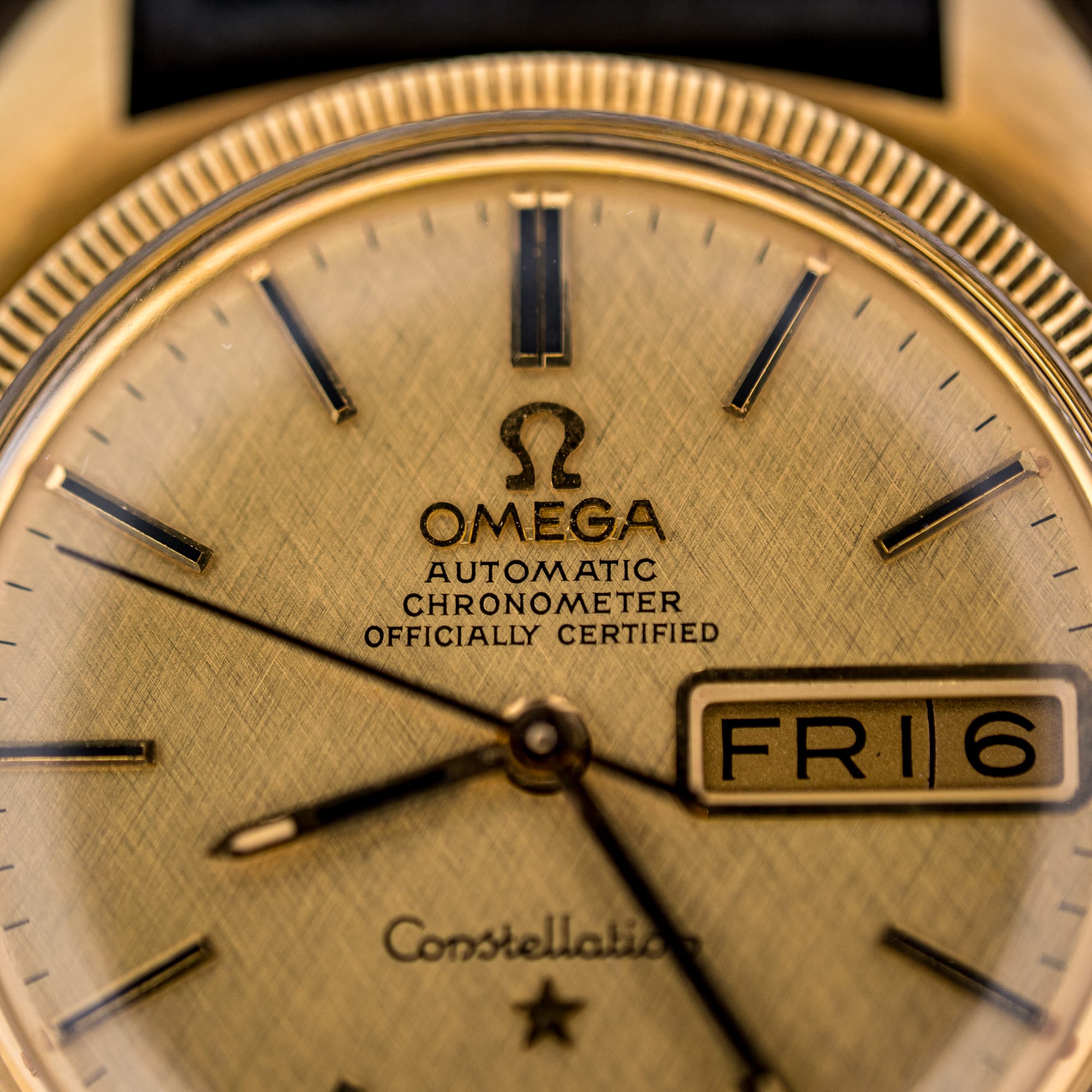
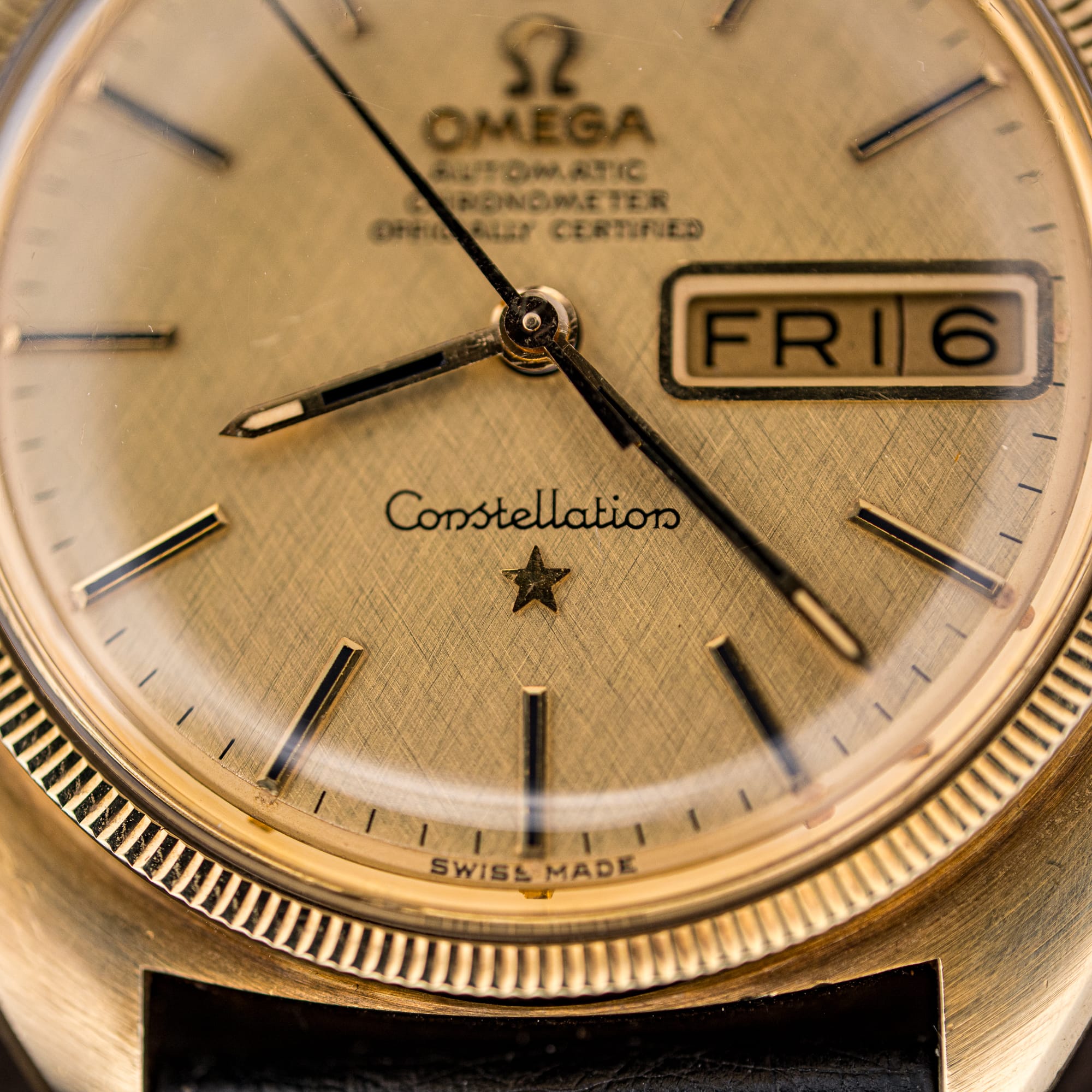
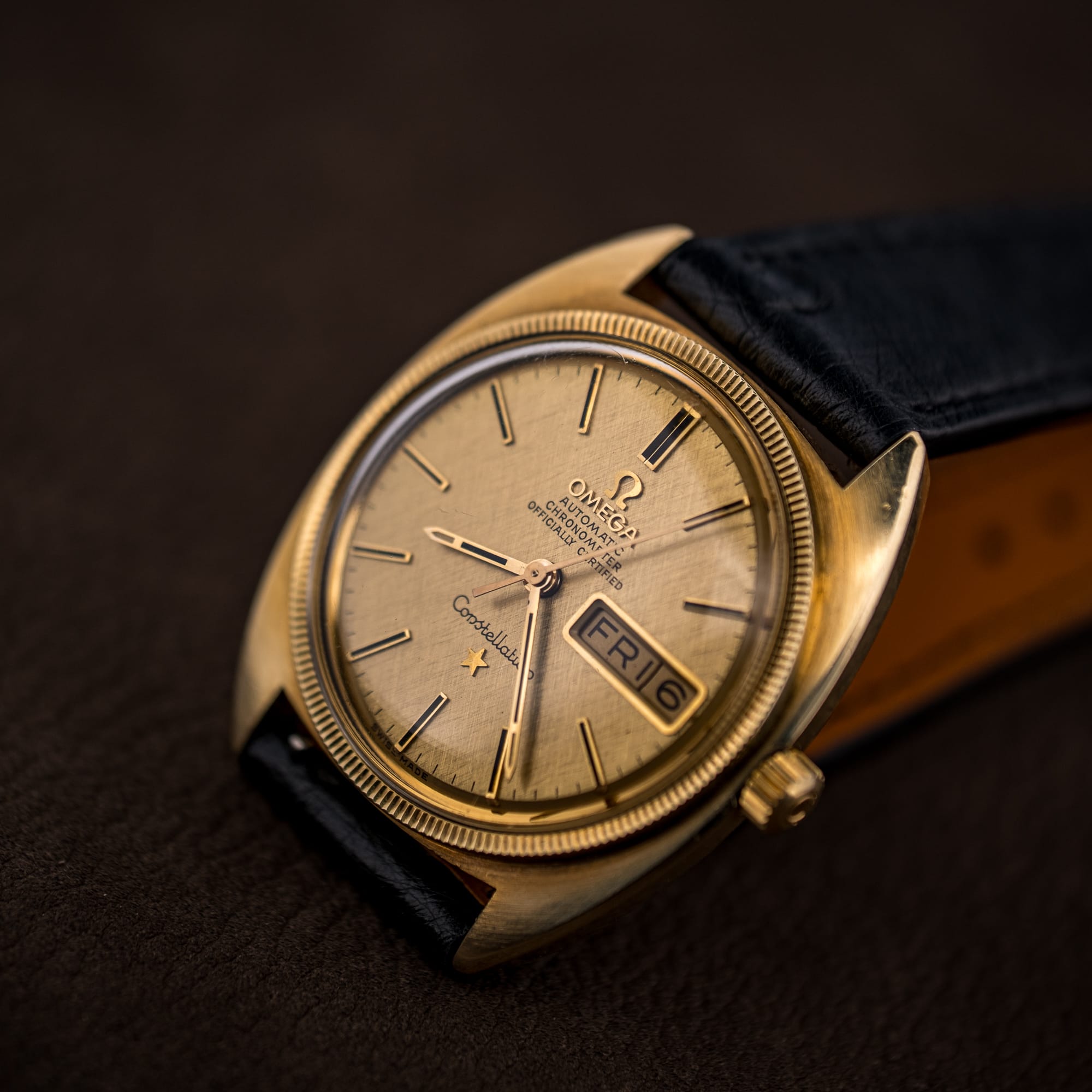
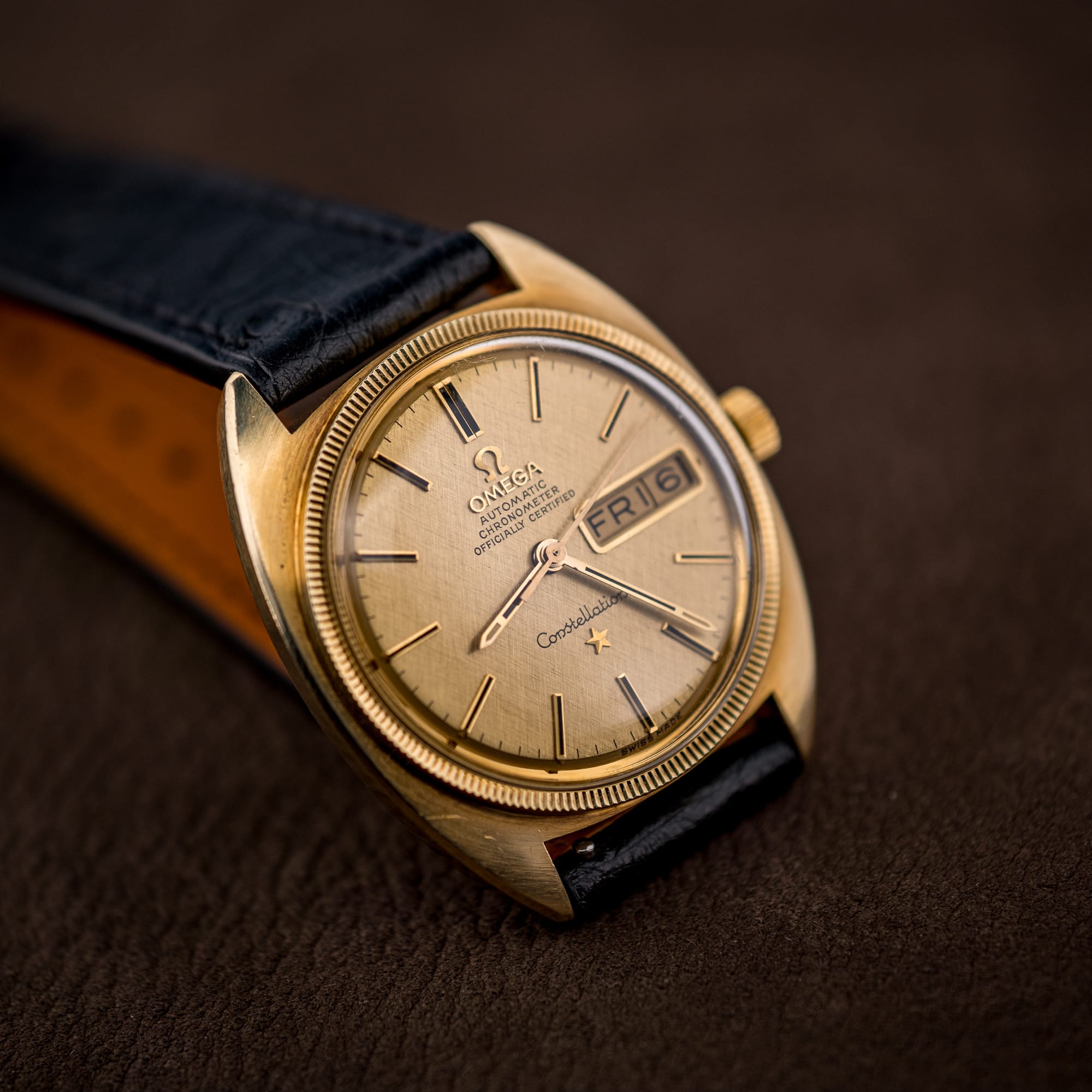
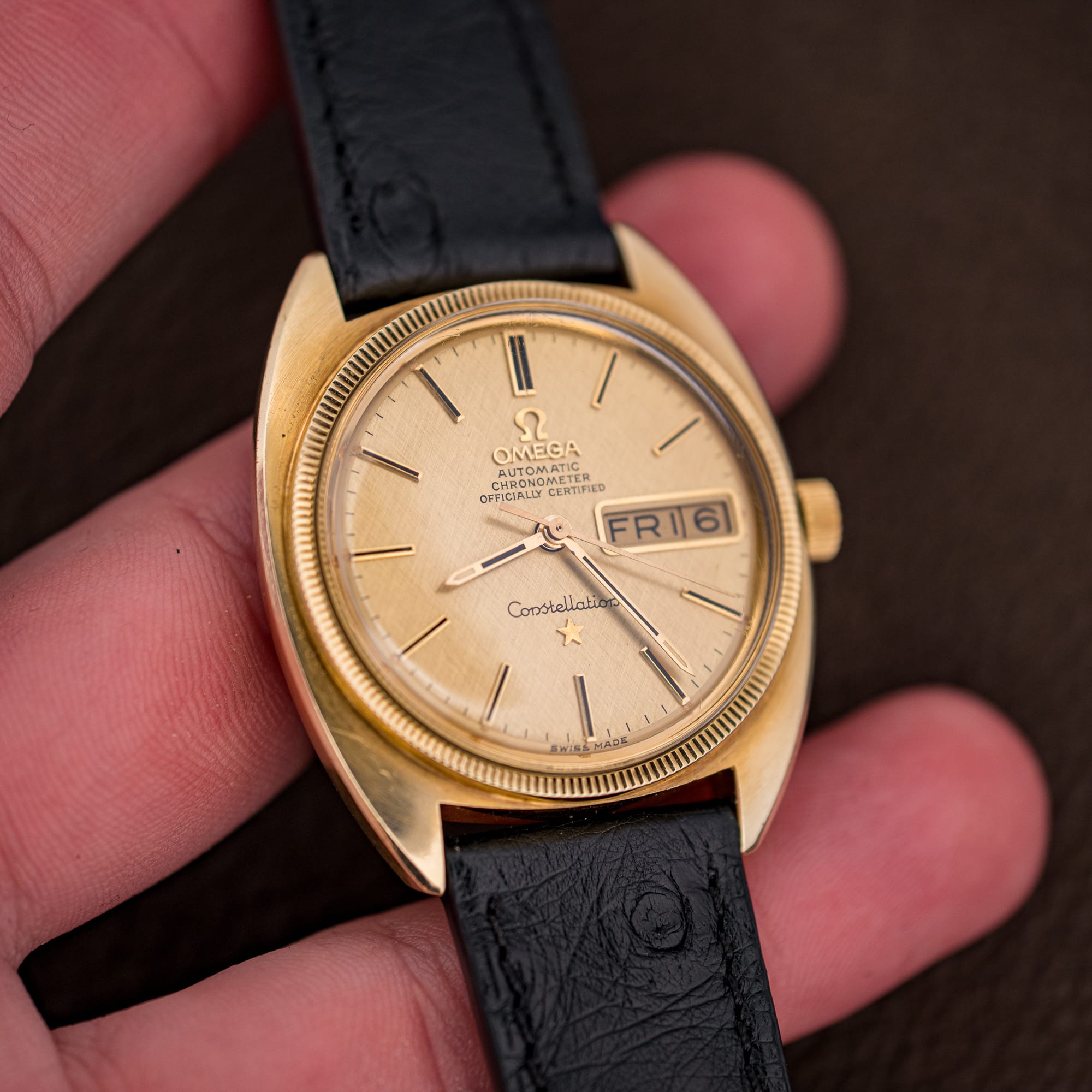
Omega launched the Constellation in 1952 and built the whole line around one idea, keeping better time than anything else in the catalogue. These were its chronometers, the watches Omega used to turn a hard-won reputation for precision into something anyone could buy and wear, and the observatory on the caseback nods to the record-setting trials that reputation was built on. Plenty of watches wear their heritage as a story. This one backs it up on the dial, where the printing reads Automatic, Chronometer, Officially Certified.
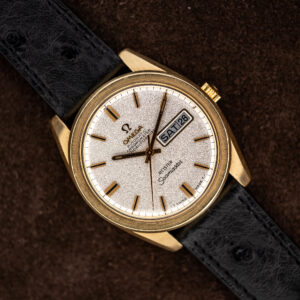
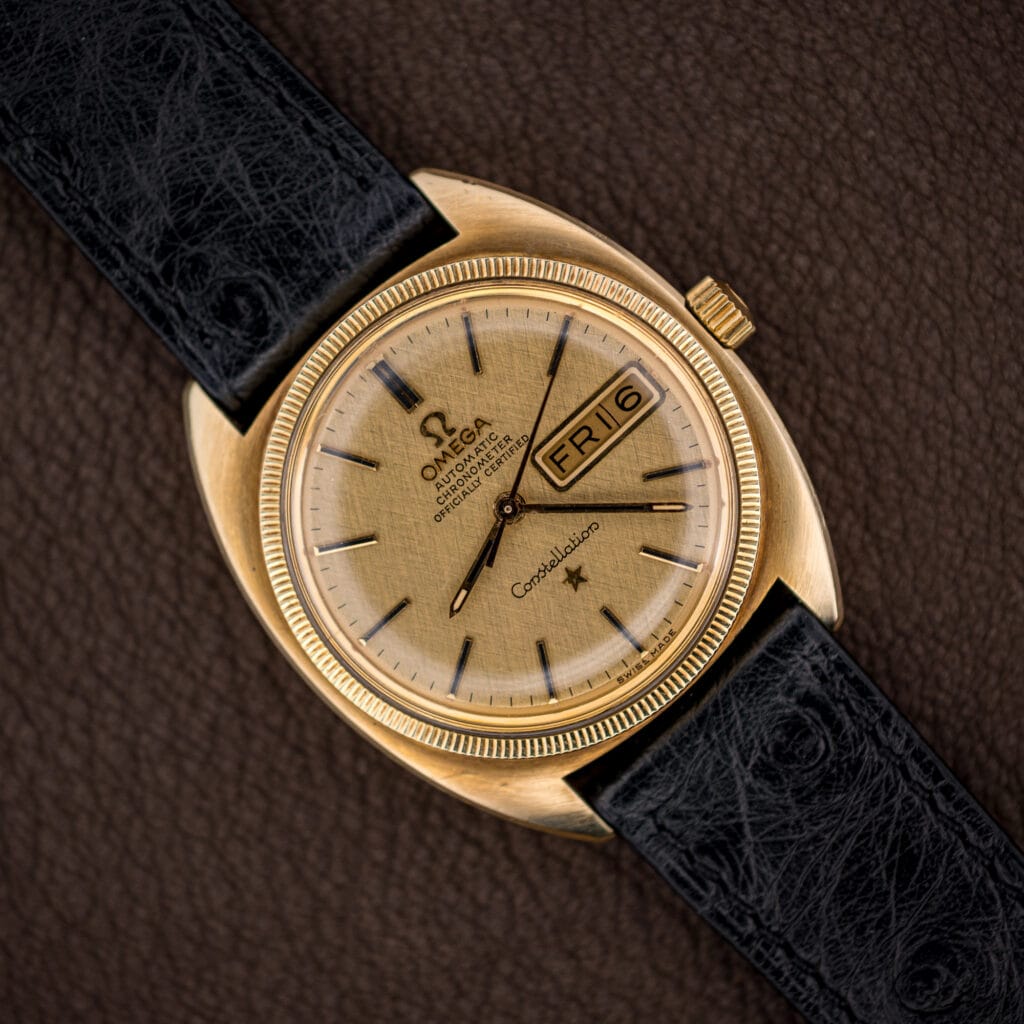
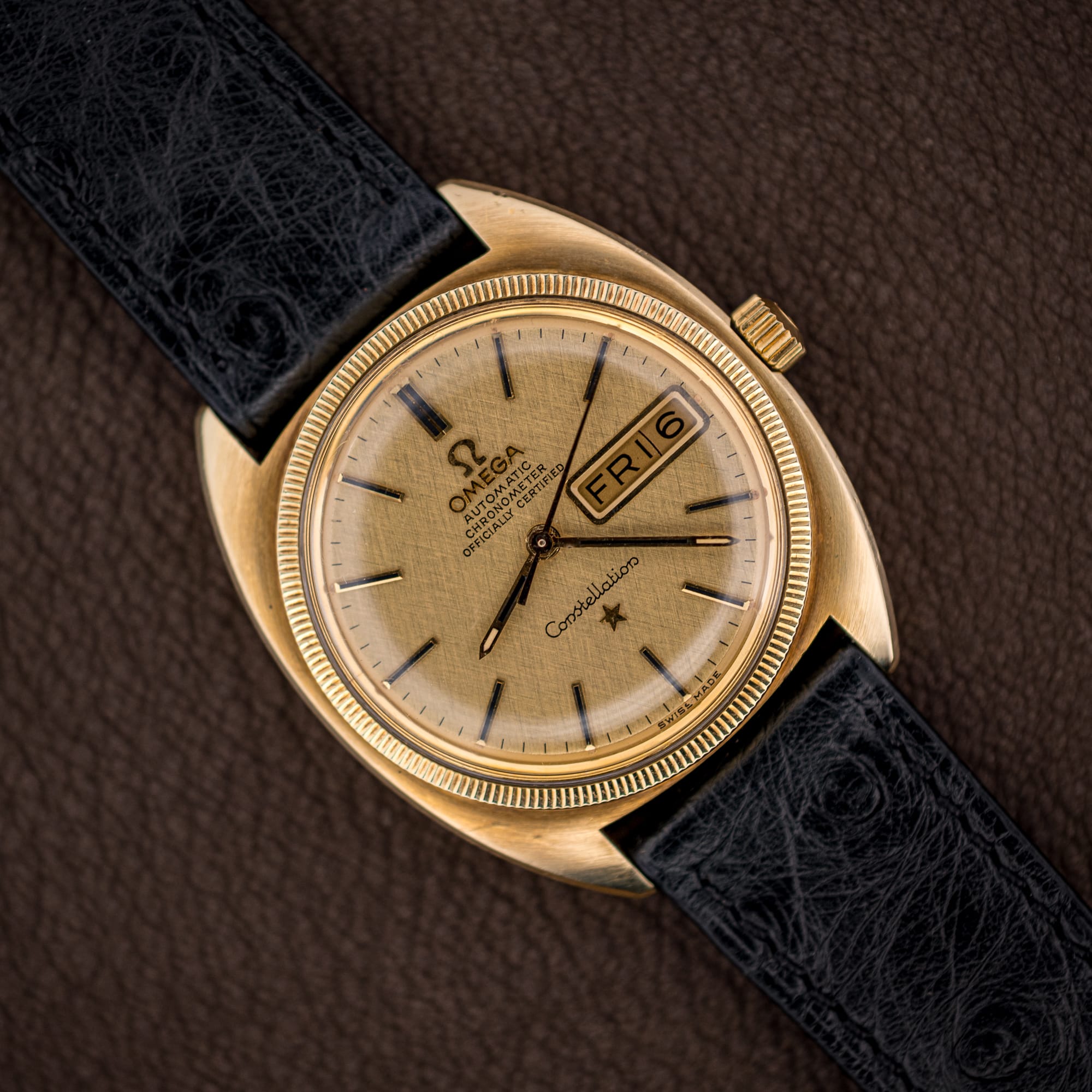
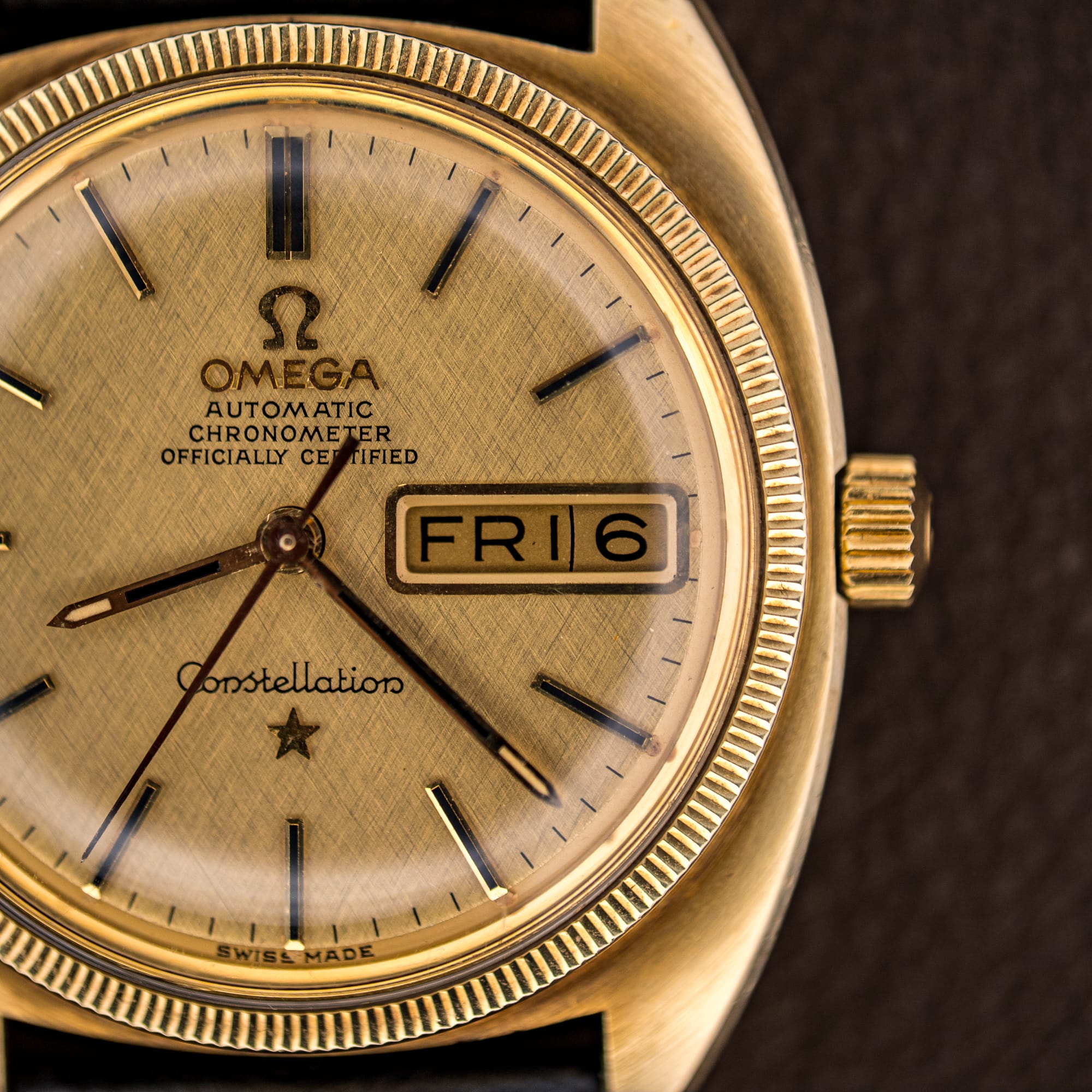
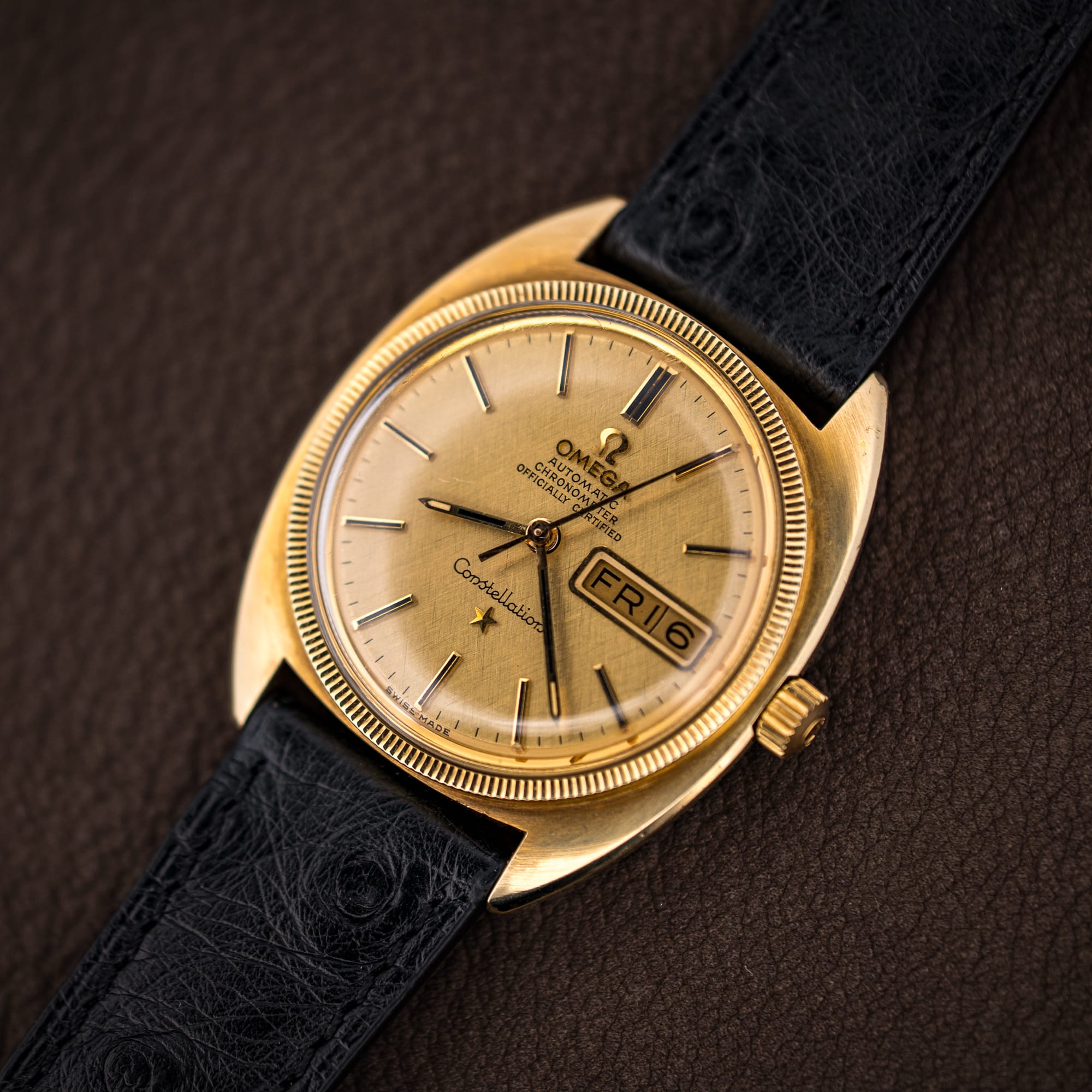
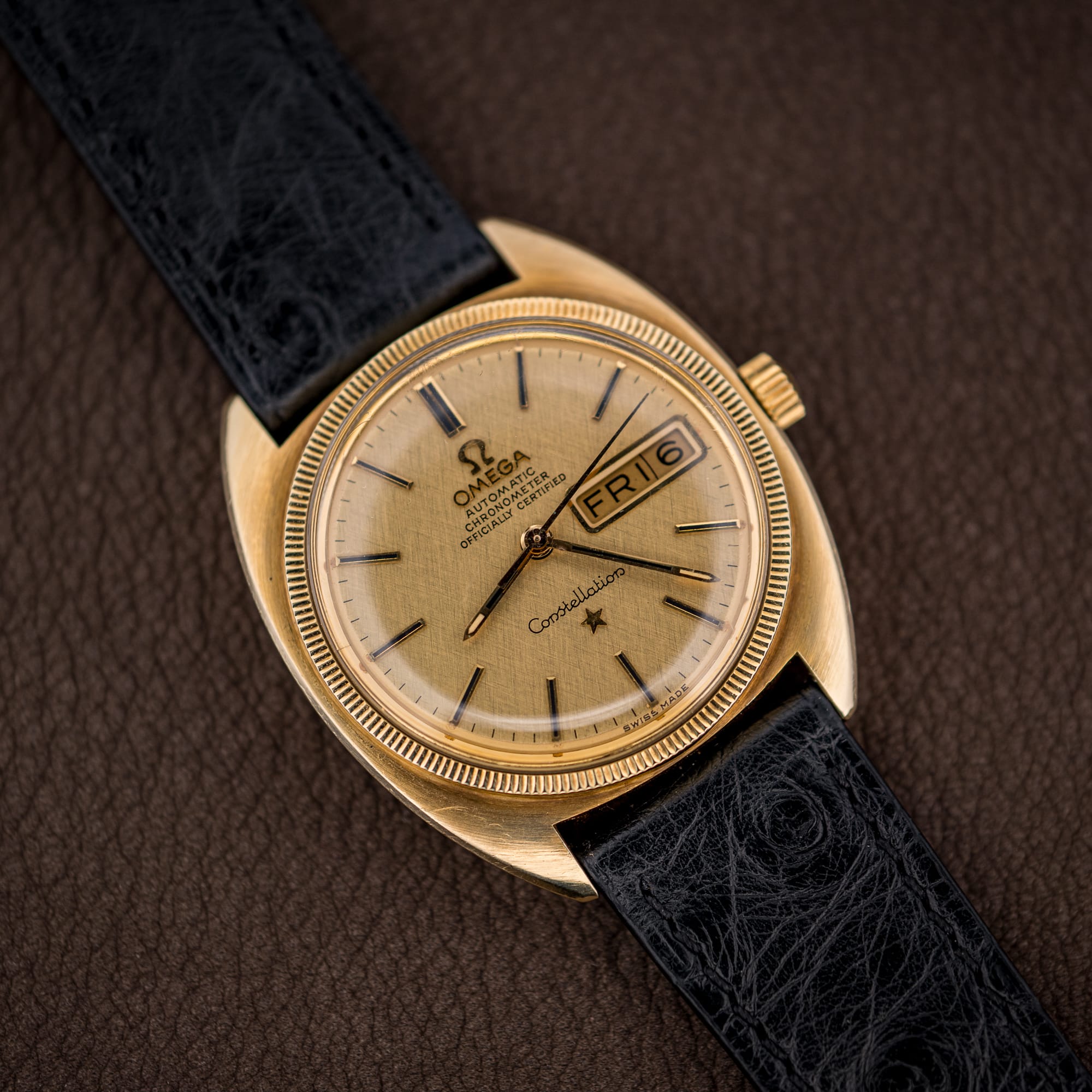
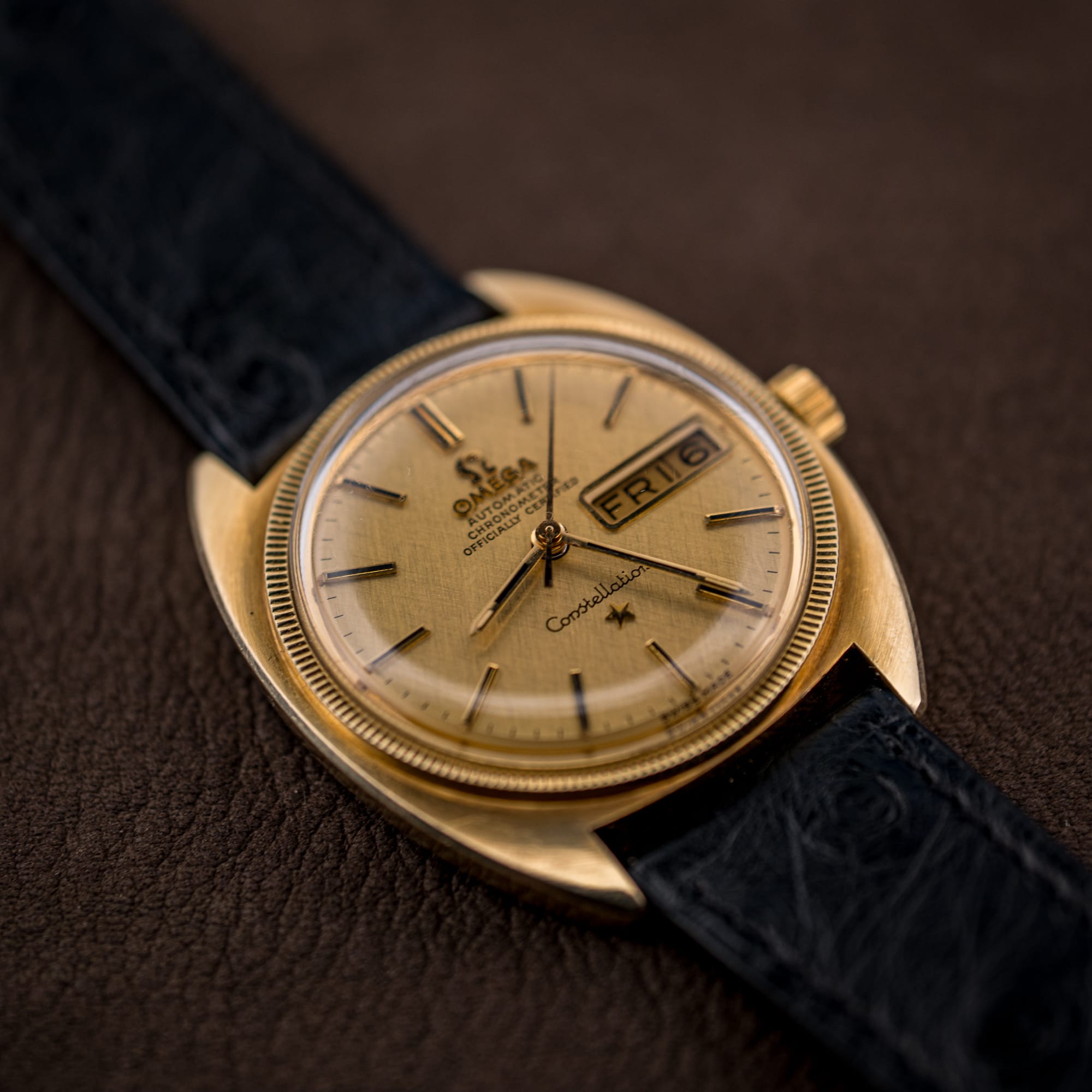
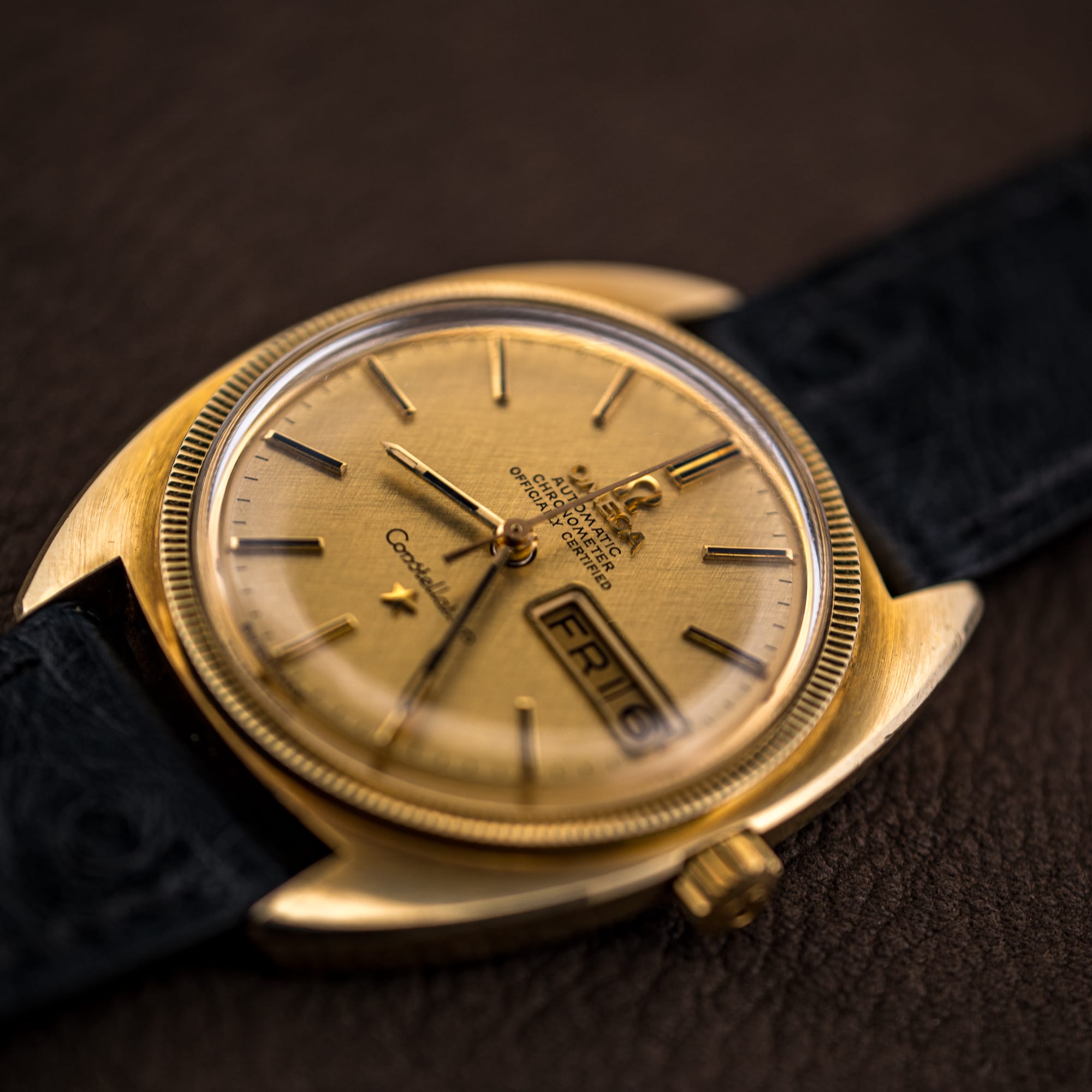
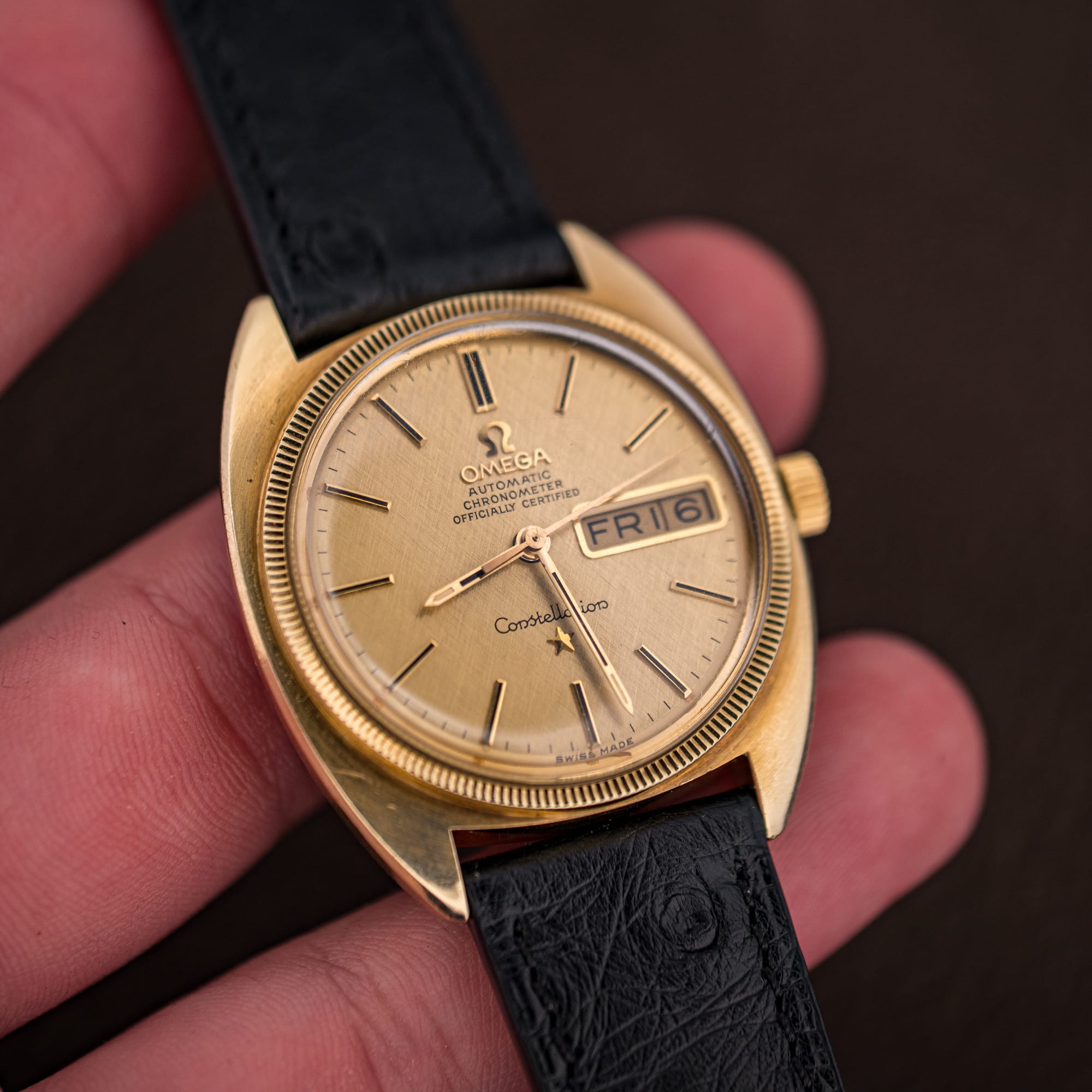
That dial is the part people remember. Omega finished it in a champagne gold linen pattern, a fine crosshatch weave that behaves like fabric under light, turning matte from one angle and catching a warm sheen from the next. In some light it reads as plain warm gold, then the weave comes alive across the whole surface as the watch turns. Applied faceted batons and a slim printed track keep it formal, while the small gold star above six o’clock marks it unmistakably as a Constellation.
At three o’clock sits the feature that made this generation the practical flagship of the family, a framed day and date spelled out in full and clicking over on its own each night. The day sits beside the date behind a single window, printed in dark characters that stay legible against the gold. It is the kind of complication that vanishes into daily use, the sort of convenience whose absence is the only time it gets noticed.
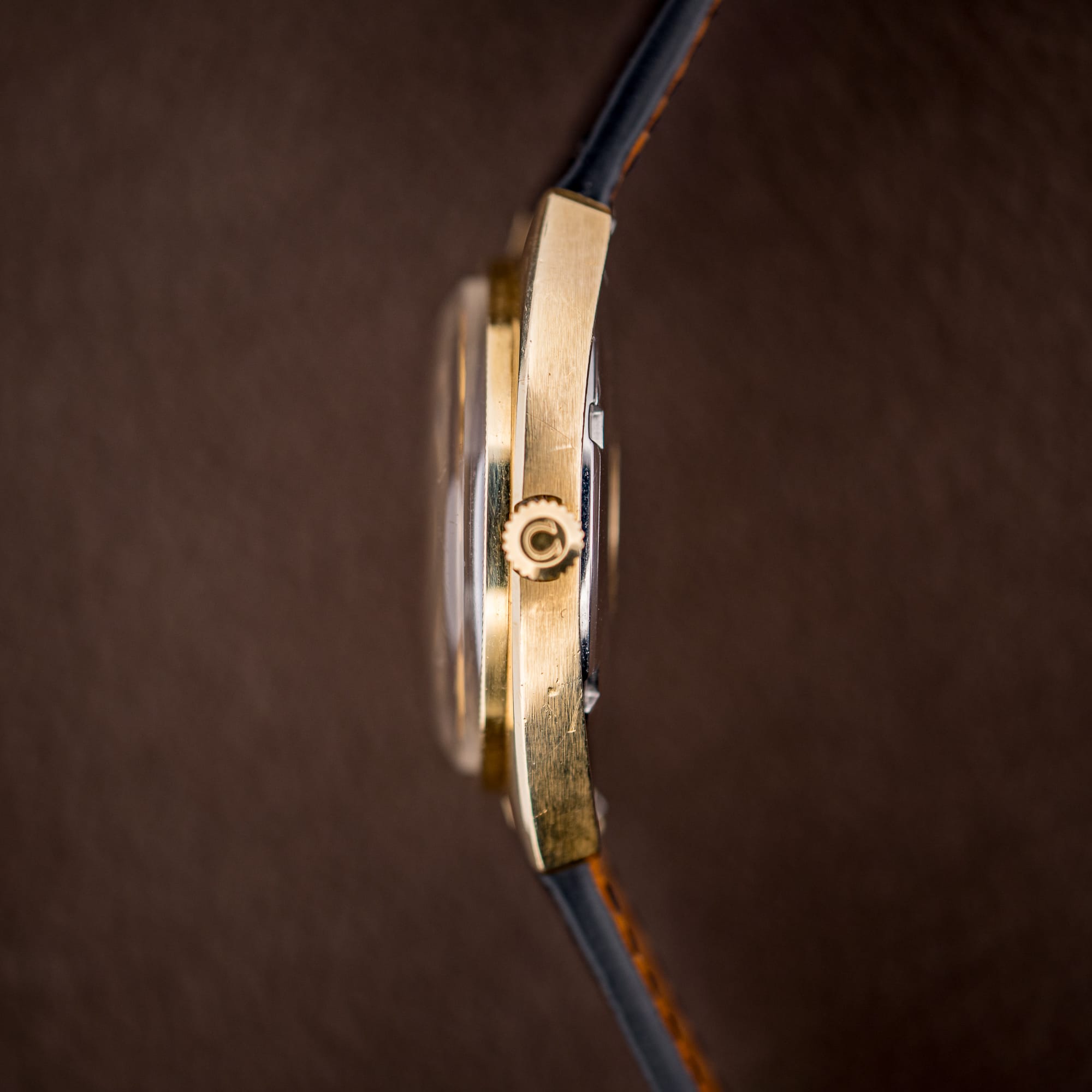
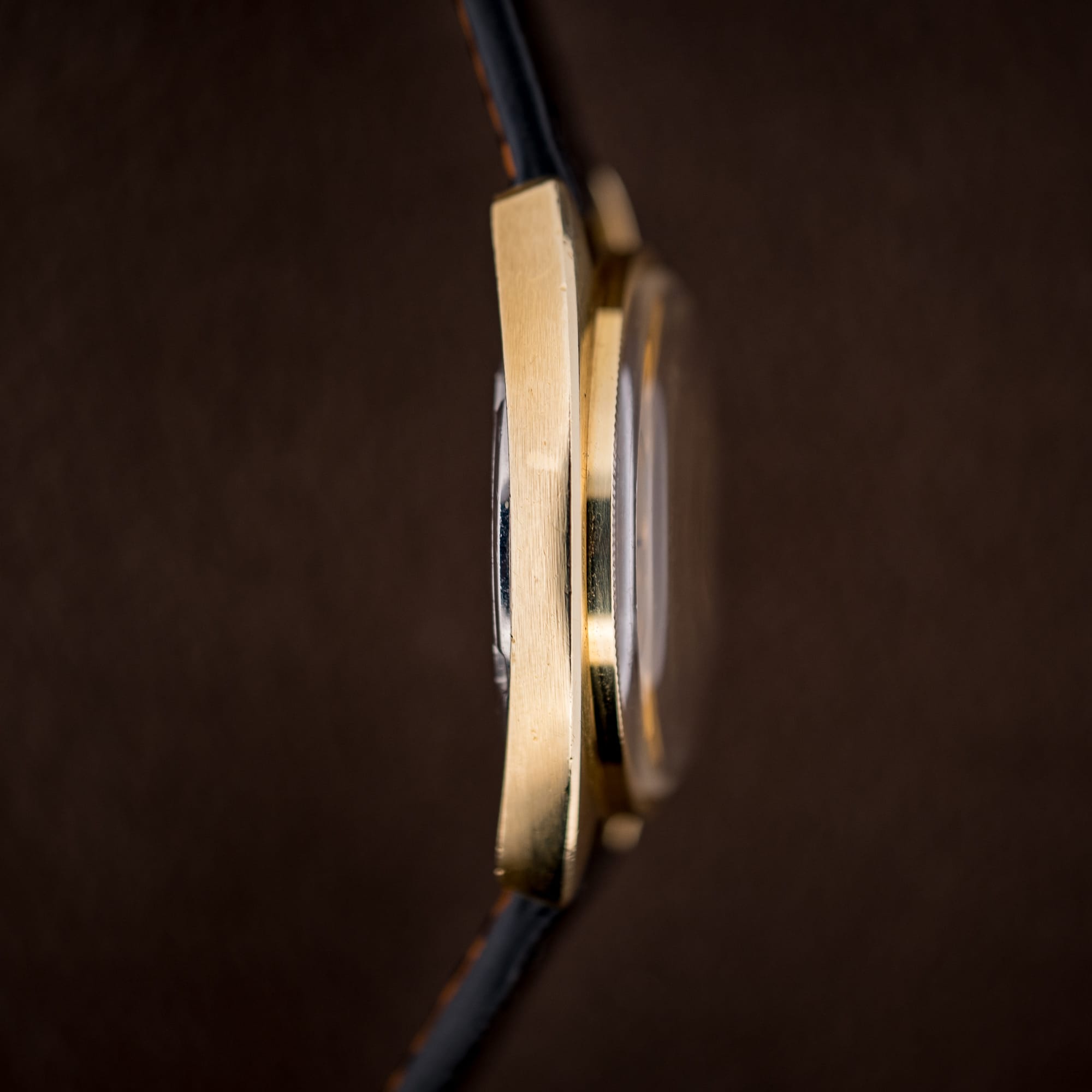
The case is the softened cushion shape of the period, a gold cap worked over a stainless steel back, finished with a closely fluted bezel that throws light in tight lines around the crystal. That coin-edge bezel is a Constellation signature, and it frames the linen dial without crowding it. At roughly 35mm it wears the way a good vintage dress watch should, present on the wrist without demanding attention, the Omega-signed crown falling naturally under the fingers.
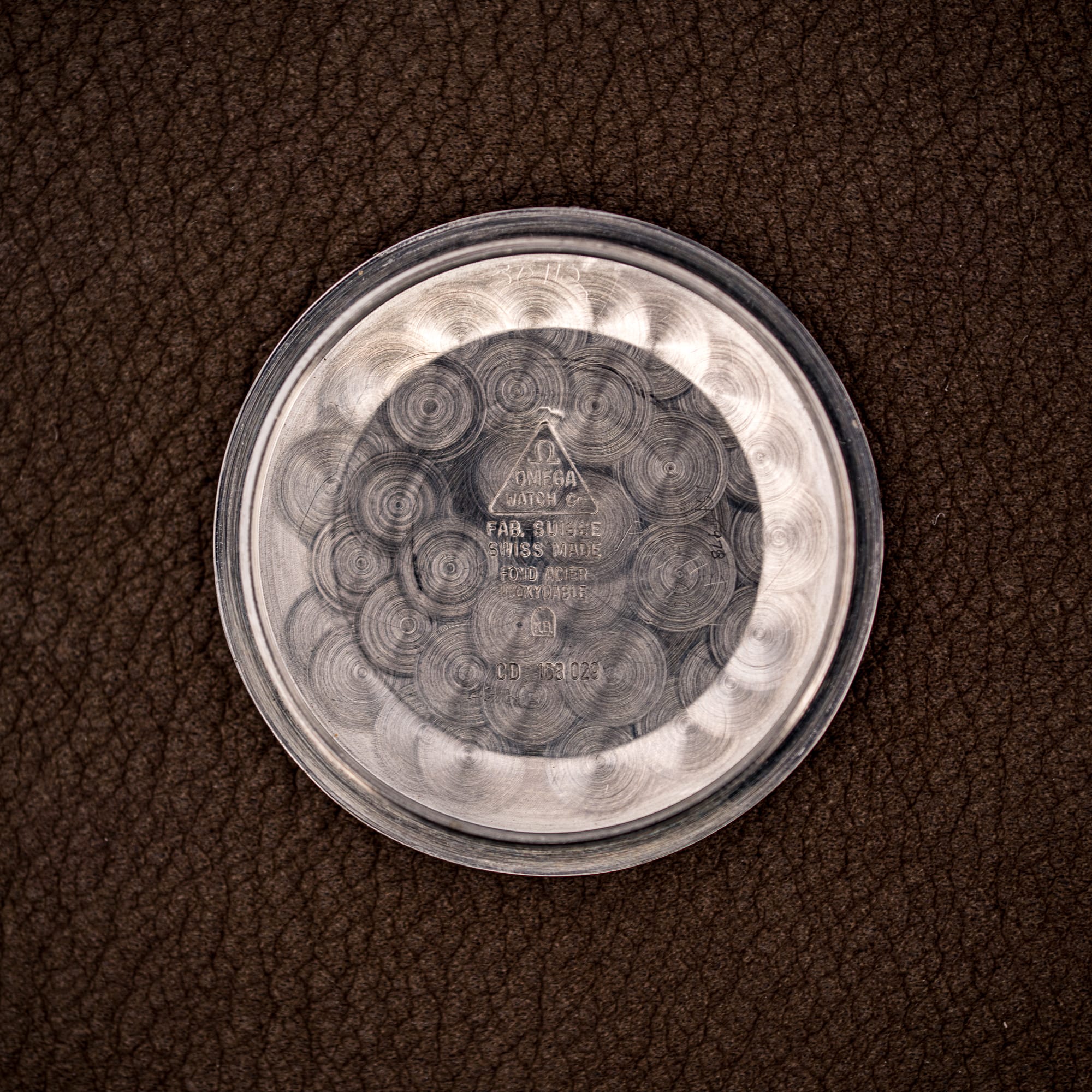
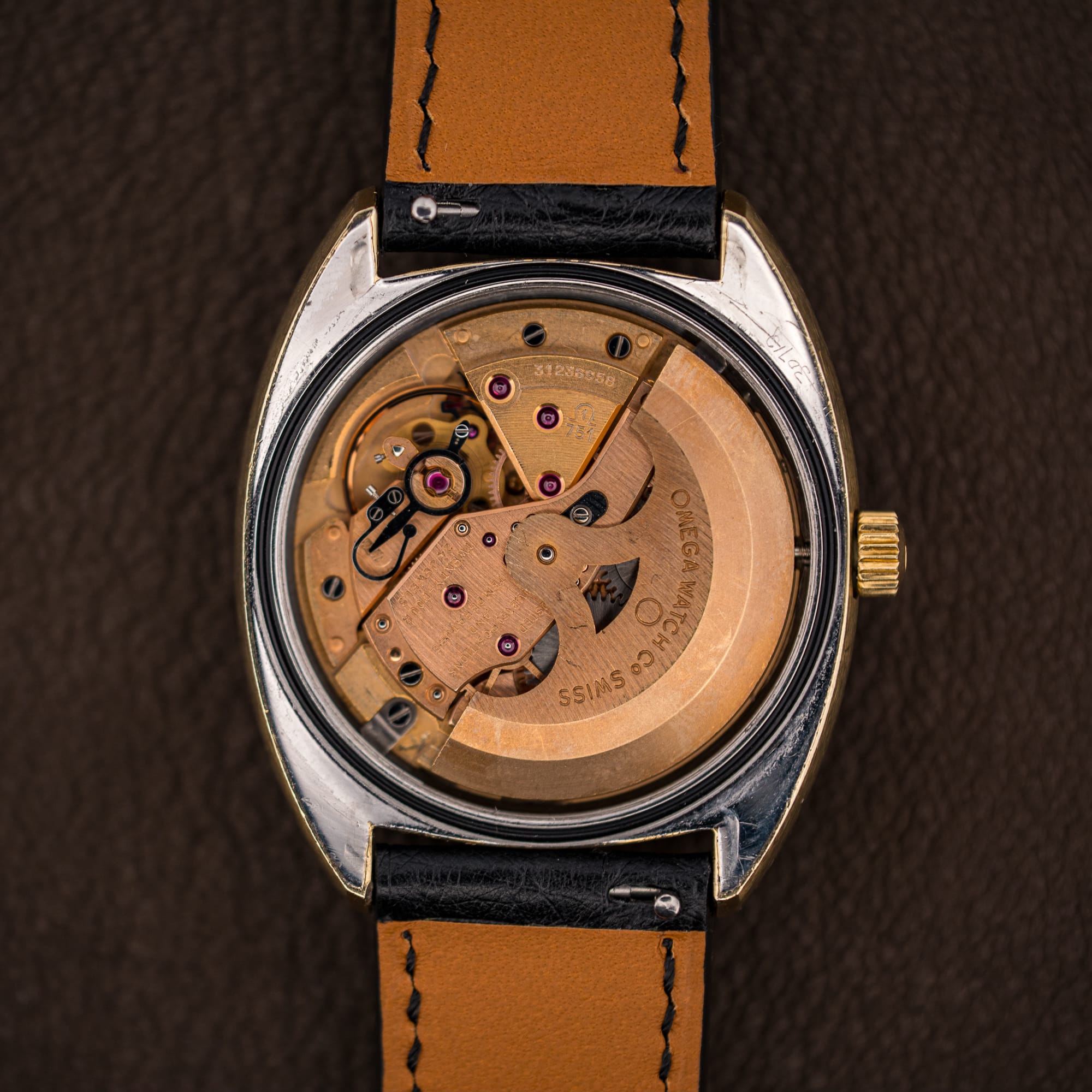
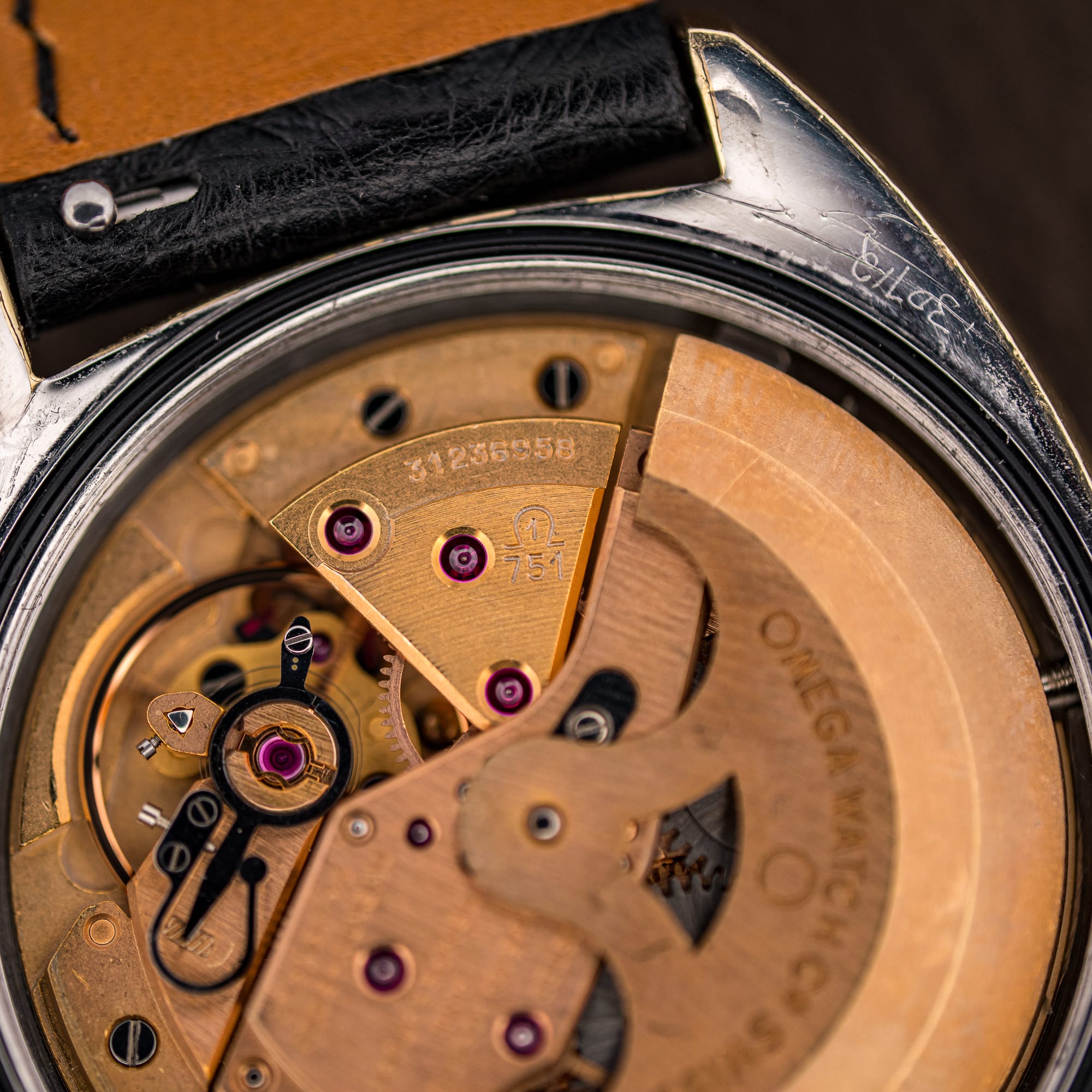
Reference 168.023 runs on Omega’s automatic caliber 751, a 24-jewel movement carrying the full day-date calendar, its bridge stamped 751 and its rotor engraved Omega Watch Co, all consistent with production around the early 1970s. The gold linen dial and observatory-stamped steel caseback are present and correct, and the case shows the light, honest wear of a watch that was worn and cared for.
Serviced in-house at OTTUHR and backed by our 2-year mechanical warranty, it comes fitted to a black Ostrich strap that reads every bit as dressy as the gold above it. A precision instrument that spent its life passing as jewelry, which was always the point.