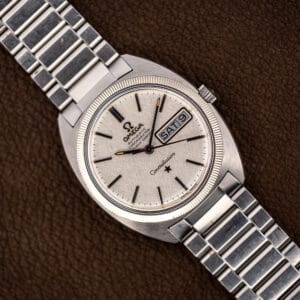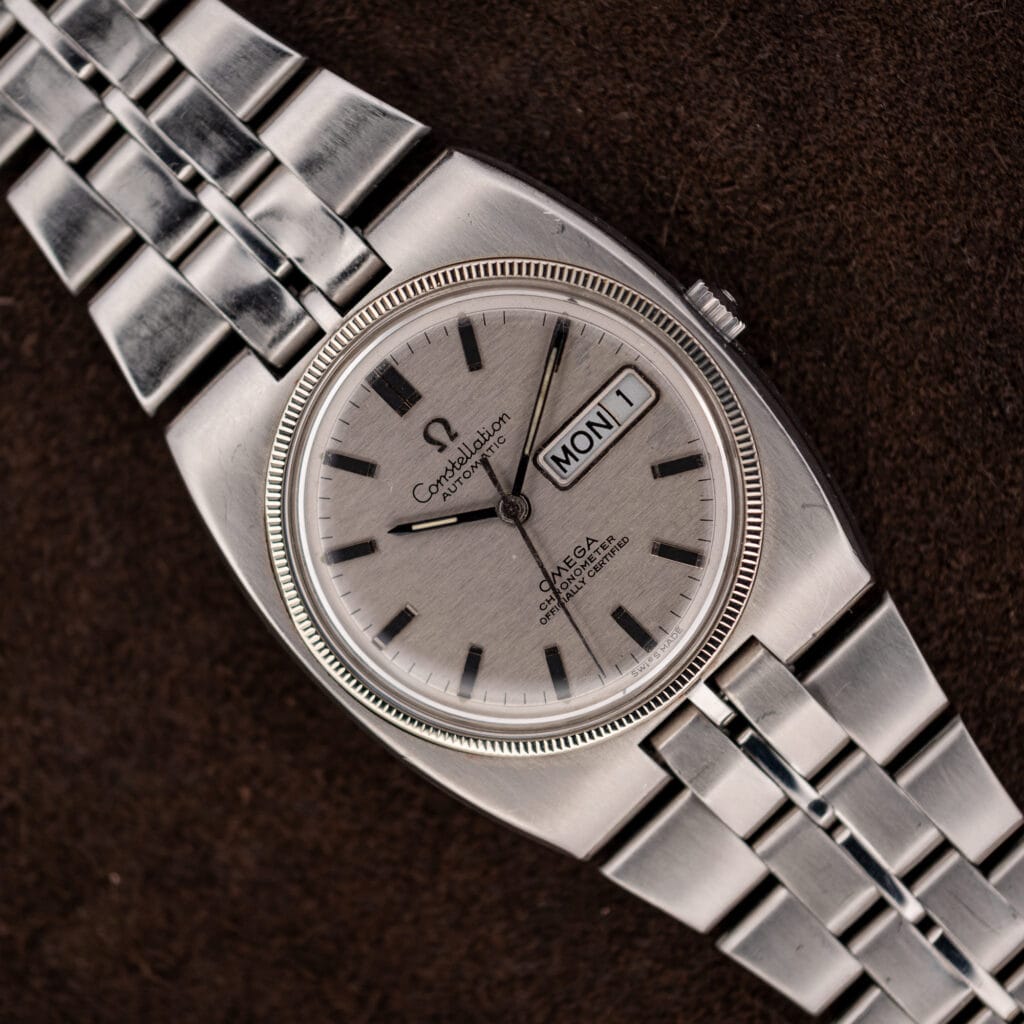
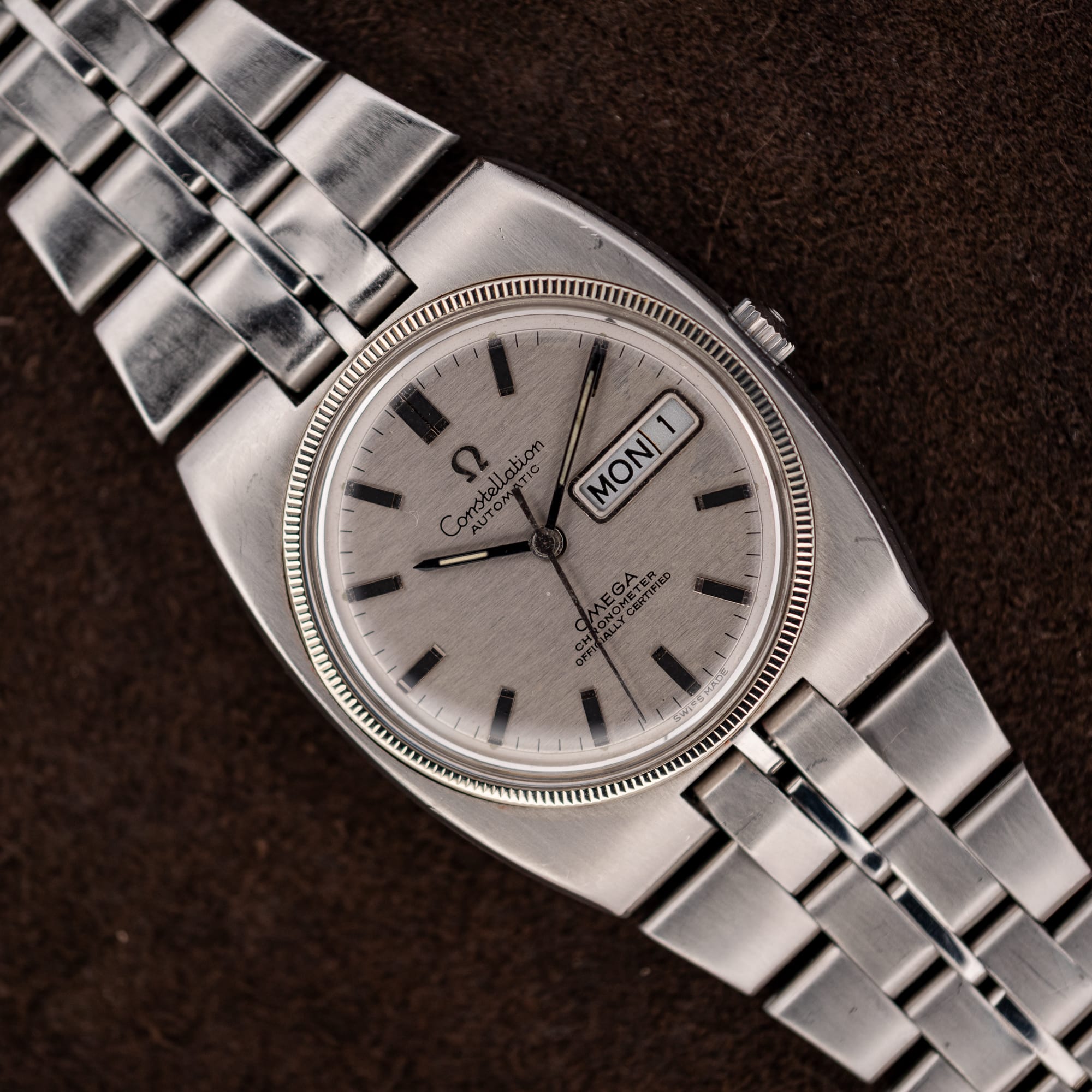
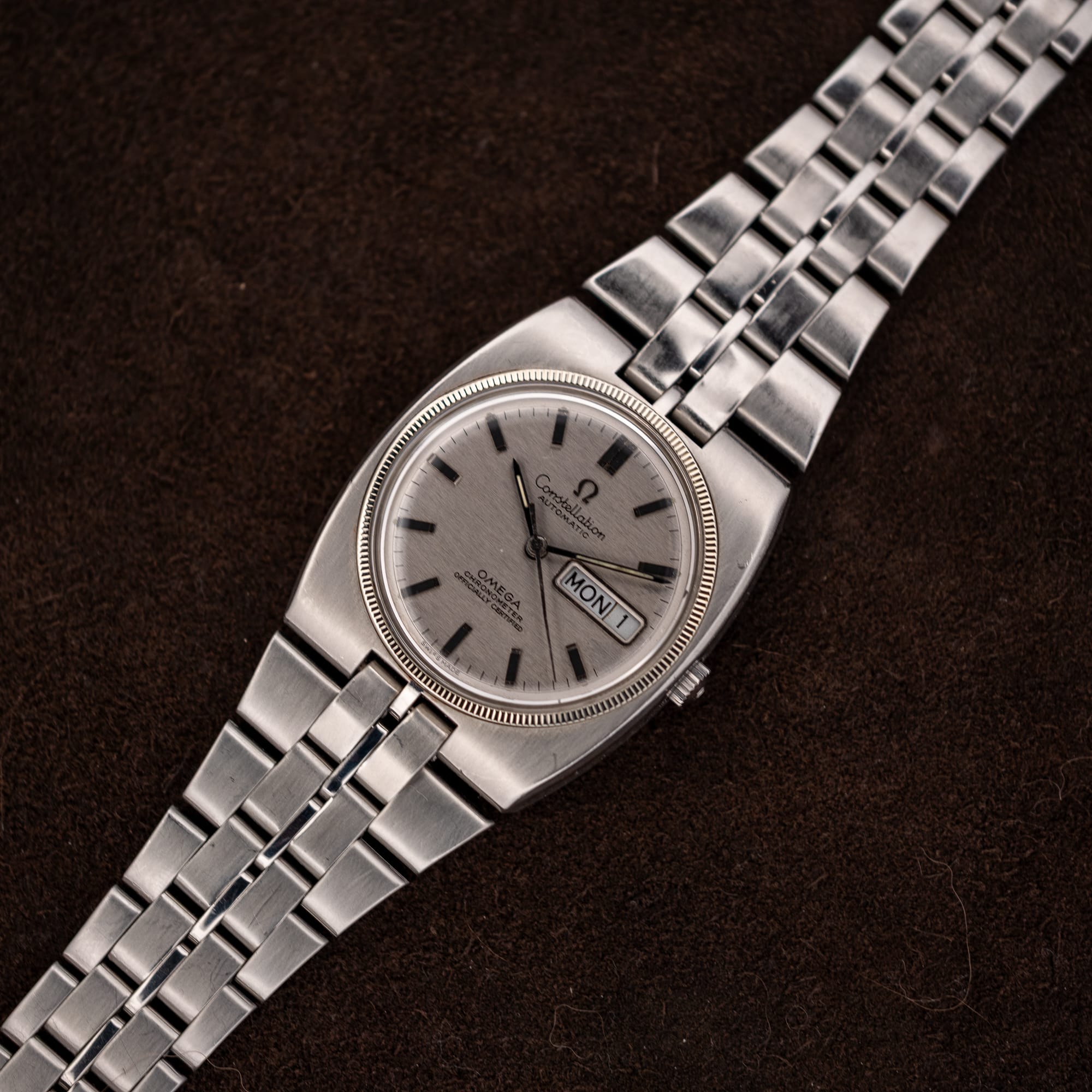
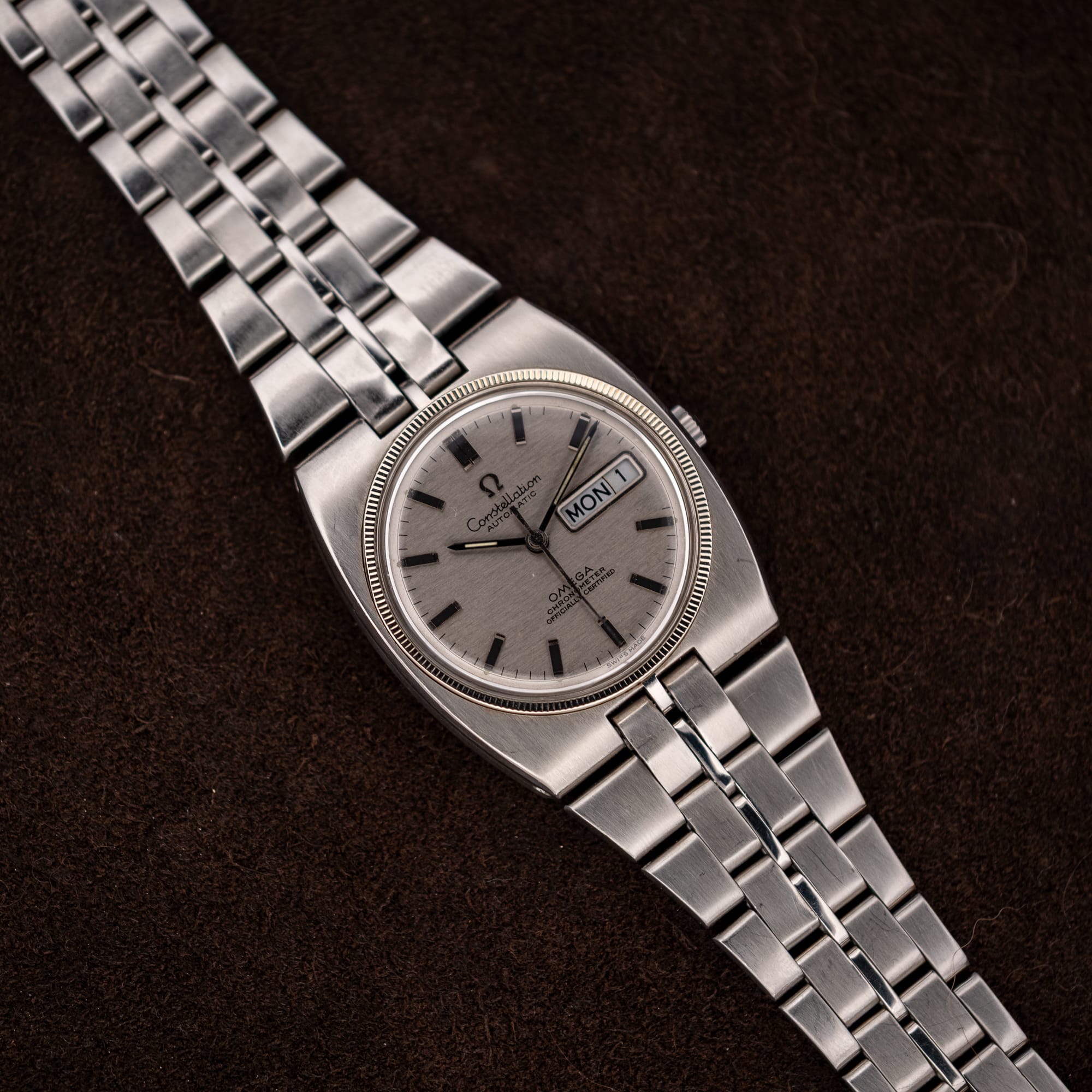
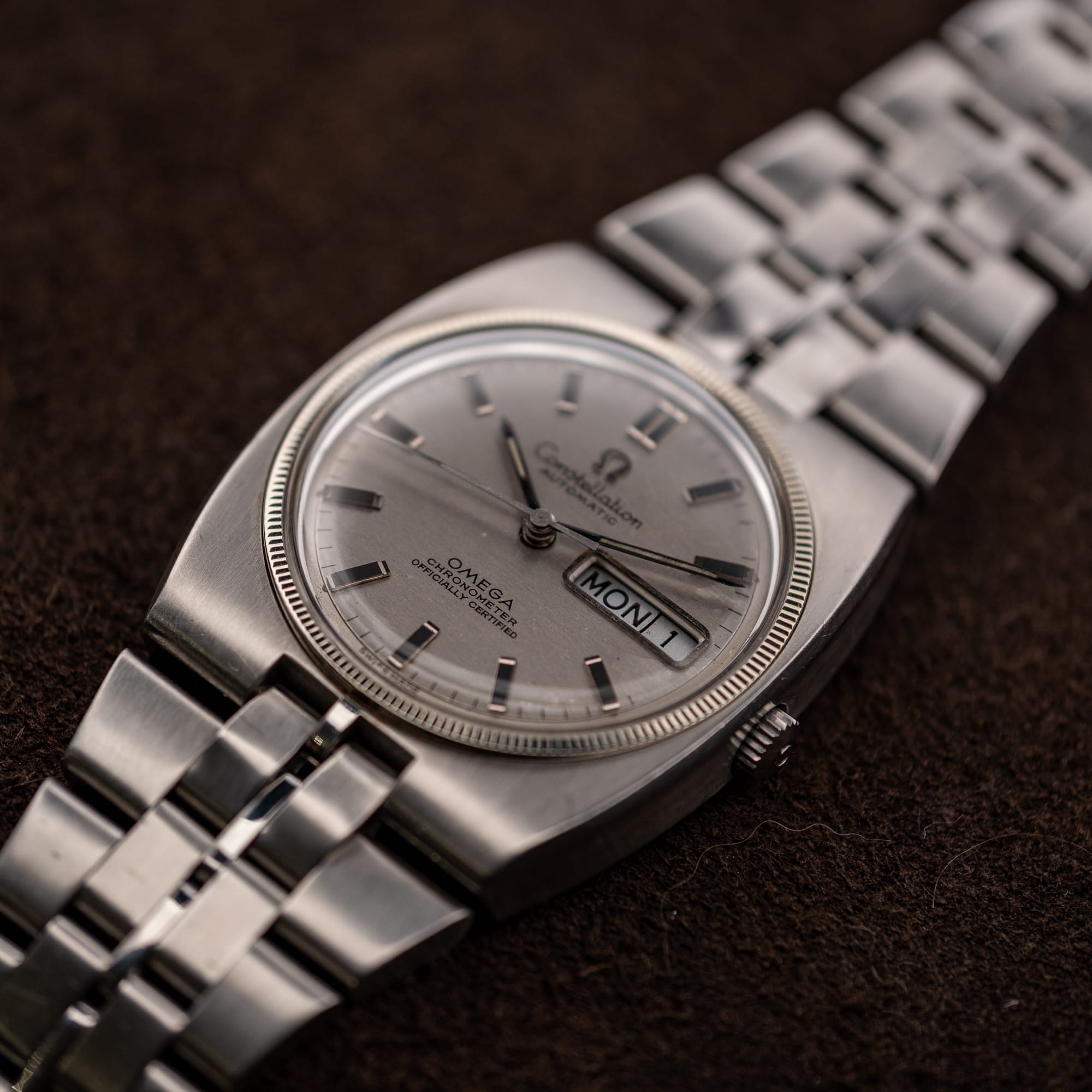
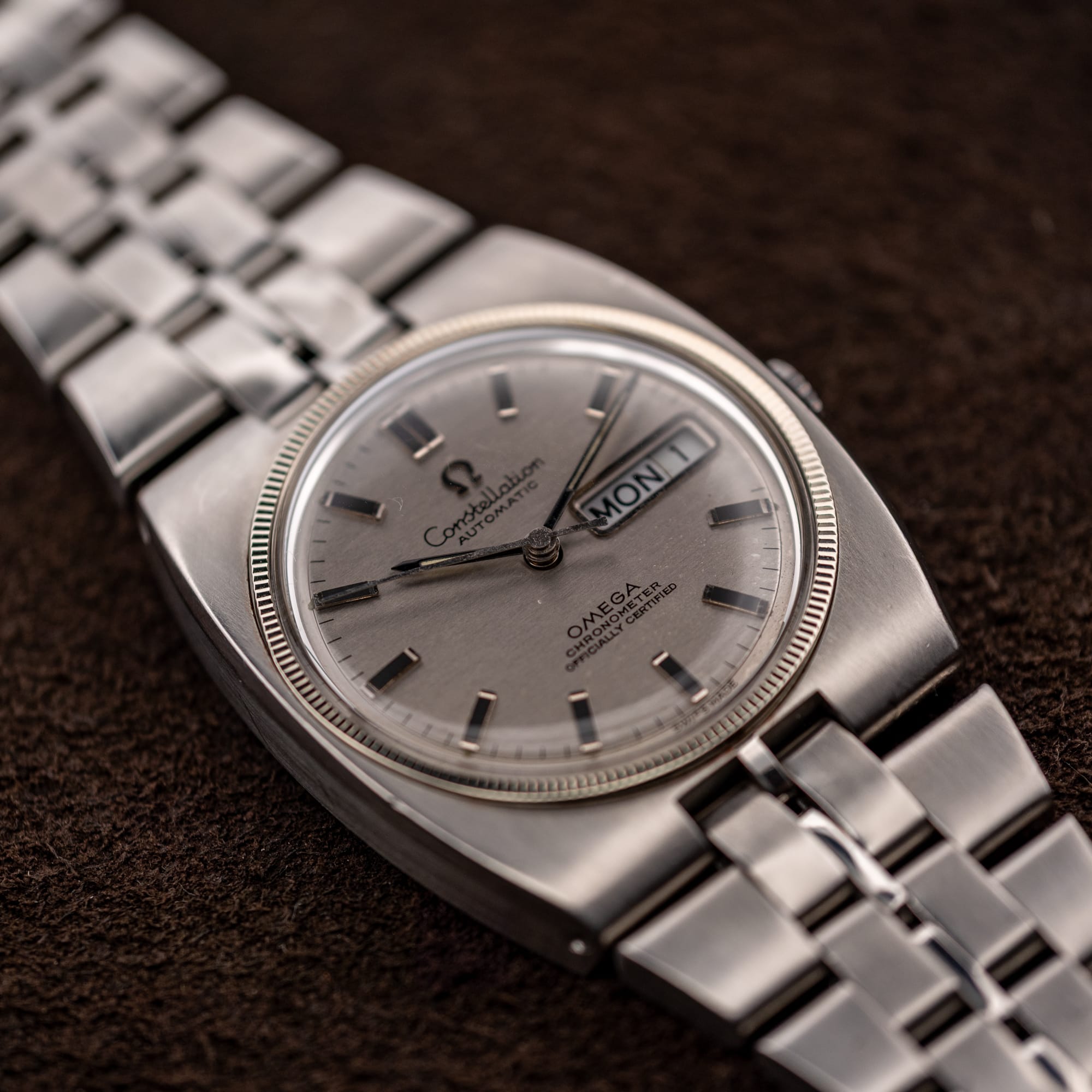
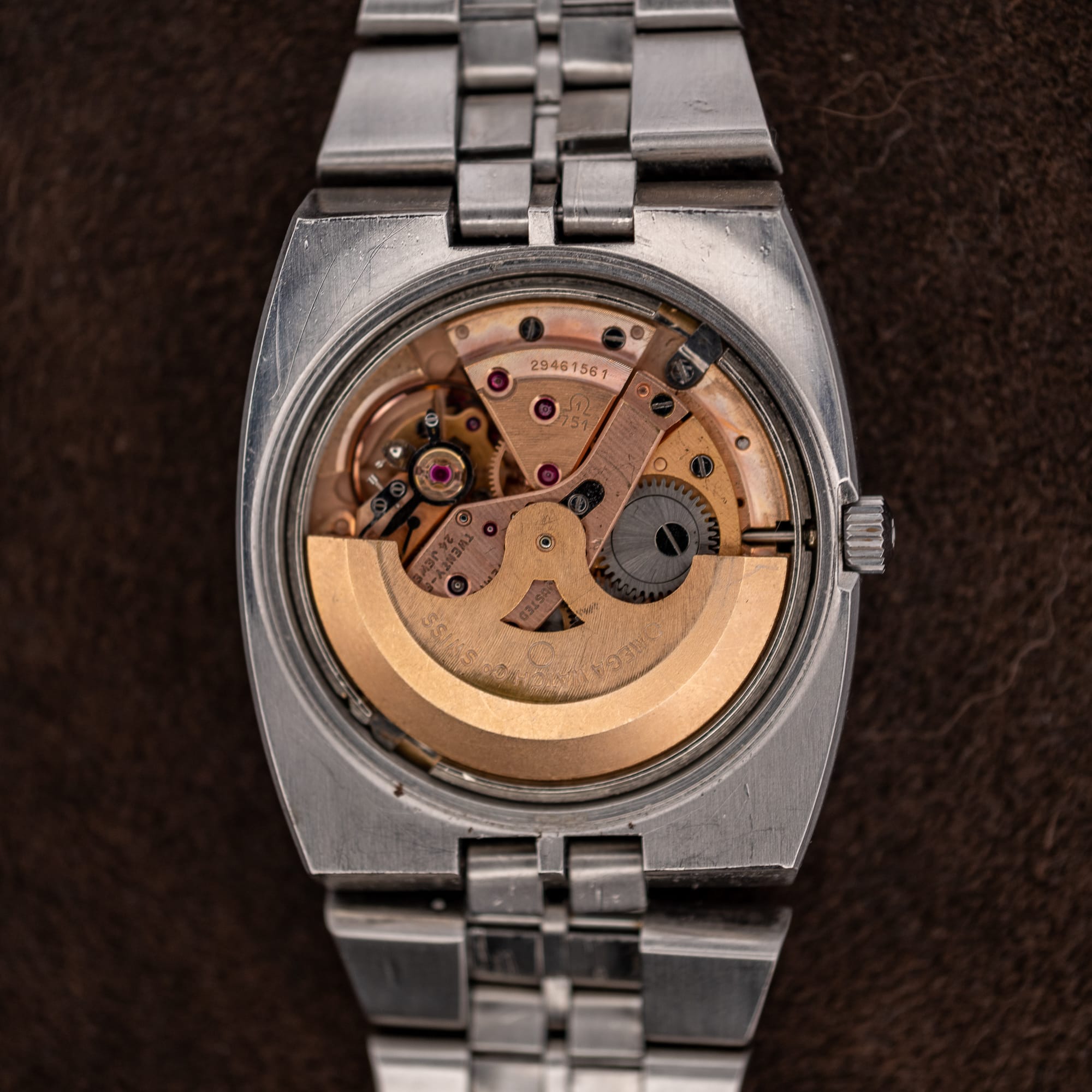
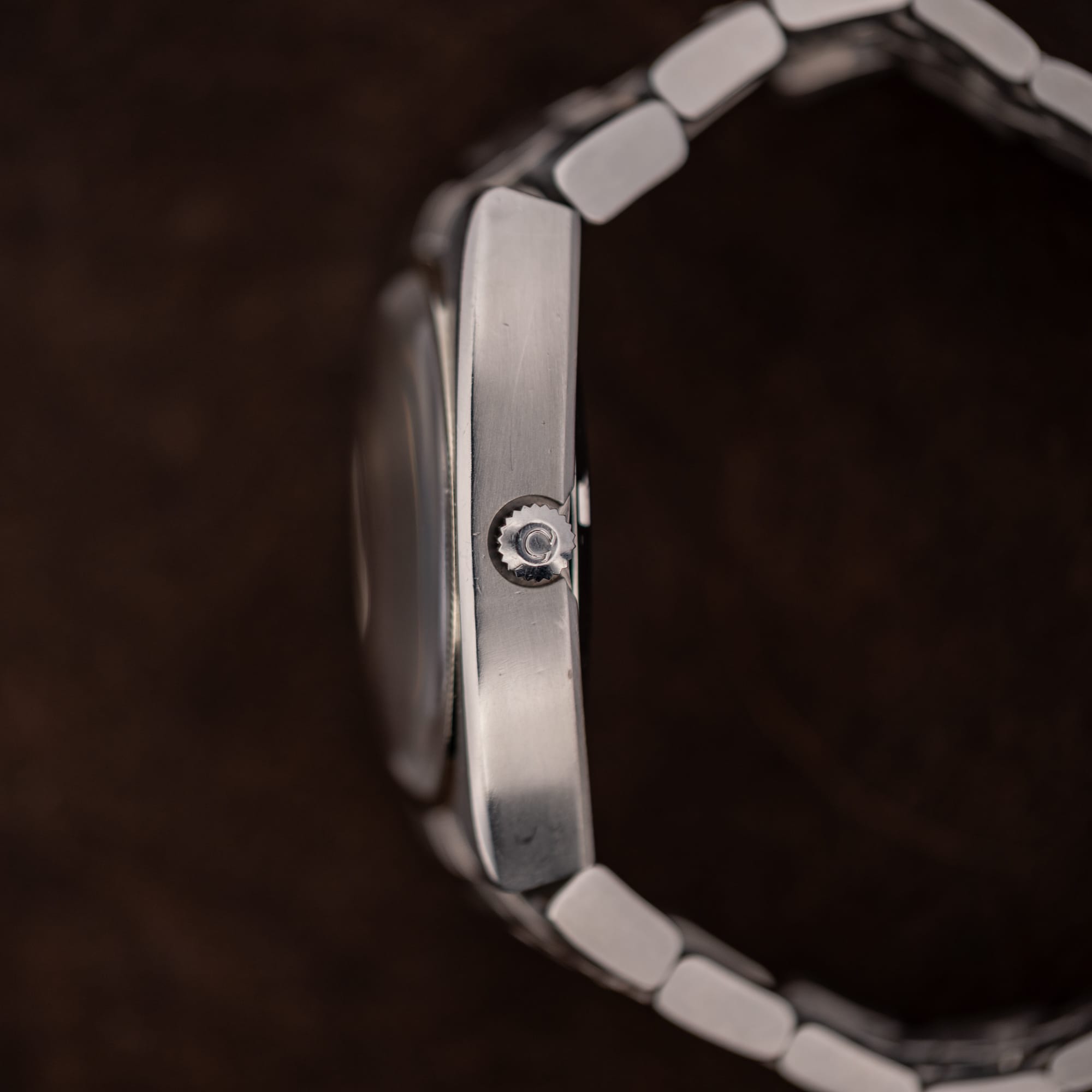
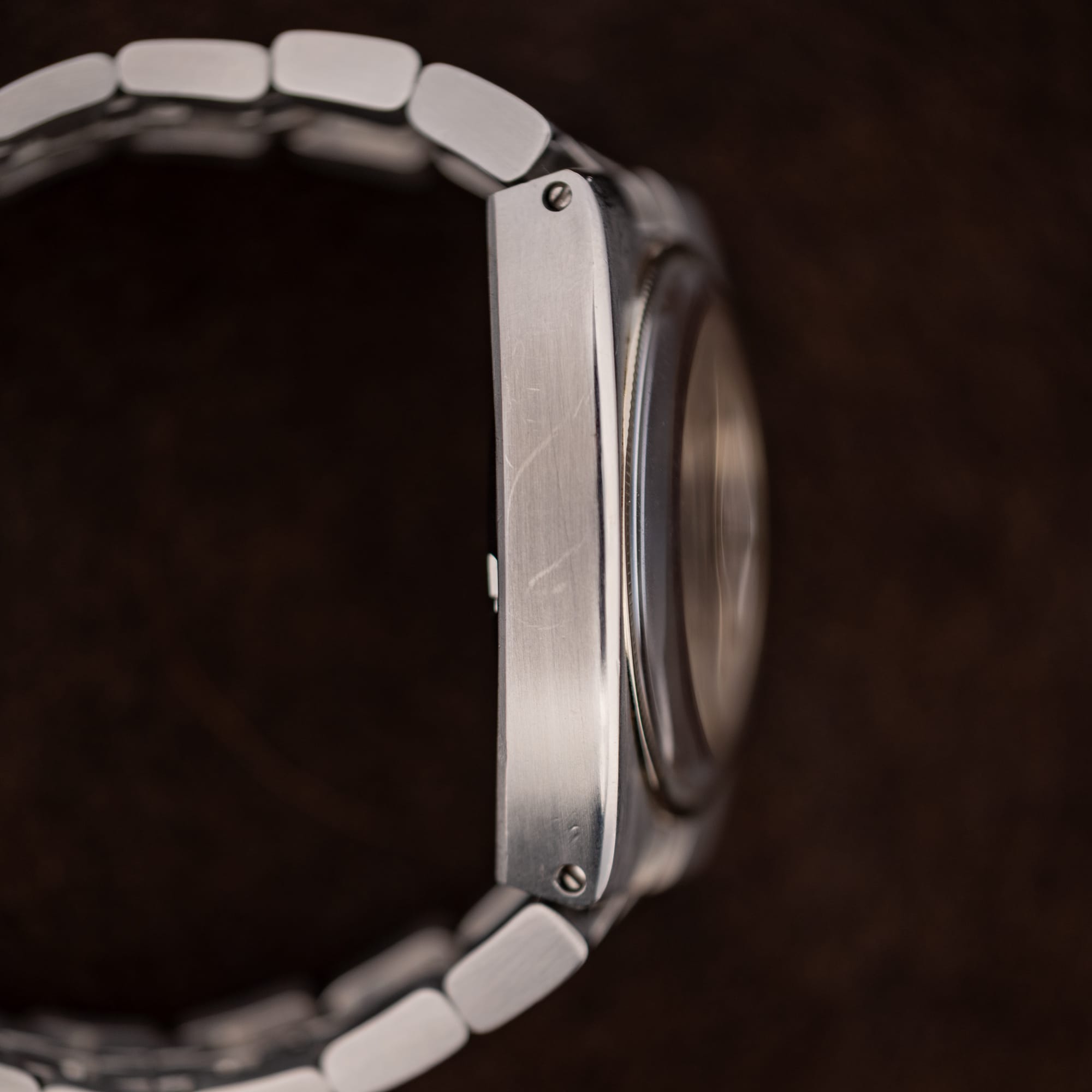
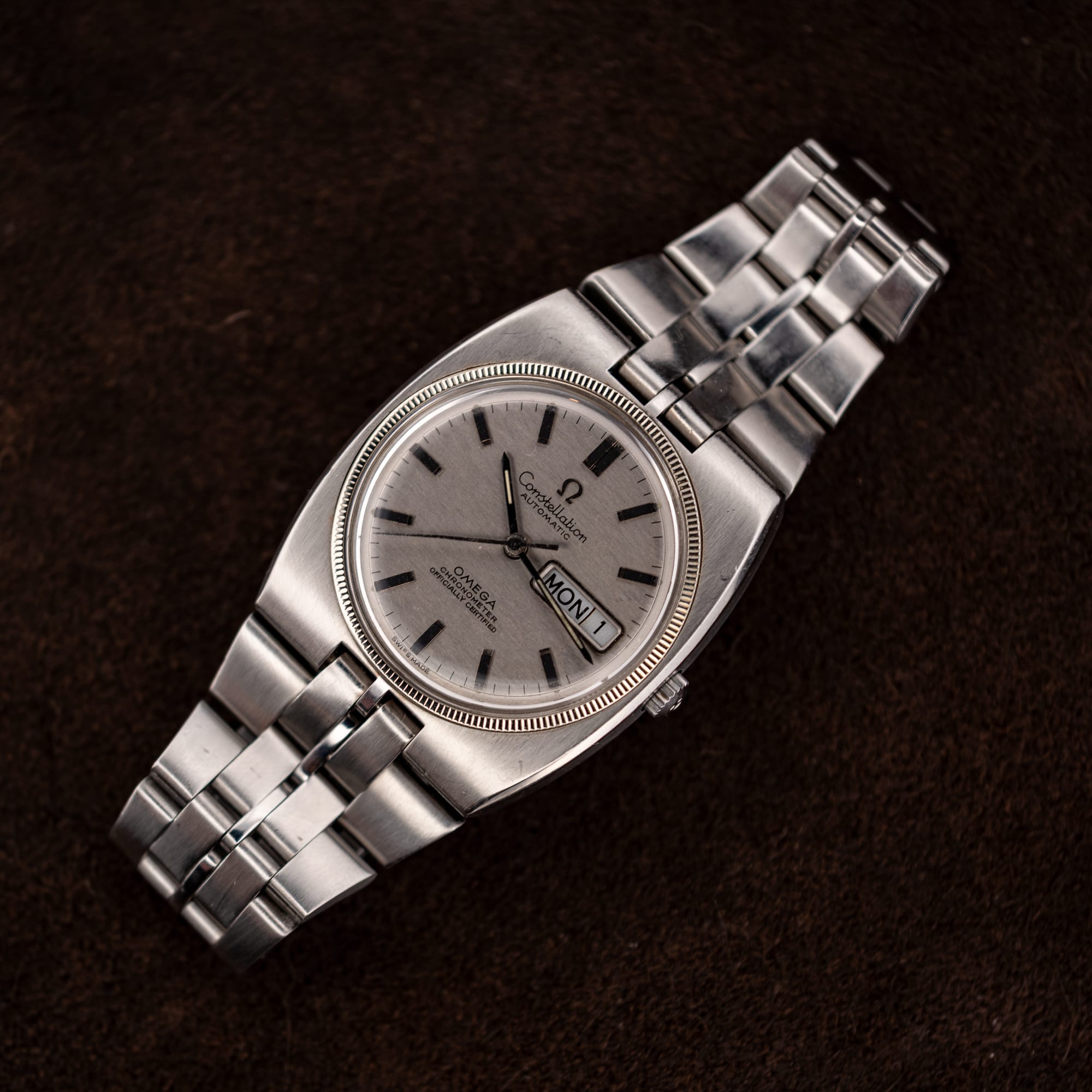

By 1969, Omega was treating the bracelet as part of the Constellation’s architecture, not simply something fitted between its lugs. The Omega Constellation 168.045 belongs to that experiment: paired inner links enter slots in the case, bringing bracelet and watch head into one continuous outline. We find that junction more revealing than any single flourish on the dial. Omega was exploring this connection before the Royal Oak arrived in 1972. The Constellation had already found a way to make its bracelet part of its identity.
This was a change of shape rather than a departure from the collection’s identity. Introduced in 1952 as a chronometer line, the Constellation had become familiar through its faceted dials and distinctive lugs. Through the 1960s, flatter dials and broader case forms opened another direction. Omega’s archive places an integrated stainless steel, day-date Constellation with caliber 751 in its 1969 international collection. The late-1960s design story is therefore not a retrospective resemblance to a later fashion; integrated bracelets were already part of the family.
There is a useful distinction between a bracelet that matches a case and a bracelet that helps define it. On this design, the outer links carry the width of the case shoulders onward, while the narrower paired links make the actual connection. We see the watch as a single composition because its outlines continue across that joint. The circular dial still provides a familiar center, but the surrounding shape no longer stops at four projecting lugs. The Constellation’s dress-watch character survives inside a notably different silhouette.
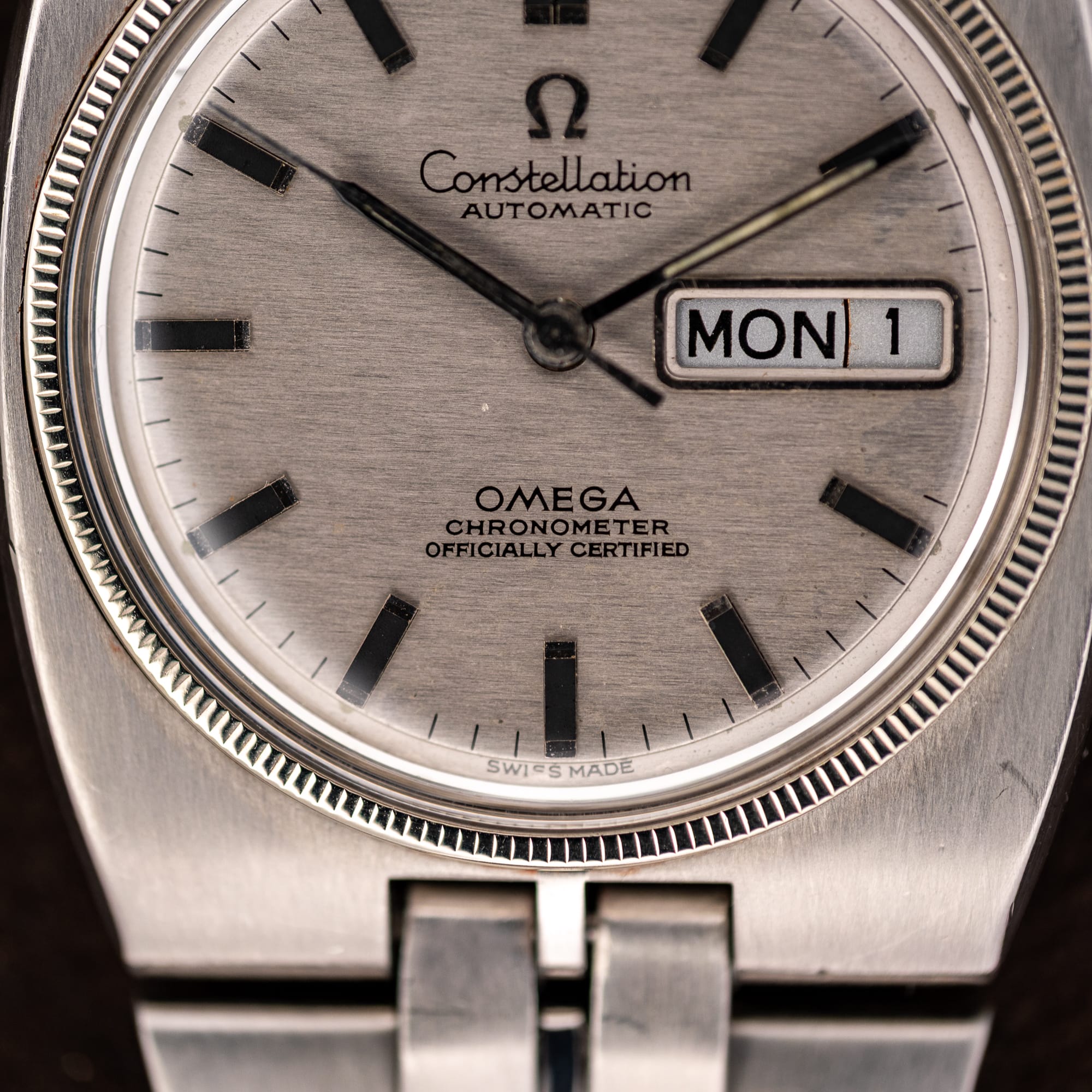
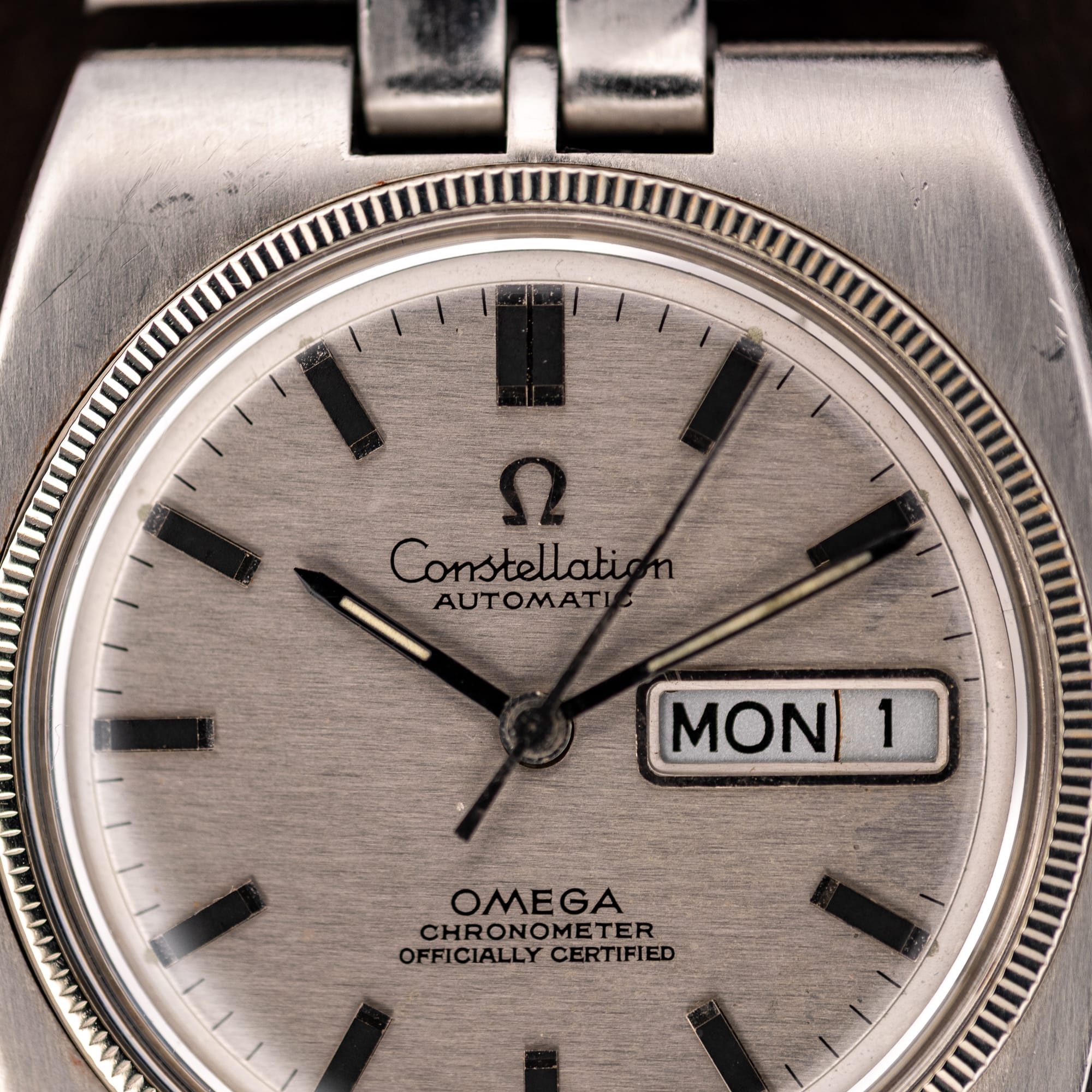
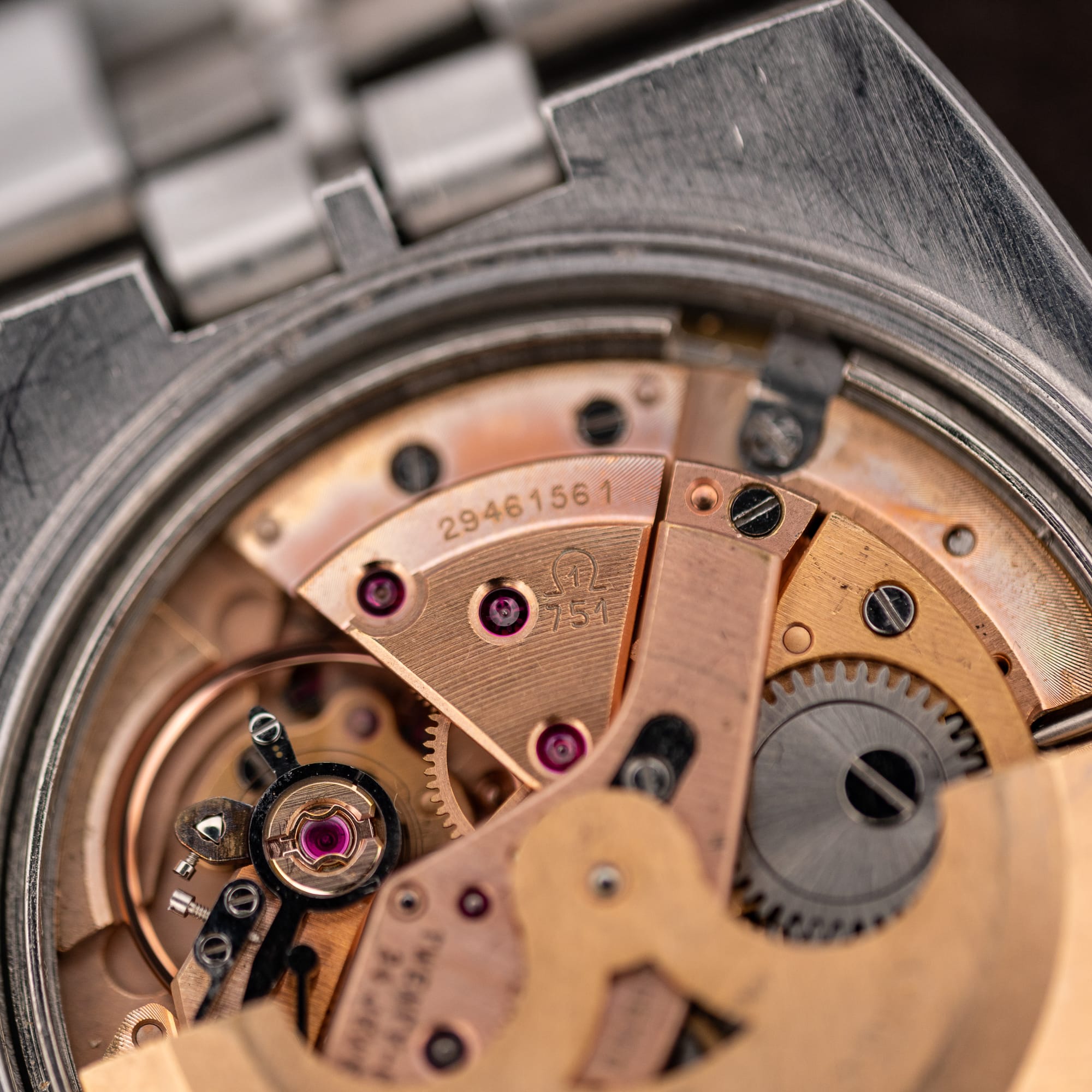
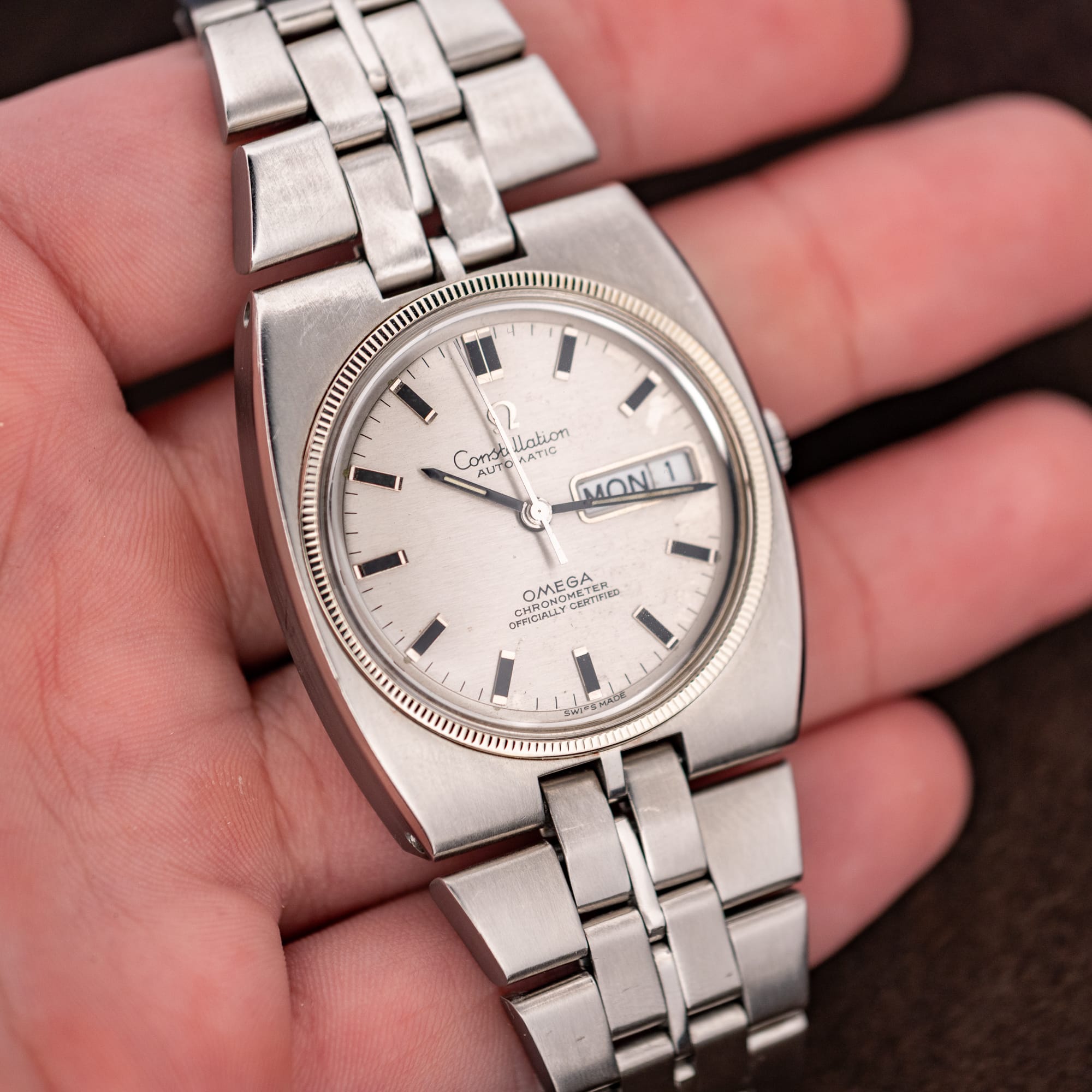
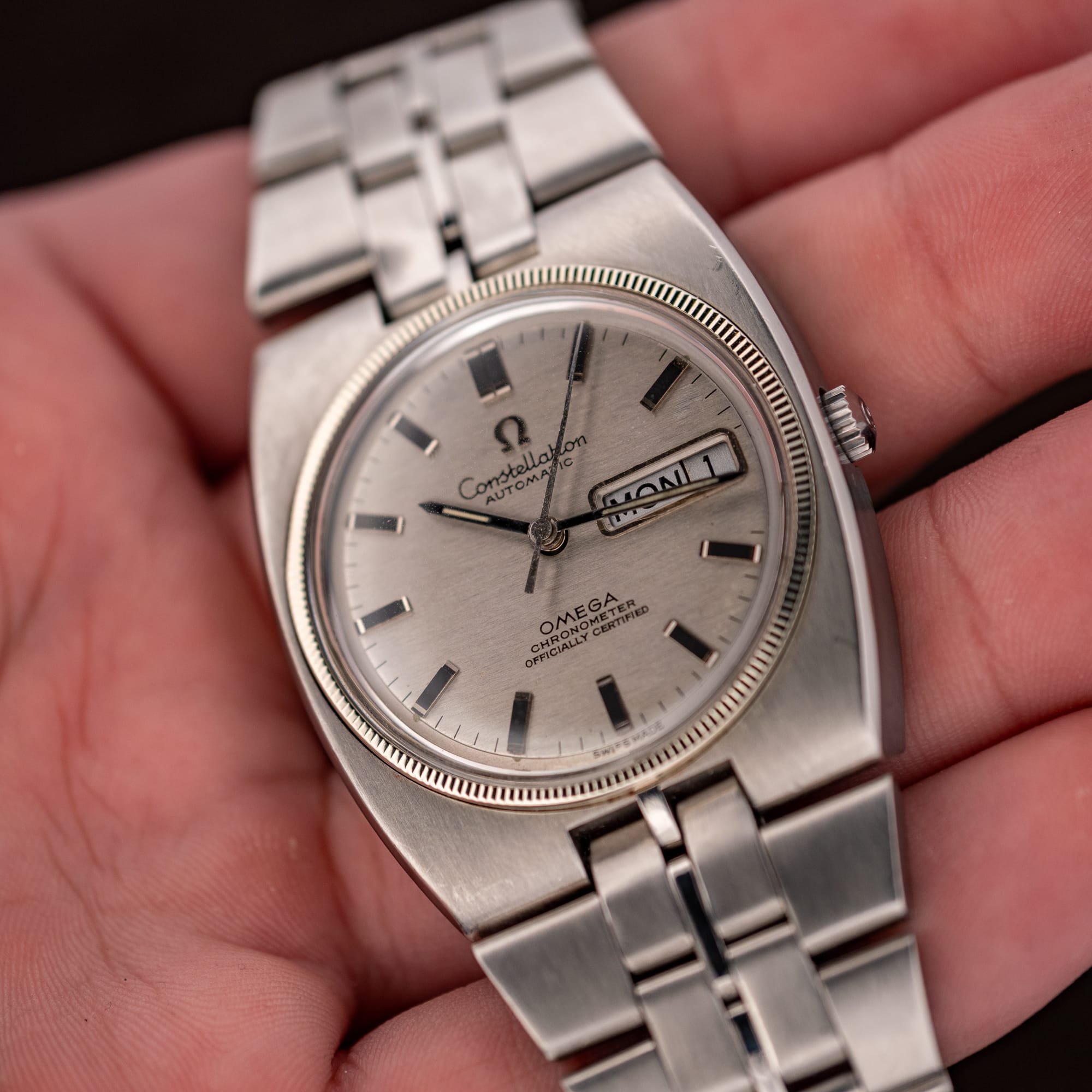
Our example keeps the mechanical side of that identity in view. Its dial carries explicit chronometer wording, and the caliber 751 inside supplies automatic winding, central seconds and a day-date display. Both calendar indications sit together at three in a single framed aperture. Against the broad case and bracelet, that compact arrangement gives the silver dial a composed, almost businesslike expression. We like the tension between those practical details and the more adventurous construction around them.
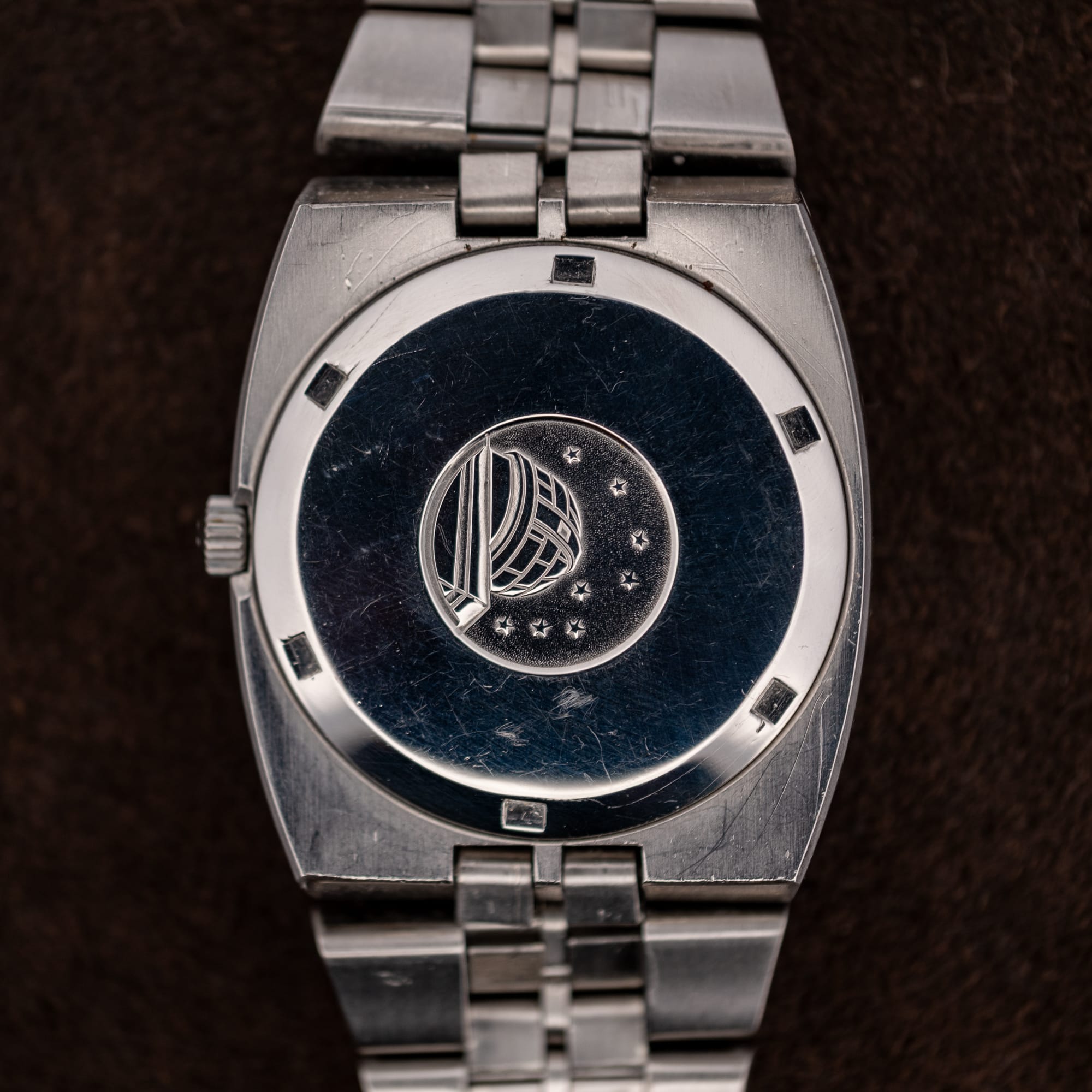
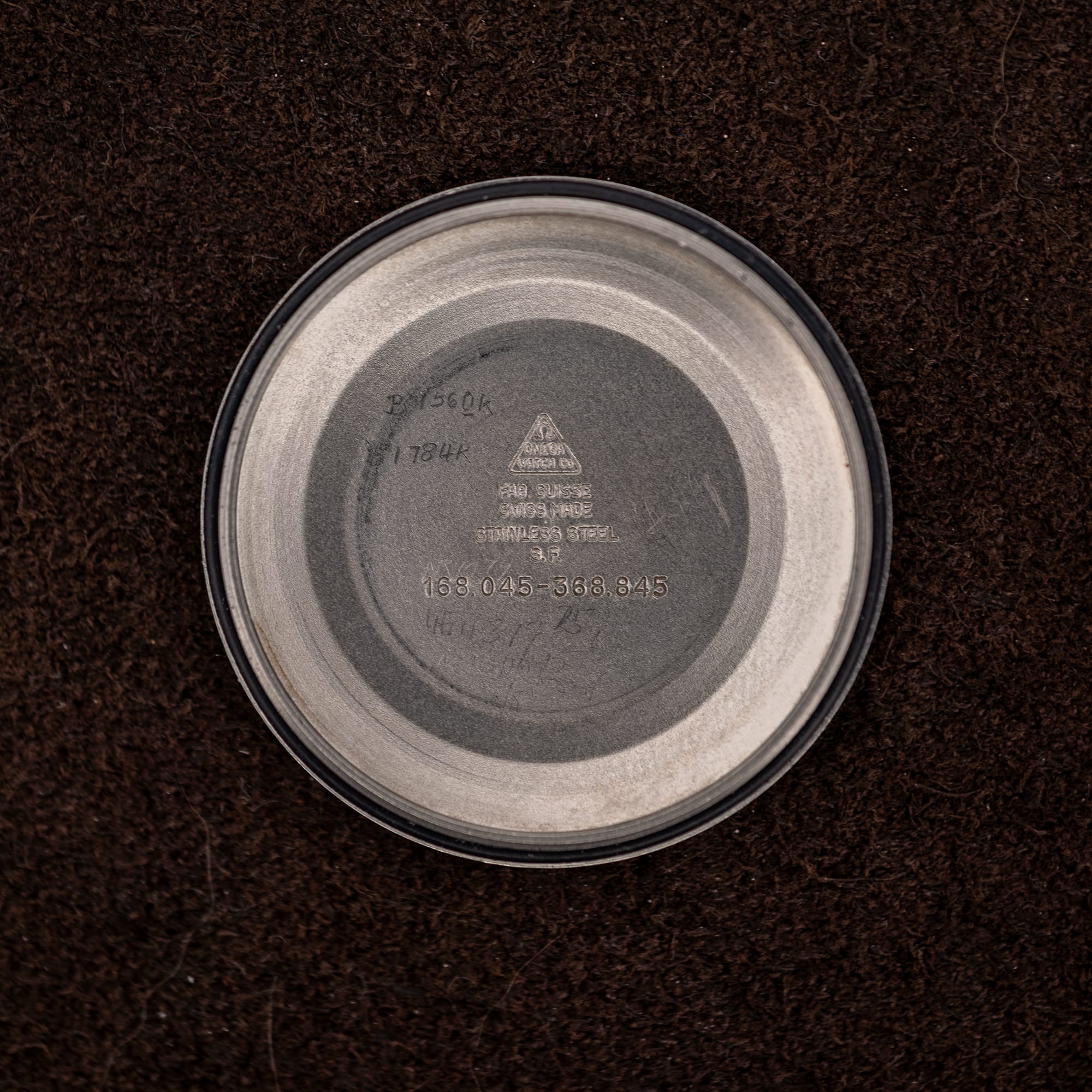
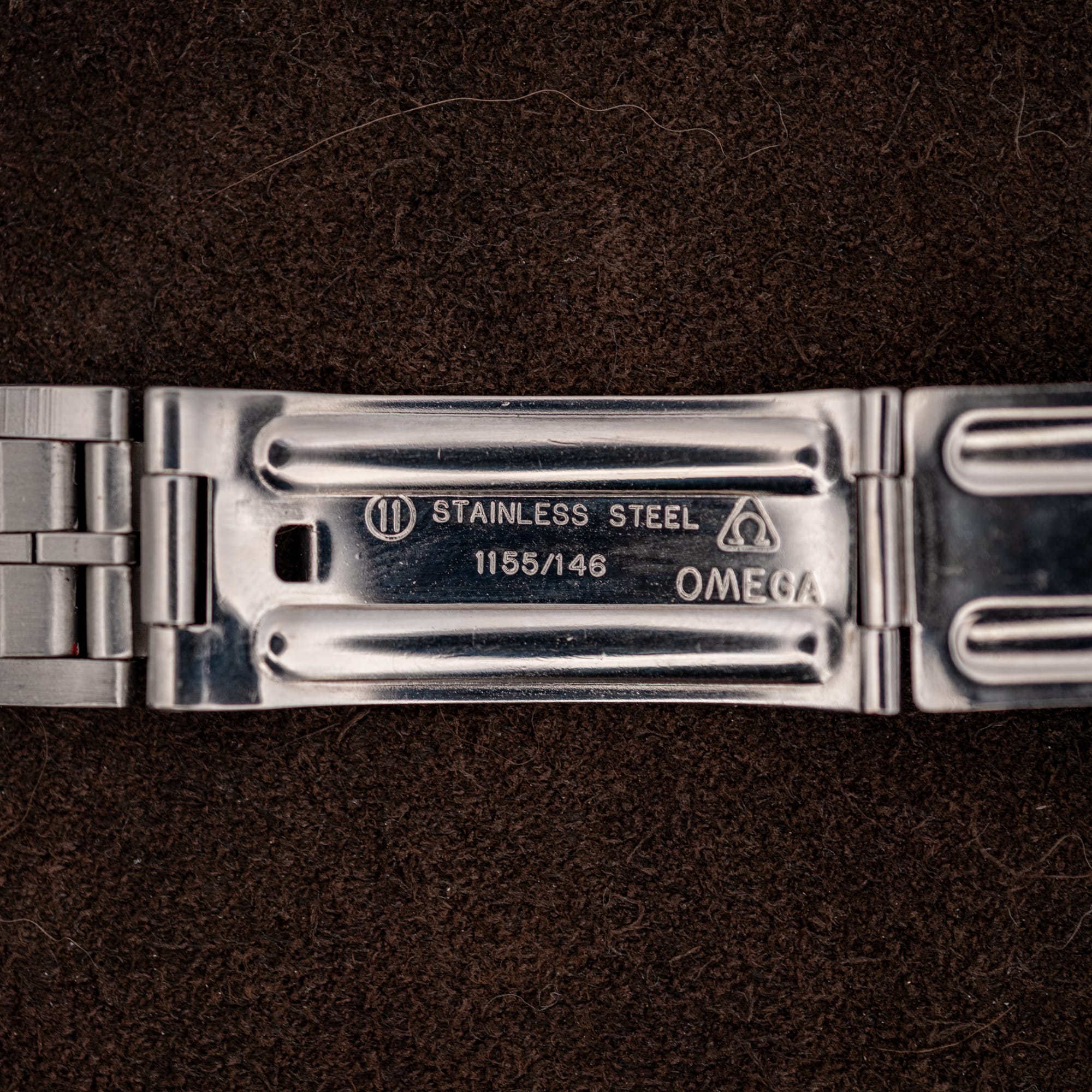
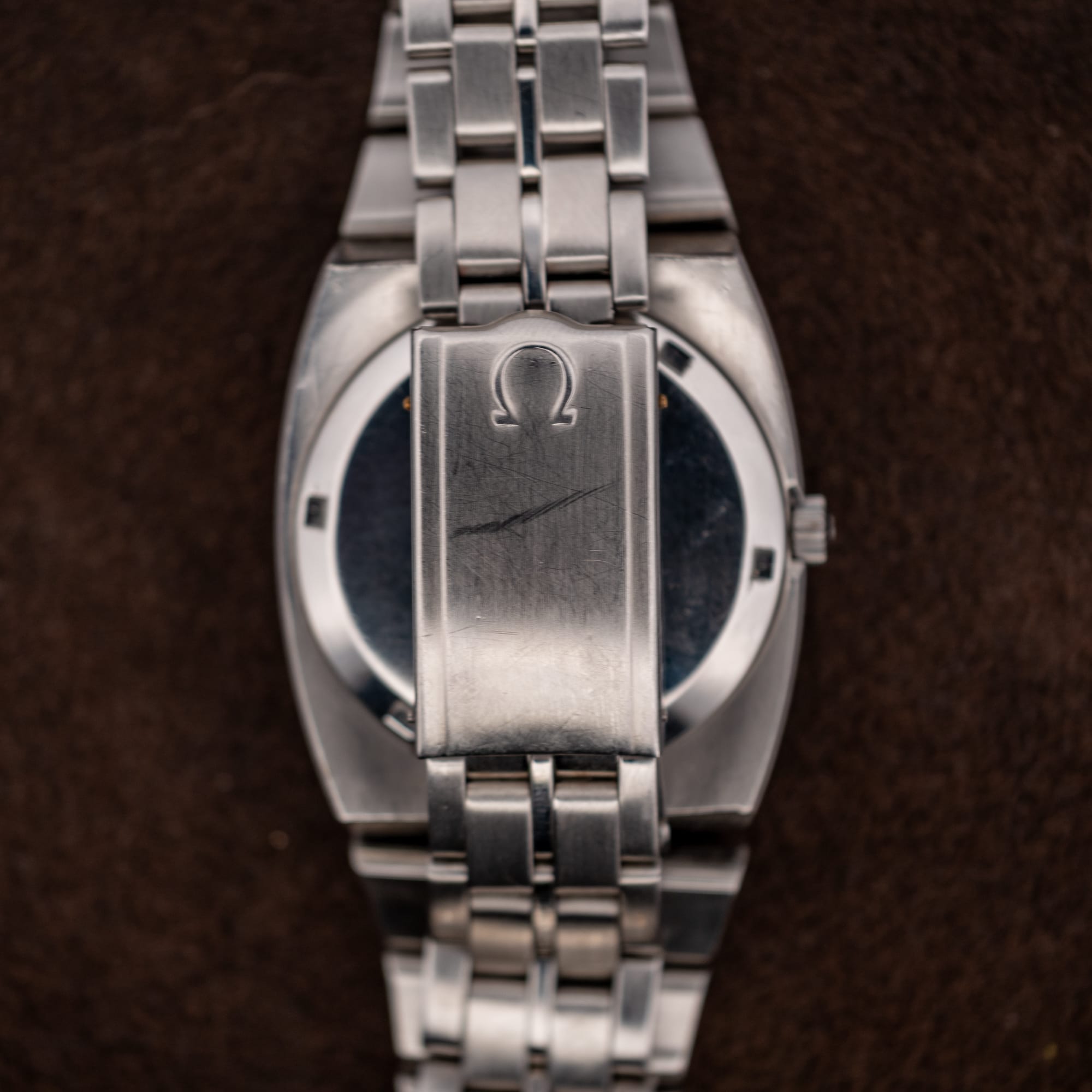
The stainless steel cushion case measures 36mm across and 41mm from end to end. A coin-edged bezel surrounds the horizontally grained silver dial, with dark-faced applied batons, a double marker at twelve and narrow hands. Light exterior scuffs give the case and bracelet an appropriately lived-in character without distracting from their connected shape. An Omega-signed crown and folding clasp complete the configuration; the observatory medallion remains on the back. Inside, the caseback’s full reference reads 168.045-368.845.
We would begin a closer look at this Omega Constellation 168.045 where its design begins: the two narrow links entering the case. That small connection explains why the bracelet deserves as much attention as the dial.