An Omega Seamaster Deville graces her wrist as the elegant woman in a gown embodies timeless sophistication—a memorable gift that makes every moment unforgettable.
0

Seamaster Deville

The Seamaster De Ville emerged in 1960 as Omega's solution to a portfolio gap created three years earlier. When the brand introduced its 1957 professional trilogy (Speedmaster, Railmaster, Seamaster 300), the Seamaster line pivoted decidedly toward tool watches. This left a void for customers seeking a refined, dressy timepiece that retained the Seamaster's robust engineering. The De Ville filled that gap, bridging "the ruggedness of a sports watch with the elegance of a slim dress watch" to create what Omega marketed as ideal "for the man who leads a full, active life".
Continue reading
Black and white photo showcasing the classic Omega Seamaster 120 wristwatch with a sleek black leather strap.
0

Seamaster 120

The Omega Seamaster 120 was produced from 1966 to 2003, when it was discontinued and replaced by the Seamaster Aqua Terra line. The model was conceived as a more accessible alternative to the professional-grade Seamaster 300, targeting the burgeoning recreational diving market of the 1960s rather than professional divers. Where the Seamaster 300 served as a purpose-built tool for serious underwater work, the Seamaster 120 was designed for the suburbanite more likely to encounter chlorinated pool water than ocean depths.
Continue reading
Close-up of an Omega Speedmaster watch with an astronaut in space, highlighting the iconic Speedmaster’s advanced features.
0

Speedmaster Professional

The Omega Speedmaster Professional, famously known as the "Moonwatch," stands as one of horological history's most storied and continuously produced chronographs. First introduced in 1957, it remains in active production to the present day. Originally launched as a sports and racing chronograph for motorsport enthusiasts, it evolved into the only watch qualified by NASA for extravehicular activity (EVA) and has maintained its cultural status for nearly seven decades. The "Speedmaster" name emerged from the model's prominent tachymeter scale bezel and followed Omega's established naming convention alongside its Seamaster and Railmaster lines. The line's origin was straightforward: Omega sought a precision chronograph to appeal to motorsport professionals and complement its Olympic Games timing heritage. The novelty lay not in purpose but in execution, with the caliber 321 movement and distinctive case design establishing design language that would prove timeless.
Continue reading
A vintage Heuer Carrera watch advertisement
0

Carrera

The Carrera was born from Jack Heuer's admiration of the legendary Carrera Panamericana, a grueling 3,500-kilometer open-road race across Mexico that ran from 1950 to 1954. Inspired by the speed and elegance of the drivers—particularly brothers Pedro and Ricardo Rodríguez de la Vega—Jack Heuer set out in 1963 to create a chronograph that was legible, precise, robust, and equally at home on the track or at the dinner table. The result was one of horological history's most enduring icons, launching the same year as the Porsche 911.
Continue reading
Vintage black-and-white Sea Wolf watch ad featuring striking watch images and descriptive promotional text.
0

Sea Wolf

Zodiac created the Sea Wolf to capture the emerging recreational diving market, arriving at Basel in 1953 (by Zodiac's official dating) as one of the world's first purpose-built dive watches manufactured for the general public.
Continue reading
Vintage advertisement for the Universal Genève Polerouter watch, featuring striking text and an image of the iconic Polerouter timepiece.
0

Polerouter

The Universal Genève Polerouter is a historic model line produced from 1954 to 1969, with a brief and unsuccessful quartz revival in the late 1980s and early 1990s. The line is currently discontinued in its original form, though the brand relaunched in 2024 under new ownership with commemorative tribute pieces marking the 70th anniversary of the original design.
Continue reading
Three vintage wristwatches—Polerouter, Polerouter Jet, and Polerouter Date—grace a stylish French ad.
0

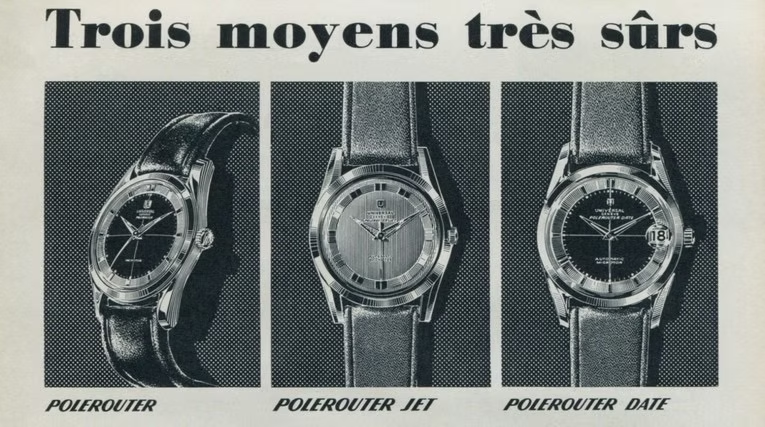
Polerouter Date

The Universal Genève Polerouter Date is a calendar-equipped variant within the broader Polerouter family, produced from 1958 to 1969 as part of Universal Genève's continuous production era. The line is currently discontinued in its original mechanical form, though the parent brand relaunched in 2024 under new ownership with modern tribute pieces.
Continue reading
A hand wearing a striking red Omega Chronostop watch points to its face; the Omega World Service logo is displayed on the left.
0

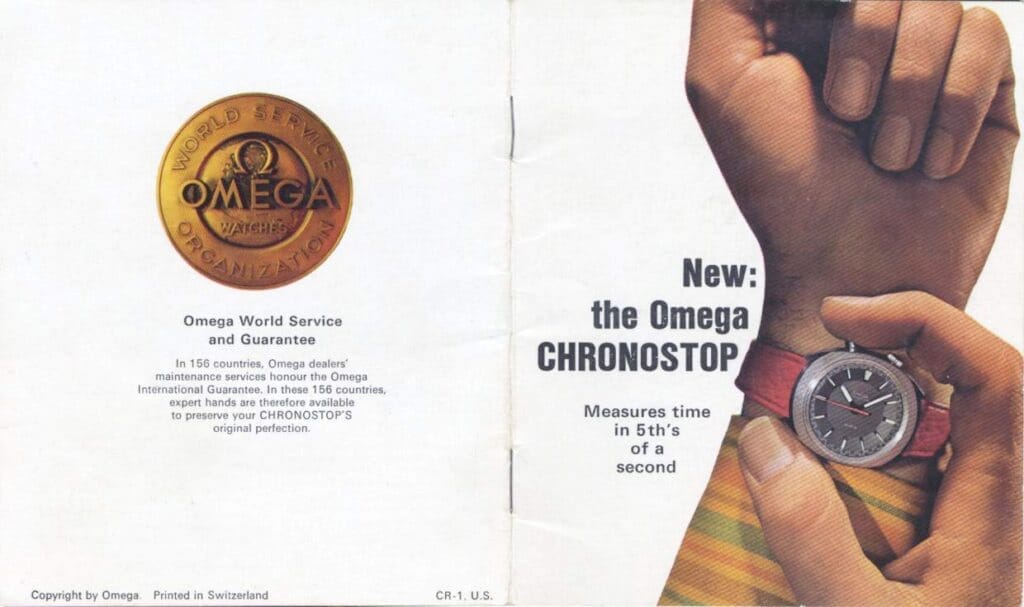
Chronostop

The Chronostop was introduced in 1966 as Omega's answer to creating an accessible, youthful alternative to the prestigious Speedmaster chronograph. Initially conceived as part of the Seamaster collection before being repositioned to the Genève line in 1967, the Chronostop was marketed toward younger collectors and drivers who wanted a functional chronograph without the premium pricing of Omega's flagship sports watches.
Continue reading
A Polerouter Super stainless steel wristwatch is shown next to a drawing of a scuba diver underwater.
0

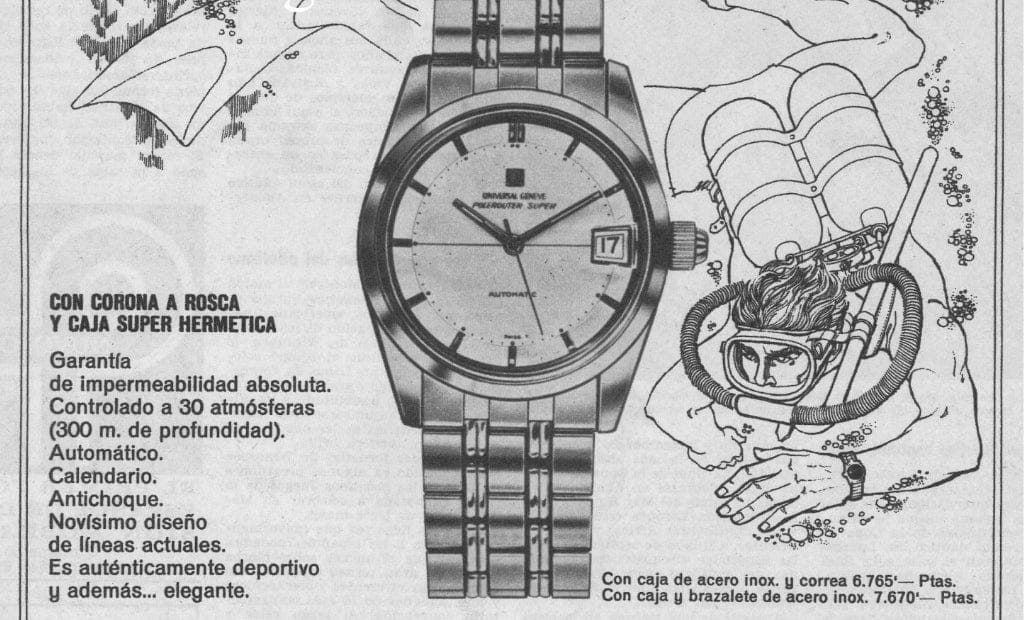
Polerouter Super

The Universal Genève Polerouter Super is a specialized sports variant within the broader Polerouter family, produced from 1965 to approximately 1975 as a ruggedized, water-resistant evolution of Gérald Genta's original 1954 design. The line is currently discontinued in its original mechanical form, though the parent brand relaunched in 2024 under new ownership.
Continue reading
A vintage Zenith watch ad beside a watchmaker working with El Primero watches, tools, and a microscope.
0

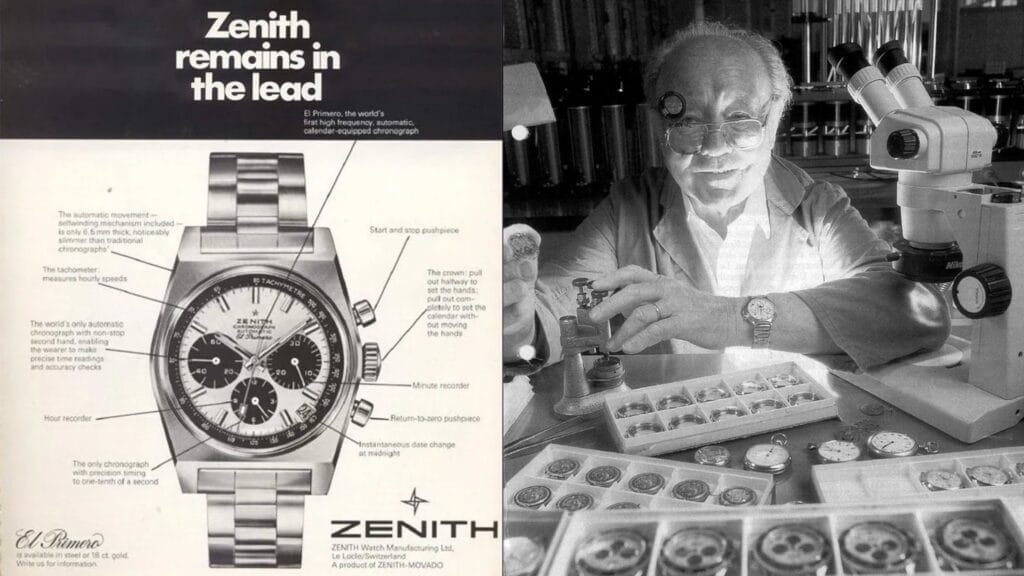
El Primero

The Zenith El Primero was created to achieve a singular and audacious goal that had eluded the watch industry for decades: the first fully integrated, high-frequency automatic chronograph movement. Announced on January 10, 1969, after seven years of intensive development, the El Primero represents one of the most significant technical achievements in watchmaking history. The name itself, meaning "The First" in Spanish, encapsulates Zenith's bold objective to revolutionize chronograph technology.
Continue reading