Between 1993 and 1999, Omega owned the future and could not yet sell it. The company bought George Daniels’s co-axial escapement patent in 1993 and did not put it into a production watch until the De Ville Co-Axial in 1999, six years in which it had already decided how the mechanical argument would end. The Omega Seamaster Autoquartz belongs to exactly that window. This is a watch from the meantime.
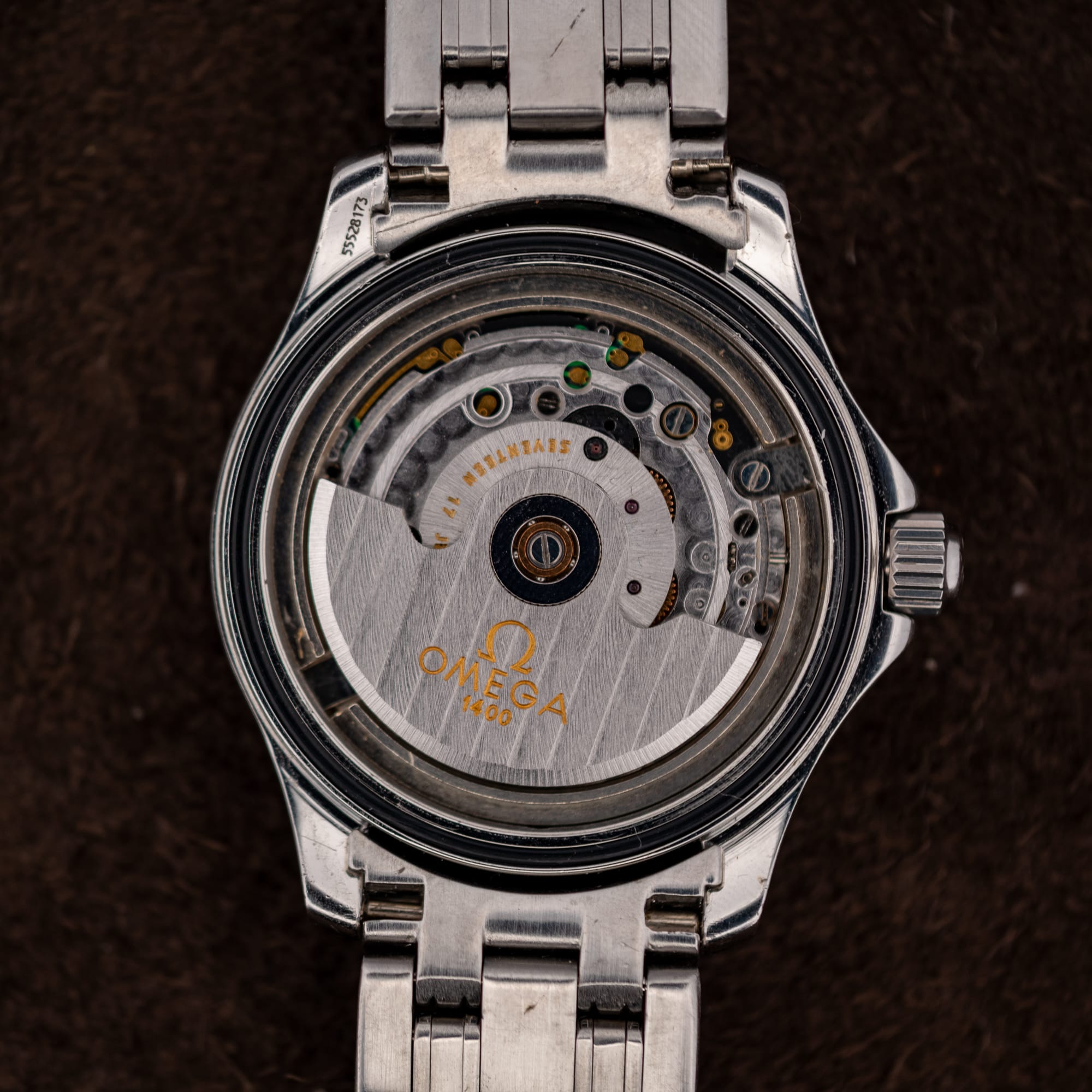
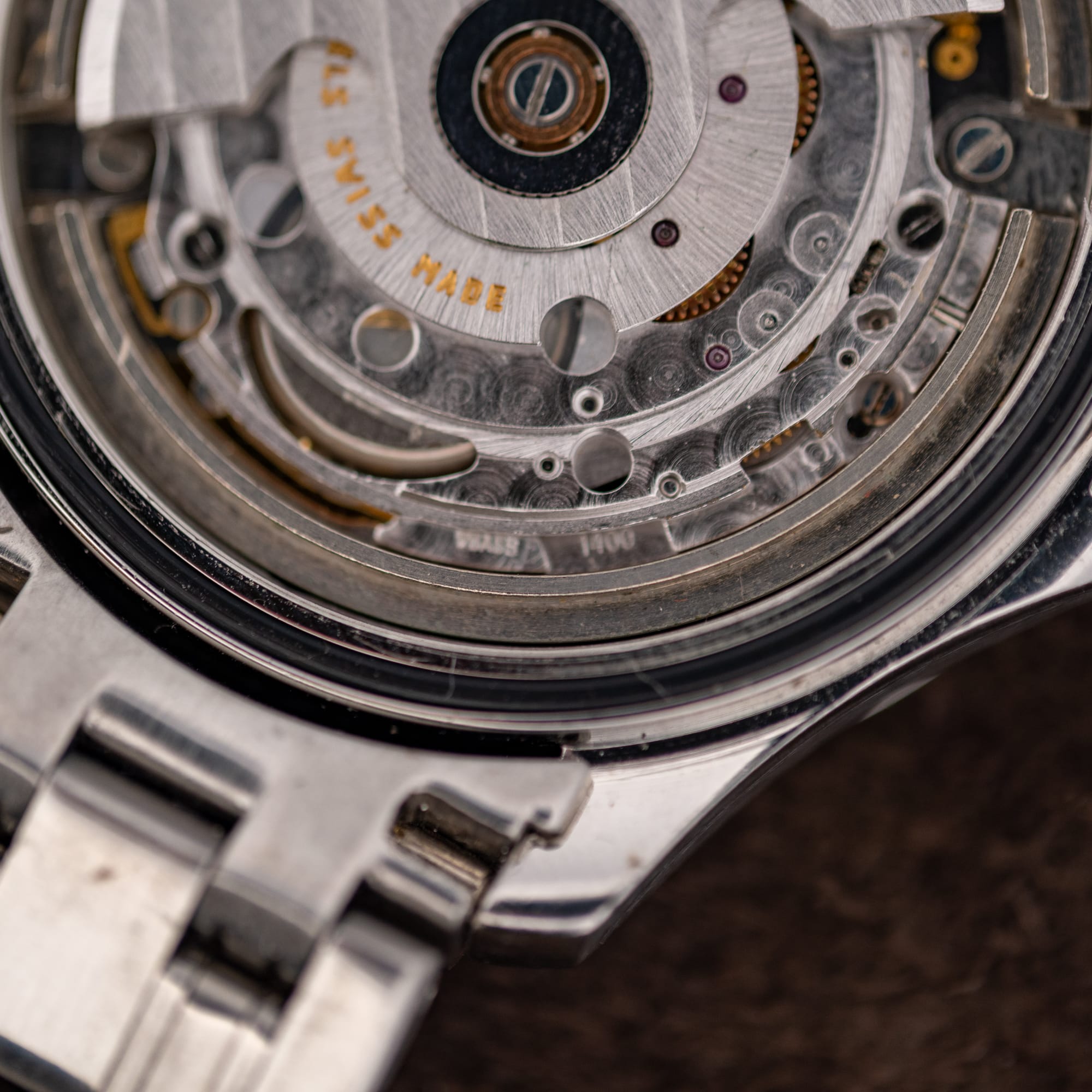
The objection to quartz was never accuracy. Quartz won that argument outright. The objection was the battery, and the small indignity of a watch that dies on a Tuesday and needs a counter and a receipt to come back. So Omega kept the rotor and changed its job. Rather than winding a mainspring, the oscillating weight spins a micro generator, and that generator charges an accumulator which runs a quartz-regulated movement. Motion still powers the watch. Nothing gets swapped out on a schedule. A full charge holds for roughly a hundred hours, and as the reserve runs down the seconds hand starts stepping in four-second jumps, which is the watch asking to be worn. The accumulator is a wear item, the way a mainspring is, and we would rather say that up front than let it come as news later.
Omega called the line the Omegamatic and built it from 1997 to about 2000. It never became the story anyone tells about the Seamaster. The dive models took the attention, the co-axial arrived in 1999 and took the rest, and this one went quietly out of production not long after. It is only now getting a second look.
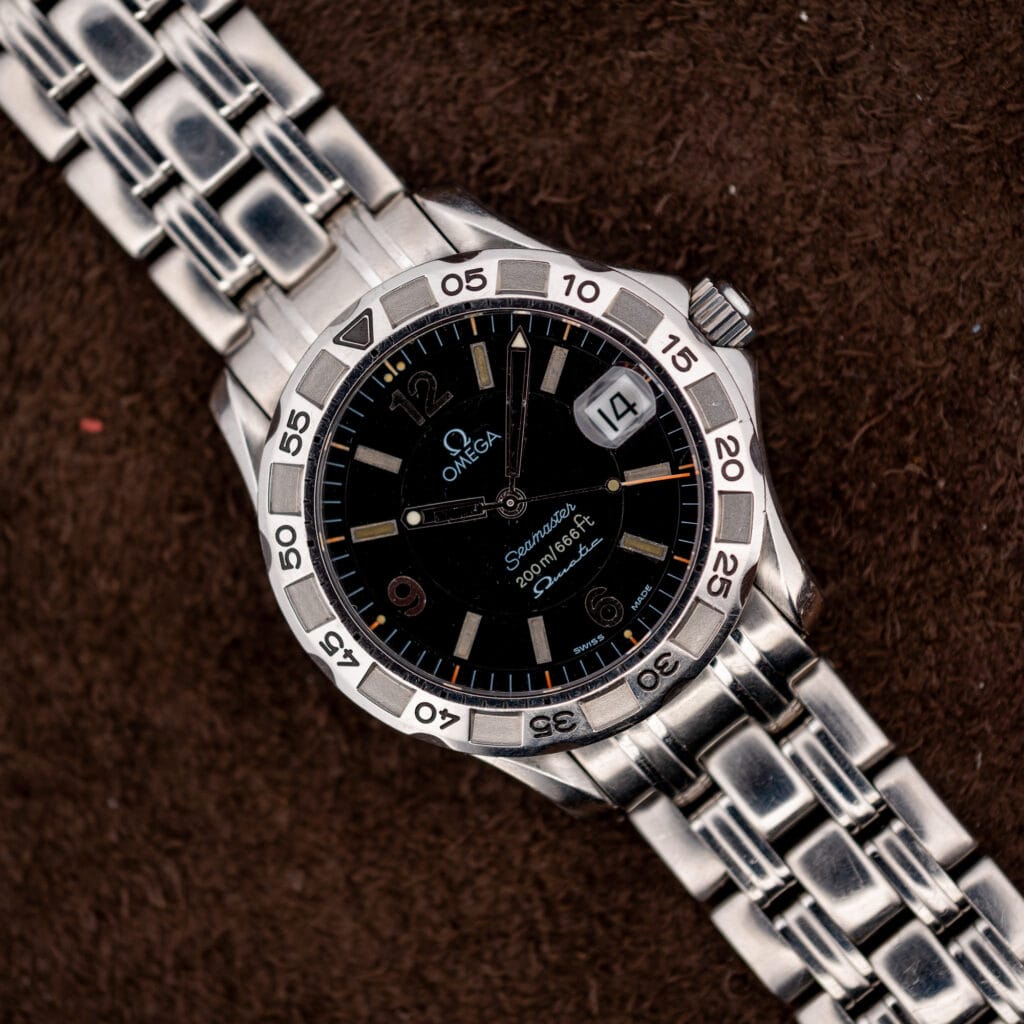
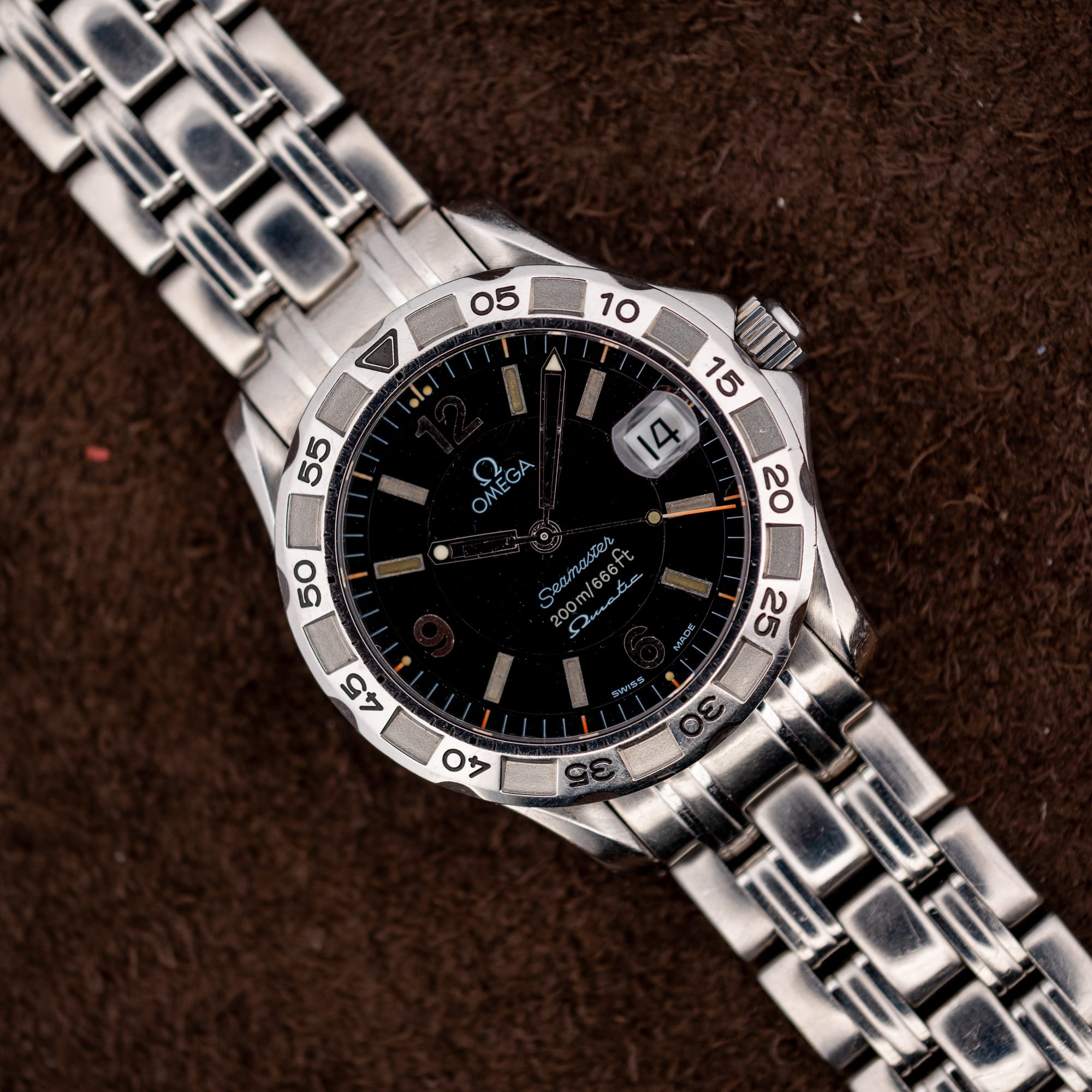
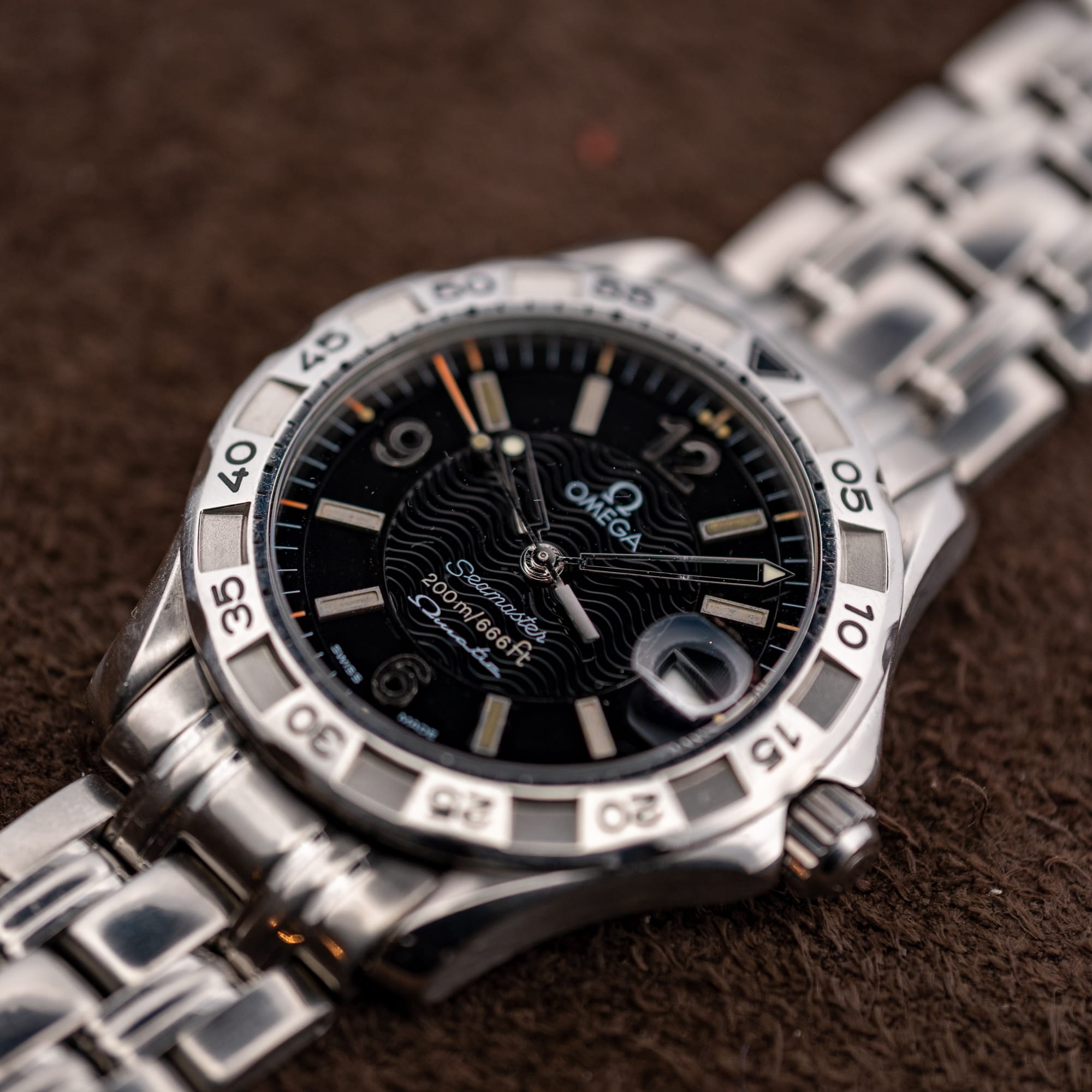
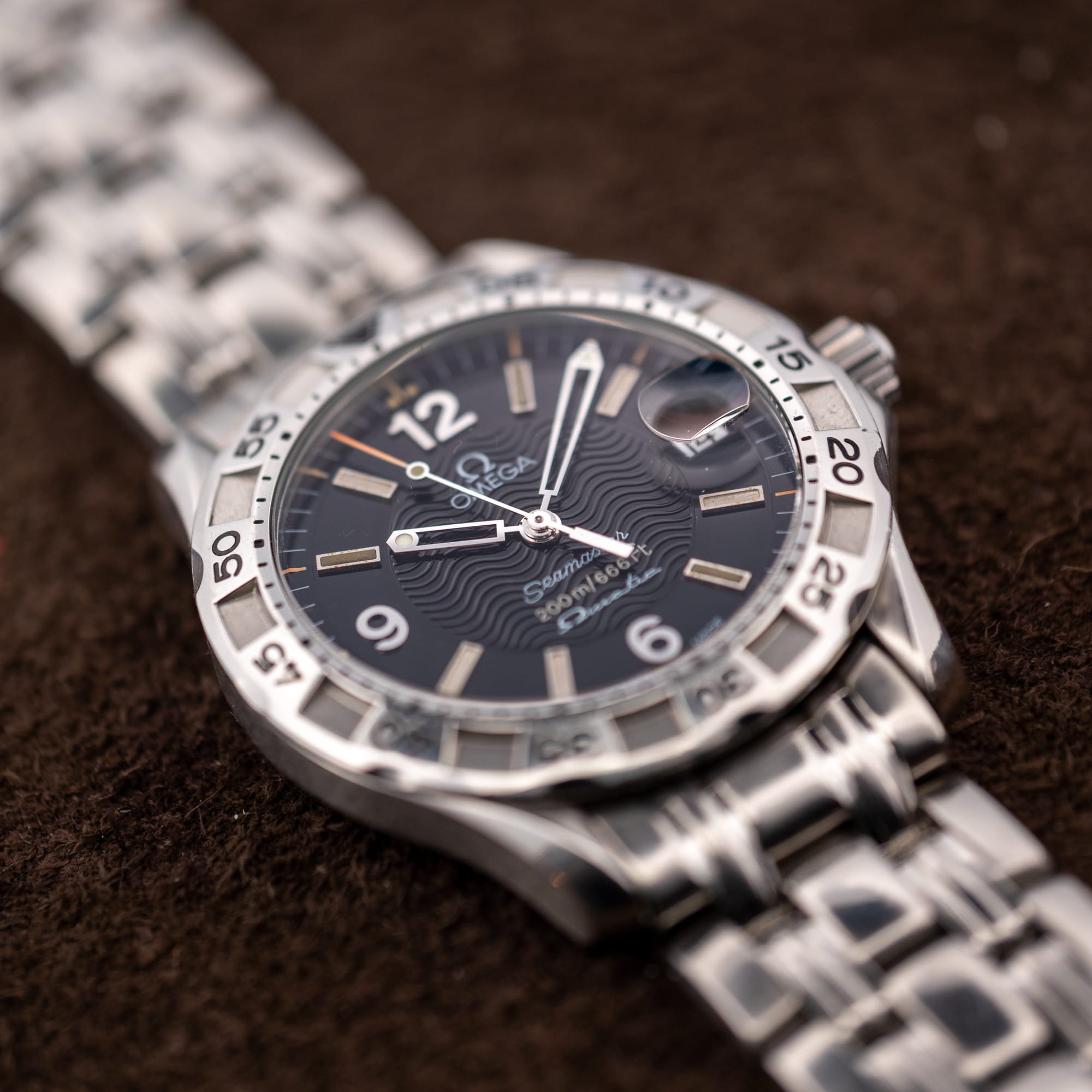
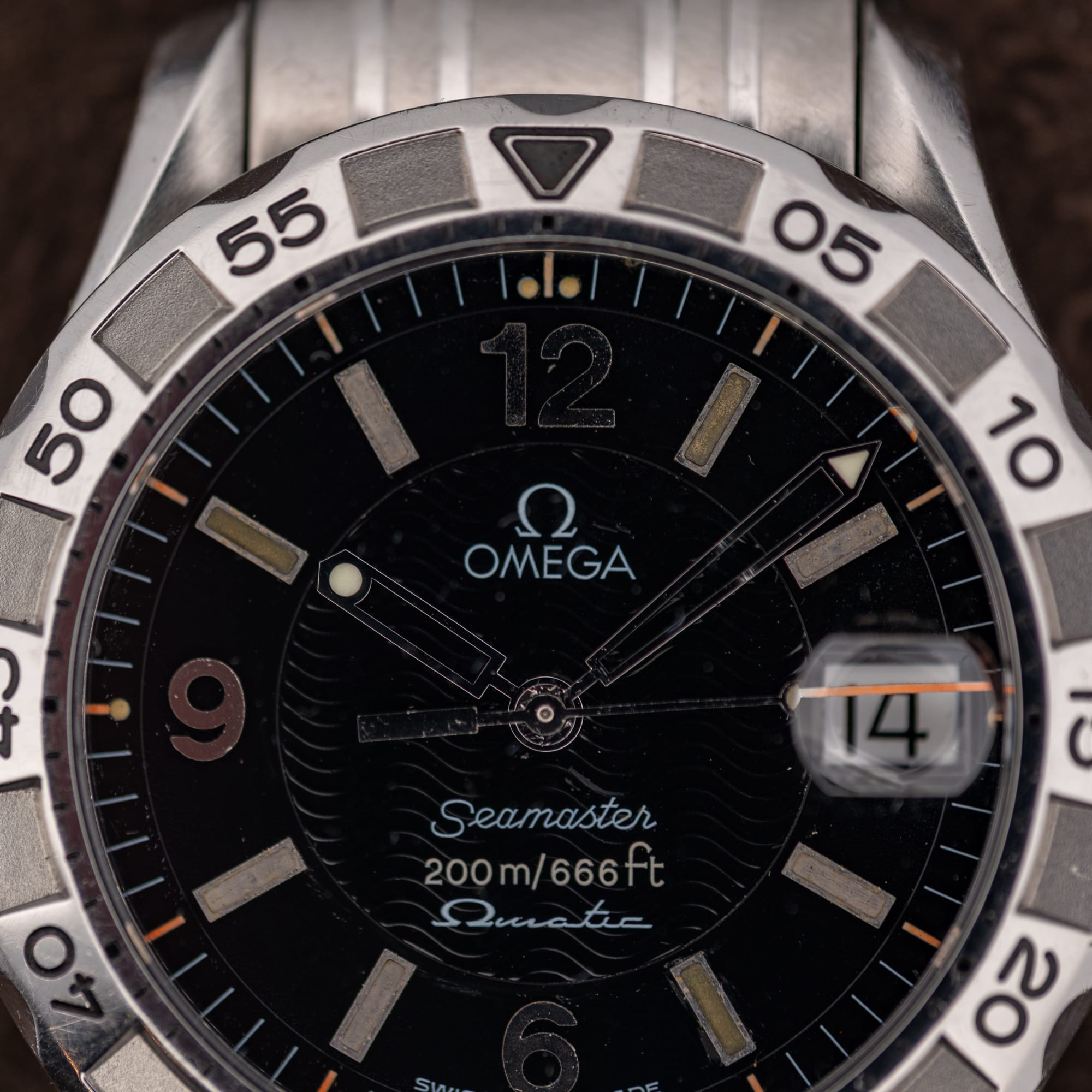
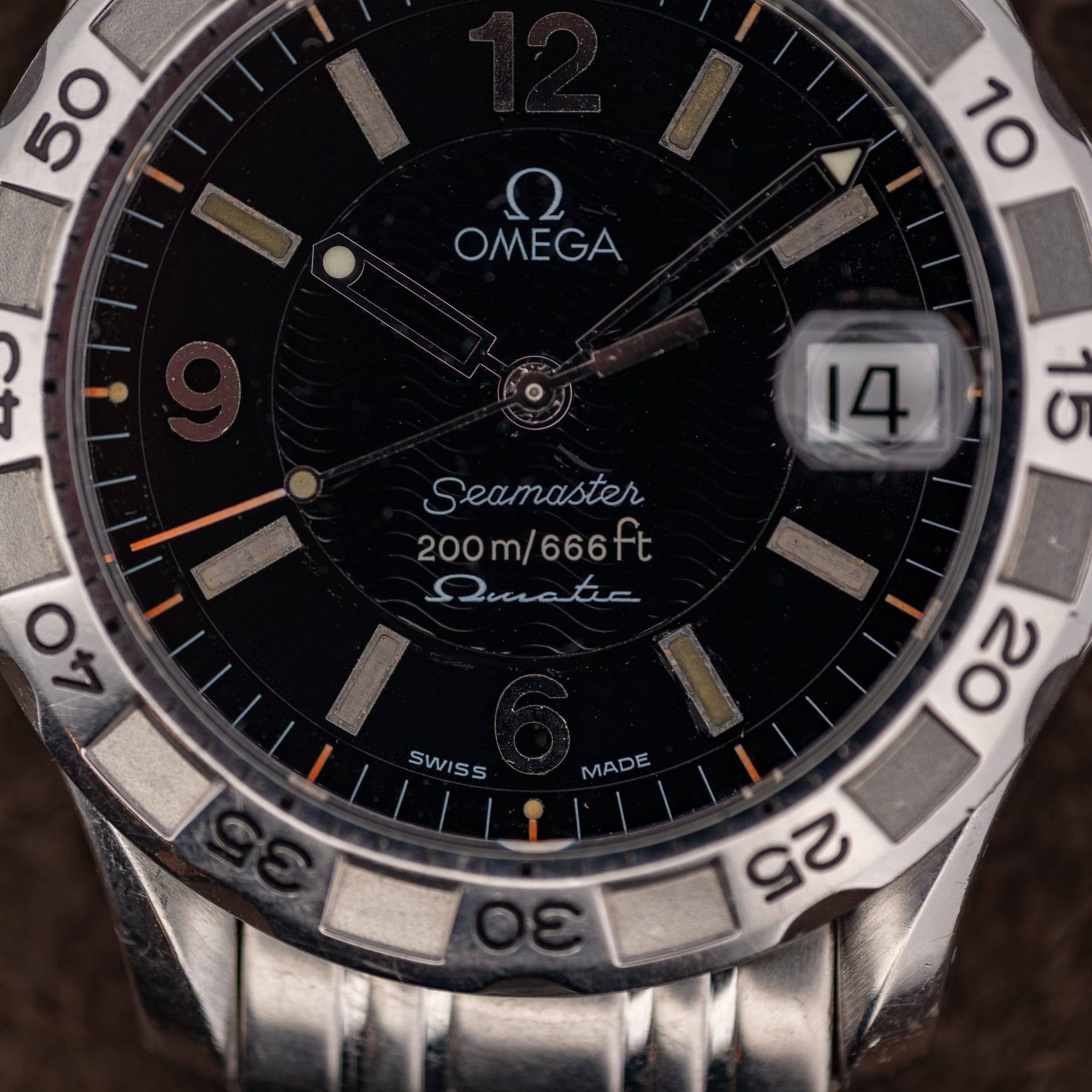
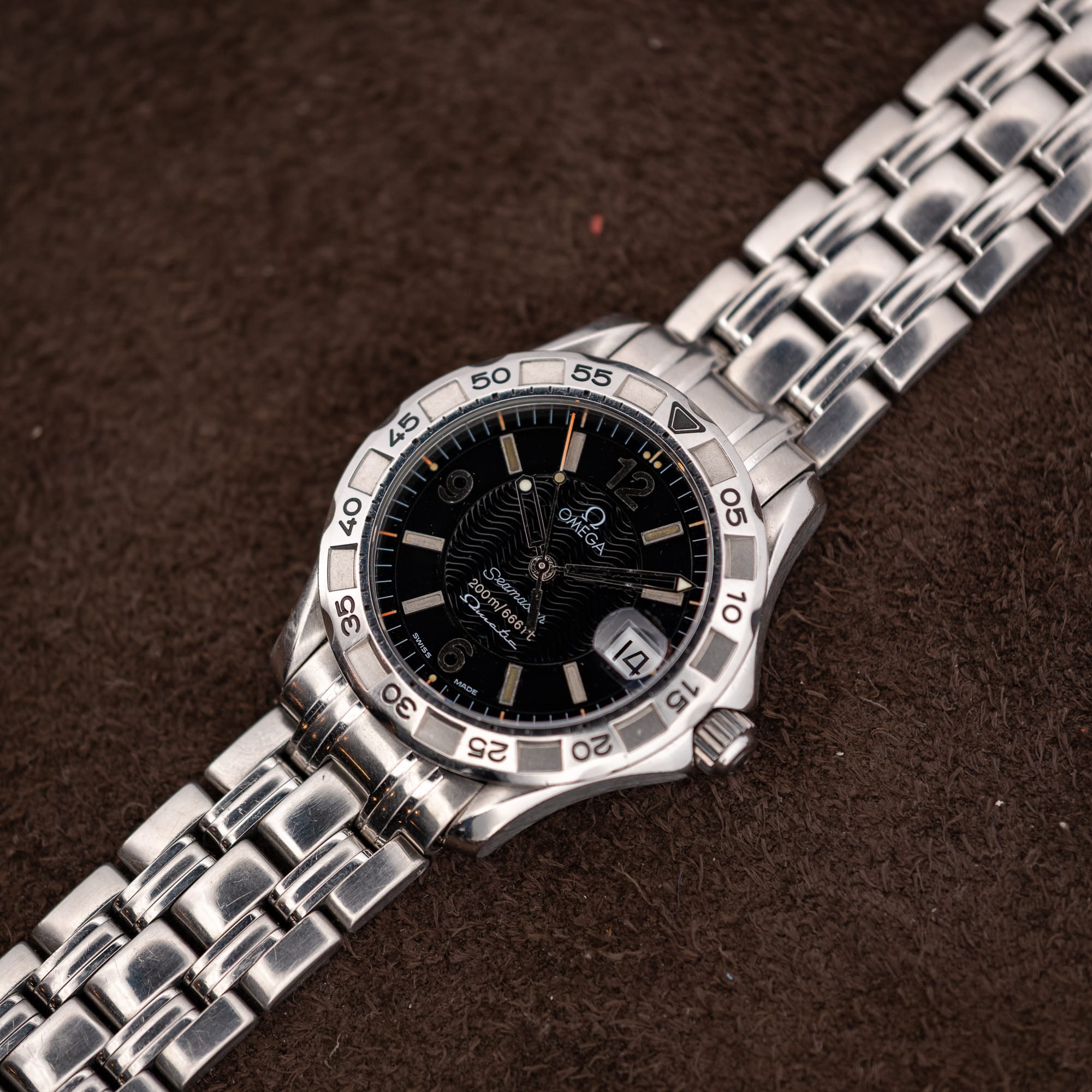
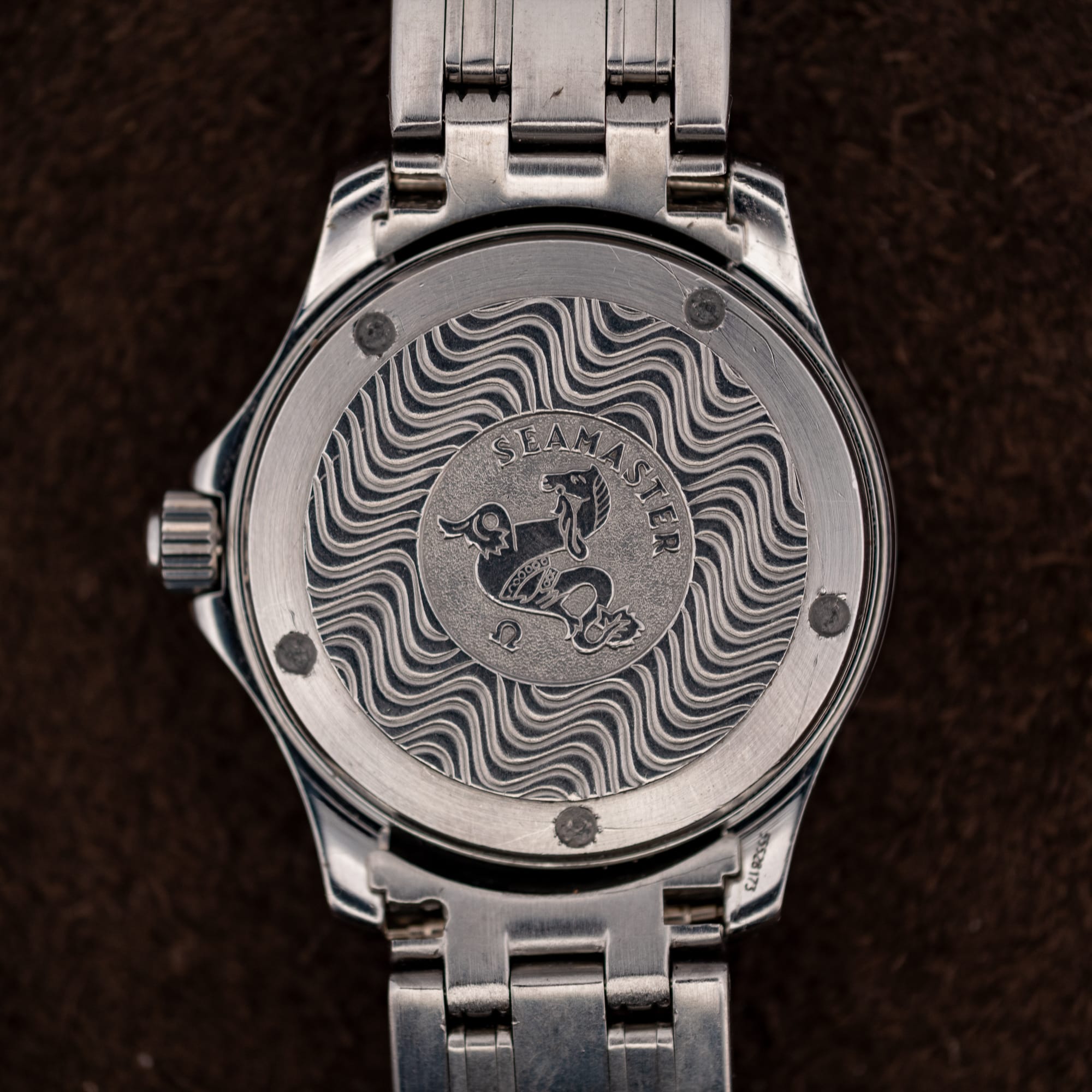
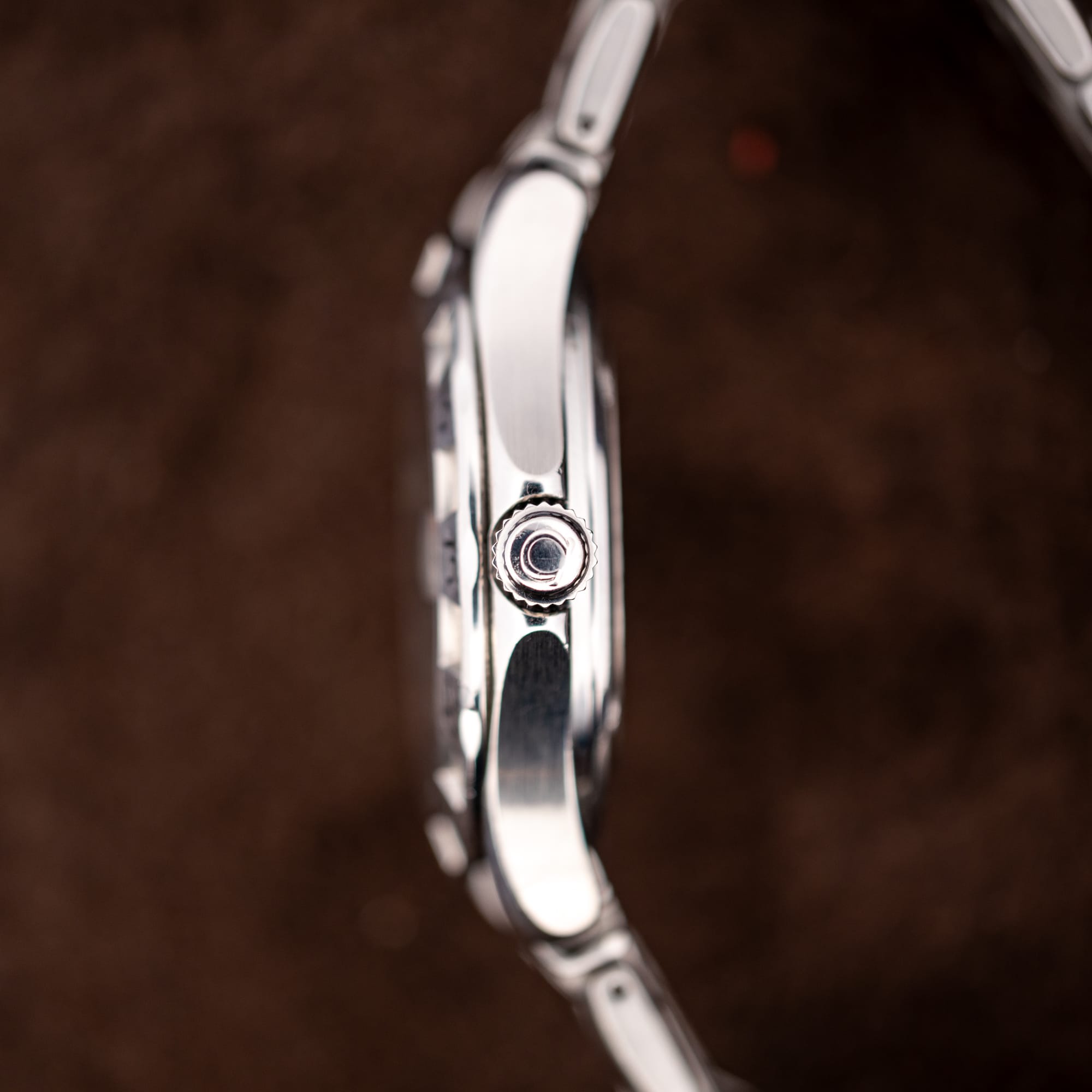
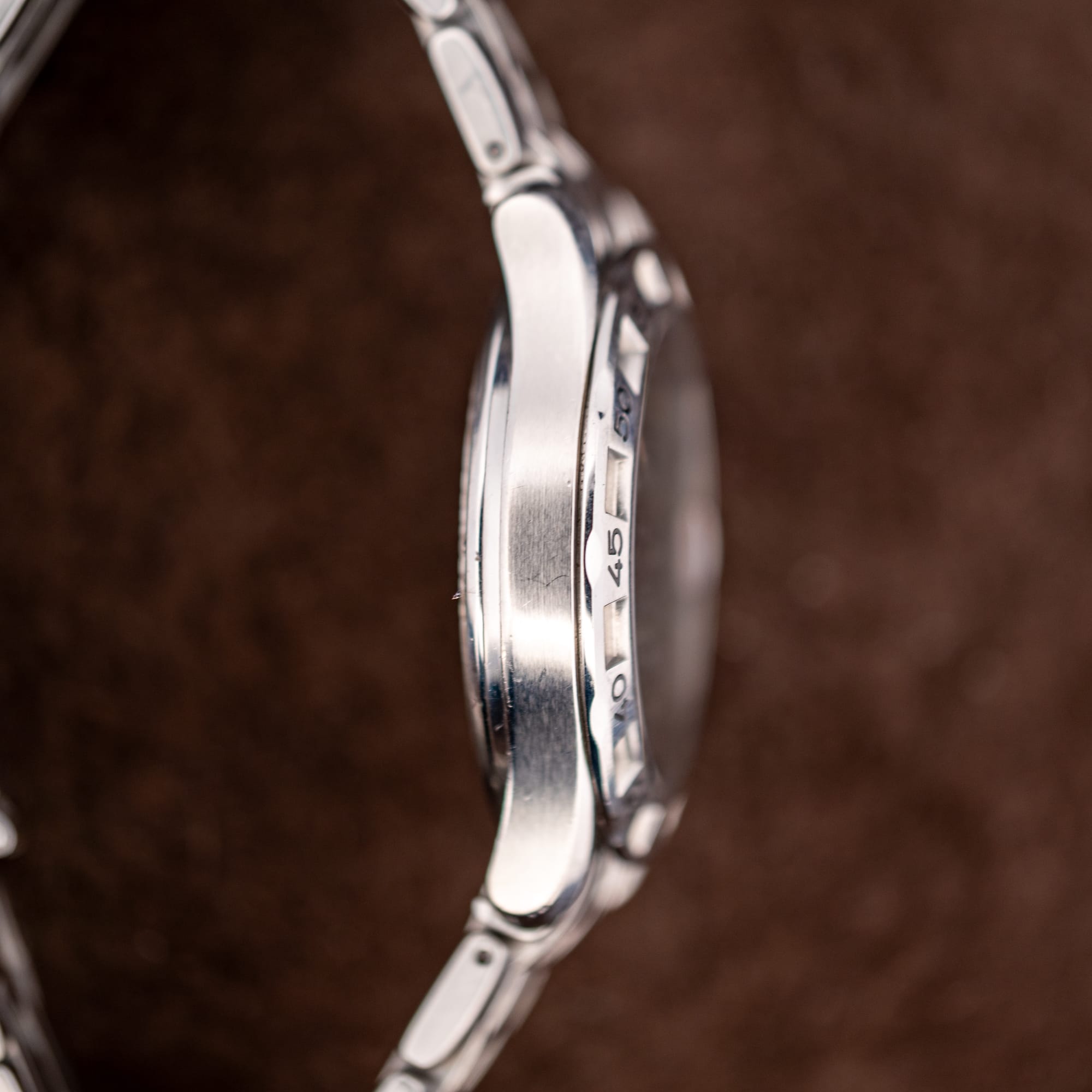
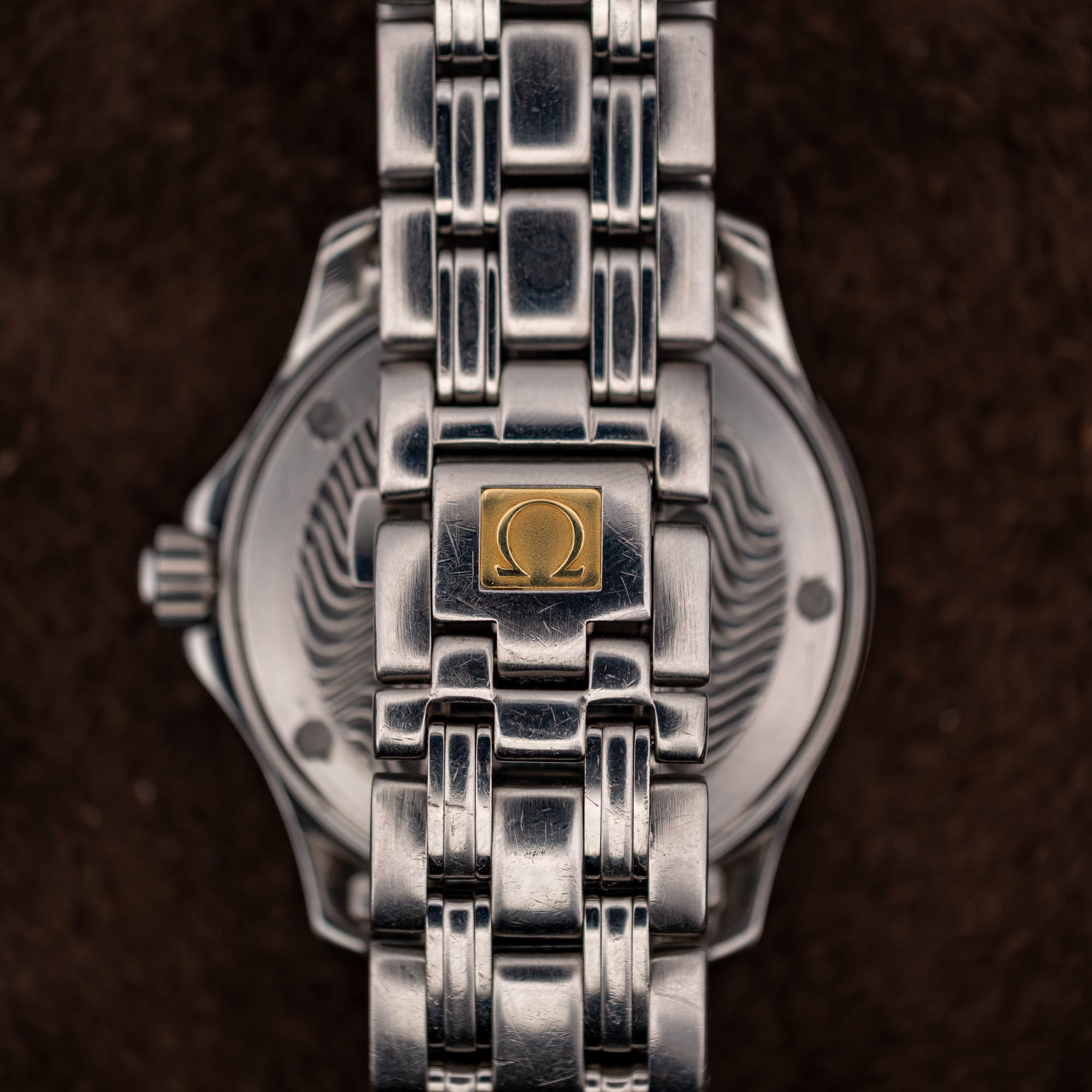
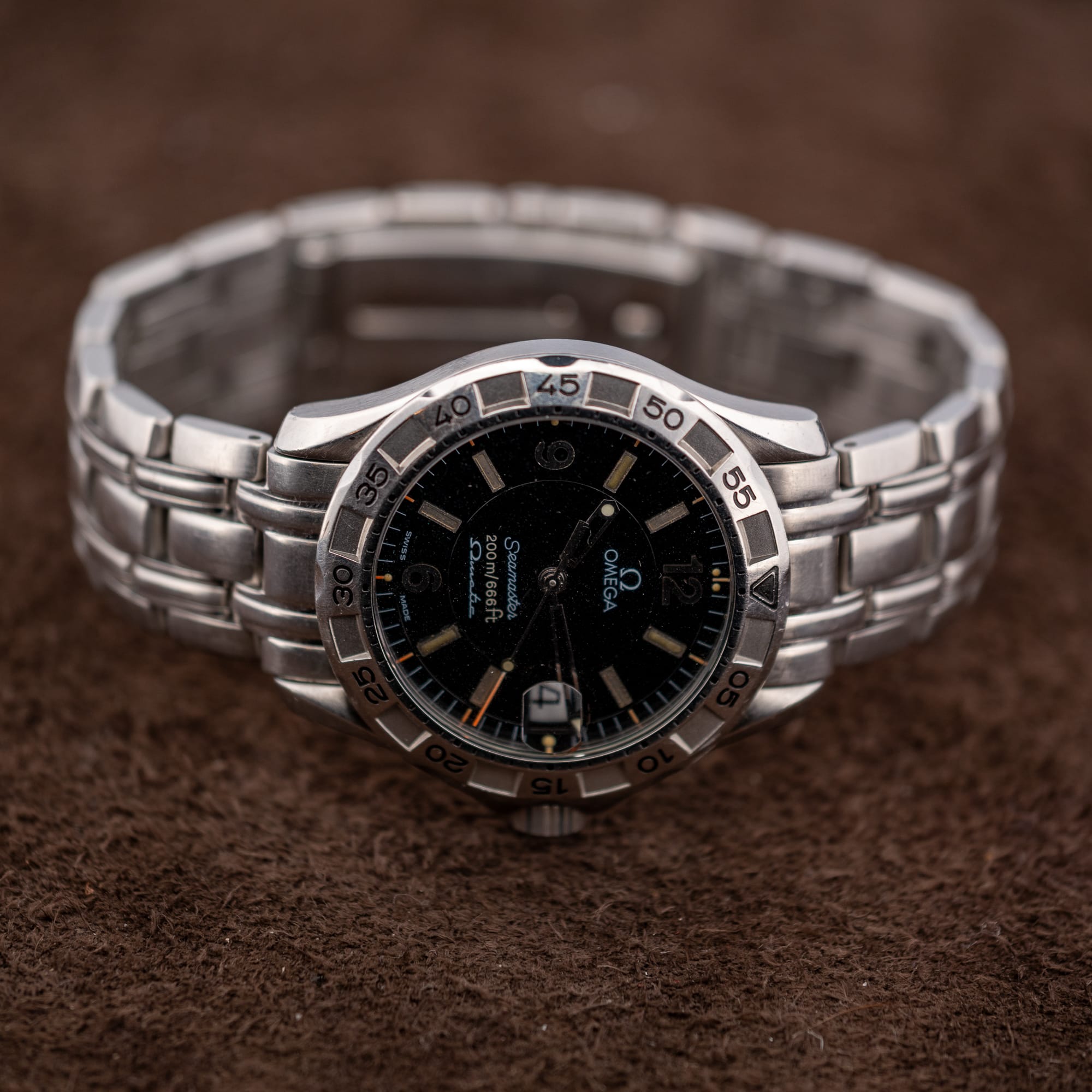
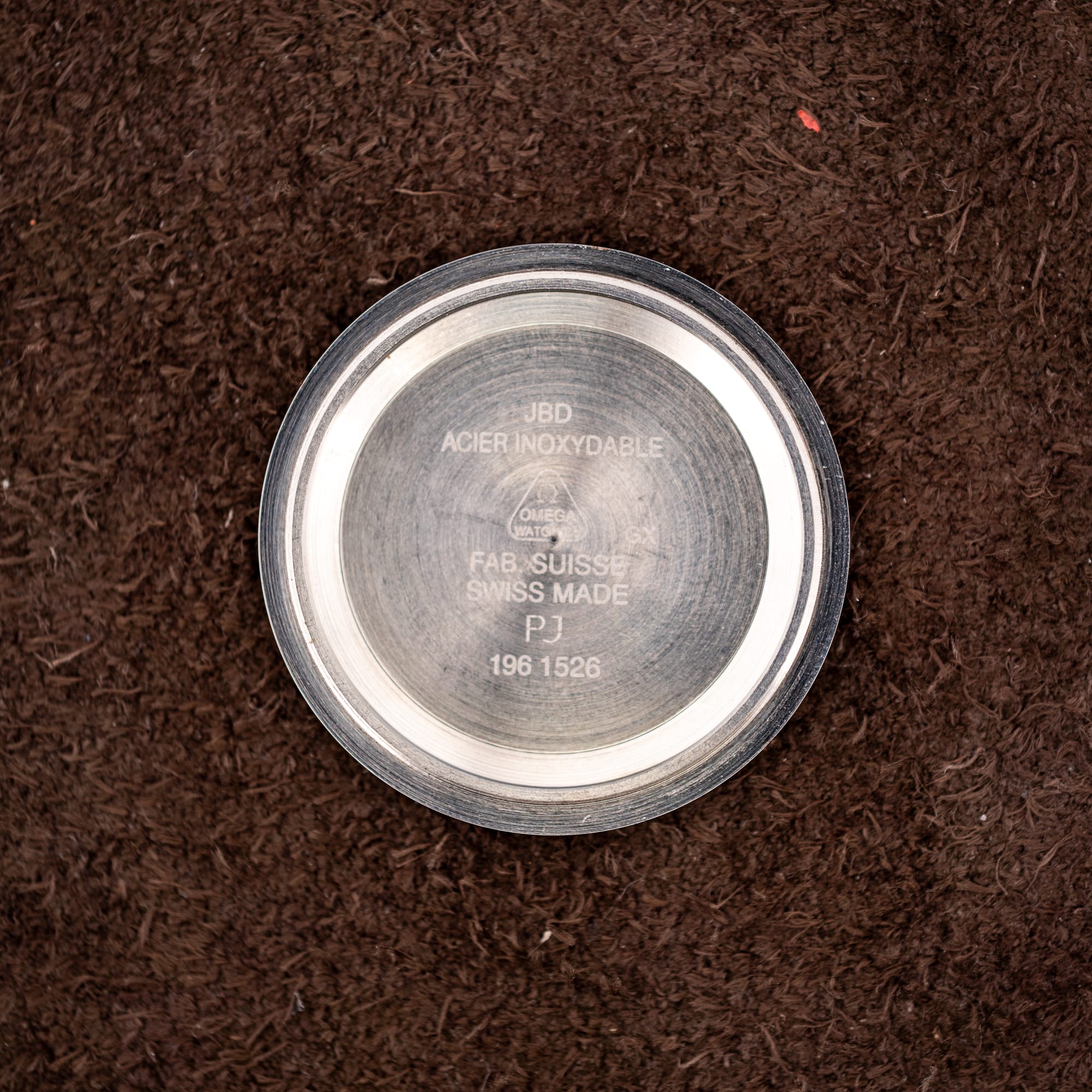
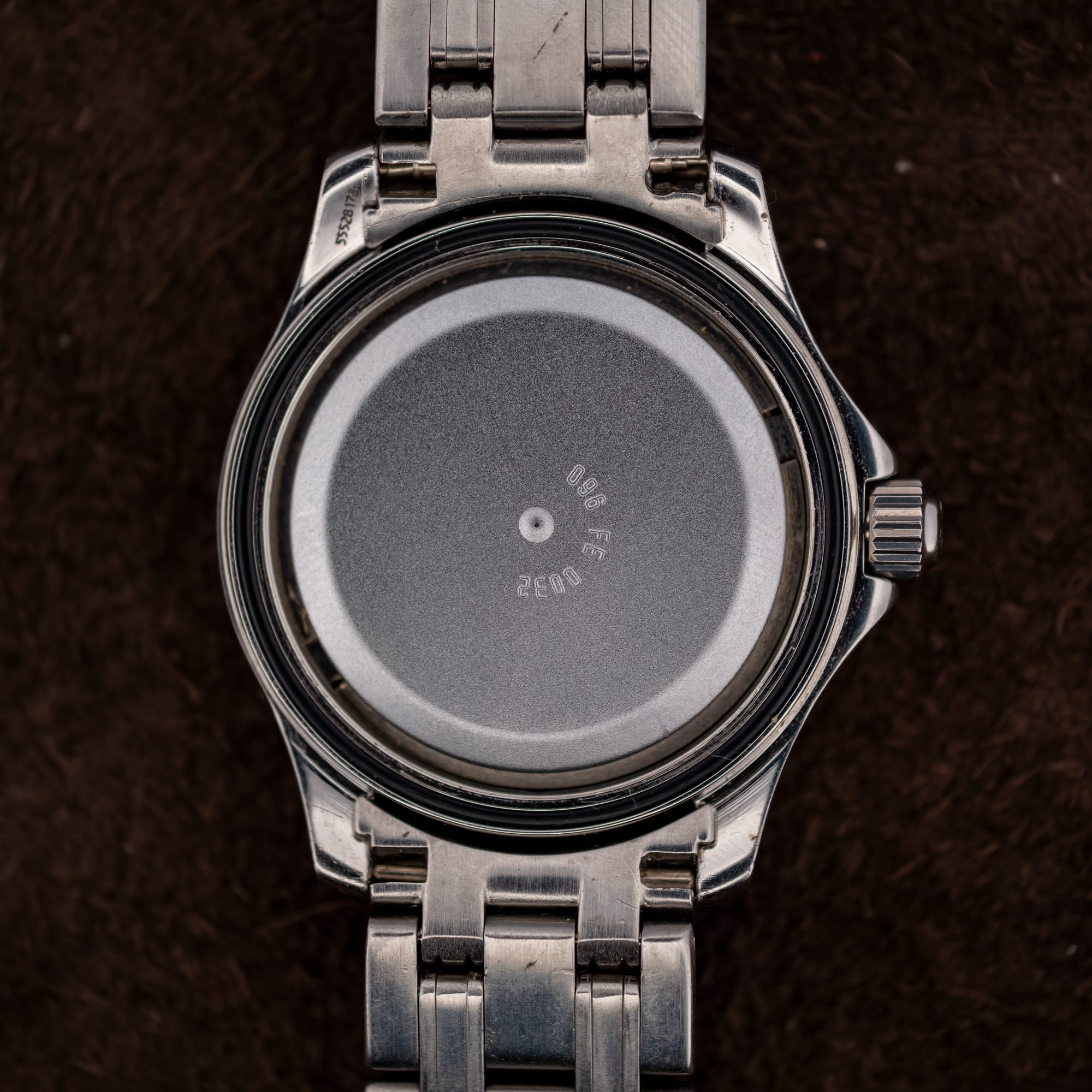
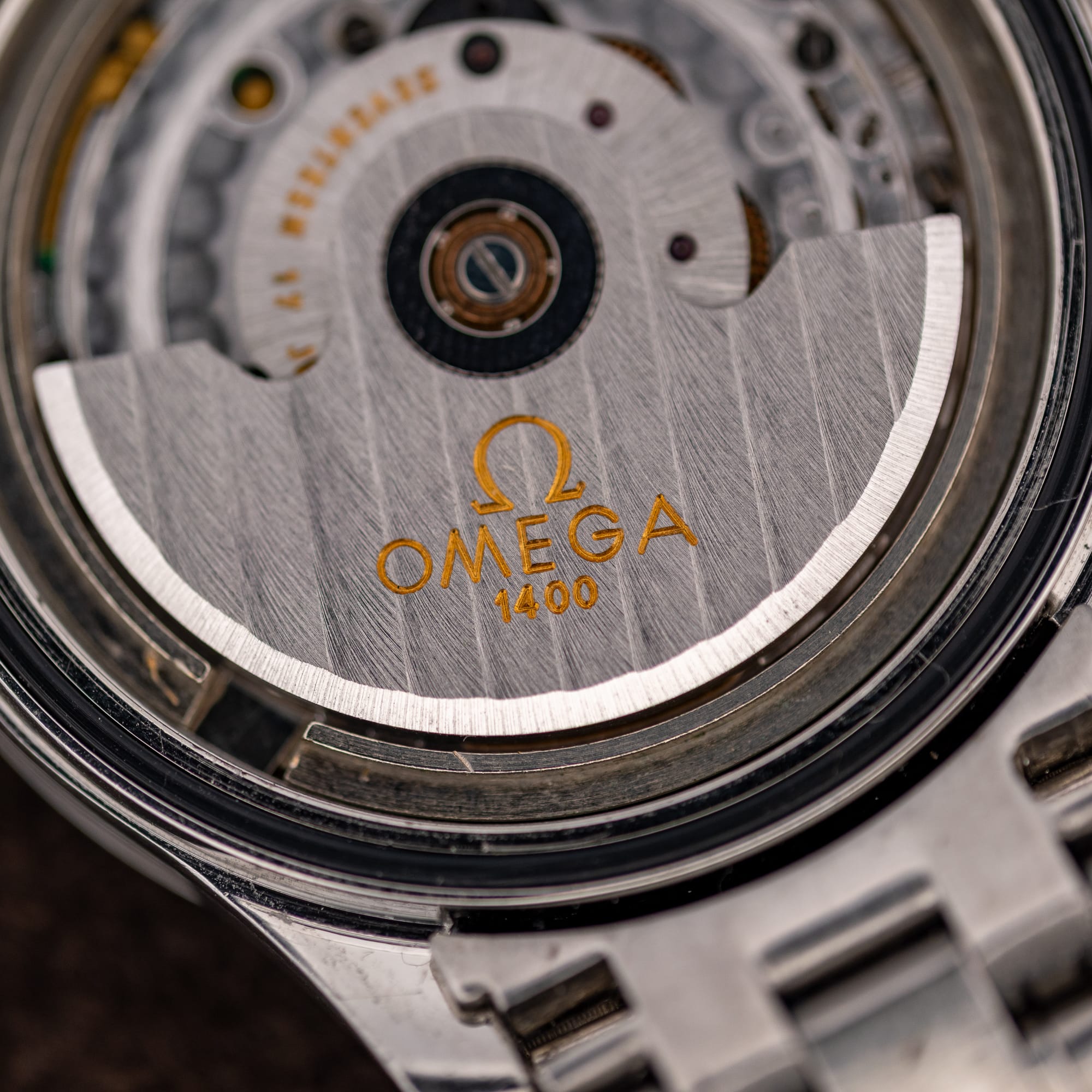
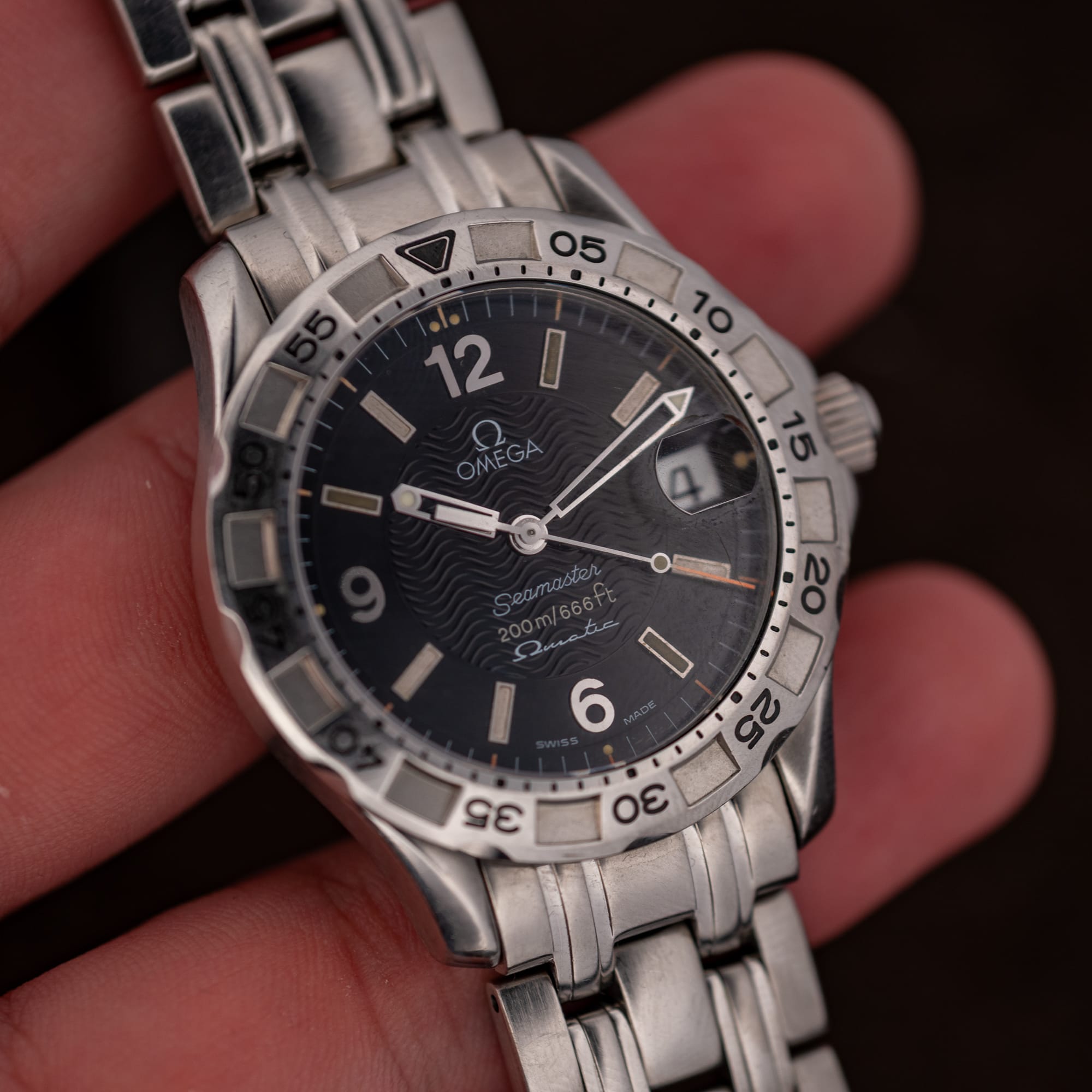
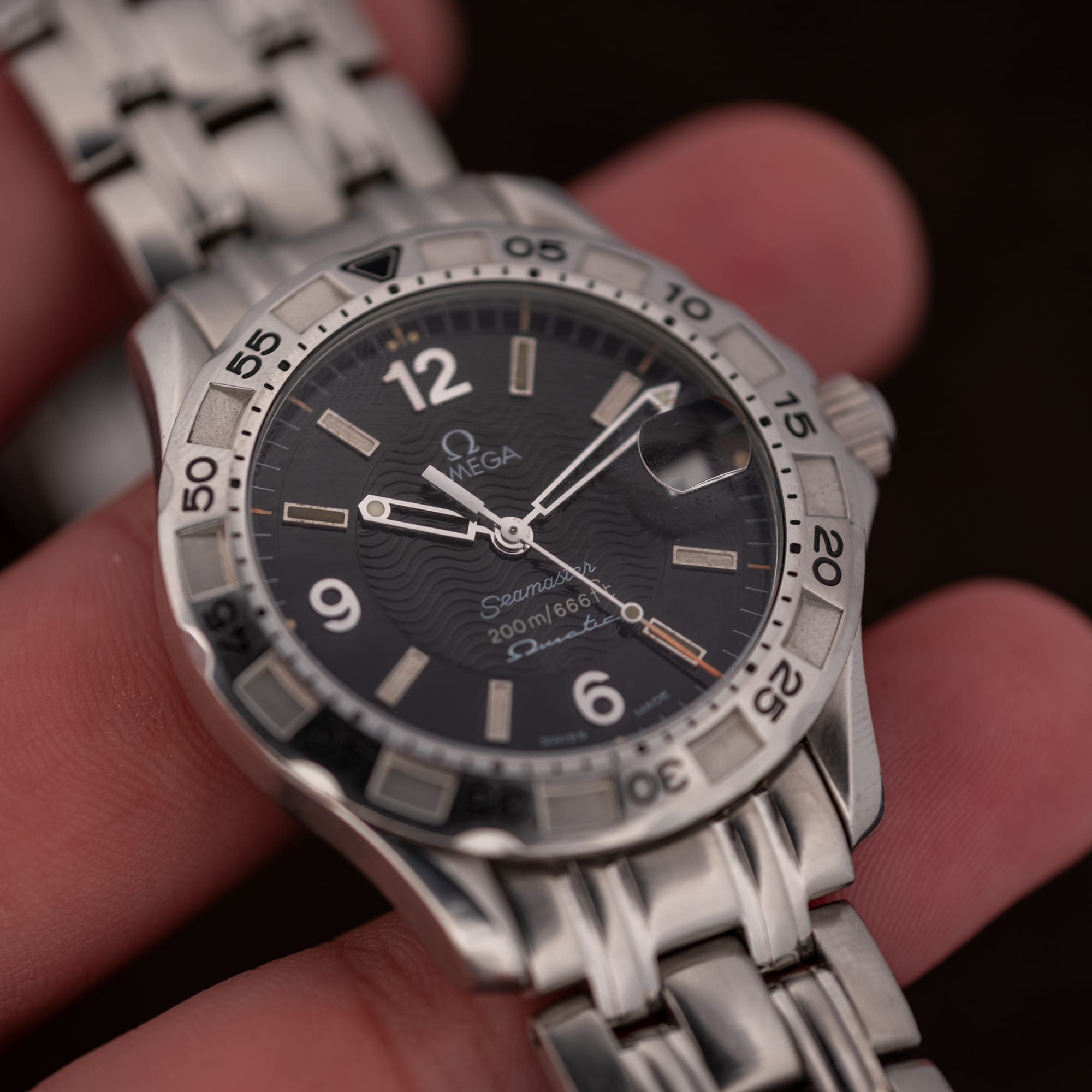
The dial declines to explain any of it. Beneath Seamaster and the depth rating it reads Ωmatic, the logo standing in for the first letter, which is either restraint or a very dry joke. The field is black wave guilloche, the applied batons have aged to a soft cream, the minute track carries orange accents, and a magnifier sits over the date at three. The bezel turns one way only, its markers applied rather than printed, with a lumed triangle at twelve. The crown screws down under the Omega symbol, and the hippocampus is set into more waves around the back. We opened it: the case marks inside are still crisp, and the rotor is signed for caliber 1400, seventeen jewels, sitting over green electronics where a mainspring barrel would otherwise be. The depth rating is not decoration either; 200m is genuine dive specification.
Serviced in-house at OTTUHR and backed by our 2-year warranty, on a silver stainless steel bracelet with a signed folding clasp. This is a rotor that gave up on the mainspring and found something else to do with the same motion.