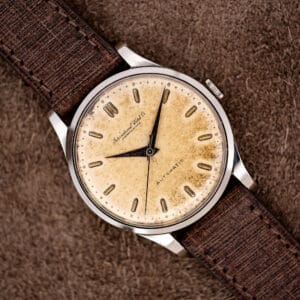
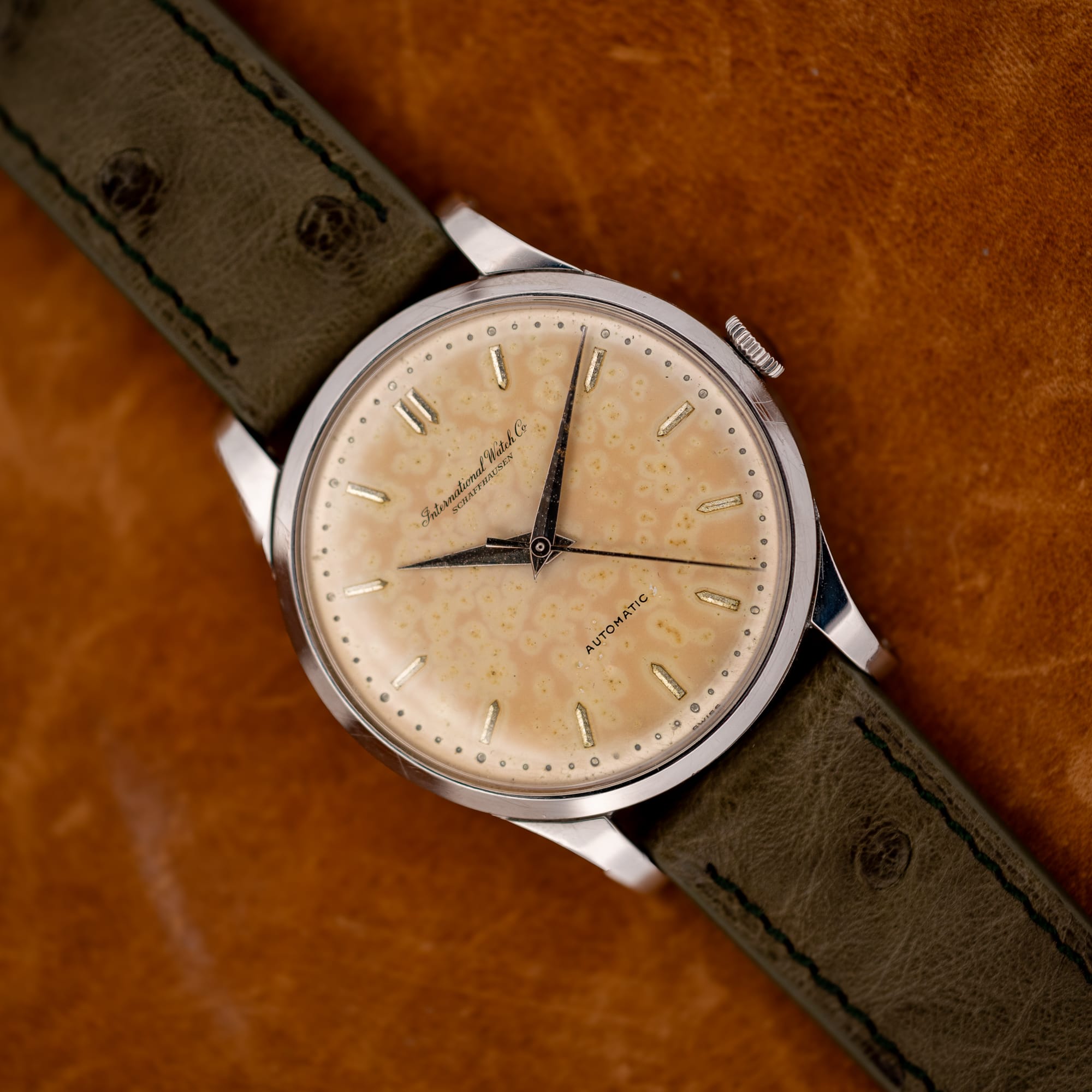
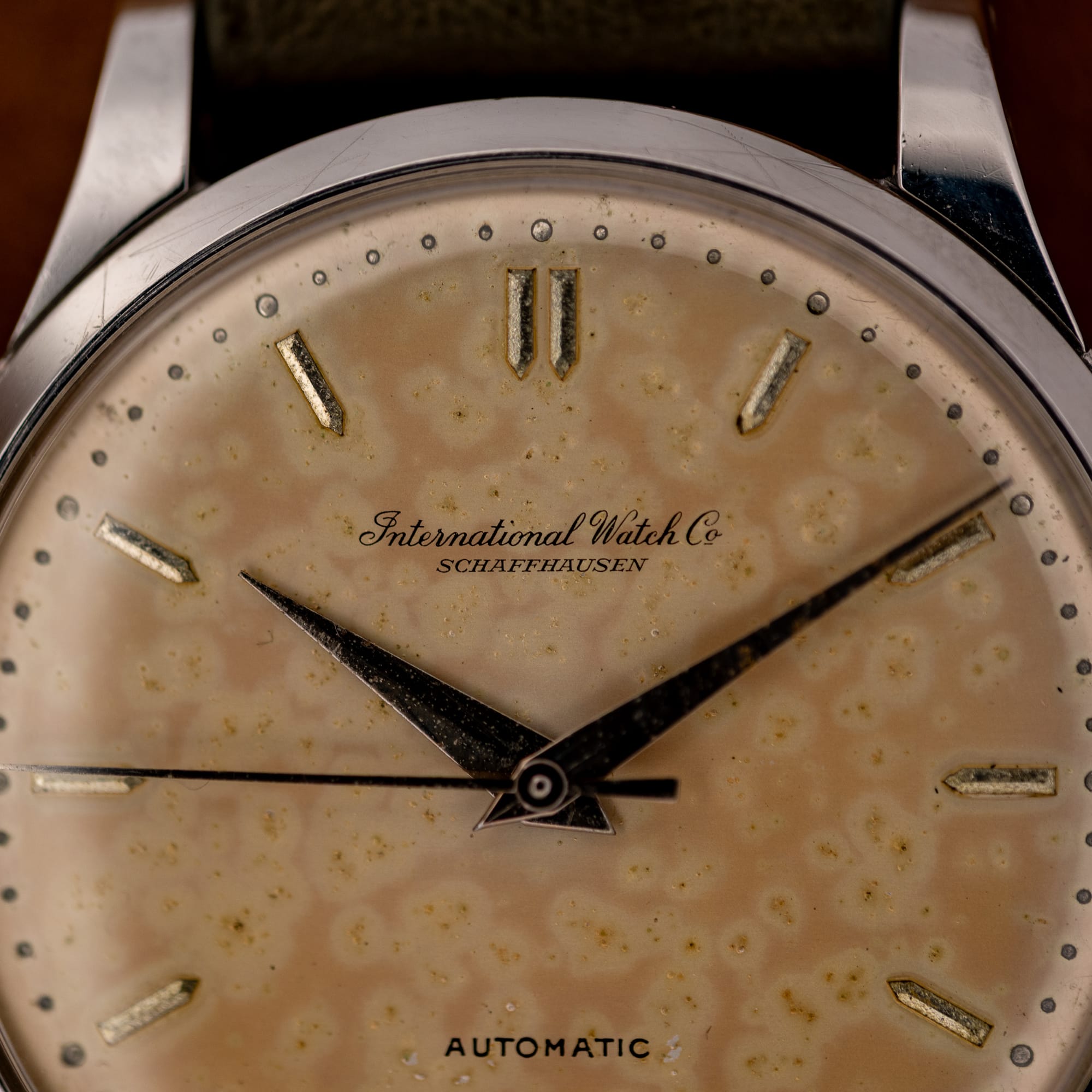
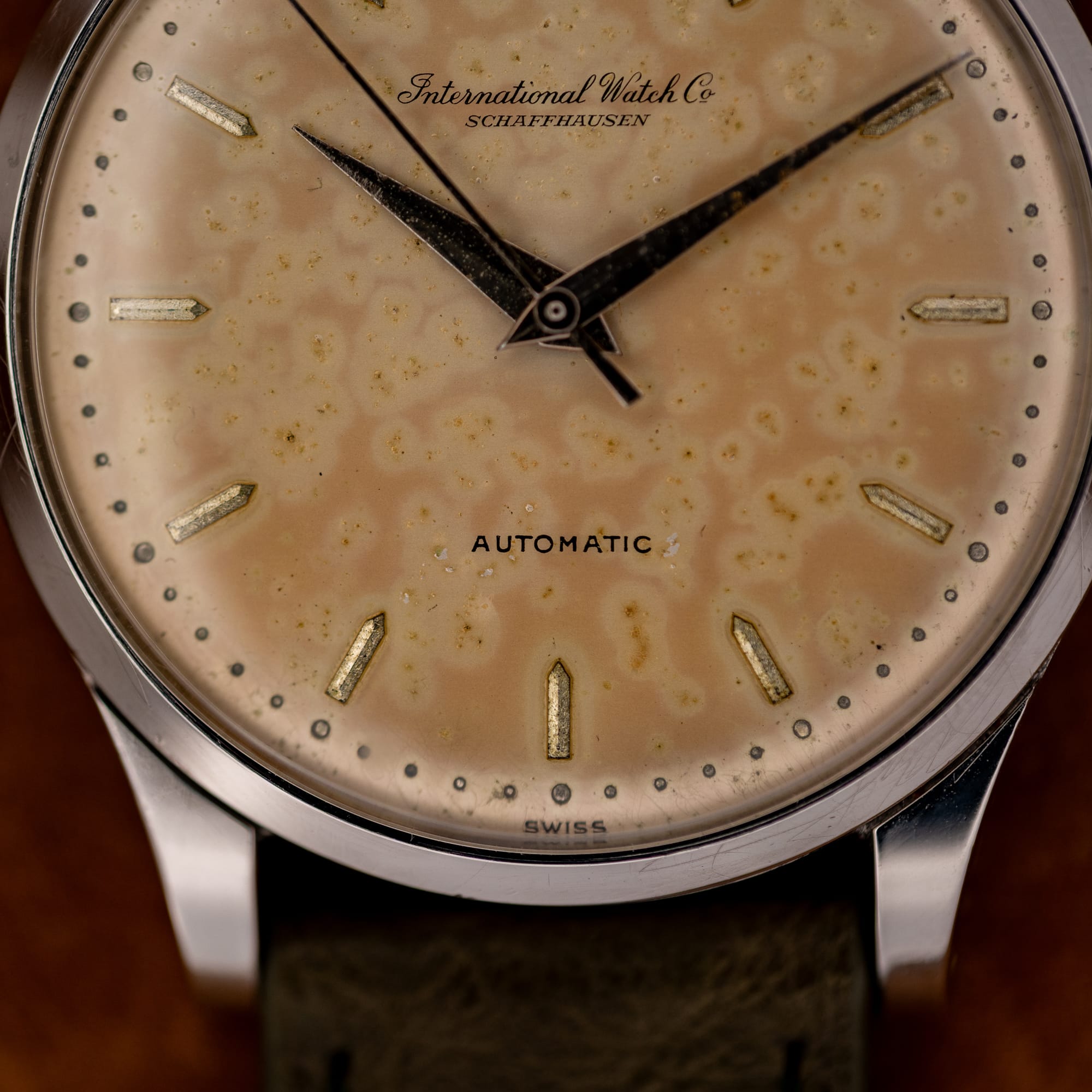
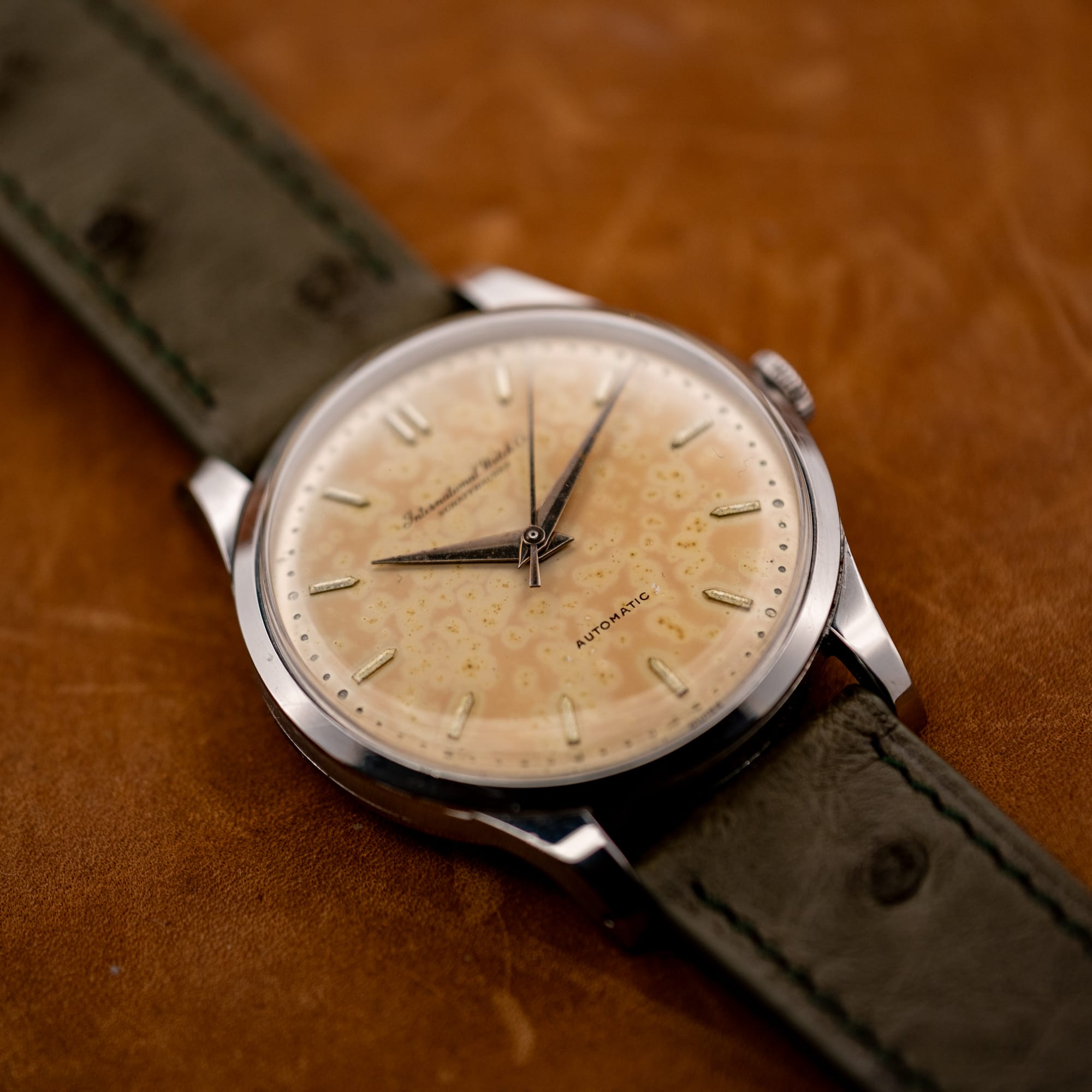
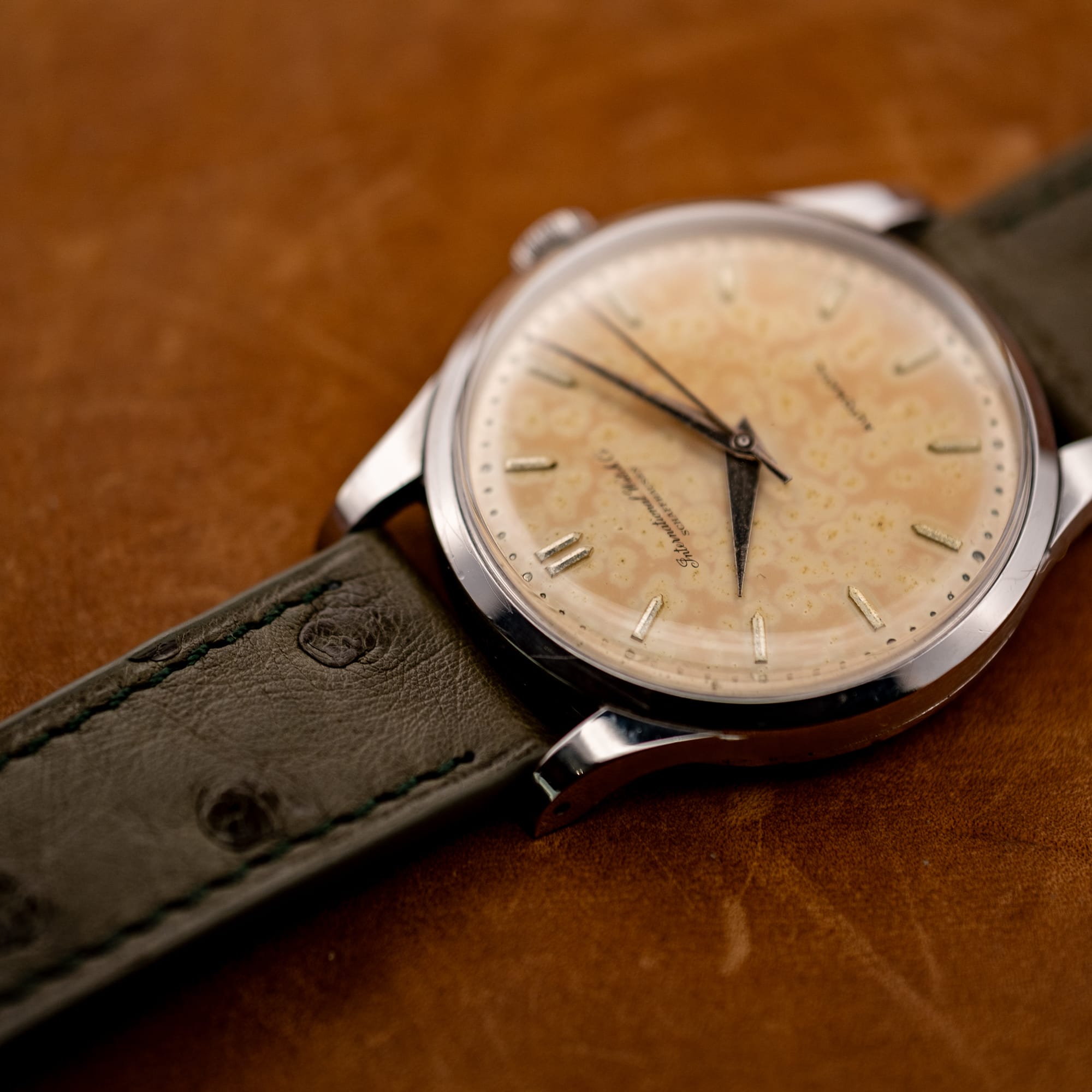
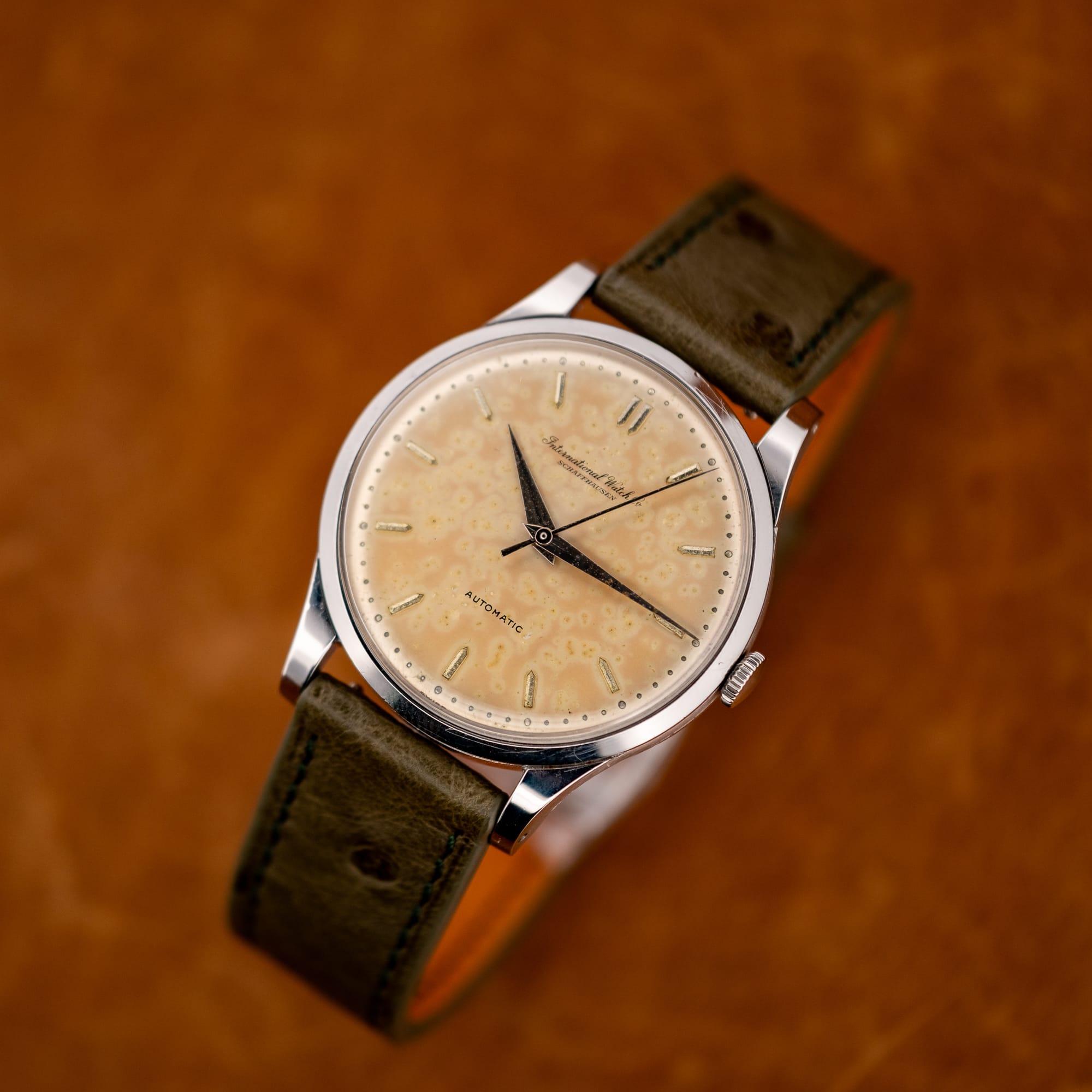
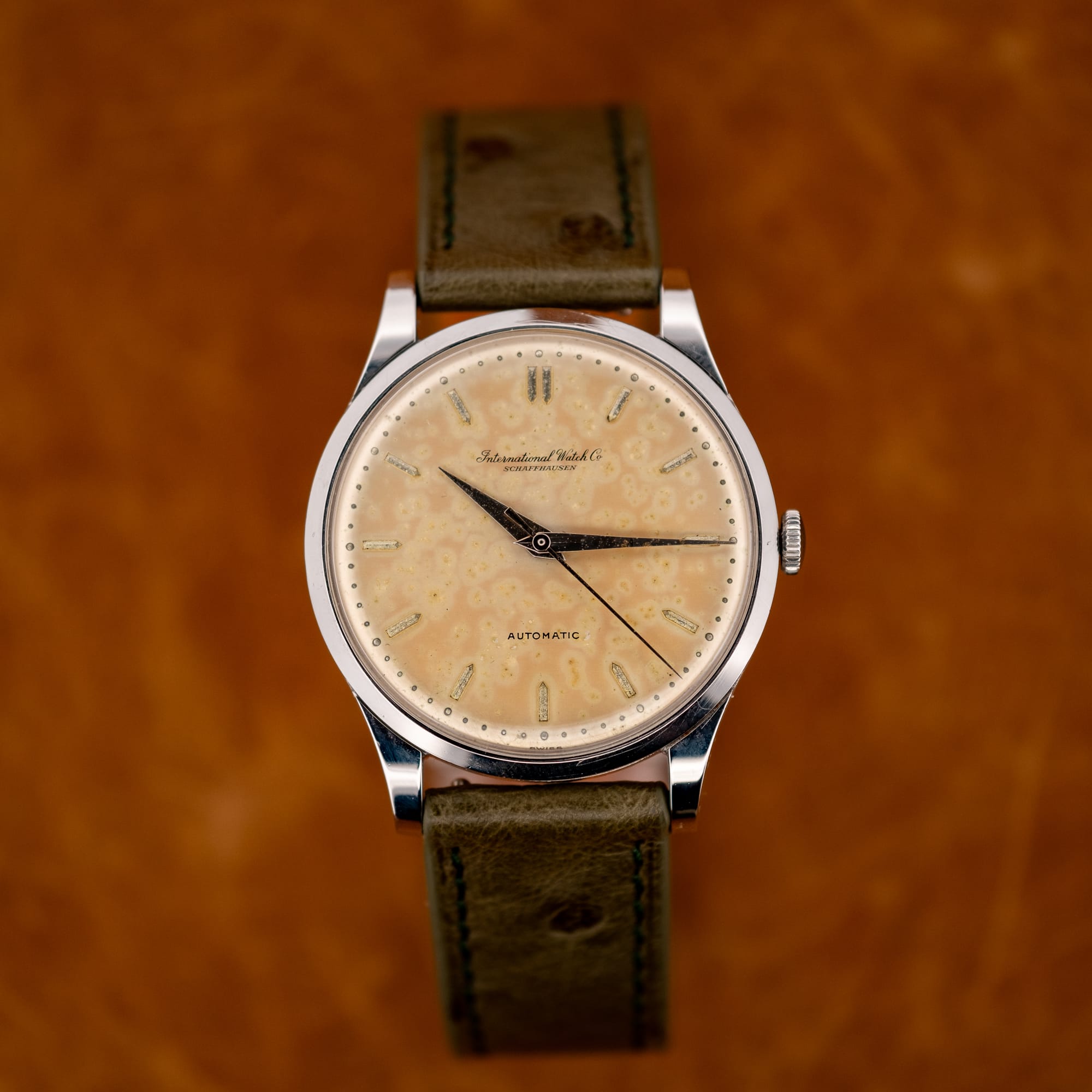
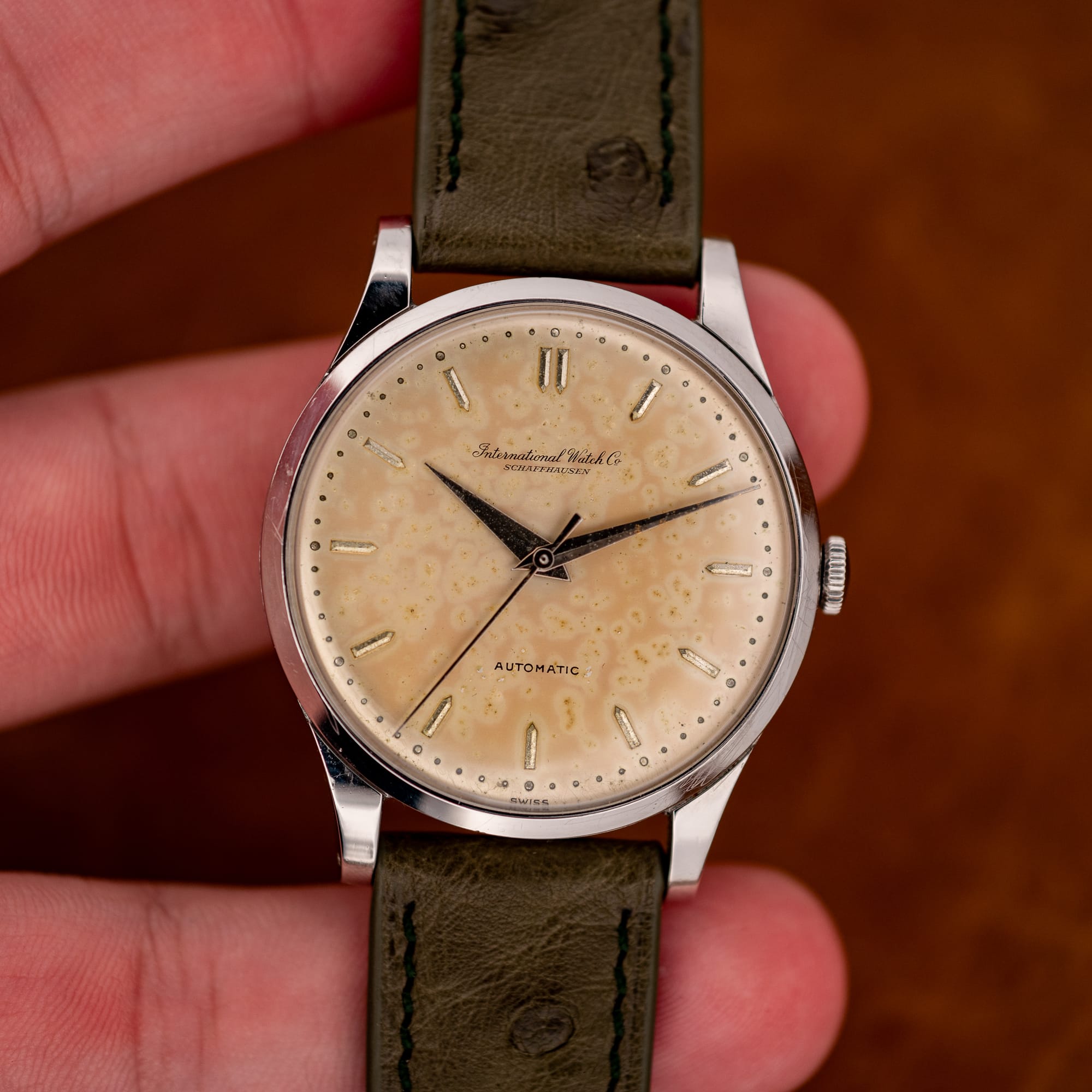
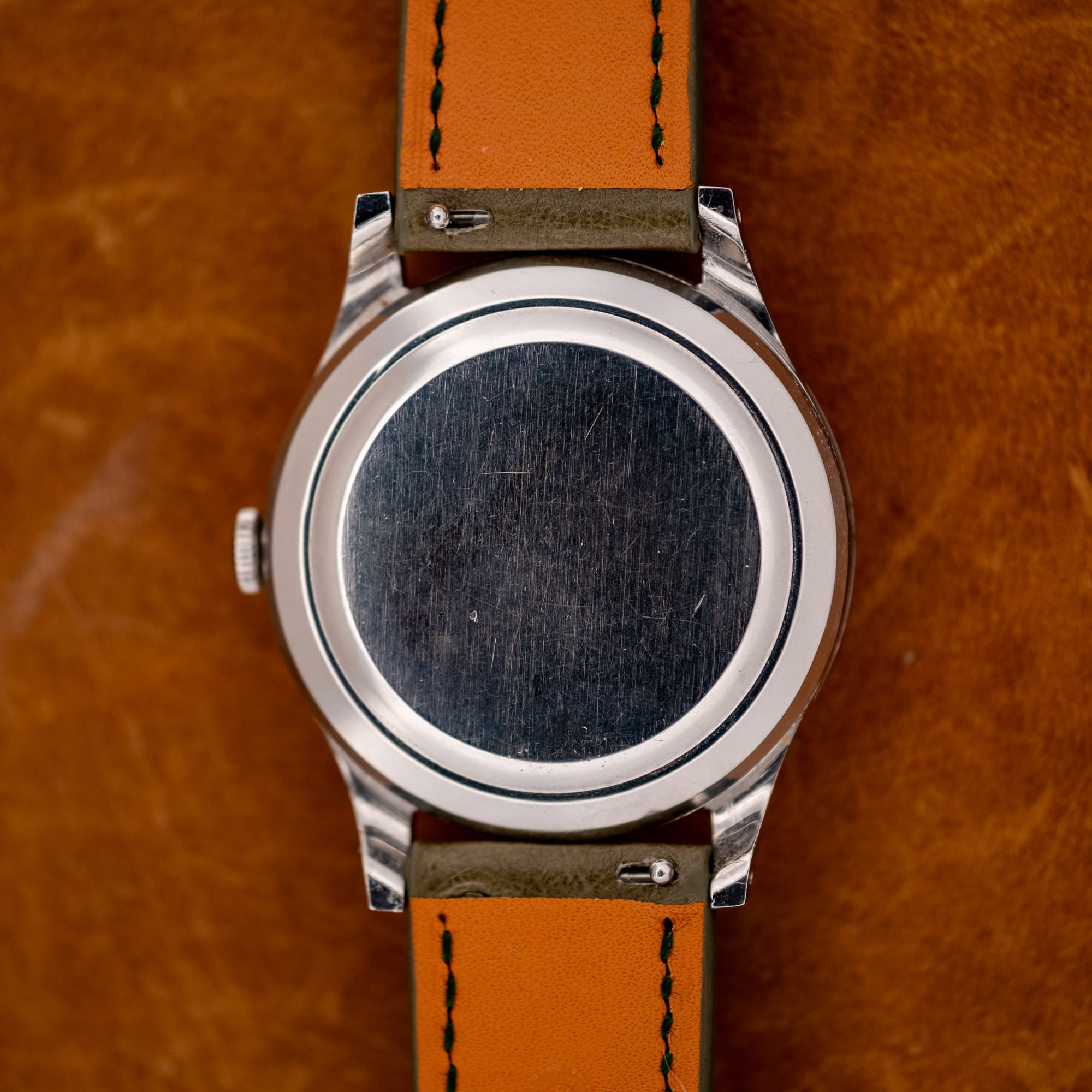
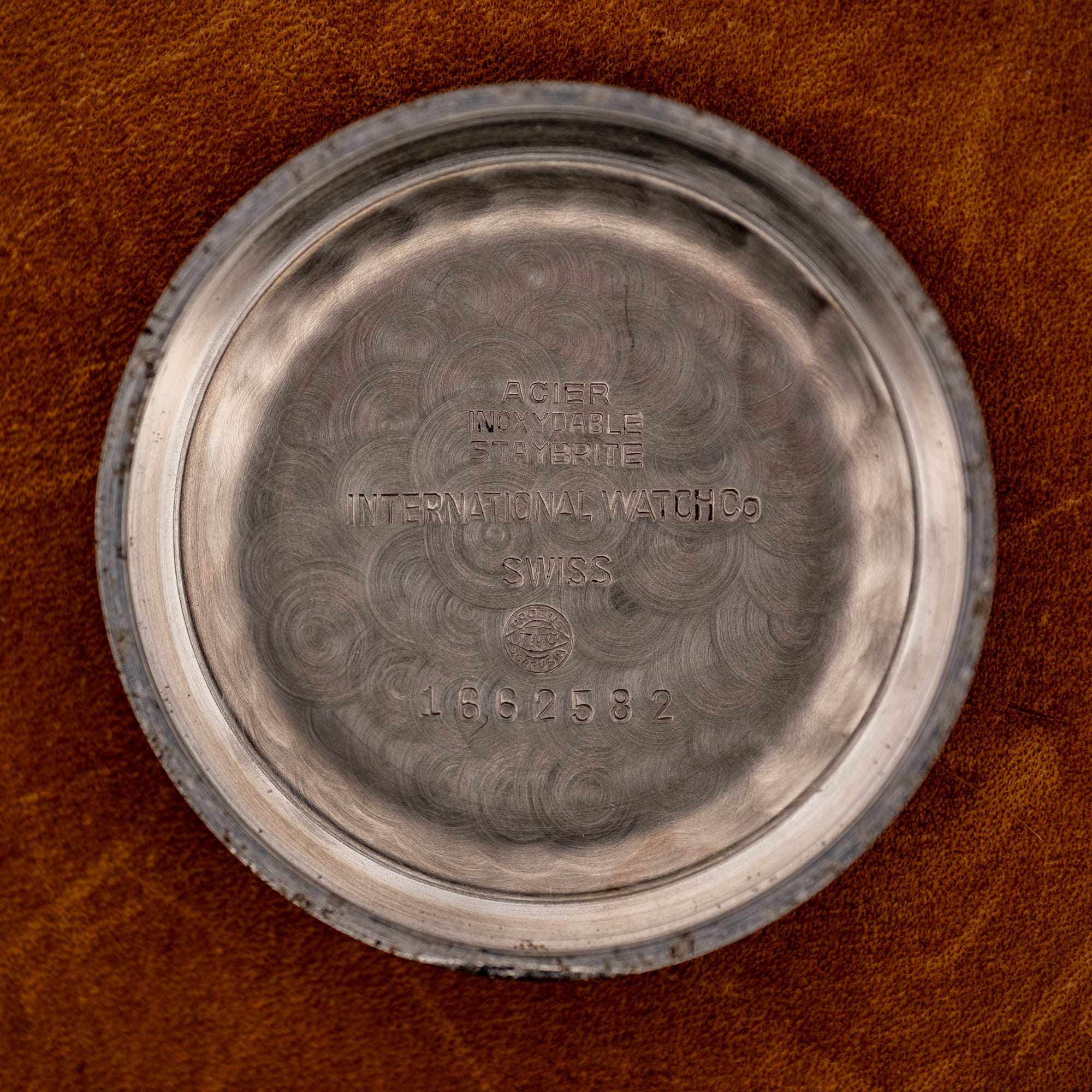
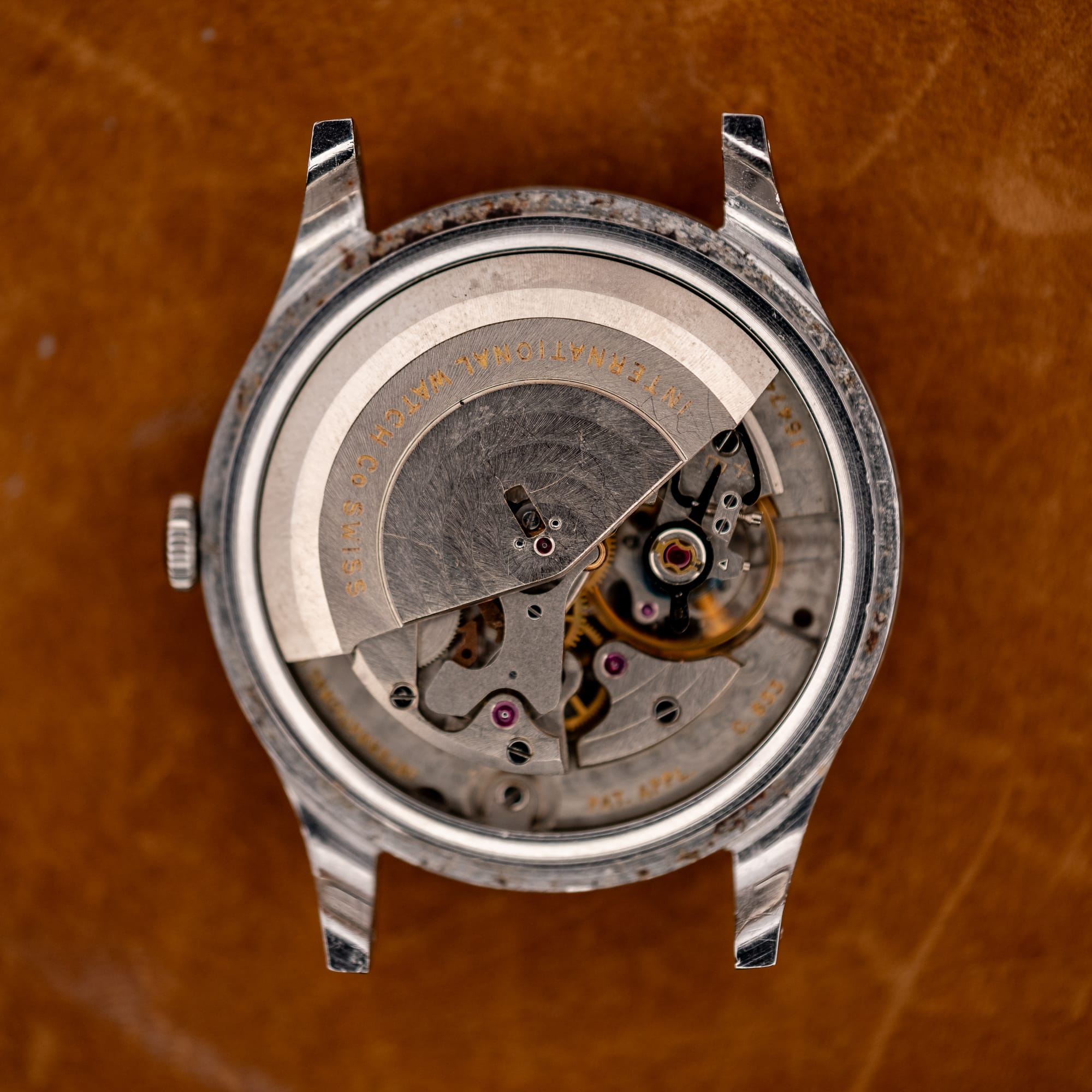
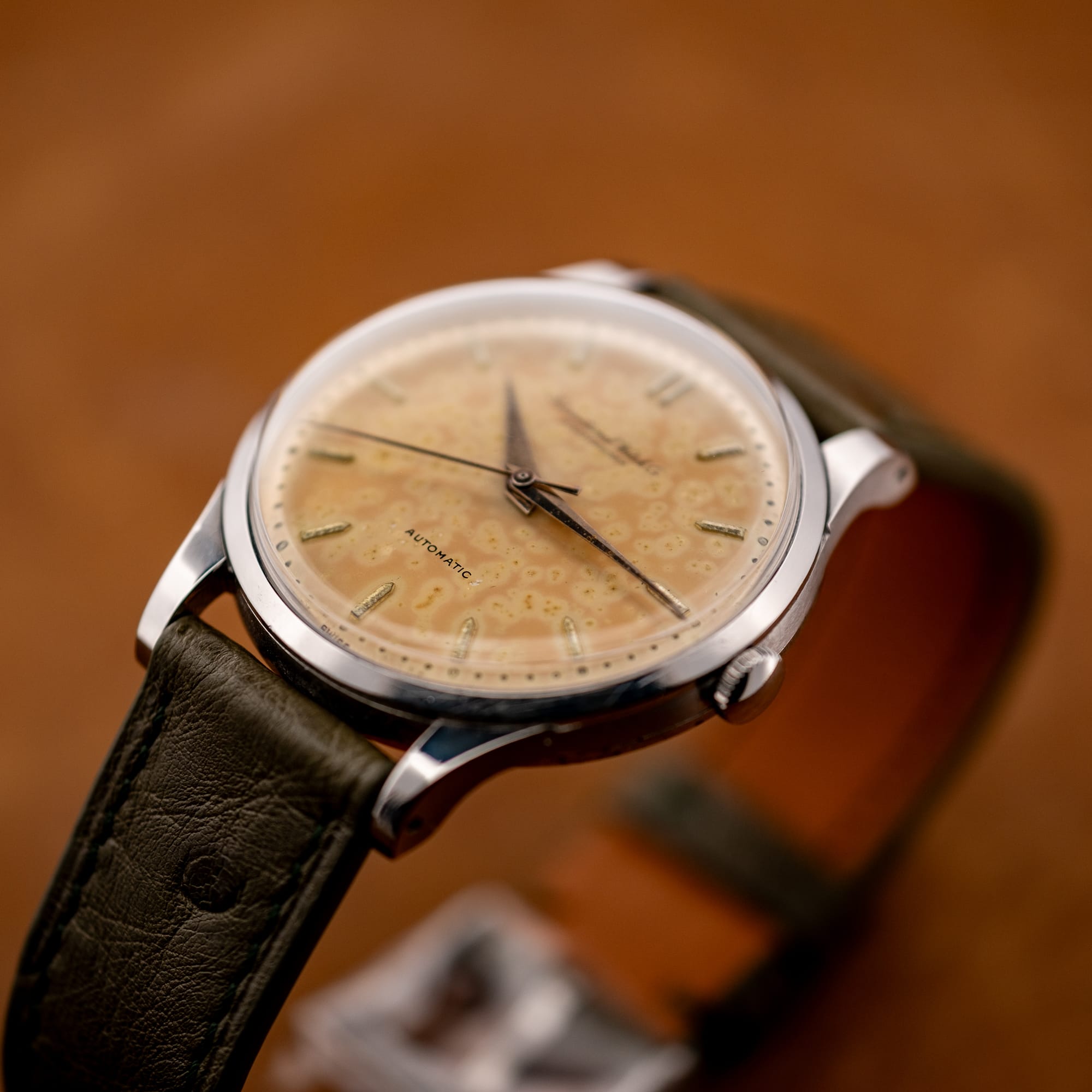
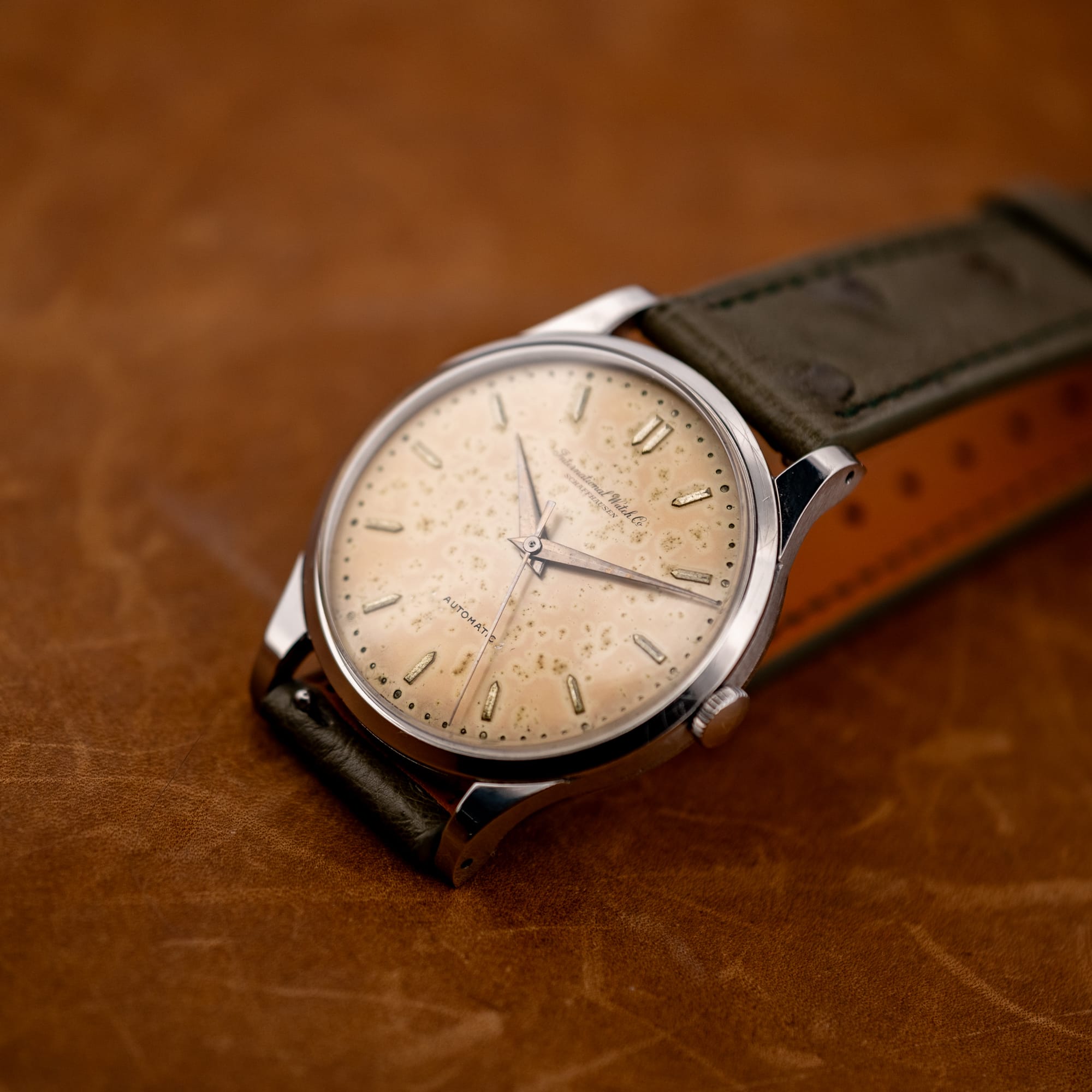
Albert Pellaton joined IWC as technical director in 1944 and made an efficient automatic winding system his priority. His solution involved a heart-shaped cam and two pawls, an arrangement that would give IWC a distinctive way of turning wrist movement into stored energy. It is a good reason to look beyond the dial of this IWC Calatrava-style automatic.
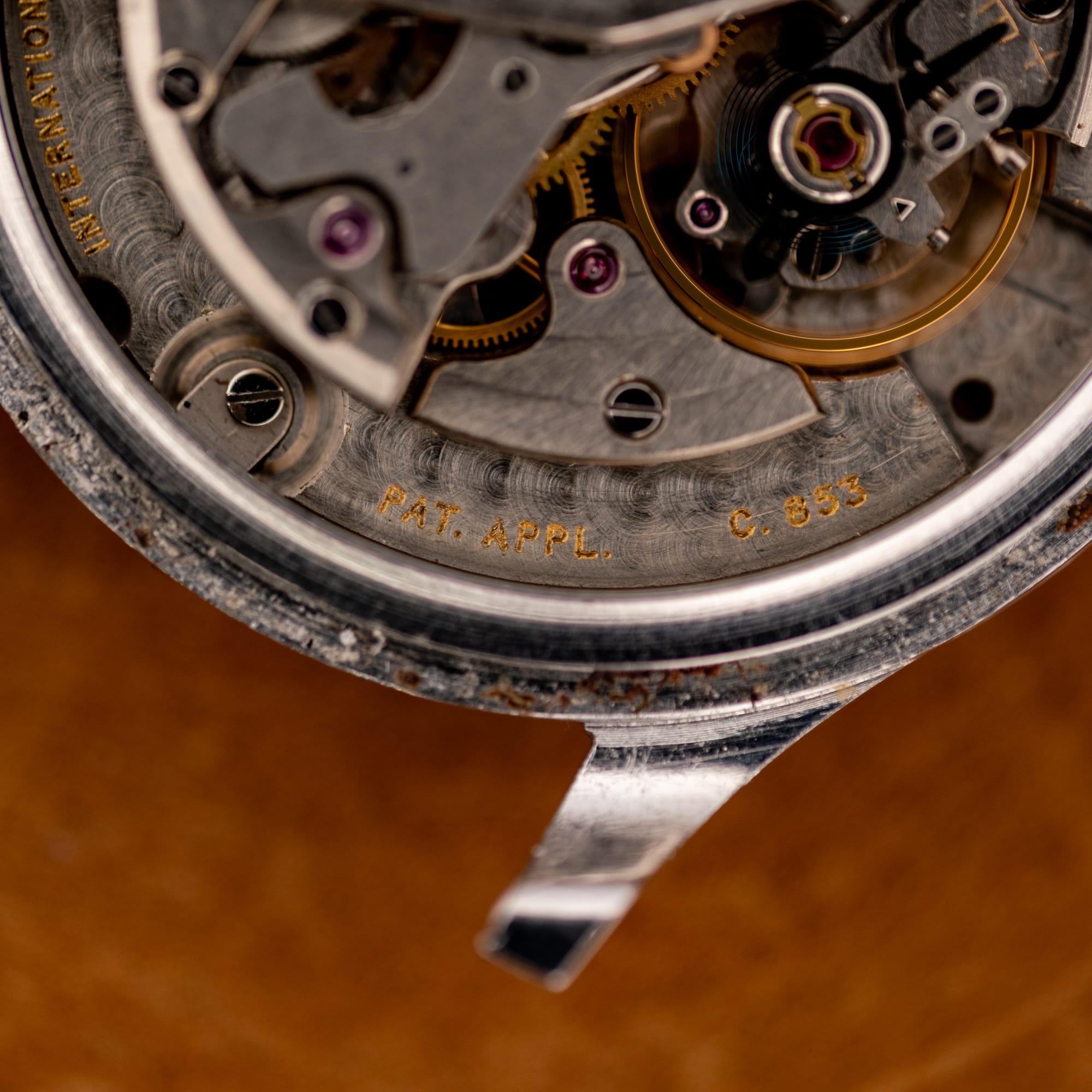
The cam translates the rotor’s rotation into a rocking motion. As it rocks, the two pawls take turns pulling a winding wheel forward, so rotation in either direction winds the mainspring. IWC introduced the caliber 85 in 1950; the caliber 853 inside this watch is a later development of that family. We enjoy knowing that the simple act of wearing it puts Pellaton’s solution to work, without adding anything its owner needs to operate.
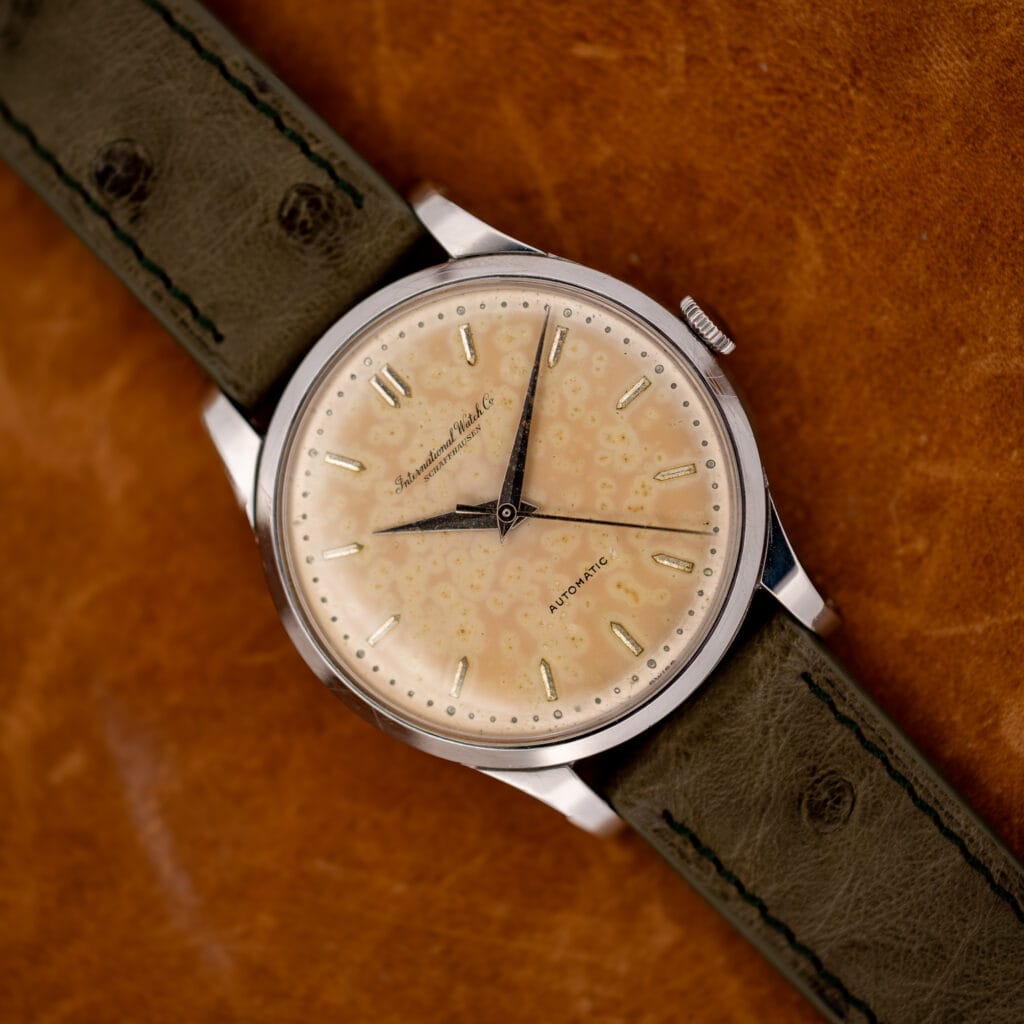
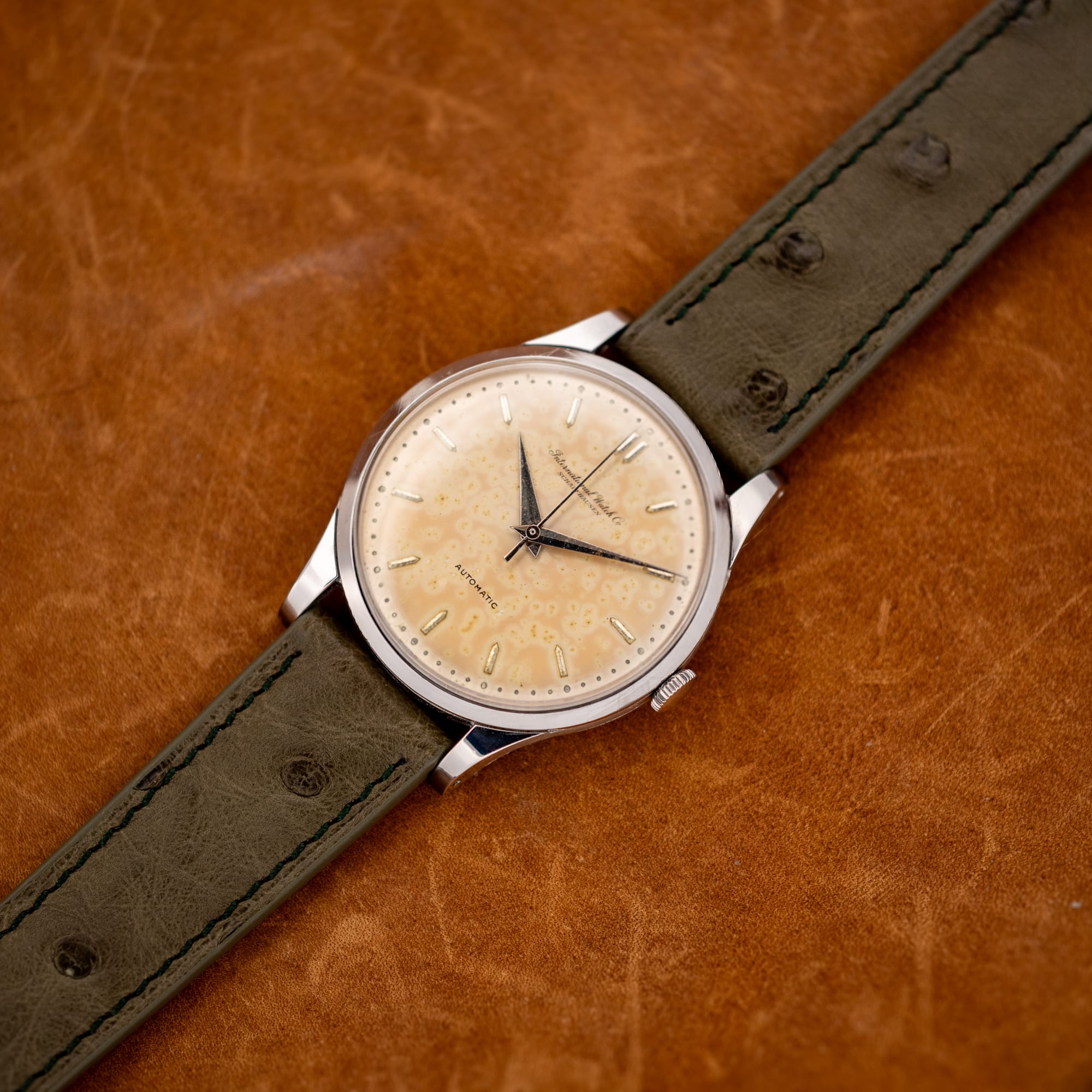
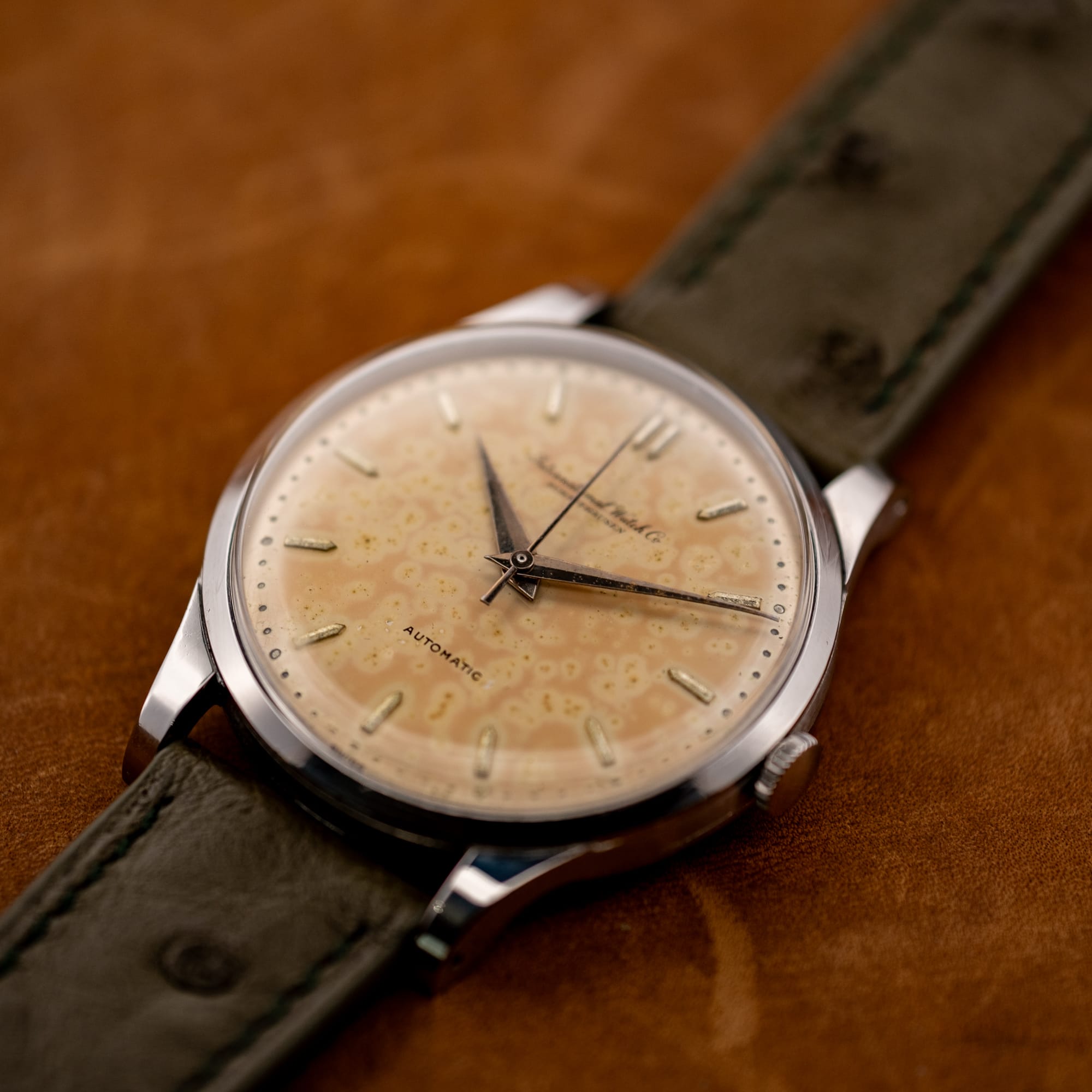
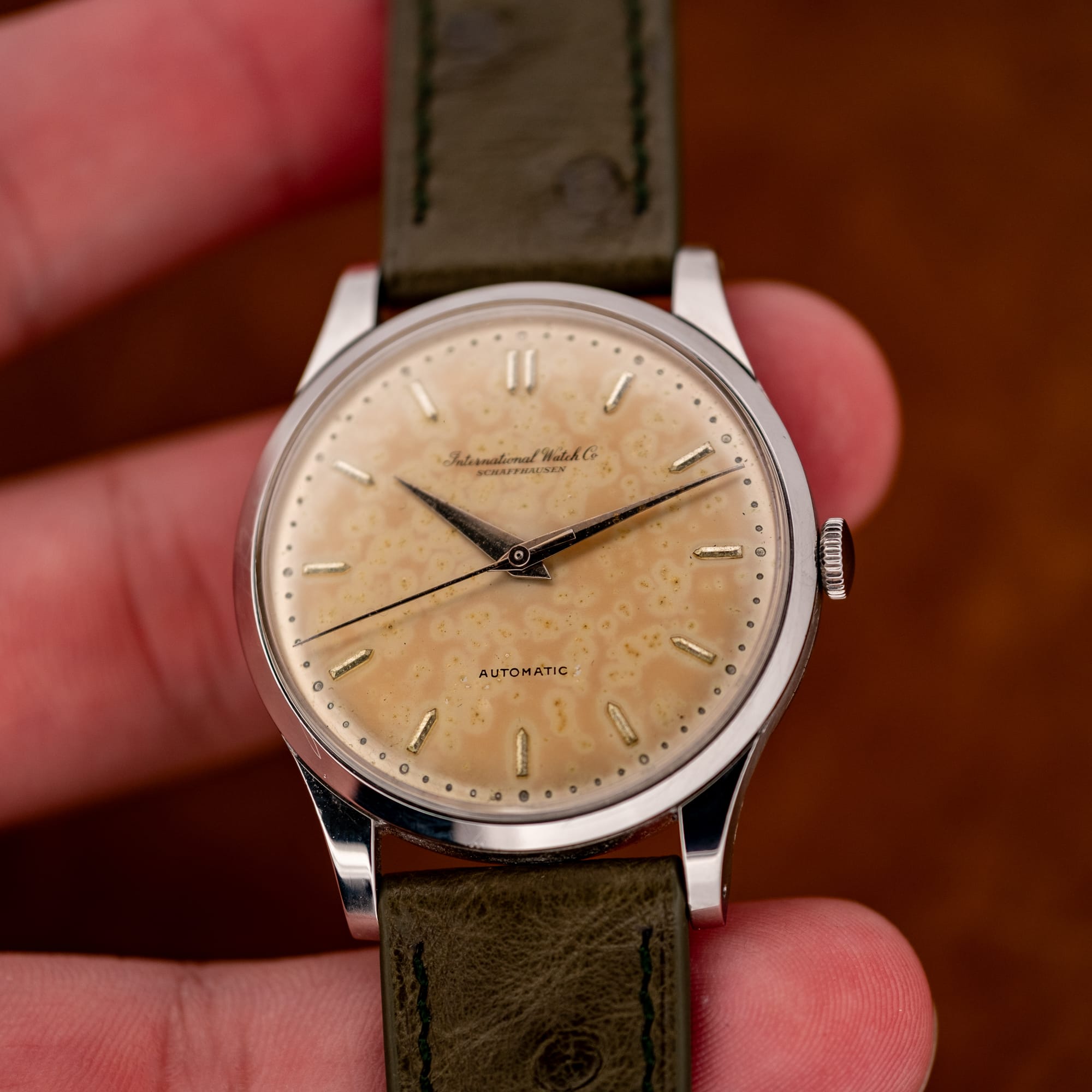
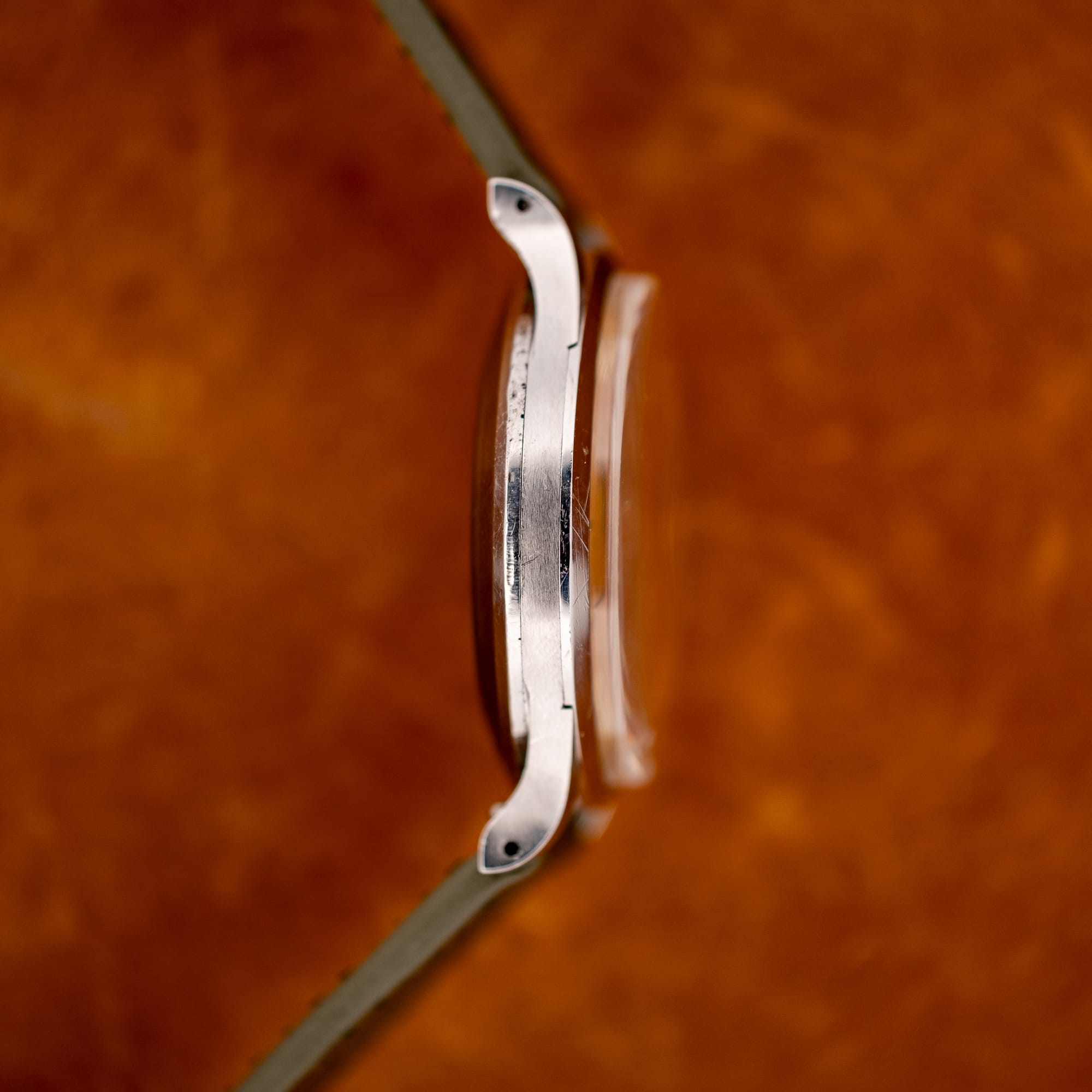
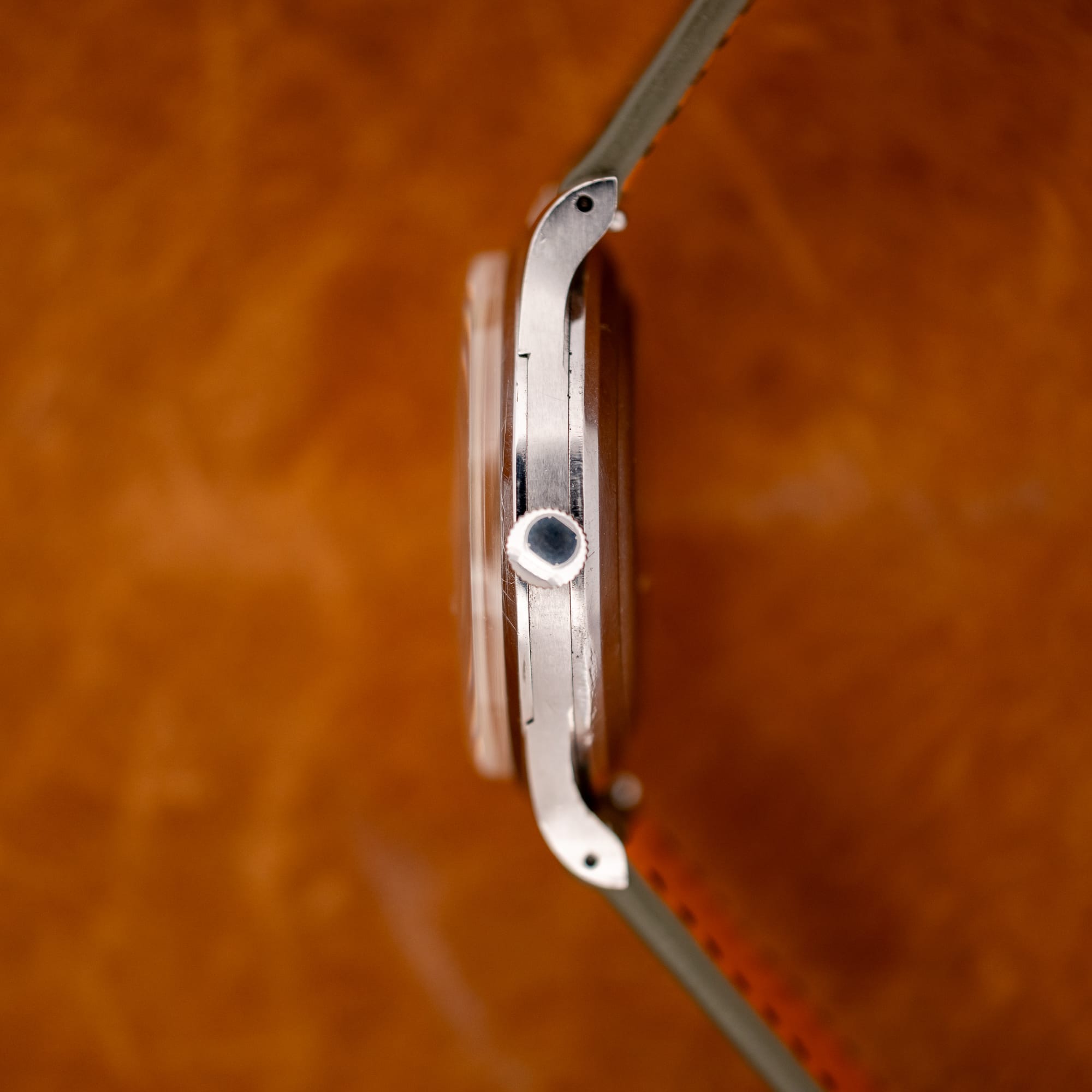
The 853 keeps the display to hours, minutes and central seconds, with no date. This example’s stainless steel case measures 35mm across and 42.5mm from lug to lug, and it is fitted with an olive ostrich strap.
We like the tension between Pellaton’s orderly mechanism and a dial that has aged into something almost abstract. The mottled eggshell surface gives this restrained dress watch a looser, more personal character, and the textured strap carries that through. This is one we would choose for the pleasure of looking at it as much as for the movement inside.