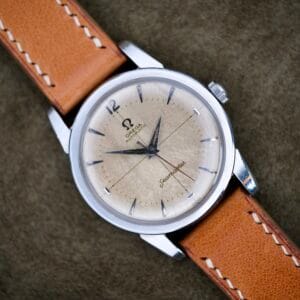
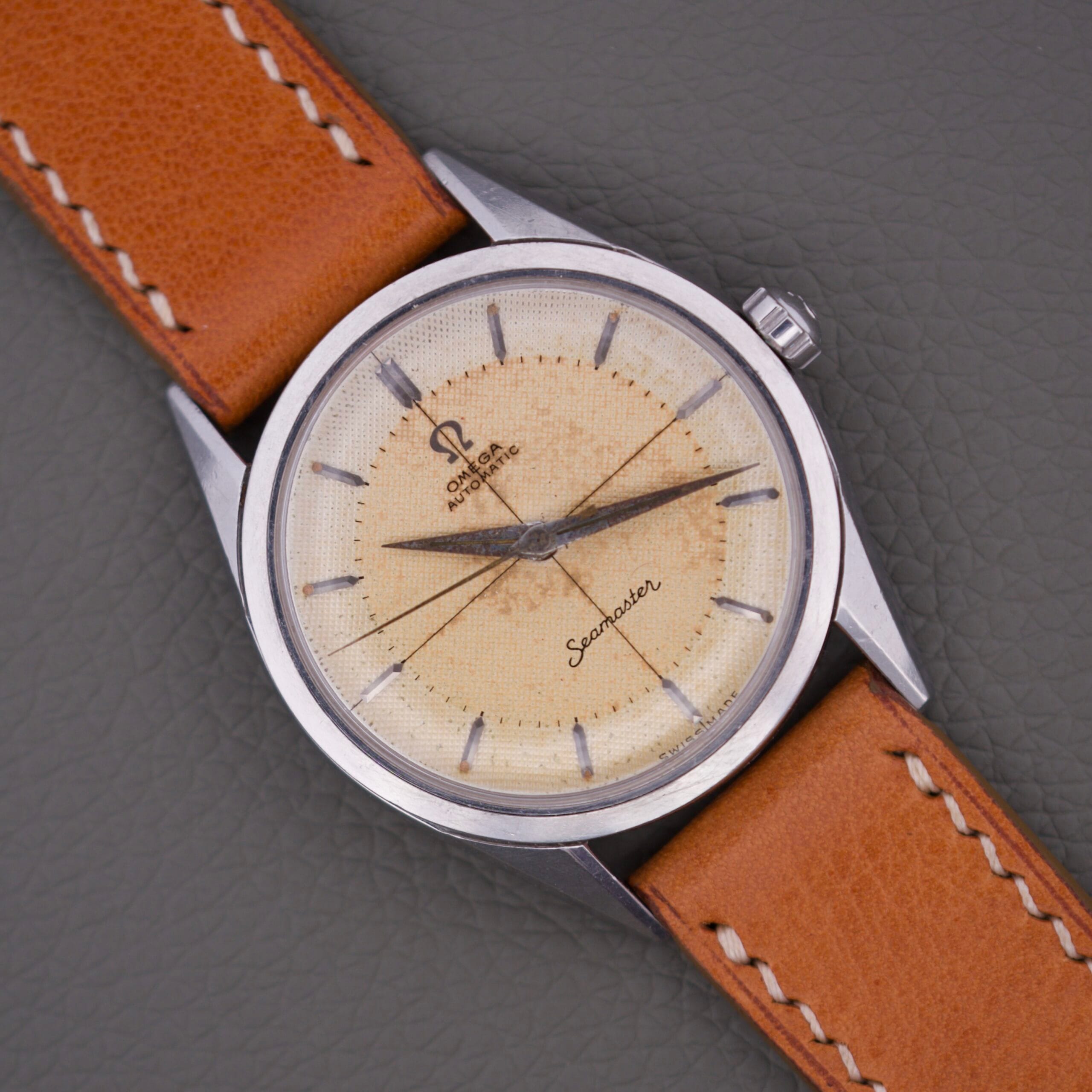
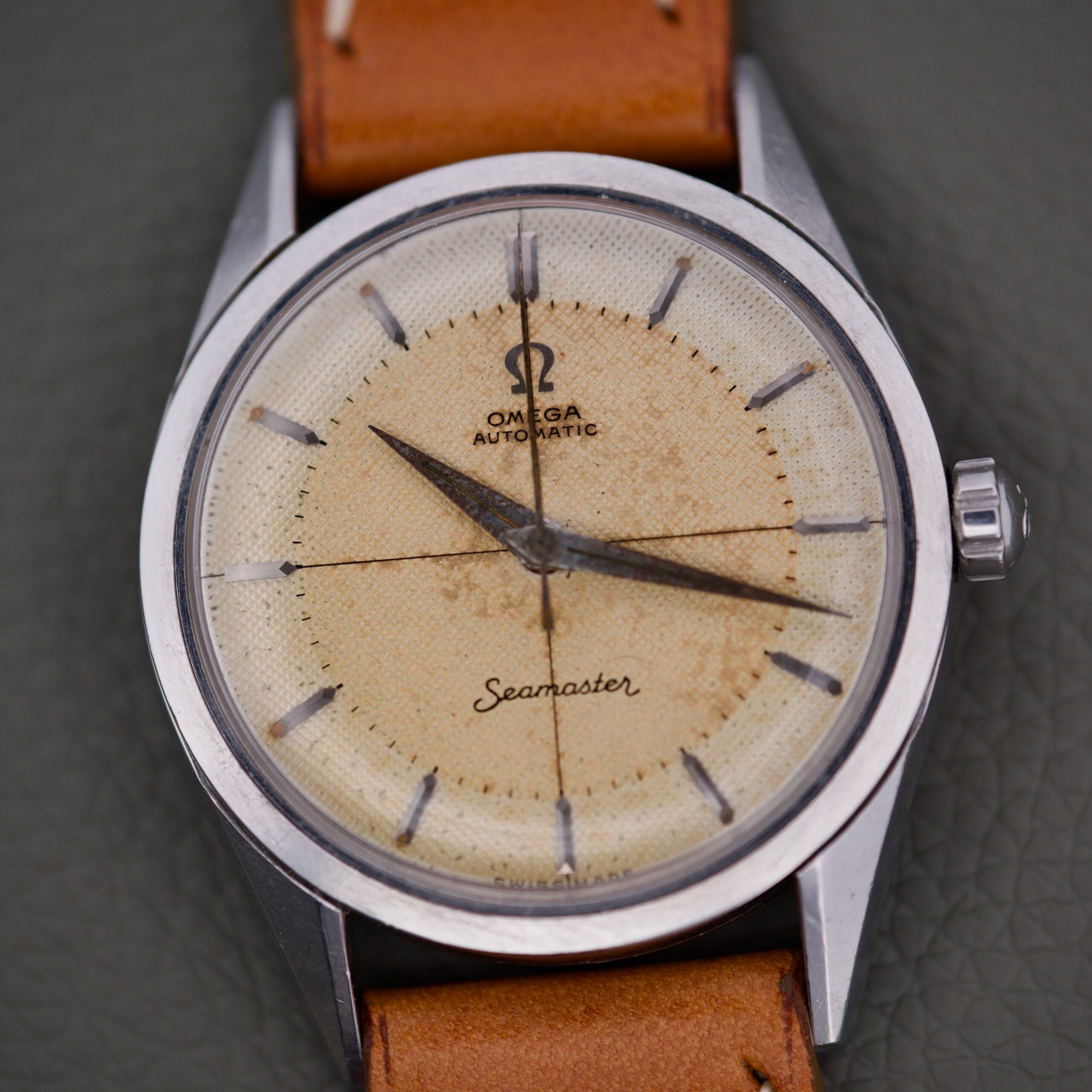
Cross-hair, waffle, and quietly tropical, all on the same dial. In our opinion the Omega Seamaster 2802 is one of the most under-read late-1950s steel Seamasters in the catalog, and this 2802-4 SC is exactly the kind of dial story that explains why. The cross-hair printing divides the face into four clean quadrants, the waffle texture catches light through each one, and the lower-left quadrant has bloomed into a warm caramel zone that no refinisher could fake. The 19-jewel Caliber 471 turning underneath is the technical headline. The dial is the visual headline. Together they are wonderfully honest mid-century Omega.
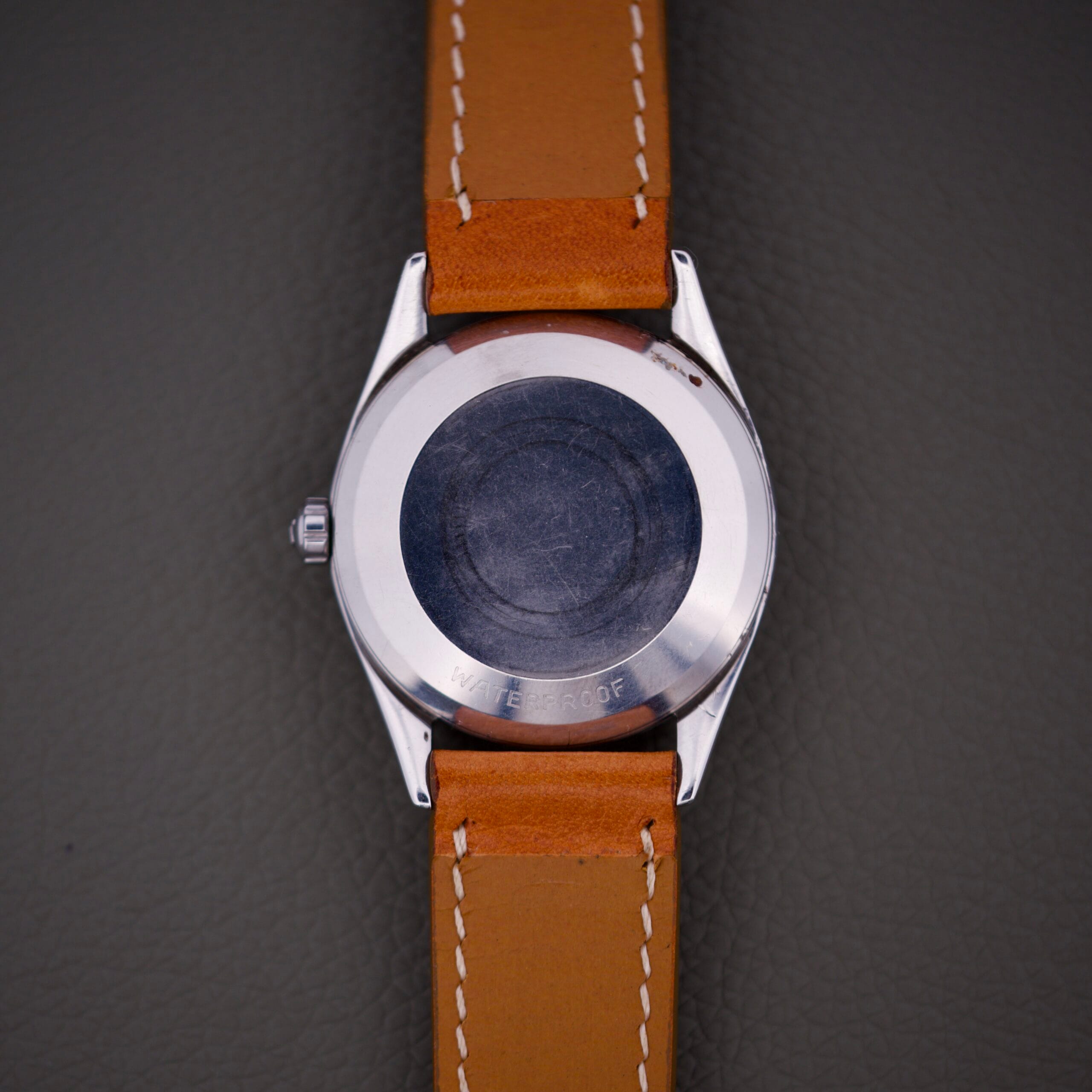
Omega launched the Seamaster line in 1948 to mark the brand’s centenary, drawing on the waterproof case work it had built up for British military commissions through the 1940s. By the late 1950s the catalog had spread across dozens of references in steel, gold-capped, and full gold, and the 2802 sat squarely in the steel civilian lineup. The “-4 SC” suffix on the inner caseback denotes the sweep center seconds dial-and-hand variant of the base 2802 case, exactly the configuration on this example. The case itself is the snap-on waterproof type that preceded the seahorse hippocampus engraving, with “WATERPROOF” stamped across the lower edge of the outer back instead of any decorative engraving.
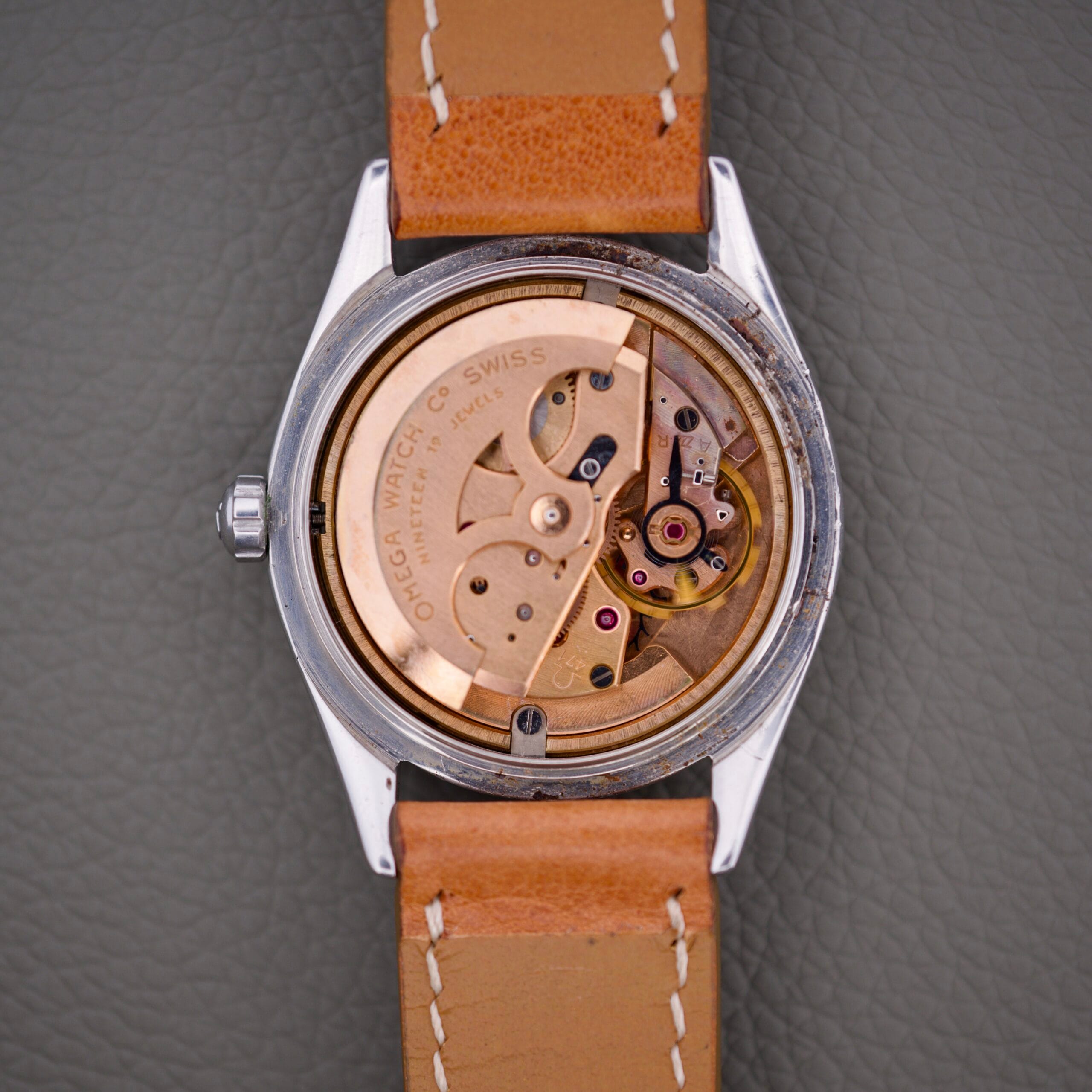
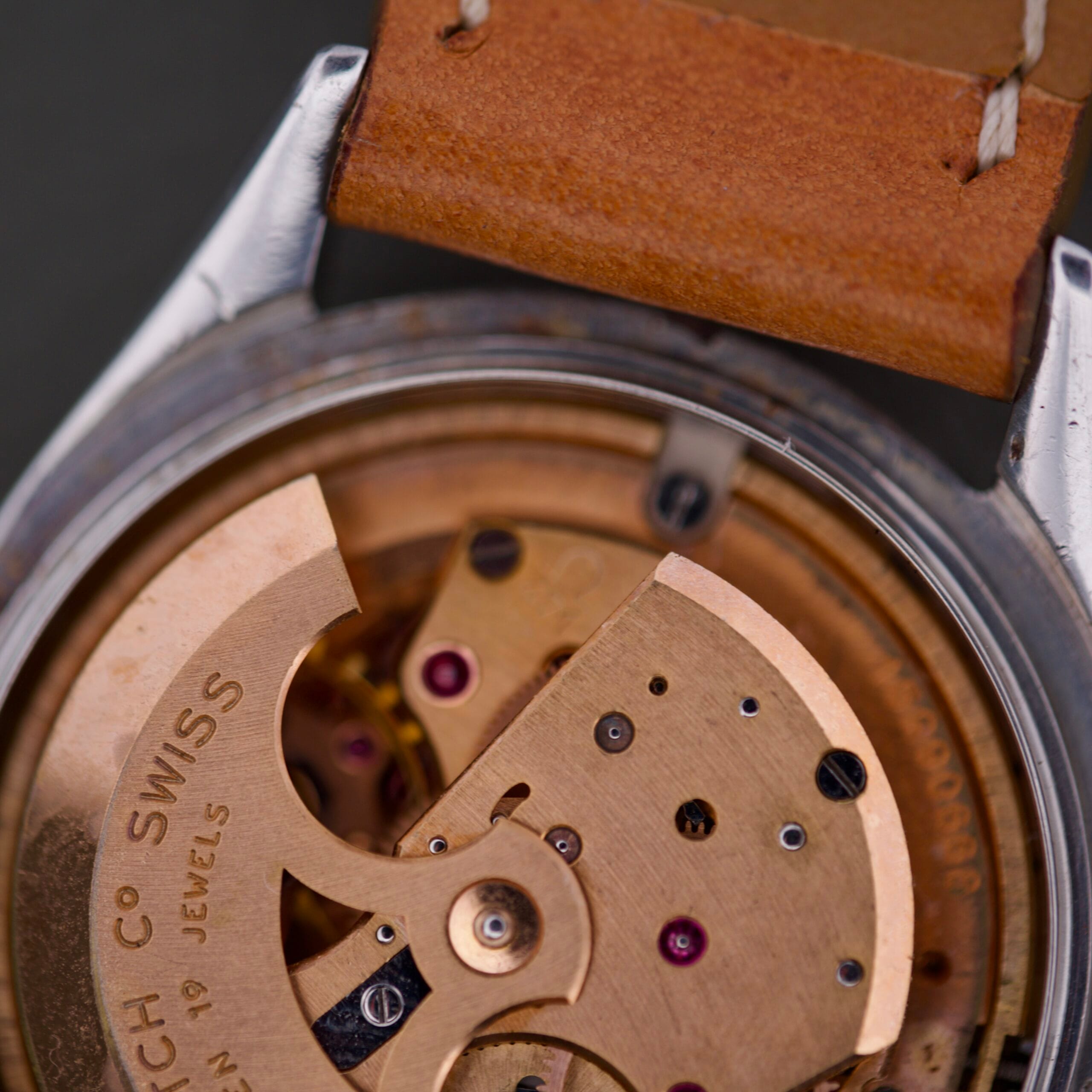
The movement is the Caliber 471, a 19-jewel evolution of Omega’s foundational Caliber 470 family that launched in 1955. The 470, 471, 490, 491, 501, and 503 were designed as a clean-sheet response to the bumper-automatic generation that had carried Omega through the late 1940s, giving the rotor a proper full 360-degree sweep, raising winding efficiency, and thinning the case profile in the process. The 471 carries two more jewels than the base 470, a small upgrade Omega made on certain Seamaster and Constellation variants, and the rotor on this example confirms the count in plain English: “OMEGA WATCH CO SWISS NINETEEN 19 JEWELS” runs across the curve. The 471 runs at 19,800 vibrations per hour, carries Incabloc shock protection on the balance, and ladders into a documented production window that puts watches built around it in the late 1950s with reasonable confidence. The plates underneath the rotor carry warm rose-gilt finishing, the balance turns evenly under its Incabloc setting, and the red regulator index sits in clean order at the side of the bridge. This is the immediate technical ancestor of the 500-series movements that would carry Omega through the 1960s.
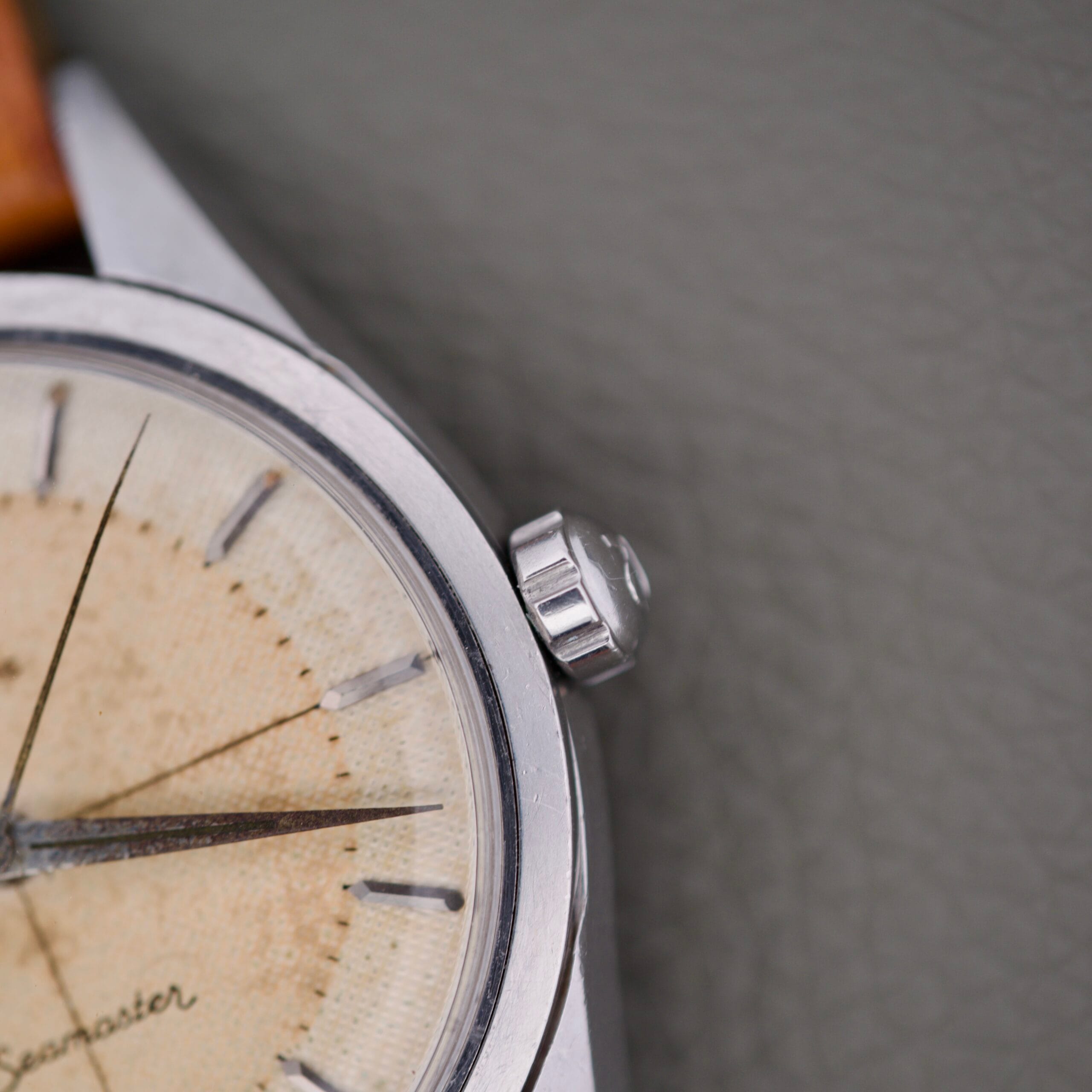
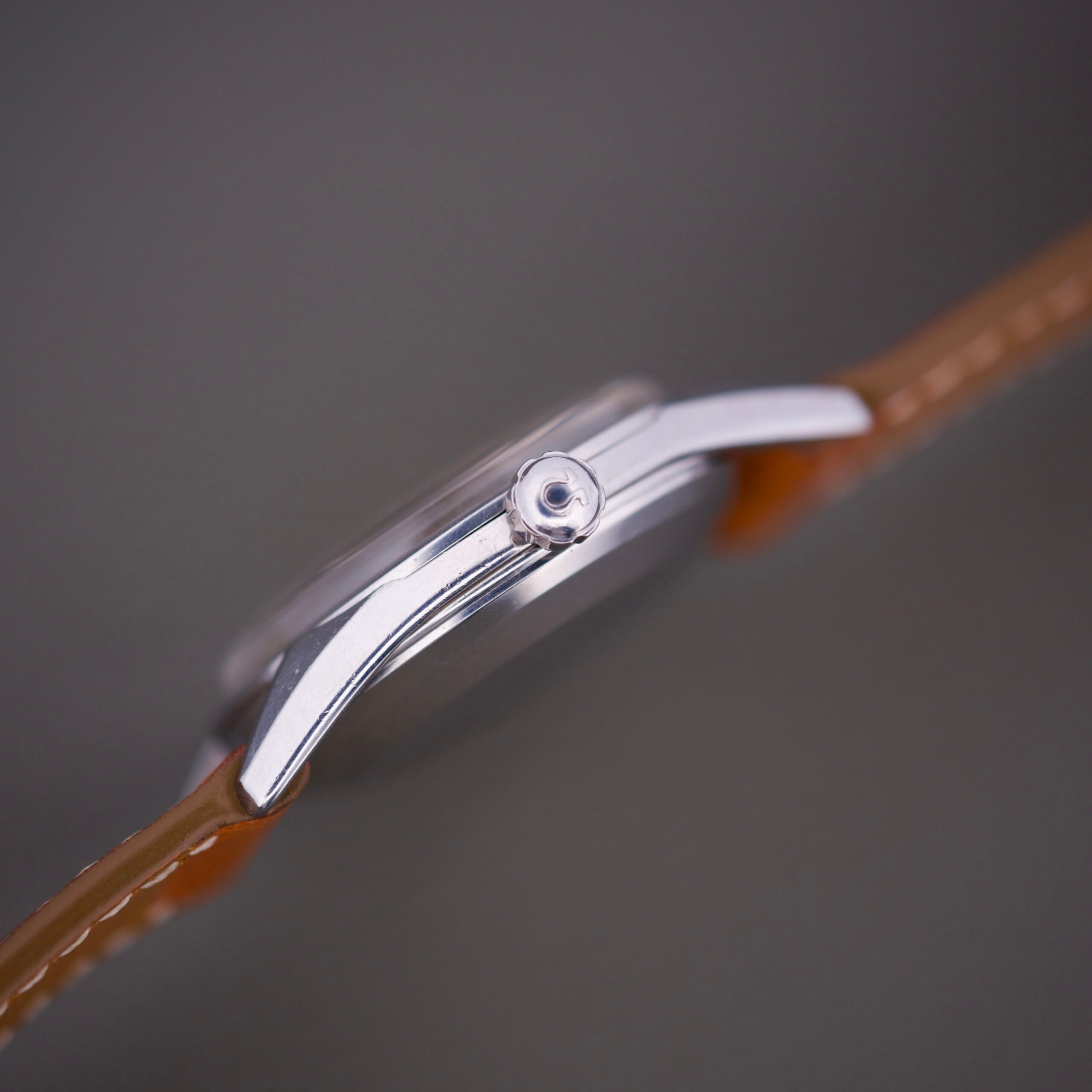
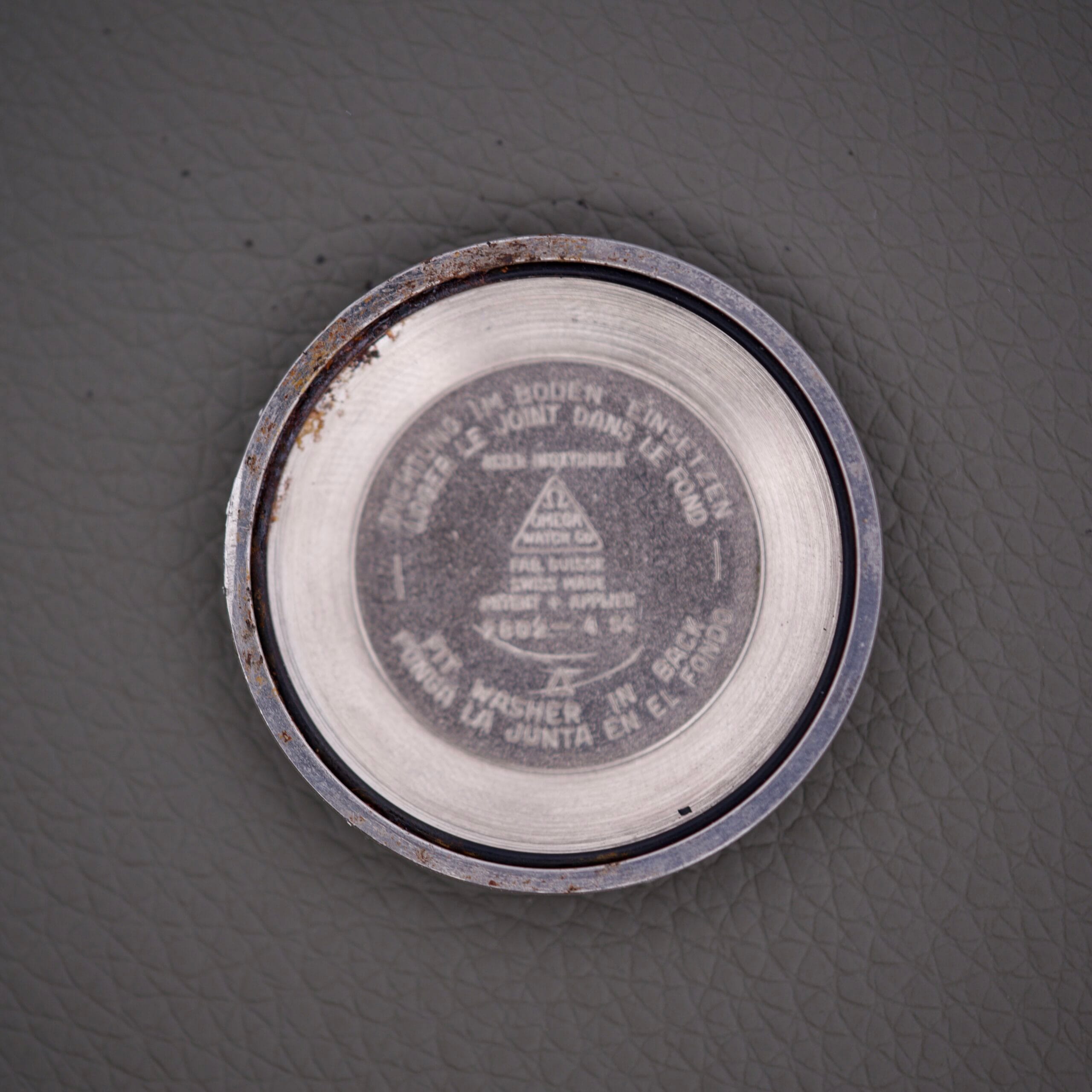
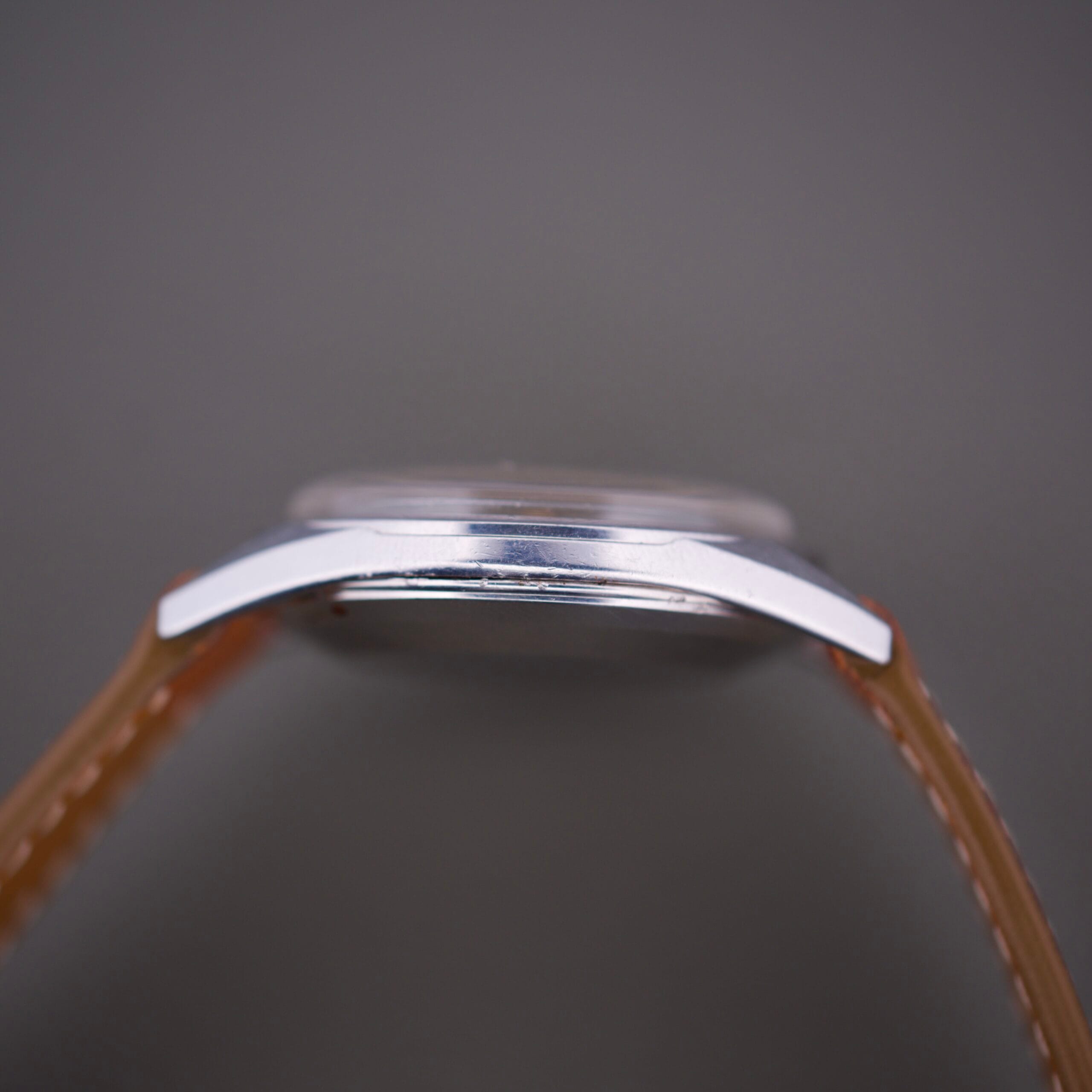
The case is solid stainless steel measuring 33.5mm across with a 41mm lug-to-lug and 18mm between the lugs, slim and softly proportioned in the way mid-century Omega cases were meant to be. The lugs taper down into a beveled edge, the mid-case carries polished flanks with the light hairlines that seventy years of honest use produces, and the bezel is the smooth raised steel ring that frames the acrylic crystal cleanly. Pop the snap-on back and the inner cover gives up the verbatim stampings of a properly preserved Seamaster of the era: “DICHTUNG IM BODEN EINSETZEN” arcing across the top, “LOGER LE JOINT DANS LE FOND” below it, the central “ACIER INOXYDABLE” with the Omega triangle hallmark and “OMEGA WATCH CO” inside, “FAB. SUISSE”, “SWISS MADE”, “PATENT + APPLIED”, the reference itself “2802-4 SC”, and the gasket reminders “FIT WASHER IN BACK” and “PONGA LA JUNTA EN EL FONDO” closing out the trilingual layout. The crown is signed with the Omega Ω logo in clean visible relief and sits unprotected against the case at three.
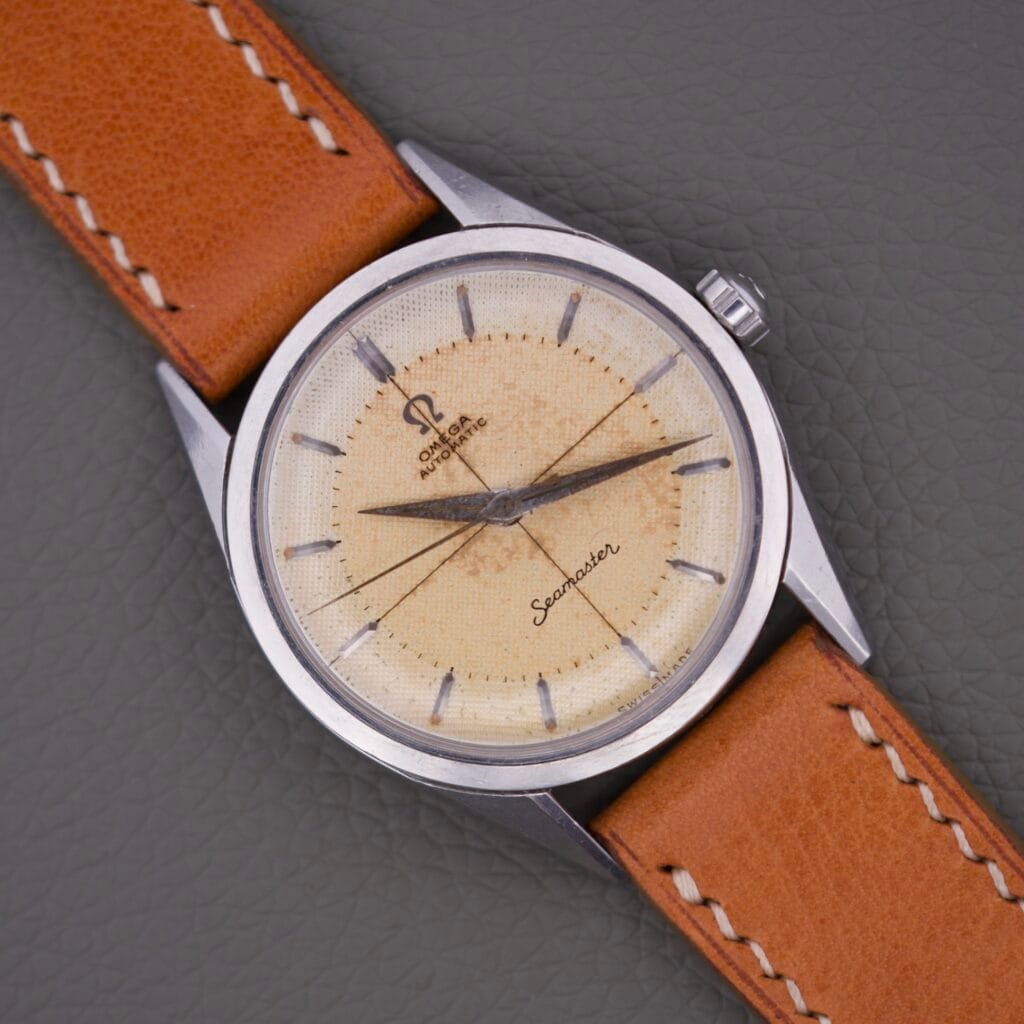
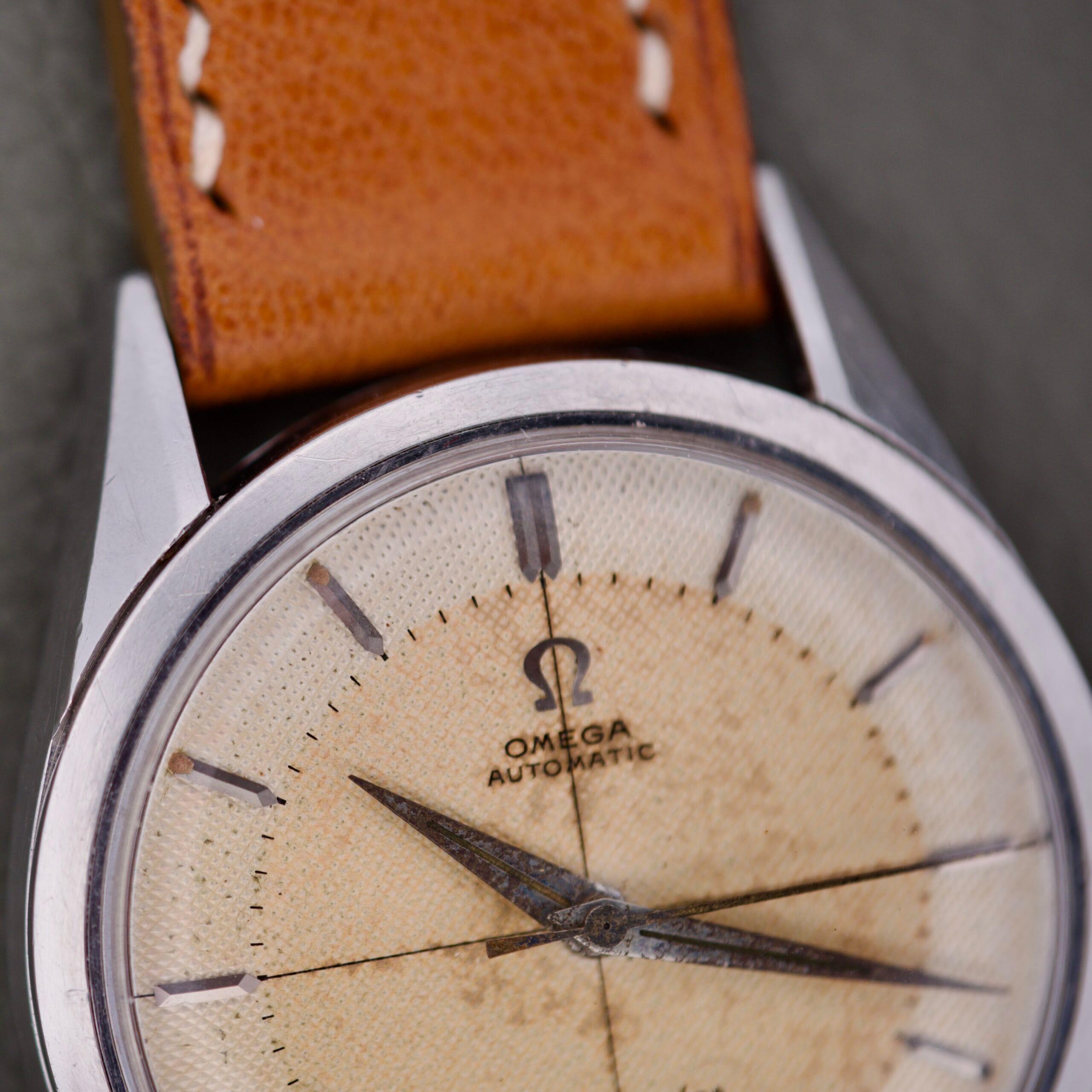
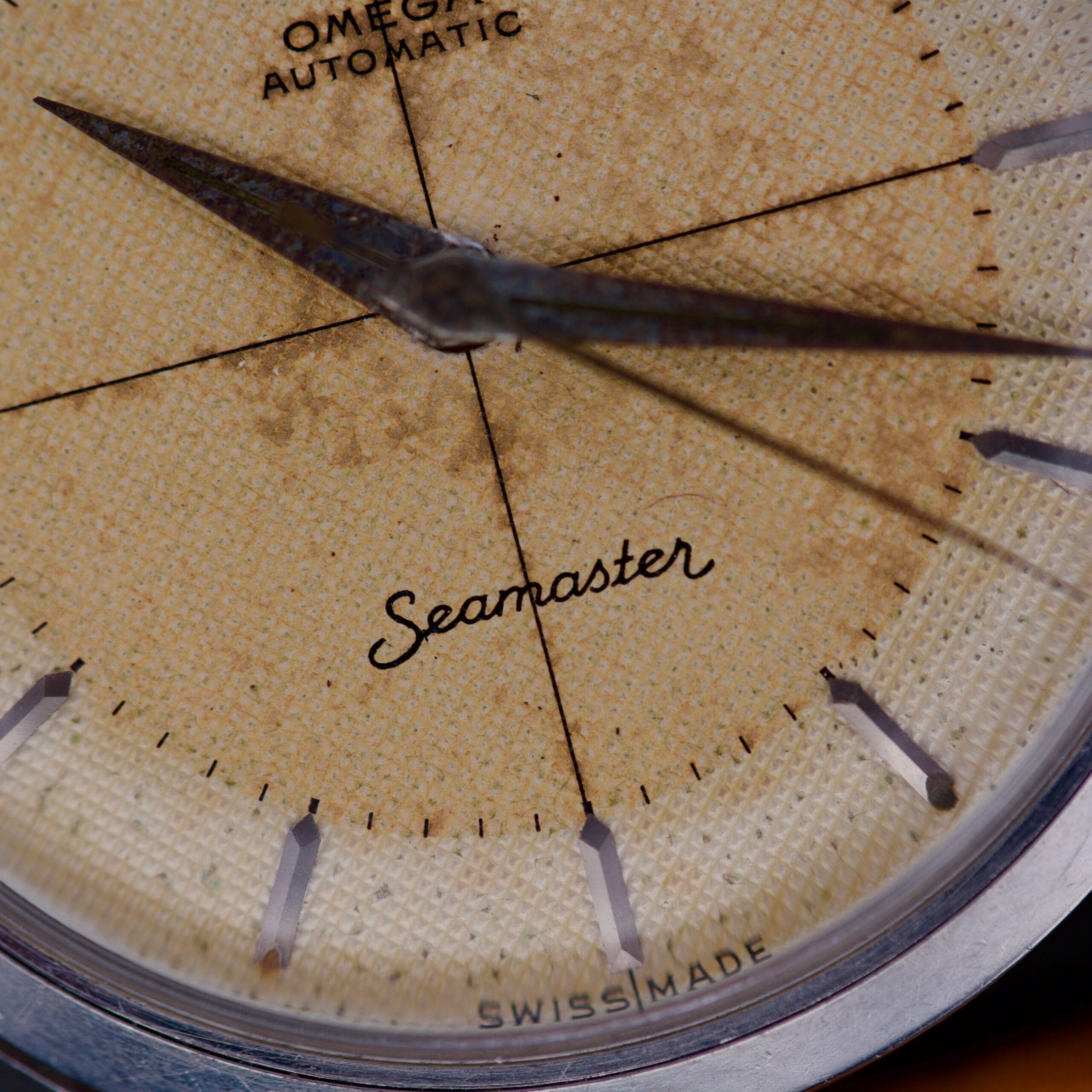
The dial is what carries this example, and there is genuinely a lot to read. The base finish is the factory waffle texture, a fine raised clous-de-Paris weave that Omega used on a small subset of Seamaster references through the late 1950s, and the original surface has aged unevenly into a warm cream with a pronounced tropical zone in the lower-left quadrant where the surface has bloomed into a warm caramel mottling. Two thin printed cross-hair lines run vertically and horizontally across the dial, intersecting at the center pinion and dividing the face into four clean quadrants in the way collectors of this period recognize as a deliberate stylistic mark. Applied steel baton hour markers ring the chapter at every position except twelve and six, each carrying a darkened vertical lume track down its length that has oxidized to a deep charcoal in sympathy with the dial. The applied Omega Ω logo sits at twelve over the printed “OMEGA AUTOMATIC” signature, and “Seamaster” runs in script just above the six position. “SWISS|MADE” closes the dial at the very bottom edge, divided by a small vertical bar in the period-correct printing convention, without the T SWISS T tritium notation that came in on later references. The handset is the original dauphine pair, faceted and darkened down to a quiet grey, with a slim straight sweep seconds needle threading through the center. There is no date window and no sub-seconds register, and that restraint is what makes the four-quadrant cross-hair waffle layout read as cleanly as it does.
We have paired it on a tan Buttero leather strap with white contrast stitching in 18mm, fitted to a plain steel buckle. The warm tan picks up the caramel tone of the tropical zone without competing with the cream of the rest of the dial, and the lightly grained surface keeps the proportions casual enough to wear under a cuff or with a roll-neck on a Saturday.
Serviced in-house at OTTUHR and backed by our 2-year mechanical warranty. For the collector who values a cleanly-aged factory dial over a perfectly preserved museum piece, who reads cross-hair printing and waffle texture as the actual point rather than as a quirk, and who wants the 19-jewel Caliber 471 transition story honestly on the wrist, the Omega Seamaster 2802-4 SC is, to us, exactly the kind of late-1950s steel Omega that quietly rewards the close look it asks for.