

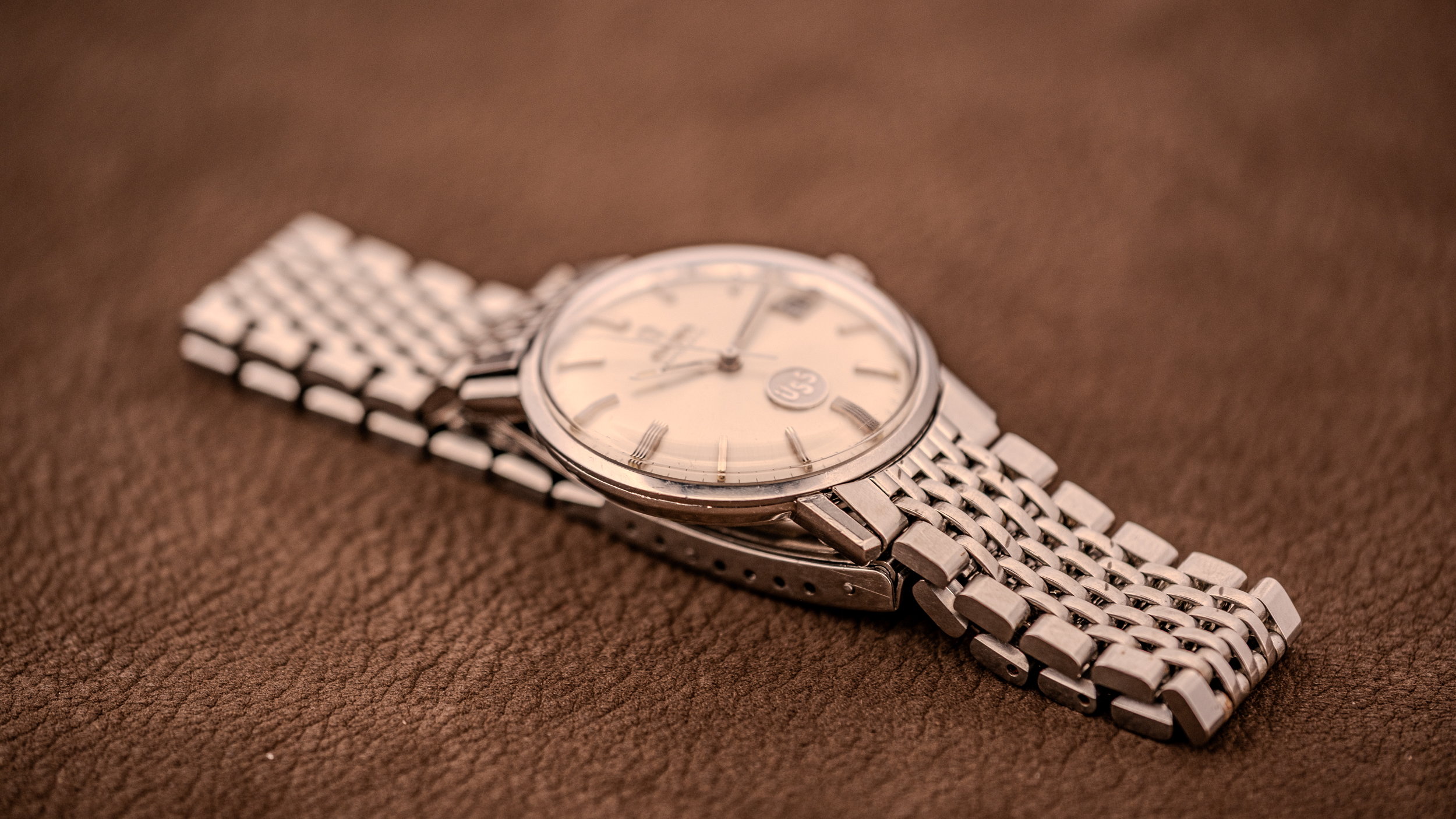
The Omega Seamaster DeVille 166.020 is a 24-jewel Swiss automatic with Seamaster provenance, an innovative case construction, and a dial range that spans nearly every aesthetic the 1960s had to offer. It sells for $700 to $1,000 in clean, honest condition. That is roughly what a mid-tier quartz fashion watch costs at a department store.
Something is mispriced here, and it is not the fashion watch.
What You Are Actually Getting
The 166.020 runs on either the caliber 562 or the caliber 565, depending on production year. Both are members of Omega’s 550 series, widely considered the finest family of non-chronometer automatic movements the company ever produced. Twenty-four jewels, 19,800 vibrations per hour, Incabloc shock protection, bi-directional rotor winding, beryllium copper in the movement train. These are not entry-level specifications dressed up with a famous name. They are the same mechanical architecture that powered Omega’s chronometer-certified Constellations, minus the extra timing passes and the price premium that comes with them.
The meaningful difference between the two calibers is the date mechanism. The 562 uses a semi-quickset system: you advance the date by rocking the hands back and forth across midnight, one day per cycle. The 565 introduced Omega’s first true push-pull quickset in the non-chronometer automatic lineup, a feature Rolex would not bring to the Datejust until 1977. If you have a choice between the two, the 565 is the better daily wearer. But neither is a problem.
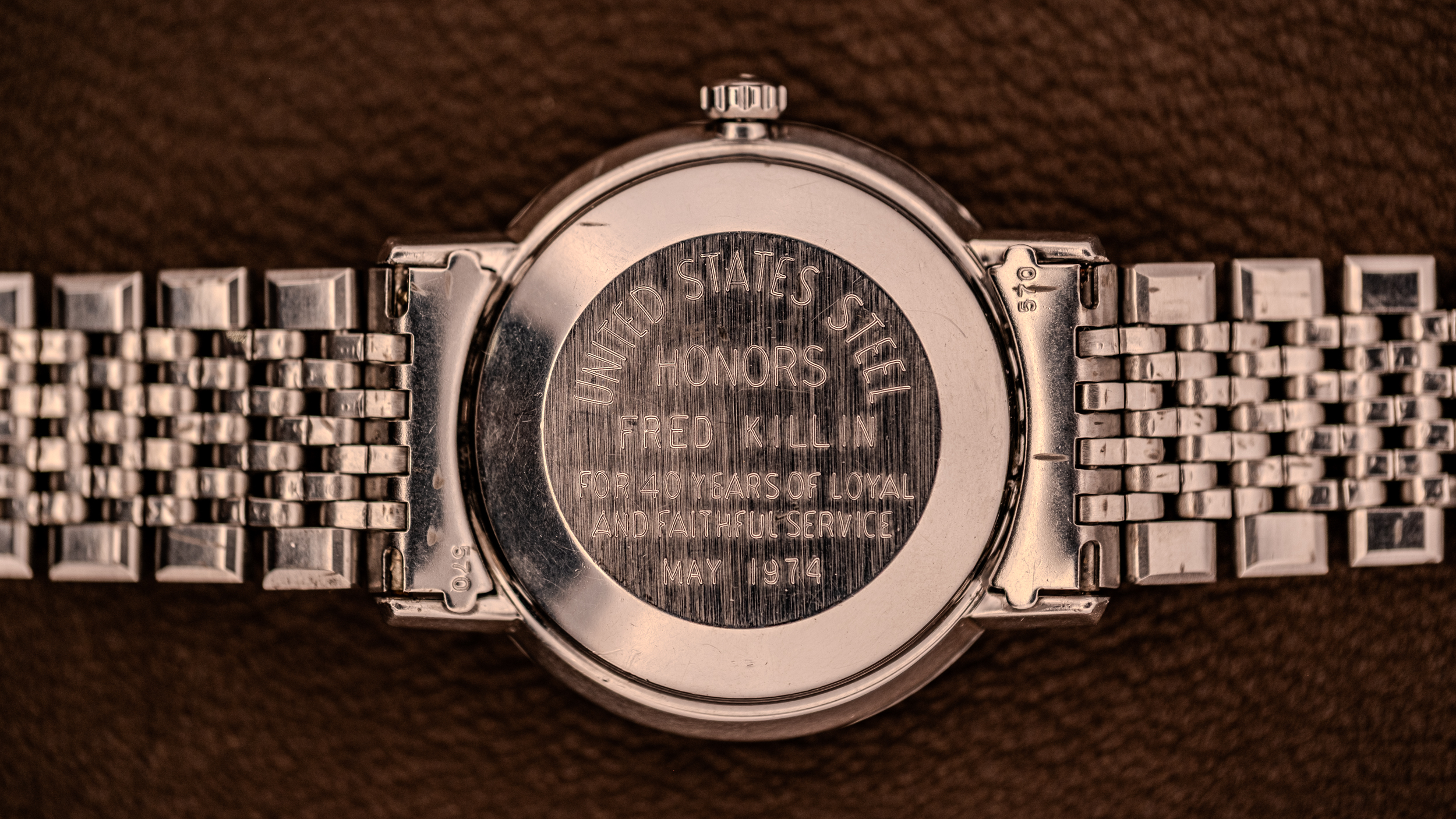
The case is a 34 to 34.5mm “unishell” monocoque. The movement and dial are accessed from the front by removing the bezel and crystal, not through a conventional removable caseback. This three-part construction was central to Omega’s waterproofing claim at the time, and it has an unintended benefit for collectors sixty years later: because the caseback is essentially permanent, a remarkable number of these cases survived in excellent condition with sharp lug chamfers and clean seahorse medallions. The caseback was never subjected to ham-fisted case knife attacks because it was never meant to come off.
Case diameter is the objection you will hear most often. At 34mm, the 166.020 is smaller than what most modern buyers expect. But the lug-to-lug of 40mm gives it more wrist presence than the diameter suggests, and on wrists under 17cm it sits perfectly. If you are coming from a 42mm diver, this will feel small. If you are looking for a dress watch that actually looks like a dress watch, the proportions are correct.
The Naming Problem That Keeps It Cheap
The 166.020 falls through a crack in how people search for vintage Omegas, and that crack is worth money to you as a buyer.
The Seamaster De Ville was introduced in October 1960 as a sub-line within the Seamaster family. Not a standalone collection, not a precursor to the modern De Ville. Omega wanted a dressier counterpoint to the tool-watch direction the Seamaster had taken with the 300, Railmaster, and Speedmaster. The De Ville sub-line sat between a standard Seamaster and a Constellation in the period catalog, both in positioning and in price.
In 1967, Omega launched the De Ville as an independent collection with its own case design and shorter lugs. A common misconception, repeated even on Omega’s own website, is that the Seamaster name was simply “dropped” from the dial at that point. That is not what happened. The 1967 De Ville was a new reference entirely. The Seamaster De Ville line continued production alongside it, with American catalog references running well into the 1970s.
This genealogical confusion means a buyer searching “Omega De Ville vintage” may not find the 166.020 because it is technically a Seamaster sub-line. A buyer searching “Omega Seamaster” may not recognize it as having the Seamaster DNA they want because the dial says “De Ville.” The watch sits between two search categories, and the secondary market rewards things that are easy to find and easy to categorize. The 166.020 is neither.
That is the opportunity.
What the Market Actually Looks Like
Real prices, not aspirational dealer asks. Here is what 166.020 examples are actually selling for in 2025 and 2026:
| Condition | Price Range | Where You Find Them |
|---|---|---|
| Project / rough (unserviced, heavy wear, strap only) | $400 to $650 | eBay, forum classifieds |
| Good original (honest wear, running, no box/papers) | $650 to $1,000 | eBay, Chrono24, Reddit |
| Excellent / serviced (recently serviced, original crystal, clean dial) | $900 to $1,400 | Chrono24 partner dealers, specialist shops |
| Full set (original box, papers, excellent condition) | $1,400 to $2,000+ | Rare for steel; significant premium |
| Solid 14k gold | $1,500 to $2,500 | Specialist dealers, Chrono24 |
| Solid 18k gold full set | $3,500 to $5,000+ | Top of market |
The sweet spot for most buyers is $700 to $1,000 for a steel example with an original dial, running movement, and no major cosmetic issues. Budget another $200 to $350 for a service from an independent watchmaker if it has not been recently serviced. That puts your all-in cost at $900 to $1,350 for a properly sorted, daily-wearable 1960s Swiss automatic from a tier-one manufacturer.
For context: a comparable-era Constellation pie-pan starts around $1,500 for entry-level condition and reaches $3,500 to $8,000 for gold models. A Seamaster 300 is $5,000 and up. The 166.020 delivers roughly 90% of the aesthetic quality at one-third to one-half the cost of a Constellation and a fraction of the Seamaster 300.
Best vintage watches under $1,000
Not All 166.020s Are Equal
Dial variant matters more than anything else for pricing within the reference.
The silver sunburst is the most common dial. It photographs as silver or light champagne depending on lighting, and it is the baseline from which all other variants are priced. Most examples you encounter will have this dial.
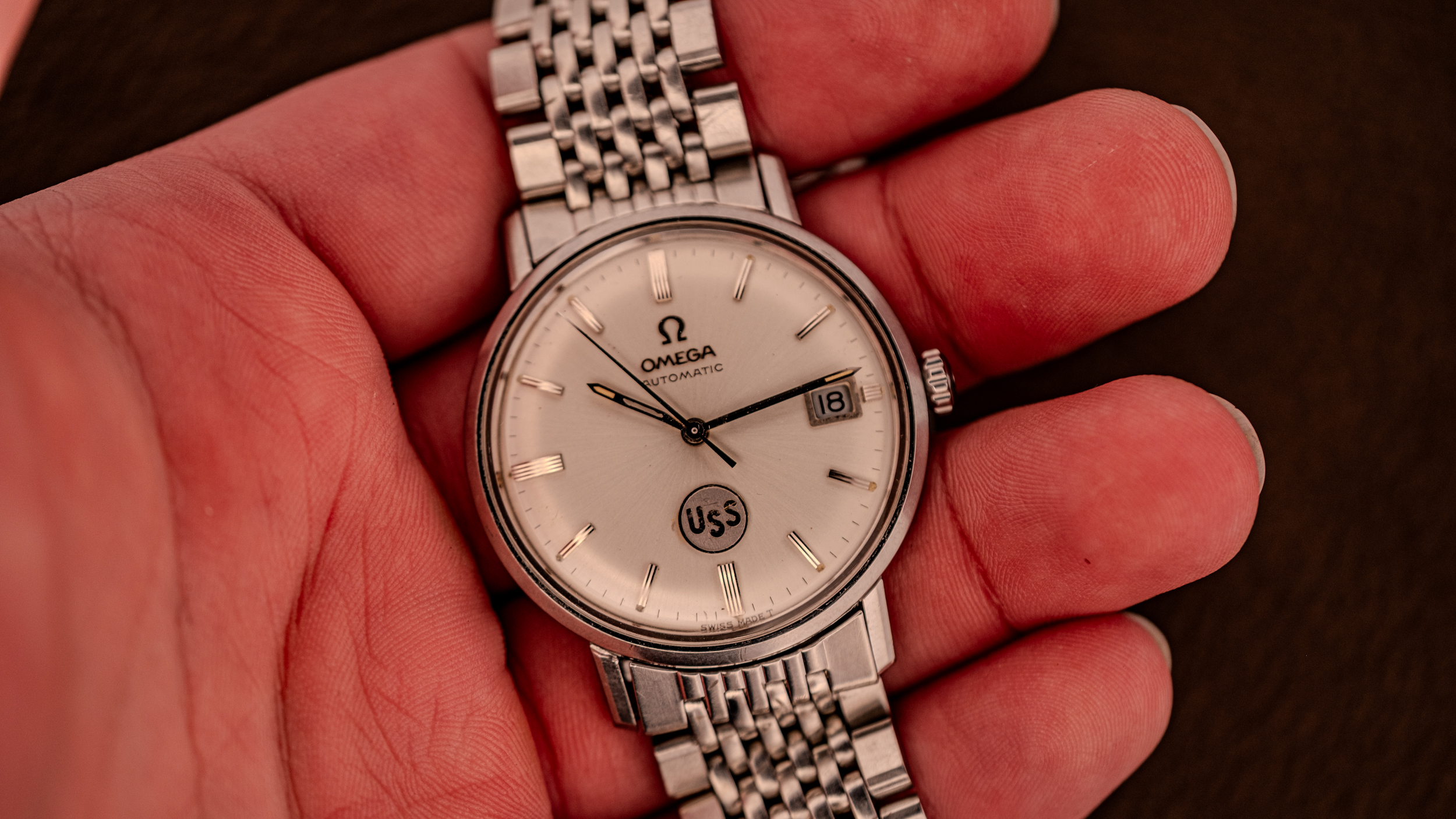
The white sunburst is less common and commands a modest 10 to 20% premium over equivalent silver examples. It is a brighter, cooler tone that reads as distinctly different in person.
The linen or satin dial features a fine woven texture that is gaining collector interest. Small premium, not yet fully recognized by the market.
The original black dial is the one that matters most. Unrestored black-dial 166.020s are genuinely rare. The vast majority of black-dial examples on the secondary market have been professionally refinished, and sellers do not always disclose this. A correct factory original can command $800 to $2,000 over comparable silver-dial examples. This is the Don Draper watch from Mad Men (Season 5, Episode 6, chosen by the prop department because the 166.020 was period-correct for the 1966 setting), and that cultural association drives premium pricing for authentic examples. If you want this dial, verify it is original before you pay for it. The primary test: the applied Omega logo should be three-dimensional and slightly raised from the surface. A flat, printed logo means the dial has been redone.
Gold-filled or gold-capped cases with matching original beads-of-rice bracelets carry meaningful premiums over steel-on-strap examples. An original bracelet alone adds $100 to $300 versus a leather strap in comparable condition.
Why black dials are rare in vintage watches
The Competition at This Price
The 166.020 does not exist in a vacuum. Here is what else your money buys at the same price point, and where the 166.020 wins and loses.
Omega Geneve (same era, caliber 565): The most direct comparison. Same movement, same era, same manufacturer. The Geneve trades for $250 to $800, meaningfully cheaper than the 166.020. The difference is case finishing. The 166.020 has chamfered lugs with polished and brushed contrast surfaces. The Geneve has a simpler, fully brushed lug profile. If the movement is your sole priority, buy the Geneve. If the complete package matters, the 166.020 justifies the differential.
Omega Seamaster 166.010: A dress-sport hybrid with a slightly larger 34.7mm case and a screw-down caseback, meaning actual water resistance. Same caliber family. Trades at $1,000 to $1,500, roughly a $300 to $500 premium over the 166.020. The extra money buys you a screw-down back, a marginally larger case, and a slightly more aggressive lug design. Whether that is worth it depends on whether you plan to wear the watch near water.
Vintage Constellation pie-pan: The aspirational neighbor. Chronometer-certified movement, Observatory caseback, iconic convex dial. Starts around $1,500 in steel, reaches $3,500 to $8,000 in gold. The Constellation’s movement received additional timing and adjustment passes that justify part of the premium. For buyers who cannot justify the Constellation entry price, the 166.020 is the next best thing in the Omega catalog.
Vintage Longines (Grand Prize, Flagship): Directly overlapping price range at $500 to $1,000 for clean examples. Longines movement quality from this era is genuinely exceptional, and some collectors consider it comparable to or better than Omega in this class. The 166.020 advantages are brand recognition, secondary market liquidity, and the unishell case construction. Omega’s name moves faster and at stronger prices on resale. Both are good buys. The choice comes down to whether you prioritize movement craftsmanship (Longines) or brand equity and case design (Omega).
Vintage Tissot (1960s dress references): $100 to $400 on eBay. Genuinely good Swiss movements at a significant discount. But the brand occupies a lower prestige tier, and the collectibility and resale velocity gap is substantial. The Tissot makes sense for learning the vintage market. The 166.020 makes sense for staying in it.
What to Check Before You Buy
The 166.020 is not a complicated watch to evaluate, but there are specific things that separate a good purchase from a regrettable one.
Dial originality is the single most important factor. An original applied Omega logo is three-dimensional. A printed logo is flat. Original dials age with consistent tonal changes across the surface. Repaints have a too-even, too-matte finish, especially on black-dial examples. Tritium lume on original dials ages from white to warm yellow or brown. Freshly applied bright white lume on an otherwise aged dial is a red flag.
Lug condition tells the polishing history. The chamfers on unpolished lugs remain sharp and distinct. Polished examples have soft, rounded edges where the brushed and polished surfaces merge into each other. Polishing is not disqualifying, but unpolished cases are worth more.
The caseback should be clean. Deep scratches from improper opening tools are a bad sign, because the unishell design means the caseback was never supposed to be removed that way. The movement is accessed from the front. Heavy tool marks on the caseback suggest someone did not know what they were doing with this particular watch, which raises questions about what else they may have done to it.
Request movement photos. Confirm the caliber number matches the reference (562 or 565 for the 166.020). Check that the bridge plating is consistent in tone. Verify the serial number against published dating tables to confirm the movement and case are contemporaneous.
Budget for service unless you have documentation. An unserviced 562 or 565 that is running today may stop tomorrow. Dried lubricants are the most common reason for poor timekeeping in these movements, and the fix is a straightforward $200 to $350 service from a competent independent watchmaker. Do not send a 166.020 to an Omega service center. Their vintage service starts around $1,200, which makes no economic sense on a watch you bought for $800.
Omega serial number dating guide
The Bottom Line
The Omega Seamaster DeVille 166.020 is a watch that should cost more than it does. The movement is from Omega’s finest era of production watchmaking. The case design was innovative enough that it kept these watches in excellent condition for six decades. The dial range covers everything from conservative silver sunbursts to the genuinely rare factory black dial. The Seamaster name carries weight. And the price is still under $1,000 for a clean steel example.
The reasons it stays cheap are structural, not qualitative. The 34mm case is too small for the oversized-watch crowd. The naming confusion between Seamaster De Ville and standalone De Ville suppresses searchability. It does not have a moon story or a military contract. These are reasons the market has not caught up, not reasons the watch is not worth buying.
For someone entering the vintage Omega market or adding a proper dress watch to a collection already heavy on tool watches, the 166.020 is one of the most defensible purchases available. The gap between what this watch is and what the market charges for it will not last indefinitely.
Related posts
The Omega Seamaster DeVille 166.020: Best Vintage Omega Under $1,000
Why the Omega Seamaster DeVille 166.020 is the most undervalued vintage Omega you can buy. Real market prices, what to look for, and what to avoid.
How to Date a Vintage Gruen Watch: The Complete Guide
Serial numbers, style numbers, case dating, and the triangulation method. A bench-level guide to dating vintage Gruen wristwatches from 1925 to 1958.

Tudor Serial Numbers: The Complete Guide to Dating Your Watch
Date your Tudor watch using serial numbers from 1940 to 2002. Complete serial number chart, reference number decoder, and authentication steps.

Omega Bumpers : A Collector’s Guide to References 2374 Through 2782
Everything you need to know about Omega bumpers from 1943 to 1962. The mechanism, the key references, what they cost, and why collectors are paying attention.

Omega Serial Numbers: The Complete Guide to Dating Your Watch
Every Omega movement that left the factory in Bienne, Switzerland received a serial number. That number, stamped onto a bridge or plate...

Why Black Dials Are the Rarest Thing in Vintage Watches
Most people think they understand why tropical dials command a premium. The story usually stops at "black turned brown, collectors love...

Wittnauer Watch Serial Numbers and Production Date Guide
Here's the honest truth that most watch sites won't tell you: there is no publicly available serial number table for Wittnauer watches....

The 12 Best Vintage Watches Under $1,000 in 2026
I want to tell you something that took me an embarrassingly long time to figure out. When I first started collecting vintage watches, I...
Longines Serial Numbers: The Complete Reference Guide 2026
Longines has been making watches since 1832, and they've been recording serial numbers for every single one since 1867. That's over 150...

Hamilton Watch Serial Numbers: How to Date Your Timepiece
Hamilton produced roughly 4.5 million watches over the course of its American manufacturing life, from the first movements completed in...

How to Read a Rolex Serial Number: The Complete Dating Guide 2026
If you want to date a vintage Rolex, understand what you actually paid for, or avoid getting burned on a purchase, the serial number is...

Your First Vintage Watch: The 2026 Beginner’s Buying Guide
There are dozens of beginner's guides to vintage watches online. Most of them tell you to "set a budget," "research brands," and "buy f...