

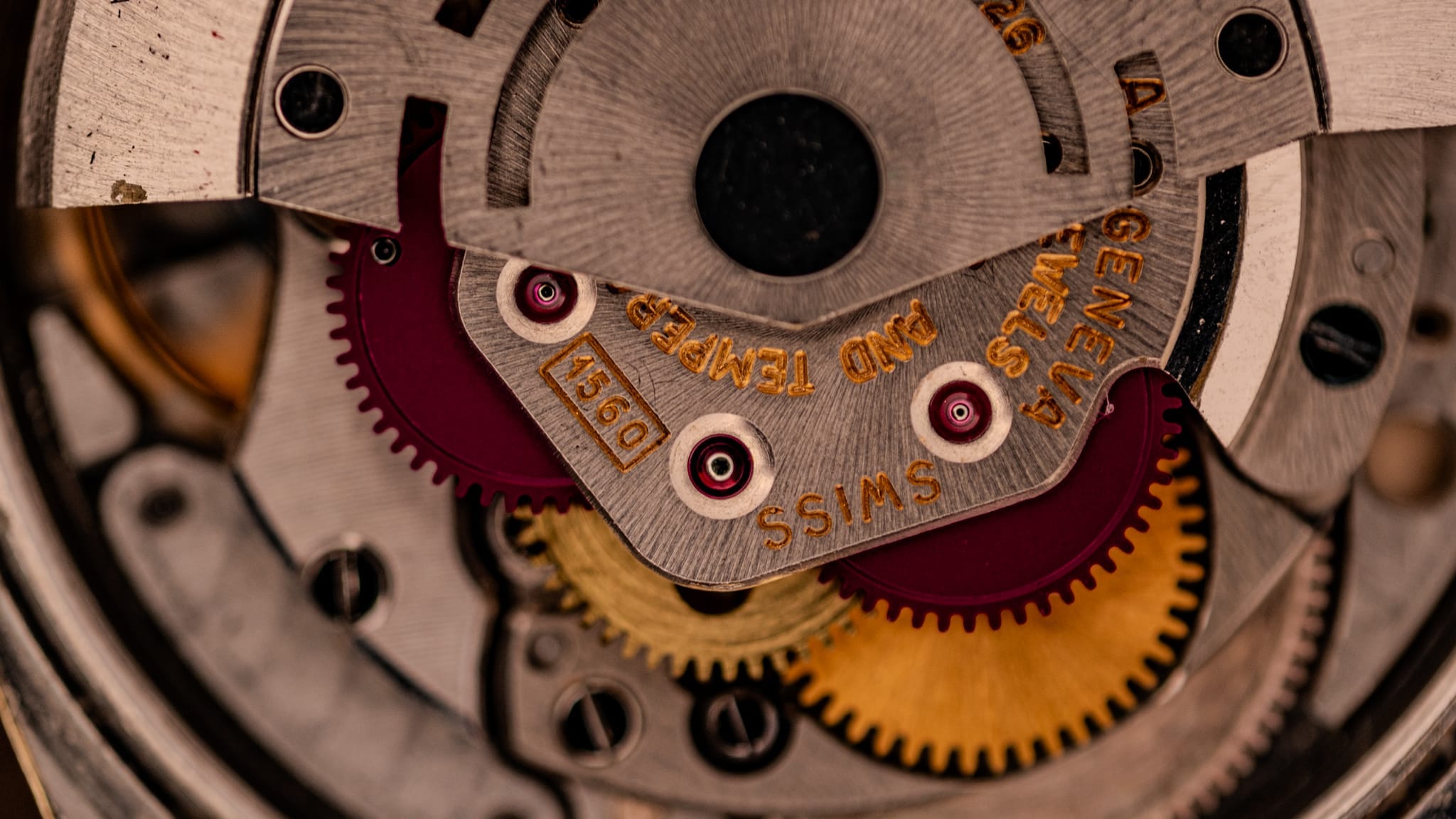
If you want to date a vintage Rolex, understand what you actually paid for, or avoid getting burned on a purchase, the serial number is your starting point. It is not an infallible authentication tool, and any guide that tells you otherwise is oversimplifying something that is genuinely nuanced. But a serial number, read correctly and cross-referenced with everything else on the watch, will get you within a year or two on most pieces and expose inconsistencies on fakes that counterfeiters frequently miss.
This guide covers the full system: where to find the serial, how Rolex assigned numbers across a century of production, how to read them by era, what the reference number tells you that the serial cannot, the hidden dating system inside the bracelet clasp, and the caseback codes that most collectors never look for. We will also cover the traps that catch buyers who do the lookup but skip the deeper analysis.
Rolex has never officially published its production records. Everything in this guide, including the serial number charts, is compiled from decades of documented examples by collectors, dealers, and researchers. These are well-established estimates, not factory-certified dates. That distinction matters more than most people realize, and we will come back to it.
Where to Find the Serial Number
Before anything else, you need to locate the number itself. The answer depends entirely on when the watch was made.
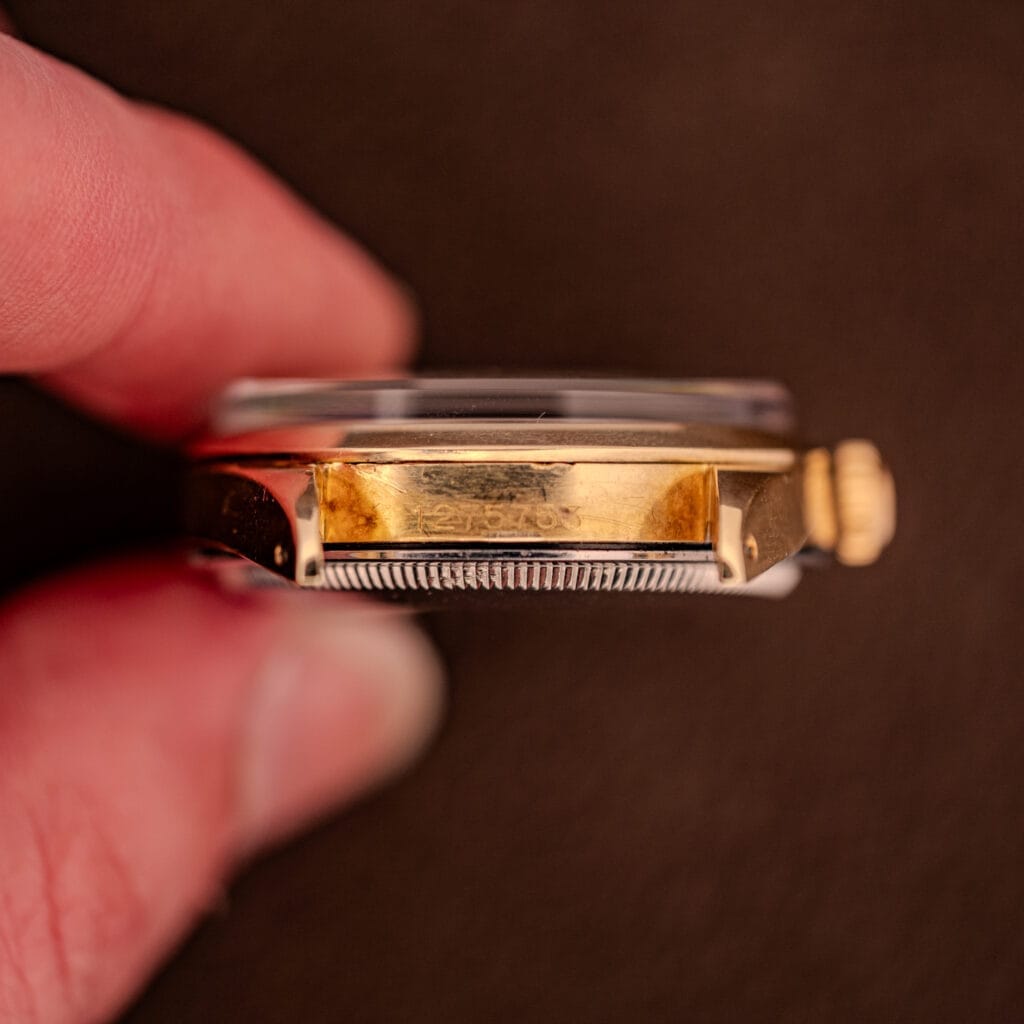
On all Rolex Oyster-cased watches produced before approximately 2005, the serial number is engraved between the lower lugs, on the side of the case at the 6 o’clock position. You must remove the bracelet or strap to see it. The engraving is shallow on many heavily polished cases, so use good lighting and a loupe if you have one. On pieces that have been polished multiple times over decades, the characters can be almost completely abraded, which is why a careful physical inspection matters more than a quick glance.
Starting in 2005, Rolex added a second location: the rehaut, which is the inner flange or wall that sits between the dial and the crystal. On watches from 2005 through approximately 2008, you will often find the serial in both places. By 2008, Rolex phased out the case engraving and moved exclusively to the rehaut. This means on post-2008 pieces you will not find a serial between the lugs at all, and the absence of that engraving is not a red flag on its own.
Starting around 2010, Rolex moved to randomized 8-character serials consisting of mixed letters and numbers with no sequential meaning. An example looks like OT23Q257 or 12345J78. These cannot be decoded for a production date. If you encounter one, the warranty card is the only way to establish when the watch was sold.
On pre-Oyster and vintage dress models from the earlier part of the twentieth century, the serial is sometimes engraved on the caseback exterior rather than between the lugs. If you cannot find it between the lugs on a very early piece, check there before assuming something is wrong.
The Four Serial Number Eras
Rolex has used four distinct serial number systems across its production history. Understanding which era you are in is the first step before consulting any chart.
The early numeric era ran from roughly 1926 through 1954. Serials were sequential and purely numerical, beginning at approximately 28,000 in 1927. Numbers were relatively low, typically five to six digits. Production pace was slower, and the ranges advance more gradually than they do in later decades.
The reset era covers roughly 1954 through the early 1960s. This is the most confusing period in Rolex serial history, and it trips up a lot of buyers. When Rolex reached serial number 999,999 in the early 1950s, rather than advancing to a seven-digit number they reset the sequence, restarting at 100,000. This means a watch from the late 1950s can have the same or similar serial number as a watch from the late 1930s. The reference number and, crucially, the caseback date code are what you use to resolve the ambiguity.
The seven-digit numeric era ran from the early 1960s through mid-1987. When Rolex hit 999,999 the second time around, instead of resetting they expanded into seven digits, beginning at 1,000,000. This sequence ran continuously until the numbers reached approximately 9,999,999 in 1987. This is the era most people are familiar with and where the standard dating charts are most reliable.
The letter prefix era ran from mid-1987 through approximately 2010. When seven digits were exhausted, Rolex introduced a single letter prefix followed by six digits. The letters did not start at A. They started at R, then advanced to L, E, and X, which together spell ROLEX without the O. Subsequent letters followed in a rough but non-strict sequence through the alphabet. By the mid-2000s, Rolex was running multiple letter series concurrently, partly to confuse counterfeiters, which means overlap between adjacent letter ranges is common and the precision of dating from letter prefix alone is lower than it was in the seven-digit era.
Complete Serial Number Dating Chart
These figures represent approximate production years based on compiled collector documentation. Expect a margin of plus or minus one to two years on most entries, wider on earlier decades.
| Serial Number | Approximate Production Year |
|---|---|
| 28,000 | 1927 |
| 30,430 | 1928 |
| 32,960 | 1929 |
| 35,390 | 1930 |
| 37,820 | 1931 |
| 40,250 | 1932 |
| 42,680 | 1933 |
| 45,000 | 1934 |
| 63,000 | 1935 |
| 81,000 | 1936 |
| 99,000 | 1937 |
| 117,000 | 1938 |
| 135,000 | 1939 |
| 164,600 | 1940 |
| 194,200 | 1941 |
| 223,800 | 1942 |
| 253,400 | 1943 |
| 283,000 | 1944 |
| 348,100 | 1945 |
| 413,200 | 1946 |
| 478,300 | 1947 |
| 543,400 | 1948 |
| 608,500 | 1949 |
| 673,600 | 1950 |
| 738,700 | 1951 |
| 803,800 | 1952 |
| 950,000 | 1953 |
| 999,000 | 1954 (serial reset follows) |
| 100,000 | 1954 (post-reset) |
| 200,000 | 1955 |
| 400,000 | 1956 |
| 1,100,000 | 1959 (seven-digit era begins) |
| 1,402,000 | 1960 |
| 1,480,000 | 1961 |
| 1,558,000 | 1962 |
| 1,600,000 | 1963 |
| 2,000,000 | 1965 |
| 2,500,000 | 1967 |
| 3,000,000 | 1968 |
| 3,500,000 | 1970 |
| 4,000,000 | 1972 |
| 4,267,100 | 1975 |
| 5,000,000 | 1977 (see service gap note) |
| 5,482,000 | 1978 |
| 5,958,000 | 1979 |
| 6,434,000 | 1980 |
| 6,910,000 | 1981 |
| 7,386,000 | 1982 |
| 7,862,000 | 1983 |
| 8,338,000 | 1984 |
| 8,814,000 | 1985 |
| 9,290,000 | 1986 |
| 9,999,999 | 1987 (letter prefix era begins) |
The 1976 Service Gap
If you look at the table above, you will notice an unusual jump in the mid-1970s. Serial production advanced to roughly 4.26 million in 1975 and the next documented production serials start at approximately 5.0 million in 1977. The range between roughly 4.3 million and 4.8 million was reserved by Rolex for future service replacement cases. These numbers were not assigned to watches sold through normal retail channels. They were held back so that if a watch needed a case replacement during servicing years later, the replacement case would receive a serial from that reserved block.
This is why you occasionally encounter watches with serials in that range that do not align with what the surrounding serial numbers would suggest about their age. If you have a watch with a serial between roughly 4.3 million and 4.8 million, the caseback code and movement are particularly important for establishing the actual production period.
Letter Prefix Era Chart
| Letter Prefix | Approximate Production Year |
|---|---|
| R | 1987 (mid to late) |
| L | 1988 to 1989 |
| E | 1990 |
| X | 1991 |
| N | 1991 to 1992 |
| C | 1992 to 1993 |
| S | 1993 to 1994 |
| W | 1995 |
| T | 1995 to 1996 |
| U | 1997 to 1998 |
| A | 1998 to 1999 |
| P | 1999 to 2000 |
| K | 2000 to 2001 |
| Y | 2001 to 2002 |
| F | 2003 to 2004 |
| D | 2004 to 2005 |
| Z | 2006 |
| M | 2007 |
| V | 2008 |
| G | 2009 to 2010 |
| Random (8 characters) | 2010 onward |
Rolex chose R, L, E, X as the first four letters deliberately. They spell ROLEX minus the O, which can look like a zero and was avoided. From there the sequence is not alphabetical. It reflects internal production decisions about when to advance the prefix, and by the 2000s multiple prefixes were running simultaneously. Do not assume that because two watches share the same letter prefix they were produced in the same year. A D series watch could be from 2004 or 2005. An F series watch could be from 2003 or 2004. The ranges overlap and Rolex has never explained the exact transitions.
Reading the Reference Number
The serial number tells you approximately when. The reference number tells you what. They work as a pair, and a buyer who looks at one without the other is working with half the information.
The reference number is engraved between the upper lugs, on the 12 o’clock side of the case. Like the serial, the bracelet must be removed to read it on most vintage models. Reference numbers range from four to six digits depending on the era in which the watch was produced.
Four-digit references correspond to vintage Rolex watches produced generally before the late 1970s. Five-digit references were used from the late 1970s through roughly 2000. Six-digit references are modern, introduced around 2000 when Rolex began adding a 1 or 2 in front of existing five-digit references. For example, the steel Daytona evolved from reference 16520 to 116520. The five-digit reference did not change. Rolex simply added a 1 in front to denote the new generation. The length of the reference number alone tells you the approximate era before you look at anything else.
How to Decode a Modern Six-Digit Reference Number
A six-digit reference is structured in three logical segments: model code, bezel type, and case material. The letter suffix, when present, describes bezel color.
The model code is carried by the first four digits. For example, 1166 identifies the current generation Submariner Date. 1264 identifies the Datejust 36. 1161 identifies the Day-Date 36. Knowing these codes lets you identify the collection from the reference number alone before you ever see the watch.
| Model Family Code | Collection |
|---|---|
| 10 or 142 | Oyster Perpetual / Explorer I |
| 116, 1164, 1166 | Submariner |
| 167 | GMT-Master II |
| 162, 1162 | Datejust 36 |
| 165, 1165 | Daytona Cosmograph |
| 16, 166 | Sea-Dweller |
| 180, 182 | Day-Date / President |
| 166, 686 | Yacht-Master |
The fifth digit in a six-digit reference indicates the bezel style.
| 5th Digit | Bezel Style |
|---|---|
| 0 | Smooth / polished |
| 1 | Engine-turned |
| 2 | Engine-turned (alternate) |
| 3 | Fluted |
| 4 | Hand-crafted |
| 6 | Rotating sports bezel |
The sixth and final digit identifies the case and bracelet material.
| 6th Digit | Material |
|---|---|
| 0 | Stainless steel |
| 1 | Yellow gold-filled |
| 2 | White gold-filled |
| 3 | Stainless steel with yellow gold (two-tone) |
| 4 | Stainless steel with 18k white gold |
| 5 | Gold shell |
| 6 | Platinum |
| 7 | 14k yellow gold (vintage) / RLX Titanium (from 2023) |
| 8 | 18k yellow gold |
| 9 | 18k white gold |
Note that the material code 7 changed meaning in 2023 when Rolex introduced RLX Titanium. On vintage references, 7 means 14k yellow gold. On modern pieces from 2023 forward, it identifies titanium.
Letter Suffixes on Reference Numbers
Some references include letters after the six digits. These come from French, which is Rolex’s official language, and describe the color of the bezel insert or in rare cases the crystal.
| Suffix | Meaning |
|---|---|
| LN | Lunette noire (black bezel) |
| LV | Lunette verte (green bezel) |
| BLNR | Bleu-noir (blue-black, aka Batman) |
| BLRO | Bleu-rouge (blue-red, aka Pepsi) |
| CHNR | Chocolat-noir (brown-black, aka Root Beer) |
| GV | Glace verte (green crystal, Milgauss) |
| SA | Saphir (sapphire, gem-set bezels) |
So when you see a reference like 126710BLNR, you can read it completely: 1267 is the GMT-Master II model code, 1 indicates a rotating bezel, 0 indicates stainless steel, and BLNR indicates a blue-black ceramic bezel. That is the Batman GMT-Master II.
The Caseback Date Code
This is the detail that separates informed buyers from everyone else, and most people never look for it.
From the 1950s through the early 1970s, Rolex stamped a date code on the inside of the caseback. These codes typically consist of a Roman numeral followed by a two-digit year. The Roman numeral is commonly interpreted as a quarter of the year, though collector research has identified examples with Roman numerals higher than IV, suggesting the numbers may indicate months or production batches rather than strict calendar quarters. A caseback stamped III.59 means third quarter or period of 1959. A caseback stamped II.62 means second period of 1962. These codes are only visible if the caseback is opened.
Why this matters for buyers: because of the serial reset. A six-digit serial in the 200,000 to 600,000 range could be from the late 1930s to mid-1940s, or it could be from the late 1950s to early 1960s. The caseback code resolves that ambiguity. On a watch from the 1960s, you would expect to see a caseback code with a year like 60, 61, or 62. If the serial range suggests 1940s but the caseback says 1962, or vice versa, you have a case that has been mixed between different watches, which happened during servicing when similar reference casebacks were sometimes swapped.
The Bracelet Clasp Date Code
Every serious collector should know how to read the clasp code. Most buyers never look.
The bracelet clasp on Rolex watches made from roughly 1976 through 2010 carries a stamped code indicating when the bracelet was manufactured. The code consists of one or two letters followed by a number. The letters indicate the year of production and the number indicates the month. A clasp stamped G4 was manufactured in April 1982. A clasp stamped CL5 was manufactured in May 2004. The letter S appearing anywhere in the code indicates the clasp was replaced during a Rolex service. MA5S means a service replacement clasp produced in May 2005.
| Clasp Code | Year |
|---|---|
| A or VA | 1976 |
| B or VB | 1977 |
| C or VC | 1978 |
| D or VD | 1979 |
| E or VE | 1980 |
| F or VF | 1981 |
| G | 1982 |
| H | 1983 |
| I | 1984 |
| J | 1985 |
| K | 1986 |
| L | 1987 |
| M | 1988 |
| N | 1989 |
| O | 1990 |
| P | 1991 |
| Q | 1992 |
| R | 1993 |
| S | 1994 |
| W or T | 1995 |
| V | 1996 |
| Z | 1997 |
| U | 1998 |
| X | 1999 |
| AB | 2000 |
| DE | 2001 |
| DT | 2002 |
| AD | 2003 |
| CL | 2004 |
| MA | 2005 |
| OP | 2006 |
| EO | 2007 |
| PJ | 2008 |
| LT | 2009 |
| RS | 2010 |
| Random (3 digits) | 2011 onward |
The clasp code does not need to match the watch serial exactly. Bracelet manufacturing and watch case assembly happened on different production tracks, and it was common for a clasp to be one or two years newer or older than the case serial. What you are looking for is rough period-correctness, not an exact match. A watch with a case serial from 1982 with a G-series clasp from the same year is an excellent sign of originality. That same 1982 watch with a CL-series clasp from 2004 tells you the bracelet was replaced, likely during a service.
On gold bracelets, the coding system is different. Gold clasps typically display a numeric code alongside gold purity stamps such as 750 for 18k, and may include Swiss assay marks. Some gold bracelet clasps have no readable date code at all. That is not a red flag for gold models.
For watches before 1976, bracelets from the 1950s and 1960s used a different format: a number indicating the quarter stamped above a two-digit year, mirroring the caseback codes from the same period. A bracelet from the fourth quarter of 1965 would read 4.65 with the 4 stamped above the 65.
Production Date vs. Sale Date
This is perhaps the most practically important thing in this entire guide, and it is almost universally glossed over.
The serial number tells you when the watch case was assembled, not when it was sold to its first owner. Rolex produced cases in batches and shipped watches to authorized dealers in bulk. Dealers held inventory, sometimes for months and sometimes for years, particularly for precious metal models that moved more slowly than stainless steel pieces. A watch with a case serial corresponding to 1965 production might have been purchased new in 1967 or even 1968.
The implication for buyers is significant. When a seller claims a watch dates from a particular year based solely on the serial, they are citing production date, not retail date. If original documentation survives such as a warranty card or receipt, the paperwork date is commercially more relevant than the serial date. Papers dated two years after the serial number range is not unusual and is not a sign that something is wrong. On dealer old-stock pieces that sat in a showcase for years, the gap can be even wider.
If a seller is using a serial number to justify an age-based premium, ask whether papers exist. If they do not, the serial is an estimate.
How to Use Serial Numbers for Authentication
A serial number check is the entry point in authentication, not the conclusion. A plausible serial is a necessary condition for a genuine watch but not sufficient on its own. Counterfeiters stamp plausible serials on fake cases. Frankenwatches assembled from mismatched genuine parts can carry entirely legitimate serials that match nothing else on the piece.
When you are evaluating a watch, work through this in order.
Confirm the serial is in the correct location for the period. Pre-2005 pieces should have it between the lower lugs. Post-2008 pieces should have it on the rehaut only. A post-2008 watch with the serial still between the lugs is a problem.
Check the engraving quality under magnification. Rolex serials are machine engraved with precise, even, deep characters. Shallow, irregular, or sloppy engraving is a significant warning sign regardless of what the number itself says. The depth and consistency of the cut is difficult to replicate on counterfeits.
Cross-reference the serial against the reference number. If someone presents a watch as a reference 6542 GMT-Master, which was produced only from approximately 1955 to 1959, but the serial corresponds to 1965, the combination is impossible. Either the case has been re-engraved, the serial is false, or the reference is false.
Check that the serial range is plausible for the reference. A reference 5513 Submariner was produced from 1962 to 1989. A serial from 1963 is consistent. A serial from 1995 is not.
Read the clasp code and confirm it is period-correct. A service replacement clasp stamped with S is normal and expected. A bracelet with a clasp code from a completely different decade than the case serial, without any service history to explain it, is worth questioning.
If you have access to the movement, look for a service date stamp. Rolex and authorized dealers routinely stamp the caseback or the movement rotor with the service date when they overhaul a watch. Finding a service stamp from 1993 on a watch the seller presents as all-original from 1969 is not a contradiction in itself, but it tells you the movement has been touched and you should inspect it carefully.
What a Serial Number Cannot Tell You
The serial cannot tell you the dial is original. Redials are extremely common in the vintage Rolex market, particularly on watches that were serviced by non-authorized dealers who replaced damaged dials with period-correct substitutes or outright fakes. The dial requires its own examination: correct printing for the era, correct lume compound, correct depth and texture of the indices, correct font.
The serial cannot tell you the hands are original. Replacement hands are among the most common alterations. Hands should be consistent in style, aging, and lume degradation with everything else on the dial.
The serial cannot tell you the case has not been assembled from mismatched genuine parts. Legitimate Rolex components from different watches are put together more often than many buyers realize, particularly in the grey market. A genuine serial on a case does not verify that the dial, movement, hands, and bezel all belong to that same case.
The serial cannot verify condition. Two watches with identical serials produced in the same year will have drastically different values based on condition, originality, and service history. The number tells you nothing about any of that.
A Note on Online Databases
Several websites maintain searchable serial number databases for Rolex and they are useful as a quick reference. They are honest about the approximate nature of their data and are reliable for establishing plausibility. What no database can do is certify authenticity from a number alone. Use them to flag inconsistencies, not to confirm a watch is genuine.
The most thorough reference material for serious research remains the collector-compiled literature built from documented examples over decades. Cross-referencing multiple sources will always be more reliable than trusting a single lookup. And when in doubt, bring the watch to someone who has put hands on a significant volume of that specific reference. Pattern recognition built from physical experience catches things a database lookup will never catch.
Serial numbers are a starting point. Everything else on the watch has to tell the same story.
Related: The Expert’s Guide to Rolex Serial Numbers and Reference Numbers — how to date and authenticate any Datejust 1601 you encounter.
Related posts
Watch Shapes: Which Vintage Case Shape Fits Your Style?
Case shape changes how a vintage watch wears more than diameter alone. Compare eight silhouettes and learn which one fits your wrist and style.
Vintage Dress Watches: How to Choose One You’ll Actually Wear
The best vintage dress watch is the one you will wear beyond weddings. Here is how to choose the right size, metal, dial, shape, and strap.
Vintage Watch Styles: A Visual Guide to Finding Yours
Most buyers pick a brand and stall. Here are nine vintage watch styles, shown with real watches from our archive, and the catch that comes with each one.
Vintage Tank Watches: A Buyer’s Guide to Rectangular Watches Beyond Cartier
Every Cartier Tank alternatives list is new watches imitating old ones. The originals still exist and cost less. A buyer's guide to vintage tank and rectangular watches: the brands, the prices, and what to check.
Service History Is the Wrong Question. Here’s the Right One.
Everyone says to ask for a vintage watch's service history. Most of it can't be verified, and a receipt proves a transaction, not a result. Here's what actually tells you a watch has been serviced, and the better question to ask.
LeCoultre vs. Jaeger-LeCoultre vs. Jaeger: What the Name on the Dial Means
Three names, one Swiss firm, and one watch that isn't what it looks like. What LeCoultre, Jaeger-LeCoultre, and plain Jaeger on a vintage dial really tell you.
Omega Seamaster 166.010 Buyer’s Guide: Prices, Variants, and What to Look For (2026)
Everything you need to buy an Omega Seamaster 166.010 in 2026: real market prices by condition tier, five dial variants explained, caliber 562 vs 565, original part numbers, and what to inspect before you commit.
Omega vs Rolex: The Vintage Buyer’s Verdict
Vintage Omega vs vintage Rolex: where the Rolex premium is worth paying, where Omega is the smarter buy, and how to dodge redials on both. A collector's verdict.
Movado Kingmatic: A Vintage Buyer’s Guide to References, Calibers, and Value
The Movado Kingmatic is one of the best values in vintage automatics. A buyer's guide to its references, in-house calibers, the Sub-Sea line, what to check, and what they actually sell for.
13 Vintage Watch Collecting Tips for Beginners (From 1,000+ Watches Sold)
Thirteen vintage watch collecting tips drawn from selling over 1,000 watches. What separates a smart first buy from an expensive lesson, with no sugar.
Vintage Wittnauer Chronograph Caliber Identification: Venus 188, Valjoux 7733/7734, Landeron 248
How to identify the movement inside any vintage Wittnauer chronograph: Venus 188, Valjoux 7733 and 7734, Landeron 248, and the house numbering system Wittnauer used to mark them.
How Water-Resistant Is a Vintage Watch, Actually? The Honest Answer.
Every dealer says never get a vintage watch wet. That advice is half-engineering and half-liability theater. Here is what is actually true about vintage water resistance, where water actually gets in, and when a 1965 diver is safer than a 2-year-old modern.