

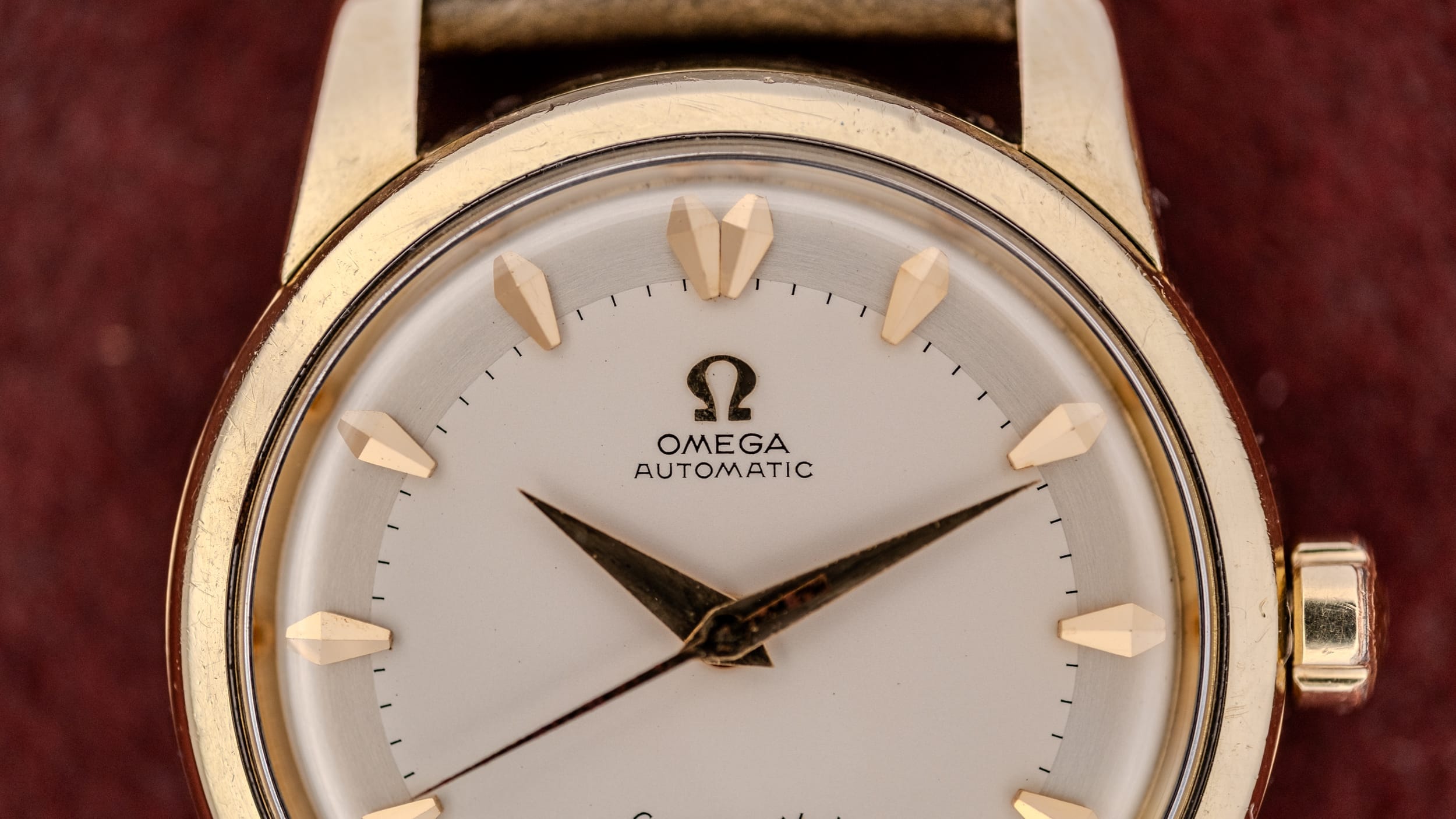
Every Omega movement that left the factory in Bienne, Switzerland received a serial number. That number, stamped onto a bridge or plate of the movement during production, is the single most reliable tool for determining when your Omega was made. It is not a model identifier, not a case number, and not the long string of digits printed on a modern warranty card. It is the movement’s birth certificate, and if you know how to read it, it will tell you approximately when your watch entered the world.
I have opened thousands of Omega casebacks. The serial number is usually the first thing I look for, because it anchors everything else. If someone tells me they have a 1960s Seamaster and the serial number falls in the 9,000,000 range, I know we have a problem — that is a late 1930s movement. If the serial suggests 1965 but the case reference was not introduced until 1968, something has been swapped. The serial number does not lie, though it does require interpretation. This guide covers every era of Omega serial numbers, explains exactly where to find them, provides complete production date charts for both standard and Speedmaster models, and addresses the common mistakes that trip up even experienced collectors.
An Expert’s Guide to Omega Reference Numbers
Where to Find the Serial Number on Your Omega
The serial number location has changed over Omega’s 130-year production history. Here is where to look, organized by era.
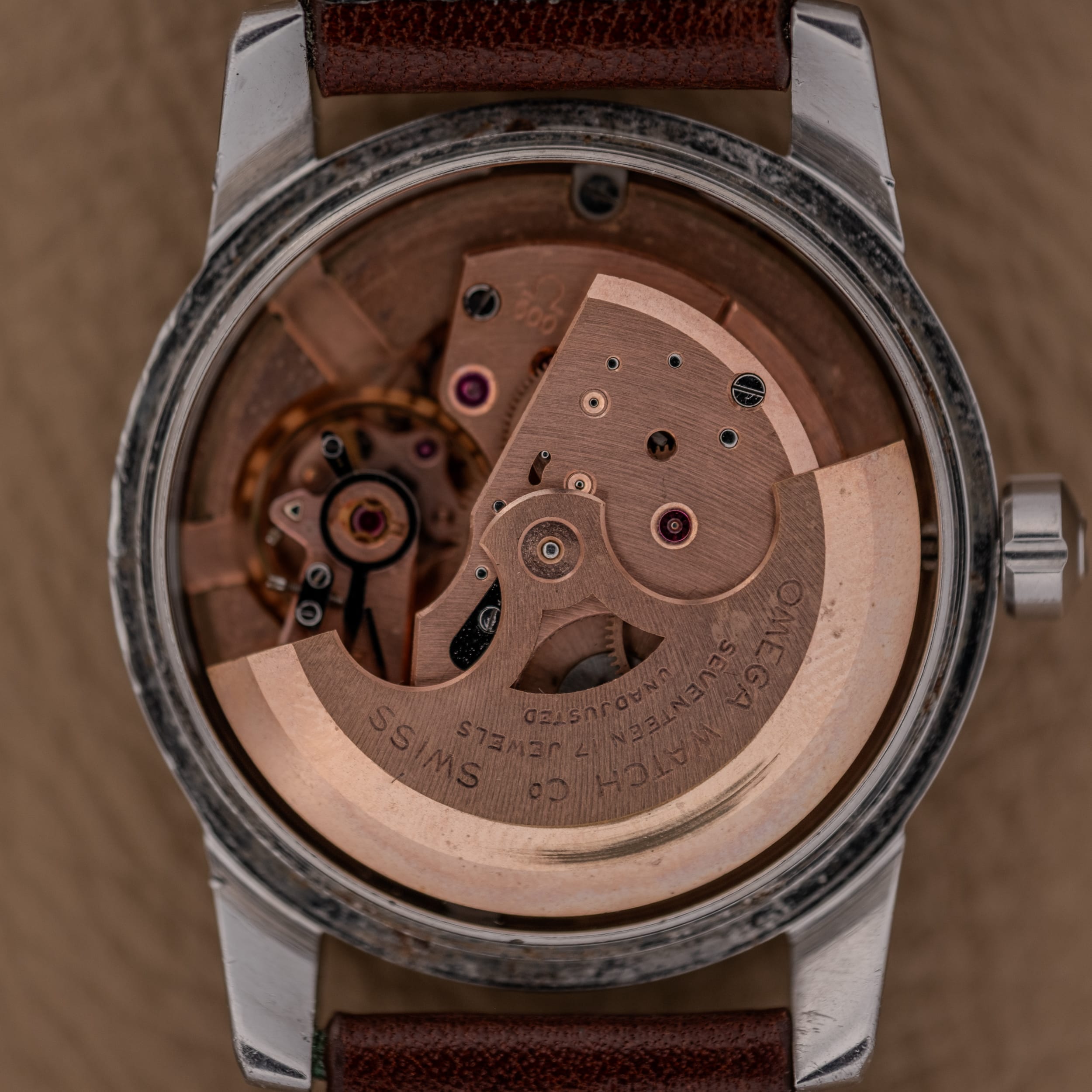
Pre-1990s watches: The serial number is engraved on the movement itself, typically on the mainplate or a bridge visible once the caseback is removed. On most manual-wind calibers, you will find it on the barrel bridge or near the balance wheel. On automatic calibers from the 1950s through 1980s, it is usually on the automatic bridge or the mainplate beneath the rotor. You will need to remove the caseback to see it, and I strongly recommend having a watchmaker do this if you are not experienced. A slipped case knife can gouge a caseback or scratch a movement in a fraction of a second.
1990s onward: Omega began engraving the serial number on the exterior of the watch in addition to the movement. Depending on the model and year, you may find it laser-etched on the caseback exterior, on the back of the lugs (between the lugs at 6 o’clock), or in some cases on the case flank. These exterior engravings are typically very small and may require a loupe or magnifying glass to read clearly.
Modern watches (post-2007): Most current-production Omega watches display the serial number on the caseback. If the watch has a transparent caseback, the movement serial may be visible without opening the watch, though you will likely still need magnification.
On paperwork: If you have the original warranty card, chronometer certificate, or service records, the serial number should be listed there. This is the fastest way to find it if the documents are available.
There are a few important caveats. First, Omega has never been perfectly consistent about serial number placement. I have seen watches from the same reference and approximate production year with the serial in different locations on the movement. This is not a cause for alarm — it is simply how a factory operating at scale works. Second, some Omega watches do not carry a movement serial number at all. This applies primarily to certain ETA-based calibers and some non-COSC-certified movements where the serial appears on the caseback interior or exterior instead. Third, and this is critical: do not confuse the serial number with the case reference number, the caliber number, or the PIC code. The serial number is a standalone string of seven or eight digits with no letters and no periods. If you see periods or letters, you are looking at a reference number or PIC code, not the serial.
Understanding Why Serial Numbers Are Approximate
Before consulting the charts below, you need to understand what a serial number can and cannot tell you. Omega assigned serial numbers to movements during production, not when a complete watch was assembled or sold. A movement could sit in inventory for months or even years before being cased and shipped. Components from different production batches were sometimes assembled together. And in certain periods — particularly the late 1970s and 1980s when Omega began incorporating ETA-sourced movements — the sequential logic becomes less reliable.
The charts below are compiled from decades of collector research, cross-referenced against known production records and Omega’s own archives. They are accurate to within roughly one to two years for most of Omega’s production history. For watches made before 1940 or after 2008, the margin of error can be wider. These are the best publicly available tools for dating an Omega, but they are not a substitute for Omega’s own records.
For a definitive production date, you can request an Extract from the Archives directly from Omega. This service, which has historically cost around $150 USD, provides the official production date and original delivery destination based on Omega’s internal records. The service was temporarily suspended in 2023 following a well-publicized fraud case involving the brand’s heritage department, and as of 2025 Omega has been working on an enhanced version. In the interim, Omega offers Certificates of Authenticity for watches more than 30 years old, which involve a physical examination by their watchmakers in Switzerland. Check Omega’s official customer service page for the current status of these services.
Omega Serial Number Chart: Standard Models (Excluding Speedmaster)
This chart covers all Omega watches except those in the Speedmaster family. Speedmaster movements follow a separate numbering sequence and are listed in their own chart below.
| Serial Number Range | Earliest Production Year |
|---|---|
| 1,000,000 – 1,999,999 | 1894 |
| 2,000,000 – 2,999,999 | 1902 |
| 3,000,000 – 3,999,999 | 1908 |
| 4,000,000 – 4,999,999 | 1912 |
| 5,000,000 – 5,999,999 | 1916 |
| 6,000,000 – 6,999,999 | 1923 |
| 7,000,000 – 7,999,999 | 1929 |
| 8,000,000 – 8,999,999 | 1935 |
| 9,000,000 – 9,999,999 | 1939 |
| 10,000,000 – 10,999,999 | 1944 |
| 11,000,000 – 11,999,999 | 1947 |
| 12,000,000 – 12,999,999 | 1950 |
| 13,000,000 – 13,999,999 | 1952 |
| 14,000,000 – 14,999,999 | 1954 |
| 15,000,000 – 15,999,999 | 1956 |
| 16,000,000 – 16,999,999 | 1958 |
| 17,000,000 – 17,999,999 | 1959 |
| 18,000,000 – 18,999,999 | 1961 |
| 19,000,000 – 19,999,999 | 1962 |
| 20,000,000 – 20,999,999 | 1963 |
| 21,000,000 – 21,999,999 | 1964 |
| 22,000,000 – 22,999,999 | 1965 |
| 23,000,000 – 24,999,999 | 1966 |
| 25,000,000 – 25,999,999 | 1967 |
| 26,000,000 – 27,999,999 | 1968 |
| 28,000,000 – 31,999,999 | 1969 |
| 32,000,000 – 32,999,999 | 1970 |
| 33,000,000 – 33,999,999 | 1971 |
| 34,000,000 – 35,999,999 | 1972 |
| 36,000,000 – 37,999,999 | 1973 |
| 38,000,000 – 38,999,999 | 1974 |
| 39,000,000 – 39,999,999 | 1975 |
| 40,000,000 – 40,999,999 | 1977 |
| 41,000,000 – 41,999,999 | 1978 |
| 42,000,000 – 43,999,999 | 1979 |
| 44,000,000 – 44,999,999 | 1980 |
| 45,000,000 – 45,999,999 | 1982 |
| 46,000,000 – 47,999,999 | 1984 |
| 48,000,000 – 48,999,999 | 1985 |
| 49,000,000 – 50,999,999 | 1986 |
| 51,000,000 – 51,999,999 | 1989 |
| 52,000,000 | Not used |
| 53,000,000 – 53,999,999 | 1991 |
| 54,000,000 – 54,999,999 | 1993 |
| 55,000,000 – 55,999,999 | 1995 |
| 56,000,000 – 59,999,999 | 1998 |
| 60,000,000 – 60,999,999 | 1999 |
| 61,000,000 – 64,999,999 | 2000 |
| 65,000,000 – 65,999,999 | 2001 |
| 66,000,000 – 67,999,999 | 2002 |
| 68,000,000 – 69,999,999 | 2003 |
| 70,000,000 – 71,999,999 | 2004 |
| 72,000,000 – 77,999,999 | 2005 |
| 78,000,000 – 80,999,999 | 2006 |
| 81,000,000 – 83,999,999 | 2007 |
| 84,000,000 – 85,000,000+ | 2008+ |
A few things to note about this chart. The 52,000,000 range was never used — Omega skipped it entirely. The gap between serial ranges from the mid-1980s onward reflects the transition to ETA-based calibers during the quartz crisis and its aftermath, which disrupted the sequential logic of in-house movement numbering. After 2008, the data becomes increasingly unreliable for dating purposes, and around 2019 Omega transitioned to randomized serial numbers, making it effectively impossible to date a watch by serial number alone for post-2019 production. For any watch with a serial number above 85,000,000, your best option is to contact Omega directly.
Omega Speedmaster Serial Number Chart
This is the chart most people get wrong. The Speedmaster has always used its own serial number sequence, separate from the rest of Omega’s production. If you look up a Speedmaster serial on the standard chart above, you will get an incorrect date, potentially off by several years. Always use this dedicated Speedmaster chart.
| Serial Number Range | Estimated Production Year |
|---|---|
| 14,000,000 – 14,999,999 | 1957 |
| 15,000,000 – 15,999,999 | 1958 |
| 16,000,000 – 16,999,999 | 1958–1959 |
| 17,000,000 – 17,999,999 | 1960 |
| 18,000,000 – 18,999,999 | 1961 |
| 19,000,000 – 19,999,999 | 1962 |
| 20,000,000 – 21,999,999 | 1963 |
| 22,000,000 – 22,999,999 | 1964–1965 |
| 23,000,000 – 23,999,999 | 1966 |
| 24,000,000 – 25,999,999 | 1967 |
| 26,000,000 – 26,999,999 | 1968 |
| 27,000,000 – 27,999,999 | 1969 |
| 28,000,000 – 30,999,999 | 1970–1971 |
| 31,000,000 – 31,999,999 | 1972 |
| 32,000,000 – 32,999,999 | 1973 |
| 33,000,000 – 33,999,999 | 1975 |
| 34,000,000 – 34,999,999 | 1976 |
| 35,000,000 – 36,999,999 | 1977 |
| 37,000,000 – 37,999,999 | 1978 |
| 38,000,000 – 39,999,999 | 1979 |
| 40,000,000 – 41,999,999 | 1980 |
| 42,000,000 – 42,999,999 | 1981 |
| 43,000,000 – 43,999,999 | 1982 |
| 44,000,000 – 44,999,999 | 1983 |
| 45,000,000 – 45,999,999 | 1984 |
| 46,000,000 – 46,999,999 | 1985 |
| 47,000,000 – 47,999,999 | 1986–1989 |
| 48,000,000 – 48,999,999 | 1990–1999 |
| 77,000,000+ | 1999+ (new numbering system) |
Notice how different these ranges are from the standard chart. A serial number of 25,000,000 on a standard Omega model dates to approximately 1967. That same number on a Speedmaster dates to 1967 as well in this case, but the relationship diverges significantly in other ranges. A serial of 33,000,000 on a standard model points to 1971, while on a Speedmaster it indicates 1975 — a four-year difference. Getting this wrong is one of the most common dating mistakes in the Omega collecting community.
The Speedmaster chart also becomes sparse after the mid-1980s. The 47,000,000 and 48,000,000 ranges each span multiple years, and after 1999, the Speedmaster moved to a new numbering system starting in the 77,000,000 range. For Speedmasters produced after 1999, serial-number dating requires either Omega’s own records or detailed knowledge of the specific reference’s production timeline.
Serial Numbers vs. Reference Numbers vs. PIC Codes
One of the biggest sources of confusion for people researching their Omega is the difference between these three numbering systems. They serve entirely different purposes, and mixing them up will lead you in the wrong direction.
Serial number: A unique identifier for an individual watch’s movement, consisting of seven or eight digits with no letters and no periods. Used for dating and authentication. Example: 24,601,783.
Reference number (case reference): A model identifier stamped inside the caseback of vintage and mid-century watches, indicating the case design, material, and general category. Found in various formats depending on the era. Example: 166.020 (a Seamaster from the 1960s), or 145.022 (a Speedmaster Professional). This tells you what the watch is, not when it was made.
PIC code (Product Identification Code): The modern identification system introduced in its current 14-digit form in 2007. It encodes the collection family, case and bracelet materials, case dimensions, movement type, dial description, and a production sequence number. Example: 311.30.42.30.01.005 (a Speedmaster Professional Moonwatch). The PIC code is printed on modern warranty cards and used in Omega’s current catalog system.
The reference number is what you will find stamped inside a vintage Omega caseback. It is typically in the format XX.XXX.XXX or XXX.XXX, sometimes with a suffix indicating a year or variant. The serial number is on the movement. These are two completely different numbers in two completely different locations, and confusing them is a remarkably common error.
A Brief History of Omega’s Reference Number Systems
Omega has used four distinct reference number systems over its history, each reflecting the increasing complexity of its catalog.
Pre-1962 (Letter-Digit System): Two letters followed by four digits. The letters typically indicated the case material — CK for stainless steel, OT for gold-capped cases, and so on. The famous CK 2915, the first Speedmaster, uses this system. These early reference numbers were primarily internal case designations, and Omega has acknowledged that they were not comprehensively applied to watches until the mid-1940s.
1962–1988 (MAPICS System): Two letters followed by six or seven digits separated by periods. Example: ST 145.022. The letters still indicated case material, and the digits encoded the watch category, water resistance, winding type, and a model-specific identifier. This is the system collectors encounter most frequently on vintage Seamasters, Constellations, Genèves, and De Villes from the golden era.
1988–2007 (8-Digit PIC System): An eight-digit code in the format XXXX.XX.XX. This ran concurrently with MAPICS for nearly two decades. Many long-running models had both a MAPICS code and a PIC code during this overlap period.
2007–Present (14-Digit PIC14 System): The current system, formatted as AAA.BB.CC.DD.EE.FFF. The first three digits identify the collection (311 for Speedmaster, 212 for Seamaster Diver, 231 for Seamaster Aqua Terra, and so on). The next two indicate case and bracelet material. The third pair denotes case size. The fourth pair describes the movement type and complications. The fifth pair codes the dial. The final three digits are a sequence number distinguishing minor variants. This is the most granular system Omega has ever used, and reading it correctly can tell you almost everything about a watch before you ever see it in person.
How to Use the Serial Number for Authentication
The serial number is one of the most powerful authentication tools available to a collector. Here is the process I follow when evaluating any vintage Omega that comes across my bench.
Step 1: Date the movement. Look up the serial number on the appropriate chart above (standard or Speedmaster). This gives you an approximate production year for the movement.
Step 2: Check the reference number against the production date. The case reference stamped inside the caseback should correspond to a model that was in production during the year indicated by the serial number. If the serial suggests 1962 but the reference was not introduced until 1970, the movement has been swapped into a later case, or the watch is misrepresented. Neither is necessarily a dealbreaker, but both need to be understood and priced accordingly.
Step 3: Verify the caliber. The caliber number on the movement should match what Omega used in that reference during that production period. A Seamaster ref. 166.010 with a Cal. 562 and a serial number in the 20,000,000 range — that all checks out for a 1963 production. The same reference with a Cal. 1012 and a serial in the 35,000,000 range would indicate a later movement swap.
Step 4: Look for consistency in lume, dial, and hands. A 1963 movement should be in a watch with radium or early tritium lume, not modern Super-LumiNova. The dial printing, hand style, and crystal type should all correspond to the era indicated by the serial number. Mismatches are red flags — not necessarily fraud, but evidence of replacement parts that affect both authenticity and value.
This is the kind of systematic verification that separates an informed purchase from a gamble. The serial number is where it starts, and everything flows from there.
Your First Vintage Watch: The 2026 Beginner’s Buying Guide
Common Mistakes When Looking Up Omega Serial Numbers
Using the wrong chart for a Speedmaster. I mentioned this above, but it bears repeating because it is the single most common error. The Speedmaster has its own serial number sequence. Every month I see forum posts where someone has dated their Speedmaster using the standard chart and arrived at a production year that is off by three or four years. If your watch says Speedmaster on the dial, use the Speedmaster chart.
Confusing the case number with the serial number. On some vintage Omega watches, particularly those from the 1940s and 1950s, the case was manufactured by an external supplier (Dencker, Huguenin, or others) and carries its own case number on the interior. This case number is not the serial number. The serial number is on the movement itself.
Reading the caliber number as the serial number. Inside many Omega movements, you will see a short number — often two or three digits — that identifies the caliber. Cal. 321, Cal. 561, Cal. 1012. This is not the serial number. The serial number is a longer number, typically seven or eight digits, in a separate location on the movement.
Assuming the serial number gives an exact production date. It does not. The charts provide the earliest production year for a given serial range. Your specific watch may have been assembled and sold one or two years after the movement was numbered. This is normal and does not indicate a problem.
Expecting post-2019 serial numbers to be sequential. Omega transitioned to randomized serial numbers around 2019. If your watch is recent production, the serial number cannot be used to determine the production year. You will need to rely on the warranty card date or contact Omega.
When the Serial Number Is Not Enough
There are situations where the serial number alone will not give you the answer you need. Watches from the late 1970s and 1980s, when Omega was integrating ETA-sourced movements, can be difficult to date precisely by serial number because the numbering does not always track neatly with production timelines. Very early Omega watches, before the serial numbering system was fully standardized, may also present dating challenges.
For watches where precise dating matters — whether for insurance, resale, or personal satisfaction — Omega’s Certificate of Authenticity service provides the most reliable answer. This involves sending the watch to Omega’s service center in Switzerland, where their watchmakers physically examine it and cross-reference the serial number against internal production records. It is more expensive and time-consuming than a serial number lookup, but it is definitive.
For most collectors buying a vintage Omega in the sub-$3,000 range, the serial number chart combined with reference number verification provides sufficient confidence. You do not need an Extract from the Archives for every Seamaster De Ville. But if you are considering a significant purchase — an early Speedmaster, a rare Constellation, a military-issued Seamaster 300 — the investment in formal authentication is worth it.
Frequently Asked Questions
Can I look up my Omega serial number online through Omega? Omega does not offer a public online serial number lookup tool. Third-party databases exist, but they are compiled by enthusiasts and should be used as guides, not definitive sources. For official information, you need to contact Omega directly or use their Extract from the Archives or Certificate of Authenticity services.
What if my Omega has no serial number? A genuine Omega should always have a serial number somewhere — on the movement, caseback interior, caseback exterior, or lugs. The complete absence of a serial number is a significant red flag for authenticity. The one exception is certain quartz-era models with ETA movements where the serial may be very faintly etched and difficult to see without magnification.
Do all Omega serial numbers start at 1,000,000? The sequential numbering for standard models began at approximately 1,000,000 in 1894. Omega pocket watches produced before this date used different identification systems. The Speedmaster series began its own separate sequence in 1957 starting in the 14,000,000 range.
My serial number does not appear on either chart. What does that mean? If your serial number falls between the ranges listed (for example, in the 51,000,000s for a standard model, which maps to approximately 1989), you can interpolate the date. If the serial number does not fall within any logical range, or if the number is fewer than seven digits, the movement may predate the modern serial system, may have been renumbered during a service, or may not be genuine.
How accurate are these charts? Within roughly one to two years for most of Omega’s production history from the 1920s through the early 2000s. Pre-1920 and post-2008 ranges are less reliable. These charts are compiled from collector research and are not officially published by Omega, though they are widely accepted as the best available public resource.
- Omega Official: Extract from the Archives
- Chuck Maddox Serial Number Table — The foundational collector-compiled resource, maintained since 2001
- Quill & Pad: Decoding Omega’s 14-Digit PIC System
Related posts
The Omega Seamaster DeVille 166.020: Best Vintage Omega Under $1,000
Why the Omega Seamaster DeVille 166.020 is the most undervalued vintage Omega you can buy. Real market prices, what to look for, and what to avoid.
How to Date a Vintage Gruen Watch: The Complete Guide
Serial numbers, style numbers, case dating, and the triangulation method. A bench-level guide to dating vintage Gruen wristwatches from 1925 to 1958.

Tudor Serial Numbers: The Complete Guide to Dating Your Watch
Date your Tudor watch using serial numbers from 1940 to 2002. Complete serial number chart, reference number decoder, and authentication steps.

Omega Bumpers : A Collector’s Guide to References 2374 Through 2782
Everything you need to know about Omega bumpers from 1943 to 1962. The mechanism, the key references, what they cost, and why collectors are paying attention.

Omega Serial Numbers: The Complete Guide to Dating Your Watch
Every Omega movement that left the factory in Bienne, Switzerland received a serial number. That number, stamped onto a bridge or plate...

Why Black Dials Are the Rarest Thing in Vintage Watches
Most people think they understand why tropical dials command a premium. The story usually stops at "black turned brown, collectors love...

Wittnauer Watch Serial Numbers and Production Date Guide
Here's the honest truth that most watch sites won't tell you: there is no publicly available serial number table for Wittnauer watches....

The 12 Best Vintage Watches Under $1,000 in 2026
I want to tell you something that took me an embarrassingly long time to figure out. When I first started collecting vintage watches, I...
Longines Serial Numbers: The Complete Reference Guide 2026
Longines has been making watches since 1832, and they've been recording serial numbers for every single one since 1867. That's over 150...

Hamilton Watch Serial Numbers: How to Date Your Timepiece
Hamilton produced roughly 4.5 million watches over the course of its American manufacturing life, from the first movements completed in...

How to Read a Rolex Serial Number: The Complete Dating Guide 2026
If you want to date a vintage Rolex, understand what you actually paid for, or avoid getting burned on a purchase, the serial number is...

Your First Vintage Watch: The 2026 Beginner’s Buying Guide
There are dozens of beginner's guides to vintage watches online. Most of them tell you to "set a budget," "research brands," and "buy f...