Speedmaster Mark II
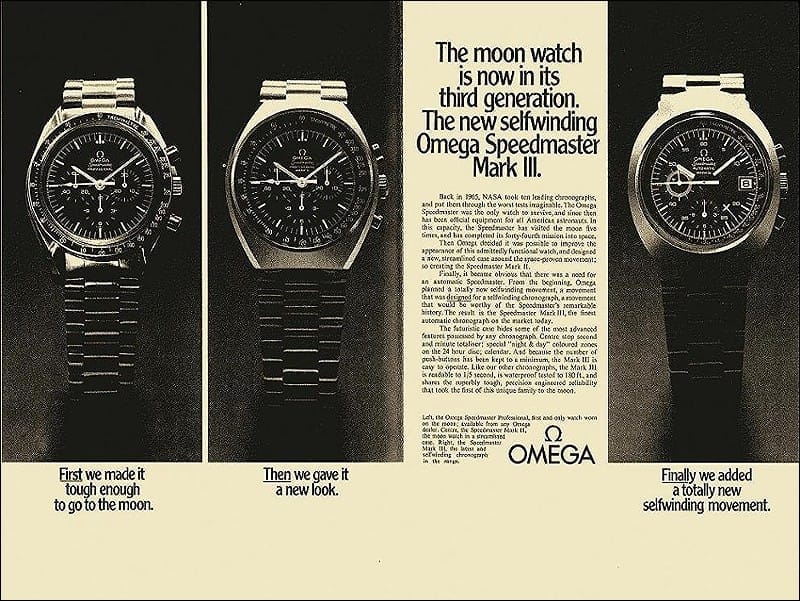
The Speedmaster Mark II was born from necessity and ambition. Following the success of the Speedmaster Professional's moon landing qualification in 1967, Omega invested heavily in the Alaska Project, a secretive research initiative designed to create a next-generation space chronograph capable of withstanding extreme lunar conditions. Though the Alaska Project prototypes never flew to the moon, the technological innovations and design experiments conducted during development were too valuable to abandon. In 1969, the same year humans first walked on the moon, Omega channeled these R&D costs into a consumer-oriented chronograph featuring a radically modernized case design. The Mark II represented Omega's first intentional departure from the original Speedmaster Professional aesthetic, introducing a distinctive tonneau-shaped case that captured the forward-thinking design spirit of the early 1970s.