

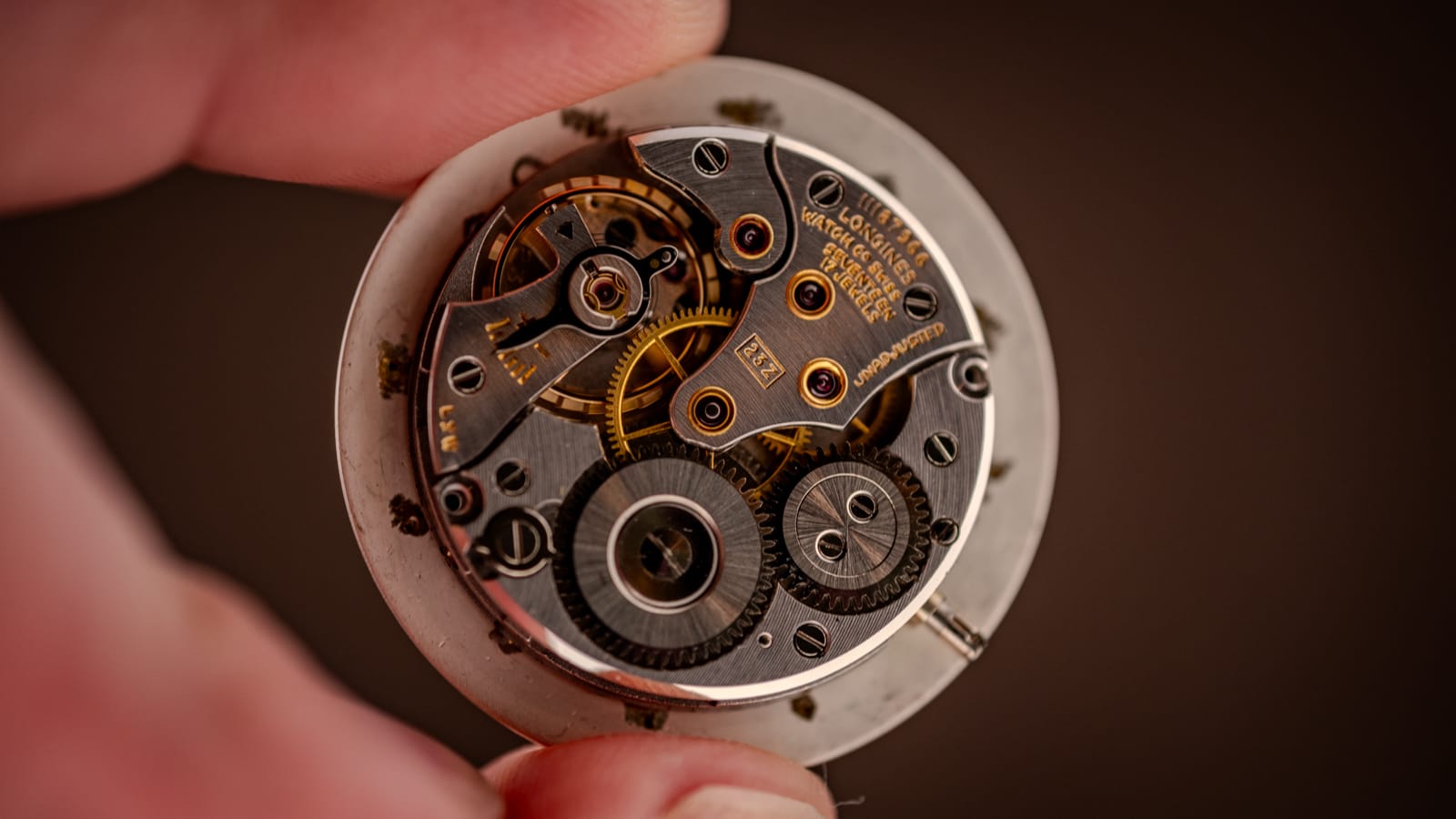
Every guide to buying a vintage watch gives you the same instruction: ask for the service history. Get the records. Find out when it was last serviced and by whom. Our own beginner’s guide tells you to ask dealers exactly that.
We’re walking part of that back, and this is why.
In years of opening watches, I’ve seen a documented, watch-by-watch service record maybe a handful of times. Not because the watches weren’t serviced. Because nobody kept the paper, and the paper that does exist usually can’t be trusted to mean what a buyer thinks it means.
The instinct behind the question is good. The question itself just doesn’t get you the answer you actually want.
the advice everyone repeats
“Ask for the service history” became collector gospel for a sensible reason. A serviced watch should run better and need less work than a neglected one, and a seller who can speak to the service is usually a seller who knows the watch. Fair enough. So the advice gets passed down, forum post to forum post, guide to guide, until it sounds like a rule.
The problem is what happens when you actually go looking for that history on a watch built in 1962.
why the paperwork doesn’t prove what you think
A few things break down at once.
Documented histories are rare. A vintage watch has usually passed through several owners across fifty or sixty years. Service receipts get thrown out with the box, lost in a move, or were never kept in the first place. The watch outlived its paperwork. That’s the normal case, not the exception, and a watch with no records is not automatically a watch nobody cared for.
A receipt proves a transaction, not a result. Say a seller hands you an invoice from 2019. It tells you someone paid a watchmaker that year. It doesn’t tell you the work was good, what was actually done, whether the right parts went in, or whether the movement has run a single day since without trouble. A bad service generates a receipt too.
Paper isn’t bonded to the watch. Records get separated, mixed up between two similar references, or, when there’s money on the line, invented. There’s no registry and no title. A service invoice with no serial number on it could belong to any watch of that model.
There is one kind of service history that does live on the watch itself: the marks a watchmaker scratches inside the caseback, a date or a set of initials, the trade’s old habit of signing its work. Those are real, and we read them. But they’re partial. They tell you someone was in there, roughly when, and nothing about what they found or fixed.
So you can do everything the advice tells you, collect the receipts, ask all the questions, and still not know the one thing you were trying to learn: whether the watch is mechanically sound, and whether it’ll stay that way.
the real service history is inside the movement
Here’s the part the forums can’t help you with, because it takes a loupe and an open caseback.
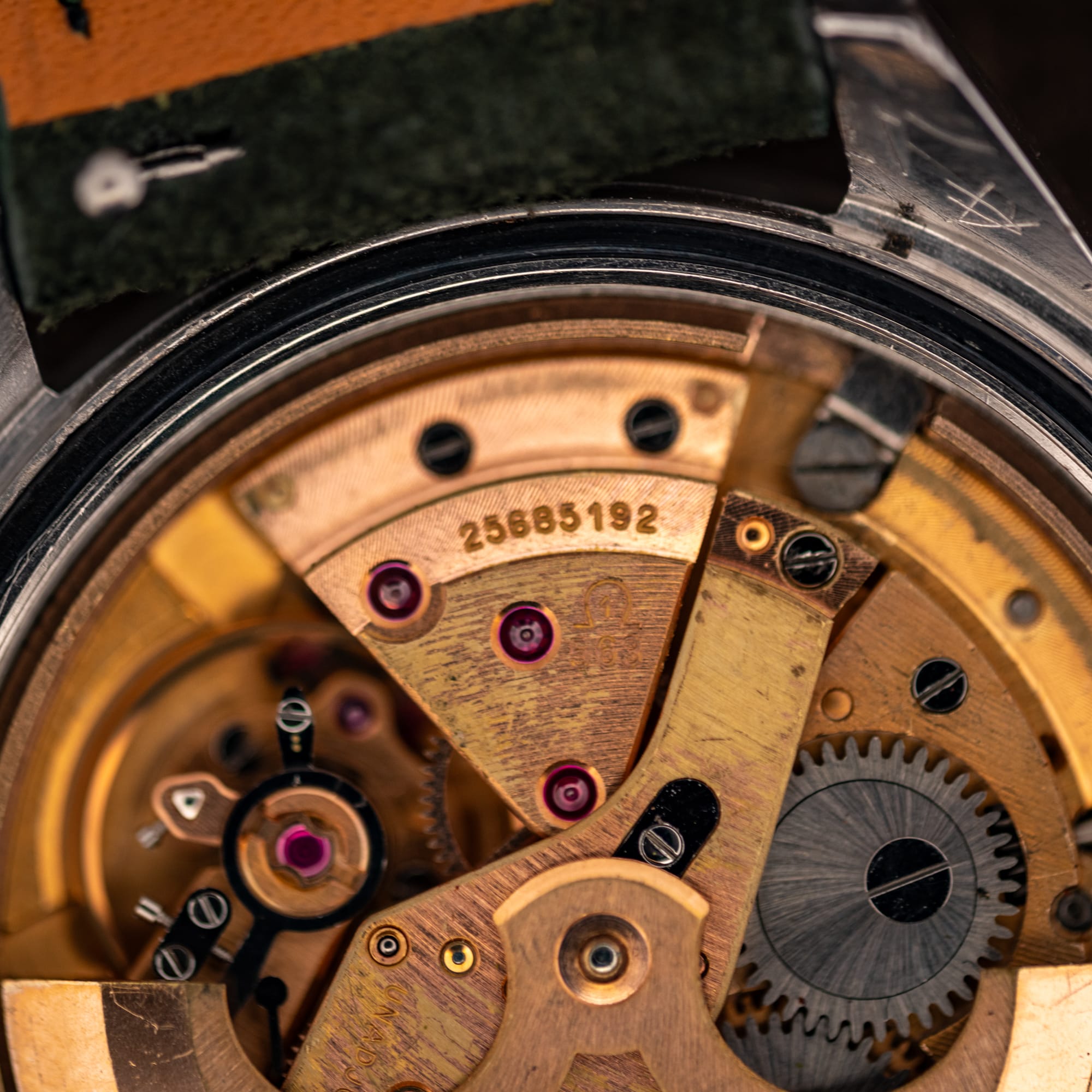
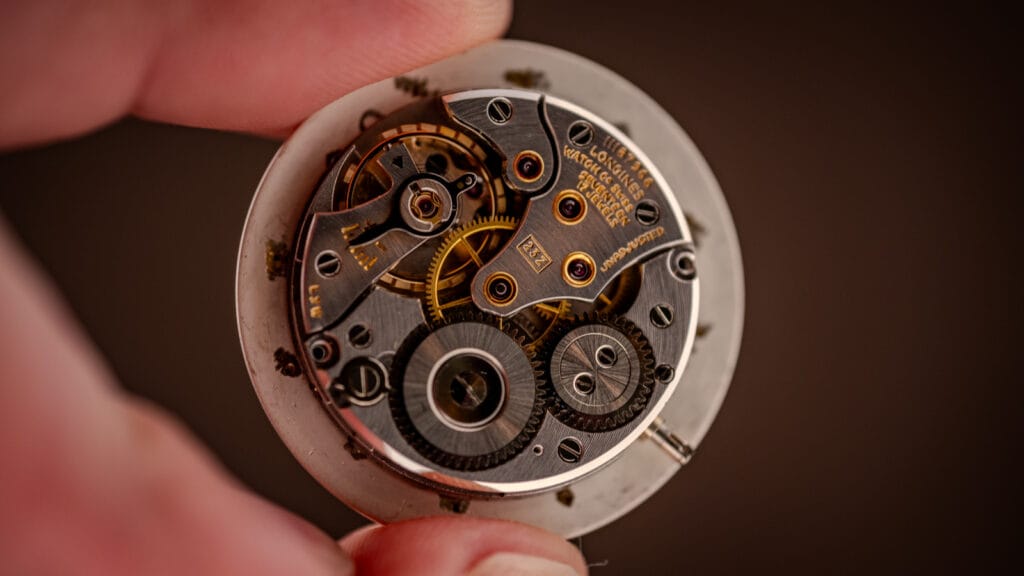
The honest record of a watch’s service life is written inside the movement, and the only way to read it is to take the movement apart. When we go through a watch on the bench, it tells us more in ten minutes than a folder of receipts would. A few of the things it says:
The mainspring. Until the 1950s, mainsprings were blued carbon steel. Watchmakers swapped them for white “unbreakable” alloy springs as those arrived: Elgin’s Elgiloy in the late 1940s, the Swiss Nivaflex alloy trademarked in 1957, and by the early 1960s carbon-steel mainspring production had basically stopped. So if we open a watch from the 1940s and find a bright alloy mainspring, it’s been into a modern watchmaker’s hands at some point. If it still carries its blued steel spring, it very likely hasn’t. A careful restorer will sometimes keep a sound original spring, so we read it next to everything else, not on its own.
The oil. Fresh service oil sits clean and where it belongs. Old oil dries, darkens, gums up, and creeps out of the jewels where it was placed. Spread oil on the dial side, or a varnish-like film around the pivots, tells us the last service is long gone, whatever a receipt might say.
The marks. Every time a movement is opened it picks up traces: faint scratches on the bridges, a slipped screwdriver near the screw slots, burring on screw heads turned by someone in a hurry. Clean, unmarked screws mean a movement that’s rarely been touched. Chewed-up slots and mismatched screws mean it’s been worked on, sometimes badly.
The parts. A replacement part in the wrong finish, a hairspring that’s been handled, a mainspring gone “set” that won’t deliver a full wind, rust starting on the steel. None of that shows up on paper. All of it shows up under magnification.
That’s the actual service history. Not a story about the watch. The watch itself.
so ask a better question
The thing you really want to know isn’t “what’s the service history.” It’s “is this watch sound right now, and how do you know.” Those aren’t the same question, and only the second one has a real answer.
That answer isn’t paperwork. It’s inspection. Every watch we sell gets opened, gone through, and serviced where it needs it, and we photograph the movement up close so you can judge the condition yourself instead of taking our word for it. When records exist, good, we’ll pass them along. When they don’t, it changes nothing about how the watch gets vetted.
And we put money behind the reading: a 2-year mechanical warranty and 30 days to return it for any reason. That’s the part a service receipt can’t offer. A receipt describes the past. The warranty is us standing behind the watch’s condition right now, which is the assurance you were trying to buy in the first place.
So ask sellers the better question. Ask what they found when they opened it. Ask to see the movement. If the answer is a shrug and a receipt, you’ve learned something either way.
Do you need service history to buy a vintage watch?
No. A documented, watch-by-watch service record is rare on vintage watches, and even when papers exist they usually can’t be verified. What matters is the watch’s mechanical condition right now, confirmed by opening and inspecting the movement, not by paperwork.
How can you tell if a vintage watch has been serviced?
The reliable signs are inside the movement. A watchmaker looks at whether the oil is fresh or dried and gummed, the mainspring material, scratches and screw wear from past work, and any replacement parts. A receipt on its own doesn’t prove the work was good, or that it was done on that watch.
Is a vintage watch worth less without service papers?
Not on condition grounds. Papers describe the past and don’t guarantee the watch runs well today. A properly inspected and serviced watch with no papers is often a safer buy than one with a stack of receipts and an unknown movement.
What’s the safest way to buy a vintage watch with no service records?
Buy from a seller who opens and services the watch, shows you the movement, and stands behind it with a warranty and a return window. That covers the condition risk paperwork was supposed to address, and actually can’t.
Related posts

Watch Shapes: Which Vintage Case Shape Fits Your Style?
Case shape changes how a vintage watch wears more than diameter alone. Compare eight silhouettes and learn which one fits your wrist and style.
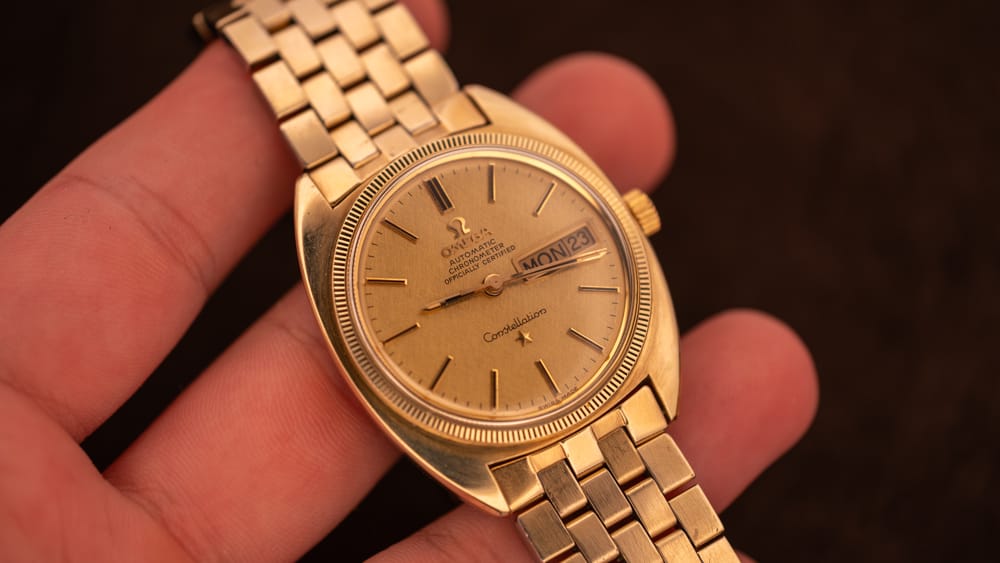
Vintage Dress Watches: How to Choose One You’ll Actually Wear
The best vintage dress watch is the one you will wear beyond weddings. Here is how to choose the right size, metal, dial, shape, and strap.
Vintage Watch Styles: A Visual Guide to Finding Yours
Most buyers pick a brand and stall. Here are nine vintage watch styles, shown with real watches from our archive, and the catch that comes with each one.
Vintage Tank Watches: A Buyer’s Guide to Rectangular Watches Beyond Cartier
Every Cartier Tank alternatives list is new watches imitating old ones. The originals still exist and cost less. A buyer's guide to vintage tank and rectangular watches: the brands, the prices, and what to check.
Service History Is the Wrong Question. Here’s the Right One.
Everyone says to ask for a vintage watch's service history. Most of it can't be verified, and a receipt proves a transaction, not a result. Here's what actually tells you a watch has been serviced, and the better question to ask.
LeCoultre vs. Jaeger-LeCoultre vs. Jaeger: What the Name on the Dial Means
Three names, one Swiss firm, and one watch that isn't what it looks like. What LeCoultre, Jaeger-LeCoultre, and plain Jaeger on a vintage dial really tell you.
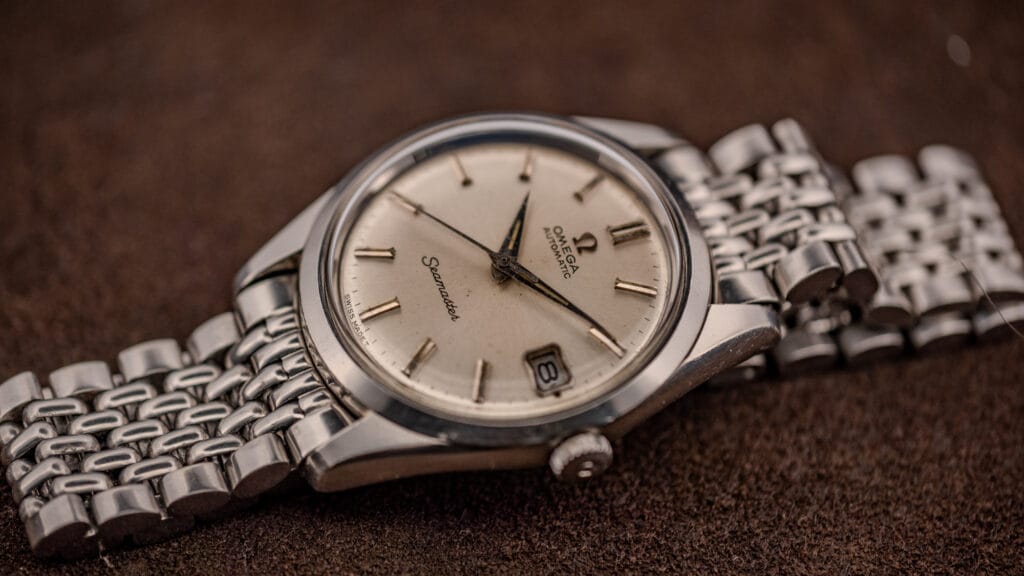
Omega Seamaster 166.010 Buyer’s Guide: Prices, Variants, and What to Look For (2026)
Everything you need to buy an Omega Seamaster 166.010 in 2026: real market prices by condition tier, five dial variants explained, caliber 562 vs 565, original part numbers, and what to inspect before you commit.
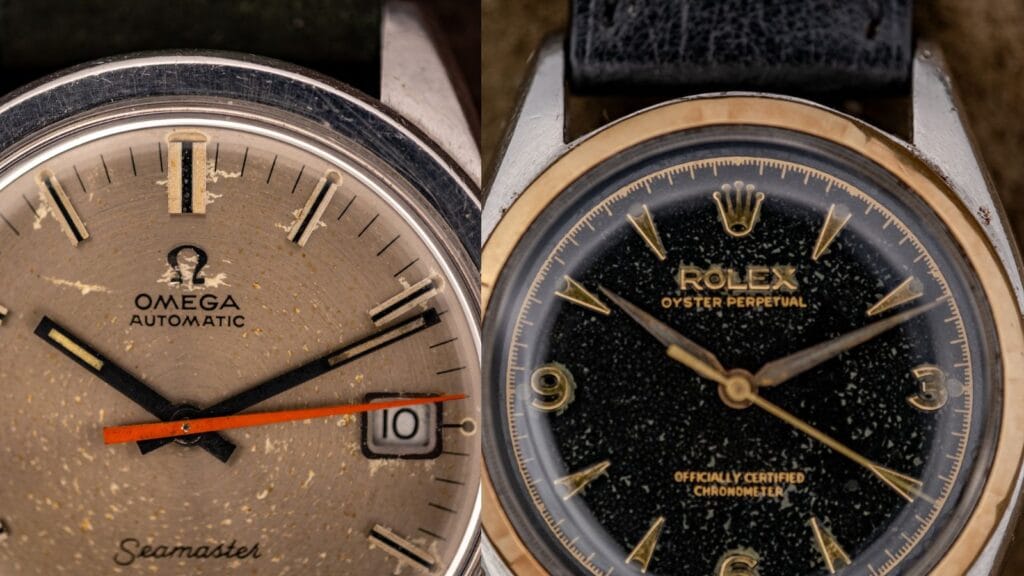
Omega vs Rolex: The Vintage Buyer’s Verdict
Vintage Omega vs vintage Rolex: where the Rolex premium is worth paying, where Omega is the smarter buy, and how to dodge redials on both. A collector's verdict.
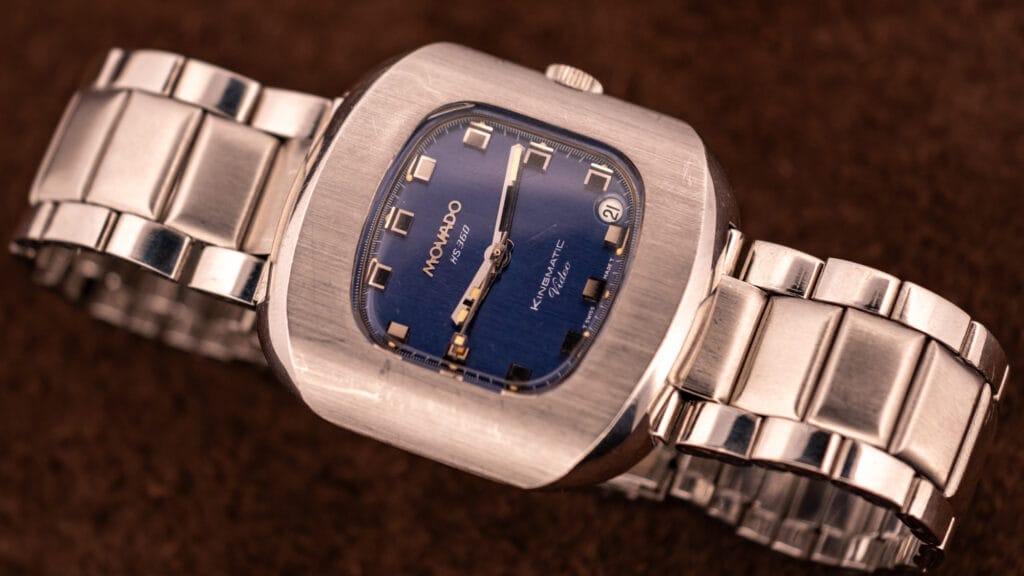
Movado Kingmatic: A Vintage Buyer’s Guide to References, Calibers, and Value
The Movado Kingmatic is one of the best values in vintage automatics. A buyer's guide to its references, in-house calibers, the Sub-Sea line, what to check, and what they actually sell for.
13 Vintage Watch Collecting Tips for Beginners (From 1,000+ Watches Sold)
Thirteen vintage watch collecting tips drawn from selling over 1,000 watches. What separates a smart first buy from an expensive lesson, with no sugar.
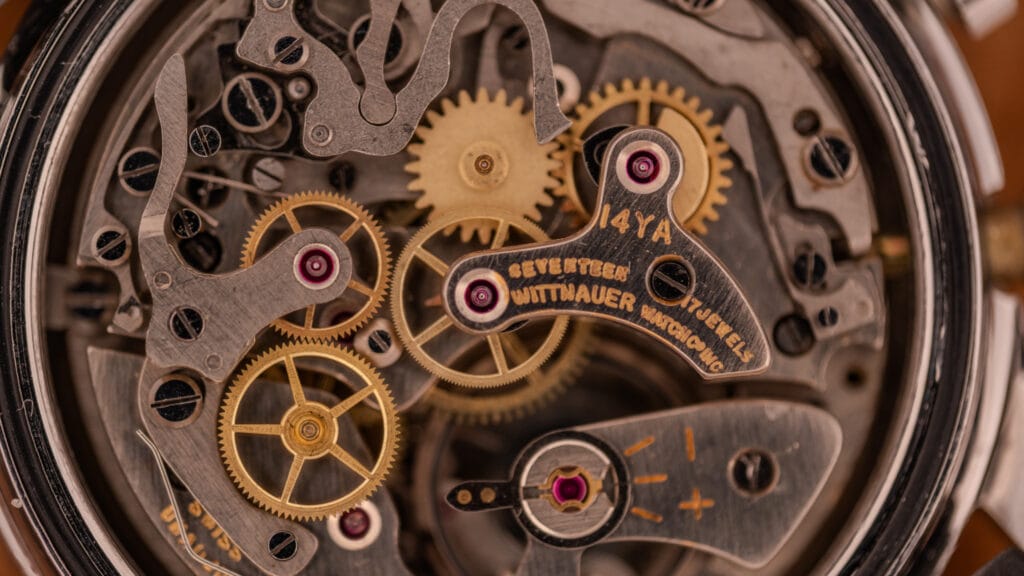
Vintage Wittnauer Chronograph Caliber Identification: Venus 188, Valjoux 7733/7734, Landeron 248
How to identify the movement inside any vintage Wittnauer chronograph: Venus 188, Valjoux 7733 and 7734, Landeron 248, and the house numbering system Wittnauer used to mark them.
How Water-Resistant Is a Vintage Watch, Actually? The Honest Answer.
Every dealer says never get a vintage watch wet. That advice is half-engineering and half-liability theater. Here is what is actually true about vintage water resistance, where water actually gets in, and when a 1965 diver is safer than a 2-year-old modern.