

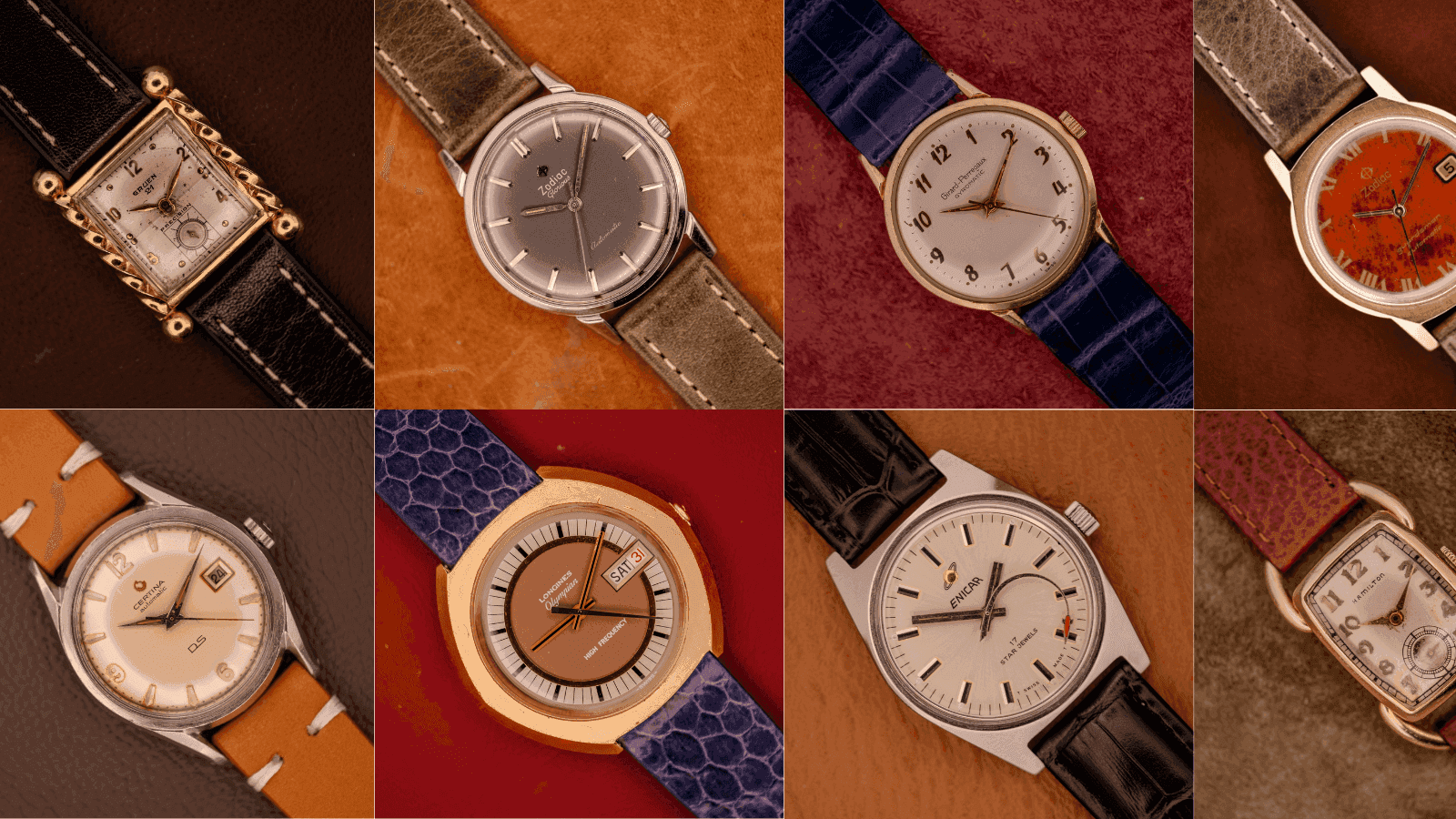
Most people shop for a vintage watch backwards. They pick a brand, usually one of the two everyone knows, then scroll listings and wait for something to click. It rarely does, because every major maker built many kinds of watch. The faster route is to choose from the vintage watch styles themselves. Decide on the role, the silhouette, and the experience you want on your wrist, then let brands and references follow. This guide walks through nine styles using watches we have handled and photographed ourselves: what each one looks like, who it suits, the vintage-specific catch, and where to go next.
the nine styles at a glance
Skim the table, then read the sections that pull at you.
| style | best for | defining traits | main vintage catch |
|---|---|---|---|
| dress | tailoring, offices, contrast with sports watches | thin case, clean dial, leather strap, little or no lume | must stay away from water; many run small |
| everyday automatic | one good watch for most days | round steel case, date, quiet dial | hard-worn examples, polished cases, repainted dials |
| field and military | casual wear, legibility first | bold numerals, lume, easy strap swaps | style is not military issue; old radium lume |
| dive | sports-watch instincts | rotating bezel, high-contrast dial | the depth rating no longer applies |
| chronograph | people who love a busy dial | pushers and subdials | costlier service, more parts to verify |
| rectangular and art deco | dressing with intent | shaped case, dial fills the front | shaped crystals and worn case corners |
| bold 1970s shapes | design-led buyers | tonneau and cushion cases, strong color | proprietary bracelets and parts |
| electronic and tuning fork | the technically curious | humming movement, smooth seconds hand | needs a specialist, not a general watchmaker |
| cocktail and art | collecting for delight | ornament, motion, small sizes | dial condition and originality |
vintage dress watches
The dress watch is the easiest style to underestimate and the hardest to outgrow. Thin case, clean dial, leather strap. Its whole job is to tell the time and slide under a cuff without comment.
The stereotype says vintage dress watches are tiny. Many are, but the style does not require it. A watch we handled, the Omega Jumbo ref. 2256/1, makes the point. It is a late 1940s dress watch in Staybrite stainless steel measuring 37.5mm wide and 46mm lug to lug, which is a footprint most modern wearers would call normal. Warm cream dial, gilt Arabic numerals, leaf hands, no lume anywhere, and Omega’s caliber 280 from its 30mm movement family inside. Ours came with an Omega Extract from the Archives. Restraint here is a design decision, not a size limitation.
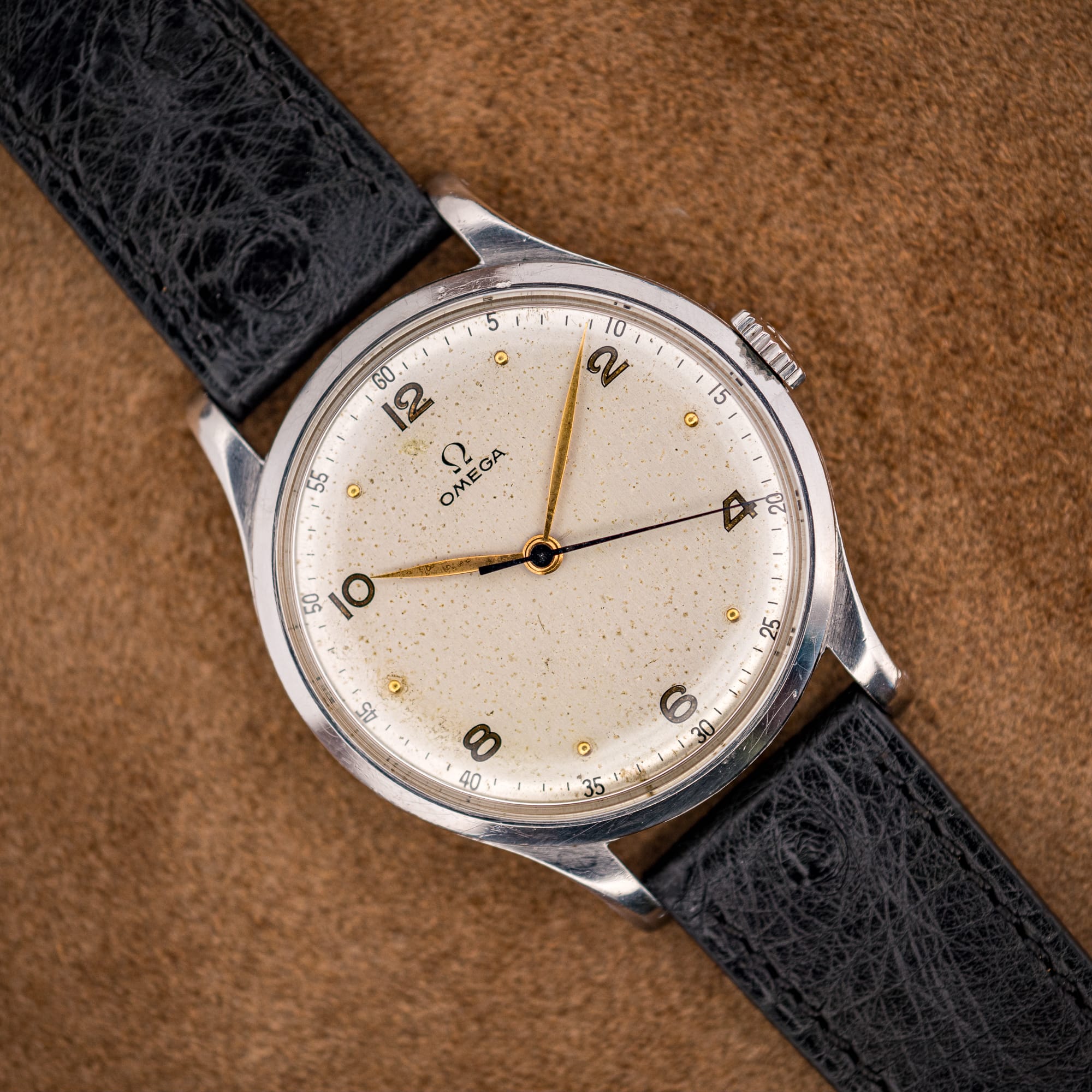
This style suits anyone who wears a collar most days, and anyone whose current watches all lean sporty. The catch is discipline. A vintage dress watch should never meet water, and the smaller examples wear smaller than photos suggest, so check the lug to lug measurement before you fall in love with a dial.
everyday mid-century automatics
This is the style nobody searches for by name, and it might be the most useful one on the list. Mid-century makers built enormous numbers of round steel automatics that were quieter than a sports watch and less formal than a pure dress piece. One watch for the office, the weekend, and dinner.
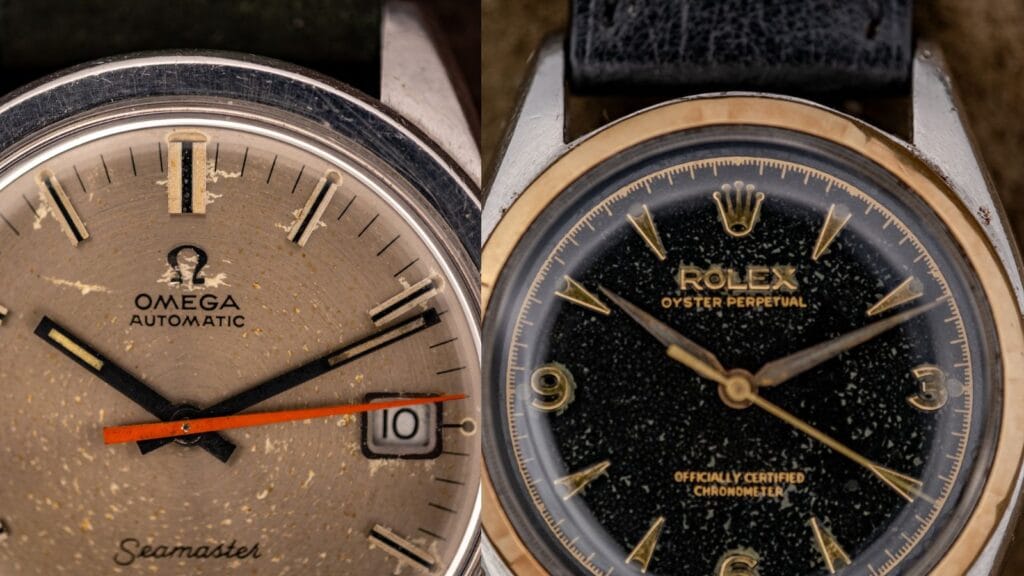
An example from our archive, the Omega Seamaster ref. 166.010, is the pattern in one object. Mid-1960s, a 35mm steel case, a date window at three, the automatic caliber 565, a silver dial, and a steel beads-of-rice bracelet that dresses the whole watch up or down depending on your sleeve.
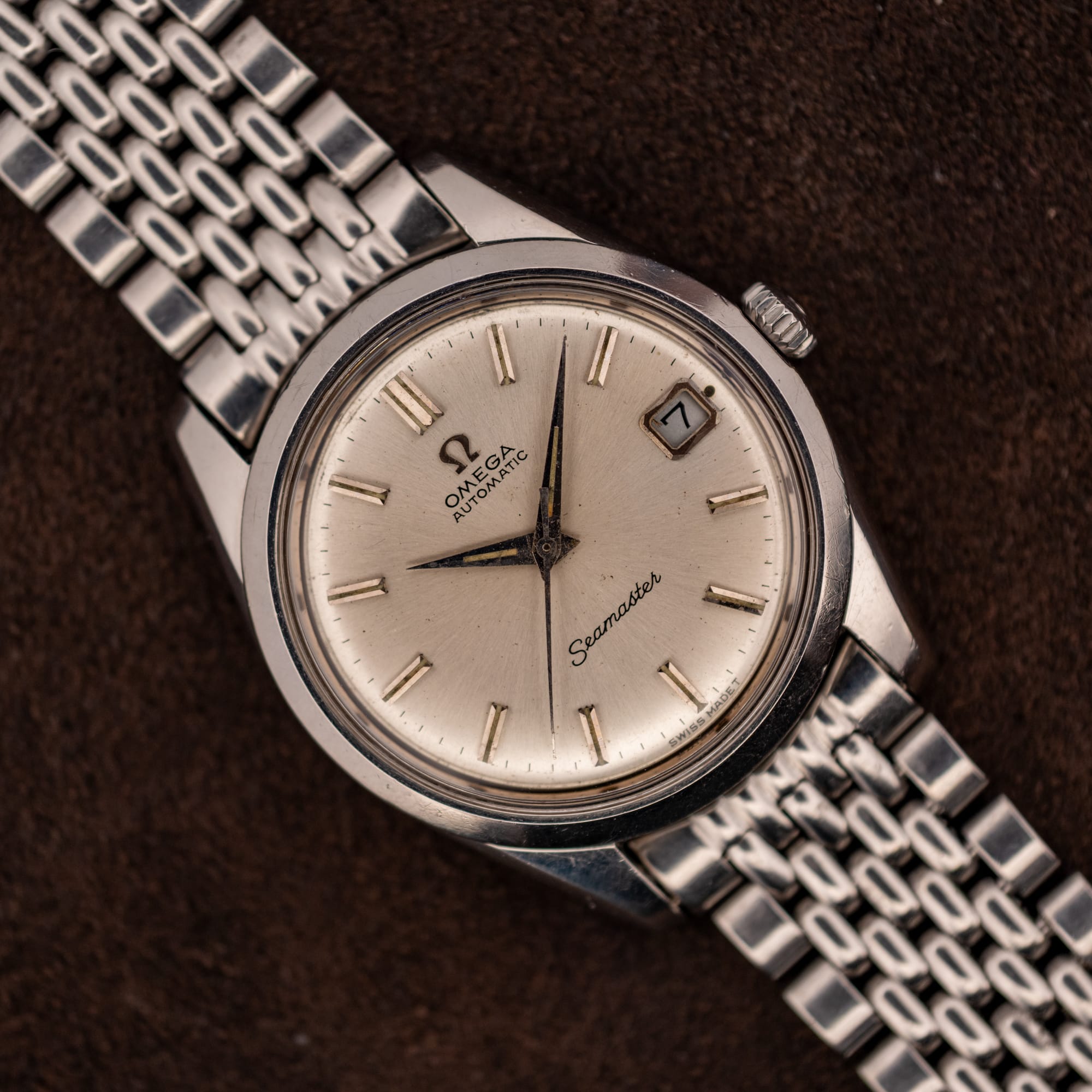
The catch follows from the virtue. Decades of daily use can leave a watch with a soft, over-polished case or a repainted dial. Judge the case and dial before the name on either one. Buy the sharpest case and the most honest dial you can find.
vintage field and military watches
Field watches are legibility turned into a design language. Bold Arabic numerals, luminous markers, a dial you can read in one glance, and a case that looks right on a fabric strap. Vintage military watches sit inside the same family, and this is where buyers need one distinction made plainly: military style is not the same thing as documented military issue. Plenty of makers sold field-style watches straight to civilians, and an honest seller will tell you which kind you are looking at.
A watch we handled shows the civilian side well: a Longines manual-wind field watch with the caliber 12L, from the late 1940s to mid-1950s. Cream dial, luminous Arabic numerals, center seconds, no military issue markings, and no pretense about it.
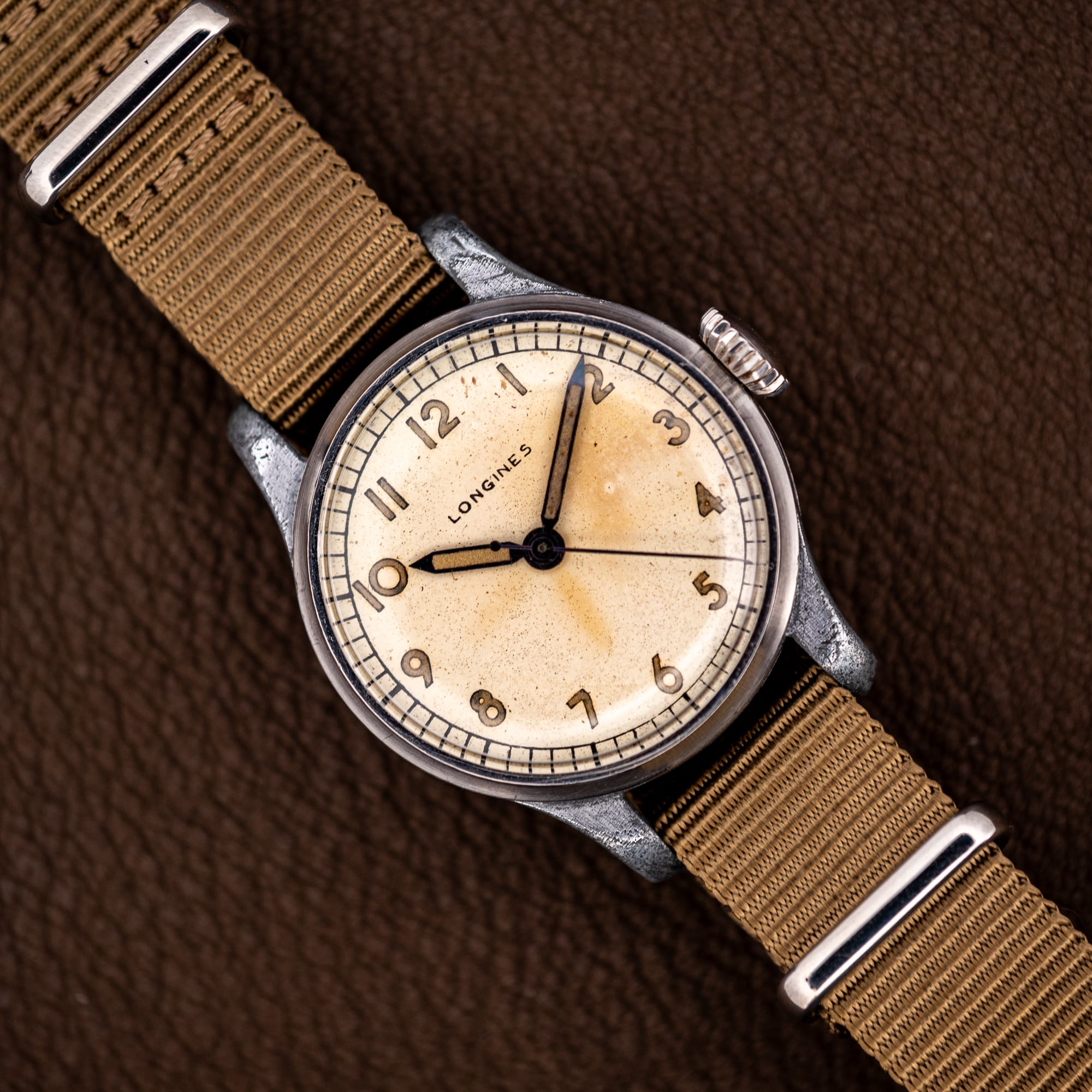
The vintage-specific catch is the lume itself. On watches of this era it may contain radium. Leave the caseback closed, never scrape or handle loose lume, and let a watchmaker deal with anything that flakes. For the deeper history of the category, our field-watch guide from the Dirty Dozen to modern Khaki picks up where this section stops.
vintage dive watches
Dive watches are the most familiar vintage sports style and the most misunderstood. The look is the draw: rotating bezel, high-contrast dial, a case with some shoulder to it. The skin-diver era produced watches with more character per millimeter than almost anything else in the market.
An example from our archive, the Aquastar Geneve Atoll ref. 1001, is the style at full strength. Early 1970s, a cushion case, an automatic movement with date, a black dial with an orange seconds hand, and a bezel faded to a ghost of its original color. It was built as a 200m diver when new.
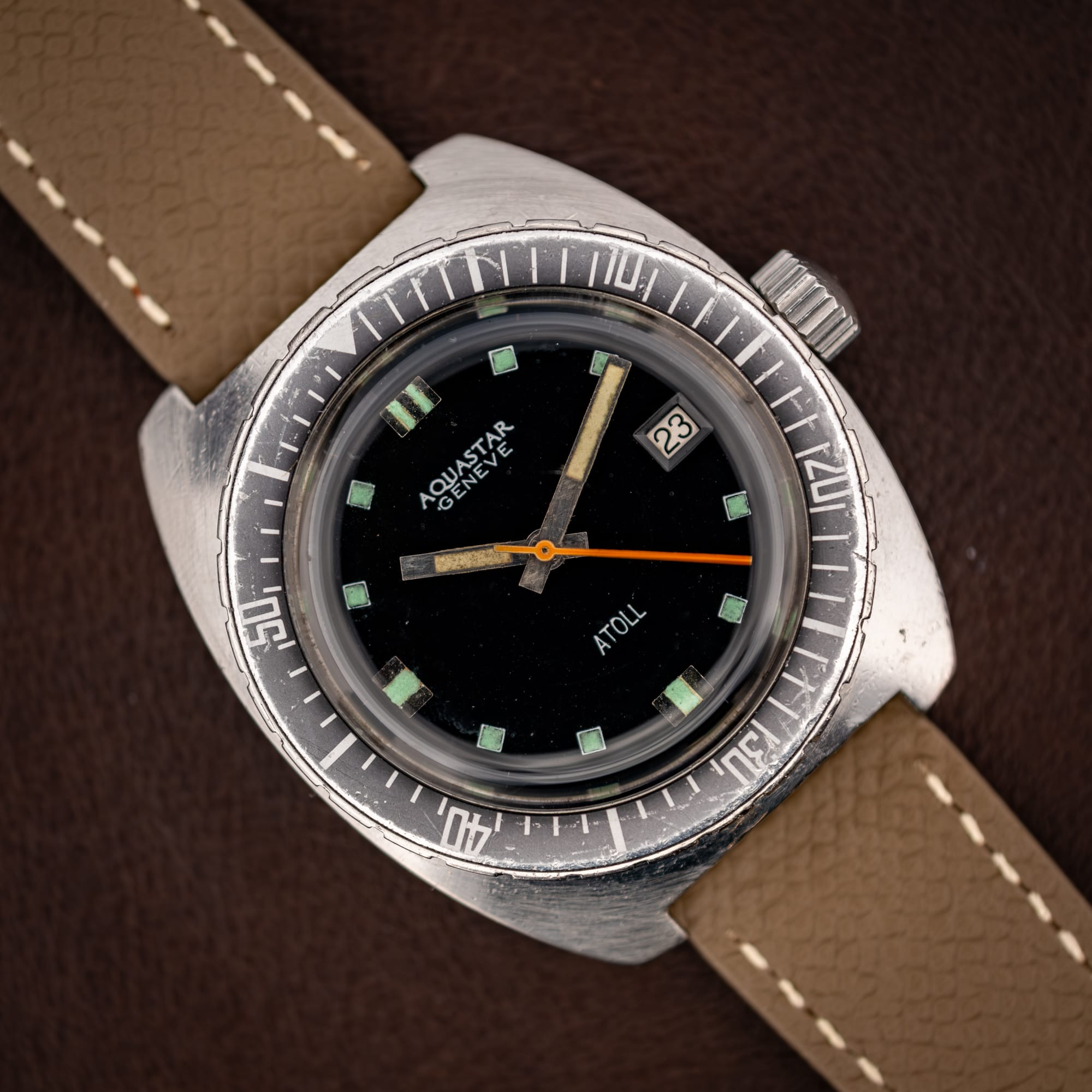
That last phrase carries the catch. A vintage dive rating is history, not permission to swim. Treat any vintage diver as non-water-resistant unless a qualified watchmaker has recently pressure-tested that individual watch. We wrote an honest answer on vintage watch water resistance because this is the single most common way a good vintage watch gets ruined. Buy the diver for the design. Swim in something modern.
vintage chronographs
A chronograph is the busy-dial style: pushers on the case, subdials on the face, a stopwatch built into a wristwatch. Vintage chronograph watches reward people who like their dials layered and their watches mechanical in an obvious, tactile way.
A watch we handled, the Omega Seamaster ref. 145.029, shows how far the style ranges beyond the famous names. Late 1960s to early 1970s, a 38mm cushion case at 42mm lug to lug, a warm mocha dial, and the manual-wind caliber 861 inside, from the same base caliber family used by period Speedmasters. Same mechanical heart, very different face.
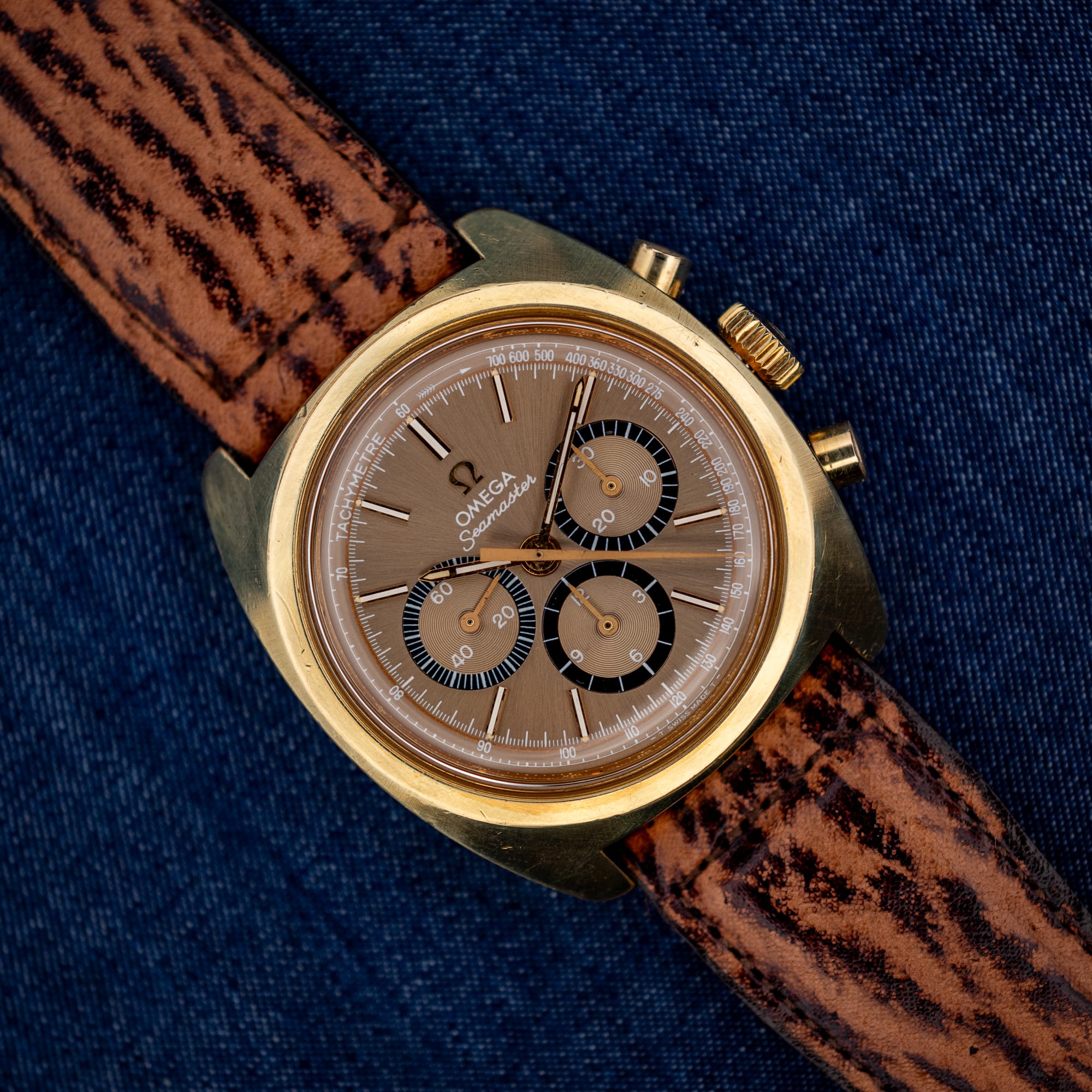
The catch is money and complexity. Chronographs cost more to service than time-only watches, and they carry more parts that can be wrong, swapped, or replaced. A documented service matters more here than anywhere else on this page, and why service history changes what a vintage watch is worth is worth reading before you buy one. This is a rewarding style, and a demanding one.
rectangular and art deco watches
Every style above is round. Going rectangular changes how a watch reads on the wrist more than any brand swap ever could. Vintage rectangular watches, including the tank silhouette most people can picture, come from an era when watches were designed as objects first, and the art deco examples still look drawn rather than machined.
A watch we handled, the Hamilton Wilshire, is American deco in one case. Introduced around 1938 to 1939, it pairs a gold-filled rectangular case with flexible looping lugs, a silver art deco dial, and Hamilton’s caliber 982 inside.
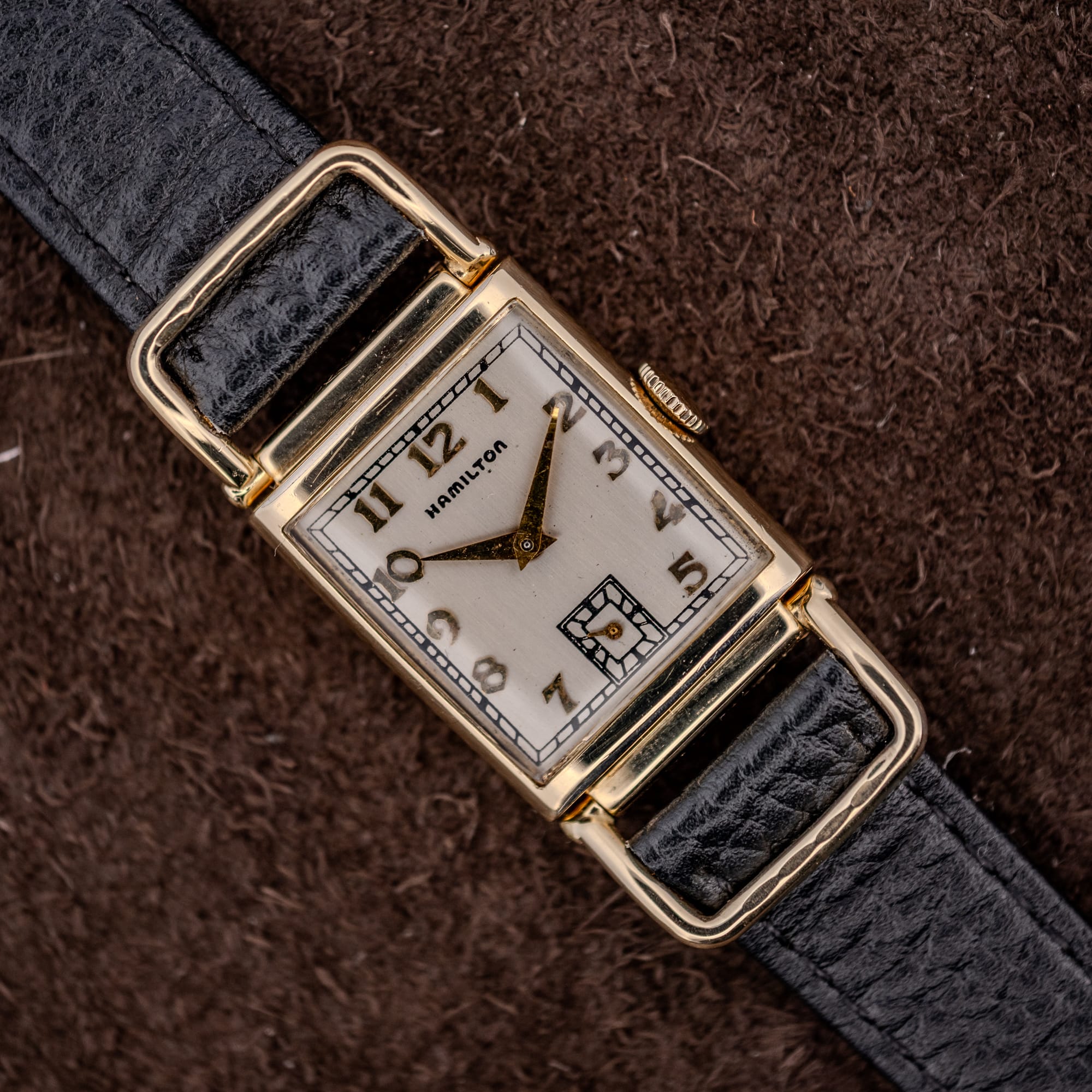
Three catches, all shape-related. Width alone understates how a rectangular watch wears, so judge by lug to lug and dial presence. Shaped crystals can be hard to replace, which makes a cracked one a real cost. And gold-filled case corners show wear early, so inspect the edges before anything else. If gold-filled construction is new to you, our gold-filled versus gold-plated explainer covers what the term actually promises, and the full vintage tank watch buyer’s guide goes deep on the category.
bold 1970s shapes
Then there is the decade that refused to behave. 1970s watches traded the polite round case for tonneaus, cushions, and angles, usually with color to match. If your taste runs to design objects, this is the style that sits farthest outside the usual round-watch formula.
An example from our archive, the Zenith Respirator X, belongs to a line from the late 1960s and 1970s. Tonneau-shaped steel case, a layered blue and silver dial with a date, and a high-beat automatic running at 28,800 vibrations per hour, a figure Zenith printed right on the dial as 28800. The spec became the styling.
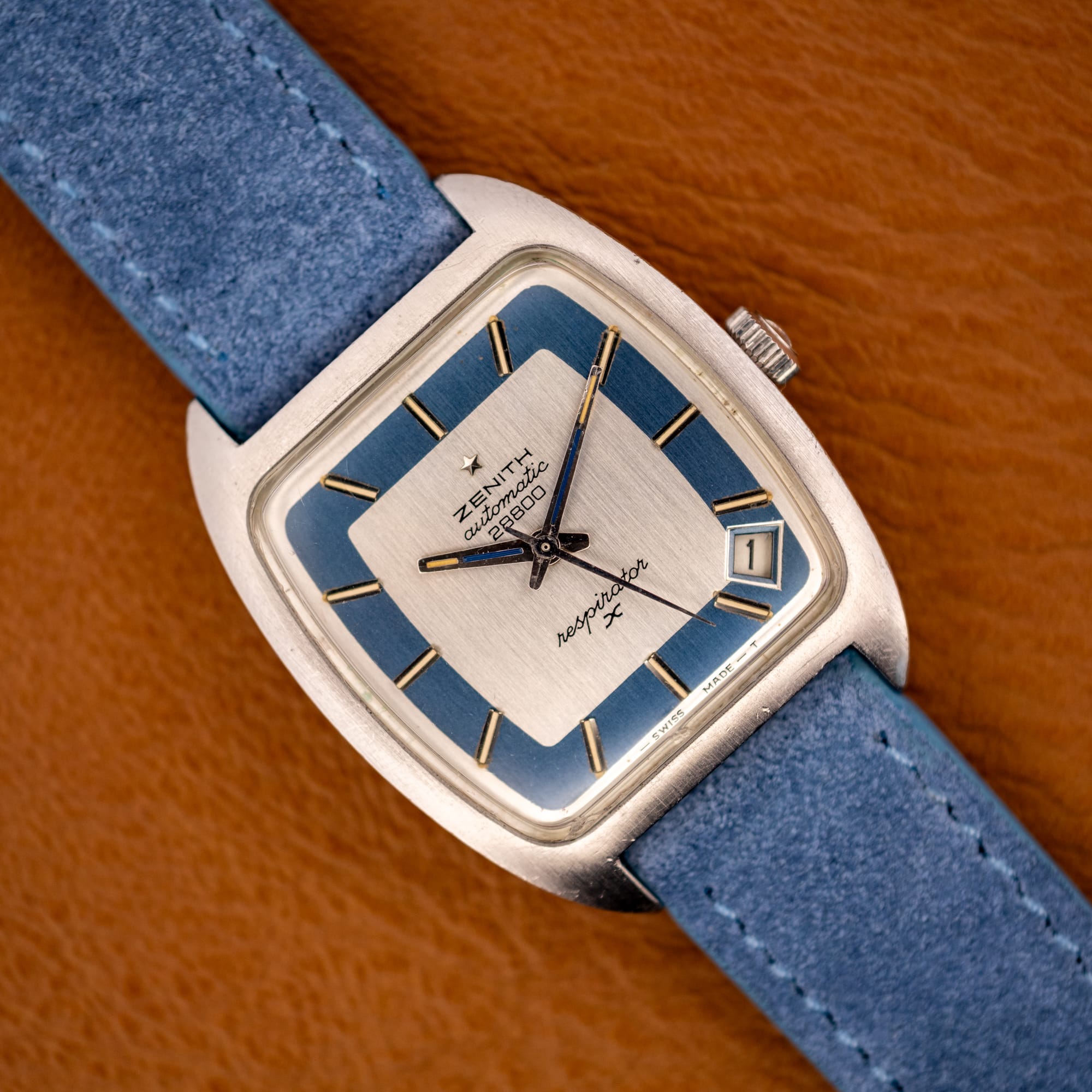
The catch is completeness. Watches like this often used proprietary bracelets and shaped crystals, so a missing original part is harder to fix than on a round watch that takes any leather strap. When you shop this style, an intact, complete example is worth stretching for.
electronic and tuning-fork watches
Here is a style most collectors skip because they misfile it. These are not quartz watches. Tuning-fork movements are an earlier electronic technology, and the wearing experience is unlike anything mechanical: the movement hums instead of ticks, and the seconds hand appears to sweep smoothly around the dial.
A watch we handled, the Omega Electronic F-300 Hz ref. 1980045, is the style with credentials. Early to mid-1970s, a chronometer-rated tuning-fork caliber 1260 running at 300 Hz, a champagne day-date dial, and a gold-plated bezel. Hold it to your ear and it hums.
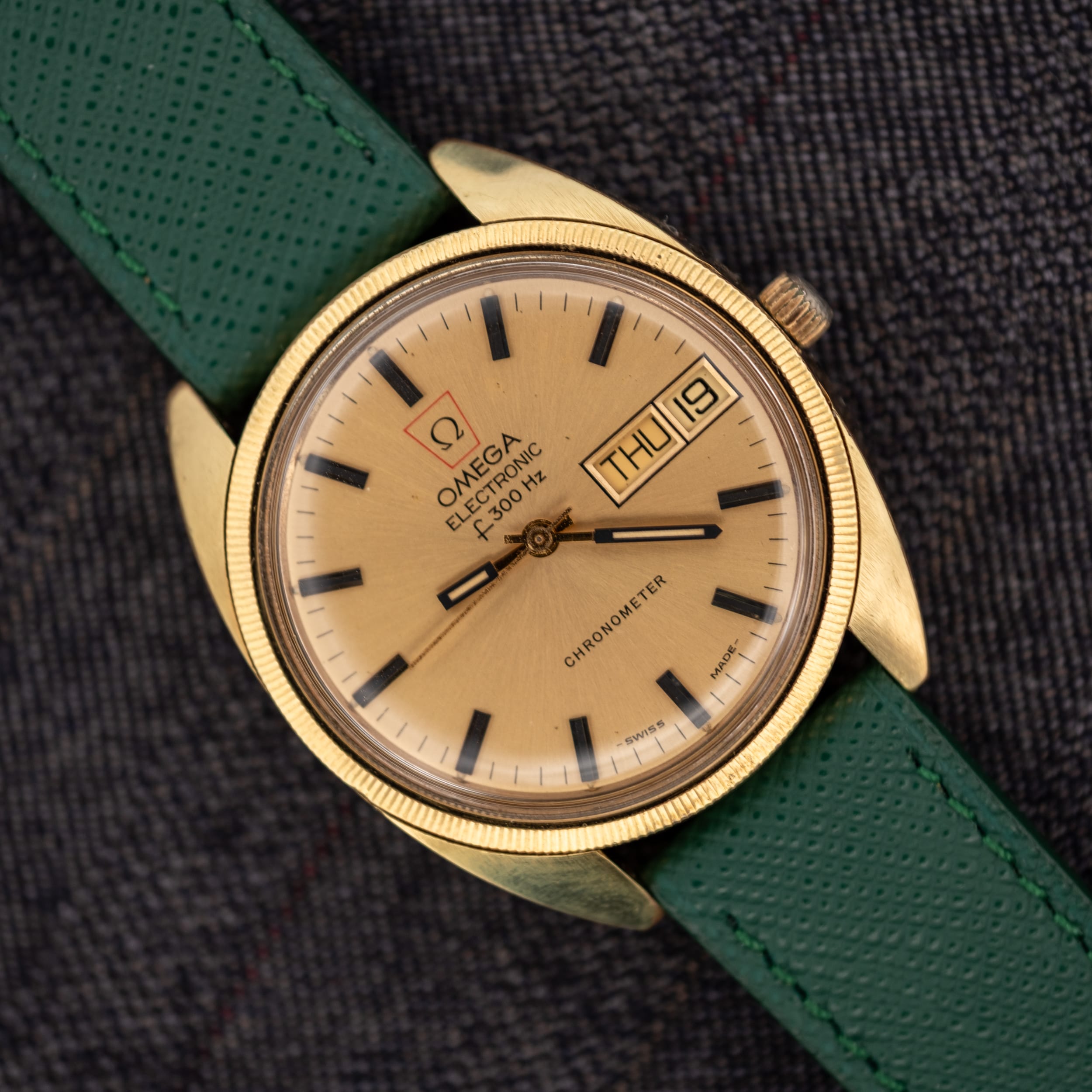
The catch for vintage electronic watches is the bench, not the wrist. Servicing takes a specialist with the correct electronic parts, and mechanical familiarity does not transfer. Before buying, confirm the watch runs properly and ask who has serviced it, because your local watchmaker may decline the job.
cocktail and art watches
The last style drops the practicality argument entirely. Vintage cocktail watches and art watches exist to be looked at, and collecting them is led by visual oddity and motion rather than brand hierarchy or specifications. That is not a weakness. Some of the most personal collections we have seen are built this way.
An example from our archive, the Ernest Borel Cocktail Kaleidoscope, makes the case in one glance. Ernest Borel filed the design’s British patent application in 1953: rotating patterned discs turn the dial into a moving kaleidoscope, with red triangular indicators marking the time, all in a gold-plated case around a manual-wind Swiss movement.

The catch: with a watch bought for its look, condition and originality carry much of the appeal. There is no spec sheet to fall back on, so a worn dial or a replaced part can change the whole reason for buying it.
choosing a first vintage watch
For a first vintage watch, we point most people at an everyday mid-century automatic or a field watch. Both are legible, versatile, and usually built around simpler movements and easy-to-wear designs. A dress watch is a close third if your week calls for one.
Two styles make poor first choices. Chronographs, because service costs and part-swapping risks punish an untrained eye. And electronic watches, because specialist servicing is a lot to take on before you know a good watch from a tired one. Come back to both later; they reward experience.
Whatever you choose, buy condition over style points. Our first vintage watch buying guide covers the inspection habits, and the best vintage watches under $1,000 shows how far a modest budget goes.
choosing the next watch from the one you own
The second watch is where collections either gain a shape or turn into a drawer of near-duplicates. Our rule from watching buyers do both: choose contrast. Buy the watch that covers a day your current watch does not.
If you own a modern diver or sports watch, go the other direction entirely. A dress watch or a rectangular piece will change how you dress around it, and it will make you appreciate both watches more.
If you own one safe, round, steel vintage automatic, you have earned some risk. A chronograph adds mechanical theater. A bold 1970s shape adds design. Either one moves you from owning a vintage watch to collecting them.
If you own a dress watch, add the casual half of your life: a field watch or a vintage diver, worn on land.
If you own several round watches already, stop buying circles. A rectangular deco piece, a tonneau, or a cocktail watch will do more for the collection than a fourth round dial, however good it is.
where this goes next
There is no objectively best style, but there is a best style for the gap in your rotation, and by now you can probably name it. Read the guide for that category, learn its particular catches, and then look at real examples until one refuses to leave your head. When you are ready, browse the shop to compare watches we have already inspected and photographed.
Related posts
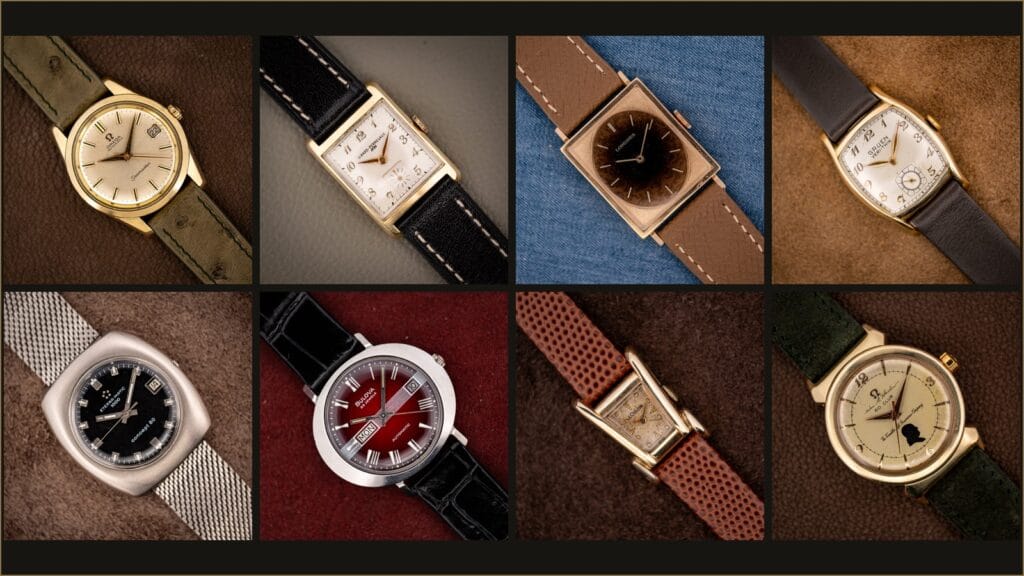
Watch Shapes: Which Vintage Case Shape Fits Your Style?
Case shape changes how a vintage watch wears more than diameter alone. Compare eight silhouettes and learn which one fits your wrist and style.
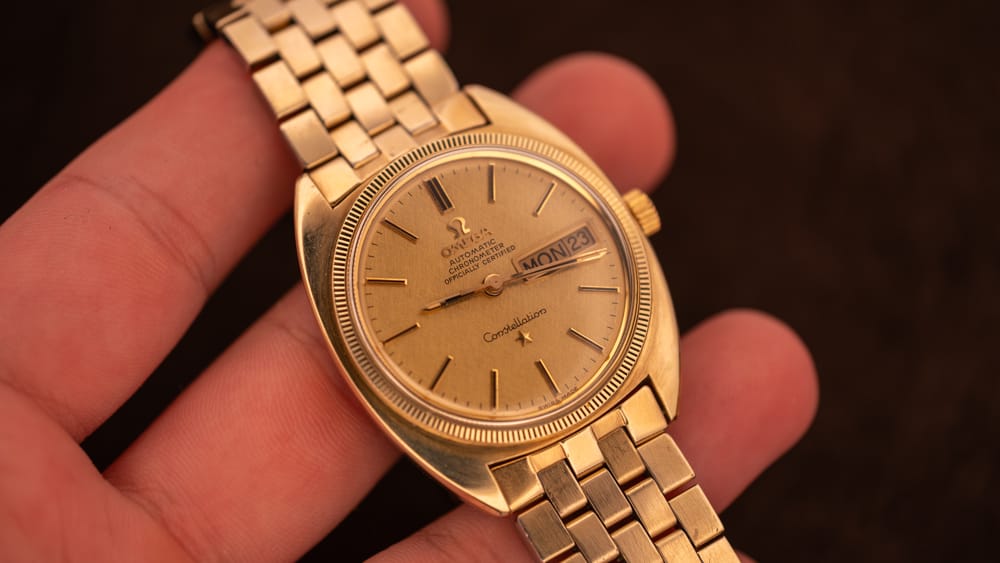
Vintage Dress Watches: How to Choose One You’ll Actually Wear
The best vintage dress watch is the one you will wear beyond weddings. Here is how to choose the right size, metal, dial, shape, and strap.
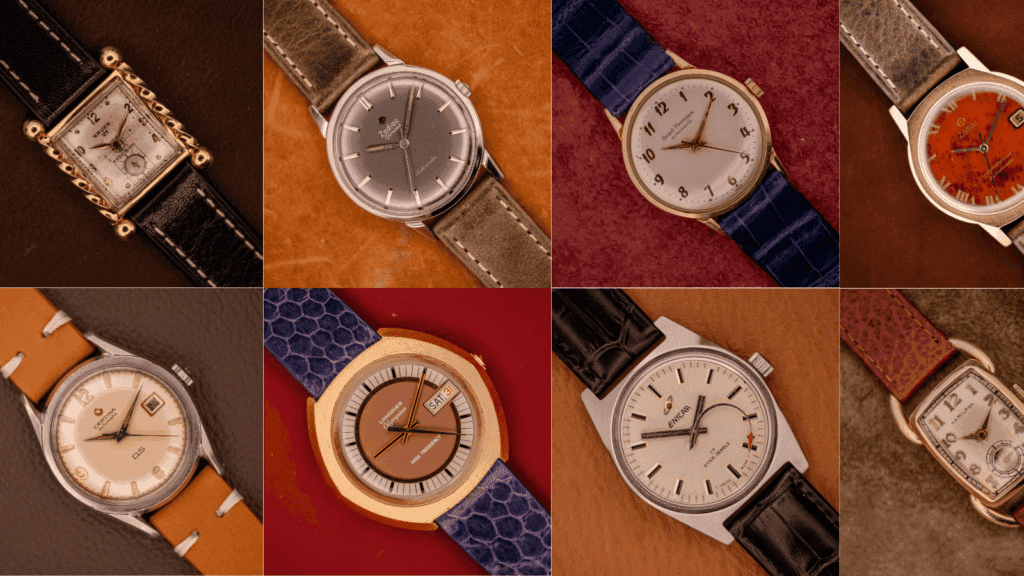
Vintage Watch Styles: A Visual Guide to Finding Yours
Most buyers pick a brand and stall. Here are nine vintage watch styles, shown with real watches from our archive, and the catch that comes with each one.
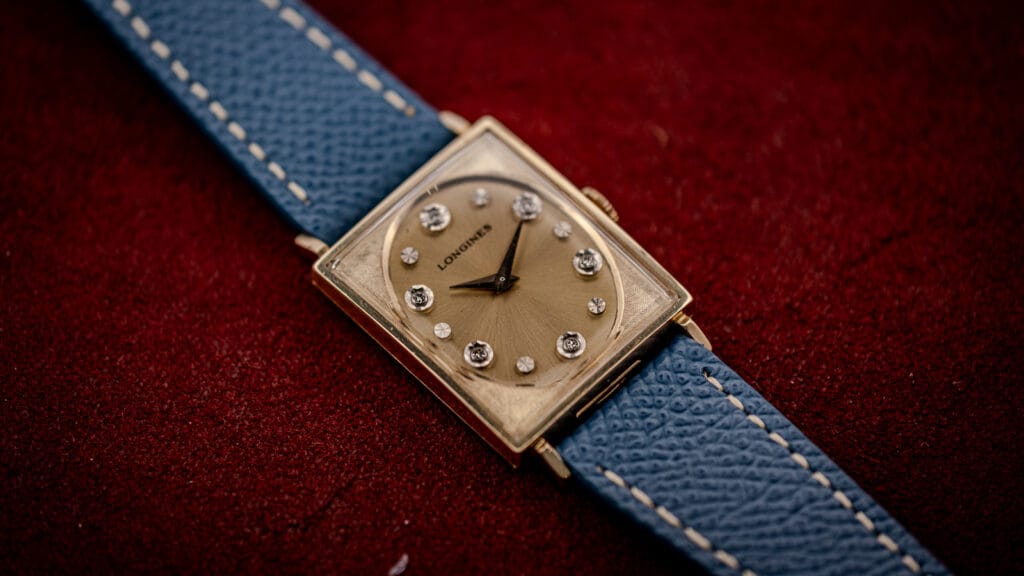
Vintage Tank Watches: A Buyer’s Guide to Rectangular Watches Beyond Cartier
Every Cartier Tank alternatives list is new watches imitating old ones. The originals still exist and cost less. A buyer's guide to vintage tank and rectangular watches: the brands, the prices, and what to check.
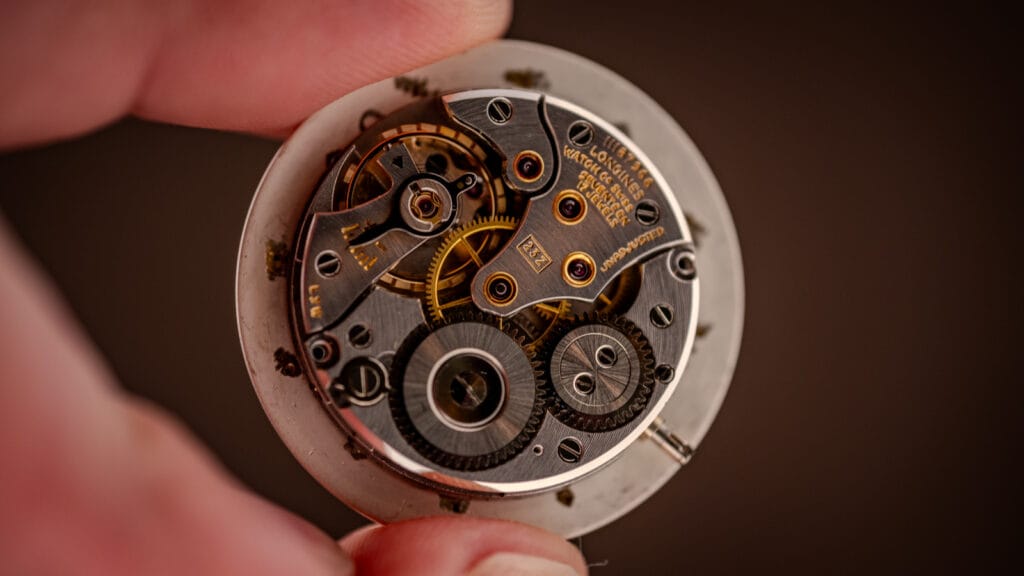
Service History Is the Wrong Question. Here’s the Right One.
Everyone says to ask for a vintage watch's service history. Most of it can't be verified, and a receipt proves a transaction, not a result. Here's what actually tells you a watch has been serviced, and the better question to ask.
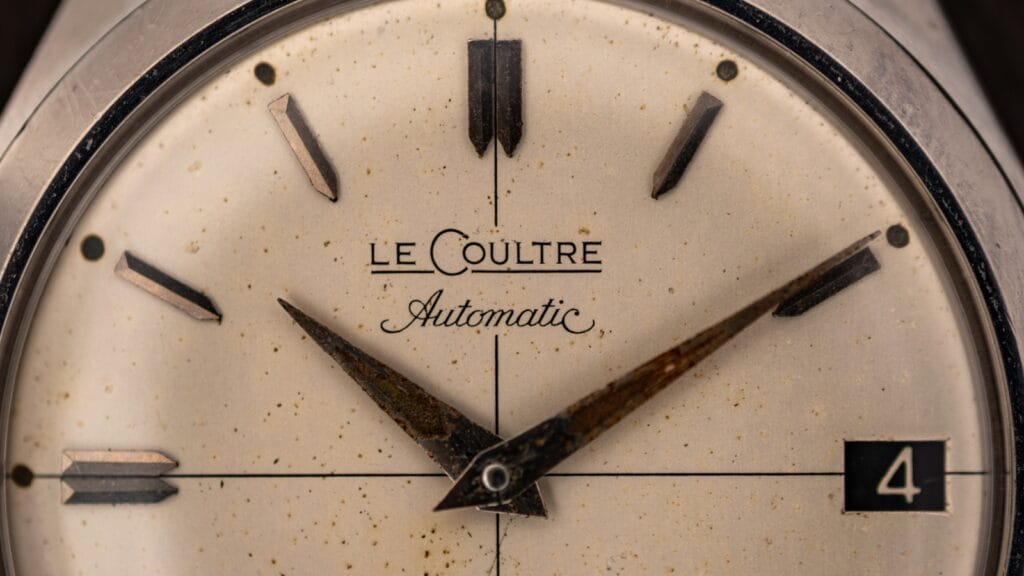
LeCoultre vs. Jaeger-LeCoultre vs. Jaeger: What the Name on the Dial Means
Three names, one Swiss firm, and one watch that isn't what it looks like. What LeCoultre, Jaeger-LeCoultre, and plain Jaeger on a vintage dial really tell you.
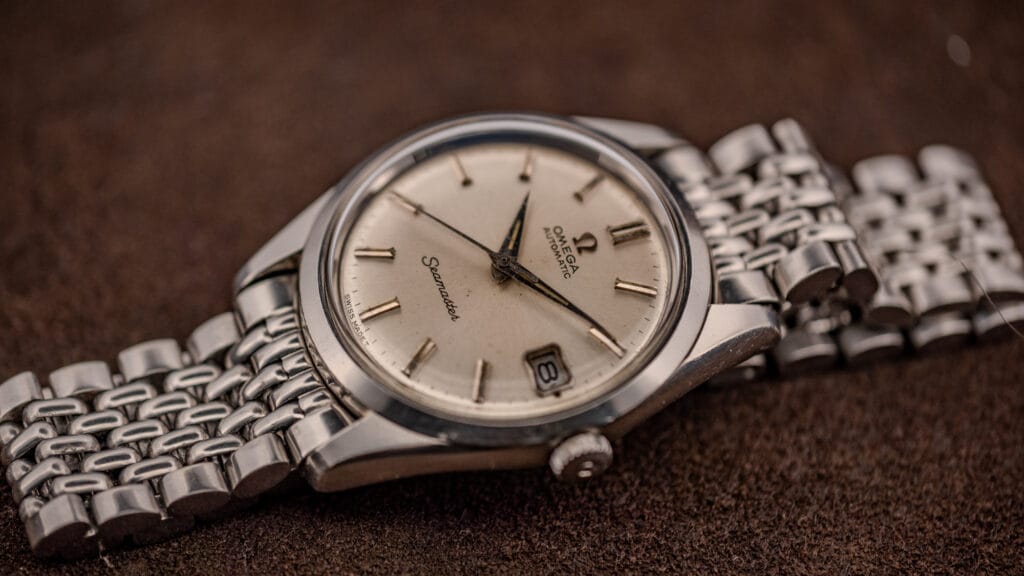
Omega Seamaster 166.010 Buyer’s Guide: Prices, Variants, and What to Look For (2026)
Everything you need to buy an Omega Seamaster 166.010 in 2026: real market prices by condition tier, five dial variants explained, caliber 562 vs 565, original part numbers, and what to inspect before you commit.
Omega vs Rolex: The Vintage Buyer’s Verdict
Vintage Omega vs vintage Rolex: where the Rolex premium is worth paying, where Omega is the smarter buy, and how to dodge redials on both. A collector's verdict.
Movado Kingmatic: A Vintage Buyer’s Guide to References, Calibers, and Value
The Movado Kingmatic is one of the best values in vintage automatics. A buyer's guide to its references, in-house calibers, the Sub-Sea line, what to check, and what they actually sell for.
13 Vintage Watch Collecting Tips for Beginners (From 1,000+ Watches Sold)
Thirteen vintage watch collecting tips drawn from selling over 1,000 watches. What separates a smart first buy from an expensive lesson, with no sugar.
Vintage Wittnauer Chronograph Caliber Identification: Venus 188, Valjoux 7733/7734, Landeron 248
How to identify the movement inside any vintage Wittnauer chronograph: Venus 188, Valjoux 7733 and 7734, Landeron 248, and the house numbering system Wittnauer used to mark them.
How Water-Resistant Is a Vintage Watch, Actually? The Honest Answer.
Every dealer says never get a vintage watch wet. That advice is half-engineering and half-liability theater. Here is what is actually true about vintage water resistance, where water actually gets in, and when a 1965 diver is safer than a 2-year-old modern.