

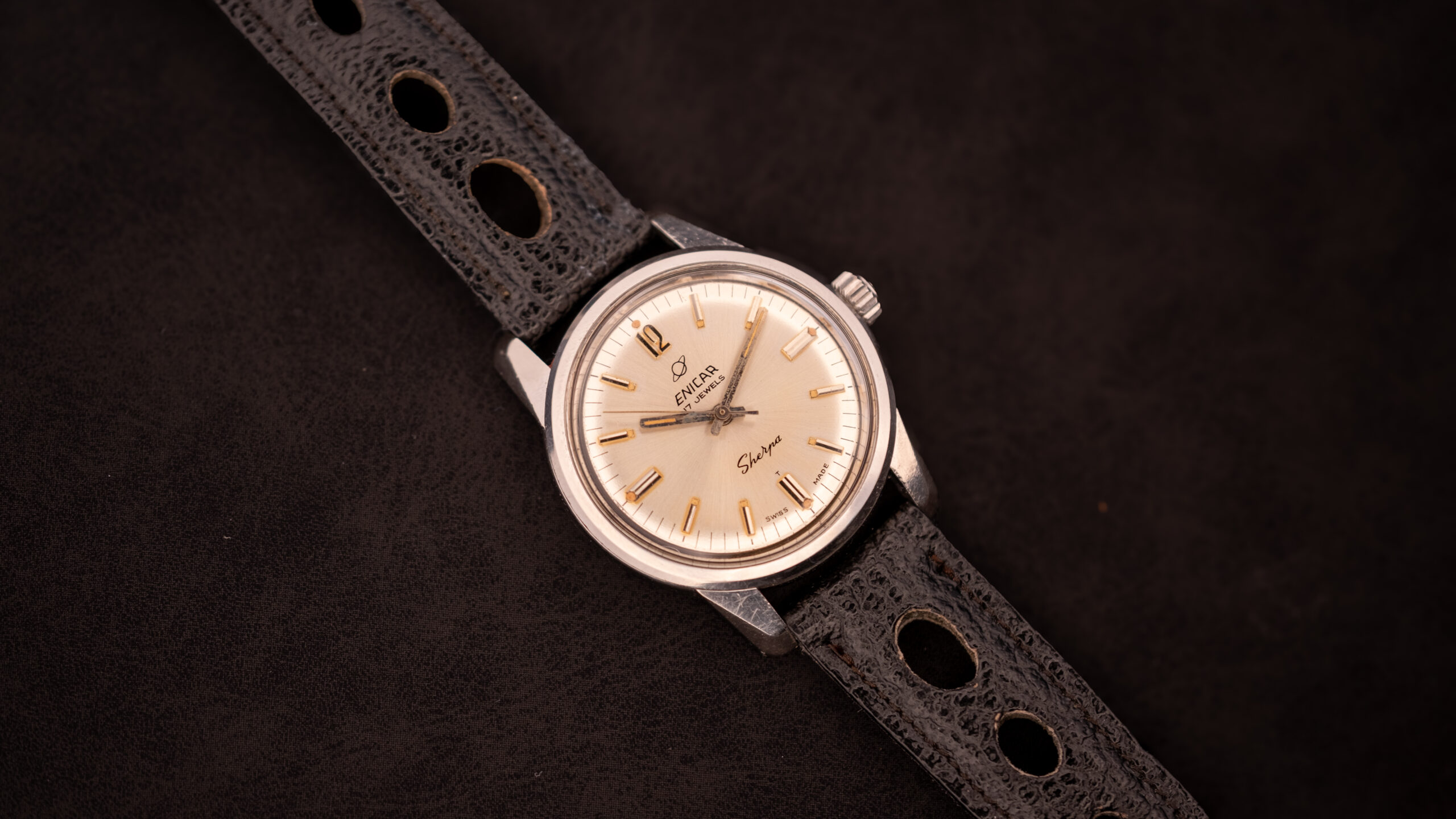
Every vintage watch dealer on the internet, ours included until I sat down to write this, will tell you the same thing. Do not get your vintage watch wet. Take it off before you shower. Definitely do not swim with it. If you do swim with it, that is on you.
The advice is not wrong, exactly. It is also not the whole story. And the part that nobody admits is that most of the reason it gets repeated is not engineering. It is liability. Nobody wants to be the dealer who signs off on “yes, swim with your 1965 Seamaster” and then takes a $4,000 movement back six months later because a gasket they pressure-tested cracked. So everybody hedges. The watch you bought is “for collecting, not for wearing.” The crown is “a vintage crown, treat it gently.” The 200m number etched on the case back is “historical.” On and on.
Some of this is honest caution. A lot of it is a dealer protecting himself from a phone call he doesn’t want to have. The result is a market where buyers are taught to treat 50-year-old engineered objects as fragile when they were never designed to be, and where modern watches get a free pass on the same physics because their failures are absorbed by warranty.
This is the honest version. What “water resistant” actually means in 2026. Where water actually gets into a vintage watch. What independent watchmakers will say on the record when they are not selling you anything. And when a vintage piece you own is, in fact, safe to swim with.
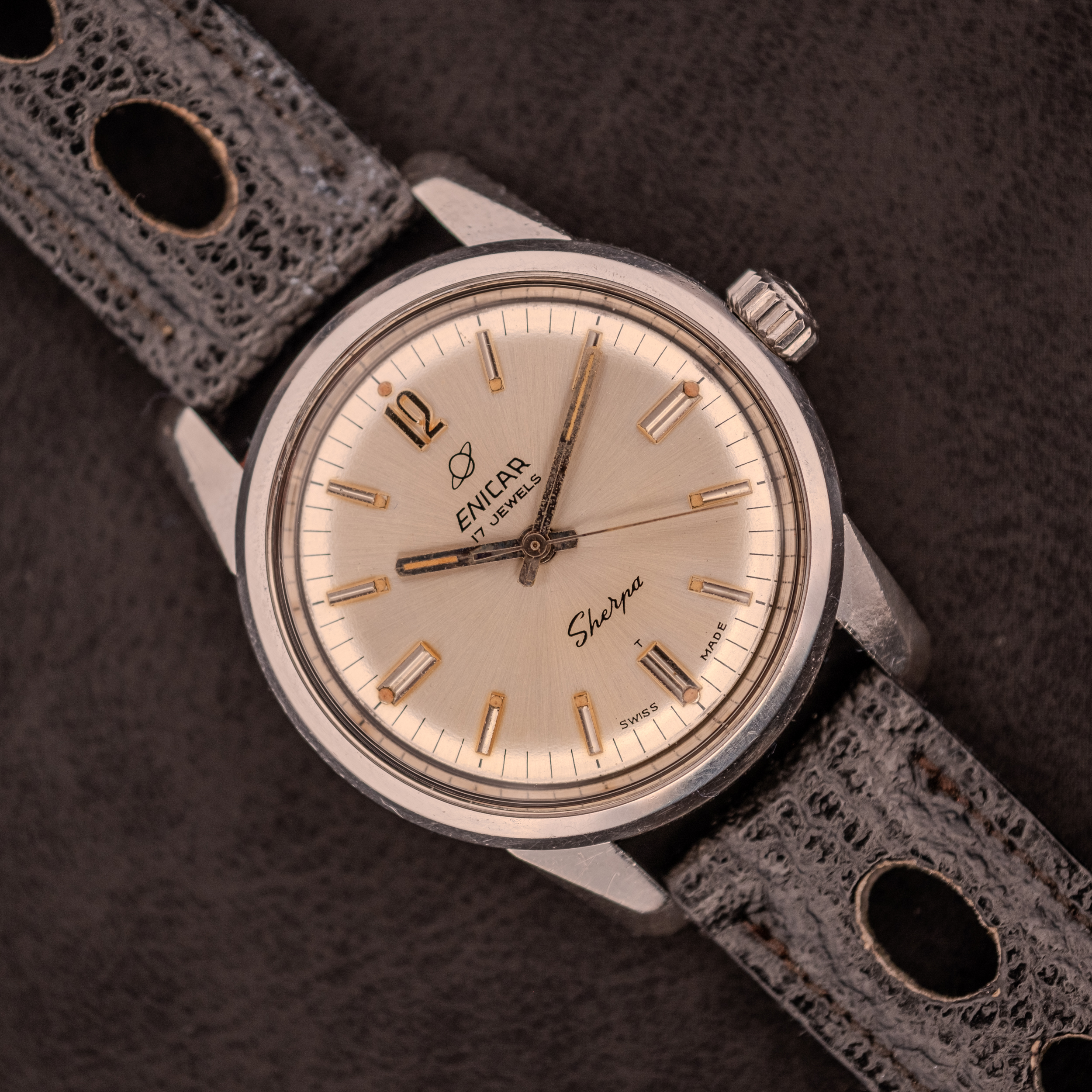
A vintage Enicar Sherpa Seapearl 600 Super Compressor: the case was engineered to seal tighter as water pressure increased. Reference 140/013 in our inventory.
What “water resistant” actually means now (and what it meant in 1965)
The current Swiss standard for a watch to be labeled “water resistant” is ISO 22810, in force since 2010. It requires the watch to withstand 2 bar of static pressure for ten minutes, plus an immersion test at 10cm depth for an hour with no moisture penetrating the case. For diving watches, a separate standard (ISO 6425 / NIHS 92-11) requires water resistance to 100m and a 25% safety margin on top of that.
These are real engineering specs. A watch passing them is genuinely water resistant. The catch is that water resistance is not a property the watch carries forever. From the Swiss financial paper NZZ, reporting on the industry’s overcaution problem:
“Water resistance is not a property that lasts forever. Seals, especially those made of rubber, show signs of aging over time: they can lose their elasticity, and the lubricant can evaporate. In addition, the seal of a crown is exposed to friction every time it is operated and therefore wears out. A watch that is water-resistant today may suddenly not be tomorrow.”
The piece is talking about all watches. Not vintage. All watches. A two-year-old modern Tudor and a 1968 Omega have the same physics happening to their gaskets. The rubber dries out. The lubricant migrates. The crown gasket abrades from use. The difference is that the two-year-old Tudor is still under warranty. The 1968 Omega is your problem.
There is also a long-running industry pattern of overstating water resistance to sell watches, which is now slowly being corrected. The same NZZ piece notes that Patek Philippe has begun stamping all its water-resistant models as “water-resistant to 30 meters” regardless of the watch’s actual capability. The Nautilus, which historically carried a 120m rating, now reads 30m. Patek’s own explanation, paraphrased: the 120m number dated back to a time when water resistance was a key selling point and got marketed harder than it needed to. Three bar is now adequate for everything most owners actually do.
That correction matters because it acknowledges, from one of the most conservative manufacturers in Switzerland, that historical water resistance ratings tended toward marketing rather than engineering. A 1970s diver rated to 200m was probably engineered to 200m. A 1970s dress watch with “100m” on the case was probably engineered to 30-50m with a marketing buffer. In other words: the vintage piece you own may have been built to a higher actual standard than the spec stamped on it. Or a lower one. Without testing, you do not know.
What is true: a vintage watch with intact case geometry, fresh gaskets, and a recent pressure test is water-resistant to its actual engineering rating. Not its marketing rating. Its actual rating. The age of the watch is not the variable. The age and condition of the seals is.
The defect-symmetry argument: modern watches leak too
Here is the part nobody wants to write up because it makes the entire industry look bad. A modern luxury watch that comes out of factory service can fail water resistance for the same reasons a vintage piece can. From WPB Watch Co., a service shop that posts publicly about its pressure-test fail rate on Rolex service:
“Many Rolex owners discover this truth the hard way. They wear their freshly serviced Submariner or GMT-Master into the pool, confident in the watch’s rated depth capability, only to find moisture under the crystal hours later. The problem wasn’t the watch itself or even necessarily poor service work. Often, it’s simply that no one verified the Rolex waterproof seal after reassembly.”
And:
“A single improperly seated gasket, a tiny piece of debris on a sealing surface, or inadequate lubrication can compromise water resistance completely, regardless of how expertly the actual repair was performed.”
A modern Submariner is not magically waterproof. It is mechanically waterproof when its gaskets are in spec, when they were seated correctly, and when nothing has worn out yet. None of these conditions are unique to modern watches. All of them are equally true for a vintage piece. The watch industry has trained buyers to think of modern water resistance as a built-in property and vintage water resistance as a degraded property, when in reality they are the same property in different stages of the same lifecycle.
The reason you do not hear about modern watches leaking is that when one does, the manufacturer fixes it under warranty and the conversation never reaches the forums. The reason you hear constantly about vintage watches leaking is that the owner pays the bill and posts pictures of the dial.
There is also a legal angle worth knowing. The NZZ piece quotes the Fédération Horlogère’s position on warranty claims:
“A manufacturer who describes a watch as water-resistant cannot claim in a warranty case that it recommended the customer take the watch off when swimming.”
That is the regulatory reality. The “we said don’t swim with it” defense is not legally available to a brand that stamped “water resistant” on the case back. Watch brands know this. The industry is moving toward simpler, more conservative ratings (Patek’s 30m blanket) specifically because the older overpromising created warranty exposure. None of that has anything to do with whether your vintage piece is mechanically capable of surviving a swim. It is about who carries the risk when a seal fails.
The crown is where water gets in
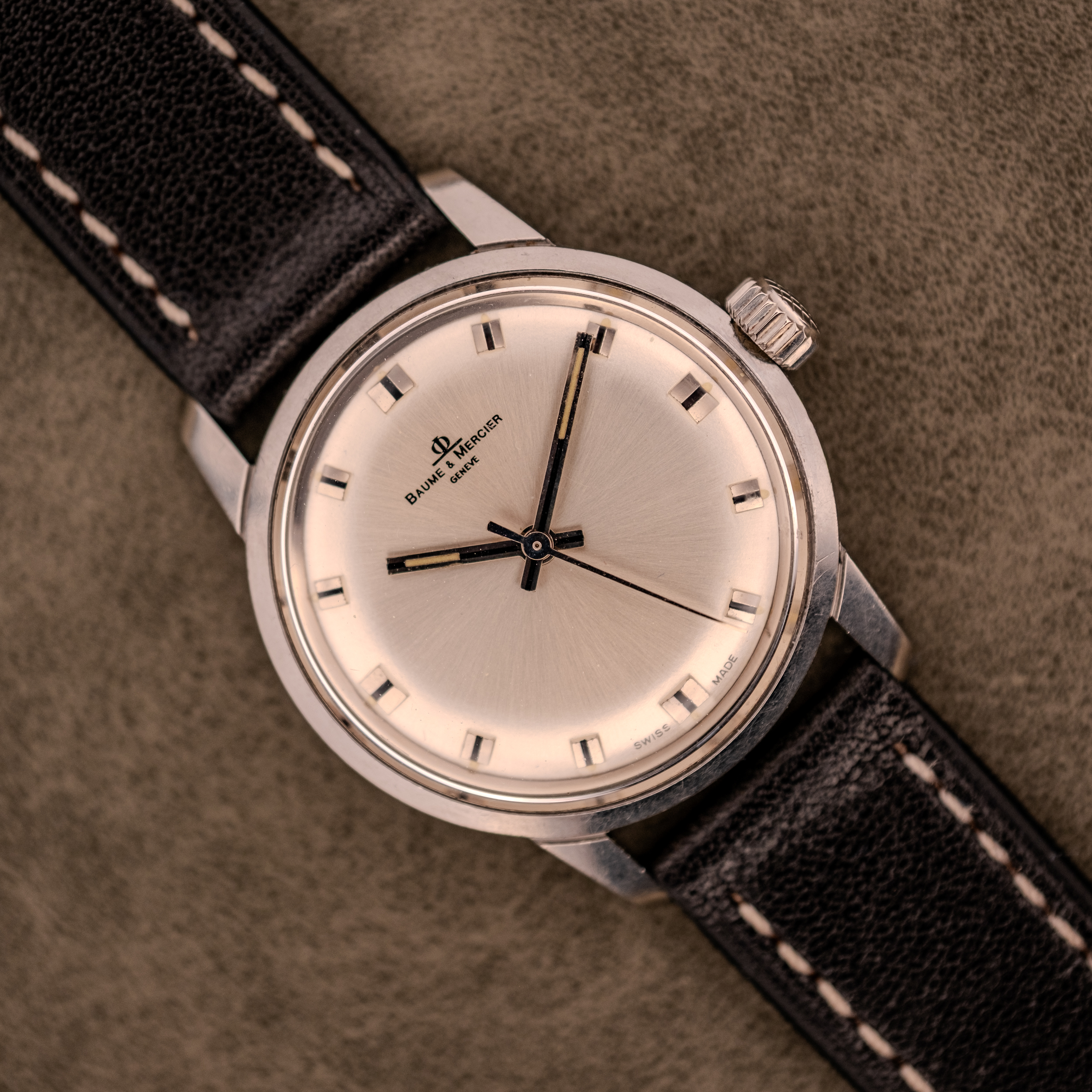
A 1967 Baume & Mercier Compressor (ref 1193), another Super Compressor case. The crown is the most-stressed seal on any watch, vintage or modern. Available in our shop.
After running OTTUHR’s authentication and resale operation for a while, you notice patterns. The clearest pattern with water damage on vintage pieces is this: it almost never enters through the case back, almost never through the crystal, and almost always through the crown.
The case back is the easiest seal to verify. A flat gasket compressed between two flat metal surfaces. When that fails, it is usually because someone serviced the watch without replacing the gasket, or because the case threads were stripped on a screw-down back. Both are obvious in inspection.
The crystal is the next easiest. Original armored tension-ring crystals on watches like the Omega Seamaster Cosmic, the early Seiko 6105, and most American gold-filled cases have a press-fit seal that holds for decades when not disturbed. They fail when a watchmaker replaces the crystal incorrectly, when the case has been heated for repair work, or when the case has been polished aggressively enough to round the crystal seat.
The crown is the failure point. This is not just my observation. Every published watchmaker writeup I have read agrees, and the engineering reasoning is the same: the crown is the only seal that you operate. You pull it out to set the time. You unscrew it on a screw-down. You wind it. Every one of those actions stresses the crown gasket. The crown tube can corrode where it threads into the case. The stem can wear the tube from the inside as it slides in and out. From WPB Watch Co.:
“Rolex screw-down crowns feature multiple sealing points that must all function correctly. Work involving the crown tube, stem, or winding mechanism can compromise these areas even with perfect case back seals.”
That is on a Rolex. Now imagine the same architecture on a 1968 Heuer that has had its crown unscrewed and pulled out and pushed back in roughly twelve thousand times. The crown gasket on most vintage pieces is a single rubber O-ring 1.5 to 2mm in diameter that sits between the crown and the tube. When it dries out, hardens, cracks, or just gets pushed out of position, water gets in through the path of least resistance: along the stem.
The honest part: I have seen vintage watches where this damage stayed local to the crown area, never reached the movement, and dried out cleanly after a watchmaker pulled the stem and let the case sit open. I have also seen watches where the same kind of crown leak migrated to the dial, oxidized the hands, and shot through into the movement. The variable is not the age of the watch. The variables are how quickly the owner noticed, how dry the watch got after they noticed, and whether the watch has unprotected ferrous components inside (the hands, sometimes the date wheel) that rust on contact with even small amounts of moisture.
This is also the part to be honest about not knowing. There is no clean rule for which leaks spread and which do not. A watch that sat in a warm room with the case still sealed for a week after a leak almost always has damage that has spread, because the trapped moisture cycles through condensation as the temperature changes. A watch that was opened and dried within 24 hours usually does not. After that, it gets variable, and the watchmakers I respect will tell you the same: get the case open, get the moisture out, and you have a real shot. Sit on it, and you are gambling.
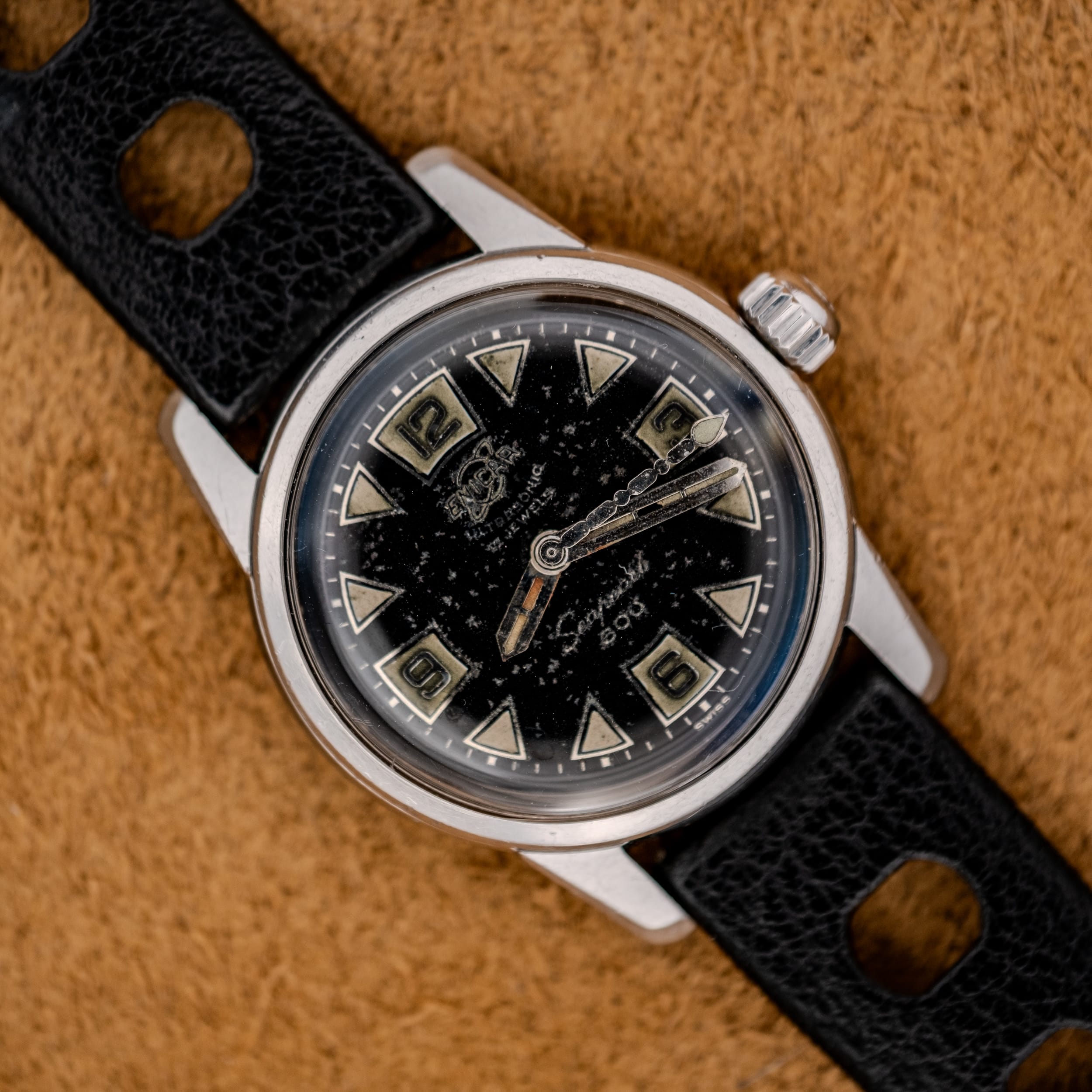
A 1967 Enicar Seapearl 600 Sherpa: a 200m-rated vintage diver that, with intact gaskets and a current pressure test, performs to its original engineering spec. Listing here.
What independent watchmakers actually say (when they are not selling you anything)
The strongest counter to the “vintage is fragile” narrative comes from the people who fix vintage watches for a living and have no financial reason to oversell or underclaim. On the Omega and WatchUSeek forums, Al Archer (forum handle “Archer”) is an Omega-qualified watchmaker with thousands of posts going back to 2009. He is asked about vintage water resistance approximately once a month. His answer, repeated in different words across multiple threads:
“It’s mostly because people have a difficult time separating their own feelings and fears, from what the watch is actually capable of. I restore vintage watches to their original water resistance standards all the time. If the sealing surfaces are in good condition (no pitting or damage), and the seals are in good condition, then there’s no reason a vintage watch of any kind cannot be brought back to it’s original rating.”
And on the specifics of testing:
“A watch passing to 30m using a pressure test is fine, but will it pass a vacuum test? That to me is the most difficult test to get these old watches to pass. Watch testing is a funny thing. Pressure on the outside of the watch can actually help it seal by compressing the parts more, so the vacuum test can be a telling test to do on a watch… In vintage watch like the type being discussed here, the vacuum test is a more useful test. The reason why is that most people are not going to take their watch to 30m depth, but they will get splashes on it while washing their hands.”
That is the engineering case for vintage water resistance, stated by someone who works on these watches every week. A vintage piece restored to original specifications with fresh gaskets is, in fact, water resistant to its original rating. The vacuum test (sometimes called the dry test) catches the failures the pressure test misses, because pressure can artificially seal a marginal gasket while a vacuum will expose it. A watch that passes both is genuinely fine in water.
The forum testimony from collectors who actually wear vintage in water tells the same story, with consistent caveats. From HilltopMichael on WatchUSeek, asked whether he swims with his vintage pieces:
“Other than my father’s 1950’s Seamaster which hasn’t been serviced in decades and is much too small for me to wear, I would and have worn most of my watches in the water. I do pressure test them and have had some serviced over the years, so I wouldn’t hesitate to get them wet. Most any watch I own should be able to be serviced for as long as I’m around. Watches are meant to be worn, not hidden in a drawer or safe deposit box.”
The pattern is consistent. Watchmakers and collectors who own pressure-test equipment and use it on their own pieces wear their vintage watches in water and do not have problems. People who do not test their own watches, or who buy from sources that say “vintage condition, no warranty,” do.
The pressure test that isn’t actually a pressure test
A pressure test is not a single procedure. It is two procedures and a quality check, and a watchmaker who skips parts of it is not actually testing your watch. The full version:
- Vacuum test (dry). The watch is placed in a sealed chamber that draws air out. If the case is not sealed, air escapes from inside the watch and is detected as a pressure differential. No water involved. This catches marginal seals that a pure pressure test cannot.
- Pressure test (wet). The watch is submerged in a sealed chamber and pressurized to a target depth equivalent (e.g. 3 bar for 30m, 10 bar for 100m). Bubbles indicate ingress. The pressure is held for several minutes, not seconds, because slow seal failures only show up under sustained pressure.
- Condensation test (warm-then-cool). The watch is gently warmed to about 45°C, then a drop of cool water is placed on the crystal. Any internal moisture immediately fogs the crystal from inside. This is the final check that the case actually still holds zero moisture after the first two tests.
Most cheap “pressure tests” you see advertised at jewelry stores or some auction houses are step 2 only, often performed without changing any seals first. That is worse than not testing. A watch that fails a pressure test without fresh seals can have water forced into the case by the test itself. From David Boettcher at VintageWatchStraps, recounting his own experience with a “specialist” jeweler:
“They didn’t change the case seals before testing the watch for water resistance, which it naturally failed and they noted on the invoice. But in the process water had got into the case and that evening I saw droplets of water condensing inside the glass. Even though I immediately took the back off and pulled the movement out, the dial, hands and movement were all ruined.”
That is the failure mode that drives the entire “never get a vintage wet” industry consensus. Not the vintage. The pressure-tested-with-old-seals. A real pressure test starts with new gaskets and ends with the condensation check. Anything else is theater that can damage your watch worse than swimming with it would have.
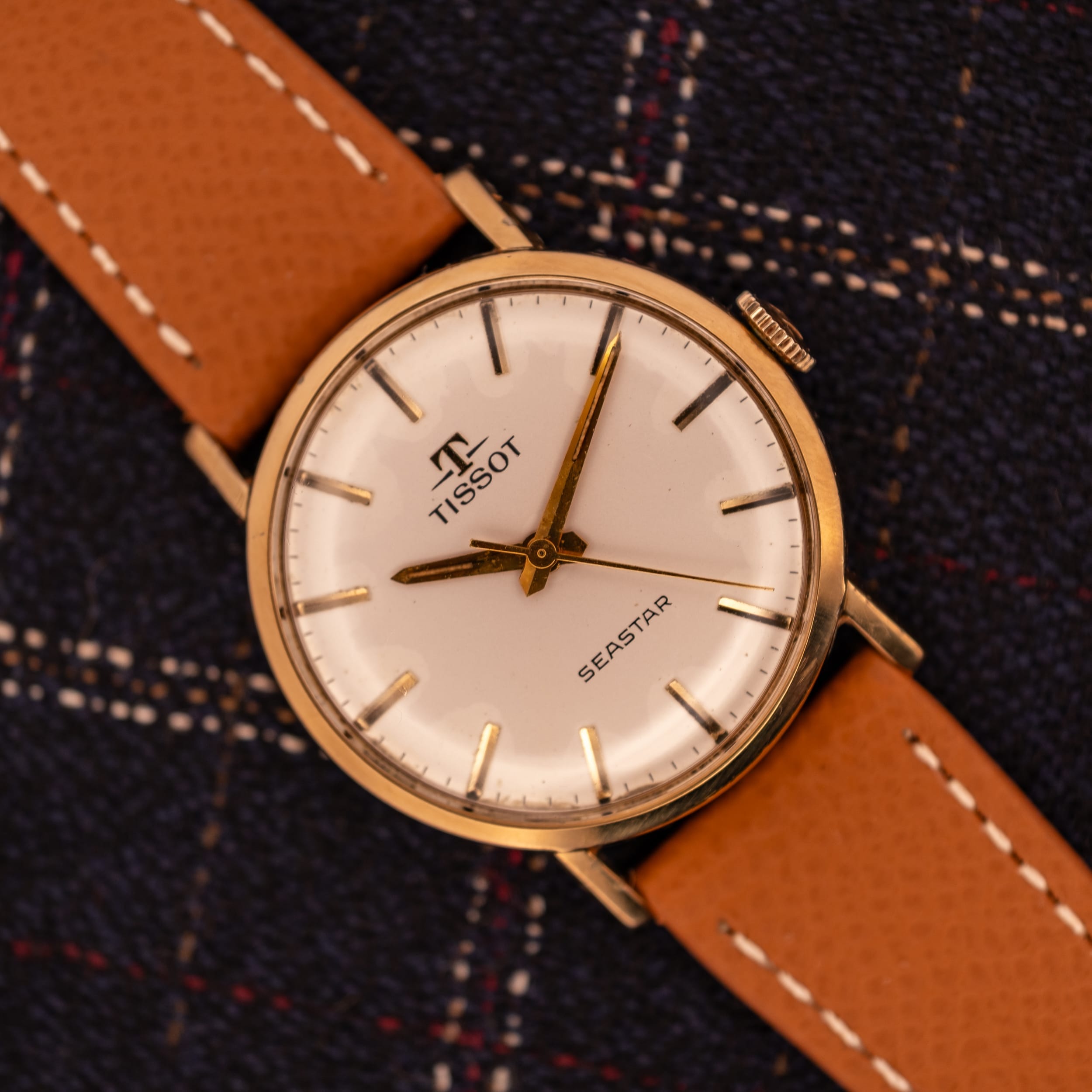
A vintage Tissot Seastar (ref TR 3802): an honest mid-tier Swiss diver, the kind of watch most people are actually asking “can I swim with it.” In inventory now.
The honest decision tree
When a vintage piece IS safe to wear in water:
- The watch has had a recent service (within roughly two years) by a competent watchmaker, not a jewelry store.
- New gaskets were installed at that service. Not “inspected.” Replaced.
- The watch passed both a vacuum test and a wet pressure test at its rated depth, with documentation. Pressure-test stamps from auction houses without service records do not count.
- The crown screws down without binding, the case back is unscratched on its sealing surface, the crystal is original or correctly seated.
- No visible pitting on the case at any sealing surface (around the case back rim, around the crown tube, around the crystal seat).
When it is NOT safe:
- Unknown service history. Buying from a private seller who says “ran when I last wore it” is buying an untested watch. Treat it as not water resistant until proven otherwise.
- The crown feels gritty, loose, or pops out under light pressure when screwed down.
- Any condensation or fog visible inside the crystal, even briefly, even after the watch dries out. This means the seal has already failed and the moisture cycle is happening.
- Visible pitting or discoloration around any sealing surface. This is corrosion in progress and a sign the case material is no longer flat where it needs to be.
The middle ground: a watch you have pressure-tested but for which you do not have a long service history. This is most vintage watches in private collections. The honest position is that you can swim with it, but you should be willing to pay for a service if it fails. Treat it like a used car with a working warranty, not a new car under factory coverage.
What the dealer industry tends to do, ourselves historically included, is collapse all three categories into the “not safe” bucket because that is the safest position to take when you are not the one who serviced the watch. The reality is more granular.
What to do if it gets wet anyway
The single most important thing is speed. The variable that determines whether crown-area moisture stays local or spreads to the movement is how quickly you intervene. The protocol:
- Get the watch off your wrist and dry the outside. Towel, not heat. Heat creates condensation cycles that drive moisture into the movement.
- Open the case back if you have the tool, or get it open within 24 hours. Yes, this voids whatever warranty existed. The trade-off is movement-saving versus warranty-saving, and the movement is worth more than the warranty.
- Pull the stem out fully (set position) so the crown is unscrewed and air can flow. Do not just leave the crown screwed down.
- Dry environment, no heat. A sealed bag with silica desiccant for 48 hours works. The rice trick is folklore and the rice dust is worse than no rice. Use real desiccant if you can.
- Take it to a watchmaker within a week. Not the manufacturer. An independent who works on vintage. Tell them when it got wet and what you did. They will pull the dial and hands, dry the movement properly, and inspect for rust before it sets in.
The watches that get destroyed by water are the watches whose owners did not notice the leak for weeks, or noticed and kept wearing them, or sent them to the manufacturer and waited four months while the case sat sealed with trapped moisture inside. Speed is the whole game.
The honest closing
The real reason the “never get a vintage wet” advice persists is not that the engineering is wrong. It is that the accountability structure is different from modern watches. When a modern Submariner leaks under warranty, Rolex eats it and the buyer hears nothing. When a vintage Seamaster leaks, the buyer pays for it and posts the story.
That accountability gap is real and worth understanding. But it is not the same as saying vintage watches cannot survive water. It is saying that nobody but you is going to absorb the cost if your specific watch fails. That is a buyer-risk question, not an engineering question, and conflating the two is how an entire dealer industry trained an entire generation of collectors to treat their vintage pieces as more fragile than they actually are.
The watch does not care about its age. The gaskets care, and they care just as much in a watch from 2024 as in a watch from 1964. Service them, test them properly, replace them on a schedule, and a vintage diver is as honest a swim companion as anything in the case at your local AD. The window between “I just wore my grandfather’s Seamaster snorkeling for two weeks and it ran fine” and “the gasket failed in the third week and I lost the dial” is not a function of the year of manufacture. It is a function of the date of the last service.
That is the engineering truth. The liability is something else, and it is fair to be honest about which one is doing the talking when a dealer tells you not to get your vintage wet.
Frequently asked questions
Can you swim with a vintage watch?
Yes, if it has been recently serviced with fresh gaskets and has passed both a wet pressure test and a dry vacuum test at its rated depth. The age of the watch is not the variable. The age and condition of the seals are. A pressure-tested vintage piece with new gaskets is water-resistant to its original engineering rating. A vintage piece with unknown service history is not.
Where does water actually get into a vintage watch?
Almost always through the crown. The crown gasket is the only seal you operate. Every time you pull the crown to set the time or unscrew it on a screw-down, the gasket gets stressed. The crown tube can corrode where it threads into the case. The case back and crystal are much more reliable failure points. After running thousands of vintage pieces, the pattern is consistent: case back leaks are rare, crystal leaks are rare, crown leaks are the default.
Does the water resistance rating stamped on my vintage watch still apply?
Not without testing. Water resistance is not a permanent property. Rubber gaskets lose elasticity, lubricants evaporate, and the crown gasket wears every time you operate it. This is true of a watch from 2024 as much as a watch from 1964. A 1970s diver rated to 200m may have been engineered honestly to 200m, but you cannot know its current resistance without pressure testing. A vintage piece with fresh gaskets and a recent test is resistant to its original rating. Without that, treat the stamp as historical.
How do I know if my vintage watch is safe to wear in water?
Three conditions: it had a recent service (within roughly two years) by a competent watchmaker; new gaskets were installed at that service rather than just inspected; and it passed both a vacuum test (dry) and a wet pressure test at its rated depth, with documentation. Pressure-test stamps from auction houses without service records do not count. For the full framework, see our vintage watch identification and valuation guide.
Is it safe to shower with a vintage diver?
For a serviced vintage diver with fresh gaskets and a current pressure test, yes. The shower is a low-pressure environment well within a 100m-rated case’s capability. The case engineering is fine. The risk is not depth. The risk is that you do not actually know what condition the seals are in unless you tested them. For an untested vintage piece of unknown service history, no.
What should I do if my vintage watch gets wet?
Speed is the whole game. Get the watch off your wrist, dry the outside with a towel (no heat), and open the case back within 24 hours if you have the tool. Pull the stem out so the crown is unscrewed and air can flow. Put the open case in a sealed bag with silica desiccant for 48 hours. Take it to an independent watchmaker within a week. The variable that determines whether crown-area moisture stays local or spreads to the movement is how quickly you intervene.
Keep reading:
- How to Identify and Value a Vintage Watch: The Complete Guide. The broader framework for assessing any vintage piece, of which water resistance is one section.
- The Expert’s Guide to Buying Vintage Watches on eBay In 2026. What “ran when last worn” actually means and how to read a seller’s listing.
- Browse our pressure-tested vintage divers. Every watch we sell has been opened, serviced where needed, and tested to its rated depth before it leaves us.
Related posts

Watch Shapes: Which Vintage Case Shape Fits Your Style?
Case shape changes how a vintage watch wears more than diameter alone. Compare eight silhouettes and learn which one fits your wrist and style.
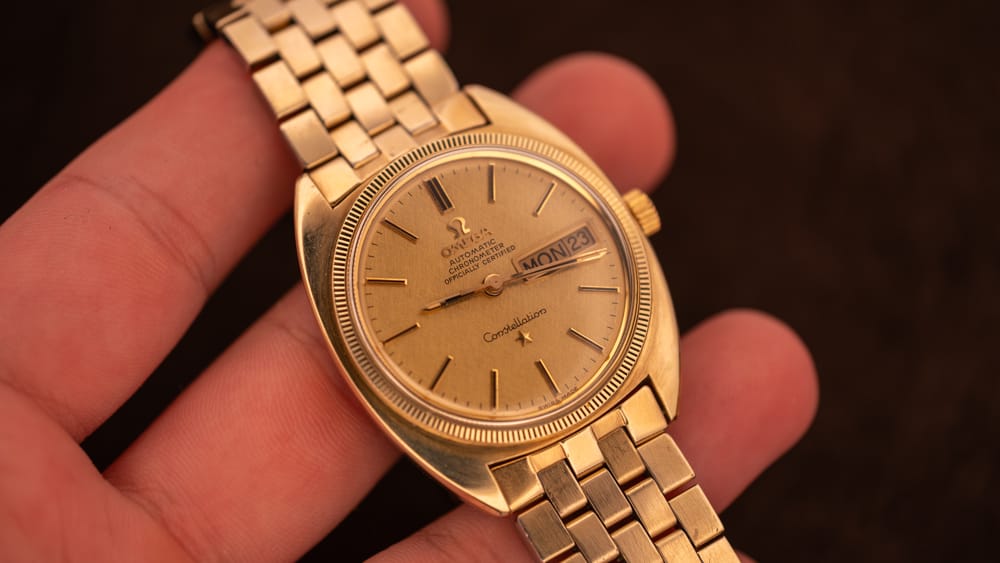
Vintage Dress Watches: How to Choose One You’ll Actually Wear
The best vintage dress watch is the one you will wear beyond weddings. Here is how to choose the right size, metal, dial, shape, and strap.

Vintage Watch Styles: A Visual Guide to Finding Yours
Most buyers pick a brand and stall. Here are nine vintage watch styles, shown with real watches from our archive, and the catch that comes with each one.
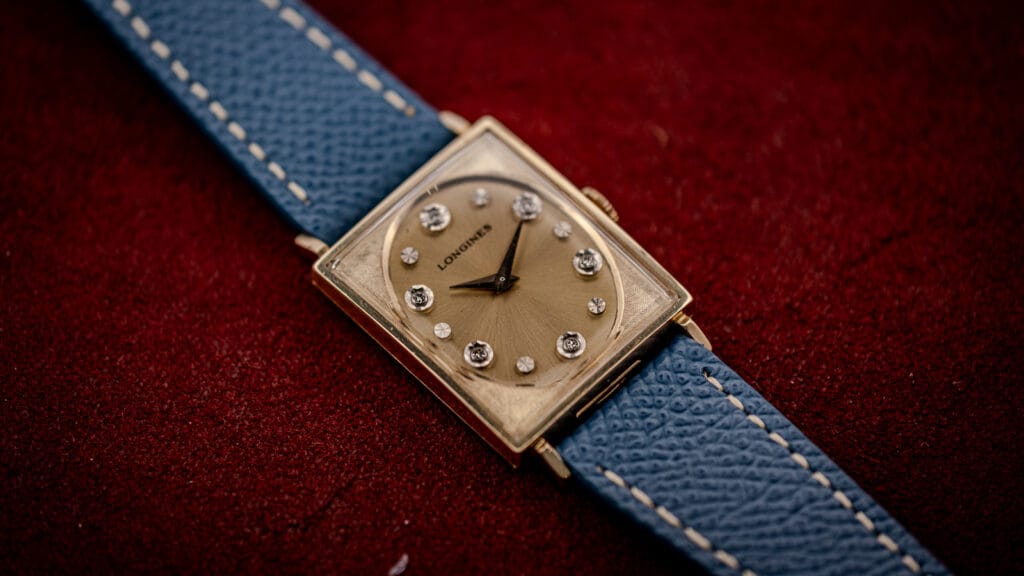
Vintage Tank Watches: A Buyer’s Guide to Rectangular Watches Beyond Cartier
Every Cartier Tank alternatives list is new watches imitating old ones. The originals still exist and cost less. A buyer's guide to vintage tank and rectangular watches: the brands, the prices, and what to check.
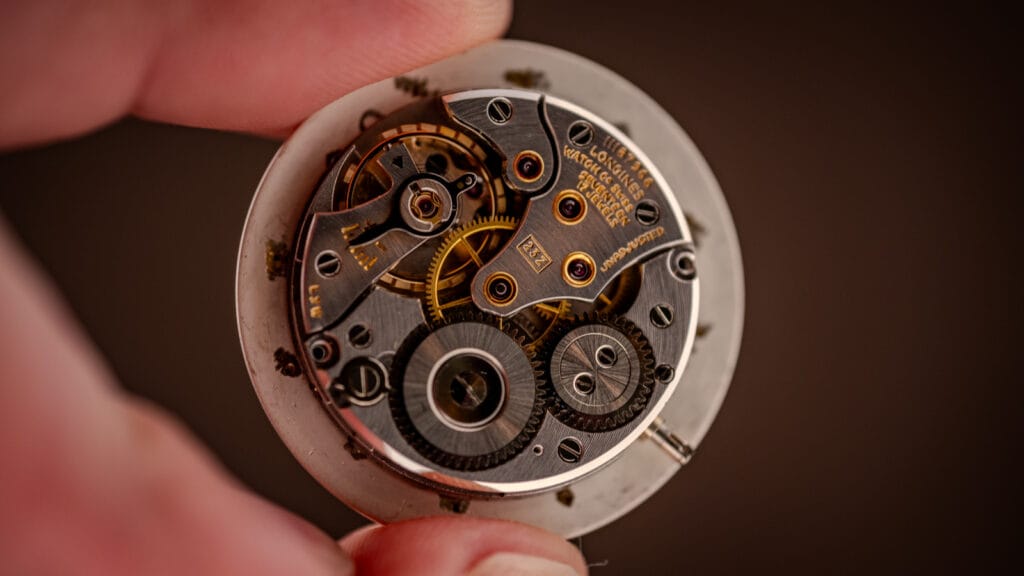
Service History Is the Wrong Question. Here’s the Right One.
Everyone says to ask for a vintage watch's service history. Most of it can't be verified, and a receipt proves a transaction, not a result. Here's what actually tells you a watch has been serviced, and the better question to ask.
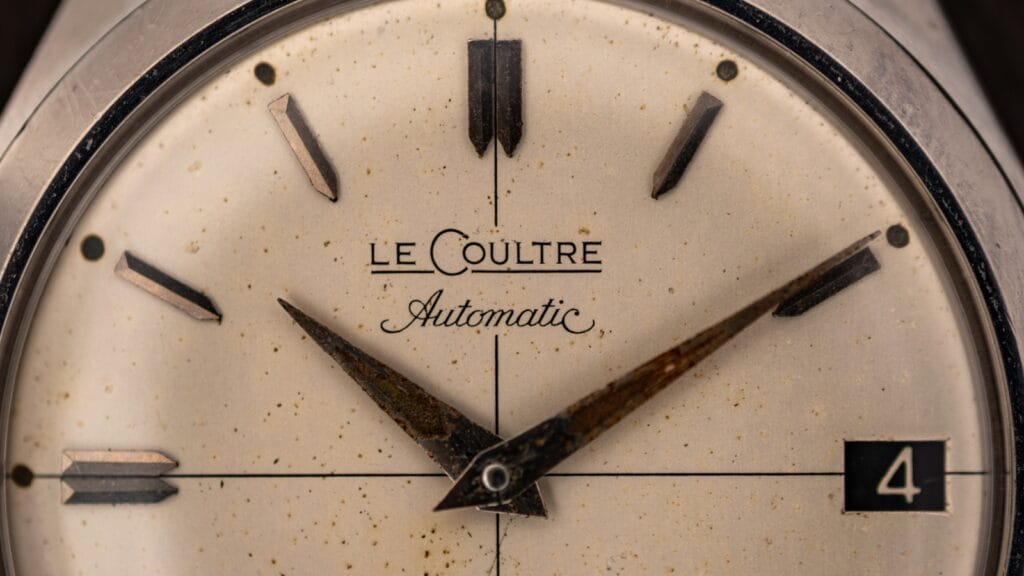
LeCoultre vs. Jaeger-LeCoultre vs. Jaeger: What the Name on the Dial Means
Three names, one Swiss firm, and one watch that isn't what it looks like. What LeCoultre, Jaeger-LeCoultre, and plain Jaeger on a vintage dial really tell you.
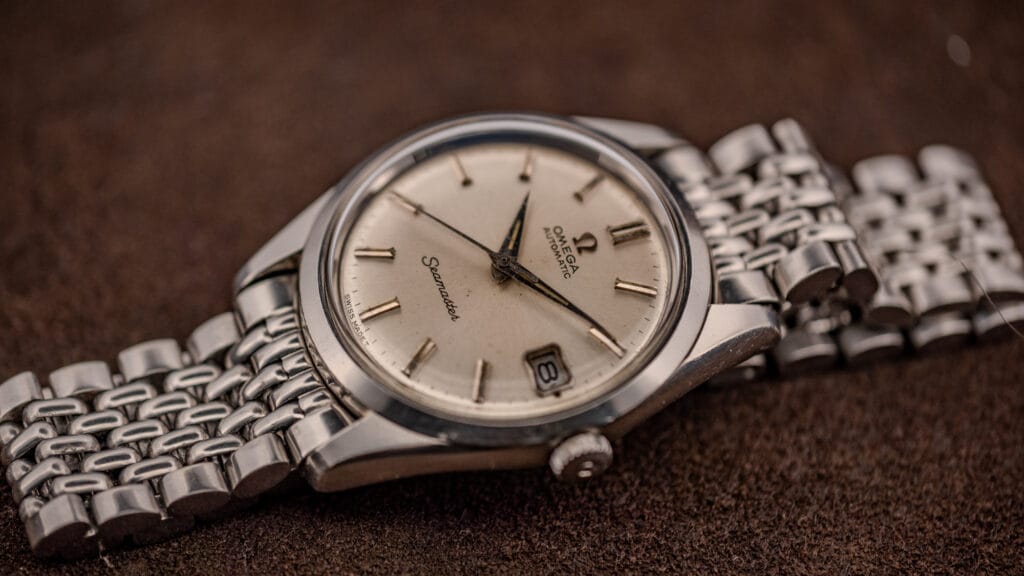
Omega Seamaster 166.010 Buyer’s Guide: Prices, Variants, and What to Look For (2026)
Everything you need to buy an Omega Seamaster 166.010 in 2026: real market prices by condition tier, five dial variants explained, caliber 562 vs 565, original part numbers, and what to inspect before you commit.
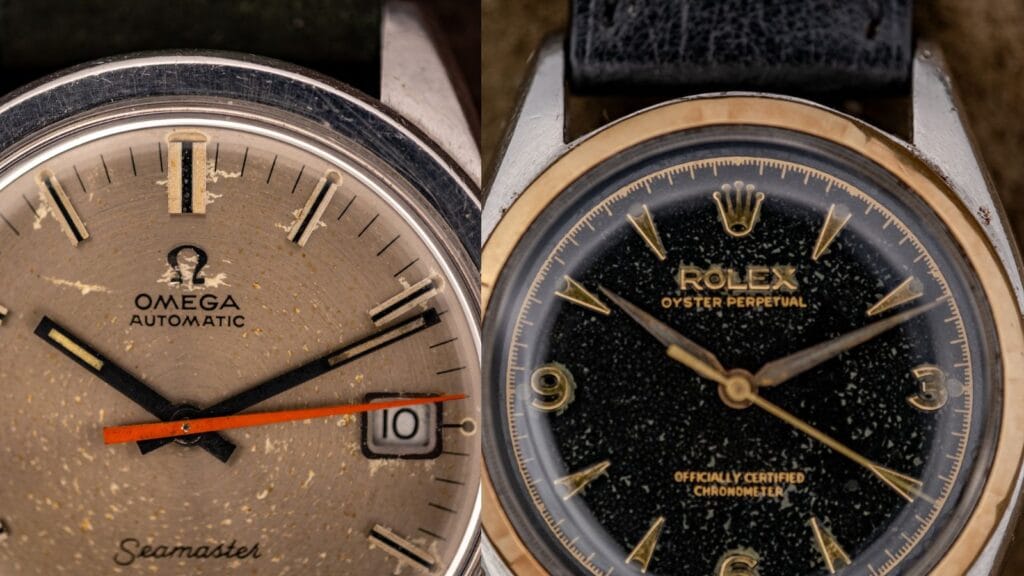
Omega vs Rolex: The Vintage Buyer’s Verdict
Vintage Omega vs vintage Rolex: where the Rolex premium is worth paying, where Omega is the smarter buy, and how to dodge redials on both. A collector's verdict.
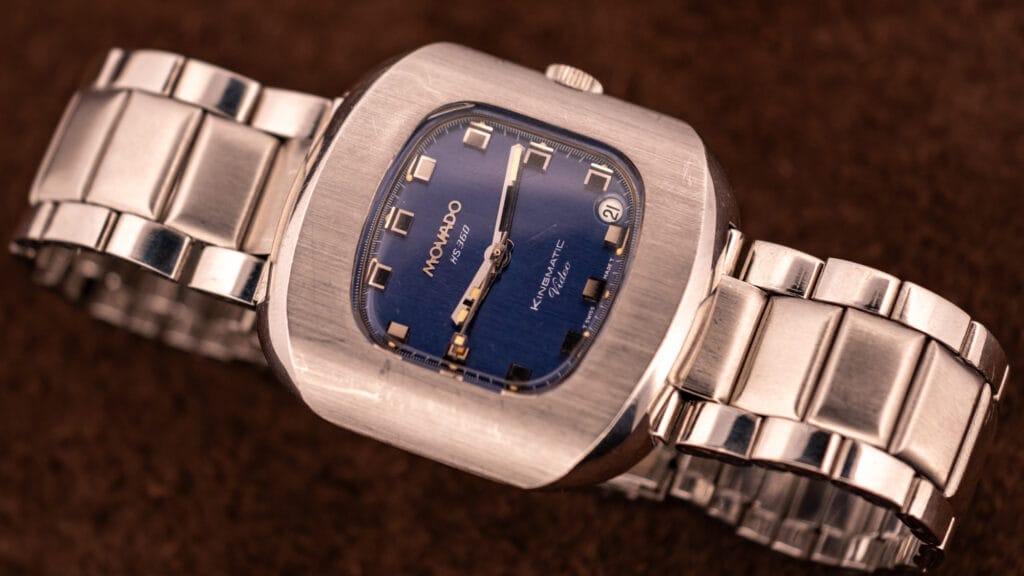
Movado Kingmatic: A Vintage Buyer’s Guide to References, Calibers, and Value
The Movado Kingmatic is one of the best values in vintage automatics. A buyer's guide to its references, in-house calibers, the Sub-Sea line, what to check, and what they actually sell for.
13 Vintage Watch Collecting Tips for Beginners (From 1,000+ Watches Sold)
Thirteen vintage watch collecting tips drawn from selling over 1,000 watches. What separates a smart first buy from an expensive lesson, with no sugar.
Vintage Wittnauer Chronograph Caliber Identification: Venus 188, Valjoux 7733/7734, Landeron 248
How to identify the movement inside any vintage Wittnauer chronograph: Venus 188, Valjoux 7733 and 7734, Landeron 248, and the house numbering system Wittnauer used to mark them.
How Water-Resistant Is a Vintage Watch, Actually? The Honest Answer.
Every dealer says never get a vintage watch wet. That advice is half-engineering and half-liability theater. Here is what is actually true about vintage water resistance, where water actually gets in, and when a 1965 diver is safer than a 2-year-old modern.