

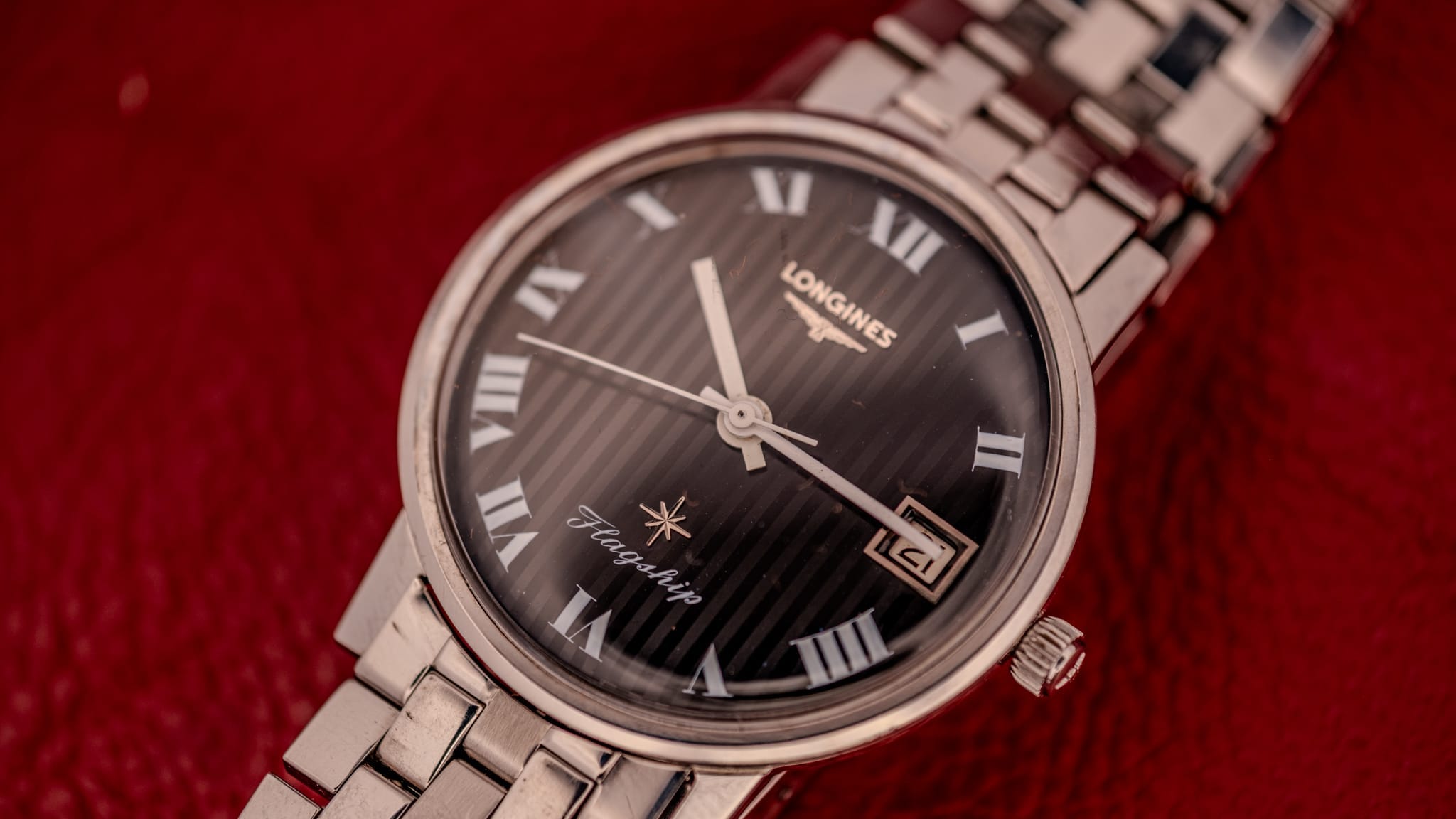
Longines has been making watches since 1832, and they’ve been recording serial numbers for every single one since 1867. That’s over 150 years of unbroken production records, making Longines one of the best-documented watch brands in existence. For collectors, this means something practical: if you have a vintage Longines, you can almost certainly date it, and in many cases, you can get the exact invoice date, original caliber, and the distributor it was shipped to.
The serial number system is refreshingly simple compared to brands like Hamilton or Omega. Longines used a single sequential numbering system across all their watches (pocket watches and wristwatches alike) from the very beginning. No letter prefixes, no grade-specific sub-systems, no mid-century switchovers. Serial number 1 was stamped in 1867, and the numbers climbed from there. If you know where to find the number and how to read the table, you can date a Longines faster than almost any other Swiss watch.
There’s a catch, though. The serial number lives on the movement, not on the caseback, and the system changed after 1969 when the numbering convention shifted. If you have a post-1970s Longines, the old sequential table won’t help you, and you’ll need a different approach. This guide covers everything: the full serial number table from 1867 through 1980, how to find the number on your watch, what to do with post-1970 references, and how to use the Longines Extract from the Archives service to get the complete story.
Where to Find the Serial Number
The serial number is engraved on the movement (the mechanical works inside the watch), not on the case. This is a critical distinction. The caseback of a vintage Longines will often carry a separate number stamped by the case manufacturer, and on American-market watches, you’ll frequently see markings from companies like Star Watch Case Co. or Schwob & Frey, who produced cases domestically for Longines-Wittnauer. Those case numbers are not Longines serial numbers and cannot be used for dating.
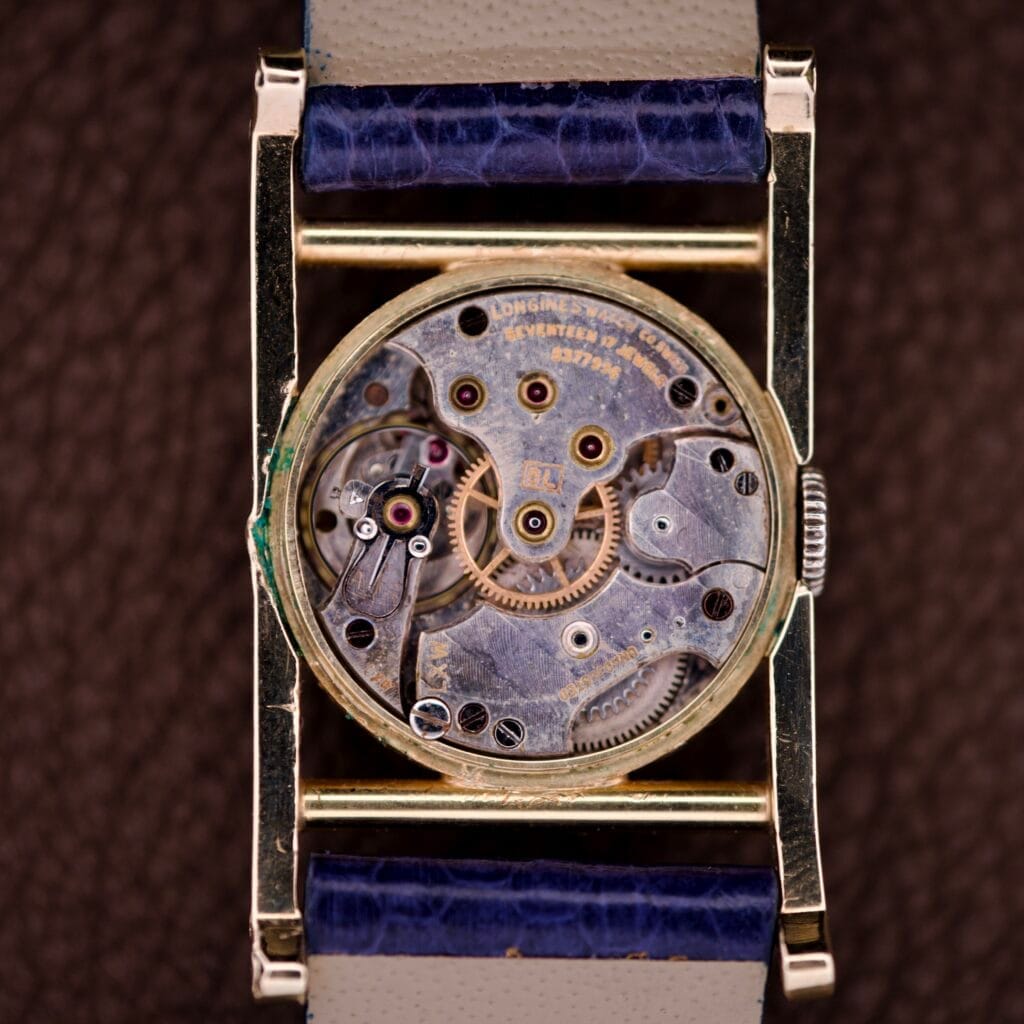
To access the movement serial number, you’ll need to open the caseback. On most vintage Longines wristwatches, this means carefully prying off a snap-back with a case knife, or unscrewing a screw-down back. The serial number will be engraved on the movement plate, typically near the balance wheel or on the main bridge, often alongside the caliber designation and the Longines winged hourglass logo.
For pocket watches, the process is essentially the same. Pop the caseback (or the inner dust cover, if the watch has one) and look for the engraved number on the movement plate.
If you’re not comfortable opening the watch yourself, any watchmaker can do it in seconds. Mention that you just need to read the movement serial number; it’s a routine request.
A Brief History of Longines and Its Numbering System
The Longines story begins in 1832, when Auguste Agassiz started selling watches produced through the traditional Swiss etablissage system (a network of independent craftsmen) under the name “Agassiz & Compagnie” in Saint-Imier, Switzerland. The business found particular success exporting to North America.
In the 1850s, Agassiz passed control of the company to his nephew, Ernest Francillon. Francillon had a vision that was radical for the time: he wanted to centralize all assembly and finishing operations under one roof, rather than farming them out to cottage workshops scattered across the Jura Mountains. To make this happen, he built a factory on a plot of land known locally as “Les Longines” (the long meadows), and the brand name was born. The factory approach proved enormously successful. By the early 1900s, Longines employed over 1,000 people and had achieved worldwide distribution.
The Longines winged hourglass logo (technically a winged clepsydra, for those who care about the distinction) first appeared on movements around 1867 and was officially registered as a trademark in 1880, making it the oldest registered watch trademark still in use today.
In 1880, the A. Wittnauer Company became the exclusive sales agent for Longines in the United States, beginning a partnership that would last 114 years. In 1936, the company was renamed Longines-Wittnauer, and the two brands became so intertwined in the American market that many people assumed they were the same company. They were not. Longines and Wittnauer produced distinctly different movements, though both maintained high standards of quality.
The sequential serial numbering system began with the factory’s establishment in 1867. Serial number 1 was assigned that year. The oldest known surviving Longines watch bears serial number 183, also from 1867, and was authenticated by the company’s heritage department. From that point forward, every movement that left the factory received the next number in the sequence.
The Complete Longines Serial Number Table: 1867–1969
This table covers the classic era of sequential serial numbers. Find your movement serial number, locate where it falls in the range, and interpolate to estimate your production year.
| Year | Serial Number | Year | Serial Number | Year | Serial Number |
|---|---|---|---|---|---|
| 1867 | 1 | 1917 | 3,500,000 | 1950 | 7,915,000 |
| 1870 | 20,000 | 1919 | 3,750,000 | 1951 | 8,225,000 |
| 1875 | 100,000 | 1922 | 4,000,000 | 1952 | 8,535,000 |
| 1882 | 250,000 | 1925 | 4,250,000 | 1953 | 8,845,000 |
| 1888 | 500,000 | 1926 | 4,500,000 | 1954 | 9,183,000 |
| 1893 | 750,000 | 1928 | 4,750,000 | 1955 | 9,521,000 |
| 1899 | 1,000,000 | 1929 | 5,000,000 | 1956 | 9,859,000 |
| 1901 | 1,250,000 | 1931 | 5,031,000 | 1957 | 10,201,000 |
| 1904 | 1,500,000 | 1932 | 5,104,500 | 1958 | 10,544,000 |
| 1905 | 1,750,000 | 1933 | 5,177,000 | 1959 | 10,886,000 |
| 1907 | 2,000,000 | 1934 | 5,250,000 | 1960 | 11,212,000 |
| 1909 | 2,250,000 | 1935 | 5,333,000 | 1961 | 11,538,000 |
| 1911 | 2,500,000 | 1936 | 5,416,000 | 1962 | 11,864,000 |
| 1912 | 2,750,000 | 1937 | 5,500,000 | 1963 | 12,116,000 |
| 1913 | 3,000,000 | 1938 | 5,750,000 | 1964 | 12,368,900 |
| 1915 | 3,250,000 | 1939 | 5,850,000 | 1965 | 12,621,000 |
| 1940 | 5,950,000 | 1966 | 12,874,000 | ||
| 1941 | 6,140,000 | 1967 | 13,839,000 | ||
| 1942 | 6,332,000 | 1968 | 14,834,000 | ||
| 1943 | 6,523,000 | 1969 | 15,000,000 | ||
| 1944 | 6,714,000 | ||||
| 1945 | 6,905,000 | ||||
| 1946 | 7,107,000 | ||||
| 1947 | 7,309,000 | ||||
| 1948 | 7,511,000 | ||||
| 1949 | 7,713,000 |
A few patterns are worth noting. Early production was relatively slow: it took Longines 32 years (1867 to 1899) to reach one million movements. But by the early 1900s, production had accelerated substantially. The company was producing roughly 250,000 movements every two years by the 1910s.
The Depression era shows a visible slowdown. Between 1929 and 1934, production increments shrank to roughly 50,000–83,000 per year, a steep drop from the pace of the 1920s.
Wartime production (1940–1945) tells an interesting story. Unlike Hamilton, which halted consumer production entirely during WWII, Longines continued manufacturing. Production actually increased during the war years, with the company adding roughly 190,000 serial numbers annually between 1941 and 1945. Longines was producing military-spec watches and timing instruments for various allied forces during this period.
The postwar boom is dramatic. From 1950 onward, Longines was producing well over 300,000 movements per year, peaking in the mid-to-late 1960s. The jump from serial number 12,874,000 in 1966 to 13,839,000 in 1967 (nearly a million movements in a single year) represents the absolute peak of Longines’ mechanical production, right before the Quartz Crisis reshaped the entire industry.
Post-1969: The Numbering System Changes
After reaching serial number 15,000,000 in 1969, Longines changed its numbering convention. The post-1970 serial numbers no longer follow the old sequential system and instead begin with a “50” prefix followed by additional digits.
| Year | Serial Number | Year | Serial Number |
|---|---|---|---|
| 1970 | 50,841,000 | 1976 | 52,799,000 |
| 1971 | 50,849,000 | 1977 | 53,478,000 |
| 1972 | 50,851,000 | 1978 | 54,387,000 |
| 1973 | 50,858,000 | 1979 | 54,475,000 |
| 1974 | 51,109,000 | 1980 | 54,902,000 |
| 1975 | 52,216,000 |
These post-1970 numbers are less commonly referenced because the Quartz Crisis era coincided with a shift away from in-house mechanical production. Many Longines watches from this period used outsourced quartz movements, and the serial number conventions became less standardized. For watches produced after 1980, the serial number table above won’t help, and you’ll need to contact Longines directly (more on that below).
What the Serial Number Can and Cannot Tell You
The serial number gives you an approximate production year, typically accurate to within 6 to 12 months. It does not tell you the specific model, the caliber, or the original configuration of the watch. For that level of detail, you need to combine the serial number with other identifying information.
The caliber number is usually stamped on the movement alongside the serial number. Common vintage Longines calibers you’ll encounter include the 23Z (a workhorse 17-jewel manual-wind introduced in 1948), the 19AS (one of Longines’ first automatic calibers), the 30CH (their celebrated chronograph movement), the 285 (a later manual-wind movement used in Flagship models), and various “L” designated form movements like the 8L and 10L used in rectangular and square cases.
The case reference number is sometimes stamped on the caseback or between the lugs. On American-market watches, the caseback will often show markings from the domestic case manufacturer alongside the Longines-Wittnauer branding. These case references can help identify specific models when paired with catalog records.
The dial provides important context for dating but should never be used as the sole dating method. Dials get replaced, refinished, and swapped far more frequently than movements. A movement serial number from 1955 paired with a dial style that didn’t appear until 1962 is a sign that something has been changed, whether through legitimate service or less scrupulous assembly.
The Longines Extract from the Archives
Here’s where Longines stands apart from almost every other Swiss brand: they offer a heritage research service that is, as of this writing, free of charge for the email version.
Longines has preserved production records for every serial number going back to 1867. By submitting your movement serial number along with photographs of the dial, caseback, and movement through their website, you can receive an Extract from the Archives that typically includes the exact invoice date (not just the year, but the specific day), the caliber designation, and the original distributor or agent the watch was shipped to.
For example, a collector with movement serial number 1,289,046 received a response stating that the movement was a Caliber 18.79ZZ, invoiced on November 25, 1902, to the company A. Wittnauer, which was at that time Longines’ agent for the USA. That level of specificity is exceptional in the watch world.
Longines offers three tiers of service. The first is a free email response with basic historical information pulled from the archive database. The second is a formal Extract from the Archives, printed on official Longines letterhead, which includes the archived information for watches over 10 years old. The third is a Certificate of Authenticity ($300 USD), which requires the physical watch to be sent to Longines for examination by their watchmakers.
One important caveat: the Extract from the Archives does not certify authenticity. It tells you what Longines’ records say about that serial number as the watch originally left the factory. If parts have been changed, dials refinished, or movements swapped at any point in the watch’s life, the Extract won’t reflect those alterations. It’s a powerful tool, but it’s not a substitute for physical authentication.
Longines tightened their Extract policy following the Omega museum authentication scandal in 2023. They now decline to issue Extracts if the case, movement, or dial doesn’t match their records, where previously they might have noted discrepancies but still issued the document. This is actually a positive development for collectors, as it reduces the risk of problematic watches receiving official-looking paperwork.
Common Mistakes When Dating a Longines
Using the caseback number instead of the movement number. This is the single most common error. The caseback number belongs to the case manufacturer, not Longines. American-market Longines watches frequently have casebacks stamped by Star Watch Case Co. or other domestic suppliers, and those numbers have nothing to do with Longines’ production records.
Confusing Longines with Longines-Wittnauer. A watch marked “Longines-Wittnauer” on the caseback is still a Longines. The Longines-Wittnauer company was the American sales and distribution arm, and the caseback marking reflects the import agent, not a different manufacturer. The movement inside will still carry a Longines serial number that can be looked up in the standard table. However, a watch marked only “Wittnauer” on the dial is a Wittnauer, not a Longines, and uses a different (and less well-documented) serial number system entirely.
Assuming the serial number date matches the retail sale date. The serial number tells you when the movement was produced at the factory in Saint-Imier. It could have sat in a warehouse or a jeweler’s display case for months or even years before being sold. Presentation engravings on the caseback can sometimes help establish when the watch actually entered service.
Trusting dial-based dating over movement-based dating. Dials are the most frequently replaced component on vintage watches. A Longines with a serial number dating to 1952 might be wearing a dial from 1960 due to a service replacement. Always prioritize the movement serial number for dating, and use the dial as supporting evidence only.
The Bottom Line
Longines makes dating easy. One sequential serial number system, unbroken records going back to 1867, and a free archive research service that can give you the exact invoice date for your watch. No other Swiss brand at this price point offers anything close.
If you own a vintage Longines, take five minutes to open the caseback (or have a watchmaker do it), read the movement serial number, and look it up in the table above. You’ll know the approximate year immediately. If you want the full story, submit a request through the Longines website and let their heritage department do the rest. It’s one of the few genuinely generous services left in the watch industry, and it’s worth using.
Further reading on OTTUHR:
- The Wittnauer Story: Longines’ Best-Kept Secret — The full history of the Longines-Wittnauer relationship and why Wittnauer is one of the most underrated brands in vintage watches
- How the Quartz Crisis Nearly Ended Swiss Watchmaking — What happened to Longines and the rest of the Swiss industry after 1969
- An Expert’s Guide to Omega Reference Numbers — If you collect Longines, you probably collect Omega too; here’s how to decode their references
- Browse Longines watches in the OTTUHR shop — Authenticated vintage Longines timepieces with full condition reporting and a 2-year mechanical warranty
Sources & further reading:
- Longines Extract from the Archives Service — Submit your serial number directly to Longines for free historical research on watches over 10 years old
- Pocket Watch Database: Longines Serial Number Lookup — Community-maintained database with individual Longines movement records and collector submissions
Related posts
Vintage Watch Styles: A Visual Guide to Finding Yours
Most buyers pick a brand and stall. Here are nine vintage watch styles, shown with real watches from our archive, and the catch that comes with each one.
Vintage Tank Watches: A Buyer’s Guide to Rectangular Watches Beyond Cartier
Every Cartier Tank alternatives list is new watches imitating old ones. The originals still exist and cost less. A buyer's guide to vintage tank and rectangular watches: the brands, the prices, and what to check.
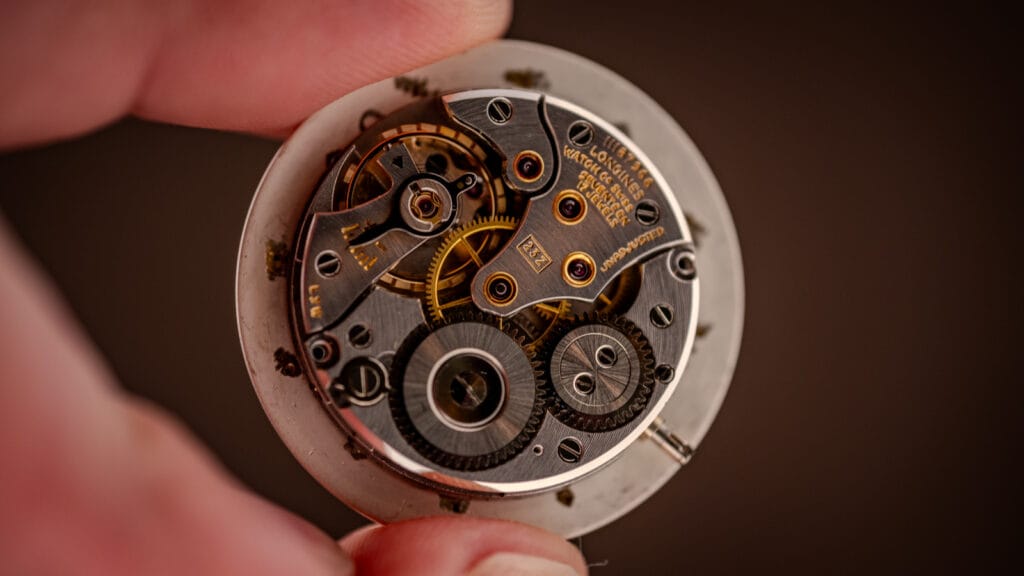
Service History Is the Wrong Question. Here’s the Right One.
Everyone says to ask for a vintage watch's service history. Most of it can't be verified, and a receipt proves a transaction, not a result. Here's what actually tells you a watch has been serviced, and the better question to ask.
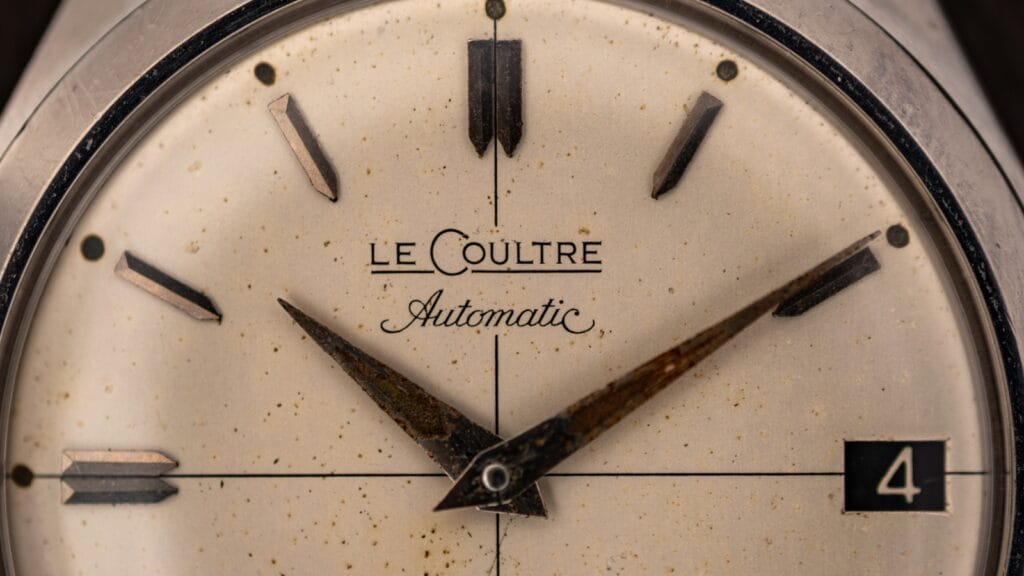
LeCoultre vs. Jaeger-LeCoultre vs. Jaeger: What the Name on the Dial Means
Three names, one Swiss firm, and one watch that isn't what it looks like. What LeCoultre, Jaeger-LeCoultre, and plain Jaeger on a vintage dial really tell you.
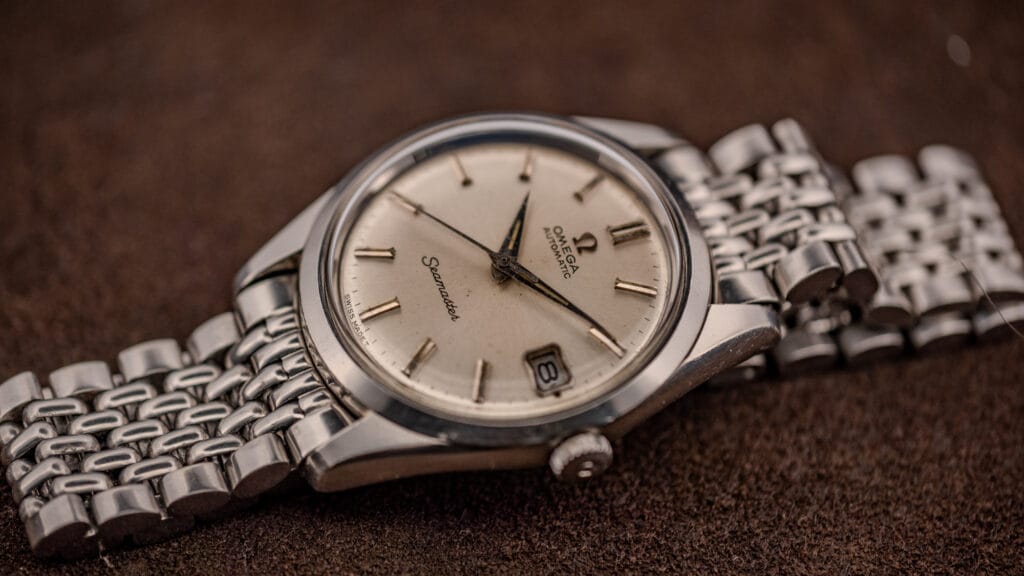
Omega Seamaster 166.010 Buyer’s Guide: Prices, Variants, and What to Look For (2026)
Everything you need to buy an Omega Seamaster 166.010 in 2026: real market prices by condition tier, five dial variants explained, caliber 562 vs 565, original part numbers, and what to inspect before you commit.
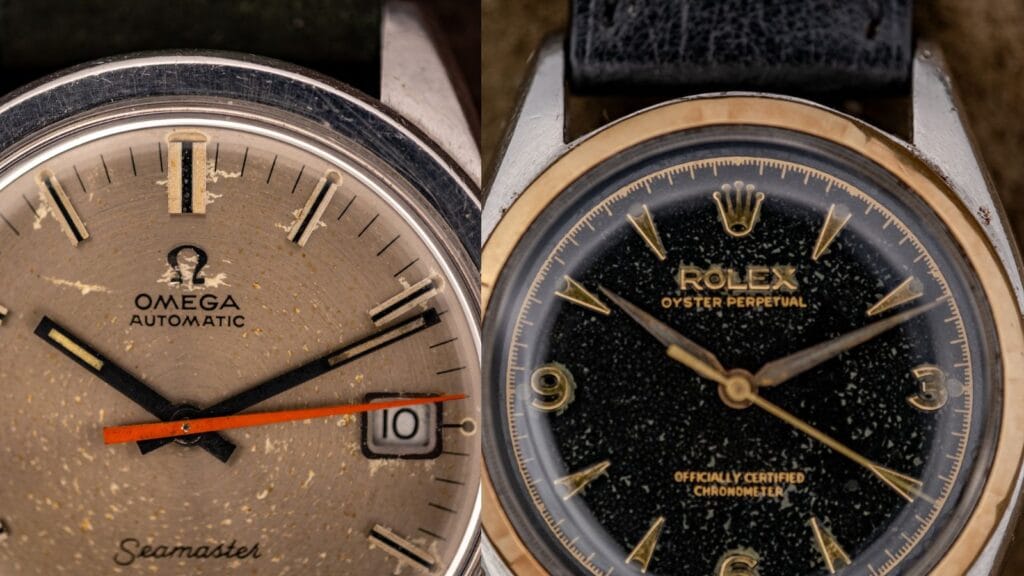
Omega vs Rolex: The Vintage Buyer’s Verdict
Vintage Omega vs vintage Rolex: where the Rolex premium is worth paying, where Omega is the smarter buy, and how to dodge redials on both. A collector's verdict.
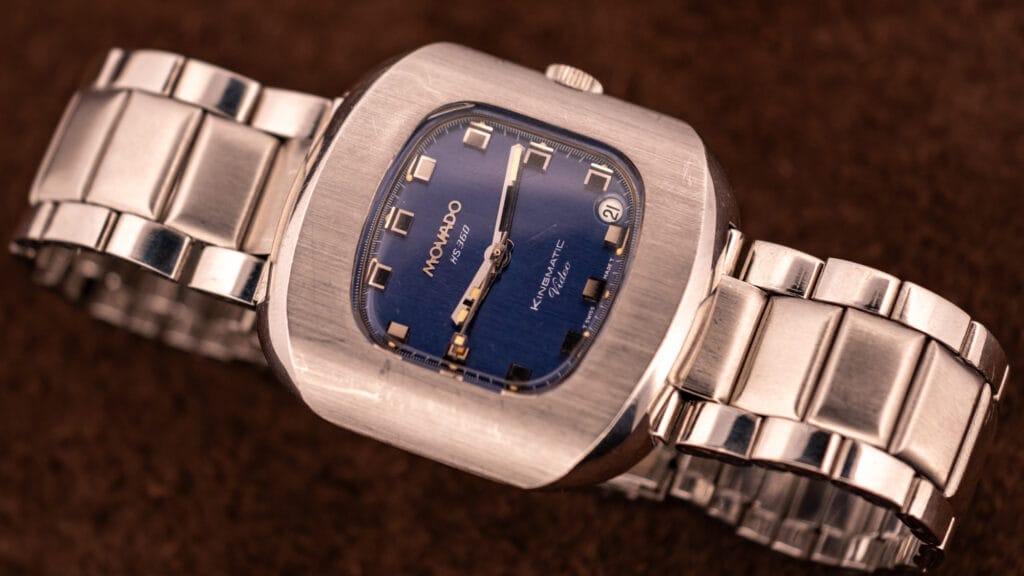
Movado Kingmatic: A Vintage Buyer’s Guide to References, Calibers, and Value
The Movado Kingmatic is one of the best values in vintage automatics. A buyer's guide to its references, in-house calibers, the Sub-Sea line, what to check, and what they actually sell for.
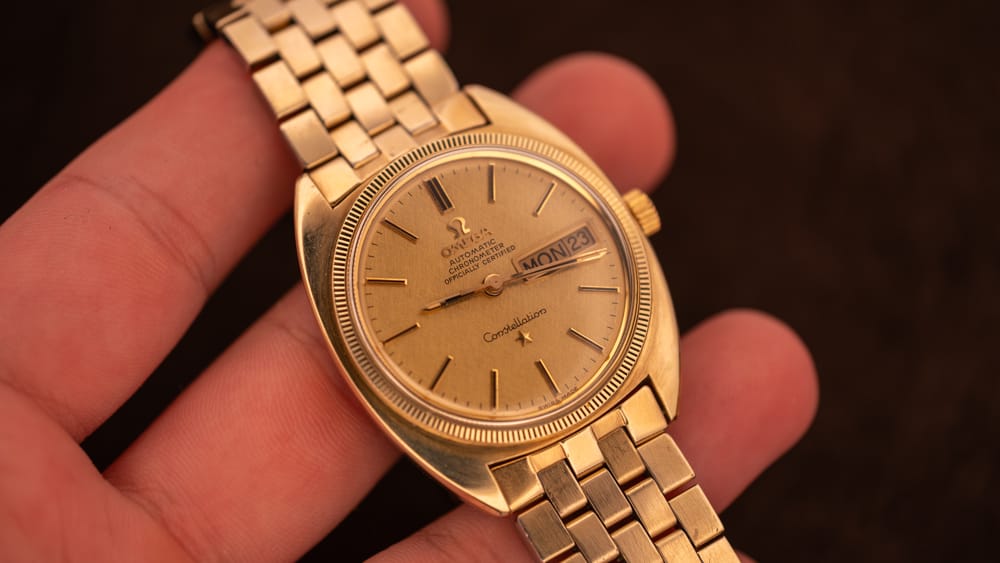
13 Vintage Watch Collecting Tips for Beginners (From 1,000+ Watches Sold)
Thirteen vintage watch collecting tips drawn from selling over 1,000 watches. What separates a smart first buy from an expensive lesson, with no sugar.
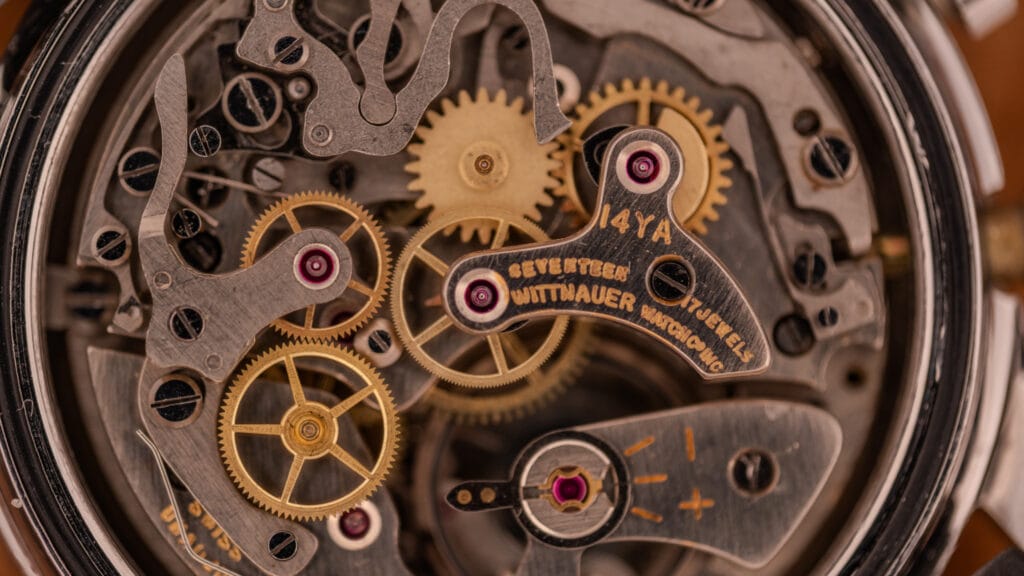
Vintage Wittnauer Chronograph Caliber Identification: Venus 188, Valjoux 7733/7734, Landeron 248
How to identify the movement inside any vintage Wittnauer chronograph: Venus 188, Valjoux 7733 and 7734, Landeron 248, and the house numbering system Wittnauer used to mark them.
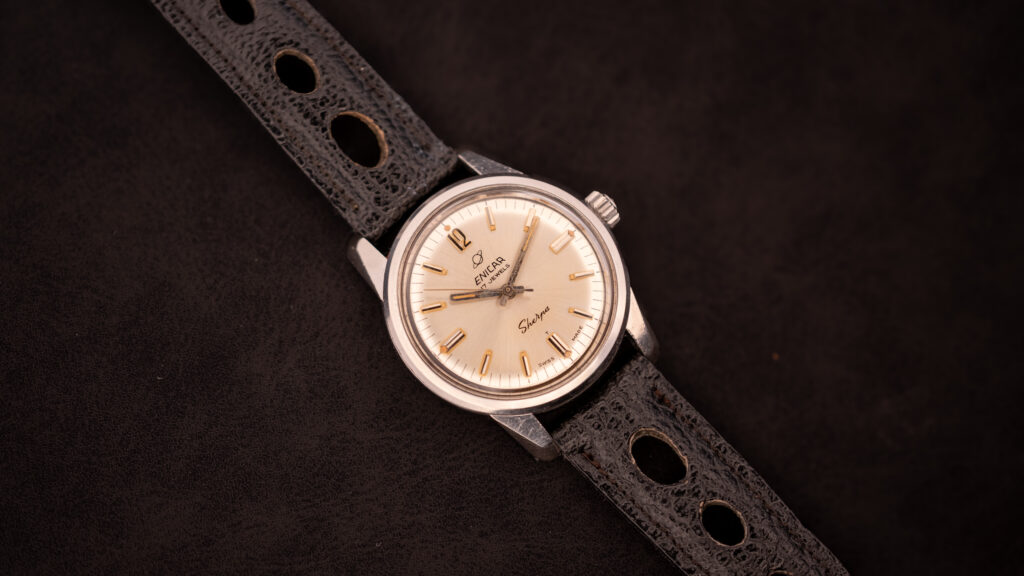
How Water-Resistant Is a Vintage Watch, Actually? The Honest Answer.
Every dealer says never get a vintage watch wet. That advice is half-engineering and half-liability theater. Here is what is actually true about vintage water resistance, where water actually gets in, and when a 1965 diver is safer than a 2-year-old modern.
Vintage TAG Heuer 2000 (and 1500) Series: A Buyer’s Guide
The 1980s and 90s TAG Heuer 2000 series is the cheapest serious vintage diver still hiding in plain sight. Here's what to buy, what to skip, and what to pay.
The 12 Best Vintage Watches Under $2,000 in 2026
The best vintage watches under $2,000 sit in the most efficient price point in mid-century collecting. Twelve specific picks that outperform modern luxury watches at three to five times the price, with concrete buy criteria for each.
One thought on “Longines Serial Numbers: The Complete Reference Guide 2026”
i have a 10 L movement, 17 jewel , Serial # 9152056 Gold filled Square wristwatch . i took some photos but do not see how to send them.
The case # 6155388 Watch seems to be in good condition aside from yellowing crystal