

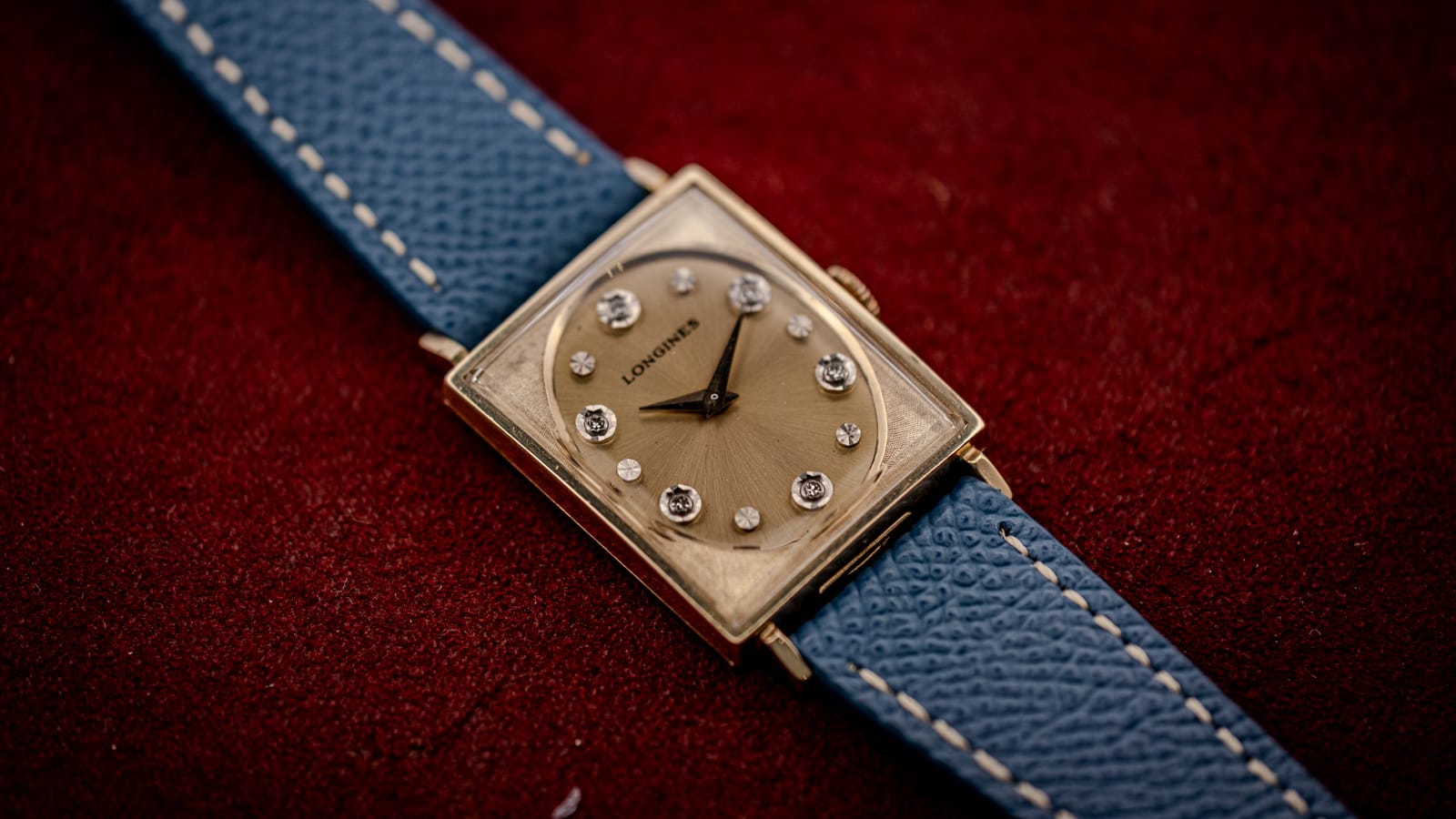
Search for Cartier Tank alternatives and you get the same list everywhere: a new Longines DolceVita at about $1,800, a Frederique Constant, a couple of microbrands. Every entry is a new watch built to look like an old one. Which is strange, because the old ones still exist.
The vintage market is full of original tank and rectangular watches from the exact era the new ones imitate. Purpose-built shaped movements, case designs drawn by hand in the 1930s and 40s, names like Curvex and Bowman that meant something at the counter. Most of them trade for a third of what the modern tributes cost. The market has been pricing these as an afterthought for years, and that’s the opportunity.
This guide covers where the tank shape comes from, which vintage brands did it best, what the watches actually cost, and what to check before you buy one.
where the tank watch comes from
Louis Cartier designed the Tank in 1917 and the first examples sold in 1919. The story Cartier tells is that the case profile, with its vertical rails running past the dial, was inspired by the tread layout of the Renault tanks then rolling across the Western Front. Whatever the truth of the origin story, the design worked. The Tank has been in production for over a century, and rectangular watches as a category descend from it.
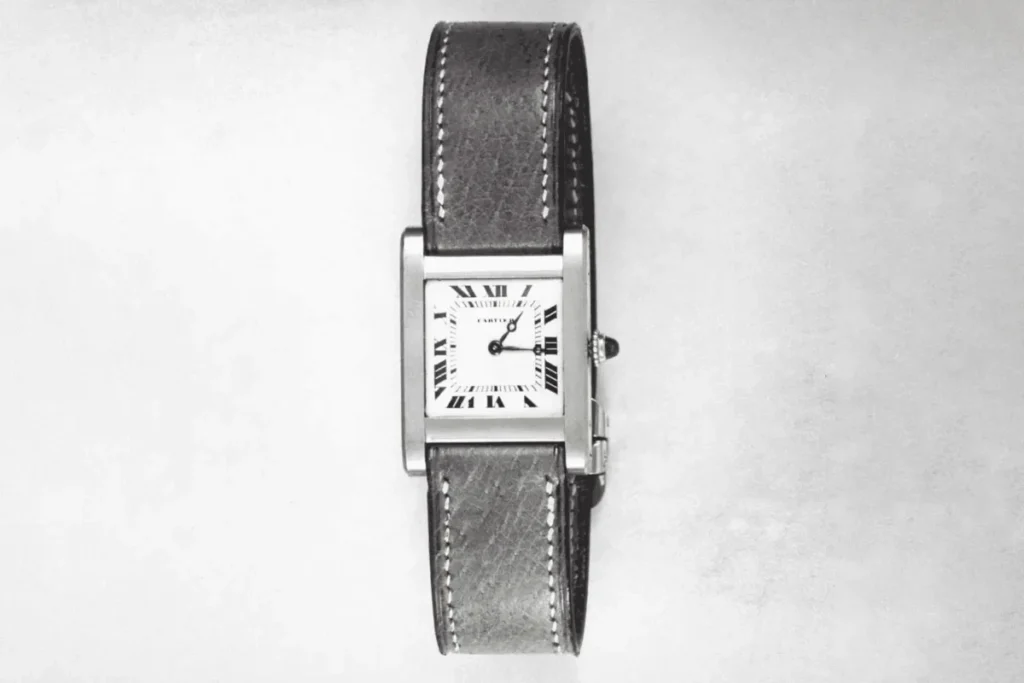
What the Tank changed is worth understanding, because it’s the reason these watches still read the way they do. A round watch looks like the instrument it descends from. A rectangle on the wrist is a deliberate design choice. That’s why the shape took over during the art deco years, when watches were jewelry first, and why a tank watch still reads as dressed-up today when nearly everything else on wrists is a round sports watch.
why vintage beats the new alternatives
Three reasons, and only one of them is price.
Price anyway, since it’s the obvious one. A new Longines DolceVita lists around $1,800. A new Cartier Tank Must runs north of $3,000. The vintage rectangular watches those designs quote from usually cost $300 to $1,200, and that includes pieces from the same maker. A 1950s Longines tank in 10k gold fill costs less than half of the modern watch Longines built to evoke it.
The engineering was more honest. Here’s the detail most alternative lists never mention: nearly every modern rectangular watch contains a small round movement sitting in a rectangular case, with the corners of the case doing nothing. In the golden era, the better makers built shaped movements to fill the shape. Gruen patented a caliber that curved to follow the wrist. Hamilton built rectangular calibers for its rectangular watches. When you buy vintage, the inside matches the outside.
You’re buying the source material. Every modern tank-style watch is a quotation of the 1920s through 1950s. The vintage piece is the thing itself: the case dies are long gone, the design language was current instead of revived, and the watch has 70 or 80 years of history in it. A tribute can be a good watch. It can’t be that.
the brands to know
gruen curvex: the engineering flex
The Gruen Curvex is the strongest technical argument in vintage rectangular watches. Introduced in October 1935 with the caliber 311, then improved with the more sharply curved 330 in 1937, the Curvex used a movement that actually bent to follow the case. Competitors sold curved cases with small flat movements hiding inside. Gruen curved the caliber itself, which let the watch hug the wrist while filling the whole case with mechanism. A true Curvex contains one of four movements: the 311, 330, 370, or 440. Production ran to the mid 1950s.
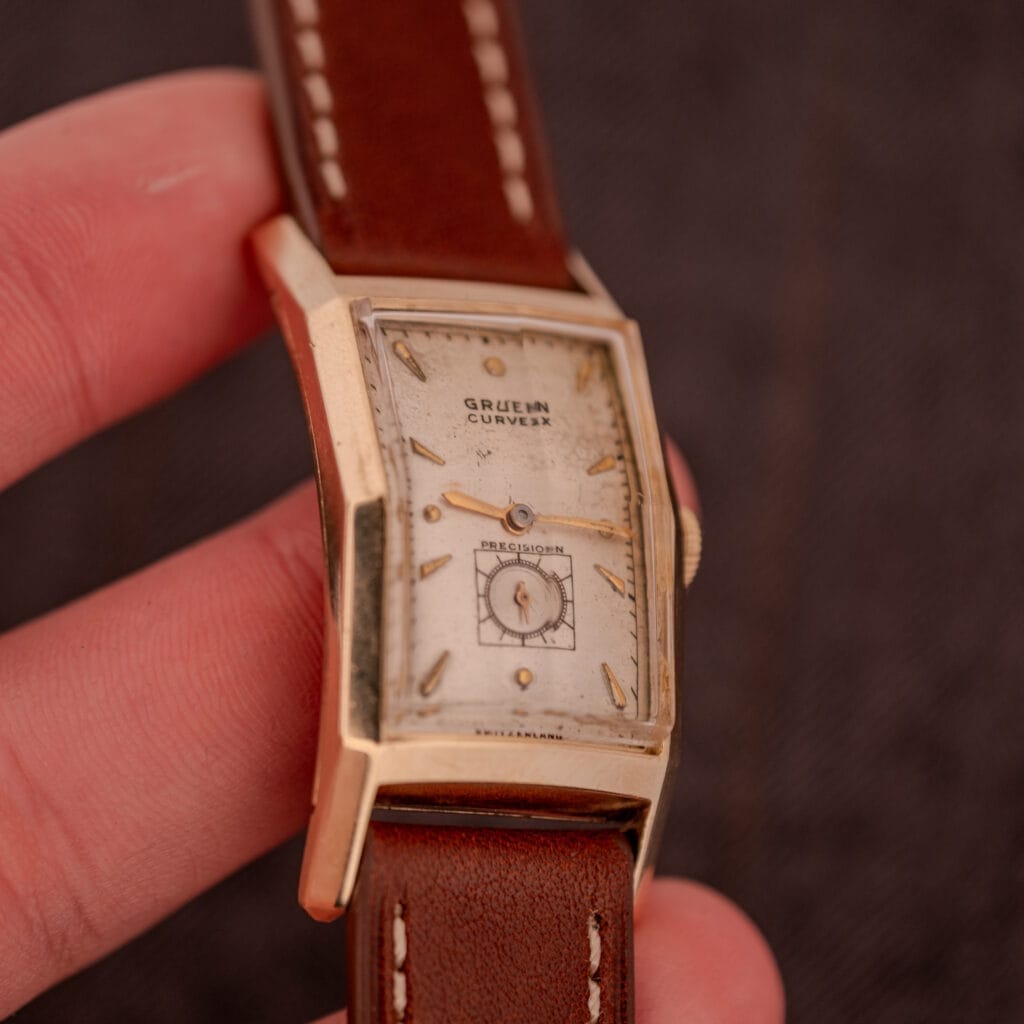
Look for the “pyramid crystal” examples, where the acrylic is faceted like a cut stone. Clean Curvexes generally trade between $400 and $1,000, which is remarkable for a patented in-house design from the deco era. We usually keep a few in stock, like this Curvex Precision ref. 370-650, and if you’re dating one, our Gruen dating guide walks through the case and movement codes.
hamilton: american deco you can still afford
Hamilton built its rectangular watches in Lancaster, Pennsylvania, and gave them names instead of reference numbers: Bowman, Prescott, Rodney, Wilshire. The deco-era cases are some of the best American design of the period, and the manual calibers inside them (the 980 and 987 families, later the 748 and 770) are watches your watchmaker will service without complaint. Parts are still findable.
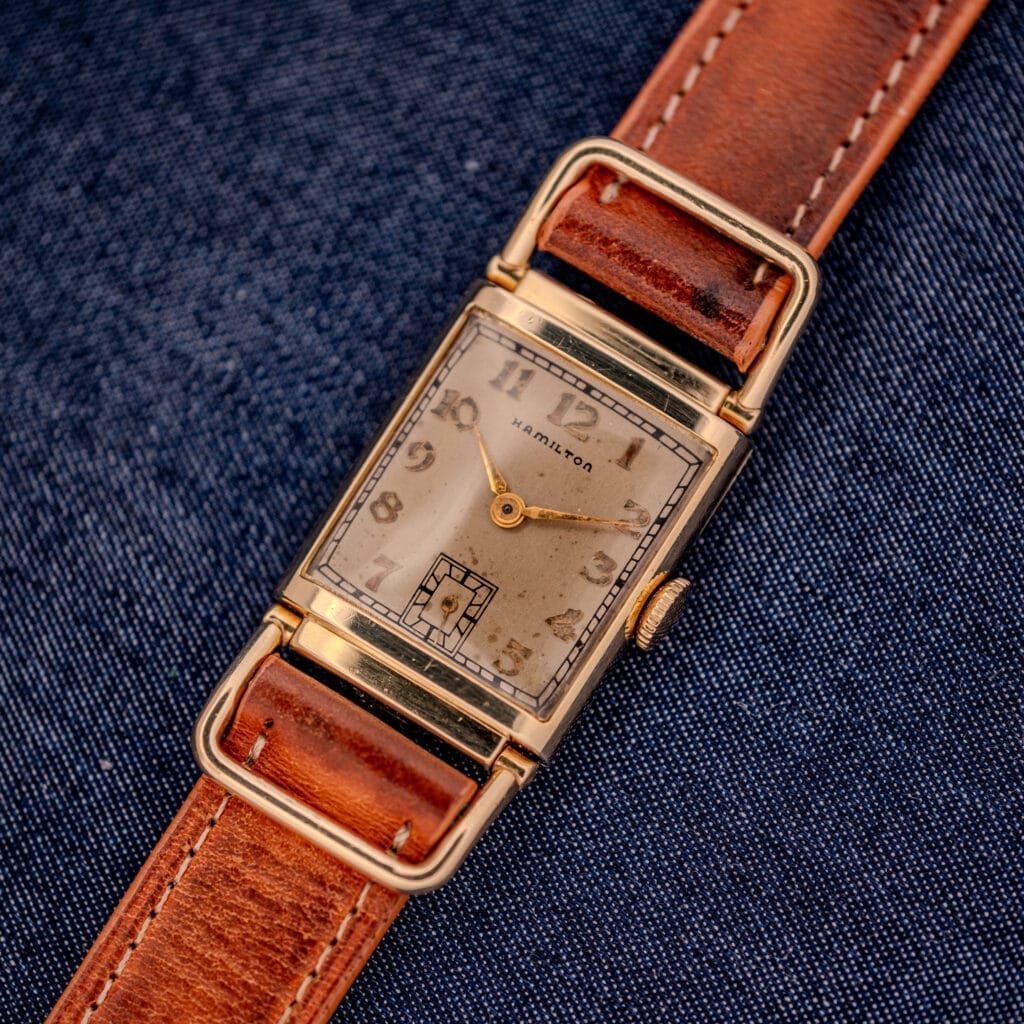
Gold-filled examples run roughly $300 to $800 depending on model and condition. Solid gold cases push past $1,000. A Hamilton Bowman is a fair benchmark for what the money gets you: named model, art deco case, American manufacture.
longines: the quiet blue chip
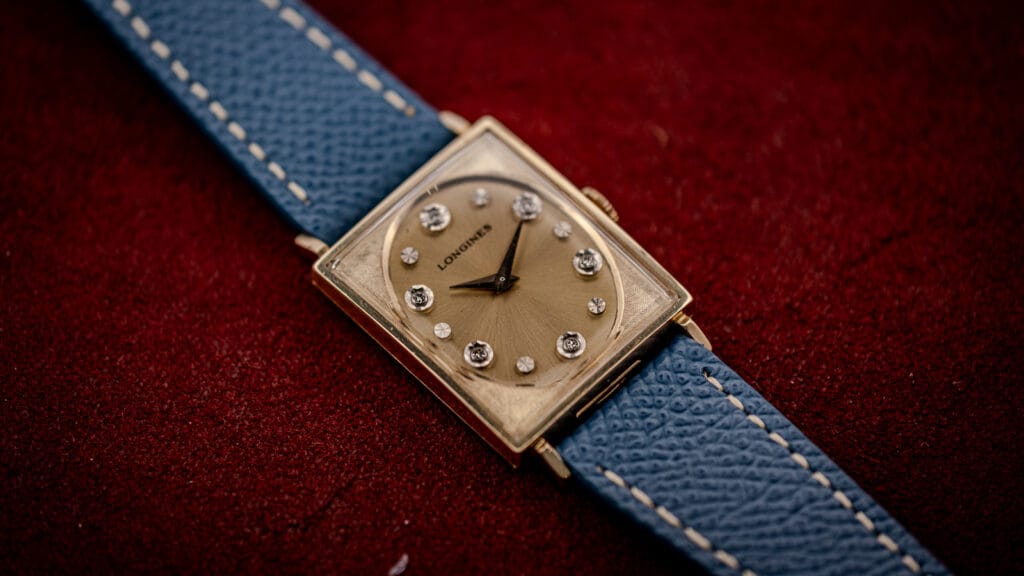
Longines built rectangular watches from the deco years through the 1960s, and the modern DolceVita line is the company quoting its own archive. The vintage originals are the value play. Gold-filled tank references from the 40s through 60s generally trade between $500 and $1,200, with the interesting dials (black gilt, diamond accents, sector layouts) at the top of that band. We currently stock several, including a Longines Tank ref. 3007-528.
Longines also kept factory production records, so a serial number gets you a real manufacturing date. Our Longines serial number guide covers how to run one.
bulova, elgin, wittnauer: the entry tier
This is where you experiment for under $500, often under $300. Bulova sold art deco tanks by the hundred thousand, so survivors are plentiful, handsome, and cheap. Elgin is the same story with an American movement. Wittnauer, Longines’ American distribution sibling, frequently delivers Swiss quality at the bottom of the price board. An engraved black-dial Bulova deco piece makes the point: this tier gets you the same era and the same look for the price of a fashion watch.
lecoultre and the reverso: the ceiling
The Reverso is the other icon of the category. Jaeger-LeCoultre introduced it in 1931 with a case that flips to protect the crystal, built for polo players in British India. Vintage and neo-vintage Reversos are firmly in the four figures and climbing.
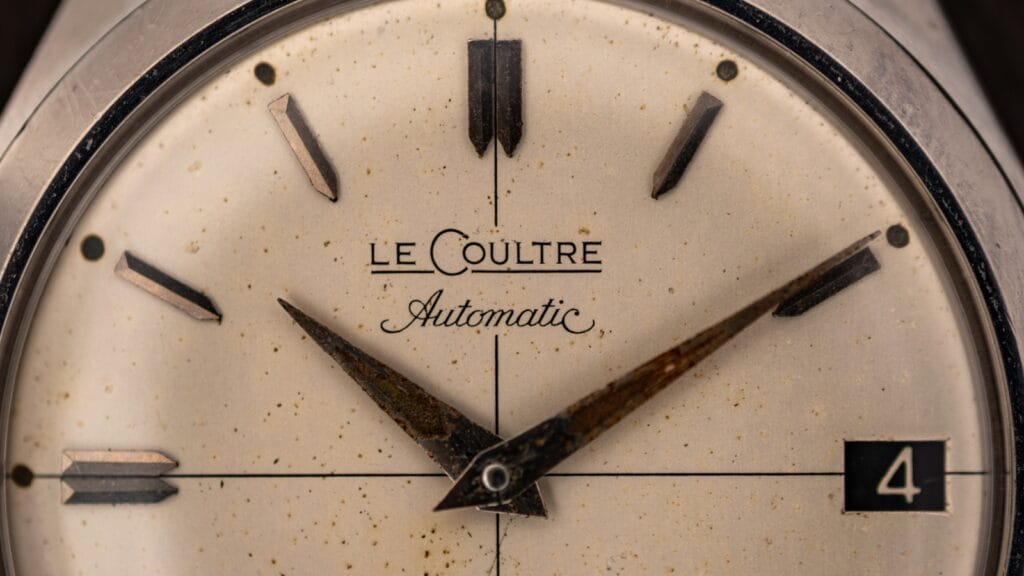
The sleeper is US-market LeCoultre. Watches signed LeCoultre (no Jaeger) came out of the same Le Sentier factory but were distributed separately in America, and the market still discounts them for the shorter name. Rectangular LeCoultres regularly sell under $1,000. If the naming confuses you, we wrote up what the dial signature actually means.
the sleepers: girard-perregaux, movado, baume & mercier
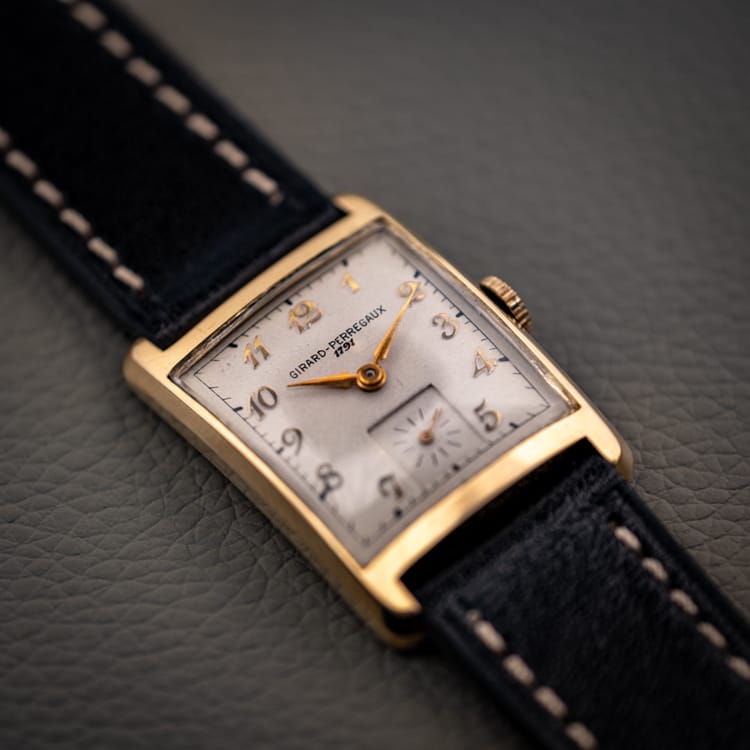
Three more worth a search filter. Girard-Perregaux made clean mid-century tanks that trade well under $700; our GP 1791 Tank sits in that band. Pre-Museum-dial Movado made strong deco cases the market ignores. And on the neo-vintage end, the 1990s Baume & Mercier Hampton is an honest quartz tank in the mid hundreds for someone who wants the look without winding anything.
and vintage cartier itself
If only the name will do, the 1970s and 80s Tank Must in vermeil generally trades between $2,000 and $3,500 depending on condition and papers. Solid gold Tank Louis models run multiples of that. They’re fine watches. But you’re paying mostly for the name on the dial, and everything else in this guide is about paying for the watch instead.
how vintage tank watches wear
The number that scares people is width. Most vintage tanks measure 20 to 28mm across, and buyers trained on 40mm divers assume that’s unwearable. Width is the wrong number for a rectangular watch. Lug to lug, these run 35 to 45mm, the dial fills the entire case front, and the vertical proportions carry more visual weight than a round case at the same width. A 25mm tank wears roughly like a 34 to 36mm round watch.
It helps that the market has moved this direction anyway. Small dress watches came back hard over the past few years, and we’ve made the case for small watches separately. Most lists of rectangular watches for men now include at least a few sub-30mm pieces without apology.
what to check before you buy
Rectangular watches have their own failure points. In rough priority order:
Corners first. On gold-filled cases, wear shows at the edges and corners before anywhere else, and a rectangle has more of both than a round case. Brassing at the corners is common, honest wear; heavy rounding-over of what should be crisp edges means the case was polished hard, and that metal never comes back.
The crystal is not a commodity. A flat round crystal costs a few dollars and fits a hundred models. Curved and faceted rectangular crystals, like the Curvex pyramid types, are cut for one case and can turn into a hunt. Factor a cracked or missing shaped crystal into the price.
Assume the dial has been refinished until proven otherwise. American deco watches got their dials repainted as routine service for decades. Soft or fuzzy printing, fonts that don’t match catalog images, and a missing minute track are the tells. A worn original dial usually beats a shiny redone one; our patina versus damage guide draws that line in detail.
Verify the movement matches the claim. This matters most with Gruen: a real Curvex contains a curved 311, 330, 370, or 440. A flat caliber in a curved case is a different, lesser watch no matter what the listing title says. Ask for a movement photo before paying Curvex money.
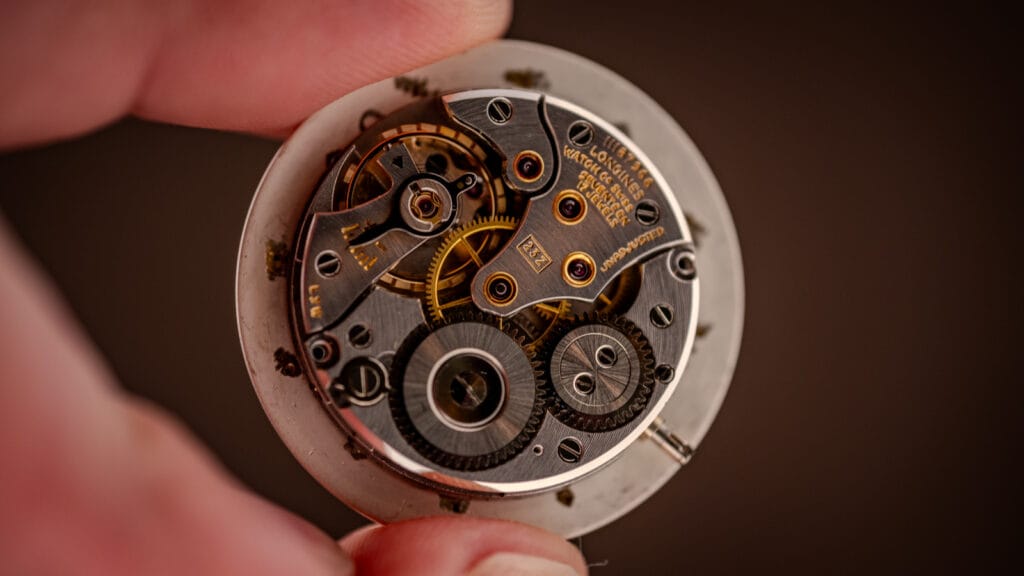
Ask about service, not adjectives. “Runs strong” is not a service record. A shaped vintage movement that hasn’t seen a watchmaker in decades will need one, and that’s $150 to $300 on top of the price. Here’s why service history changes what a vintage watch is worth.
Treat water as fatal. None of these watches are water resistant, whatever the caseback claimed in 1948. Rain is survivable. Washing dishes is not.
what vintage tank watches actually cost
Rough bands, from watching this market daily:
- Under $500: Bulova, Elgin, and Wittnauer deco tanks, Gruen Veri-Thins, plainer gold-filled Hamiltons. Real deco-era watches at fashion-watch money.
- $400 to $1,200: the heart of the market. Gruen Curvex, named Hamilton models, Longines gold-filled tanks, Girard-Perregaux. Strong originality is what pushes a piece to the top of this band.
- $1,000 to $2,500: solid gold American pieces, rectangular LeCoultres, and the entry point for older Reversos.
- $2,000 and up: vintage Cartier. The name costs what the name costs.
Condition moves any watch a full band in either direction. A crisp-cased, original-dial Bulova can be a better buy than a polished-out Curvex.
Why is it called a tank watch?
The name comes from the Cartier Tank, designed by Louis Cartier in 1917. The case’s vertical side rails were reportedly inspired by the tread silhouette of Renault military tanks from World War I. The name stuck to the whole category of rectangular watches with integrated lugs.
How much does a vintage tank watch cost?
Entry-level pieces from Bulova, Elgin, and Wittnauer run $150 to $500. The heart of the market, including the Gruen Curvex, named Hamilton models, and Longines gold-filled tanks, trades between $400 and $1,200. Vintage Cartier Tanks start around $2,000.
What are the best Cartier Tank alternatives?
The vintage originals beat the modern tribute watches on price and substance: the Gruen Curvex (curved in-house movement), Hamilton’s deco rectangulars, Longines gold-filled tanks, and US-market LeCoultre. All trade well below a new tank-style watch from a comparable maker.
What size is a vintage tank watch?
Most vintage tanks measure 20 to 28mm wide and 35 to 45mm lug to lug. They wear larger than the width suggests because the dial fills the whole case; a 25mm tank wears roughly like a 34 to 36mm round watch.
Can you wear a vintage tank watch every day?
Yes, with two caveats: keep it away from water entirely, and get it serviced if the seller can’t document one. A serviced vintage tank handles daily desk wear as well as it did 70 years ago.
Are vintage tank watches a good investment?
Buy them to wear, not to flip. The financial case is that you pay a third of new-watch money for the original article, not that prices will climb. Clean, original examples from Gruen, Hamilton, and Longines have held their value well, but nobody should count on appreciation.
Related posts
Vintage Tank Watches: A Buyer’s Guide to Rectangular Watches Beyond Cartier
Every Cartier Tank alternatives list is new watches imitating old ones. The originals still exist and cost less. A buyer's guide to vintage tank and rectangular watches: the brands, the prices, and what to check.
Service History Is the Wrong Question. Here’s the Right One.
Everyone says to ask for a vintage watch's service history. Most of it can't be verified, and a receipt proves a transaction, not a result. Here's what actually tells you a watch has been serviced, and the better question to ask.
LeCoultre vs. Jaeger-LeCoultre vs. Jaeger: What the Name on the Dial Means
Three names, one Swiss firm, and one watch that isn't what it looks like. What LeCoultre, Jaeger-LeCoultre, and plain Jaeger on a vintage dial really tell you.
Omega Seamaster 166.010 Buyer’s Guide: Prices, Variants, and What to Look For (2026)
Everything you need to buy an Omega Seamaster 166.010 in 2026: real market prices by condition tier, five dial variants explained, caliber 562 vs 565, original part numbers, and what to inspect before you commit.
Omega vs Rolex: The Vintage Buyer’s Verdict
Vintage Omega vs vintage Rolex: where the Rolex premium is worth paying, where Omega is the smarter buy, and how to dodge redials on both. A collector's verdict.
Movado Kingmatic: A Vintage Buyer’s Guide to References, Calibers, and Value
The Movado Kingmatic is one of the best values in vintage automatics. A buyer's guide to its references, in-house calibers, the Sub-Sea line, what to check, and what they actually sell for.
13 Vintage Watch Collecting Tips for Beginners (From 1,000+ Watches Sold)
Thirteen vintage watch collecting tips drawn from selling over 1,000 watches. What separates a smart first buy from an expensive lesson, with no sugar.
Vintage Wittnauer Chronograph Caliber Identification: Venus 188, Valjoux 7733/7734, Landeron 248
How to identify the movement inside any vintage Wittnauer chronograph: Venus 188, Valjoux 7733 and 7734, Landeron 248, and the house numbering system Wittnauer used to mark them.
How Water-Resistant Is a Vintage Watch, Actually? The Honest Answer.
Every dealer says never get a vintage watch wet. That advice is half-engineering and half-liability theater. Here is what is actually true about vintage water resistance, where water actually gets in, and when a 1965 diver is safer than a 2-year-old modern.
Vintage TAG Heuer 2000 (and 1500) Series: A Buyer’s Guide
The 1980s and 90s TAG Heuer 2000 series is the cheapest serious vintage diver still hiding in plain sight. Here's what to buy, what to skip, and what to pay.
The 12 Best Vintage Watches Under $2,000 in 2026
The best vintage watches under $2,000 sit in the most efficient price point in mid-century collecting. Twelve specific picks that outperform modern luxury watches at three to five times the price, with concrete buy criteria for each.
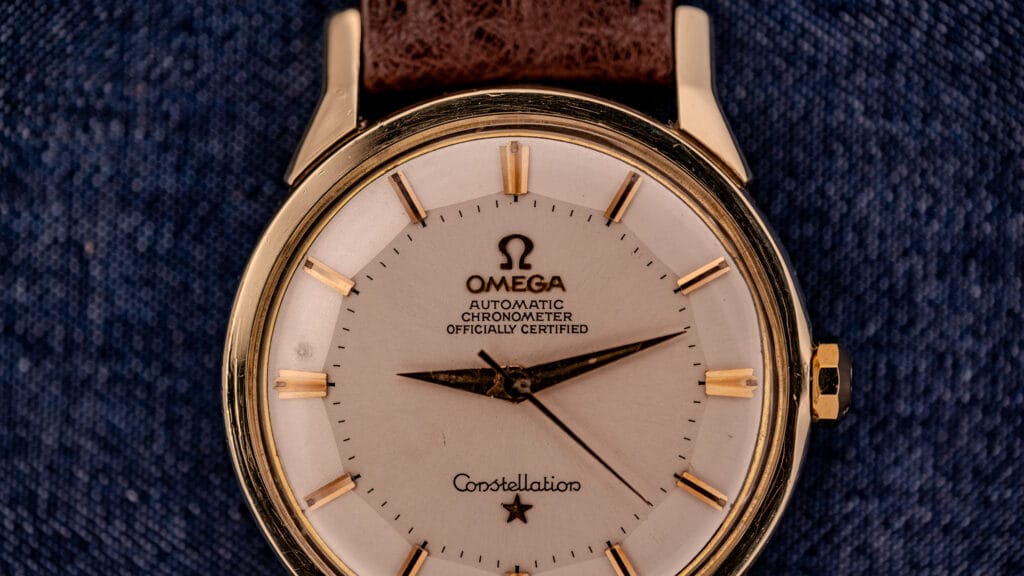
The Omega Constellation Pie-Pan Dial: Most Are Redials, and the Original Premium Hasn’t Caught Up
The Omega Constellation pie-pan dial is one of the most refinished surfaces in mid-century vintage Omega. Most examples on the market today are redials. The original-dial premium is small and closing, and buyers who can spot the difference are the ones who profit.