

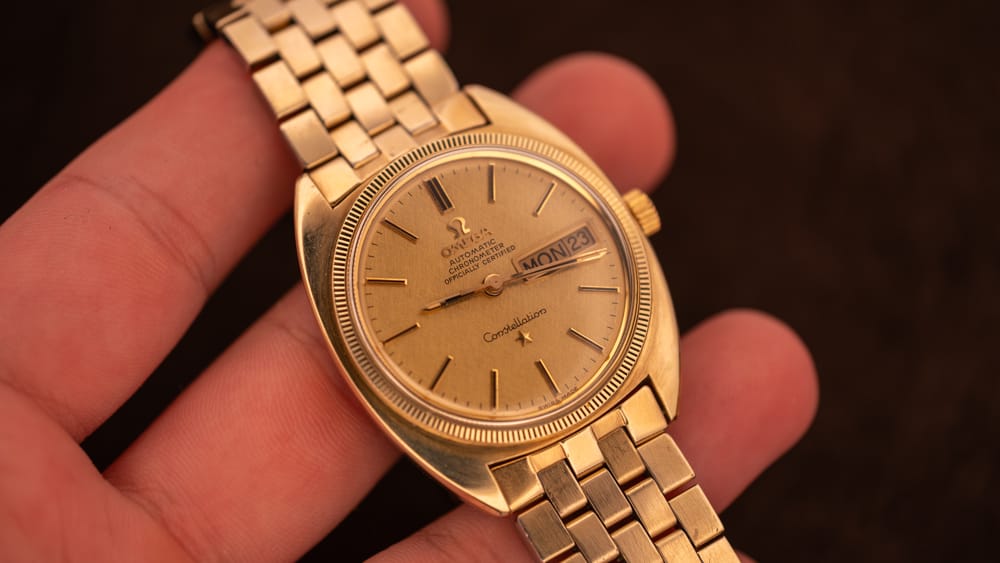
If you are about to spend serious money on your first vintage watch, here is what we have learned from selling over a thousand of them.
Most beginner guides will tell you to start cheap, do your research, and find a reputable dealer. That advice is fine but it is also generic enough to be useless. What follows is more specific. Some of it will save you money. Some of it will save you a watch you would otherwise regret. All of it is the stuff we wish someone had told us before we bought our first hundred. If you want the step-by-step mechanics (budgets, where to buy, how to evaluate a watch), our complete beginner’s buying guide covers that. This piece is the mindset behind it.
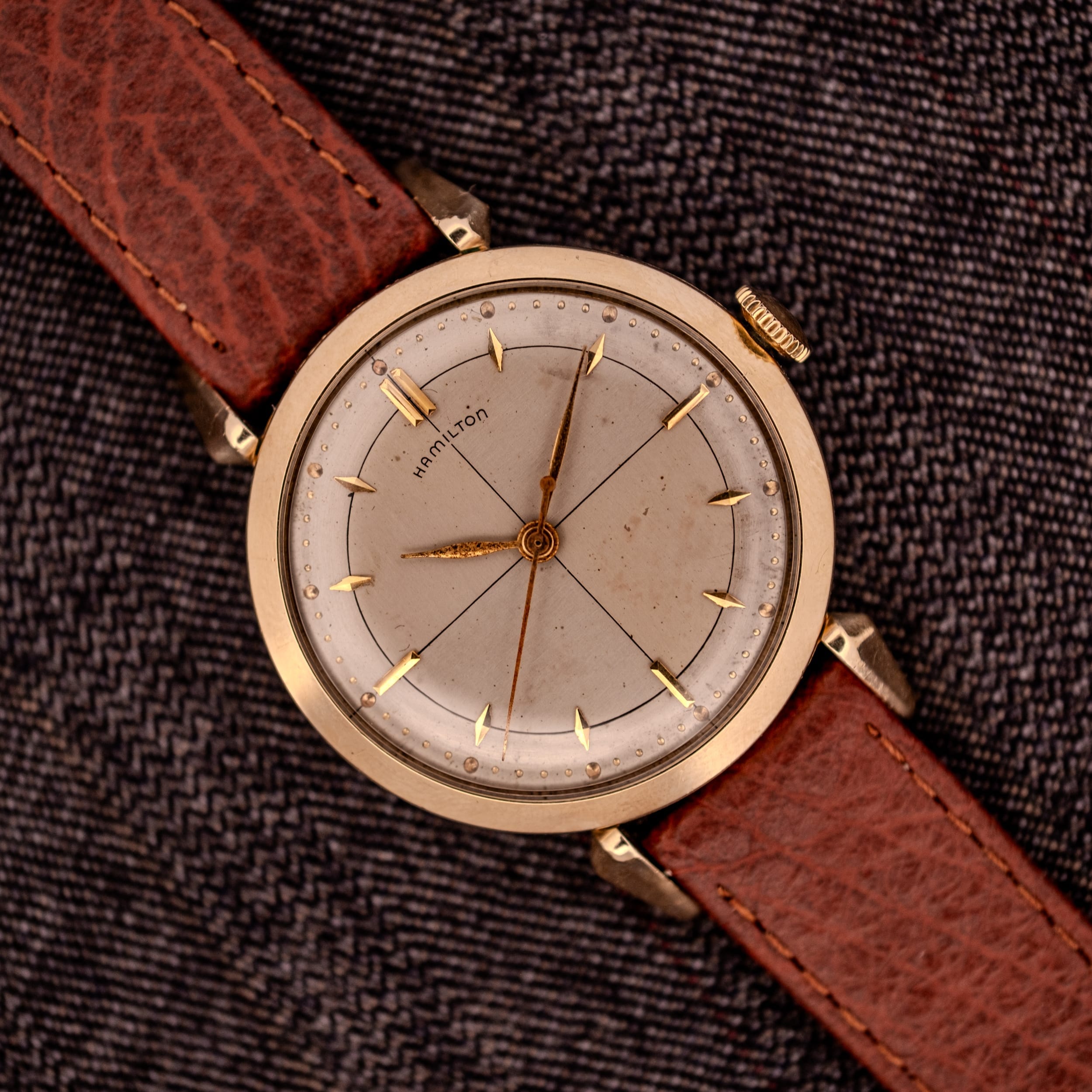
A 1940s Hamilton Rodney with sector dial in gold-filled case. In our inventory.
1. A vintage watch is art now, not a tool
This is the reframe that changes everything else.
When the references in our catalog were new, they were precision instruments. They told you the time. They timed your dive, your flight, your race. That was their job. Smartphones killed that job. GPS killed the navigation use case. A $300 G-Shock is more accurate, more durable, and more waterproof than almost any mechanical watch ever made.
A vintage mechanical watch is now wearable kinetic sculpture. You are not buying a tool. You are buying an object that does something mechanical and beautiful on your wrist, made by hands that are mostly gone, in styles that are no longer made. Buy it like you would buy art: because it speaks to you, because the craftsmanship is something you want close to your body, because it earned its history.
Internalize this first and the rest of these tips make more sense.
2. Set realistic expectations for performance
Following from tip 1: do not benchmark your 1965 Omega against a modern Seiko.
We have sold vintage watches that had not seen a watchmaker in twenty years and ran inside ten seconds per day. We have also sold beautifully serviced pieces that needed a tune within six months. Mechanical watches are biological in their unpredictability. A vintage caliber that is happy can run for decades. A vintage caliber that wants attention will let you know.
What this means in practice: if you need a watch that gains less than two seconds a day, runs through every shower and pool, and never needs service, buy a quartz or a Grand Seiko Spring Drive. If you want something with soul that asks for a little care every five to seven years, vintage is where you live.
3. Buy from sellers who can prove what they are selling
The single best filter you can apply. A good seller can produce:
- Macro photographs of the dial, the movement, the caseback, and the lume under UV light
- A documented service history, or an honest admission that they do not have one
- A clear return policy in writing
- Specific answers to specific questions about the watch
Sellers who cannot do these things are guessing too. They might be guessing correctly, but the asymmetry of information is now entirely on you. Pay for proof. It is cheaper than a redial in disguise. And do not over-index on a documented service history: it is rare on vintage, impossible to verify from a receipt, and easier to fake than the watch itself. What actually proves a watch is the movement, which is why service history is the wrong thing to ask for.
4. Learn to use serial-number and reference databases before you spend, not after
Every major brand has identifiers that tie a serial number to a production year, a caliber to a range of references, a reference to a model line. Five minutes of looking up a serial before you wire money has saved more vintage buyers than any other single habit.
Tools we use and trust: our own vintage watch index, pocketwatchdatabase.com, watchbase.com, brand-specific forums (Omega Forums, VRF, MWR), and the serial-number guides we have published for Rolex, Omega, Longines, Hamilton, Tudor, and Wittnauer.
If the watch you are buying has a serial number that does not exist or a caliber that does not match the case reference, you have found a Frankenwatch. Walk.
5. Patina vs. damage is the line that separates collectors from suckers
Aged lume that has turned warm cream. A tropical-brown dial that started life black and faded honestly. A bezel insert with character. Light oxidation on a steel crown. All of these are patina. They are part of why you are buying a vintage watch in the first place.
Active corrosion. A dial bleached by chemicals. Lume that is missing in chunks because someone tried to “clean” it. Pitting that is eating into the case. These are damage. They will get worse, and they signal a watch that has not been cared for.
We wrote a longer piece on this if you want the visual comparisons: patina vs damage on a watch dial. The short version: ask whether the imperfection adds to the story or shortens the life. If you cannot tell, ask someone who can.
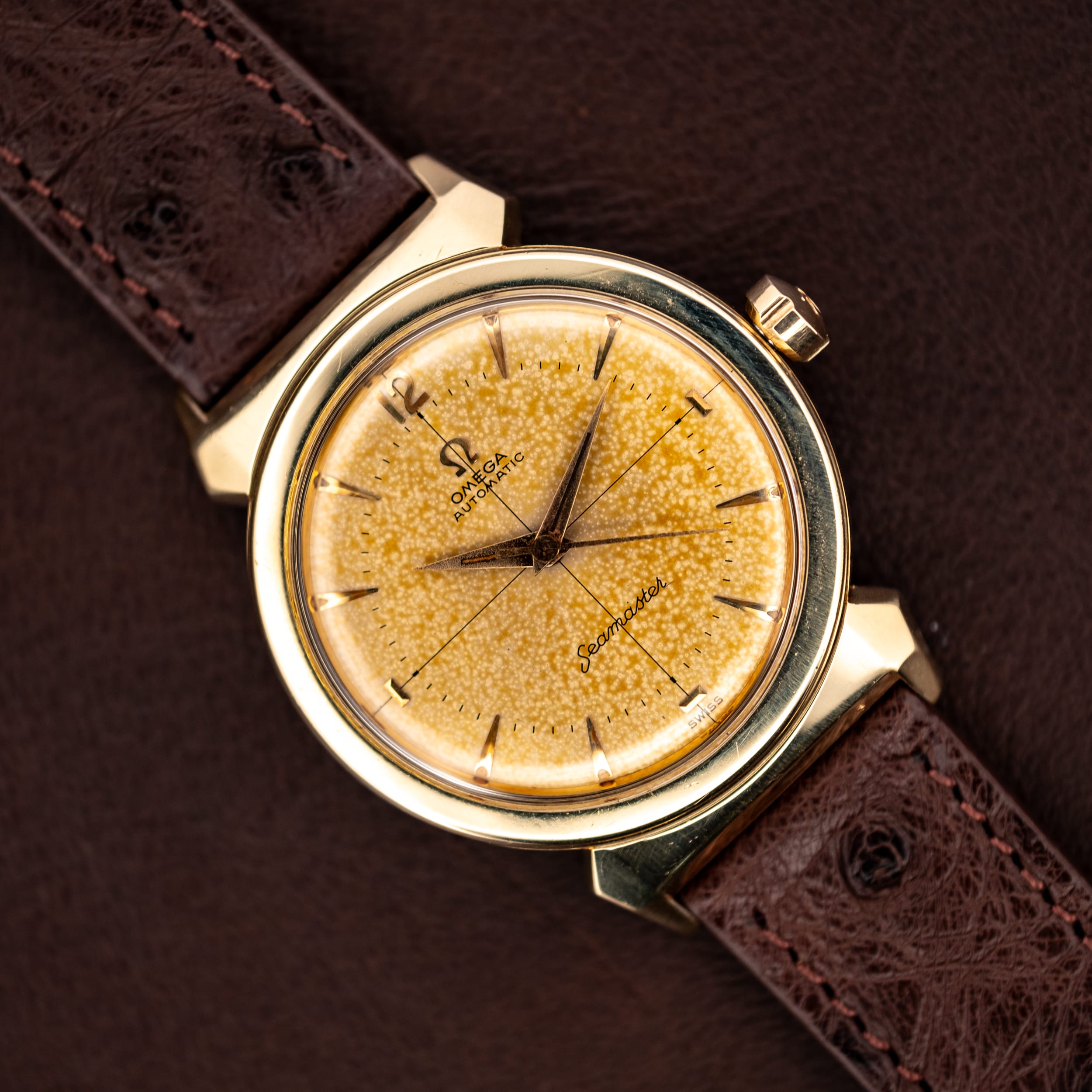
A Seamaster 14363 dial that started life black and faded gracefully into honest tropical brown. In our inventory.
6. Redials are the silent killer of vintage value
Many “minty” vintage Omegas, Longines, and Rolexes that look too good to be true are exactly that. They have been professionally redialed, which means the original dial was stripped and a new one printed using modern transfers. A skilled redial is invisible to the untrained eye. A skilled redial also costs you sixty to eighty percent of the watch’s value.
This is one of the harder things to spot. Dial font irregularities, modern paint reflectivity, signed casebacks that do not match the redial’s date, lume colors that are too uniform across the dial markers, these are all clues. The Omega Constellation pie-pan dial is one of the worst-affected references: most of them on the market are redials, and the originals carry a real premium.
If you cannot tell whether a dial is original, buy from someone who can.
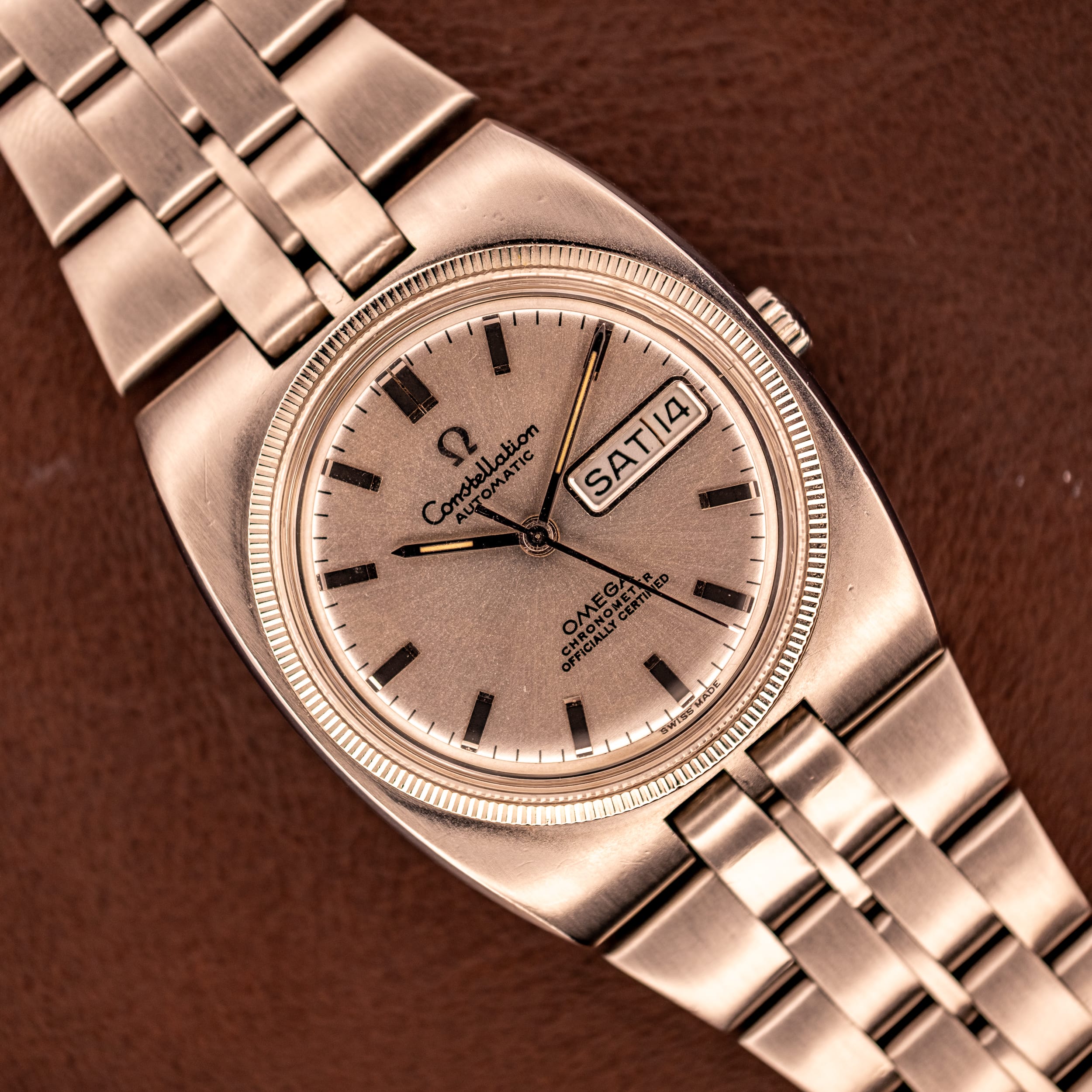
An original-dial Omega Constellation Chronometer 168.045. Constellations are one of the most redialed references in vintage collecting; this is what an honest one looks like. In our inventory.
7. The first “deal of a lifetime” you find probably is not
The vintage market has more volume than it appears. The same caliber, the same reference, the same dial variant cycles back through every month or two. The “I have to have it right now” feeling is the worst possible reason to commit to a five-thousand-dollar mechanical object.
If you missed it, another one is coming. If the seller is pressuring you, that is information about the seller. Patience beats sniping over any timeline longer than a single weekend.
8. Buy your taste, not the trend
Military divers were hot ten years ago. Dirty dozens are hot now. Sector dials are climbing. Whatever you are seeing on Instagram this week will not be what you are seeing in five years.
The watches that age well in your collection are the ones you actually like, in the styles that fit your wrist and your wardrobe. Buying a trendy reference because it is trendy means selling a trendy reference once the trend leaves. You are not collecting vintage watches if you are constantly liquidating to chase movements in the market.
9. Birth-year watches are a great filter, but not a religion
If you were born in 1972, hunting for a 1972 reference is a perfectly good way to narrow a search. Within a model range, your birth year is usually cheaper than a “popular” year of the same reference, because demand for 1969 Speedmasters dwarfs demand for 1972 Speedmasters.
What you should not do is pay a thirty percent premium because someone told you they have one with the “right” papers from your year. Use birth year as a screening tool, not a religious requirement.
10. Box and papers add value, but not always proportional to cost
A “full set” sounds great. Original box, original papers, original chronometer certificate, original receipt. In some cases these add real value, especially on iconic references where provenance is part of the asset.
In many cases, however, the premium being asked for the paper is larger than the value the paper actually adds. A naked watch with documented service history can be a better buy than a full set with sketchy provenance. Paper is also easier to fake than a watch is.
Decide what the box and papers are worth to you specifically, then compare to what the seller is charging for them. Often the math does not work.
11. Warranty and return policy are your safety net
A return window matters more than almost any other purchase term. It means you can take the watch to a third-party watchmaker before you commit to keeping it. It means if the seller’s description does not match what arrives, you have a path out.
We offer thirty-day returns and a two-year warranty on every watch we sell, which means a buyer can have any of our pieces inspected on arrival without losing the option to send it back. We are not the only seller who does this. Buy from sellers who do.
12. Start with one well-bought watch over three cheap ones
Cheap vintage is expensive vintage with extra steps. Three four-hundred-dollar watches off eBay will usually deliver one runner, one project, and one regret. One twelve-hundred-dollar watch from a reputable source usually delivers a daily wearer that you love.
We keep a running list of the best vintage watches under $1,000 for exactly this reason: there is a real bottom to what is worth buying, and it is higher than most beginners assume.
13. The community is your secret weapon, and most people overestimate their own knowledge
Both halves of this matter.
The communities (WatchUseek, r/watches, r/vintagewatches, Omega Forums, Mike’s Watch Repair, the model-specific subreddits) are filled with people who have looked at more watches than you have. Lurk, learn, ask before you buy. A photo posted to the right thread two days before pulling the trigger has saved more buyers than any single guide on the internet, including this one.
And: most people, especially after their first three or four vintage purchases, overestimate how much they know. The vintage watch world is deep. The deeper you go, the more variability you find across brands, eras, calibers, dial finishes, case alloys. A healthy collector approaches each new reference like a beginner. The collectors who get burned are the ones who stopped asking.
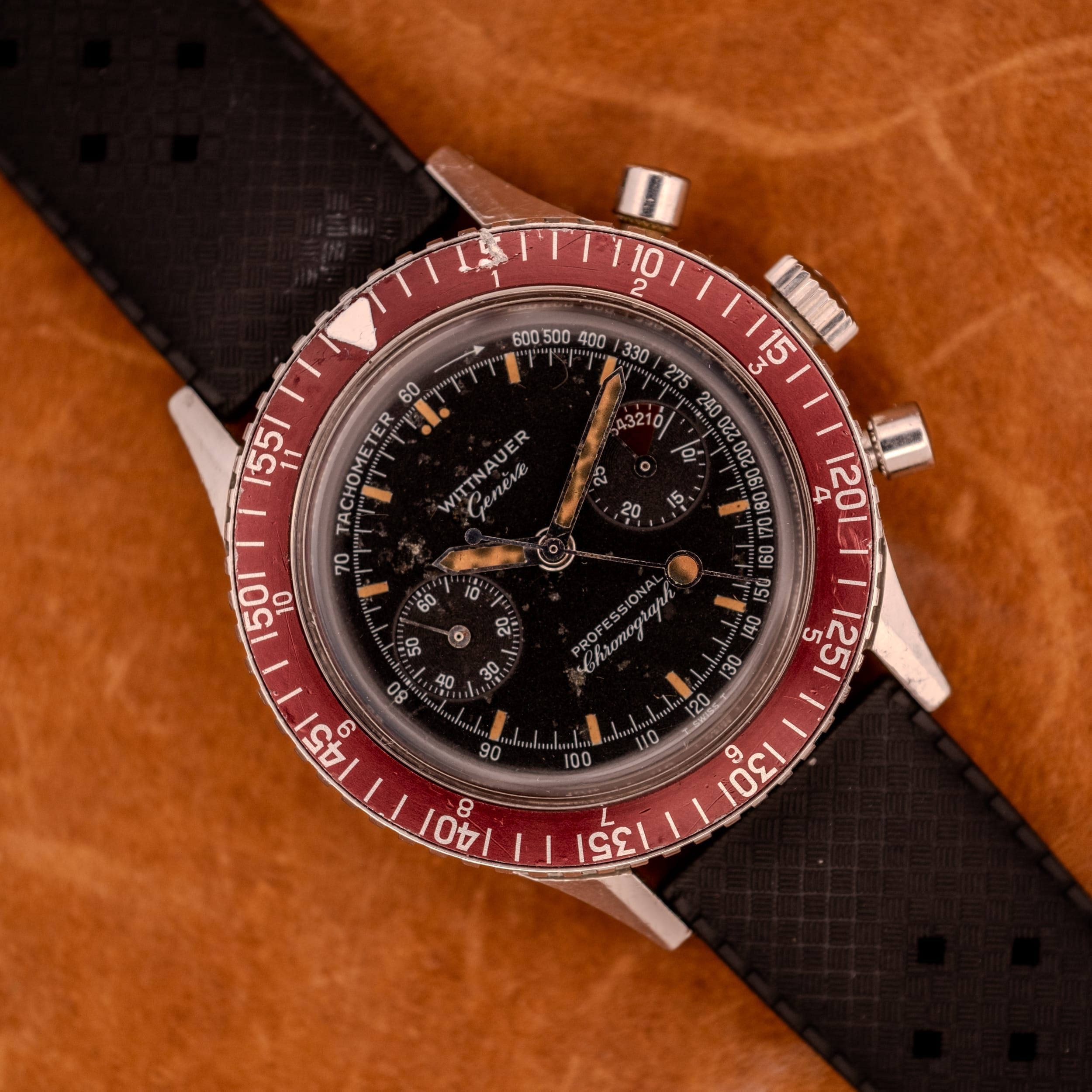
Wittnauer Professional Chronograph 7004A with the venerable Landeron 248 movement. One well-bought piece beats three cheap ones, every time. In our inventory.
A short note on what we do here
OTTUHR is a vintage watch shop. Every watch we sell has been inspected, researched, macro-photographed, and cleaned. We back them with a two-year warranty and thirty-day free returns. That is not the only honest way to sell vintage, but it is ours, and it exists because we got tired of how the vintage market treated beginners.
If you have a watch you are considering and want a second pair of eyes on it, send it our way. We are happy to look.
Related posts
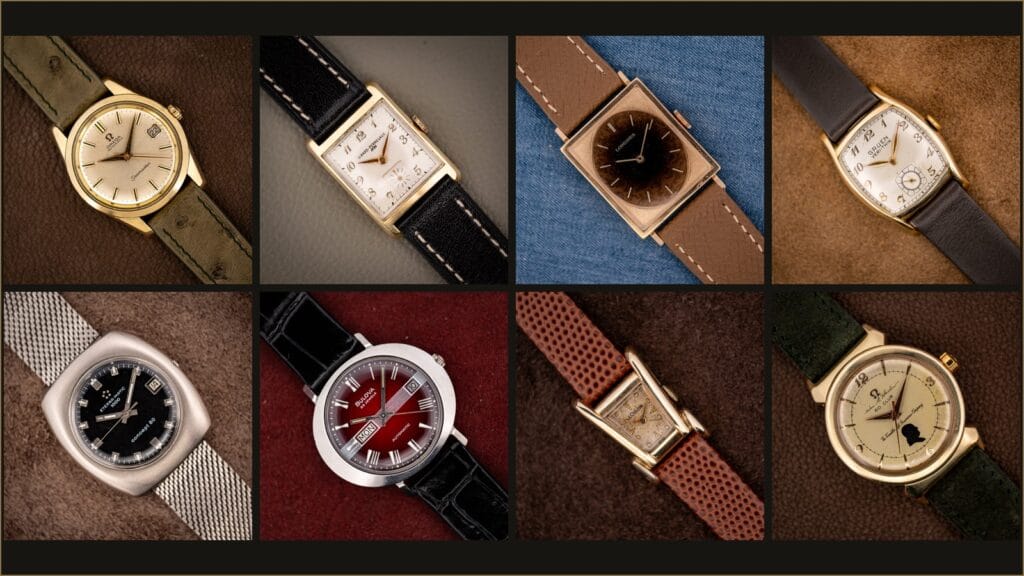
Watch Shapes: Which Vintage Case Shape Fits Your Style?
Case shape changes how a vintage watch wears more than diameter alone. Compare eight silhouettes and learn which one fits your wrist and style.
Vintage Dress Watches: How to Choose One You’ll Actually Wear
The best vintage dress watch is the one you will wear beyond weddings. Here is how to choose the right size, metal, dial, shape, and strap.
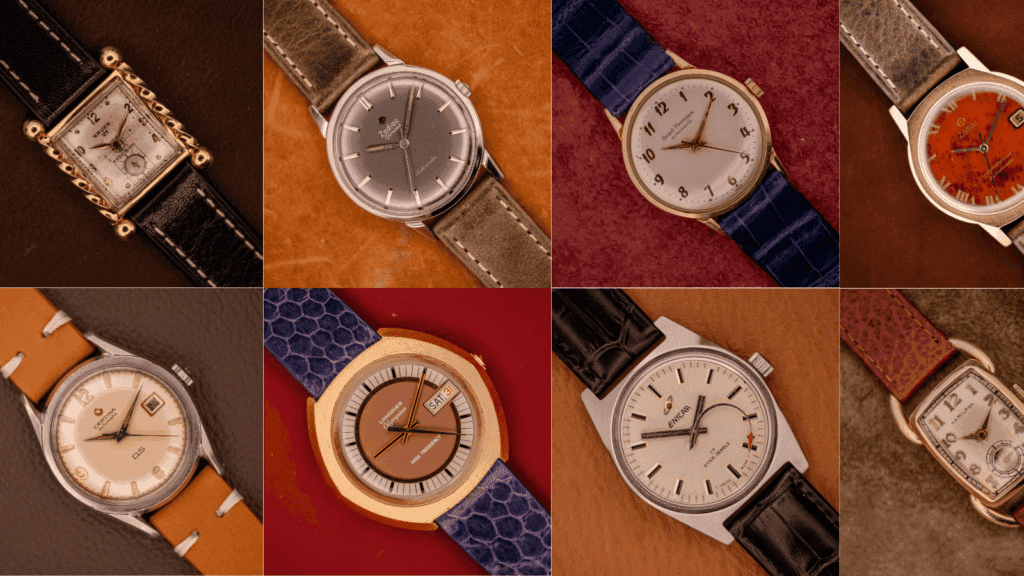
Vintage Watch Styles: A Visual Guide to Finding Yours
Most buyers pick a brand and stall. Here are nine vintage watch styles, shown with real watches from our archive, and the catch that comes with each one.
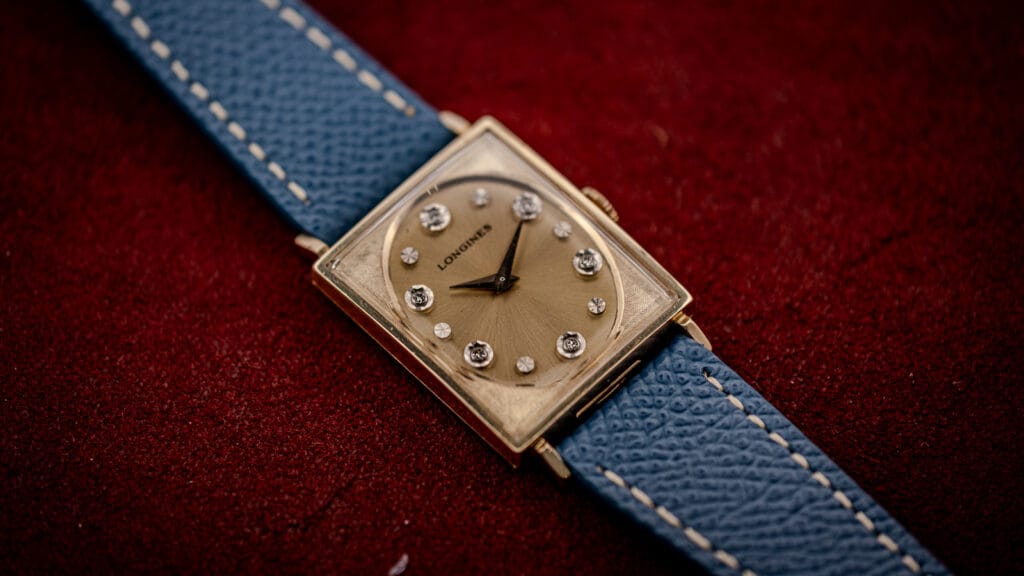
Vintage Tank Watches: A Buyer’s Guide to Rectangular Watches Beyond Cartier
Every Cartier Tank alternatives list is new watches imitating old ones. The originals still exist and cost less. A buyer's guide to vintage tank and rectangular watches: the brands, the prices, and what to check.
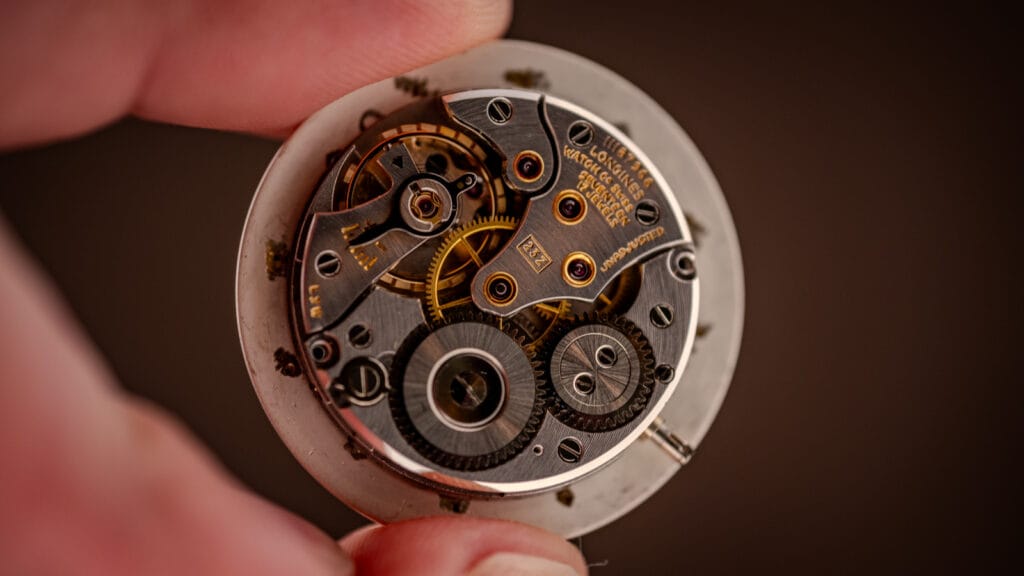
Service History Is the Wrong Question. Here’s the Right One.
Everyone says to ask for a vintage watch's service history. Most of it can't be verified, and a receipt proves a transaction, not a result. Here's what actually tells you a watch has been serviced, and the better question to ask.
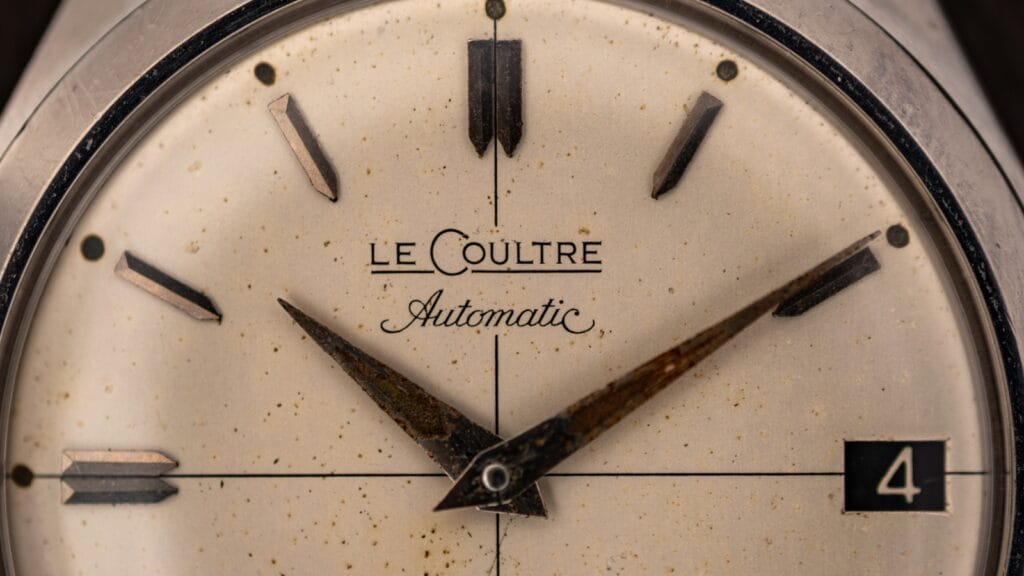
LeCoultre vs. Jaeger-LeCoultre vs. Jaeger: What the Name on the Dial Means
Three names, one Swiss firm, and one watch that isn't what it looks like. What LeCoultre, Jaeger-LeCoultre, and plain Jaeger on a vintage dial really tell you.
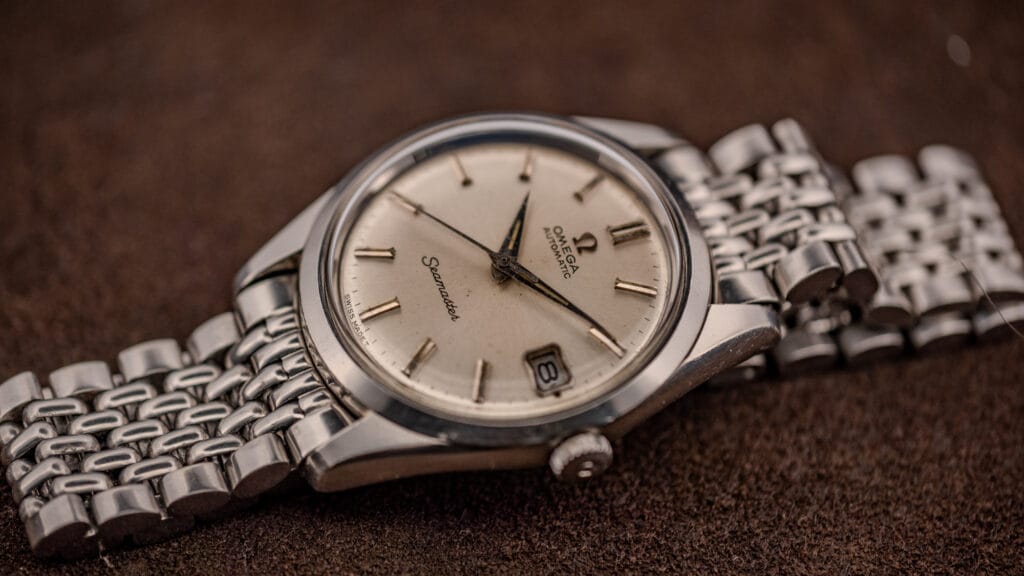
Omega Seamaster 166.010 Buyer’s Guide: Prices, Variants, and What to Look For (2026)
Everything you need to buy an Omega Seamaster 166.010 in 2026: real market prices by condition tier, five dial variants explained, caliber 562 vs 565, original part numbers, and what to inspect before you commit.
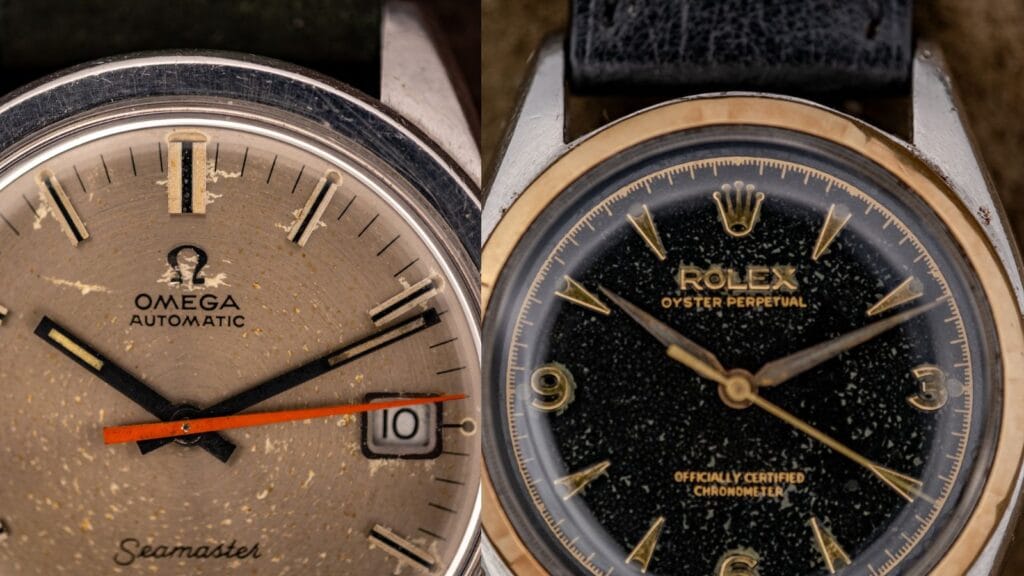
Omega vs Rolex: The Vintage Buyer’s Verdict
Vintage Omega vs vintage Rolex: where the Rolex premium is worth paying, where Omega is the smarter buy, and how to dodge redials on both. A collector's verdict.
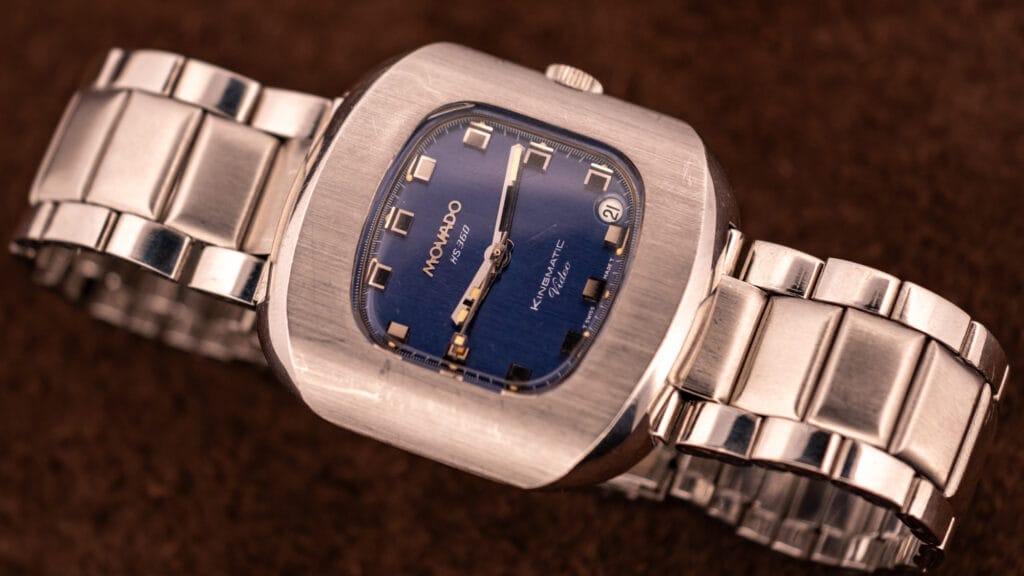
Movado Kingmatic: A Vintage Buyer’s Guide to References, Calibers, and Value
The Movado Kingmatic is one of the best values in vintage automatics. A buyer's guide to its references, in-house calibers, the Sub-Sea line, what to check, and what they actually sell for.
13 Vintage Watch Collecting Tips for Beginners (From 1,000+ Watches Sold)
Thirteen vintage watch collecting tips drawn from selling over 1,000 watches. What separates a smart first buy from an expensive lesson, with no sugar.
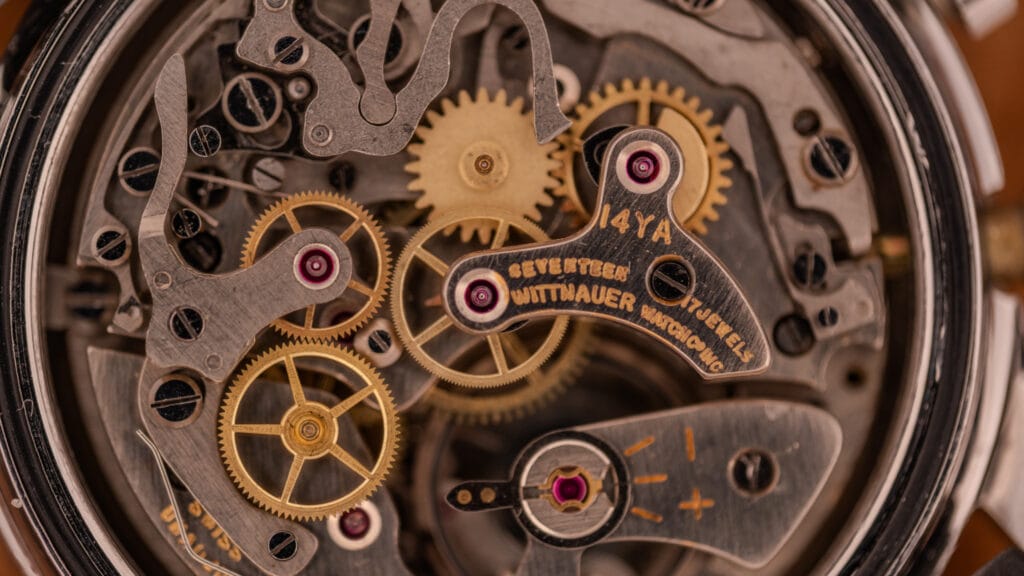
Vintage Wittnauer Chronograph Caliber Identification: Venus 188, Valjoux 7733/7734, Landeron 248
How to identify the movement inside any vintage Wittnauer chronograph: Venus 188, Valjoux 7733 and 7734, Landeron 248, and the house numbering system Wittnauer used to mark them.
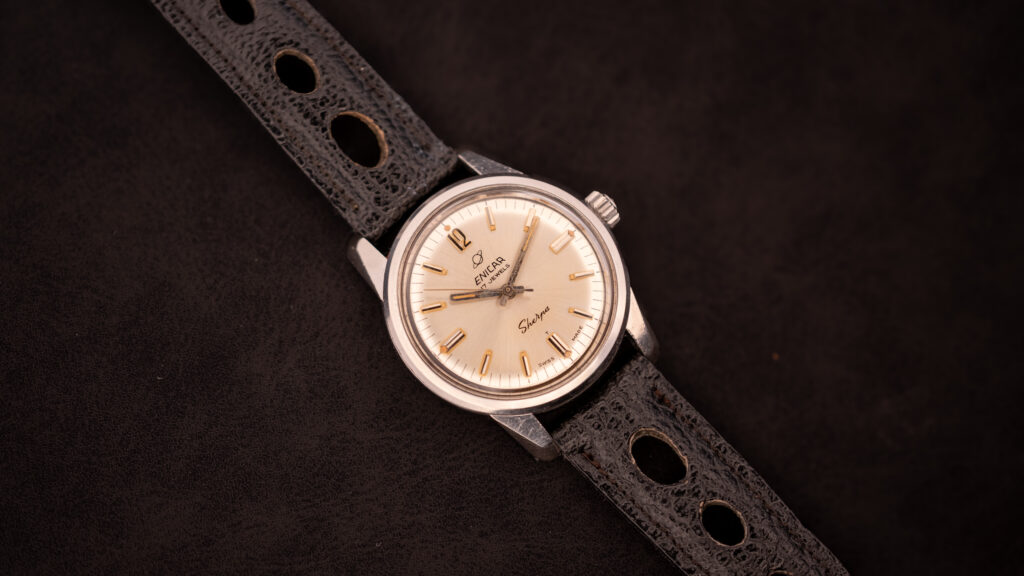
How Water-Resistant Is a Vintage Watch, Actually? The Honest Answer.
Every dealer says never get a vintage watch wet. That advice is half-engineering and half-liability theater. Here is what is actually true about vintage water resistance, where water actually gets in, and when a 1965 diver is safer than a 2-year-old modern.