

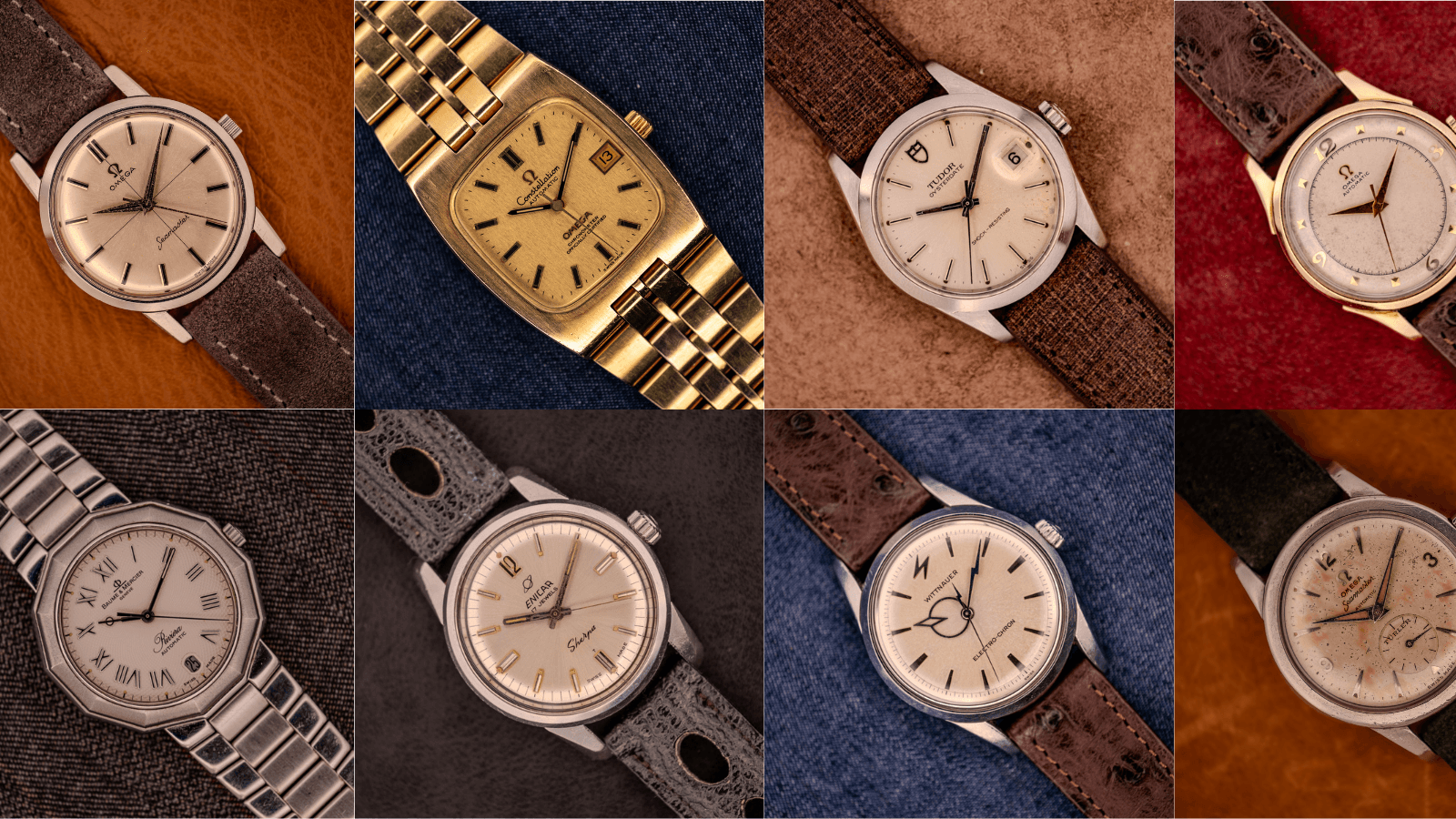
The best vintage watches under $2,000 occupy the most efficient price point in vintage watch collecting. Below the $2,000 line, the supply is thin: budget-tier vintage gets you mostly common references in average condition, or oddballs that need work. Above it, the curve flattens fast: the difference between a $2,000 watch and a $4,000 watch is mostly provenance and dial originality, not horological substance.
The $2,000 line is where the vintage market gives you the most actual watch per dollar.
It is also the price tier where the contrast with modern luxury is most embarrassing for the modern side. Most of the watches on this list outperform their modern equivalents at three to five times the price. The Omega Seamaster you can buy for $1,500 today shares more DNA with a 2026 Aqua Terra ($6,400 retail) than the Aqua Terra shares with the original Seamaster line. The vintage Polerouter under $2,000 was designed by the same hand that designed the Royal Oak. The Tudor Oysterdate at $1,450 is everything a Black Bay 36 wishes it were, plus 50 years of provenance.
The list below is 12 specific watches currently in OTTUHR inventory that punch above their price. Each entry includes the pick, what you are actually buying, and why it sits above its market tier. Prices and references reflect available inventory at time of writing; substitutions exist for most picks if a specific one moves.
This is the value list, not the prestige list. Park rules apply throughout: never paid retail for anything.
1. Universal Genève Polerouter 20375-4 “Incognito Dial” ($1,800)

The Polerouter is the watch the market has been quietly mispricing for a decade. Designed by Gérald Genta in 1954 (his first major commission, two decades before the Royal Oak), the Polerouter combines a slim case, a micro-rotor automatic movement, and the architectural dial Genta would later refine into his luxury work. The “Incognito” variant has the cleanest dial of the line: no date, no script, just the Polerouter signature and the indices.
What you are buying: a Genta-designed luxury watch with a cal. 215 micro-rotor for $1,800. Comparable Genta-credited watches start at $30,000. The Polerouter is identical design DNA, two decades earlier, no signature on the dial.
Buy criteria: original dial (refinished Polerouter dials are rampant), case lugs unpolished or lightly polished only, micro-rotor running smoothly. Run from heavily polished cases; the Genta dial proportions die when the lugs lose their original chamfer.
2. Universal Genève Polerouter Date ($1,940)
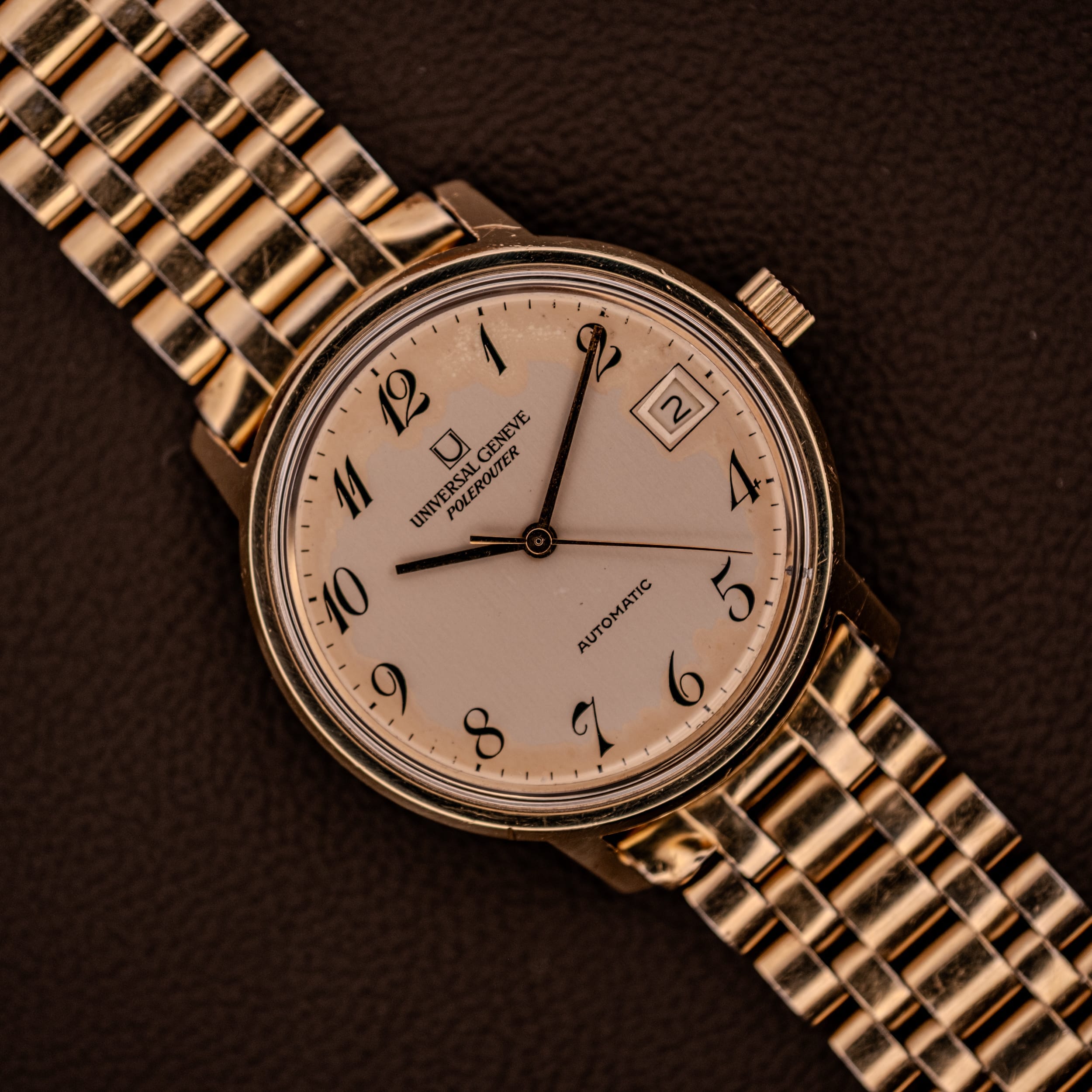
The dated counterpart to the Incognito. Same cal. 215 micro-rotor, same Genta architecture, with the addition of a date window at three. Arabic numerals dial variant, slightly less austere than the Incognito but with stronger wrist presence.
The market reads the date complication as a downgrade on the Polerouter (purist preference favors no-date dials). It is not a downgrade. The cal. 215 with date is the same movement family used in much pricier UG references, and the wrist proportions are identical. The pricing gap between Incognito and Date variants is about 7 percent. The horological gap is zero.
3. Omega Seamaster 166.020 U.S. Steel Presentation Watch ($2,000)
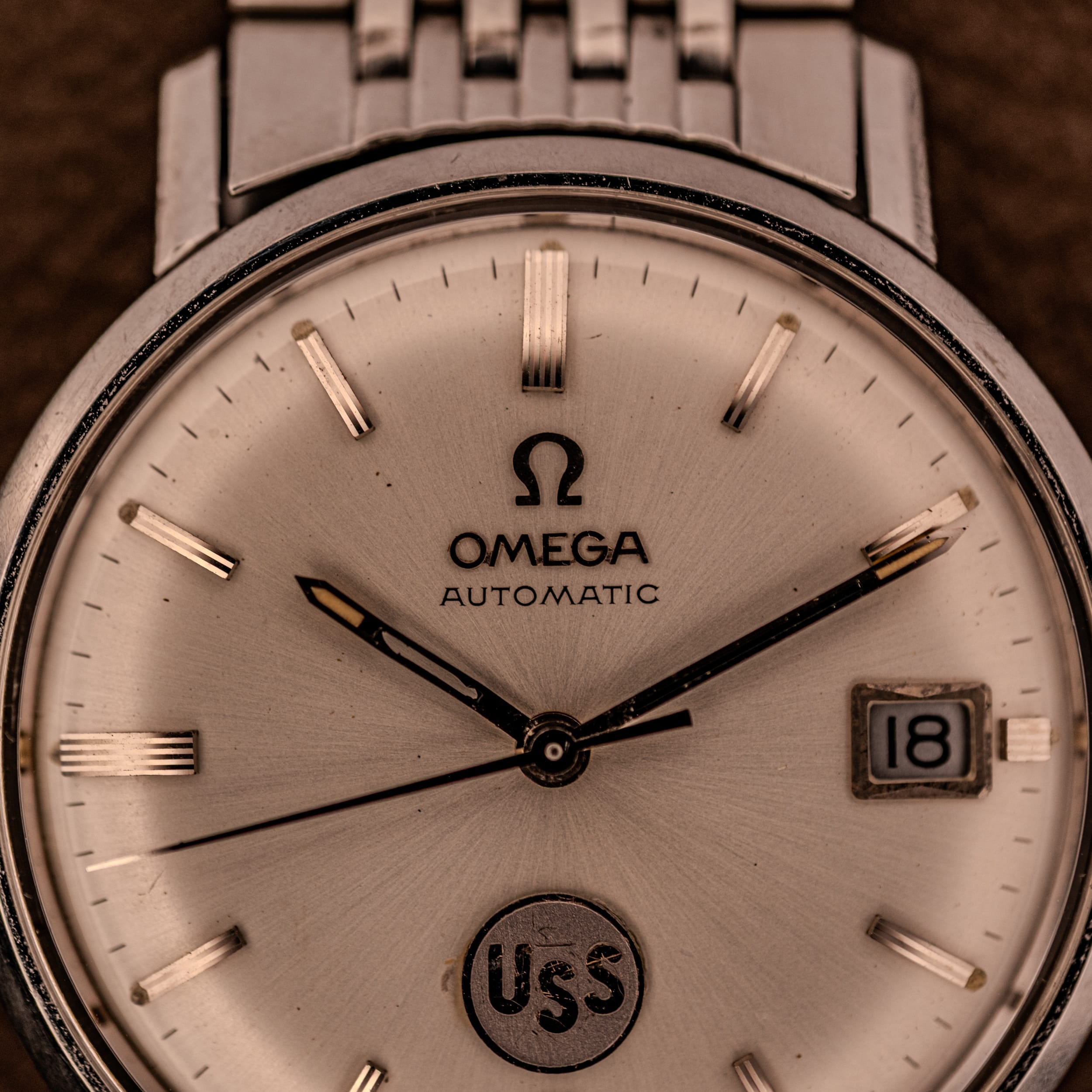
A late-1960s Seamaster delivered as a corporate presentation piece for U.S. Steel, with the company’s logo applied to the dial. Original presentation Omegas in this configuration trade as an entirely different category from standard 166.020s: they were produced in small batches for specific corporate clients, the dials are factory-original by definition (corporate logos cannot be retroactively redialed), and the provenance carries even when the original recipient is unknown.
The 166.020 itself is one of the most underrated Seamasters of the era: cal. 565 movement, jumbo 35mm case, sharp lug architecture. As a presentation piece, you are getting an authenticated original-dial 166.020 plus a permanent piece of postwar American industrial history, for the same price most sellers ask for a generic 166.020 with a dial that may or may not be original.
4. Tudor Oysterdate Ref. 90120 ($1,450)
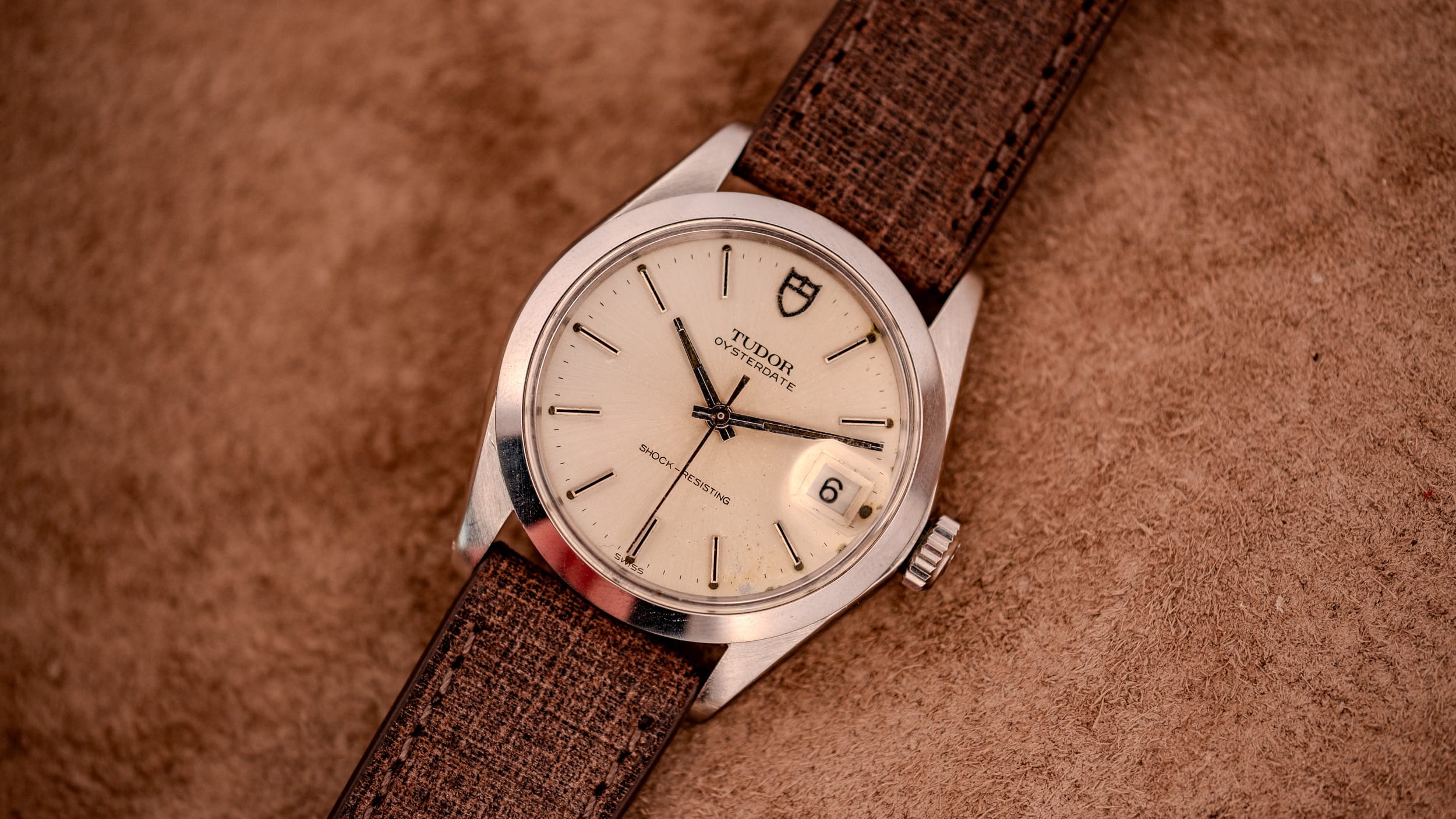
The single best Tudor under $2,000 in the current market. The 90120 is a stainless steel Oysterdate with a sunburst dial, manual wind ETA-based movement, and the Rolex-made Oyster case that gives the watch its build quality. The Oyster case is the same one used on contemporary Rolex Oysterdate references that trade for $3,500 and up. The only meaningful difference is the rotor signature.
Tudor under $2,000 is a vanishing category. The current Black Bay 36 retails for $3,500 in steel and is, on every functional metric, a less interesting watch than the 90120. The 90120 has provenance, the Black Bay 36 has marketing.
Buy criteria: Oyster case crown should screw down crisply, dial sunburst should be even with no patches of refinishing, original movement (cal. 2784 or close cousin).
5. Zodiac Aerospace GMT Ref. 752-934 ($1,500)
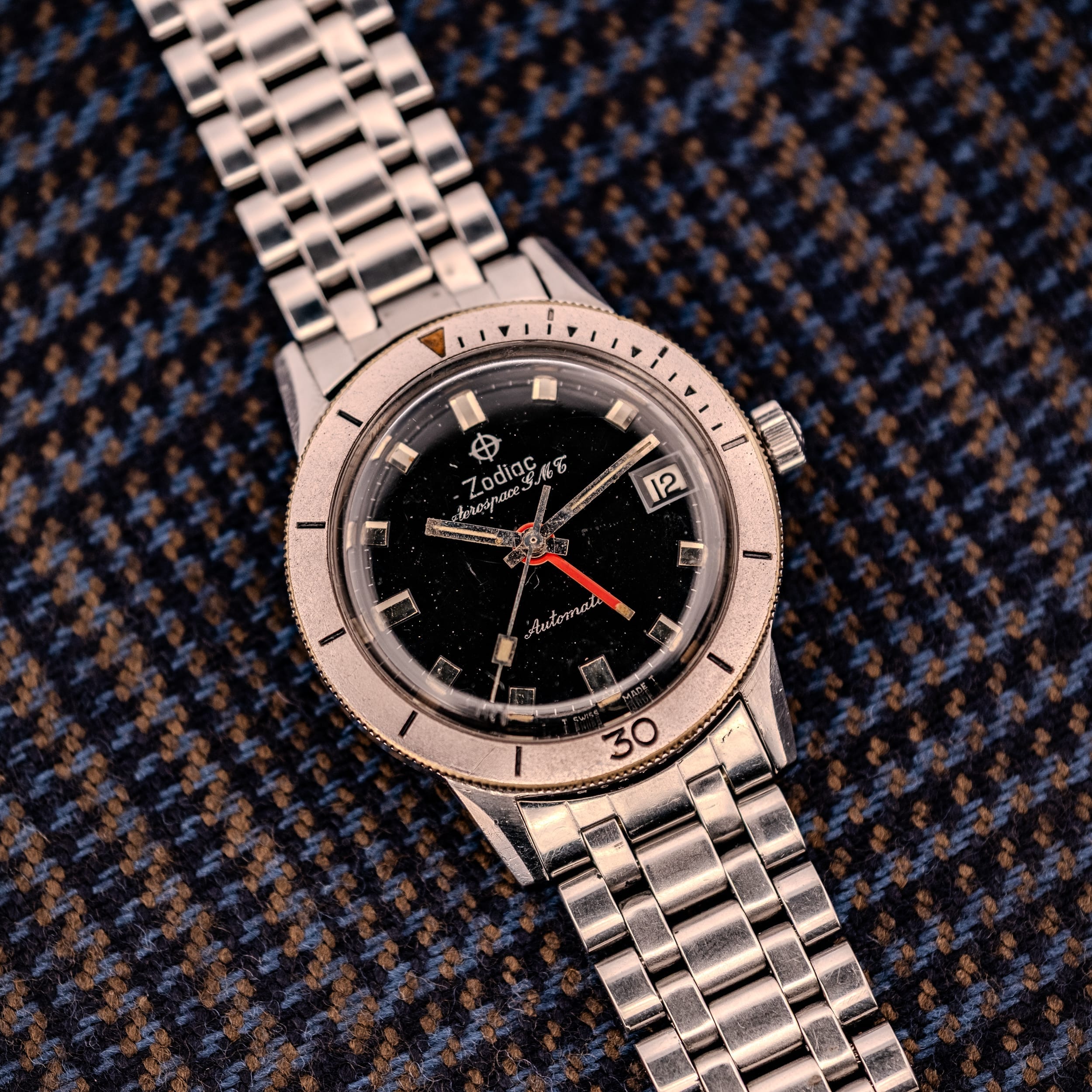
A vintage GMT under $1,500 is structurally impossible to find at any modern manufacturer. The cheapest contemporary GMT from a recognized brand is the Tudor GMT at $4,650; the Rolex GMT-Master II starts at $11,150. The Zodiac Aerospace 752-934 has a 24-hour fourth hand, dual-time display, and a chrome bezel, with a black dial and the early-1960s aviation aesthetic that defined the original GMT category.
What you are buying: an authentic mid-century travel watch with the complication that defined a generation of jet-age design. What you are not buying: a modern reissue of vintage styling. This is the original.
Buy criteria: 24-hour hand should track independently and align cleanly at the home position; bezel chrome plating intact (chrome bezels do not refinish well); original crown (Zodiac crowns are often replaced).
6. Le Jour Triton Double Register Chronograph ($1,900)
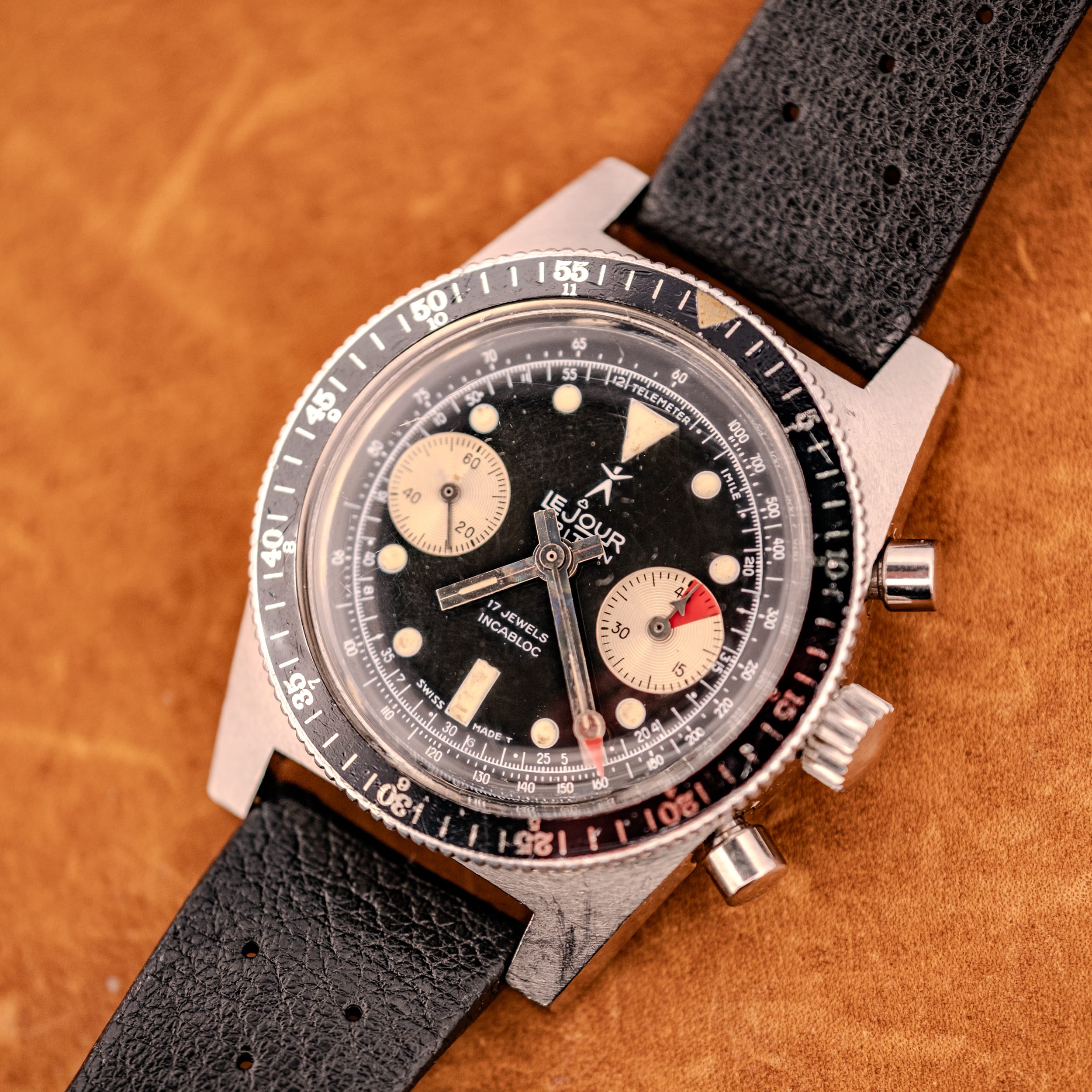
A chronograph under $2,000 with both registers operational and the case in honest condition is the rarest pick on this list. Most vintage chronographs in this price tier have at least one stuck register, a refinished dial, or a non-original movement. The Le Jour Triton with the Landeron 248 column-wheel chronograph movement, double register dial layout, and skin-diver case treatment is everything the modern $5,000 chronograph aspires to be.
Modern equivalent comparison: a 2026 TAG Heuer Carrera Chronograph retails at $5,950. The Le Jour Triton has a more visually compelling dial, an actual column-wheel movement with provenance, and a pricing tier that lets you take the watch swimming without flinching.
Buy criteria: pushers responsive at both stages (start/stop AND reset), chronograph hand returns cleanly to zero, both registers actively turning.
7. Hamilton Thin-O-Matic Ref. T-406 Hooded Lugs ($1,050)
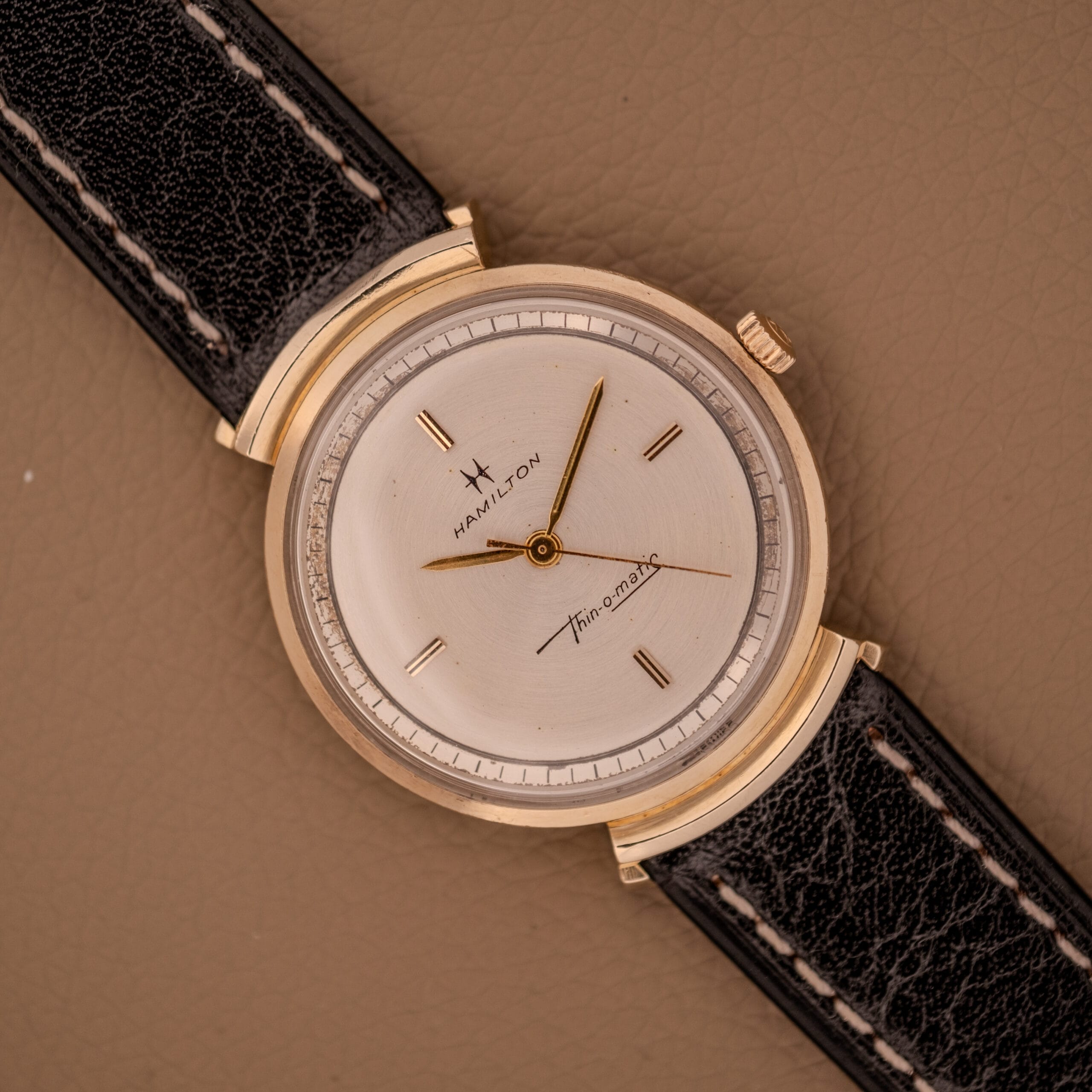
The Thin-O-Matic line was Hamilton’s answer to the European thin-watch race of the late 1950s and 1960s. Cal. 663 micro-rotor movement, hooded-lug case design that hides the strap attachment under the bezel, dress watch proportions in steel. The T-406 with original hooded lugs is the cleanest expression of the line.
The thin-watch category is having a quiet resurgence in vintage circles after a decade of oversized-watch fatigue. Hamilton’s American thin watches are priced 30 to 50 percent below their European equivalents (Patek 96, Vacheron 4895) for purely brand-based reasons; the engineering and case construction are not the equivalent gap. The market correction is happening slowly. The T-406 at $1,050 is below where it should be sitting.
8. Omega Seamaster Tropic Dial Ref. 14701-2 ($1,350)
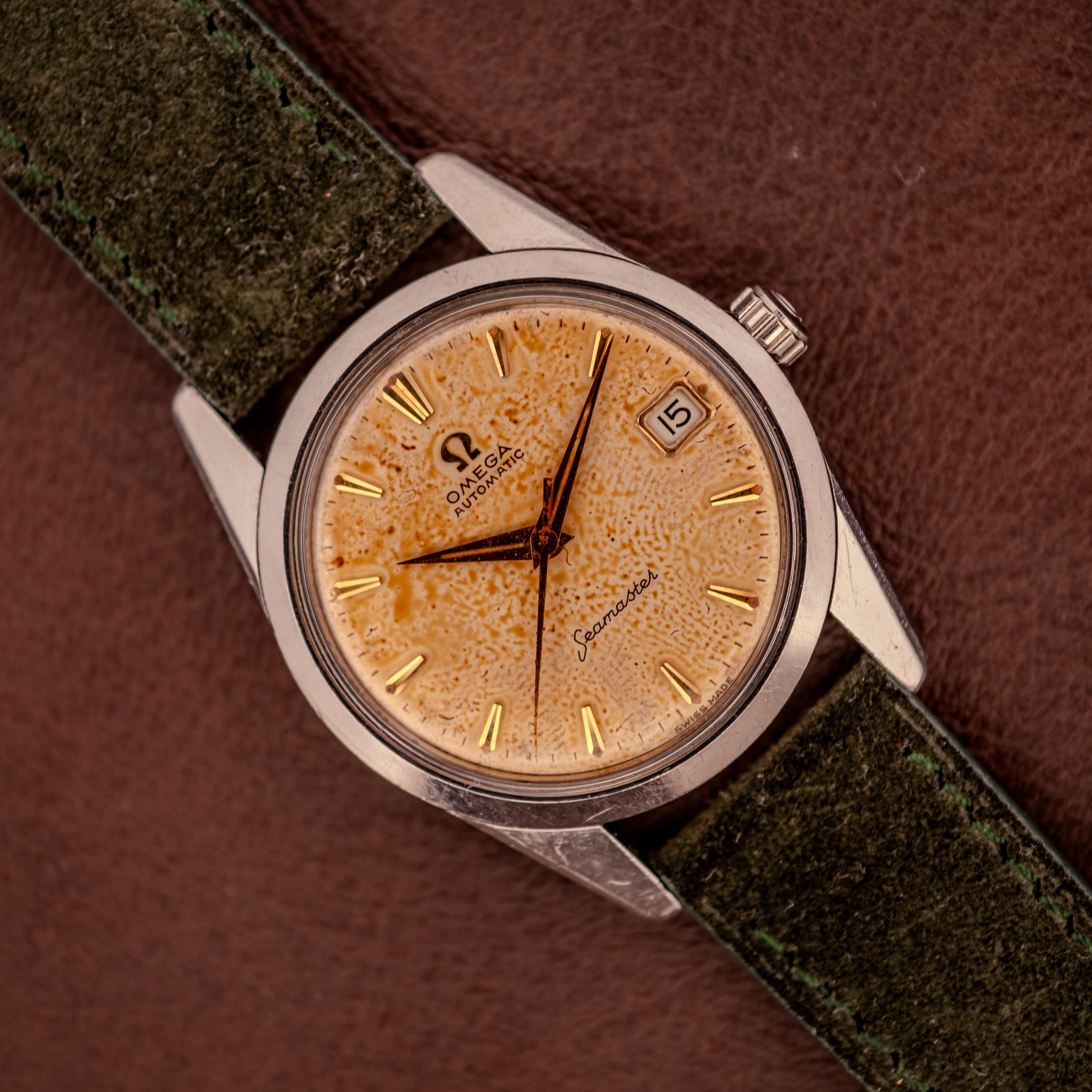
Tropical-dial Omegas from the early 1960s are the cleanest patina category in vintage watch collecting. The 14701-2 with cal. 562 movement and original tropic-aged dial (factory black turned to chocolate-brown over six decades of UV exposure) is documentable, irreversible, and specific to original-dial examples only. Tropical dials cannot be faked at this stage of vintage knowledge: the patina pattern is too organic to reproduce convincingly.
What you are buying: an authenticated original-dial Seamaster with one of the most desirable patina conditions in vintage collecting, for the price of a refinished standard-dial example. The market premium for tropical patina has been forming for five years. It is not yet fully priced in at this reference.
9. 1936 Omega Trench Watch Hadley Staybrite Steel Case ($1,125)
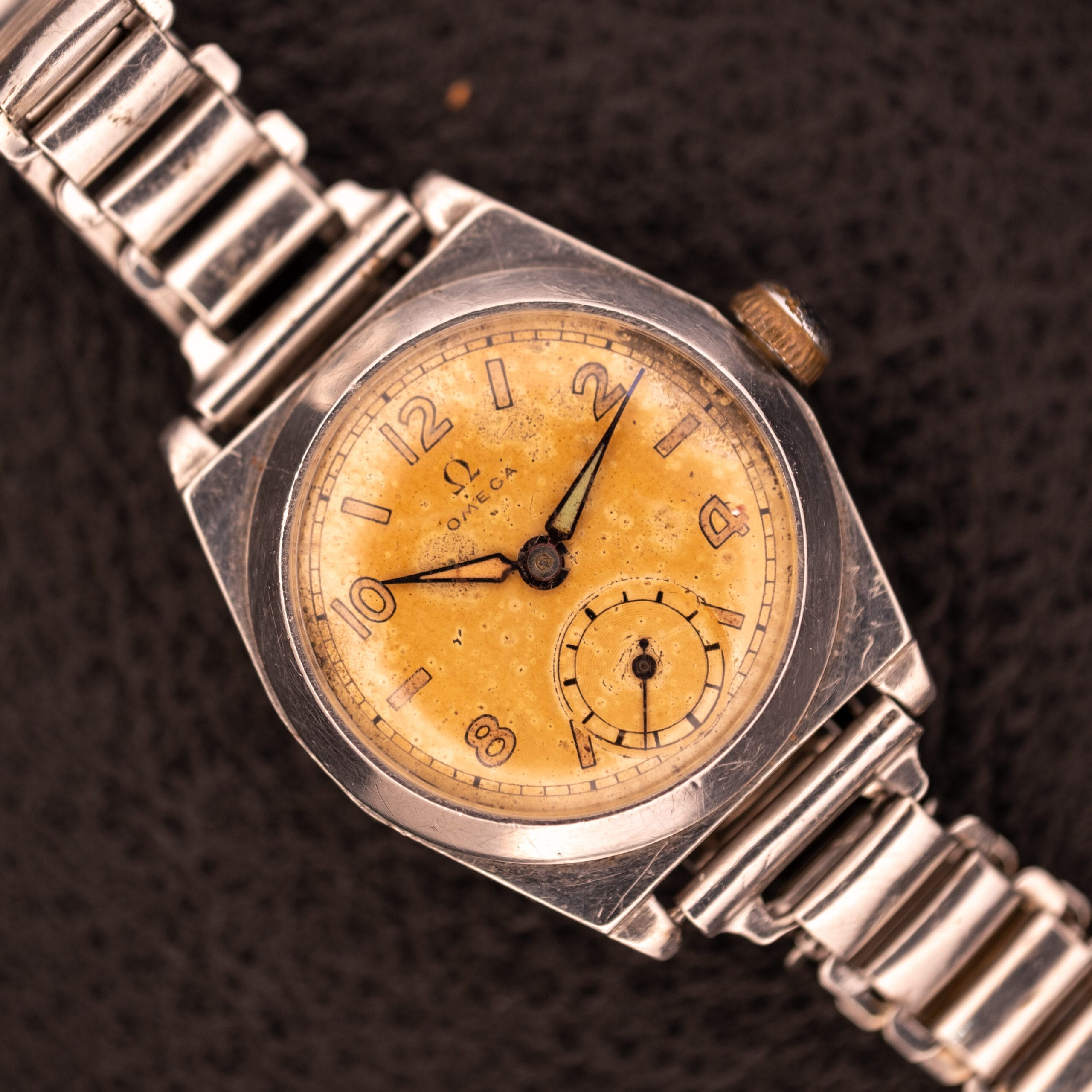
A pre-war Omega in original Staybrite steel case with original Hadley case-maker stamping, cal. 23.4 movement. Trench watches as a category bottomed out in market interest a decade ago and have been recovering quietly since: the COVID-era shift toward smaller cases brought the 32-34mm trench watch case back into wearability, and the historical provenance (these watches went to actual war) carries weight that no modern marketing can manufacture.
The 1936 trench watch at $1,125 is, dollar for dollar, the oldest and most historically dense pick on this list. A 90-year-old Swiss-made watch with documentable case provenance, intact movement, and original case stamping. The modern equivalent does not exist; nobody is making this watch new.
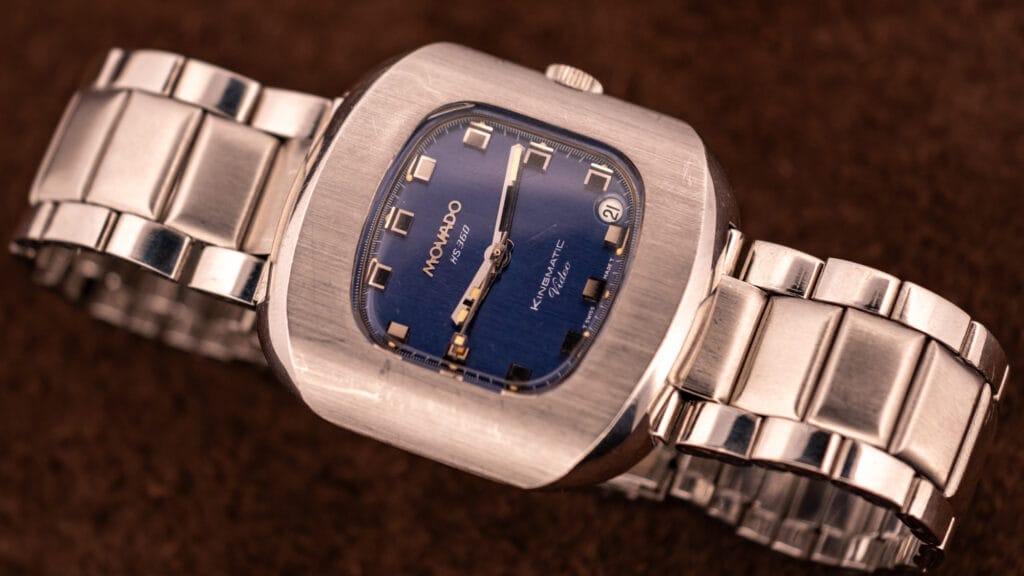
10. Movado HS 360 Kingmatic Video Blue Dial ($1,100)
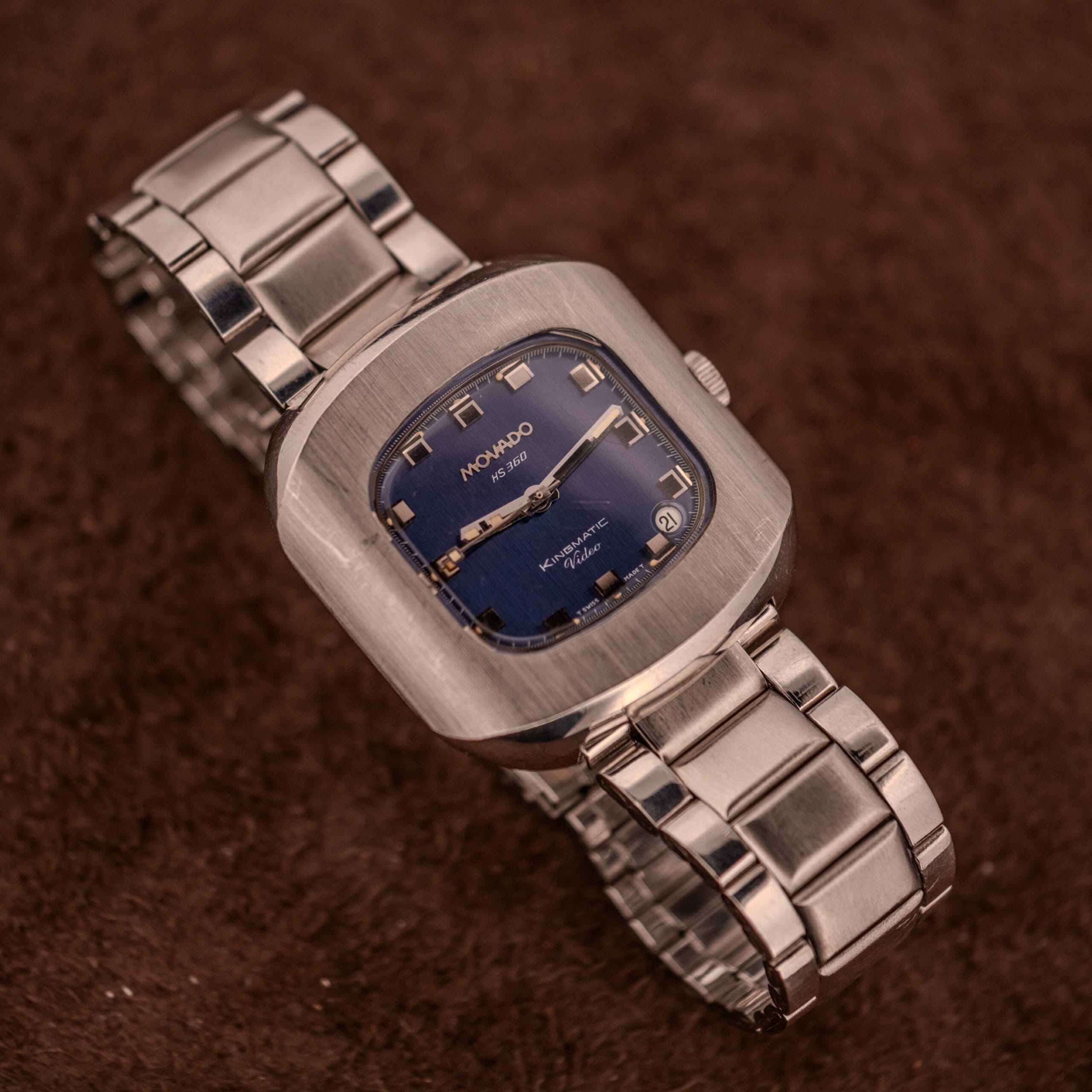
The Kingmatic line was Movado’s high-frequency offering in the mid-1960s, with the cal. 408 movement running at 36,000 vph. High-frequency vintage movements are an underappreciated technical category: the 36,000 vph rate produces smoother sweeping seconds and better timekeeping accuracy than the standard 18,000 or 21,600 vph movements of the era, but the market does not yet price the technical advantage into Movado’s pricing the way it does for Zenith El Primero or Girard-Perregaux high-beat.
The blue dial variant is the rarer dial color in the Kingmatic line, with the “video” sunburst pattern that catches light differently than standard sunburst dials. At $1,100, you are buying a high-frequency mid-century automatic at standard-frequency pricing.
11. Wittnauer Electro-Chron “Lightning Bolt” Ref. 6150/2 ($1,850)
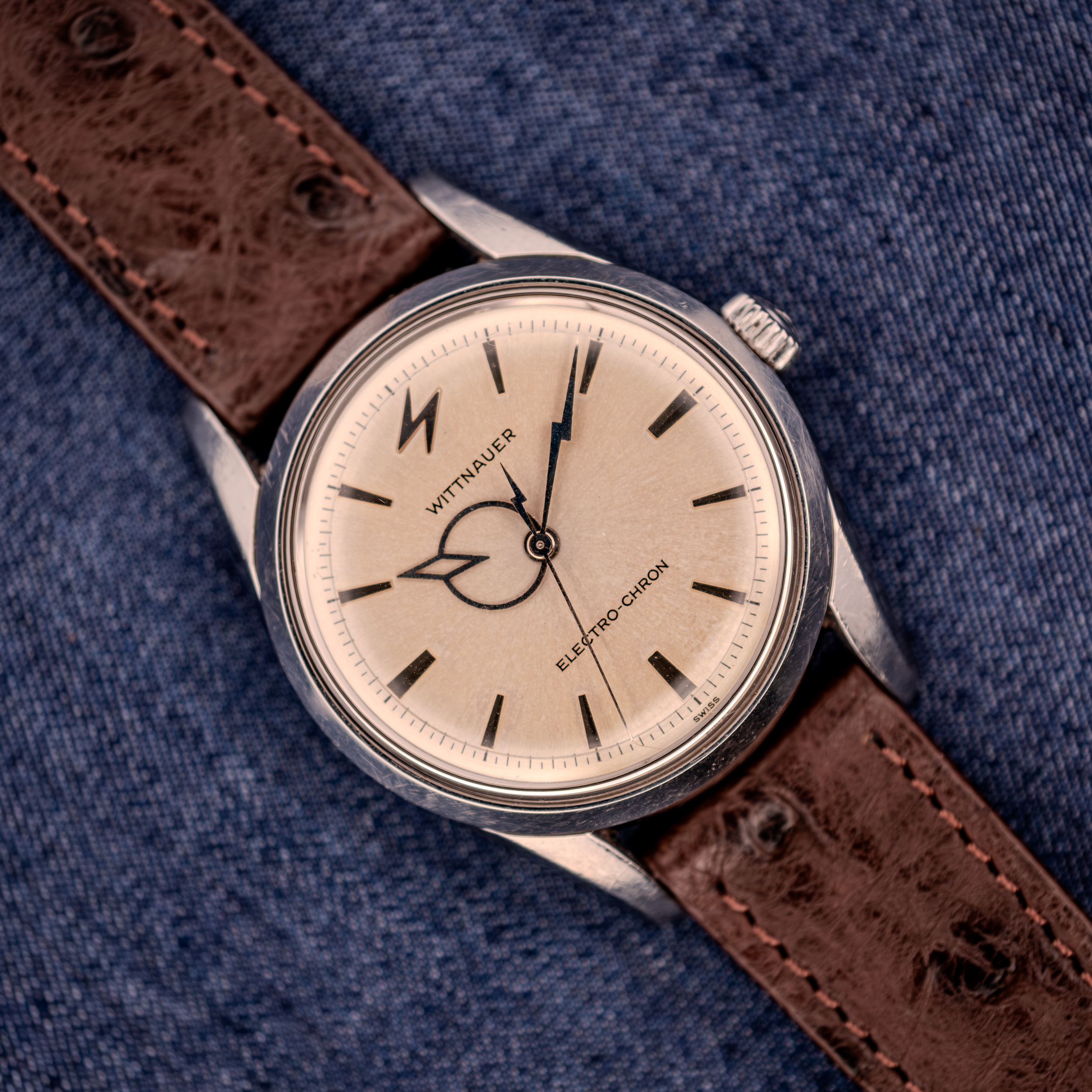
The Electro-Chron is the watch most vintage collectors have never heard of. Wittnauer’s electric watch line ran in parallel to Bulova’s Accutron in the early 1960s, used the cal. 11EW battery-driven movement, and produced one of the cleanest dials in mid-century watchmaking: the “lightning bolt” seconds hand that signals the electric-era technology without overdoing it.
The Electro-Chron exists in a market gap. It is not a standard mechanical watch (so the mechanical-watch buyers skip it), and it is not an Accutron (so the Accutron specialists skip it). Wittnauer-specific collectors know the line. Almost nobody else does. That is the buying window.
Park-style buy criteria: working movement (battery-driven movements from 1962 require specialist service; budget for $200 to $400 for a service before purchase if movement is non-running), original lightning-bolt seconds hand intact, dial color matching the era (tropic patina indicates original).
12. Silvana 25 Jewels Automatic Skin Diver Cal. 2472 ($1,850)
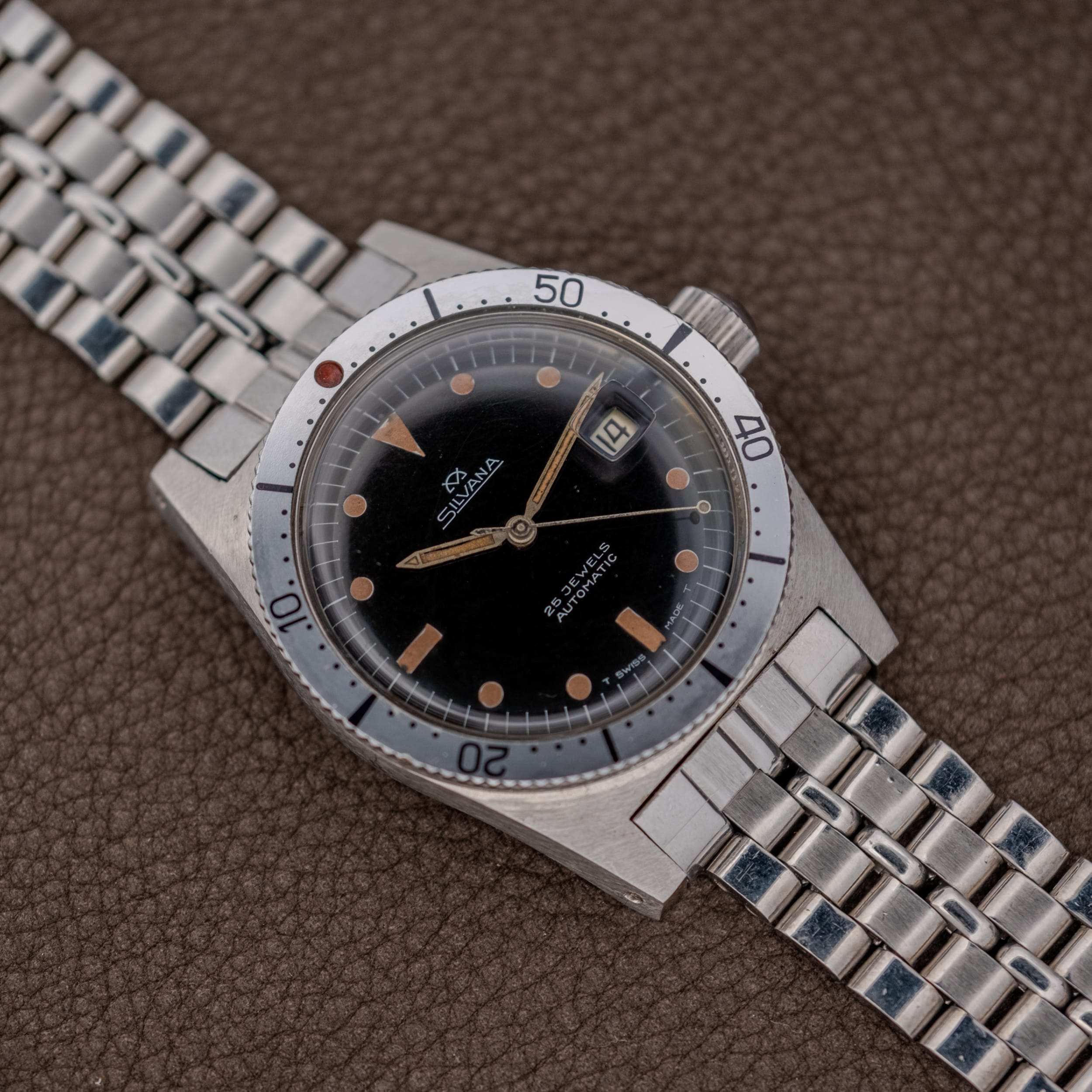
A 1960s skin diver from a Swiss brand that survived the quartz crisis only by going dormant rather than dying. The Silvana skin diver has the standard mid-1960s diver vocabulary (rotating bezel, screw-down crown, luminous indices) but in a more compact case (38mm) than the modern oversized diver standard, and at a price tier where modern skin divers do not exist.
What you are buying: a Swiss-made automatic skin diver with original lume, original bezel, and the case proportions vintage diver collectors are returning to as the market corrects from the oversized era. Brand obscurity is the discount; horologically, this watch sits between Aquastar and early Doxa territory at a fraction of either’s pricing.
How the best vintage watches under $2,000 compare to the under-$1,000 tier
The tier-up from $1,000 to $2,000 is not linear in what it buys you. The first $500 of additional spend gets you original-dial verification (the under-$1,000 tier is dominated by refinished and unverified dials; the $1,500 tier starts to deliver consistent factory-original examples). The next $500 gets you complication and provenance: chronographs, GMTs, presentation pieces, micro-rotor movements, Genta-designed cases.
The under-$1,000 list (covered separately at length in the existing under-$1,000 guide) is built for buyers entering the category. The under-$2,000 list is built for buyers committing to it. The watches above are the watches you keep.
What to look for in any vintage watch under $2,000
Three rules apply to every pick in this range:
Original dials only. The premium for verified-original-dial vintage is the single most underpriced spread in mid-century collecting. Auction houses like Phillips are increasingly calling out original-dial status in catalog descriptions, and where catalog language goes, retail pricing follows. (The pie-pan Constellation problem applies almost identically to Seamasters, Polerouters, and most other multi-index vintage Omegas. The full dial-vs-redial framework is covered in the Omega Constellation pie-pan dial guide.)
Cases that have not been over-polished. Lug chamfers, bezel edges, and case backs all tell a polishing history. Watches that have been polished aggressively to “restore” them have lost permanent geometry. Original-finish cases with honest wear are worth meaningfully more than mirror-polished cases with no wear.
Movements that are running and serviceable. Vintage watches need service. Budget $200 to $500 for a service on any purchase from this list within the first year if the watch has not been recently serviced. A non-running movement is not a deal-breaker, but it is a price-down condition that should be reflected in the asking price, not absorbed by the buyer post-purchase.
Where the vintage watch market under $2,000 is heading
The $1,000-to-$2,000 tier in vintage is the segment most likely to outperform over the next five years, for two reasons. First, modern luxury watch pricing has decoupled from underlying horological substance: a 2026 watch from any major Swiss house at $5,000 retails on brand and finishing, not movement complexity, and that pricing is structurally vulnerable to vintage substitution. Second, the median age of vintage watch buyers is dropping, and the new entrants are buying on YouTube education and Instagram exposure rather than auction-house traditions, which favors specific named references that can be communicated visually. The 12 watches above are mostly visually distinct, photo-friendly, and capable of accumulating audience around them.
The watches that compound are the watches bought now.
Twelve examples above. The full $1,000-to-$2,000 vintage selection at OTTUHR is currently 38 in-stock pieces; the picks above are the ones that punch the hardest above their tier. Substitutions exist for most categories if a specific reference moves.
Related guides
Dig into specific references: our vintage TAG Heuer 2000 and 1500 buyer’s guide, and and the Movado Kingmatic buyer’s guide.
Related posts
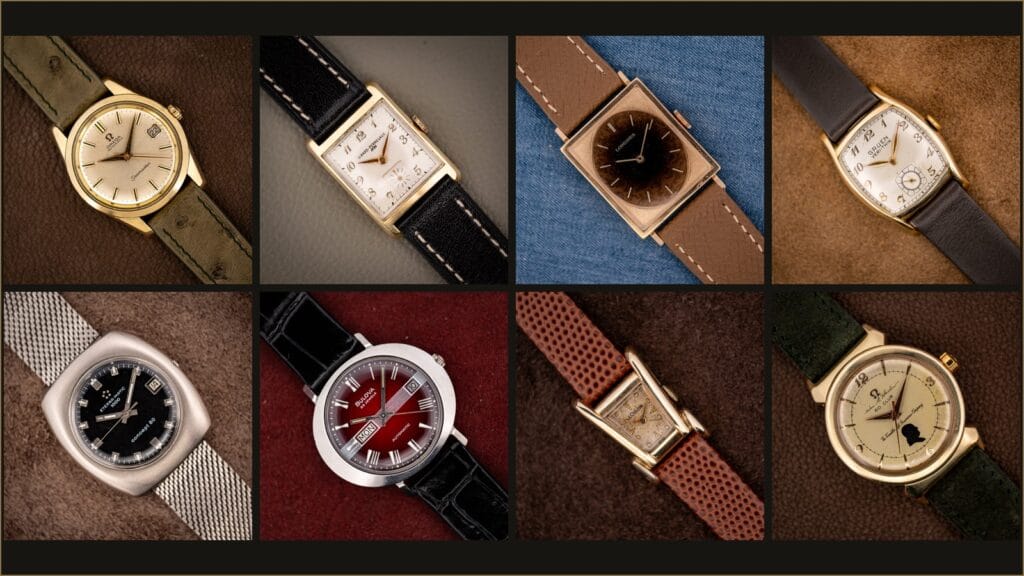
Watch Shapes: Which Vintage Case Shape Fits Your Style?
Case shape changes how a vintage watch wears more than diameter alone. Compare eight silhouettes and learn which one fits your wrist and style.
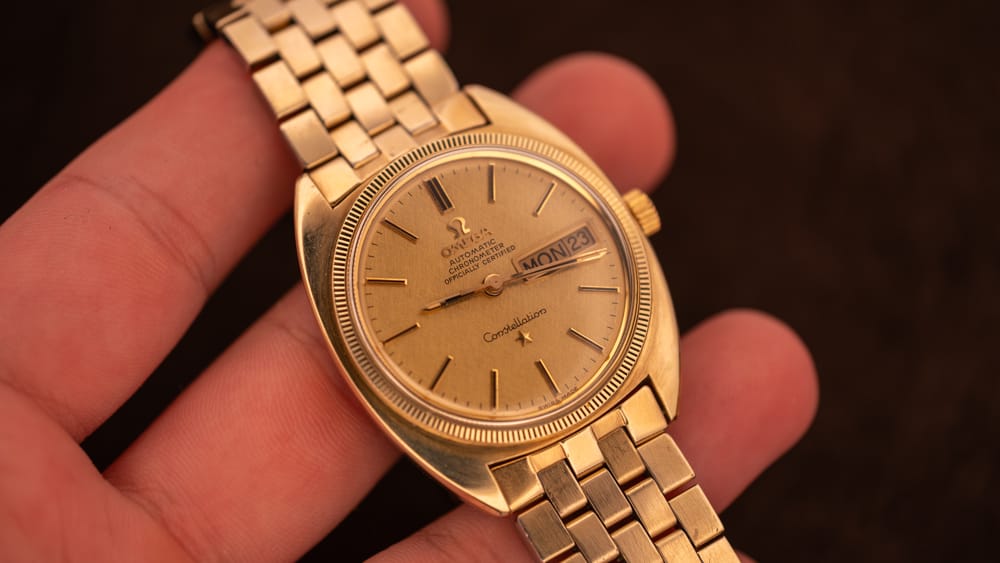
Vintage Dress Watches: How to Choose One You’ll Actually Wear
The best vintage dress watch is the one you will wear beyond weddings. Here is how to choose the right size, metal, dial, shape, and strap.
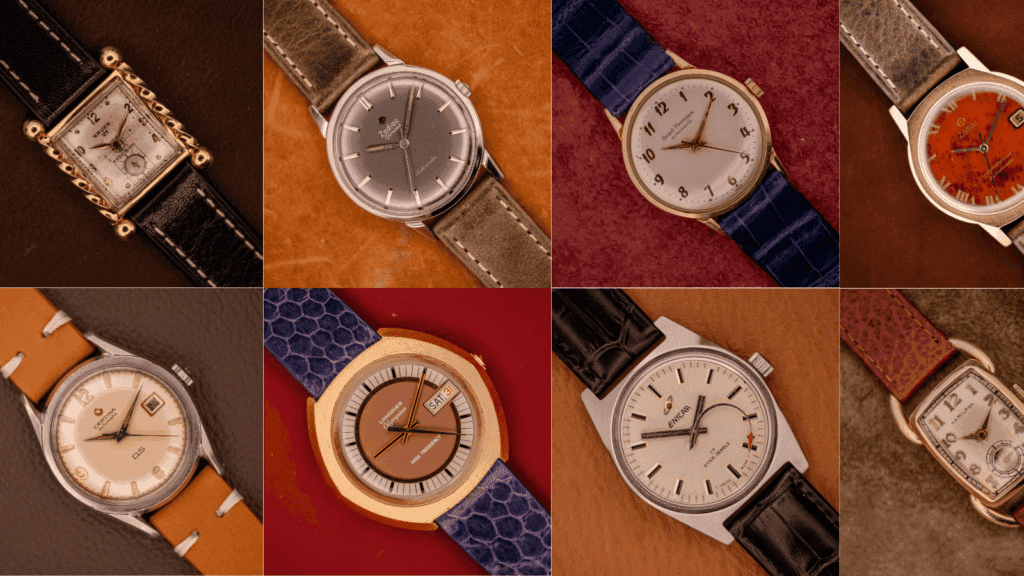
Vintage Watch Styles: A Visual Guide to Finding Yours
Most buyers pick a brand and stall. Here are nine vintage watch styles, shown with real watches from our archive, and the catch that comes with each one.
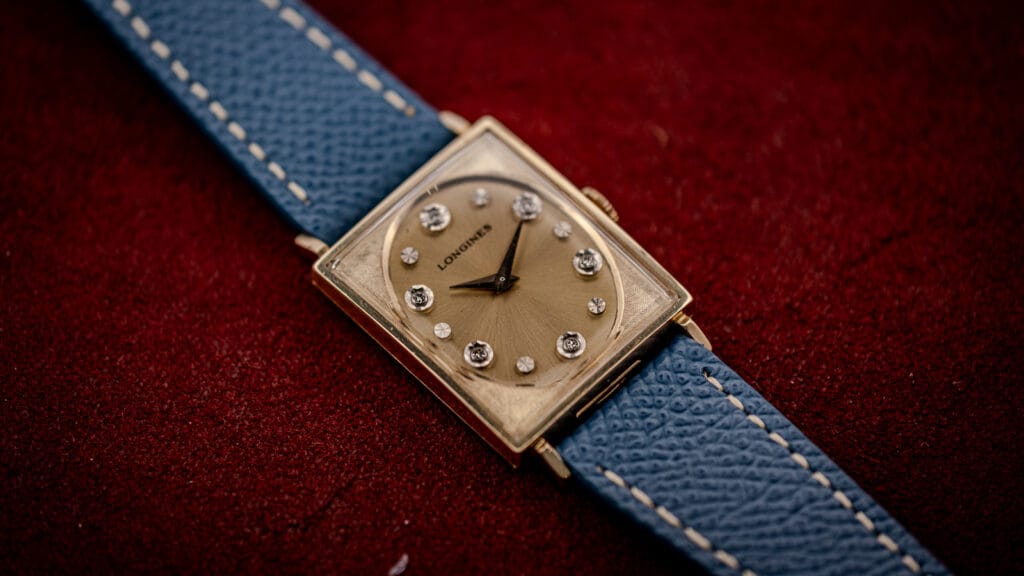
Vintage Tank Watches: A Buyer’s Guide to Rectangular Watches Beyond Cartier
Every Cartier Tank alternatives list is new watches imitating old ones. The originals still exist and cost less. A buyer's guide to vintage tank and rectangular watches: the brands, the prices, and what to check.
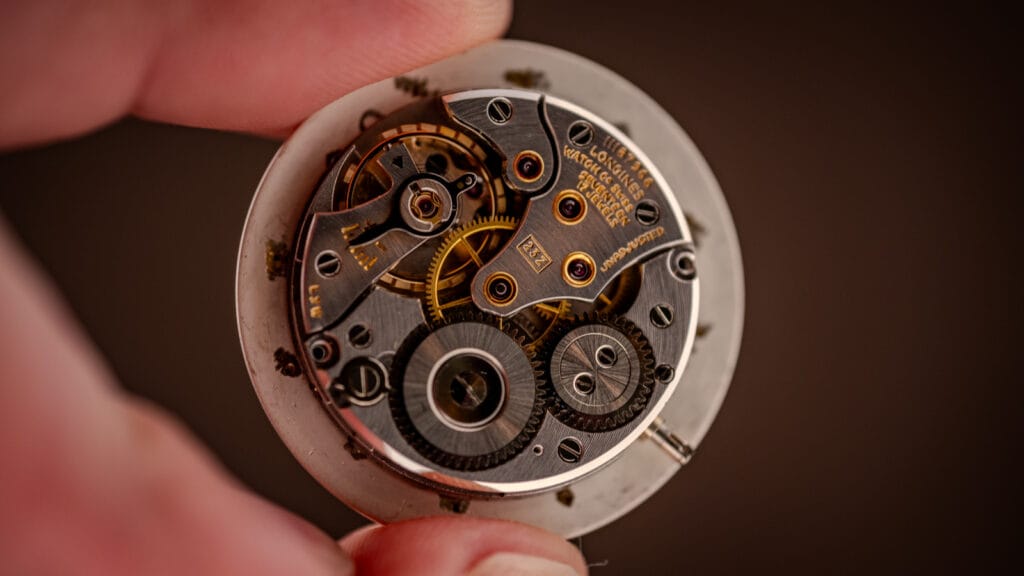
Service History Is the Wrong Question. Here’s the Right One.
Everyone says to ask for a vintage watch's service history. Most of it can't be verified, and a receipt proves a transaction, not a result. Here's what actually tells you a watch has been serviced, and the better question to ask.
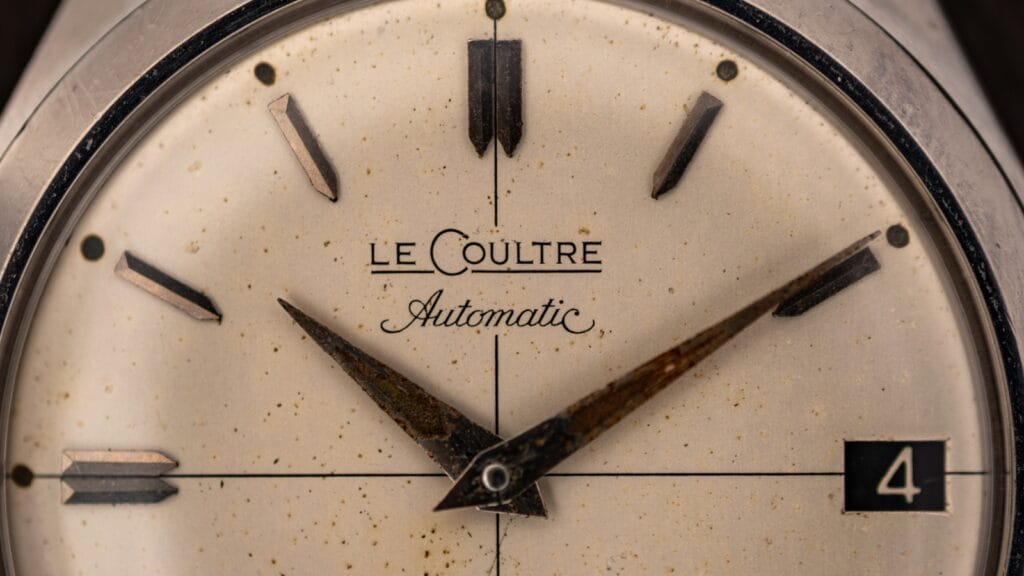
LeCoultre vs. Jaeger-LeCoultre vs. Jaeger: What the Name on the Dial Means
Three names, one Swiss firm, and one watch that isn't what it looks like. What LeCoultre, Jaeger-LeCoultre, and plain Jaeger on a vintage dial really tell you.
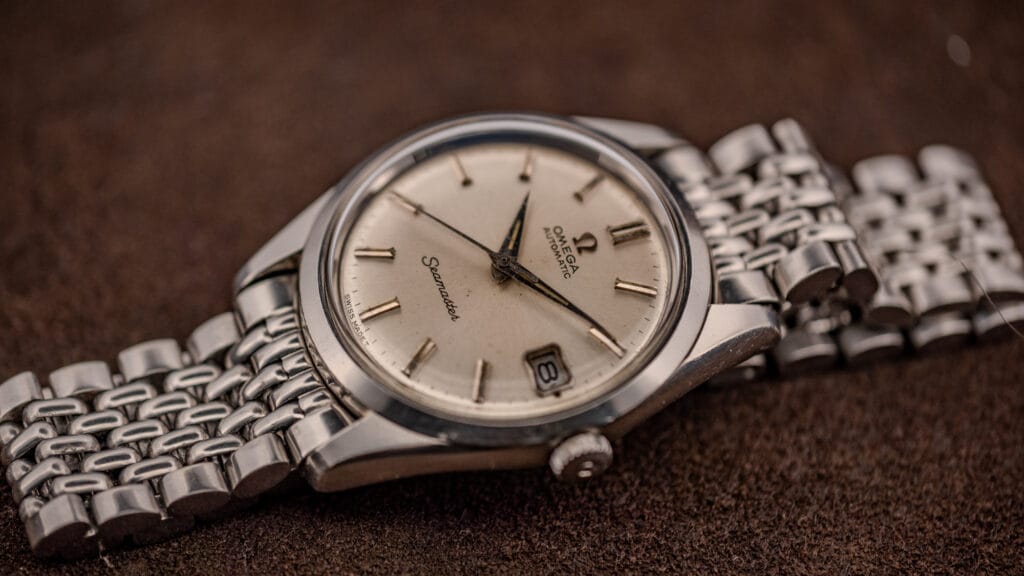
Omega Seamaster 166.010 Buyer’s Guide: Prices, Variants, and What to Look For (2026)
Everything you need to buy an Omega Seamaster 166.010 in 2026: real market prices by condition tier, five dial variants explained, caliber 562 vs 565, original part numbers, and what to inspect before you commit.
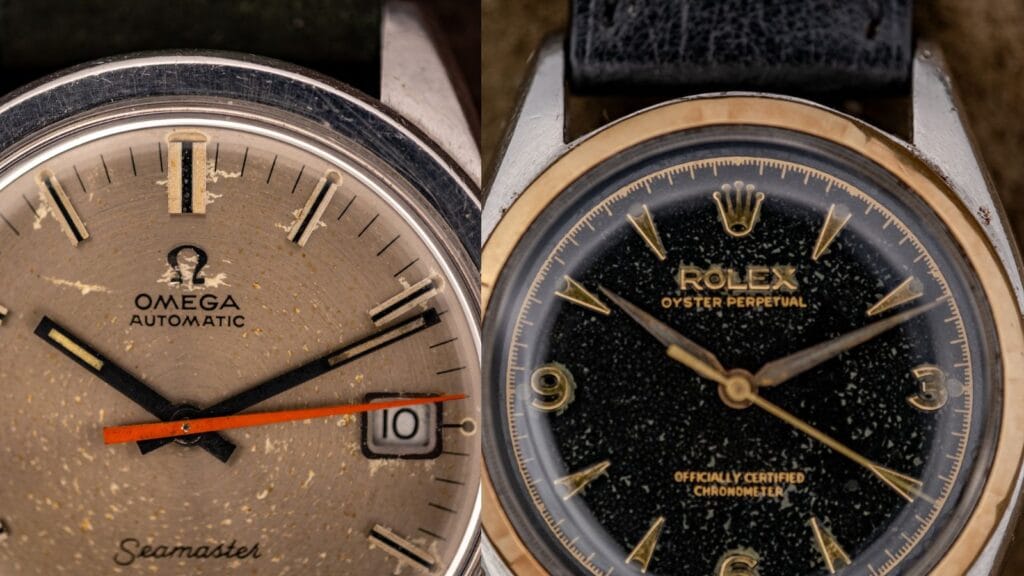
Omega vs Rolex: The Vintage Buyer’s Verdict
Vintage Omega vs vintage Rolex: where the Rolex premium is worth paying, where Omega is the smarter buy, and how to dodge redials on both. A collector's verdict.
Movado Kingmatic: A Vintage Buyer’s Guide to References, Calibers, and Value
The Movado Kingmatic is one of the best values in vintage automatics. A buyer's guide to its references, in-house calibers, the Sub-Sea line, what to check, and what they actually sell for.
13 Vintage Watch Collecting Tips for Beginners (From 1,000+ Watches Sold)
Thirteen vintage watch collecting tips drawn from selling over 1,000 watches. What separates a smart first buy from an expensive lesson, with no sugar.
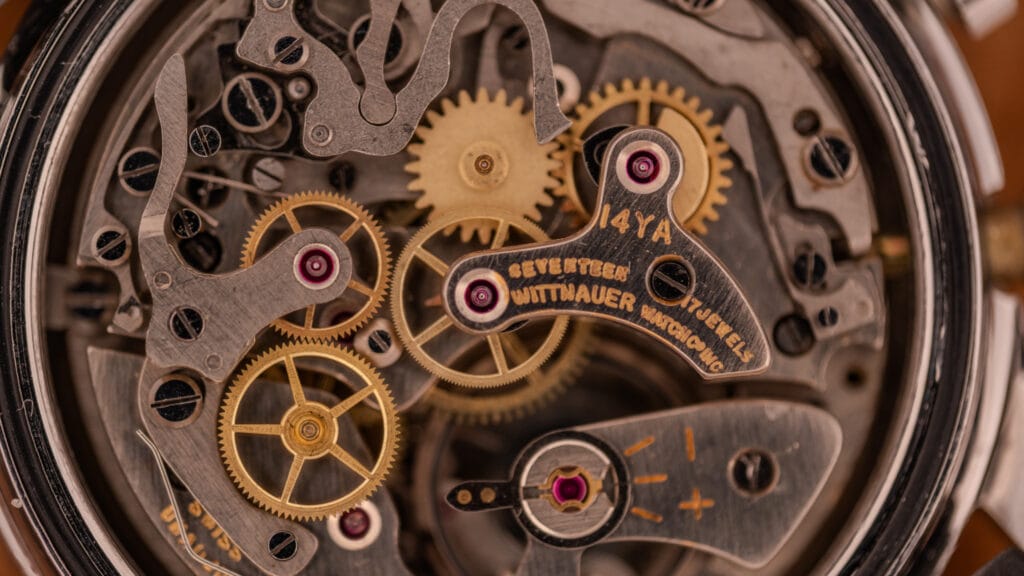
Vintage Wittnauer Chronograph Caliber Identification: Venus 188, Valjoux 7733/7734, Landeron 248
How to identify the movement inside any vintage Wittnauer chronograph: Venus 188, Valjoux 7733 and 7734, Landeron 248, and the house numbering system Wittnauer used to mark them.
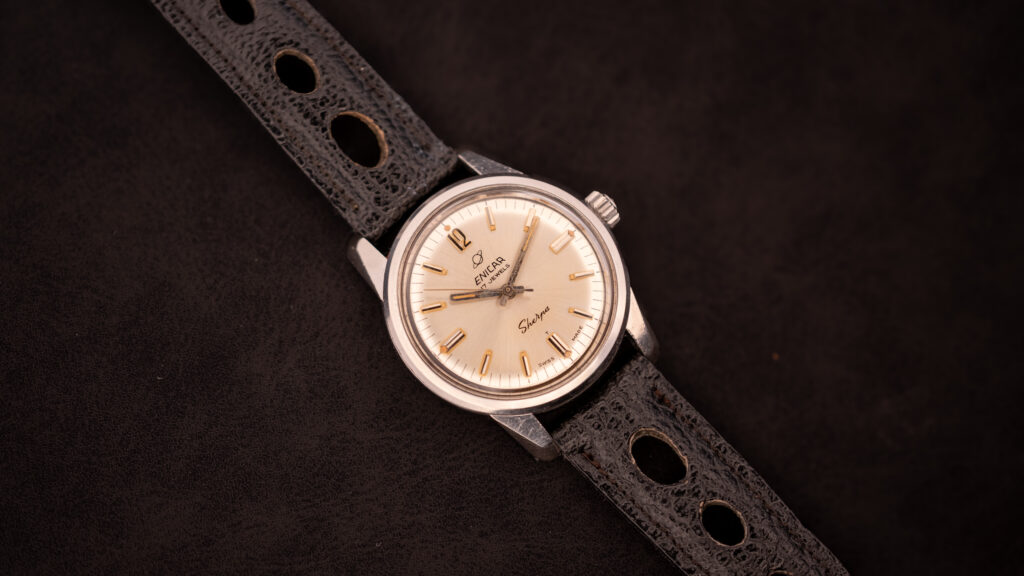
How Water-Resistant Is a Vintage Watch, Actually? The Honest Answer.
Every dealer says never get a vintage watch wet. That advice is half-engineering and half-liability theater. Here is what is actually true about vintage water resistance, where water actually gets in, and when a 1965 diver is safer than a 2-year-old modern.